
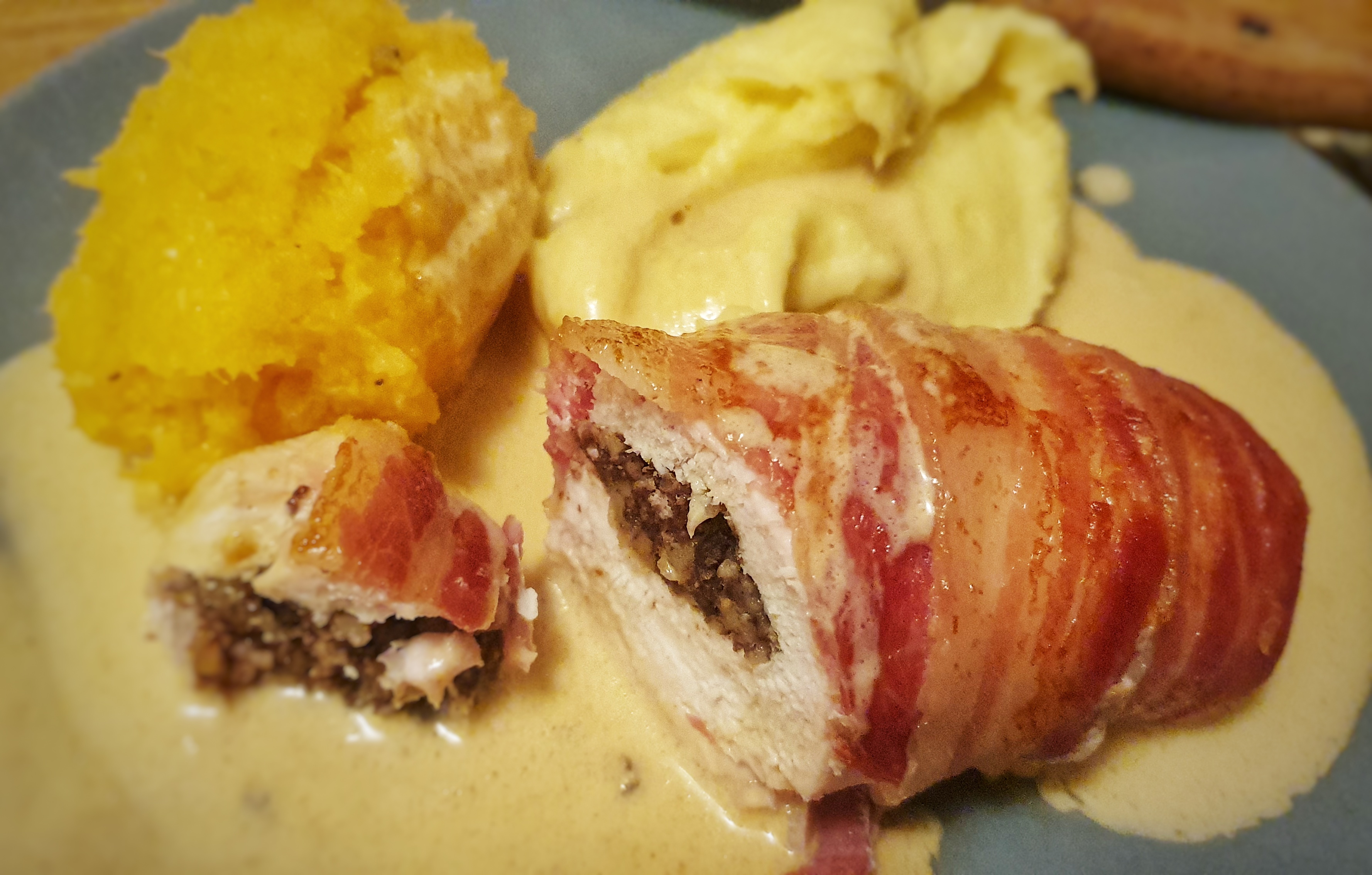
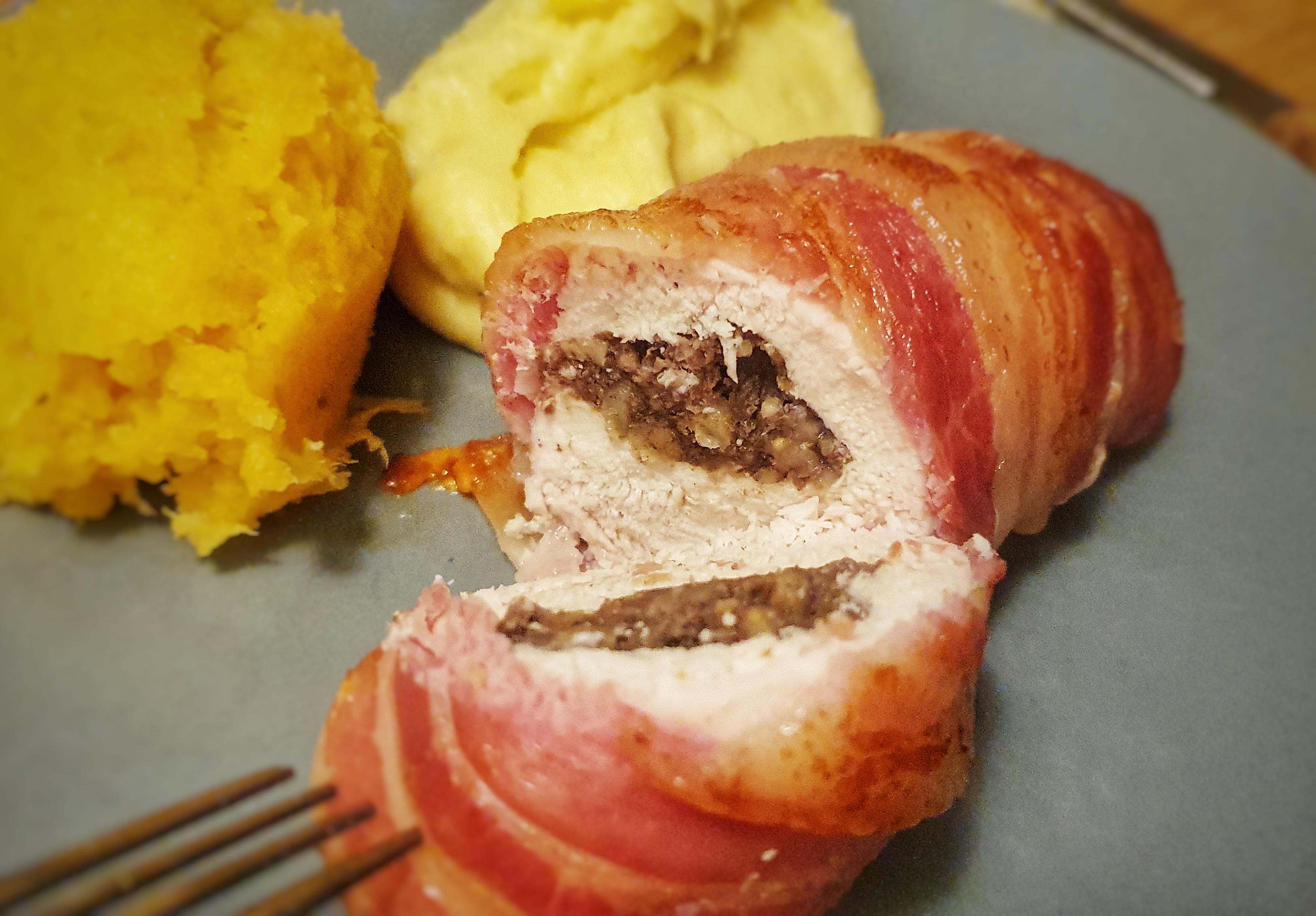
Chicken Balmoral is a modern British classic: a chicken breast stuffed with haggis, wrapped in bacon and then either oven-roasted or pan-fried. It’s served with a rich whisky cream sauce. You can’t stuff a great deal of haggis into a chicken breast, so I find it a great way of using up leftover haggis after a Burns supper. It’s also a great dish to serve up to those uninitiated in the pleasures of the Chieftain of the Pudding Race.
If you want to know more about Robert Burns, the first Burns suppers and the history of this haggis, listen to the first part of my two-part Burns Night specials on The British Food History Podcast:
Despite its name, chicken Balmoral isn’t particularly old; it sounds like it should be Victorian, it being named after Queen Victoria’s beloved Balmoral Castle, nestled in the beautiful Cairngorms. But, no, it is most definitely a 20th-century invention – the earliest mention I could find of a dish called chicken Balmoral is in the 1928 publication A Book of Empire Dinners (published by the Empire Marketing Board of Great Britain), but it is only a mention, not a description.1 It is also conspicuous by its absence from F. Marion McNeill’s The Scot’s Kitchen, which certainly tells us something about its position in traditional Scottish cuisine.2 As Ben Mervis put it in The British Cook Book ‘[it] seems a little too cute – a little too on the nose – to be a truly traditional Scottish dish.’3
It seems to me that it is a dish created for restaurant service; the use of a prime cut, the fact that most of the prep can be done well ahead of time, and that there is next to no waste, all certainly point to the fact. It does, however, make chicken Balmoral an excellent dish for a dinner party. You won’t be slaving over a hot stove making this meal, that’s for sure.
If you like the blogs and podcast I produce, please consider treating me to a virtual coffee or pint, or even a £3 monthly subscription, where you will receive access to the secret podcast, a monthly newsletter and other premium content: follow this link for more information.
Recipe
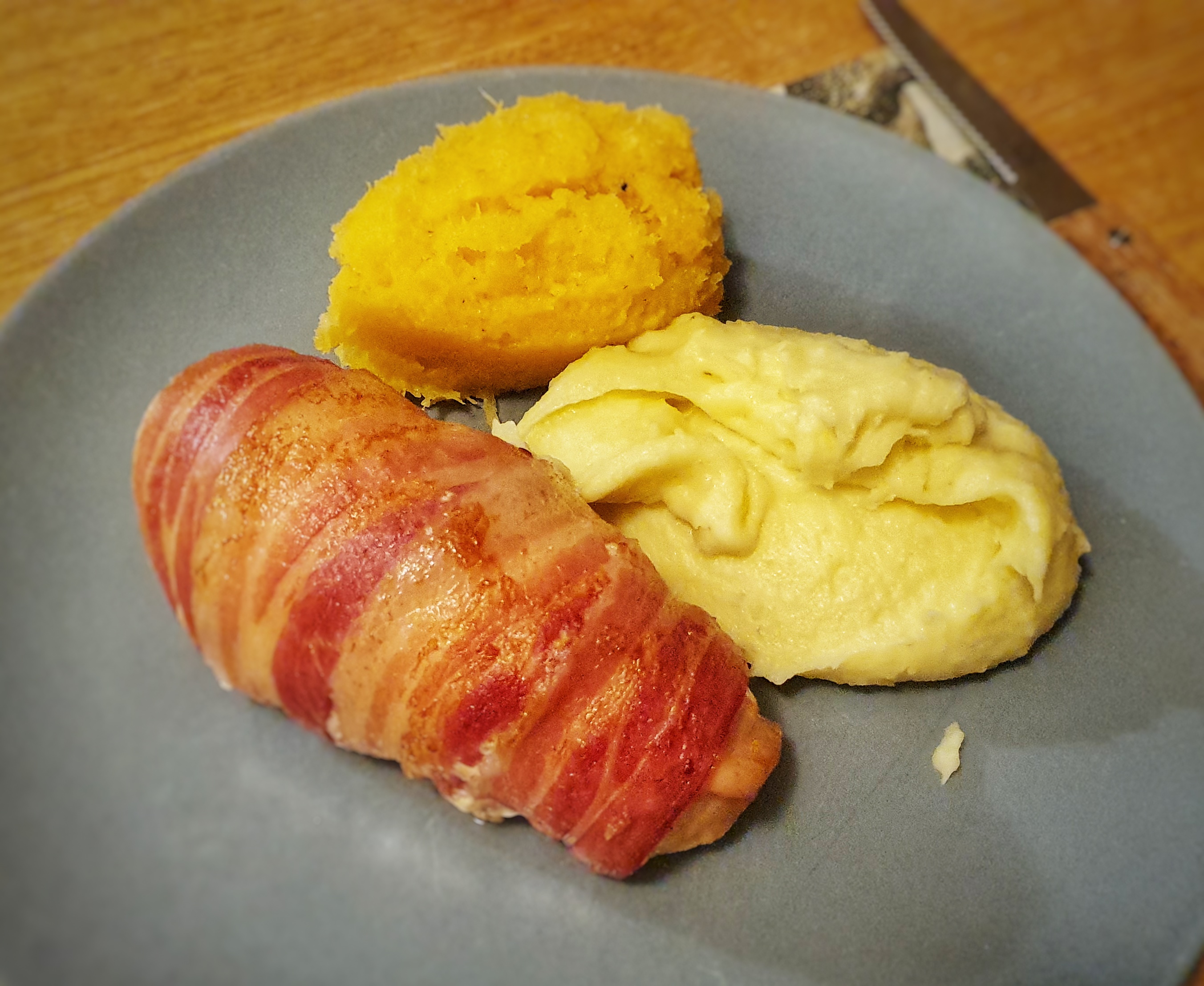
Chicken Balmoral is “traditionally” served with seasonal vegetables; however, for my version, I chose to eat it with the classic Burns Night supper companions of mashed neeps and tatties – i.e. mashed swede and potatoes.
Serves four, but it can be very easily proportioned for more or fewer folk.
For the chicken
3 tbs flavourless cooking oil, lard or bacon fat (or a mixture)
Around 160 g leftover haggis
4 chicken breasts
16 rashers of dry-cured streaky bacon
For the whisky sauce
30g butter
½ onion or the white part of a leek, thinly sliced
3 to 4 tbs whisky
150ml very hot chicken stock
100ml double cream
Salt and pepper
Preheat your oven to 200°C. Add the fats and/or oil to a roasting tin and place on the middle shelf to get really nice and hot.
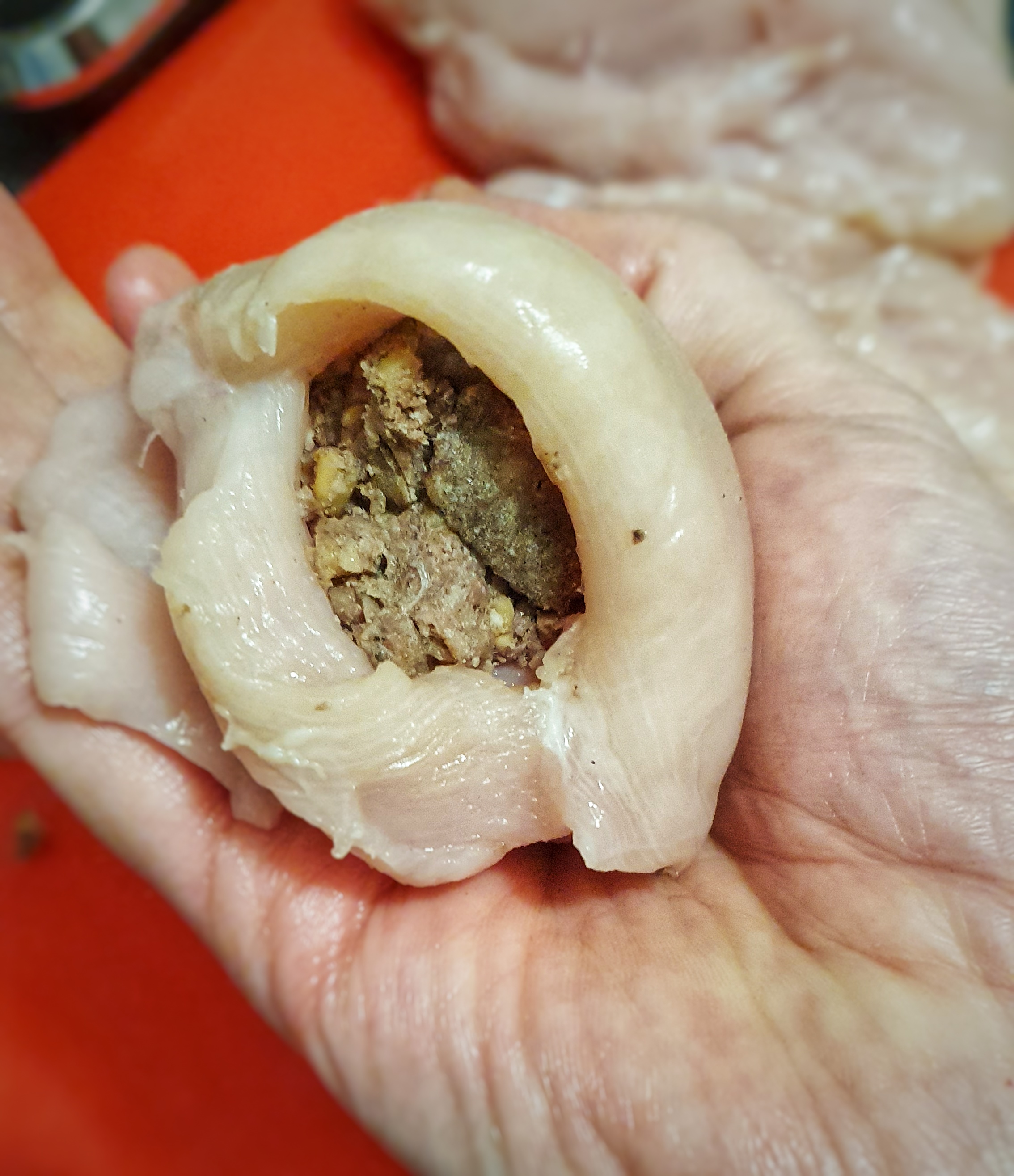
Lay the chicken breasts smooth side down on a chopping board. Move the tender out of the way (it’s sometimes partially attached and can get in the way). Press a breast down firmly with the palm of your hand, and, using a small, sharp, pointed knife, cut into the thick end of the breast as far as you can without puncturing the breast as it tapers toward the end. Widen the hole slightly – it needs to be about 2 centimetres wide at the mouth. Repeat with the other three breasts.
Divide the haggis into four equal pieces and roll each piece into a sausage shape, thin enough to insert into the chicken. Some haggises are quite crumbly, but don’t worry if they are not pliable enough. Use your forefinger to force the haggis into the cuts in the breasts. You might find it easier to break the haggis into smaller pieces.
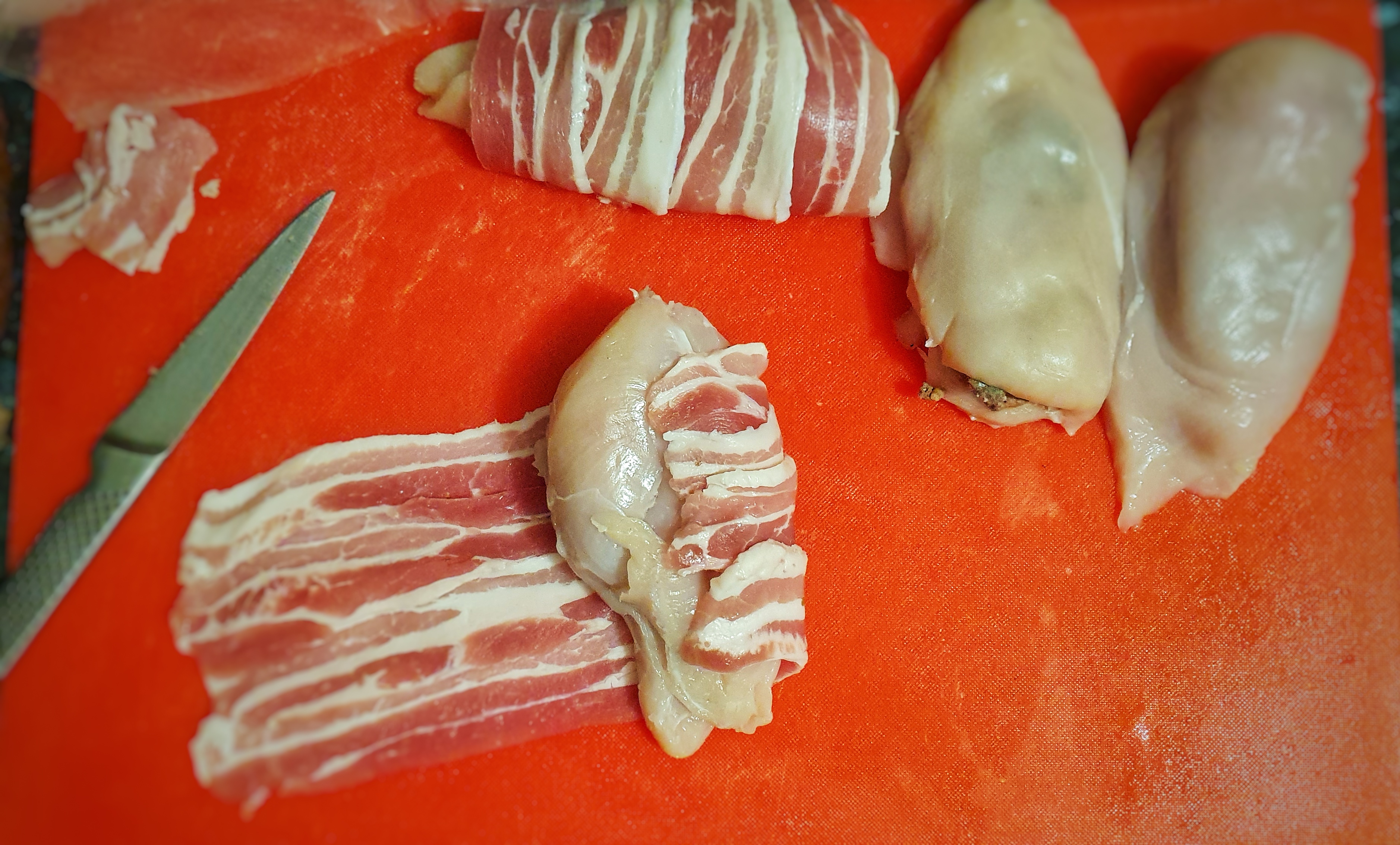
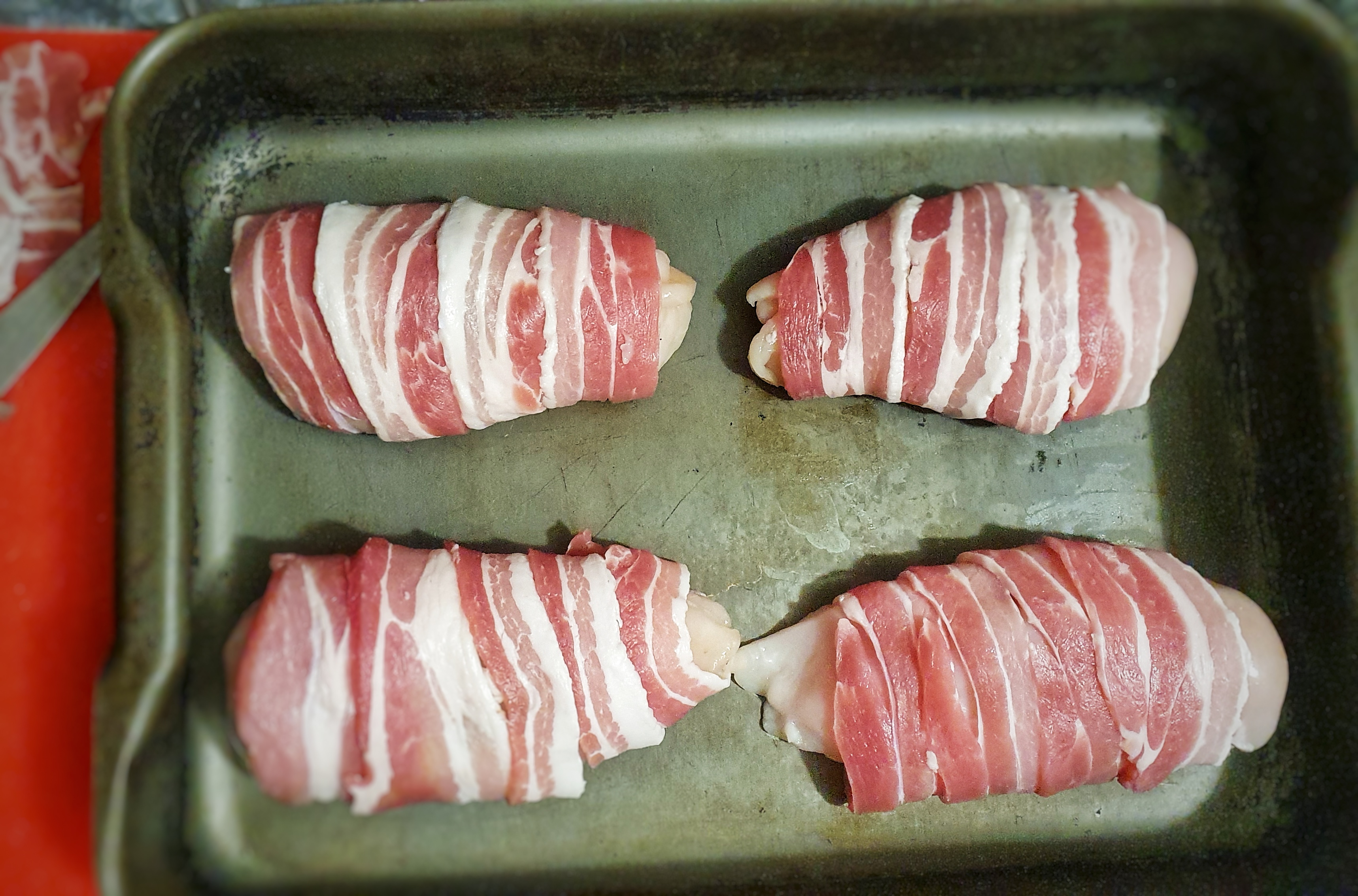
Take four rashers of bacon and lay them across your chopping board lengthways, so that they overlap just slightly. Lay the chicken breast perpendicular to the bacon rashers and roll it up so that the join is underneath the chicken breast. Trim away excess bacon. Repeat with the remaining chicken breasts.
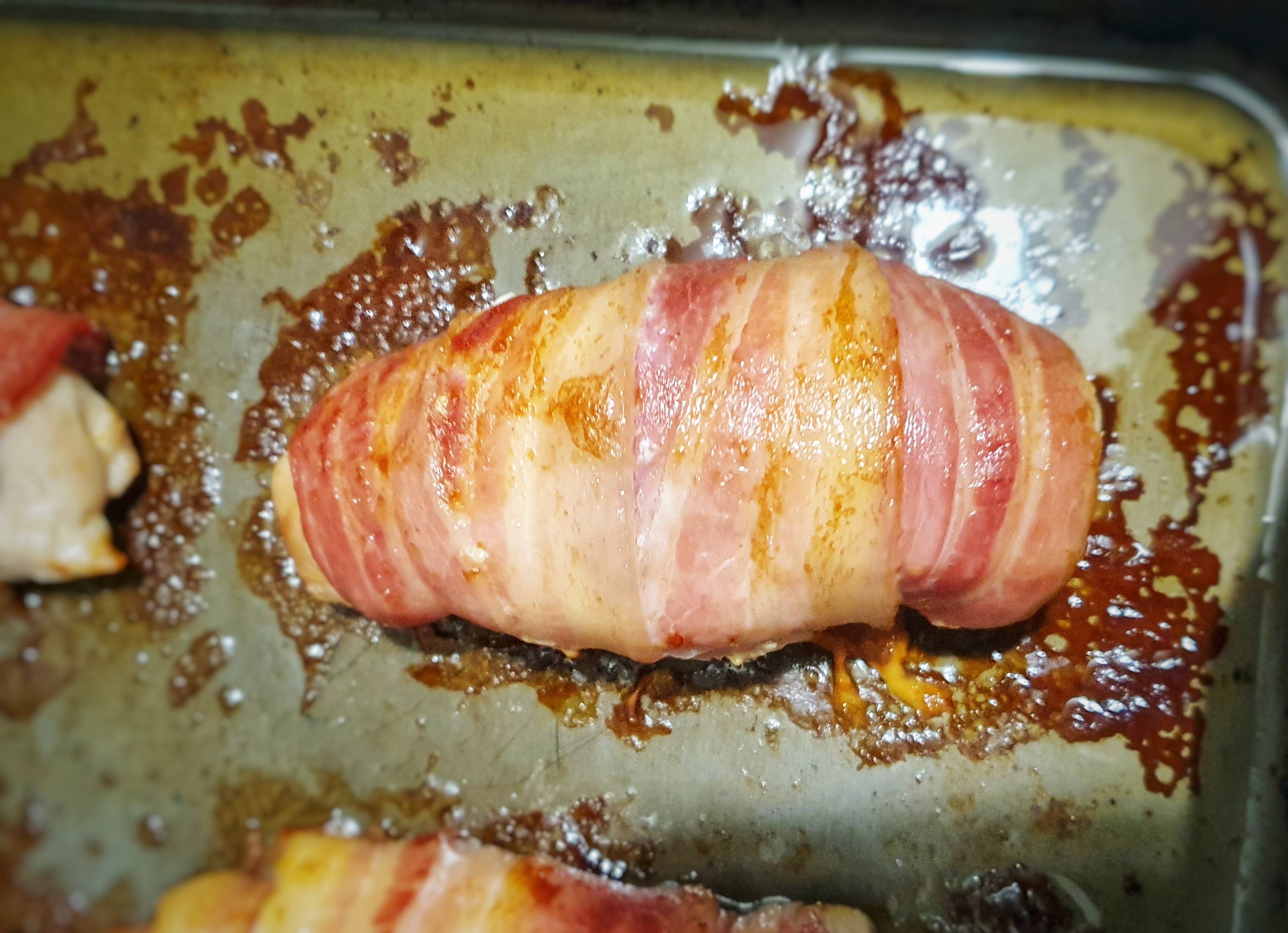
By now, the fat or oil will have become very hot indeed. Take the tin out of the oven (careful!) and sit the breasts in the hot fat, thin ends pointing inwards (this ensures they don’t overcook). Place in the oven for the oven for 30 – 35 minutes, turning it down to 180°C after 15 minutes. Baste at least twice whilst they cook. Remove and allow to rest on a plate.
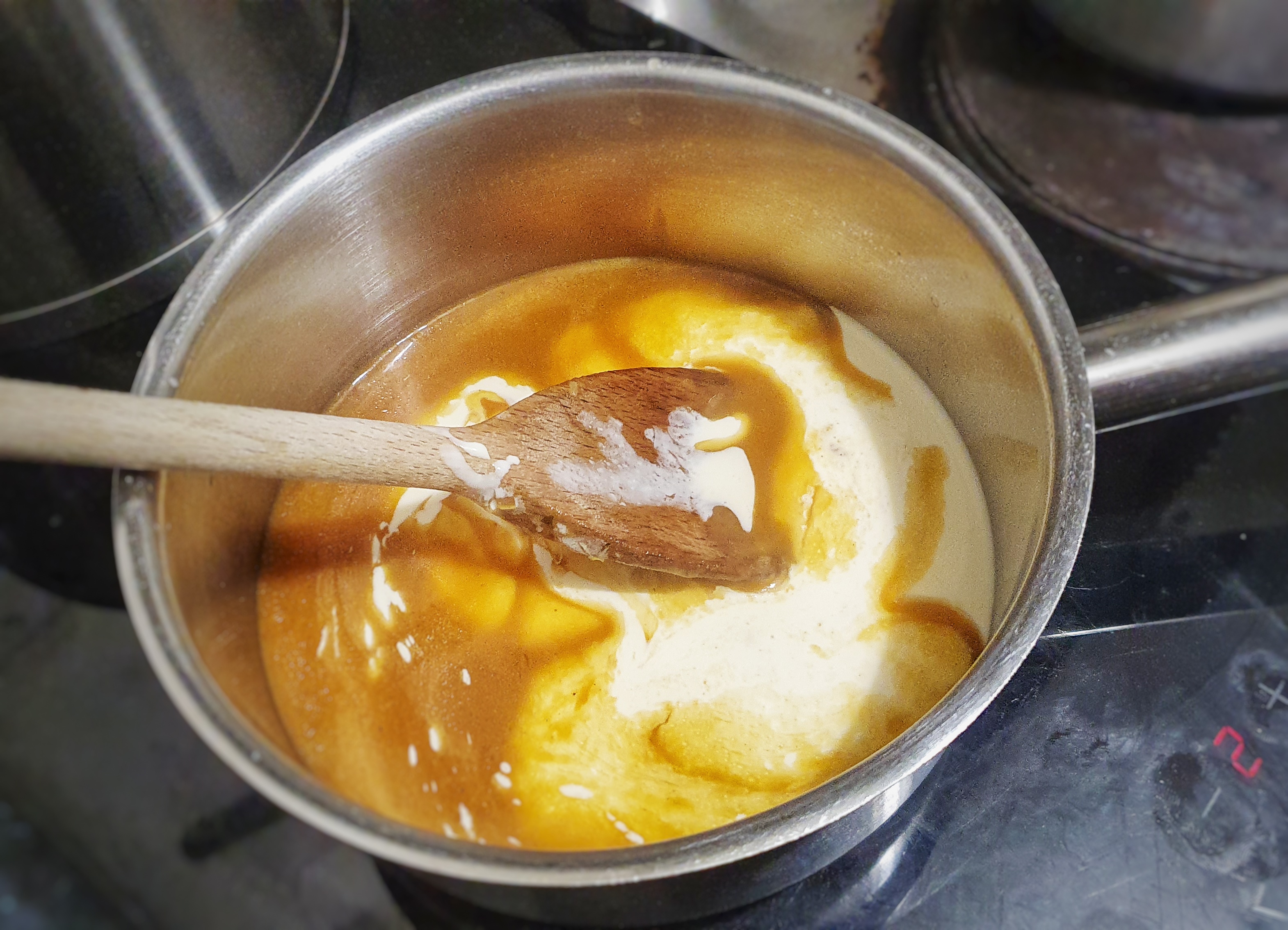
Meanwhile, make the sauce: melt the butter in a saucepan and fry the onion or leek until soft, but not browned (this will take around 8 minutes) before adding three tablespoons of the whisky. Pour the excess fat from the roasting tin and deglaze it with the chicken stock. Scrape all of the nice salty burnt bits with a wooden spoon and cast them into the saucepan. Simmer for a further five minutes before passing through a sieve into a clean saucepan. Add the cream, heat to simmering point and season to taste with salt, pepper and more whisky (if needed).
Serve the chicken with mashed neeps and tatties and pour the sauce into a warm gravy boat.
References
1. A Book of Empire Dinners. (Empire Marketing Board, 1928).
2. McNeill, F. M. The Scots Kitchen: Its Lore & Recipes. (Blackie & Son Limited, 1968).
3. Mervis, B. The British Cook Book. (Phaidon, 2022).
 British Food: A History
Pingback: Robert Burns, the Globe Inn & Annandale Distillery with Jane Brown, Teresa Church & David Thomson | British Food: A History