Category Archives: food

Singin’ Hinnies

In my book Knead to Know: A History of Baking, I made sure that there was a full chapter focussing on griddlecakes: food baked on hearthstones, bakestones and iron griddles. Of course, when writing the chapter, I took much inspiration from Jane Grigson’s baking recipes in English Food. I was surprised by the great variety. These days the English barely think beyond the crêpe.

It’s been a while since I posted a recipe for a griddlecake, and I have had this one, for singin’ hinnies, waiting in the wings for a while. These little cakes are a rather forgotten speciality of Northumberland. I first made these for the Neil Cooks Grigson project in its very early days and I didn’t do a great job of interpreting Jane’s recipe.[1] I have improved greatly since then. The real prompt to get this recipe out there was my conversation with Sophie Grigson, Jane’s daughter, for a recent episode of The British Food History Podcast all about Jane’s work. The topic of singin’ hinnies cropped up because Jane’s entry for it in English Food is particularly evocative. Listen to the episode here:

These griddlecakes, enriched with lard and butter and sweetened only by dried fruit, were eaten by all, and were especially at children’s parties where tuppeny and thruppenny pieces were hidden inside.[2] These once ubiquitous cakes were, for many families, sadly the ‘substitutes for the birthday cake [they] could not afford.’ The word ‘hinnie’ is a dialect one for honey, a term of endearment, and the ‘singin’’ refers to the comforting sizzle of the butter and lard from the cooking griddlecakes, although Jane does point out that ‘the singin’ hinnies made less of a song for many people as they could not afford the full complement of butter and lard.’[3]

I have found other mentions of singin’ hinnies elsewhere but recipes and descriptions are very vague. I did find two nineteenth-century descriptions that really emphasised their importance at the dinner tables of miners – Northumberland being very much a colliery county. The job required very calorific food, so these griddlecakes served an important function. One stated that ‘miner’s food consisted of plum pudding, roast beef and “singing hinnies”.’[4] Another, written by J.G. Kohl, a German travel writer, informs us that ‘[the colliers] even have dishes and cakes of their own; and among these I was particularly told of their “singing hinnies”, a kind of cake that owes its epithet “singing” to the custom of serving it hissing hot upon the table…They are very buttery, and must never be absent on a holiday from the table of a genuine pitman.’[5]

Jane reckons they are the second-best British griddlecake; for her, Welsh cakes take the top spot.


If you like the blogs and podcast I produce and would to start a £3 monthly subscription, or would like to treat me to virtual coffee or pint: follow this link for more information. Thank you.


Recipe

I give you my interpretation of Jane’s recipe with more precise ingredients and method. I have found all other recipes to be either too vague in the amount of liquid that should be added, or, when specific, far too dry. I do hope you find this recipe clear; I know it must work because the hinnies sing loud and true as they cook on the griddle.

A proper singin’ hinnie should be made with equal amounts of butter and lard. If you are vegetarian, avoid using shortening such as Trex, instead go posh and use all butter.

Makes 24 to 28 griddlecakes

500 g plain flour, plus extra for rolling

1 tsp baking powder

¾ tsp salt

125 g lard, diced

125 g butter, diced

180 g dried mixed fruit

220-240 ml milk

Extra lard for frying

Extra butter for buttering the insides of the singin’ hinnies

Mix the flour, baking powder and salt in a bowl, then rub in the lard and butter until the mixture resembles breadcrumbs, then add the dried fruit and mix again.

Make a well in the centre, add most of the milk and mix to make a nice soft dough – it’s a good idea to use the old-fashioned method of combining everything using a cutting motion with a butter knife; that way you ensure the liquid is combined with the other ingredients without overworking the gluten in the flour. Add the remaining milk should there be any dry patches.

Lightly flour your worktop and knead the dough briefly so that it becomes nice and smooth. Let it rest as you get your bakestone, griddle or pan ready.

Place the bakestone on a medium heat and allow to get to a good heat; because there is no sugar in the mixture, the cakes don’t burn easily.

As you wait for it to heat up, roll the dough on a lightly floured surface to a thickness of around ¾ centimetre and cut out rounds. I used a 7-centimetre cutter, but 6- or 8-centimetre cutters will be fine. You might find it easier to cut them out if you dip your cutter in flour and tap away any excess. Reroll the pastry and cut out more.

Take a small piece of lard, quickly rub it over the surface of the bakestone and cook your first batch: mine took 5 to 6 minutes on each side to achieve a nice golden brown colour on the outside and a fluffy interior (I sacrificed one to check inside). Split each one with a knife and add a small pat of butter, close and keep them warm in the oven on a serving plate as you cook the rest.

Serve warm with your favourite toppings. I went with good old golden syrup (and an extra knob of butter).


Notes

[1] Read the original post here.

[2] i.e. two-penny and three-penny coins.

[3] Grigson, J. (1992) English Food. Third Edit. Penguin.

[4] Fynes, R. (1873) Miners of Northumberland and Durham. J. Robinson.

[5] Kohl, J.G. (1844) England, Wales and Scotland. Chapman and Hall.

2 Comments

Filed under baking, Britain, cake, cooking, food, General, history, Nineteenth Century, Recipes, Teatime, Uncategorized

The eighth season of The British Food History Podcast has begun!

We’re kicking off the new season with a 3-part special about Jane Grigson and her ground-breaking book English Food – the book that taught me how to cook, write and appreciate England’s diverse and delicious food legacy. You can read allabout that on the other – and original – blog Neil Cooks Grigson.

In the first episode, I speak to Grigson appreciators (and previous guests) Sam Bilton, Ivan Day and Annie Gray, and – new to the pod – publishing legend Jill Norman about the influence of the book, and where she sits in the study and promotion of English food history and traditions.

We talk about the unique way Jane’s book was published, Jane’s approach to research and writing, her attention to detail, her friendship with Elizabeth David, favourite recipes, her frustrations regarding low-quality shepherd’s pie and much more.

If you are not a podcast person, you can listen to the episode here:

If you are a £3 monthly subscriber, you can also hear the full interviews with Sam, Ivan, Annie and Jill – so much had be cut out to keep the episode to reasonable length.


If you like the blogs and podcast I produce and would to start a £3 monthly subscription, or would like to treat me to virtual coffee or pint: follow this link for more information. Thank you.


Next episode I’ll be talking with Jane’s daughter, Sophie – all very surreal.

There will also be episodes on the history of baking, Alexis Soyer, medieval ale, crisps and more!

If you’ve never listened to the podcast before (there are over 60 episodes now) you can find it on your favourite podcast app simply by searching “The British Food History Podcast”. Don’t forget to follow the podcast so that you don’t miss an episode.

Leave a comment

Filed under Britain, cooking, food, General, history, Podcast

New book ‘The Philosophy of Puddings’ out 24 October 2024

I’m very excited to announce that my next book The Philosophy of Puddings with be published on 24 October 2024, published by the British Library – part of their excellent The Philosophy of… series.

Preorder The Philosophy of Puddings from your favourite bookseller, or from the British Library bookshop.

The word ‘pudding’ is a confusing one if you are not from the British Isles because so many things can be a pudding: steamed sponge, Christmas pud, sticky toffee pudding, plus black and white pudding AND haggis. Add to this the fact that pudding can also be a byword for any dessert. Convoluted craziness.

I have tried to tackle the tricky etymology of the word before – puddings change and morph into so many different things across time that it’s pretty mind-boggling, and I’m so glad to have the opportunity to really study it in depth: a dream come true really. As far as I know there isn’t a book that tracks the word right through history, focussing not just on trends and fashions but also why puddings are so important in British identity.

Here’s what the blurb says:

Just what is a pudding? We all have our favourites, whether it is a school-dinner jam roly-poly with custard, or a Yorkshire with onion gravy, a Burns’ Night haggis or the Christmas plum pudding. The humble pudding started out as a meat boiled in either animal intestine or in a cloth. With the advent of pudding bowls and moulds, the pudding assumed a myriad of identities. Neil Buttery traces the long history of pudding and its importance in British culture and language. He has tried and tested many recipes from across the centuries in his ‘Pud Club’ and shares his extensive knowledge and expertise.

The Philosophy of Puddings features stunning images and photographs from the Library’s collections.

I will present some of my research an online talk in December – the date is to be announced, so make sure you keep an eye out on social media or the ‘Upcoming Events’ page on the blog.

Leave a comment

Filed under baking, Books, Britain, cooking, Desserts, food, General, history, Puddings

New book ‘Knead to Know: A History of Baking’ out 12 September 2024

Out 12 September 2024!

Exciting announcement time!

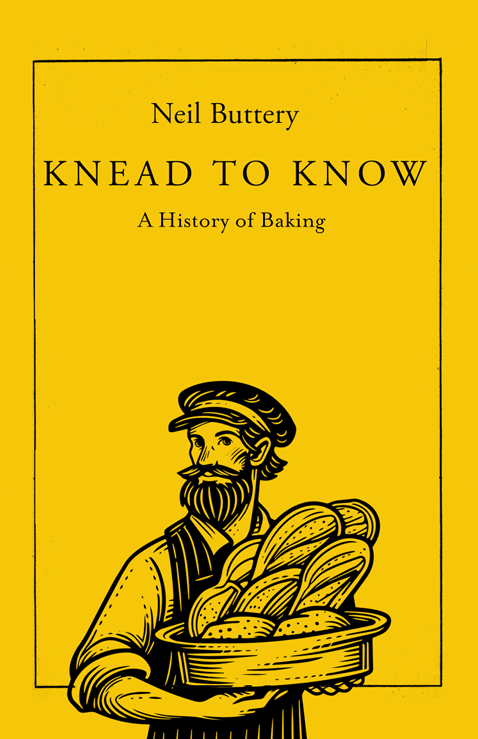
I am very pleased to announce that I have a new book out next month. It’s called Knead to Know: A History of Baking, published by Icon Books and out in the shops on 12 September 2024.

Notice it’s A history, not THE history of baking. I’ve taken what I think are the most important parts, or thing I have found the most interesting with respect to the history of this huge sprawling subject. I’ve broken it up into five broad chapters: Griddlecakes & Pancakes; Biscuits & Cakes; Bread; Pies & Puddings; and Patisserie. Really, I could have written a whole chapter on each of these subjects!

It’s in a different format to my previous books in that the chapters are broken up into short pieces, the length of a blog post. This means that you can dip in and out of it like a coffee table book, or read it cover to cover.

It’s not a recipe book, but there are lots of baking tips and rules of thumb. Of course, recipes for many of the foods that crop up in the book you can find on this blog, and I’ll be adding more as the year goes on, so keep a look out.

It is available to preorder from your favourite bookseller.

There are several upcoming events: online and in-person talks, plus festival appearances, details of which can be found on the Upcoming Events tab of the blog.

Leave a comment

Filed under baking, Books, bread, cake, food, Puddings, Teatime, Uncategorized

Some very belated podcast news…

I spent the first half of 2024 working on two food history books (news of those coming very soon) which meant the poor old blog barely got a look in: with all of that research and writing I was doing all day everyday, I couldn’t bring myself to do even more. I did want to carry on producing material though, so I kept The British Food History Podcast going, and I’m very glad I did, first because it was a chance to talk to actual people, but also because in this most recent eighth season, I produced some of the best episodes so far.

However, one thing I didn’t do is tell you about it! So, if you don’t subscribe to the podcast on your favourite app, or aren’t a £3 monthly subscriber, you might have missed it. My sincere apologies if you have, I have left Spotify links to the first three episodes of season 7 below: 18th Century Female Cookery Writers with The Delicious Legacy Podcast, Christmas Special 2023: Mince Pies (they’re not just for Christmas, by the way) and Apples & Orchards with Joanna Crosby:

Other topics included chocolate, spices, medieval table manners, the Scottish salt industry and food waste.

The British Food History Podcast will return in 4 weeks’ time.

This is only half of my podcast news though because I started a second with fellow food historians Sam Bilton and Alessandra Pino. It’s called A is for Apple: An Encyclopaedia of Food & Drink. The premise is a simple one: each season we take a letter, and we present and discuss a topic each. There is usually a theme e.g. fruit, vegetables aromatics. There has also been a listener’s choice episode. Topics have included apples (obvs.), adulteration, alewives, asparagus, avocados and Agas.

Listen to the pilot episode here:

Season A has finished and season B will start in the autumn.

You can find both podcasts on all podcast apps, so please make sure you follow them – that way you won’t miss an episode.

Over and out. xxx


If you like the blogs and podcast I produce and would to start a £3 monthly subscription, or would like to treat me to virtual coffee or pint: follow this link for more information. Thank you.


Leave a comment

Filed under Britain, food, history, Podcast, Uncategorized

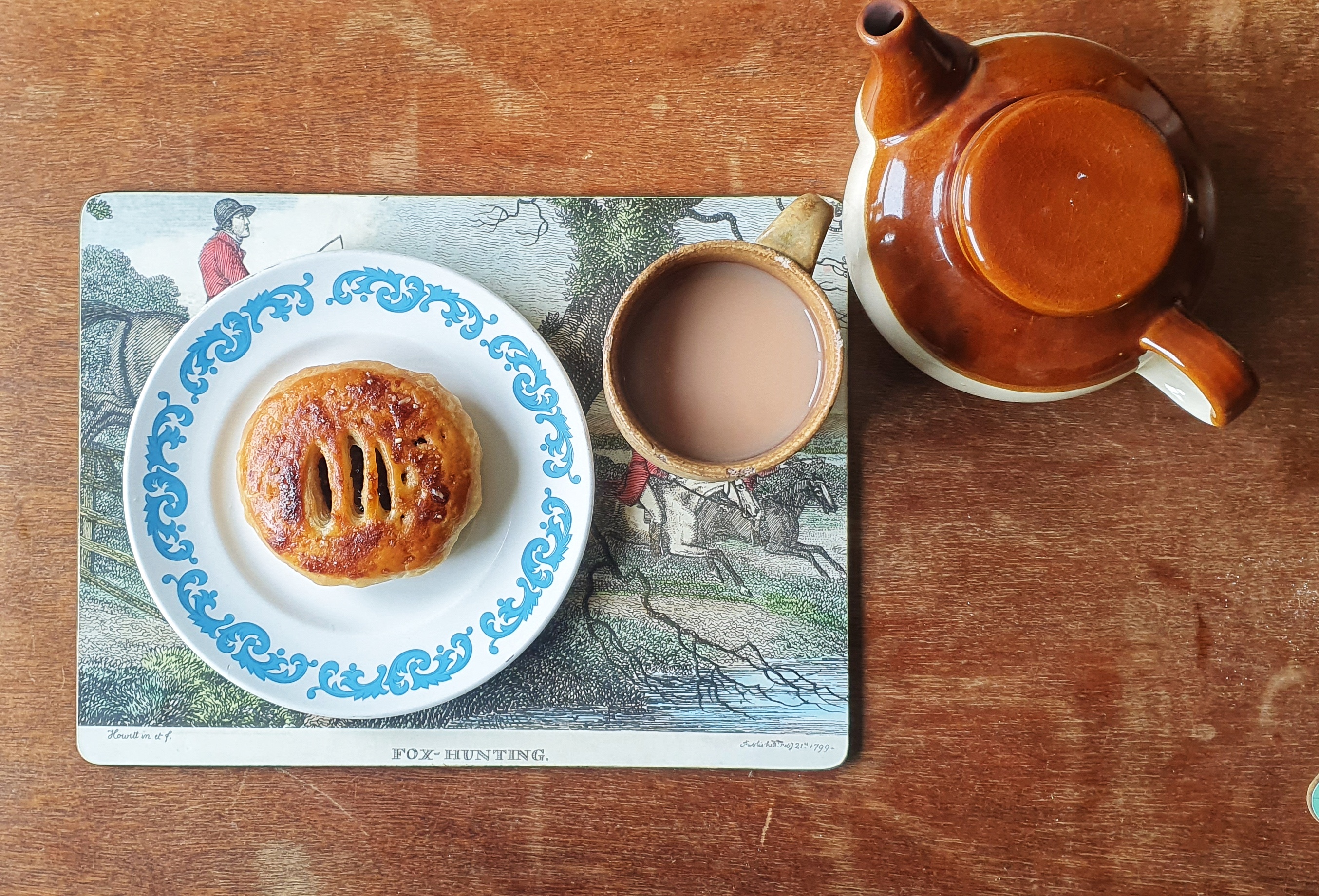
To Make Eccles Cakes

Subscribe to get access

Read more of this content when you subscribe today. A monthly subscription costs just £3 (about $3.80 USD). You get access to my premium blog content, my Easter eggs page (with hours of clips to listen to!) and my monthly newsletter.

1 Comment

Filed under baking, Britain, cake, cooking, food, General, Recipes, Uncategorized

‘Before Mrs Beeton’ wins at the Guild of Food Writer’s Awards 2024

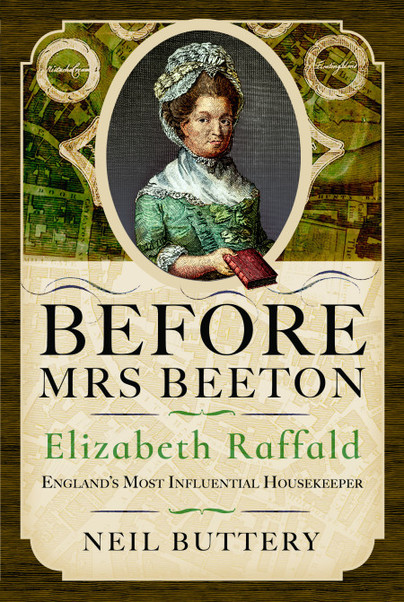
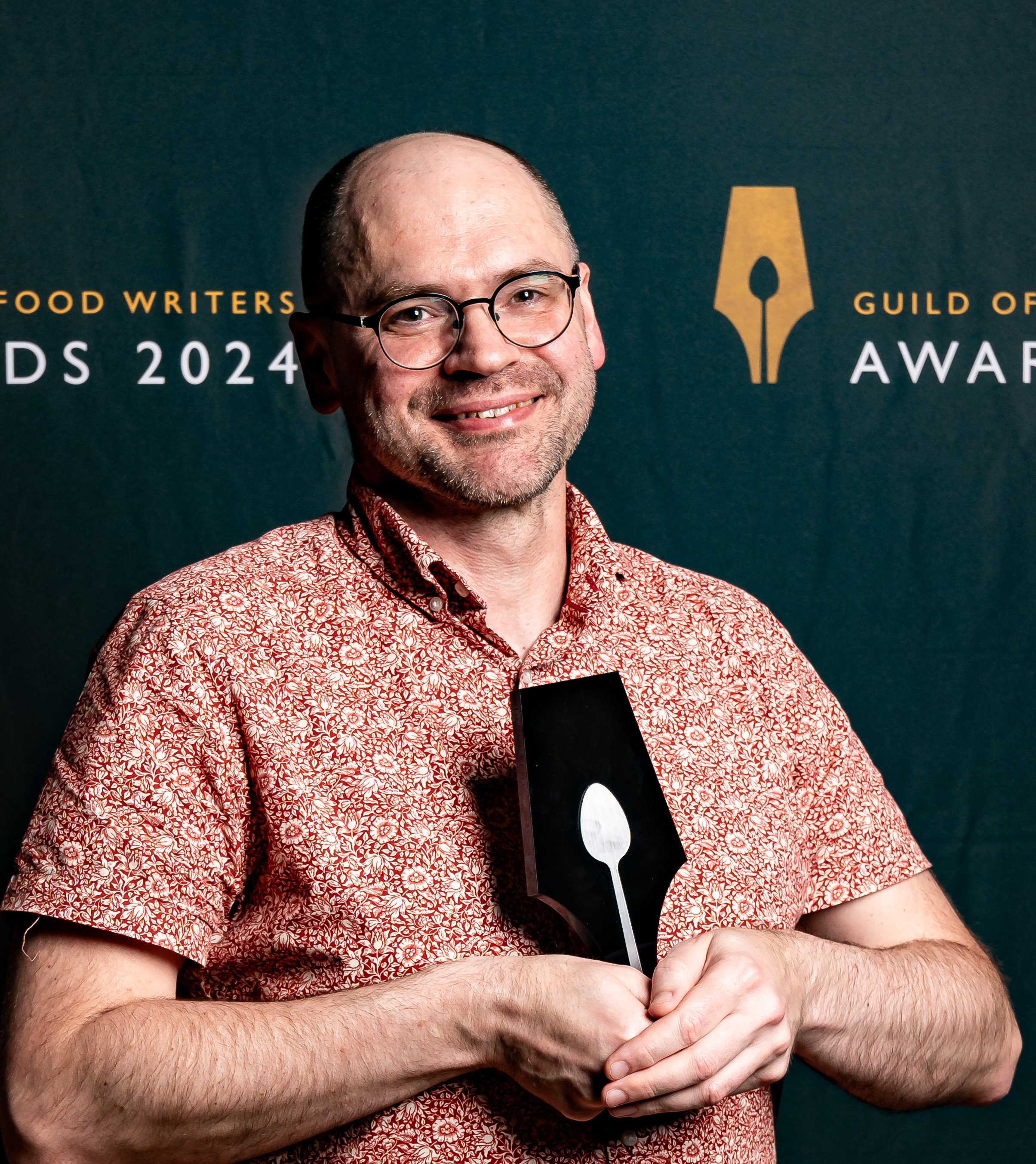
Hello there everyone! Just a very quick post with some slightly belated good news. My biography of Elizabeth Raffald, Before Mrs Beeton: Elizabeth Raffald, England’s Most Influential Housekeeper won the Best Book category at this year’s Guild of Food Writer’s Awards. I’m still rather bowled over about it, I must say, and certainly wasn’t expecting to win, despite winning the Best First Book award last year, in fact with the Raffald book, I thought it (superficially) niche in the big and varied world of food writing.

The evening was such good fun, the awards ceremony itself hosted by Leyla Kazim. Other notable award wins from the point of view of history were the Lifetime Achievement Award for Dame Prue Leith (with special appearance from Sandi Toksvig!) and the Newcomer award which went to Scots food historian Peter Gilchrist. I shall be trying my best to get him on the podcast at some point this year.

Anyway, off I pop to write a proper post for you all. xxx


If you like the blogs and podcast I produce and would to start a £3 monthly subscription, or would like to treat me to virtual coffee or pint: follow this link for more information. Thank you.


Leave a comment

Filed under Books, food, history, Uncategorized

Flammable Flour

When we think of the food we eat, we think of it in terms of fuel – this is especially the case with starchy food, those made from flour because they are broken down into sugars and then converted slowly into energy in a form the body can use (unless we eat too much of it, then it is turned into fat). However, workers in factories around the world are very aware of the amount of energy trapped in flour: working with large amounts of it can be a dangerous business. Factory explosions have occurred causing damage, injury and death.

The aftermath of the Tradeston Flour Mill explosion, Glasgow 1872

              The worst accident in the British Isles caused by flour happened on 9 July 1872 at the Tradeston Flour Mill in Glasgow, a century and a half ago. An explosion ripped through the mill seriously injuring 16 and killing 18, among them a mother of three with her three-month-old baby. What caused it? A report published in the journal Nature reported that the ‘origin [was] conclusively traced to the striking of fire by a pair of millstones caused by the stopping of the “feed” or supply of grain to them, and the consequent friction against each other, the result being the ignition of the mixture of air and fine flour dust surrounding the millstones.’[1] It might have been self-contained were it not for the cloud of flour, the explosion itself created. The mill was set up so that several mills were working together in a row, run by steam power, each explosion setting up another sending a cascade of flour bombs ripping through the building.[2] The most recent flour explosion in the UK occurred on 18 November 1981 in the Bird’s Custard factory in Banbury, Oxfordshire where a cloud of cornflour[3] exploded injuring nine.

Beware the explosive power of Bird’s Custard Powder

It has been theorised that it was a flour explosion that exacerbated the Great Fire of London in 1666 when an oven exploded next to several sacks of flour. The (alleged) bakery on Pudding Lane was owned by King Charles II’s own baker, Thomas Farriner. The blaze would continue for five days, destroying 13,500 houses and many important buildings including St Paul’s Cathedral. It killed just six people.


If you like the blogs and podcast I produce and would to start a £3 monthly subscription, or would like to treat me to virtual coffee or pint: follow this link for more information. Thank you.


Notes

[1] Accidental Explosions. Nature 478–479 (1875).

[2] Dalgetty, L. (2022) ‘Remembering the Glasgow Flour Mill explosion that killed 18 people’, Glasgow Live, 10 July.

[3] Bird’s Custard isn’t thickened with egg, but with cornflour/starch and it is by far the main component, the others being colouring and a very fake vanilla flavouring. For more on custard click here.

4 Comments

Filed under baking, Britain, cooking, Desserts, food, General, history, Puddings, The Victorians

Quick & Easy Puff or Rough Puff Pastry

I have to admit something: I have never made proper puff pastry. If a recipe calls for it, I buy some or make rough puff pastry instead, and I tell myself that I have neither the time nor the space to go ‘full-puff’. The truth, I think, is that I don’t have the inclination, otherwise I would have got around to it by now. Modern puff pastry is made by rolling out a rectangle of dough, then sitting atop it a square of butter, thoroughly beaten flat with a rolling pin. The dough is folded around the butter, the dough and butter are then rolled out, rotated 90 degrees, folded, then rested and chilled. This single ‘turn’ is repeated six more times to produce a laminated pastry dough containing 729 layers of butter.

Rough puff pastry, on the other hand, is not made with a single layer of folded butter, instead very cold diced or grated butter is used, a non-continuous layer of butter means that those great sheets of crispy pastry are not made, hence rough puff, or flaky, pastry. The process of making it is similar to puff, except there are fewer turns, though it still needs to be rested in the fridge between them. My method (see below) is much easier than this, however.

The differences and semantics break down if we hit the historical cookbooks because at one point all ‘puff pastes’ were what we would call ‘rough puff’ today. There are many stories and theories regarding who invented puff pastry and when, and they are either apocryphal or impossible to confirm. When it comes to British cookery books, the earliest example I can find is the late Tudor classic The Good Houswifes Jewel by Thomas Dawson (1596). Here, a dough made from flour, water, egg yolks and some rubbed-in butter, is rolled out, peppered with diced butter, folded and rolled. More butter is added after each turn. This basic method seems to remain the same for the next two-and-a-half centuries: Sarah Harrison (1751), Elizabeth Raffald (1769) and Eliza Acton (1845) all have puff pastry recipes just like it.[1] The first time I find a puff pastry recipe that uses a single layer of bashed-out butter is in Alexis Soyer’s classic A Shilling Cookery for the People (1855 edition).

Sarah Harrison’s 1751 recipe for Puff Paste: it would be considered rough puff today.

I admit that my search was not a comprehensive one, but I think it’s safe to say that in recipes older than c.1850 if puff pastry is asked for, what we should be making is a rough puff.


If you like the blogs and podcast I produce and would to start a £3 monthly subscription, or would like to treat me to virtual coffee or pint: follow this link for more information. Thank you.


Recipe

My recipe is based on a Jane Grigson’s for Quick, Foolproof Puff or Flaky Pastry, from her book English Food,[2] which is, in turn, adapted from a recipe by New York pastry chef Nicholas Malgieri. I’m not sure if it is foolproof, but it is by far the easiest method I know. The reason for this is that the cubes of very cold butter are mixed into the dough. As you roll and fold, you can see the cubes of butter eventually turn into large, flat discs within the dough. Very satisfying. Mixing the butter into the dough itself also means that the butter is evenly distributed and doesn’t end up leaching out of the sides.

I have given instructions to make this dough by hand, but you can use a machine. However, you must mix the ingredients very slowly and add liquid in a steady stream, so the lumps of butter don’t turn into breadcrumbs.

This type of rough puff pastry doesn’t need to be rested between rolling and folding unless it is very hot where you are, then you may need to pop it in the fridge for 15 minutes or so between turns.

This pastry only needs two ‘turns’ before it is ready for rolling and use, however, if you want a pastry that is just flaky, then do a third turn before rolling it out for use.

250 g strong white flour, plus extra for dusting

½ tsp salt

250 g very cold, unsalted butter, cut into 1 cm dice (approx.)

Juice of half a lemon

Water (see recipe)

Mix the flour and salt and add the butter, squashing the pieces between your thumb and forefinger, without rubbing them in or breaking them up.

Next, place a jug on a weighing scale add the juice from the lemon and then top up to a weight of 125 grams.

Stir in most of the liquid to form a ball of dough, using the remainder to pour on any dry-looking patches of flour.

Bring the dough together into a single mass and place on a well-floured worktop. It will look a right mess, but do not worry, it will neaten up in the rolling and folding stage.

Shape it into an approximate rectangle, then use a rolling pin to roll it into a large rectangle around 30 cm wide and 20 cm deep. Ensure you keep your work surface well-floured because the dough is quite sticky at first.

Now fold the sides into the centre of the rectangle and then fold it in half, so it looks a little like a book. Allow it to rest for 2 minutes.

Turn it 90 degrees clockwise and then roll it out again, roll it out thin enough to flatten the cubes of butter.

Fold up and roll out one more time, before wrapping in cling film and allowing it to rest in the fridge for 30 minutes, and roll out as required.


Notes:

[1] i.e., Harrison, S. (1751) The House-keeper’s Pocket-book And Compleat Family Cook. 5th edn. R. Ware; Raffald, E. (1769) The Experienced English Housekeeper. First Edit. J. Harrop; Acton, E. (1845) Modern Cookery For Private Families. Quadrille.

[2] This is the third edition: Grigson, J. (1992) English Food. Third Edit. Penguin.

4 Comments

Filed under baking, Britain, cooking, Eighteenth Century, food, General, history, Recipes, Uncategorized

An in-person event at the British Library, 25 May 2024: Tea & Revolution!

Hello everyone. A very quick post just to tell you about the in-person event at the British Library I am taking part in as part of the British Library’s Food Season Big Weekend 2024. I will be in conversation with historian and food expert Professor Nancy Siegal discussing ‘Revolution & Tea in the USA’.

It’s on Saturday 25 May 11.15 am at the British Library Piazza Pavilion, tickets £5/2.50 (barg!). There will be tea and there will be cake! Click here to book.

It would be great to see you there if you are in or around London on the 25th. You can also buy a weekend pass for the full weekend. See here for weekend passes.

More info from the website:

“Taste the past and find out how 18th century American women, armed with tea and cake, helped stoke a revolution. Nearly 300 years after the United States of America successfully freed itself from Britain, historian and food expert Professor Nancy Siegal moves beyond the battlefields and weapons to meet the women who harnessed the kitchen to champion freedom and American nationalism. Nancy will be in conversation with food historian Dr Neil Buttery. Tea and cake, made from original recipes, will be served. 

‘Morning Tea’ by Richard Houston (1758; British Museum)

2 Comments

Filed under events, Festivals, food, General, history