
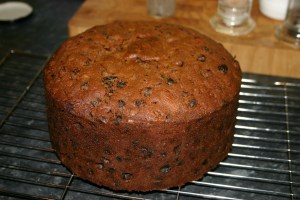
Christmas cake, Christmas pudding, mince pies – if you don’t like dried fruit you are in trouble at Christmastime!
When families in the sixteenth century made their Christmas puddings for the big day, they would often use some of the mixture, with the addition of flour and eggs, to bake and eat for Eastertime. These were obviously rather rich families. It was liked so much that the rich fruitcake was made for Christmas too. We also dropped it from the Easter menu for some reason.
I used to be of the belief that the addition of the marzipan and royal icing (see here for recipes) came much later when a cake was banned from Christmas. The last day of Christmas is Twelfth Night (the 5th of January) and it used to be traditional to make a Twelfth Night cake that contained almonds and was covered in marzipan. Oliver Cromwell, the Lord Protector of England, and the other Puritans banned the feasting on that special day in the 1640s (he also banned mince pies as well) complaining that there was too much excess. Christmas Day remained a public holiday and some feasting was allowed, so people simply made their Christmas cake and covered that in marzipan instead, and so the Christmas cake was born.
This is sadly untrue. The Christmas cake with its double wrapping of marzipan and royal icing is an 18th century invention – Elizabeth Raffald has the first recipe for a cake such as this, and it was for a ‘Bride’s Cake’, i.e. a wedding cake.
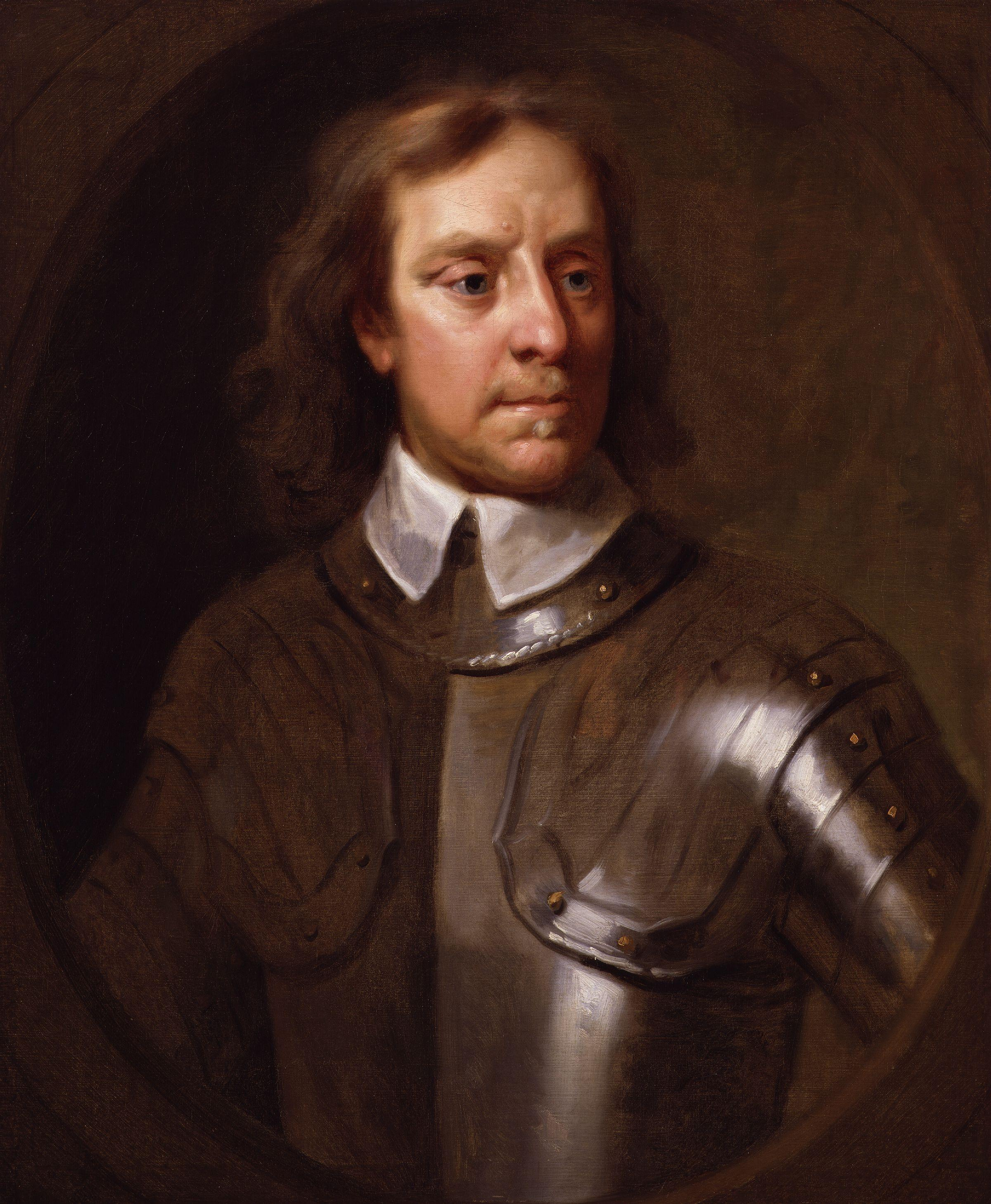
Britain’s biggest ever party-pooper: Oliver Cromwell
You don’t have to cover it with the marzipan and royal icing though, in Yorkshire (my home county) it is popular to eat the Christmas cake with some nice cheese such as Wensleydale or Cheddar instead.
I love Christmas cake, so I thought I would give you the recipe I always use – it is adapted from Jane Grigson’s English Food (click here to see my other pet project) – and it has never failed on me. As I said a couple of posts ago, if you want to eat top-quality food at Christmas, you need to make your own, or spend a fortune at Harrod’s. Plus the cake is made well in advance – I usually make mine 6 weeks before Christmas so it can mature. Once you’ve cooked it, you only have to feed it with a little brandy to make it nice and moist.
This recipe is of course for an English-style Christmas cake; the Scottish, Welsh and Irish have their own versions, all in a similar vein, but with a few differences. I’ll blog about them at some point.
It makes one hefty 8 inch/20 cm cake, for a smaller cake, half the amounts and bake in a 6 inch / 15 cm tin for 2 1/2 hours.
Ingredients:
900 g mixed dried fruit (currants, raisins and sultanas)
125 g of whole roasted almonds (or hazelnuts or walnuts, or a mixture)
125 g chopped candied citrus peel
125 g rinsed glacé cherries quartered or left whole
300 g plain flour
1 1/2 tsp mixed spice
the grated rind of a lemon
250 g salted butter, softened
250 g soft dark brown sugar
1 tsp vanilla extract
1 tbs black treacle (or molasses)
4 eggs
1/2 tsp bicarbonate of soda
1 tbs warmed milk
brandy
Preheat your oven to 140⁰C (275⁰F).
Begin by mixing all the dried fruit, almonds, candied peel and cherries in a large bowl. Next, sift in the flour, turning in and coating the fruit, then mix in the spices and fresh lemon rind.
Now cream the butter sugar in a separate bowl, then mix in the vanilla and black treacle. Beat in four eggs one by one until incorporated, and the mix in the fruit and the flour. For the final stage, dissolve the bicarbonate of soda in the warmed milk, stir it in, and then add enough brandy to slacken the mixture slightly, so that it achieves a dropping consistency – you don’t want a dry cake, now do you?
Line an eight inch cake tin with greaseproof paper and pour the mixture in, hollowing the top a little to compensate for it rising in the oven.
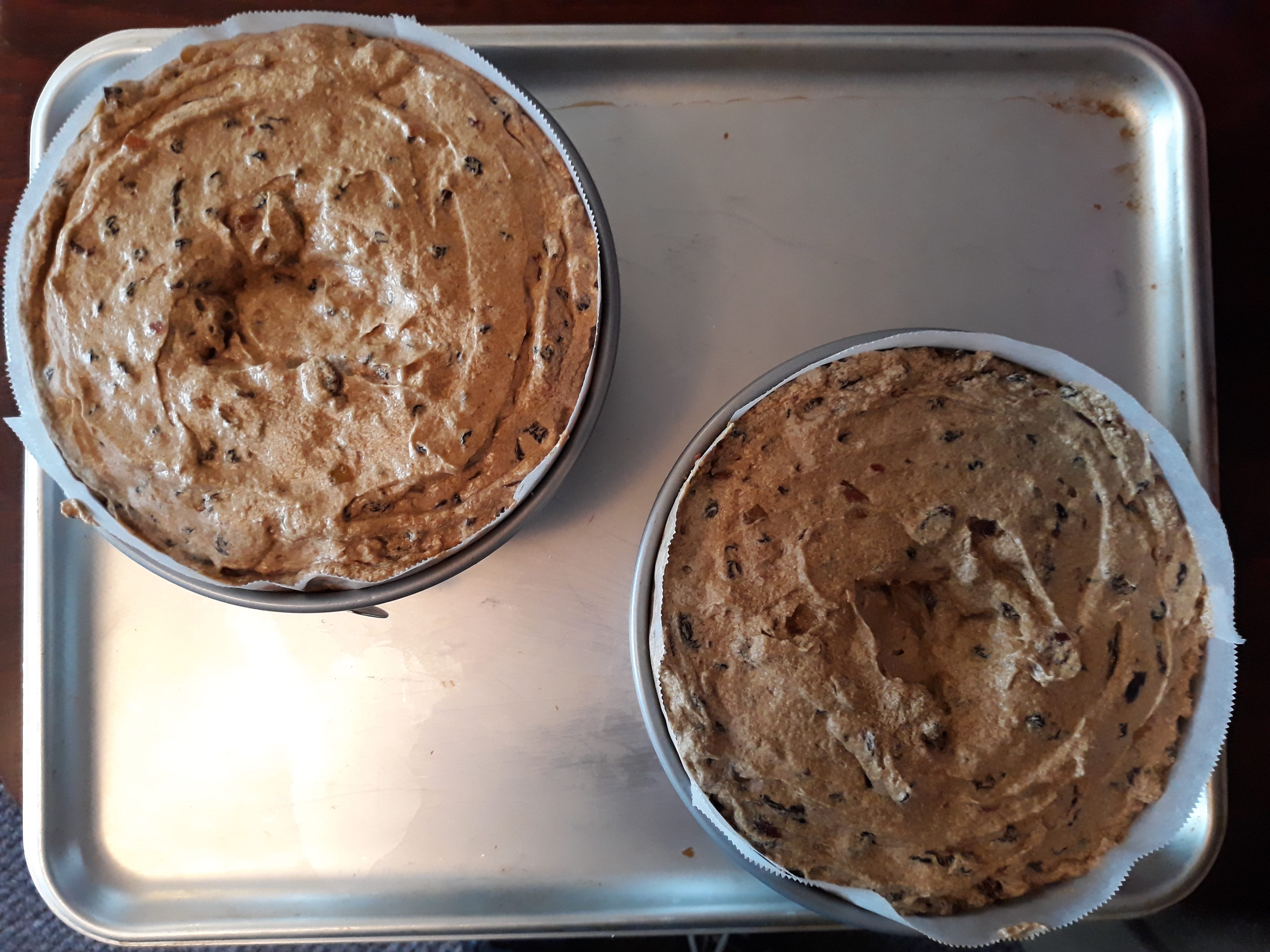
Cover with a layer of brown paper to prevent scorching and bake for 3 to 3 ½ hours. Test it after 3 hours with a skewer. When done, leave to cool in its tin overnight. Wrap in greaseproof paper or foil and keep in an airtight container.
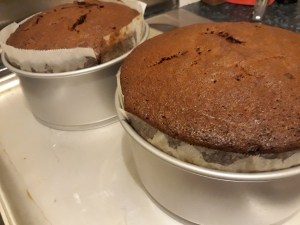
Ideally, the cake should sit for at least a month to mature, but 2 or 3 weeks is also fine. Whilst it sits, you need to feed it with a sprinkle of 2 or 3 tablespoons of brandy, turning the cake each time it is fed.
The cake is ready to eat when sufficiently fed and matured, however, you might want to add a layer of marzipan and royal icing.
If you like the blogs and podcast I produce, please consider treating me to a virtual coffee or pint, or even a £3 monthly subscription: follow this link for more information.


 British Food: A History