Vinegar is, of course, delicious on your fish and chips and a great preserver, but it has been put on a bit of a pedestal by many because of its seemingly myriad uses in the kitchen and home.
Here’s a culinary tip I spotted in a book called Domestic Cookery from 1840 which is useful to anyone who has just caught themselves a hare; when hanging it in your larder, place a bowl beneath the beast to collect the blood. Add a teaspoon of vinegar to the bowl to stop the blood from coagulating. The blood can then be used to thicken the sauce when making the classic dish, jugged hare. Vinegar is used in the same way when making black puddings from fresh blood.
A brown hare (photo: Damien Waters)
Vinegar diluted in water can clean and polish so many things: floors, windows, stainless steel, chrome, carpets and cruets (no one wants a dirty sauce cruet!). Mixed with pinhead oatmeal or sand it works as an abrasive, cleaning oily hands efficiently, and mixed with bicarbonate of soda it can unblock your sink. Vinegar is a deodoriser, so add a few drops of an essential oil to a weak vinegar solution to make your own air freshener. Used neat it will remove ink stains from clothes and sanitise wooden chopping boards.
It has medical uses too. Hippocrates apparently used vinegar to treat sores and other infections, and the Victorians used to make a vinegar, sage and honey tea to treat sore throats. Modern medical research is looking into the application of vinegar to treat several diseases, including cancer.
Hannibal
By far my most favourite use of vinegar in history comes courtesy of Hannibal, that great Carthaginian general, who famously crossed the Alps on elephant. It is said that he used vinegar to dissolve any boulders blocking his mountainous path! He must have been either a very patient man, or had somehow produced acid as strong as hydrochloric.
For more – somewhat more modern – tips on using vinegar in the home take a look at the Sarson’s website.
If you like the blogs and podcast I produce, please consider treating me to a virtual coffee or pint, or even a £3 monthly subscription: follow this link for more information.
I’m continuing my mediaeval-themed posts with a somewhat infamous forgotten fruit: the openarse.
This unusual fruit is a member of the Rosaceae family which contains within its members familiar apples and pears as well as the less familiar, such as quinces, rosehips and sorbs; and like many of the cultivated varieties within this group, they made their way over here from Asia Minor. They quickly nestled themselves into the English mediaeval orchard, becoming an essential fruit crop.
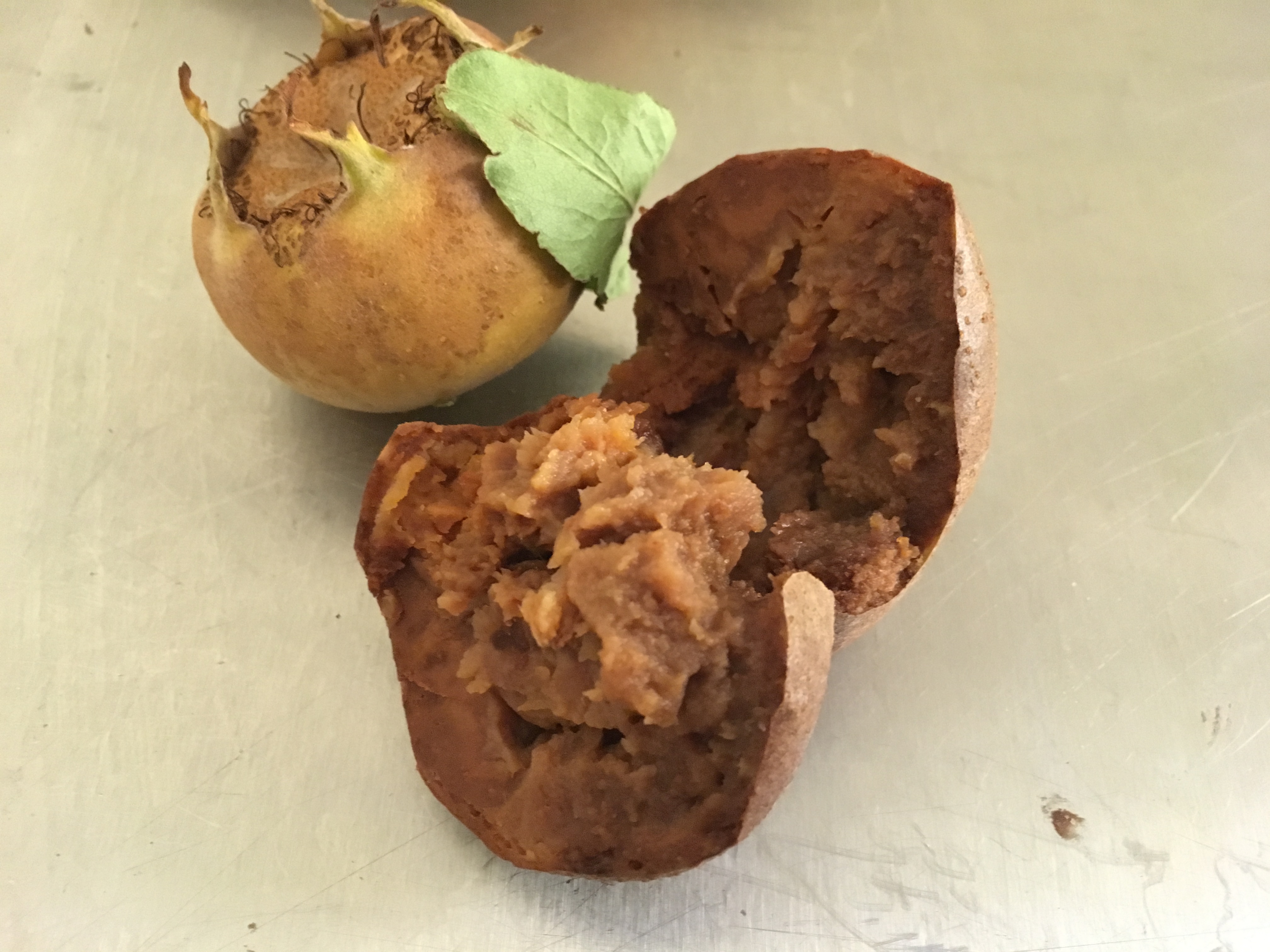
The openarse looks superficially like a russet apple’s withered twin; all squat, rough and green-brown. Turn it over and you’ll see how it gained its name. The calyces, usually small and tightly puckered on the underside of an apple or pear, are very large and lobular, protruding somewhat, giving it a definite rusty sheriff badge appearance. They also sometimes called grannies’ arses. Nice.
According to Jane Grigson in her Fruit Book, the ‘English name openarse, gradually and politely, …was superceded by the French-derived medlar.’ That said, the French also call them dogs’ arses. Trust them to be more vulgar us!
During the mediaeval period, medlars were widely cultivated in England, reaching peak production in the 1600s. They were a useful fruit because they store well, ripening up quite a while after picking. At first, however, they are rock hard, sour and terribly astringent. Picked in late autumn (some say to wait after the first frost) and stored in a cool, dark place, they begin to soften and sweeten. This controlled decay – called bletting – converts starch to the fruit sugar fructose and reduces the acid and tannin levels dramatically. It’s quite nice to see the fruits bletting at different rates and times; some blet on the tree, some take weeks post picking. You can see how this steady supply of ripening fruit would have been extremely important to mediaeval people during winter (see this post on mediaeval feast and famine for more information).
A bletted medlar
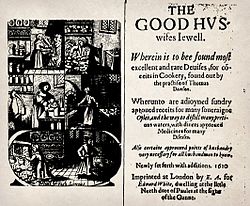
The traditional way to eat the fruit is to squeeze your openarse between your fingers so that the pulp can be either picked or sucked out. The medlar was considered very good for digestion and so would be taken after a meal with port (science is revisiting these ideas and has provided some experimental evidence that it is indeed the case). The taste is pleasant, lying somewhere between tart apple and sweet prune. Because the medlar was generally eaten in this way, recipes don’t tend to appear in old cook books; the only common recipe is for medlar jelly (which will be the subject of the next post). However, I did find one for a medlar tart in Thomas Dawson’s 1596 book The Good Housewife’s Jewel:
To Make a Tart of Medlars
Take medlars that be rotten and stamp them. Then set them on a chafing dish with coals, and beat in two yolks of eggs, boiling it till it be somewhat thick. Then season them sugar, cinnamon and ginger and lay it in the paste.
Thomas Dawson was a contemporary of William Shakespeare, and an openarse can be found in a Shakespeare passage. From Romeo and Juliet:
Now will he sit under a medlar tree,
And wish his mistress were that kind of fruit
As maids call medlars, when they laugh alone.
O Romeo, that she were, O that she were
An open-arse and thou a pop’rin pear!
A pop’rin pear, by the way, looks rather like a cock and balls. O! the camp bawdiness of it! I’m going to have to lie down.
Amusingly, the prudish Victorians replaced ‘openarse’ with ‘et cetera’, which – if you didn’t know of the replacement – makes no sense at all and, more importantly, spoils the joke.
FYI: Chaucer mentions openarses in the Canterbury Tales, and the earliest known use of the word goes right back to the 10th Century!
Colour plate from unknown source
Sourcing Medlars
After reading this, I expect you are simply dying to get your hands on some openarse yourself. This will be tricky; they are no longer grown commercially, so you’ll either have to plant one yourself or find a feral tree. If you live in the south of England this may not be an impossible task as many villages grew them in public spaces.
They are lovely trees – they grow untamed, sprawling in any direction they choose. They grow slowly, but still produce quite a large crop, so even a small tree would provide you with a decent glut of openarse. This is definitely the fruit tree for the lazy gardener.
As for me, I know the whereabouts of an ignored medlar tree in Manchester, but I’m keeping quiet about it; I don’t want all and sundry picking at my openarses now do I!?
I’ll stop now.
If you like the blogs and podcast I produce, please consider treating me to a virtual coffee or pint, or even a £3 monthly subscription: follow this link for more information.
The Mediaeval Period is a vast expanse, lasting around one thousand years from the fifth century to the fifteenth, and so encompasses a substantial slice of history. It is flanked on one side by the Classical Period, the end of Roman occupation ended that one; at the other, the start of the Modern Age marked by the fall of the Plantagenet dynasty, the rise of the Tudors and the Age of Discovery. Being bookended like this, the Mediaeval Period is also sometimes called the Middle Ages.
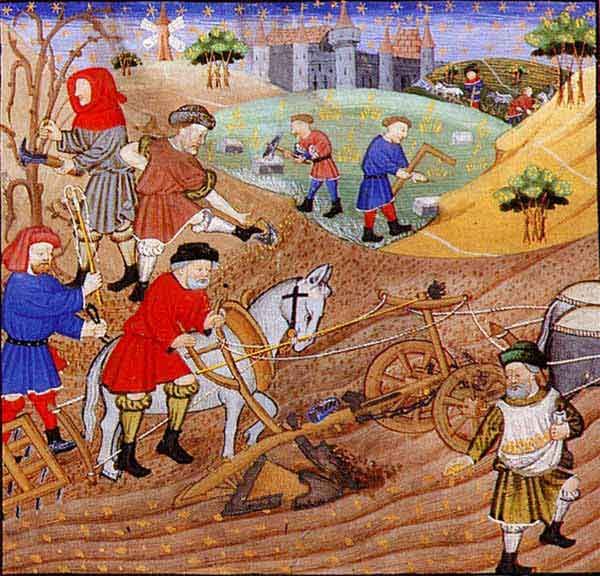
A 13th Century farming scene: Le Régime des princes, 1279.
During this period, technology and agriculture advanced greatly, but everyone was at the mercy of the elements and entire harvests were often lost creating famine. The knowledge and skill required of the mediaeval farmer was therefore ‘vital and important’; a close eye had to be kept on the seasons, weather and general climate. Planning and forethought were essential, especially when things did not go to plan, for nothing could be grown in the winter months, so the community (which may just have been a single household) depended upon the stores built up over the summer and autumn. They were slaves to the calendar.
Wet, cold weather in spring and summer could spell disaster later in the year if food, especially grain, was not rationed and stored properly; what was grown was grown, and when autumn hit no plants could be cultivated from seed. Fighting off damp and vermin was important too; not just because it was food for the people, but for livestock too. Whole stores have been destroyed by mould. The best way to take down a village or town was to destroy the grain stores.
A modern reproduction of a mediaeval grain store (Village de l’An Mil)
Efficiency was also key: corn and other cereal crops (such as oats in more northern climes) were collected and stored, poultry such geese would eat fallen grains difficult for people to pick, and would hopefully fatten. These birds – and other livestock – would all be slaughtered, the offal being eaten immediately with most of the meat preserved in salt and smoked in chimneys. Only the animals required for breeding the next year would be kept, but in poor years even these beasts had to be killed. This had huge repercussions; not only would there be no breeding stock next spring, but also no oxen to plough the fields to plant the corn. With few crops, people were essentially reduced to a hunter-gatherer lifestyle, trapping wild animals and foraging for pignuts, berries and leaves. Famine and its associated diseases followed, especially when one throws in the Black Death in the latter centuries of this period.
Life for most was relentlessly gruelling and cruel, especially in the first Anglo-Saxon half of the period and no one was exempt; of course, it was peasants and slaves who would be the first to feel the effects of this, those ranked higher were better protected, but as a town generally ate the food it produced itself, effects quickly trickled down.
Things did improve in England when William the Conqueror/Bastard hopped over the channel with his Norman mates; an unprecedented amount of food and wine was imported from Normandy, France and other countries. Of course, only the Norman high-rankers benefitted. A major blow to the common man was the Conqueror’s implementation of strict hunting laws. Only the king, nobles, and those given special permission could hunt in the forests, anyone caug were punished severely, even in very lean times (for more information on this topic see this previous post).
Mediaeval Feast
A noble mediaeval feast, notice the dogs have free reign!
In times of plenty great feasts were held, especially by the kings and nobles of the age; one had to show ones wealth, and the best way to do this was by displaying how productive your land was with huge amounts of meat, poultry, game and fish. In this period it was all about quantity and quality.
In the twelfth century, the first crusades opened up a whole new world of excitement and opulence for the rich, as exotic fruits and spices were brought back from the Holy Land along the newly-formed spice routes, adding a whole new dimension to high-class feasting.
In the early Anglo-Saxon period, and in smaller towns and for Christian feasts and celebrations, feasts tended to be a community-wide affair, with everyone eating together in a great hall. There was a strict system where one sat, however, the top table being reserved for the special guests.
Most feasts followed the same basic pattern; several courses each made up of several dishes, with everyone collecting food from the tables at which they were sat. Large flat squares of hardened bread called trenchers were used as plates, which were then given to the poor to eat afterwards (it was also much cheaper to make disposable bread plates than to buy or produce earthenware ones.)
The first course started with the archetypal roast boar’s head, it was often extravagantly decorated with brightly coloured pastry pieces as well as silver and gold leaf. It was symbolic of a time gone past – the head of the beast killed for the night’s feast, and was not generally eaten. Served alongside the head was brawn, a kind of terrine made from a pig’s head, and mustard. I have made brawn myself and it is very delicious; it’s amazing how much meat there is on a pig’s head!
Immediately after the boar’s head and brawn, the large roasted animals were brought in: pigs, mutton, kid, swan, venison and ‘noble’ game such as hare.
The second course was made up of the smaller and lesser animals: chickens, rabbits, songbirds and bitterns for example, and meat broths.
The third course was essentially the same as the third, but included fish and and more dainty dishes, like eggs in jelly, custard tarts, marzipan and comfits.
There would also be many pies, some small and some huge, and some that were there just for show; the most famous being the ‘four-and-twenty blackbirds baked in a pie’. It was common to put live animals in huge pastry cases so that when it was cut open, they would fly (or crawl) out much to the guests’ amusement. Such solettes, or subtleties, were part of many feasts. Great feasts had a whole course made up of dishes that were simply there to be looked at!
The planning and manpower required to carry off these huge events, the food served would be dependent upon season. My next few posts are going to about mediaeval food – hope you enjoy!
If you like the blogs and podcast I produce, please consider treating me to a virtual coffee or pint, or even a £3 monthly subscription: follow this link for more information.
References:
Curye on Inglyche (1985), Eds. Constance B Hieatt & Sharon Butler, Oxford University Press
Food in England (1954) by Dorothy Hartley, Little Brown & Company
A History of English Food (1998) by Clarissa Dickson-Wright
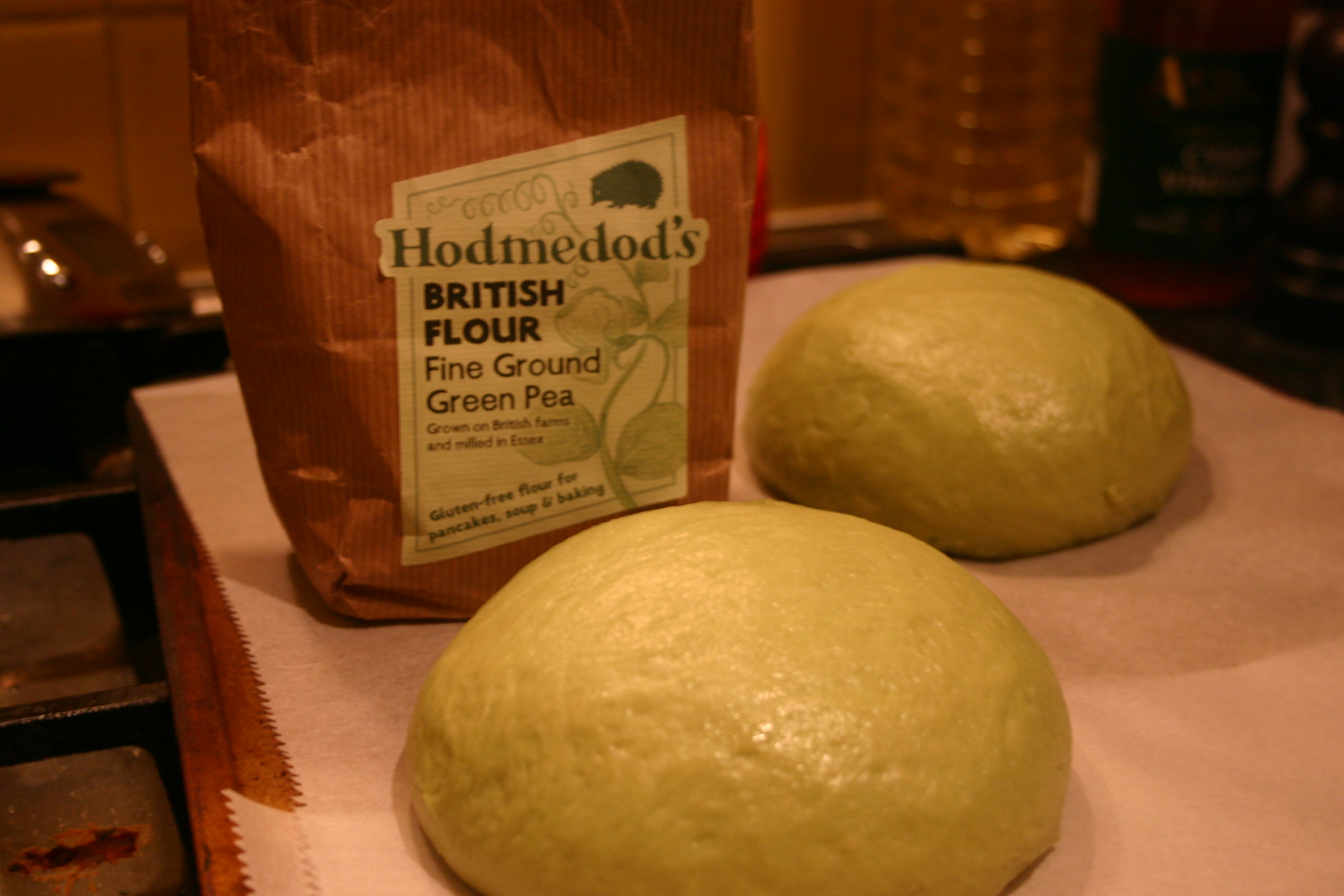
I often frequent the excellent vegan cooperatively-run supermarket Unicorn in Chorlton, south Manchester, to fill my food cupboards both at home and at the restaurant. One day, a couple of months ago, I spotted a very mediaeval ingredient: green pea flour. I had come across ‘peasemeal’ in several old books, but didn’t expect to ever see it for sale. (Another popular mediaeval ingredient is almond milk, used particularly on fasting days; it’s funny how these old ingredients are having a comeback as health foods.)
One of the mediaeval small-holder’s most important crops was his pea crop – they were not eaten as young sweet garden peas, but were left in the pods to mature and dry. The peas became starchy and packed with protein; an excellent nutritional source for the winter months. We use those dried peas today for mushy peas or split peas. Then, they were mainly used in pease porridge/pottage.
The pease were often ground to make peasemeal to thicken stews, and to make bread for cattle. People only ate it themselves in times of winter famine, and this peasebread was hated by all.
Peasebread and peasemeal stopped being produced in most of the UK, but it did live on until the mid-20th Century in the very North of Scotland and Orkneys, where very few crops can be grown in abundance (rye and oats are the only others really). Folk enjoyed pease scones, bannocks (flatbreads) and breads, but it was still associated with poverty.
Peasemeal is considered easy to digest, partially due to its lack of gluten, and is high in protein and carbohydrates. I quite like how some of these mediaeval ingredients are being re-examined during a time of vegan and paleo-dieting. It is strange to think how the poor were eating healthy vegetables with little fat, red meat, salt and sugar, considered then to have no nutritional value. Meanwhile, the bunged-up rich were chowing down almost entirely on meat, spice, white bread and sugar, in the belief they were eating properly. I bet their bedchambers sank in the morning.
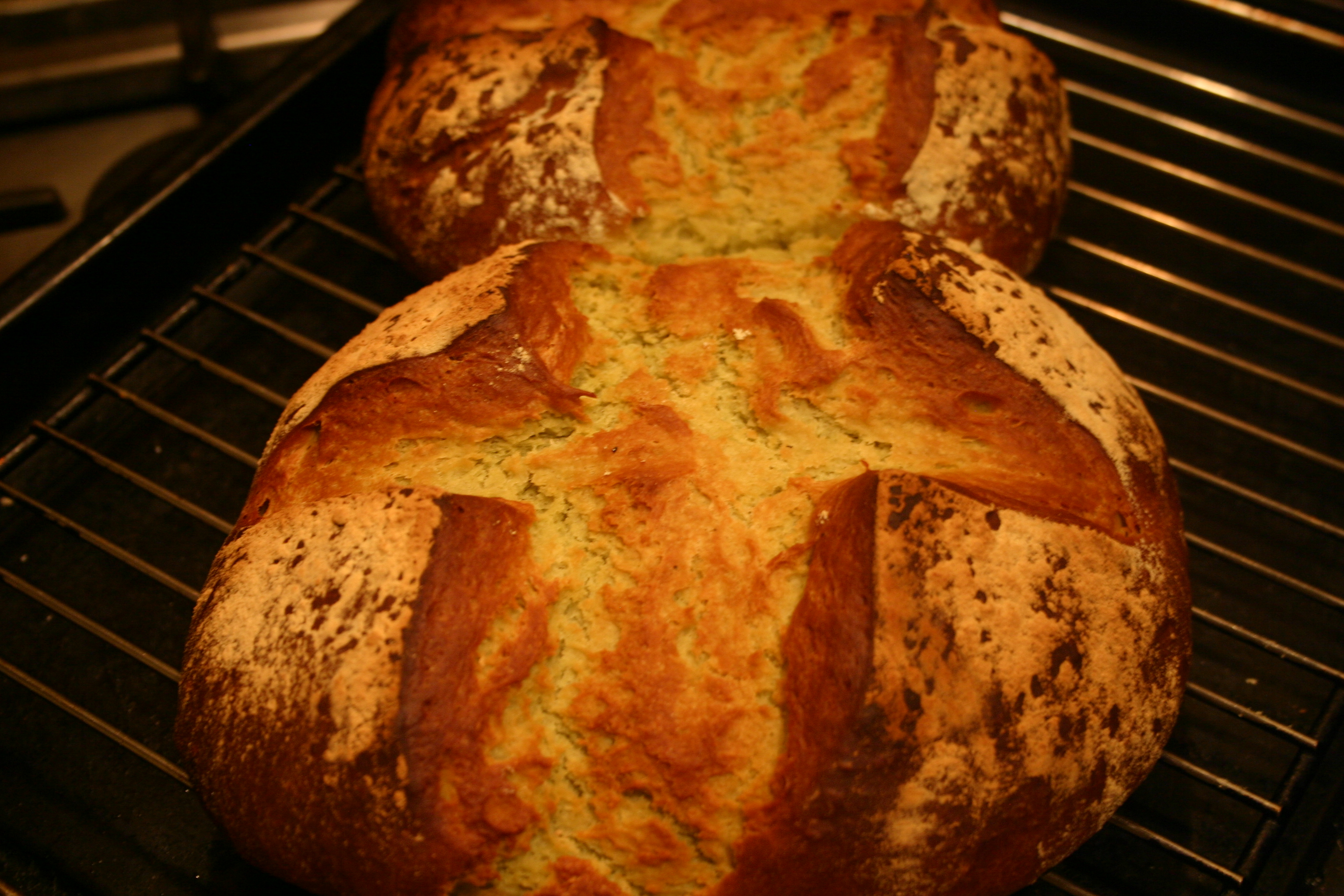
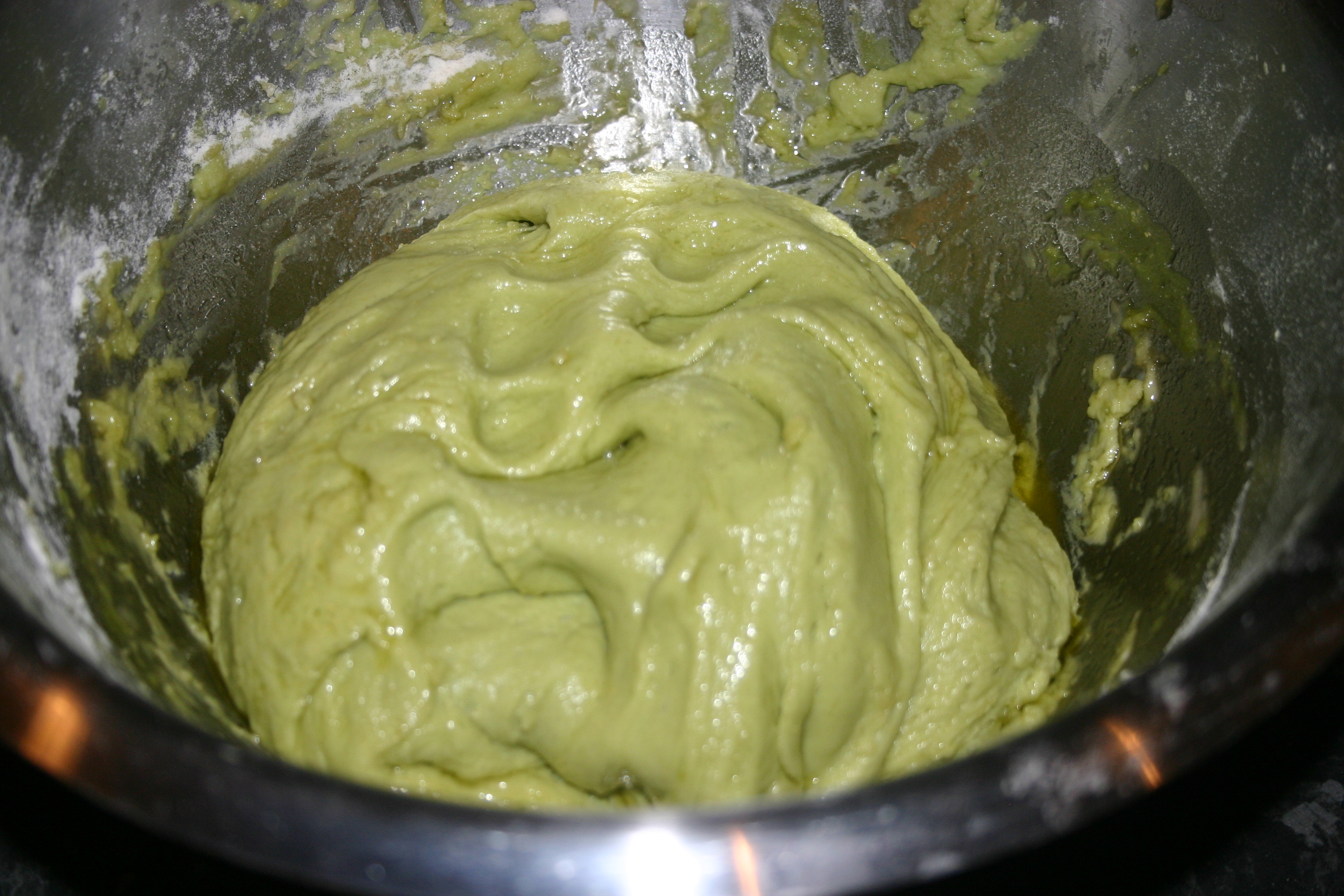
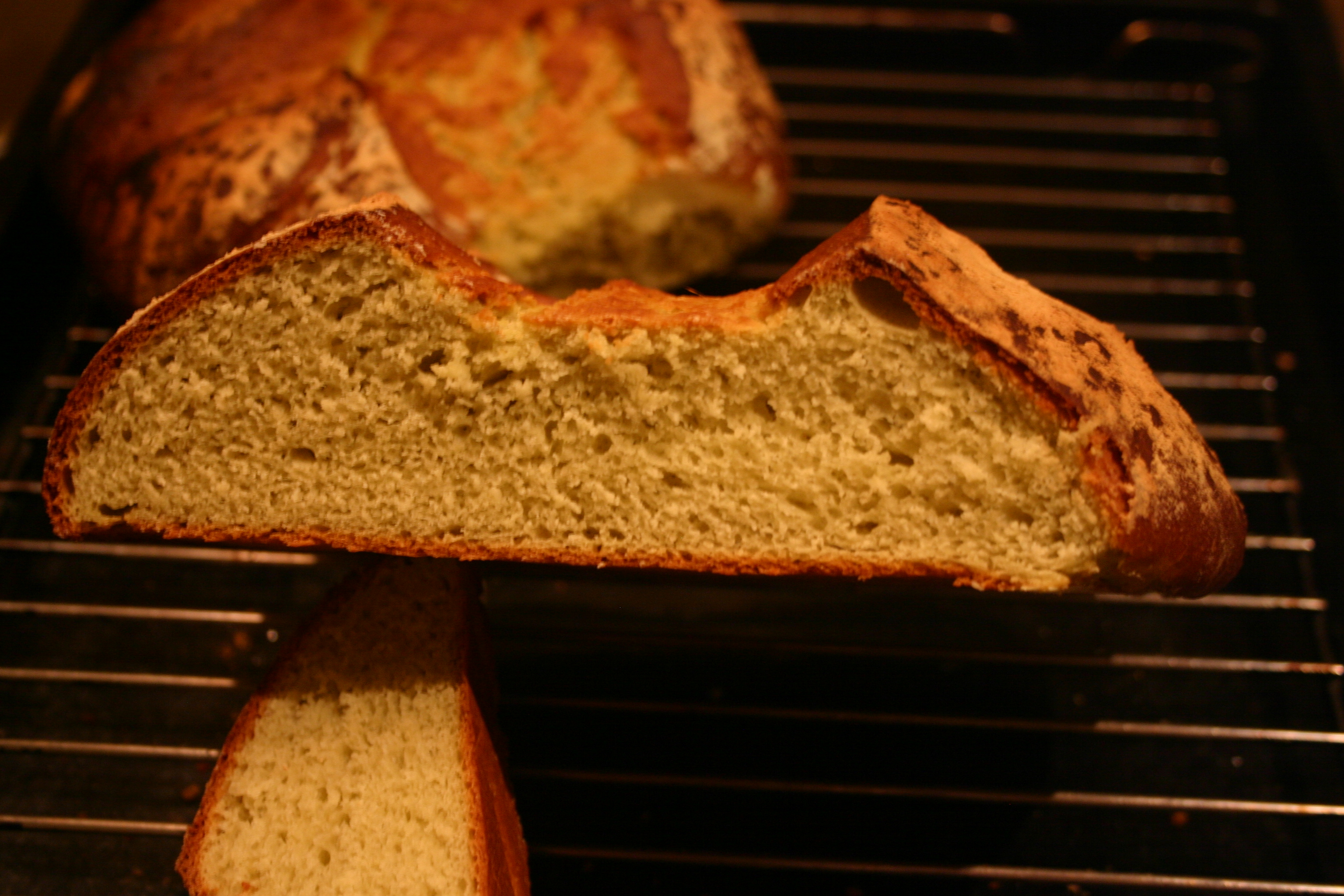
I had to have a go at the derided peasebread, just to see how bad it was. I did cheat a little bit and mixed the peasemeal with some strong bread flour. It was pretty straight-forward to make, though the dough was very sticky was hard to knead. The resulting bread was dense and a little crumbly, but had a delicious sweet pea flavour, with hints of roasted peanut butter. Probably too dry to eat on its own, it was great toasted, buttered and dunked in soup.
If you like the blogs and podcast I produce, please consider treating me to a virtual coffee or pint, or even a £3 monthly subscription: follow this link for more information.
So, here’s my recipe for peasebread. It made two flattened cobs.
(Notice all my liquid measurements are in grams rather than millilitres; for greater accuracy, it’s much easier to weigh your liquids, a tip from Elizabeth David.)
250g green pea flour
250g strong white bread flour
10g salt
10g instant yeast
30g sunflower or olive oil, or softened butter or lard
330g hand-hot water
In a wide mixing bowl mix together the two flours. To one side of the bowl place the salt, and place the yeast to the opposite side. Make a well in the centre and pour in the oil/fat and the water. Mix with your hands to form a dough. Leave to settle for ten minutes.
Spread a little oil on a work surface and knead until smooth. This is pretty tricky because it is so sticky, so use a dough scraper to help.
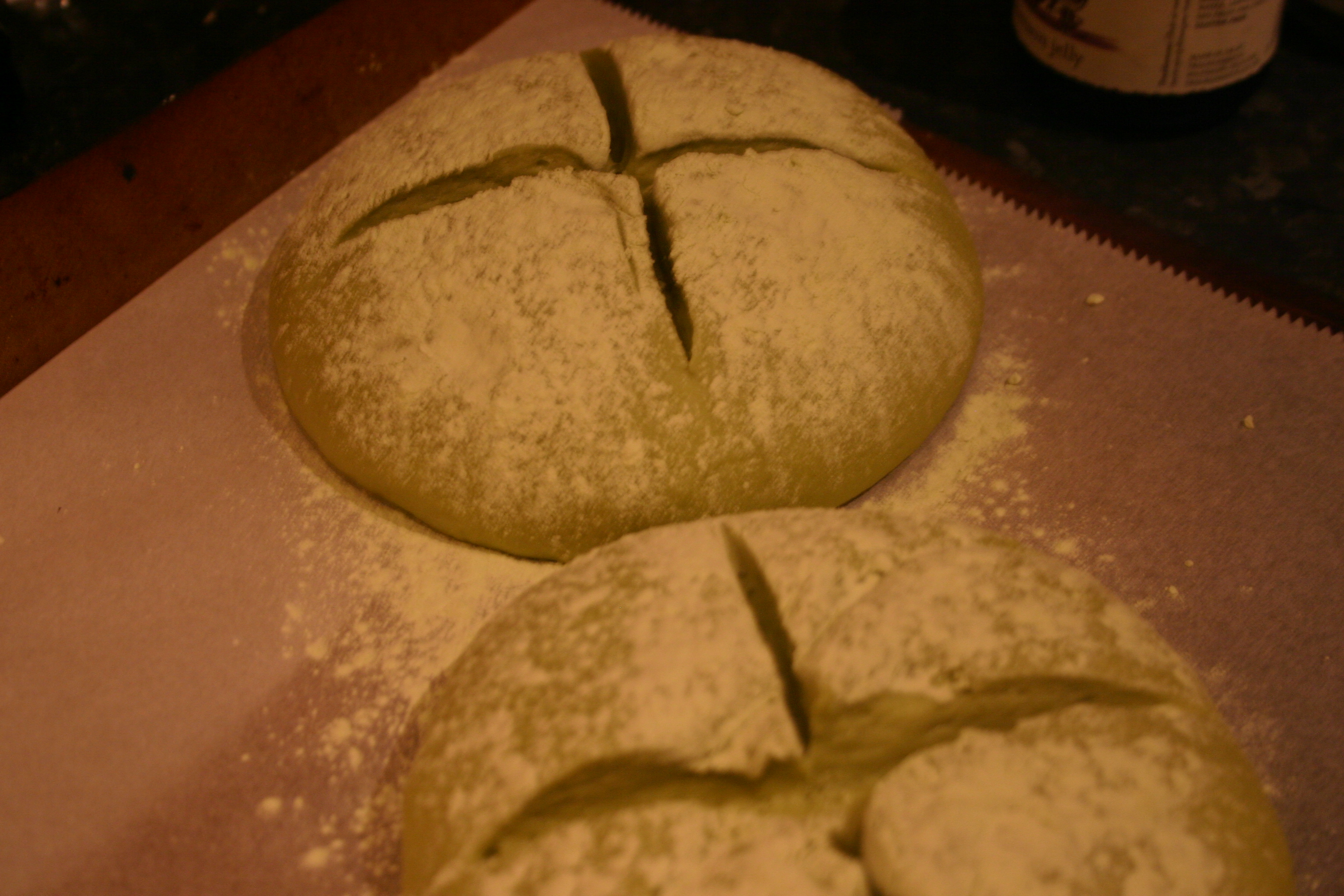
Oil a bowl and place in the dough inside and cover. Leave to rise until it has doubled in size, about 2 hours. Knock back the dough, divide into two pieces and form in to two taught, round cobs. To do this, roll into balls with oiled/floured hands, then tuck in the dough underneath whilst turning the ball, tautening the surface. Place on greased baking trays, flour generously and cut a cross in the centre. Cover with large plastic bags and leave to rise again for about an hour.
Place the cobs in a cold oven, then set the temperature to 230⁰C and bake for 40 minutes. Cool on a rack.
Every now and again I write a post on forgotten foods, and here is one vegetable that was used widely in Medieval times, but has fallen very much out of use in this country: parsley root.
We are all very familiar with the culinary uses of parsley leaves, but the root has been much ignored in Britain of late. Parsley root is what celeriac is to celery and it is still commonly used in northern Germany (hence its other name ‘Hamburg’ parsley), Croatia, Bulgaria, Poland and Russia. It is an essential element in a truly authentic borscht.
Parsley root pops up every now and again in Medieval recipes but it popped up rather more recently in Manchester from my fruit and veg suppliers Organic North. I assume it’s started to appear here because of the recent influx of Eastern European folk to the UK and demand is high!
In our old cook books, it only seems to crop up as an ingredient in pottages and the like, but seems to have been used extensively by local physicians in all sorts of tinctures to cure dropsy and scarlet fever, as well as in bladder and kidney ‘teas’ because of its supposed diuretic properties. It turns out that parsley root is very good for the liver, so they might have been on to something there.
Parsley root (Photo: Harvest to Table)
Parsley roots are a pale creamy-white, like a parsnip, but less yellow, and are thin and slender like a carrot. They lack that woody part to their roots that large parsnips have, being tender all the way up like a carrot. They taste predominately of parsley, but also of celeriac and parsnip.
They can be eaten raw in salads or as part of a coleslaw; the organic ones I got hold of made my tongue go a little numb after eating a raw one!
Cooked, they can be used like any root vegetable in soups. Apparently, they roast very well and make excellent chips. Their slight earthiness marries well with fish especially shellfish. I found a great-looking recipe for scallops in parsley root milk by American chef Karen Brooks – one to try next!
If you are unsuccessful in your search to find your own parsley roots, don’t worry because they are very easy to grow, taking just 3 months from seed to harvest. They overwinter well and can be dug up, replanted in a pot, and popped on a windowsill where the leaves will regrow to give you a personal supply of forced parsley herb.
If you like the blogs and podcast I produce, please consider treating me to a virtual coffee or pint, or even a £3 monthly subscription: follow this link for more information.
Roast Parsley Root Soup
The best ways to enjoy any root vegetable is to either roast it or turn it into soup. Here’s a perfect combination of the two from my chef Matt, I particularly like that – the onion aside – all the vegetables are from the parsley family, so they all work together very well, never taking focus away from our star ingredient.
3 tbs olive oil
1 medium onion, sliced
6 fine parsley roots, peeled and chopped into 1cm slices
1 carrot, prepared just as the parsley root
2 celery sticks, roughly chopped
2 or 3 sprigs of thyme
2 fresh bay leaves
Salt and pepper
1 litre light vegetable stock or water
A splash of white wine or white vermouth (optional)
Chopped parsley root leaves or celery leaves to garnish.
First preheat the oven to 200°C and then heat the oil in a sturdy roasting tin over a hob. Tumble in the onion, parsley roots, carrot, celery, thyme and bay leaves. Season with salt and pepper then turn the vegetables over in the pan until evenly coated with the oil. Once things have picked up a little colour, place the tin in the oven for around 20 minutes, stirring at half time.
When the vegetables are cooked though place them in a saucepan with the stock or water. Deglaze the pan with the wine or vermouth, if using, otherwise use a little water and tip all those nice burnt bits into the saucepan.
Bring the soup up to a bare simmer and cook until things are very soft. Allow to cool a little bit before fishing out the herbs and blitzing in a blender.
Check your seasoning, reheat and serve in bowls with some chopped parsley or celery leaves.
I have been very lucky this game season with the range of species that have fallen into my lap. Last post I told you all about the snipe I managed to get from my butcher Mark Frost. Well he’s done it again and has managed to hold of half a dozen beautiful woodcock, the larger cousin to the snipe; almost as elusive and certainly no less delicious! Another rare treat for the patrons of The Buttery.
Woodcock and snipe are similar birds and likewise can be cooked in similar ways, so much of what can be said about cooking and eating snipe can be said about woodcock.
A while back I wrote a general entry about game. Read it here.
Woodcock in brief
Season: 1 Oct – 31 Jan (England, Wales, Scotland & Northern Ireland)
Hanging time: 4 – 8 days
Weight: 300g
Roasting time: 20-30 minutes at 230⁰C
Breeding pairs in UK: 55 000 (increasing to 1.4 million in the winter)
Indigenous?: Yes
Habitat: Mainly woodland, but also heath and marshland
Collective noun: fall
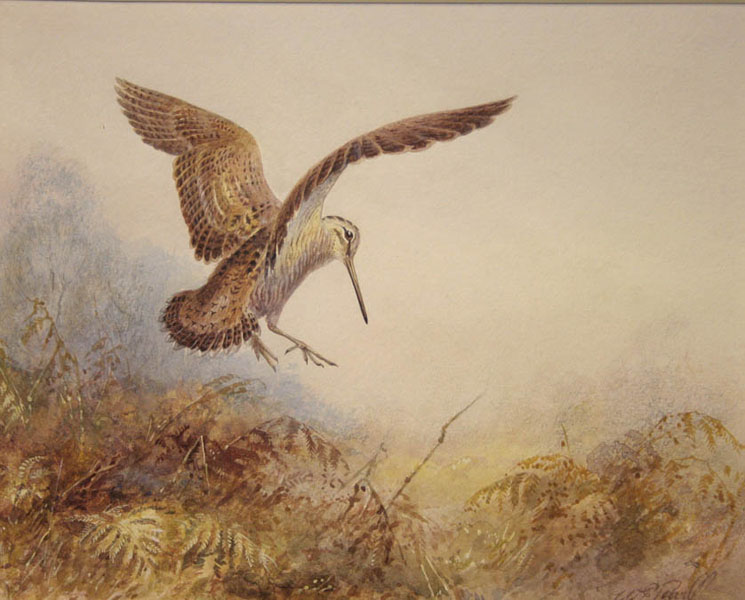
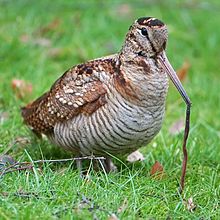
Our second-smallest game bird is a mysterious little creature, spending most of its day hiding in the undergrowth in wooded areas. The only time you are likely to come across one is if you startle it during a walk in the woods, but even then you may just catch a glimpse one of skitting and zig-zagging toward another hiding place.
Then, suddenly, usually around the full moon before Hallowe’en there is a huge influx of migratory woodcock, using Britain as an overwintering spot, often being first spotted on beaches, exhausted. Seeing the birds apparently come from nowhere in this fashion and at this time must have added to their already ethereal reputation.
Having little understanding of migration, people thought woodcock went to the moon during spring and summer. Seeing them first on beaches made others believe that they hatched from mermaid’s purses (the desiccated egg cases of sharks).
Reclusive and well-camouflaged, they only venture from their hiding places to hunt their prey at dusk; and it is for this reason that woodcock are rarely found in butcher’s shop windows. It’s a lucky shooter that manages to bag a few woodcock, and they rarely go further than the hunter’s kitchen. I’m lucky in that my butcher is also a shooter!
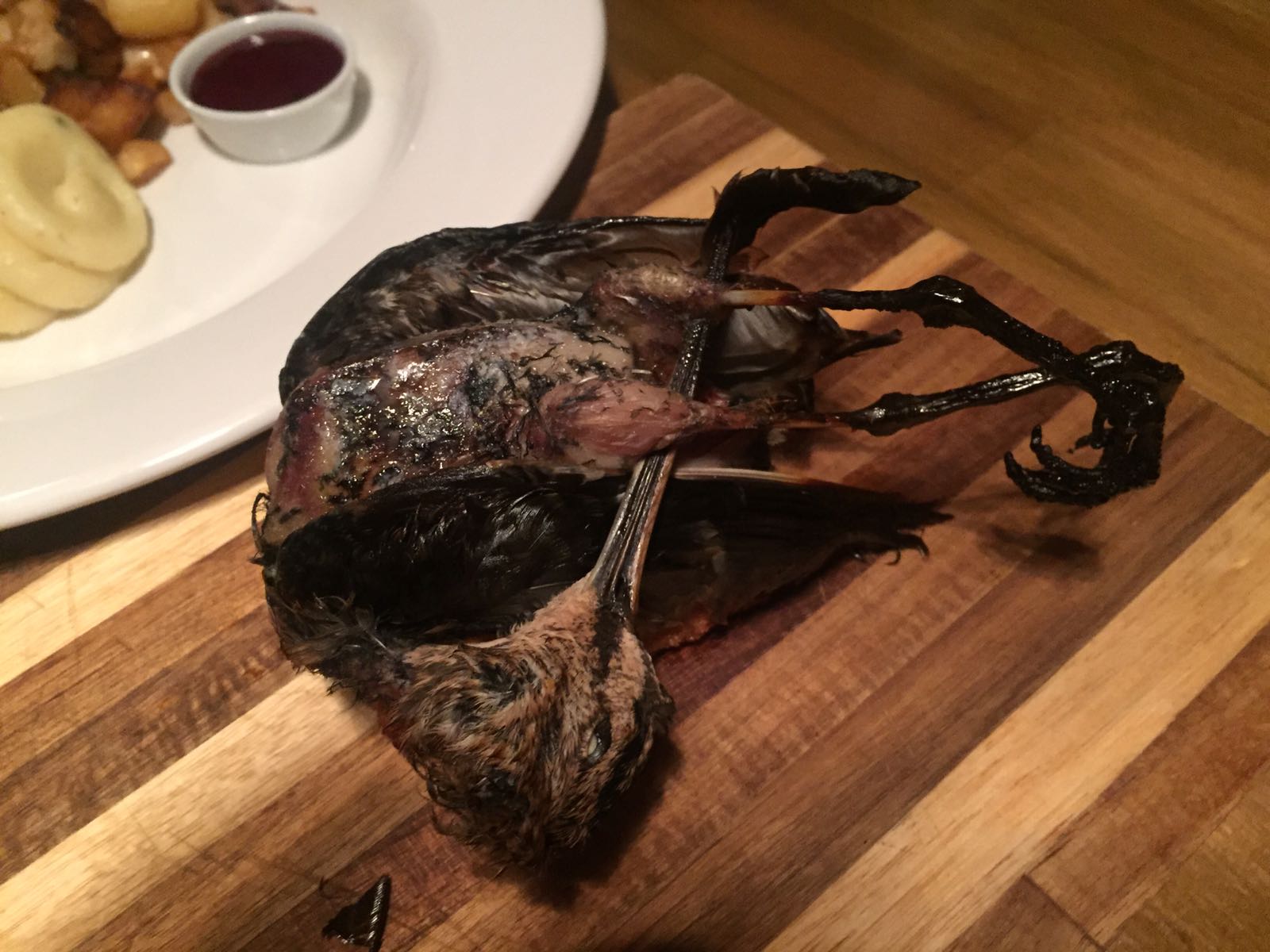
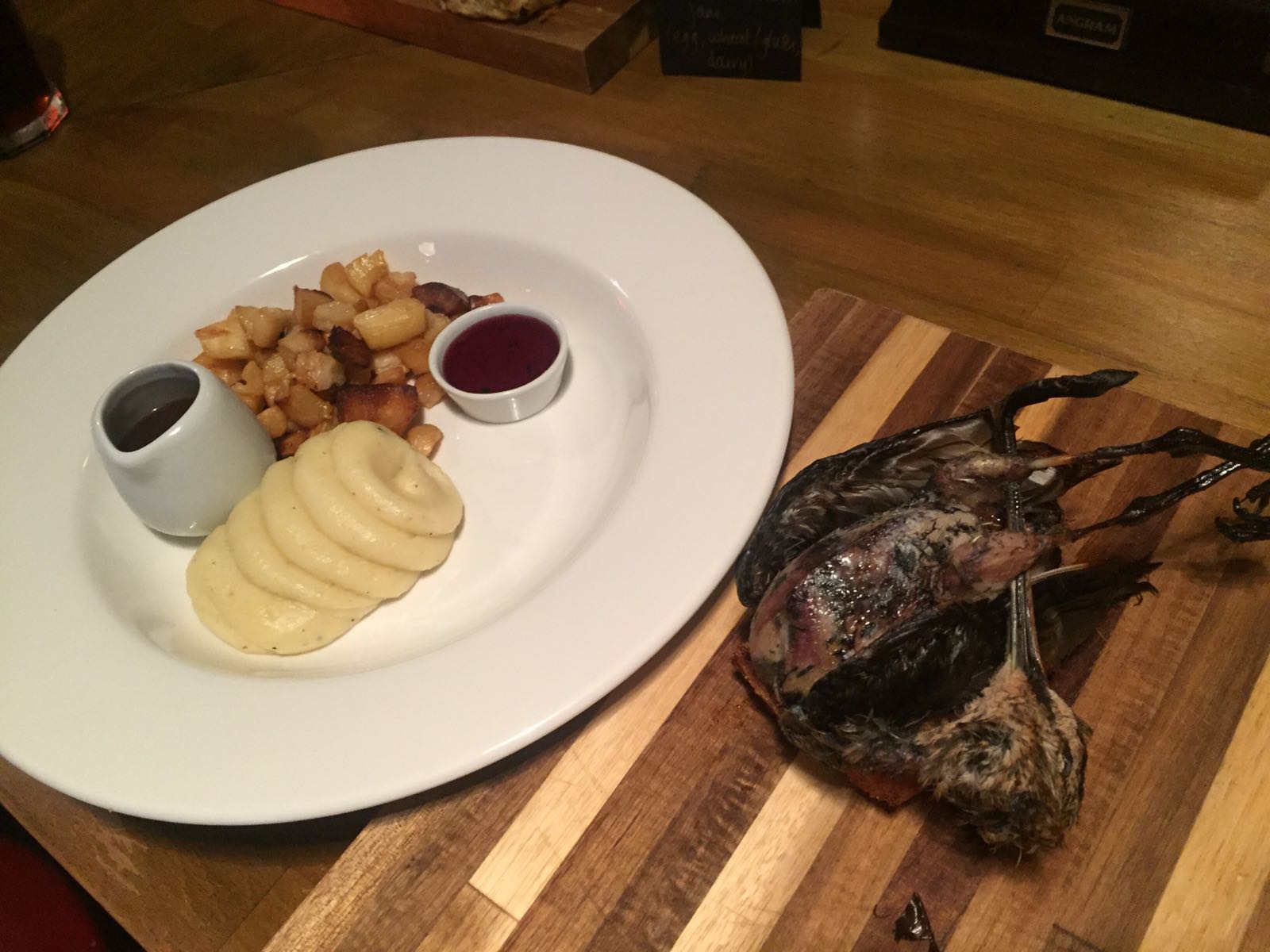
A treat almost as rare as snipe, it is absolutely delicious t traditionally roasted completely whole on a piece of toast, with just breast and leg feathers removed. The trail (i.e., the innards) are then scooped out and served upon the toast. Ortolan and plover are cooked in the same way (though it is now illegal to eat ortolan).
Because they are eaten whole, they should not be hung for long, as those gamey aromas quickly turn into the aroma of decomposition. However, it is all personal taste – true gastronomes hang their woodcock or snipe by the feet until the innards of the birds start to drip through their bills.
Woodcock were not as rare a treat as they are today where they can only be legally shot during the months when the country is teeming with them and can only be shot. Guns were not light enough to shoot woodcock with any accuracy or success and so night nets were set up that caught the birds in great numbers so they could be sent to market still alive. This practice is now illegal (though, unfortunately not in all other European countries).
Sourcing Woodcock
Woodcock are rarely found on sale, but I have spotted them in my butcher’s shop a couple of times in the last three or four years. I do remember seeing them once at a game stall in London’s Borough Market. Patience is a virtue and if you keep looking, you’ll eventually find one. On the open market, you’ll pay at the very least £15 per bird.
Alternatively, make friends with a hunter, or ask if you can help in a local hunt. I have never done this, but would love to.
If you like the blogs and podcast I produce, please consider treating me to a virtual coffee or pint, or even a £3 monthly subscription: follow this link for more information.
Preparing woodcock for the table
Take a woodcocke, & reyse his legges and his wynges as an henne; this done, dyght the brayne.And here begynneth the feest from Pentecost unto mydsomer.
From The Boke of Keruynge (the Book of Carving), 1508
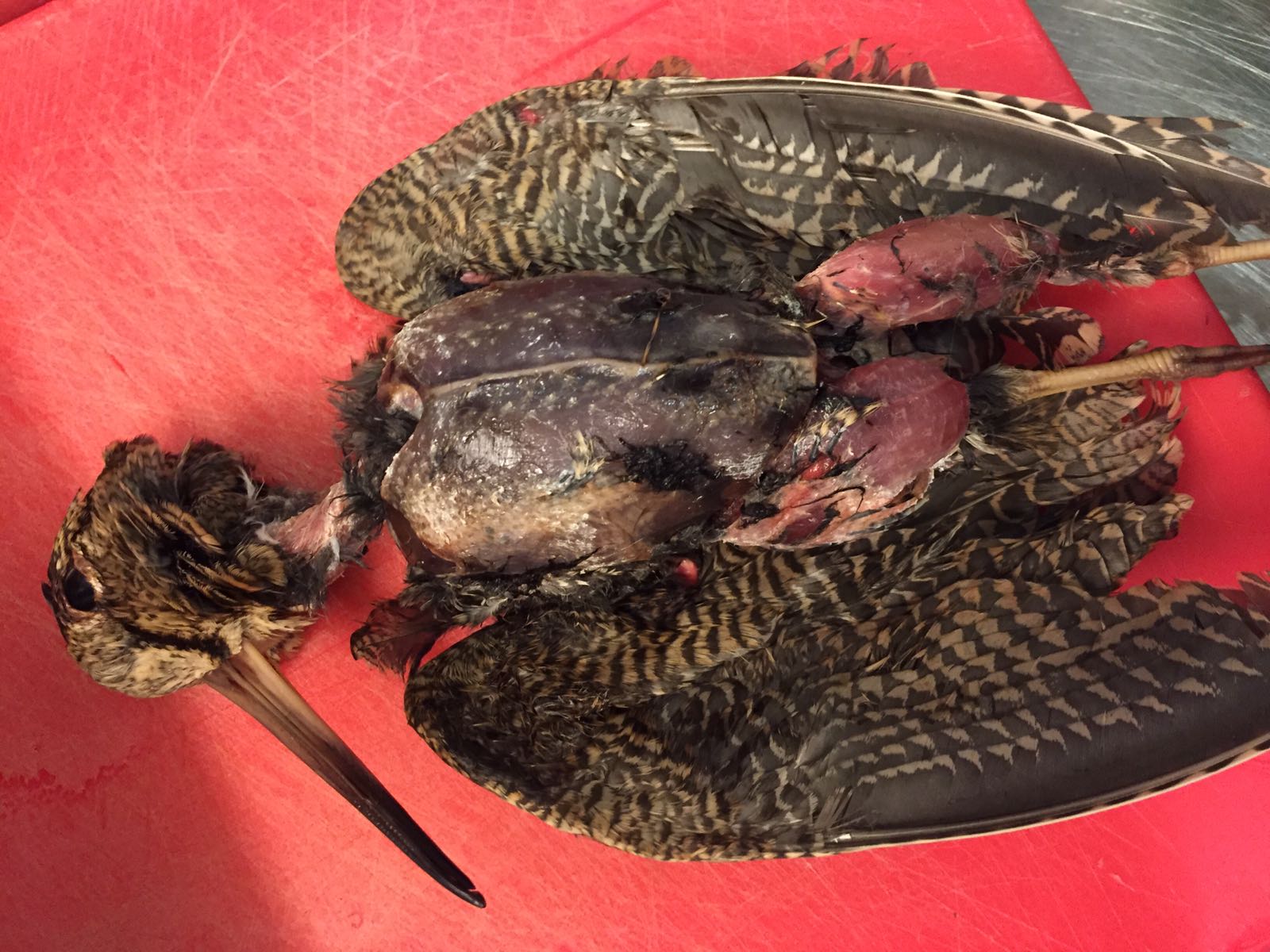
As already mentioned, woodcock need not be drawn. You can pluck them, but be careful as they have very thin skins that are easily torn. If you are keeping the head on, remove the eyes and skin the head if you like. To draw the birds it is best to use some sharp scissors to make an incision. Use your first two fingers to loosen the innards and pull them out. Keep the tiny livers if you like. Drawing woodcock is easier compared to other small game birds such as partridge.
Woodcock is not always roasted, but because you often only get hold of just one, it’s the only way you can eat it really. I’ll not repeat myself; the way it is cooked and served is exactly the same as snipe, except for a few minor differences:
Smear butter over the breasts, season and cover with streaky bacon to prevent the bird from drying out in the oven.
Roast for 20 to 25 minutes, depending upon how rare you want your bird. Slip the buttered toast under the bird for the final 10 minutes of roasting.
Last week I was very excited to hold of some snipe, a very rare treat indeed. I roasted them and got them on my menu. To eat them in the traditional way is, by our modern standards, rather macabre; they are cooked and roasted completely whole. Guts and brain are eaten. It’s not for the faint-hearted, but, as is often the case, they make delicious eating. I was worried I had gone a little too far, but the people of Levenshulme did me proud.
So here’s a post all about snipe and how to roast and eat them in the traditional way.
A while back I wrote a general entry about game. Read it here.
Snipe in brief:
Season: 12 Aug – 31 Jan (England, Wales & Scotland); 1 Oct – 31 Jan (Northern Ireland)
Hanging time: 2-3 days
Weight: 150g
Roasting time: 10-15 minutes at 230⁰C
Breeding pairs in UK: 80 000
Indigenous?: Yes
Habitat: Mainly marshes and wetlands, but also heathland, moorland and water meadows
Collective noun: wisp (when in flight); walk (when on foot)
What is a snipe? Well Laurence Andrew, writing in his tome The noble lyfe and natures of man of bestes, serpentys, fowles and fishes… (c. 1527) has a pretty good stab and describing it (though I’m sure the snipe does not get its bill stuck in the mud Natural Selection would have something to say about that!):
Snyte [Snipe] is a byrde with a longe bylle & he putteth his byll in the erthe for to seke the worms in the grounde and they put their bylles in the earthe sometyme so depe that they can nat get it up agayne & thane they scratche theyr billes out agayn with theyr fete. This birde resteth betimes at nyght and they be erly abrode on the morning & they have swete flesshe to be eaten.
Weighing in at an average of 150g, the snipe is our smallest legal game bird. They are not an introduced species like the pheasant, red legged partridge or rabbit, but indigenous to the UK and Ireland (where most reside). There are around 80 000 breeding pairs in the UK, but these numbers increase substantially when around one million individuals flock to the country to overwinter.
Normally, shooting indigenous species holds up a red light for conservation – and rightly so, it should always come first, but in this case the snipe have the upper hand because they are so damn tricky to shoot.
They are secretive, highly camouflaged birds that use their very long bills to probe mud and sand flats for tasty creatures to eat. When driven at a hunt they fly in zig zags and are quickly gone again, this is why a group of them is called a wisp. (It’s no surprise, then, that especially good sharp shooters in the armed forces became known as snipers.) These birds are almost self-managing in their difficulty to hunt!
As a food they are delicious, indeed they are considered the finest eating. They are wonderfully rich and tender, and although they are small, a little goes a long way. Winston Churchill once demanded ‘a brace of snipe washed down with a pint of port’ as a hangover cure whilst on a transatlantic flight to Washington DC. Their carcasses make excellent stock.
Not just the leg and breast meat are eaten, but also the brain and the trail – in other words, the innards of the bird, usually scooped out and spread on the slice of toast it was roasted upon.
Don’t be repulsed by this! Your first worry is probably that the guts will be full of the bird’s faeces, well worry not, the snipe (and its larger cousin, the woodcock) evacuates its bowel as soon as it takes flight. Your second worry, presumably, is that you are eating gory intestines, liver, heart etc. Again, nothing to worry about here either! It is all very soft, rich and tender like a lovely warm pâté.
The head is cut in half lengthways so that the brain can removed or sucked out.
This is ancient finger food.
Sourcing snipe
As you will have guessed, finding snipe for the table is tricky. I’ve only ever seen snipe three times in butcher’s shop windows so my advice is to make friends with someone who shoots, because only a few will have been shot on any single hunt, and therefore it’s unlikely there will be any surplus for the butcher to pick up. The chances are you’ll probably have to finish the business of hanging the bird(s) yourself.
Most game birds are sold in ‘braces’, i.e. pairs, usually a cock and hen, but snipe actually come in threes, or ‘fingers’, so-called because that’s how many you can hold between the fingers of one hand.
These tiny birds do not need to hang for long, just 2 or 3 days. If it is unseasonably warm or being hung indoors 1 or 2 days should do the trick.
Preparing snipe for the table
You are to observe: we never take anything out of a wood cock or snipe
James Doak’s Cookbook, circa 1760
Snipe are extremely easy to prepare if you are roasting them:
Pluck away the leg and breast feathers. If you like, remove the skin from its head.
Truss the snipe with its own beak, by pulling its head down to its side and spearing the legs with its long bill.
Some recipes as you to remove the trail before you cook it (sometimes to be fried up with butter and smoked bacon). To do this, make a small incision in its vent and use a small tea or coffee spoon to remove the entrails.
Snipe can also be cooked just like any other bird if you prefer (but you are missing out on a real treat). Pluck the whole body, or peel away the skin, and cut away legs, head and feet.
If you like the blogs and podcast I produce, please consider treating me to a virtual coffee or pint, or even a £3 monthly subscription: follow this link for more information.
Roast snipe, and how to eat it
Per person:
1 or 2 oven-ready snipe
1 or 2 pieces of toast, as large as the snipe
Butter
Salt and pepper
To accompany:
Mashed potatoes or game chips
Roast vegetables
Gravy made from game stock
A sweet jelly such as redcurrant, quince or medlar jelly
If your snipe have been kept in the fridge, remove them and let them get to room temperature, about 30-40 minutes.
Preheat your oven as hot as it will go, 230⁰
Spread a good knob of butter on the toast and lay the snipe on top. Smear two more small knobs over the snipes’ breasts. Season with salt and pepper.
Place the snipe on a roasting tin and roast for 10-12 minutes for medium-rare birds. If you are roasting several, make sure that you leave a good gap between each one so that heat can circulate around them.
Remove from the oven and allow to rest for 5 minutes or so.
The snipe can then be served to each guest with various accompaniments. I think it’s best if each guest carves their own snipe.
Take the snipe off its toast and cut of its head. Use a chef’s knife the cut its head in half lengthways.
Next, scoop out the snipe’s trail with a teaspoon and spread it over the toast.
Remove the legs and cut away the breasts using a steak knife.
Eating is fiddly, so use your fingers to get every piece of meat from the carcass.
Don’t forget the brain – pick up the two halves of the head and use the beak from one half to extract the brain from the other half, then swap. Alternatively, suck the brain out.
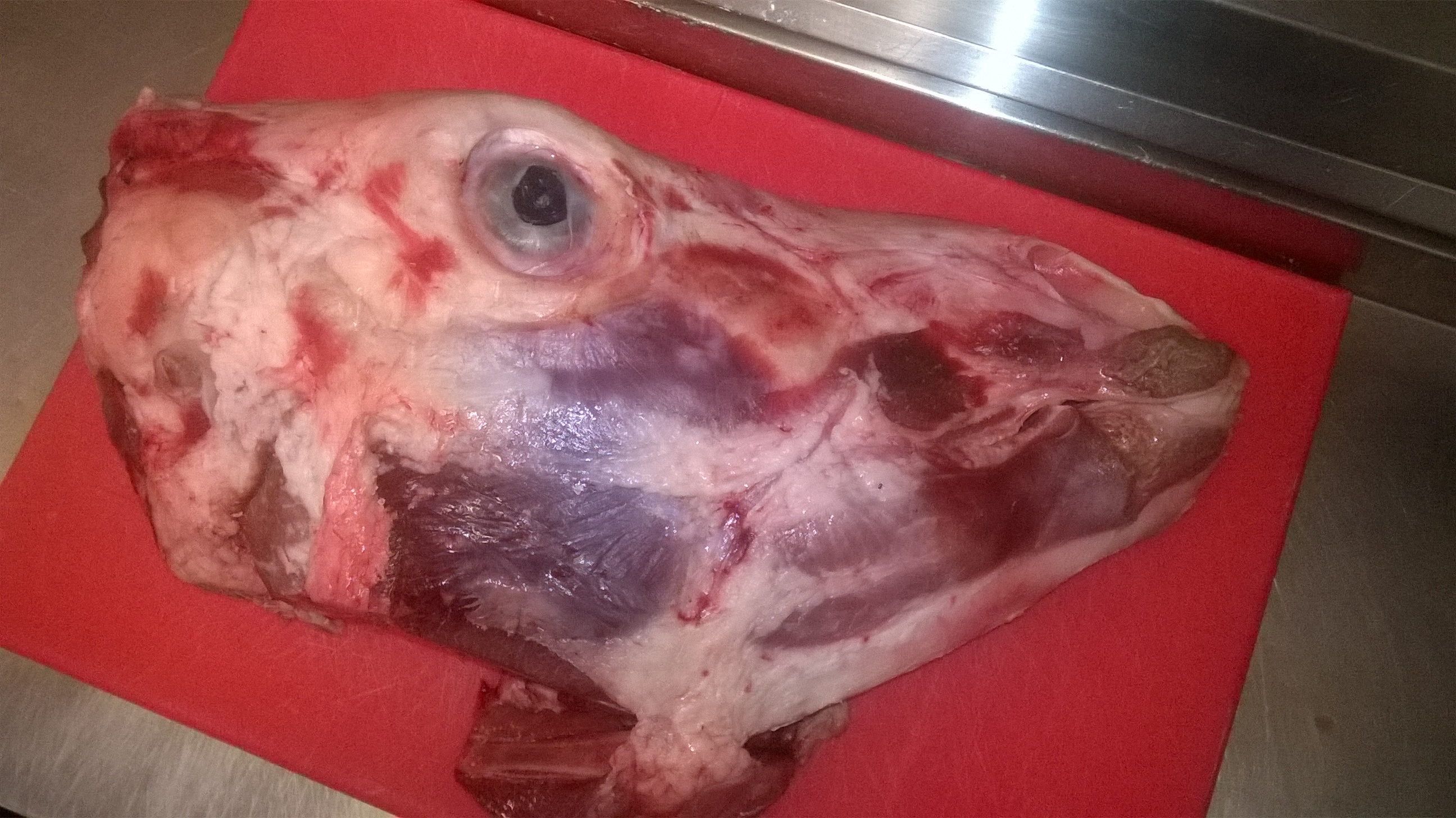
“Did you by any chance order a calf’s head a couple of weeks ago? It’s the kind of thing you would order.”
“You’re right it is the sort of thing I’d order, but I didn’t, sorry.”
“Well someone did, but I can’t remember for the life of me who it was!”
“Oh dear. Well if you don’t find the culprit, let me know, I’m sure I can take it off your hands.”
And that’s how I became the owner of a calf’s head; and I knew exactly what I was going to make with it once it got my hands on it: the mysterious Victorian classic, Mock Turtle Soup.
Mock turtle soup was invented from necessity – turtle soup had become immensely popular in the 1750s after sailors coming from the West Indies landed a couple of them upon British soil. Sailors would catch them and keep them alive on their ships as a source of fresh meat. They were very delicious, and it’s a surprise that any even made it back. Those that did, were readily snapped up by royalty. Now everyone wanted to get their hands one and suddenly no banquet or dinner party was complete without its turtle soup. At its peak in trade, 15 000 live turtles were being shipped live from the West Indies per year. Of course, these huge beasts were very expensive, and because such numbers were being caught, trade was not sustainable and the green turtles were almost hunted to extinction, driving up price even further.
But why were they so popular? Obviously the royal family enjoying themgot the ball rolling, but their huge bodies were made up of different cuts of meat tasting of veal, beef, fish, ham and pork!
So real turtle soup quickly became out of the question for all but the super-rich, and so mock turtle soup was invented. Recipes vary in their ingredients containing beef, ham, oysters, vegetables, skin, tongue and brain in an attempt to replicate the diverse tastes and textures of turtle meat. One ingredient common to all of the recipes I’ve seen is calf’s head – an economical addition with plenty of tastes and textures in itself. Recipe-writers are quite particular about the fact that the head should have the skin on – the fat and skin adding to the texture and flavour of the dish. My head arrived skinned and it still tasted good. If your butcher sells veal, see if you can get hold of one. Mine cost a fiver!
Some recipes are very complex, but are essentially a consommé of meat served with the meat cut into chunks with various accompaniments such as forcemeat balls (or fish balls or egg balls), fried brains, oysters and fresh herbs.
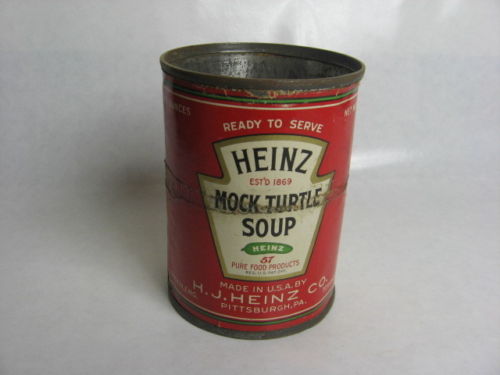
Mock turtle soup became a British classic; Heinz even made and canned it! Alice in her trip to Wonderland met a real Mock-Turtle, depressed that he was no longer a real turtle. He was quite tiresome if I remember rightly.
Alice meets the Mock-Turtle
I adapted a recipe for an ‘old fashioned’ mock turtle soup from the 1845 book Modern Cookery for Private Families by Eliza Acton, then my chefs Harry and Matthew and I got to work on producing it as a special for the restaurant.
If you like the blogs and podcast I produce, please consider treating me to a virtual coffee or pint, or even a £3 monthly subscription: follow this post for more information.
To make mock turtle soup
As the butcher to split the head. As soon as you get home, remove the brain carefully and place in a bowl of well-salted water, cover with cling film and keep in the fridge until needed. You don’t need to include the brain if you don’t want to; it is tricky to prepare, but it is delicious. We didn’t use the brain as we took our time over a couple of days to make this in-between regular food service, and brain doesn’t really keep more than 24-hours. Because the head had already been frozen, we couldn’t re-freeze it either. If you don’t have the same issues as we did, get it cooked! There are brief instructions below on how to prepare brain, but for more detail, check out the sister blog here.
1 calf’s head with tongue, brain removed, split and soaked in salted water for several hours
4kg beef neck or shin
75g butter
1 smoked ham hock
4 large onions, quartered
3 large carrots, peeled and halved lengthways
2 heads of celery, quartered lengthways
Bouquet garni: rosemary, bay, thyme, pared rind of a lemon
1 dsp black peppercorns
Rinse the calf’s head and place in a large stockpot, cover well with tepid water and bring slowly to a bare simmer. Skim any scum that rises to the surface of the water, then cover with a lid and let the head cook for 90 minutes.
In the meantime, heat up the butter in a large frying pan and fry beef until well browned. Add this, along with the butter, to the pot with the ham hock, vegetables, bouquet garni and peppercorns. Turn the heat up a little and bring back to light simmer, letting the whole lot tick over for seven hours.
Carefully remove the larger pieces of meat and bone and strain the soup well. If need be, reduce the resulting broth to produce a more concentrated flavour. Discard the vegetables and herbs and carefully remove the meat from the bone. Skin the tongue and cut away any gristle and bone from the root end. The meat can then be either shred or cut into even-sized pieces.
To finish the soup:
Beurre manie of equal amounts of butter and flour mashed together to form a paste
200ml sherry
½ tsp ground mace
¼ tsp Cayenne pepper
Salt
Double cream (optional)
Forcemeat balls (see below)
Prepared brain (see further below)
Chopped parsley
As you prepare the meat, get the strained stock back onto a simmer. Whisk in knobs of beurre manie until the soup is as thick as you like, add the sherry and spices and season with salt. Return the meat to the pan. If you like, add cream to the soup.
Serve the soup in bowls topped with forcemeat balls fried in butter or lard, breadcrumbed brain slices and chopped parsley.
For the forcemeat balls:
300g streaky bacon, chopped
100g grated beef suet, fresh is best, but the packet stuff is fine too
75g fresh breadcrumbs
1 tbs chopped parsley
1 tsp chopped marjoram
2 eggs, beaten
Freshly grated nutmeg
Salt and pepper
Mix together the first six ingredients together in a bowl and season with the spices and salt. Roll into walnut sized pieces. Fry in butter or lard over a medium heat.
For the brain:
The brain, soaked in salted water for several hours in the fridge
Seasoned flour
1 egg beaten
Dried breadcrumbs
Sunflower oil or lard for frying
A brain is covered by a membrane of blood vessels which need removing. To do this, gingerly place the brain on a chopping board, with its underside facing upwards. Here the membrane is thickest, and is the easiest place to begin. Carefully pull the membrane away. This is quite tricky and takes a little practise. Ease your fingers between the folds and get as many of blood vessels pulled away.
Now poach the brain in salted water for about 6 minutes. Remove, drain and cool.
Cut the brain into thick slices, pulling away any bits of membrane you might have missed.
Set out three plates: one with flour, the other with beaten egg and the last with the breadcrumbs.
Coat the brain slices in flour, then egg, then breadcrumbs.
Heat up the oil or lard in a frying pan and fry the brain quickly until golden brown – don’t overcook! Fry for three minutes maximum.
Hello all! So, sorry for my six month post dearth, but I’ve only gone and opened a little restaurant. It all happened quite suddenly and we’ve all been flying by the seat of our pants since it opened in January. It’s in a converted Post Office just off the highstreet in Levenshulme, Manchester.
Here’s the preview article, written just before we opened by lovelevenshulme.org…
Anyone who has been following my adventures over the last few years will know that I started up a little business almost four years ago, attempting to bring back the best of British food, really off the back of this blog, and my other project Neil Cooks Grigson.
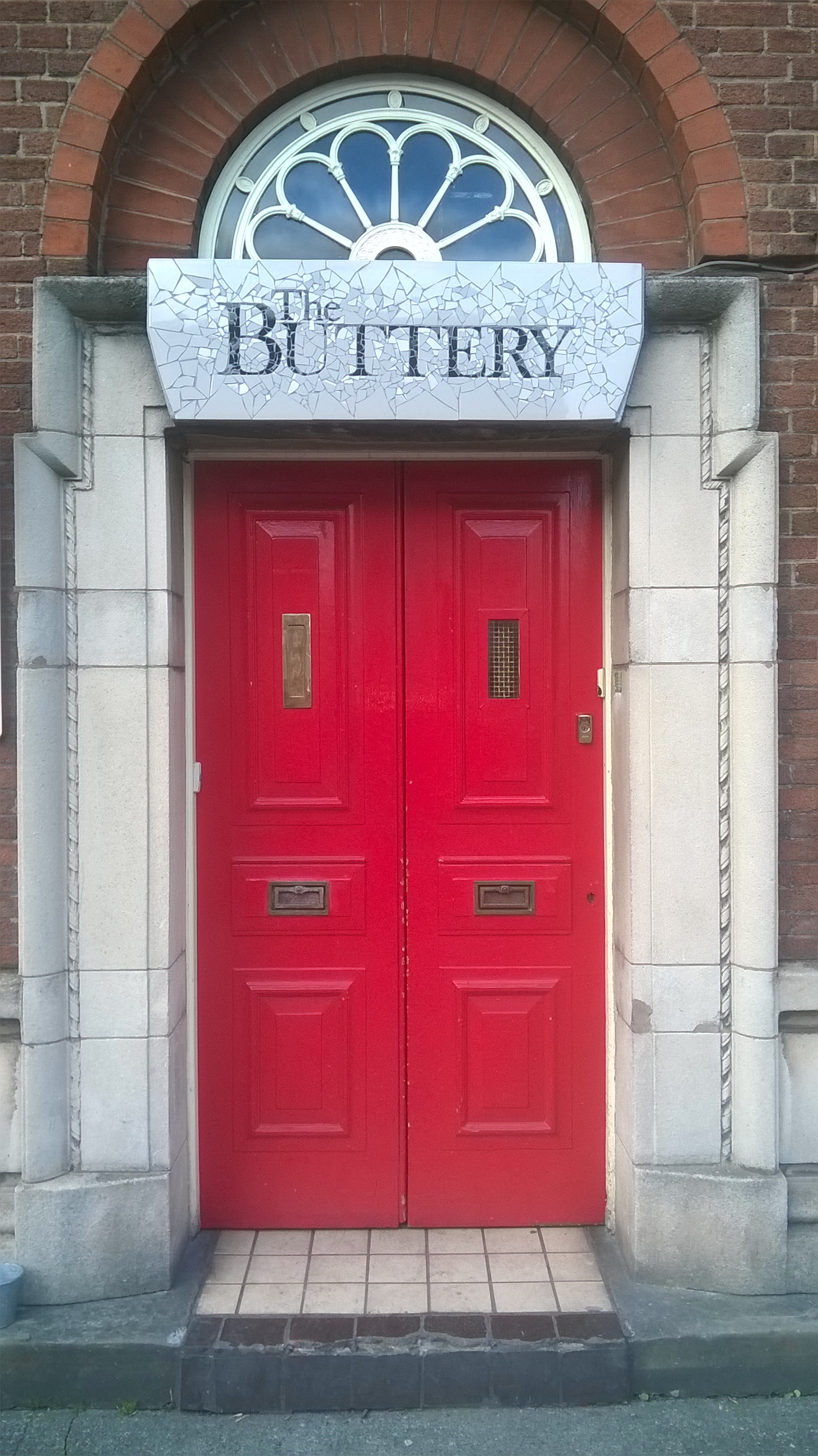
My prompt for writing this post is the name of the place: The Buttery. I’ve opened it with another local, Mr Brian Shields. Very nicely, he was happy for us to carry on the name; a name that carries a lot of interest for me as it is my surname, but it also describes what we’re trying to achieve.
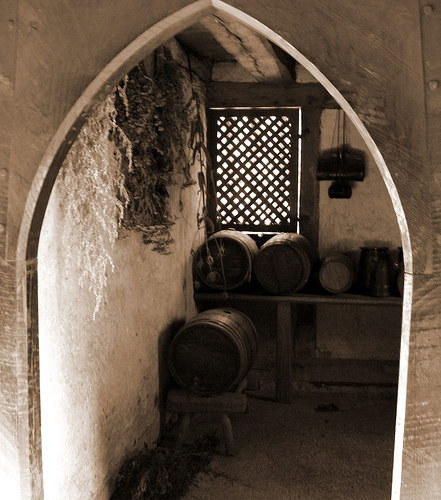
People assume the name Buttery has something to do with butter-making , but it has nothing to do with it, but it is food-related. A buttery was a room in a castle or abbot where wine and other drinks were stored and sometimes served.
William the Conqueror/Bastard was close chums with the first Butterys
The first Butterys to land on British soil can be traced right back to the voyage over the English Channel from Normandy to Hastings with William the Conqueror in 1066, so it’s not a bad lineage, historically speaking. In old Norman, the name was Buteri, which then became Boterie. The word coming originally from the Latin bota meaning cask, so essentially the buttery was where butts, i.e. barrels, were kept, eventually becoming a general dry store of all foods.
A small buttery with barrels, jar and drying herbs
The name Buttery is quite rare because surnames often come from an occupation – Tailor, Cooper, Shoesmith and Cook for example – less common is to be named after a room. So who looked after the buttery? The butler, of course!
All of the Butterys in Britain are likely to be descendants of the original man or family in charge of King William’s boteri, and it would have been an occupation of high-regard back in the Middle Ages where a secure and dependable dry stock of food, wine and ale was the difference between starvation and survival over harsh winters. William needed to bring with him a very good boteri-keeper if he was to survive cold and damp Britain. Indeed, an early branch of the Buttery family was given a family seat by William for their ‘distinguished assistance’ during that famous 1066 battle.
During the Dark and Middle Ages, life was more communal affair, with everyone in the group – high or low – eating together in their Great Hall, and so it was that every castle and abbot had its butter to be found at the low end of the Great Hall, giving out wine, ale and candles. Butteries quickly cast their nets wider and produced food to eat as well as storing it. Berkeley Castle’s fourteenth century buttery was well-equipped with bread ovens, lead sinks, large pestles and mortars and chopping blocks. It really was the centre of the castle, as it contained the water well. Long before the castle was built, the well would have been the focal point for a village settlement, growing in population and complexity around it as one runs through the centuries.
By the time we reach Tudor times, those that once sat at the high table, now ate in separate dining rooms away from servants. This meant the adjacent rooms, including the buttery, pantry (looked after by the panter) and the kitchen had to move downstairs to make way for these smaller and more informal eating areas. The distinction between buttery, pantry and kitchen blurred and they began to disappear.
But butteries lived on in other ways; the butler became the servant held in the highest regard, overseeing the inner workings of whole houses and stately homes. Butteries found in the old college buildings of Oxford, Cambridge and Dublin, became places where scholars could get a drink or two and enjoy some light meals and snacks; so called ‘buttery bars’. It’s nice that Levenshulme in South Manchester has its very own buttery, doing just that!
If you like the blogs and podcast I produce, please consider treating me to a virtual coffee or pint, or even a £3 monthly subscription: follow this link for more information.
Here’s the penultimate course of the Dinner Party Through Time and it brings us up to the Second World War. The recipe is not actually from the 1940s, but I thought it represented two very different aspects of food culture during this time. A normal faggot is a mixture of pork or lamb offal and offcuts wrapped in a little caul fat and baked. They are of course a national dish and, quite rightly, should be celebrated.
During WWII, meat was rationed, and families could spend up to just one shilling and tuppence on meat per person per week, which got you a little over a pound of meat each. Offal, however, was not rationed so housewives would supplement the ‘proper’ meat with offcuts. This meant that dishes such as faggots were eaten more often.
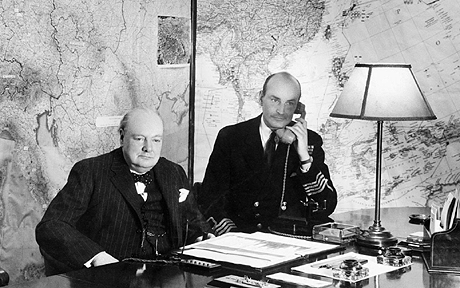
In contrast to this, Winston Churchill ate opulently in his war room, putting away course after course of delicious, rich and very expensive food and booze. Here’s a typical lunch menu:
Native Oysters
Petite Marmite
Roast Venison with Mushrooms
Ice Cream with Raspberries
Stilton, Apples, Grapes & Walnuts
…and to drink:
Pol Roger Champagne
Chardonnay
Claret
Port
Cognac
Don’t forget the coffee and cigars, of course.
He did not hide the fact he was living in this way, indeed people thought the man who was overseeing the war should be living in this way. I doubt that would happen today.
Anyway, I digress.
I thought making a very cheap and basic meal into something rich and indulgent would highlight these two diets perfectly.
It’s a very complicated affair, but it benefits from the fact that you can make it ahead of time and can freeze them – in fact the freezing process helps tenderise the rich pigeon filling.
I can’t pretend it’s my own recipe; it’s adapted from Gary Rhodes’ excellent New British Classics.
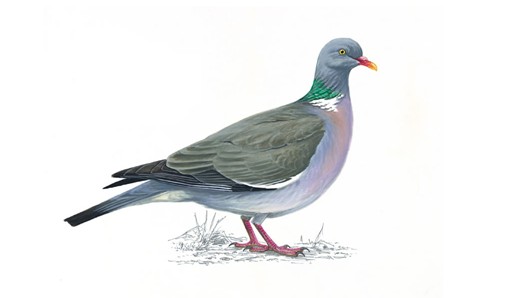
Unfortunately, no one took a photograph of them, so here’s a picture of a woodpigeon from the RSPB website:
This recipe makes 24 to 30 faggots.
For the faggots themselves:
6 pigeons
1.8 litres pigeon stock (see below)
2 chicken breasts
350g belly pork
150g back fat
150g chicken livers
2 shallots, finely chopped
2 cloves of garlic, finely chopped
1 tsp thyme leaves, chopped
90ml brandy
120ml Madeira
2 egg whites, beaten
200ml double cream
Pigeon reduction (see below)
Salt and pepper
Caul fat, soaked overnight in salted water
Vegetable oil or lard for frying
Well ahead of time, remove the breasts from the pigeons (or ask your butcher to do it). Use the carcasses to make the pigeon stock (see below). Reduce around 400ml of the stock by three-quarters to use in the pigeon reduction (see even further below).
Coarsely mince the pigeon breasts, chicken breasts, pork, back fat and chicken livers twice.
Heat the shallots, garlic and thyme in a small saucepan along with the brandy and Madeira and boil down until almost dry. Mix this into the meat along with the egg whites, cream and pigeon reduction. Season with salt and pepper and refrigerate.
Unfurl your caul fat and spread it on a chopping board, cutting it into approximate six by six centimetre squares. Take tablespoons of the faggot mixture and roll into balls and wrap each one up in a square of caul fat. Pat each one dry and fry in oil or lard to seal them and give them a nice golden colour. Arrange them in a flameproof tin or pan.
Warm the remainder of the stock and pour it over the faggots. Simmer them very gently in the stock for about 15 minutes and let them cool in the stock then freeze.
When you want to eat the faggots, defrost them and warm them up in the oven. Serve them up with the mustard sauce (again, see below) and some steamed cabbage and some mashed potato.
For the pigeon stock
2 tbs sunflower oil or lard
6 pigeon carcasses
2 onions, chopped
2 carrots, chopped
4 sticks celery, sliced
4 mushrooms, sliced
500ml of red wine or port
2 cloves of garlic
2 sprigs of thyme
10 juniper berries
5 tomatoes
Black peppercorns
Beef bones
Beef skirt
I’ve already written about how to make stock, so have a look at this post for some general hints and tips. Don’t worry, if you don’t have exactly the right amount or variety of stock veg. I often use bags of veg trimmings I sequester in my freezer exactly for this sort of thing.
Fry the pigeon carcasses in the oil until very well browned, then turn down the heat and add the onions, carrots, celery and mushrooms. Cook these until they are softened and browned. Tip the whole lot into your stockpot, deglazing the frying pan with a splash of the red wine or port. Add the remainder of the wine or port with all of the other ingredients plus enough water to cover.
Bring slowly to a bare simmer, keep the pot covered and on your smallest hob on the lowest heat and let it tick away for three hours. Strain, skim and reduce to a volume of 1.8 litres.
For the pigeon reduction:
2 good sprigs of thyme
4 juniper berries, crushed
1 garlic clove, chopped
120ml brandy
120ml port
the reduced pigeon stock
Place all of the ingredients except the reduced stock in a pan and reduce the liquid by three-quarters. Strain through a sieve and add the stock. Cool and keep in the fridge until needed.
For the mustard butter sauce
200g chilled, cubed butter
a small onion, sliced
2 bay leaves
1 star anise
12 black peppercorns
4 cardamom pods, cracked open
4 tbs white wine vinegar
8 tbs white wine
360ml chicken stock
4 tbs cream
salt and white pepper
2 tsp English mustard
Take a knobsworth of butter and gently cooked the onion and herbs and spices gently for around five minutes.
Now, lots of reducing: add the white wine vinegar, turn up the heat, and reduce by three-quarters. Next, add the wine and reduce by three-quarters. Finally add the stock and reduce that by three-quarters too.
Turn the heat down low, stir in the cream and whisk in the remainder of the butter a few pieces at a time. Season with salt and white pepper, strain and stir in the mustard. Pour into a warmed sauce boat or jug.
If you like the blogs and podcast I produce, please consider treating me to a virtual coffee or pint, or even a £3 monthly subscription: follow this link for more information.















![IMG-20160804-WA0002[1]](https://britishfoodhistory.com/wp-content/uploads/2016/08/img-20160804-wa00021.jpg)


 British Food: A History