Category Archives: Uncategorized

First Course: Tudor Salmon en Croute

tudor fisherman

The second dish in my Dinner Party Through Time menu, and we have moved along a couple of hundred years to Tudor Britain.

This is a recipe that is inspired by the Tudor love of combining fish with candied sweetmeats. Large medieval banquets had to contain dishes with lots of spice; after all how else could you display your vast wealth other than to use that exciting spice, sugar? When first brought to Europe from India, sugar was considered a spice and therefore medicinal. It lost its rank as a spice once it gained popularity as a more general addition to the dinner table; albeit a giant banqueting table.

The addition of the salmon, then, you might feel was also a mark of an ostentatious lord. It is not the case, back in the day, before such things as pollution and overfishing, streams were teeming with fish like salmon. In fact they were so common on the River Mersey that people used to feed them to their pigs! The same, of course, goes for oysters too, and yet we can now buy a pound of sugar for 30 pence. How times have changed.

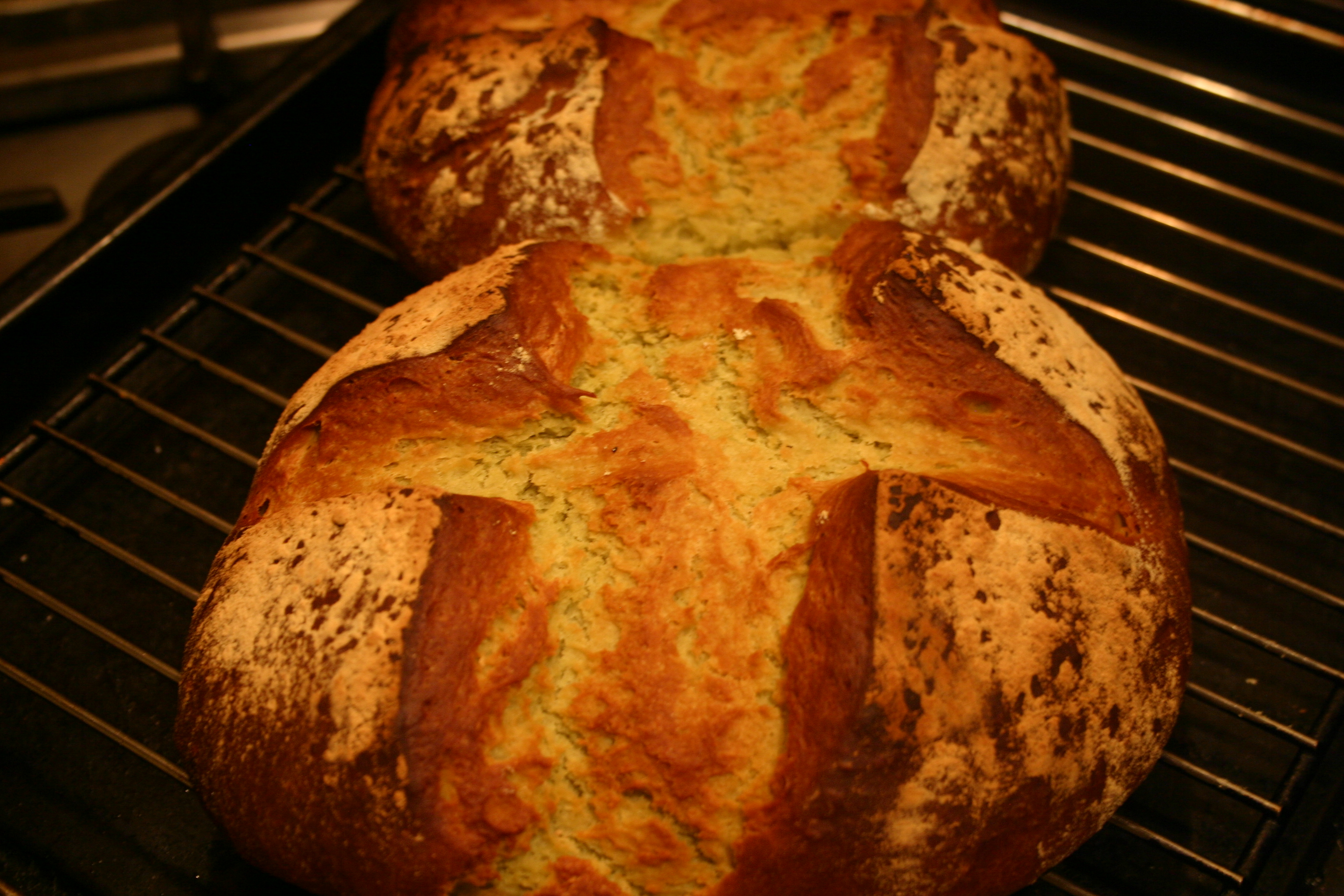
This dish is very attractive: a lovely fish wrapped neatly in pastry with some sweet spice, fruit and nuts, plus a nice piquant herb sauce. It’s pretty easy to make to boot, as long as you have good shortcrust pastry. This was so good, that it became the main course at my last pop-up restaurant.

tudor salmon 3

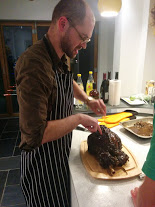
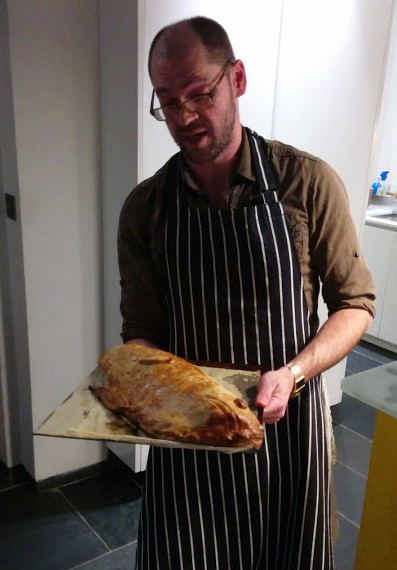
Yours Truly, with the fish

This recipe is actually from Jane Grigson, who did the tricky bit for us and worked out a recipe. It comes from her book English Food and I suggest you buy a copy (see the other blog about that!). The only real difference I’ve made is to multiply up the amounts; I used a whole salmon, rather than just a piece as in the book.

You will need:

1 salmon, filleted, skin on or off

250g butter, softened

8 knobs of preserved ginger, chopped

1-2 tbs of the ginger syrup

2 heaped tbs raisins or currants

2 heaped tbs slivered almonds

salt and pepper

shortcrust pastry (see method)

beaten egg

For the herb sauce:

4 shallots, very finely chopped

2 tsp parsley, finely chopped

2 tsp of chervil or tarragon, or a mixture, finely chopped

125g butter

2 tsp plain flour

600ml double cream

2 tsp English mustard

salt and pepper

4 egg yolks

juice ½ lemon

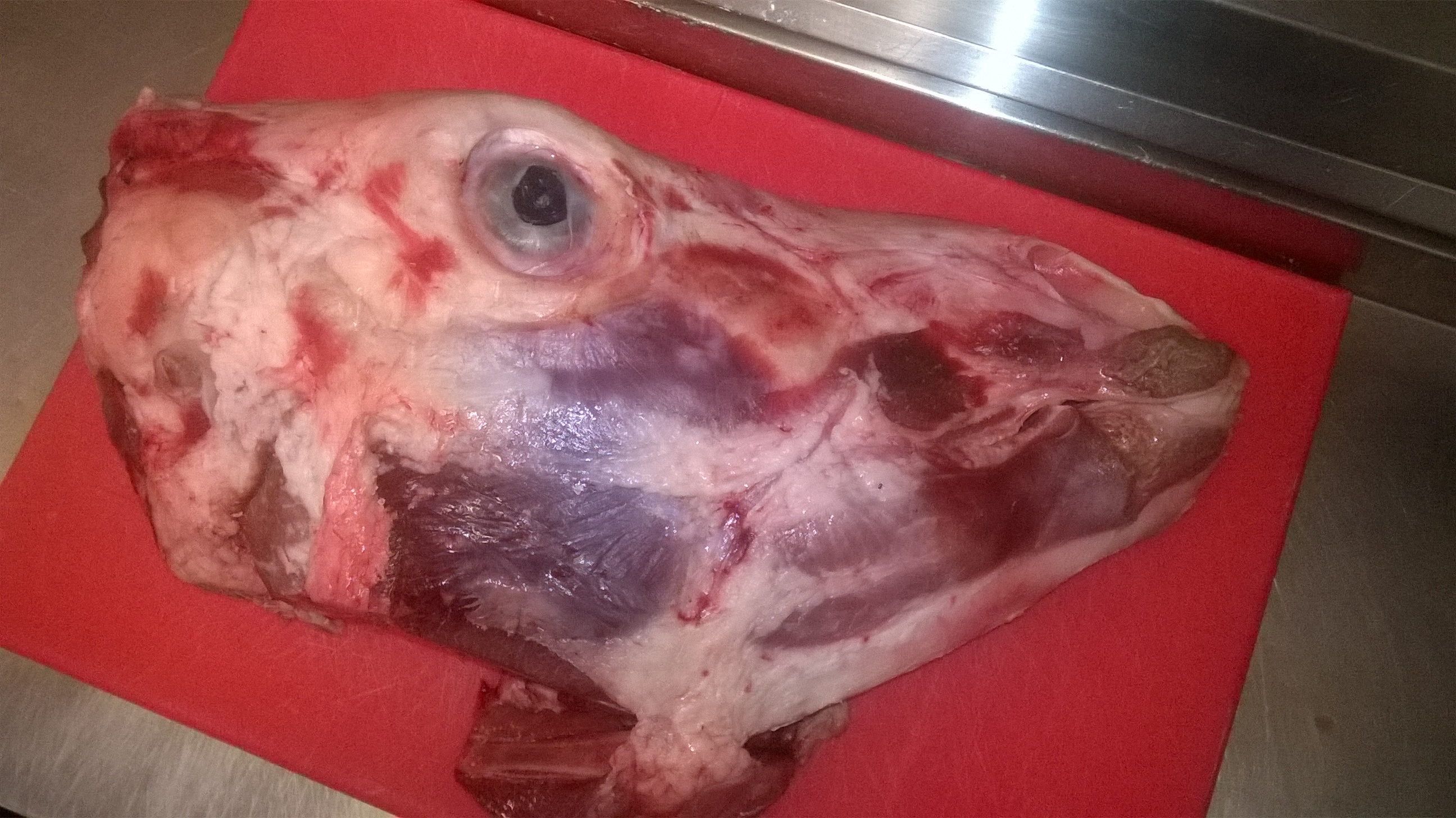
Beat the softened butter with the preserved ginger, raisins and almonds. Sweeten with the syrup as you see fit. Use half of the mixture to sandwich the two pieces of salmon together and then spread the remaining half over the top piece. Season with salt and pepper.

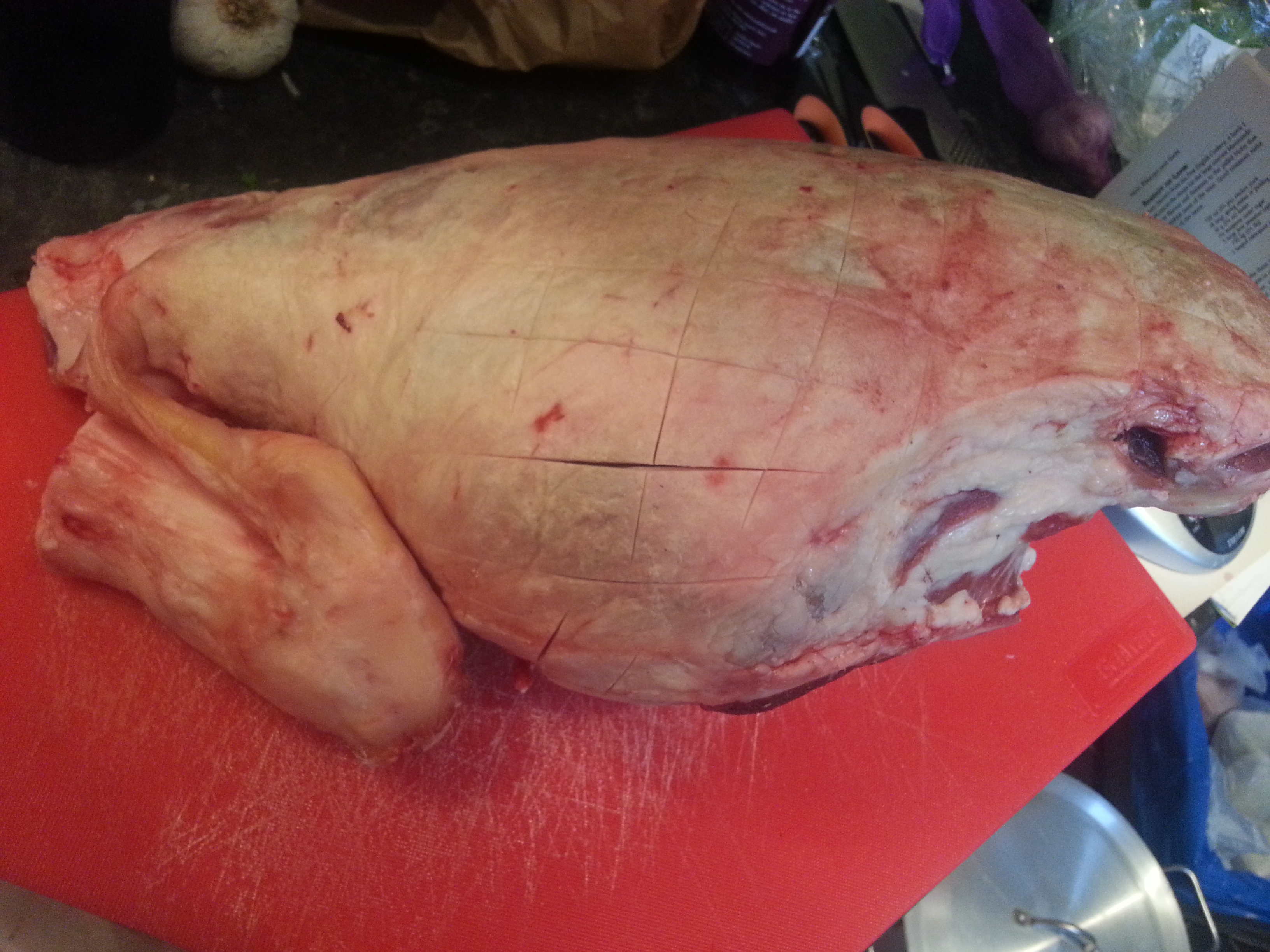
Now you are ready to encase the beast in pastry. I used a batch made of 800g flour and 400g of fat (200g each lard and butter), 2 eggs and a little water, but you might need more or less, depending upon the size of your salmon. Roll out a third of the pastry into a shape larger than the fish and place it on top. Trim around it, leaving a two centimetre gap.

Next, roll out the rest and carefully place it over the fish, trimming the pastry away so there is a one centimetre gap between it and the lower layer. Brush with beaten egg all around the edges, and fold and crimp the pastry all the way around; rather like a huge pasty. Use the trimmings for decoration. There were a few small cracks in my pastry, but I hid them most cleverly with some pastry leaves that I placed here and there. I must say, I was quite impressed with my effort.

Make two or three slashes on the top so that steam can escape and bake for around 45 minutes at 220⁰C (425⁰F). To tell that it is done use a temperature probe; if the centre is around 50⁰C it’s ready to come out. As the fish rests, it will increase in temperature.

tudor salmon 1

As it rests, you can get on with the sauce. Gently fry the shallots and herbs in butter. When the shallots have softened, stir in the flour, then the cream (reserving a little for later). Simmer for around 10 minutes, then season with salt, pepper and mustard. Whisk the egg yolks with the reserved cream, turn down the heat in the pan and pour in. The sauce will thicken as the yolks start to cook – do not let the sauce boil, or your yolks will scramble. If it seems on the thick side, add a little water. Finally, lift the whole thing by adding a good squeeze of lemon juice.

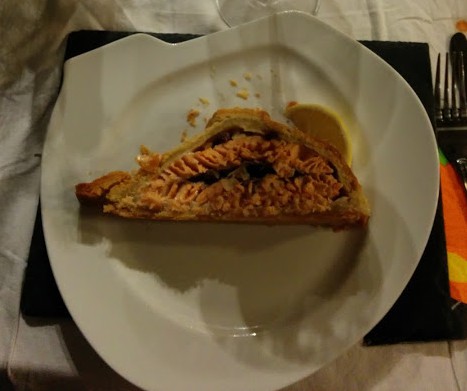
The rested salmon can now by sliced up. The best way I find to do this sort of operation is to use a serrated knife. Slice the untidy end off, but keep it pressed up against the rest of the fish as you make more slices. Don’t take away any slices until you are finished cutting, otherwise everything will crumble and collapse.

The best thing to eat with this, I would say, is a green bitter vegetable such as broccoli or kale.


If you like the blogs and podcast I produce, please consider treating me to a virtual coffee or pint, or even a £3 monthly subscription: follow this link for more information.

1 Comment

Filed under baking, Britain, cooking, food, General, history, Uncategorized

The Hors d’Oeuvres: Mediaeval Pork Tartlettes

The first course of my Dinner Party Through Time was a little amuse bouche from a mediaeval recipe dating around 1400. On the throne was Henry IV, Geoffrey Chaucer was a contemporary; indeed, he was present at his coronation.

The recipe calls these little mouthfuls tartlettes, but they are actually more like a stuffed ravioli or even dim sum. Left-over pork is ground up with spices and other flavourings, wrapped up in a paste and simmered in salted water.

Unfortunately there’s no photographic evidence of this dish so you’ll have to make do with a picture of Henry IV and imagine him eating one.

MOU202462 Portrait of King Henry IV of England (1367-1413) (oil on canvas) by English School, (17th century) oil on canvas 50.5x43 Private Collection © Philip Mould, Historical Portraits Ltd, London, UK English, out of copyright

Here’s the recipe:

Take pork ysode and grynde it small with saffron, medle it with ayren and raisons of coraunce, and powder fort, and salt; and make a /bile of dowhg and close the fars thereinne. Cast the tartlettes in a pan with faire water boillyng and salt.

Although it is relatively simple to cook, this was very much a rich man’s dish with saffron and currants as well as powder fort. This was a commonly used spice mix made up of ground ginger, cumin and long pepper. Long pepper is very difficult to source these days, so for my version of the recipe I used regular black pepper.

I could have covered my meat mixture, or ‘farce’, in thinly rolled fresh pasta, but instead went for the less fiddly option of using filo pastry. I wasn’t convinced that the tarlettes would taste good boiled as in the recipe, so for the dinner party, I simmered half of them and baked the remainder. It turned out that everyone preferred the simmered tartlettes. How little faith I had!

This recipe makes around a dozen tartlettes

350g of lean, cooked pork

good pinch of salt

heaped teaspoon of powder fort spice mix

30g currants

1 tbs single cream

1 egg, separated

4 sheets of filo pastry

salted water

Powder fort spice mix:

3 tsp ground cumin

1 tsp ground black peppercorns

1 tsp ground ginger

To begin, mince the cooked pork and thoroughly mix in the salt, powder fort, currants, cream and the egg yolk.

Unfold three or four sheets of filo pastry. It can be a tricky number to keep it from drying out, but you should be able to avoid any major disasters by keeping the pastry sheets covered with a damp tea towel.

Cut a strip of filo three centimetres thick and roll a generous teaspoon of the mixture in the filo strip. You are aiming to cover the filling with two or three layers of pastry so there may be enough in one strip for more than one tartlette. Seal the pastry with a light brush of egg white. Continue until you have used up all of the mixture.

Cook the tartlettes by dropping them into simmering salted water for three or four minutes, remove with a slotted spoon and drain them carefully on some kitchen paper. Eat them immediately.

If you don’t want to boil your tartlettes, they can be brushed with more egg white and baked in the oven at 200⁰C for 8 minutes or so.


If you like the blogs and podcast I produce, please consider treating me to a virtual coffee or pint, or even a £3 monthly subscription: follow this link for more information.


5 Comments

Filed under Britain, cooking, food, General, history, Meat, Recipes, Uncategorized

A Dinner Party Through Time

Hors d’oeuvres.
Pork tartlets, 14th century, Plantagenet
~
First Course
Salmon en croute with candied fruit and herb sauce, Tudor, c1600
~
Second Course
Hashed chickens and stewed turnips with roast quince, 1660, Stuarts
~
Third Course
‘Mutton to eat as venison’, with Lenten Pie, 1773, Georgian
~
Fourth Course
Cucumber, gin and mint sorbet, 1920s
~
Fifth Course
Pigeon faggot, cabbage and mustard sauce, mash, WWII 1940s
~
Sixth Course
Pompion Pye, Stuarts

Late last year at the very beginning of November I was asked to cook for a dinner party and I was given the most fantastic brief. It was to be for 15 people and 7 courses, and a whistle-stop journey of British food through the ages. This is the kind of brief I absolutely love getting my teeth into.
For anyone who is interested in history, there is no better way to experience it first-hand than cooking an old recipe; you can watch a film, read some original documents, whatever, but food is the only way to actually directly witness a past event.
After much deliberating, I came up with menu, and I thought I would share with you the recipes for each course along with a bit of history about the times or the people who wrote it.
We began with Plantagenet hors d’oeuvres and ended up at World War II for the sixth course.
The dessert bucked the trend; a pudding that used pumpkin as its main ingredient was asked for. (It was the day after Hallowe’en, after all.)
Here’s the full menu:


If you like the blogs and podcast I produce, please consider treating me to a virtual coffee or pint, or even a £3 monthly subscription: follow this link for more information.


10 Comments

Filed under Britain, cooking, food, history, Recipes, Uncategorized

Rice Pudding

 What is the matter with Mary Jane?

She’s perfectly well, and she hasn’t a pain,

And it’s lovely rice pudding for dinner again!—

What is the matter with Mary Jane?

AA Milne, Rice Pudding

 Rice pudding has been made in Britain ever since rice found its way there via those Asian European trade routes in the eleventh century. It’s a classic pudding and one of my very favourites, even eaten from a tin. In the Victorian times, it would have been put into the category of ‘nursery puddings’ along with all the other milky, custardy unrefined ones that everyone remembers from their childhood.

I love all of the milk puddings: semolina, macaroni, sago, the lot, but rice pudding is the best. I served it at one of my Pud Clubs, but it unfortunately scored low; it seems that people either love it or hate it.

Here’s an example of a rice pudding that is cooked in the oldest sense of the word pudding, i.e. it is stuffed into intestine (‘farnes’) and boiled. It appears in The English Huswife by Gervase Markham in 1615

Take half a pound of rice, and steep it in new milk a whole night, and in the morning drain it, and let the milk drop away; then take a quart of the best, sweetest and thickest cream, and put the rice into it, and boil it a little; then set it to cool an hour or two, and after put in the yolks of half a dozen eggs, a little pepper, cloves, mace, currants,dates, sugar and salt; and having mixed them well together, put in a great store of beef suet well beaten and small shred, and so put it into the farmes…and serve them after a day old.

The earliest recipe I could find is from 1400 from Food in England by Dorothy Hartley, but she doesn’t say which manuscript it’s from:

Nye ye ris whges hem clene, seethe them fort til hit breke, let it kele, do thereto almand mylke, and of Kyne colour yt salt, and gif it forth.

Roughly translated: rinse the rice and boil it until it will break easily. Let it cool, and add almond milk as well as cows’ milk (kyne). Add some salt and serve.

I think that a combination of almond and cows’ milk sounds quite delicious. Notice that there’s no sugar or spice; far too expensive in those days!


If you like the blogs and podcast I produce, please consider treating me to a virtual coffee or pint, or even a £3 monthly subscription: follow this link for more information.


Anyways, enough waffle, here is my recipe for rice pudding. It takes long and slow cooking, but these things are worth the wait. I use vanilla as my spice, but you could use cinnamon, nutmeg or allspice. Currants or sultanas make a good addition too.

The most important thing is to buy proper pudding rice – a short, fat grain similar to Arborio rice. If you can’t get hold of it, I’m sure any other glutinous rice will do, but don’t quote me on that!

If I have to put a number to it, I suppose I’d have to say it serves four, but in my house it’s probably more like two:

30g butter

100g pudding rice

60g caster or vanilla sugar

1 vanilla pod (if using regular caster sugar; you could, of course, use 1/2 tsp or so of vanilla extract)

1 litre Channel Island Gold Top or 850 ml whole milk and 150 ml cream

zest 1/2 lemon (optional)

pinch of salt

1 whole nutmeg

Jam (optional)

Preheat your oven to 160⁰C

Grease an ovenproof dish with a capacity of a little over 1 litre with butter and scatter in the pudding rice, followed by the sugar. Break up the remainder of the butter into little knobs and dot them about.

Deal with the vanilla pod if using: using a small pointed knife, carefully cut the pod lengthways so that you can scrape out the seeds. Put seed and pod in amongst the rice.

Pour on the milk, the lemon zest (if using) and the salt. Give it a gentle stir, poking down any grains of rich that refuse to sink. Now grate the whole entire nutmeg on the top of the pudding and and pop into the oven for 2 hours, but it may be more; it must look runnier than you would like as it continues to thicken outside of the oven. Every half an hour give the pudding a good stir so that the rice grains don’t clump together. Don’t mix it in the final 30 minutes or so if you want to achieve a good skin.

Make sure everyone gets some skin and a good blob of jam. I would go strawberry or raspberry here, but it is entirely up to you.

I ate this rice pudding with sour cherries in syrup

12 Comments

Filed under baking, Britain, cooking, Dairy, Desserts, food, General, history, Puddings, Recipes, Uncategorized

The Glorious Twelfth

red grouse

Today is the Glorious Twelfth! The day in the countryside calendar that many await, for it is the beginning of game season.

I know it may seem a little unsavoury to look forward to the shooting of thousands of birds and mammals, but it is so woven into the tradition of country life, that it seems a rather romantic pursuit. Not one that I have been privy to of course, as it is a posh person’s game.

Technically, the 12th of August is the opening of the game season for the red grouse, though a couple of other game species can also be legally hunted from this day (see the list of game species, below).

There are two broad types of game: furred and feathered, i.e. mammals and birds. Fish are considered game too, but they do not follow the same laws as the others.

On a typical hunt for grouse and other game birds, there is a basic set up of beaters that walk in a loose line across a heath, in the case of grouse, or scrub in the case of pheasant, beating the vegetation in order to scare the birds so that they fly up and away toward gunmen to be shot. The bird is then retrieved by a gun dog such as a springer spaniel. I’m over-simplifying this, of course, but that is the basic process.

quarry

 A hunter after her quarry (Lax-A)

The hunt is such a huge event and requires such a large amount of organisation, that single hunts often cost up to £50 000 per day, raking £50 million into the local economies of Scotland and Northern England each year.

How Glorious is it?

The Glorious Twelfth is controversial, with the game industry and conservationists constantly at loggerheads, but the fact is that the Moorland Association has protected many at risk species in the British Isles such as the golden plover and lapwing. They put a lot of effort into the management of heathlands by selectively burning areas and reducing the numbers of predators such as foxes and weasels. It is here that the Moorland Association has been hit with the most criticism; conservationists say they should not be culling predators so that we can have more grouse for posh men to shoot. It’s a fair point.

Then, on the really dark side are the accusations of the killing of some of our most rare birds of prey like the hen harrier.

So on one hand predator animals are often persecuted, whereas on the other, well-behaved waders are looked after.

I view the situation the same I do zoos. I know they do good work for the conservation of animals and habitats, yet I can’t help but feel sad every time I see a poor old bored elephant, or a majestic tiger walking laps around its pen. They are part of our heritage, like it or not, but they can do good work.

The Game Act, 1831

This Act of Parliament was brought in to protect game birds by bringing in closed hunting seasons, and imposed game licences (hares and deer have their own Acts, which follow similar principles). Some species were protected completely, such as the common bustard (now extinct in the UK, but there are attempts to reintroduce it).

The Game Act was brought in to replace the outdated ide of their being Royal Forests, brought in during the 11th Century during the reign of William I, where it was illegal to hunt game unless you had permission from the king. As the centuries rolled on, the laws slackened more and more until they were pretty much useless.

At the time of writing the Act, hares were not given a closed season as they were a pest. The imposing capercaillie was not included in the Act as it was extinct in the UK at the time, being reintroduced to Scotland in the 1837.

Game seasons

Feathered game is further subdivided into two groups: game birds and waterfowl & waders. Some of the species are familiar and other are not, and of the ones I have tried, all taste delicious (unless they’ve been hung for too long, then they are decidedly rank).

Game Birds

Red grouse, ptarmigan                 August 12 – December 10

Black grouse                                    August 20 – December 10

Partridge (grey and red-legged)  September 1 – February 1

Pheasant                                           October 1 – February 1

As laid out in law, it is illegal to shoot wild birds between one hour after sunset and one hour before sunrise. In England and Wales, game cannot be killed on Sundays or Christmas Day. If the 12th of August lands on a Sunday, the season will officially begin the next day.

I have never come across a ptarmigan to buy, so if anyone knows how I can nab one, do let me know.

2013-09-17 13.36.32

Game birds are often sold as a brace – a male & female. Partridges in this case

Wildfowl &Waders

Snipe                                                  August 12 – January 31

Ducks & Geese                                 September 1 – January 31 (inland); til Feb 20 at low tide

Golden plover, coot & moorhen   September 1 – January 31

Woodcock                                         October 1 – January 31

Several species of duck and goose can be legally hunted, though many in reality, are ignored by hunters, or shot in very small numbers, such as: gadwall, goldeneye, pintail, shovelers and tufted ducks, though pintails have been spotted in my butcher’s shop before now. You are much more likely to see mallard, wigeon and teal.

Geese are a bit tricky to get hold of, unless you know someone personally that hunts, and the reason for this is that whilst geese can be shot, it is illegal to sell them. I presume this rule is an incentive to hunters to shoot the numbers they need. Legal game species are: white-fronted (England & Wales only), pink-footed, greylag and Canada geese.

2014-01-17 20.09.53

A brace of mallard

The furred game can also be split into two broad groups: ground game and deer.

Ground Game

This is basically your small and furry game species:

Rabbit & brown hare                      January 1 – December 31

Mountain hare (Scotland only)  August 1 – February 28/29

Rabbit and brown hare have no closed season, this is because at the time of the Game Act, they were both considered pests. These days, everyone considers rabbits to be a pest, but the hare does get an effective closed season from March to May, due to their fall in numbers in recent times.

brown hares - telegraph

Boxing brown hare (Telegraph)

Deer

There are six species of deer inhabiting the UK: red, sika, fallow, roe, Chinese water deer and muntjac. The seasons get pretty complicated here, but generally the open season runs from August to April for males (bucks & stags) and November to March for females (hinds & does). The exception being muntjac that have no closed season

Pests

There are a few pest species that can also be eaten such as rabbits, woodpigeons and grey squirrels. In the past rooks were eaten, though this is very uncommon these days.

So there you go, a whistle-stop tour of hunting in the UK. In the coming months I’ll be posting some game-related posts as I hunt around my local butchers’ shops for some delicious seasonal treats.


If you like the blogs and podcast I produce, please consider treating me to a virtual coffee or pint, or even a £3 monthly subscription: follow this link for more information.


9 Comments

Filed under Britain, Festivals, food, Game, General, history, Meat, natural history, nature, Uncategorized

Favourite Cook Books no. 2: Good Things by Jane Grigson

good things

This is not a manual of cookery, but a book about enjoying food. Few of the recipes in it will contribute much to the repertoire of those who like to produce dinner for 6 in 30 minutes flat. I think food, its quality, its origins, its preparation, is something to be studied and thought about in the same way as any other aspect of human existence.

Jane Grigson, introduction to Good Things, 1970

Good Things was Jane Grigson second book and was published in 1971. Although she is known for her later extensive and very comprehensive writings, this is relatively brief.

All of Jane Grigson books are wonderful, and this book is no different: logical, creative, witty and sometimes austere, she weaves a tapestry of each ingredient’s culinary potential; and this is why the book is so great, for each chapter focusses upon a single main ingredient. She shows you just how inventive humans can be with a single ingredient and how it should be savoured in its seasonality to be fully appreciated; something we no longer do. This book has spurred me on in my own efforts to be seasonal. Take, for example, the chapter on celery – a vegetable that we generally either add to the stockpot or crunch on in a boring salad – she says:

The fine pleasure of buying celery in earthy heads, after the first improving frosts of winter, is slowly being eroded by the wash of enterprise and aviation. Almost the year round, cleaned and slightly flabby greenish celery…is on sale at inviting prices. It’s the wise cook who averts her eyes from this profuse and plastic display and waits for November. Then crispness and flavour are at their peak …In any case one of the greatest luxuries you can have in Britain today is simple food of the best quality.’

She then goes onto her first recipe which consists of celery stalks, good Normandy butter and sea salt. This is the genius of Good Things, you are being shown how good something can be if prepared properly, grown skilfully and eaten seasonality and sensibly; essentially Jane is teaching us how to eat.

(NB, click here for a post of my own on the humble celery stick).

Every chapter also perfectly reflects Jane’s own lifestyle; spending half her time between England and France, with a smattering of recipes from other European countries. It really showed how she lived her life, though I can imagine her family got a little sick of some of the focal ingredients when she was recipe testing.

2014-02-20 13.58.12 - Copy

Sweetbreads: a Jane Grigson – and Neil Buttery – favourite

So what did she pick? Some are probably quite obvious such as venison, asparagus, woodland mushrooms, strawberries and ice creams; others are common and, perhaps, overlooked, like celery, kippers, tomatoes and carrots; whilst some were becoming forgotten or seemed obscure, ones that leap to mind are snails, quince, sweetbreads and fruit liqueurs. Jane’s gift to me is a love of such foods that I never would have sought out, that has demonstrated to me just how good, exciting and varied British food can be, as well as how its history is interlinked inextricably with other countries’ food histories.

Sweetbread Pie

2014-02-20 20.14.38 - Copy

I think this recipe best sums up the essence and ethos of Good Things; it uses a delicious but forgotten meat cut, is French but you would think it quintessentially English. She discovered it in the charcuterie of a small town in Burgandy and it was the most expensive pâté in the shop. She made it into a pie, a pie so good it made it on my last Pop-Up Restaurant menu. The recipe requires you prepare some sweetbreads – if you’ve never eaten or prepared sweetbreads, have a look at this previous post all about them. In a nutshell, you poach them briefly in a light chicken or vegetable stock, or court-bouillon. For a post on stock-making click here. I am so self-referential these days! If you can’t get as much as the 500g given in the recipe, then use whatever you can get your hands on. I expect it would be excellent even with the sweetbreads omitted altogether!

I have changed only her Imperial weights and measures so that they are metricated…

For the pastry:

300g plain flour

150g of butter and lard

1 tbs icing sugar

water to bind

For the filling:

500g prepared lambs’ or calves’ sweetbreads

125g mushrooms, roughly chopped

2 tbs onion, finely chopped

1 garlic clove, crushed

75g butter

350g lean pork, or veal and pork mixed

225g hard back pork fat

2 rashers green (i.e. unsmoked) back bacon

2 eggs

heaped tbs flour

125g cream

salt, pepper and thyme.

‘Make the pastry in the usual way’, says Jane. I mean to write a post on pastry-making, I shall endeavour to do so soon. Whilst it rests in the fridge, cut up the sweetbreads into even-sized pieces, then cook the mushrooms onions and garlic in the butter, until softened but not brown. Next, make the forcemeat by mincing the pork and veal, if using, the back fat and the bacon through the course and then fine blades. Mix in the eggs, flour, cream and the mushroom mixture. Season with salt and pepper and add a good sprinkle of chopped thyme.

2014-02-20 14.35.20 - Copy

Line a 450g loaf tin (an old 1 lb tin) with 2 thirds of the pastry. Spread over one third of the mixture over the base of the tin, then a layer of half of the sweetbreads, then a second third of the forcemeat, then the remaining sweetbreads, and lastly the final third of the pork mixture.

2014-02-20 14.38.57 - Copy

Seal the pie with a lid, brush with egg wash and bake for 90 minutes in a moderate oven – around 180⁰C.

‘Serve warm’, she says, but it is also very good at room temperature. It keeps very well in the fridge if wrapped up tightly in foil or clingfilm.

2014-02-20 16.59.12 - Copy

If you like the blogs and podcast I produce, please consider treating me to a virtual coffee or pint, or even a £3 monthly subscription: follow this link for more information.


10 Comments

Filed under baking, Books, Britain, cooking, food, General, Meat, Recipes, Uncategorized

Spotted Dick

It’s been a while since I wrote a post on a good old British steamed pudding, and this is one of my all-time favourites. Spotted Dick is a great pudding because it lies somewhere in between a suet pudding and a sponge pudding and is borne of that period of prolific pudding invention: the Victorian Era.

If British puddings are new to you, I’ve already written a couple of posts on the history of puddings (the first one here, and the second one here).

If you’ve never heard of Spotted Dick, it is a spongy steamed pudding that contains suet instead of butter. It is only slightly sweet and flavoured delicately with lemon. The spots on the Spotted Dick come from currants. You don’t want a pudding that is too sweet, the sweetness – I believe – should come from the currants and the custard that must be served with it (for a custard recipe, click here).

For some unknown and crazy reason, Spotted Dick doesn’t appear in my favourite cook book of all, English Food by Jane Grigson (to see why it’s my favourite, see my other blog).

Now for the big question: who the heck is Dick?

The pud is first mentioned in a book from the 1850s by the famous Chef Alexis Soyer called The Modern Housewife, or, Ménagère. Alexis Soyer was the first celebrity chef and he deserves a whole post just to himself! He mentions Spotted Dick in passing when listing a typical week’s meals during tougher times. This was Tuesday’s dinner:

Tuesday. – Broiled Beef and Bones, Vegetables, and Spotted Dick Pudding’

The ‘Dick’ in Spotted Dick seems to come from the shortened Old English names for pudding: puddog or puddick. In Scotland it is often called Spotted Dog Pudding.

Spotted Dick is a very simple pudding to make; it can be steamed in a basin or be rolled out like a sausage and covered in buttered foil and then steamed. Sometimes it takes the form of a roly-poly pudding with the currants and some brown sugar making the filling. Personally, I prefer to use a basin.

Anyways, here’s the recipe:

For a 2 pint/1 litre pudding basin, that serves 6 to 8 people:

300g self-raising flour

150g suet (fresh or packet)

75g caster sugar

100g currants

Zest 2 lemons

275-300 ml milk

butter, for greasing

In a bowl, mix together the flour, baking powder, suet, sugar, currants and lemons. Add the milk, mixing slowly until all is incorporated. You’re looking for a mixture of dropping consistency.

Liberally butter a 2 pint pudding basin and spoon in the mixture. Cover with a lid. It’s easiest to buy a plastic basin with a fitted lid. If you’re using a glass or porcelain basin, make a lid from a double sheet of pleated foil and secure with string. It is worth making a foil or string handle for the pudding so that you can get the basin out of the steamer safely.

Ready for the steamer!

Place in a steamer and steam for 2 hours. Make sure there’s a good brisk boil for the first 20 minutes and then turn the heat down to medium-low. If you don’t have a steamer, simply place an upturned saucer in the base of a deep saucepan and pour over it boiling water straight from the kettle. Gingerly place in the pudding.

Turn out the pudding onto a serving plate and serve immediately with plenty of custard.


If you like the content I make for the blogs and podcast, please consider supporting me by buying me a virtual coffee, pint or even a subscription : just click on this link.


41 Comments

Filed under baking, Britain, cooking, Desserts, food, General, history, Nineteenth Century, Puddings, Recipes, The Victorians, Uncategorized

Fruit Curds Revisited

2013-12-02 22.14.04

By recent request, I have written another post on fruit curds. I have come up with several more recipes since I wrote the original post and they all originate from a common source; a single recipe that pops up in River Cottage Handbook No.2: Preserves by Pam ‘the Jam’ Corbin. This is a truly excellent book (as are all the RC Handbooks), that deserves a post of its own as part of my rather irregular Favourite Cookbooks series.

Anyway, this recipe is the best I’ve come across, it is for lemon and Bramley apple curd – and it is ripe for modification. Apple purée is used, giving a great texture, making a light nicely-set curd that needs less sugar than your typical lemon curd. Below is the original recipe that I have only very slightly tweaked, and then there is a few more: blood orange, spiced orange and pink grapefruit.

Lemon and Bramley Apple Curd

This recipe makes around 1200ml of curd.

2013-12-01 18.09.14

500g Bramley apple curd, peeled, cored and chopped

150ml water

Zest and juice of 2 lemons

125g butter, cubed

350-400g granulated sugar

5 medium eggs

Put the apples and water in a small saucepan, cover and simmer until the apples break down into a purée. When cooked, put them into a large glass mixing bowl with all of the remaining ingredients except the eggs. Mix together – the heat of apples will dissolve the sugar and begin to melt the butter – and place the bowl atop a pan of briskly simmering water, making sure the water doesn’t touch the base of the bowl.

Whisk the eggs well and pass them through a sieve straight into the mixture, stirring them in well. Keep an eye on things and stir the curd frequently until it thickens; it doesn’t require constant stirring, but don’t be going off and dusting the sills. If you want to be scientific about it, eggs thicken at around 80⁰C, but temperatures of 75⁰C and above will thicken the curd sufficiently. Taste and add more sugar if liked – remembering that cold curd will taste much less sweet than hot curd.

2013-12-01 18.35.17

Pot in sterilised jars (25 minutes in a 125⁰C oven does the trick), cool and refrigerate. The curd will keep for 5 weeks.

Some variations

You can pretty much use any fruit juice you like, but you always need a little bit of lemon to add bite as well as to take advantage of its flavour enhancing properties.

Blood orange curd: as above but use the juice and zest of one lemon and two blood oranges.

Spiced orange curd: use the juice and zest of two lemons and two oranges, along with half a teaspoon of mixed spice. When the curd has thickened, add two teaspoons of orange flower water.

Pink grapefruit curd: use the juice and zest one lemon and two pink grapefruits.


If you like the blogs and podcast I produce, please consider treating me to a virtual coffee or pint, or even a £3 monthly subscription: follow this link for more information.


12 Comments

Filed under baking, cooking, food, Fruit, General, Recipes, Uncategorized

Stock-making, a quick guide

Stock is the body and soul of soups – Lindsay Bareham

I have been making my own stocks for years now and it is part of my regular kitchen routine. I sequester bones, meat offcuts, fish heads and trimmings, vegetable peelings and herb stalks in bags in the bottom of my freezer so that I can combine them appropriately whenever I need to. It’s a thrifty way of living; often making a large batch of stock costs only the price of the fuel that cooked it.

For those that do not cook much at home, stock-making is sometimes regarded as some kind of alchemy, yet this is a misconception, and indeed there are many very complicated stock recipes, but the home cook (I include myself here) need not bother with these. The chances are you have made stock several times and have thrown it down the sink without a second thought, because in its most basic form, the water you cook your vegetables in is a good, light vegetable stock.

From a history point of view, one cannot pin-point when stocks were first made, and one cannot unravel the origins of stock from soup. Take this example from Good Things in England by Florence White:

[The soup] is nothing more than the water in which young cabbage has been boiled…It is extremely good and delicate and tastes very much like chicken broth. It is not merely an economy but a luxury; one of the best of health and beauty drinks.

Wise and thrifty cooks throughout the millennia used the water that their tough meat joints were simmered in or their fish poached in and used them as the base of another dish. One of my favourite dishes is poached silverside of beef which consists of beef, herbs, a couple of veg and water. The resulting broth makes beautifully-tasting soup.

2013-05-02 20.47.25

Poached Silverside of Beef

Seeing as we are trying to be thrifty folk, I thought I would give you a quick guide to stock-making. As I have mentioned, it will save you money, and – like when you make your own bread – you will see how sublime it can taste. Every stock you make will taste a little different each time and it can be tailored to suit its use, e.g. add a few fennel seeds to a stock for a fish soup. Best of all, your soups and stews won’t taste of stock cubes. There is nothing wrong with having a stash of them in your food cupboard, I would do too, but with my very frustrating onion and tomato intolerances, I usually have to do my own. The point is, that when you use bought stock cubes, every soup and stew ends up tasting the same.


If you like the blogs and podcast I produce, please consider treating me to a virtual coffee or pint, or even a £3 monthly subscription: follow this link for more information.


What makes up a stock?

This is the beauty of stock-making; there are no hard-and-fast rules with respect to ingredients.

All good stocks should contain some flavoursome vegetables and aromatic herbs and spices, often called a bouquet garni, as well as the main ingredient: this might be meat and bones, fish, or, more vegetables. The stock might be seasoned or enriched with salt, wine, soy sauce, Worcester sauce, tomato puree, mushroom ketchup or any number of other things, though it is usually best to do this once the soup or stew that the stock is being used for has been made.

Stock vegetables

2013-09-01 11.56.01

The vegetables used in your stock are often key to the quality as they add a lot of depth. The three basic vegetables used for most stocks are carrots, celery and onion, though I personally add garlic and leek to this ‘trinity’ (a trinity in five parts?). My general rule of thumb is to try and include at least three of the five. Anything else is a bonus, really. Fennel is a good addition, if used sparingly, as are tomatoes, mushroom peelings, pea pods. Lentils, parsnips and potatoes add an earthiness, but should be avoided if you don’t like your stock cloudy. Brassicas such as cabbage, cauliflower, of sprouts should be used very sparingly, especially in meat or poultry stocks that have a lengthy cooking time, they are great in vegetables stocks though. Vegetables need to be roughly chopped in long-cooked meat stocks, and chopped small (a mirepoix as it is called in the trade) in quick-cook vegetable and fish stocks. A food processor makes an easy job of it.

2013-09-01 12.08.58

Herbs, spices and other aromatics

Like the vegetables, the herbs and spices you add will depend upon what you have and they are essential. Must-haves herbs include bay leaves, parsley stalks, thyme and rosemary. Other herbs are great if you can get hold of them. Dill stalks in a fish stock are delicious as is a tiny mint sprig in a summertime lamb stock. I keep and freeze all my herb stalks to use later in stocks – there’s no need to throw them away. Must-have spices include black peppercorns, cloves and allspice berries.

The thinly-pared rinds of citrus fruits are also used quite a lot: a strip of orange peel transforms a game stock and lemon rind really lifts chicken, vegetable and fish stocks.

These herbs and spices are often tied up into a faggot or bouquet garni, though I never bother to tie mine up for stock, though I do for stews and soups where careful and efficient removal is required.

Poultry, meat and game

Use whatever you have – raw meat and bones, or bones from a roast. A little goes a long way: I have made game stock using a single woodcock carcass that still tasted great. It is best to avoid bones that have already been stewed as most of the flavour will already have leached out, but do add any left-over pan juices, jelly or gravy. Raw meat or bones will benefit greatly from a quick roasting in a hot oven for 20 minutes or so.

2013-01-11 17.40.58

The important thing here is to treat your stock meat properly – if you boil the stock hard, the tasty amino acids and textural gelatine will not go into your stock, but will either form a nasty grey scum or will be trapped within the meat. Low simmers and long cooking times are essential.

2013-01-11 18.12.08

It is best to avoid kidneys and livers in stocks, as their flavour is far too strong, but hearts, tongues and heads all make good additions.

Fish

Fish stocks, in contrast to meat stocks, can be made in minutes. Use bones and trimmings in your stock, but avoid oily fish such as mackerel and sardines. Mussel, clam, cockle or oyster liquor would be delicious, if you ever have any.

Clarifying Stock

You might want to clarify your stock after straining it. This is straight-forward enough to do and there are several methods. The quick method is to whisk a mixture of egg whites and broken egg shells into the hot stock. The eggs grab hold of and magically mop-up the cloudy substances. The slow – and best – method is to freeze the stock, tie it in muslin and let the melting stock drip through. This method makes beautifully clear stocks.

There are a few tricks to avoid cloudiness in the first place: Don’t use starchy vegetables like potatoes, lentils and parsnips and avoid peppercorns. The best way is it leave the stock be; prodding, poking and rearranging items is the surest way to cloud it.

2013-03-21 20.18.50
Poaching sweetbreads in a light vegetable stock called a court-bouillon

Some stock-making rules:

  1. Start with cold water and bring to a simmer slowly. This is the most important rule of all. As the water gradually heats, the flavours leach out and don’t boil away and connective tissues break down to release their gelatine. The stock should never get hotter than a bare simmer; you want the odd gurgle, nothing more
  2. Remove the scum before you add the herbs and spices. If you don’t the scum gets all caught up in it, making a nasty grey mess. Skim the scum, then add the aromatics.
  3. Remove the layer of fat. Nobody wants greasy soup. The best way to do this is to let it cool and then scrape the fat layer away. If time is an issue, lay paper napkins on the stock’s surface.
  4. The amount of water you use depends on your pot. Don’t follow the recipe when it comes to adding water. Arrange the ingredients in your pan with few gaps and add enough water to just cover.
  5. Break the bones and cut up the meat. This increases the surface area and therefore increases the flavour of your stock.
  6. When storing stock, cool it quickly and keep in the fridge up to 2 or 3 days. Any longer than that, freeze it.
  7. Reducing stocks enhance the flavours and mean you can store more in the freezer. You must strain the stock and skim it of fat before reducing it. Meat stocks you can boil it quite heard, but vegetable and fish stocks need to be treated a little more gently.

Stock recipes

Every post I write a post with a stock recipe or information about stock I tag it appropriately. Click here to see the posts.

I will post a good vegetable stock recipe in the next day or so, as it is the most useful of all the stocks and I already have posted a duck stock recipe.

The best advice is really to use stock recipes as a guide only, use what you have to hand. Keep your vegetable and meat trimmings in a bag in your freezer and you’ll find that you’ll quickly fill them.

9 Comments

Filed under cooking, food, General, Meat, Recipes, Soups, Uncategorized, Vegetables

Chicken-of-the-Woods

I have written a few posts on foraging and natural history in Britain, here’s a little post about a lovely edible mushroom:

As I was walking in Lyme Park at the weekend I kept an eye out for edible goodies. Lyme Park is great for oyster mushrooms because of the large number of beech trees in the forests there. However, I did not expect to find a splendid chicken-of-the woods growing on a dead tree trunk just off the path to the children’s play area! Goodness knows how many had walked past it unaware of the delicious treat..

2013-08-05 19.16.57-1

Although I am by no means an expert, I recognised it straight away – a large bracket fungus with multiple brackets with a beautiful and almost garish orange and sulphur-yellow coloration. In fact, another name for it is the sulphur polypore (the polypore part is because it doesn’t have gills on its underside like a typical fungus, but many tiny pores). There really is nothing else like it, so you can be pretty certain of what it is.

However, before I go on: always confirm you have correctly identified the fungus and check more than one field guide. The two I use are the River Cottage Handbook No.1: Mushrooms, for quick reference and the Collins Fungi Guide for more detailed descriptions. If you are not 100% sure of what you are picking, don’t pick it!

As with all fungi there is a certain amount of variation – there can be many brackets or a few, they can be a range of widths from a few inches to a couple of feet, the brackets can be neat and flat, or can look as though they’ve poured out and frozen, like orange lava, in a Dali-esque manner. The one I found had grown around blades of grass, trapping them like flies on amber. I didn’t take it all because I thought I’d see if the intact part would grow back – if I’m lucky I might be able to collect a regular ‘crop’ over the next few months!

Unfortunately, I didn’t take a photo in situ because my phone has run out of batteries, but here’s a few pictures I have found in books and on the ‘net that shows off this variation:

2013-08-08 21.47.13
chicken wood tall
chicken woods flat
chicken woods tall

From (in order) John Wright, First Nature, Cornell University, Malcolm Storey

Chicken-of-the-woods, or to give its scientific name Laetiporus sulphurous, is only found on trees, and the trees can be living or dead. It is usually found in the Summer and Autumn, and occasionally in Winter if it is a mild one. It grows most commonly upon oak and also yew, cedar, cherry wood, sweet chestnut, and willow. It is worth pointing out that all Laetiporus species are edible except if found growing on poisonous trees such as yew and cedar.

Whilst on the subject of edibility, I should also mention that Laetiporus sulphurous is only edible when cooked.


If you like the blogs and podcast I produce, please consider treating me to a virtual coffee or pint, or even a £3 monthly subscription: follow this link for more information.


Cooking with Chicken-of-the-Woods

This fungus is called chicken-of-the-woods because it’s firm flesh is pale and fibrous but tender, like chicken breast. For that reason it makes an excellent meat substitute for vegetarians. What a coincidence it is that I have a friend visiting me who is vegetarian; we could put the chickeniness to the test.

I did hope it was good because the chicken-of-the-woods I found was pretty big, weighing in at 2 kilograms and bigger than my head! It therefore would keep me and my visiting friend Stuart in meals for most of the week.

Preparing it is simple. Separate the brackets from each other and trim away and tough woody bits then rinse it under the tap briefly to get rid of any soil and creepy-crawlies, then slice it reasonably thinly. Then it is just a question of integrating it into a recipe. As you slice, you’ll notice that the flesh is rather dry, so when frying it you should add a little water so that it can absorb it and become more typically mushroomy in texture.

2013-08-05 19.26.52


Its firm flesh is tender and yielding and definitely has a truffle aroma and flavour when cooked – there’s a lot of umami going on in that mushroom! It’s definitely the tastiest wild mushroom I have found thus far. We couldn’t understand why it hasn’t been cultivated as food because it was so substantial and satisfying, and better than any TVP, Quorn or other mock meats. Maybe I’ve found a gap in the market…

Here’s what I made with it:

One third was turned in simple mushrooms on toast  – a recipe can be found for that here – the only changes I made was to add a little water after a few minutes’ sautéing, and to omit the cream/milk. Whenever you try a mushroom the first time, this is the thing to cook for it shows it off in all its glory! It fed 4.

2013-08-05 20.07.07

The second third was used in a stir fry with the typical stir-fry veg, soy, (vegetarian) oyster sauce and, again, some water. This really showed off its meaty qualities. Excellent. This fed 2.

2013-08-06 20.04.18

The last third was a spinach and chicken-of-the-woods lasagne. I made a simple béchamel sauce flavoured with Lancashire cheese, black pepper and nutmeg, then sautéed the mushrooms in olive oil, added some water and steamed the spinach on top of the mushrooms. Everything was layered up in the usual way, finished with some Parmesan and breadcrumbs and baked. This fed 4….

2013-08-08 20.59.11

Now it is all used up, and we didn’t even get bored of it. I do hope another grows back on that tree trunk…

10 Comments

Filed under Britain, cooking, food, foraging, natural history, nature, Recipes, Uncategorized, Vegetables