
We all take eggs a little for granted these days, so to get us appreciating them a little more, I thought I’d write a post on the humble egg…
Where to start with eggs? They are so integral to our life because of their versatility. Whole eggs can be boiled, fried, poached, coddled, scrambled and baked. Used as an ingredient in pastry, in sauces and soups, they enrich and they bind, then if you separate the white from the yolk, you can make amazing meringues, velouté sauces, mayonnaise, hollandaise sauce, sauce Béarnaise and – my personal favourite – custard (please don’t call it crème anglaise!). Twenty-six million eggs are produced per day in the UK. It beggars belief, it does.
Well I think I shall start with the age-old philosophical question: ‘What came first? The chicken or the egg?’ Just as Maguelonne Toussaint-Samat does her amazing book A History of Food. She very interestingly points out that from a culinary point of view it is the egg that came first because chickens were introduced into Europe in the 5th century BC after the Greeks and Italians had been eating the eggs of other birds like geese, ducks and guinea fowl.
Okay, I shall reword our question: ‘What came first, the fowl or the egg?’ Well, from a culinary perspective, the answer is the fowl. Eating eggs was a bit of a no-no because if one ate an egg, you were – in effect – eating a whole chicken, which is a huge waste. Due to this fact, superstitions naturally arose and still exist today. For example, the people of present-day Burkina Faso believe that children that eat eggs become thieves, plus there is a French saying on a similar vein: ‘He who steals an egg will steal a horse’.
Eggs as food only really took off when chicken farming became common. It unfortunately took off in such a way that the poor old chickens – on the whole – have a miserably terrible time in their battery cages. That said I think there is legislation going through that says that all chickens should get some time to stretch their legs.
In the 1970s and 80s, our eggs were in a right old state – there was intense over-crowding and the chickens were fed a meal made from the carcasses of dead birds. Quality of life, and egg, was very low, and because of the sheer number of chickens in one place, it didn’t take long for disease to spread. In this case it was the bacterium Salmonella enteriditis (SE) that killed many chickens and quite a few humans too. Coupling this disease with the fact that eggs from different ‘farms’ were being mixed up together, the source of the disease couldn’t be found readily.

All this was addressed by the British government in the 1990s – chickens are now vaccinated against SE and with the introduction of the Lion Quality code that allows each individual egg to be easily traced back to its place of origin, so if there is an outbreak it can be tackled swiftly. Only one percent of eggs get contaminated nowadays, and even then there number of bacterial cells averages out at around 10 per egg – you’d have to be pretty unlucky to become ill these days.
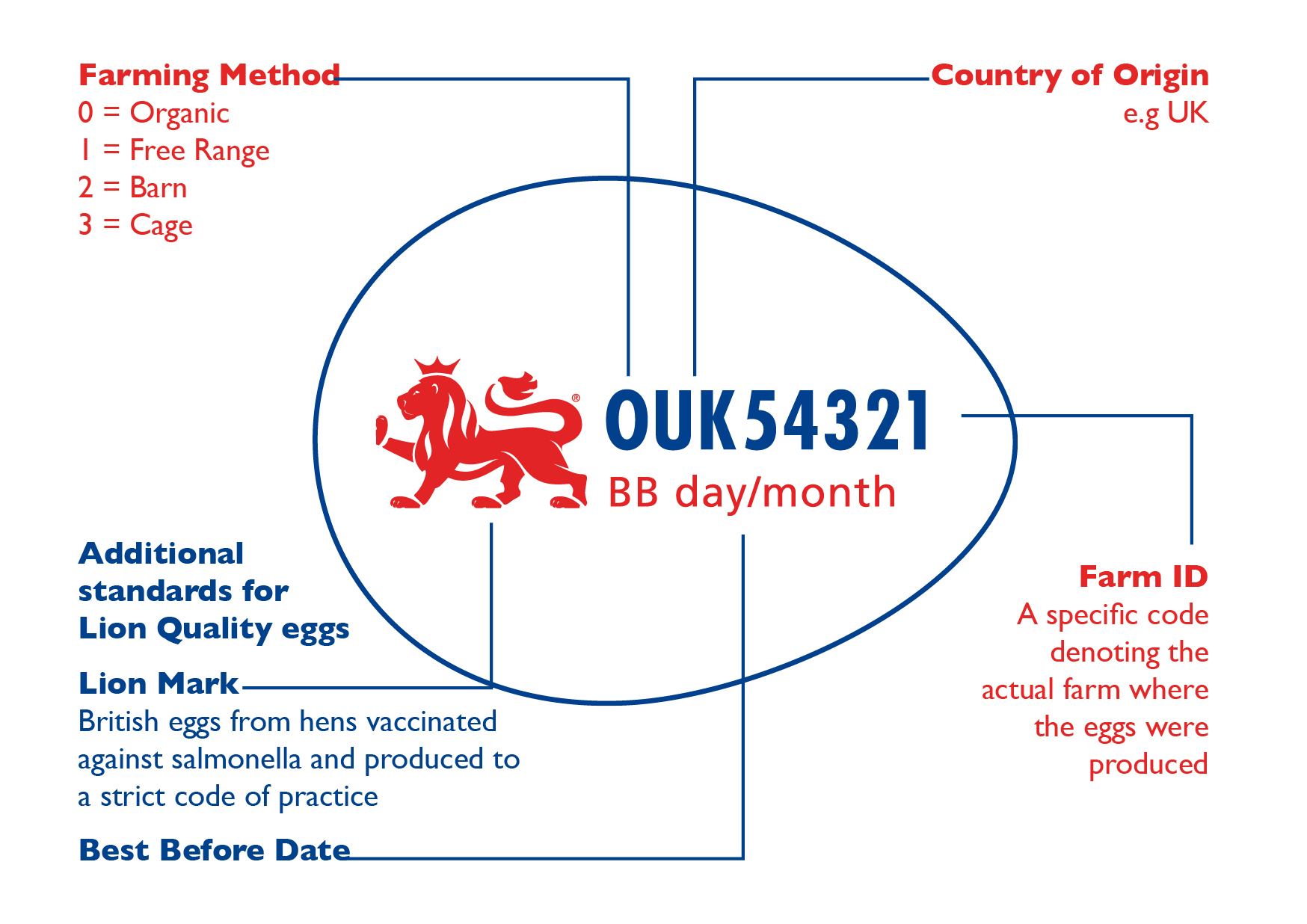
I personally, only go for free range; I feel far too guilty about the conditions they have to endure and I can’t bring myself to buy battery. The best eggs are those you can get from farmers’ markets, and are usually pretty cheap too.
The good thing about modern farming methods is that we get fresh eggs all year round. Normally chickens stop laying during wintertime and therefore eggs had to be preserved, usually by pickling, in Britain. I quite like a pickled egg now and again. I often think how we’d cope as a nation if we suddenly had to eat our food seasonally. I reckon it’d be character-building. Eggs were off limits during Lent because they are from animals. No wonder they are so prominent during Eastertime.
The best way to enjoy an egg is to make a simple meal from it, and what couldn’t be simpler than the boiled egg? Actually there seems to be 101 different methods to boil an egg perfectly and it is far from easy to get consistency. It requires a post to itself. However I cannot let this story wait…
Louis XV of France loved boiled eggs and had them every Sunday for breakfast. He was so deft at eating them that the Parisian people would come and watch their king’s skills at work. A crowd would gather, then a high-ranking servant would shout: ‘The King is about to eat his egg!’, and everyone would watch agog as King Louis sliced the top of the egg with one swift stroke of his fork. It’s amazing what passed as entertainment, though I have to admit it’s quite a skill.

Louis XV
If you like the blogs and podcast I produce, please consider treating me to a virtual coffee or pint, or even a £3 monthly subscription: follow this link for more information.
There is only one egg dish that ranks highly when it comes to gastronomy though and that is the omelette. Don’t be deceived by the French name; it cannot be claimed by them. During the Middle Ages, the English would tuck into cheese omelettes pretty regularly, though in those days we used the word fraysse. Like much Franco-Angle foods, the exact origins are lost in time.
One final mention about hen’s eggs from a culinary perspective – they are a lot bigger than they used to be. Any recipe older than, say, around 1900, need a little modification and you might be best using two-thirds of the number stated.
Also, there are more than just hens’ eggs available if you know where to look for them…
Quail eggs – these are probably the most common after the chicken egg, though were a novelty in the 1970s. I don’t really use them and don’t see the point of putting tiny fried eggs on food just for the sake of being fancy, I’d rather have a nice real farm chicken egg. However, they do make great pickled eggs.
Duck eggs – these crop up more commonly these days, particularly in Chinese supermarkets. Apparently, ducks will lay their eggs anywhere, so to be safe a duck egg should be hard-boiled.
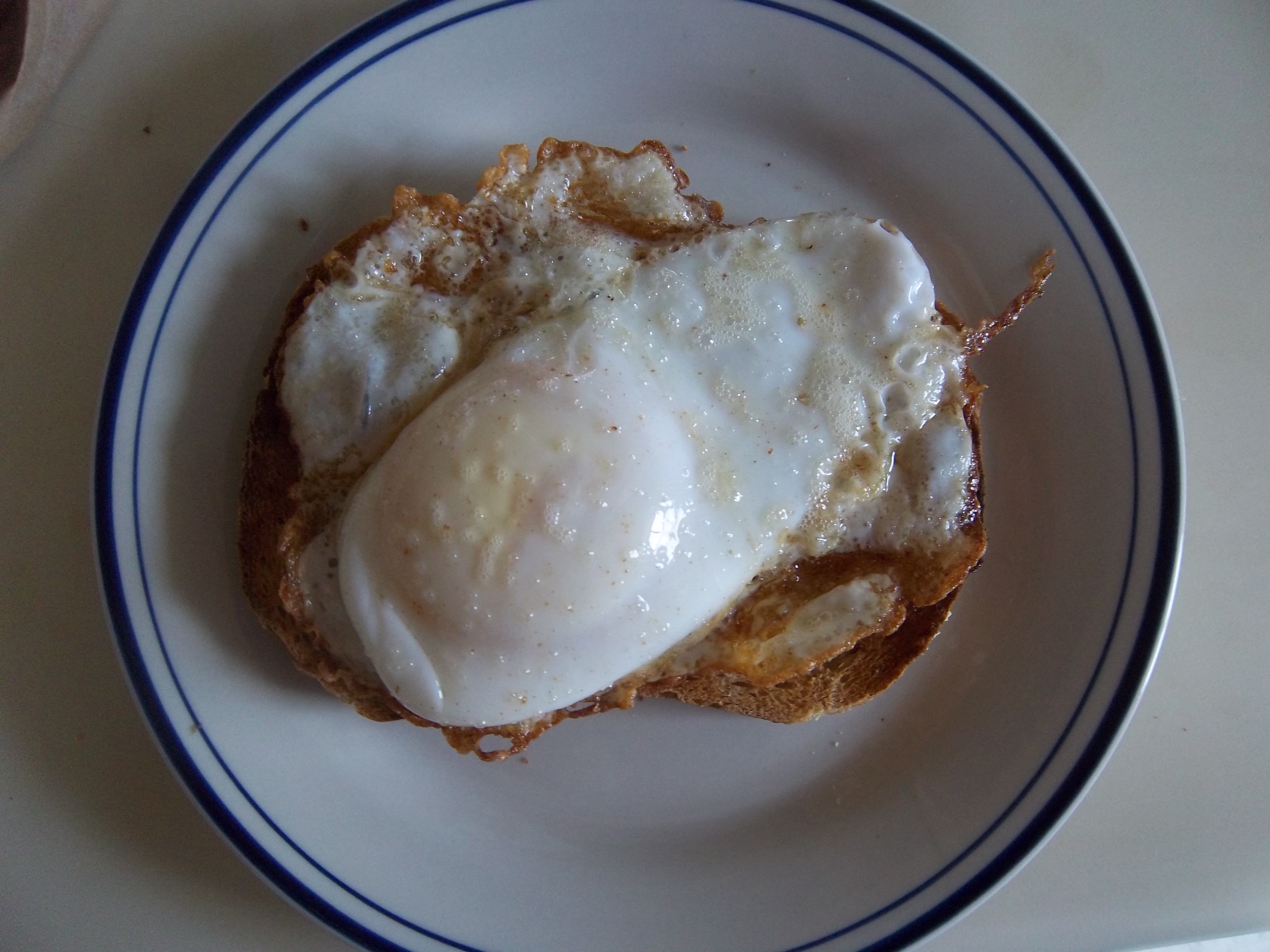
Goose eggs – I had never eaten a goose egg until recently when I spotted some for sale at Soulard Market in St Louis. They are massive. Naturally I snapped one up and ate is just like Jane Grigson said to: ‘fried in a little butter’. A ‘rare rich treat’ indeed. I can heartily recommend trying one.

Chicken eggs are dwarfed by goose eggs
Gull eggs – the only egg on the list I have not tried. In fact I have never seen them before anywhere. Ever. I wonder if they are still available. If you know anything about getting hold of some, let me know.
Egg recipes so far:

 British Food: A History