Tag Archives: food

Decorating the Christmas Cake

Once your Christmas cake is nicely matured and well-fed on brandy, it is time to decorate the bugger. In my opinion it is best to go all-or-nothing; either don’t decorate at all or go crazy. Traditionally, in England at any rate, you need a layer of marzipan and a layer of royal icing. Though I have seen recipes that have a bakeable marzipan and no icing, which I must admit is attractive, but I keep it traditional, even though I am not really bothered about the icing. No, I do it simply for tradition’s sake.

I gave the Christmas cake recipe that I use in the previous post, so if you have made one or have a bought undecorated one that you want to put your own stamp on, I have recipes for marzipan and for royal icing too. Don’t forget to add some festive bits and bobs too.

Marzipan

Marzipan is essentially a paste made of ground almonds and sugar and it found its way in Europe from the Middle East via the Crusades. It was the Italians – specifically the Milanese – that really took to the stuff, refining the techniques to produce a very high quality product that was excellent for making into extravagant sculptures. Leonardo da Vinci was quite despondent after making some amazing and intricate marzipan sculptures for the Milanese court as he ‘observed in pain that [they] gobble up all  the sculptures I give them, right down to the last morsel.’

Aside from being used as a sculpture material, marzipan also became a popular sweetmeat used by chocolatiers and bakers. Some of my favourite cakes use marzipan: Battenburg, stollen and simnel cake. The Christmas cake got its layer of marzipan because the Twelfth Night cake – traditionally covered in it – was banned by the Puritan and Lord Protector of England, Oliver Cromwell as too frivolous, so people added the marzipan they loved so much to their Christmas cake instead.

Here’s the recipe I always use these days. What I like specifically about this recipe is that it is not too sweet, which I think the bought stuff always is. Also, when you make your own marzipan, it has a much better texture as well as flavour. You can add extra things to the mixture if you like, such as the grated zest of an orange, or a couple of teaspoons of orange flower water or rose water.

140 g icing sugar

90 g caster sugar

220 g ground almonds

1 beaten egg

1 tbs apricot jam

1 tbs water

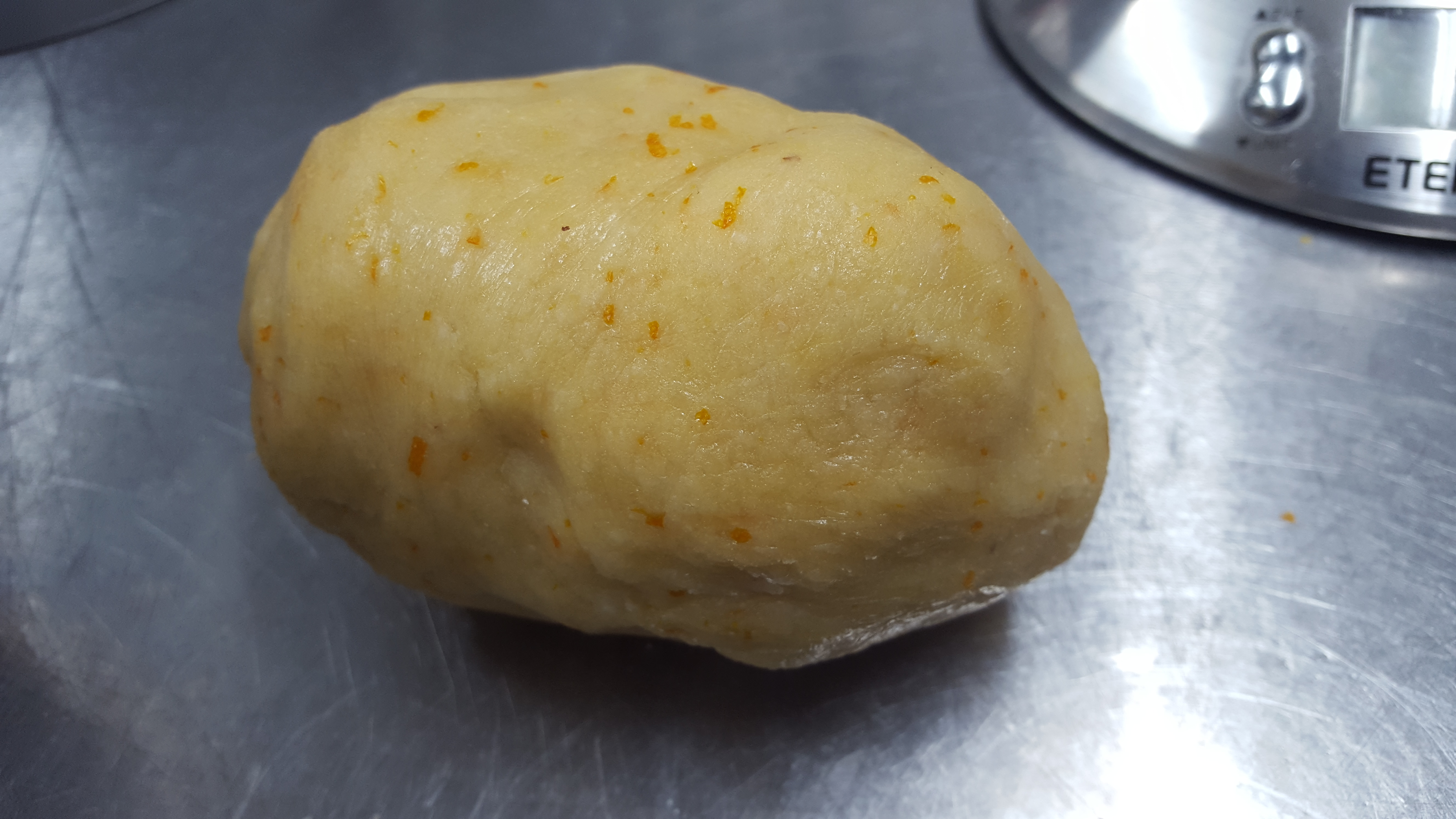
Sieve the icing sugar into a large bowl and stir in the caster sugar and almonds. Stir in the beaten egg and lemon juice to form a paste. Knead the marzipan on a surface floured with icing sugar. Easy. Wrap and allow to chill in the fridge for a few hours.
To cover the cake with it, you first need to slice the top of your cake off so that it is a nice, flat surface. I always like that bit because I get to try the cake.
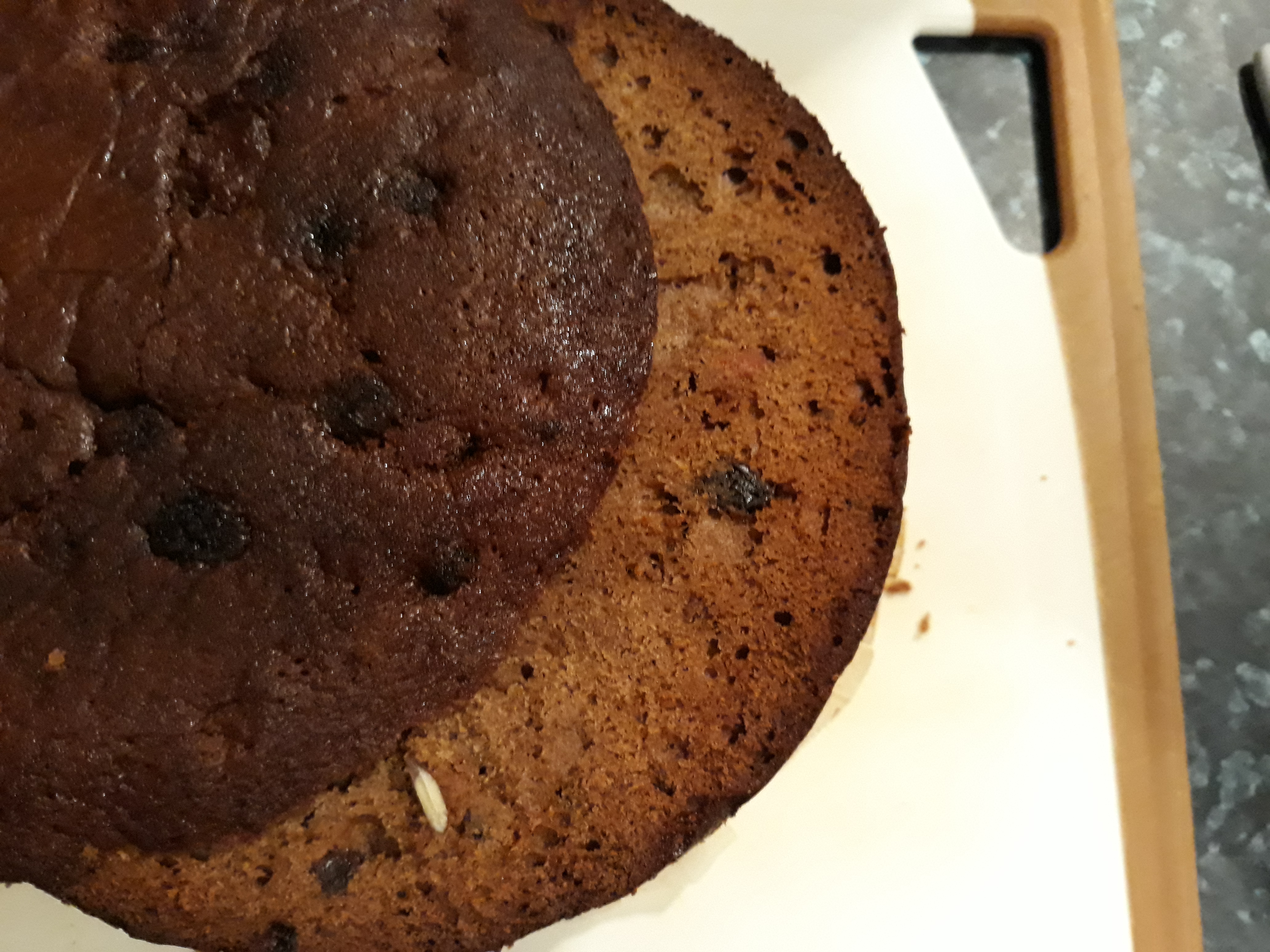
Next, turn it upside down and pop it on a cake base or plate. Warm up the jam and water in a pan and paint the whole cake with the glaze.

On a sheet of greaseproof paper, roll out a little over half of the marzipan into a round shape that is just a little larger than the cake itself. The greaseproof paper makes it easier to roll out, but you can use an icing sugar dusted worktop instead. Use the cake tin as a template and cut a circle.
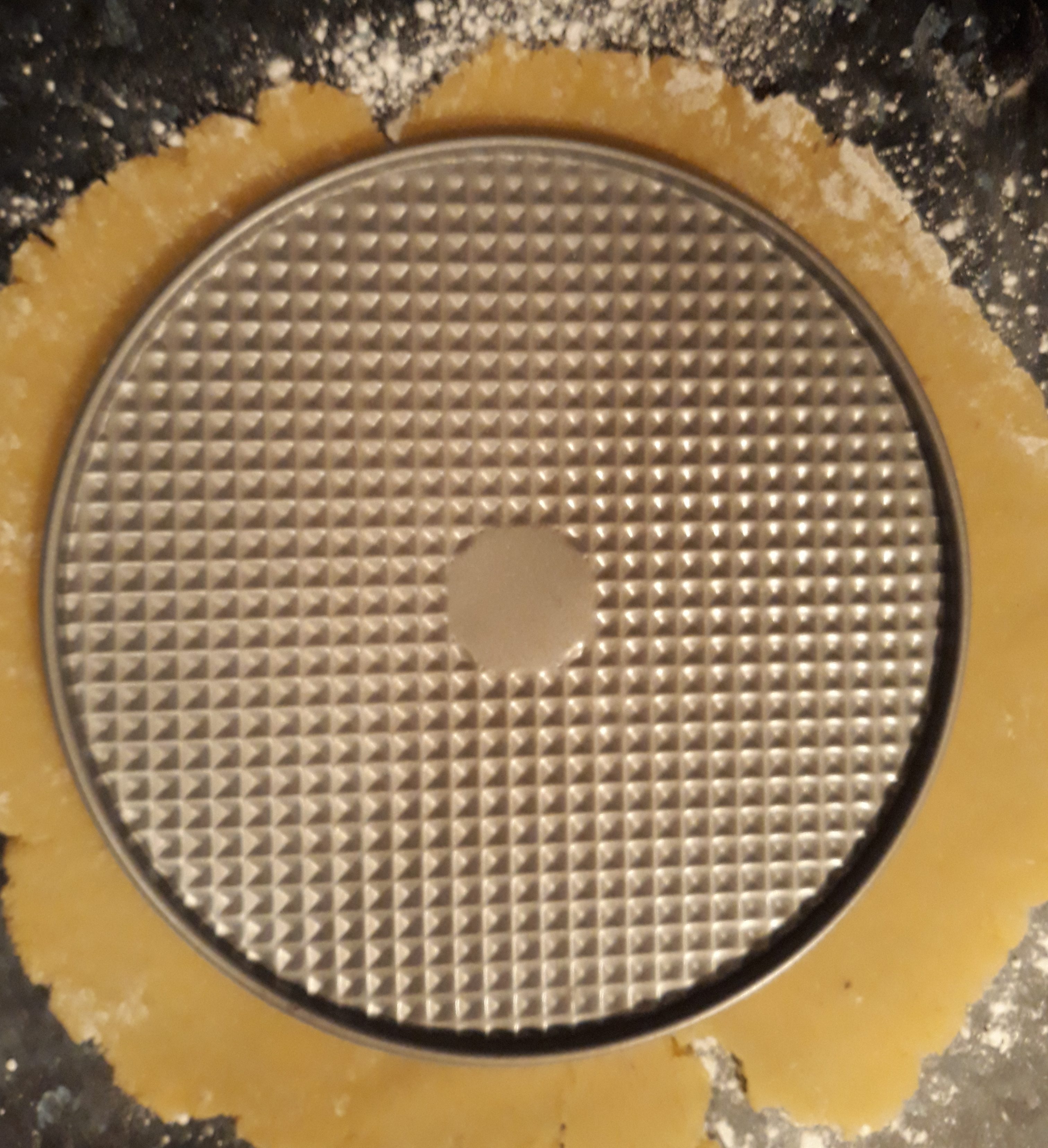
Pick up the marzipan still stuck to the paper, place it on top of the cake and peel off the paper.
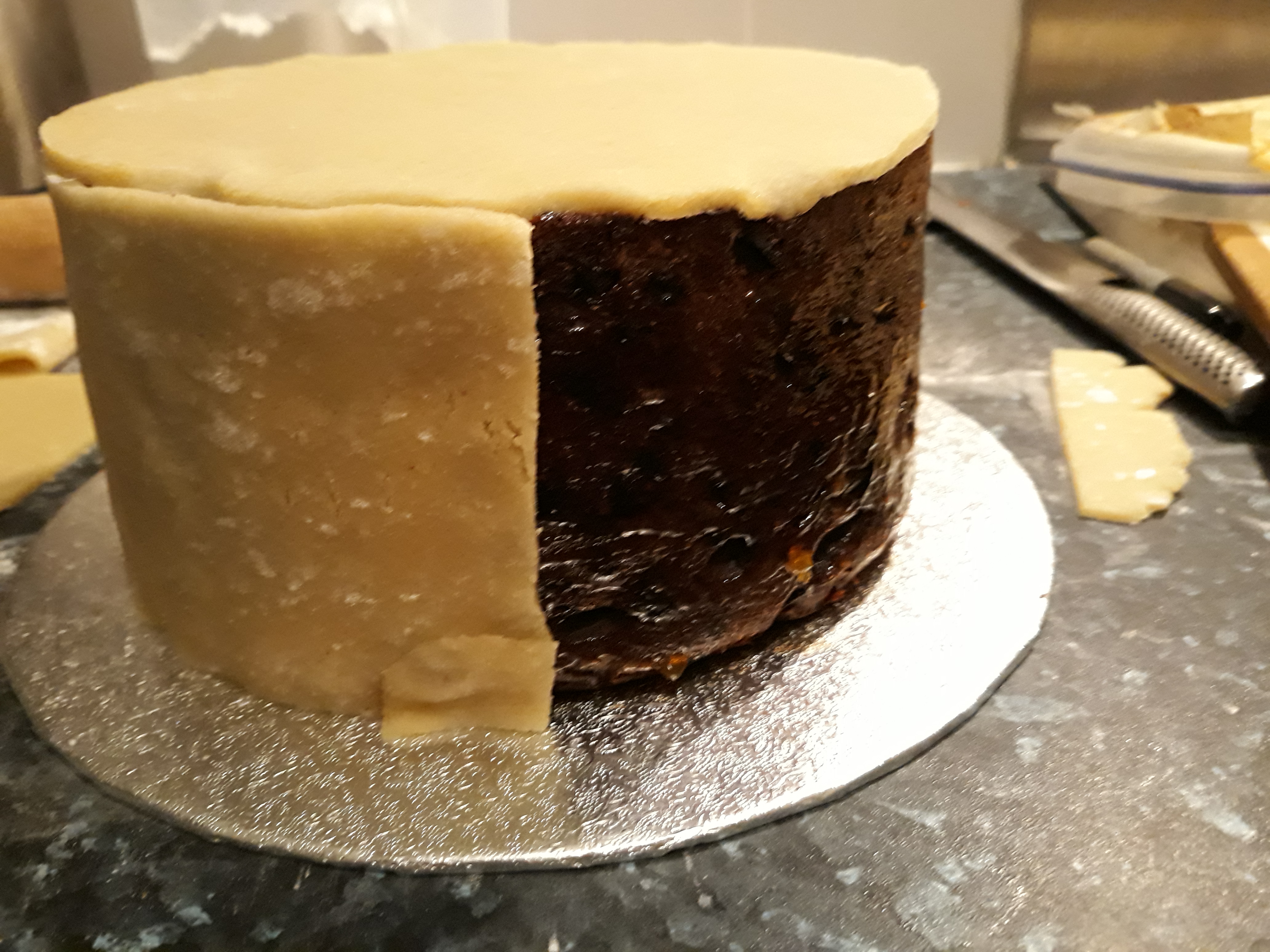
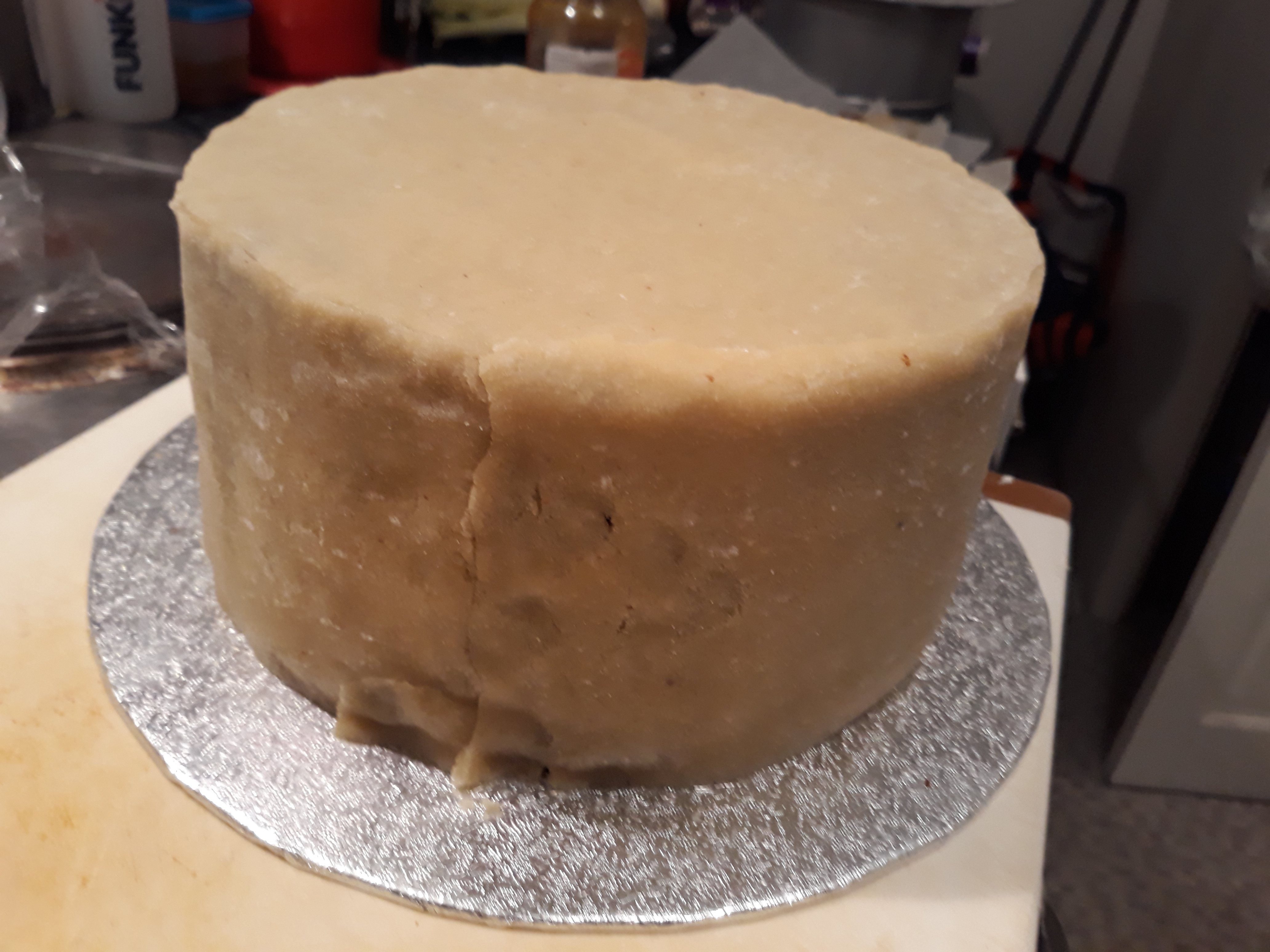
Next, take the remaining third of the paste and roll that out into strips the same height as the cake and secure them to the cake. Press the edges together as you go as well as any cracks that may appear.

You need to leave the cake for a couple of days to dry a little before adding the icing (should you want to).

If you like the blogs and podcast I produce, please consider treating me to a virtual coffee or pint, or even a £3 monthly subscription: follow this link for more information.


Royal Icing

Royal icing is the classic icing for the Christmas cake – it is ‘royal’ because it was the British Royal Family that used in for their wedding cakes, and naturally if the Royals did it, then we copied it. Icing had been around since the eighteenth century; before that, there wasn’t the technology to refine the sugar appropriately. The first icing was similar to royal icing, it was spread over the top of the cake but then the cake was returned to the oven to set hard. The final result was a nice flat, shiny surface like that of a frozen lake, hence we call the stuff icing. Elizabeth Raffald mentions it in The Experienced English Housekeeper (1769) – the first written recording of the word.

Royal icing is the most popular icing because it can be piped and coloured easily. Plus it is easy to make , which a bonus. Here’s how:

2 medium egg whites

2 tsp lemon juice

500g icing sugar, sieved

Whisk the egg whites until frothy but not yet stiff and then stir in the lemon juice. Add icing sugar to the egg white bit by bit, mixing as you go – an electric beater comes in very handy here, but you can use a wooden spoon if your forearms are up to the job. The icing can be used straight away.
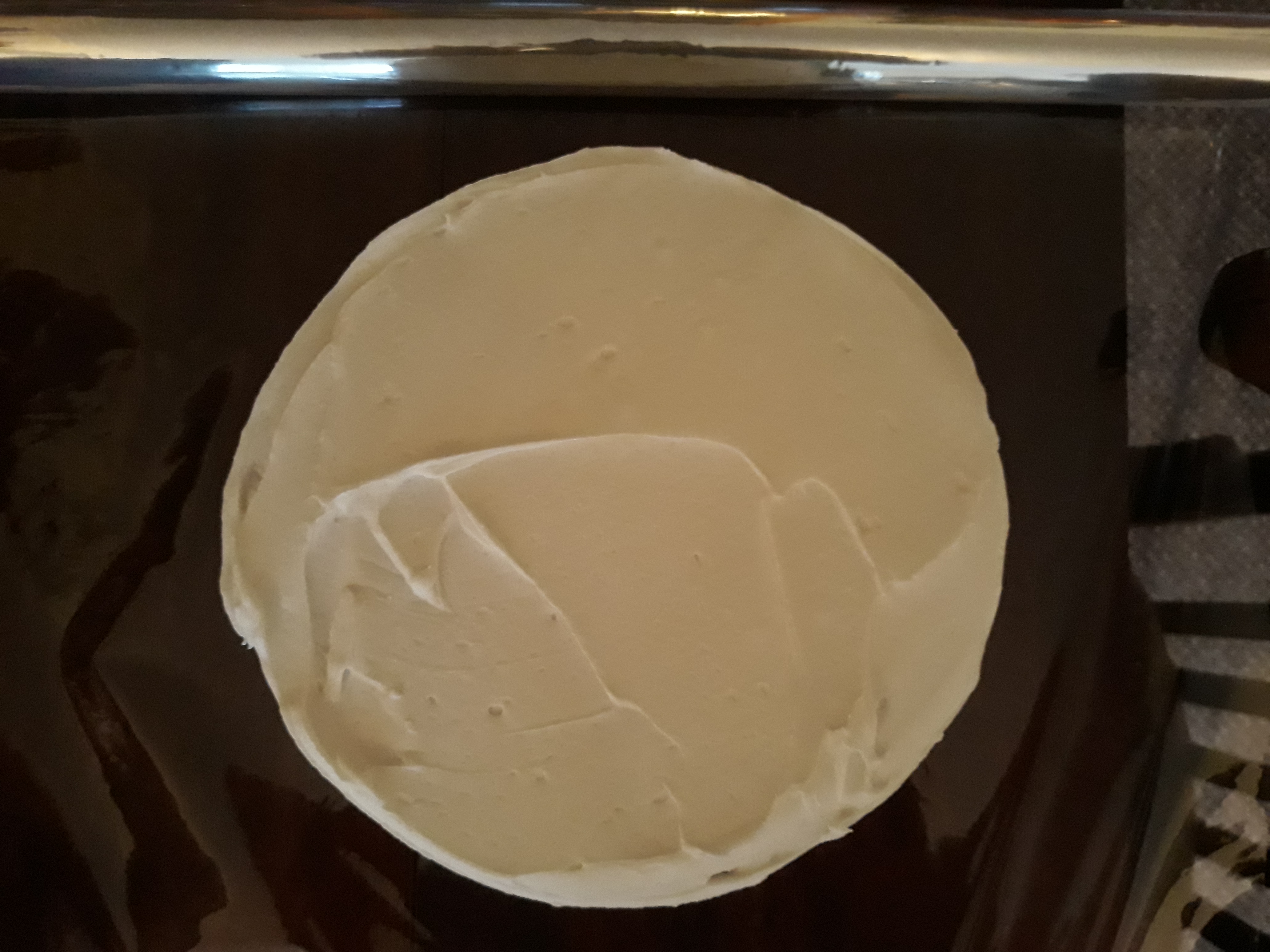
Spread the mixture all over the cake using a palette knife to smooth it out. Dipping the knife in very hot water is a good way of getting the icing super-smooth, but I like it a bit more rough-and-ready. You can reserve some of the icing for piping of course, but that has never really been my thing – I should have a go one time though!

A simple and effective way of decorating the cake is to use the side of a knife to make a nice spiky snow effect. When decorated, leave it for two or three days to set hard.
12 Comments

Filed under cake, Christmas, Eighteenth Century, food, General, history, Recipes, Teatime, Uncategorized

Christmas Cake

Christmas cake, Christmas pudding, mince pies – if you don’t like dried fruit you are in trouble at Christmastime!

When families in the sixteenth century made their Christmas puddings for the big day, they would often use some of the mixture, with the addition of flour and eggs, to bake and eat for Eastertime. These were obviously rather rich families. It was liked so much that the rich fruitcake was made for Christmas too. We also dropped it from the Easter menu for some reason.

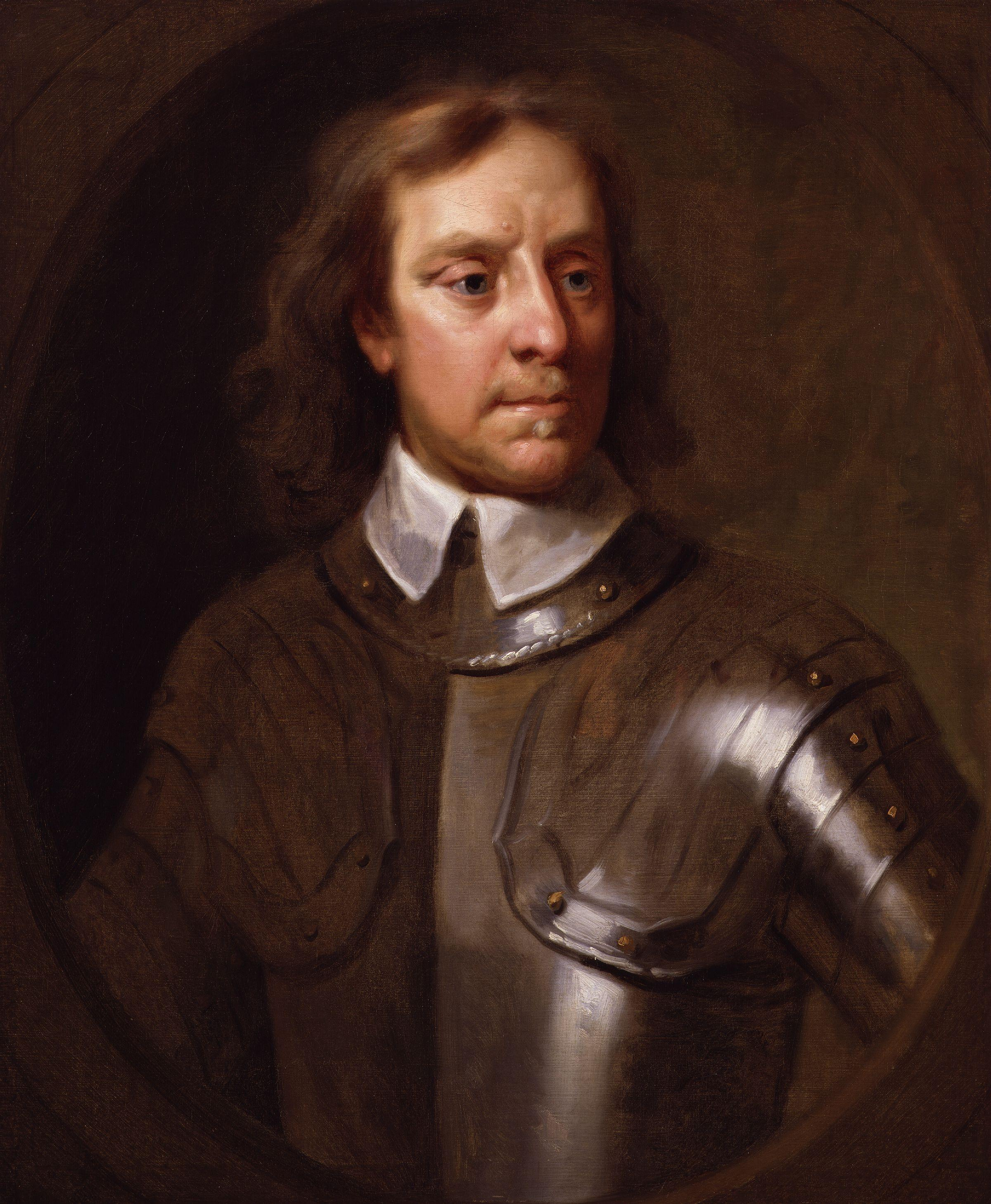
I used to be of the belief that the addition of the marzipan and royal icing (see here for recipes) came much later when a cake was banned from Christmas. The last day of Christmas is Twelfth Night (the 5th of January) and it used to be traditional to make a Twelfth Night cake that contained almonds and was covered in marzipan. Oliver Cromwell, the Lord Protector of England, and the other Puritans banned the feasting on that special day in the 1640s (he also banned mince pies as well) complaining that there was too much excess. Christmas Day remained a public holiday and some feasting was allowed, so people simply made their Christmas cake and covered that in marzipan instead, and so the Christmas cake was born.

This is sadly untrue. The Christmas cake with its double wrapping of marzipan and royal icing is an 18th century invention – Elizabeth Raffald has the first recipe for a cake such as this, and it was for a ‘Bride’s Cake’, i.e. a wedding cake.

Britain’s biggest ever party-pooper: Oliver Cromwell

You don’t have to cover it with the marzipan and royal icing though, in Yorkshire (my home county) it is popular to eat the Christmas cake with some nice cheese such as Wensleydale or Cheddar instead.

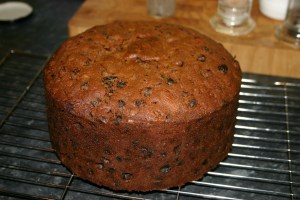
I love Christmas cake, so I thought I would give you the recipe I always use – it is adapted from Jane Grigson’s English Food (click here to see my other pet project) – and it has never failed on me. As I said a couple of posts ago, if you want to eat top-quality food at Christmas, you need to make your own, or spend a fortune at Harrod’s. Plus the cake is made well in advance – I usually make mine 6 weeks before Christmas so it can mature. Once you’ve cooked it, you only have to feed it with a little brandy to make it nice and moist.

This recipe is of course for an English-style Christmas cake; the Scottish, Welsh and Irish have their own versions, all in a similar vein, but with a few differences. I’ll blog about them at some point.

It makes one hefty 8 inch/20 cm cake, for a smaller cake, half the amounts and bake in a 6 inch / 15 cm tin for 2 1/2 hours.

Ingredients:

900 g mixed dried fruit (currants, raisins and sultanas)

125 g of whole roasted almonds (or hazelnuts or walnuts, or a mixture)

125 g chopped candied citrus peel

125 g rinsed glacé cherries quartered or left whole

300 g plain flour

1 1/2 tsp mixed spice

the grated rind of a lemon

250 g salted butter, softened

250 g soft dark brown sugar

1 tsp vanilla extract

1 tbs black treacle (or molasses)

4 eggs

1/2 tsp bicarbonate of soda

1 tbs warmed milk

brandy

Preheat your oven to 140⁰C (275⁰F).

Begin by mixing all the dried fruit, almonds, candied peel and cherries in a large bowl. Next, sift in the flour, turning in and coating the fruit, then mix in the spices and fresh lemon rind.

Now cream the butter sugar in a separate bowl, then mix in the vanilla and black treacle. Beat in four eggs one by one until incorporated, and the mix in the fruit and the flour. For the final stage, dissolve the bicarbonate of soda in the warmed milk, stir it in, and then add enough brandy to slacken the mixture slightly, so that it achieves a dropping consistency – you don’t want a dry cake, now do you?

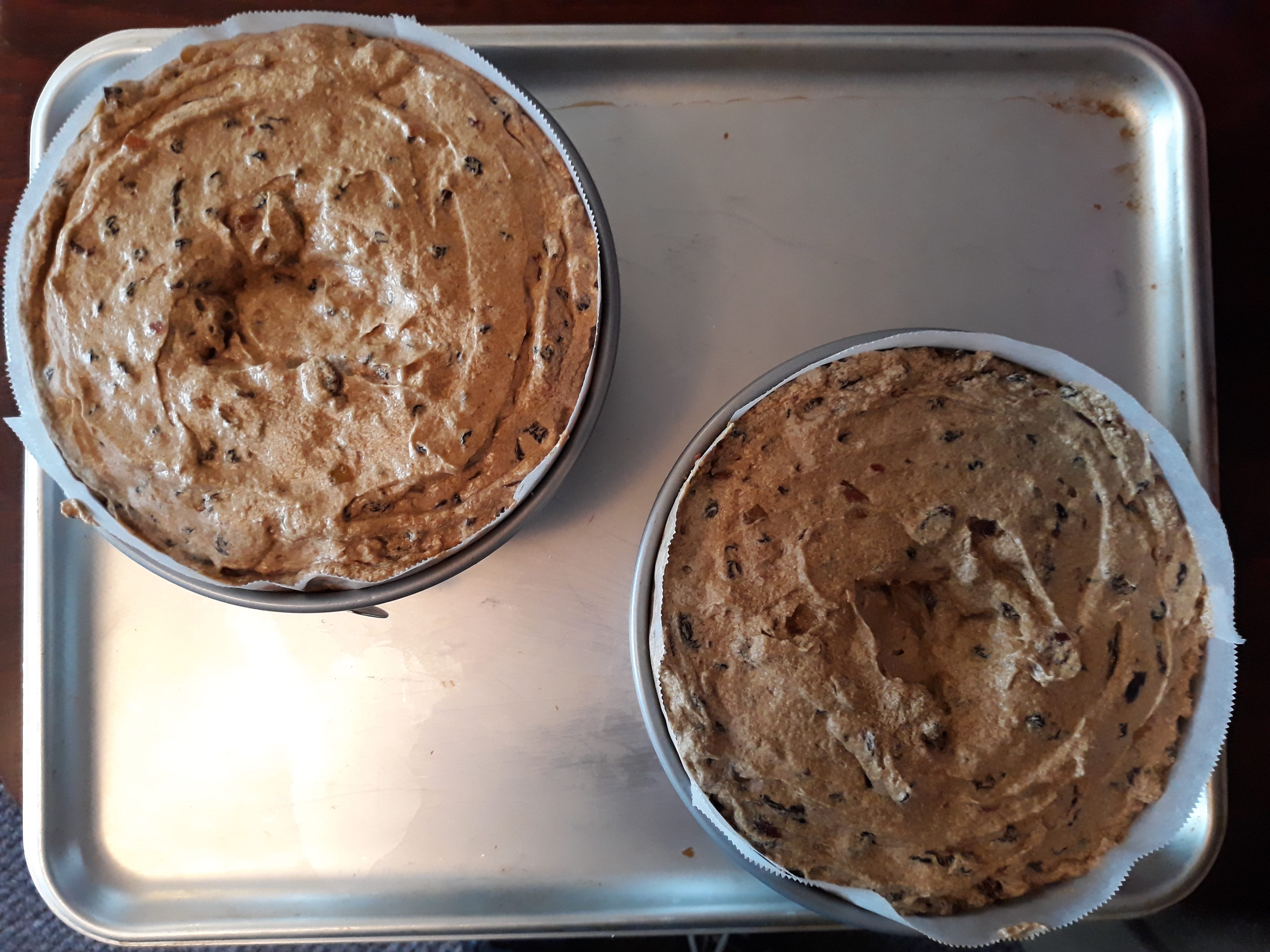
Line an eight inch cake tin with greaseproof paper and pour the mixture in, hollowing the top a little to compensate for it rising in the oven.

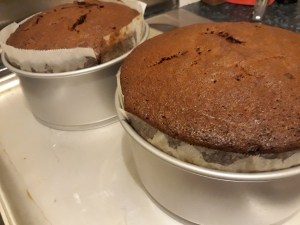
Cover with a layer of brown paper to prevent scorching and bake for 3 to 3 ½ hours. Test it after 3 hours with a skewer. When done, leave to cool in its tin overnight. Wrap in greaseproof paper or foil and keep in an airtight container.

Ideally, the cake should sit for at least a month to mature, but 2 or 3 weeks is also fine. Whilst it sits, you need to feed it with a sprinkle of 2 or 3 tablespoons of brandy, turning the cake each time it is fed.

The cake is ready to eat when sufficiently fed and matured, however, you might want to add a layer of marzipan and royal icing.


If you like the blogs and podcast I produce, please consider treating me to a virtual coffee or pint, or even a £3 monthly subscription: follow this link for more information.


29 Comments

Filed under baking, cake, Christmas, food, history, Puddings, Recipes, Seventeenth Century, Teatime, Uncategorized

Ducks: A Potted History

Mary Simmons of Hartwell’s prize-winning Aylesbury ducks

Long before the chicken became the country’s favourite fowl for the dinner table, there was the duck. The Chinese domesticated it 4000 years ago and it is still their meat of choice. The Egyptians were not too far behind the Chinese; they captured eggs that were hanging about in nests amongst the reeds on the banks of the Nile. The duck truely is the “veteran of the henhouse”. Britain too did love its roast duck, though duck breeding did suffer greatly during the World Wars and never really recovered.

All farmed ducks today are all descended from the seemingly ubiquitous mallard. Farmed ducks and mallards differ greatly in size: farmed ducks are commonly double the size of their wild cousins and are often seen capturing and eating whole frogs in a single bite! Prior to domestication, many of the duck species that were caught and eaten were migratory, coming and going like clockwork as the seasons passed.  Heavy symbolism was therefore attached to the eating of them, and they were integrated into feasts. They are still eaten in Romania at the vernal equinox.

In Britain, the most well-known duck breeds are the Aylesbury and Gressingham, though they are by no means the most common. Many breeds dwindled in number so much that they went extinct, though some have been saved, such as the Silver Appleyard. The most common ducks that are reared for the table these days are the Pekin and Barbary ducks; the latter of the two must be rather stealthy as it is very common to see escapees hanging around ponds in Britain (and indeed the USA).

The Aylesbury Duck

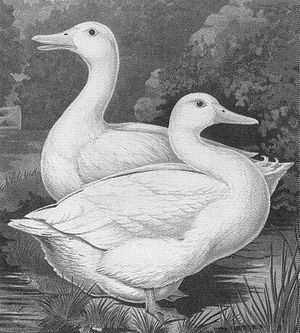
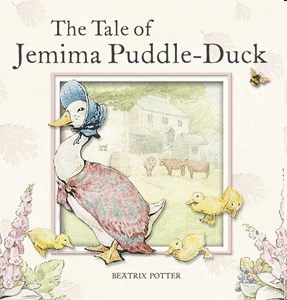
When people think of British ducks, they think of the Aylesbury – with their gleaming white plumage, orange legs and feet and sturdy bill set high upon their skull. Even if one did not know of the Aylesbury duck, I am sure that this is the picture one would have in their head. Beatrix Potter’s Jemima Puddle-Duck was an Aylesbury  for example (though she lived up North). Aylesbury ducks were not originally bred for their meat at all, but for their quills. In the nineteenth century, however, the switch was made. The reason being the folk of Aylesbury saw an opportunity to feed the ever-growing London population. Selling was successful – it must have been quite a sight to see the drovers walking the ducks from Aylesbury to London every week to be sold at market.

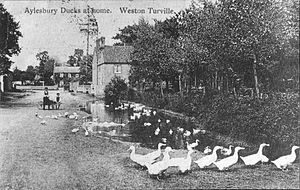
This seems all very picturesque, but in reality it was far from it. The ‘Duck End’ area of Aylesbury, where the ducks were bred was unsanitary, ducks were not kept in farms but were allowed to roam free, and taken into people’s homes at nighttime. However, Aylesbury’s attraction endured and conditions were better by the twentieth century. Then came The Great War, which damaged duck farming greatly and World War Two almost wiped it out completely. By the 1950s, there was just one significant flock of Aylesburys left and by 1966 there was no more breeding of Aylesbury ducks. Birds were often sold under the name Aylesbury, but they did not ‘contain a single Aylesbury gene’.

It is not all bad news though: some individuals did remain, though most had cross-bred with mallards. However, there was a large effort to bring back the breed and so the small mongrel population was selectively bred and we now have Aylesbury ducks once more.


If you like the blogs and podcast I produce, please consider treating me to a virtual coffee or pint, or even a £3 monthly subscription: follow this link for more information.


Duck Dishes

Ducks are no longer commonly eaten and are certainly considered a treat, save for special occasions. The most common way to eat them these days is by roasting them, though you can buy the breasts quite easily now, but for a large price – they are sometimes more expensive than the whole bird. Ducks were commonly simmered with herbs and vegetables, preserved in curative brines and, most bizarrely, sent through a press to make the infamously opulent dish duck in blood sauce. Anyway, below is a list of British duck dishes, some of which are rather old or obscure. I intend to tell you all about each one in separate posts, and hopefully I’ll be cooking most and providing recipes. I have also included some recipes outside of Britain that I think have influenced our cuisine in some way. Some I have already tackled as part of my other blog. Any that I have written up as a post will have a lovely link to send you straight to it. If there are any omissions, or you have your own recipe, let me know and I shall add them to the list. Here goes:

  1. Roast Duck
  2. Delia Smith’s duck with Morello cherries
  3. Duck with mint
  4. Stewed duck
  5. Duck stewed with green peas
  6. Duck terrine
  7. Fois gras
  8. Isle of Mann salt duck
  9. Duck baked in a salt crust
  10. Duck in blood sauce
  11. Confit of Duck
  12. Duck á l’orange
  13. Duck á la braise
  14. Duck á la mode

6 Comments

Filed under food, history, Meat

God Bless Her, and all that Sail in Her

Queen Liz 2
“God bless her, and all that sail in her”

Well hello there. Welcome to my brand-spanking new weblog British Food: A History.

From my love of cooking and interest in history, I thought it best I should start this blog on all things British and culinary. This interest has not come from nowhere, I have another blog called Neil Cooks Grigson which tackles all the classic as well as many of the weird and forgotten English dishes throughout the last 700 years or so. The idea behind that blog was to cook all the recipes in Jane Grigson’s English Food, a truly excellent piece of writing.

So what does this new blog have to offer if I am already sort-of doing it on another?

Well, the answer is that the other blog will have glaring omissions because the book does. So I always originally intended to produce an English Food V2.0. However, the more I researched for posts, the more I got interested in old recipe books and the history surrounding them and found that, although a great deal of fun the other blog is, I wanted to cast my net even further with this one.

The amazingly talented Mrs Jane Grigson

I want to add the recipes Jane Grigson didn’t use, I want to add the best of the ones I have cooked from the book, more importantly I want to look more at Wales and Scotland. Not just that, but to extend the map to the other countries that have had links with my own – for better, or for worse – like Ireland, France, India and the countless other countries too that have moulded our people, culture and food throughout history. I also want to go back in time to Britain before the Middle Ages too. What influence did  the Roman occupation have, for example? What about further back to prehistory? How did farming come about in Britain and what did the foraging people eat before farming on any scale even occurred?

So, the blog will be a mix of recipes, findings and short essays on our amazingly rich, frequently odd and overwhelmingly dynamic the Britons have been – and still are – with their food.

Most intriguing of all though, is to find a recipe and cook it and really experience how people lived; reading about is of course wonderful fuel for the imagination and it allows us to understand our past, and therefore our present and future. As is watching film documentaries. But these all fail in that the experiences are all second-hand. For example, eating something that a king from the Middle Ages ate on his coronation, in my opinion, the closest you can get to climbing inside a time machine and transporting yourself there.

So, there you go, that’s the idea behind it all. Let’s just see if I can pull it off…


If you like the blogs and podcast I produce, please consider treating me to a virtual coffee or pint, or even a £3 monthly subscription: follow this link for more information.


15 Comments

Filed under General