After the roaring success of my blood ice cream, I decided to have a crack at making a white pudding ice cream too, using the flavours in Gervase Markham’s recipe.
The blood ice cream was great, but I didn’t call it black pudding ice cream, because I left out one important ingredient: oats. The flavour of wholegrain oats is key, so much so that without them, I don’t think I captured the pudding’s true flavour.
I wanted to change this with this ice cream, but the challenge was to capture the flavour of oats without any annoying frozen groats getting in the way. I decided to take pinhead (steel-cut) oats, soak them in milk and then squeeze it out to create an oat-flavoured milk. This worked really well. I added this to the usual milk and cream to make a custard, warmed it up with the spices and found that it naturally thickened to just the right consistency – all without egg yolks! The mixture froze very well and produced a super-smooth final product. As you can imagine, I was very pleased with this outcome.
Just like the blood ice cream, I soaked some dried fruit in sherry – currants and dates this time, as per Markam’s recipe and stirred them through at the soft-scoop stage of the churning process.
I served my white pudding ice cream with sweet black pudding that had been fried in butter and sugar. I then fried a slice of bread in the sugary and buttery juices and popped the black pudding on top with an accompanying scoop of the white pudding ice cream. It was decadent and delicious!
Subscribe to get access
Read more of this content when you subscribe today and unlock lots of premium content, including bonus blog posts and recipes, my Easter eggs, newsletter and the secret podcast. Please click here for more information.
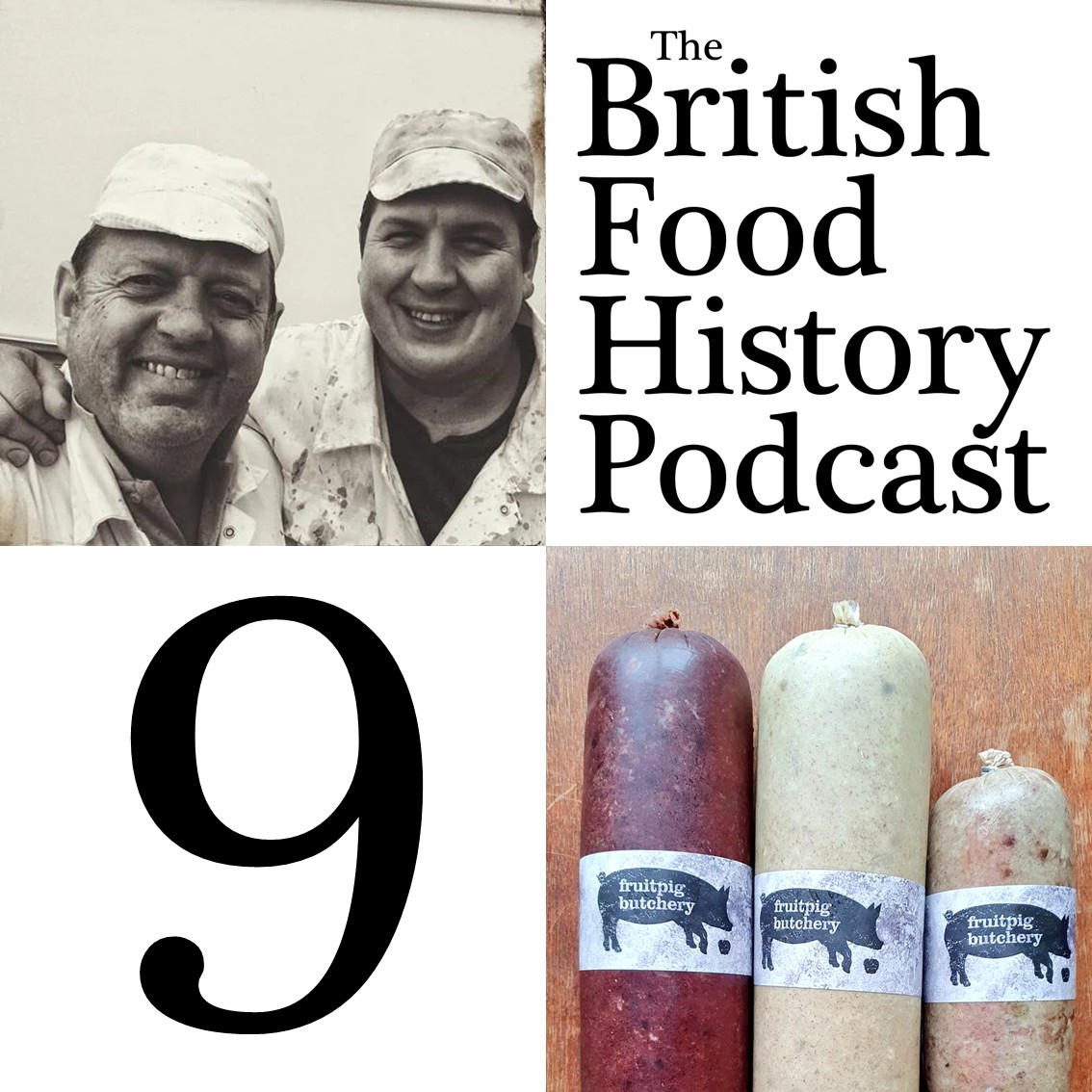
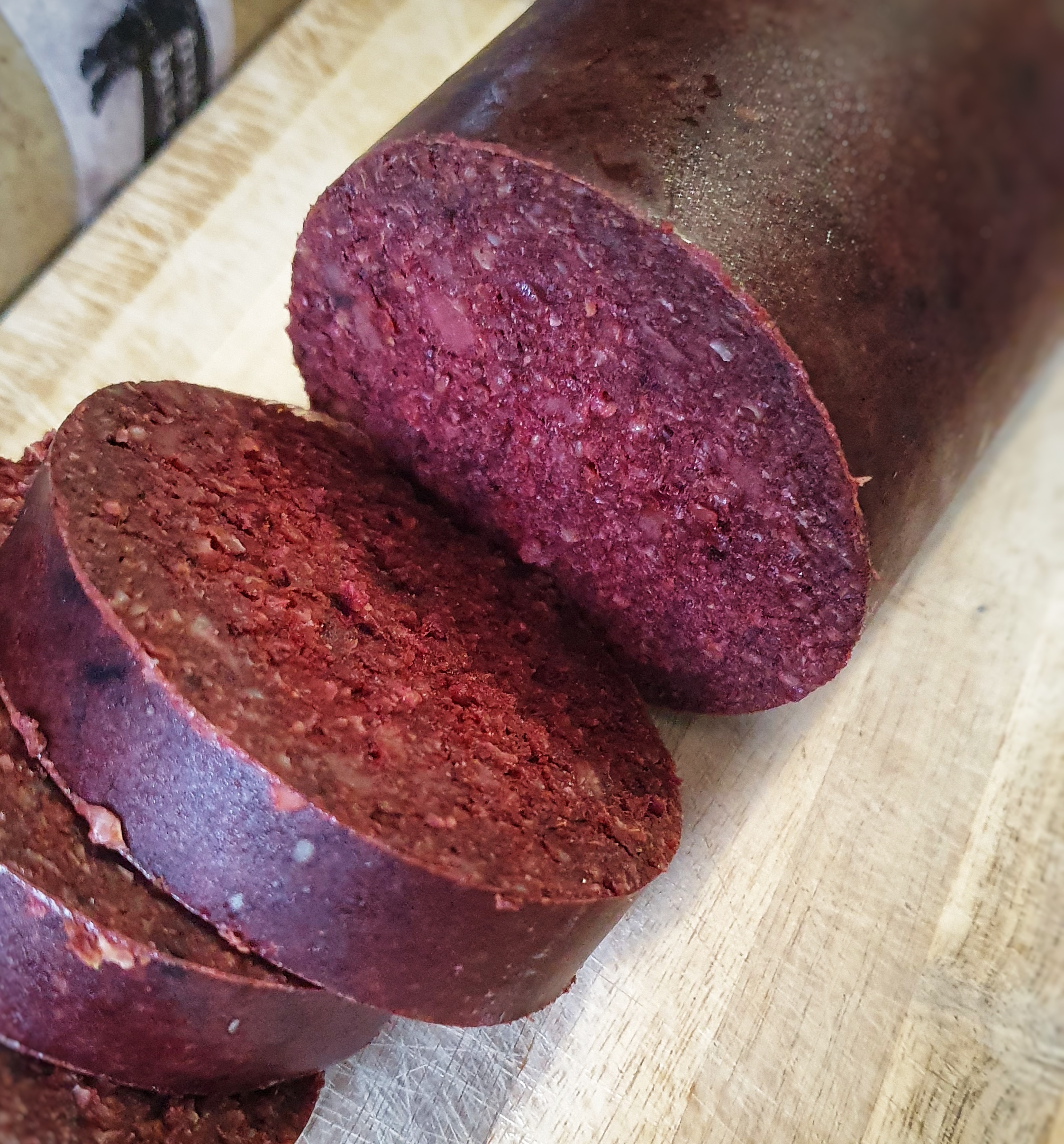
I recently had a go at making a fresh blood black pudding, taking inspiration from cookery books from the 16th and 17th centuries. The fresh blood was very kindly sent to me by Matthew Cockin and Grant Harper of Fruitpig, Britain’s last craft producer of fresh blood black pudding, who are also sponsoring the ninth season of The British Food History Podcast. Listen to the episode we recorded here:
We also talked about their hog’s pudding – a type of white pudding – and I felt I had to complete the set and make an Early Modern white pudding as well.
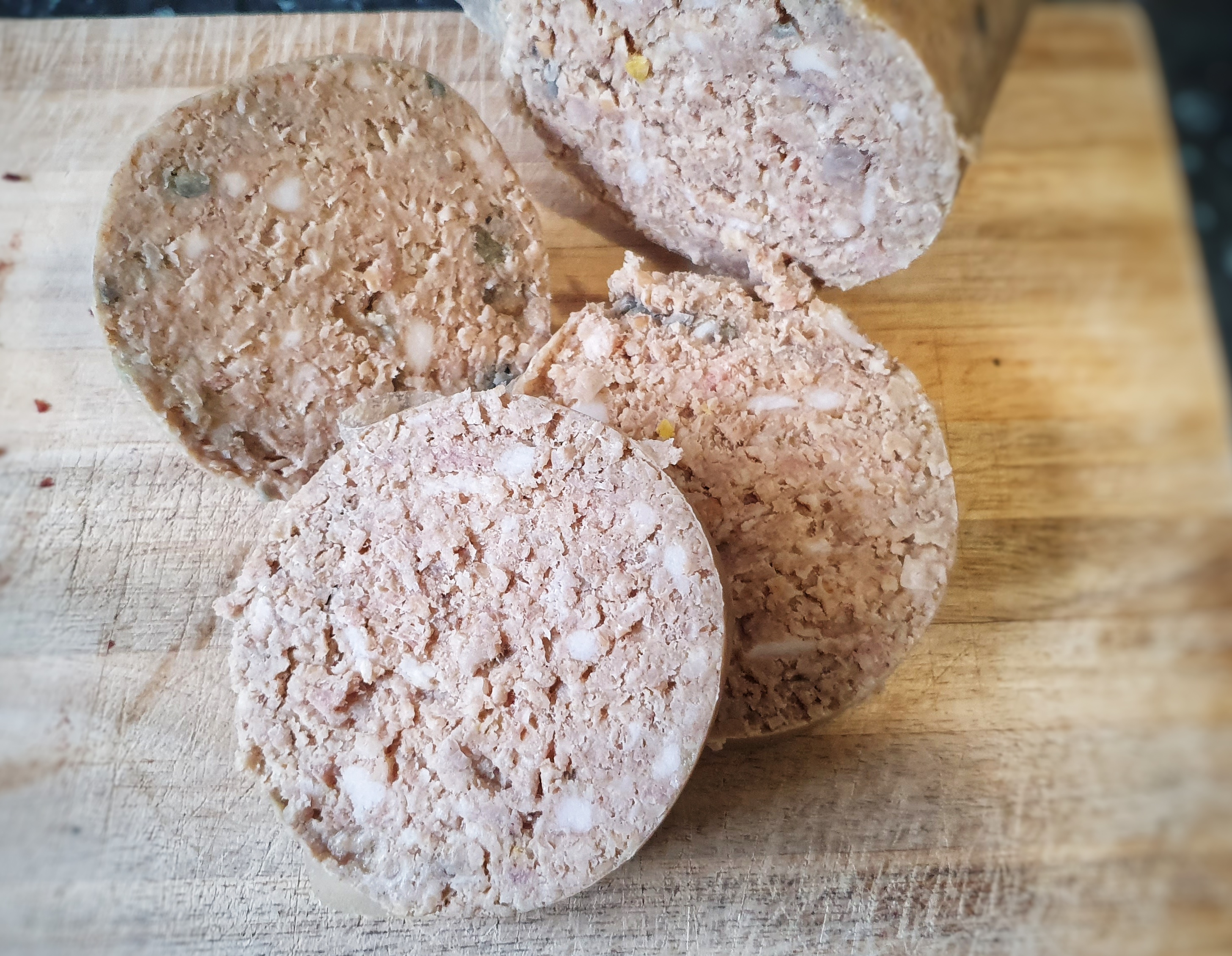
We know where we stand with black puddings: we expect them to be made largely of blood, cereal and fat, but what about white puddings? These are more mysterious, I feel. Modern white puddings are made from ground pork, pork fat, breadcrumbs and rusk or oats, plus lashings of white pepper, and are today associated largely with Scotland and Ireland. There used to be a rich diversity of white puddings right across Britain and Ireland, their contents highly variable, the only prerequisite being that the finished product would come out white. In the Early Modern Period, they were lavish ‘puddings of the privileged’[1], and had more in common with French boudin blanc than modern British white puddings. There was plenty of eggs, milk and cream, and the meat used (if any) was suitably pale in colour: Kenelm Digby’s recipe contained the meat of ‘a good fleshly Capon’ as well as streaky bacon,[2] Thomas Dawson’s was made with a calf’s chauldron, i.e. intestines.[3] Some recipes contain no meat at all: rice pudding could be counted as a form of white pudding in this context. Things do begin to get confusing, however, because some white puddings made with pork are called hog’s puddings, but only some. As Peter Brears wrote in an article on white and hog’s puddings:
Read about the history of puddings in my book The Philosophy of Puddings, from British Library Publishing
On studying these recipes, one rather surprising fact becomes particularly obvious; there is no material significance in the various names given to such puddings. Whether called hog’s or white puddings, their ingredients might be identical, or quite disparate, while many contain absolutely no pork whatsoever.[4]
Today, hog’s puddings are associated with Devon and Cornwall. Fruitpig’s hog’s pudding uses a base of bacon and oats. We can muddy the water even further because a hog’s/white pudding if made with pig’s liver could also go by the name of leverage pudding.
Looking pretty smug with my 17th-century puds!
After a great deal of flicking through cookery books, I decided to make Gervase Markham’s white pudding from his classic The English Housewife (first published 1615), mainly because I had most of the ingredients in the house.
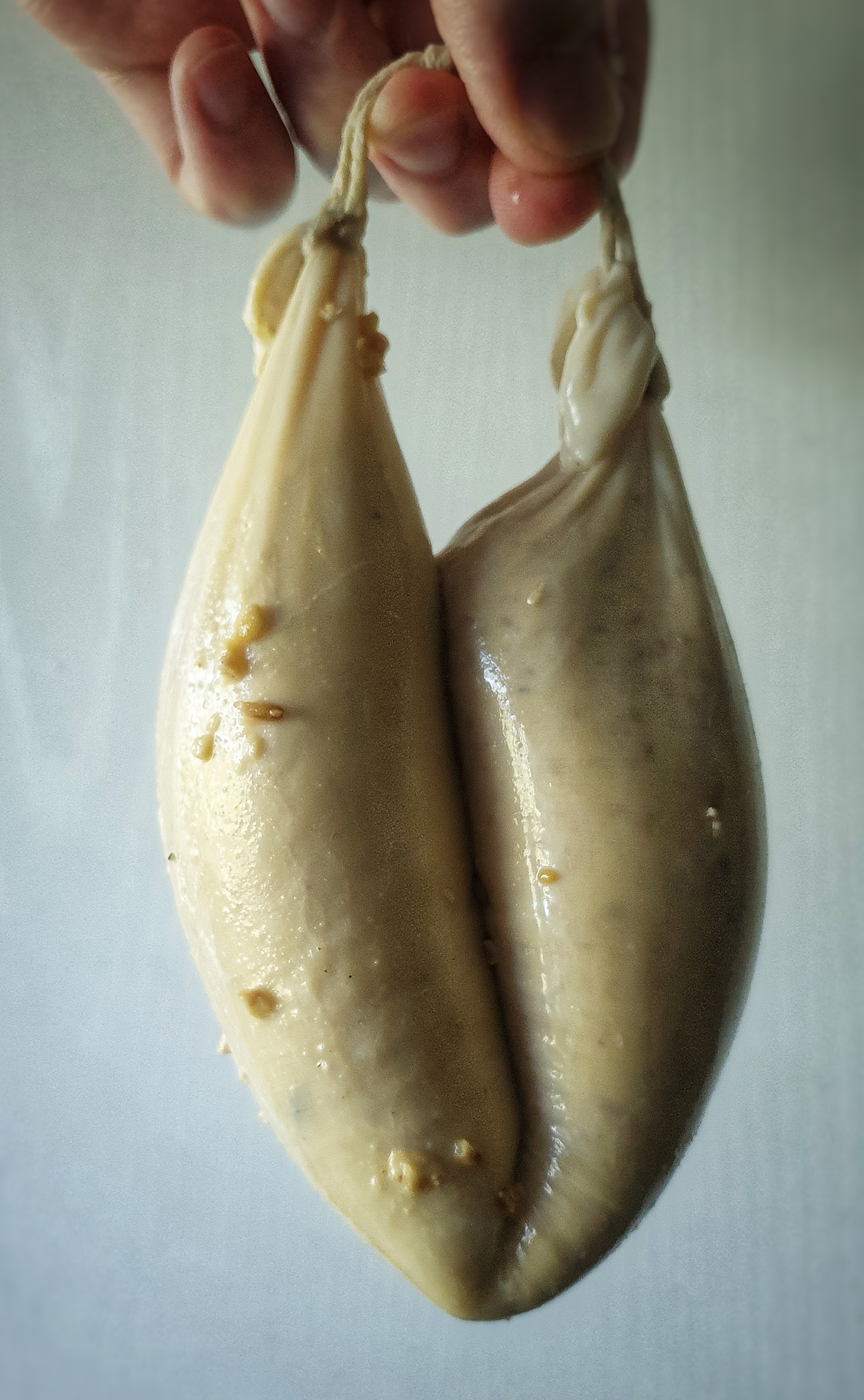
As you can see, Markham’s recipe contains no meat (aside from the beef suet and the pudding casings themselves).[5]
I have to say, they were a triumph! They freeze well and are easy to reheat. When it comes to serving them, let them cool for 5 minutes before cutting into them. The best way I have discovered to eat them (so far) is with crispy smoked bacon and golden syrup. Breakfast of champions.
If you like the blogs and podcast I produce, please consider treating me to a virtual coffee or pint, or even a £3 monthly subscription: follow this link for more information.
Recipe
Makes 6 x 375 g (approx.) puddings:
500 g cracked oat groats or pinhead oatmeal (steel-cut oats)
500 ml whole milk, plus 2 tbs for the saffron (and possibly extra, see recipe)
The day before you want to make your puddings, place the oats in a bowl or jar and pour over the milk. Cover and refrigerate. Soak your beef casings in fresh water, cover and refrigerate too.
Next day make the pudding mixture: in a large mixing bowl add the milk-soaked oats, cream, suet, sugar, eggs, dates, currants, ground spices and salt. Stir well. Warm up the 2 tbs of milk, add the saffron strands and allow them to infuse and cool, then stir into the mixture.
Now let everything meld together for a couple of hours so that the whole mixture is the consistency of spoonable porridge. If your oats were particularly absorbent, you may need to loosen the mixture with a few tablespoons of extra milk.
Cut the soaked beef casings into 35 cm lengths and tie the ends securely with string. Now it’s time to attach a funnel to the other end of your first length of gut. I used a jam funnel and secured it with more string.
Hold the funnel in one hand and add small ladlefuls of mixture into the gut. It should slip down relatively easily. Keep the funnel raised and try to massage out any large air bubbles. When the gut is around two-thirds to one-quarter full, remove the end tied to the funnel, press out any air and tie with more string. The casings are slippery and so you must make sure that the knots are made at least 2.5 cm/1 inch from the ends. I found 350 g mixture to be a good amount. Now tie the ends together with more string to make that classic pudding shape.
Keep them covered as you get a large pot of water simmering.
Cook the puddings in batches: drop three into the water and let them gently poach for 35 minutes – there should just be the odd bubble and gurgle coming from the cooking water. You must pop any bubbles immediately with a pin, otherwise the puddings will burst open. Turn the puddings over every 7 or 8 minutes to make sure both sides are cooked evenly.
When cooked, fish the puddings out and hang them up to dry for a few hours, then refrigerate.
To cook the puddings, poach them in more water for around 15 minutes, turning occasionally.
[1] Davison, J. (2015). English Sausages. Prospect Books.
[2] Digby, K. (1669). The Closet of Sir Kenelm Digby Opened (1997 reprint) (J. Stevenson & P. Davidson, Eds.). Prospect Books.
[3] Dawson, T. (1596). The Good Housewife’s Jewel (1996 Editi). Southover Press.
[4] Brears, P. (2016). Hog’s Puddings and White Puddings. Petits Propos Culinaires, 106, 69–81.
[5] This recipe is from the 1633 edition: Markham, G. (1633). Country Contentments, or The English Huswife. J. Harison.
Welcome to the first episode of season 9 of The British Food History Podcast! I am going to be adding a blog post to complement each new episode of the podcast, to help readers of the blog keep tabs on what is going on.
Today I am talking with Matthew Cockin and Grant Harper of Fruit Pig – the last remaining commercial craft producer of fresh blood black puddings in the UK.
Fruit Pig are sponsoring the 9th season of the podcast and Grant and Matthew are very kindly giving listeners to the podcast a unique special offer 10% off your order until the end of October 2025 – use the offer code Foodhis in the checkout at their online shop, www.fruitpig.co.uk.
We talk about how and why they started up Fruit Pig, battling squeamishness, why it’s so difficult to make fresh blood black puddings, and serving suggestions – amongst many other things
The podcast is available on all podcast apps, aandd now YouTube. Please give it a follow, and if you can, please rate and review. If you’re not a podcasty person, you can listen via this Spotify imbed:
Some serving suggestions
One other thing we talked about was serving suggestions, and of course a slice or two of black and white pudding as part of a full English breakfast is admirable. You can go one better and have the full triple of black pud, white and haggis for a full Scottish! Personally, I believe a slice of fried bread topped with a couple of slices of fried pudding and a poached egg is the breakfast of champions.
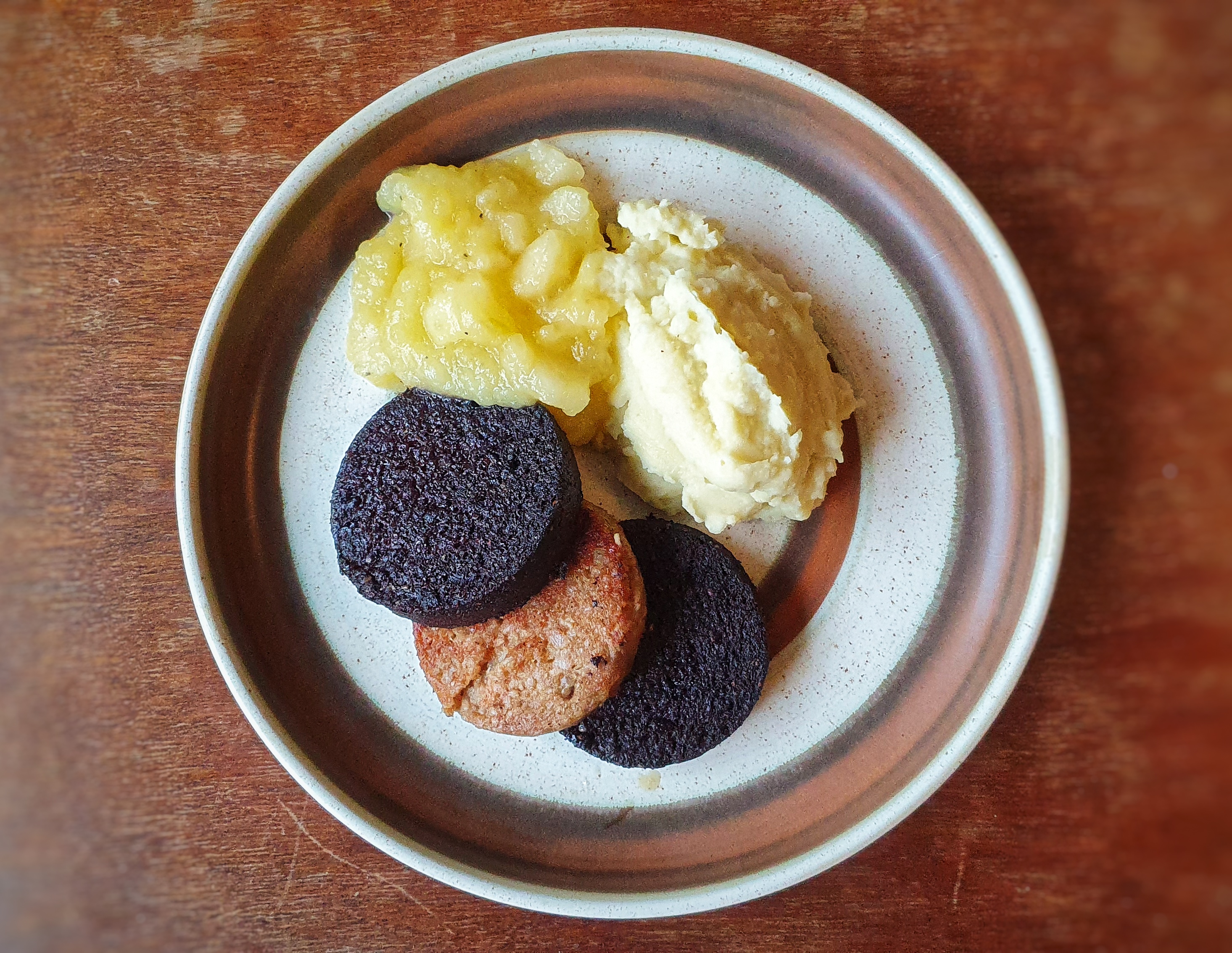
These puddings are not just for breakfast, though. In Lancashire, a favourite way of eating black pudding is to poach it again, remove it from the water, drain, split lengthways and spread it with mustard. I have eaten it this way when visiting Bury Market. But my favourite way of eating black and white pudding in a simple way, is to serve fried slices of pudding with mashed potatoes and apple sauce – hot or cold, not too sweet. Here’s how to make a good ‘savoury’ apple sauce:
Peel, core and slice 2 medium-sized Bramley apples, and 2 tart dessert apples (e.g. Cox’s Orange Pippin) and fry in a saucepan with 60 g salted butter and a good few grinds of pepper. When the Bramleys start to soften, add 2 level tablespoons of sugar and 4 or 5 tablespoons of water. Cover and cook on medium heat, stirring occasionally, until the apples are cooked through and the Bramleys have broken down to a puree. Taste and correct seasoning. You need something still very tart to cut through the rich puddings.
Keep a lookout for a proper recipe and some of my experiments with the fresh blood, Matthew and Grant kindly sent me.
If you can, support the podcast and blogs by becoming a £3 monthly subscriber, and unlock lots of premium content, including bonus blog posts and recipes, access to the easter eggs and the secret podcast, or treat me to a one-off virtual pint or coffee: click here.
Don’t forget, there will be postbag episodes in the future, so if you have any questions or queries about today’s episode, or indeed any episode, or have a question about the history of British food please email me at neil@britishfoodhistory.com, or leave a comment below.






 British Food: A History