Category Archives: Britain

Salt

Can that which is unsavoury be eaten without salt? or is there any taste in the white of an egg?

                                                               Job 6:6

Salt is such a necessary yet ubiquitous commodity that we take it for granted, but this wasn’t always the case; up until the 13th century it was considered a delicacy and after that period it was held in such regard – and such a luxury – that it was heavily taxed. Wars have been fought over its flavour-enhancing and preservative properties. Once you had salt, it was impossible to face a tomato or boiled egg without it, it seems.

Salt is available to us in two forms, rock salt and sea salt, and it has been harvested or mined in Britain and Ireland since the Iron Age.

Several salts are found in rocks or the sea, but in its purest form common salt is the compound sodium chloride. Purified it tastes rather harsh, good quality salt has a much more subtle flavour because the other salts – which makes up to around 30% – present give it an important complexity. I always use sea salt in cookery, and it is doubly important to use it when salt is playing a leading role, like in salt curing for example.

Deer at a salt lick

Ever since our evolutionary predecessors climbed out of the sea, we – as well as the other animals – have been dependent on salt in our diet. Of course, we eat far too much salt these days. The recommended intake is 6 grams and most of us go way over that amount. Perhaps surprisingly, people have been known to become salt deficient, especially those on a vegan diet. Meat contains all the salts you need but plants do not (though there are exceptions). Many animals, mainly cattle and deer, require salt supplements in their diet in the form of salt licks. In the past people have eaten even more salt that we do now; centurions in Roman Empire would get a daily ration of one handful of salt! It eventually became easier to simply give the soldiers the money to buy the salt themselves for their salary (sal being Latin for salt).

Salt, superstition and symbolism

Due to its life-giving properties as well as its ability to prevent food from spoiling, salt has always been highly-regarded, so there is no surprise to find that salt symbolises life and purity to many peoples past and present. We are so tightly-bound with salt, that spilling it is considered a breaking of that bond, and bad form too, seeing how expensive it once was. To undo the bad that has been done, the spiller must throw a pinch over their left shoulder with their right arm; it is over you left sinister side where the demons hang out. In the painting The Last Supper, Judas has knocked over a pillar of salt. Another place you will find demons is in your fire, so a handful of salt thrown in there will cast out any demons present. Salt was disliked by the Devil. Indeed, the devil may try and tempt you with a saltless meal, but don’t worry, if you put salt on the food it will cast it out, just like a crucifix.
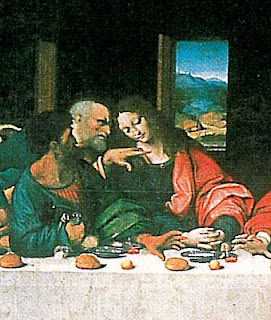
Look carefully and you can see Judas (left) knocking over the salt with his right hand.

Salt was important in ritual. For the freemasons it symbolises the ‘life, the mother, the woman’ (as opposed to men which are symbolised by sulphur). Jesus called his apostles ‘the salt of the earth’ and Roman Catholics use it to ‘purify’ their holy water. It was traditional in Ancient Romans to give new-born babies a gift of salt. Sacrificial victims would also be purified with salt to make the poor victim more attractive to the deity in question.

It goes without saying, that all of this should be taken with a grain of salt…

Sea Salt

Sea salt has been extracted from brackish waters in Britain and Ireland by evaporation for many centuries. Water was simply heated in large shallow salt pans over wood fires. This simple method was used over most of Europe wherever there were salt marshes and estuaries. This was by far the main method of salt production until the Middle Ages where salt had to be imported from Europe to meet demands, it was one of the main contributors to deforestation in parts of Europe too, such was the demand ‘whole forests were burned to make this boiled salt’, says the historian Maguelonne Toussaint-Samat.
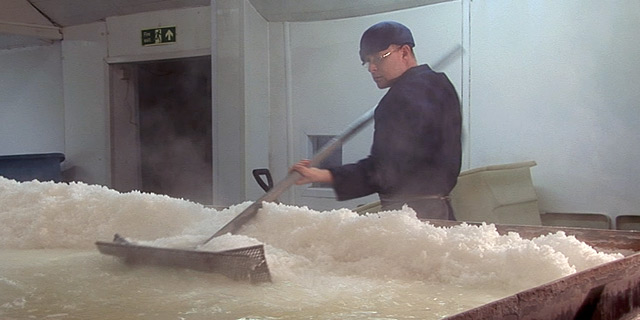
‘Drawing’ the salt in the Maldon saltworks

One area of the country that still produces it is of course Maldon, which as a long history of sea salt ‘cultivation’. According to the Domesday Book, in 1086 there were 45 salt pans in Maldon. Salt-making equipment has been excavated from there that date back to the Iron Age. There not quite so much going on these days, but the saltworks at Maldon do produce the best salt in the country.

Old recipes often ask for bay salt, which refers to sea salt i.e. ‘salt from the bay’.

Rock Salt

The boiled salt trade was hit hard in the 19th century when new and efficient ways of mining salt was discovered. The centre of salt mining in Britain is Cheshire, in particular the Winsford salt mine in Northwich which has been active since 1640. There are several towns in the area with the suffix –wich, this comes from the Anglo-Saxon word wych, meaning ‘brine town’. The price of salt dropped and has ever since been pretty cheap, though these days the salt from British salt mines is intended for industry and the production of salt licks for cattle.
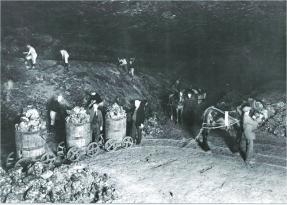
Within the Cheshire salt mine

People argue as to which is best, but I think either is good as long as you are buying the unpurified kind.


If you like the blogs and podcast I produce, please consider treating me to a virtual coffee or pint, or even a £3 monthly subscription: follow this link for more information.

13 Comments

Filed under Britain, food, General, history, Uncategorized

Hot Cross Buns

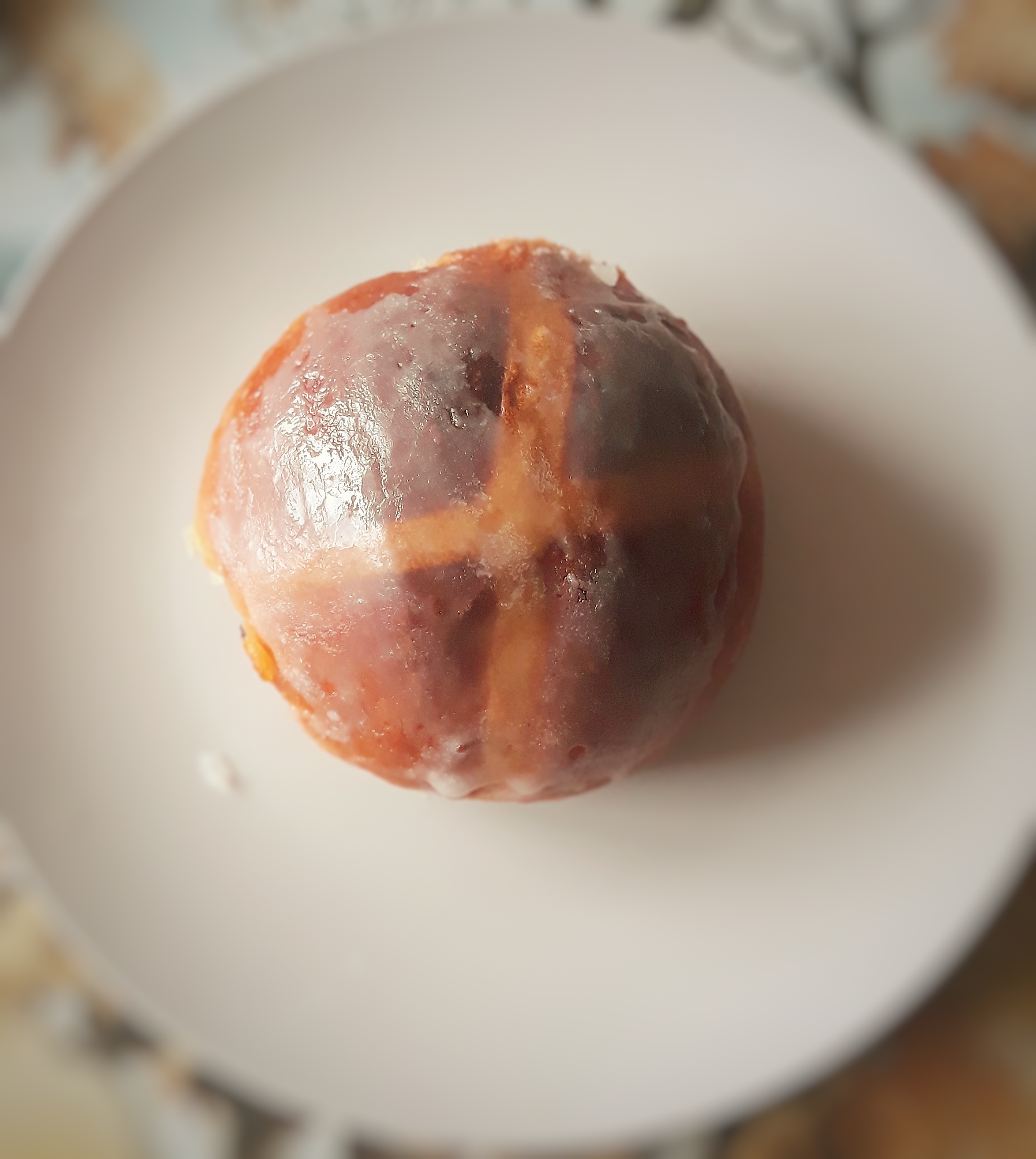
Tomorrow is Good Friday and in England it is traditional to eat hot cross buns, or rather it was;  supermarkets and bakeries bring them out as soon as Christmas is over these days. And why not? They are delicious after all. The reason that Good Friday is the day these buns are traditionally baked goes back to Tudor times, when the sale of spiced buns was illegal, except on Good Friday, at Christmas and at funerals.

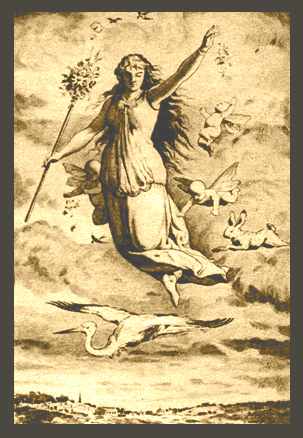
The cross, people assume, is to denote the cross upon which Jesus was crucified. This is in fact nonsense; spiced buns with crosses were being produced throughout much of pagan Europe. Spiced buns have always been symbolic in worship and ones adorned with crosses were made for the goddess Eostre (where Easter get its name).

The Pagan goddess, Eostra

So that is the cross taken care of, but what about the hot? We don’t actually eat them hot that often. They were simply called cross buns, until that famous nursery rhyme was written sometime in the eighteenth century:

Hot cross buns, hot cross buns!

One ha’penny, two ha’penny, hot cross buns!

If you have no daughters, give them to your sons,

One ha’penny, two ha’penny, hot cross buns!

What if you have neither sons nor daughters? I suppose you eat them all to yourself like the miserable old spinster you are…

Ever since I started baking my own bread, I have sworn never to buy it again as it is just so delicious. Bought buns – like bread – are just shadow of their former selves, says Jane Grigson: ‘Until you make spiced hot cross buns yourself…it is difficult to understand why they should have become popular. Bought, they taste so dull. Modern commerce has taken them over, and, in the interests of cheapness, reduced the delicious ingredients to a minimum – no butter, little egg, too much yellow colouring, not enough spice, too few currants and bits of peel, a stodgy texture instead of a rich, light softness. In other words, buns are now a doughy filler for children.’

The recipe below asks for mixed spice, you buy a proprietary blend of course or make your own. I decided to make my own – simply because I didn’t have any. The good thing about making your own is that you can remove spices you don’t like, and enhance the ones you do. Typical spices are the warm ones: cinnamon, mace, allspice (pimento), nutmeg, cloves and ginger. I also think a little black pepper is good.

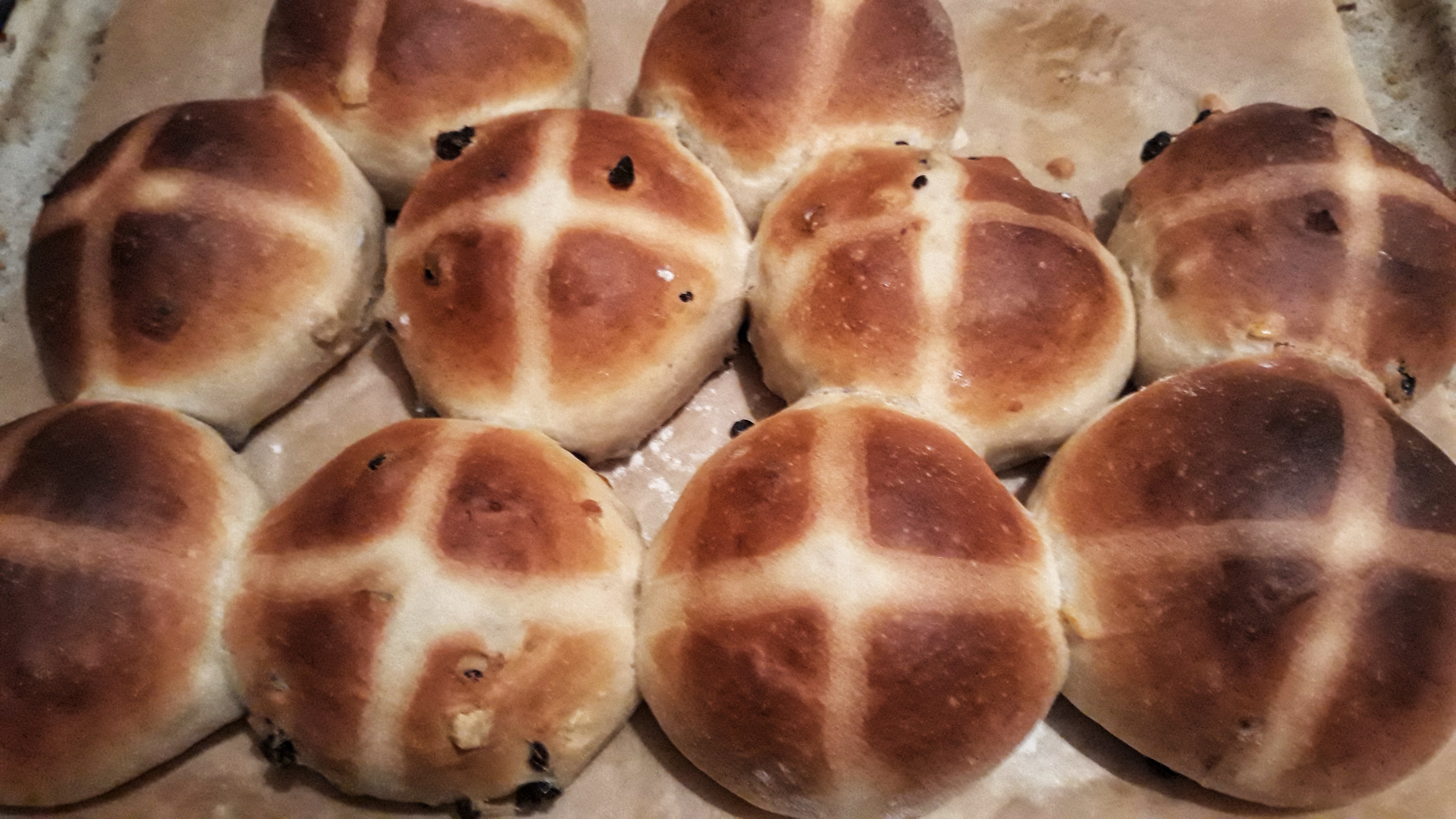
Here’s my recipe. It makes between 8 and 12 buns, depending upon how large you want to make them. The piped pastry cross is optional – cutting crosses with a serrated knife is fine, and closer to the original. I used to think the same as Elizabeth David, in that they ‘involve unnecessary fiddly work’, but that’s because I couldn’t get them right, I reckon to have worked it out now.


If you like the blogs and podcast I produce, please consider treating me to a virtual coffee or pint, or even a £3 monthly subscription: follow this link for more information.

Ingredients

500 g strong bread flour

5 g dried, fast-action yeast

10 g salt

60 g caster or soft dark brown sugar

1 tsp mixed spice

50 g softened butter

250 ml warm milk, or half-and-half water and milk

1 egg

100 g dried fruit (currants, raisins, sultanas, etc.)

25 g candied peel

For the crosses:

50g strong white flour

70-80 ml water

For the glaze:

60g sugar

70 ml water

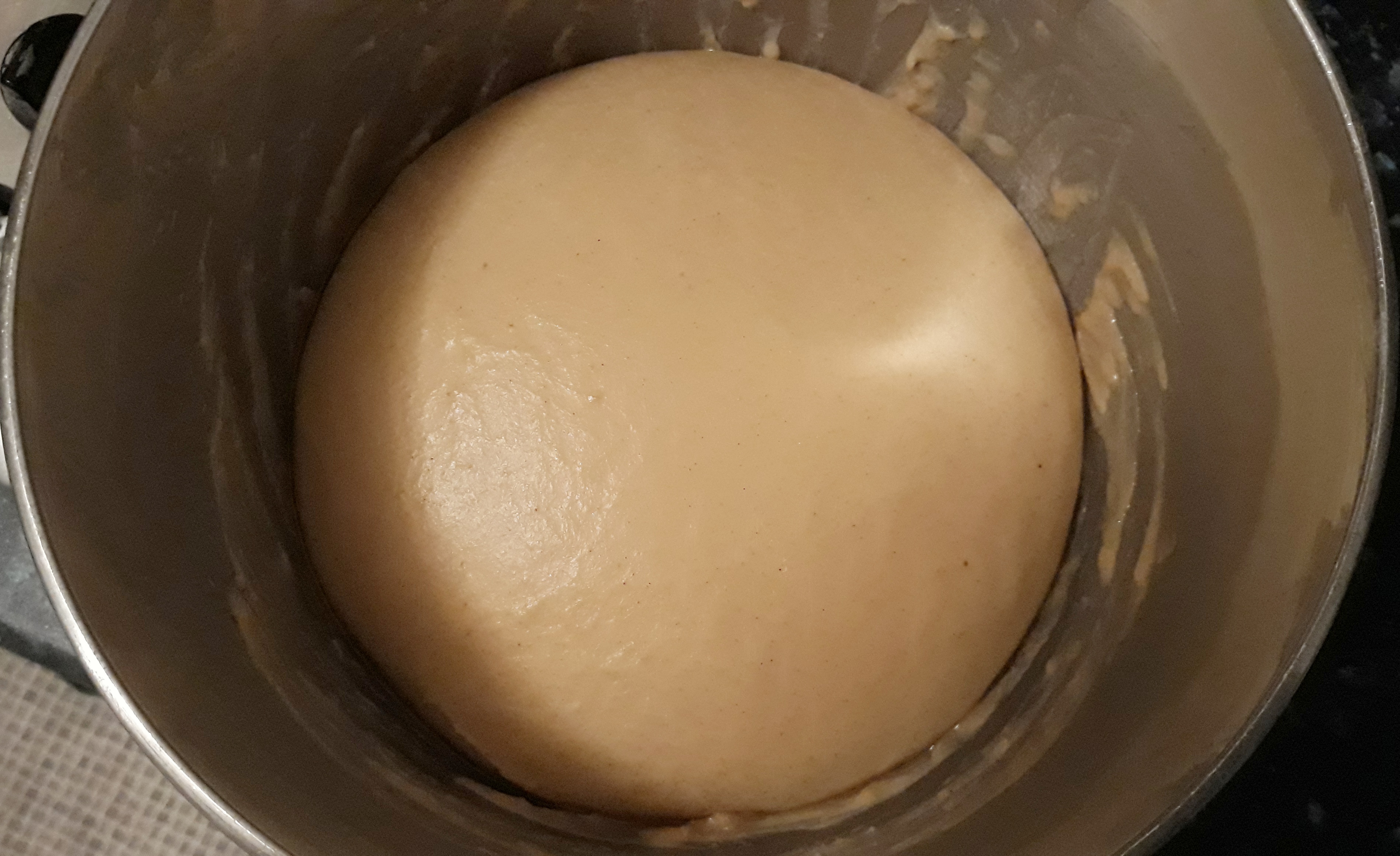
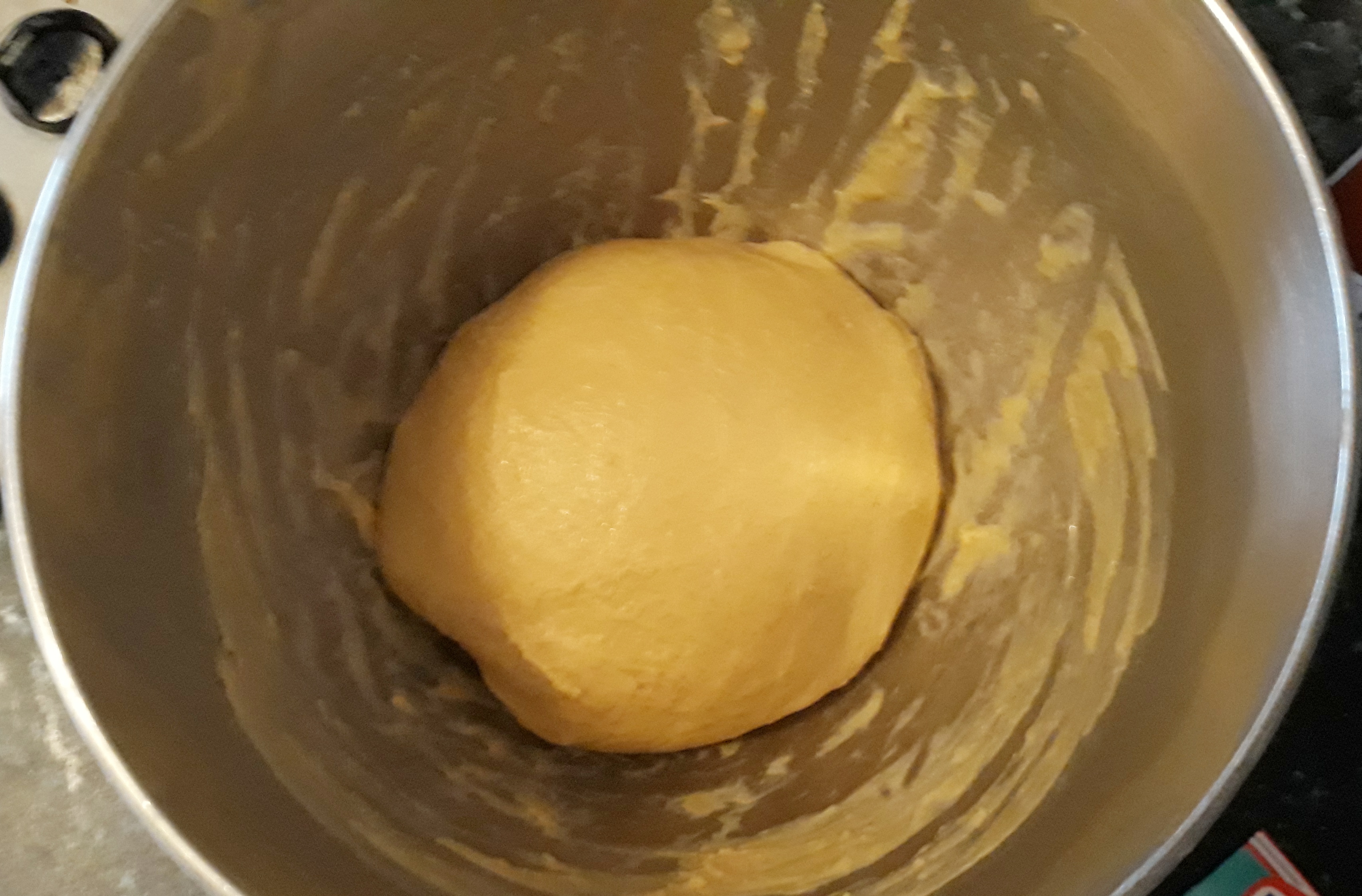
Mix together the flour, yeast, salt, sugar and mixed spice in a bowl, then make a well in the centre. Beat an egg into the milk, and pour it into the well, adding the butter too. If you have an electric mixer, use the dough-hook attachment and mix slowly until everything is incorporated, then turn the speed up a couple of notches and knead for around 6 minutes. The dough should be tacky, glossy, smooth and stretchy. If you don’t have one, get stuck in with your hands and knead by hand on a lightly-floured worktop. It’s a very sticky dough at first, so it’s a messy job, but it will come together.

Grease a bowl, tighten the dough into a ball, pop it in and cover the bowl with cling film or a damp tea towel. Leave to prove until doubled in size – this can take anywhere between 1 and 3 hours, depending upon ambient temperature.

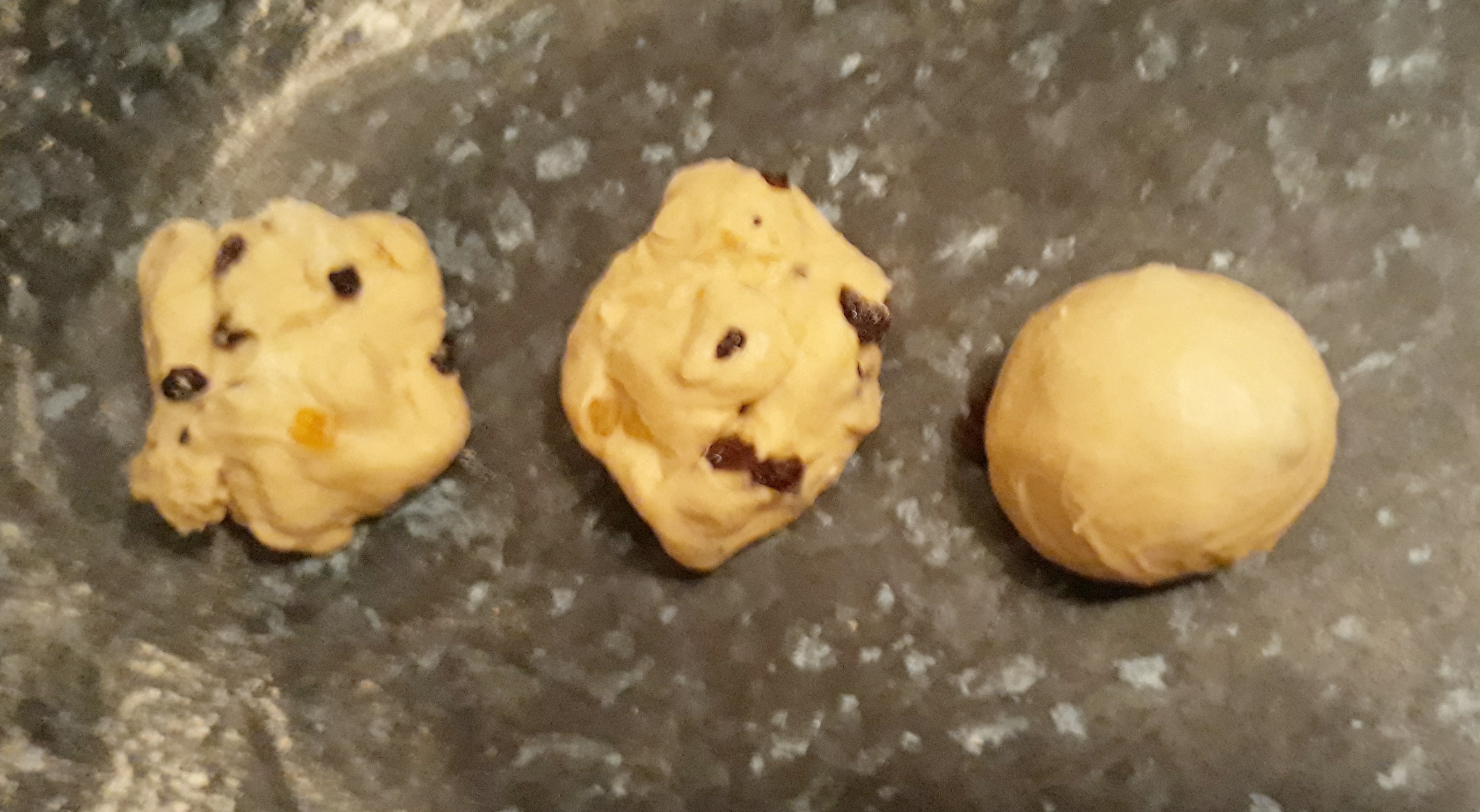
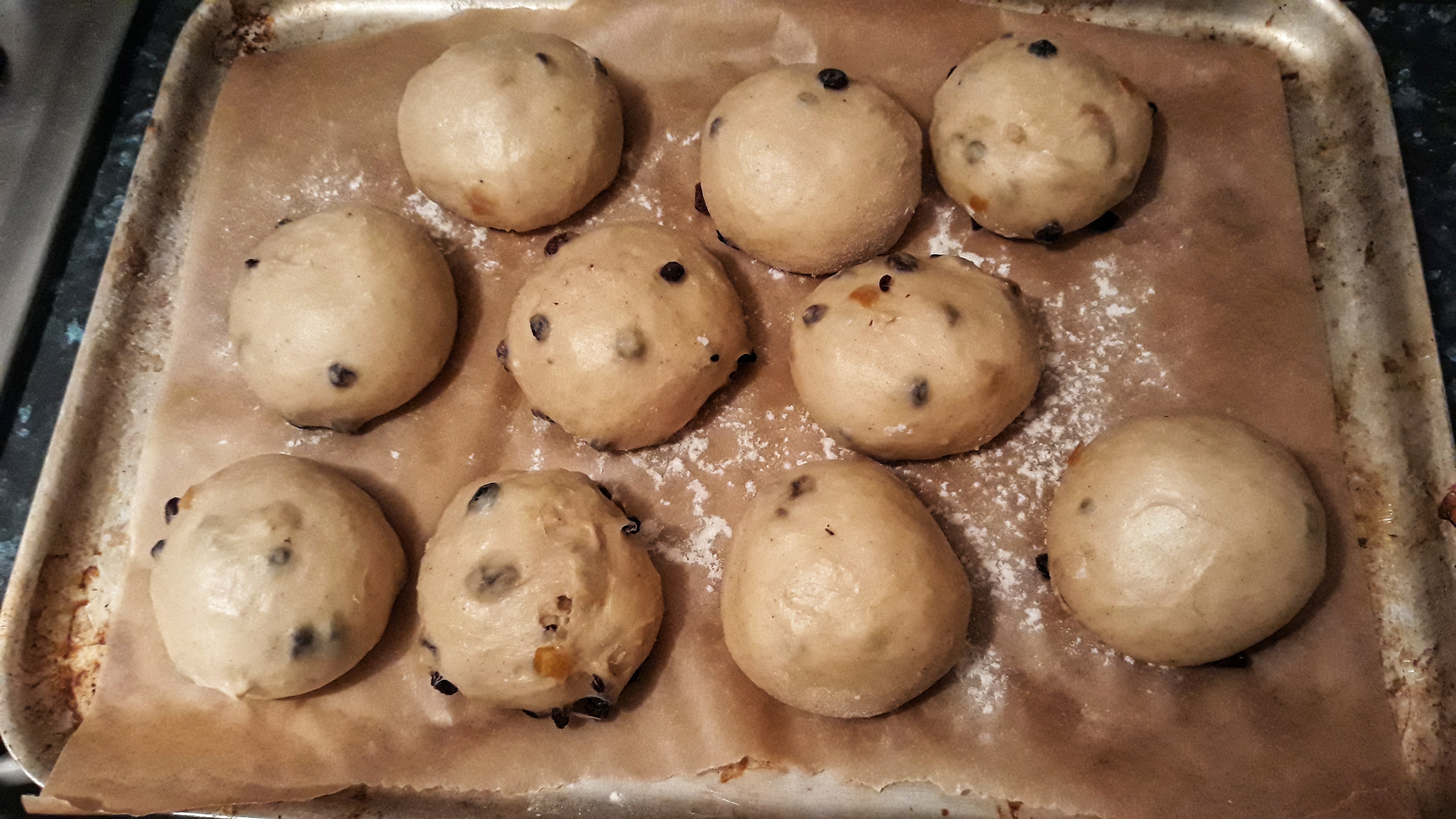
Knock back the dough to remove any air and mix in the dried and candied fruits – again, either by using your hands or your dough hook. Divide the dough into 8, 10 or 12 equally sized pieces and roll up into very tight balls on a very lightly-floured board. This is done by cupping your hand over a ball of dough and rolling it in tight circles, takes a little practise, but is an easy technique to learn.

Line a baking tray with greaseproof paper and arrange the buns on it, leaving a good couple of centimetres distance between each one. Cover with a large plastic bag and allow to prove again until they have doubled in size.

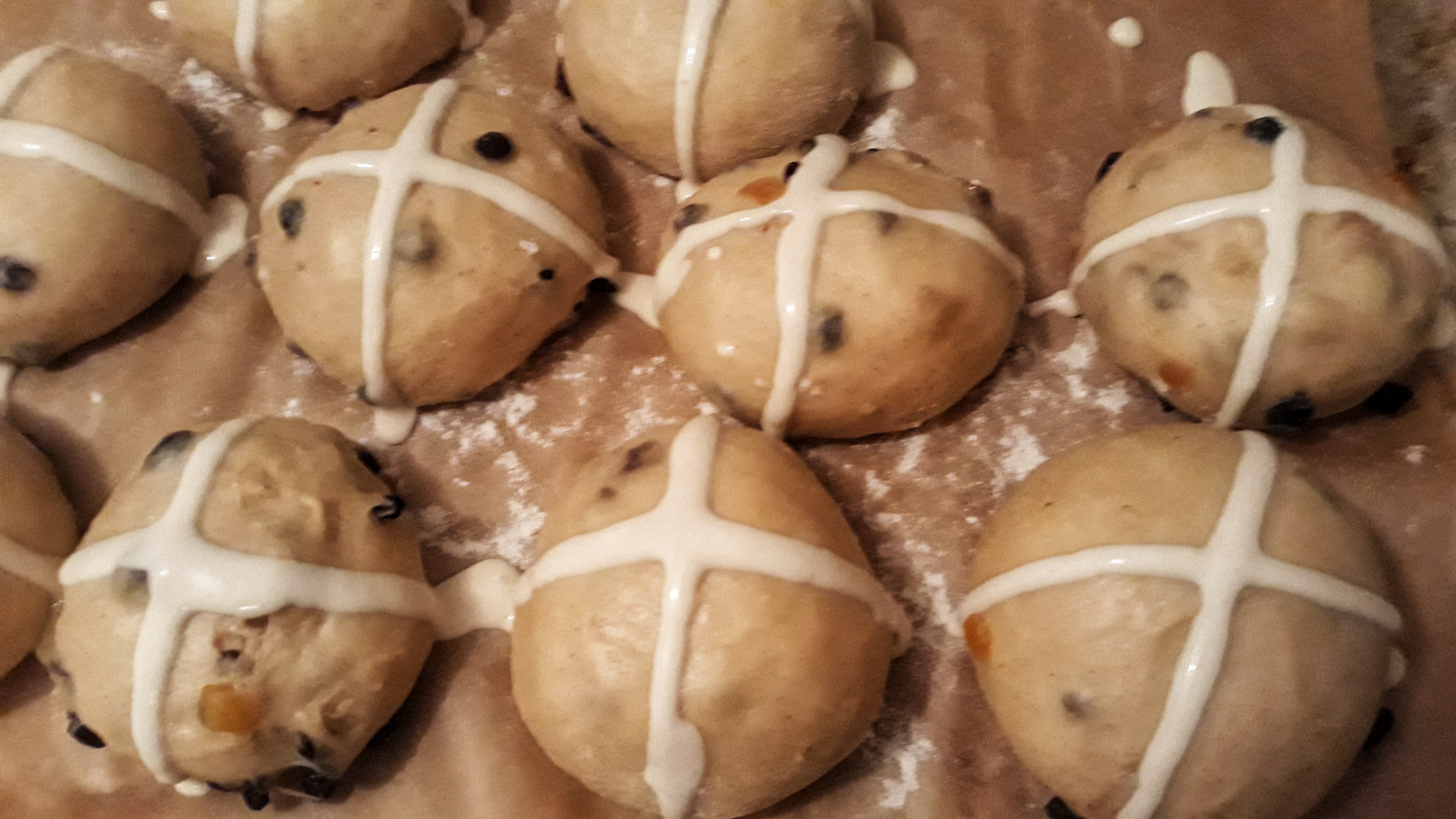
Meanwhile, make the cross dough. Simply beat the water into the flour to make a loose, but still pipeable batter. Put the batter in a piping bag (or freezer bag, with a corner cut away) and make your crosses. If you like, just cut crosses in the tops.

Put the tray in a cold oven, and set it to 200⁰C and bake for 20 to 25 minutes (you get a better rise if they go into a cold/just warm oven, if you have to put them into a hot over, knock 5 minutes from the cooking time).

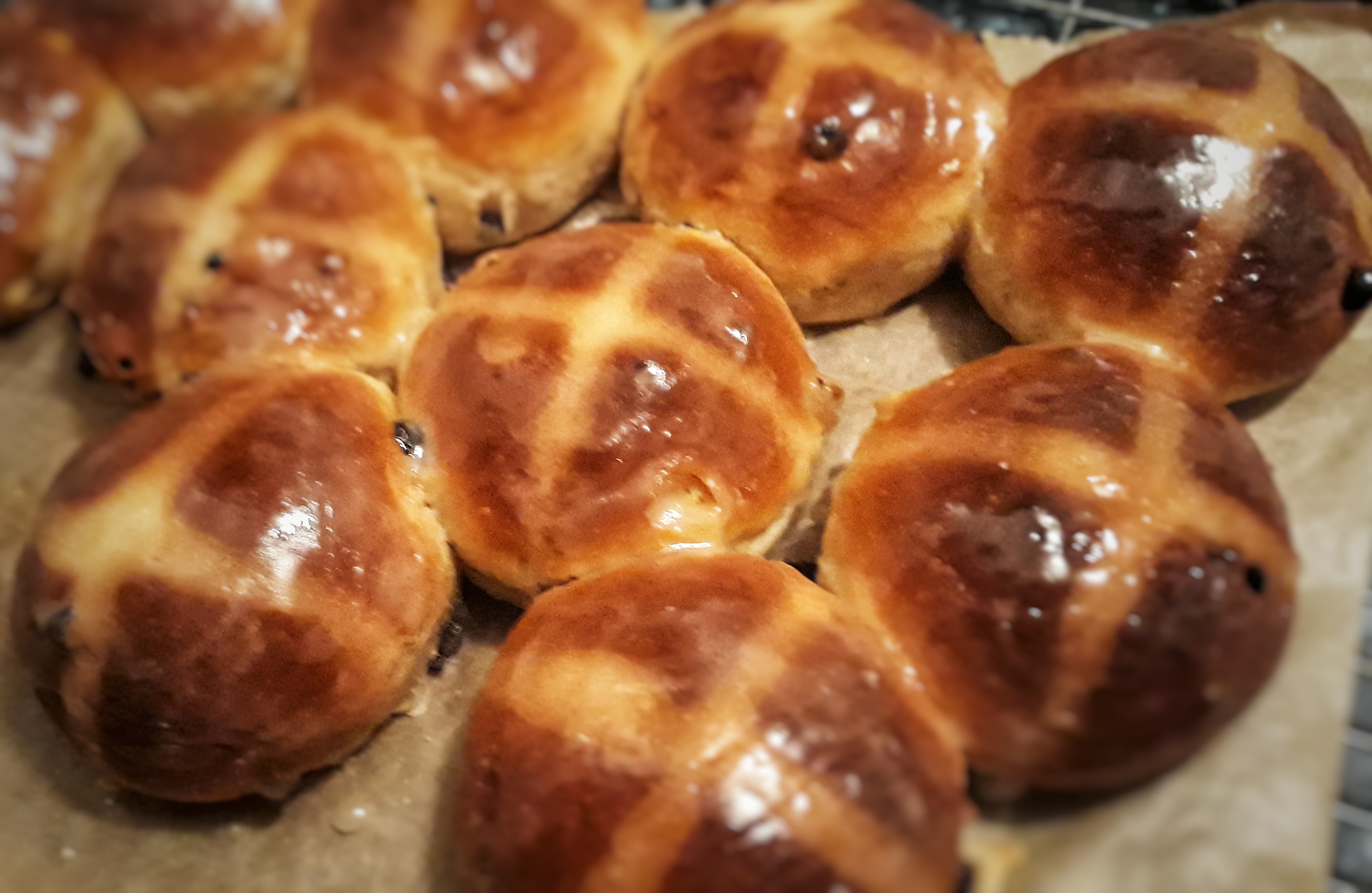
When they are almost ready, make the glaze: boil the sugar and water to a syrup and when the buns come out of the oven, brush them with the glaze twice.

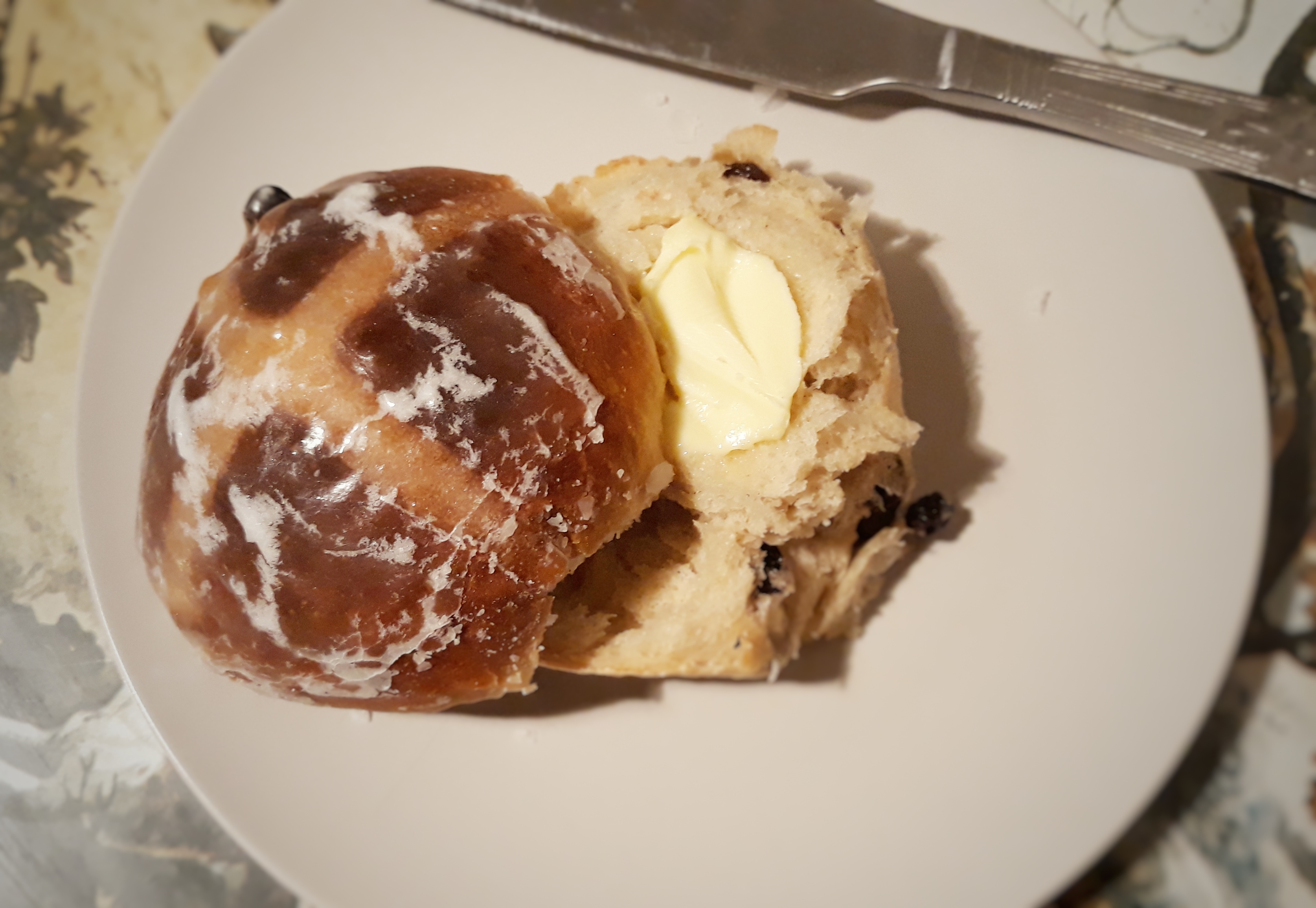
Eat, warm or cold with butter. To reheat them, bake in the oven for 10 minutes at 150⁰C.

22 Comments

Filed under baking, bread, Britain, Easter, Festivals, food, General, history, Recipes, Teatime

The Treacle Mines of England


If you like the content I make for the blogs and podcast, please consider supporting me by buying me a virtual coffee, pint or even a subscription : just click on this link.


Recently I wrote a post on the history and invention of golden syrup and black treacle in the 19th and 20th centuries. Prior to the mass production and refining of sugar cane in the West Indies, the only way to get hold of treacle was to mine ‘natural molasses’ in treacle mines. As far as I know treacle is the only mined foodstuff though I could be wrong there (I often am).

Natural treacle is very viscous

Treacle mines are rare and appear in just five regions of England: Yorkshire, Lancashire, Kent, the West Country, with the most significant mine being in Wymsey, Cumbria. Having a treacle mine in your town was a huge benefit to the inhabitants. The folk living in these areas were particularly healthy, especially the miners themselves. It was noted by William Cobbet in 1816 when visiting the Cumbrian village:

This place I found to be a fair and healthy place, the women and children well fed and happy. Most menfolk were at work upon the Land but that evening in the excellent Crown and Thorns Inn I was surpassingly surprised to see many men brown of hue. On enquiry I determined that these were miners of Treacle and what a jolly crew they turned out to be. That night I repaired to my bed thanking our maker that there was at least one happy parish in the land.

Black unrefined treacle forms from fossilised beds of sugar cane rather like oil or peat and has a tendancy to seep and rise to the surface of the ground. This run-off is useless, but what makes the regions mentioned above unique is that the treacle is surrounded by a layer of non-porous rock that keeps it contained.

Treacle mining goes back to pre-Roman times, in fact there was a healthy trade between England and Rome via Roman-occupied Gaul. In fact it was the main reason why the Romans wanted to conquer the unbearably cold and harsh British Isles. Why else would they want to take over an island that was inhabitable to them?  A floor mosaic from AD 77 was unearthed depicting treacle mining and refining.

Demand was so high, that any new sites had to be kept secret. The site of the mine in Pudsey (my home town, nestled between Leeds and Bradford in West Yorkshire) is so closely-guarded that only a very few individuals know the location and those that are told have to have been born and bred within the boundaries of Pudsey.  The site of the famous abbey at Kirkstall was chosen by the monks that built it because it was thought a tributary ran from the Pudsey mines through Kirkstall. Unfortunately it seems they were wrong – no treacle had ever been found there.

Pudsey Parish Church

There has been no significant treacle mining in Britain since the nineteenth century because industry had made sugar and its by-products cheap and accessible. However, it was on its last-legs already; most of the mines were completely dry and no new sites were found. The last working mine eventually closed in the 1930s during the Great Depression. There are no plans to excavate any of mines and it is a shame; it would be great if we could draw attention to this almost forgotten part of our food history.

55 Comments

Filed under Britain, food, General, history

The Jewel in the Crown

Britain and India have a long history together which stretch all the way back to the fifteenth century, and that history is based on the fact that India produced and exported spice, and the British had – and still have – a real taste for it. This was all in India’s favour at first; they sold to traders that travelled great distances through Western Asia, the Middle East and Europe. It was hugely popular during Tudor times, especially as a status symbol, everything that could be was seasoned with liberal amounts of cloves, cinnamon, black pepper, nutmeg, mace etc.

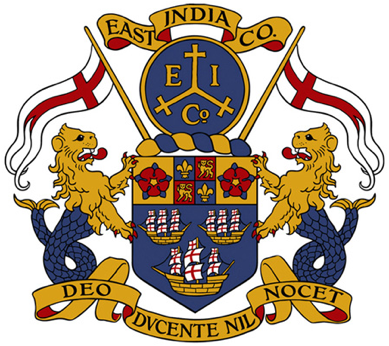
The East India Trading Company coat of arms

The tables soon turned on New Year’s Eve 1600 when Queen Elizabeth I set up the East India Company after Sir Francis Drake seized a Portuguese ship the carried detailed information about Indian trade. This royal charter essentially put India under English rule. The charter also gave England the right to trade with the America and Africa. All of this behaviour put the noses out of Portugal and the Netherlands who both had well-established trade routes too, prompting the latter to create the Dutch East India Company. There was terrible fighting between the three countries’ fleets brought on by the greed of the European trader and merchants. The English fought on, but it was the Dutch that gained the upper hand. So powerful were they that during this time a Dutch admiral led a flotilla up the Thames with a broom tied to the front of his ship, symbolising that they had swept the seas of the English.


If you like the blogs and podcast I produce, please consider treating me to a virtual coffee or pint, or even a £3 monthly subscription: follow this link for more information.

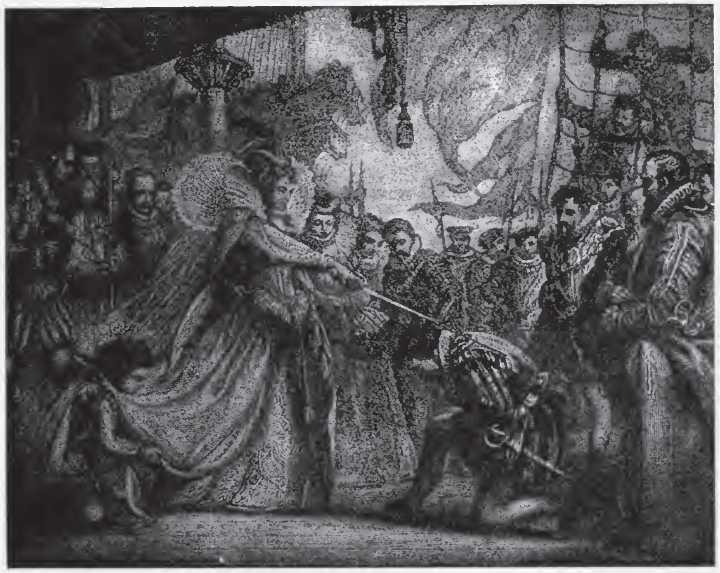
Elizabeth I knights Sir Francis Drake

It wasn’t until the mid-seventeenth century that the English made a return as a major player under the control of Oliver Cromwell of all people; I would have expected him to be against all of the splendour of spices. Later, Charles II renewed the royal charter, and even a second trading company was set up, which eventually joined up with the original.

The United East India Company became an unstoppable force, trading also in sugar, tea and rubber. The greed and mistreatment of the Indian people by the British prompted Prime Minister William Pitt to draw up the India Act of 1784, essentially nationalising the company. Then, in the mid-nineteenth century, mutiny was afoot; the Indian people who had become slaves to their British masters, could take no more, prompting the end of the great trading company. India was then passed on to the Crown where it became known as the jewel in the British Empire’s crown.

During this time both British and Indian cuisine changed, particularly during the Victorian Era when the British men were joined by their wives (it never seemed to occur to them to travel all the way to Asia before then). The Brits were soon hooked on Indian food and were eating curry for breakfast. They also brought their own cooking style with them, for example, there became Indian versions of cream of tomato soup, and Anglicised versions of their lamb soups that became Mulligatawny. Although dishes like kedgeree became very popular in Britain, it wasn’t until Victoria’s reign that curries became really popular in Britain, though references to curry dishes can be traced back as far as the sixteenth century.

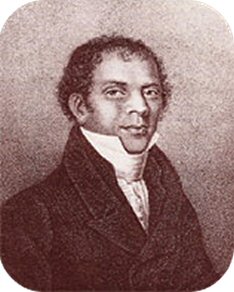
 Sake Dean Mohamet, owner of Britain’s first Indian restaurant

In 1809, the first Indian restaurant in Britain was opened, though it was a little ahead of its time, closing three years later. Queen Victoria herself loved curries and had Indian servants; at one banquet cailles aux pommes de terre à la Indienne, which is a quail and potato curry to you and I, appeared as a course on the menu. The top restaurants of the time such as the Strand and the Ritz followed suit and put curries on their menus too.

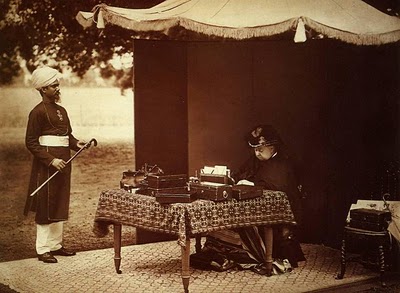
 Queen Victoria gets a lesson in Erdu from an Indian teacher

Then, in the 1960s there was a huge influx of Indian people into Britain, some as doctors and nurses, others seeking refuge with their British passports. Now the curry could really take off, especially in the cities of London, Birmingham and Bradford. Dishes were modified to British tastes and we flocked to the restaurants for the taste of the chicken tikka masala, lamb rogan josh, the bhajis, and the vindaloos, reaching a peak in the 1980s with the launch of the wonderful Madhur Jaffery’s classic book Indian Cookery. These days people want to taste more authentic curries and the Indian curry restaurant is still going from strength to strength, with several holding Michelin stars, and let’s not forgot that fish and chips has now been displaced by chicken tikka masala as our national dish.

I have absolutely no qualms about including curries in this blog, Britain has always been a cultural sponge especially when it comes to food. This in itself should be celebrated and I am glad new and exciting foods are constantly taking seed and blooming in this country, flourishing alongside – never needing to compete against – fish and chips and shepherd’s pie.

India-inspired recipes added to the blog thus far:

The Oriental Club’s Mid-19th Century “Mutton Curry”

6 Comments

Filed under Britain, Eighteenth Century, food, General, history, Indian food, The Victorians