After the roaring success of my blood ice cream, I decided to have a crack at making a white pudding ice cream too, using the flavours in Gervase Markham’s recipe.
The blood ice cream was great, but I didn’t call it black pudding ice cream, because I left out one important ingredient: oats. The flavour of wholegrain oats is key, so much so that without them, I don’t think I captured the pudding’s true flavour.
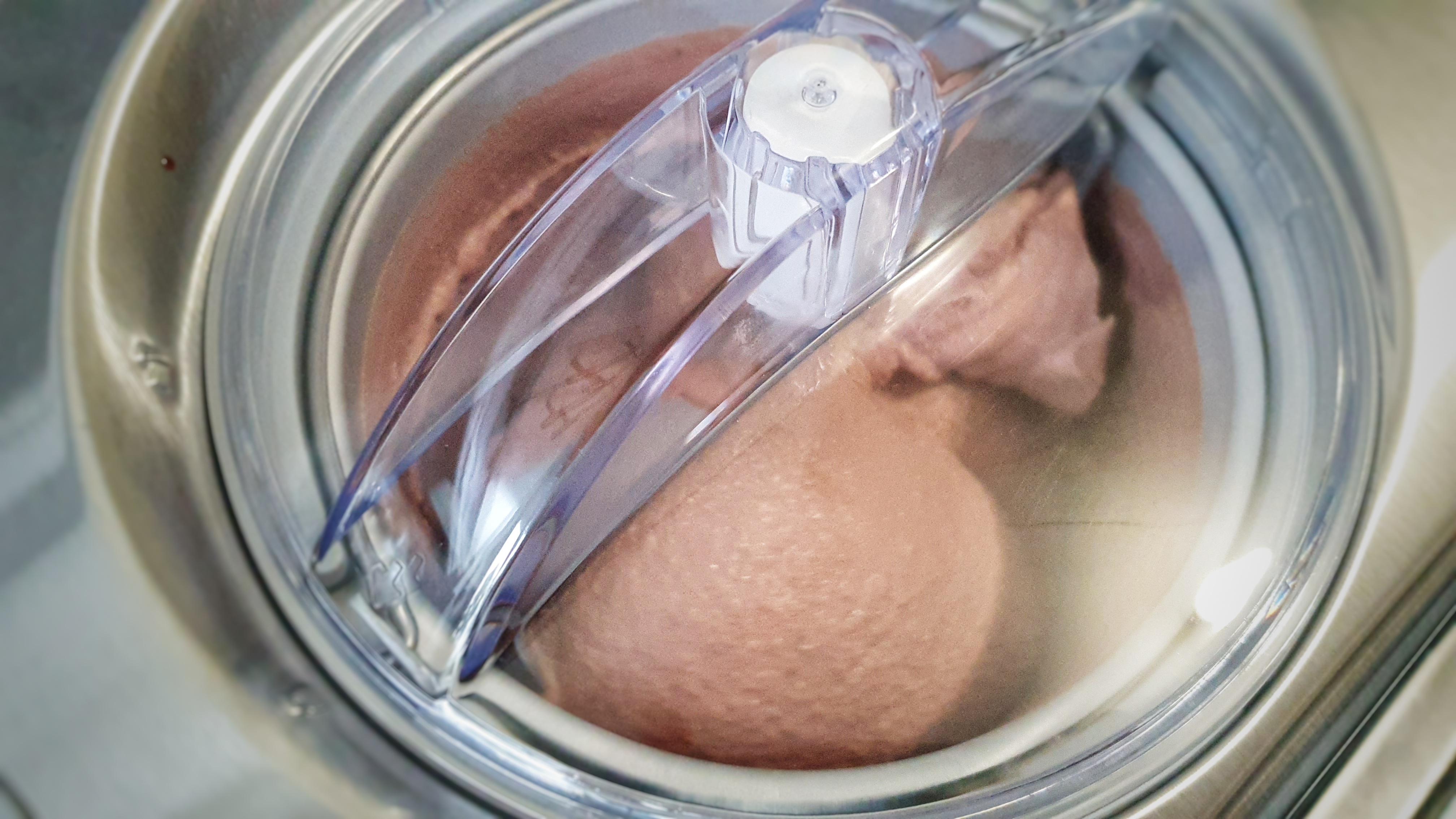
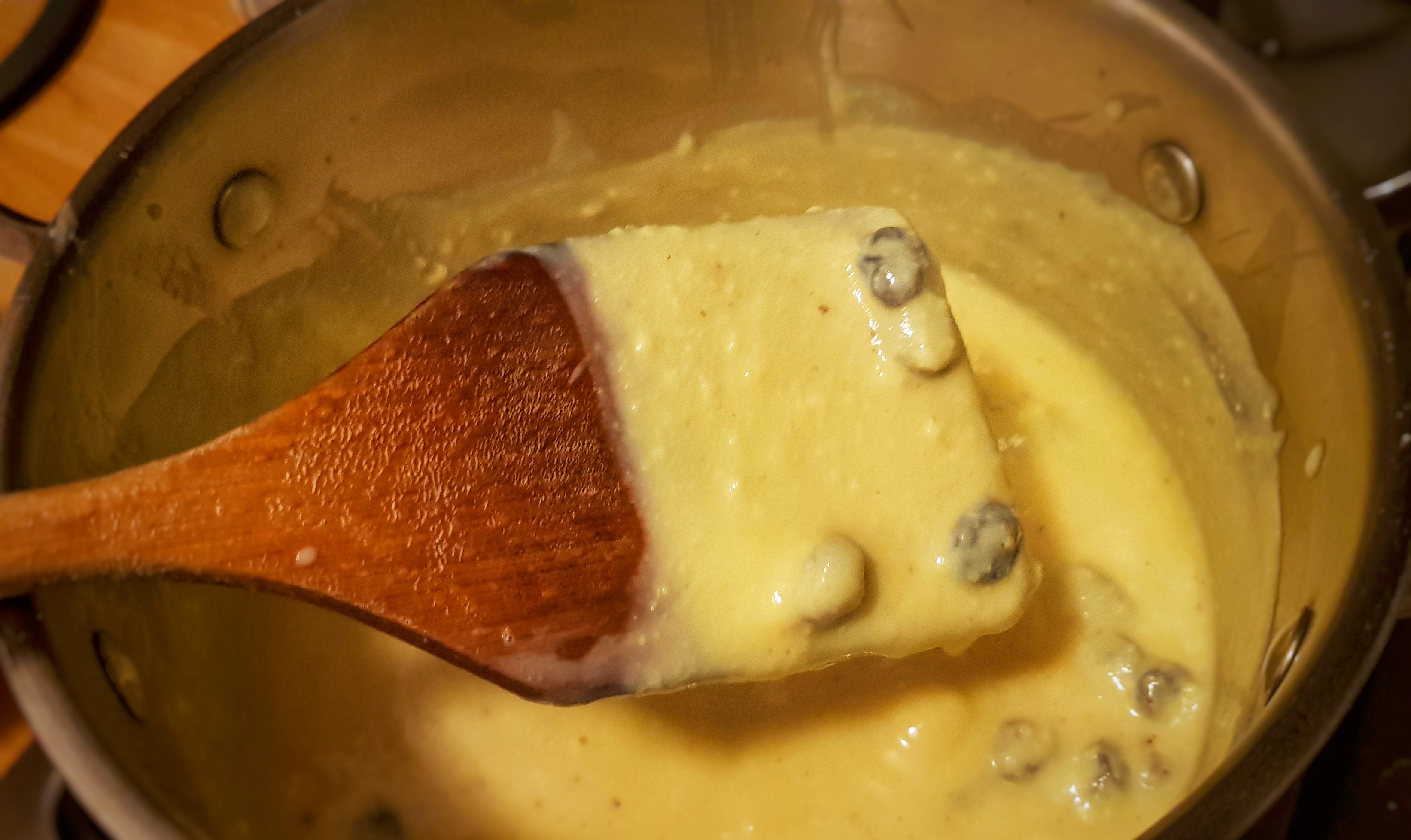
I wanted to change this with this ice cream, but the challenge was to capture the flavour of oats without any annoying frozen groats getting in the way. I decided to take pinhead (steel-cut) oats, soak them in milk and then squeeze it out to create an oat-flavoured milk. This worked really well. I added this to the usual milk and cream to make a custard, warmed it up with the spices and found that it naturally thickened to just the right consistency – all without egg yolks! The mixture froze very well and produced a super-smooth final product. As you can imagine, I was very pleased with this outcome.
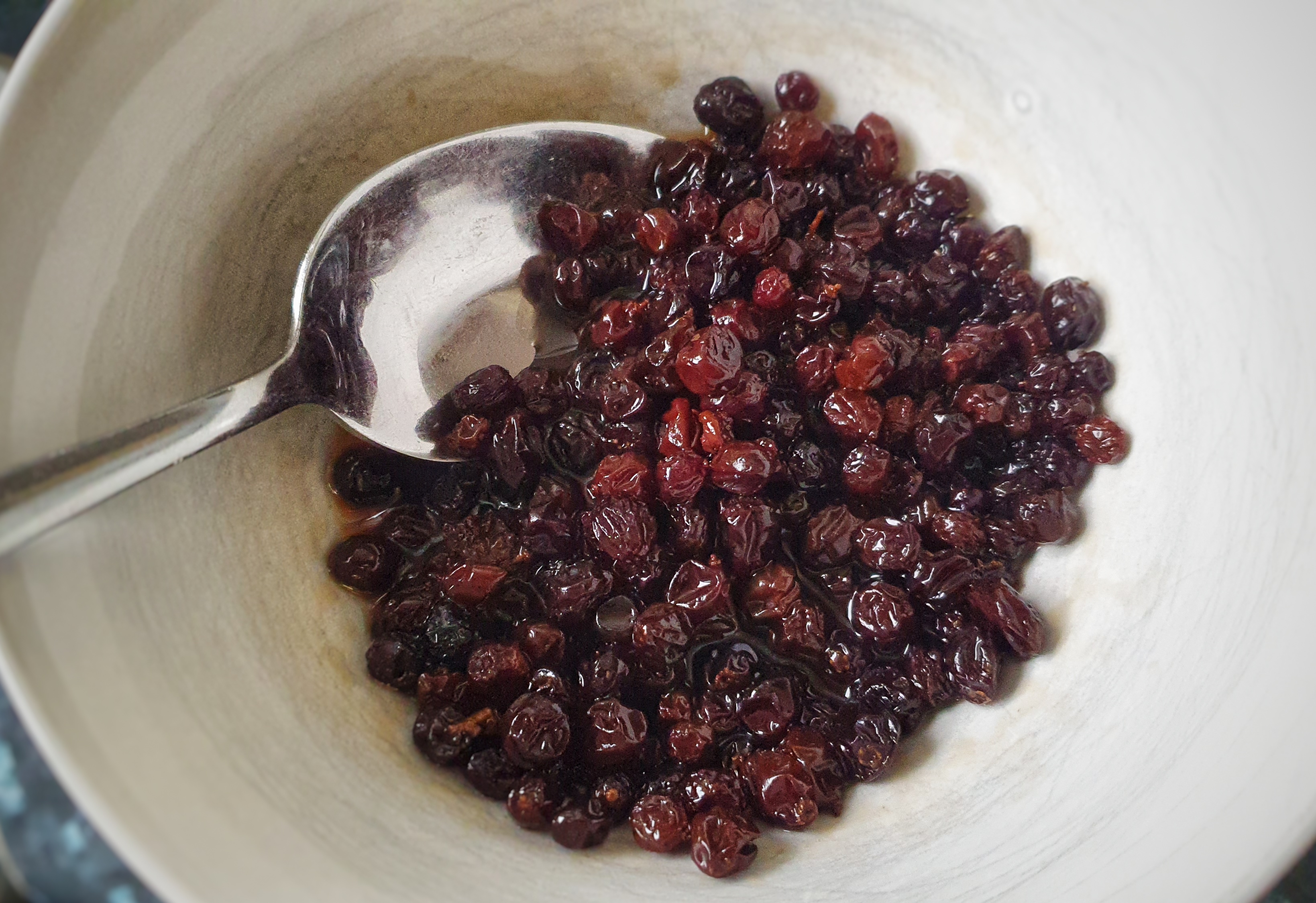
Just like the blood ice cream, I soaked some dried fruit in sherry – currants and dates this time, as per Markam’s recipe and stirred them through at the soft-scoop stage of the churning process.
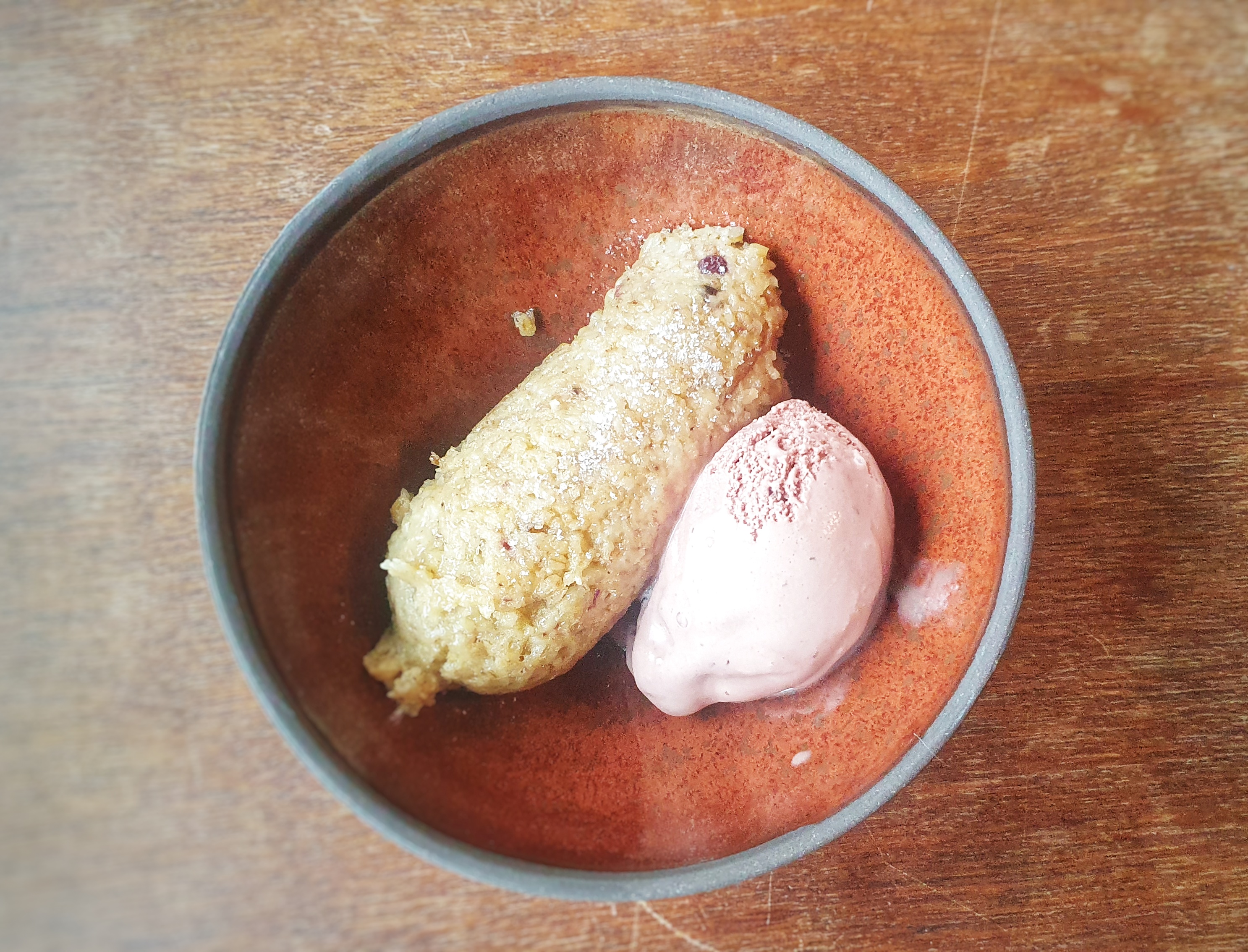
I served my white pudding ice cream with sweet black pudding that had been fried in butter and sugar. I then fried a slice of bread in the sugary and buttery juices and popped the black pudding on top with an accompanying scoop of the white pudding ice cream. It was decadent and delicious!
Subscribe to get access
Read more of this content when you subscribe today and unlock lots of premium content, including bonus blog posts and recipes, my Easter eggs, newsletter and the secret podcast. Please click here for more information.
Earlier in the year, the fantastic Fruitpig(sponsors of the ninth season of the podcast) very kindly sent me some fresh pig’s blood so that I could try my hand at making some early modern black puddings, inspired by the recipes of Robert May, Kenelm Digby and Thomas Dawson. I made two versions: a savoury one and another sweetened with sugar and currants – both turned out to be delicious.
Listen to the episode of the podcast with Matthew and Grant aka Fruitpig!
A few years ago I read (I forget where) that blood thickens upon heating just like egg yolks, and I had an idea in the back of my mind that blood ice cream might be possible to make, knowing already that the black puddings of the early modern period were often sweet.
Please that the sweet black puddings tasted good, I set about to see if I could find any British examples of blood ice cream or, at least, something similar. I couldn’t find anything. However, I did discover in the pages of Jennifer McLagan’s excellent offal cookbook Odd Bits, a blood and chocolate ice cream recipe, adapted from an Italian set dessert called sanguinaccio alla Neapolitana: little pots of set chocolate custard, thickened with blood instead of egg yolks.
Encouraged by the fact I knew it could be done, I went about adapting my black pudding recipe into an ice cream. I have a good, basic vanilla ice cream recipe that I’ve been using for years, which in turn is based on my custard recipe, and all I did was swap out the eight egg yolks for 200 ml of pig’s blood. Not convinced that the blood would thicken things sufficiently, I popped in two egg yolks for good measure. The milk and cream were flavoured not with a vanilla pod, but the same aromatics as the black pudding: pepper, cloves, mace and dried mixed herbs. I really wanted to include the currants, but knowing they would freeze hard into bullets, I thought an overnight soak in some sherry would work well – not unlike modern rum and raisin ice cream. I chose sherry because it’s the closest thing we have to sack, the popular fortified wine of the early modern period, and a common addition to recipes.
Well, I am very pleased to say that it was a great success. It was the richest ice cream I have ever eaten: luxurious, aromatic and with a very slight metallic tang. I ate a scoop with one of my early modern white puddings. What a combination!
If you like the blogs and podcast I produce, please consider treating me to a virtual coffee or pint, or even a £3 monthly subscription: follow this link for more information.
Ingredients
300 ml milk
300 ml cream seeds
½ tsp bl peppercorns
1 tsp fennel
½ tsp cloves
2 blades of mace
1 tsp dried mixed herbs
200 ml fresh blood
2 egg yolks
160 g sugar
50 g currants
a few tablespoons of sweet or medium sherry overnight
Method
Pour the milk and cream into a saucepan. Crack the peppercorns and bruise the remaining spices in a pestle and mortar, and add to the milk and cream along with the dried herbs. Mix well, making sure everything has been submerged, and warm the mixture over a medium-low heat and bring everything to scalding point – i.e. just before the milk and cream boil.
Meanwhile, add the blood, egg yolks and sugar to a mixing bowl and whisk together well.
When the mix and cream mixture reaches scalding point, remove the pan from the heat and whisk in around a quarter of it into the blood mixture. When everything is incorporated, beat in the rest of the cream mixture, and pour the whole thing back into the saucepan.
The cooled blood-custard base and the macerated currants
Now keep whisking or stirring until the temperature reaches 80°C – you can tell this temperature is reached because the mixture thickens noticeably and coats the back of a spoon (check with a difital thermometer, if unsure). Take off the heat and pass the whole thing through a sieve into a clean bowl or tub. Leave to cool and refrigerate overnight. Soak the currants in sherry and leave those to macerate overnight too.
Next day, churn the mixture in an ice cream machine until a very thick soft-scoop consistency. As you wait, strain the currants (keep the sherry and drink it!). When the ice cream is almost ready, add the currants.
Pour the mixture into tubs and store in the freezer. Eaten within 3 months.
The ice cream ready to receive its currants and my serving suggestion!
Read more of this content when you subscribe today. A monthly subscription costs just £3 (about $3.80 USD). You get access to premium blog content, the secret podcast, the Easter eggs page (with hours of clips to listen to!) and my monthly newsletter. For more information and to sign up, go to the Support the Blog & Podcast tab. Thank you
It is very simple to enter: All you need to do is go to the foot of this post, “like” it and leave a comment declaring your favourite Christmastime dessert.
I will select one person at random on 2 December at 7pm GMT. That’s your deadline. Good luck!
If you like the blogs and podcast I produce and would to start a £3 monthly subscription, or would like to treat me to virtual coffee or pint: follow this link for more information.Thank you.
I’m very excited to announce that my next book The Philosophy of Puddings with be published on 24 October 2024, published by the British Library – part of their excellent The Philosophy of… series.
The word ‘pudding’ is a confusing one if you are not from the British Isles because so many things can be a pudding: steamed sponge, Christmas pud, sticky toffee pudding, plus black and white pudding AND haggis. Add to this the fact that pudding can also be a byword for any dessert. Convoluted craziness.
I have tried to tackle the tricky etymology of the word before – puddings change and morph into so many different things across time that it’s pretty mind-boggling, and I’m so glad to have the opportunity to really study it in depth: a dream come true really. As far as I know there isn’t a book that tracks the word right through history, focussing not just on trends and fashions but also why puddings are so important in British identity.
To pique your curiosity: The contents page and a couple of the fantastic illustrations from the British Library’s collections
Here’s what the blurb says:
Just what is a pudding? We all have our favourites, whether it is a school-dinner jam roly-poly with custard, or a Yorkshire with onion gravy, a Burns’ Night haggis or the Christmas plum pudding. The humble pudding started out as a meat boiled in either animal intestine or in a cloth. With the advent of pudding bowls and moulds, the pudding assumed a myriad of identities. Neil Buttery traces the long history of pudding and its importance in British culture and language. He has tried and tested many recipes from across the centuries in his ‘Pud Club’ and shares his extensive knowledge and expertise.
The Philosophy of Puddings features stunning images and photographs from the Library’s collections.
I will present some of my research an online talk in December – the date is to be announced, so make sure you keep an eye out on social media or the ‘Upcoming Events’ page on the blog.
When we think of the food we eat, we think of it in terms of fuel – this is especially the case with starchy food, those made from flour because they are broken down into sugars and then converted slowly into energy in a form the body can use (unless we eat too much of it, then it is turned into fat). However, workers in factories around the world are very aware of the amount of energy trapped in flour: working with large amounts of it can be a dangerous business. Factory explosions have occurred causing damage, injury and death.
The aftermath of the Tradeston Flour Mill explosion, Glasgow 1872
The worst accident in the British Isles caused by flour happened on 9 July 1872 at the Tradeston Flour Mill in Glasgow, a century and a half ago. An explosion ripped through the mill seriously injuring 16 and killing 18, among them a mother of three with her three-month-old baby. What caused it? A report published in the journal Nature reported that the ‘origin [was] conclusively traced to the striking of fire by a pair of millstones caused by the stopping of the “feed” or supply of grain to them, and the consequent friction against each other, the result being the ignition of the mixture of air and fine flour dust surrounding the millstones.’[1] It might have been self-contained were it not for the cloud of flour, the explosion itself created. The mill was set up so that several mills were working together in a row, run by steam power, each explosion setting up another sending a cascade of flour bombs ripping through the building.[2] The most recent flour explosion in the UK occurred on 18 November 1981 in the Bird’s Custard factory in Banbury, Oxfordshire where a cloud of cornflour[3] exploded injuring nine.
Beware the explosive power of Bird’s Custard Powder
It has been theorised that it was a flour explosion that exacerbated the Great Fire of London in 1666 when an oven exploded next to several sacks of flour. The (alleged) bakery on Pudding Lane was owned by King Charles II’s own baker, Thomas Farriner. The blaze would continue for five days, destroying 13,500 houses and many important buildings including St Paul’s Cathedral. It killed just six people.
If you like the blogs and podcast I produce and would to start a £3 monthly subscription, or would like to treat me to virtual coffee or pint: follow this link for more information.Thank you.
[2] Dalgetty, L. (2022) ‘Remembering the Glasgow Flour Mill explosion that killed 18 people’, Glasgow Live, 10 July.
[3] Bird’s Custard isn’t thickened with egg, but with cornflour/starch and it is by far the main component, the others being colouring and a very fake vanilla flavouring. For more on custard click here.
As promised on the ‘School Meals Service with Heather Ellis’ episode of the podcast, I have written a recipe for a stone-cold school dinners classic for my monthly subscribers. I went for the pink-sponge and custard because quite a few people have mentioned this as a favourite on social media, so it was the obvious choice. Heather Ellis said on Twitter that there were several different colours of these sponges: I also remember brown (though I don’t think it was chocolatey, just coloured brown). Others remembered white, and I wondered if yellow was perhaps a colour? Let me know your thoughts/memories.
Listen to the podcast episode here:
Subscribe to get access
Read more of this content when you subscribe today. A monthly subscription costs just £3 (about $3.80 USD). You get access to my premium blog content, my Easter eggs page (with ours of clips to listen to!) and my monthly newsletter.
This post complements the episode of The British Food History Podcast called ‘The School Meals Service with Heather Ellis’:
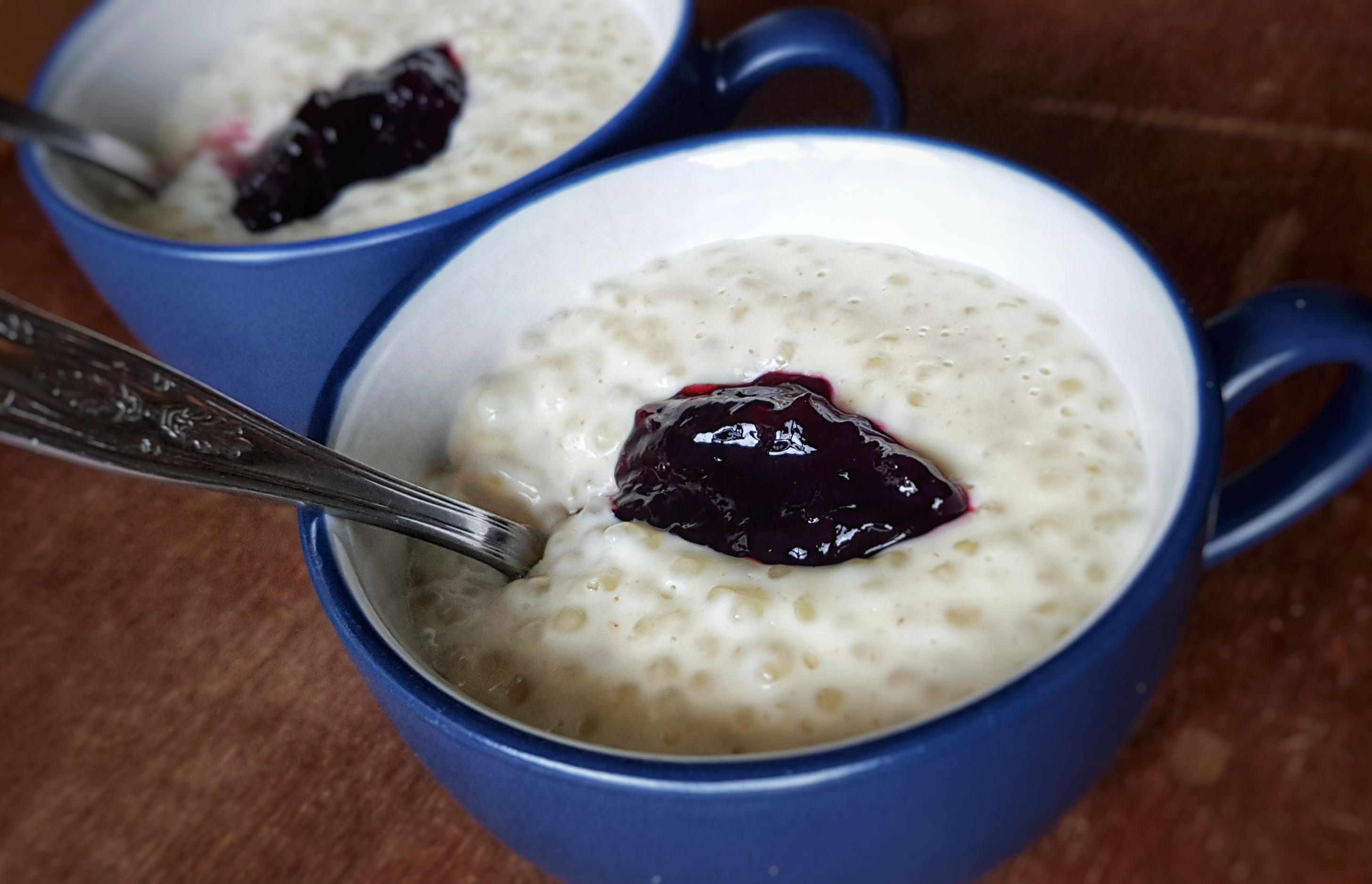
Speaking with Heather Ellis on the podcast about the School Meals Service and school dinners really fired off some food memories, good and bad. If it has in you too, please let the School Meals Project know about them – and let me know about them too – there’s a postbag episode of the podcast coming in just two or three weeks’ time. Three stuck in my mind: sago or tapioca pudding, pink sponge and custard, and Spam fritters. Of those, my favourite is sago/tapioca pudding – it genuinely is one I cook at home regularly. I know it was called frogspawn by children across the country, but if made well, it is delicious. Honest.
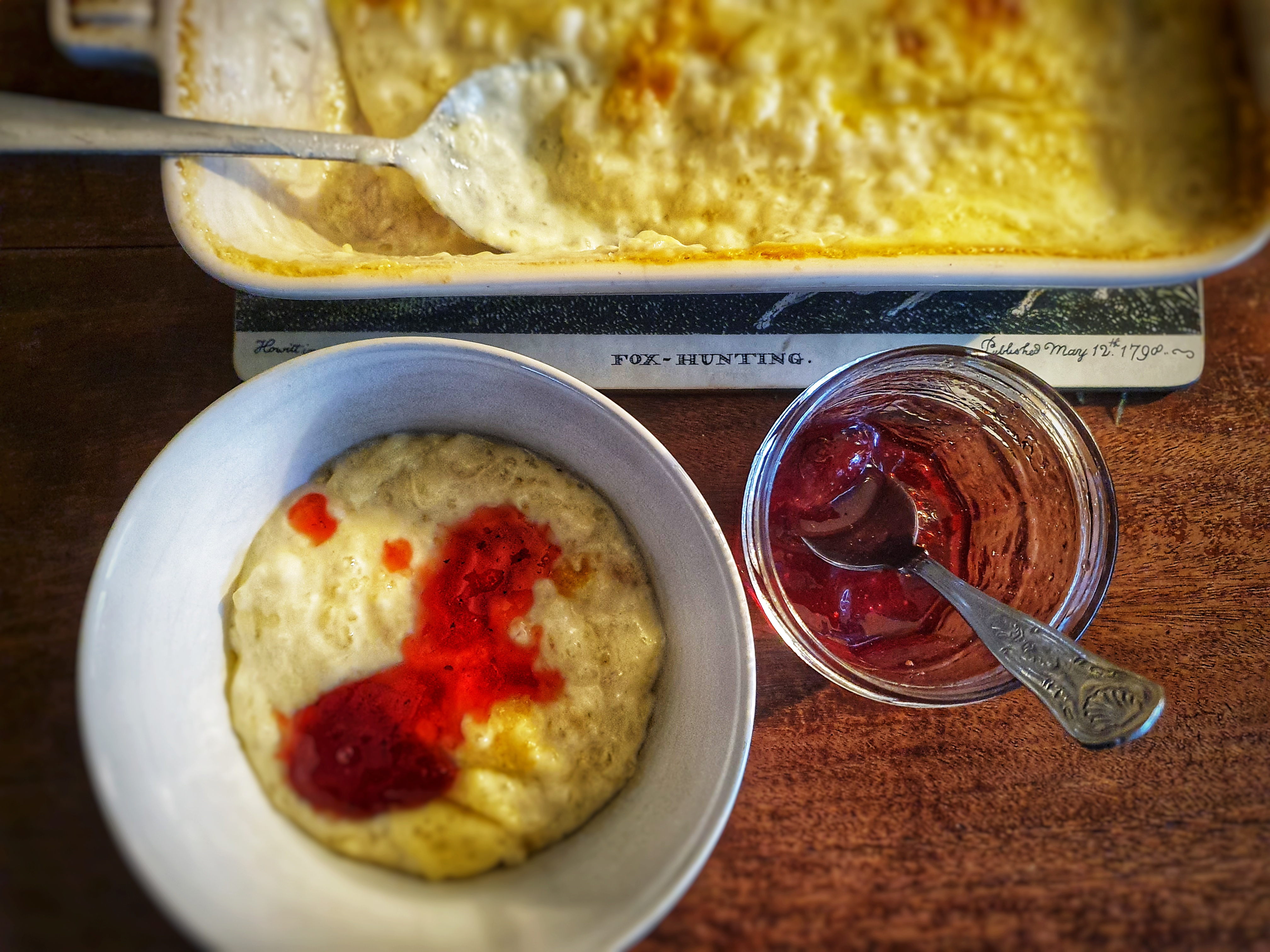
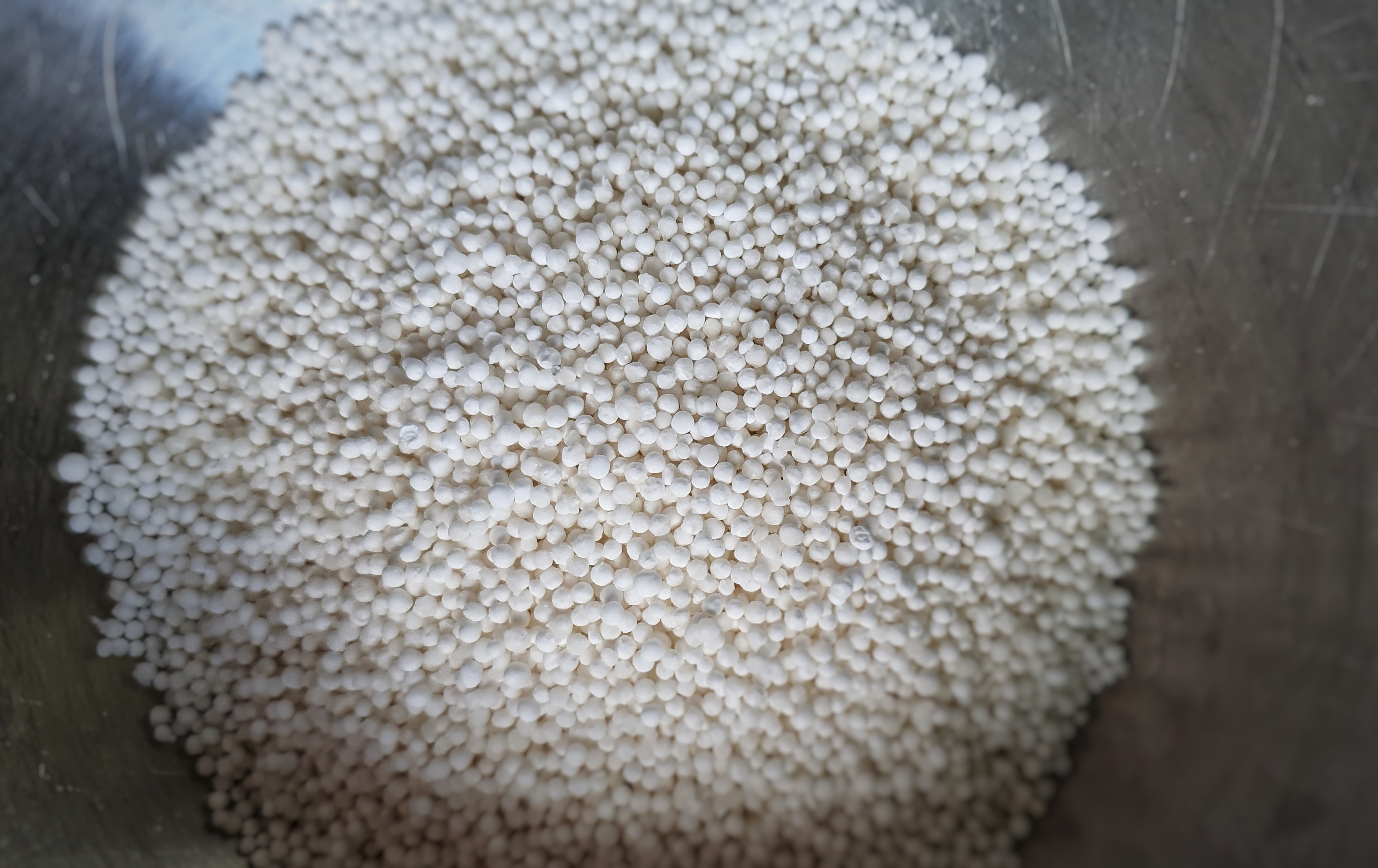
For anyone unfamiliar with it, it is one of a tribe of puddings known as milk puddings which are essentially a starchy ingredient cooked in milk and sweetened with sugar, but in my opinion, they need to also contain cream and flavourings such as bay leaves, vanilla or lemon rind. The best-known of these is rice pudding, but there are also semolina, macaroni and arrowroot puddings. They became popular in schools because they were an excellent way of providing children with their calcium. Sago and tapioca come in the form of small balls or pearls, which turn translucent when cooked in liquid – tapioca pearls are used to make the ‘bubbles’ in bubble tea.
Sago and tapioca can be used interchangeably in recipes and taste the same, but there is a difference between the two; sago comes from the sago palm and tapioca from the cassava plant. The former is found in India and some parts of East Africa, and the latter in the Americas. The starch is extracted from the plants’ pithy centres by grating and squeezing. It is then suspended in a little water to make a paste, which is then passed through a colander to form little pellets that are then dried.[1]
Both are very much associated with Empire, and recipes using sago begin to appear in 18th-century cookery books. In Sarah Harrison’s The House-keeper’s Pocket-book sago is simmered in water and flavoured with sugar, cinnamon and lemon.[2]Elizabeth Raffald has a complex, red-coloured sago pudding containing red wine, sugar, bone marrow and egg yolks. She does have a simpler version closer to what we would recognise today: sago simmered in milk and cream, and flavoured with sack, sugar, eggs and nutmeg.[3] Through the 18th and 19th centuries, the typical way to prepare the pudding would be to cook it on the hob and then bake it in pastry. Mrs Beeton uses sago in two more recipes: a sweet sago sauce for desserts and a sago soup.[4]
If you are unsure about making sago or tapioca pudding (or returning to it after eating the runny school kind of years past), the great food historian Alan Davidson provides some words of encouragement: ‘[I]t is sometimes despised by the ignorant, that is to say, persons who have no knowledge of how good they are when properly made.’ He casts down a caveat, however: ‘[The] texture delights a few cognoscenti in Britain but is repellent to the majority and has no doubt contributed to the virtual disappearance of the pudding from British tables.’[5] And I say that it is a crying shame. It is rarely included in cookery books anymore, not even those specialising in puddings. Justin Gellatly is a fan though, and there are a couple of recipes in Helen Thomas’s excellent Pudding Book, but that’s about it.[6]
If you like the blogs and podcast I produce and would to start a £3 monthly subscription, or would like to treat me to virtual coffee or pint: follow this link for more information.Thank you.
The typical way to cook the pudding these days is to either bake it I the oven or cook it on the hob, and I provide methods for both, though I prefer the latter. It is quick to make and, despite what other recipes say, requires no soaking – just a careful swish in some cold water.
I’ve left the amount of sugar to you. If you intend to eat the pudding with sweet jam, go for around 90 grams, if you are eating it on its own, or with tart fruit like rhubarb or gooseberry, perhaps use 120 grams of sugar.
Serves 6 to 8 people, depending upon greediness. If more appropriate, half the amounts.
Around 30 g butter (if baking)
120 g sago or tapioca pearls
90–120 g caster sugar
1 litre full-fat milk
150 ml double cream
Flavourings: 3 or 4 strips of pared lemon rind, a lightly-crushed fresh bay leaf, a few drops of vanilla extract (or replace caster sugar with vanilla sugar), almond extract, cocoa, etc.
Oven method:
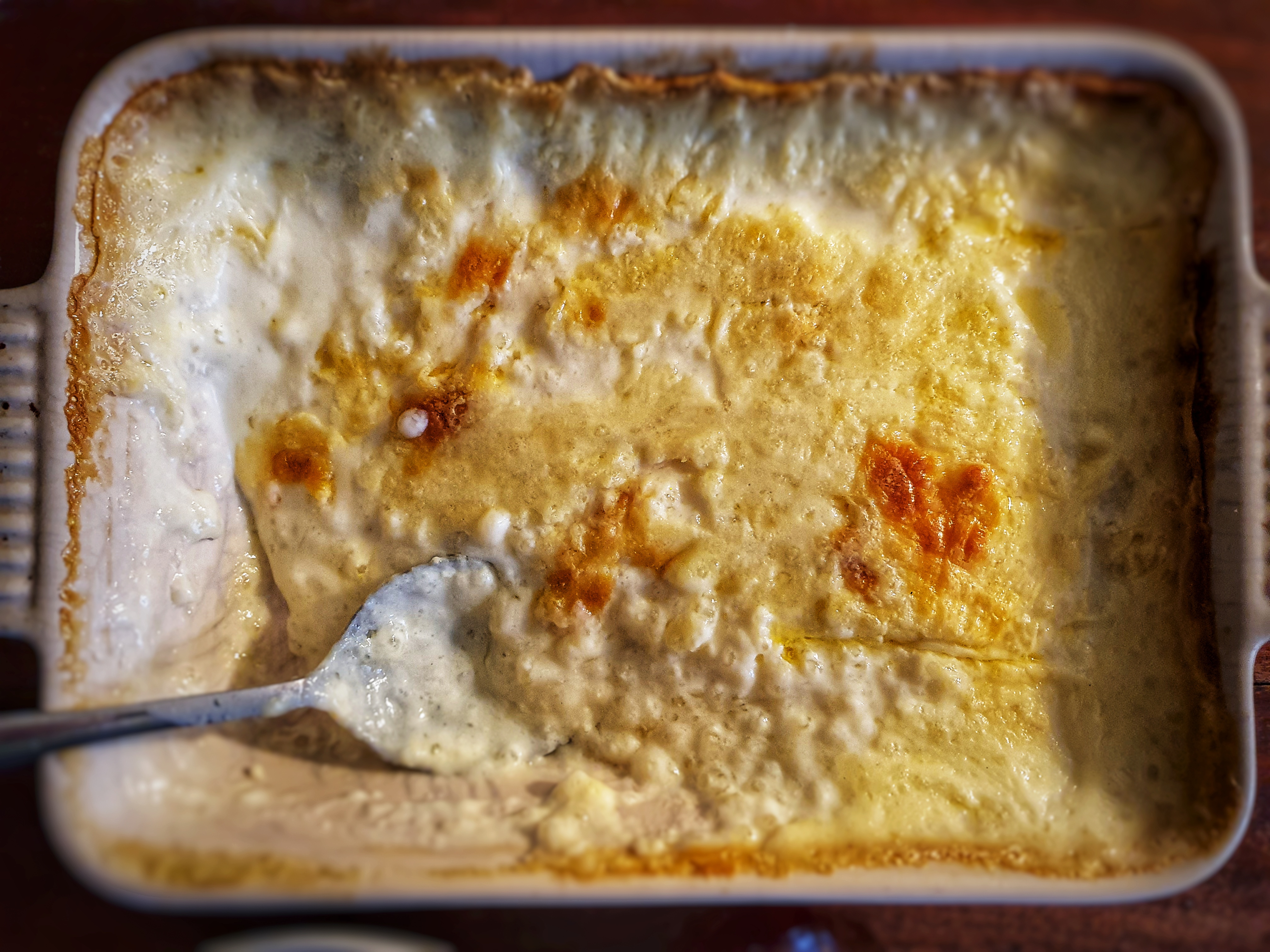
Preheat the oven to 160°C. In a baking dish of 1¼ litre capacity dot the bottom with small knobs of butter. Place the sago pearls in a jug and pour over plenty of cold water to release any starch. Pour through a sieve and then scatter the sago over the base of the dish with the sugar, milk, cream and flavourings. If using cocoa powder, whisk it into the milk before pouring into the dish. Place in the oven and bake for 60-90 minutes, stirring every now and again to disperse lumps. When the time is up, and you want a browner top, you could place it under a hot grill for a few minutes. Leave the pudding to stand for 10 minutes before serving.
Hob method:
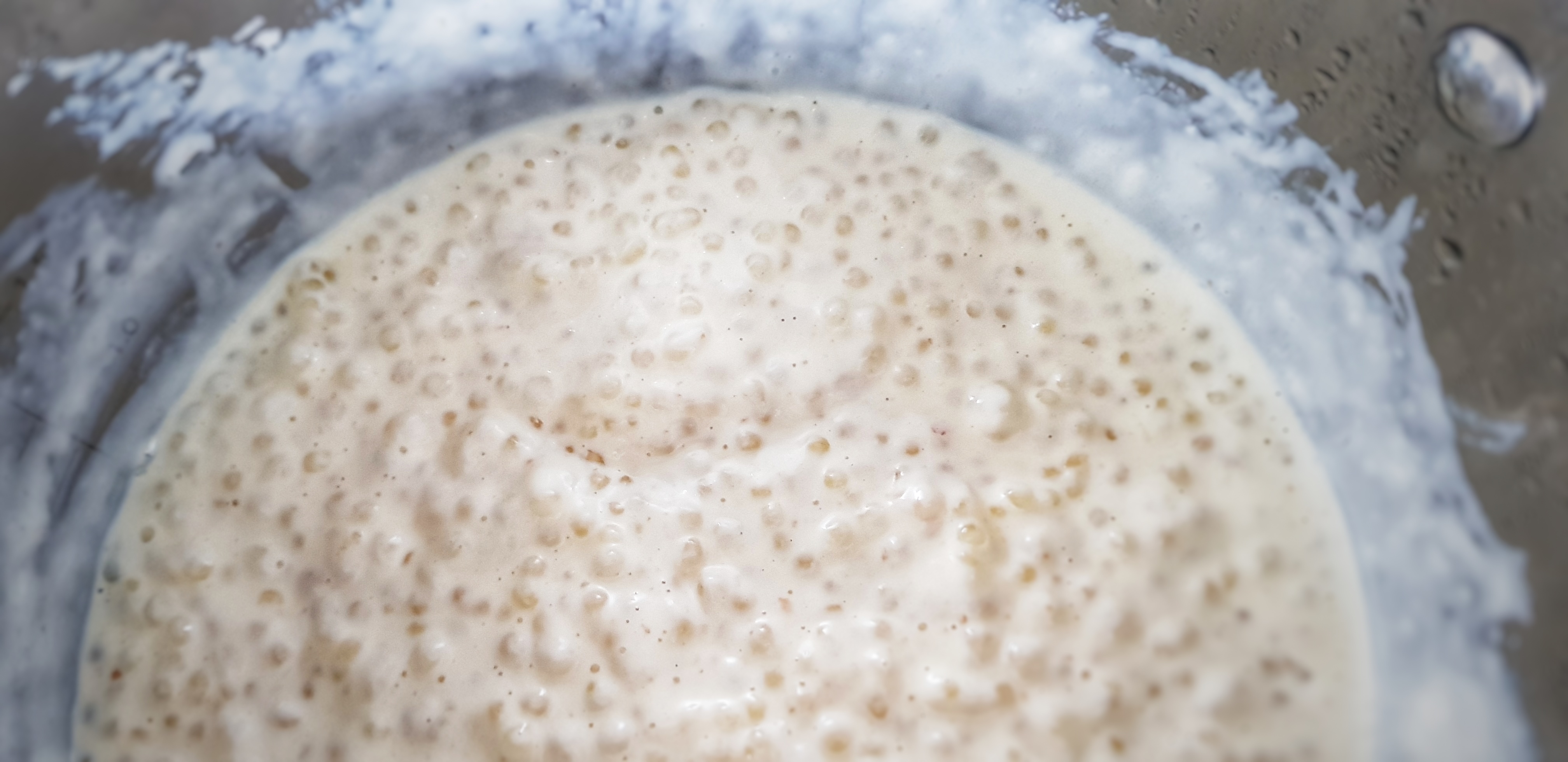
Wash the sago pearls as described above and place them in a saucepan with the remainder of the ingredients, bar the butter. Bring slowly to a simmer, stirring gently. Leave to simmer for around 15 minutes, stirring occasionally. After the 15-minute mark, keep a closer eye on it: cook a further 10 to 15 minutes, but stir more frequently, scraping any stuck bits from the base. Sago pearls stick and catch easily!
Stop cooking when the pearls are soft and gelatinous. Let the pudding stand for 10 minutes before serving. If it seems a little on the thick side, stir a little more milk through it.
References
[1] Beeton, I. (1861). The Book of Household Management. Lightning Source; Davidson, A. (1999). The Oxford Companion to Food. Oxford University Press.
[2] Harrison, S. (1751). The House-keeper’s Pocket-book And Compleat Family Cook (5th ed.). R. Ware.
[3] Raffald, E. (1769). The Experienced English Housekeeper (First Edit). J. Harrop.
[6] Gellatly, J. (2016). Bread, Cake, Doughnut, Pudding: Sweet and Savoury Recipes from Britain’s Best Baker. Penguin Books Limited; Thomas, H. (1980). The Pudding Book. Hutchinson & Co.
This pudding has been on my ‘to post’ list for absolutely ages. It has become of my favourites, though as you will discover as you read the post, not everyone agrees with me. I’ve called it a forgotten food, but it is still well-known in Ireland. It was popular in many parts of England too, but it doesn’t seem to get made anymore. Carrageen pudding is a set dessert akin to jellies, blancmanges and flummeries, but it is made from the gelatinous seaweed carrageen, also known as Irish moss. It used to be gathered in Yorkshire and South-West England, going by the name ‘Dorset Moss’.1
I first made it in 2015 as part of one of my semi-regular Pud Clubs; I always liked to make one risky pud, and carrageen pudding was it. I flavoured it the traditional way with sugar, lemon and brandy. I didn’t particularly like the taste: there was something of a Lemsip about it. If I remember rightly, it was voted worst pudding of the day. However it wasn’t the flavour that put people off; it is more gummy than a gelatine set dessert, and doesn’t dissolve cleanly in the mouth. As John Wright puts it: it doesn’t have an acquired taste – it barely has any – ‘more of an acquired texture.’2 That particular Pud Club was the closest I’ve seen anyone get to vomiting at one of my paid food events.
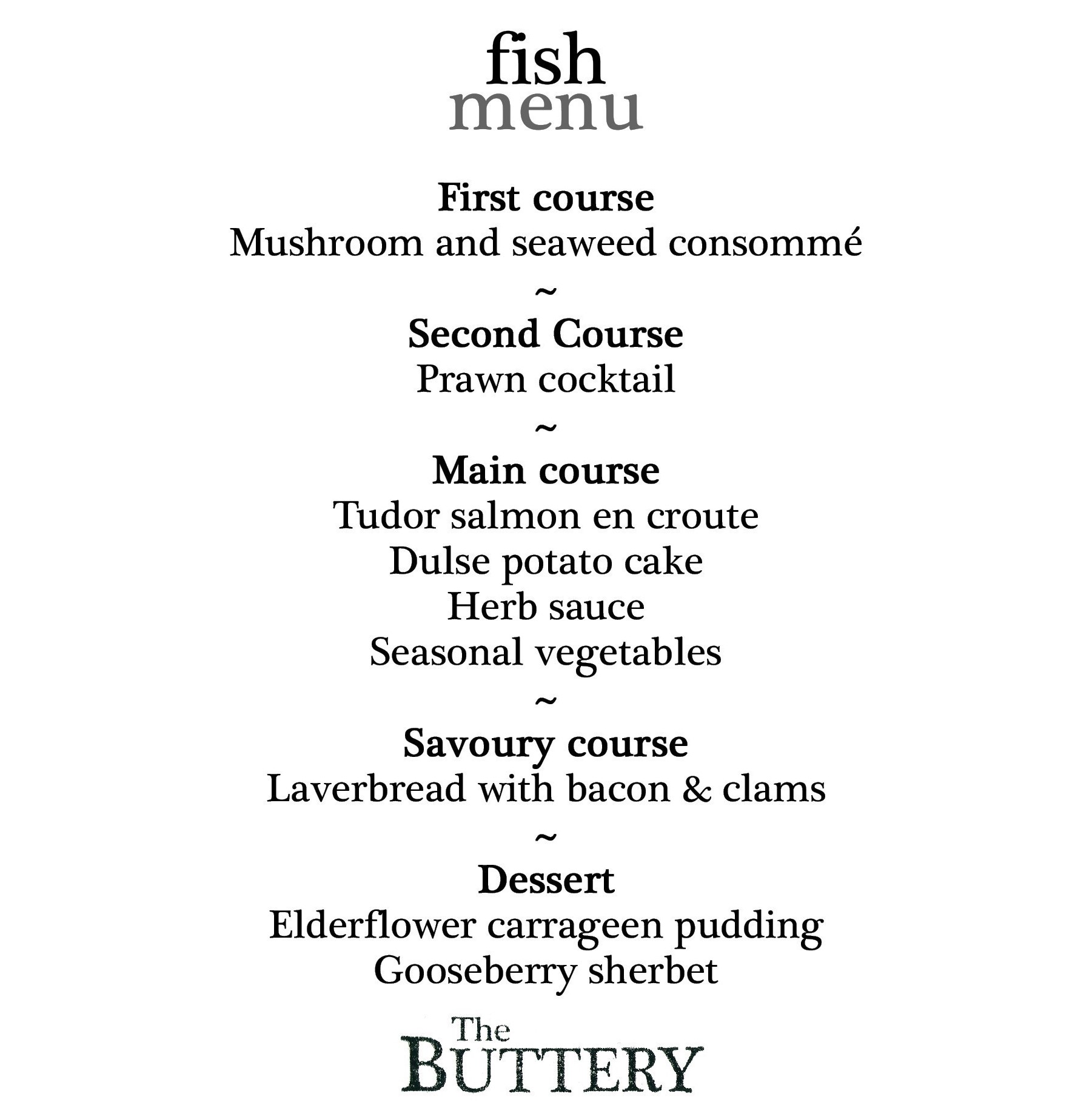
I returned to it later in the year after I’d had the idea for a seaside-themed popup restaurant, and though I could use it in the dessert course. I refined the recipe, adding some whipped cream to give it a mousse-like texture and flavoured it with elderflowers. I combined it with a gooseberry sherbet, and I was pretty pleased with it.
My ‘Buttery by the Sea’ menu from 2015
What is carrageen?
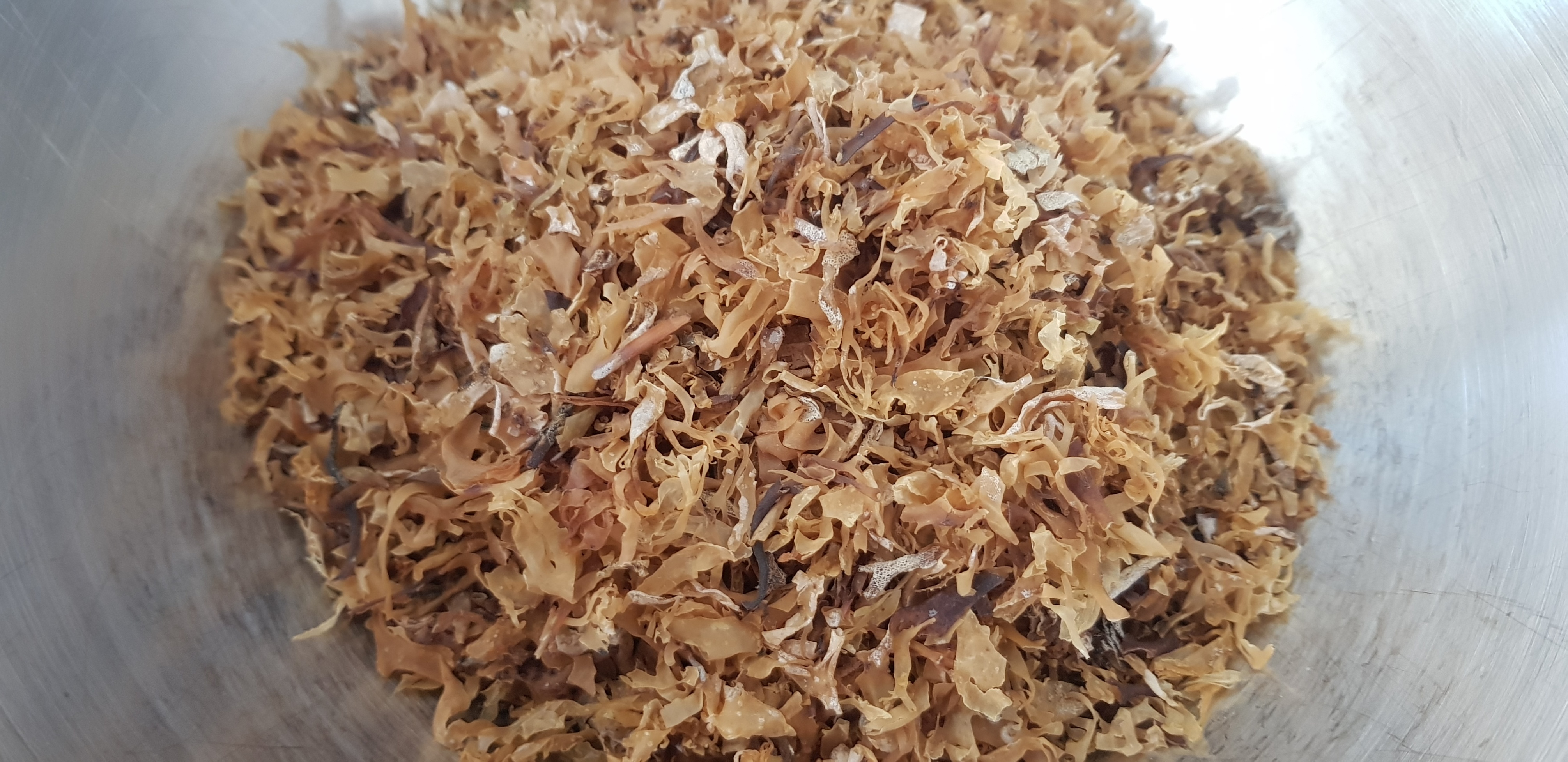
Carrageen is a common seaweed found throughout the coasts British Isles, except for parts of Lincolnshire and East Anglia.2 It is found in rockpools, is branched and a dark red colour. The wonderful food writer Theodora Fitzgibbon describes it as ‘a branching mucilaginous seaweed found on all rocks in Ireland’, which does not sound appetising, I realise. She goes on the comfort the reader, telling us that ‘it does not taste at all marine when properly prepared.’3 It is picked and dried in the sun, typically in April and May, and during the process it lightens from a dark red-brown to a creamy brownish beige, tinged with a pink-red hue.
Dried carrageen
To prepare carrageen, it is reconstituted in cold water, drained and then simmered in fresh water. It quickly turns viscous, bubbling away like the contents of a witch’s cauldron. The gloopiness is caused by the release of a trio of closely-related carbohydrates together called carrageenan.2 To extract it properly, the whole lot has to be squeezed through some muslin (cheesecloth). These carbohydrates are not digested by the body, and are therefore an excellent source of soluble fibre. Indeed, carrageen has been used as a treatment for a range of stomach and digestive complains and it ‘is considered extremely salutary for persons of delicate constitutions’.4 Its viscosity also made it a common treatment for sore throats and chest complaints. It also ‘fills plaster pores, makes wallpaper dressings…and fixes false teeth.’1
Carrageen a-bubbling away
Today carrageenan is commonly found in factory foods. For example, fat-free yoghurts no longer able to set properly are thickened with carrageenan. It is perfectly safe to eat, but foods that contain it should be avoided, because its inclusion is a dead giveaway that the food has been highly processed. Eat your yoghurt lipid intacta.
Don’t let my previous description put you off making this dessert; I really think I have the recipe right. The texture is good and is certainly better than using cornflour to set desserts.
My recipe for carrageen pudding
Subscribe to get access
Read more of this content when you subscribe today.
A subscription gives you access to premium content and costs £3/month. You’ll find extra recipes and posts, as well as access to my Easter Eggs page on the blog containing deleted scenes from podcast episodes as well as a whole extra mini-season. Follow this link for more information.
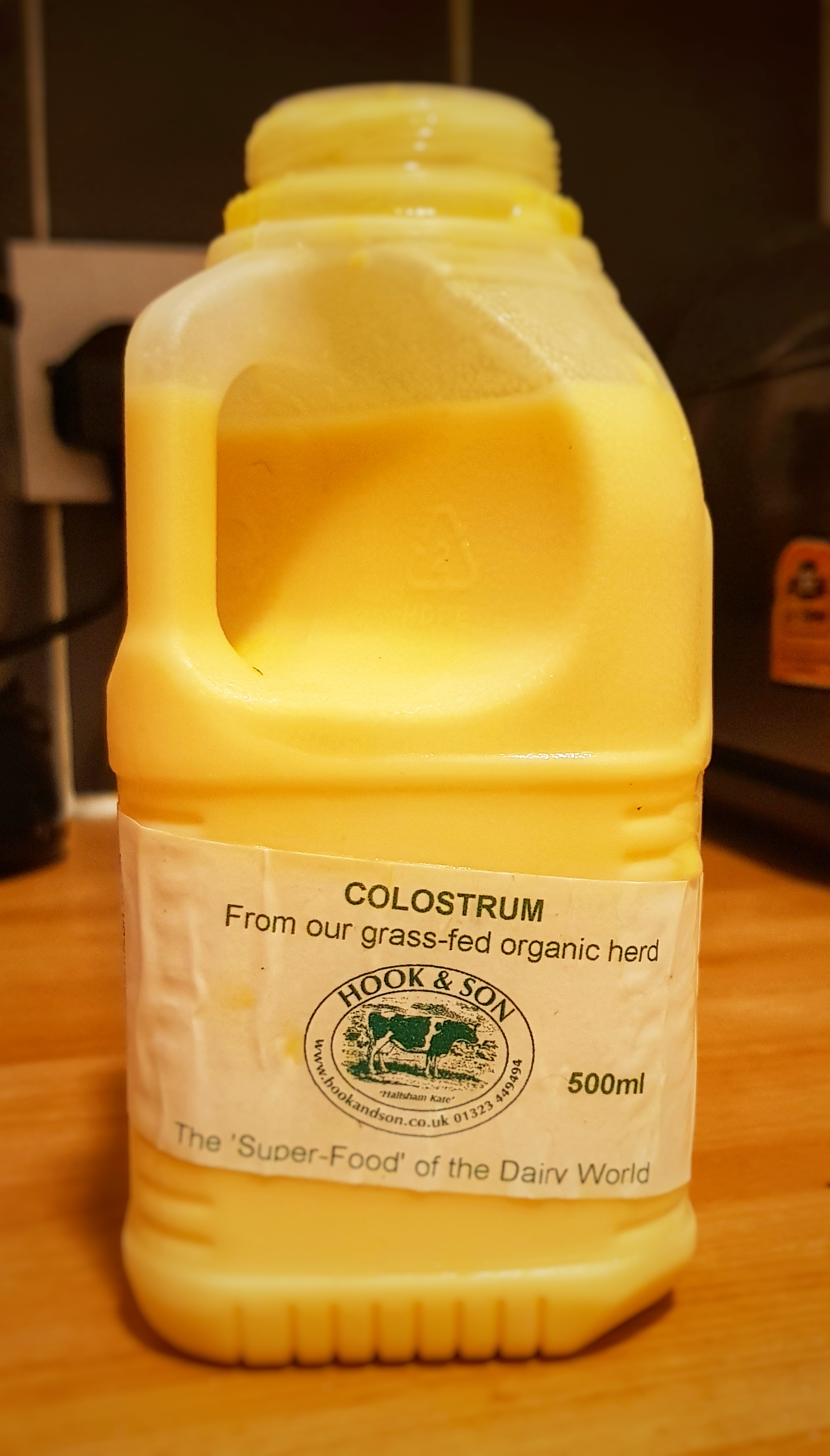
It is always an exciting day when I happen upon an ingredient I have never cooked or eaten, but have read about. I was, therefore, very excited when I approached the market stall of organic dairy farmers Hook & Son at London’s Borough Market at the end of December last year. They specialise in raw dairy products – indeed, it was spotting raw milk and butter that originally piqued my interest – but then I saw on their products list amongst the more typical dairy produce: colostrum. I immediately bought some (along with some excellent raw salted butter).
Colostrum is the name given to the milk produced by female mammals from their mammary glands for the first few days after giving birth to their young. It is very rich and is particularly high in protein: in the case of cows, around five times the protein of whole milk. Because it is the milk produced in order to give a newly-born calf a nutritional boost, it is not a commercial product. A calf should not be ‘deprived of this first natural aperitif’ as Dorothy Hartley put it.1 Whilst this is true, the reality is that there is a great deal of surplus colostrum ever since dairy cows have been bred to produce huge amounts of milk following the agricultural revolution of the 18th century. It was surplus because the highly nutritional colostrum – the beestings (sometimes spelt beastings) as they were called – gave calves diarrhoea.2 Some was reserved for motherless calves.
Leftover beestings would be sent into the community in jugs where it was considered a great treat. ‘It could not be bought’, Florence White tells us, ‘the farmer’s wife used to send a jugful to some of her oldest and best customers’, she would insist that the jug came back unwashed. Superstition held that ‘[t]o return the jug washed [would] bring about the death of the new-born calf.’3 It is today a niche foodstuff, and is typically considered ‘unmarketable’. Today colostrum is dried into powder and sold as a supplement to calves that would otherwise miss out in this very important food.4
Colostrum has been described as ‘golden yellow and as thick as double cream’.1 Well as you can see from my photograph, mine was certainly golden in colour: like a rich egg yolk custard. Upon inspection, however, it did not seem thick at all; in fact, I’d go so far as to say that it appeared watery. I tasted it and rather than it tasting lusciously creamy, it lacked sweetness. In fact, it had an almost savoury minerality about it. It still tasted nice; just not what I was expecting.
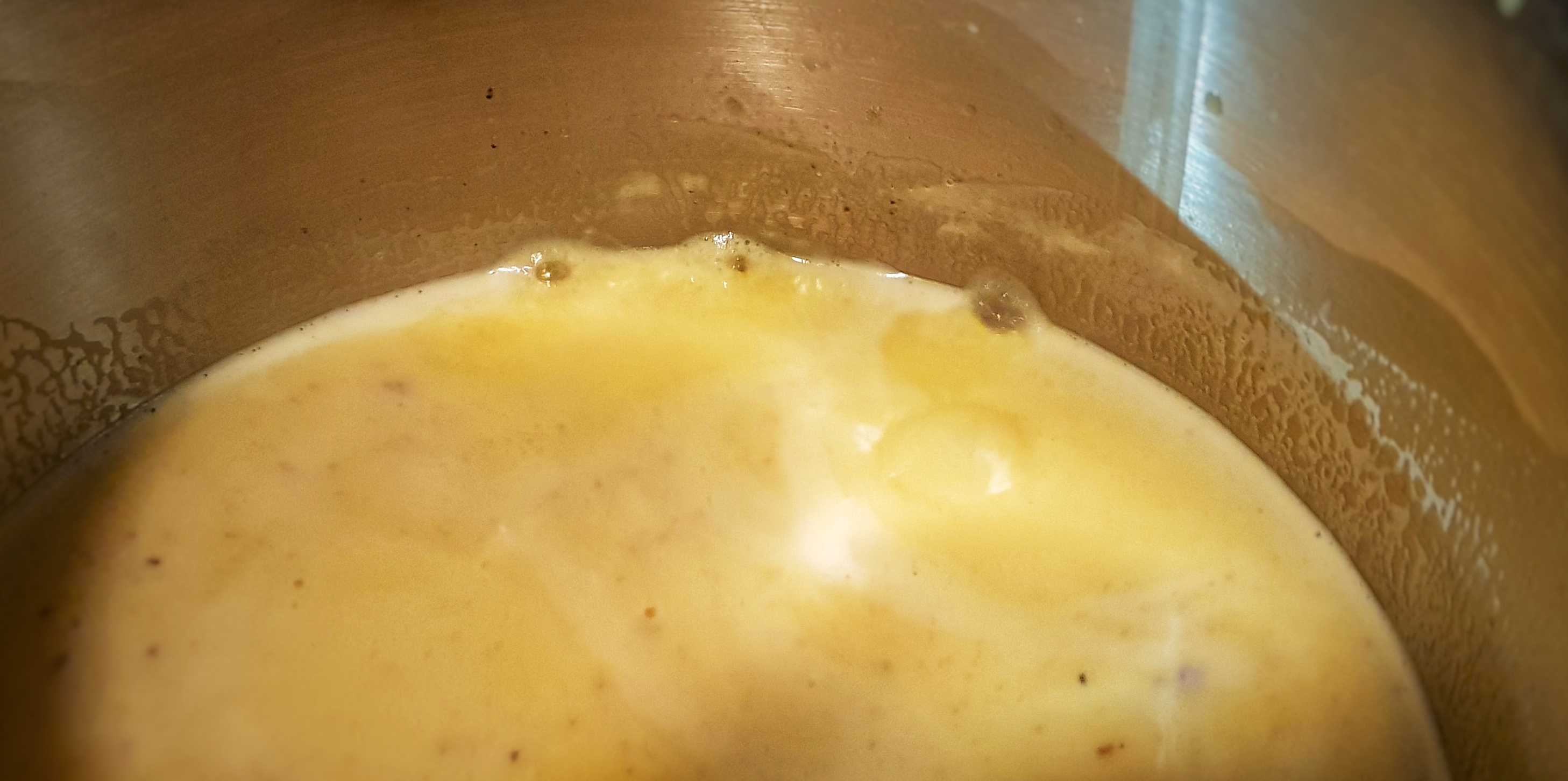
As colostrum comes to just the barest simmer, it thickens noticeably
Colostrum in the Kitchen
Being rich in fat and protein, colostrum was a foodstuff in its own right, but it was more often consumed cooked. This special milk has a rather curious property in that when it is poured into a saucepan and heated, it thickens just like a custard without having to add egg yolks or cornflour. The reason is down to the proteins. Regular whole milk contains broadly three types of protein: casein, whey protein and immunoglobulins (aka antibodies). The vast majority of the protein is made of casein in whole milk. This protein is temperature stable and doesn’t unfold (‘denature’) when hot. Therefore regular milk doesn’t gel or thicken. Colostrum however is very high in whey proteins (5x more than whole milk) and immunoglobulins (80x more than whole milk), both of which denature between around 55°C and 70°C.5 There is so much protein that colostrum will thicken and set like a custard all on its own. There can be so much protein in there that it has to be diluted with milk.
More typically, it was made into a thick ‘porridge’ with sugar and various flavourings: in Yorkshire it went under the name ‘bull jumpings’,6 in Wales it was called pwdin llo bach (calf’s pudding),7 but more generally, it was called beestings pudding. It is made by simply heating colostrum in a saucepan with sugar, some spices and dried fruit. It could also be set in the oven if more convenient. In fact it could be baked inside a pastry case like a Yorkshire curd tart (but without the curds or eggs!).
There was a certain amount of trepidation when I made mine – I thought that perhaps it would be too thin to thicken up. Well I needn’t have worried, it thickened readily with a pleasant slight graininess, just like a curd tart. Whilst it did feel rather odd to be eating colostrum, I have to admit it was a delicious milk pudding – one I heartily recommend.
Beestings pudding hot
If you like the blogs and podcast I produce, please consider treating me to a virtual coffee or pint, or even a £3 monthly subscription: follow this link for more information.
Beestings Pudding
Beestings pudding takes a matter of minutes to make. It tastes very much like the filling of a Yorkshire curd tart, especially if the pudding is flavoured with allspice. If you like, the pudding can be baked in shallow dish, or even better, a blind-baked sweet shortcrust pastry base. Follow the instructions for baking a Yorkshire curd tart if you fancy having a go at that.
Serves 4
500 ml colostrum
60 g caster sugar
60 g raisins
Pinch salt
Pinch freshly grated nutmeg or ground allspice
Place all of the ingredients in a small saucepan over a low to medium heat, stirring to dissolve the sugar.
When the sugar has dissolved, turn up the heat to medium. It’s a bit like making custard now, but the heat can be higher: keep stirring until the beestings thicken – as if by magic – as it comes to a simmer.
When the beestings are thick like creamy, but slightly granular, porridge, it is ready.
Divide between four bowls and serve, or refrigerate and eat cold.
Beestings pudding cold
References
Hartley, D. Food in England. (Little, Brown & Company, 1954).
The Medical Times and Gazette (1857).
White, F. Good Things in England. (Persephone, 1932).
Foley, J. A. & Otterby, D. E. Availability, storage, treatment, composition, and feeding value of surplus colostrum: a review. J. Dairy Sci.61, 1033–1060 (1978).
Hege, J., Ghebremedhin, M., Joshi, B. L., Schreiber, C. & Vilgis, T. A. Soft gels from bovine colostrum. Int. J. Gastron. Food Sci.23, (2021).
Brears, P. Traditional Food in Yorkshire. (Prospect Books, 2014).









 British Food: A History