Category Archives: General

Bath, Buns & Sally Lunns

No, I haven’t died, so cancel the wake. I’ve been a little busy of late and the poor old blog has suffered from scant postings. For that I apologise. I need to catch up with a heck of a lot of food stories, recipes and history with you all; I may not have been blog-writing, but I have been eating!

At the end of June, I popped down to the beautiful city of Bath for the weekend to visit friends and had a jolly old time. The great thing about Bath is that it has such history; you cannot help but find something to be amazed by at the turn of every street corner.

2013-06-28 16.25.28

Entrance to the Roman Baths

The spa at Bath has attracted people for millennia – there is archaeological evidence of human settlement going back 10 000 years. The city of Bath itself was founded in 863BC by a chap called Bladud. Suffering from leprosy, he had been ostracised from society and found that bathing in the warm, muddy springs, after seeing pigs doing the same, cured him. It must have put him in fine fettle because he later went on to become the ninth King of the Britons and to father King Lear.

2013-06-28 16.25.58

Of course it was the Romans that really transformed the place, creating Aqua Sulis with the baths that are still there today in fine working order.

From the point of view of food, however, Bath really came into its own in the eighteenth and nineteenth centuries when it was deluged by the middle classes that wanted to get away. The Roman Baths and Pump Room were restored to their former glories after centuries of neglect, making Bath the best of all the spa towns. This wasn’t just because of its locality to London, or that it was in a lovely part of England; it was because Bath simply had the best of everything. Bath was a trade epicentre: excellent salt marsh lamb from Wales, a seemingly endless supply of fruit and vegetables from Tewkesbury, cider from Glastonbury, apricots, cherries and plums from the Cotswolds, cream and junkets from Devon and Somerset, excellent freshwater fish – especially elvers – from the Severn Valley as well as sea fish from the ports of Cornwall, all came to one place. And that was just British produce! I haven’t mentioned the French brandy, the Spanish wine or the exotic spices from further afield.

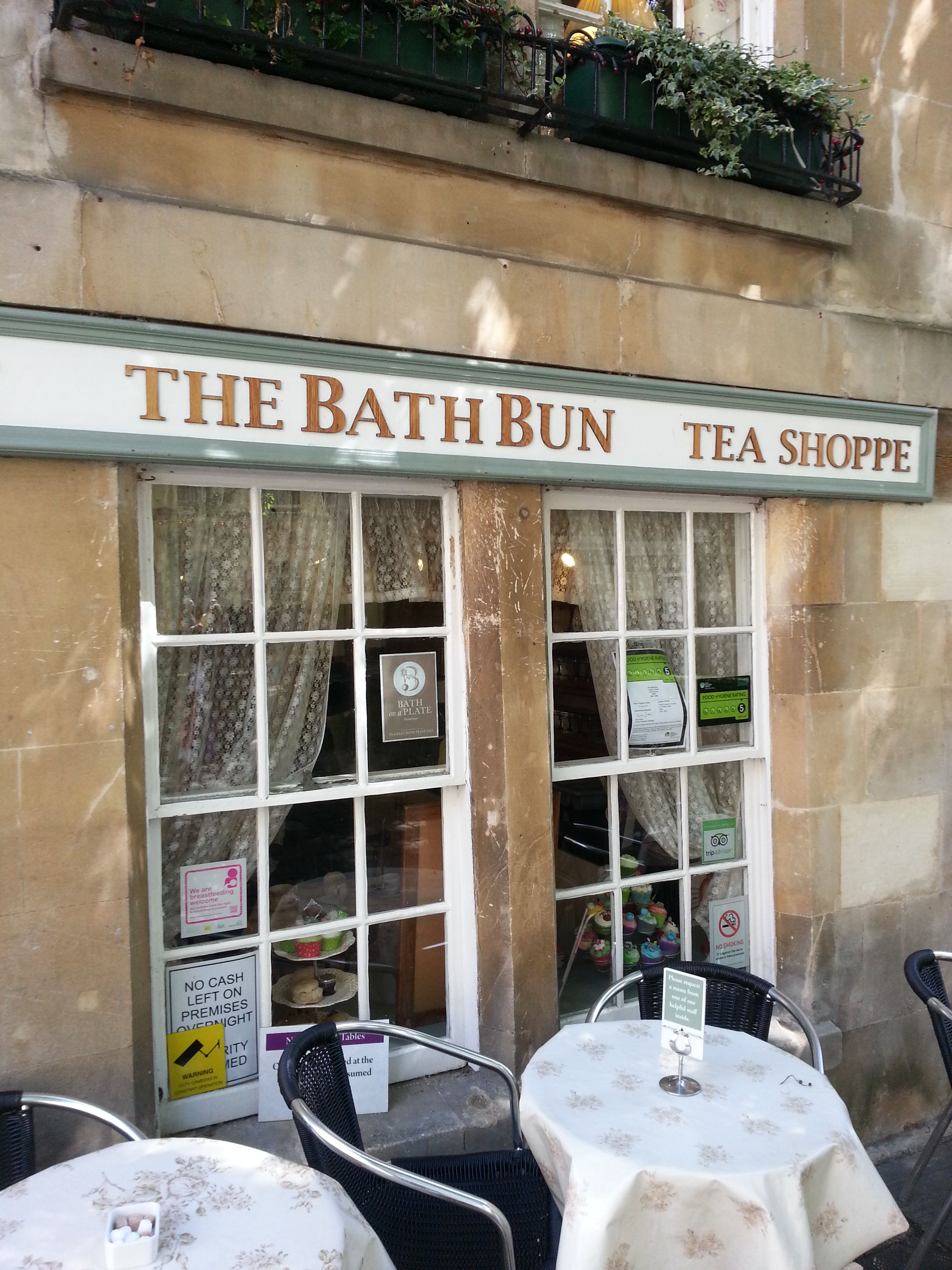
All this has made Bath what it is today. Its food heritage, however, seems to have been boiled down into two things: Bath buns and Sally Lunns.
2013-06-30 15.09.17

I’ve never seen either Bath buns or Sally Lunns anywhere other than Bath itself, which just goes to show that we still have regional cooking in an age with a seemingly swirling and mixing population. I like that you don’t see them everywhere; it makes eating one a rare treat to be relished. There are, of course, stories attached to the invention of these enriched breads which should be taken with a huge pinch of salt.

Bath Buns

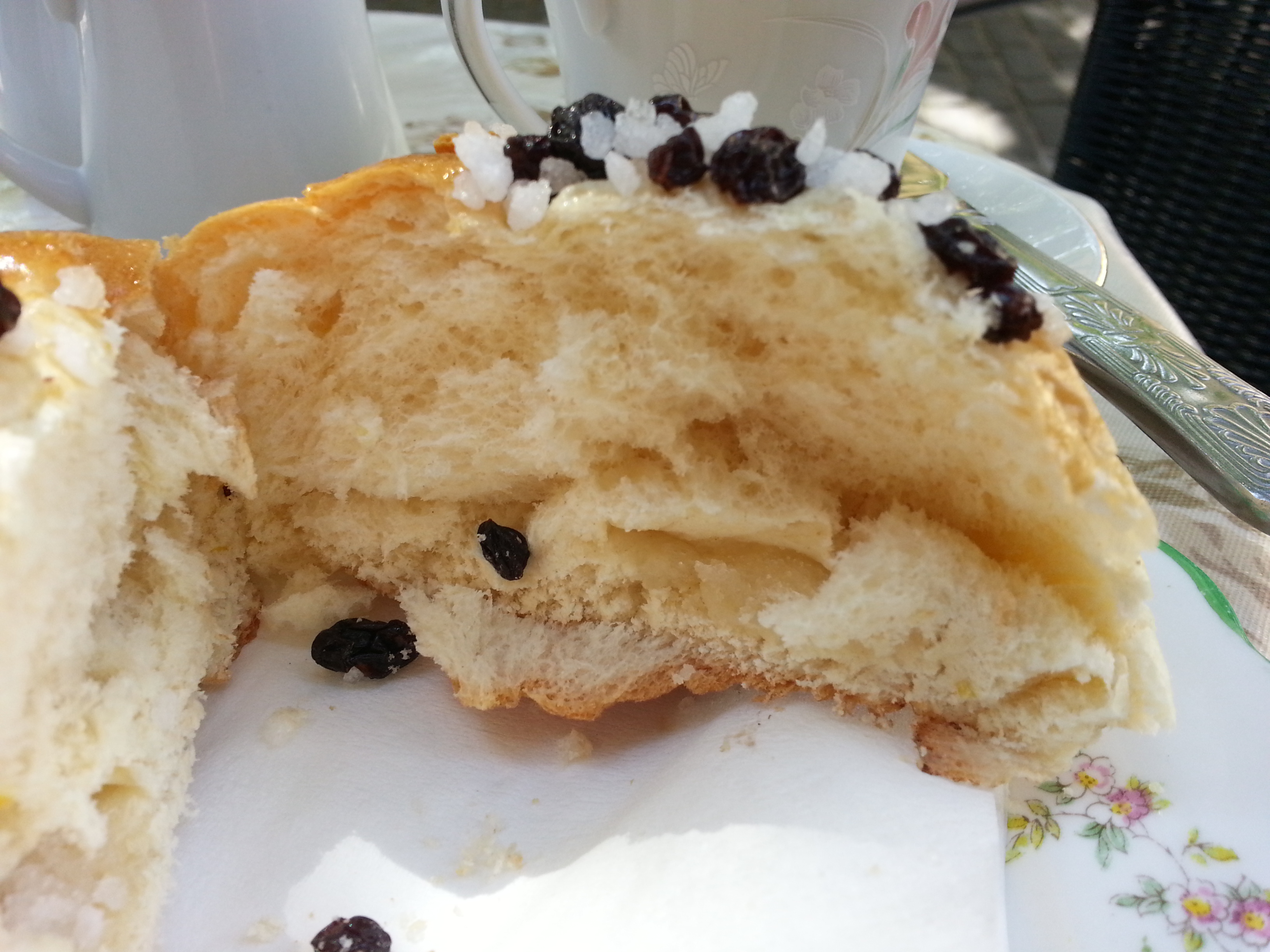
A bath bun is a large fruit bun, made with dough similar to that of a Chelsea bun or hot cross bun. The bread dough is enriched with eggs, sugar and currants. At the bottom of each bun is a lump of sugar and the freshly-baked bun is finished with a sticky wash, extra currants and crushed loaf sugar or sugar nibs.
2013-06-30 15.16.46

Anatomy of a Bath bun

The Bath bun is said to have been invented by a doctor called William Oliver in the 18th century. After his patients visited the Roman baths he would give them a nourishing Bath bun. It was soon apparent that his plan was not working as he expected when he realised
his patients were getting somewhat portly. He withdrew the buns and replaced them with hard, dry water biscuits.

I must say that I would have become a hypochondriac if I was one of Oliver’s patients! I would have used any excuse to get my hands on one. They are so delicious – sweet and sticky and very bad for you. I can’t put the attractiveness of the Bath bun better than W Chambers, writing in his Edinburgh Journal of 1855:

The Bath-bun is a sturdy and gorgeous usurper – a new potentiate, whose blandishments have won away a great many children, we regret to say, from their lawful allegiance to the plum-bun. The Bath-bun is not only a toothsome dainty, but showy and alluring withal. It was easier for ancient mariners to resist the temptations of the Sirens, than it is for a modern child to turn away from a Bath-bun…Large, solid, and imposing, it challenges attention, and fascinates its little purchasers.

We can see from this quote that the Bath bun was popular, not just in Bath, but England and Scotland, so what happened to it? Enriched breads are still pretty popular in Britain, even with the advent of comparatively modern chemically-aerated sponge cakes. Strange.


If you like the blogs and podcast I produce, please consider treating me to a virtual coffee or pint, or even a £3 monthly subscription: follow this link for more information.


The Sally Lunn
2013-06-30 15.07.17

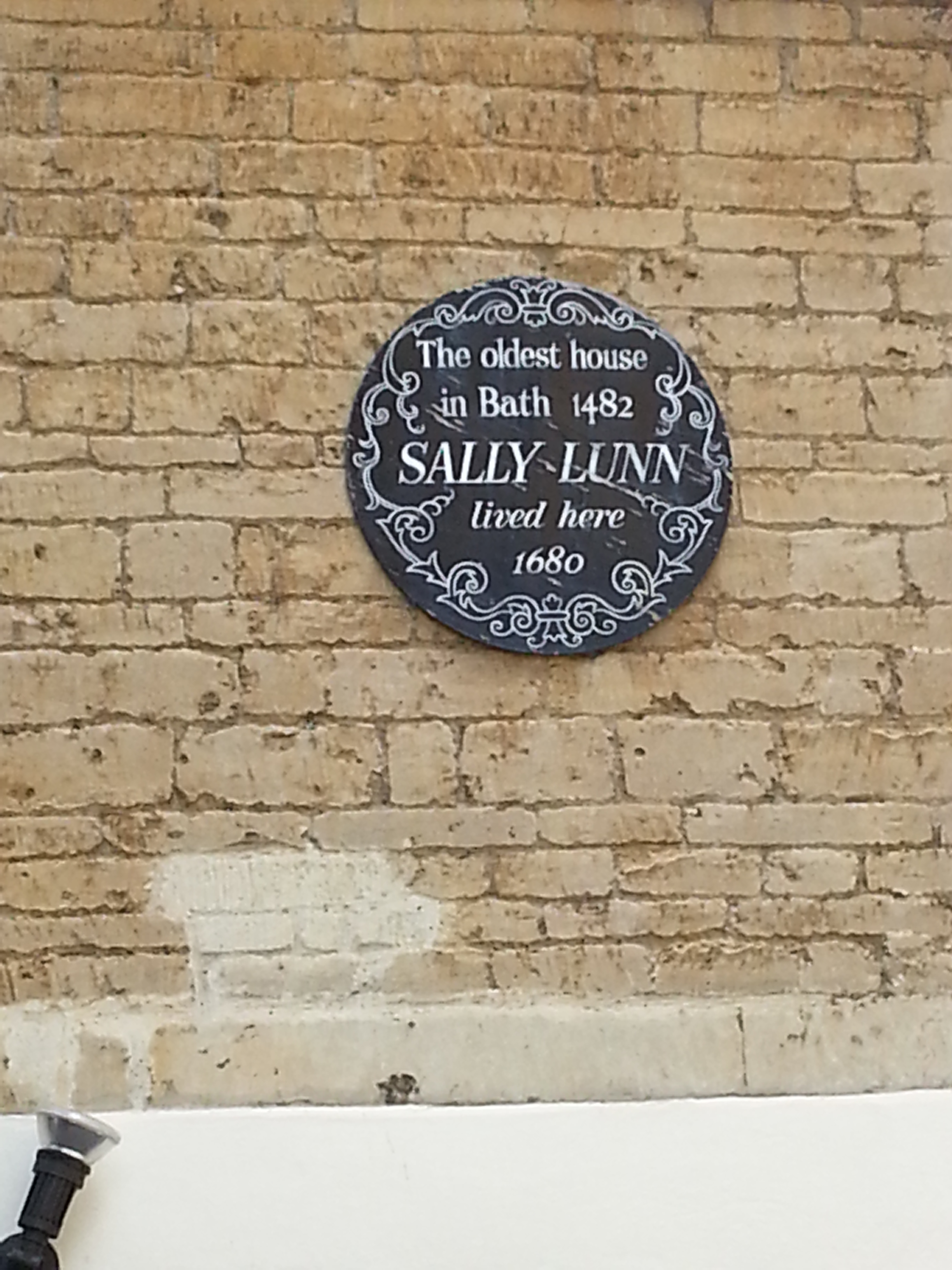
Oh no she didn’t!

A Sally Lunn is a large, round enriched bread, much plainer than a Bath bun, rather like French brioche. The story of its invention goes something like this:

A young French immigrant lands in Bath during the 17th century and gets herself a job in a bakery where she shows off some of her recipes and one in particular becomes very popular indeed. Her name? Solange Luyan.
2013-06-30 15.07.37

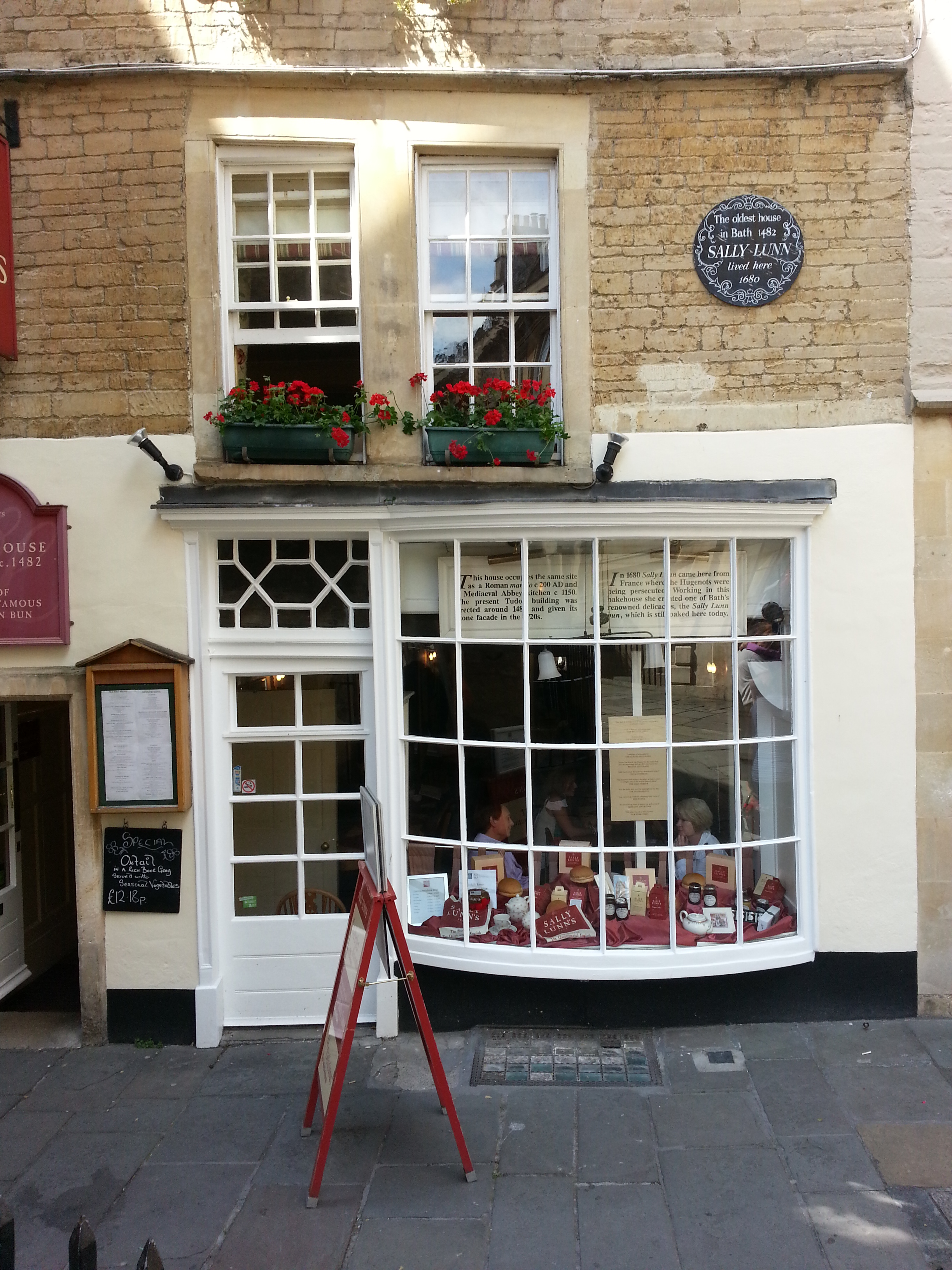
The recipe went missing in the 1800s, but was apparently found during the 1930s when it was discovered in a ‘secret cupboard’ in her original home. The owner of the house then decided to open up the original Sally Lunn Tea Room.

This is, of course, all complete nonsense. The most likely explanation is that Sally Lunn is a corruption of the French solielune, or sun and moon cake.

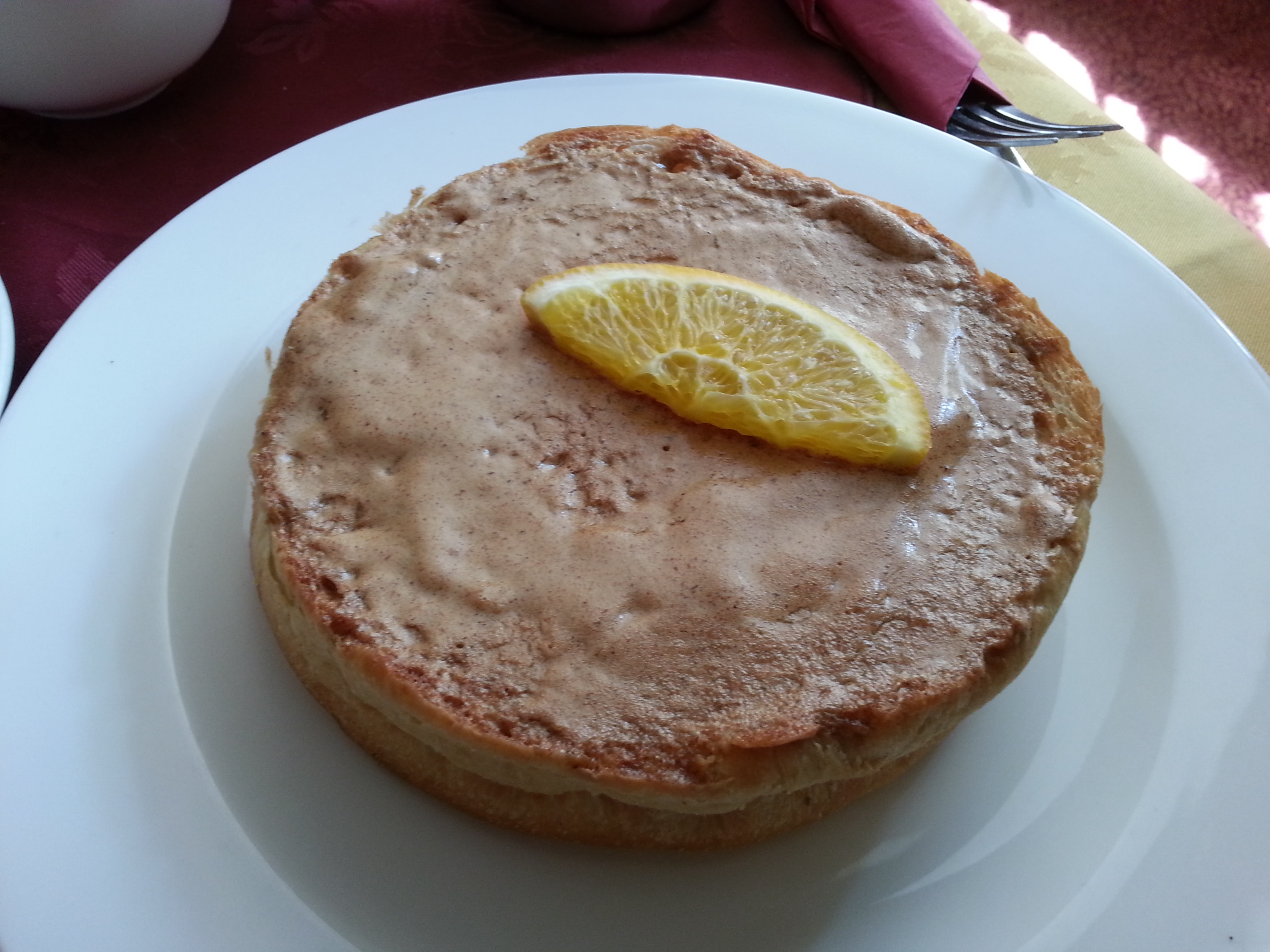
I visited the tea rooms and ate a delicious lightly-toasted Sally Lunn spread with sweet cinnamon butter and it was delicious. Like the Bath bun, its popularity had faded in the rest of the country.
2013-06-29 11.24.11

3 Comments

Filed under baking, bread, Britain, cooking, food, General, history, Teatime, Uncategorized

Asparagus

asparagus plate

A botanical plate showing the life cycle of the asparagus plant

Asparagus season in the UK very short, going from only May until June. Of course, these days we are no longer a slave to the seasons and can have fresh asparagus that has been grown in Peru or Kenya whenever we like. I love the stuff, but I do feel that our food loses some if its magic when seasons no longer matter. It is for this reason I only buy British asparagus.

Asparagus has been eaten in Ancient Egypt, Greece and Rome and has been loved in France for many centuries, and it is the carefully cultivated and selected French type of asparagus that made its way to Britain in the seventeenth century, a time of great ‘vegetable improvement’, and it is still grown here today. This does not mean that prior to this date we did not eat it or try to cultivate it.

The etymology of asparagus is interesting – many people think that it was called sparrow grass, but the upper class thought it a vulgar term and subtly changed its name to asparagus to make it sound more posh. This is not quite true: it actually began life as asparagus coming from Mediæval Latin, then it was shortened to sparage in Late Old English and then further modified to asperages in Middle English. It was anglicised to sperach or sperage in the 16th century, but strangely it was officially spelled as asparagus to be in line with Latin. The word asparagus became associated with “stiffness and pedantry”, and the “folk-etymologi[s]ed” sparrow grass arose in reaction to these Latin throwbacks. All this information came from the wonderful Online Etymological Dictionary. I love the Old English word – eorðnafela – sounds like some kind of elf queen from a Tolkien book.

There are three main types of asparagus which all come from the same plant: there are the common all-green tender spears that have very good flavour, and then there is white asparagus, made by ‘forcing’ the spears to grow in the absence of light by earthing up around and over tips. These are not typically grown in Britain, though you do spot them from time to time, though they have usually come from Holland or Belgium, where white asparagus is popular. Lastly, there is lavender-tipped asparagus which is simply white asparagus that has been allowed the see the sun again and just colour slightly. White and lavender-tipped are much more fibrous than the green but have a much more delicate flavour.

Asparagus is also infamous for a certain side-effect after it has been eaten and digested: the distinctive smell it leaves in our urine, which is liked by some, but hated by others:

[Asparagus] cause a filthy and disagreeable smell in the urine, as everybody knows.

Louis Lemery, Treatise of All Sorts of Food, 1702

all night long after a dinner at which I had partaken of [asparagus], they played (lyrical and coarse in their jesting as the fairies in Shakespeare’s Dream) at transforming my chamber pot into a vase of aromatic perfume.

Marcel Proust, In Search of Lost Times, 1913

[Proust always overdid things – have you ever read his description of madeleines?]

The chemical in question is called asparagusic acid, though not everyone has the ability to produce it (though most do) and not everyone has the ability to smell it (though most can).

Proust

Big ponce: Proust


If you like the blogs and podcast I produce, please consider treating me to a virtual coffee or pint, or even a £3 monthly subscription: follow this link for more information.


Preparing Asparagus.

It is very straight-forward to prepare asparagus. You first need to remove the woody part at the base of the stem. You can do this with a knife, but this involves guess-work, so it is easier to break the spears one at a time because they have a natural snap point where the woodiness lessens. You can trim the ends of course if you want to be fancy. If you have very thin young spears, you may not have to snap them at all. Along the stem of the plant there are strange little leaves that lie flat against the stem; you can remove these if you like, but I tend not to unless the spears are particularly thick.

Asparagus and Eggs

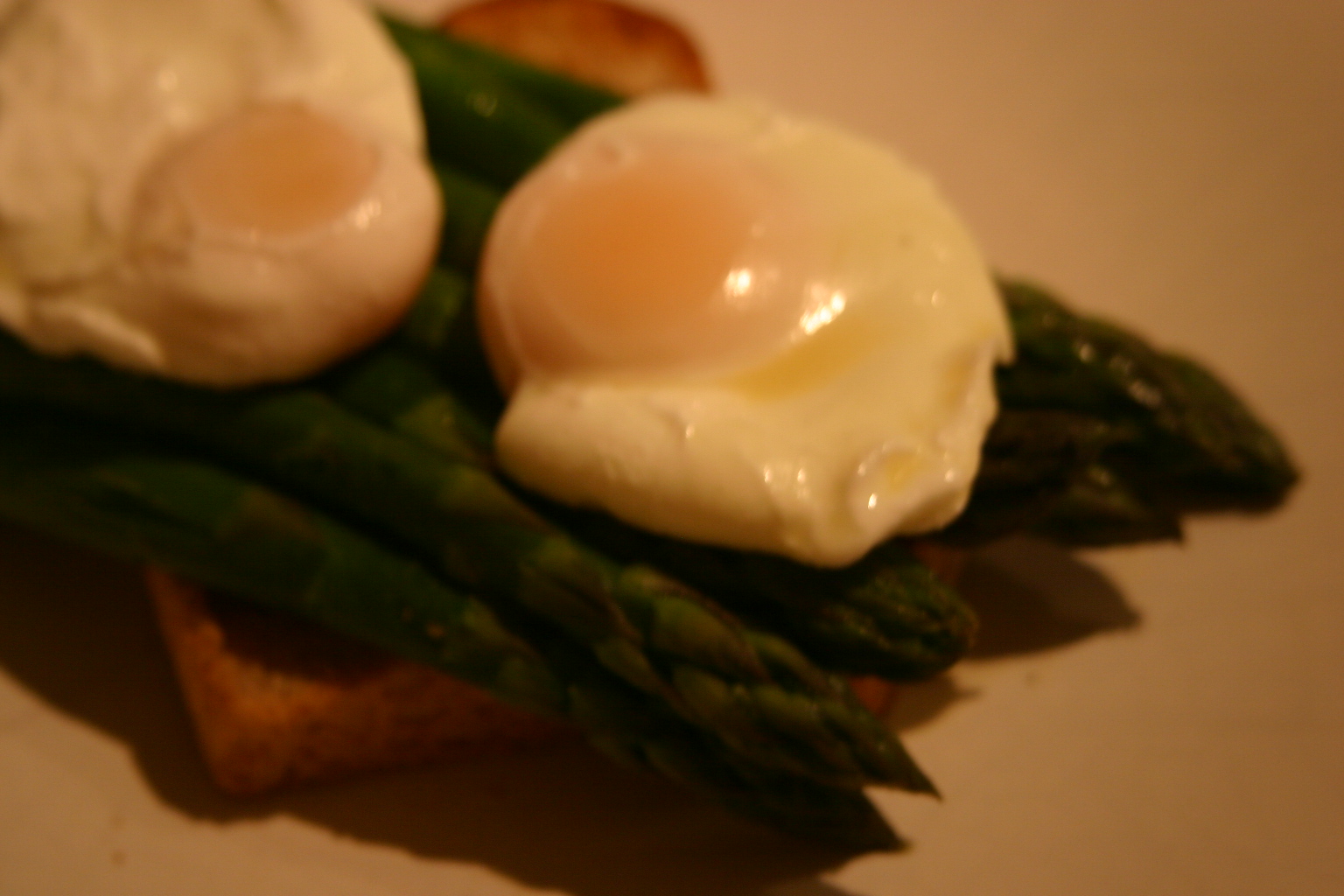
Asparagus needs little cooking: just a few minutes steaming is required. Traditionally it is cooked in a tall asparagus pan so that the spears can be boiled upright. Here’s how I like to cook mine – it shows off the flavour of asparagus cooked simply.

Prepare your spears and place them in a pan in just a few tablespoons of water and a knob of butter. Cover so that the asparagus part-boils and part-steams. Check if they are cooked by probing the thickest part of a spear – it should be nice and tender. Asparagus spears of a middling thickness will take no longer than four minutes, and will most likely be done in three. Once cooked, season with salt (if needed) and black pepper.

Serve on toast with some of the asparagus-flavoured butter and poached eggs.

8 Comments

Filed under Britain, cooking, food, General, history, Recipes, Uncategorized

Have a Heart?

I am aiming to write at least one recipe on every cut of meat, cheap or expensive, regular or odd (see here for the main post). At Levenshulme Market a few months ago, I came across a calf’s heart at the dairy farm Wintertarn’s stall, so I bought it and stole it away in my freezer until I found a recipe I wanted to try.

Heart crops up in many recipes such as pork faggots or haggis, but these days is rarely eaten as a cut of meat in its own right. In the war-time home stuffed pig’s or lamb’s hearts were pretty popular because offal cuts were not rationed. This naturally has damaged the reputation of the heart as something that is good eating. Prior to the 20th century, heart was a very popular cut of meat, even with the middle and upper classes. I like this recipe that appears in Elizabeth Raffald’s book The Experienced English Housekeeper (1769) ‘To make a Mock Hare of a Beast’s Heart’:

Wash a large beast’s heart clean and cut off the deaf ears [see below], and stuff it with forcemeat…Lay a caul of veal…over the top to keep in the stuffing. Roast it either in a cradle spit or hanging one, it will take an hour and a half before a good fire; baste it with red wine. When roasted take the wine out of the dripping pan and skim off the fat and add a glass more of wine. When it is hot put in some lumps of redcurrant jelly and pour it in the dish. Serve it up and send in redcurrant jelly cut in slices on a saucer.

elizabeth raffald

Elizabeth Raffald

I think this sounds like a delicious recipe to try, and perhaps I will when I come across a large beast’s heart in the butcher’s shop window. However, it might be a little bit of a challenge for someone not used to eating such things. Instead, I give a recipe for a delicious and simple marinated calf’s heart, as a good introduction to the texture of heart which is not as tough as old boots as you may first expect, but firm and has the familiar taste of meat.  However, before you cook a heart, you need to know how to get it ready.

Preparing Heart

FxCam_1358467420942

The hearts of small animals such as ducks and chickens can simply have any large blood vessels removed and you are done.

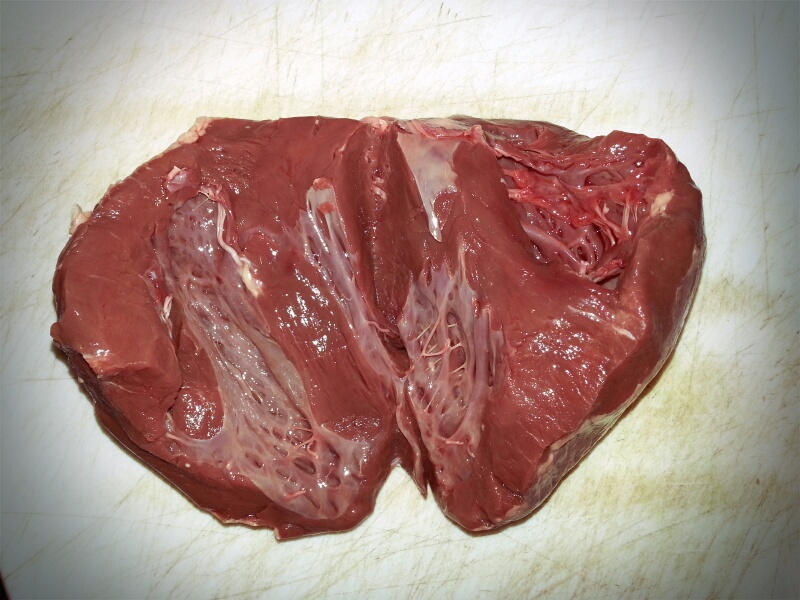
Preparing a larger heart such as calf, ox, lamb or pig might appear to be a little daunting at first, but it is really quite simple. First of all the large blood vessels as well as the two large flaps that used to be known as ‘deaf ears’ are trimmed away from the top of the heart as well as any obviously sinewy parts. This should leave the heart looking neat with two cavities within. If you want, trim away the fat, but if it is to be roasted, the fat provides a natural basting. In fact, there is so little fat within the heart itself that often it needs to be larded with strips of fatty bacon. Large ox hearts are often quartered and frozen away to be used over several meals.

Pop the heart in some salted water until you are going to cook it.

Grilled & Marinated Calf’s Heart

This recipe is a modern one and it comes from the Nose-to-Tail chef Fergus Henderson. It is very simple and very healthy – pieces of calf’s heart that have been marinated in Balsamic vinegar, quickly griddled then served up with a nice salad.

For four

Ingredients

1 calf’s heart

around 6 tbs Balsamic vinegar

salt

pepper

1 tbs chopped fresh thyme

First of all prepare the heart: trim it as explained above and remove any thicker pieces of fat. In this case, the heart is cooked quickly, so it doesn’t require the fatty basting. Cut it open and lay it out flat and cut into 2 or 3 centimetre (1 inch) squares.

FxCam_1358467450898

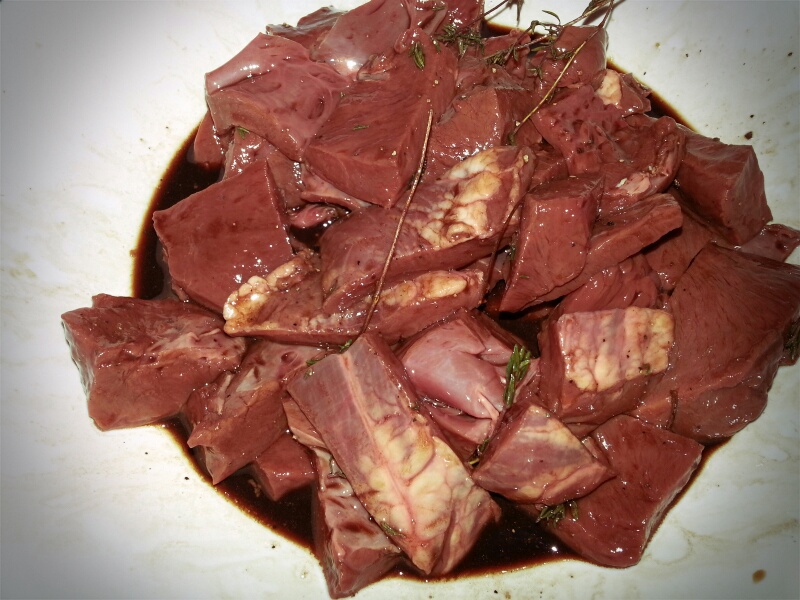
You need each piece of meat to be about half a centimetre (¼ of an inch) thick, so some very thick parts, such as the ventricles, will need to be sliced horizontally. Tumble the pieces of heart into a bowl along with the vinegar, salt, pepper and thyme, making sure everything gets coated well. Cover and marinate for 24 hours.

FxCam_1358468271386

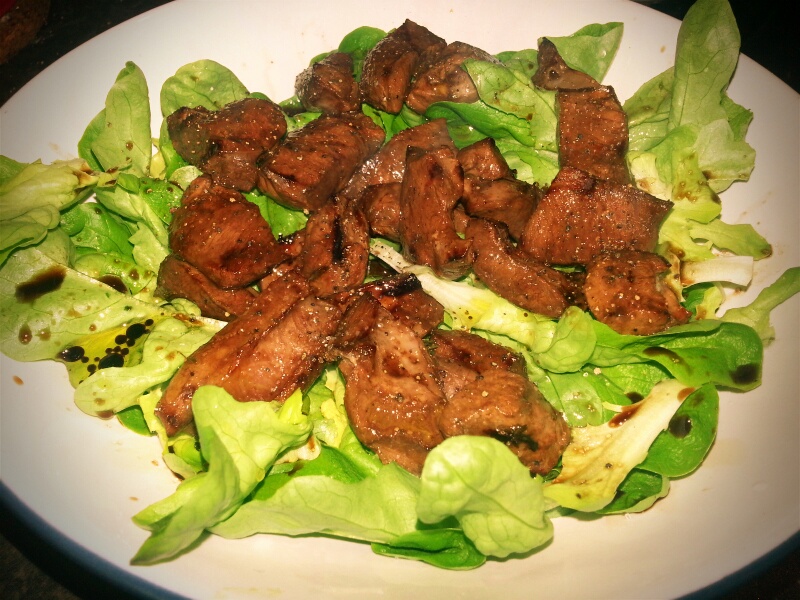
To cook the meat, you need a red-hot griddle – either on a barbeque or over a hob – that has been lightly greased with some rapeseed oil. Place pieces of heart on the griddle and turn after 2 or 3 minutes and cook the same time on the other side.

Serve straight-away with ‘a spirited salad of your choice’, says Mr Henderson, ‘e.g. waterctress, shallot and bean, or raw leek.’

FxCam_1358535726575

If you like the blogs and podcast I produce, please consider treating me to a virtual coffee or pint, or even a £3 monthly subscription: follow this link for more information.


4 Comments

Filed under Britain, cooking, food, General, history, Meat, Recipes, Uncategorized

Sweetbreads

Sweetbreads with bacon and garden peas

One of my irregular offal-themed posts (see main post Tail to Nose Eating):

For those that are not aware, sweetbreads are a type of offal and come from the thymus, situated at the base of the throat, of either calves or lambs. For this reason they are often called throat sweetbreads. The thymus produces T cells which help us to attack any pesky germs that try and make us ill. The pancreas is commonly sold as heart or stomach sweetbreads, there are other rarely used sweetbreads too such as tongue and cheek sweetbreads. Most people think that sweetbreads are the testicles of calves and lambs; in fact, very rarely are testicles sold under the name of sweetbreads, they are more commonly sold as fries or stones.

Don’t be put off by the thought of eating a gland – they taste light, with a suspicion of iodine and do not have a strong offal flavour. If you are new to offal, or fear it a little, sweetbreads are a good place to start I reckon. But why are they called sweetbreads? Well, they are sweet because they taste richer and sweeter compared to typical meat, and they are bread because the old English word for flesh is bræd.

Sweetbreads were once very, very popular, but have now died a comparative death. Though, like many of the old forgotten cuts of meat, there is a slight resurgence, but nowhere near the dizzy heights of the 18th and 19th centuries. Almost every meat dish seems to have been decked out with breaded sweetbread garnishes. In those days; they were cheap and they were plentiful and they were delicious. Sweetbreads are not the easiest of cuts to get hold of these days, with most of them being snapped up by restaurants, and the few that get to your butcher are snaffled very quickly by those in the know. This, in some ways, in a good thing – they become, not a mere garnish, but the star of the show, something to be savoured. In Jane Grigson’s book Good Things, they have a whole chapter to themselves!

Sweetbreads are best served simply: grilled or fried alongside some dry-cured streaky bacon. Sweetbreads love bacon. They also love black pudding and sweet vegetables such as beans and peas.

I got lambs’ sweetbreads from my butcher WH Frost in Chorlton. For some bonkers reason we can’t sell British calves’ sweetbreads in this country, but we can sell those that have come from mainland Europe.

20201204_133419-01.jpeg
Lambs’ sweetbreads in their raw state

Preparation of sweetbreads

Whether you get calves’ or lambs’ sweetbreads they first need to be soaked in salted water for a few hours. This gets rid of any impurities. If you can, change the water a couple of times, but it is no big deal if you do not.

Next, the sweetbreads are poached. This can be in simple salted water, but more normal is a light stock such as chicken or vegetable or in a court bouillon of herbs and vegetables.

Simply pop your sweetbreads into the water or stock, bring to the boil and simmer gently for five minutes. Remove, drain and cool before removing any gristly bits. The tricky part is doing this whilst keeping them whole.

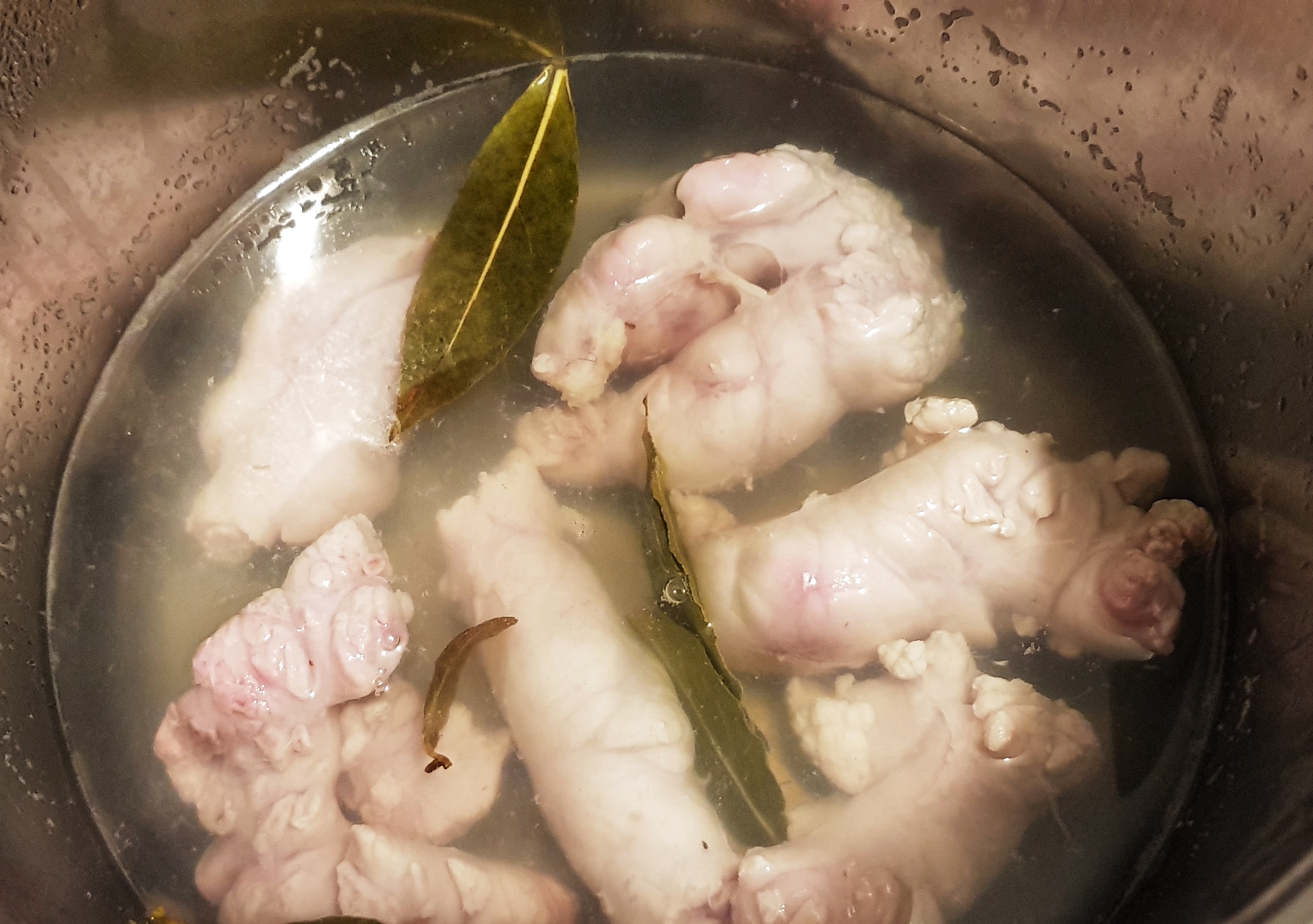
Sweetbreads gently poaching in a simple court bouillon

If you like the blogs and podcast I produce, please consider treating me to a virtual coffee or pint, or even a £3 monthly subscription: follow this link for more information.


Fried Sweetbreads with Peas and Broad Beans

This recipe is great if you’ve never cooked with sweetbreads before – they are sliced up, so if they do fall apart when preparing them, it doesn’t matter. This recipe is also a very quick dinner – taking only 10 minutes or so to cook. I don’t think it needs to be served with anything, except perhaps a slice of wholemeal bread and butter. By the way, there is nothing wrong with using frozen peas and beans here. This recipe is adapted from The River Cottage Meat Book by Hugh Fearnley-Whittingstall and it serves four people.
Ingredients

around 150g (6 oz) garden peas, fresh or frozen

around 150g (6 oz) broad beans, fresh or frozen

3 tbs olive oil

100g (4 oz) dry-cured smoked streaky bacon, cubed

500g (1 lb) prepared lamb’s or calf’s sweetbreads, sliced

plain flour seasoned extremely well-seasoned with salt, pepper and a little Cayenne pepper

1 garlic clove, very finely chopped

salt and pepper

Plunge the beans and peas into boiling water for one minute, then drain and tip into cold water. Heat the oil in a frying pan and fry the bacon begins to crisp.

Meanwhile, toss the sweetbreads in the seasoned flour and tip them into the pan along with the bacon. A minute later, add the garlic and fry everything a nice golden brown. Tip away any excess oil and stir in the beans and peas. Cook for another minute, season with salt and pepper and serve piping hot.

21 Comments

Filed under Britain, cooking, food, General, Meat, Recipes, Uncategorized

Nose to Tail Eating

A few months ago I decided to work through every cut of every animal that is bred and killed to adorn our plates for the blog. Hopefully I’ll succeed in this – both having been a vegetarian in my past and hating any kind of food waste have greatly contributed to this bee I have in my bonnet. There are so many different cuts of meat – as in muscle – and offal – as in odd bits – that we should revel in the astounding variety we have, but instead we generally do not; chickens are killed for their breasts, cows are killed for their rumps and fillets, and pigs and sheep for their legs and loins. I wouldn’t feel guilty if I bought a pack of chickens’ livers that came from intensively-reared chickens, but I could never buy chicken breasts from those chickens. There is perhaps an argument that vegetarians and vegans could eat such offcuts, since no chicken has died for its giblets or calf for its sweetbreads.

Things are getting better – people are becoming thrifty and with all this Horsemeat Scandal of the past few months, they have become much more interested in meat. Cheaper cuts are being tried, and everyone is realising that the whole animal is delicious. My local butcher has trays of hearts, sweetbreads, pigs’ tails and allsorts, which I am sure were not so easily available a just couple of years ago. I wonder if we’ll ever get back to the stage where there are trays of calves’ and lambs’ brains in the butcher’s shop window. I doubt that, but hopefully it will be possible to order them at least. I haven’t tried all of the cuts myself – tripe and chitterlings leave a gap in my own meat cookery knowledge.

So I think things are looking good – the more offcuts and offal we eat, the fewer animals are reared to feed us. This in turn makes meat cheaper, and animal husbandry kinder and less intensive which can’t be bad.

fergus henderson

I have to mention Mr Fergus Henderson here of course – he is the owner of St. John restaurant in London who coined the term Nose to Tail Eating and really brought the eating of offal right into the foreground of Britain’s food culture today. Of course many recoiled in horror, but then it turned out that all this food was delicious. All’s well that ends well. I had the idea of using all the cuts when I made oxtail soup a few months ago, and so I dubbed the series ‘Tail to Nose Eating’. I am sure Mr Henderson won’t mind.

The other person to name here is Hugh Fearnely-Whittingstall whose experiment in self-sufficiency has created the behemoth that is River Cottage. His astoundingly comprehensive River Cottage Meat Book is simply excellent (as are the other ‘handbooks’ he and his team have produced) and it cannot be bettered. His television programmes are great too as they show the process of growing, eating and killing animals when done on a small scale and how this compares to the farms that supply to our supermarkets. HFW also shows us all how to cook offal and other underused cuts and we get to see people eating the food and not throwing up, but licking their lips and having second portions.

meat book

I have already given several recipes that could be counted as Tail to Nose Eating; as already mentioned, there’s the oxtail soup, but also potted chicken livers, braised lamb shanks and duck stock. I have a couple saved up that will be appearing on the blog soon, should I pull my finger out and get them written…


If you like the blogs and podcast I produce, please consider treating me to a virtual coffee or pint, or even a £3 monthly subscription: follow this link for more information.


8 Comments

Filed under Britain, cooking, food, General, Uncategorized

Preparing, Sourcing & Cooking Eel


If you like the content I make for the blogs and podcast, please consider supporting me by buying me a virtual coffee, pint or even a subscription : just click on this link.


The last of a trilogy of posts on the subject of eels. This time a recipe for an eel stew and some help with preparing them.

Sourcing Eel

The first time I cooked with eel I used wild ones – something I won’t be doing from now on; the sustainable cook as we have learnt buys only farmed eels. Ask your fishmonger if he can get them for you. If he can’t then you have four options: (1) go to a fishery that supplies eels where you are most likely to have to buy in bulk; (2) if you live in or near London, go to an eel, pie & mash house and pick some up there; (3) order some frozen ones already cleaned from the very good people at The Fish Society; (4) catch some yourself in an eel trap. If you live outside of the UK, eels are much easier to find.
I remember getting my eel order from Dave Yarwood from Out of the Blue in Chorlton. He had driven all the way to Sandbach at some god-awful time in the morning only to get there to find no one around, though he found a note on the door of the suppliers saying the eels were in a bag in a stream round the back! I arrived at his shop and there they were – three freshwater eels swimming around in a polystyrene box. I got a taxi back home with three eels sloshing about in their tank – quite a surreal experience, I can tell you.

eels

Preparing Eel

There’s a good chance that if you are going to have to do away with them yourself, this is because eels begin to break down very quickly after death. There is a lot of advice out there on what is the best way to do this. If you look in English Food by Jane Grigson says to ask your fishmonger to do the dirty work. It used to be thought that eels had to be skinned whilst still alive, but this is not the case. Larousse Gastronomique gives you these instructions on how to prepare an eel:

To kill an eel, seize it with a cloth and bang its head violently against a hard surface. To skin it, put a noose around the base and hang it up. Slit the skin in a circle just beneath the noose. Pull away a small portion of the skin, turn it back, take hold of it with a cloth and pull it down hard.

Well it’s not quite as simple as Larousse makes it sound; killing an eel is not like killing a regular fish, i.e. one thump to the back of the head and it’s gone, no, they keep on wriggling and writhing for a long time after you’ve ‘killed’ it. The best thing to do is to put the eels in iced water or in the freezer until they become very slow and docile, then hit them hard against a wall, stone or some other sturdy surface. You’ll find that after several hits that it is still moving about; it’s quite distressing, but the eel is dead, though its autonomic nervous system takes a while to shut down, though I’ve no idea how this happens and why it’s so different to other fishes. You can now either try the skinning method described above or behead them and then skin them. Have a look here at my original eel post from Neil Cooks Grigson, scroll down to see a rather gruesome video of some headless eels swimming about in my sink.

To skin them use a pair of pliers and a little salt to help get a purchase on the skin. Once you have got going the skin comes of satisfyingly easy like a long thin sock. Don’t be alarmed if the eels start moving again – this is from the salt triggering their nerves to start firing.

Now gut and clean the fish; make a cut from its anus – you’ll see it, about halfway down – to the neck end and pull away any innards from the rib cage. Give it a rinse and you are done.

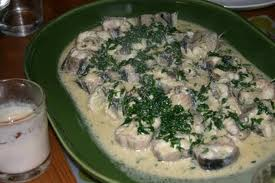
Sedgemoor Eel Stew

One thing I have not mentioned is how well eel eats. It really is a delicious fish – its flesh is mild and delicate, don’t be put off by its snake-like form and sliminess. It is similar to salmon, but a little richer and much moister due to its high fat content and they are not in the least bit muddy-tasting. This is the first eel recipe I ever cooked and it is by far the best. It appears in English Food by Jane Grigson. The eel is cooked in a sauce made of cider, stock and cream. Sedgemoor is in Somerset in the south-east of England where most English recipes for eel come from.

eel stew

Ingredients

1 ½ to 2 kg (3 to 4 lb) freshwater eel

dry cider

150ml (¼ pint) double cream

4 tbs chopped parsley

salt and pepper

triangles of fried or toasted bread

Begin by cutting the eel(s) into even-sized portions of around two inches in length. Season them lightly. Make a stock from the eel heads and skin as well as the flat part of the tails: Place the trimmings in a pan and cover them with half-water, half-cider. Bring to a boil and then cover and simmer for 20 minutes.

Arrange the eel pieces in a shallow pan and pour over enough hot stock to just barely cover them. Gently poach the eels for 10-15 minutes depending on the girth of your eels until the eel meat starts to come away from the bones. Don’t let the stock come to a proper boil though – steady poaching is the key. When cooked, remove the eel pieces and arrange them on a serving dish, cover them and keep them warm.

Now make the sauce by boiling down the cooking liquor to a good strong flavour and then add the cream and parsley. Season again if required. Pour the sauce over the eel and serve with the fried bread or toast.

P.S. Delicious as eel maybe, beware if someone offers you raw eel, say as sashimi. Eel blood is toxic before it is cooked, so if you get served a bloody bit, it could be a bad man trying to do away with you.

10 Comments

Filed under Britain, cooking, food, General, Recipes

The Eel Paradox


Want to know more? This podcast episode complements this blog post:


Around a year ago I wrote a post about jellied eels and eel, pie and mash houses in London and I have been meaning to write a sequel on the subject of eel fishing and conservation for a while, as well as looking at some traditional recipes for the slippery fish.

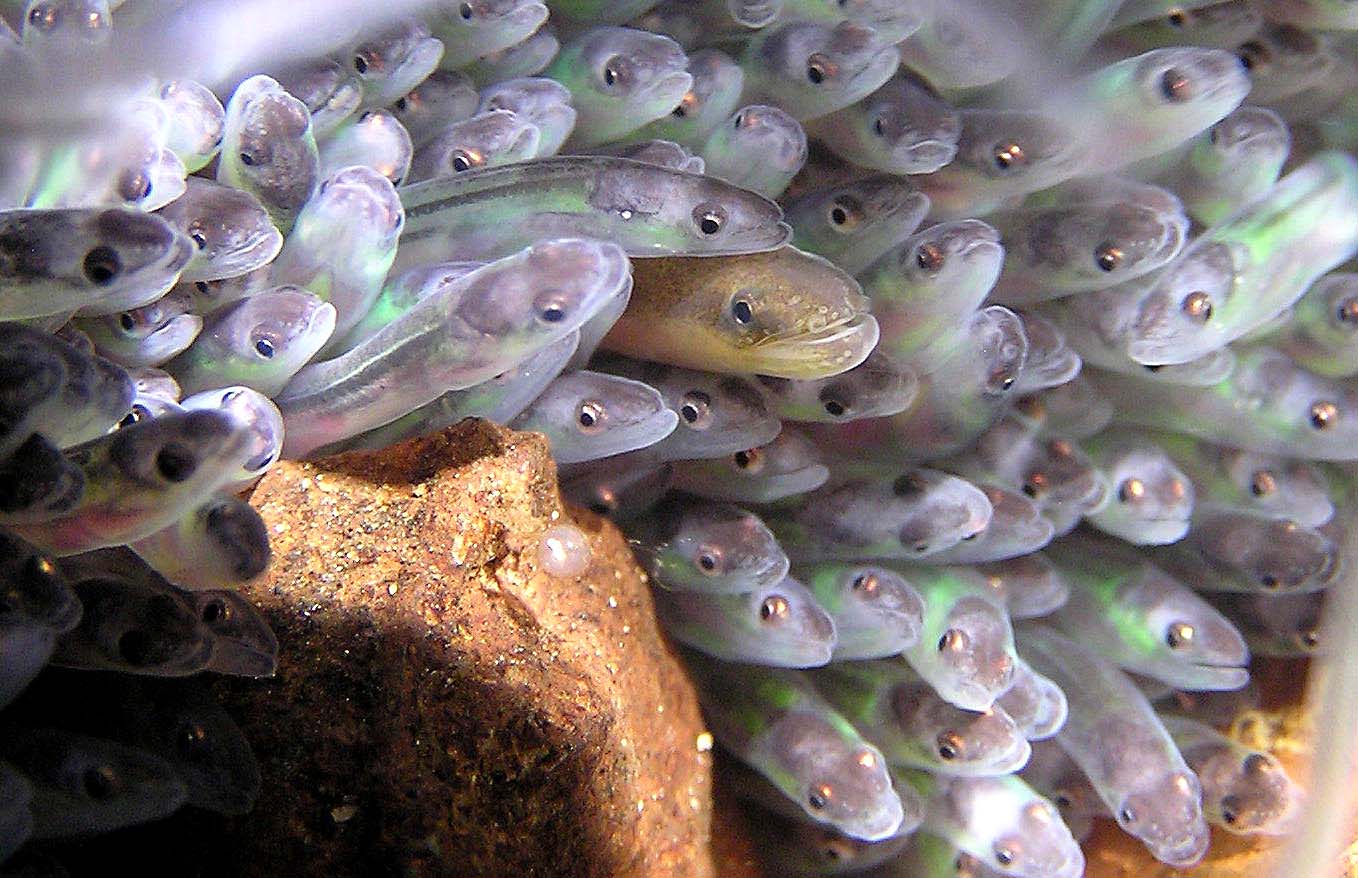
The European eel Anguilla anguilla is a threatened species; the IUCN has put it on its Red List as a Critically Endangered animal, yet it is perfectly legal to eat them – and fish for them if you have a licence – the funny thing is adult stocks of eel has remained stable for the last few decades. So why has the eel been given this Critically Endangered status? Well it is because the young eels – known as elvers in Britain, but more commonly known as glass eels – have had the drastic drop in population. Some of these populations have crashed by 95% in some areas. The paradox is: how can the adult population be stable whilst the young have diminished in number so much?

german eel

Well the short answer is that we don’t know! Elvers resupply our rivers of stock eels after a long migration from the Sargasso Sea where they were born. Understandably, this part of the life cycle is poorly understood, and all scientists and conservationists can do is count the number reaching our estuaries and rivers and monitor them carefully.

In Britain, the main inlet for elvers is the River Severn; indeed there are still a decent number of elvers swimming into its mouth every year. However, the population has dropped overall in Europe by 75% and so the spectacle of the great migration is no longer what it was:

In the month of April; the shores of the Severn are annually darkened with innumerable quantities of elvers, which are seen fringing the sides of the river a black ascending line, which appears in constant motion…When the elvers appear in the river they are taken in great quantities with sieves of hair cloth, or even with a common basket, and after being scoured and are offered for sale. They are either fried in cakes, or stewed, and are accounted very delicious.

Illustrations of the Natural History of Worcestershire, Dr Hastings c.1830

Elvers were an essential food source in more ways than one according to Andrew Kerr of the Sustainable Eel Group: ‘entire communities would live on them; indeed … they were even used to fertilise the fields.’

elvers in the Severn

A smaller-scale version of what Dr Hastings saw on the River Severn

See the story and video here: http://news.bbc.co.uk/local/gloucestershire/hi/people_and_places/nature/newsid_8864000/8864173.stm

The UK ‘elvering’ season is from February to May with its peak in April and it is legal to fish for them if you have the appropriate license; and it can be big business when they sell for £200 a kilo. They go for these huge prices because they are snapped up by the Chinese in order to restock their fisheries.

Elver fishermen have an obligation to fulfill if they want to go fishing for glass eels – 35% of their catch must be relocated upstream. Tiny elvers entering estuaries are often impeded from reaching rivers because of flood barriers. By physically moving them upstream they can do as nature intended and live their lives in British freshwater before slipping back to the Sargasso to breed. This seems to be working – numbers of elvers in the River Severn are on the up, though this could just be population fluctuation.

elver net

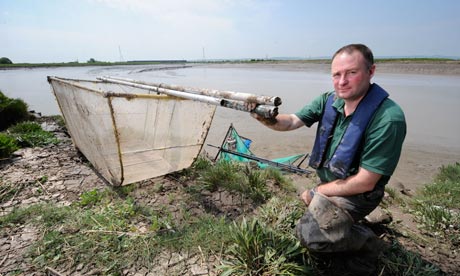
The Environment find a poacher’s oversized elver fishing net (from The Guardian 2010)

The ethical elverer after relocating a third of his catch, then sells the remainder to eel farms. The nearest ones to Britain are in Ireland and Holland. This is what the people at the Sustainable Eel Group say is the sustainable thing to do. Unethical elverers sell their catch on to people that have a penchant for elvers. He also uses huge oversized nets and trawlers – some nets can be up to 18m; compare this to the legal 2.5m net. (Amazingly trawling for elvers is still legal in Britain, though the number of eel fishing licenses are restricted.)

Have a look at this BBC report about elver poaching:

http://news.bbc.co.uk/local/gloucestershire/hi/people_and_places/nature/newsid_8708000/8708514.stm

So what do we conclude here? Well jellied eels are not to be consigned to the history books – with careful monitoring there should be well-stocked eel fisheries. It’s simple: only buy farmed eels, not wild, and on no account never buy elvers.

The following two posts will be some eel recipes (some you should try and some you should not!)


If you like the blogs and podcast I produce, please consider treating me to a virtual coffee or pint, or even a £3 monthly subscription: follow this link for more information.


elvers


15 Comments

Filed under Britain, food, General, history, natural history, nature, Uncategorized

The Original (Quince) Marmalade

As I mentioned in my previous post about Seville oranges that the original marmalade was in fact made from quinces and not oranges, I thought I would give you a recipe that I have recently used for the stall. It’s a recipe that appears in Eliza Acton’s 1845 book Modern Cookery. It’s an easy recipe that would be a good one to start with if you have never made a sweet preserve as you don’t need to mess about with sugar thermometers and setting points. One of the great things about making preserves with quinces is the glorious colour they go. A relatively brief boil transforms them from a pale apple-yellow to a vibrant orange-coral.

The tricky thing is getting your hands on some quinces they are available from October, but I have recently seen some organic ones in the Manchester organic grocers Unicorn. If your local greengrocer doesn’t have them on their shelves, it is worth asking if they can get them. My grocer was very happy to get me a full tray for just a tenner, so I was very pleased with that.

I have recently found another slightly more complicated version of this recipe but I have not tried it – we’ll have to wait for next autumn for that one!


If you like the blogs and podcast I produce, please consider treating me to a virtual coffee or pint, or even a £3 monthly subscription: follow this link for more information.


Eliza Acton’s Quince Marmalade

2kg (4 1/2 lbs) quinces

water

granulated sugar

Wash and scrub any fluff of the quinces, then peel and core them. Place them in a large pan and pour over enough water to almost cover. Turn up the heat and when it begins to boil, turn heat down to a simmer and stew 35-45 minutes until the fruit is soft. Strain and pass fruit through a mouli-legumes.

2012-11-19 23.49.01

Put the pulp back in the pan with the strained juice and add 280g sugar for every 500ml juice or, 1 ½ lbs sugar for every pint of juice). Stir and dissolve under low heat then, simmer until it resembles ‘thick porridge’ and begins to leave the side of the pan when you stir it.

2012-11-20 00.37.10

Pour the marmalade into sterilised pots. It is very good as a jam on toast, with cheese or as an accompaniment to hot or cold meats.

2012-11-20 00.52.23

27 Comments

Filed under Britain, cooking, food, Fruit, General, history, Nineteenth Century, Preserving, Recipes, Uncategorized

Seville Oranges and Seville Orange Marmalade

The weather outside may be miserable and the evenings still long, but luckily there is a little fleeting  sunny surprise popping up in grocers around the country that can perk us up no end; at least if you know where to find them. It is Seville orange season and a small window of just a few weeks is all we have to cook with this delicious fruit.

FxCam_1357492834789

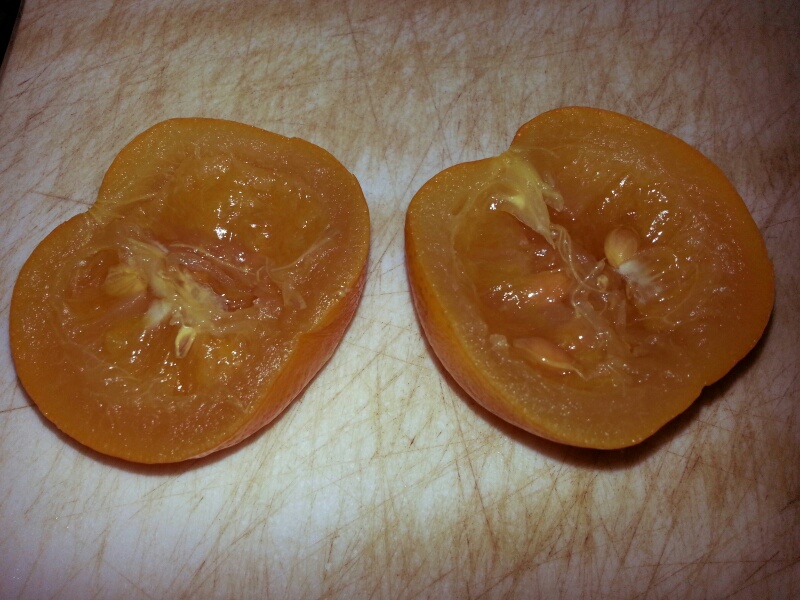
The Seville orange is very bitter and is only really grown in Spain for us British to make our Oxford marmalade. What a treat home-made marmalade is; oranges, water and sugar that is all that are needed to produce such a delightful, very British preserve. If you have never made your own, have a go before they are all disappear again.

Like all citrus fruits, the Seville orange comes originally from China. It was imported on trade routes via Italy, to the Mediterranean countries of Europe. All of these original orange trees were bitter in flavour like the Seville. In the first half of the 17th century, sweet orange trees were delivered to the Portuguese coast by ship. These sweet oranges quickly superseded the bitter ones, that is for that small area of Spain that still grows them.

The flowers of Seville oranges are also used to make orange flower water, another of my favourite ingredients.

Seville and game painting

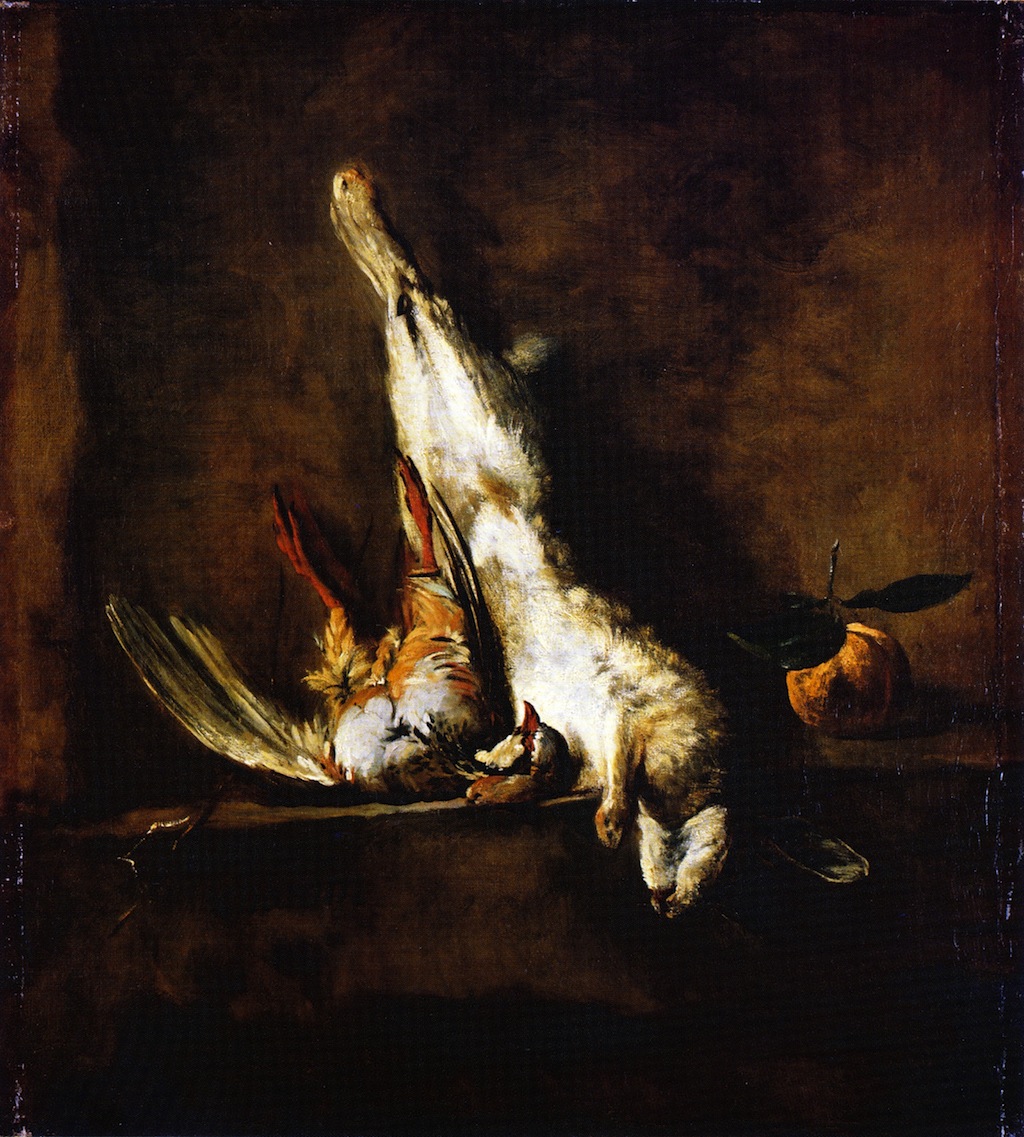
Rabbit with Red Legged Partridge and Seville Orange by Jean-Baptiste Chardin 1728-29

Below is a recipe for  Seville orange marmalade, but it is useful to know that the zest and juice of these oranges go very well with game and some shellfish such as scallops as the above painting shows.


If you like the blogs and podcast I produce, please consider treating me to a virtual coffee or pint, or even a £3 monthly subscription: follow this link for more information.


Seville Orange Marmalade

Oddly enough, marmalade was not made from Seville or any other orange at first, but quince (a knobbly cousin of apples and pears). It did come from Spain though, in fact the Spanish word for quince is marmalada. Every day’s a school day.

This recipe is Jane Grigson’s and it is a good strong bittersweet ‘Oxford’ style marmalade.

Ingredients

3 ¼ litres water

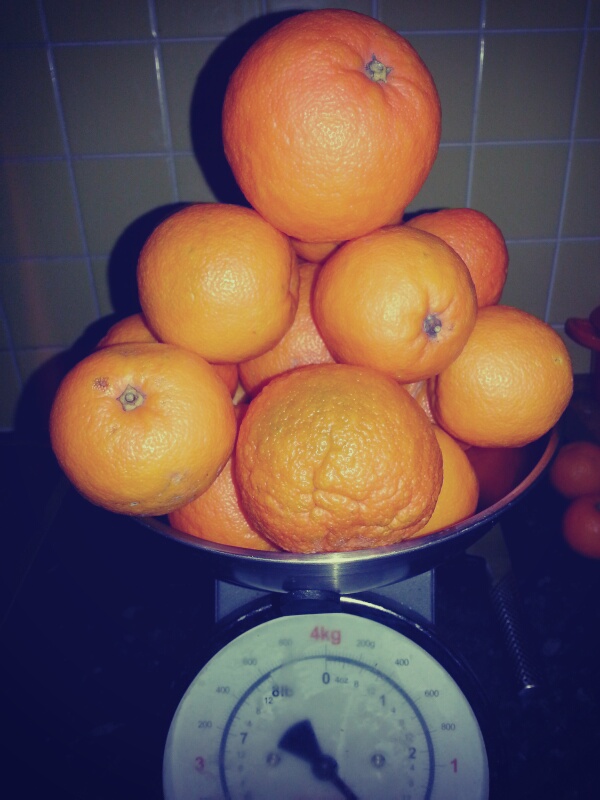
1 ½ (3 lb) Seville Oranges

3 kg (6 lb) granulated sugar

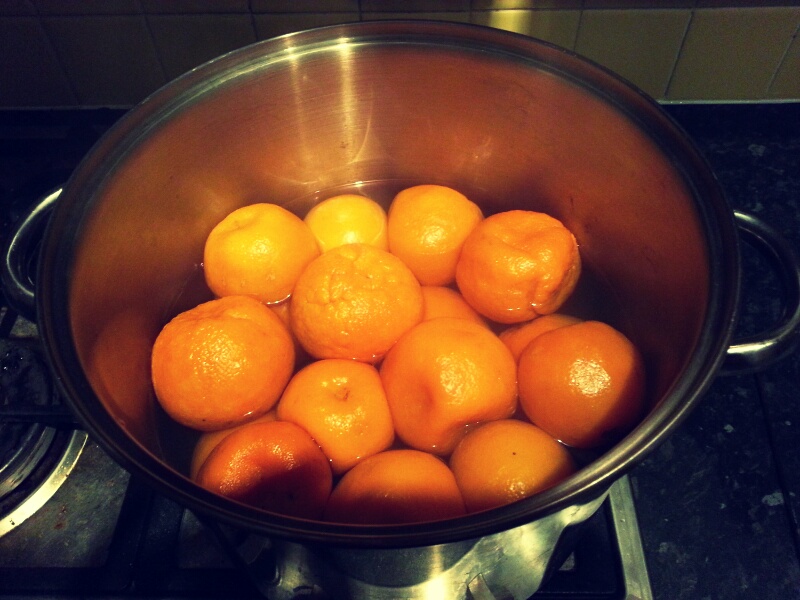
Give your oranges a good scrub and place them in a preserving pan or large stockpot with the water. Bring to a boil and simmer for about 1 ½ hours until the oranges are tender.

FxCam_1357499871481

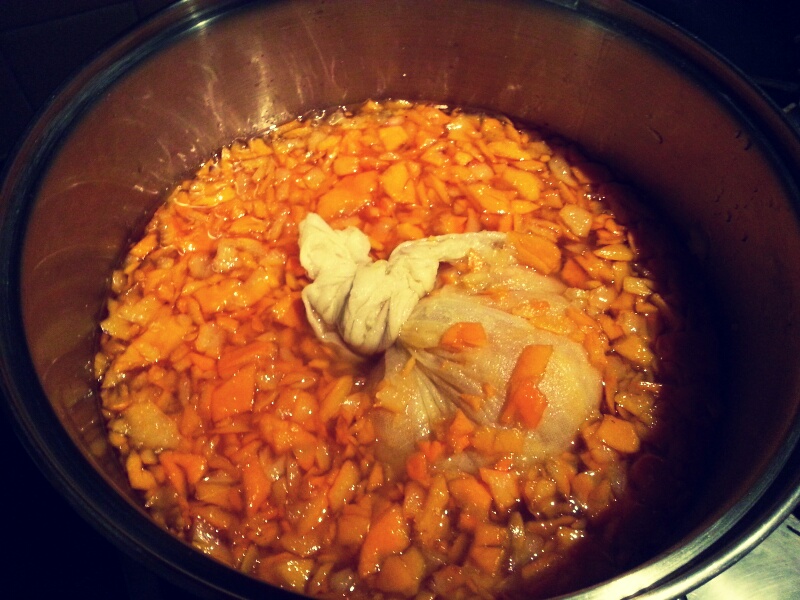
Take them out with a slotted spoon. They will probably collapse in on themselves, but don’t worry about that. Let them cool a little, then halve them and scoop out their innards. Tie up the scooped-out pulp in a piece of muslin. If you want a soft set, just put the bag of pulp straight into the pan, if you want it well set, give it a good squeeze to get as much pectin out of the pith and into the liquor as possible (I’m a soft set man).

FxCam_1357502382790

Next, shred the peel, you can be as careful as you want, and you can cut them as thick as you want. You can do this by hand or in the food processor by blitzing them using the pulse setting – be careful though, you don’t want a load of slurry. I’m usually dead against using food processors for this sort of thing, but I quite like the irregular pieces you get with this method. Tip them into the pan along with the sugar. Over a medium heat, stir until the sugar dissolves.

FxCam_1357505465756

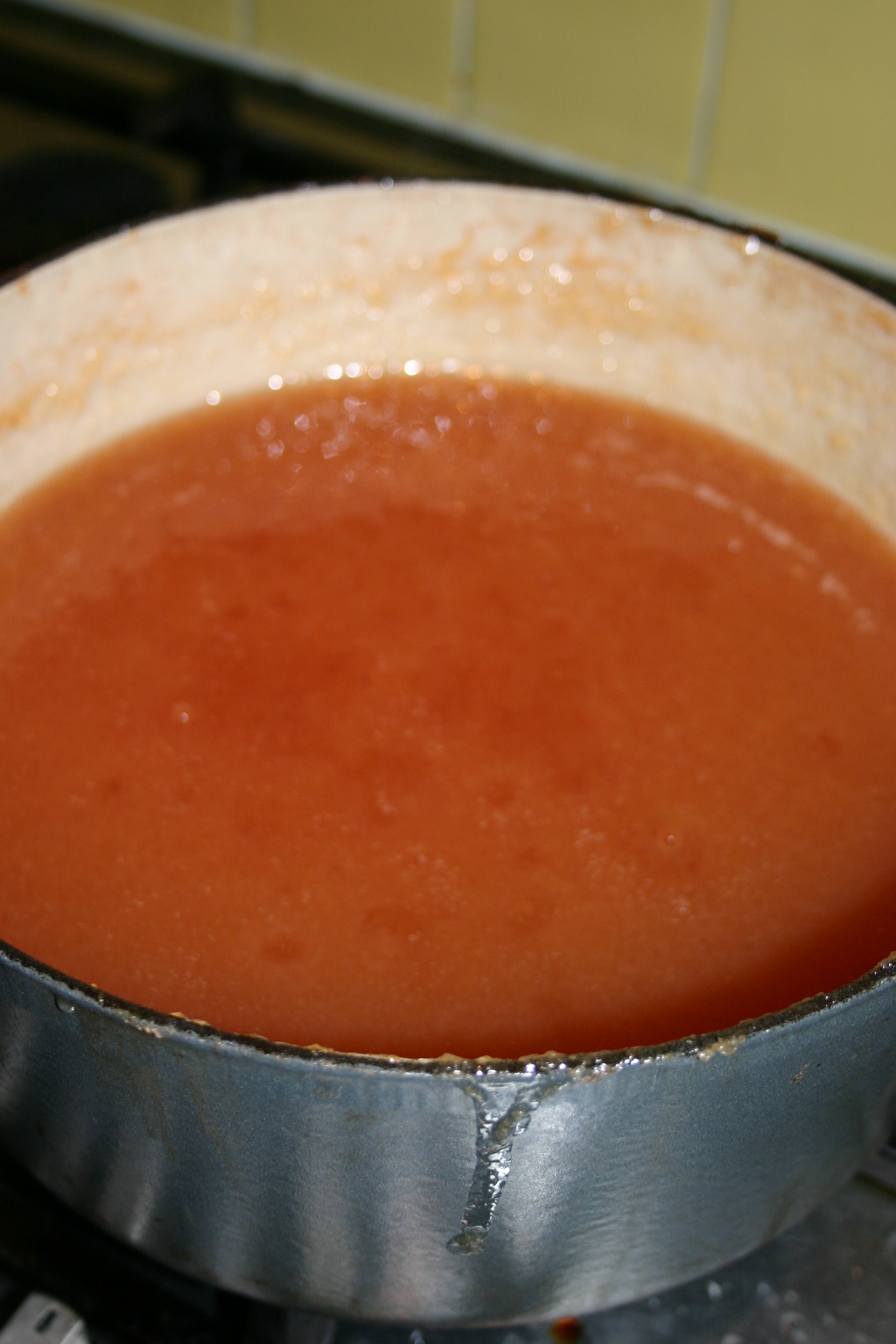
Now you need to be brave and bring it to a full rolling boil for at least 15 minutes , you need it very hot so that the marmalade can set. You have several options to test for a set, but I use a combination of a sugar thermometer and the wrinkle test. Pectin – a chemical that essentially glues plant cell walls together – will set to a gel at 105⁰C (221⁰F), so a thermometer is crucial if you want to know if you are getting close. It can take a while because water needs to evaporate to get five degrees above boiling point. Keep a close eye on it and when it gets close do the wrinkle test. For this test put a side plate in your freezer a little while before you want to make your marmalade, and when you’ve achieved 105⁰C (221⁰F), turn off the heat and spoon out a little of it onto your cold plate. Return it to the freezer for a couple of minutes. Push the jelly; if it wrinkles up, your pectin is set. If not, boil up again and retest after 10 minutes.

FxCam_1357586951956

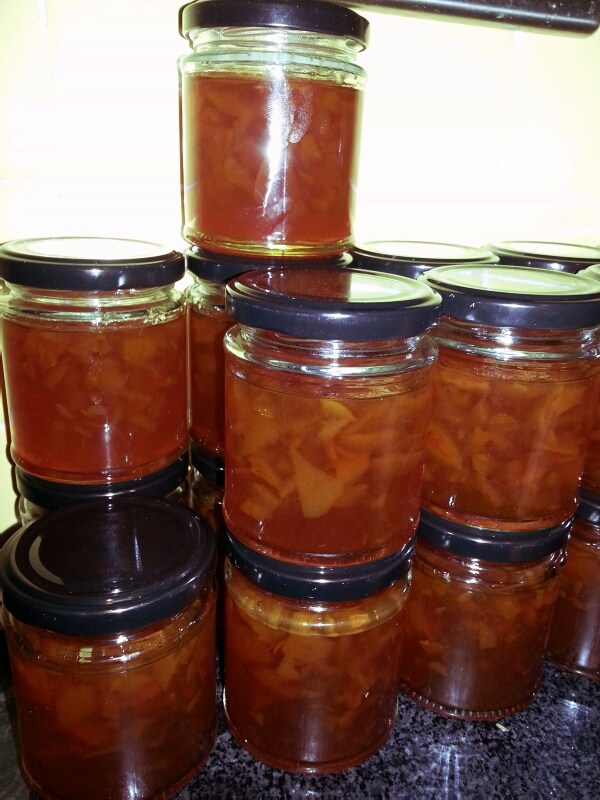
When ready, turn off the heat and allow it to cool for 15 minutes – this important step will stop your peel from floating to the top in a single layer – then pot into sterilized jars (bake them and their lids for 25 minutes at 125⁰C or 250⁰F).

IMG_2702

33 Comments

Filed under cooking, food, Fruit, General, history, Preserving, Recipes, Uncategorized

Mulled Cider

Merry Christmas!

Everyone seems to be drinking mulled cider rather than mulled wine this year so I thought I’d stick my oar in and give you my recipe for it (if you prefer mulled wine click this link for my recipe for that from last year). You may have been expecting a massive over-the-top Christmas feast post this time of year; well, I can only apologise as this is all I can muster. I promise to do something better next year…

Mulled cider has been drunk during the winter festivities at least as long as mulled wine and it is perhaps the descendant of a much older drink called wassail made from roasted apples that was knocked back by many in the south-west of England. Wassail night involves a most bizarre ritual that requires a man blacking himself up as revellers hang pieces of dry toast onto twigs. I shall leave that hanging there. It deserves its very own post – perhaps it shall be next year’s Christmas tipple recipe.

20121228_191019[1]

The recipe is pretty straight-forward – you need a good dry cider, a little sweetener and a little fortification of alcohol in the form of dark rum. Then it’s the usual spices that one would expect: cinnamon, cloves, nutmeg and allspice. It’s very delicious and much nicer than mulled wine I think. The amounts given below are for mere guidance as it is all to taste really:

1 litre (1 ¾ pints) dry cider

2 cox’s apples, sliced

2 clementines, sliced

2 sticks of cinnamon

6 allspice berries

4 cloves

small piece of nutmeg

2 to 4 tbs dark rum

2 or 3 tbs soft dark brown sugar

20121228_184345[1]

Place the cider, fruit and spices in a saucepan and heat gently so that all the flavours can infuse into the cider for 5 to 10 minutes– on no account let it boil, you don’t want to cook the alcohol away. Next, add the rum and sugar to taste and serve!


If you like the blogs and podcast I produce, please consider treating me to a virtual coffee or pint, or even a £3 monthly subscription: follow this link for more information.


8 Comments

Filed under Britain, Christmas, cooking, food, General, Recipes, Uncategorized