Category Archives: history

Seftons

earl of sefton

The first Earl of Sefton

In my previous post, I gave you a recipe for a basic veal stock, so I thought I would give you another recipe that shows of these kinds of home-made stocks to their best.

The recipe comes from the distinguished French Cook Louis Eustache Ude, chef to the Earl of Sefton. He came from good cooking stock himself, his father was chef to King Louis XVI.

Ude was quite a character, there’s a great story of him being hauled in front of a magistrate after he had been found selling roast grouse on his menu before the 12th of August (the date from which the gamed season begins. See here for a post all about that). He was given a fine and sent on his way.

The next day, the Scottish Laird who had reported Ude to the police returned to Ude’s restaurant to make sure he was abiding by the rules. Pleased to see there wasn’t a morsel of the offending bird on the menu, he ordered Salami de fruit défendu, i.e. Salmi of Forbidden Fruit, which turned out – of course – to be grouse!

Louis-Eustache-Ude_2911477k

Louis Eustache Ude

There was none of this nonsense when he worked for ,and was handsomely paid by, the Earl of Sefton, except when he left his service because Ude spotted the Earl’s son adding salt to some soup he made. Offended by this, he turned on his heel and left.

This recipe is in essence a savoury custard, and may sound odd, but it is in fact subtle, delicious and light. It could only work with a home-made stock though. I imagine it would be excellent nourishing food for someone that is ill. The little custards can be served in their ramekins or turned out onto a plate.

The recipe below comes from Jane Grigson’s English Food, where she suggests serving it with thin dry toast. A very good idea, I can confirm.

It makes between six and ten portions depending on the size of your ramekins.

600ml of good, clear, home-made stock

6 beaten eggs

grated zest of a lemon

¼ teaspoon of ground mace

salt and Cayenne pepper

4 tablespoons of clarified butter

2015-01-19 19.39.55

Bring the stock to a boil and whisk into the eggs as you would with a regular custard. Add the lemon zest and mace and season with the salt and Cayenne pepper and whisk in the butter.

2015-01-19 19.56.02

Place your ramekins in a deep roasting tin and pour the custard into them and cover them with foil. Pour boiling water into the tin, technically turning it into a ban Marie. Carefully slide the tin into an oven already preheated to 180⁰C and bake for 12 to 20 minutes, or until the custards are just set and still have a good wobble on them. Serve straight away.

2015-01-19 20.33.13

If you like the blogs and podcast I produce, please consider treating me to a virtual coffee or pint, or even a £3 monthly subscription: follow this link for more information.


4 Comments

Filed under Britain, cooking, food, French Cookery, General, history, Recipes

Rice Pudding

 What is the matter with Mary Jane?

She’s perfectly well, and she hasn’t a pain,

And it’s lovely rice pudding for dinner again!—

What is the matter with Mary Jane?

AA Milne, Rice Pudding

 Rice pudding has been made in Britain ever since rice found its way there via those Asian European trade routes in the eleventh century. It’s a classic pudding and one of my very favourites, even eaten from a tin. In the Victorian times, it would have been put into the category of ‘nursery puddings’ along with all the other milky, custardy unrefined ones that everyone remembers from their childhood.

I love all of the milk puddings: semolina, macaroni, sago, the lot, but rice pudding is the best. I served it at one of my Pud Clubs, but it unfortunately scored low; it seems that people either love it or hate it.

Here’s an example of a rice pudding that is cooked in the oldest sense of the word pudding, i.e. it is stuffed into intestine (‘farnes’) and boiled. It appears in The English Huswife by Gervase Markham in 1615

Take half a pound of rice, and steep it in new milk a whole night, and in the morning drain it, and let the milk drop away; then take a quart of the best, sweetest and thickest cream, and put the rice into it, and boil it a little; then set it to cool an hour or two, and after put in the yolks of half a dozen eggs, a little pepper, cloves, mace, currants,dates, sugar and salt; and having mixed them well together, put in a great store of beef suet well beaten and small shred, and so put it into the farmes…and serve them after a day old.

The earliest recipe I could find is from 1400 from Food in England by Dorothy Hartley, but she doesn’t say which manuscript it’s from:

Nye ye ris whges hem clene, seethe them fort til hit breke, let it kele, do thereto almand mylke, and of Kyne colour yt salt, and gif it forth.

Roughly translated: rinse the rice and boil it until it will break easily. Let it cool, and add almond milk as well as cows’ milk (kyne). Add some salt and serve.

I think that a combination of almond and cows’ milk sounds quite delicious. Notice that there’s no sugar or spice; far too expensive in those days!


If you like the blogs and podcast I produce, please consider treating me to a virtual coffee or pint, or even a £3 monthly subscription: follow this link for more information.

Anyways, enough waffle, here is my recipe for rice pudding. It takes long and slow cooking, but these things are worth the wait. I use vanilla as my spice, but you could use cinnamon, nutmeg or allspice. Currants or sultanas make a good addition too.

The most important thing is to buy proper pudding rice – a short, fat grain similar to Arborio rice. If you can’t get hold of it, I’m sure any other glutinous rice will do, but don’t quote me on that!

If I have to put a number to it, I suppose I’d have to say it serves four, but in my house it’s probably more like two:

30g butter

100g pudding rice

60g caster or vanilla sugar

1 vanilla pod (if using regular caster sugar; you could, of course, use 1/2 tsp or so of vanilla extract)

1 litre Channel Island Gold Top or 850 ml whole milk and 150 ml cream

zest 1/2 lemon (optional)

pinch of salt

1 whole nutmeg

Jam (optional)

Preheat your oven to 160⁰C

Grease an ovenproof dish with a capacity of a little over 1 litre with butter and scatter in the pudding rice, followed by the sugar. Break up the remainder of the butter into little knobs and dot them about.

Deal with the vanilla pod if using: using a small pointed knife, carefully cut the pod lengthways so that you can scrape out the seeds. Put seed and pod in amongst the rice.

Pour on the milk, the lemon zest (if using) and the salt. Give it a gentle stir, poking down any grains of rich that refuse to sink. Now grate the whole entire nutmeg on the top of the pudding and and pop into the oven for 2 hours, but it may be more; it must look runnier than you would like as it continues to thicken outside of the oven. Every half an hour give the pudding a good stir so that the rice grains don’t clump together. Don’t mix it in the final 30 minutes or so if you want to achieve a good skin.

Make sure everyone gets some skin and a good blob of jam. I would go strawberry or raspberry here, but it is entirely up to you.

I ate this rice pudding with sour cherries in syrup

12 Comments

Filed under baking, Britain, cooking, Dairy, Desserts, food, General, history, Puddings, Recipes, Uncategorized

The Glorious Twelfth

red grouse

Today is the Glorious Twelfth! The day in the countryside calendar that many await, for it is the beginning of game season.

I know it may seem a little unsavoury to look forward to the shooting of thousands of birds and mammals, but it is so woven into the tradition of country life, that it seems a rather romantic pursuit. Not one that I have been privy to of course, as it is a posh person’s game.

Technically, the 12th of August is the opening of the game season for the red grouse, though a couple of other game species can also be legally hunted from this day (see the list of game species, below).

There are two broad types of game: furred and feathered, i.e. mammals and birds. Fish are considered game too, but they do not follow the same laws as the others.

On a typical hunt for grouse and other game birds, there is a basic set up of beaters that walk in a loose line across a heath, in the case of grouse, or scrub in the case of pheasant, beating the vegetation in order to scare the birds so that they fly up and away toward gunmen to be shot. The bird is then retrieved by a gun dog such as a springer spaniel. I’m over-simplifying this, of course, but that is the basic process.

quarry

 A hunter after her quarry (Lax-A)

The hunt is such a huge event and requires such a large amount of organisation, that single hunts often cost up to £50 000 per day, raking £50 million into the local economies of Scotland and Northern England each year.

How Glorious is it?

The Glorious Twelfth is controversial, with the game industry and conservationists constantly at loggerheads, but the fact is that the Moorland Association has protected many at risk species in the British Isles such as the golden plover and lapwing. They put a lot of effort into the management of heathlands by selectively burning areas and reducing the numbers of predators such as foxes and weasels. It is here that the Moorland Association has been hit with the most criticism; conservationists say they should not be culling predators so that we can have more grouse for posh men to shoot. It’s a fair point.

Then, on the really dark side are the accusations of the killing of some of our most rare birds of prey like the hen harrier.

So on one hand predator animals are often persecuted, whereas on the other, well-behaved waders are looked after.

I view the situation the same I do zoos. I know they do good work for the conservation of animals and habitats, yet I can’t help but feel sad every time I see a poor old bored elephant, or a majestic tiger walking laps around its pen. They are part of our heritage, like it or not, but they can do good work.

The Game Act, 1831

This Act of Parliament was brought in to protect game birds by bringing in closed hunting seasons, and imposed game licences (hares and deer have their own Acts, which follow similar principles). Some species were protected completely, such as the common bustard (now extinct in the UK, but there are attempts to reintroduce it).

The Game Act was brought in to replace the outdated ide of their being Royal Forests, brought in during the 11th Century during the reign of William I, where it was illegal to hunt game unless you had permission from the king. As the centuries rolled on, the laws slackened more and more until they were pretty much useless.

At the time of writing the Act, hares were not given a closed season as they were a pest. The imposing capercaillie was not included in the Act as it was extinct in the UK at the time, being reintroduced to Scotland in the 1837.

Game seasons

Feathered game is further subdivided into two groups: game birds and waterfowl & waders. Some of the species are familiar and other are not, and of the ones I have tried, all taste delicious (unless they’ve been hung for too long, then they are decidedly rank).

Game Birds

Red grouse, ptarmigan                 August 12 – December 10

Black grouse                                    August 20 – December 10

Partridge (grey and red-legged)  September 1 – February 1

Pheasant                                           October 1 – February 1

As laid out in law, it is illegal to shoot wild birds between one hour after sunset and one hour before sunrise. In England and Wales, game cannot be killed on Sundays or Christmas Day. If the 12th of August lands on a Sunday, the season will officially begin the next day.

I have never come across a ptarmigan to buy, so if anyone knows how I can nab one, do let me know.

2013-09-17 13.36.32

Game birds are often sold as a brace – a male & female. Partridges in this case

Wildfowl &Waders

Snipe                                                  August 12 – January 31

Ducks & Geese                                 September 1 – January 31 (inland); til Feb 20 at low tide

Golden plover, coot & moorhen   September 1 – January 31

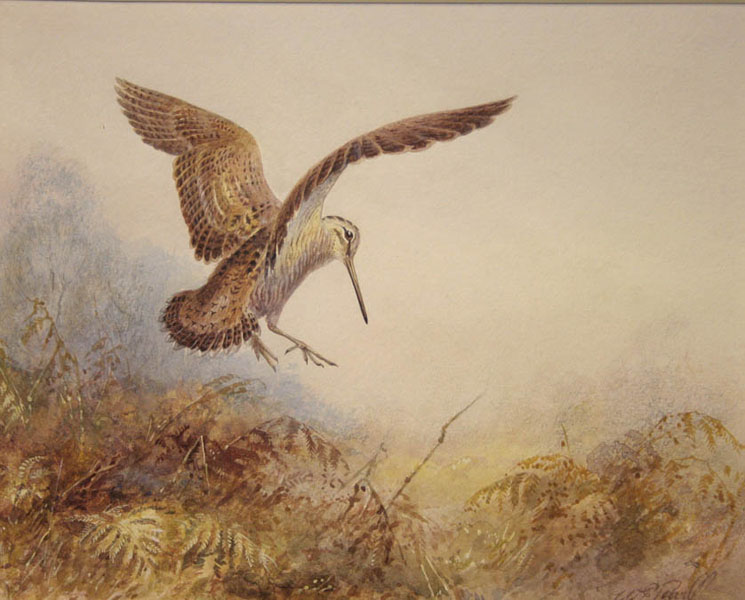
Woodcock                                         October 1 – January 31

Several species of duck and goose can be legally hunted, though many in reality, are ignored by hunters, or shot in very small numbers, such as: gadwall, goldeneye, pintail, shovelers and tufted ducks, though pintails have been spotted in my butcher’s shop before now. You are much more likely to see mallard, wigeon and teal.

Geese are a bit tricky to get hold of, unless you know someone personally that hunts, and the reason for this is that whilst geese can be shot, it is illegal to sell them. I presume this rule is an incentive to hunters to shoot the numbers they need. Legal game species are: white-fronted (England & Wales only), pink-footed, greylag and Canada geese.

2014-01-17 20.09.53

A brace of mallard

The furred game can also be split into two broad groups: ground game and deer.

Ground Game

This is basically your small and furry game species:

Rabbit & brown hare                      January 1 – December 31

Mountain hare (Scotland only)  August 1 – February 28/29

Rabbit and brown hare have no closed season, this is because at the time of the Game Act, they were both considered pests. These days, everyone considers rabbits to be a pest, but the hare does get an effective closed season from March to May, due to their fall in numbers in recent times.

brown hares - telegraph

Boxing brown hare (Telegraph)

Deer

There are six species of deer inhabiting the UK: red, sika, fallow, roe, Chinese water deer and muntjac. The seasons get pretty complicated here, but generally the open season runs from August to April for males (bucks & stags) and November to March for females (hinds & does). The exception being muntjac that have no closed season

Pests

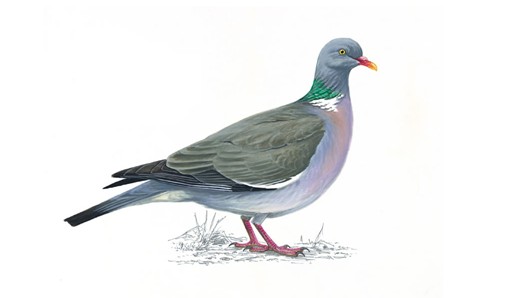
There are a few pest species that can also be eaten such as rabbits, woodpigeons and grey squirrels. In the past rooks were eaten, though this is very uncommon these days.

So there you go, a whistle-stop tour of hunting in the UK. In the coming months I’ll be posting some game-related posts as I hunt around my local butchers’ shops for some delicious seasonal treats.


If you like the blogs and podcast I produce, please consider treating me to a virtual coffee or pint, or even a £3 monthly subscription: follow this link for more information.

9 Comments

Filed under Britain, Festivals, food, Game, General, history, Meat, natural history, nature, Uncategorized

Virginia Woolf Bakes Bread

woolf

As I spend most of my time in the kitchen these days. I find I listen to a heck of a lot of radio (and have less time for blog posts!). This morning, a programme called ‘In Our Time’ presented by the broadcasting legend Melvyn Bragg, was on BBC Radio 4 which discussed the 1925 novel Mrs Dalloway by Virginia Woolf. Here’s a link to that very episode.

in our time

I happen to know that was as good a bread-maker as she was a novelist.

She used an oil cooker, called the Florence, and with it tutored her maid and cook to bake cottage loaves (a loaf I have never attempted as it appears to be of difficulty 10). Her cook, called Louise Mayer, recounts in the book Recollections of Virginia Woolf:

She liked trying to cook…but I always felt that she did not want to give time to cooking and referred to be in her room working.

But there was one thing in the kitchen that Mrs Woolf was very good at doing: she could make beautiful bread. The first thing she asked me when I went to Monks House was if I knew how to make it. I told her that I had made some for my family, but I was not expert at it. “I will come into the kitchen Louie” she said “and show you how to do it. We have always made our own bread.” I was surprised how complicated the process was and how accurately Mrs Woolf carried it out. She showed me how to make the dough with the right quantities of yeast and flour, and then how to knead it. She returned three or four times during the morning to knead it again. Finally, she made the dough into the shape of a cattage loaf and baked it at just the right temperature. I would say that Mrs Woolf was not a practical person – for instance, she could not sew or knit or drive a car – but this was a job needing practical skill which she was able to do well every time. It took me many weeks to be as good as Mrs Woof at making bread, but I went to great lengths practising and in the end, I think, I beat her at it.

Virginia gave Louise Mayer a top baking tip that I always use if it is possible; and that is to bake bread in a cold oven. The gradual heat increase gives you a really impressive rise before the outside crust develops, hampering it.

So there you go, a little window into the enigmatic lady’s life, which I thought might be of interest to you…


If you like the blogs and podcast I produce, please consider treating me to a virtual coffee or pint, or even a £3 monthly subscription: follow this link for more information.

7 Comments

Filed under baking, bread, Britain, history

Yorkshire Curd Tart

Ah, Yorkshire. God’s Own Country and my home county (well, it’s 3 counties technically, but let’s not worry about that now). There are many delicious regional recipes to be found there, but this must be the best: Yorkshire curd tart. For some very strange reason it hasn’t really ever made its way out of Yorkshire. Essentially it is a baked cheesecake – something that Britain isn’t considered famous for, yet if you delve into the old cook books, you’ll find loads of recipes for them. The cheese in question here is, of course, curd cheese which is sweetened with sugar, and mixed with currants, allspice and sometimes rosewater.

2014-01-19 16.02.32

Now a few guiding words on the making of a curd tart: no matter what you read, and I want to be very clear on this, cottage cheese cannot be used. It must be curd cheese which is very different in taste and texture to cottage cheese. These days it is difficult to get your hands on it, but it is very easy to make yourself, as you’ll see below. Also, the only spice to be used must be ground allspice (or clove-pepper as it used to be called in Yorkshire). Not cinnamon, not nutmeg, and certainly not mixed spice. Another misconception is that lemon curd is spread on the pastry base of the tart. Well it’s not, Mr Michelin Guide. Lastly, and as already mentioned, it’s a kind of cheesecake, and not some kind of custard tart as some people seem to think (Mr Paul Hollywood, I’m looking at you).

Ok. Good. Glad we got those issues out of the way.

Curd tarts were traditionally made around Whitsuntide from left-over curds from the cheese-making process and seem to originate in the early-to-mid 17th century. Most families kept their own cow in those days. For those of you that don’t know (and who does?), Whitsuntide derives from the words White Sunday which is our name for Pentecost, which, if my memory serves me correctly, is the seventh Sunday after Easter. The important thing is that there’s a Bank Holiday the next day and a whole week off for half term for the schoolkids.

In dairy farms with several cows, special curd tarts would be made after the cows had calved, using the cows’ colostrum to make the curd for the tarts. Colostrum is the milk produced straight after a mammal gives birth. It is particularly rich in nutrients and fat, and is yellowish in colour. I’ve always thought of this as a bit mean of the dairy farmer’s wife, but then again, she’d also have to tuck into umbilical cord pie the next day, so I suppose it evens out.

To Make Curd Cheese

It’s really easy to make your own curd cheese. All you need is some gold top Channel Island milk, some rennet, salt, and some muslin or other cloth to drain the whey from the curds; I have used an old pillowcase in the past with much success.

Rennet is an enzyme that curdles milk. In the old days a piece of a freshly-slaughtered male calf’s stomach lining would have been popped into the milk (as still occurs in the production of some non-vegetarian cheeses). These days with the magic of science, we can produce it from bacterial culture.

This recipe makes around 750g curd cheese.

In a saucepan, warm a litre of Channel Island milk to 37⁰C, also termed ‘blood-heat’. Use a thermometer if you like. Pour the milk into a dish or bowl and stir in half a teaspoon of salt and your rennet. Follow the instructions on the bottle to see how much to add, as different brands vary. Stir it in, along with half a teaspoon of salt.

2014-01-18 20.14.10

Leave the milk to stand for 10 or 15 minutes. Upon your return, you’ll see that the milk had gone all wobbly and can be easily – and satisfyingly – broken into curds.

2014-01-18 20.30.58

Scald your straining cloth with water straight from the kettle, spread it out over a bowl so the edges hang over, and then pour in your curds and whey. Tie up the cloth with string and hang up the cheese above the bowl to strain for 4 or 5 hours. Hey presto! You have made curd cheese. It keeps for several days covered in the fridge.

2014-01-19 10.58.25

To Make a Yorkshire Curd Tart

Here’s the recipe I use which is based on the one that appears in Jane Grigson’s English Food. It makes enough filling for one 10 inch diameter tart tin, though you can make several small ones if you prefer. The recipe only requires 250g of cheese, so if you’re making your own, you might want to adjust the quantities in the recipe above, or just make three tarts.

The tart is not overly sweet and has a lovely soft centre and a golden brown colour.

125g salted butter

60g caster sugar

250g curd cheese

125g raisins

pinch of salt

2 eggs, beaten

¼ to ½ tsp ground allspice

1 tsp rosewater (optional).

blind-baked 10 inch shortcrust pastry shell (made or bought)

First of all, cream together the butter and sugar well, then mix in the cheese, raisins, salt and eggs. Season to taste with the allspice and rosewater.

2014-01-19 15.34.58

Pour the filling into the pastry shell and bake for 25 to 30 minutes at 220⁰C. Cool on a rack.


If you like the content I make for the blogs and podcast, please consider supporting me by buying me a virtual coffee, pint or even a subscription : just click on this link.


70 Comments

Filed under baking, Britain, cooking, Dairy, Desserts, food, General, history, Puddings, Recipes

Spotted Dick

It’s been a while since I wrote a post on a good old British steamed pudding, and this is one of my all-time favourites. Spotted Dick is a great pudding because it lies somewhere in between a suet pudding and a sponge pudding and is borne of that period of prolific pudding invention: the Victorian Era.

If British puddings are new to you, I’ve already written a couple of posts on the history of puddings (the first one here, and the second one here).

If you’ve never heard of Spotted Dick, it is a spongy steamed pudding that contains suet instead of butter. It is only slightly sweet and flavoured delicately with lemon. The spots on the Spotted Dick come from currants. You don’t want a pudding that is too sweet, the sweetness – I believe – should come from the currants and the custard that must be served with it (for a custard recipe, click here).

For some unknown and crazy reason, Spotted Dick doesn’t appear in my favourite cook book of all, English Food by Jane Grigson (to see why it’s my favourite, see my other blog).

Now for the big question: who the heck is Dick?

The pud is first mentioned in a book from the 1850s by the famous Chef Alexis Soyer called The Modern Housewife, or, Ménagère. Alexis Soyer was the first celebrity chef and he deserves a whole post just to himself! He mentions Spotted Dick in passing when listing a typical week’s meals during tougher times. This was Tuesday’s dinner:

Tuesday. – Broiled Beef and Bones, Vegetables, and Spotted Dick Pudding’

The ‘Dick’ in Spotted Dick seems to come from the shortened Old English names for pudding: puddog or puddick. In Scotland it is often called Spotted Dog Pudding.

Spotted Dick is a very simple pudding to make; it can be steamed in a basin or be rolled out like a sausage and covered in buttered foil and then steamed. Sometimes it takes the form of a roly-poly pudding with the currants and some brown sugar making the filling. Personally, I prefer to use a basin.

Anyways, here’s the recipe:

For a 2 pint/1 litre pudding basin, that serves 6 to 8 people:

300g self-raising flour

150g suet (fresh or packet)

75g caster sugar

100g currants

Zest 2 lemons

275-300 ml milk

butter, for greasing

In a bowl, mix together the flour, baking powder, suet, sugar, currants and lemons. Add the milk, mixing slowly until all is incorporated. You’re looking for a mixture of dropping consistency.

Liberally butter a 2 pint pudding basin and spoon in the mixture. Cover with a lid. It’s easiest to buy a plastic basin with a fitted lid. If you’re using a glass or porcelain basin, make a lid from a double sheet of pleated foil and secure with string. It is worth making a foil or string handle for the pudding so that you can get the basin out of the steamer safely.

Ready for the steamer!

Place in a steamer and steam for 2 hours. Make sure there’s a good brisk boil for the first 20 minutes and then turn the heat down to medium-low. If you don’t have a steamer, simply place an upturned saucer in the base of a deep saucepan and pour over it boiling water straight from the kettle. Gingerly place in the pudding.

Turn out the pudding onto a serving plate and serve immediately with plenty of custard.


If you like the content I make for the blogs and podcast, please consider supporting me by buying me a virtual coffee, pint or even a subscription : just click on this link.


41 Comments

Filed under baking, Britain, cooking, Desserts, food, General, history, Nineteenth Century, Puddings, Recipes, The Victorians, Uncategorized

Wassail!


Wassail

Wassail! Wassail! all over the town,

Our toast it is white and our ale it is brown;

Our bowl it is made of the white maple tree;

With the wassailing bowl, we’ll drink to thee.

A Gloucestershire Wassail, dating to the Middle Ages.

Yesterday was the 6th of January, the final feast day of Christmas, the day of epiphany, Twelfth Night. Down in the counties of South-West and South-East England a very old and special ceremony takes place in the apple orchards; the Wassail was a way to celebrate the end of Christmas and to bless the trees so that they will bear plenty of fruit for the cider. It was a time of celebration and merry-making. All of this happened at dusk, a magical time of day, where the world faeries and spirits overlapped with the world of Man. In different parts of England, the day upon which the Wassail occurs changes: some celebrate it on the 5th of January (the Eve of Epiphany), and others on the 17th of January (this is day Twelfth Night would occur before the Introduction of the Gregorian Calendar, “Old Twelfthy Night”, as it was called).

2014-01-05 16.29.40

A blurry, dusky Levenshulme Community Choir leading our Wassail

For the Wassail ceremony a Wassail King and Queen are nominated who lead the other revellers a merry dance around the trees. In the largest trees, the Queen is lifted into the boughs so she can spear pieces of toast that have been soaked in Wassail punch (I’ll get to that in a moment or two) as an offering to the tree spirits of the orchard. As folk dance about the trees, other run around banging pots and pans to drive out the evil spirits.

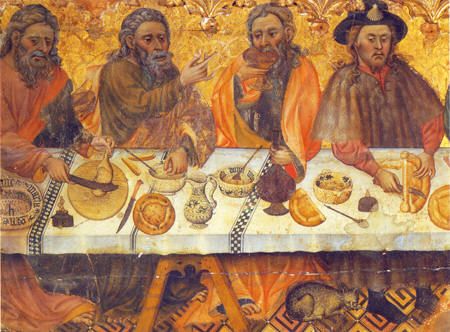
Wassailing predates the Battle of Hastings and is thought to have its origins in Ancient Rome, where people would make sacrifices to the Pomona, the Roman Goddess of Fruits. The word Wassail originates from the Anglo-Saxon waes-hael, meaning “to your health” and the word is used just as we would use Cheers! today. Below is one telling of its origins by Geoffrey of Monmouth in his 1135 book History of the Kings of Britain:

While Vortigern was being entertained at a royal banquet, the girl Renwein came out of an inner room carrying a golden goblet full of wine. She walked up to the King, curtsied low, and said “Lavert King, was hail!” When he saw the girl’s face, Vortigern was greatly struck by her beauty and was filled with desire for her. He asked his interpreter what it was that the girl had said and what he ought to reply to her. “She called you Lord King and did you honour by drinking your health. What you should reply is ‘drinc hail.'” Vortigern immediately said the words “drinc hail” and ordered Renwein to drink. Then he took the goblet from her hand, kissed her and drank in his turn. From that day to this, the tradition has endured in Britain that the one who drinks first at a banquet says “was hail” and he who drinks next says “drinc hail.”

I was lucky enough to go to a Wassail in Levenshulme in Manchester, which is not in the south of England, but the north. In Levenshulme there is a lovely community orchard, and it should be blessed just like any other. It was a great evening and really interesting to see just a glimpse of old England. If you have apple – or any fruit – trees, they why not have a Wassail. Indeed anything that needed blessing could wassailed like other crops like barley and livestock. Of course you’ll need to make some wassail to drink…

2014-01-05 16.52.19

Spiking the trees with toast offerings

The drink wassail is essentially a hot mulled cider or ale, sweetened with sugar and made aromatic with spices and made much boozier with sherry, brandy or sack (a sweet, fortified ale similar in taste to sherry) and sometimes thickened with eggs. An essential ingredient in the wassail drink is roasted apples, which would quickly burst and fall apart, giving wassail its alternative name ‘lamb’s wool’. Also floating on the surface would be plenty of toast.

The hot wassail is poured into a large carved wooden bowl and it is passed around the crowd so that everyone can take a good mouthful, raise it above their head and shout “Wassail!”. It is because of this celebration, we “raise a toast” when having drinks.

Two Wassail Recipes

2014-01-02 20.31.42

Here’s a recipe dating from 1722 that appears in the excellent book Food in England by Dorothy Squires:

Take 1 lb. of brown sugar, 1 pint of hot beer, a grated nutmeg, and a large lump of preserved ginger root cut up. Add 4 glasses of sherry, and stir well. When cold, dilute with 5 pints of cold beer, spread suspicion of yeast on to hot slices of toasted bread, and let it stand covered for several hours. Bottle off and seal down, and in a few days it should be bursting the corks, when it should be poured out into the wassail bowl, and served with hot, roasted apples floating in it.

I liked that it is diluted with beer! What brew it must have been.

Below is my rather pared down recipe for wassail:

Ingredients:

4 to 6 apples

3 litres of good cider

6 cinnamon sticks

dark rum, to taste

soft dark brown sugar, to taste

around 500ml of water

toast (optional)

Prepare the apples; cut around them a circle halfway down, this stops them bursting when cooking, place on a tray and bake in a moderate oven until they have begun to collapse, around 30 minutes. Whilst you wait for the oven to do its job, pour the cider into a large pan with the cinnamon stick, at least 3 generous tablespoons of sugar and 250ml of rum and half of the water. Bring to a simmer and add more sugar and rum, and dilute accordingly with more water. Lastly, for tradition’s sake, atop with slices of toast.

2014-01-01 00.14.42

If you like the blogs and podcast I produce, please consider treating me to a virtual coffee or pint, or even a £3 monthly subscription: follow this link for more information.


12 Comments

Filed under Christmas, Festivals, food, Fruit, General, history, Recipes

Forgotten Foods #4: Cock Beer

cockerel

Recently I have been thinking of re-igniting my interest in home-brewing. Previous attempts to make alcohol have never been successful. I have made white wine that tasted of rotten eggs, and made dandelion wine that, when bottled, exploded spectacularly in my lounge. Now I have a couple of books that spell out the process, and I am a little more confident that I can do it.

Naturally I have been hitting the old cookbooks for some historical inspiration and came across this recipe for cock-beer. In this recipe from 1780, you essentially make a giant cock tea-bag to impart its essence into your brewing beer:

Take 10 gallons ale, a large cock (the older the better). Slay, caw and gut him, and stamp him in a stone mortar. Add spice and put all in a canvas bag. Lower him into the ale while still working [i.e. fermenting]. Finish working and bottle.

That is actually a toned down receipt – many times live cockerels were used. Goodness knows how people didn’t die. Perhaps they did!

It doesn’t stop at cocks in beer, oh no, in Cornwall sheep’s blood – hot from the slaughter – was added to cider; and what did it taste like? According to Andrew Boorde, the 16th Century physician and traveller: “[it] is stark nought, looking whyte and thicke as pygges had wrastled in it.”

There were many tales of men’s heads being thrown into the hogshead along with the beer, and perhaps they weren’t just tales, because the cockerel wasn’t added to the beer for flavour (I suspect that the spices were added to mask the flavour of the bird). The idea is that the animal’s strength, courage and vigour would be imparted into the brew. So these beers were in fact more remedies than proper drinks.

King William III

William III: Cock Beer Lover

That said, two brave brewers called Chris Thomas and Adam Cusick, brewed a batch from this very recipe, obviously with a certain amount of interpretation. They did welch a little bit by using a cooked chicken. However a delicious ale was produced that was mellow and ‘shared distinct similarities with a strong Belgian ale’. Apparently, William III’s drink of choice was cock beer, and it has been noted several times through the centuries for its superior quality.

My gut feeling is that is must be foul (no pun intended), yet it gets all this praise. Well, when I become a seasoned brewer of beer, I might just give it a go.

One last thing: tantalisingly, it has been suggested that the word cocktail (a work whose origin is famously unknown) comes from cock-ale. O how I wish it was true.


If you like the blogs and podcast I produce, please consider treating me to a virtual coffee or pint, or even a £3 monthly subscription: follow this link for more information.

6 Comments

Filed under Brewing, Britain, food, General, history, Meat, Recipes

Dulse

brown_william_marshall-the_dulse_gatherers~300~10437_20110602_316_22

The Dulse Gatherers by William Marshall Brown, 1863-1936

Nobody really eats dulse, or any other seaweed for that matter, in England these days, though they used to. It is a pity because I do like the stuff. It is eaten in Ireland and parts of Scotland still; I ask friends to bring back a bag of it whenever they cross the seas. I recently received a bag from my friend Hugh.

Dulse had been eaten for over one thousand years in North-Western Europe, the ancient Celtic Warriors of old ate dulse as they were marching, and during the seventeenth century British sailors ate it to prevent scurvy (although it was originally used as an alternative to chewing tobacco). Even today, its healthful properties are noted; my friend Evelyn from Ballymena, Northern Island tells me:

When I was pregnant, the midwife thought I was very healthy as my blood pressure and iron levels were so good. Iron goes up to 17 mg/dl max but I was the first person she’d seen that had 15 – apparently quite unheard of for a lady, especially a pregnant lady! We put it down to the dulse (nothing else remotely healthy going on at that time in my diet), and she’s been recommending it to everyone.

Its popularity in Ireland as well as Scotland led to dulse being popular in the USA too when they emigrated over the Pond, although none of my American friends seem to have heard of it.

The dulse industry has obviously died a bit of a death in England, and the rest of the UK and Ireland, compared to days of yore. Charles Dickens, writing in 1858, reminisces about childhood holidays in Aberdeen where there were often over a dozen ‘dulse-wives’ selling dulse:

[O]f all the figures on the Castlegate, none where more picturesque than the dulse-wives. They sat in a row on little wooden stools, with their wicker creels placed before them on the granite paving stones. Dressed in clean white mutches, or caps, with silk-hankerchiefs spread over their breasts, and blue stuff wrappers and petticoats, the ruddy and sonsie dulse-women looked the types of health and strength… Many a time, where my whole weekly income was a halfpenny, a Friday’s bawbee, I have expended it on dulse, in preference to apples, pears, blackberries, cranberries, strawberries, wild peas and sugar-sticks.

He recalls a conversation:

A young one would say: “Come to me, bonnie laddie, and I’ll gie ye mair for yer bawbee than any o’ them.”

An old one would say: “Come to me, bonnie laddie, and I’ll tell what like yer wife will be.”

“Yer dinner ken yerself.”

“Hoot aye – I ken brawly: she’ll hae a head and feet, an mou’, and eyen, and may be a nose, and will be as auld as me, if she lives as lang.”

“Aye: but ye gie me very little dulse for my bawbee.”

“Aye,” replies the honest woman, adding another handful, “but sic a wife is weel worth mair siller.”

The dulse-wives exploded into laughter, when the woman suggested some one like herself, as the ideal wife which youth is doomed always to pursue and never to attain.

Oh! those dulse-wives.

My friend Evelyn reminisces:

It comes with shells and little crustaceans on it; my friend Maisie used to spend hours ‘cleaning’ dulse & would then give me nice little bags with no icky bits on them. Strangely it doesn’t seem to fall under any health and safety rules. Old men that live by the sea just grab a load and dry it on the rocks in the sun.

You can also buy it dried and flaked in sealed bags looking  like reddish tea leaves. Even better, of course, you can forage for it. I must say seaside foraging forms a hole in my knowledge. I should try and remedy that.

Cooking with Dulse

Dulse can be eaten as is, or used in salad and sandwiches. I personally think it is best eaten cooked so I’ve included a couple of simple recipes for you.

Mashed Potato with Dulse

This is a great recipe and much healthier than regular mash because it uses olive oil as opposed to butter. It’s vegan and gluten free too, so you shouldn’t get any complaints from anyone!

It could not be easier, really. First, scrub and then boil some potatoes in their skins without adding any salt. Remove the skins and mash them. Next, finely shred the dulse and fry it in olive oil – you’ll need about 15 grams of dulse for every kilogram of potatoes used. Of course, if you are using the flakes, you can sprinkle them straight into the hot oil. This takes just a few seconds. Add the oil and dulse to the spuds and mix, mashing in some extra olive oil if need be. Season.

Serve with lamb, beef, chicken or fish


 If you like the blogs and podcast I produce, please consider treating me to a virtual coffee or pint, or even a £3 monthly subscription: follow this link for more information.


Lamb & Dulse Broth with Dulse Shards

2013-09-16 19.15.26

I came up with this soup when I found some frozen lamb stock secreted at the back of a freezer-drawer recently. It draws on that classic combination of lamb and seaweed. This recipe requires the rock-dried dulse to make the sweet-tasting shards, but any dulse can be used for the soup itself.

Ingredients

1 tbs butter or olive oil

1 carrot, diced

1 stick celery, diced

a sprig of thyme

a sprig of rosemary

a bay leaf

60g red lentils

2 or 3 tbs dried, chopped dulse

1 litre well-flavoured lamb stock

salt & pepper

For the dulse shards:

‘leaves’ of dried dulse

sunflower, groundnut or rapeseed oil for frying

Melt the butter or oil in a saucepan, add the carrot, celery and herbs. Fry gently for 10 or 15 minutes until the vegetables are soft and translucent. Add the lentils and fry for another two minutes before adding the dulse and lamb stock. Bring to a simmer and cook for around 20-25 minutes until the lentils have cooked and broken up, thickening the broth. Season.

Meanwhile, prepare the dulse shards. Heat up some oil in a frying pan and when hot, throw just one or two dulse pieces into the oil. The dulse will immediately sizzle, crisp and change colour as if by magic. After just a few seconds, remove and drain on kitchen paper. Fry all your dulse pieces in this way, and break them up into shards and place them gently on top of your finished soup.

14 Comments

Filed under Britain, cooking, food, foraging, General, history, Ireland, Recipes, Soups, Vegetables

Forgotton Foods #3: Umbilical Cord

umbilical cord

I have been writing posts of late on the huge variety of cuts we can get from meat, whether prime cuts or more humble (or should that be umble?) cuts, but I fear I may not be able to cook you all this one!

The umbilical cords of calves born on dairy farms were often collected by thrifty farmers and turned into a dish known as ‘muggety pie’ by famers’ wives. There’s a description of it in the excellent book Food in England by Dorothy Hartley; she says:

The umbilical cord of the calf was washed, soaked in salt water, and cut into short lengths which were then split open end to end twice, and cut, so making small oblong pieces. These were then boiled, till soft, with onions and seasoning, chopped again and made into a pie, using the gelatinous stock and some milk to make the filling gravy. The whole white pie was then covered with crust and baked.

Muggety pie was popular in the West Country, particularly in Gloucestershire and Cornwall, “all jelly soft it was…it was the jelly gravy was the best part – some did put taters and a turnip and sech, but ‘twas best plain, and good cold,” told old farm-hand.

Foods like muggety pie are dishes that probably never travelled much further than the dairy or cattle farmers’ houses and quickly forgotten. It was borne out of a necessity that no longer exists, but why kill an animal for meat that can be sold on when there is good protein laying there in the hay?

So, if there are any diary or cattle farmers that have a spare umbilical cord or two hanging around, let me know and I’ll bake you a delicious pie!

Don’t worry though, you don’t have to miss out on muggety pie because it can also be made out of sheep’s intestines or a sheep’s pluck (i.e. lungs, heart and liver) that latter of which should easily be found at butchers given a little notice…


If you like the blogs and podcast I produce, please consider treating me to a virtual coffee or pint, or even a £3 monthly subscription: follow this link for more information.


1 Comment

Filed under baking, Britain, cooking, Dairy, food, General, history, Meat