
Category Archives: Uncategorized

Christmas Cake

Christmas cake, Christmas pudding, mince pies – if you don’t like dried fruit you are in trouble at Christmastime!

When families in the sixteenth century made their Christmas puddings for the big day, they would often use some of the mixture, with the addition of flour and eggs, to bake and eat for Eastertime. These were obviously rather rich families. It was liked so much that the rich fruitcake was made for Christmas too. We also dropped it from the Easter menu for some reason.

I used to be of the belief that the addition of the marzipan and royal icing (see here for recipes) came much later when a cake was banned from Christmas. The last day of Christmas is Twelfth Night (the 5th of January) and it used to be traditional to make a Twelfth Night cake that contained almonds and was covered in marzipan. Oliver Cromwell, the Lord Protector of England, and the other Puritans banned the feasting on that special day in the 1640s (he also banned mince pies as well) complaining that there was too much excess. Christmas Day remained a public holiday and some feasting was allowed, so people simply made their Christmas cake and covered that in marzipan instead, and so the Christmas cake was born.

This is sadly untrue. The Christmas cake with its double wrapping of marzipan and royal icing is an 18th century invention – Elizabeth Raffald has the first recipe for a cake such as this, and it was for a ‘Bride’s Cake’, i.e. a wedding cake.
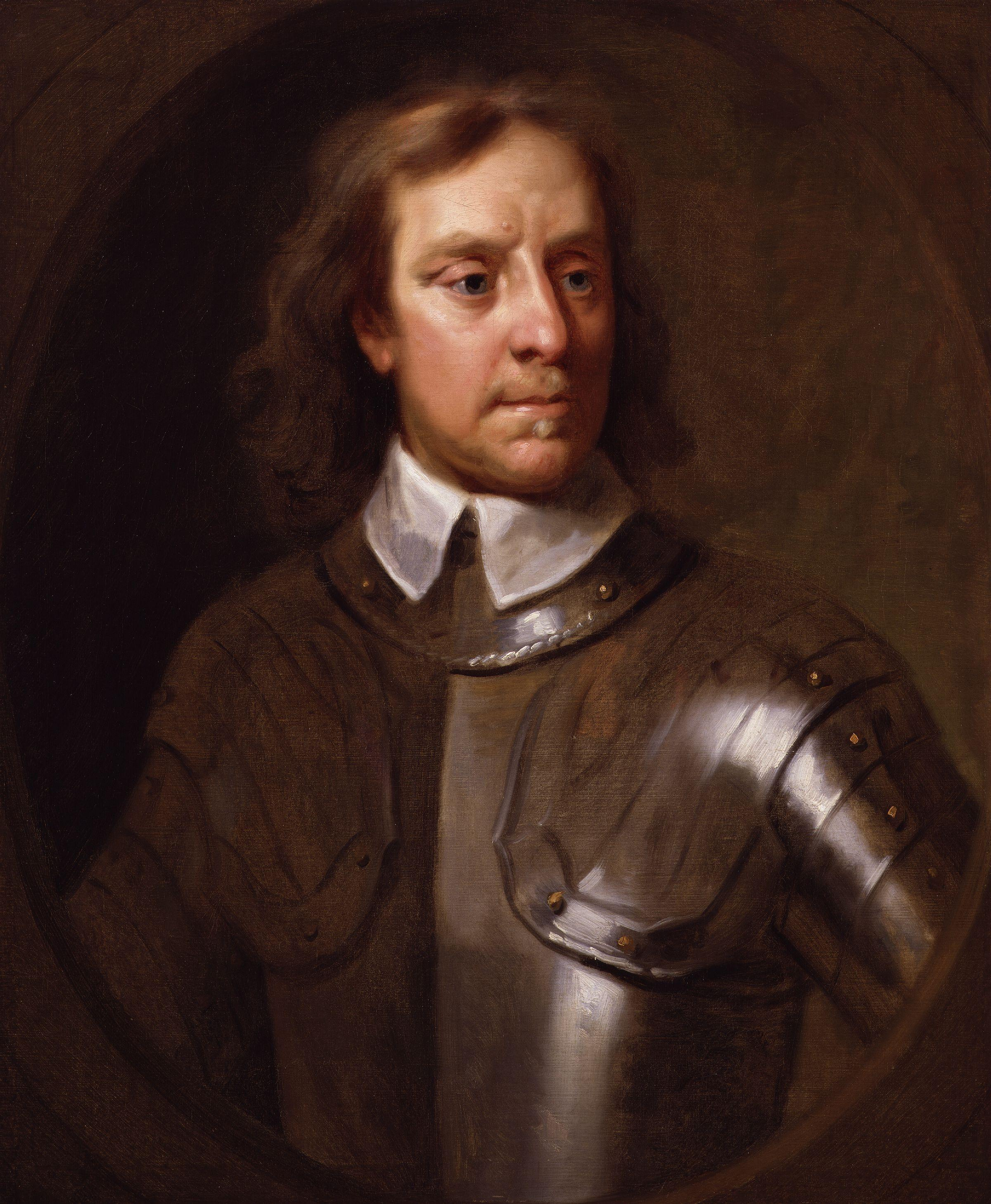
Britain’s biggest ever party-pooper: Oliver Cromwell

You don’t have to cover it with the marzipan and royal icing though, in Yorkshire (my home county) it is popular to eat the Christmas cake with some nice cheese such as Wensleydale or Cheddar instead.

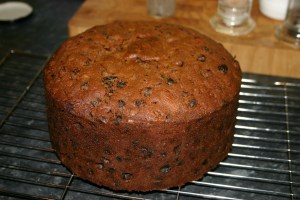
I love Christmas cake, so I thought I would give you the recipe I always use – it is adapted from Jane Grigson’s English Food (click here to see my other pet project) – and it has never failed on me. As I said a couple of posts ago, if you want to eat top-quality food at Christmas, you need to make your own, or spend a fortune at Harrod’s. Plus the cake is made well in advance – I usually make mine 6 weeks before Christmas so it can mature. Once you’ve cooked it, you only have to feed it with a little brandy to make it nice and moist.

This recipe is of course for an English-style Christmas cake; the Scottish, Welsh and Irish have their own versions, all in a similar vein, but with a few differences. I’ll blog about them at some point.

It makes one hefty 8 inch/20 cm cake, for a smaller cake, half the amounts and bake in a 6 inch / 15 cm tin for 2 1/2 hours.

Ingredients:

900 g mixed dried fruit (currants, raisins and sultanas)

125 g of whole roasted almonds (or hazelnuts or walnuts, or a mixture)

125 g chopped candied citrus peel

125 g rinsed glacé cherries quartered or left whole

300 g plain flour

1 1/2 tsp mixed spice

the grated rind of a lemon

250 g salted butter, softened

250 g soft dark brown sugar

1 tsp vanilla extract

1 tbs black treacle (or molasses)

4 eggs

1/2 tsp bicarbonate of soda

1 tbs warmed milk

brandy

Preheat your oven to 140⁰C (275⁰F).

Begin by mixing all the dried fruit, almonds, candied peel and cherries in a large bowl. Next, sift in the flour, turning in and coating the fruit, then mix in the spices and fresh lemon rind.

Now cream the butter sugar in a separate bowl, then mix in the vanilla and black treacle. Beat in four eggs one by one until incorporated, and the mix in the fruit and the flour. For the final stage, dissolve the bicarbonate of soda in the warmed milk, stir it in, and then add enough brandy to slacken the mixture slightly, so that it achieves a dropping consistency – you don’t want a dry cake, now do you?

Line an eight inch cake tin with greaseproof paper and pour the mixture in, hollowing the top a little to compensate for it rising in the oven.
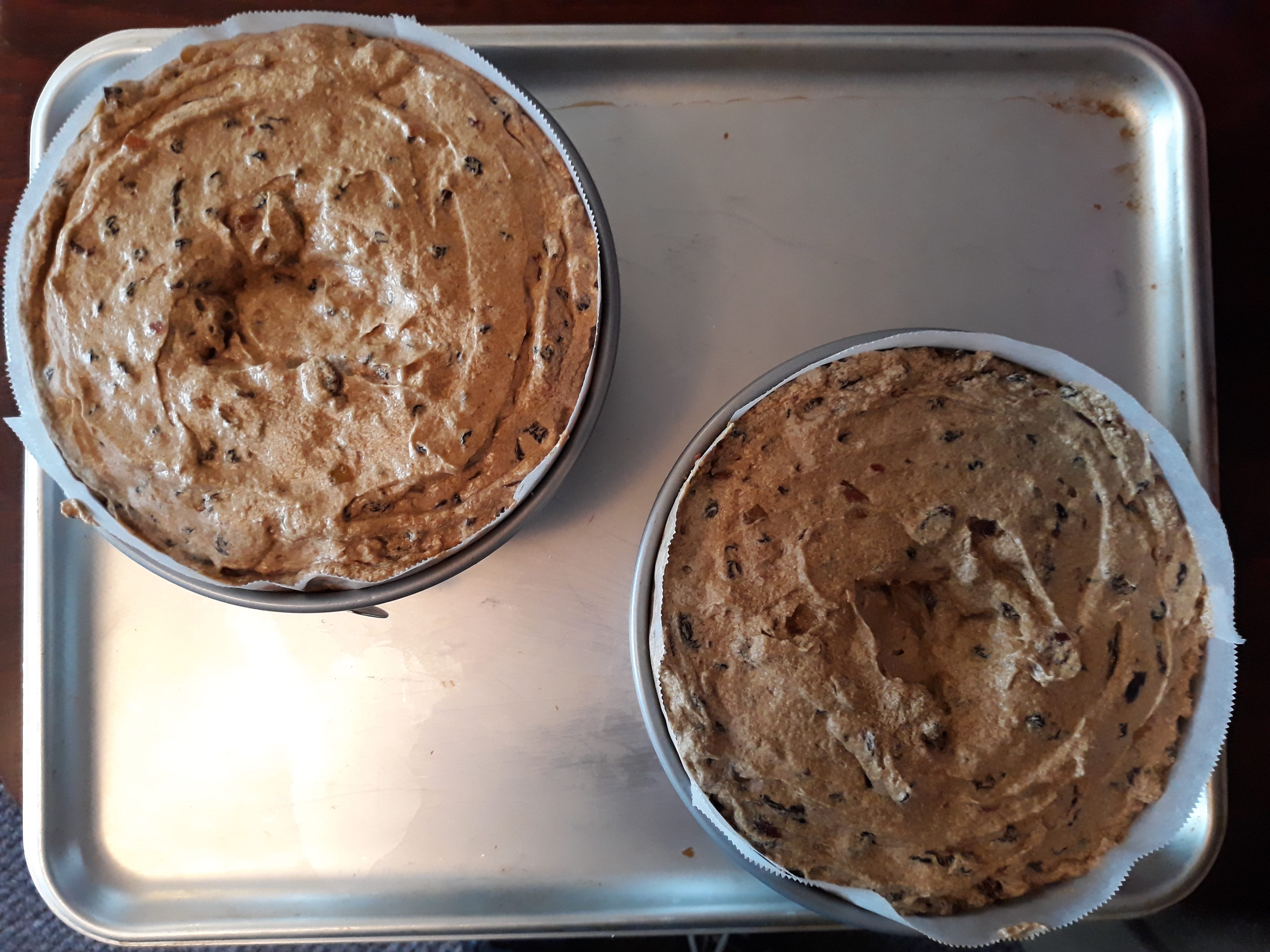
Cover with a layer of brown paper to prevent scorching and bake for 3 to 3 ½ hours. Test it after 3 hours with a skewer. When done, leave to cool in its tin overnight. Wrap in greaseproof paper or foil and keep in an airtight container.
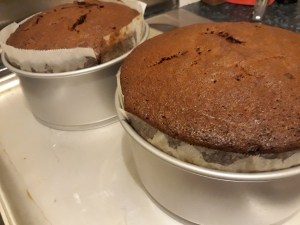
Ideally, the cake should sit for at least a month to mature, but 2 or 3 weeks is also fine. Whilst it sits, you need to feed it with a sprinkle of 2 or 3 tablespoons of brandy, turning the cake each time it is fed.

The cake is ready to eat when sufficiently fed and matured, however, you might want to add a layer of marzipan and royal icing.


If you like the blogs and podcast I produce, please consider treating me to a virtual coffee or pint, or even a £3 monthly subscription: follow this link for more information.


29 Comments

Filed under baking, cake, Christmas, food, history, Puddings, Recipes, Seventeenth Century, Teatime, Uncategorized

Roast Duck

Bora: Why in the middle I would have a rich favoury foup.   

Lazar: Made with Craw-fifh – Good!  

Bora: At the top two delicate white Trout just frefh from the river. 

Lazar: Good! Excellent! go on go on.  

Bora: At the bottom – a roaft Duck.

Lazar: A duck! a fcavenger! an unclean bird! a wading glutton; his bill is a fhovel, and hif body but a dirtcart: away with your Duck – let me have a roast Turkey, plump and full breafted, hif craw full with marrow

Exerpt from The Hotel by Robert Jefson, 1775

Okay, not everyone likes duck, for those that do, the best way to show it off, whether Aylesbury or whatever, is to roast it, seasoned with just salt and pepper. It’s also the most common way to serve duck. I did look at old recipes for it, hoping to find some crazy over-the-top recipe with many embellishments, but, alas, it was not to be: at best, there was a stuffing. Keept it simple, chaps. It did seem very common to scald the bird in boiling water for a few minutes before roasting it, though modern ones don’t seem to (unless, that is, you are making some Chinese crispy duck – that requires a kettle of boiling water to be poured over it and then drying it thoroughly to achieve the crispy skin).

One of the great things about buying duck is that they always come with their giblets, unlike many chickens these days, so put them to good use. I have included a recipe for some nice rich giblet gravy to go with.


If you like the blogs and podcast I produce, please consider treating me to a virtual coffee or pint, or even a £3 monthly subscription: follow this link for more information.


For the roast duck:

one duck

salt and pepper

For the gravy:

a tablespoon of oil

the neck and giblets of the duck, chopped

one onion, unpeeled, roughly chopped

one garlic clove, lightly crushed

one carrot, roughly chopped

one stick of celery, roughly chopped

one bay leaf

a few sprigs of thyme

about 6 black peppercorns

splash of red wine

1/2 ounce of butter

1/2 ounce of plain flour

one teaspoon of redcurrant jelly or juice of half an orange (optional)

salt and pepper

First of all, place the duck on a large plate and dry it all over with kitchen paper and keep it in the fridge until it is needed. It is important to take it out of the fridge a few hours before you want to cook it though – when you are following roasting times for any meat, it is assuming the meat starts off at room temperature.

The first thing you need to do is get started on the gravy. Get a pan nice and hot,  add the oil, giblets and stock vegetables, when they are good and caramelised, add the herbs and peppercorns.

Pour over a pint of water, cover, bring to a boil and then let it simmer gently for the length of time it takes for you to cook the duck.

Preheat the oven to 220°C (430°F) and calculate the cooking time for your duck: 25 minutes per pound plus an extra 20 minutes. Using a fork or skewer, prick the fatty parts of the duck, i.e. the breast and the area where the legs meet the body. Make sure you prick only the skin – if you stab right through the fat, you’ll lose meat juices, and we don’t want that, now do we?

 Season the duck inside and out with salt and pepper, place in a roasting tin with a rack, and pop it in the oven. After 20 minutes, turn down the heat to 180°C (350°F). After the first 45 minutes or so, baste the bird and every 20 minutes thereafter. It is important to do this if you want good, crispy skin. To test if the duck is done, poke a knife or skewer into the thick part of the leg and if the juices are clear, then the duck is ready. I would check it around 20 minutes before the total cooking time. When cooked, remove from the oven and let rest for at least 15 minutes before carving it.

Whilst the duck is having a rest, finish off the gravy: strain the stock through a sieve into a jug. Pour off any fat from the roasting tin and pour the meat juices into the gravy. Don’t you dare throw that fat away! It keeps in the fridge almost indefinitely, and you can use it for roast potatoes (they will be the best roast potatoes you have ever made).Put the roasting tin on the heat and deglaze it with the red wine, making sure you scrape off all the nice burnt bits. Tip that into the gravy too. Melt the butter in a small saucepan and when it begins to foam, stir in the flour and cook for a minute. Now whisk in the gravy and let simmer for about 15 minutes. Finally stir in the jelly or orange juice (or even better, the syrup from some preserved oranges – see this link here for a recipe). Correct the seasoning and pour into a nice gravy boat or jug.

There you go: a delicious, scavenging unclean bird!

5 Comments

Filed under Meat, Recipes, Uncategorized