Tag Archives: breakfast

To make Kedgeree

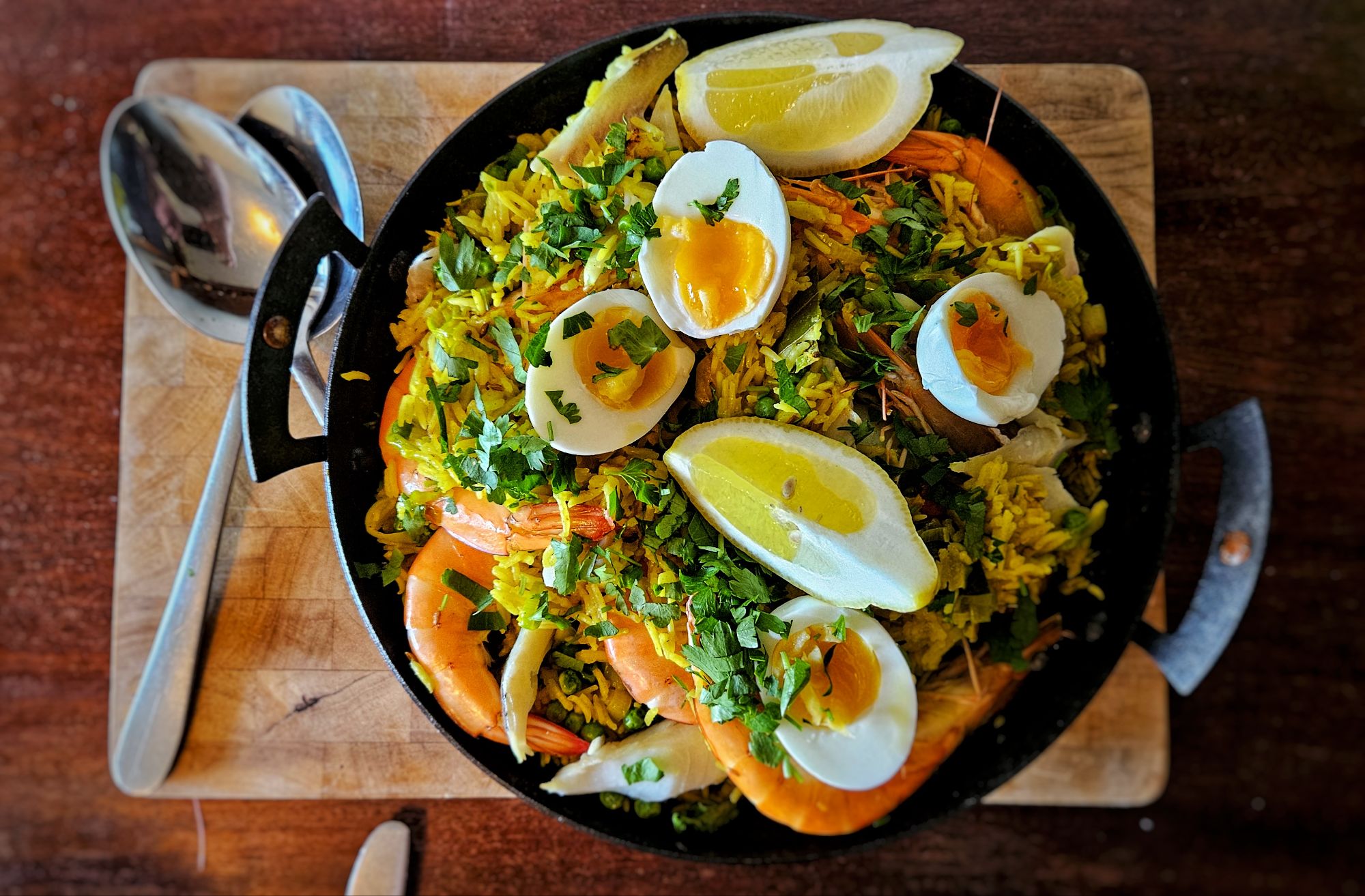
As promised in the last episode of The British Food History Podcast, all about Netherton Foundry Cookware, here is my recipe for kedgeree using their excellent 10 inch Prospector Pan with lid.

The tenth season of the podcast is being sponsored by Netherton Foundry, so please do check out their website[1] and support them if you can.

Stream the episode about Netherton Foundry here (or search for it on your favourite podcast app).

Kedgeree is a classic British breakfast dish that isn’t eaten so much these days. Perhaps it’s because it’s a bit much to tuck into first thing on a Thursday morning, though it does make a great lunch. Or maybe it’s the association with the officer class of the British Raj at a time when the romance of the British Empire is fizzling out. But whatever your feelings about that, there’s no denying that kedgeree is a classic piece of Anglo-Indian cookery. I call it Phase I Anglo-Indian cookery: ‘a result of the interface between Indian cooks and British wives of British officers and officials stationed in India’, as Alan Davidson put it.[2]
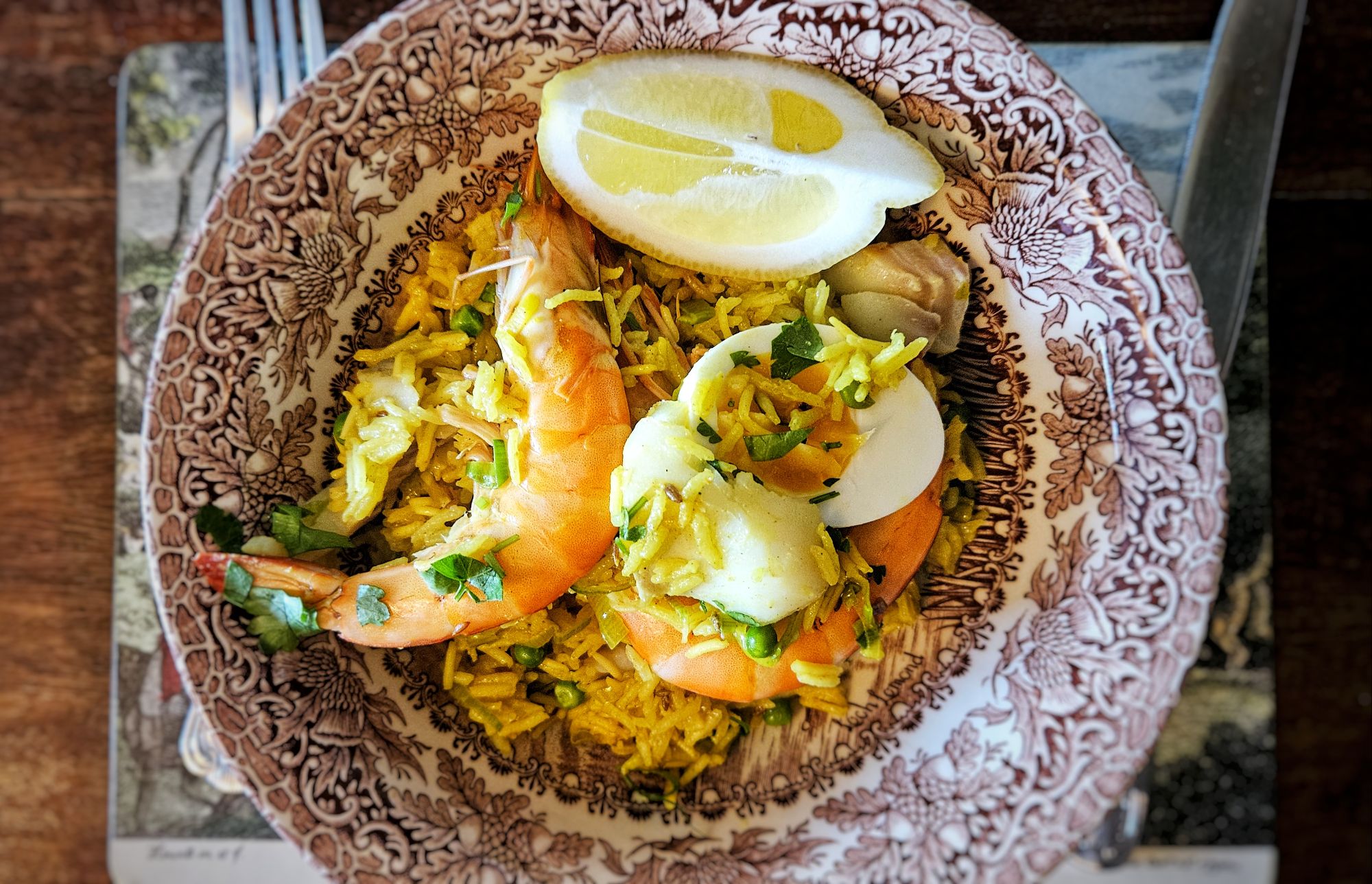
It’s a simple dish of mildly spiced rice, poached fish, onions and boiled eggs. The word is derived from the Tamil word khichri, a breakfast dish made from rice and mung beans (though other leguminous vegetables are also used). When the English arrived in India in the 17th century, they happily tucked into khichri, but as they became more established in the 18th century, the beans were swapped for protein-heavy fish.[3] Although I can’t confirm this, I think that the eggs were an addition made in Britain rather than India. Recipes are common in British cookery books of the 19th century, but there’s much variation, and a fixed, official recipe for kedgeree is impossible to find. Eliza Acton’s recipe is very much a leftovers dish, with any fish being used. Her only spice is cayenne pepper. Oddly, the eggs are beaten and fried with the rice.[4] In a 1950s edition of Beeton’s Book of Household Management, the eggs are boiled, and prawns are the fish of choice. The spices are paprika, black pepper and nutmeg. Weirdly, grated cheese is involved.[5]
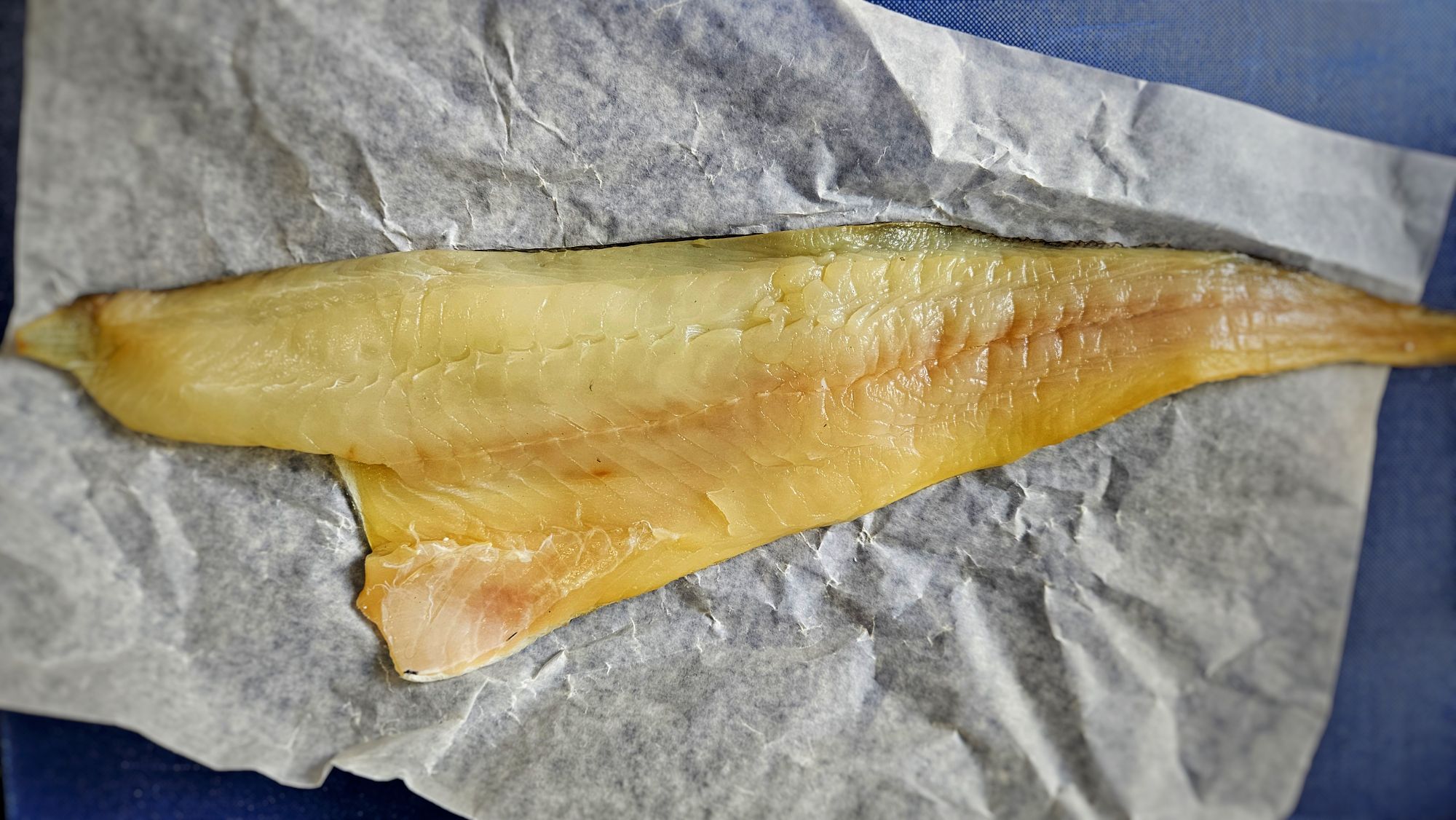
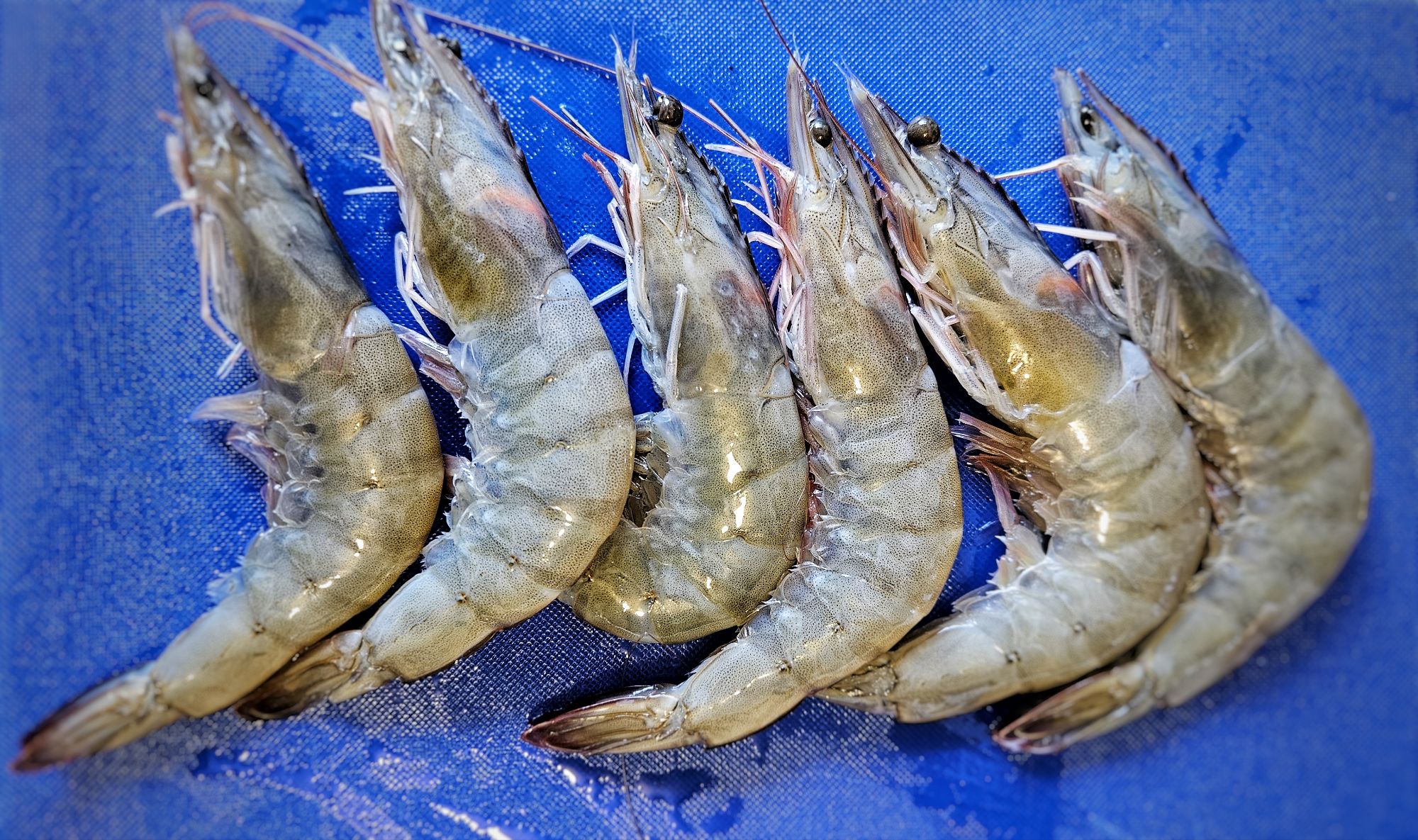
These days, the fish of choice is smoked haddock, but you can use any fish you like really. I like to add a few fat prawns whenever I’m feeling flush.


If you can, please support the podcast and blogs by becoming a £3 monthly subscriber, and unlock lots of premium content, including bonus blog posts and recipes, access to the Easter eggs, a monthly newsletter and the secret podcast, or treat me to a one-off virtual pint or coffee: click here.


Recipe

There are two ways you can make kedgeree: with freshly poached fish, as I describe below, or with leftover cooked fish, in which case, follow the method below, except for the stage where the fish gets poached in water and milk. Instead, use some fish or chicken stock instead of water and milk and follow the method as given, just letting the cooked fish warm through at the end of cooking.

I used my 10-inch Netherton Foundry Prospector Pan – the whole dish can be cooked in it, and when it is ready, it can go straight to the table to await your fellow diners.

My spices of choice are cumin seeds, garam masala and turmeric, but you can use whatever you like: curry powder works really well, as does a little smoked paprika or chilli powder. Some recipes use no spices at all, so if you are spice-averse, do not worry!

Serves 6 for breakfast, or 4 for a main meal

300 ml water

200 ml milk

2 bay leaves, crushed

One whole side of naturally-smoked haddock (around 250 g)

45 g butter

¾ tsp cumin seeds

1 medium onion or leek, sliced

3 cloves of garlic, finely chopped

¾ tsp salt

¾ tsp garam masala

½ tsp ground turmeric

Freshly ground black pepper

250 ml (200 g approximately) white basmati rice

1 handful of frozen peas (optional)

4 or 6 room-temperature medium eggs

4 or 6 whole prawns (optional)

2 tablespoons chopped parsley

1 lemon

In a saucepan heat the water and milk to scalding point with the bay leaves. Cut the haddock into two or three pieces so you can comfortably plop it into hot liquid. Allow the milk-water mix to come back up to a bare simmer, turn the heat off and leave the fish to poach for three or four minutes, until the flesh flakes easily. Remove from the liquid and set both the fish and the poaching liquid aside.
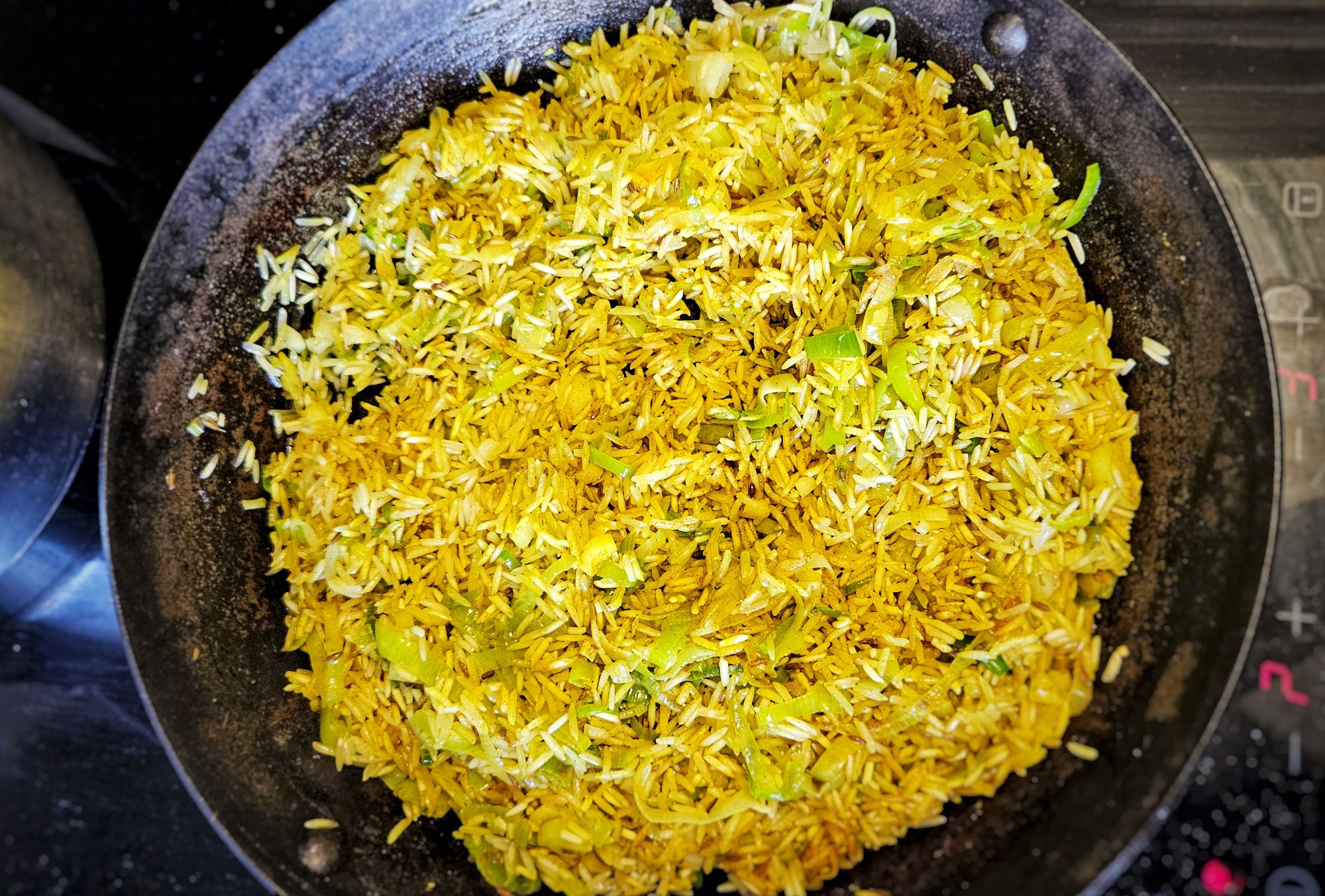
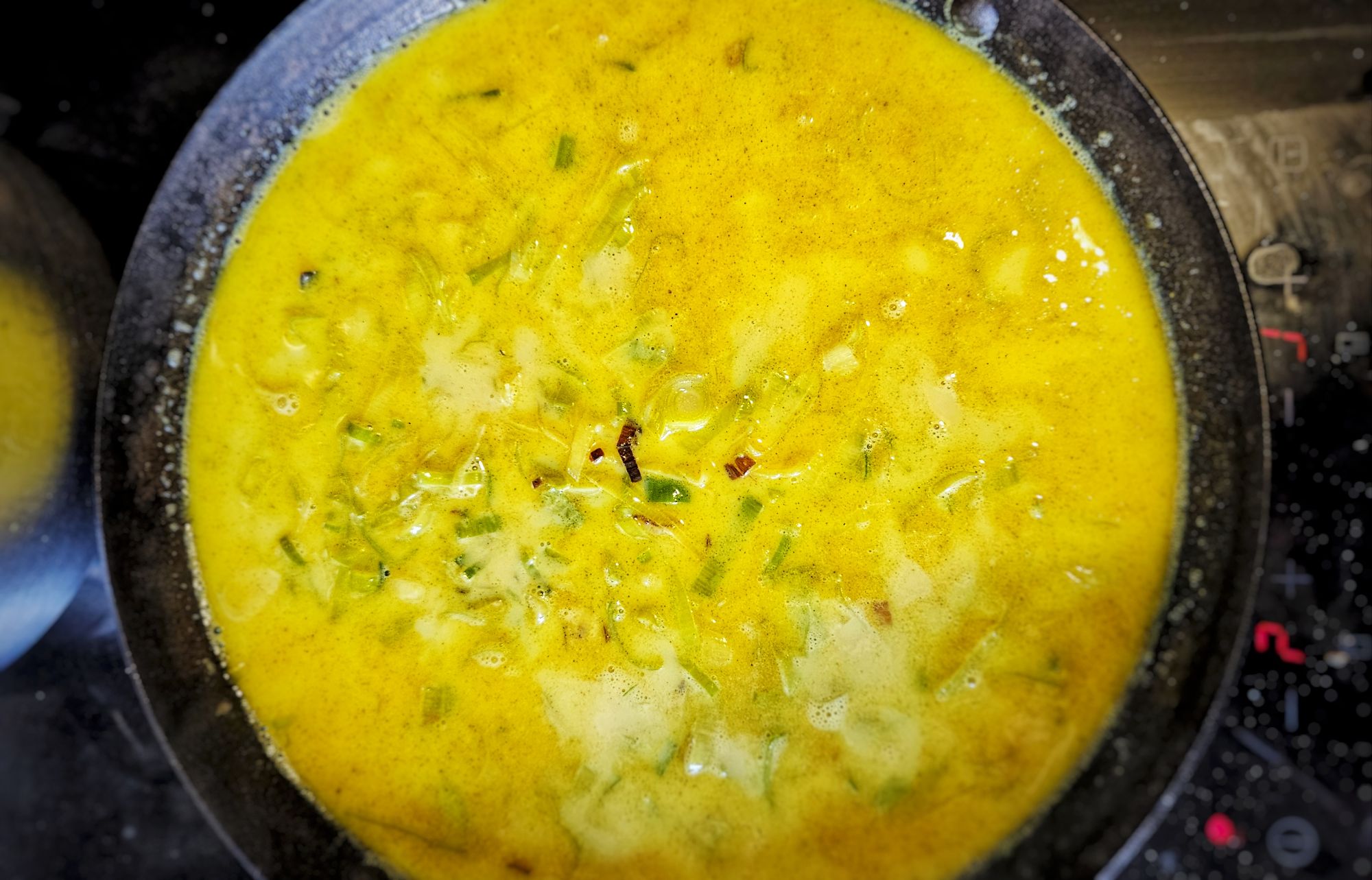
Place a sturdy-bottomed pan over medium heat – I used my 10-inch Prospector pan – and melt the butter. Once fizzling, add the cumin seeds and cook for a minute before tipping in the onion or leek, garlic and salt. Fry until soft, then add the garam masala and turmeric, plus a few turns of the peppermill. Fry for 30 seconds more, then stir in the rice and make sure each grain gets covered in the spices and oil.

Turn the heat down a little and pour the reserved poaching milk into the pan. Add the peas if using. Give everything a single stir to make sure nothing’s stuck and all the rice grains have separated. Do no more than one stir round, though – you’ll end up with claggy rice. Turn the heat down to a bare simmer, put on the lid and set a timer for 10 minutes.

Meanwhile, boil the eggs: get some water up to an excited simmer and gingerly sink in your eggs. Simmer for 6½ minutes, drain the water away, and refill the pan with cold water. Set aside.

When the 10 minutes are up, place the prawns on the rice and replace the lid. Now leave for two minutes. Turn the prawns, add the flaked fish, replace the lid and take off the heat. Leave everything to steam for two more minutes. As you wait, peel the eggs.

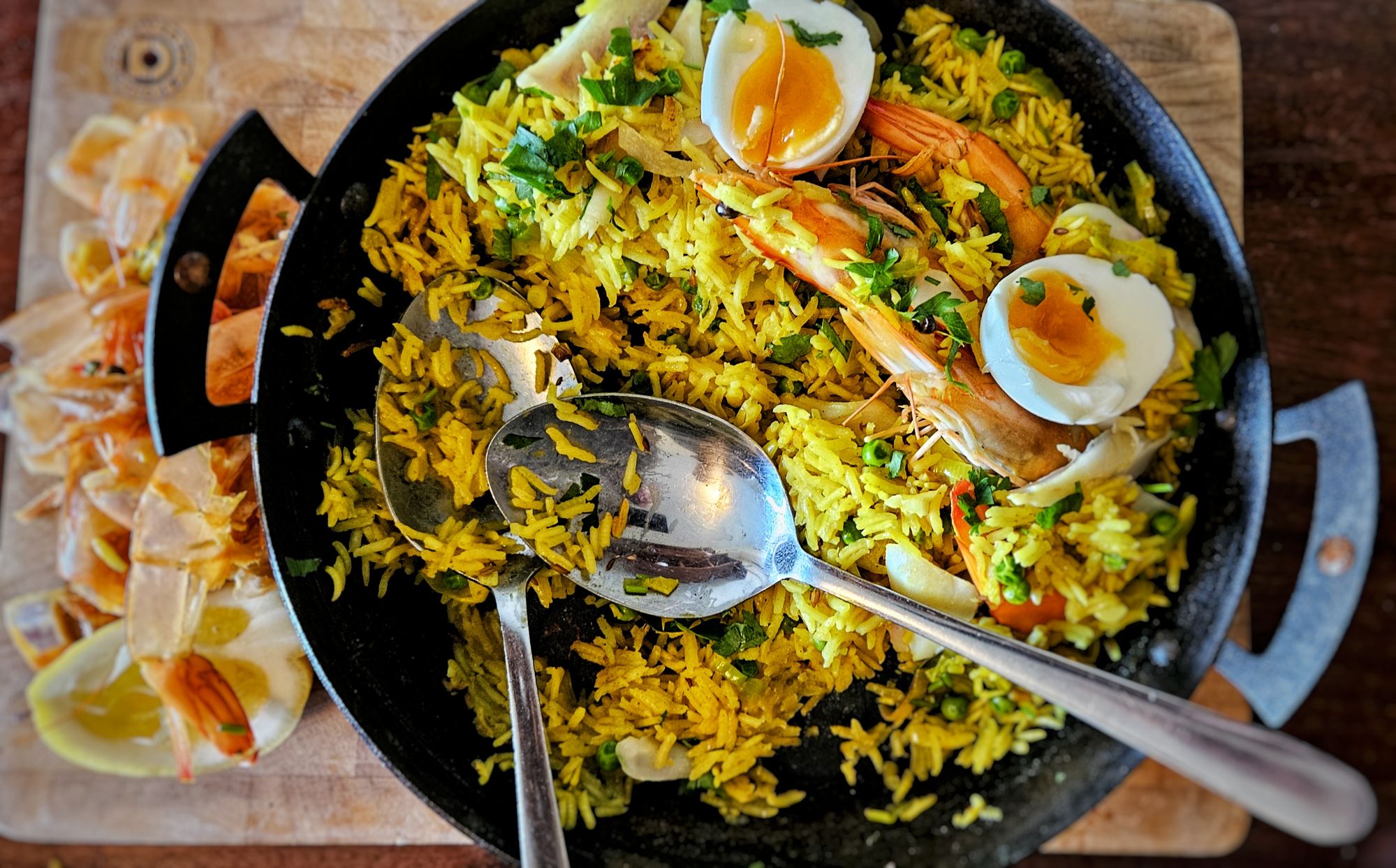
Take the pan to the table, remove the lid and fork through to mix, and serve with the boiled eggs, chopped parsley and the lemon cut into wedges.

Eat immediately.

Notes

[1] www.netherton-foundry.co.uk

[2] Davidson, A. (1999) The Oxford Companion to Food. Oxford University Press. Extending this idea, Phase II is when the people of the Indian subcontinent came to Britain and adapted their cuisines to British tastes.

[3] Burton, D. (1993) The Raj at the Table: A Culinary History of the British in India. Faber & Faber; Davidson (1999)

[4]Acton, E. (1845) Modern Cookery For Private Families. Quadrille.

[5] Beeton, I. and Ward & Lock (eds.) (1950) Mrs Beeton’s Household Management. Ward and Lock.

5 Comments

Filed under Britain, cooking, food, General, history, Recipes, The Victorians, Twentieth Century, Uncategorized

Dock Pudding

The good thing about being a lover of British puddings is that there is an almost infinite number to cook and try. All of the pudding recipes I have posted on the blog thus far have all been of the sweet variety, and they have all been fairly well known, but this year I am going to try and write some posts and recipes for savoury or obscure ones. First up is dock pudding which happens to tick both of those boxes. This pudding is one I have been meaning to cook for years, but I’ve only gotten around to it until now.

Dock pudding used to be very popular in Yorkshire, especially in the Calder Valley, West Yorkshire. The dock in question isn’t the common dock (the one you rub on nettle stings) but a particular species that goes under several names including bistort, passion dock and sweet dock, its Latin name is Polygonum bistorta.[1] It can be distinguished from the common dock by its yellowish spear-shaped leaves. The leaves are collected when young, alongside tender nettle tops, there is a recipe for it in Alexis Soyer’s classic 19th century work A Shilling Cookery For the People, where it is made with a mix of two-thirds passion dock, and one-third nettles.[2] These were supplemented or replaced with whatever greens were around: sorrel, raspberry leaves, chives, spinach, etc, the choice changing with the season. These are washed, sliced and cooked with onion or leek and oatmeal to make a very dark green porridge, which is fried in dollops in bacon fat, lard or beef dripping.[3] It has been likened to Welsh laverbread in colour and flavour, in that you will either love it or hate it.[4] It sometimes goes by the name herb pudding, which makes sense seeing as docks are only eaten in the springtime when they are tender. It is mixed with more oatmeal and water, tied in a cloth and boiled, cooled and fried in slices.

My patch of Passion dock

Technically, then, I could have used any green leaves, but I really wanted to make it with Passion dock; so called because it is found growing during Passion Week, the last week of Lent.[5] It was an extremely important food, the first fresh green vegetable after a winter of eating only pickled vegetables and salted meats. Many people were showing signs of scurvy by early spring, so few fresh vegetables were eaten. Dock is also said to be an excellent blood cleanser and good for the skin too, being a preventative of spots and pimples.[6]

Dock pudding was especially popular in the Victorian era, but was considered a famine food in the 20th century.[7] Very few people eat it now, but there is an outlier because the West Yorkshire town of Mytholmroyd has held the World Dock Pudding Championships every May since 1971.[8] I’m going to try my best to go next year.


If you like the blogs and podcast I produce and would to start a £3 monthly subscription, or would like to treat me to virtual coffee or pint: follow this link for more information. Thank you.


I found a patch of Passion dock growing in the Cheshire town of Lymm last year, but they were far too old and tough to pick, but I remembered this year. Oddly, I couldn’t find any nettles, but I did spot some sorrel and some wild garlic. I was in a bit of a rush, and didn’t have enough to make the very green sort of pudding, but I didn’t want to boil one (to save on fuel), so tried a common trick of cooking it in a saucepan, pouring and setting it in a tub so I could slice and fry it. This method is sometimes used for other savoury puddings such as black pudding or mealy pudding.

Makes 8 to 10 slices of pudding:

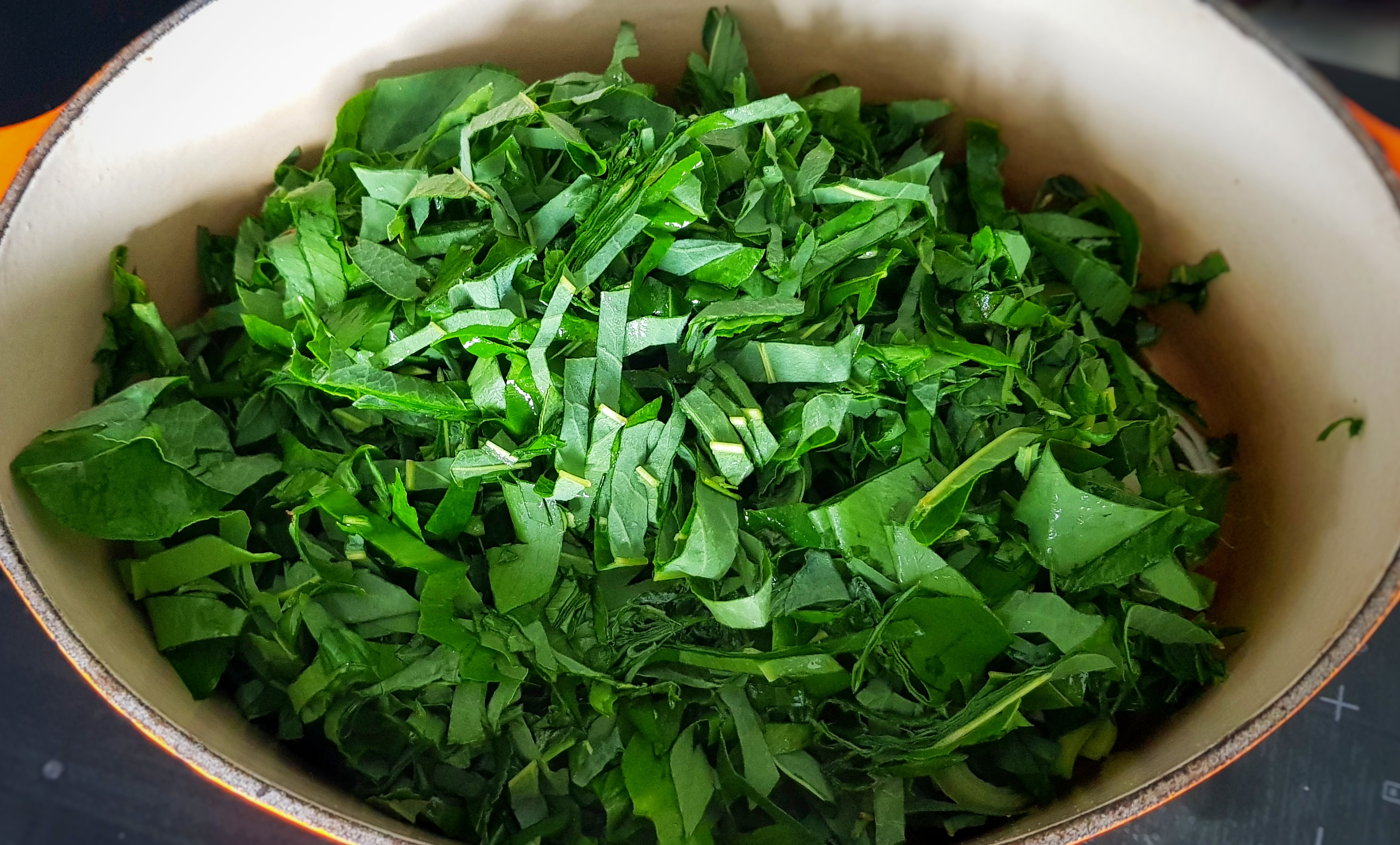
100 g trimmed, young leaves of any amount of the following: passion dock, nettles, spinach, sorrel or any other edible greens you like

1 leek or onion, sliced thinly

80 g oatmeal (not rolled oats)

1 tsp salt

Freshly ground black pepper

400 ml water

A smidge of flavourless oil such as sunflower or groundnut

8 rashers of streaky bacon

30 g lard or dripping, or 2 tbs of your favourite frying fat or oil

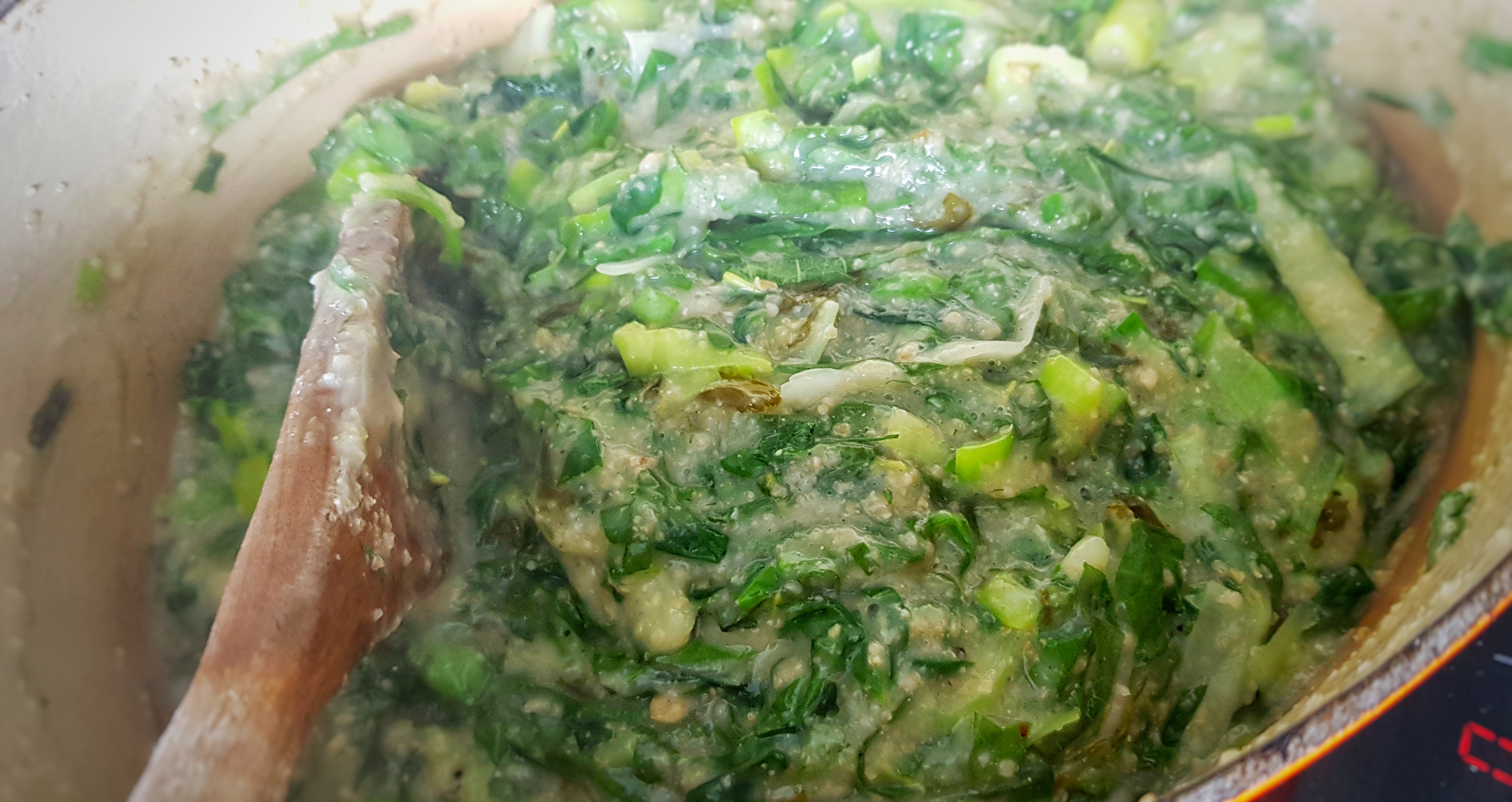
Your pudding needs to be cooked, cooled and set the day before you want to eat it (or several days before if you like). To do this, shred the leaves and add them to a pan with the leek or onion, oatmeal, salt, pepper and water. Bring to a simmer, stirring so that it doesn’t form lumps.

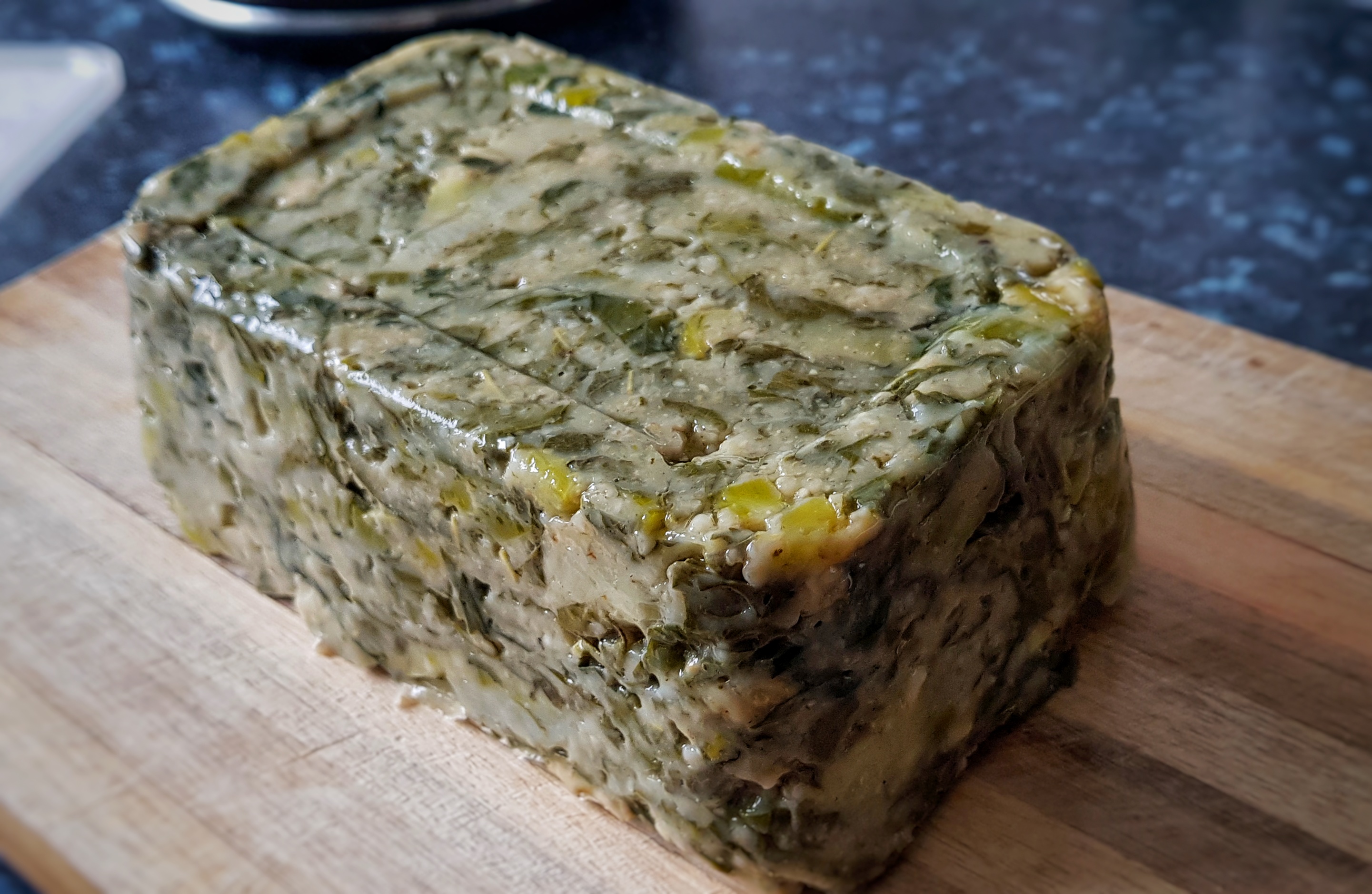
Cook for around 20 minutes and all of the vegetables are soft, then take off the heat. Now take a tub of around 1 litre capacity and brush with the oil. Pour the pudding into the tub, cover, cool and then refrigerate.

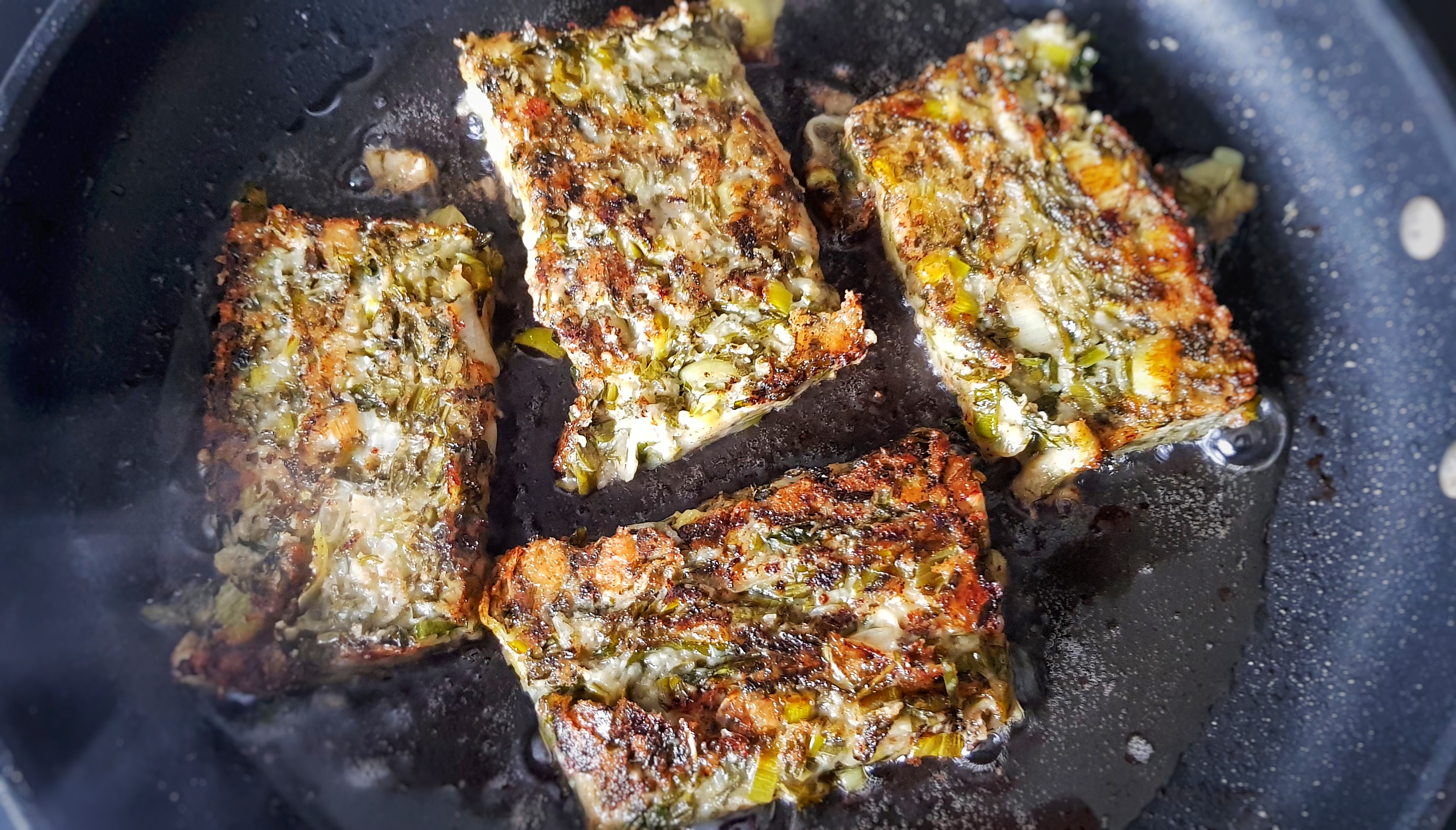
When you want to cook your pudding, first fry the bacon in your chosen frying fat or oil over a medium heat until very crisp. As they cook, prepare the pudding: turn out onto a board and cut even slices between 1 and 1.5 cm thick. It’s best to use a serrated knife for this task.

Remove the bacon rashers and keep warm as you fry the pudding slices: turn up the heat to medium-high and pop in the slices. It’s a bit like making bubble and squeak in that you need to wait and allow them to build up a good, crisp fried layer before you disturb them: a good 5 minutes. Turn over with a spatula and fry the other side for a further 4 or 5 minutes.

When ready, serve up with the bacon and whatever other breakfast things you like. I went with fried eggs.


Notes:

[1] Brears, P. (2014) Traditional Food in Yorkshire. Prospect Books.

[2] Soyer, A. A Shilling Cookery for the People: Embracing an Entirely New System of Plain Cookery and Domestic Economy. (Geo. Routledge & Co., 1855).

[3] Davidson, A. (1999) The Oxford Companion to Food. Oxford University Press.

[4] Mason, L. and Brown, C. (1999) The Taste of Britain. Devon: Harper Press.

[5] If you want to know more about the food of Passion Week, listen to this episode of the podcast:

[6] Davidson (1999); Brears (2014)

[7] Brears (2014)

[8] Davidson (1999)

13 Comments

Filed under Britain, cooking, food, foraging, General, history, nature, Puddings, Recipes, The Victorians, Uncategorized, Vegetables