After the roaring success of my blood ice cream, I decided to have a crack at making a white pudding ice cream too, using the flavours in Gervase Markham’s recipe.
The blood ice cream was great, but I didn’t call it black pudding ice cream, because I left out one important ingredient: oats. The flavour of wholegrain oats is key, so much so that without them, I don’t think I captured the pudding’s true flavour.
I wanted to change this with this ice cream, but the challenge was to capture the flavour of oats without any annoying frozen groats getting in the way. I decided to take pinhead (steel-cut) oats, soak them in milk and then squeeze it out to create an oat-flavoured milk. This worked really well. I added this to the usual milk and cream to make a custard, warmed it up with the spices and found that it naturally thickened to just the right consistency – all without egg yolks! The mixture froze very well and produced a super-smooth final product. As you can imagine, I was very pleased with this outcome.
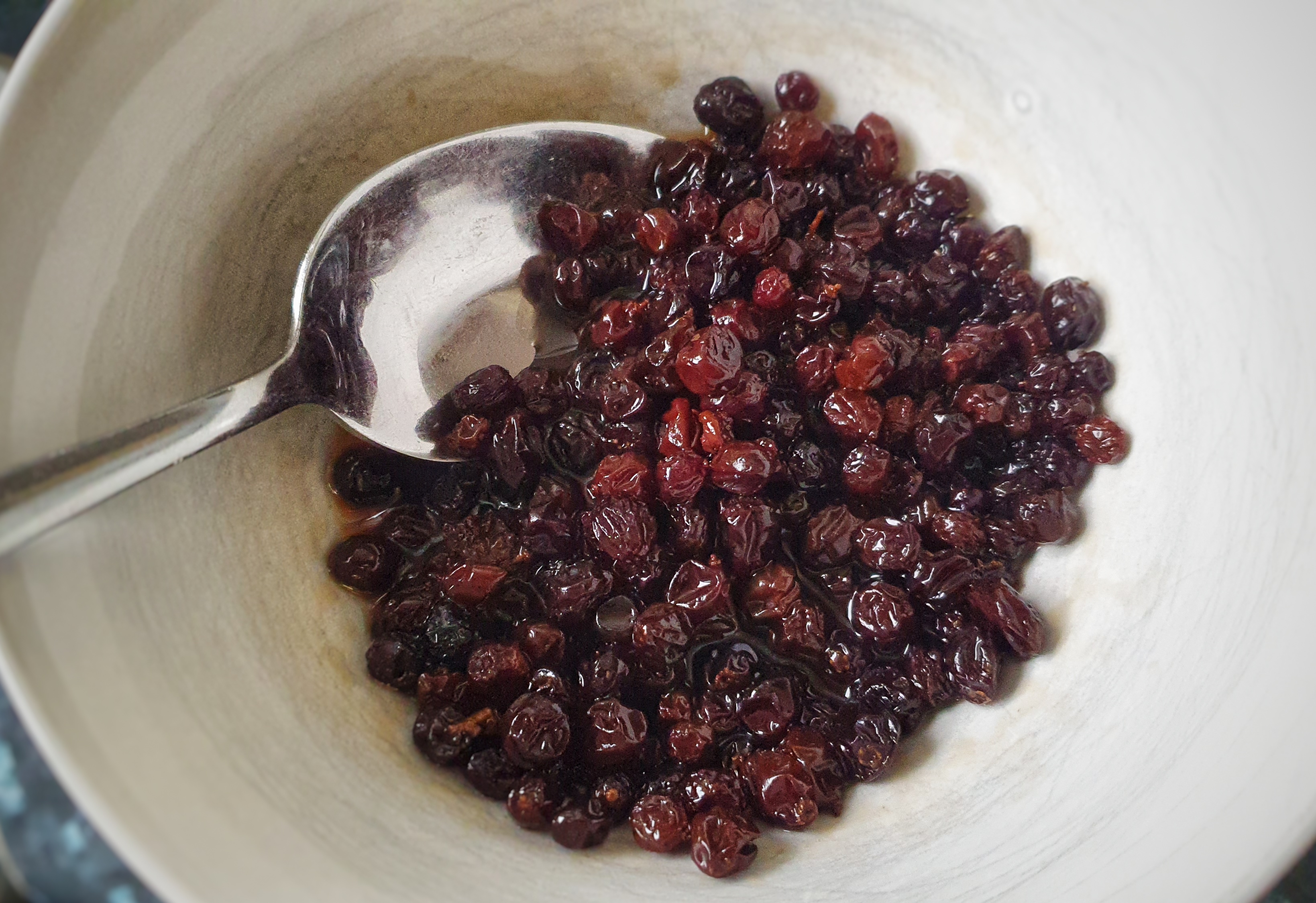
Just like the blood ice cream, I soaked some dried fruit in sherry – currants and dates this time, as per Markam’s recipe and stirred them through at the soft-scoop stage of the churning process.
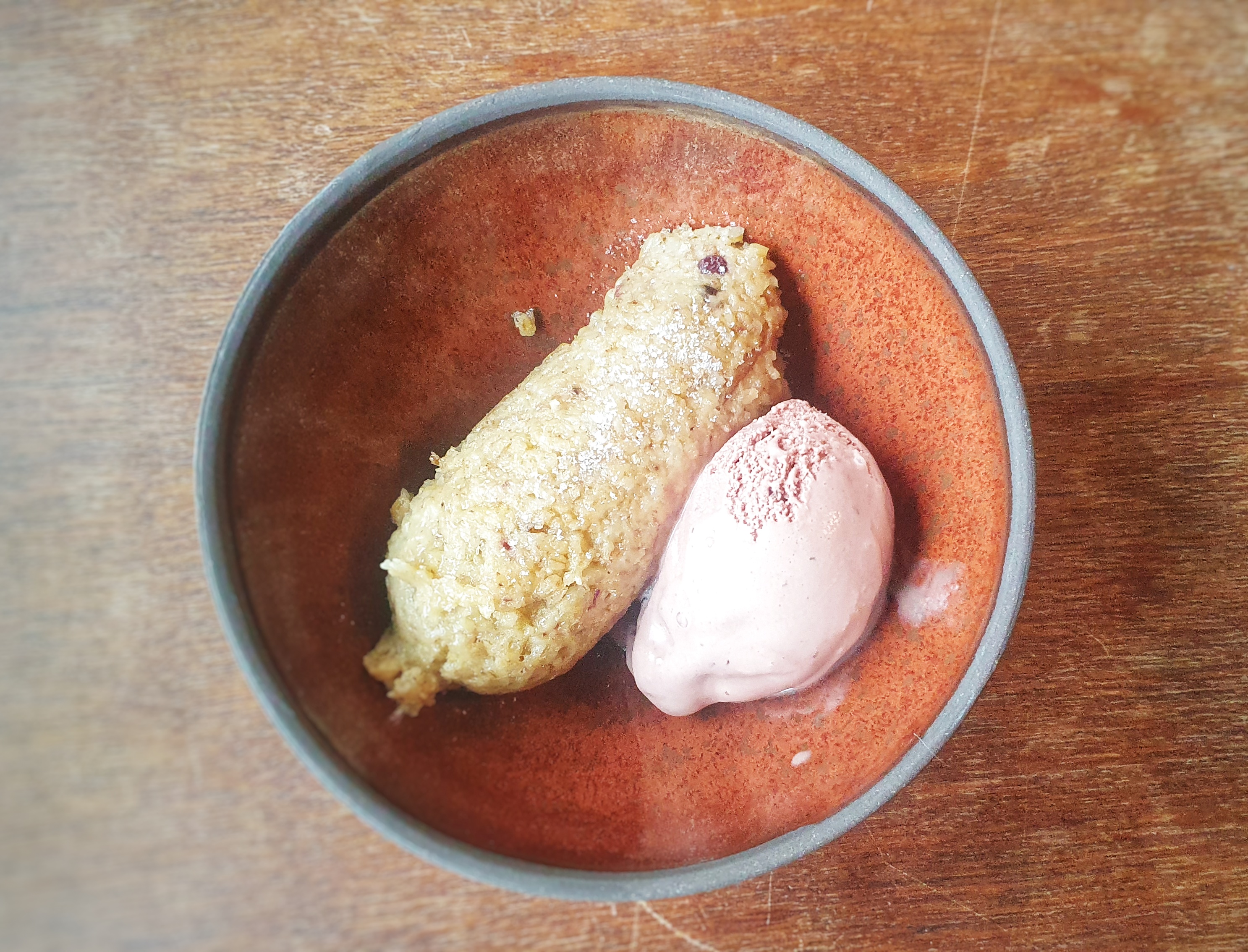
I served my white pudding ice cream with sweet black pudding that had been fried in butter and sugar. I then fried a slice of bread in the sugary and buttery juices and popped the black pudding on top with an accompanying scoop of the white pudding ice cream. It was decadent and delicious!
Subscribe to get access
Read more of this content when you subscribe today and unlock lots of premium content, including bonus blog posts and recipes, my Easter eggs, newsletter and the secret podcast. Please click here for more information.
Earlier in the year, the fantastic Fruitpig(sponsors of the ninth season of the podcast) very kindly sent me some fresh pig’s blood so that I could try my hand at making some early modern black puddings, inspired by the recipes of Robert May, Kenelm Digby and Thomas Dawson. I made two versions: a savoury one and another sweetened with sugar and currants – both turned out to be delicious.
Listen to the episode of the podcast with Matthew and Grant aka Fruitpig!
A few years ago I read (I forget where) that blood thickens upon heating just like egg yolks, and I had an idea in the back of my mind that blood ice cream might be possible to make, knowing already that the black puddings of the early modern period were often sweet.
Please that the sweet black puddings tasted good, I set about to see if I could find any British examples of blood ice cream or, at least, something similar. I couldn’t find anything. However, I did discover in the pages of Jennifer McLagan’s excellent offal cookbook Odd Bits, a blood and chocolate ice cream recipe, adapted from an Italian set dessert called sanguinaccio alla Neapolitana: little pots of set chocolate custard, thickened with blood instead of egg yolks.
Encouraged by the fact I knew it could be done, I went about adapting my black pudding recipe into an ice cream. I have a good, basic vanilla ice cream recipe that I’ve been using for years, which in turn is based on my custard recipe, and all I did was swap out the eight egg yolks for 200 ml of pig’s blood. Not convinced that the blood would thicken things sufficiently, I popped in two egg yolks for good measure. The milk and cream were flavoured not with a vanilla pod, but the same aromatics as the black pudding: pepper, cloves, mace and dried mixed herbs. I really wanted to include the currants, but knowing they would freeze hard into bullets, I thought an overnight soak in some sherry would work well – not unlike modern rum and raisin ice cream. I chose sherry because it’s the closest thing we have to sack, the popular fortified wine of the early modern period, and a common addition to recipes.
Well, I am very pleased to say that it was a great success. It was the richest ice cream I have ever eaten: luxurious, aromatic and with a very slight metallic tang. I ate a scoop with one of my early modern white puddings. What a combination!
If you like the blogs and podcast I produce, please consider treating me to a virtual coffee or pint, or even a £3 monthly subscription: follow this link for more information.
Ingredients
300 ml milk
300 ml cream seeds
½ tsp bl peppercorns
1 tsp fennel
½ tsp cloves
2 blades of mace
1 tsp dried mixed herbs
200 ml fresh blood
2 egg yolks
160 g sugar
50 g currants
a few tablespoons of sweet or medium sherry overnight
Method
Pour the milk and cream into a saucepan. Crack the peppercorns and bruise the remaining spices in a pestle and mortar, and add to the milk and cream along with the dried herbs. Mix well, making sure everything has been submerged, and warm the mixture over a medium-low heat and bring everything to scalding point – i.e. just before the milk and cream boil.
Meanwhile, add the blood, egg yolks and sugar to a mixing bowl and whisk together well.
When the mix and cream mixture reaches scalding point, remove the pan from the heat and whisk in around a quarter of it into the blood mixture. When everything is incorporated, beat in the rest of the cream mixture, and pour the whole thing back into the saucepan.
The cooled blood-custard base and the macerated currants
Now keep whisking or stirring until the temperature reaches 80°C – you can tell this temperature is reached because the mixture thickens noticeably and coats the back of a spoon (check with a difital thermometer, if unsure). Take off the heat and pass the whole thing through a sieve into a clean bowl or tub. Leave to cool and refrigerate overnight. Soak the currants in sherry and leave those to macerate overnight too.
Next day, churn the mixture in an ice cream machine until a very thick soft-scoop consistency. As you wait, strain the currants (keep the sherry and drink it!). When the ice cream is almost ready, add the currants.
Pour the mixture into tubs and store in the freezer. Eaten within 3 months.
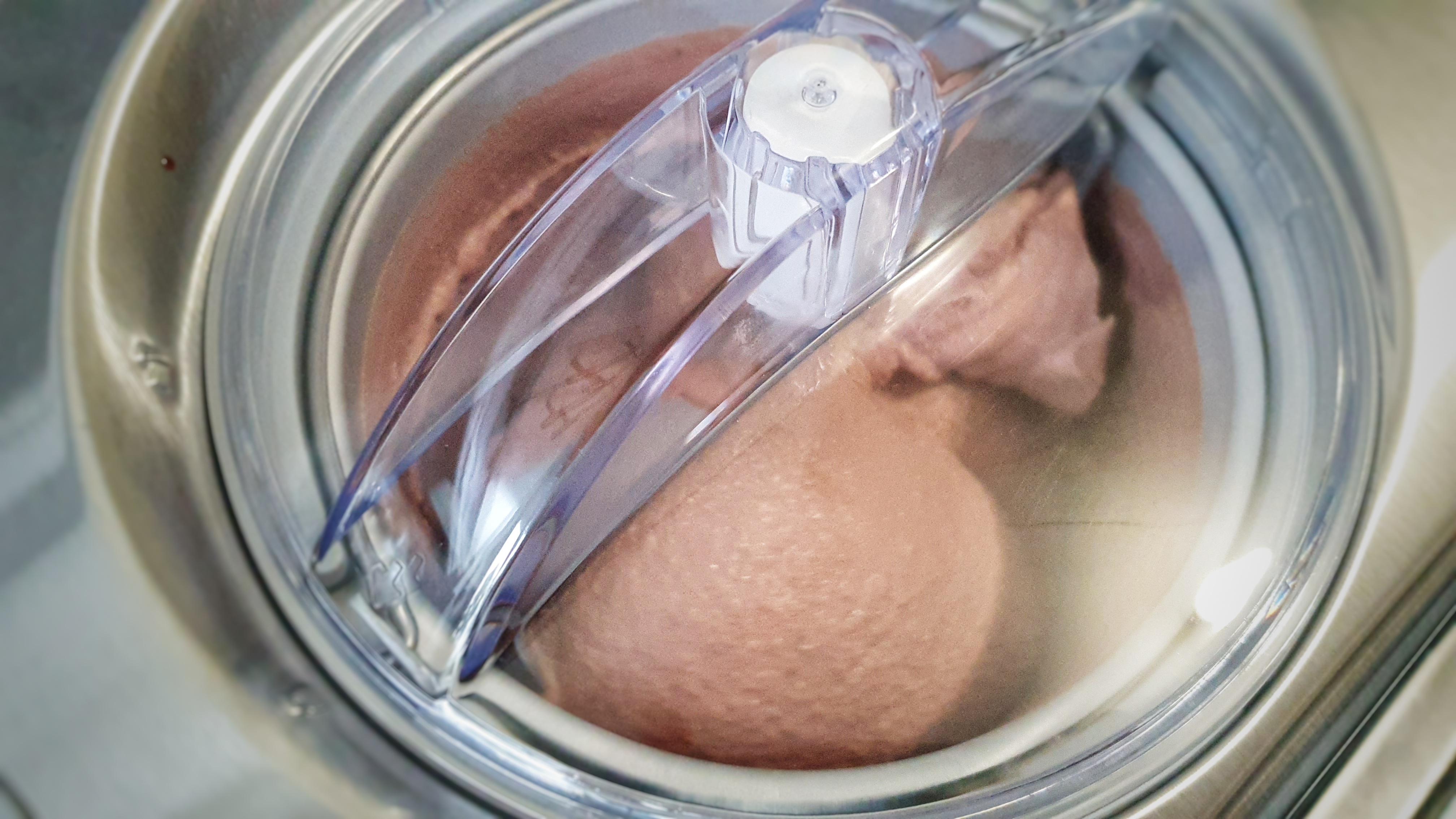
The ice cream ready to receive its currants and my serving suggestion!
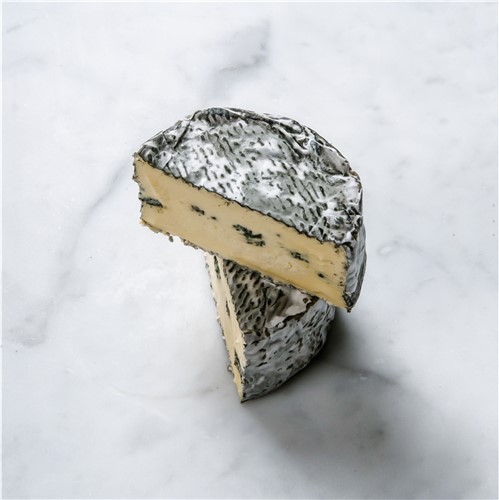
As I promised in my last post, I have a second cheese recipe for you that uses a traditionally-made British cheese. Harvey & Brockless sent me a whole loads of excellent cheeses and other goodies, and tucked in there was probably my favourite British blue cheese, Isle of Wight Blue:
‘Established in 2006 by mother and son Julie and Richard Hodgson, Isle of Wight Cheese Co. flagship blue is soft and creamy with a bluey green natural rind and blue veins.’
Beautiful Isle of Wight Blue (pic: Harvey & Brockless)
It’s strong, yet mellow and very creamy. Nothing like a Stilton at all (I love a good Stilton too, of course).
This is exactly the sort of cheese Professor Peter J. Atkins and I were talking about in my podcast episode about the British cheese industry, and how there is a resurgence in traditional styles and methods: softer cheeses made in small batches in small farms – before the behemoth that is Cheddar came along!
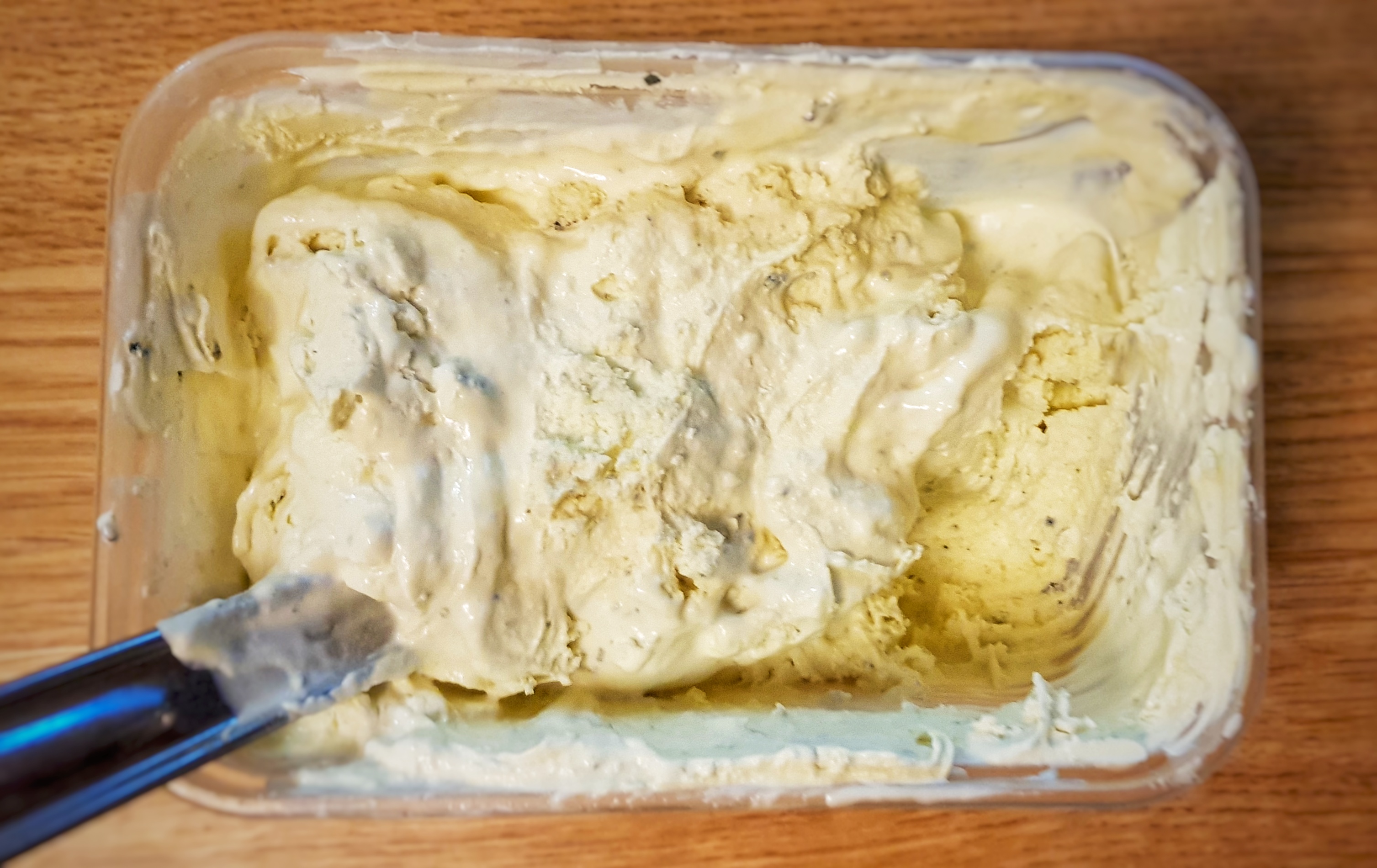
This cheese, because of its blue cheese flavour, low acidity and smooth consistency, is perfect to make into an ice cream. Cheese ice creams used to be popular, hitting a peak in the Regency period: indeed, the Prince Regent himself tucked into Parmesan cheese ice cream. My ice cream, like Prince George’s, is sweetened, but it is not over-sweet. It’s very simple to make – a case of mixing soft cheese into some cream and sugar. A curdy, hard or crumbly cheese would not work here.
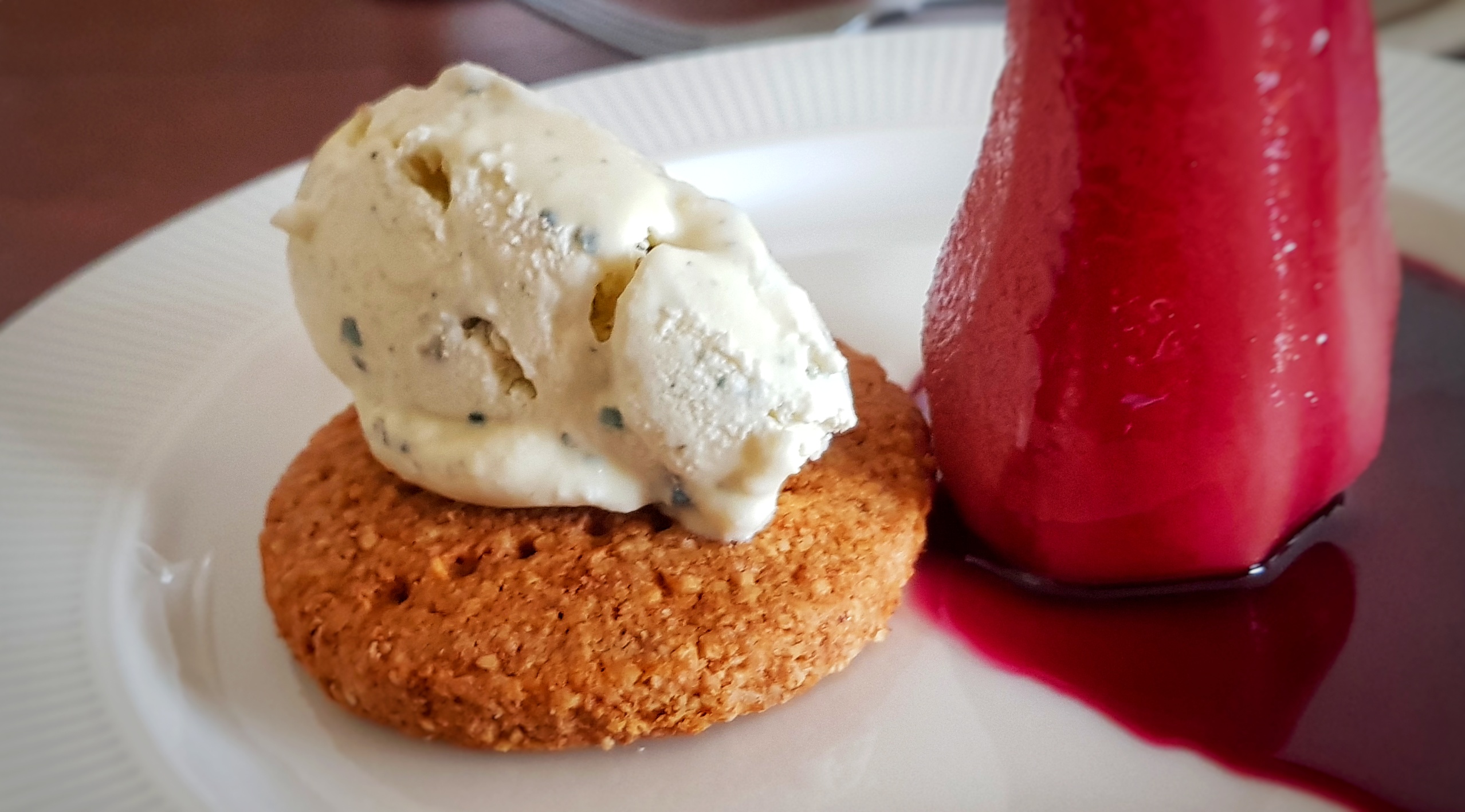
I’ve combined it with a dessert classic: pears poached in red wine. There’s a recipe in Forme of Cury for it, so it really does have quite the vintage. The poaching wine is sweet and spiced and is reduced to a delicious, tart and slightly fiery spooning sauce. On the side: a nice digestive biscuit.
This is a well tried-and-tested recipe: it’s popped up on restaurant and pop-up restaurant menus in the past, but I originally made it as part of The Telegraph Fabulous Foodie competition all the way back in 2015. It was judged by none less than Xanthe Clay, John Gregory Smith and Jeremy Dixon and it took me to the grand final. So if you are still unsure as to whether you’ll like it, take it from them, not me, that it is good!
Give it a go, you won’t be sorry. Also, see below for an excellent way of using up left over ice cream and sauce.
In a bowl, break up the cheese as best you can and beat into it one third of the cream. You won’t be able to blend it in perfectly, but a little texture is no bad thing.
Sift the icing sugar with the reminder of the cream in a second bowl and whip until just slightly floppy, then fold into the cheese.
Freeze it in an ice cream churn if you have one. Alternatively, place in a tub, pop in the freezer and beat it with a small whisk every 20 to 30 minutes or so until it becomes too difficult; at that point you are done, and it can be left in the freezer until required. If you don’t want to freeze it, you can whip the cream a little more and use it like clotted cream.
For the pears:
4 to 6 unripe conference pears
500 ml red wine
100 g caster sugar
1 cinnamon stick
2 long peppers (or ¼ tsp black peppercorns)
¼ tsp ground ginger
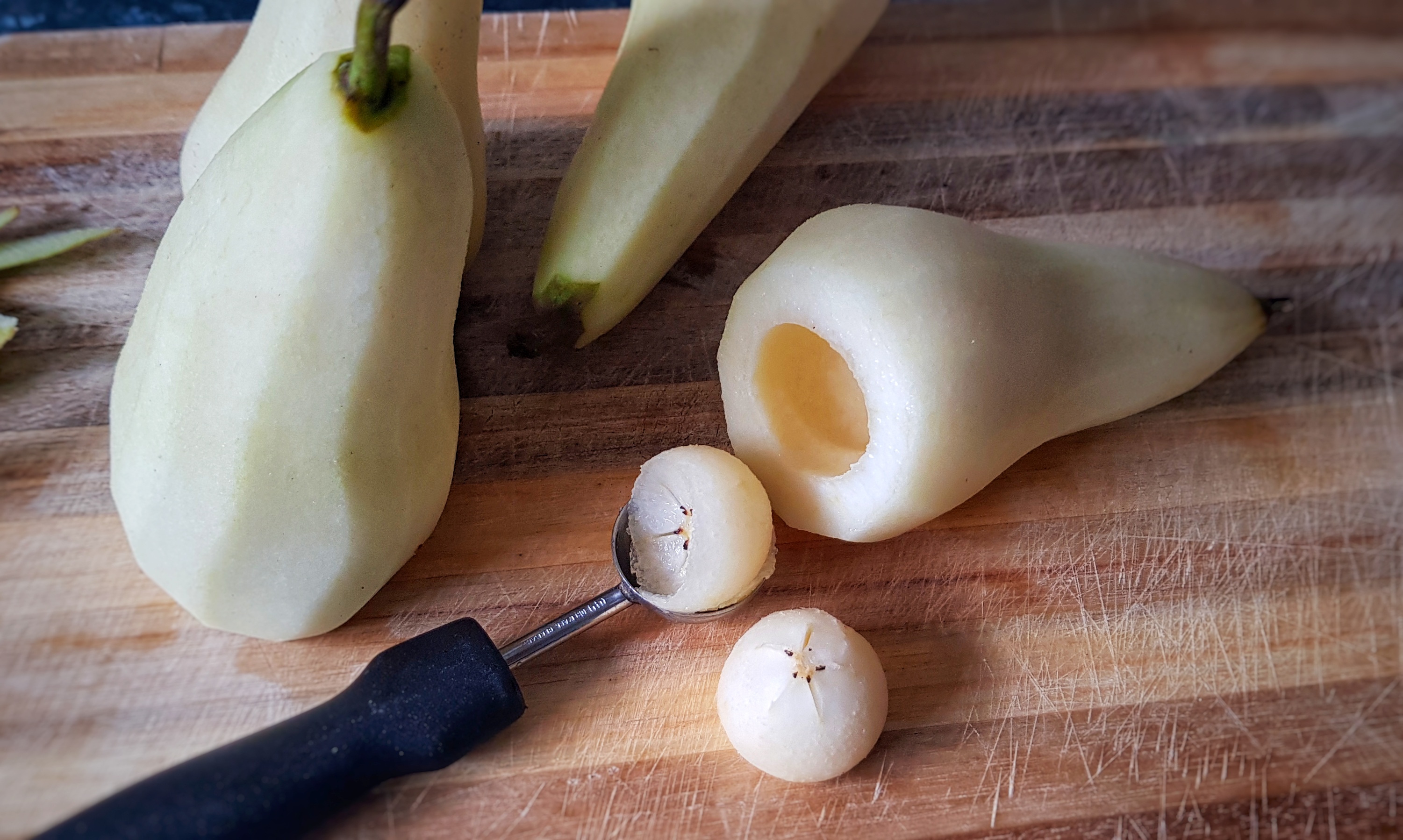
Peel the pears, leaving the stalks intact. Slice the bottom so that the pear is able to stand up sturdily. If you have one, use a melon baller to remove the core from beneath.
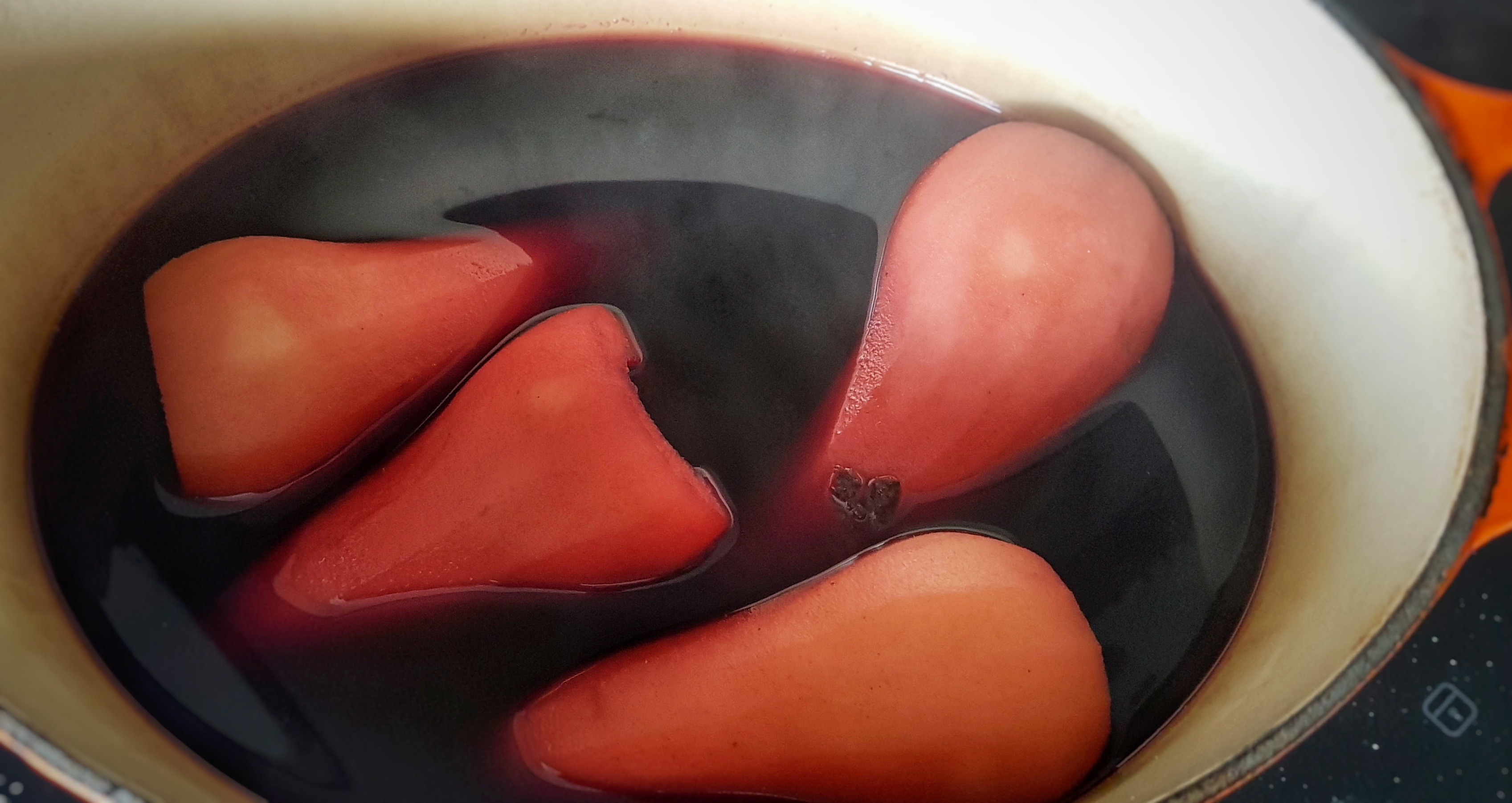
Bruise the cinnamon stick and long pepper (or crack the peppercorns) and place in a pan with the wine and sugar. Put over a medium-low heat and stir to dissolve the sugar. Once dissolved, add the pears.
Bring to a simmer and cover the pan, turn down the heat and poach until tender. This will take around 20 minutes. The pears won’t be completely submerged, so to ensure an even colouring from the wine, turn them half way through cooking.
Remove the pears and set aside. They can be stored in the fridge for up to four days.
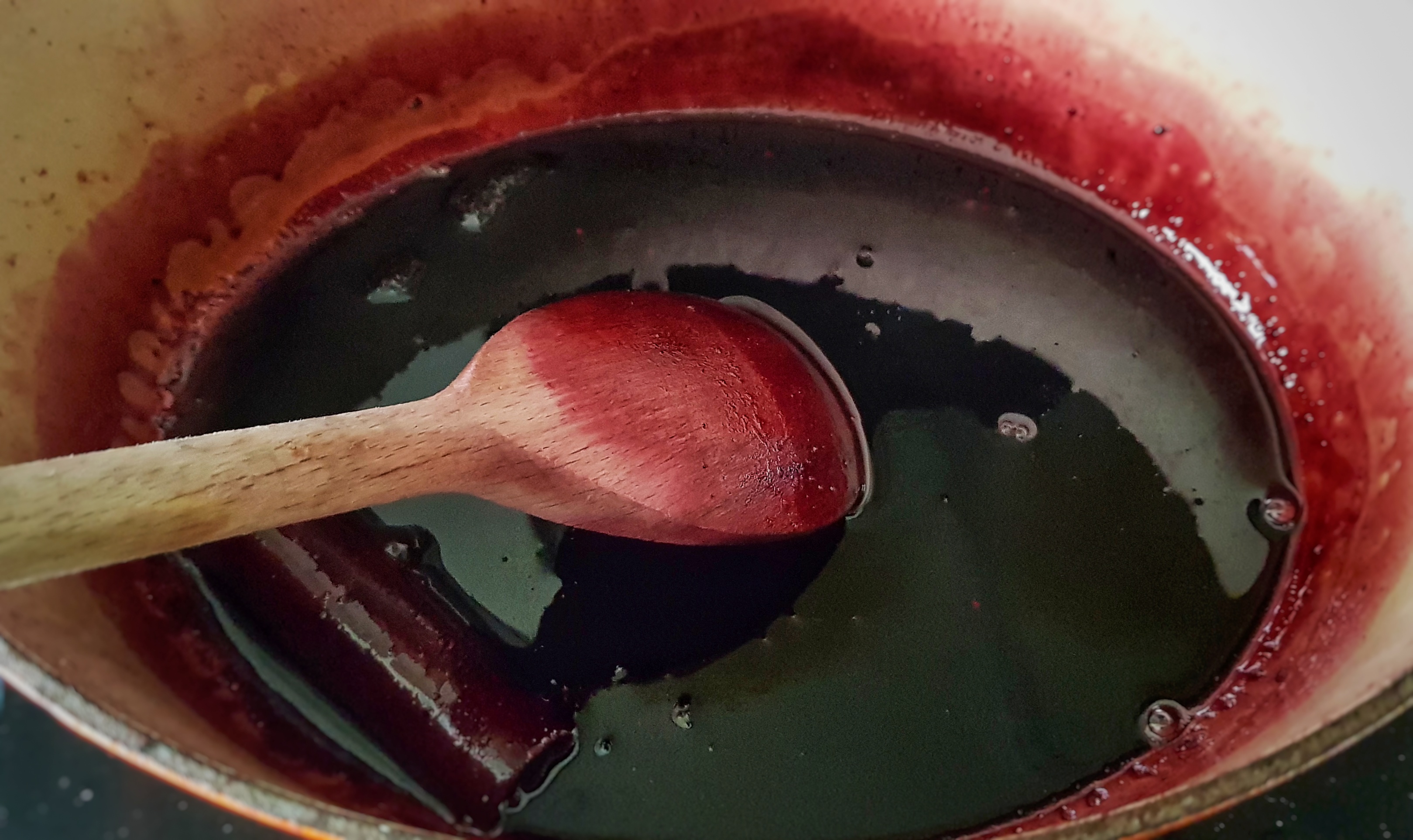
Now make the syrup: turn up the heat and bring the wine to the boil and let it reduce by around three-quarters or more, until viscous. Pour into a jug or jar and allow to cool.
To serve:
Remove the ice cream from the fridge around half an hour before you want to serve. Place a pear in the centre of a plate – it may need another trim at the bottom if it’s been in the fridge a day or two – and carefully spoon a couple of teaspoons of the syrup over the tip of the pear.
Place a biscuit next to the pear – I used a homemade digestive (post coming soon), but a hob-nob would also work very well – and place a scoop or quenelle of ice cream on top the biscuit.
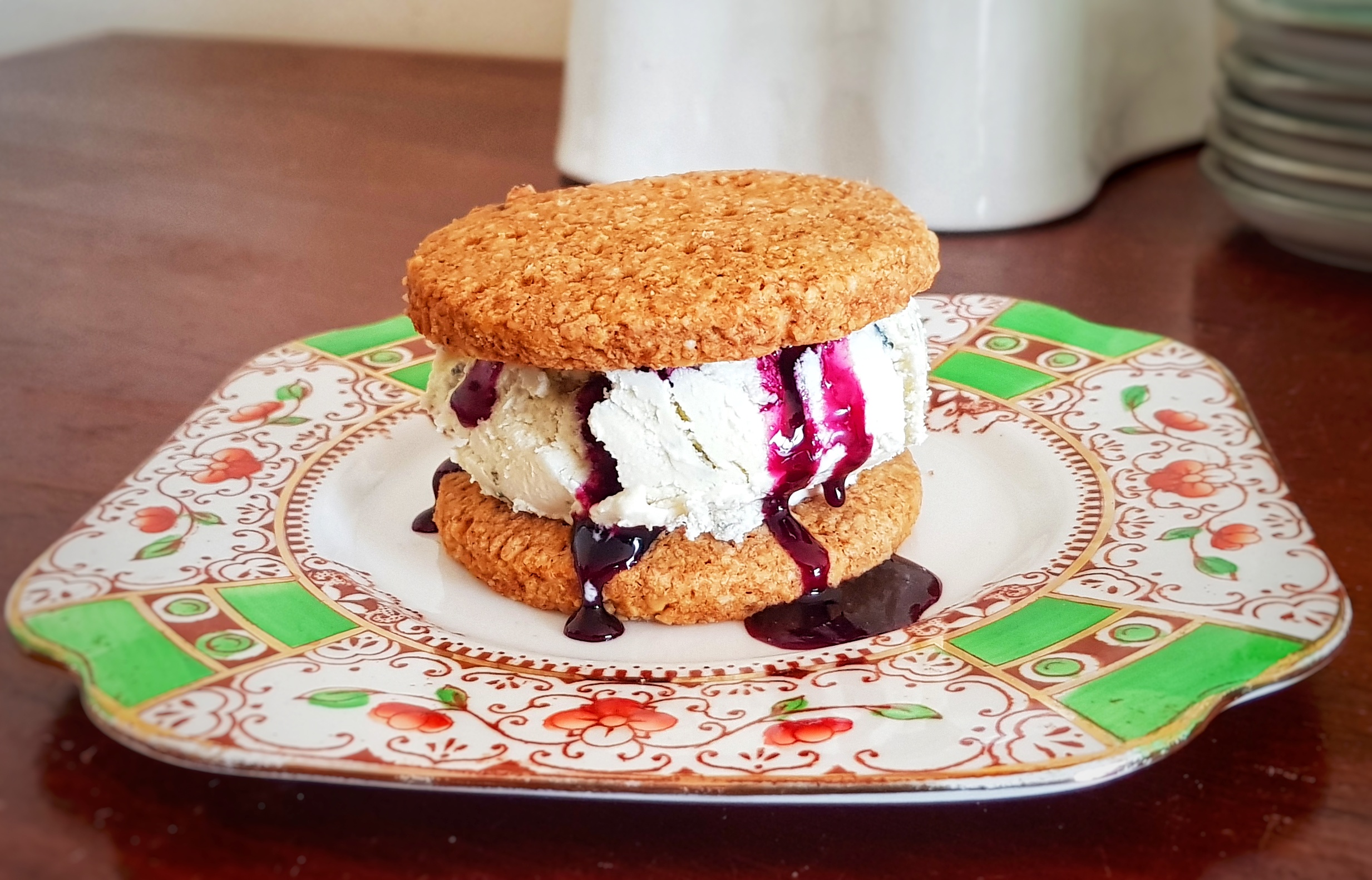
Leftovers: there will probably be leftover ice cream and syrup, the latter of which keeps for weeks. Treat yourself to a very grown-up ice cream cookie sandwich using digestives instead of cookies, cheese ice cream instead of vanilla, and red wine syrup in place of raspberry sauce.




 British Food: A History