Tag Archives: leftovers

To Make Turkey and Hazelnut Soup (& Turkey Stock)

If you are not loving your leftovers at Christmastime, then you are missing a trick: it doesn’t have to be all dry turkey and cranberry sandwiches for the next week.

This is a really great recipe adapted from Jane Grigson’s English Food. I’ve made a few tweaks, and I have provided you with a method for making turkey stock. This recipe would work with leftover chicken, or even pheasant and partridge, or a mix of them.
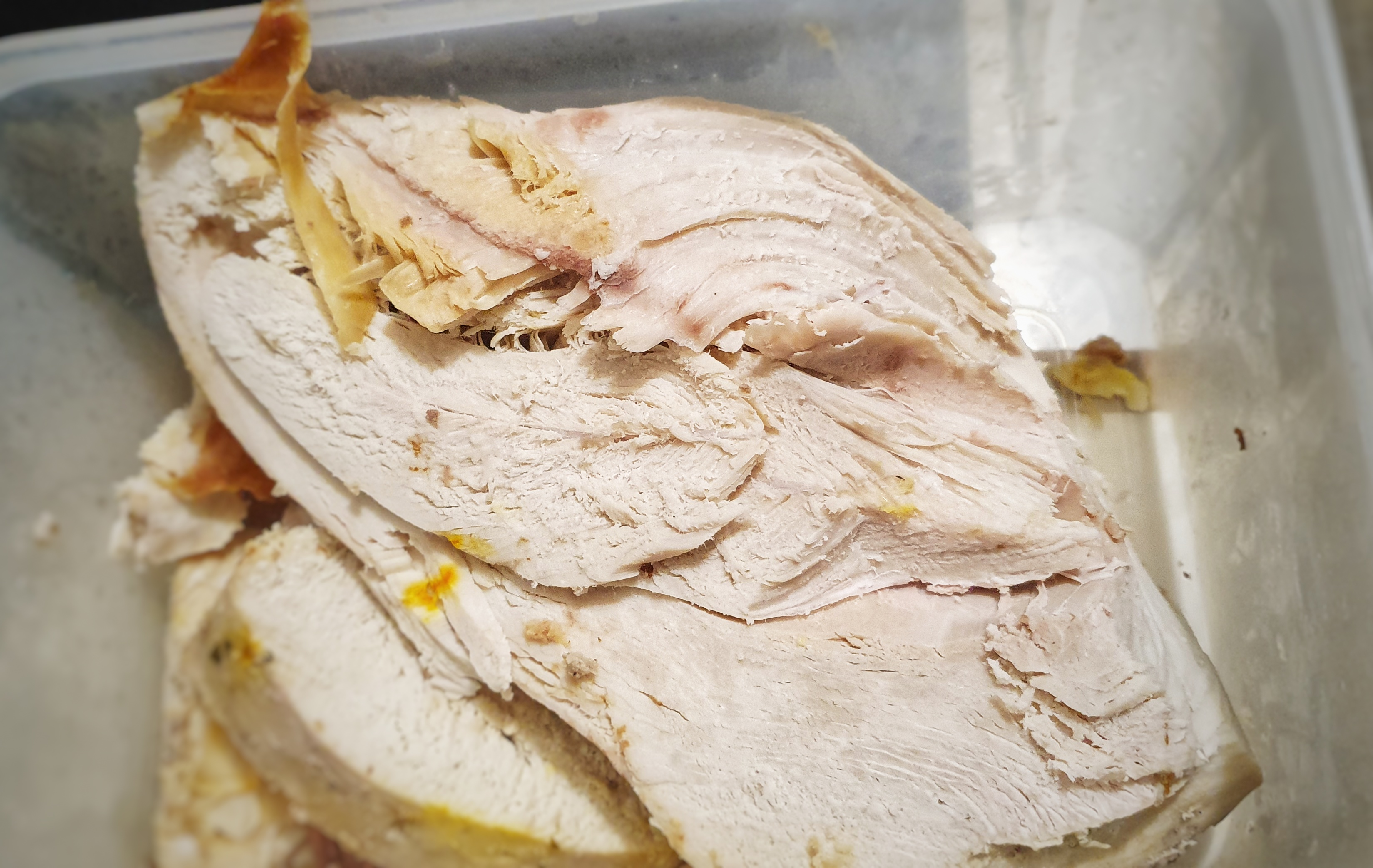
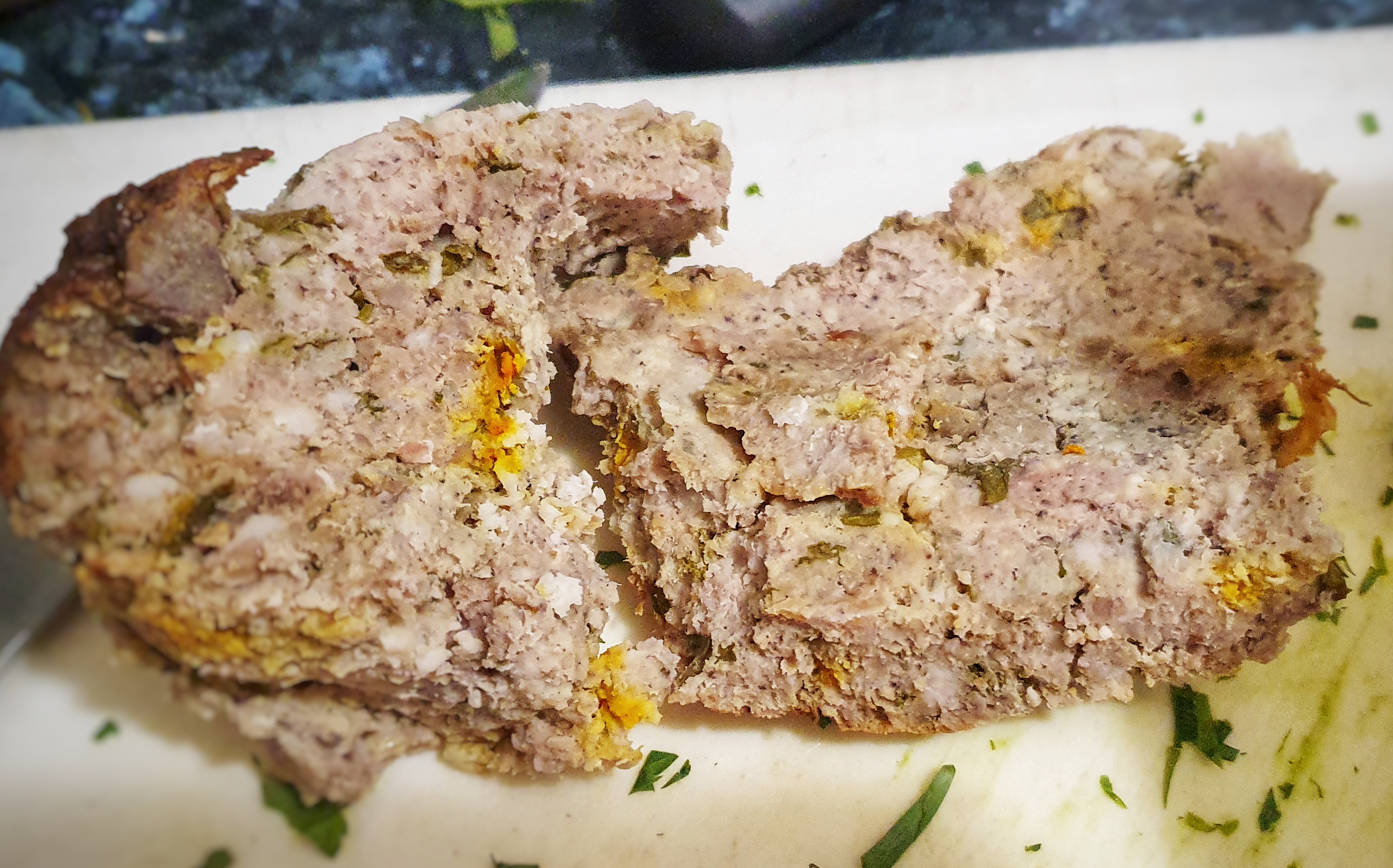
Because it’s a leftovers dish, don’t worry if you don’t have all of the ingredients, though I would say it’s important to have at least three of the basic soup veg and one herb (fresh or dried). It doesn’t even matter if you don’t have any hazelnuts: almonds would work just as well, or you could miss them out entirely. Also, if there are any leftover boiled or steamed vegetables, or roast potatoes, you can pop them in before everything gets blitzed.


If you like the blogs and podcast I produce, please consider treating me to a virtual coffee or pint, or even a £3 monthly subscription: follow this link for more information.


This recipe makes many servings.

For the soup

2 to 3 tbs of fat: this could be butter, leftover fat from the roast potatoes or skimmed from the roast turkey juices

Basic soup veg, peeled, trimmed and diced, such as 2 carrots, 2 onions, 3 cloves garlic, white part of one or two leeks (keep the green parts for the stock), 3 sticks of celery

Herbs: 4 bay leaves, a small bunch of thyme or a tsp of mixed, dried herbs

1 tsp celery salt

1 bunch tarragon leaves, chopped

1 bunch parsley, chopped

1 medium potato, peeled and diced

1.5-2 L turkey stock

Salt and pepper

2 handfuls diced turkey breast (or whatever you have left)

100 g roast hazelnuts, roughly chopped

Leftover stuffing, cut into approx. 1 cm dice

150 ml cream

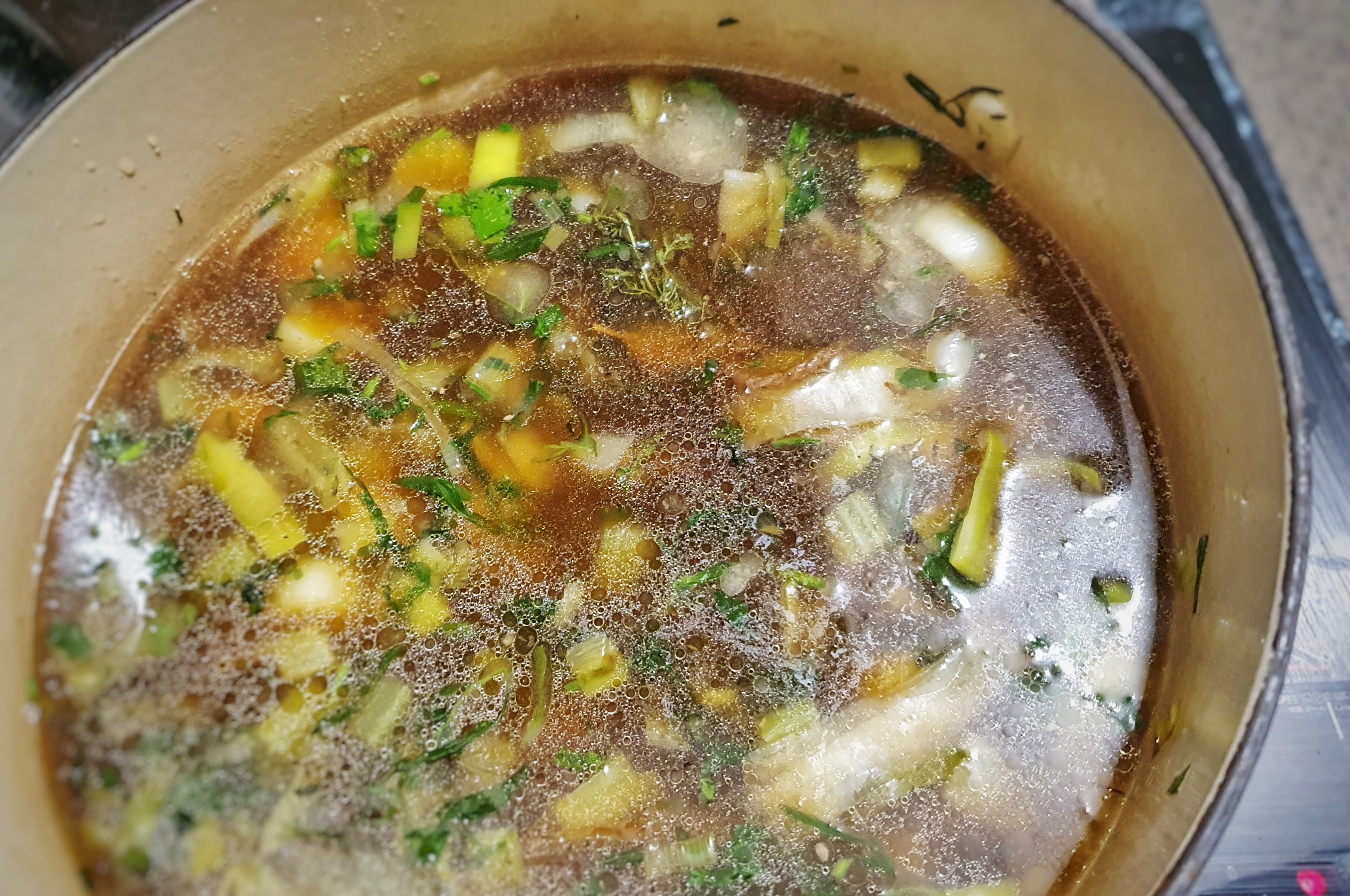
Heat the fat in a stockpot or large saucepan and add the diced soup veg and herbs, plus the celery salt. Stir and fry on a medium heat until things begin to turn golden brown. Add half of the parsley and tarragon plus the potato and continue to cook for another 7 or 8 minutes.
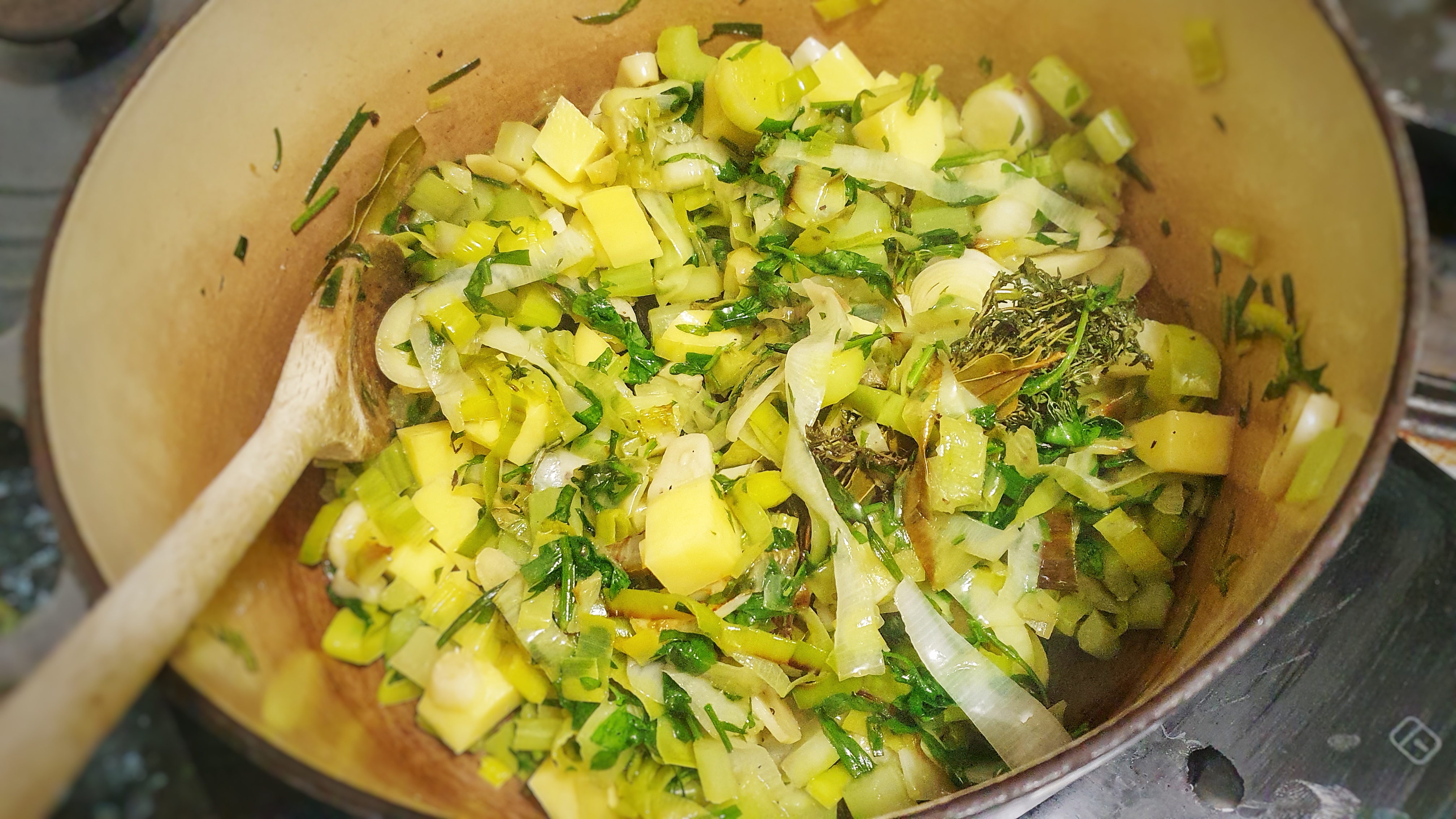
Pour in the turkey stock and bring the whole lot to a lively simmer, then turn it down to gently bubble until the vegetables are nice and soft, about 15 minutes.

Taste, and season with salt and pepper at this point, then add the diced turkey and the hazelnuts. Simmer for a further 7 or 8 minutes, then allow to cool slightly before blitzing the soup in batches in your blender or food processor. Be careful here! Don’t overfill your blender, especially if the soup is still quite hot.
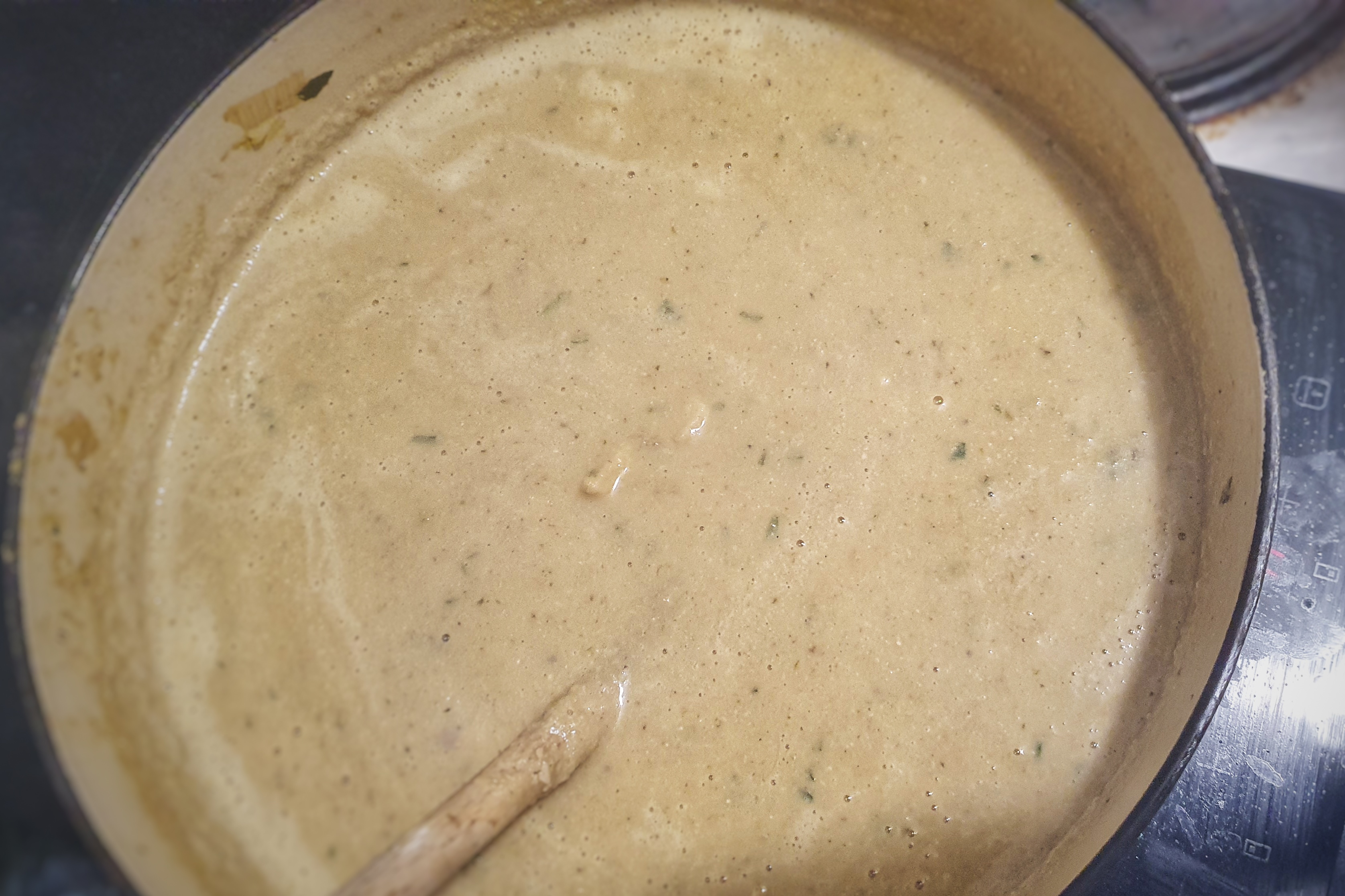
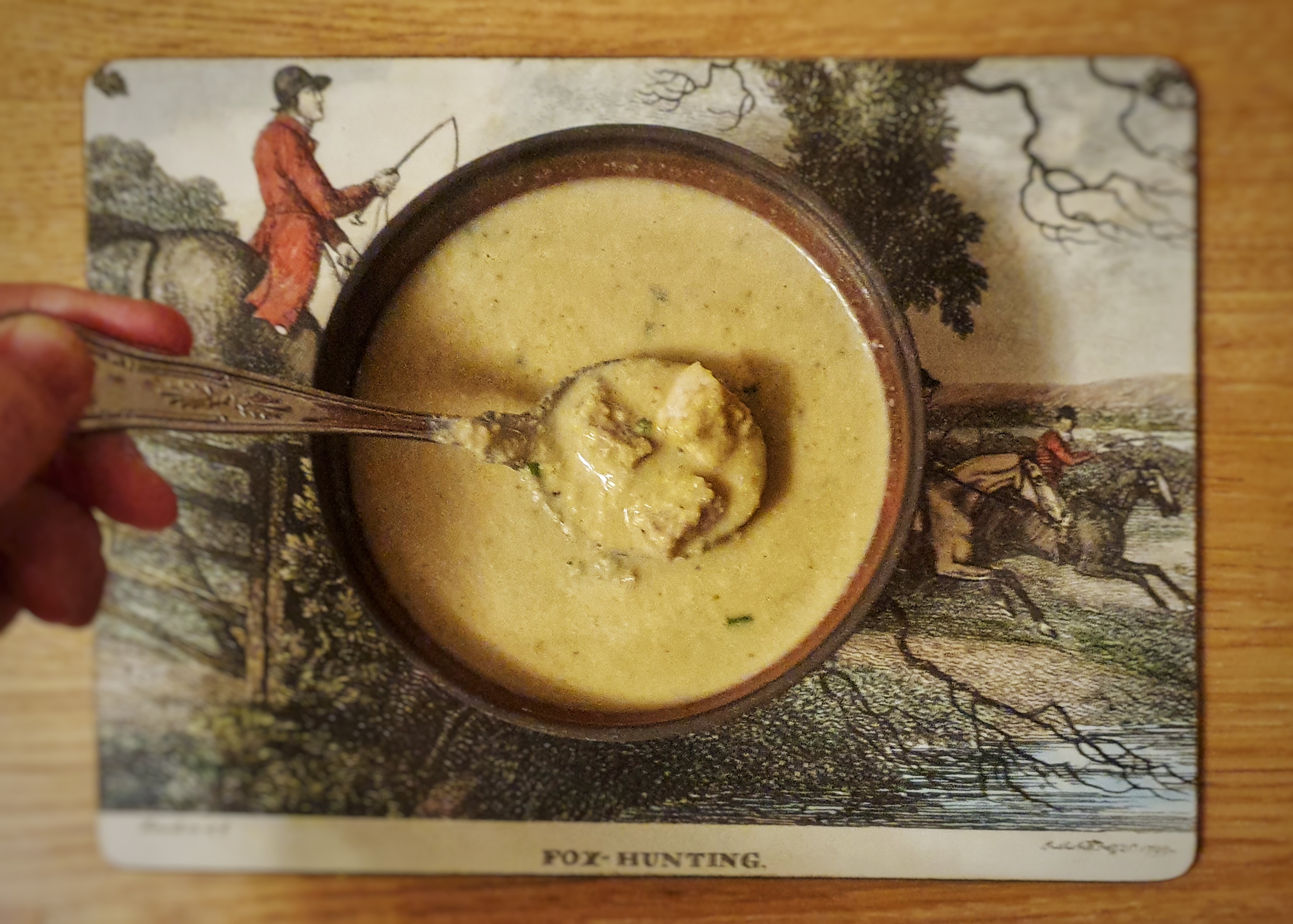
Return to a clean pan, bring back to a simmer, add the cream and the rest of the parsley and tarragon, as well as the diced leftover stuffing. Taste and season with more celery salt and pepper. Serve immediately.
For the stock

I keep vegetable trimmings and peelings in bags in my freezer for stock-making sessions such as these; you can, of course, use regular stock vegetables: celery, onions, carrots, leeks, etc.
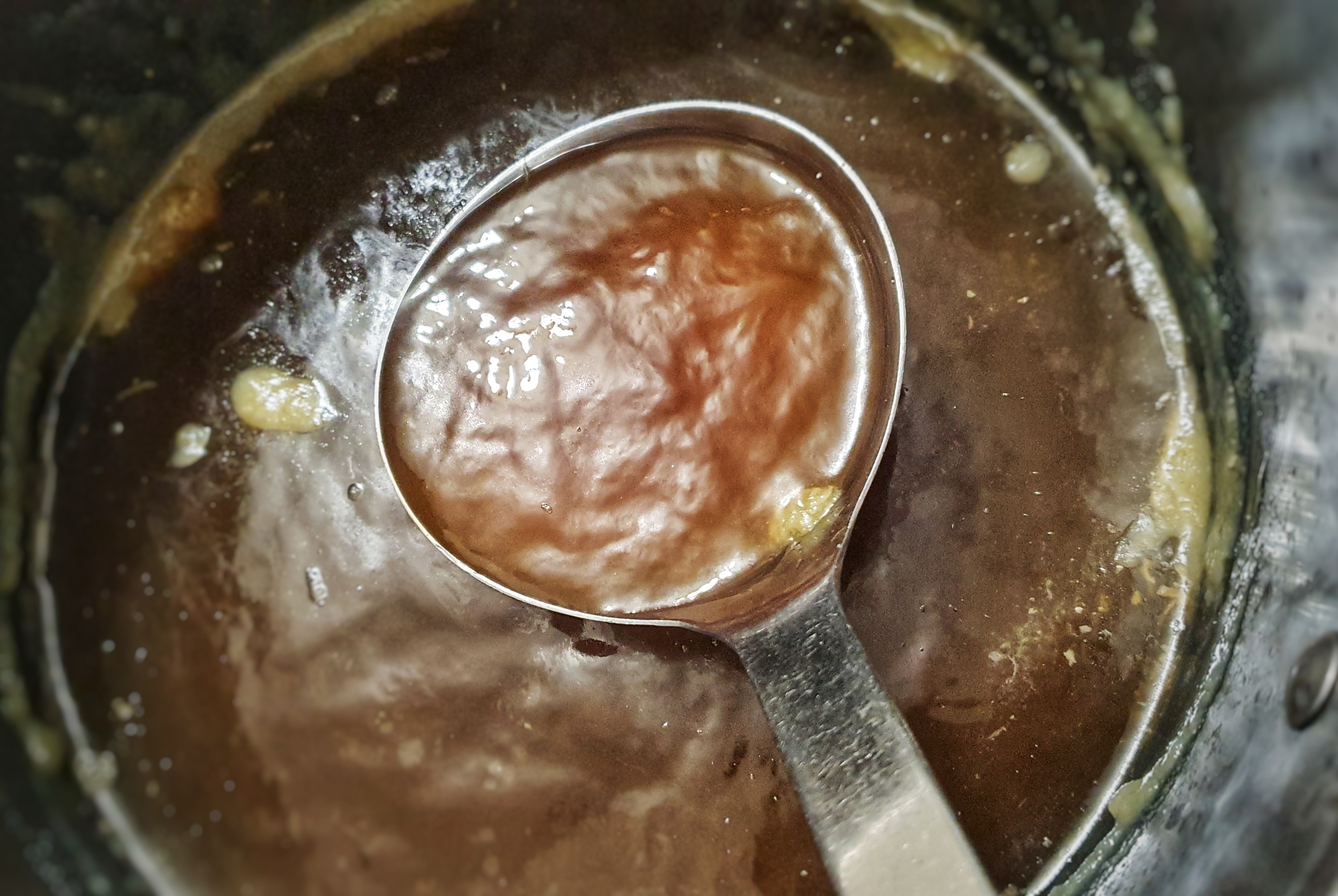
This secret to getting a good colour to your jellied stock is to brown the carcass and vegetables very well.

Makes around 2 litres of jellied stock

2 tbs of fat or oil

The roast turkey carcass, broken into pieces – don’t be too thorough with removing the meat, leave some on.

Vegetable trimmings and peelings (avoid brassicas) or a mixture of stock vegetables: 2 carrots, 2 celery sticks, the green part of a leek or two, a couple of onions, a few smashed garlic cloves.

Aromatic herbs, e.g. 3 or 4 bay leaves, a small bunch of thyme and/or rosemary, parsley stalks

Aromatic spices, e.g. 1 tsp black peppercorns, 6 cloves, 1 tsp allspice berries, 2 blades of mace

1 tsp salt

Any leftover turkey juices or turkey gravy

Cool water to cover

Heat the fat or oil in a stockpot or pressure cooker and add the turkey carcass, the vegetables, the herbs, the spices as well as the salt. Stir and fry until both the turkey and vegetables are starting to turn a good, golden brown.

Add any leftover gravy and top up with water so that it barely covers the turkey and vegetables.

If cooking in a stockpot: bring slowly to a simmer, turn the heat over and let it cook very gently for two hours.

If cooking in a pressure cooker: bring to a simmer, when high pressure is reached, reduce the heat and cook for 25 minutes before turning off the heat and allowing the stock to depressurise.

If cooking in a slow cooker: transfer everything to your slow cooker (careful!) and cook on a high setting for 1 hour and then a medium setting for 2 more hours.

When the stock is ready, pass the whole thing through a strainer, pressing down on the cooked mush with the back of the ladle: we want as much flavour as possible. Let the stock cool down and then refrigerate. Skim away the fat before using.

Tip: If you need the stock straight away, you can skim the fat with a spoon, but a quicker method is to throw in a couple of handfuls of ice cubes. The fats immediately freeze to the exterior of the cubes, and can be lifted out before the ice has had the chance to melt.

1 Comment

Filed under Britain, Christmas, food, General, Meat, Recipes, Soups

Summer Pudding

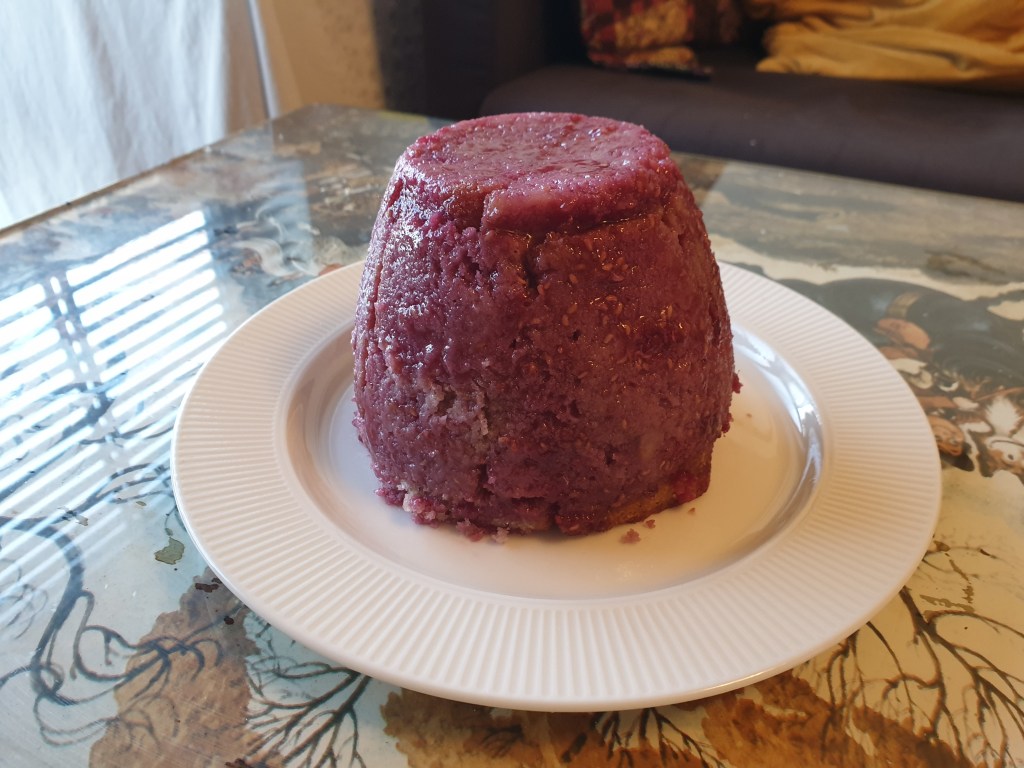
Summer pudding is one of the best and one of the most surprisingly versatile puddings there is. It’s also great fun to make and seeing as the first soft fruits crops are coming in, I thought I’d share my recipe with you. Before I do though, I should get the uninitiated up to speed on this quintessentially British dessert.

Summer pudding is typically a mix of red summer soft fruits lightly poached and set in a pudding basin that has been lined with berry juice-soaked white bread. For many, the thought of cold soggy bread makes them feel a little queasy, but they shouldn’t because the texture is not as one would expect; it is soft and giving and nothing like the texture of soggy bread in hot broth, for example. One way it is versatile, however, is that you can use other things in place of the bread, such as slightly stale slices of madeira or pound cake. Indeed, this is the way I prefer to make it because this way, you quickly dip the cake in the juices (otherwise it just breaks apart) unsoggy and much more pleasing in texture, rather like the base of a trifle, though a less vibrant colour. It’s swings and roundabouts isn’t it.

The other way in which it is versatile is in the fruit you can use. There are many who are purists who insist you use 100% raspberries, for others there must be at least 50% redcurrants, and some think there is no place for the strawberry. These people are all pudding fascists. I’m not picky and I go for what’s in season at the time: gooseberries, red, white or blackcurrants, blueberries, blackberries, strawberries, whatever.

The summer pudding goes back to the nineteenth century as far as I can see, the earliest mention of something resembling it popping up in an American publication from 1875. It describes a hot pudding consisting of currants and sugar steamed in a basin lined with bread. I’ve also found a British ‘midsummer pudding’ that is also hot but uses a suet crust and is – oddly – more recent. A cold pudding made in the manner we know and love today appears around the turn of the twentieth century under the curious name of ‘hydropathic pudding’, so called because it was introduced to ladies at health spas as a low-calory alternative to regular stodgy suet puddings.

I have also found other recipes for autumn pudding and winter pudding, that have swapped the summer fruits for stewed apples, pears and dried fruit or blackberries, sometimes switching white bread for brown.

This is my recipe and it makes just one small pudding, unlike most other recipes that make a giant one using a re-mortgage worth of redcurrants, so this is the recipe for those who do not grow their own. In fact, all you should need are two or three punnets of soft fruit.

Serves 4:

300 g ripe soft summer fruits (raspberries, blackcurrants, red or white currants, blueberries, strawberries, gooseberries etc)

80 – 100 g caster sugar

A shot of an appropriate liqueur such as Chambourd, optional

2 or 3 slices slightly stale bread, crusts removed, or one stale madeira or pound cake, cut into 7 to 10 mm slices

To serve: clotted cream or lightly whipped double cream

Rinse the fruit, cutting any large fruits such as strawberries and gooseberries into halves or quarters as appropriate. Scatter in the sugar, but don’t make things too sweet, especially if using cake rather than bread. However, if you are using green gooseberries you many want to shake in the full quota. Pour in the liqueur if using, stir, cover and leave to macerate overnight.

Next day, put the contents of the bowl in a saucepan over a medium heat. Stir gently to dissolve the sugar, trying not to squish the fruit too much. When dissolved, bring to a boil and simmer gently for two minutes, then turn off the heat. Set aside to cool down.

Cut your slices of cake into enough pieces to line a 450 ml / 1 pint pudding basin. I cut rectangles that taper slightly at one end so that they fit nicely.

Dip each piece of cake or bread in the juicy warm fruit and press into the inside of the basin. Repeat with more slices until you have covered the sides, then cut a circle to fit in the bottom. Be careful if using cake at this point as they are prone to break when soggy.

Now spoon the fruit mixture into the pudding, packing everything in well with the back of a spoon.

Cut more cake or bread to make a lid, press down hard with fingers, then place a saucer on top with a suitable weight and place in the refrigerator overnight.

When ready to serve, loosen the pudding a little with a knife before inverting it on a plate. Be patient as the pudding leaves the mould – do not be tempted to hurrying things, lest disaster strikes. If using a plastic basin, massage it a little to help it along.

Serve with any remaining juice or fruit and the cream.


If you like the blogs and podcast I produce, please consider treating me to a virtual coffee or pint, or even a £3 monthly subscription: follow this link for more information.


References:

Cookery from Experience (1875) Sara T Paul

English Food (third edition; 1992) Jane Grigson

Pride and Pudding (2015) Regula Ysewijn

‘Summer Pudding’, Foods of England website http://www.foodsofengland.co.uk/summerpudding.htm

‘Winter Pudding’, Foods of England website http://www.foodsofengland.co.uk/winterpudding.htm

11 Comments

Filed under Uncategorized

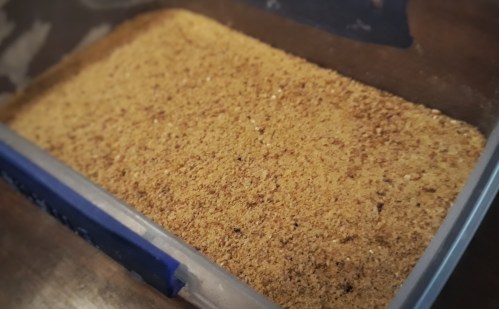
Breadcrumbs – a Beginner’s Guide

Many traditional recipes require fresh or dry breadcrumbs; they are an integral part of many puddings and savoury dishes. They are present in small amounts in sausagemeat, terrines and other early meat puddings absorbing the fats, or may be the main constituent in the stuffing for a roast bird. They are also sometimes used in dumplings instead of wheat flour. In sweet puddings they provide body and structure to custards such as Queen of Puddings, or the cheese and egg mixture in a Yorkshire Curd Tart.

Dried breadcumbs can be sprinkled over the tops of dishes (such as my Macaroni Cheese) or used to coat something ready for deep or shallow-frying. I have memories of my mum buying those oddly-orange coloured packs of dried breadcrumbs to coat her fish before frying it. Well, needless to say, making your own will not result in everything it touches look like a Findus Crispy Pancake.

Making Fresh Breadcrumbs

Fresh breadcrumbs require stale bread, and I think that only real bread – i.e. a loaf made at home or in a real traditional or artisan bakery – makes decent breadcrumbs. Factory-made supermarket bread and tends to go mouldy before it goes stale due to its high-water content.

The type of bread is typically white bread, but you can use any you want, especially if there is only a small amount required, but wholemeal and sourdough breads will impart their own flavours if the main constituent. White bread and brioche are best for sweet puddings.

Unless the bread is very well-coloured, I don’t usually remove the crusts, even if the recipe says I should. Feel free to remove them yourself, I don’t mind the odd brown speckle in the final dish.

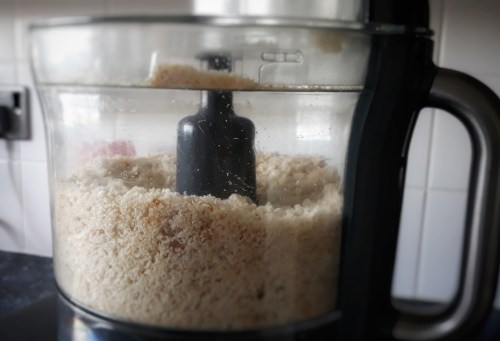
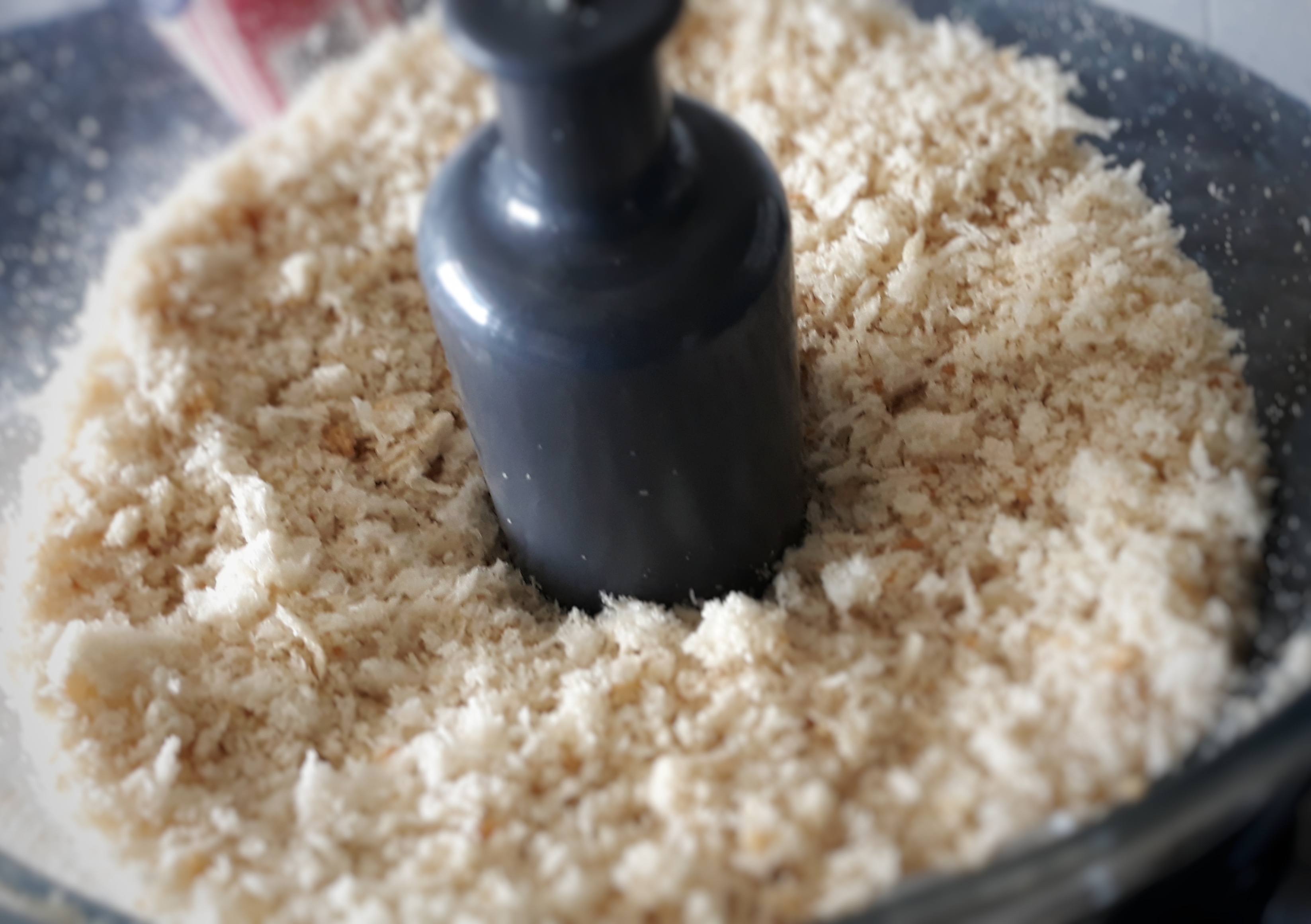
Making them couldn’t be easier. If you have a blender or food processor, simply tear the bread in small chunks and blitz. Usually slower speeds work best. Regular blenders can be a little tricky because they taper at the blades; however, dust off that Nutri-Bullet; they work excellently for breadcrumbing.

If you don’t have a food processor or blender, you can go old-school and grate the bread by hand with a large cheese grater with a good grip on it. Good quality bread will crumb easily, so it isn’t the chore you might expect it to be.

Your breadcrumbs can be used straight away or frozen for later. Whenever you have stale bread in the house, crumb it and freeze it and it’s there waiting for you the next time you have the uncontrollable urge to make a Treacle Tart!

Making Dry Breadcrumbs

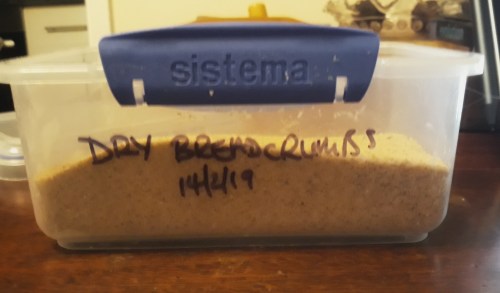
If dry breadcrumbs are what you are after, just take your fresh crumbs and spread them on a dry baking tray and pop them in the oven set to around 110°C. Check them after 20 minutes and give them a mix around. Keep baking in bouts of 20 minutes until you are satisfied that they are completely dry. Let them cool and place in an airtight box. They will keep happily for several weeks.

If the crumbs are not fine enough, blitz in a clean but bone-dry food processor until they are as fine as you desire, and great for a posh Scotch Egg.


If you like the blogs and podcast I produce, please consider treating me to a virtual coffee or pint, or even a £3 monthly subscription: follow this link for more information.


8 Comments

Filed under baking, bread, food, Recipes

The Hors d’Oeuvres: Mediaeval Pork Tartlettes

The first course of my Dinner Party Through Time was a little amuse bouche from a mediaeval recipe dating around 1400. On the throne was Henry IV, Geoffrey Chaucer was a contemporary; indeed, he was present at his coronation.

The recipe calls these little mouthfuls tartlettes, but they are actually more like a stuffed ravioli or even dim sum. Left-over pork is ground up with spices and other flavourings, wrapped up in a paste and simmered in salted water.

Unfortunately there’s no photographic evidence of this dish so you’ll have to make do with a picture of Henry IV and imagine him eating one.

MOU202462 Portrait of King Henry IV of England (1367-1413) (oil on canvas) by English School, (17th century) oil on canvas 50.5x43 Private Collection © Philip Mould, Historical Portraits Ltd, London, UK English, out of copyright

Here’s the recipe:

Take pork ysode and grynde it small with saffron, medle it with ayren and raisons of coraunce, and powder fort, and salt; and make a /bile of dowhg and close the fars thereinne. Cast the tartlettes in a pan with faire water boillyng and salt.

Although it is relatively simple to cook, this was very much a rich man’s dish with saffron and currants as well as powder fort. This was a commonly used spice mix made up of ground ginger, cumin and long pepper. Long pepper is very difficult to source these days, so for my version of the recipe I used regular black pepper.

I could have covered my meat mixture, or ‘farce’, in thinly rolled fresh pasta, but instead went for the less fiddly option of using filo pastry. I wasn’t convinced that the tarlettes would taste good boiled as in the recipe, so for the dinner party, I simmered half of them and baked the remainder. It turned out that everyone preferred the simmered tartlettes. How little faith I had!

This recipe makes around a dozen tartlettes

350g of lean, cooked pork

good pinch of salt

heaped teaspoon of powder fort spice mix

30g currants

1 tbs single cream

1 egg, separated

4 sheets of filo pastry

salted water

Powder fort spice mix:

3 tsp ground cumin

1 tsp ground black peppercorns

1 tsp ground ginger

To begin, mince the cooked pork and thoroughly mix in the salt, powder fort, currants, cream and the egg yolk.

Unfold three or four sheets of filo pastry. It can be a tricky number to keep it from drying out, but you should be able to avoid any major disasters by keeping the pastry sheets covered with a damp tea towel.

Cut a strip of filo three centimetres thick and roll a generous teaspoon of the mixture in the filo strip. You are aiming to cover the filling with two or three layers of pastry so there may be enough in one strip for more than one tartlette. Seal the pastry with a light brush of egg white. Continue until you have used up all of the mixture.

Cook the tartlettes by dropping them into simmering salted water for three or four minutes, remove with a slotted spoon and drain them carefully on some kitchen paper. Eat them immediately.

If you don’t want to boil your tartlettes, they can be brushed with more egg white and baked in the oven at 200⁰C for 8 minutes or so.


If you like the blogs and podcast I produce, please consider treating me to a virtual coffee or pint, or even a £3 monthly subscription: follow this link for more information.


5 Comments

Filed under Britain, cooking, food, General, history, Meat, Recipes, Uncategorized