
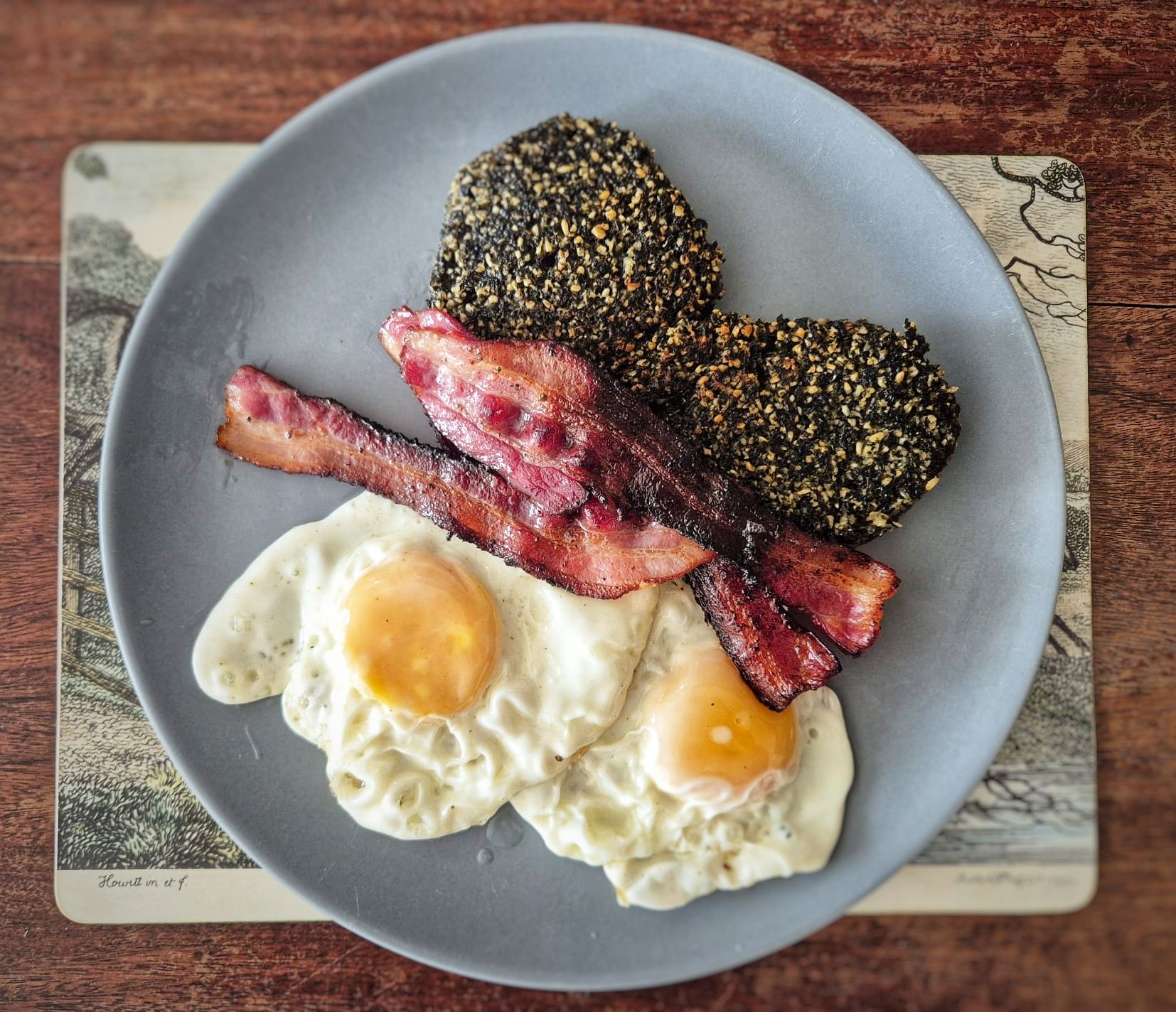
I went on a trip to Wales earlier this year with the family and brought several packs and tins of laverbread back with me. I love its black-green colour and intense marine flavour, though I must admit the first time I tried some, it was a bit of a shock. There is really nothing else like it; some folk compare it to spinach or caviar, but I don’t think those comparisons do it justice. It certainly does have a zing of iodine and ozone, but it is not fishy.
For those not in the know, laverbread is not bread at all, but a preparation of the seaweed known as laver in Wales and England, or sloke in Scotland and Ireland.[1] Its species name is Porphyra umbilicalis and it is found in most temperate places in the world. In Japan, it is called nori, and is used in sushi.
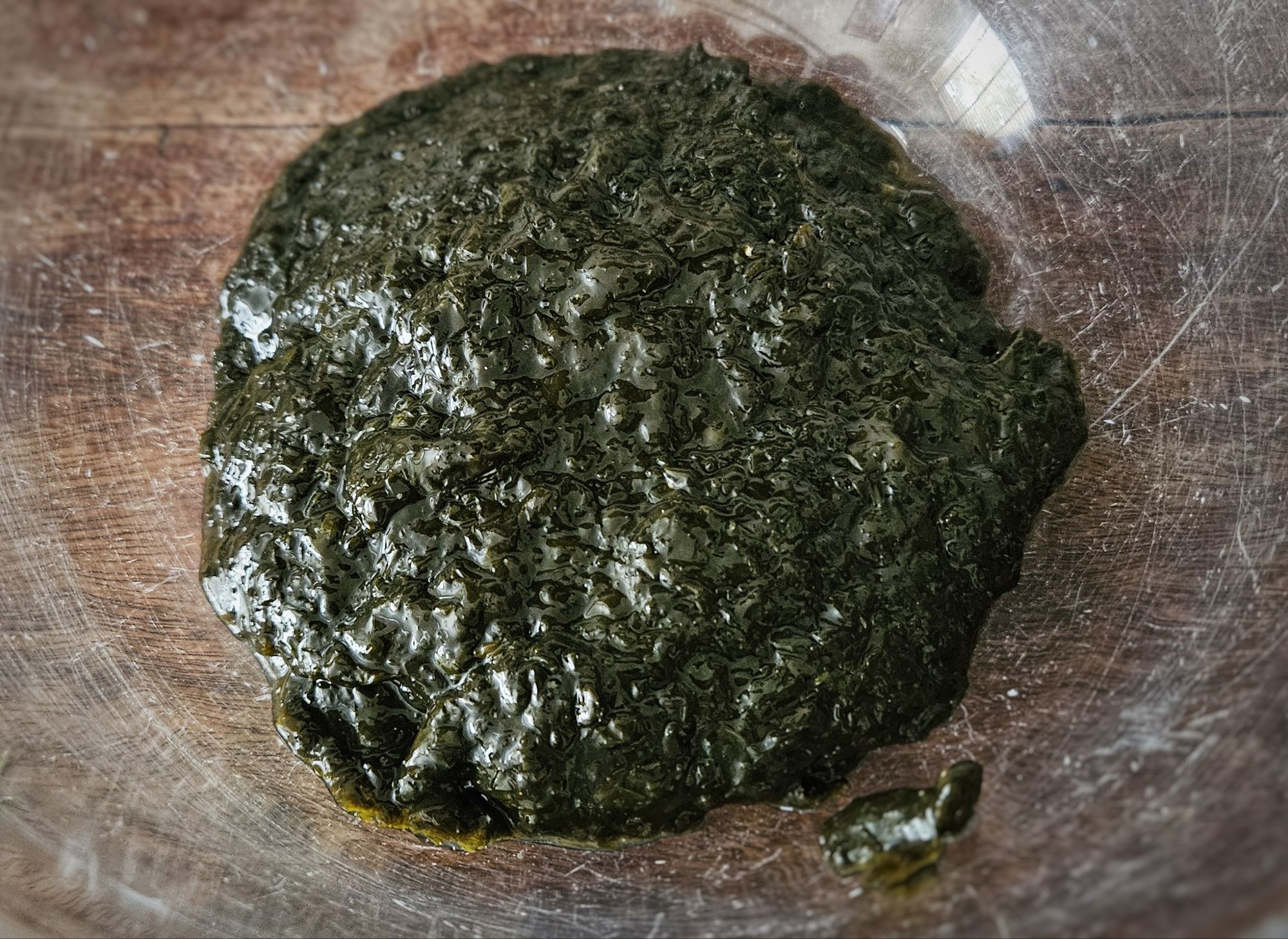
I’ve been meaning to make a podcast episode about laverbread, so I’ll not go into a huge amount of depth other than to say, to make it, laver is washed, chopped and boiled for several hours until it becomes a dark, gelatinous liquid. Don’t let that put you off – it is one of the best things that you can ever eat.
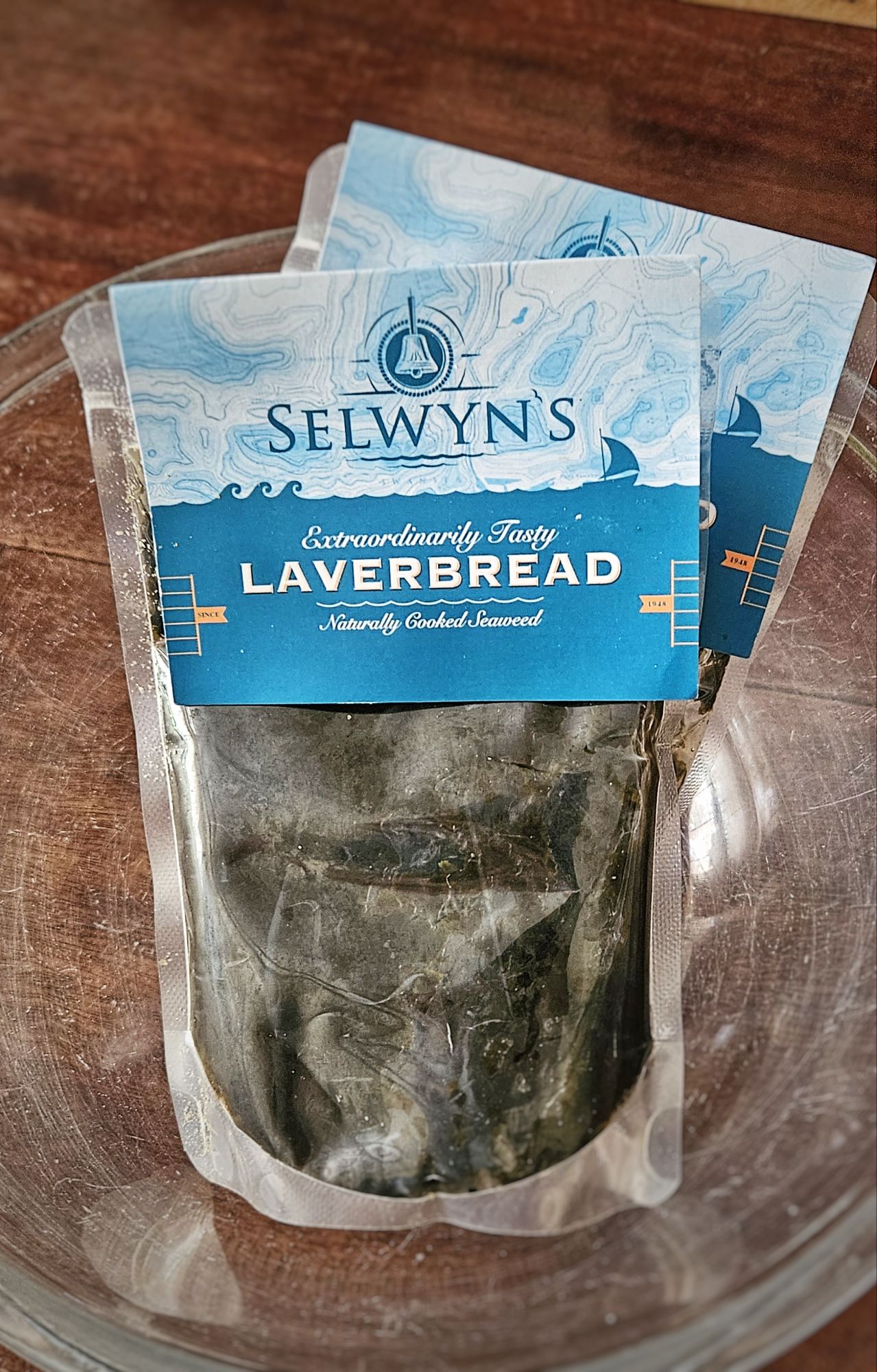
I first bought some many years ago at Swansea market, but you can find it in good delis or online. I used Selywn’s here, but I have also used Parson’s in the past very successfully.
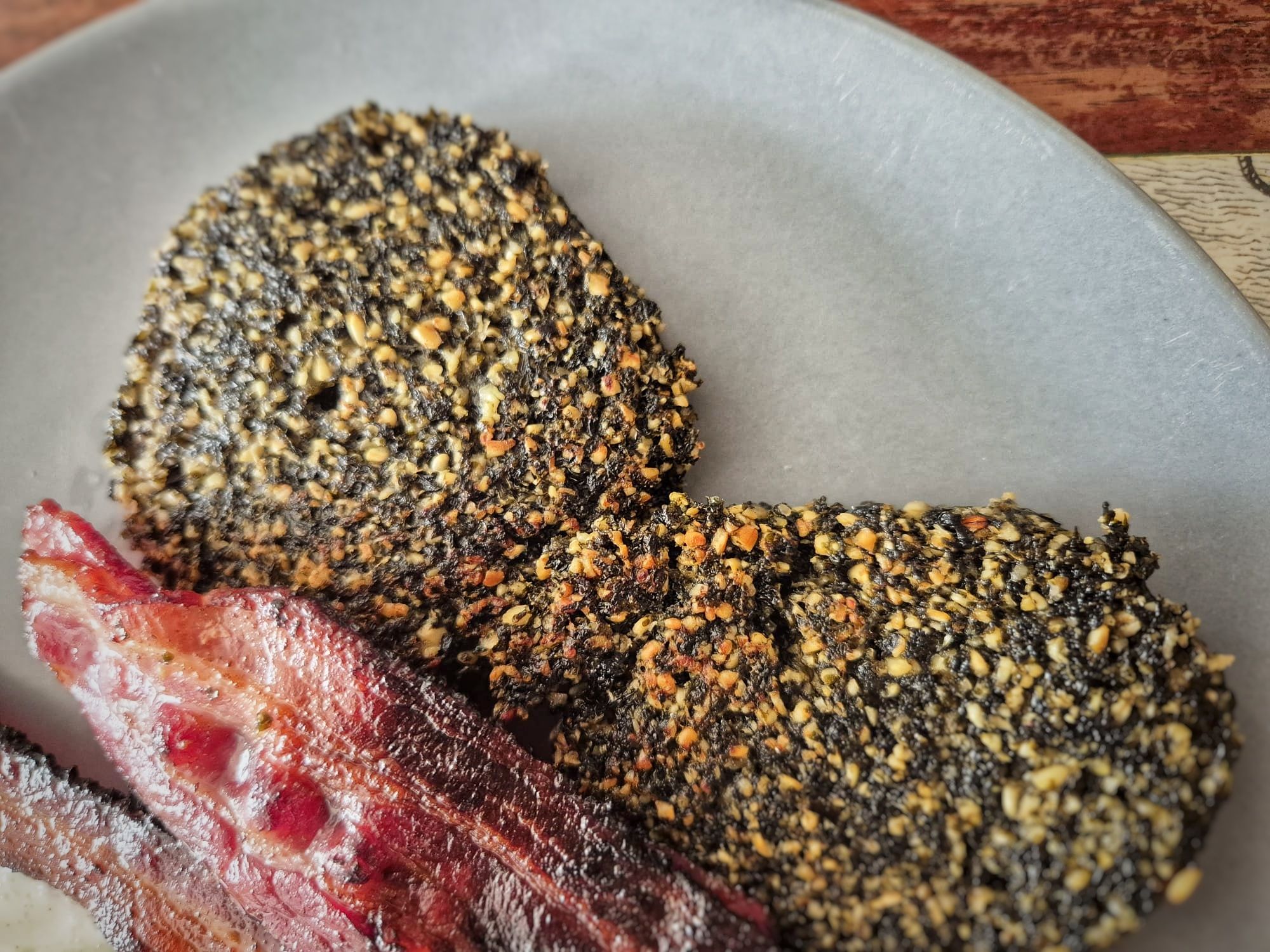
I think that the best way in with laverbread is to make laver cakes – something I discovered when cooking my way through Jane Grigson’s English Food.[2] They are very simple to make; Theodora Fitzgibbon provides a succinct description of how they are made in A Taste of Wales (1971):[3] ‘mix prepared laverbread, then shape into little cakes and fry in bacon fat; or coat the laverbread in oatmeal.’ In a 1892 edition of The Housewife, Sidney Vernon suggests frying them in goose fat or salt butter and seasoning them with lemon juice or vinegar, pointing out that ‘[it] should be fried as crisply as possible’.[4]
I love making these for breakfast by frying them in bacon fat and serving them with the crisp bacon alongside fried eggs, but others suggested grilled ham or toasted ham, or roast mutton as well as with cockles, kidneys or as part of a mixed grill.[5]
Subscribe to get access
Read more of this content when you subscribe today and unlock lots of premium content, including the secret podcast, bonus blog posts (such as this one) and recipes, my Easter eggs and a monthly newsletter. Please click here for more information.
Notes
[1] FitzGibbon, T. (1971). A Taste of Wales. J M Dent & Sons Ltd.
[2] Recipe #352 Laverbread and Bacon https://neilcooksgrigson.com/2012/08/31/352-laverbread-and-bacon/
[3] FitzGibbon, T. (1971).
[4] Vernon, S. (1892). Fish, and How to Cook It. The Housewife, Volume 7, 359–363.
[5] Fitzgibbon (1971); Grigson, J. (1992). English Food (Third Edit). Penguin; Vernon (1892).


I lived in Wales for a year and had laverbread – I loved the taste, but couldn’t get used to the gelatinous consistency. However, I recently discovered jars of dried and toasted laverbread, which goes under the name of “Welshman’s Caviar” (a term that the actor Richard Burton used to describe laverbread!) – which is delicious sprinkled into soups, or – my favourite – savoury Welsh cakes made with cheese and some dried laverbread.
LikeLike
Seaweed Welsh cakes sound delicious!!
LikeLike