Category Archives: cooking

Nose to Tail Eating

A few months ago I decided to work through every cut of every animal that is bred and killed to adorn our plates for the blog. Hopefully I’ll succeed in this – both having been a vegetarian in my past and hating any kind of food waste have greatly contributed to this bee I have in my bonnet. There are so many different cuts of meat – as in muscle – and offal – as in odd bits – that we should revel in the astounding variety we have, but instead we generally do not; chickens are killed for their breasts, cows are killed for their rumps and fillets, and pigs and sheep for their legs and loins. I wouldn’t feel guilty if I bought a pack of chickens’ livers that came from intensively-reared chickens, but I could never buy chicken breasts from those chickens. There is perhaps an argument that vegetarians and vegans could eat such offcuts, since no chicken has died for its giblets or calf for its sweetbreads.

Things are getting better – people are becoming thrifty and with all this Horsemeat Scandal of the past few months, they have become much more interested in meat. Cheaper cuts are being tried, and everyone is realising that the whole animal is delicious. My local butcher has trays of hearts, sweetbreads, pigs’ tails and allsorts, which I am sure were not so easily available a just couple of years ago. I wonder if we’ll ever get back to the stage where there are trays of calves’ and lambs’ brains in the butcher’s shop window. I doubt that, but hopefully it will be possible to order them at least. I haven’t tried all of the cuts myself – tripe and chitterlings leave a gap in my own meat cookery knowledge.

So I think things are looking good – the more offcuts and offal we eat, the fewer animals are reared to feed us. This in turn makes meat cheaper, and animal husbandry kinder and less intensive which can’t be bad.

fergus henderson

I have to mention Mr Fergus Henderson here of course – he is the owner of St. John restaurant in London who coined the term Nose to Tail Eating and really brought the eating of offal right into the foreground of Britain’s food culture today. Of course many recoiled in horror, but then it turned out that all this food was delicious. All’s well that ends well. I had the idea of using all the cuts when I made oxtail soup a few months ago, and so I dubbed the series ‘Tail to Nose Eating’. I am sure Mr Henderson won’t mind.

The other person to name here is Hugh Fearnely-Whittingstall whose experiment in self-sufficiency has created the behemoth that is River Cottage. His astoundingly comprehensive River Cottage Meat Book is simply excellent (as are the other ‘handbooks’ he and his team have produced) and it cannot be bettered. His television programmes are great too as they show the process of growing, eating and killing animals when done on a small scale and how this compares to the farms that supply to our supermarkets. HFW also shows us all how to cook offal and other underused cuts and we get to see people eating the food and not throwing up, but licking their lips and having second portions.

meat book

I have already given several recipes that could be counted as Tail to Nose Eating; as already mentioned, there’s the oxtail soup, but also potted chicken livers, braised lamb shanks and duck stock. I have a couple saved up that will be appearing on the blog soon, should I pull my finger out and get them written…


If you like the blogs and podcast I produce, please consider treating me to a virtual coffee or pint, or even a £3 monthly subscription: follow this link for more information.

8 Comments

Filed under Britain, cooking, food, General, Uncategorized

Pompion (Pumpkin) Bread

I was recently bequeathed a lovely home-grown organic pumpkin from my good friends Simon and Rachel Wallace – they are slowly but surely building up a small-holding on a farm in the Derbyshire country. They are living the dream, and I am more than a little jealous. Anyway, I wanted to do the lovely pumpkin justice and make some nice meals. I remembered a recipe for pumpkin bread that appears in English Bread and Yeast Cookery by Elizabeth David. She takes it straight from the original manuscript, an 18th century periodical called The Family Magazine. Back then pumpkins were more commonly called pompions, and it is more like some advice rather than a recipe:

Slice a pompion, and boil it in fair water, till the water grows clammy, or somewhat thick; then strain it through a fine cloth, or sieve, and with this make your Bread, well kneading the dough; and it will not only increase the quantity of it, but make it keep moist and sweet a month longer than Bread made with fair water only.

The Family Magazine, 1741

It funny that the British have always had a thing for bread that stays ‘fresh’ for as long as possible; the French, for example, expect the opposite and buy there’s once or twice daily . It goes back to the days when the old brick bread ovens were lit but once a week so the bread – and other goodies – had to last. This love for bread with a long shelf-life is also often blamed for our love of the moist mass-produced packaged breads that go mouldy before they go stale, but I digress.


If you like the blogs and podcast I produce, please consider treating me to a virtual coffee or pint, or even a £3 monthly subscription: follow this link for more information.

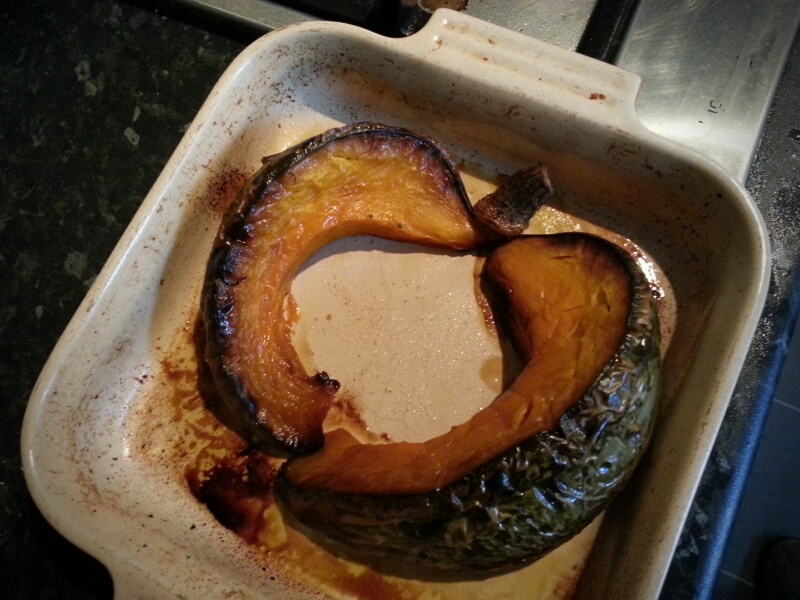
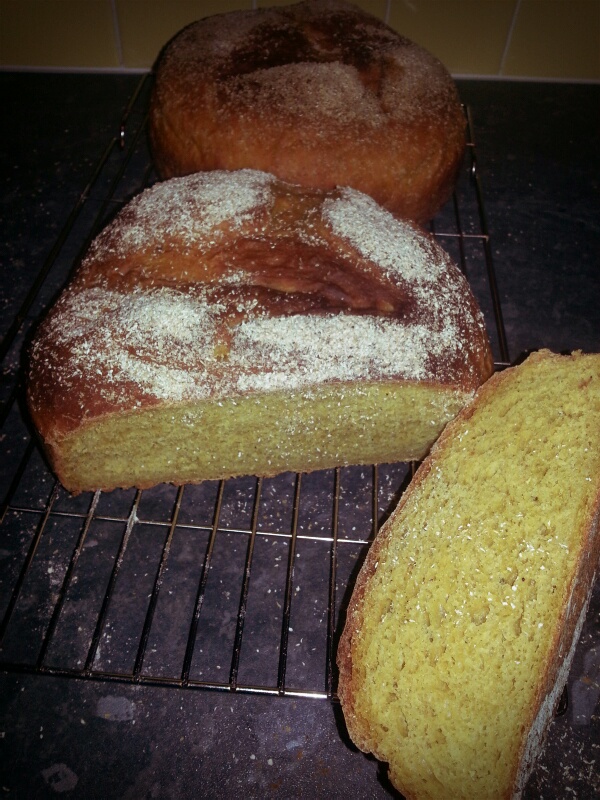
I thought I would give this pompion bread a go, but I felt that boiling the poor thing to death was a bit wasteful, and I wanted the bread to have some pumpkin flavour so I roasted it, mashed it up and added it to a basic bread dough along with a little sugar and some mixed spice. It turned out to be delicious so I thought I’d give you the recipe to try. I don’t think it resembles the original recipe, but it certainly inspired me to make it. By the way, it doesn’t stay fresh for a month, but it is very much moist and edible five days later. It goes great with soup and stews or with jam or just butter spread on it.

This recipe makes 2 good-sized loaves.

What you need:

600g piece of pumpkin or other squash, deseeded weight

500g (1 lb 2 oz) strong white flour

50g (2 oz) fine oatmeal

1 ½ tsp mixed spice

25g (1 oz) fresh yeast, or 1 tsp dried instant yeast

2 tsp salt

50g (2 oz) sugar

25g (1 oz) softened butter or olive oil

225g (8 oz) warm water

olive oil

extra flour

extra oatmeal


What you do:

Begin by roasting the pumpkin in a little olive oil until soft – around 30 minutes at 180⁰C (350⁰F). When cooked, remove from the oven, cool, remove skin and mash to a pulp.

FxCam_1360684693650

Mix the flour, oatmeal, mixed spice and sugar in a bowl, then crumble the fresh yeast on one side of the bowl, and spoon the salt one the opposite side. Make a well in the centre and pour in the water along with the olive oil. Notice that I have given the weights of liquids here – I’ve taken to doing this with all my baking recently; you can be much more accurate that way. (For most water-based liquids one millilitre weighs one gram. You can thank Elizabeth David for that one.) Lastly, add the cool pumpkin.

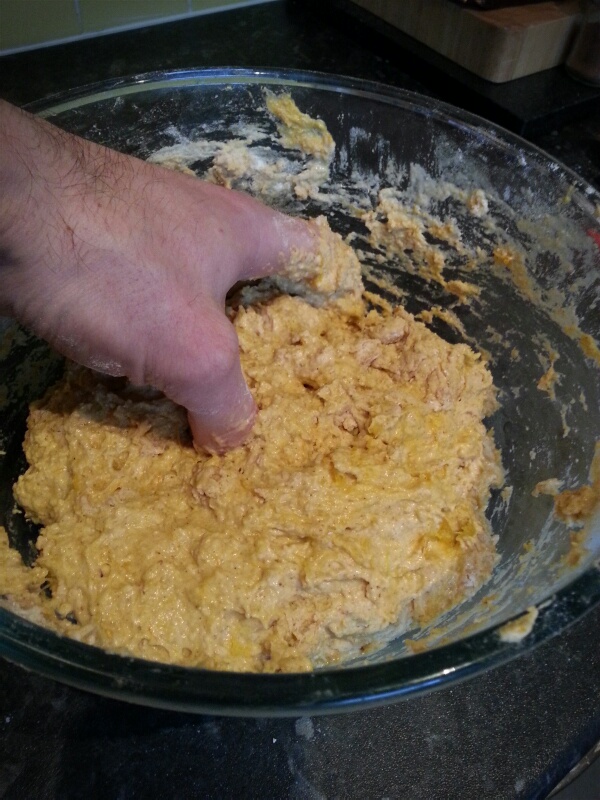
Using you hand, mix everything to a sticky dough – it will be very sticky but don’t worry.

FxCam_1360685406730

Rub a teaspoon or two of olive oil on your work surface and turn out your dough onto it; the oil makes it easier to knead without it all becoming a hideous sticky mess. Keep kneading and adding more oil if need be. If all this seems like too much effort and mess, use the dough hook on a food mixer instead.

When the dough is smooth, do a final kneading on a little flour, then pop into a clean bowl that has been lightly coated with oil to prevent sticking. Cover with Clingfilm (other plastic wraps are available) and allow to ferment away until it has at least doubled in size.

Knock back the dough and shape into two loaves – you can do round cobs on a greased baking sheet or in greased tins, whichever you prefer. i used two cake tins so that my cobs would keep some shape.

FxCam_1360697841988

Cover and allow to prove. Make appropriate cuts and dustings of flour or oatmeal. When doubled in size put into a cold oven. Set the temperature to 220⁰C (425⁰F) and leave for 15 minutes. Turn the heat down to 180⁰C (350⁰F) and bake for a further 15 minutes. Allow to cool on a rack completely before breaking into it.

FxCam_1360707421659

6 Comments

Filed under baking, bread, Britain, cooking, Eighteenth Century, food, history, Recipes, Vegetables

Preparing, Sourcing & Cooking Eel


If you like the content I make for the blogs and podcast, please consider supporting me by buying me a virtual coffee, pint or even a subscription : just click on this link.


The last of a trilogy of posts on the subject of eels. This time a recipe for an eel stew and some help with preparing them.

Sourcing Eel

The first time I cooked with eel I used wild ones – something I won’t be doing from now on; the sustainable cook as we have learnt buys only farmed eels. Ask your fishmonger if he can get them for you. If he can’t then you have four options: (1) go to a fishery that supplies eels where you are most likely to have to buy in bulk; (2) if you live in or near London, go to an eel, pie & mash house and pick some up there; (3) order some frozen ones already cleaned from the very good people at The Fish Society; (4) catch some yourself in an eel trap. If you live outside of the UK, eels are much easier to find.
I remember getting my eel order from Dave Yarwood from Out of the Blue in Chorlton. He had driven all the way to Sandbach at some god-awful time in the morning only to get there to find no one around, though he found a note on the door of the suppliers saying the eels were in a bag in a stream round the back! I arrived at his shop and there they were – three freshwater eels swimming around in a polystyrene box. I got a taxi back home with three eels sloshing about in their tank – quite a surreal experience, I can tell you.

eels

Preparing Eel

There’s a good chance that if you are going to have to do away with them yourself, this is because eels begin to break down very quickly after death. There is a lot of advice out there on what is the best way to do this. If you look in English Food by Jane Grigson says to ask your fishmonger to do the dirty work. It used to be thought that eels had to be skinned whilst still alive, but this is not the case. Larousse Gastronomique gives you these instructions on how to prepare an eel:

To kill an eel, seize it with a cloth and bang its head violently against a hard surface. To skin it, put a noose around the base and hang it up. Slit the skin in a circle just beneath the noose. Pull away a small portion of the skin, turn it back, take hold of it with a cloth and pull it down hard.

Well it’s not quite as simple as Larousse makes it sound; killing an eel is not like killing a regular fish, i.e. one thump to the back of the head and it’s gone, no, they keep on wriggling and writhing for a long time after you’ve ‘killed’ it. The best thing to do is to put the eels in iced water or in the freezer until they become very slow and docile, then hit them hard against a wall, stone or some other sturdy surface. You’ll find that after several hits that it is still moving about; it’s quite distressing, but the eel is dead, though its autonomic nervous system takes a while to shut down, though I’ve no idea how this happens and why it’s so different to other fishes. You can now either try the skinning method described above or behead them and then skin them. Have a look here at my original eel post from Neil Cooks Grigson, scroll down to see a rather gruesome video of some headless eels swimming about in my sink.

To skin them use a pair of pliers and a little salt to help get a purchase on the skin. Once you have got going the skin comes of satisfyingly easy like a long thin sock. Don’t be alarmed if the eels start moving again – this is from the salt triggering their nerves to start firing.

Now gut and clean the fish; make a cut from its anus – you’ll see it, about halfway down – to the neck end and pull away any innards from the rib cage. Give it a rinse and you are done.

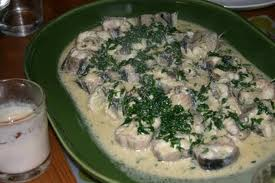
Sedgemoor Eel Stew

One thing I have not mentioned is how well eel eats. It really is a delicious fish – its flesh is mild and delicate, don’t be put off by its snake-like form and sliminess. It is similar to salmon, but a little richer and much moister due to its high fat content and they are not in the least bit muddy-tasting. This is the first eel recipe I ever cooked and it is by far the best. It appears in English Food by Jane Grigson. The eel is cooked in a sauce made of cider, stock and cream. Sedgemoor is in Somerset in the south-east of England where most English recipes for eel come from.

eel stew

Ingredients

1 ½ to 2 kg (3 to 4 lb) freshwater eel

dry cider

150ml (¼ pint) double cream

4 tbs chopped parsley

salt and pepper

triangles of fried or toasted bread

Begin by cutting the eel(s) into even-sized portions of around two inches in length. Season them lightly. Make a stock from the eel heads and skin as well as the flat part of the tails: Place the trimmings in a pan and cover them with half-water, half-cider. Bring to a boil and then cover and simmer for 20 minutes.

Arrange the eel pieces in a shallow pan and pour over enough hot stock to just barely cover them. Gently poach the eels for 10-15 minutes depending on the girth of your eels until the eel meat starts to come away from the bones. Don’t let the stock come to a proper boil though – steady poaching is the key. When cooked, remove the eel pieces and arrange them on a serving dish, cover them and keep them warm.

Now make the sauce by boiling down the cooking liquor to a good strong flavour and then add the cream and parsley. Season again if required. Pour the sauce over the eel and serve with the fried bread or toast.

P.S. Delicious as eel maybe, beware if someone offers you raw eel, say as sashimi. Eel blood is toxic before it is cooked, so if you get served a bloody bit, it could be a bad man trying to do away with you.

10 Comments

Filed under Britain, cooking, food, General, Recipes

The Original (Quince) Marmalade

As I mentioned in my previous post about Seville oranges that the original marmalade was in fact made from quinces and not oranges, I thought I would give you a recipe that I have recently used for the stall. It’s a recipe that appears in Eliza Acton’s 1845 book Modern Cookery. It’s an easy recipe that would be a good one to start with if you have never made a sweet preserve as you don’t need to mess about with sugar thermometers and setting points. One of the great things about making preserves with quinces is the glorious colour they go. A relatively brief boil transforms them from a pale apple-yellow to a vibrant orange-coral.

The tricky thing is getting your hands on some quinces they are available from October, but I have recently seen some organic ones in the Manchester organic grocers Unicorn. If your local greengrocer doesn’t have them on their shelves, it is worth asking if they can get them. My grocer was very happy to get me a full tray for just a tenner, so I was very pleased with that.

I have recently found another slightly more complicated version of this recipe but I have not tried it – we’ll have to wait for next autumn for that one!


If you like the blogs and podcast I produce, please consider treating me to a virtual coffee or pint, or even a £3 monthly subscription: follow this link for more information.


Eliza Acton’s Quince Marmalade

2kg (4 1/2 lbs) quinces

water

granulated sugar

Wash and scrub any fluff of the quinces, then peel and core them. Place them in a large pan and pour over enough water to almost cover. Turn up the heat and when it begins to boil, turn heat down to a simmer and stew 35-45 minutes until the fruit is soft. Strain and pass fruit through a mouli-legumes.

2012-11-19 23.49.01

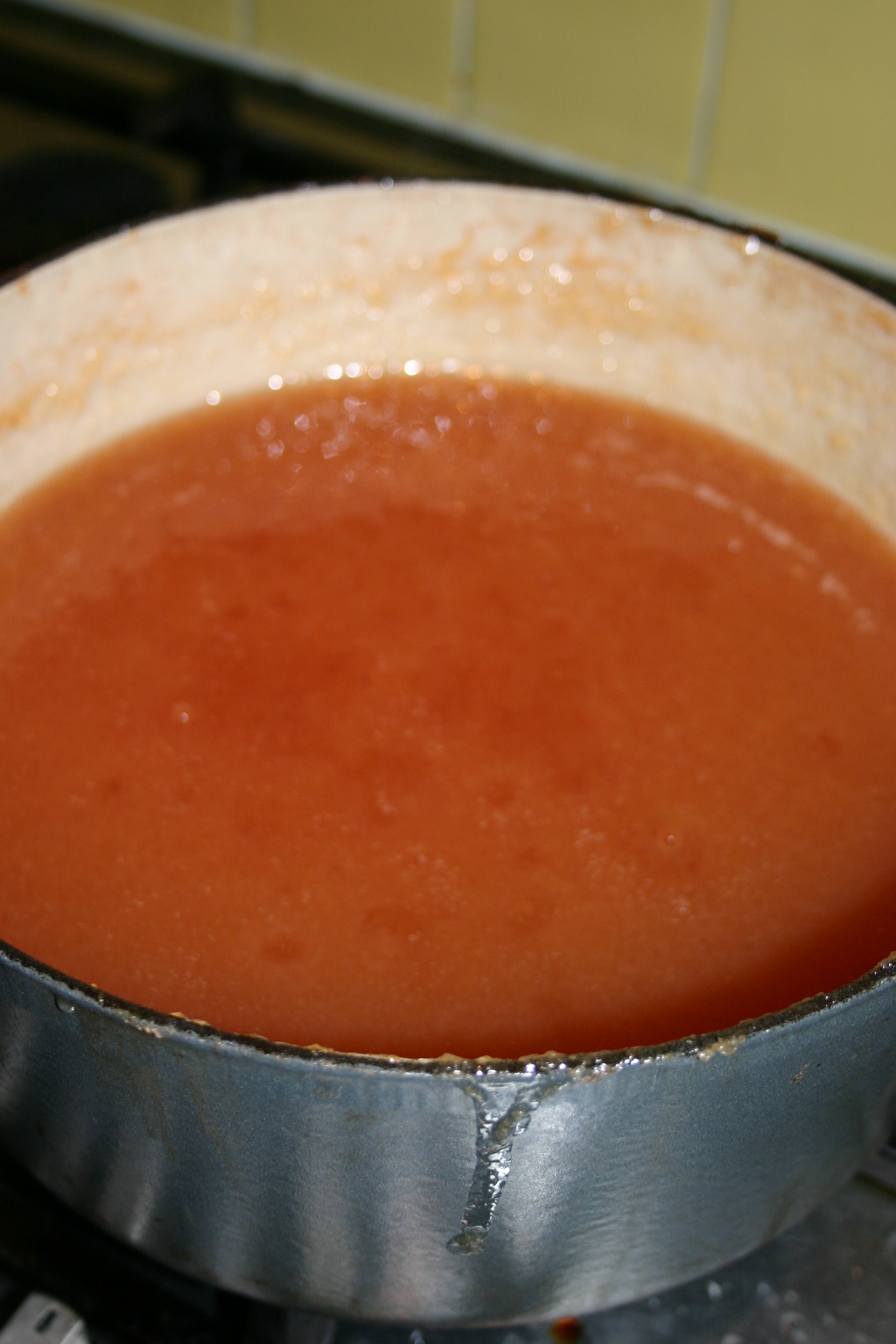
Put the pulp back in the pan with the strained juice and add 280g sugar for every 500ml juice or, 1 ½ lbs sugar for every pint of juice). Stir and dissolve under low heat then, simmer until it resembles ‘thick porridge’ and begins to leave the side of the pan when you stir it.

2012-11-20 00.37.10

Pour the marmalade into sterilised pots. It is very good as a jam on toast, with cheese or as an accompaniment to hot or cold meats.

2012-11-20 00.52.23

27 Comments

Filed under Britain, cooking, food, Fruit, General, history, Nineteenth Century, Preserving, Recipes, Uncategorized

Seville Oranges and Seville Orange Marmalade

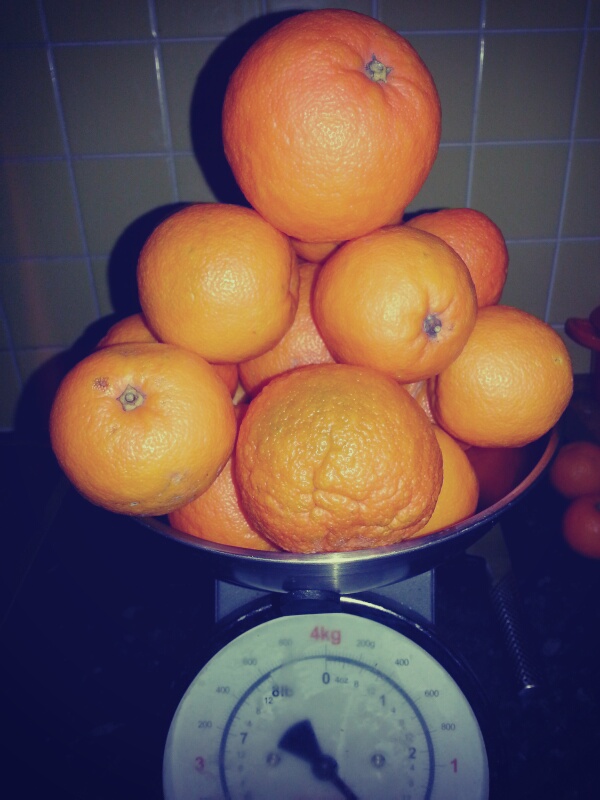
The weather outside may be miserable and the evenings still long, but luckily there is a little fleeting  sunny surprise popping up in grocers around the country that can perk us up no end; at least if you know where to find them. It is Seville orange season and a small window of just a few weeks is all we have to cook with this delicious fruit.

FxCam_1357492834789

The Seville orange is very bitter and is only really grown in Spain for us British to make our Oxford marmalade. What a treat home-made marmalade is; oranges, water and sugar that is all that are needed to produce such a delightful, very British preserve. If you have never made your own, have a go before they are all disappear again.

Like all citrus fruits, the Seville orange comes originally from China. It was imported on trade routes via Italy, to the Mediterranean countries of Europe. All of these original orange trees were bitter in flavour like the Seville. In the first half of the 17th century, sweet orange trees were delivered to the Portuguese coast by ship. These sweet oranges quickly superseded the bitter ones, that is for that small area of Spain that still grows them.

The flowers of Seville oranges are also used to make orange flower water, another of my favourite ingredients.

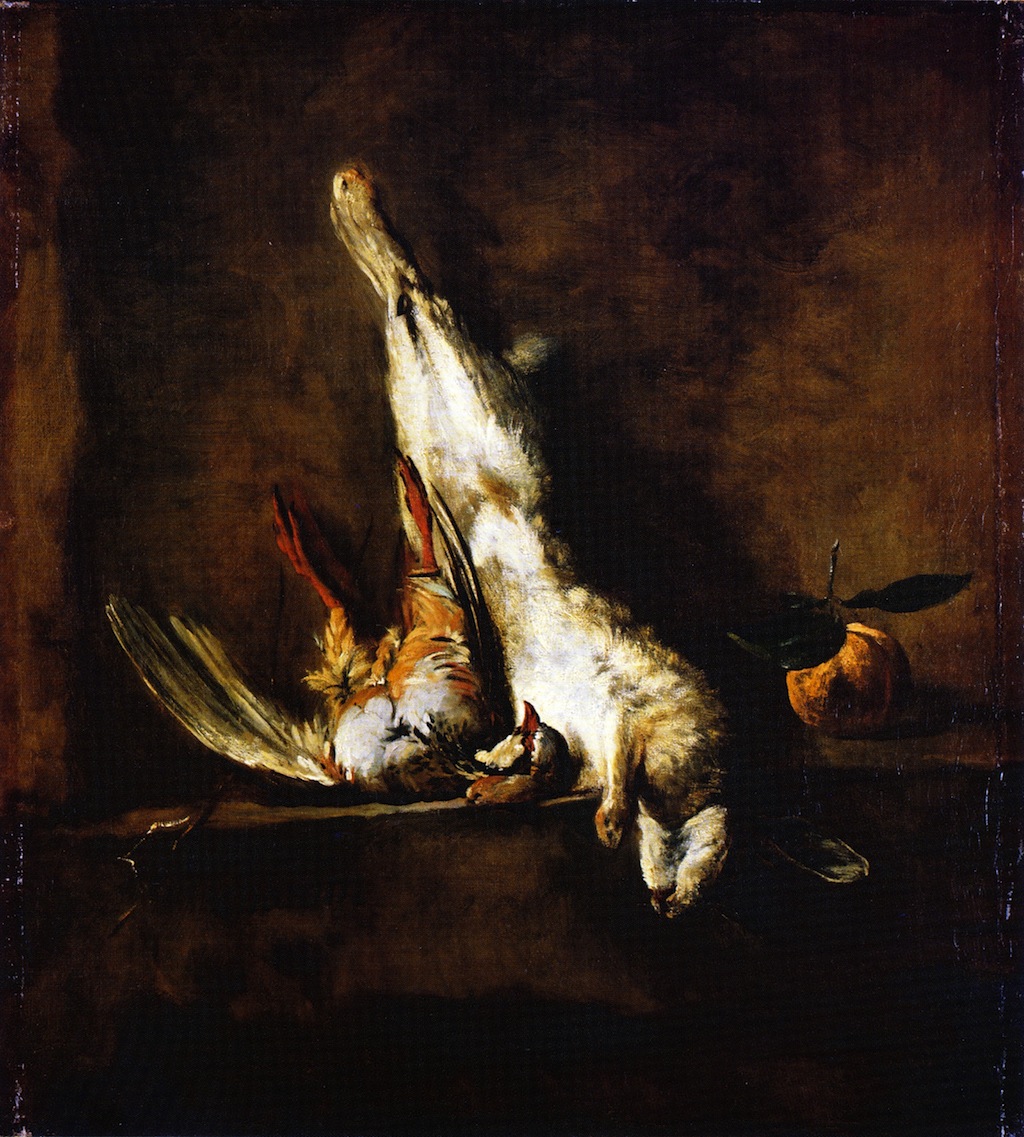
Seville and game painting

Rabbit with Red Legged Partridge and Seville Orange by Jean-Baptiste Chardin 1728-29

Below is a recipe for  Seville orange marmalade, but it is useful to know that the zest and juice of these oranges go very well with game and some shellfish such as scallops as the above painting shows.


If you like the blogs and podcast I produce, please consider treating me to a virtual coffee or pint, or even a £3 monthly subscription: follow this link for more information.

Seville Orange Marmalade

Oddly enough, marmalade was not made from Seville or any other orange at first, but quince (a knobbly cousin of apples and pears). It did come from Spain though, in fact the Spanish word for quince is marmalada. Every day’s a school day.

This recipe is Jane Grigson’s and it is a good strong bittersweet ‘Oxford’ style marmalade.

Ingredients

3 ¼ litres water

1 ½ (3 lb) Seville Oranges

3 kg (6 lb) granulated sugar

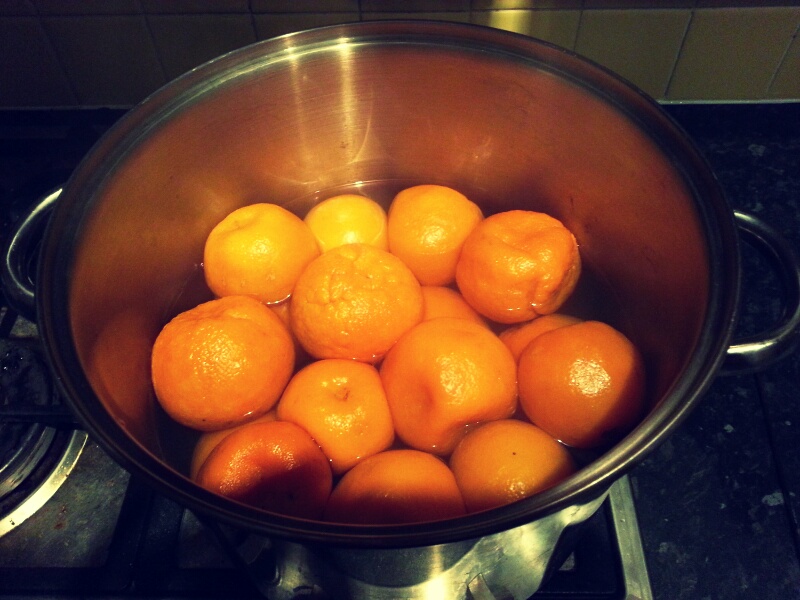
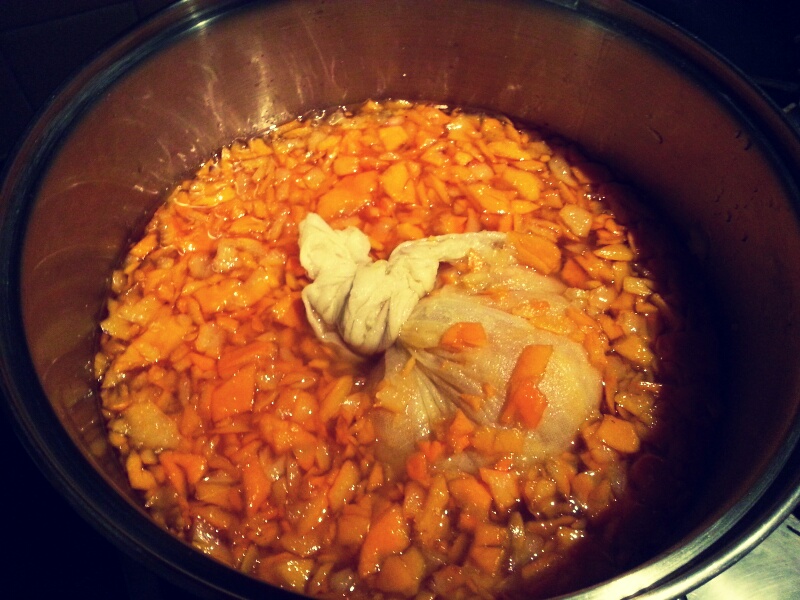
Give your oranges a good scrub and place them in a preserving pan or large stockpot with the water. Bring to a boil and simmer for about 1 ½ hours until the oranges are tender.

FxCam_1357499871481

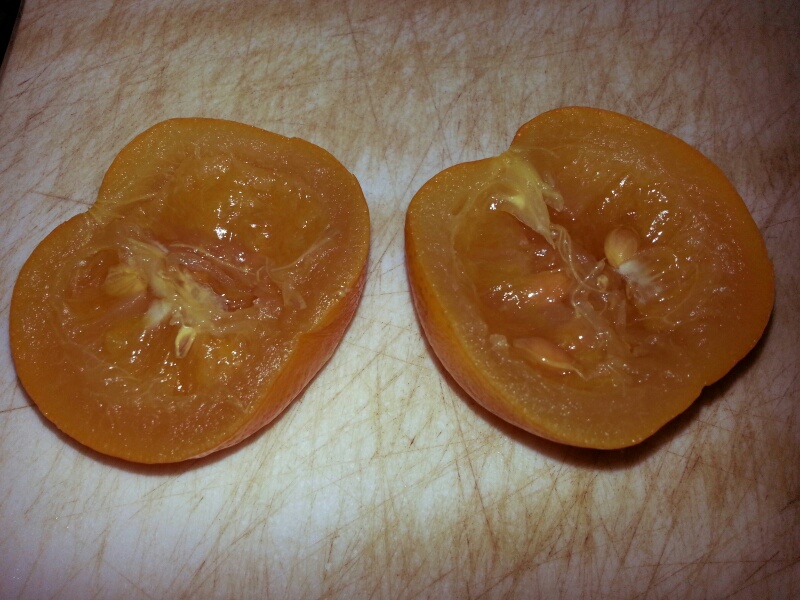
Take them out with a slotted spoon. They will probably collapse in on themselves, but don’t worry about that. Let them cool a little, then halve them and scoop out their innards. Tie up the scooped-out pulp in a piece of muslin. If you want a soft set, just put the bag of pulp straight into the pan, if you want it well set, give it a good squeeze to get as much pectin out of the pith and into the liquor as possible (I’m a soft set man).

FxCam_1357502382790

Next, shred the peel, you can be as careful as you want, and you can cut them as thick as you want. You can do this by hand or in the food processor by blitzing them using the pulse setting – be careful though, you don’t want a load of slurry. I’m usually dead against using food processors for this sort of thing, but I quite like the irregular pieces you get with this method. Tip them into the pan along with the sugar. Over a medium heat, stir until the sugar dissolves.

FxCam_1357505465756

Now you need to be brave and bring it to a full rolling boil for at least 15 minutes , you need it very hot so that the marmalade can set. You have several options to test for a set, but I use a combination of a sugar thermometer and the wrinkle test. Pectin – a chemical that essentially glues plant cell walls together – will set to a gel at 105⁰C (221⁰F), so a thermometer is crucial if you want to know if you are getting close. It can take a while because water needs to evaporate to get five degrees above boiling point. Keep a close eye on it and when it gets close do the wrinkle test. For this test put a side plate in your freezer a little while before you want to make your marmalade, and when you’ve achieved 105⁰C (221⁰F), turn off the heat and spoon out a little of it onto your cold plate. Return it to the freezer for a couple of minutes. Push the jelly; if it wrinkles up, your pectin is set. If not, boil up again and retest after 10 minutes.

FxCam_1357586951956

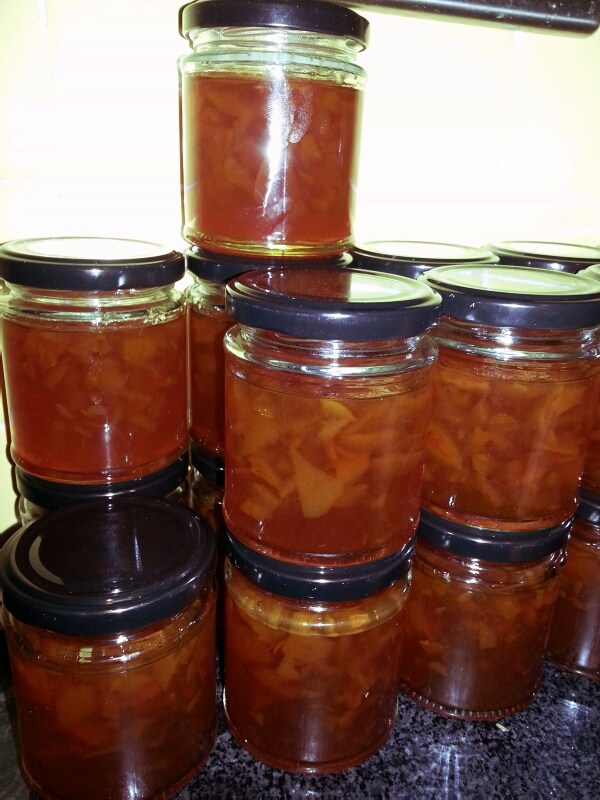
When ready, turn off the heat and allow it to cool for 15 minutes – this important step will stop your peel from floating to the top in a single layer – then pot into sterilized jars (bake them and their lids for 25 minutes at 125⁰C or 250⁰F).

IMG_2702

33 Comments

Filed under cooking, food, Fruit, General, history, Preserving, Recipes, Uncategorized

Syllabubs

Today the syllabub is rather an unfamiliar dessert but from the 17th and early 20th centuries it was a pudding staple. It has gone through some minor changes along its way but its essence has remained the same. Originally milk was sweetened and mixed with cider sack – a sweet fortified beer not unlike sherry – and left to curdle and treated as a drink served hot or cold. At the same time at more solid version was being made with cream and wine and spirits. More recently less alcohol and more cream was used producing a dessert that could stand in a cool place that would remain delicious, soft and fully whipped – this was known as an ‘everlasting syllabub’.

The Sense of Taste Philip Mercier (1680-1760)

Detail of The Sense of Taste by Philip Mercier (1680-1760) showing a salver of syllabubs

The word syllabub comes from the name Sille, an area in the Champagne region of France that made the eponymously named wine, and the word bub, an Elizabethan slang word meaning a bubbling drink, hence Sille bub – wine mixed with a frothy cream. In fact it was a case of the frothier the better, and the best way to achieve this is to spray milk straight from the udder (which has a natural froth) into the wine, this kind of syllabub was also called ‘Hatted Kit’ and a recipe appears for it in Elizabeth Raffald’s 1769 book The Experienced English Housewife:

“To make a Syllabub under the cow

Put a bottle of strong beer and a pint of cider into a punch bowl, grate in a small nutmeg and sweeten it to your taste. Then milk as much milk from the cow as will make a strong froth and the ale look clear. Let it stand an hour, then strew over it a few currants well washed, picked, and plumped before the fire. Then send it to the table.

elizabeth raffald

 Elizabeth Raffald

Charles II found this sort of syllabub so delicious that he kept cows at the palace in case he got a hankering for some Hatted Kit – he would walk up to one and squirt some milk into his flagon of wine, sack or cider.

If you are a tee-totaller, don’t worry because Sir Kenholm Digby, writing in 1669, gives recipes for syllabubs flavoured with plum juice, cherry syrups and Seville orange.

By the 19th century, the syllabub was generally made from whipping cream together with sweetened wine. The wine was flavoured with lemon and fortified with a little brandy, and it is a recipe for one of these everlasting syllabubs that I give below. It comes from Elizabeth David’s 1969 pamphlet Syllabubs and Fruit Fools (which can be found in her book An Omelette and a Glass of Wine).

Elizabeth David’s Everlasting Syllabub with Almond Biscuits

Elizabeth David

The ingredients of a syllabub, we find, are simple and sumptuous. The skill demanded for its confection is minimal, the presentation is basic and elegant.

Elizabeth David


If you like the blogs and podcast I produce, please consider treating me to a virtual coffee or pint, or even a £3 monthly subscription: follow this link for more information.


These syllabubs were the original topping to trifles before plain whipped cream took over. They are often served with jellies or with sweet biscuits so I’ve given a recipe for some simple crisp almond biscuits too.

The most important ingredient here is the wine; you can use any sweet or dessert wine, by personal favourite being a nice Muscat. I managed to get hold of an excellent and very reasonably-priced organic free-trade one from Case Solved Wines in Manchester.

2012-12-29 20.42.01

This recipe makes between 4 and 6 servings

Ingredients for the syllabub

8 tbs sweet or dessert wine

2 tbs brandy

pared rind of one lemon

60g (2 oz) sugar

300ml (½ pint) double cream

freshly grated nutmeg

The day before you want to serve the syllabub, mix the wine and brandy in a bowl, add the lemon peel and steep overnight.

Next day, strain the wine into a large bowl and stir in the sugar until dissolved. Pour in the cream and whisk until thick. Be careful not to over-whip the cream. Spoon into glasses and scatter a few raspings of nutmeg over them.

For the biscuits:

100g (4oz) butter

50g (2oz) caster sugar

150g (6 oz) plain flour

50g (2 oz) ground almonds

Cream the butter and sugar together and then mix in the flour, and finally the almonds. Bring the mixture together with your hand to form a dough – it’ll be very ‘short’, i.e. crumbly, but it will come together – don’t be tempted to add any water or milk because it will result in a biscuit that is not crisp, and you don’t want that. Roll out the mixture to the thickness of a pound coin (about 3mm) and cut into rounds.

Bake for 8-10 minutes at 200⁰C (400⁰F) until tinged with golden brown. Cool on a wire rack and store in an airtight tub.

4 Comments

Filed under baking, Biscuits, Britain, cooking, Dairy, Desserts, food, history, Puddings, Recipes

Mulled Cider

Merry Christmas!

Everyone seems to be drinking mulled cider rather than mulled wine this year so I thought I’d stick my oar in and give you my recipe for it (if you prefer mulled wine click this link for my recipe for that from last year). You may have been expecting a massive over-the-top Christmas feast post this time of year; well, I can only apologise as this is all I can muster. I promise to do something better next year…

Mulled cider has been drunk during the winter festivities at least as long as mulled wine and it is perhaps the descendant of a much older drink called wassail made from roasted apples that was knocked back by many in the south-west of England. Wassail night involves a most bizarre ritual that requires a man blacking himself up as revellers hang pieces of dry toast onto twigs. I shall leave that hanging there. It deserves its very own post – perhaps it shall be next year’s Christmas tipple recipe.

20121228_191019[1]

The recipe is pretty straight-forward – you need a good dry cider, a little sweetener and a little fortification of alcohol in the form of dark rum. Then it’s the usual spices that one would expect: cinnamon, cloves, nutmeg and allspice. It’s very delicious and much nicer than mulled wine I think. The amounts given below are for mere guidance as it is all to taste really:

1 litre (1 ¾ pints) dry cider

2 cox’s apples, sliced

2 clementines, sliced

2 sticks of cinnamon

6 allspice berries

4 cloves

small piece of nutmeg

2 to 4 tbs dark rum

2 or 3 tbs soft dark brown sugar

20121228_184345[1]

Place the cider, fruit and spices in a saucepan and heat gently so that all the flavours can infuse into the cider for 5 to 10 minutes– on no account let it boil, you don’t want to cook the alcohol away. Next, add the rum and sugar to taste and serve!


If you like the blogs and podcast I produce, please consider treating me to a virtual coffee or pint, or even a £3 monthly subscription: follow this link for more information.

8 Comments

Filed under Britain, Christmas, cooking, food, General, Recipes, Uncategorized

Jane Grigson’s Orange Mincemeat

It’s just occurred to me that I haven’t put on a Christmas recipe and it is only just over two weeks until the special day. This month has flown by at a scarily quick pace.

Luckily two weeks is just enough time to make this delicious orange flavoured mincemeat. Last year I gave you Mrs Beeton’s recipe, but this one comes from the wonderful Jane Grigson. It is very moist and because of the brandy, orange juice and orange liqueur. It is also vegetarian if you want it to be; the suet can be the vegetable-based sort, or you can leave it out altogether. Give it a go.

Jane Grigson

Jane Grigson

It is extremely easy to make: there is no cooking required so all you need to be able to do is chop, grate, mix and weigh. When you pot the mincemeat, it is very important you sterilise your jars. To do this first wash them in soapy water, then rinse and allow them to dry. Place the jars on a tray, with their lids sat beside them, facing upwards and pop them in the oven for 30 minutes at around 130⁰C. Let them cool a little before potting. If this seems a lot to make in one go, you can easily reduce the amounts as you see fit.


If you like the blogs and podcast I produce, please consider treating me to a virtual coffee or pint, or even a £3 monthly subscription: follow this link for more information.


Click here for the recipe I use for making mince pies.

Ingredients

250 g (8 oz) chopped candied peel

1 kg (2 lb) peeled, cored and grated apples

500 g (1 lb) suet (fresh or packed is fine, but fresh is best)

500 g (1 lb) currants

500 g (1 lb) raisins

500 g (1 lb) sultanas

500 g (1 lb) soft dark brown sugar

1 freshly grated nutmeg

125 g (4 oz) slivered almonds

Juice and zest of 2 oranges

4 tbs brandy

6-8 tbs orange liqueur

Mix all the ingredients together in a huge mixing bowl, then pot into sterilised jars. Store somewhere dark and cool, but not the fridge! Leave the mincemeat to mature for at least together before using it.

IMG_2519

9 Comments

Filed under baking, Britain, Christmas, cooking, Desserts, Festivals, food, Fruit, General, Preserving, Recipes, Teatime

Beetroot

Hello there everyone. Here’s just a quick post to prove that I am not dead, but still alive and kicking! I have had such a crazy couple of months getting this business of the ground whilst working at the University of Manchester and Manchester Metropolitan University. Phewee! There’s no rest for the wicked as they say (and if it is true then I must be extremely wicked indeed).

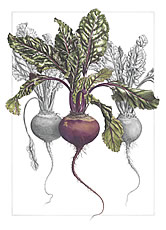
Anne Swan Beetroot

Ann Swan’s beautiful vegetable art

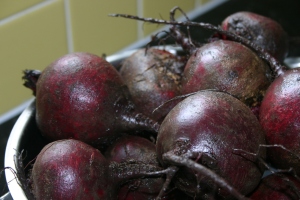
One vegetable that ranks very highly in my favourite foods is the humble beetroot; it would certainly be in my Top 10. Jane Grigson wrote a fantastic book called Good Things in which each chapter focusses on her favourite ingredients. If I were to write my own version, beetroot would be included. It’s that mixture of sweetness and earthiness that you can’t really get from anything else. Some people shudder at the thought of it as a vegetable in its own right – too much overcooked purple mush at school has not done it any favours – and only really eat it as a pickle.

It is actually a very versatile vegetable; you can boil it, roast it, pickle it, and by virtue of its sweetness, use it as a cake ingredient that surpasses the carrot.

Beetroot has been cultivated for centuries and its ancestor is the sea beet Beta marinama a rather common plant found around the coasts of Eurasia, especially along the Mediterranean Sea. It is from this plant we get today’s red beet (plus several other varieties like the golden beetroot) as well as sugar beet and the less well-known mangel-wurzel or mangold. The latter is used mostly as animal fodder, though it has been a food crop for people too in the past (for those of you that remember it, the scarecrow Wurzel Gummidge had a head made from mangel-wurzel). The history of sugar beet is very interesting and deserves a post all to its own. Oddly enough, the beet plant wasn’t cultivated for its sweet tap roots at first, but its leafy greens. Indeed, our Swiss chard is also of the same species as beetroot and sugar beet. Eating the root didn’t catch on until the 16th century.

There is loads of beetroot hanging around at the moment and it should be reasonably cheap in the greengrocer’s shop this time of year, so you should jump at the chance to having a go at preserving them. I got a huge batch from Manchester Veg People.

IMG_2525

I have already provided a recipe for curried beetroot chutney, but I thought I’d give you the recipe I use to pickle beetroot as well. I first came across it in Good Things (1932) by Florence White, who mentions that the recipe must be very old, though she mentions neither when it was written or by whom. I did find an almost identical recipe as I was flicking through a copy of Mrs Beeton’s Book of Household Management (1861; which can be read online; see this link here).

It is the inclusion of an infusion of black peppercorns and allspice that really makes this pickle special. You’ll never go back to buying jars of it ever again! It’s important to remember to not peel the beetroots before you cook them, otherwise their wonderful colour will be lost to the cooking water.

Pickled Beetroot

2 kg (4 ½ lbs) beetroot

1 ¼ litres (2 pints) cider vinegar

15 g (½ oz) peppercorns

15 g (½ oz) allspice berries

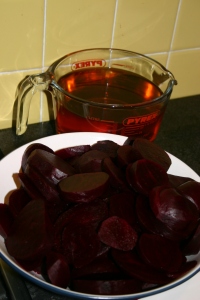
Top and tail but do not peel the beetroot, then simmer them in plain water for around 30 minutes until tender. Very large ones may take over an hour to cook. Meanwhile, boil up the vinegar with the spices and simmer for 10 minutes then strain. Let the beetroots and vinegar cool completely before peeling and slicing the beetroots.

IMG_2532

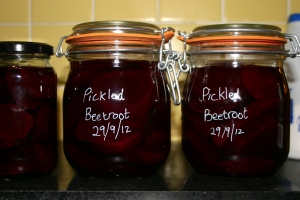
Put into sterilised jars and cover with the strained, cooled vinegar. In two weeks they’ll be ready to enjoy.

IMG_2533

If you like the blogs and podcast I produce, please consider treating me to a virtual coffee or pint, or even a £3 monthly subscription: follow this link for more information.

7 Comments

Filed under cooking, food, history, Preserving, Recipes, Vegetables

On a Mushroom Hunt

The British crops have been failing left, right and centre because of the all the warm and very, very wet weather we have had over this growing year. The fields and orchards have been chock full of mouldy, diseased-ridden peas, beans, apples, plums and pears. It’s been a great year for mould.

Mould is caused by fungi and luckily, this year has also been great for the fungi we like to eat: the mushrooms, so as long as they are doing well, we shall always have a good meal.

Tricholoma scalpuratum or yellowing knight

I am pretty new to mushroom hunting, but there are a few species that I already know and love, but faced with 120 000 species worldwide, of which 1841 are recognised as edible (though not necessarily by all). Luckily, I have a background in ecology and evolutionary biology and so I’m okay at identifying and classifying. However, the obvious problem here is that being okay is not good enough when it comes to mushrooms, as you may be rushing down to A & E with the family in an ambulance clutching your Collins Fungi Guide in your clammy palms.

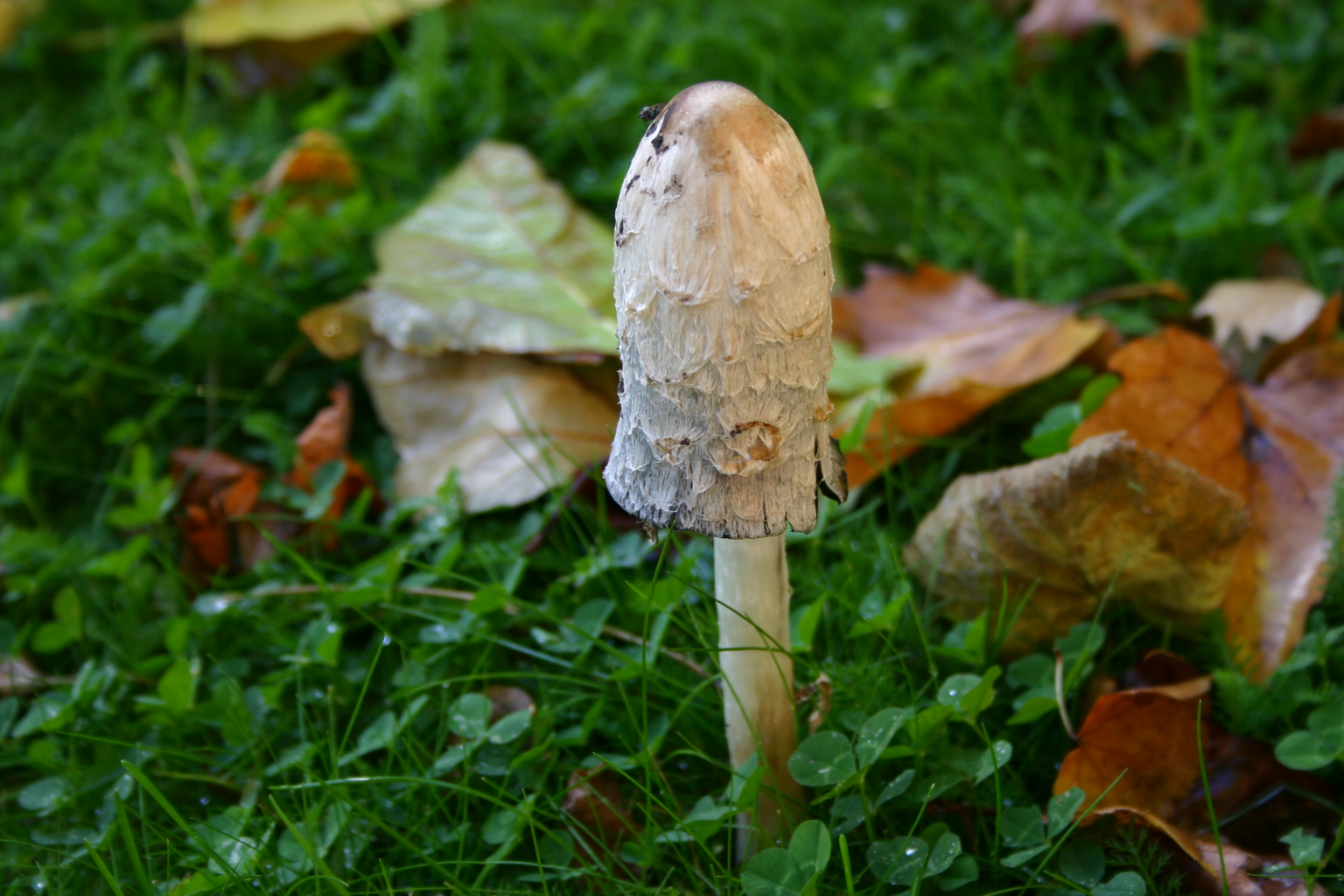
Shaggy ink cap

Mushrooms have been held in high regard throughout history because, except for a few European species, they cannot be cultivated in any consistent way. There is no evidence that prehistoric man ate mushrooms, but they were certainly enjoyed in Ancient Egypt and Rome, indeed the Romans were the first to cultivate them. This art seemed to die out with them and it wasn’t resurrected until Victorian times. It’s strange to think that mushrooms were such an expensive ingredient that often had to be exchanged for oysters in many dishes. How times have changed.

Because mushrooms are notorious for their often narcotic and poisonous qualities, there were considered magic during the Middle Ages. Many an alchemist pored over the life cycle of fungi in an attempt to discover the secret of life itself – mushrooms had the amazing ability to create life from decay.

I could go through all the edible species of mushroom in Britain, but that would be rather boring so instead I thought I’d mention the ones I have found so far in this post and then add to it in further posts whenever I come across them.

Identifying Mushrooms

As I said, I am certainly no expert in fungus ID, but it is for this very reason that I take appropriate precautions.

First of all you need at least two good fungus guides: there is such variation within single species that there can be a lot of overlap between them and therefore potential misidentification. More than one book covers more variation. I think it is best to have one book with drawings and one with photographs. The two I use are the Collins Fungi Guide – which is very in-depth – and River Cottage Handbook No. 1: Mushrooms – which is much briefer but is full of hints and tips.

Aside from the mushroom you are interested in, you need to look for other things: are they single or in clumps, or even patterns? Where are they? Fields or woods? If they are in woods, are they on trees, if you what kind? Therefore it is very important that you know some of the trees: the main players are oak, beech and birch, so make sure you know them, or take along a tree guide with you too.

If I am not really sure at all, I take a photo of them where I found them and pick them with their bases intact so I can classify them later when I have time.

Jew’s ear or jelly fungus grows almost exclusively on elder

Do not be tempted to take any advice from old wives’ tales as they are almost always wrong. However, most poisonous species have three features that are worth bearing in mind: scales beneath the cap, a ring and a small sac at the stem’s base. Not all will have all three qualities, so not take this advice as read either. The important thing to remember is that if you are not completely sure, don’t eat it!

Over the last week or so I have come across shaggy inkcap, shaggy parasol, wood mushrooms, the rather anti-Semitically named Jew’s ear fungus and a huge host of , commonly called yellowing knight (though the one’s I found were not particularly yellow).

Two mushroom recipes

I cooked several dishes with our mushroom crop, but I shall just report two here.

Creamed mushrooms on toast

Simple, fast and will show off your mushrooms to their finest. It’s not for dieters.

Ingredients (per person)

1 double-handful of wild mushrooms

2 ounces of salted butter

1 garlic clove, finely chopped

1 tsp of chopped thyme leaves

salt and pepper

5 or 6 tbs double cream

freshly-grated nutmeg

one thick slice of hot buttered toast

Pick over the mushrooms, wiping away any soil with a damp cloth. Melt the butter in a frying pan and when it stops sizzling add the garlic and thyme and fry until the garlic is soft. Tip in the mushrooms and season with salt and pepper. Stir and fry until the mushrooms given up then evaporated their juice. Add the cream and stir, adding a little nutmeg. Serve immediately on toast. Poached egg is optional.

Dried Mushrooms

When you have a glut of mushrooms, it’s a good idea to preserve them in some way. This is a recipe from Elizabeth Raffauld’s 1769 book The Experienced English Housekeeper that turns mushrooms into a delicious, rich and dark seasoning. I’ll leave it to her to tell you how to make it (I have added the odd note in parentheses).

Mushrooms before drying

“Take the thickest large buttons you can get, peel them, cut off the root end but don’t wash them. Spread them separately on pewter dishes [or on baking trays] and set them in a slow oven to dry [around 60-70⁰C]. Let the liquor dry up into the mushrooms, it makes the powder stronger, and then continue in the oven till you find they will powder [they will snap easily].

Mushrooms after drying

Then beat them in a marble mortar [or a blender] and sift them through a fine sieve with a little Chyan [Cayenne] pepper and pounded mace. Bottle it and keep it in a dry closet.”

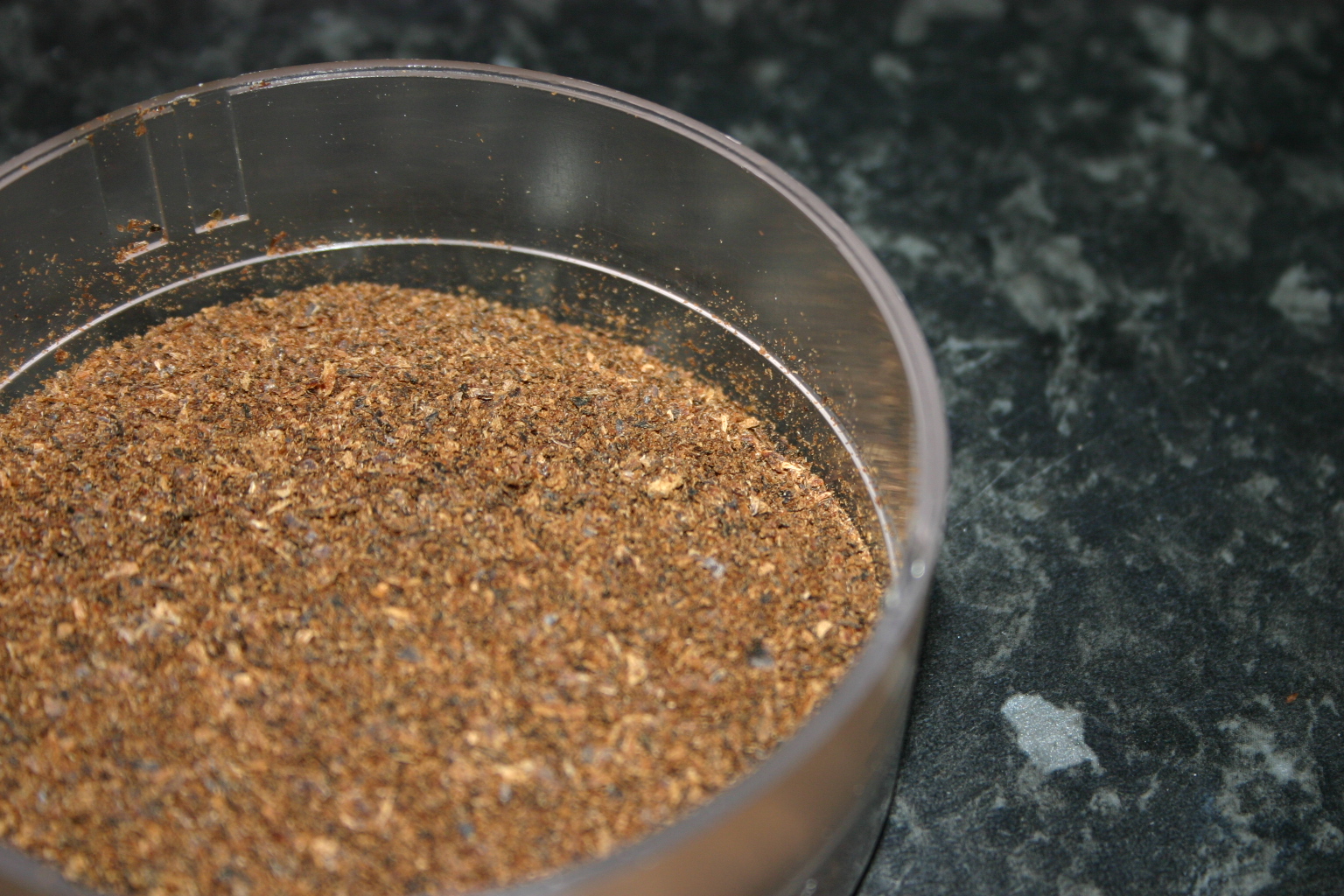
Mushrooms powdered


If you like the blogs and podcast I produce, please consider treating me to a virtual coffee or pint, or even a £3 monthly subscription: follow this link for more information.


1 Comment

Filed under Britain, cooking, food, foraging, history, natural history, nature, Recipes, Uncategorized