Category Archives: General

Hot Cross Buns

Tomorrow is Good Friday and in England it is traditional to eat hot cross buns, or rather it was;  supermarkets and bakeries bring them out as soon as Christmas is over these days. And why not? They are delicious after all. The reason that Good Friday is the day these buns are traditionally baked goes back to Tudor times, when the sale of spiced buns was illegal, except on Good Friday, at Christmas and at funerals.

The cross, people assume, is to denote the cross upon which Jesus was crucified. This is in fact nonsense; spiced buns with crosses were being produced throughout much of pagan Europe. Spiced buns have always been symbolic in worship and ones adorned with crosses were made for the goddess Eostre (where Easter get its name).
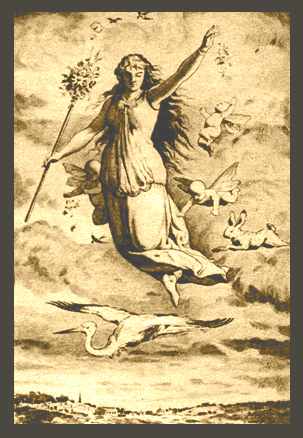
The Pagan goddess, Eostra

So that is the cross taken care of, but what about the hot? We don’t actually eat them hot that often. They were simply called cross buns, until that famous nursery rhyme was written sometime in the eighteenth century:

Hot cross buns, hot cross buns!

One ha’penny, two ha’penny, hot cross buns!

If you have no daughters, give them to your sons,

One ha’penny, two ha’penny, hot cross buns!

What if you have neither sons nor daughters? I suppose you eat them all to yourself like the miserable old spinster you are…

Ever since I started baking my own bread, I have sworn never to buy it again as it is just so delicious. Bought buns – like bread – are just shadow of their former selves, says Jane Grigson: ‘Until you make spiced hot cross buns yourself…it is difficult to understand why they should have become popular. Bought, they taste so dull. Modern commerce has taken them over, and, in the interests of cheapness, reduced the delicious ingredients to a minimum – no butter, little egg, too much yellow colouring, not enough spice, too few currants and bits of peel, a stodgy texture instead of a rich, light softness. In other words, buns are now a doughy filler for children.’

The recipe below asks for mixed spice, you buy a proprietary blend of course or make your own. I decided to make my own – simply because I didn’t have any. The good thing about making your own is that you can remove spices you don’t like, and enhance the ones you do. Typical spices are the warm ones: cinnamon, mace, allspice (pimento), nutmeg, cloves and ginger. I also think a little black pepper is good.

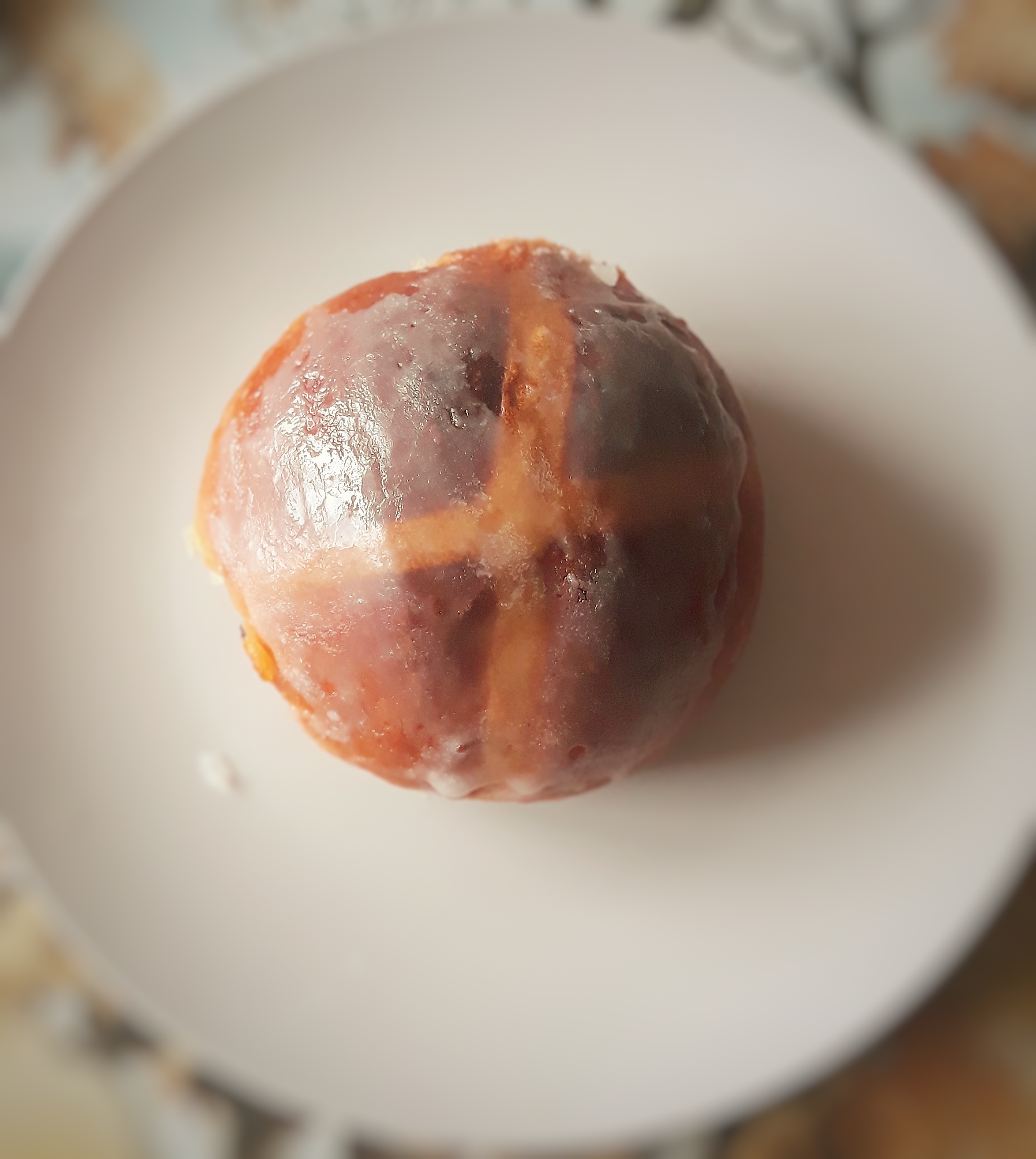
Here’s my recipe. It makes between 8 and 12 buns, depending upon how large you want to make them. The piped pastry cross is optional – cutting crosses with a serrated knife is fine, and closer to the original. I used to think the same as Elizabeth David, in that they ‘involve unnecessary fiddly work’, but that’s because I couldn’t get them right, I reckon to have worked it out now.


If you like the blogs and podcast I produce, please consider treating me to a virtual coffee or pint, or even a £3 monthly subscription: follow this link for more information.


Ingredients

500 g strong bread flour

5 g dried, fast-action yeast

10 g salt

60 g caster or soft dark brown sugar

1 tsp mixed spice

50 g softened butter

250 ml warm milk, or half-and-half water and milk

1 egg

100 g dried fruit (currants, raisins, sultanas, etc.)

25 g candied peel

For the crosses:

50g strong white flour

70-80 ml water

For the glaze:

60g sugar

70 ml water

Mix together the flour, yeast, salt, sugar and mixed spice in a bowl, then make a well in the centre. Beat an egg into the milk, and pour it into the well, adding the butter too. If you have an electric mixer, use the dough-hook attachment and mix slowly until everything is incorporated, then turn the speed up a couple of notches and knead for around 6 minutes. The dough should be tacky, glossy, smooth and stretchy. If you don’t have one, get stuck in with your hands and knead by hand on a lightly-floured worktop. It’s a very sticky dough at first, so it’s a messy job, but it will come together.
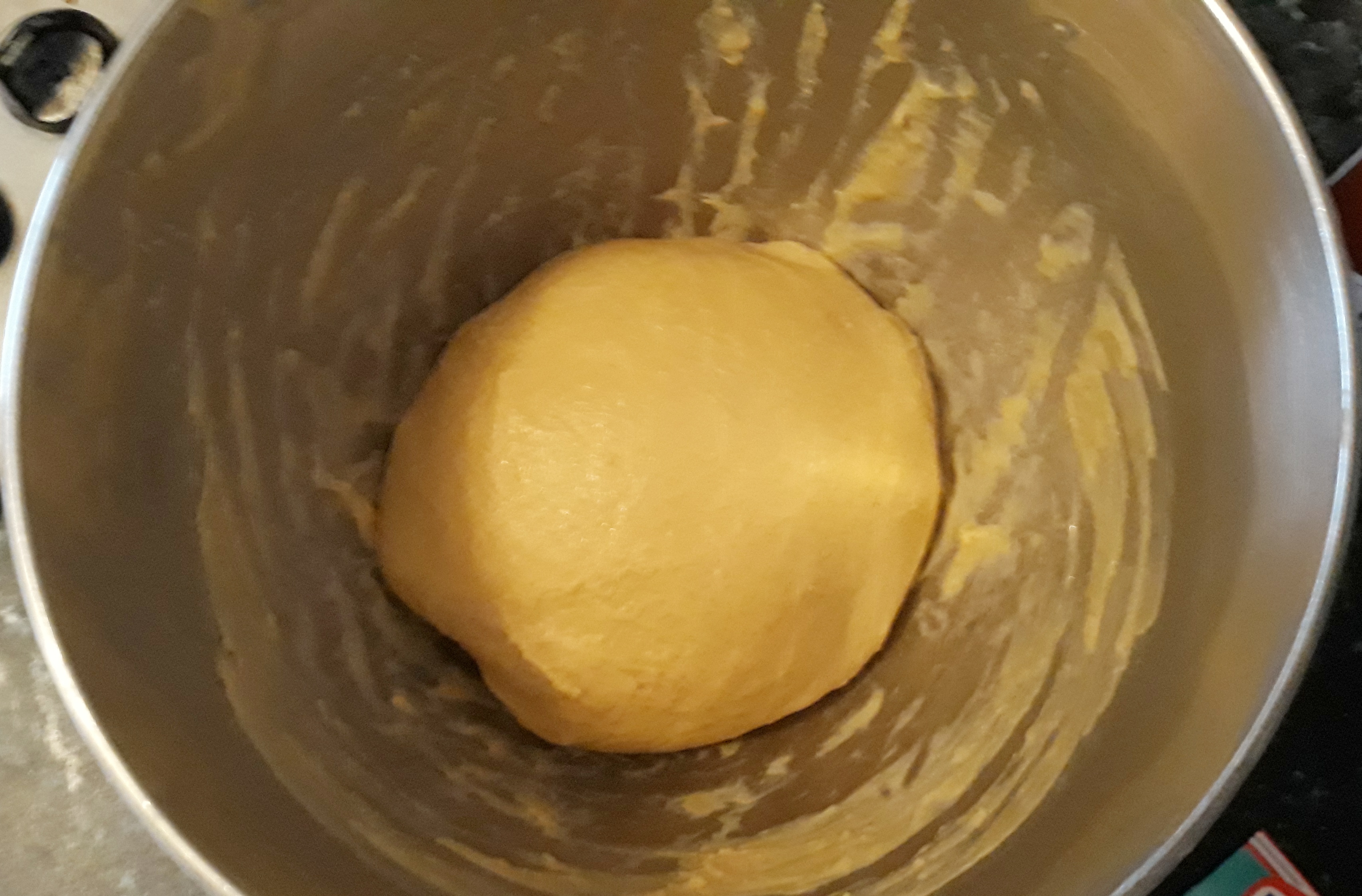
Grease a bowl, tighten the dough into a ball, pop it in and cover the bowl with cling film or a damp tea towel. Leave to prove until doubled in size – this can take anywhere between 1 and 3 hours, depending upon ambient temperature.
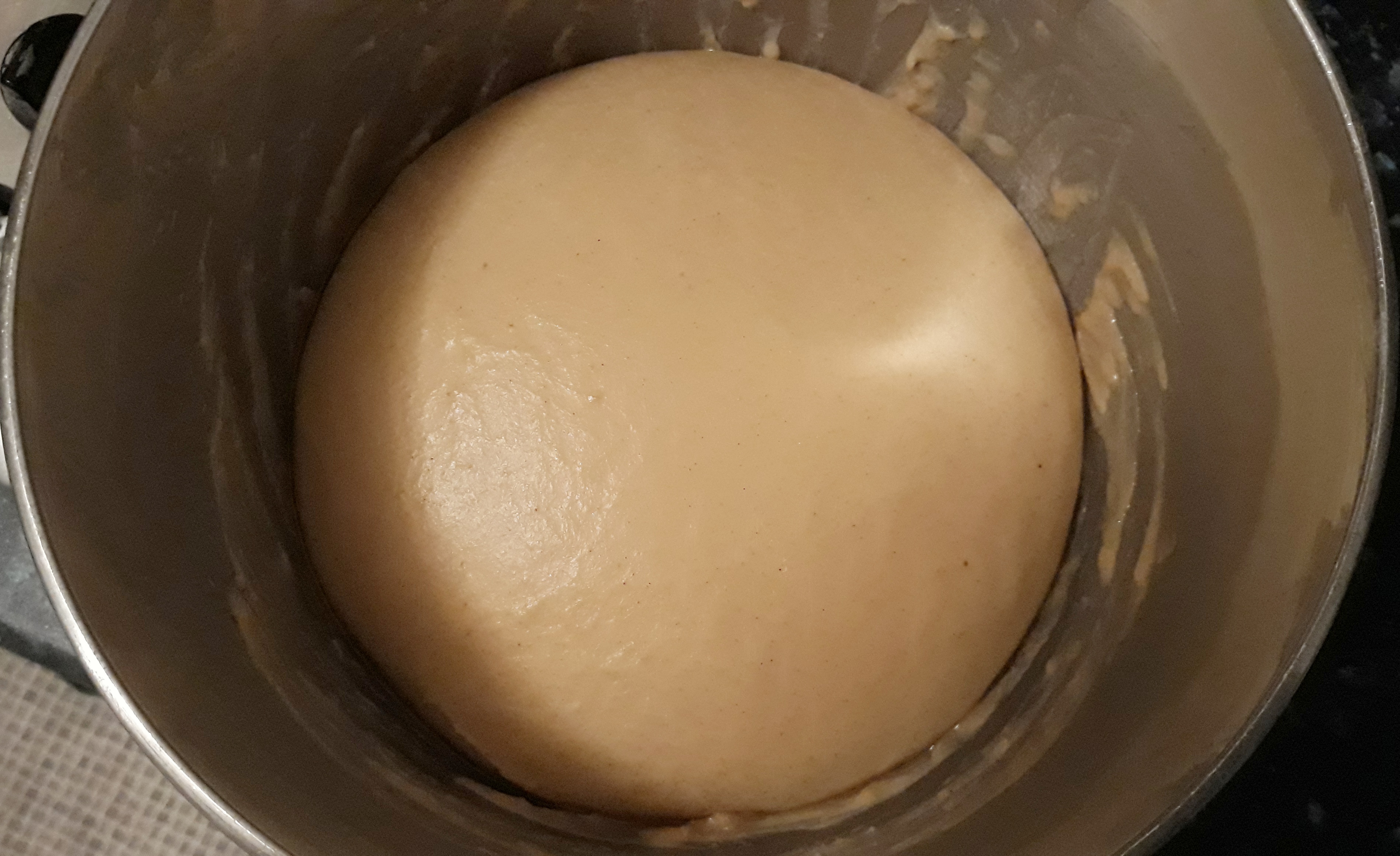
Knock back the dough to remove any air and mix in the dried and candied fruits – again, either by using your hands or your dough hook. Divide the dough into 8, 10 or 12 equally sized pieces and roll up into very tight balls on a very lightly-floured board. This is done by cupping your hand over a ball of dough and rolling it in tight circles, takes a little practise, but is an easy technique to learn.
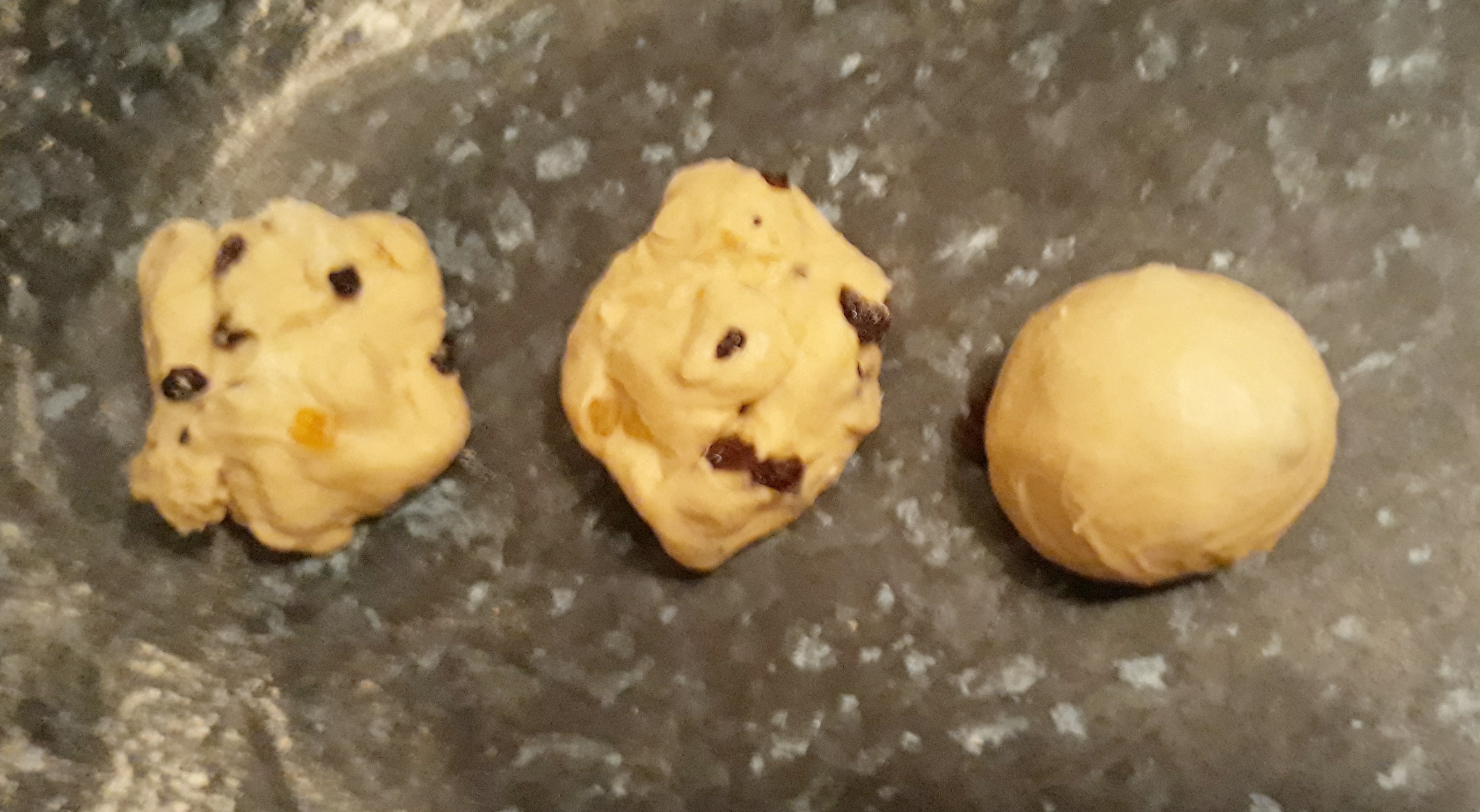
Line a baking tray with greaseproof paper and arrange the buns on it, leaving a good couple of centimetres distance between each one. Cover with a large plastic bag and allow to prove again until they have doubled in size.
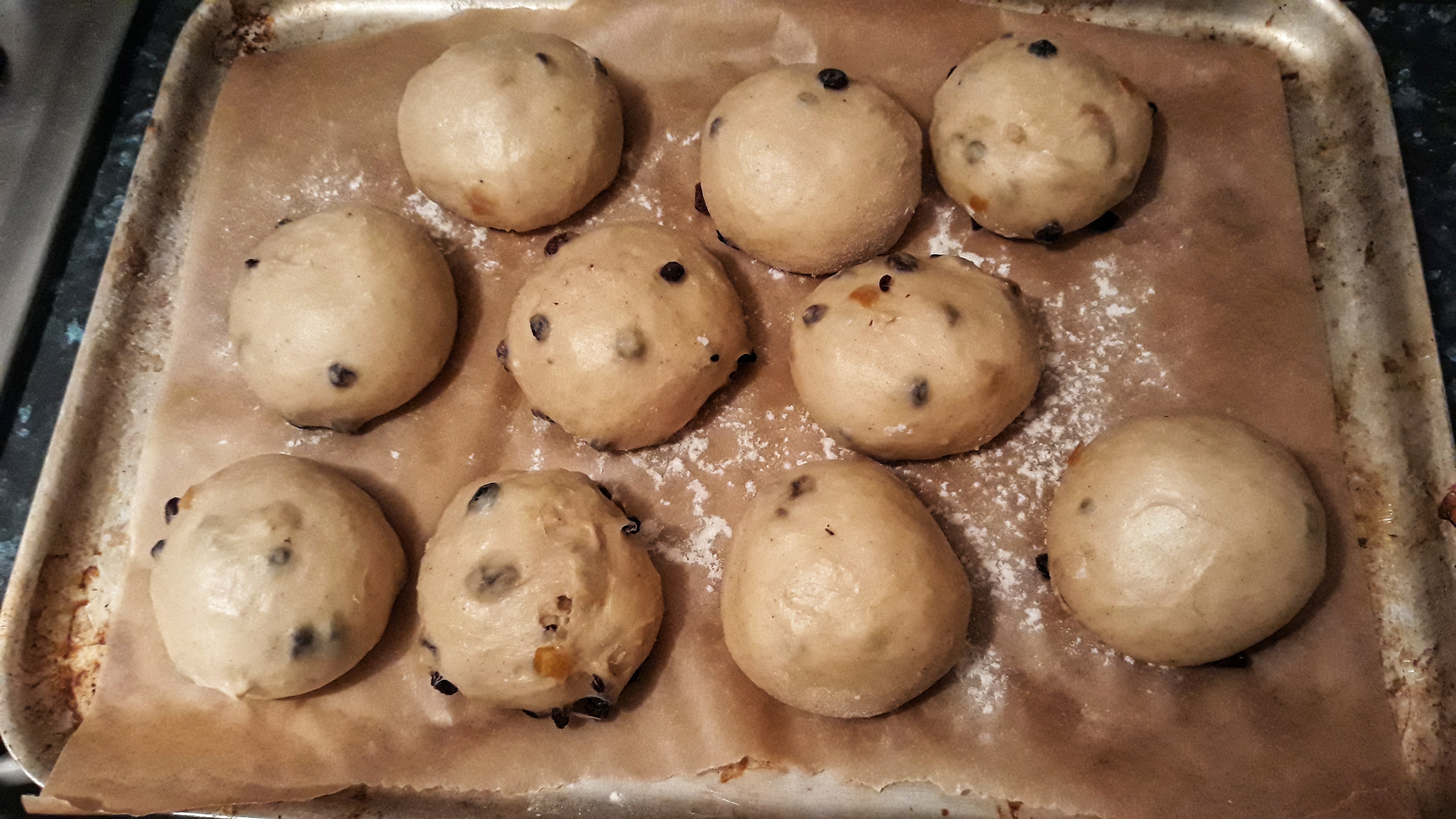
Meanwhile, make the cross dough. Simply beat the water into the flour to make a loose, but still pipeable batter. Put the batter in a piping bag (or freezer bag, with a corner cut away) and make your crosses. If you like, just cut crosses in the tops.

Put the tray in a cold oven, and set it to 200⁰C and bake for 20 to 25 minutes (you get a better rise if they go into a cold/just warm oven, if you have to put them into a hot over, knock 5 minutes from the cooking time).
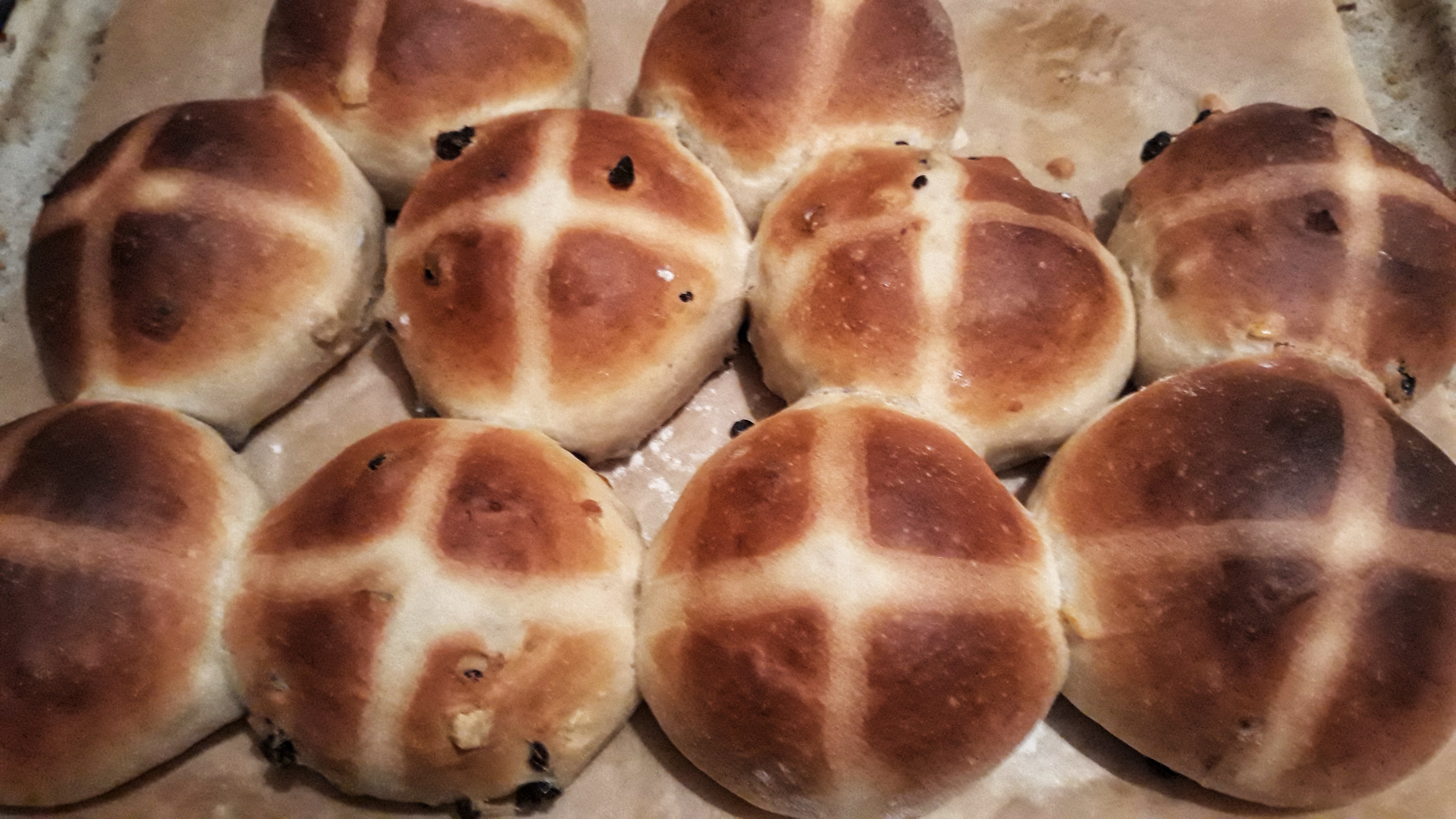
When they are almost ready, make the glaze: boil the sugar and water to a syrup and when the buns come out of the oven, brush them with the glaze twice.

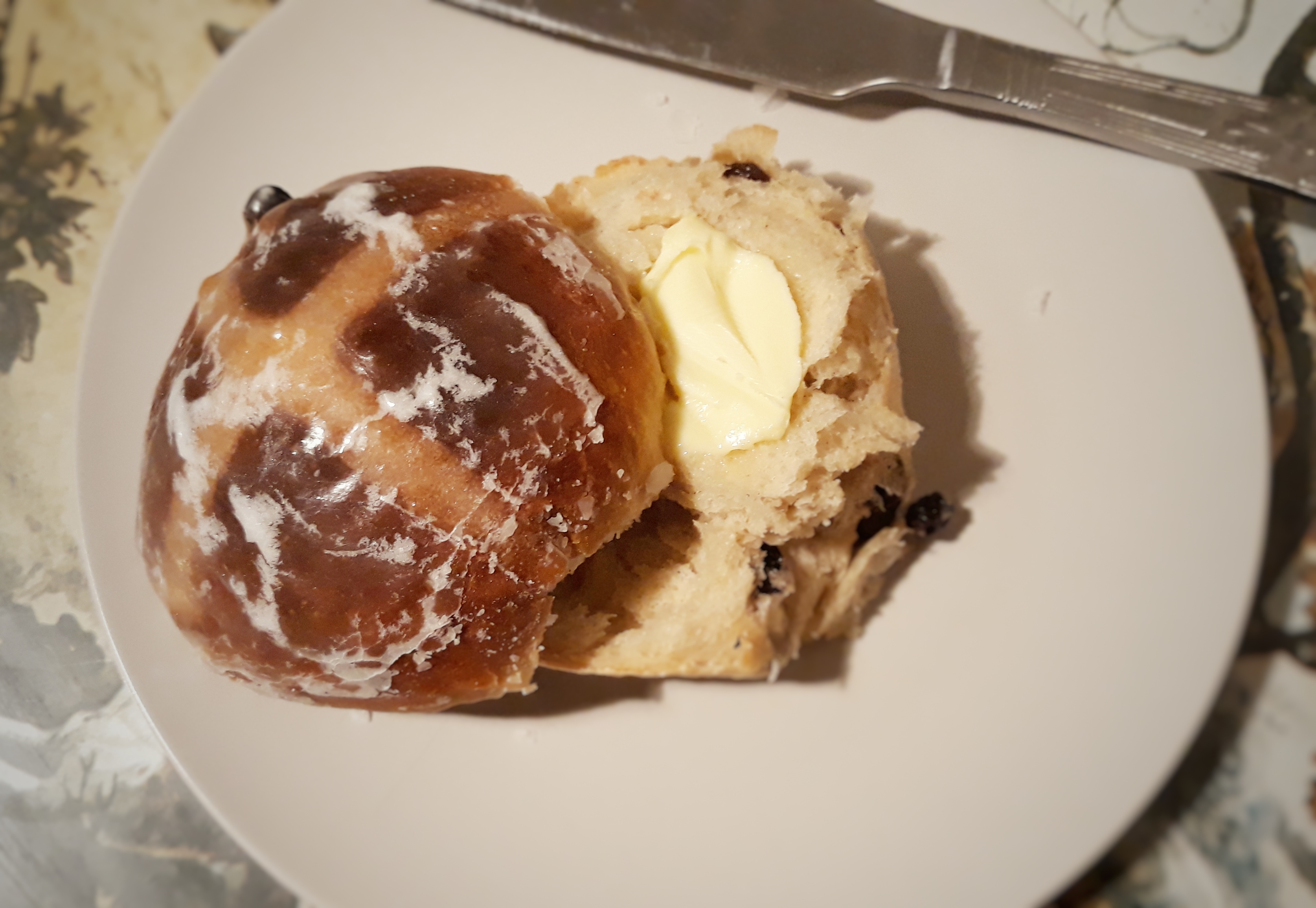
Eat, warm or cold with butter. To reheat them, bake in the oven for 10 minutes at 150⁰C.

22 Comments

Filed under baking, bread, Britain, Easter, Festivals, food, General, history, Recipes, Teatime

The Treacle Mines of England


If you like the content I make for the blogs and podcast, please consider supporting me by buying me a virtual coffee, pint or even a subscription : just click on this link.


Recently I wrote a post on the history and invention of golden syrup and black treacle in the 19th and 20th centuries. Prior to the mass production and refining of sugar cane in the West Indies, the only way to get hold of treacle was to mine ‘natural molasses’ in treacle mines. As far as I know treacle is the only mined foodstuff though I could be wrong there (I often am).

Natural treacle is very viscous

Treacle mines are rare and appear in just five regions of England: Yorkshire, Lancashire, Kent, the West Country, with the most significant mine being in Wymsey, Cumbria. Having a treacle mine in your town was a huge benefit to the inhabitants. The folk living in these areas were particularly healthy, especially the miners themselves. It was noted by William Cobbet in 1816 when visiting the Cumbrian village:

This place I found to be a fair and healthy place, the women and children well fed and happy. Most menfolk were at work upon the Land but that evening in the excellent Crown and Thorns Inn I was surpassingly surprised to see many men brown of hue. On enquiry I determined that these were miners of Treacle and what a jolly crew they turned out to be. That night I repaired to my bed thanking our maker that there was at least one happy parish in the land.

Black unrefined treacle forms from fossilised beds of sugar cane rather like oil or peat and has a tendancy to seep and rise to the surface of the ground. This run-off is useless, but what makes the regions mentioned above unique is that the treacle is surrounded by a layer of non-porous rock that keeps it contained.

Treacle mining goes back to pre-Roman times, in fact there was a healthy trade between England and Rome via Roman-occupied Gaul. In fact it was the main reason why the Romans wanted to conquer the unbearably cold and harsh British Isles. Why else would they want to take over an island that was inhabitable to them?  A floor mosaic from AD 77 was unearthed depicting treacle mining and refining.

Demand was so high, that any new sites had to be kept secret. The site of the mine in Pudsey (my home town, nestled between Leeds and Bradford in West Yorkshire) is so closely-guarded that only a very few individuals know the location and those that are told have to have been born and bred within the boundaries of Pudsey.  The site of the famous abbey at Kirkstall was chosen by the monks that built it because it was thought a tributary ran from the Pudsey mines through Kirkstall. Unfortunately it seems they were wrong – no treacle had ever been found there.

Pudsey Parish Church

There has been no significant treacle mining in Britain since the nineteenth century because industry had made sugar and its by-products cheap and accessible. However, it was on its last-legs already; most of the mines were completely dry and no new sites were found. The last working mine eventually closed in the 1930s during the Great Depression. There are no plans to excavate any of mines and it is a shame; it would be great if we could draw attention to this almost forgotten part of our food history.

55 Comments

Filed under Britain, food, General, history

The Jewel in the Crown

Britain and India have a long history together which stretch all the way back to the fifteenth century, and that history is based on the fact that India produced and exported spice, and the British had – and still have – a real taste for it. This was all in India’s favour at first; they sold to traders that travelled great distances through Western Asia, the Middle East and Europe. It was hugely popular during Tudor times, especially as a status symbol, everything that could be was seasoned with liberal amounts of cloves, cinnamon, black pepper, nutmeg, mace etc.

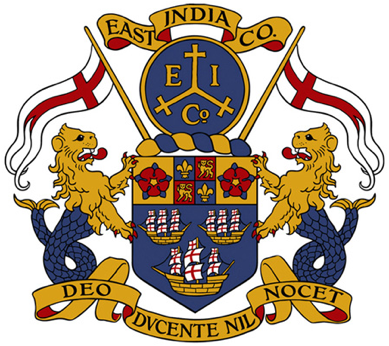
The East India Trading Company coat of arms

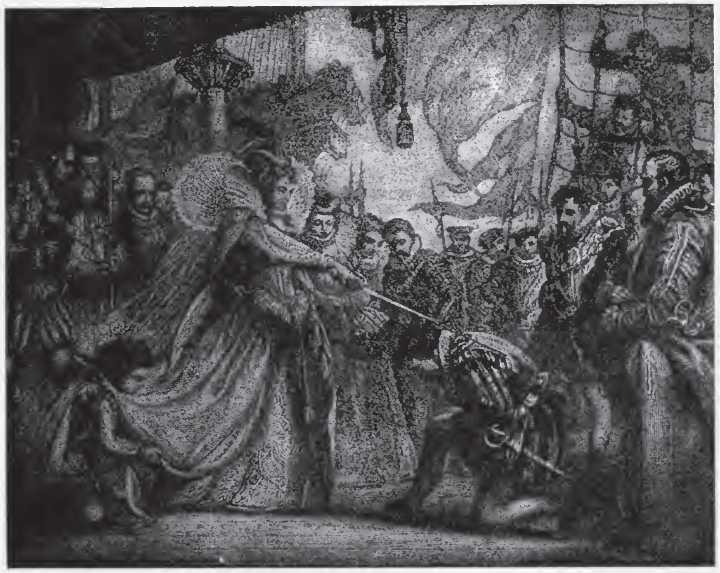
The tables soon turned on New Year’s Eve 1600 when Queen Elizabeth I set up the East India Company after Sir Francis Drake seized a Portuguese ship the carried detailed information about Indian trade. This royal charter essentially put India under English rule. The charter also gave England the right to trade with the America and Africa. All of this behaviour put the noses out of Portugal and the Netherlands who both had well-established trade routes too, prompting the latter to create the Dutch East India Company. There was terrible fighting between the three countries’ fleets brought on by the greed of the European trader and merchants. The English fought on, but it was the Dutch that gained the upper hand. So powerful were they that during this time a Dutch admiral led a flotilla up the Thames with a broom tied to the front of his ship, symbolising that they had swept the seas of the English.


If you like the blogs and podcast I produce, please consider treating me to a virtual coffee or pint, or even a £3 monthly subscription: follow this link for more information.


Elizabeth I knights Sir Francis Drake

It wasn’t until the mid-seventeenth century that the English made a return as a major player under the control of Oliver Cromwell of all people; I would have expected him to be against all of the splendour of spices. Later, Charles II renewed the royal charter, and even a second trading company was set up, which eventually joined up with the original.

The United East India Company became an unstoppable force, trading also in sugar, tea and rubber. The greed and mistreatment of the Indian people by the British prompted Prime Minister William Pitt to draw up the India Act of 1784, essentially nationalising the company. Then, in the mid-nineteenth century, mutiny was afoot; the Indian people who had become slaves to their British masters, could take no more, prompting the end of the great trading company. India was then passed on to the Crown where it became known as the jewel in the British Empire’s crown.

During this time both British and Indian cuisine changed, particularly during the Victorian Era when the British men were joined by their wives (it never seemed to occur to them to travel all the way to Asia before then). The Brits were soon hooked on Indian food and were eating curry for breakfast. They also brought their own cooking style with them, for example, there became Indian versions of cream of tomato soup, and Anglicised versions of their lamb soups that became Mulligatawny. Although dishes like kedgeree became very popular in Britain, it wasn’t until Victoria’s reign that curries became really popular in Britain, though references to curry dishes can be traced back as far as the sixteenth century.

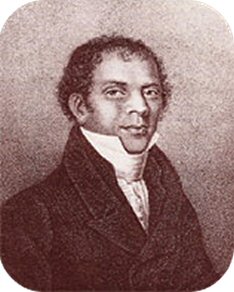
 Sake Dean Mohamet, owner of Britain’s first Indian restaurant

In 1809, the first Indian restaurant in Britain was opened, though it was a little ahead of its time, closing three years later. Queen Victoria herself loved curries and had Indian servants; at one banquet cailles aux pommes de terre à la Indienne, which is a quail and potato curry to you and I, appeared as a course on the menu. The top restaurants of the time such as the Strand and the Ritz followed suit and put curries on their menus too.

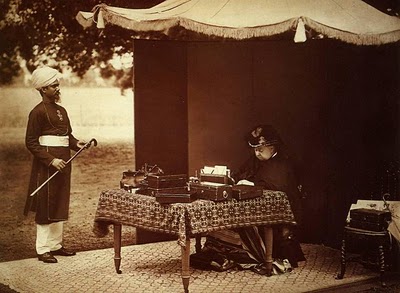
 Queen Victoria gets a lesson in Erdu from an Indian teacher

Then, in the 1960s there was a huge influx of Indian people into Britain, some as doctors and nurses, others seeking refuge with their British passports. Now the curry could really take off, especially in the cities of London, Birmingham and Bradford. Dishes were modified to British tastes and we flocked to the restaurants for the taste of the chicken tikka masala, lamb rogan josh, the bhajis, and the vindaloos, reaching a peak in the 1980s with the launch of the wonderful Madhur Jaffery’s classic book Indian Cookery. These days people want to taste more authentic curries and the Indian curry restaurant is still going from strength to strength, with several holding Michelin stars, and let’s not forgot that fish and chips has now been displaced by chicken tikka masala as our national dish.

I have absolutely no qualms about including curries in this blog, Britain has always been a cultural sponge especially when it comes to food. This in itself should be celebrated and I am glad new and exciting foods are constantly taking seed and blooming in this country, flourishing alongside – never needing to compete against – fish and chips and shepherd’s pie.

India-inspired recipes added to the blog thus far:

The Oriental Club’s Mid-19th Century “Mutton Curry”

6 Comments

Filed under Britain, Eighteenth Century, food, General, history, Indian food, The Victorians

Proper Custard

By proper custard I mean the pourable kind that goes on your pie, crumble or steam pudding. It also assumes the name cream custard and, of course, crème anglaise; you see it given that name in restaurants that trying to look all ‘high-end’, I suppose in many people’s minds, custard comes out of a packet or tin whilst crème anglaise is the real deal.

Custard in Britain has become somewhat of a travesty over the last few decades and I wonder how many people have actually ever eaten the proper stuff, whatever name you like to call it. I think it appears extravagant, fattening or difficult to make. Well it might be guilty on the first two counts against it because of the egg yolks and cream that are used, but it’s not really that difficult. All it needs is a watchful eye and a little stirring. There ways of making it easier to conjure up, as well as reducing its calorie count and cost, and there is no need to always resort going to the packet or tin.

Now, before you label me a custard snob, I need to point something out: I actually love custard made with custard powder and there’s really nothing wrong with it per se, but until you make the real stuff you won’t see they are almost incomparable. That said, there has been many an evening when I have a made a whole pint of Bird’s custard and eaten the whole lot to myself, but if there are people coming round for food, I always get the vanilla and egg yolks out.

Bird’s custard was my first contact so it will always have a special place in both my heart and stomach. However, technically, Bird’s custard isn’t custard at all, for it contains no egg (see the main post on custard). The powder was invented by Alfred Bird in 1837 because his wife, though she liked custard, was terribly allergic to eggs. Bird’s custard powder is simply cornflour with some vanilla flavouring and colouring. The famous three birds logo wasn’t introduced until the 1920s, surprisingly.

Tinned custard is pretty good too and, up until the last five or so years, it was the form I bought custard in if I wanted proper custard. My tinned custard of choice? Ambrosia Devon Custard of course – nothing else would do – and, like the Bird’s, I still love it. Again, however, Ambrosia custard does not contain eggs or egg products so is not proper custard.

Now you can go off and buy the proper stuff in the refrigerator section of your local supermarket, always called crème anglaise of course, but you may as well make your own if you’re going to do that. Next time you make a trifle or a nice warm pudding, why not try making the real thing – England’s only sauce as the French call it – proper custard.


If you like the blogs and podcast I produce, please consider treating me to a virtual coffee or pint, or even a £3 monthly subscription: follow this post for more information.


It’s a recipe that goes far, far back and I gave an early recipe a few posts ago (see here). I hope to try some old recipes in the near future. These days vanilla is the typical flavouring, whether it be in the form of a pod, an extract or as vanilla sugar, but it is optional. Some like no spice or some go for an alternative like nutmeg or cinnamon. For me, vanilla is the only way. It is sweetened with sugar and the amount you add depends on your own taste, but as a rule I like sweet custard, especially when it’s with a tart fruit pie or crumble or with a stodgy suet pudding. I add less sugar if the dessert is very sweet, like treacle tart or sticky toffee pudding.

When it comes to thickening the custard, you need to be careful not to over-cook it as it results in curdling. If you are new to custard making, the best thing to do is to replace two yolks with two teaspoons of cornflour; it works as a thickener like the yolks, but it also stabilises everything, so you’re less likely to make an error. The recipe below uses six egg yolks, but if you want thicker custard add another, or another teaspoon of cornflour.

Ingredients

1 pint of milk, or a mixture of milk and cream

1 vanilla pod or ¼ teaspoon of vanilla extract

6 egg yolks or 4 egg yolks and 2 tsp cornflour

1 to 2 tbs sugar

Split the vanilla pod, if using, and scrape out the seeds and add to a saucepan along with the milk and cream. Bring slowly to almost boiling point. Meanwhile beat the egg yolks, cornflour and sugar together in a bowl.

making custard

When the milk and cream are scalding hot and about to boil, pour it quickly onto the egg mixture whilst vigorously beating with a whisk. Tip the custard back into the saucepan and stir over a very low heat for a few minutes until it thickens and coats the back of your wooden spoon. On no account, let the custard boil, otherwise you will get scrambled egg. The temperature you are looking to achieve is 81⁰C (178⁰F). So if you are worried that it will curdle, either make sure you include the cornflour and/or put the custard in a bowl over a pan of simmering water. Don’t worry if there is a little curdling; simply pass it through a sieve and everyone will be none the wiser.

home made custard

20 Comments

Filed under food, General, history, Puddings, Recipes, Uncategorized

Lenten fodder

Yesterday was Shrove Tuesday, so today is the first day of Lent, a forty day fast that takes us right up to Easter. It came about because Jesus fasted for 40 days as he walked the wilderness prior to his death on the crucifix. Foods like meat, eggs, cheese and milk were decadent and therefore they were right out during Lent. In fact there was abstinence from any activity considered decadent, and the further back in time, the stricter were the rules. In the early days of Christian Britain some people ate only bread, whilst others ate herbaceous vegetables too. As time went on to the Middle Ages, the rules became a little slacker and fish were allowed into the diet. Thomas Aquinas was a main instigator of this move.

“By Jove, look at all the tucker Jesus has got, chaps!”

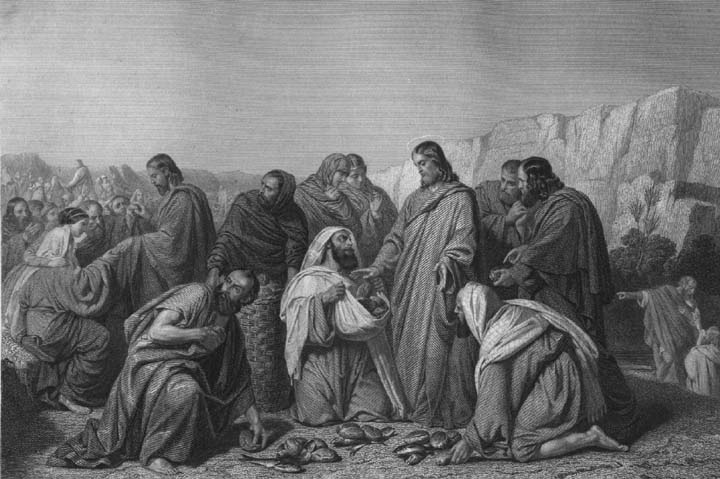
The Miracle of the Loaves and Fishes

Fish was chosen for several reasons: It was fare that could be eaten by all classes, so in effect everyone would be eating the same types of food, nor was is associated with power, strength, hotness and richness like meat was; indeed fish were both humble  and meagre. Most importantly, it was strongly associated with Jesus himself. The 40-day long fast also symbolised a cycle of ‘purification and regeneration’ and fish were considered pure. People always find loopholes however – the rich still ate large grand dishes like roast pike. Indeed anything even closely associated with water was considered fair game during Lent: beaver, seal, porpoise, heron, even sheep found drinking from streams were eaten!

Fair game: the beever

By Tudor times, the rules had slackened even further to include fish and game, but not red or white meat (i.e. poultry). This meant one could eat bustard, curlew, pheasant, quail and red deer. Strangley, root vegetables were off the menu because they came from the soil and were a little too close to Hell for comfort for some.

In France during the eighteenth and nineteenth centuries there were sometimes no difference between Lenten meals and regular ones, at least for the aristocracy. People would simply find excuses not to fast, complaining, according to the great French gastronome Brillat-Savarin “it irritated them, gave them headache, and prevented them from sleeping. All the troubles associated with the spring were put down to the score of the fast, so that one did not fast because he thought he was poorly, another because he had been, and a third because he feared to be.”

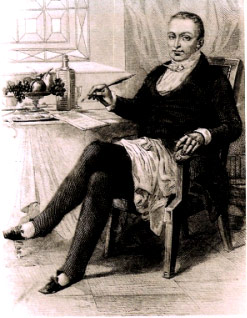
The late, great Brillat-Savarin

Most of the time it was enforced, though not for reasons of piety, but for economical ones. For example on a typical day, the French Royal Family in the Palace of Versailles, France, went through 900 pullets, 350 braces of pigeons and 86 goslings!

The Palace at Versailles

These days, people give up one vice for Lent, and although I am an atheist, I do see the spiritual worth in giving up something. Back in the day, when I used to smoke, I would try and forego cigarettes but without much success. These days I don’t bother, so I suppose I’m going straight to Hell; at least there’ll be plenty of parsnips and carrots down there to roast by the fire and brimstone…


If you like the blogs and podcast I produce, please consider treating me to a virtual coffee or pint, or even a £3 monthly subscription: follow this link for more information.


10 Comments

Filed under Festivals, food, French Cookery, General, history, Uncategorized

Pancake Day

Happy Shrovetide!

Today is Shrove Tuesday, the day before the 40 day long fast-a-thon that is Lent, so we best have a big-old festival, no?

No.

Where do you think this is? France? America? This is Britain, and whilst the rest of the Christian world is dancing, drinking, feasting and parading, we do not bow to such vulgarities, instead we have some pancakes and a nice cup of tea.

I jest of course; though between you and me, I would happily swap Mardi Gras for Pancake Day any day.

In Britain and Ireland, we make and eat pancakes before Lent because it is a very good way of using up main staple ingredients: flour, fat, eggs and sugar before the onset of Lent. By pancakes, we typically mean crepe-style pancakes, but the UK has a wide variety of different pancakes which are all delicious. I suppose you could add the griddle/girdle cakes to the list too as they typically use the same ingredients, but they are a little hit-and-miss, in my opinion.

These days, of course, we don’t really fast for the run up to Easter, but I do like to follow traditions, at least when it comes to eating food (I happily ignore the abstinence bits). I remember as a child, my family always had pancakes for tea on Shrove Tuesday and I don’t think we ate them any other day, I remember thinking you weren’t allowed to eat them unless it was Pancake Day. I have made up for this as an adult, especially now I am living in America.

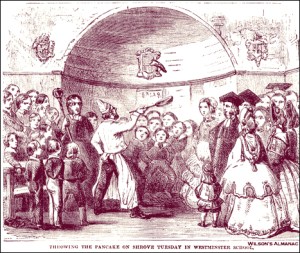
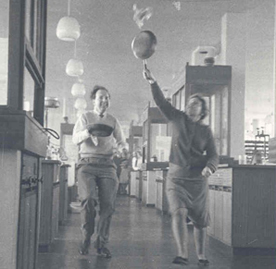
It is traditional to take part in a pancake race on Pancake Day, which involves running a course whilst flipping pancakes. I have very hazy memories of doing this when I was little, but I don’t think that I have seen nor heard anything about pancake racing in the last 20 years, maybe more. It’s a shame that these things are dying out, I know many think it’s a little naff or twee, but I love stuff like that. It enriches life. Next year I shall hold a pancake race I think.

Pancake racing in the chemistry lab of

Westfield College, London, 1963

Shrove Tuesday is really the final day of a two-day period known as Shrovetide which was part of an unofficial festival called Carnival that ran from Epiphany. It was essentially a period of time for a lot of gluttony and frivolity in order to prepare for the nightmarish 40 days of misery beginning on Ash Wednesday.


If you like the blogs and podcast I produce, please consider treating me to a virtual coffee or pint, or even a £3 monthly subscription: follow this link for more information.


Welsh Light Cakes

I love all types of pancakes, but the best ones come from Wales. This recipe from Jane Grigson for Welsh light cakes is excellent; they are made with soured cream, which gives them a wonderful tang. I have never found a pancake recipe to beat it, so I urge you to give it a go. If you make these with British soured cream, the resulting pancake batter is thin, giving them a frothy frilly texture. If you make them with American soured cream, the batter is much thicker, making them fluffy. Either way results in deliciousness.

Ingredients:

6 rounded tbsp. flour

2 rounded tbsp. sugar

3 tbsp. soured cream

a pinch of salt

3 eggs

½ tsp. bicarbonate of soda

1 rounded tbsp. cream of tartar

4 tbsp. water

¼ pint buttermilk or milk

fat or oil

butter

golden syrup

Beat together the flour, sugar, cream, salt and eggs. Next, mix together the bicarbonate and cream of tartar with the water and as it froths, tip it into the batter and stir it in. Add the milk or buttermilk to produce the desired consistency. Less for thick and fluffy, more for thin and lacy.

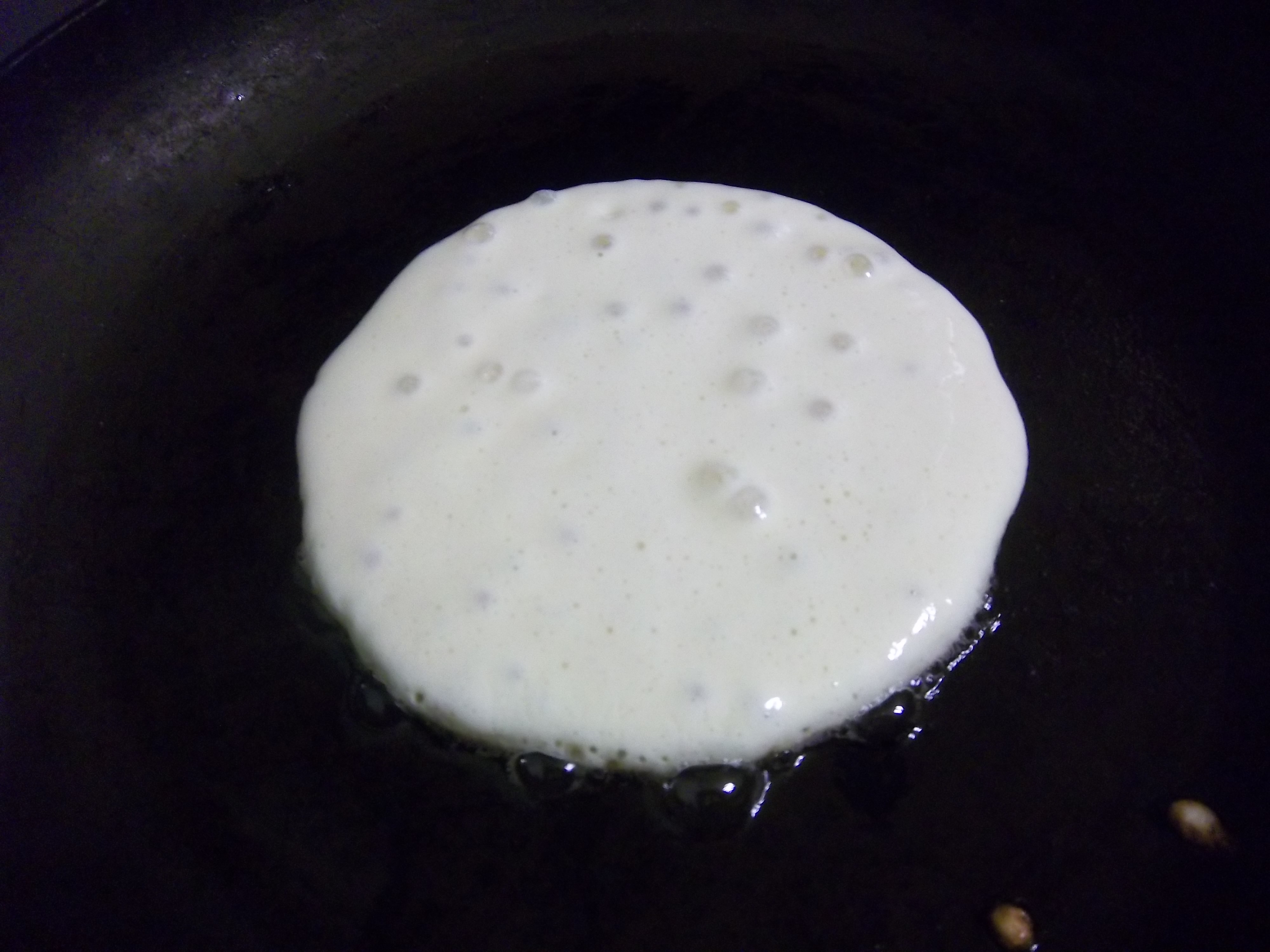
Heat the fat or oil on a suitable frying pan, swirl it around so the pan is coated and pour out any excess. Add a ladelful of batter and fry until golden brown, then carefully, quickly and confidently flip the pancake and cook the other side.

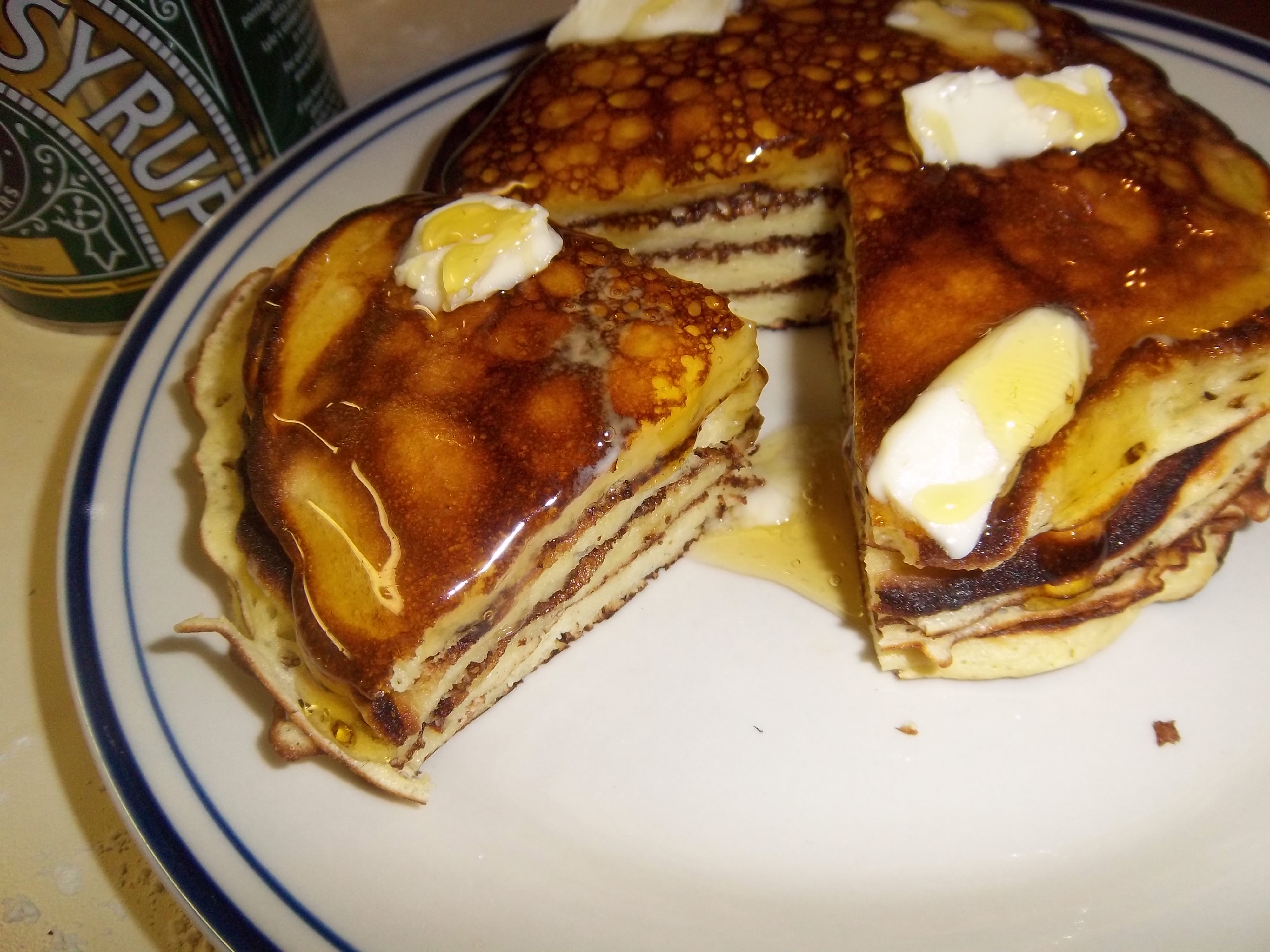
Stack the pancakes on top of one another and keep them warm in the oven, adding a pat or two of butter to each one.

Cut the stack into quarters and eat with golden syrup and more butter if you like.

8 Comments

Filed under baking, Festivals, food, General, history, Puddings, Teatime, Uncategorized

Custard

I love custard. There is very little that can beat it in my opinion, especially during the winter months. By custard I mean the pouring kind also known as crème anglaise by the French and by people who want to sound posh. I call it proper custard.

Custard is essentially eggs mixed with liquids, usually milk or cream, and then thickened using a low heat. The difficulty with custard is that they can be overcooked, you want the egg to thicken, but if you go too far the eggs either curdle or go rubbery. Custard should never be allowed to boil, the perfect temperature is around 80⁰C (180⁰F). If you want thicker custard, you need more eggs, not more heat.

I started looking into custard and quite quickly realised that the term custard is actually quite diverse, falling into two broad churches, so thought I’d give a quick overview before I add recipes.

First up are the cream custards, i.e. sauces that are made in a pan and stirred like the aforementioned crème anglaise that is poured on pies, crumbles and steam puddings and the like and is used cold in trifles. Egg yolks and cream or milk are used here, usually flavoured with vanilla and sometimes scented with orange flower water or rose water. Many people think that proper custard is made using custard powder, but they would be incorrect. Don’t get me wrong, I love a bowl of Bird’s, but it is not proper custard. In fact, it isn’t technically custard at all as it doesn’t contain any eggs.

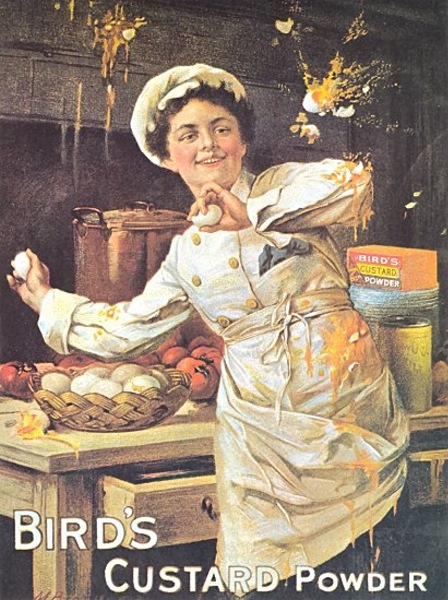
Bird’s advertisement, 1896

There is also confectioner’s custard, crème pâtissière, or pastry cream, thick and sweet and used to make delicious vanilla slices or profiteroles. This custard is unusual because it is heated until it boils, stabilised with cornflour. Also in this category are the fruit curds that are used in tarts, puddings or just in sandwiches. Here, the liquid is provided by fruit juice, typically lemon, but orange, lime and passion fruit curds are made too.

Much more common are the set custards which are baked and usually protected from the dry heat of the oven with a water bath. Whole eggs are used, because the whites form a matrix of albumen creating a gel, setting the custard. The more egg white included, the firmer the custard; useful if you want to turn it out onto a dish. Set custards are a diverse group. There is the classic baked custard, possibly my favourite ever dessert, but also lemon or orange tarts which are similar to fruit curds. All of these can actually be served with or without a pastry crust. Custards cooked in this way were also called douchets. Those without crusts include such classics as bread and butter pudding, burnt cream (or, if you like, crème brûlée) and crème caramel.

Then there are the custards that you don’t think of as custards, like baked cheesecakes or savoury quiches. There are set savoury custards made with meat stock that were once a popular starter, served warm with crisp Melba toast. I have also found recipes for cheese custard and potato custard.

I expected the set custards to be the kind that appeared first, but the earliest recipe going under the name custard I could find is from 1596 and is certainly a cream custard:

To Make a Custard

Break your eggs into a bowl, and put your cream into another bowl. Strain your eggs into the cream. Put in saffron, cloves and mace, and a little cinnamon and ginger, and, if you will, some sugar and butter. Season it with salt. Melt your butter and stir it with a ladle a good while. Dub your custard with dates or currants.

I have to say, it sounds delicious. I shall cook it someday.


If you like the blogs and podcast I produce, please consider treating me to a virtual coffee or pint, or even a £3 monthly subscription: follow this link for more information.


By the seventeenth century onwards, set custards had become popular. This is because they were actually more difficult to make than the saucy ones. This is because it was rather problematic to effectively use water baths, plus it was difficult to check the ‘doneness’ of the custards with the old open fires. As ovens became more refined, this sort of delicate baking was easier to attain so up popped puddings like burnt cream (crème brûlée), though the country of origin is somewhat disputed, though the earliest I have come across is from 1692 and is French.

 In the seventeenth century better ovens created more delicate desserts

Elizabeth Raffald was the Queen of Custard, her 1769 book The Experienced English Housekeeper contained no less than 13 custard recipes both creamy and set, sweet and savoury. I am definitely going to try some of hers, but here’s one that I can’t see getting round to doing as it uses beest, which is an old term for a cow’s first milk produced after calving.

Take a pint of beest, set it over the fire with a little cinnamon or three bay leaves, let it be boiling hot. Then take it off and have ready mixed one spoonful of flour and a spoonful of thick cream, pour your hot beest upon it by degrees. Mix it exceedingly well together and sweeten it to your taste. You may either put it in crusts or cups or bake it.

What is interesting is that it bay leaves are used; it’s half way between a custard and a white sauce. I wonder of the beest tastes extra sweet as well as extra rich.

Custard recipes on the blog:

Proper custard

17 Comments

Filed under baking, General, history, Puddings

How the British Royal Family was saved by soup…

It’s Queen Elizabeth the Second’s diamond jubilee this year, so thought I should write a post or two on the Royal Family…

In recent times, the Royal Family have been under threat of being dissolved in Britain, due to what seemed like a total lack of support. It feels that in the past the Royals were revered, but they have fallen in and out of favour with the public rather alot. Popularity during the early twentieth century for example was pretty low. Today, Prince William seems to have picked up today’s royals’ momentum again, but back then it was King George V that turned them around, and what helped him to do that was soup…

The Coronation of King George V and Queen Mary

George became King of England in 1911 in a time of turmoil and constitutional crisis, the Great War was a-brewing and the Royal Family were seen as totally outdated. George himself was vehemently against modernisation, and things seemed a lost cause. George and his wife, Queen Mary, spend much time visiting the poor and doing their bit, but to little effect. The reason for all this was because of the Labour Party’s increasing popularity and also the rumblings of revolt in autocratic Russia. Was the smell of revolution in the air? Possibly, but things began to change during the Great War. In 1917, the Russian Royal family sought asylum in Britain and the British Government duly granted it. But then, in waded George and refused them entry – he knew that helping such an old and autocratic institution would be embarrassing and most probably disastrous for the British Royal Family and for the country too. He realised he must distance the two families. Tsar Nicholas and his family were brutally killed the following year by the Bolsheviks.

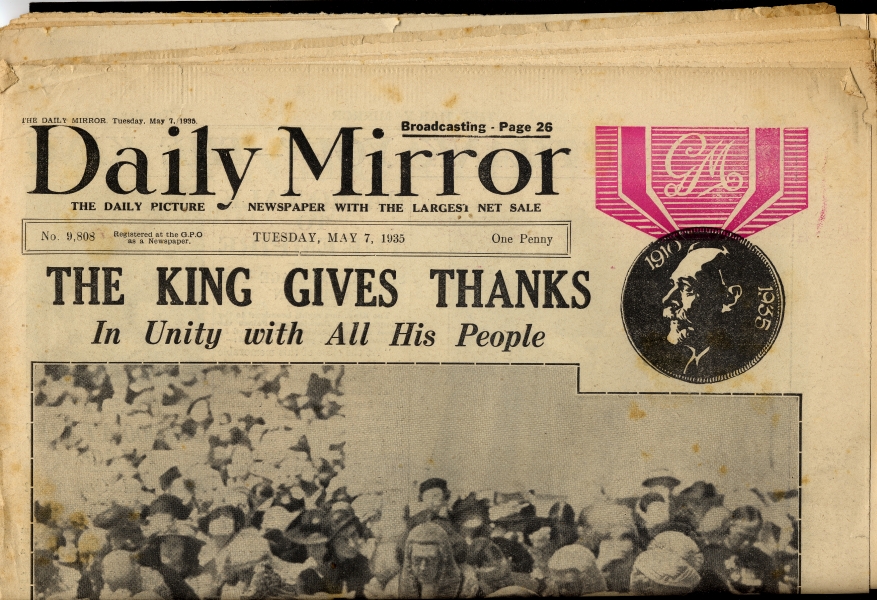
The Silver Jubilee edition of The Daily Mirror, 7 May 1935

George then realised that the Royal Family needed to distance themselves from their German ancestry, deciding to anglicise the surname – Saxe-Cobourg-Gotha was not helping them at all during the fight against the Bosch. But what to change it to? After some pondering, the private secretary came up with a name that would inspire Britishness (and George considered himself to be British through and through). The name was, of course, Windsor. Why Windsor? Well, it was because of the ubiquitous Brown Windsor soup served up by every housewife at the time. It was ‘a nourishing brown…with a certain hearty dullness’. Windsor also linked to the ancient Windsor Castle. This was just what George needed, and it really changed the public’s views. Soon after, he introduced the Order of the British Empire (or, OBE), which clinched the whole affair. He died in 1936 much beloved by the British Public.

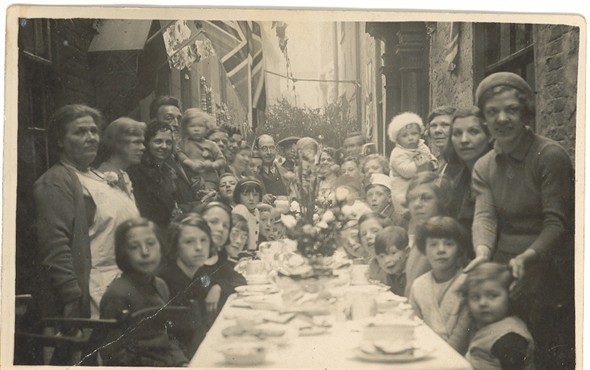
The people of Yarmouth celebrate the King’s Silver Jubilee


If you like the blogs and podcast I produce, please consider treating me to a virtual coffee or pint, or even a £3 monthly subscription: follow this link for more information.


Brown Windsor soup, later shortened to simply ‘brown soup’ went a little downhill. It became a rather thin and tasteless affair served up in hotels and it gave British soup a bad name. This seems to happen all too often to much of our food. I always blame wartime rationing for these things, but I think I right this time: small amounts of meat made the soup boring, and over time people perhaps simply forgot what Brown Windsor soup used to be like.

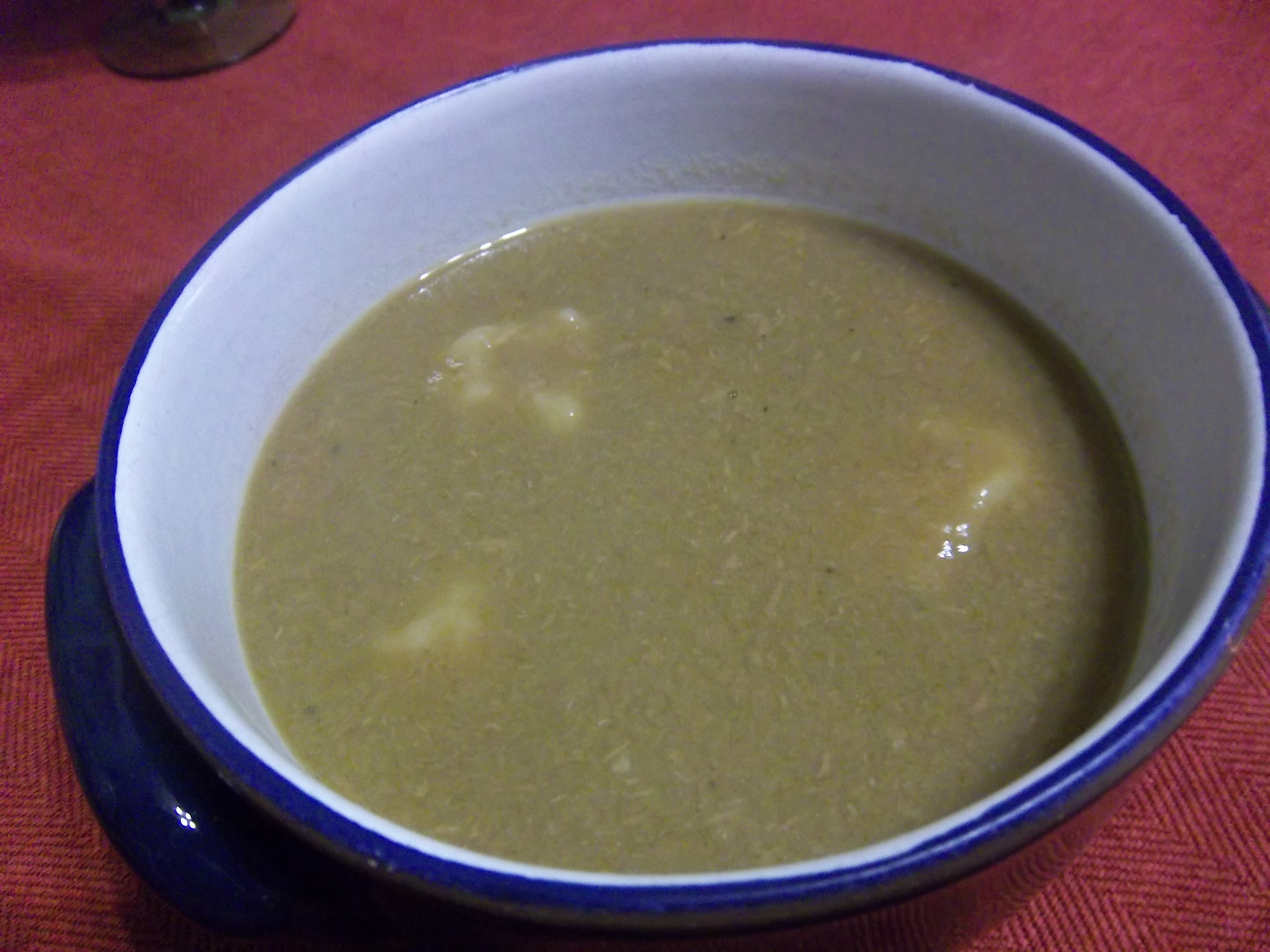
Well take it from me, it used to be a delicious thick and hearty soup, perfect for this cold weather we are having. It’s pretty cheap too. This recipe comes from the wonderful cookery writer Lindsey Bareham’s book A Celebration of Soup. Her version cranks up the stodge-o-meter with the addition of horseradish dumplings; and we all need stodge mid-February.

For the dumplings:

4 oz. self-raising flour

¼ tsp salt

2 oz. beef suet

ground black pepper

1 oz. grated horseradish, or a good creamed proprietary brand

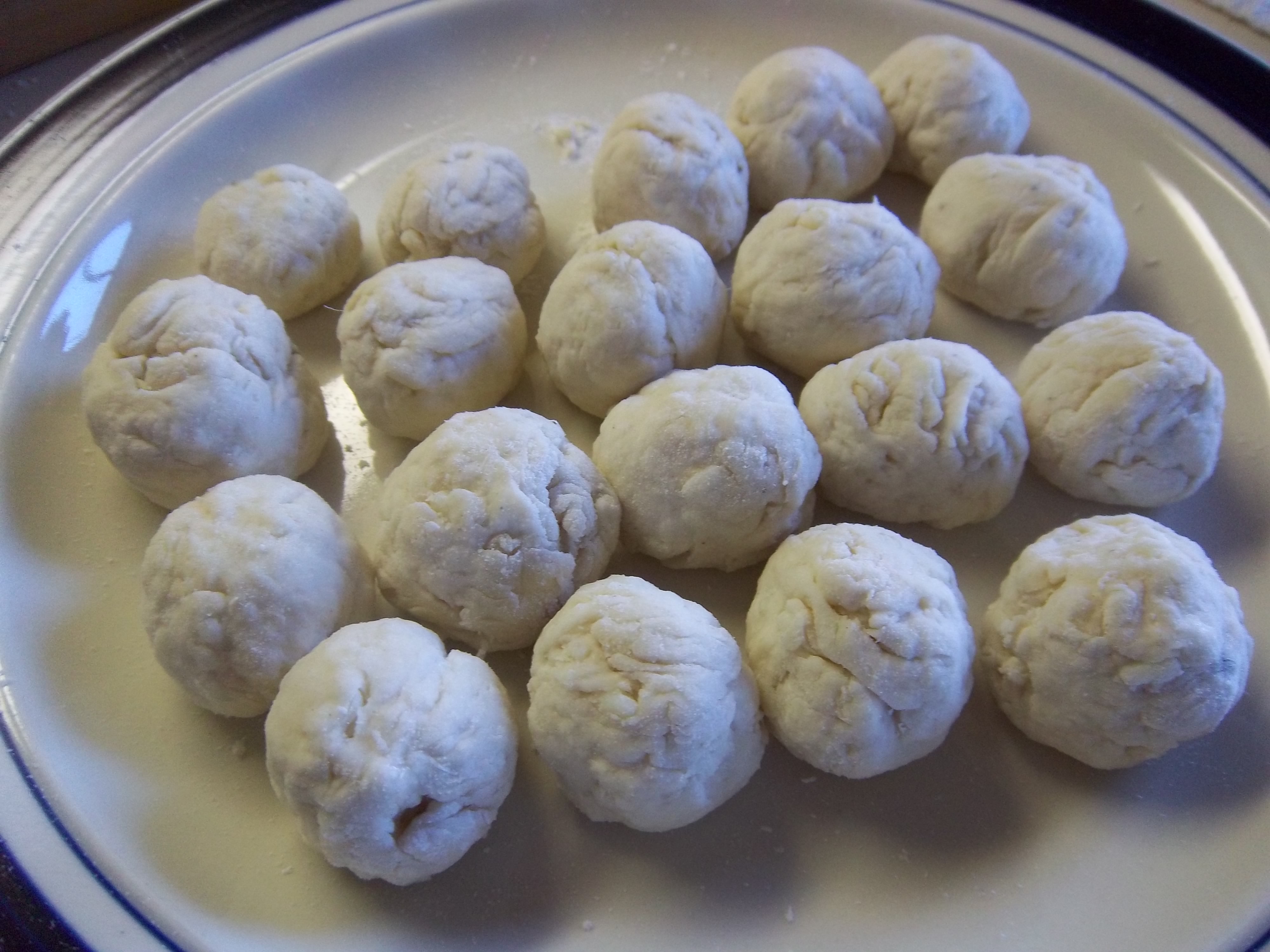
Sieve the flour and salt into a bowl and stir in the suet and a seasoning and pepper. Mix in the horseradish and stir in enough cold water to bring the dough together in your hands. The dough should be soft and elastic, but not too sticky to handle. Flour your hands and roll 16 to 20 small dumplings. To cook the dumplings, turn up the heat on soup and plop them in. They should take about 15 to 20 minutes to cook.

For the soup:

1 oz. butter

a small onion, thinly sliced

the green of a leek, thinly sliced

a small carrot, diced

10 oz. stewing steak

1 tbs flour

2 ½ pints of beef stock

a bouquet garni made with 2 bay leaves, 4 parsley stalks, a sprig of thyme and a crushed garlic clove

1 tbs chopped parsley (optional)

Melt the butter in a large saucepan and cook the onion for a few minutes to soften slightly, then add the leek and carrot. Season well with salt and pepper – the salt is very important as it helps to draw the flavour from the vegetables – cover the pan and cook for a further 5 minutes or so. Turn up the heat and add the meat, browning it all over. Next, stir in the flour and cook for a couple more minutes before adding a little stock. Make sure you scrape off any crusty bits of beef or flour from the pan’s bottom with your wooden spoon.  Now pour in the rest, bring to the boil, add the bouquet garni and then turn the heat down, cover and simmer for 2 hours. Liquidise the soup and reheat, adding more seasoning should it need adjusting. Stir in the parsley just before you serve the soup.

12 Comments

Filed under food, General, history, Meat, Recipes, Soups, The Royals, Twentieth Century

“Out of the strong came forth sweetness…”

Can there be anything else that sums up British baking as much as Lyle’s Golden Syrup? If you are not British then you might not have heard of it and it is rather difficult to compare it to anything else. It looks like honey, but is viscous like a syrup such as corn syrup and yet it tastes like neither. The taste is more like butterscotch or caramel. It is also commonly called treacle. I absolutely love the stuff and manage to get hold of it here in Missouri to go on my porridge or pancakes of a morning. Oddly, it was never intended to be a commercial product, but thank goodness it became one. I remember as a child, my Dad always used to make us a treacle sandwich after our Sunday baths whilst we dried in front of the fire, soggy towels wrapped around us.

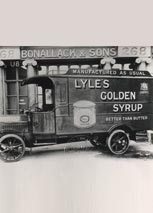
The story of golden syrup starts in 1881when the Scottish businessman Abram Lyle set up a sugar-refinery in London on the Thames with his five sons, processing sugar cane into sugar loaves. In those days, sugar was bought in large tapering mounds that had to be pounded or grated by hand at home. One byproduct of the process was a thick, gloopy syrup that with a little more refining through charcoal was very delicious. So he sold it to his workers from large barrels (Lyle was originally a cooper) and the syrup quickly was anointed with the nickname “Goldy”. Soon, Goldy became popular outside of his workforce and everyone wanted some. Just two years later, in 1883, Lyle’s Golden Syrup was born.

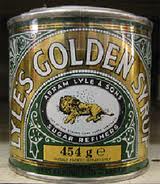
It is the tin the golden syrup that comes in that is the icon of both British cookery and Victorian entrepreneurship. Famously, on the front is a drawing of a dead lion peppered with swarming bees. Abram Lyle was a very pious man, and used the story of Samson in the book of Judges in Old Testament as the inspiration for the design. Quite a while before his fateful haircut, Samson got attacked by a lion which, through His power, Samson was able to rip open, killing it. Later he sees that bees have built a hive within its carcass and he takes some honey to his family and friends and they have a feast. He didn’t tell them about the lion and had them guess how he came about all the honey, presenting them with the poser:

And he said unto them, Out of the eater came forth meat, and out of the strong came forth sweetness. And they could not in three days expound the riddle.

Judges 14:14


If you like the blogs and podcast I produce, please consider treating me to a virtual coffee or pint, or even a £3 monthly subscription: follow this post for more information.


Tins were first produced in 1884 and unbelievably have not changed at all in their design since. In fact, the recipe for the syrup has never changed either – making Lyle’s Golden Syrup the oldest brand in the world. “You’d be mad to mess with Goldie.” The only slight change is to the weights written on the tin: gone are the “1 lb” and “2 lb” marks, their replacement being the “454 g” and “907 g” marks, to keep in line with EU rulings. Another change occurred during the Second World War when, because of tin shortages, Lyle had to make the ‘tins’ from cardboard instead.

For over 125 years, it has been indispensable – it was even taken on Captain Scott’s fateful trek to the Antarctic. He wrote a letter to the Lyle family:

“Your Golden Syrup has been in daily use in this hut throughout the winter, and has been much appreciated by all members of the expedition.”

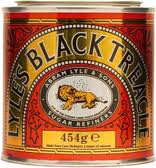
In 1950, the Lyle Company brought out a second iconic product: Lyle’s Black Treacle. It is very similar to molasses, though it is considerably thicker and stronger tasting. For any recipes that ask for black treacle, you can substitute molasses instead with no problems.

In the American classic The Fannie Farmer Cookbook, there is a recipe for Cornish Treacle Tart (which is actually made from Golden Syrup). In that recipe it asks for three-quarters of a cup of dark corn syrup. Do not on no account ever, ever, substitute golden syrup for corn syrup. The two are incomparable. So, I urge the American public: if you use a recipe that asks for Golden Syrup and you cannot get hold of any, don’t bother making it. Do you hear me? Good, then we understand each other. Amazon’s grocery section stocks it, so you can always get it online.

Lyle’s Golden Syrup and Black Treacle are part of so many wonderful recipes, I would be crazy listing them all, but here are what I reckon are the important or interesting ones. As I add recipes, I’ll add links. If you know of any that I have missed off, please let me know. Here goes:

Treacle tart

Flapjacks

Pancakes

Treacle sponge pudding

Mrs Beeton’s rolled treacle pudding

Golden syrup cake

Aunt Nelly’s pudding

Malt loaf

Jamaican ginger cake

Parkin

Ma Buttery’s crunch

Bonfire toffee

Christmas cake

30 Comments

Filed under General, history, Nineteenth Century, Puddings, The Victorians

A Very Brief History of Bread

Recently I have very much gotten into bread-making so I thought I would try to tackle a post on its history. Within about 3 minutes of researching, I realised that there is quite literally volumes off stuff and there is no way I could do it any justice in a single post. But I have to start somewhere, so I thought the symbolism of bread and its early beginnings might be a good place to start…

Bread was the one food that everybody depended upon, and it has been the focus of our daily lives for hundreds of years. We talk of ‘earning a crust’ and ‘dough’ is a slang word for money. When taxes get too high, we complain that we are having ‘the bread taken from our mouths’. Bread itself meant food.  Our lives are so linked with bread that many of our words have roots in bread or bread-making: the word lord is from the Anglo-Saxon hlaford, meaning ‘loaf ward’ and lady from hlaefdige, or ‘loaf kneader’; companion and company come from the Latin companio which means ‘one who shares bread’. Jesus’s flesh is bread, and when we pray, we ask Him to give us ‘our daily bread’ and should we get it, we’re ‘truly thankful’.

The Infant Jesus Distributes Bread to Pilgrims by Murillo 1678

I am not a religious person and don’t say Grace or anything like that. In fact, I don’t know anyone who does, but I remember as a child when we had to say the Lord’s Prayer at assembly, thinking that it was strange that we wanted bread (‘Give us this day our daily bread’). Surely there were much better things than boring old bread like cakes and fizzy pop. Plus we would get dinner anyway, so what was the point?

The Georgian essayist, George Lamb, brings up this very point:

The indigent man, who hardly knows whether he shall have a meal the next day or not, sits down to his fare with a present state of the blessing, which can be feebly attached to the rich…The poor man’s bread is his daily bread, literally his bread for the day. Their courses were perennial.

Do such people exist still today? I don’t think so. I’m not suggesting that there is no poverty of course, but the food of the poor is no longer bread. There is certainly more variety of food if you are poor in this modern age, but cheap food is pretty bad. Is it best to spend your money on a load of insipid flavourless food full of additives, or to buy the ingredients for a few loaves of proper bread? I actually don’t know the answer to that question.


If you like the blogs and podcast I produce, please consider treating me to a virtual coffee or pint, or even a £3 monthly subscription: follow this link for more information.


You need only four ingredients to make bread: flour (though not necessarily wheat flour), water, salt and yeast. The first three ingredients were not that easy to come by; producing flour was a labour-intensive activity, salt was expensive and good quality fresh water might not even have existed in your town or village. Yeast, however, was easy, it could be found happily residing naturally on wheat. When dough is left for a certain amount of time it will begin to naturally ferment and rise as the yeast grows and anaerobically respires to produce bubbles of carbon dioxide. The earliest evidence for making leavened bread comes from Egypt and dates 4000BC, though it didn’t reach Europe until 400BC in Greece where barley flour was used over wheat. According to Aristotle barley bread was bread so white that it out does the ethereal snow in purity. Tone it down, ‘Totle.

Baking Bread by Helen Allingham, 19th Century

Bread wasn’t always sustaining; in the cities, we have been guilty of baking notoriously bad bread. Its peak was during the eighteenth and nineteenth centuries, bakers were displaying very fraudulent behaviour. Additives for whitening were very common; London bread was a deleterious paste, mixed up with chalk, alum, and bone-ashes; insipid to the taste and destructive to the constitution. One pamphlet author even accused the bakers of using ground human bone! We reached this level state because flour wasn’t available to everyone and so there was no choice. Today there are food standards, but for the main part, most of the bread we consume is in no way near what bread could be. However, perhaps we shouldn’t expect it – millions of people need mass-produced foods, so perhaps this is the best, and only way, to do it.

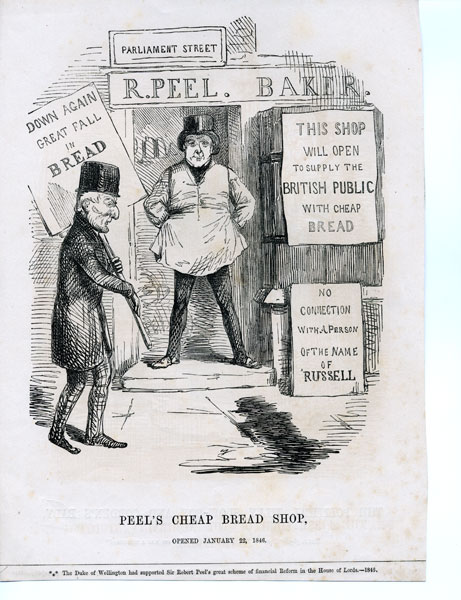
Peel’s Cheap Bread Shop, Punch cartoon from 1846

According to Maguelonne Toussaint-Samat, the French food historian, there were four evolutionary steps that led toward the ‘invention’ of leavened bread.

  1. Pounded grains: raw or fire-roasted grains were eaten crushed or whole.
  2. Decoction, mash or porridge: the raw or cooked grains were pounded or ground and mixed with water to make a dough. The mixture was then either eaten or drunk.
  3. Maza: a thick dough is moulded into the shape of a flat cake and baked on embers, a griddle, an oven or in a glass dome. These were common in the Stone Age and their little-changed descendants still exist today in the form of pitta and chapatti.
  4. Bread: cereals suitable for bread-making are used such as wheat, spelt, oats, rye and buckwheat. Left over dough from a previous baking – the leaven – is added and the dough is left to rise and improve in flavour and texture. It is then cooked in a preheated oven or a glass dome.

So bread is what one’s world revolved around, and it has – in the most part – become a flabby mass-produced pre-sliced affair that somehow turns back into dough when you squash it. In the past, a huge amount of effort was required to bring together the four ingredients and bake them. Future posts will tackle those ingredients and the ways they were cooked, the machines built, the microbes or chemicals used to flavour or leaven, the holy days they were often baked for, and how village and city life depended on the producers of the ‘staff of life’.

Bread recipes added so far:

An Everyday Loaf

Coburg

Hot Cross Buns

12 Comments

Filed under baking, bread, food, General, history, Teatime