Category Archives: Recipes

Yorkshire Teacakes

A hospitable Yorkshire housewife would consider her tea table was barely spread if it were not liberally supplied with these delicious cakes, constant relays of which should be served steaming hot.

Cassell’s Dictionary of Cookery (1883)[1]

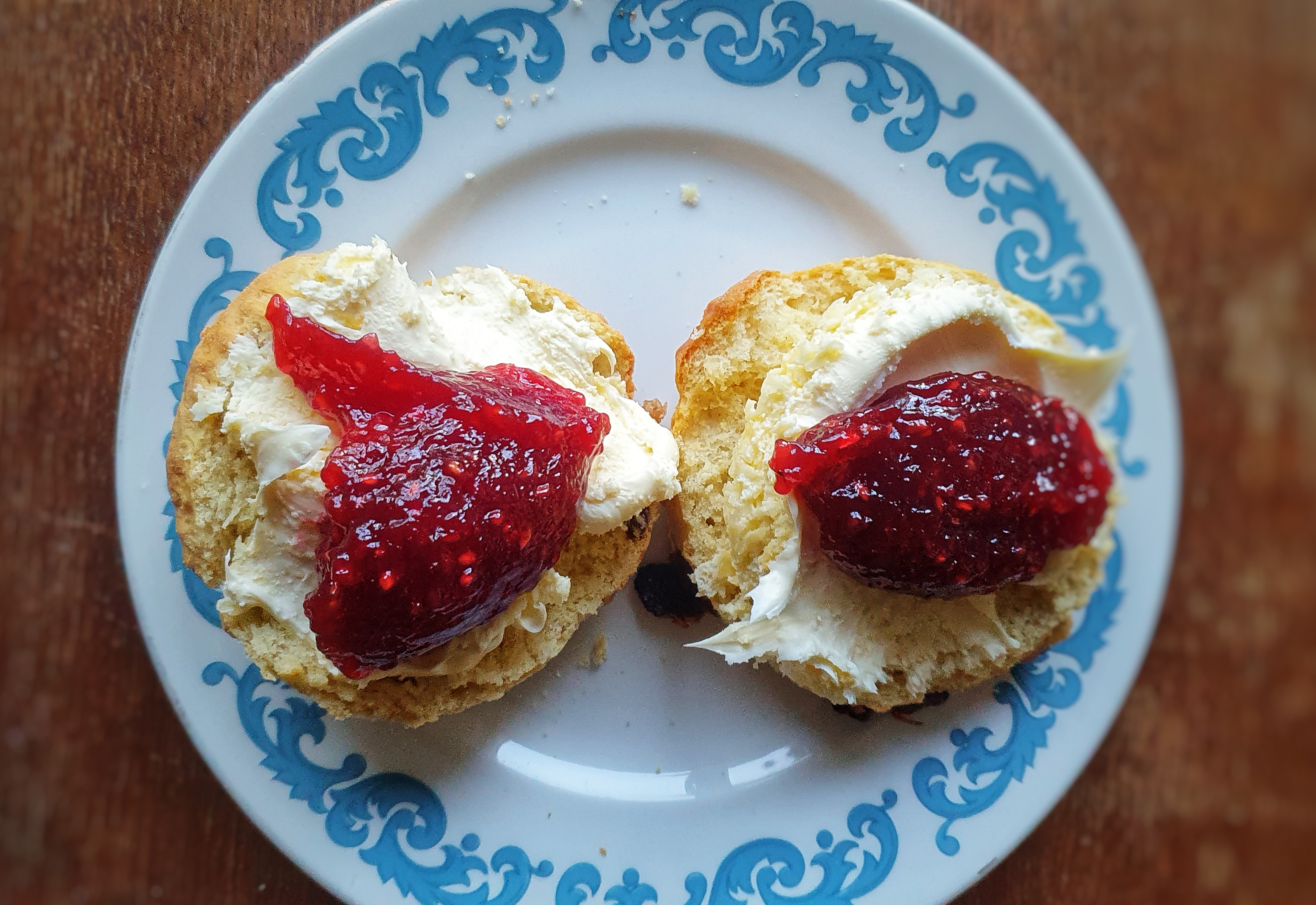
A split and toasted fruit teacake, liberally spread with melting salted butter is one of life’s simple pleasures. For those of you who are not already in the know, a Yorkshire teacake is a round, slightly flattened, enriched, soft breadcake usually containing a little sugar, spice, dried fruit, and candied peel. There was a time when England had scores of regional fruited or enriched bread cakes and loaves, but they have largely gone by the wayside. Others that spring to mind are Bath buns, Wiltshire lardy cakes and Lincolnshire plum bread.[2] These types of cakes and breads are much more appreciated in Wales, Scotland and Ireland, or so it seems. The Yorkshire teacake has escaped its regional roots, so much so that it has lost its Yorkshire identifier and is simply called a teacake by most people.

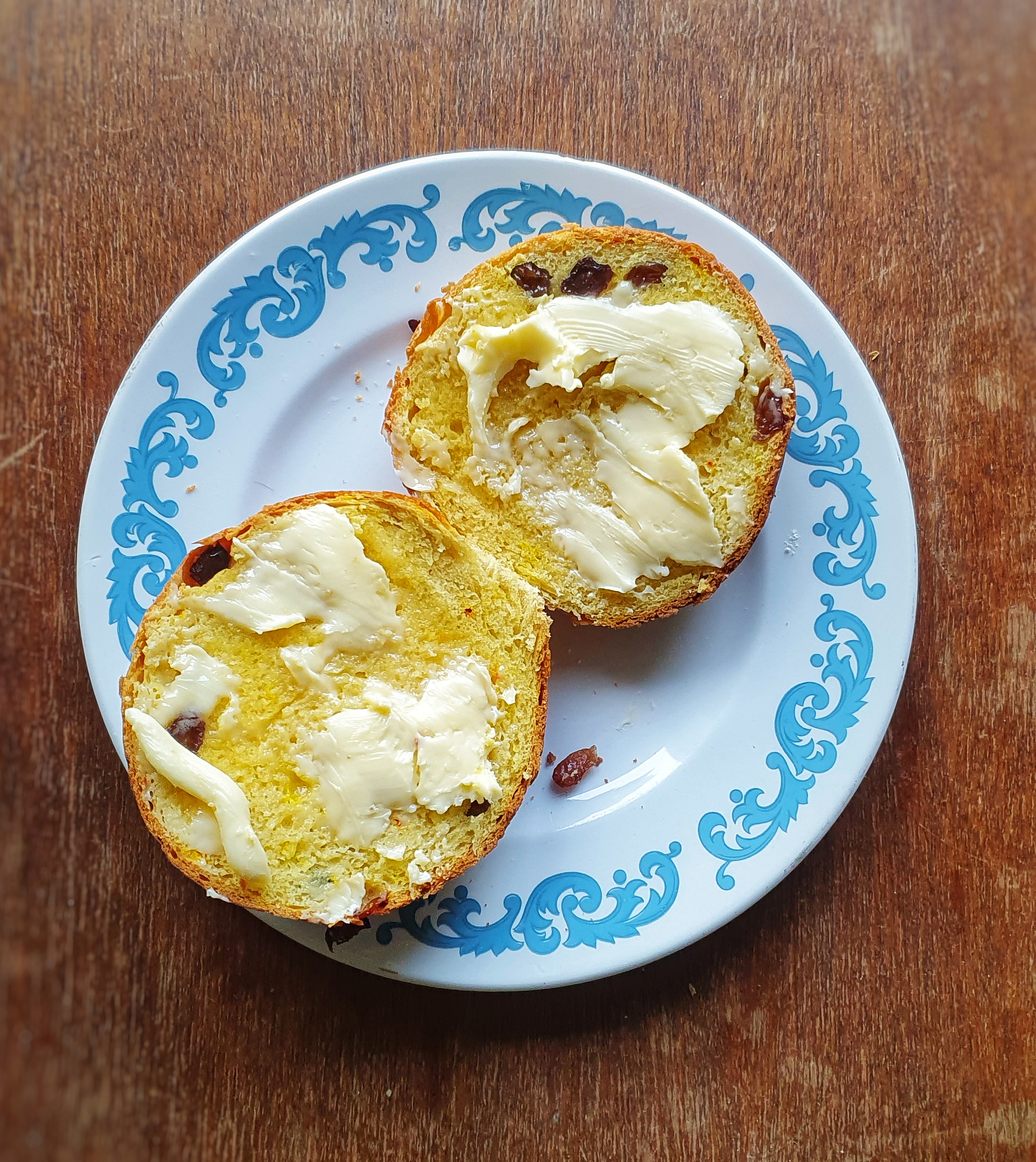
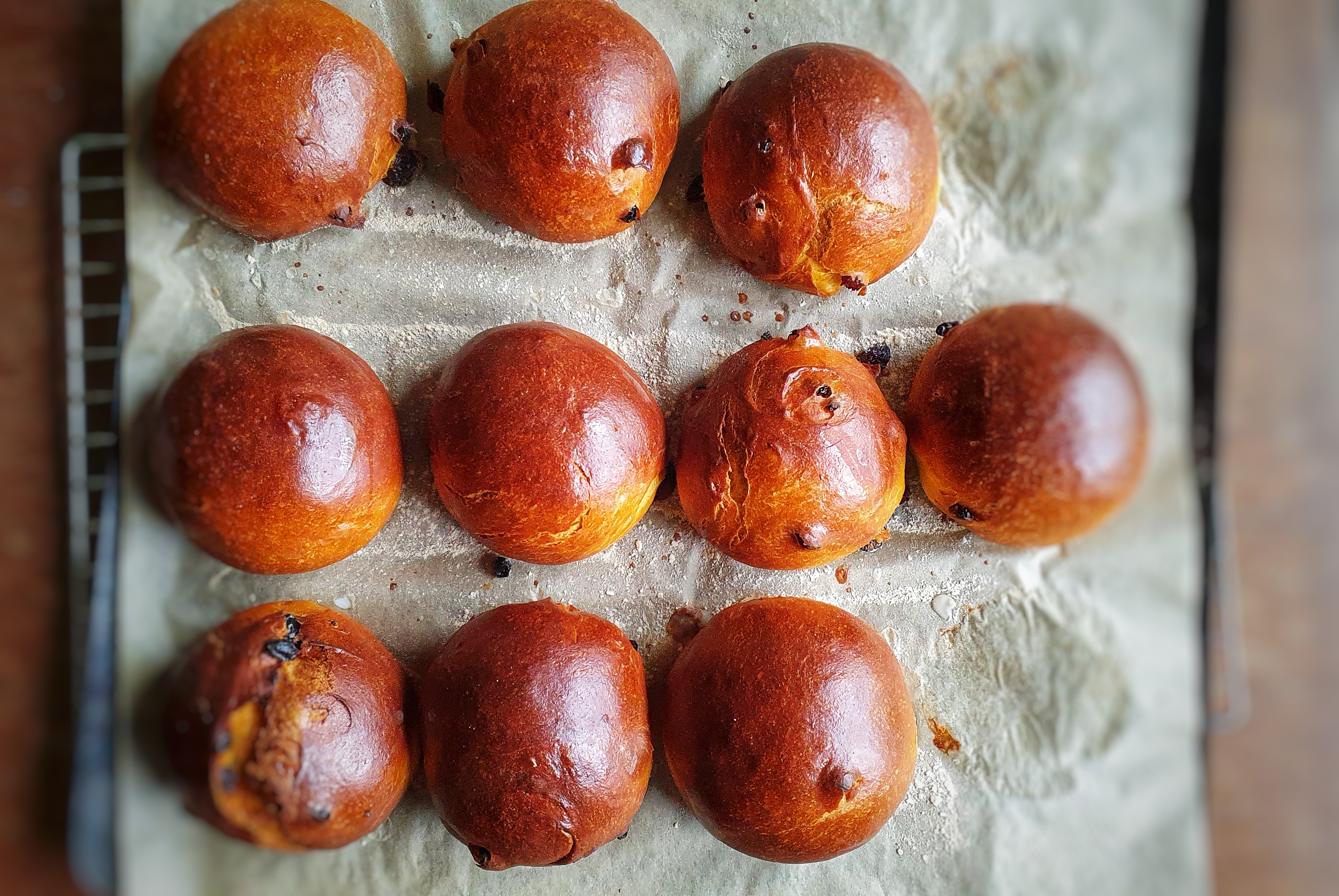
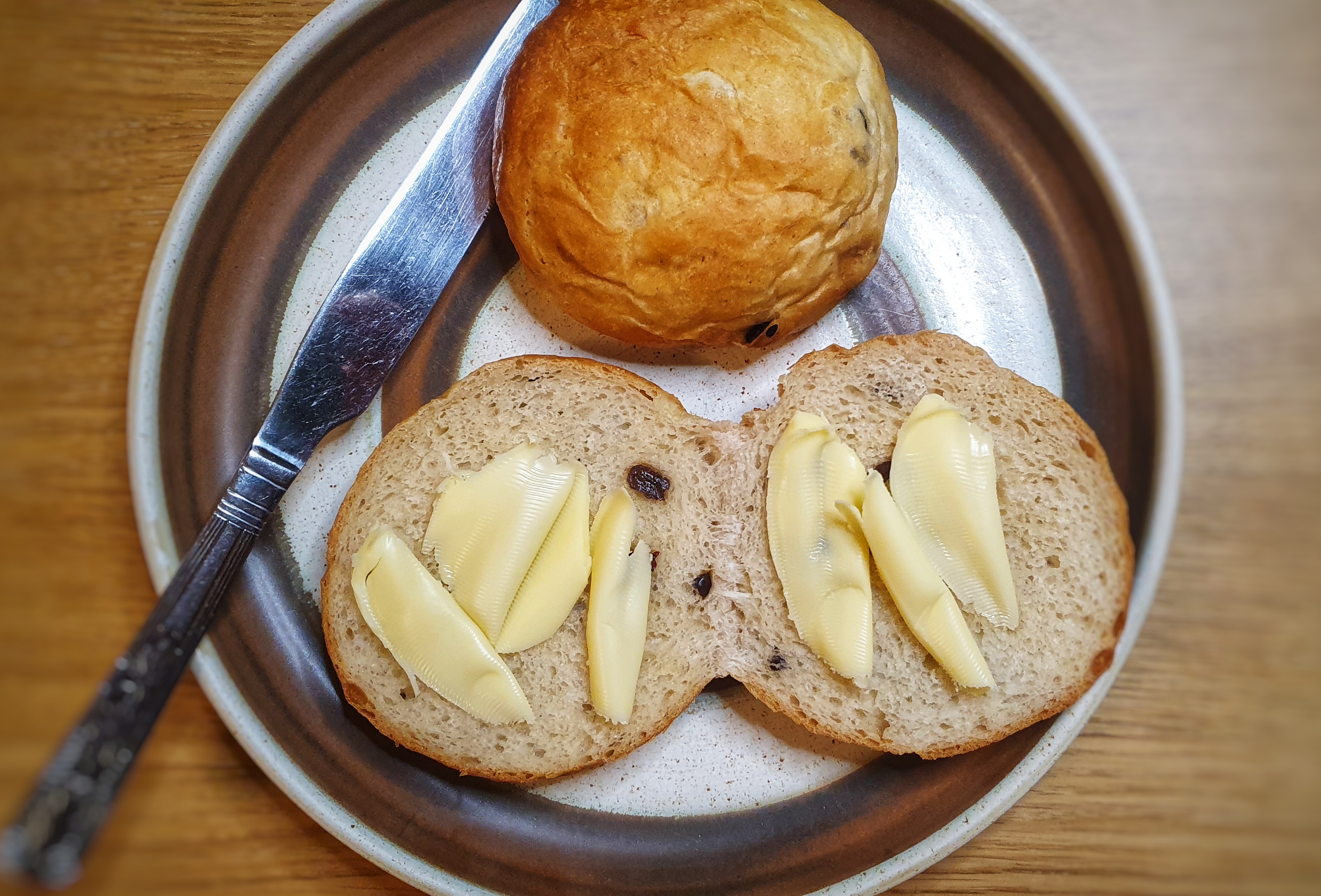
Just-baked teacakes with plenty of salted butter

Yorkshire teacakes can be traced back to the opening decades of the 18th century when they were called ‘Yorkshire Cakes’. They will have been very expensive because they are enriched with eggs, butter, milk, and plenty of sugar and dried fruits.[3] By the 1880s, they are called Yorkshire teacakes.[4]

Working-class families enjoyed them too, but there was invariably less fruit, just a touch of sugar, half-and-half milk and water, no eggs and lard instead of butter. I like this more austere version, though I do go will all milk (full fat, of course) and much prefer lard to often over rich butter. Looking through recipes, the amount of lard varies greatly from a knob to over five ounces per pound of flour.

It’s very important that the teacakes are nice and soft. To achieve this, heed this excellent advice from Florence White:

Immediately after taking from the oven, rub over with buttered paper, and cover with a light, clean blanket; this gives a soft skin.[5]

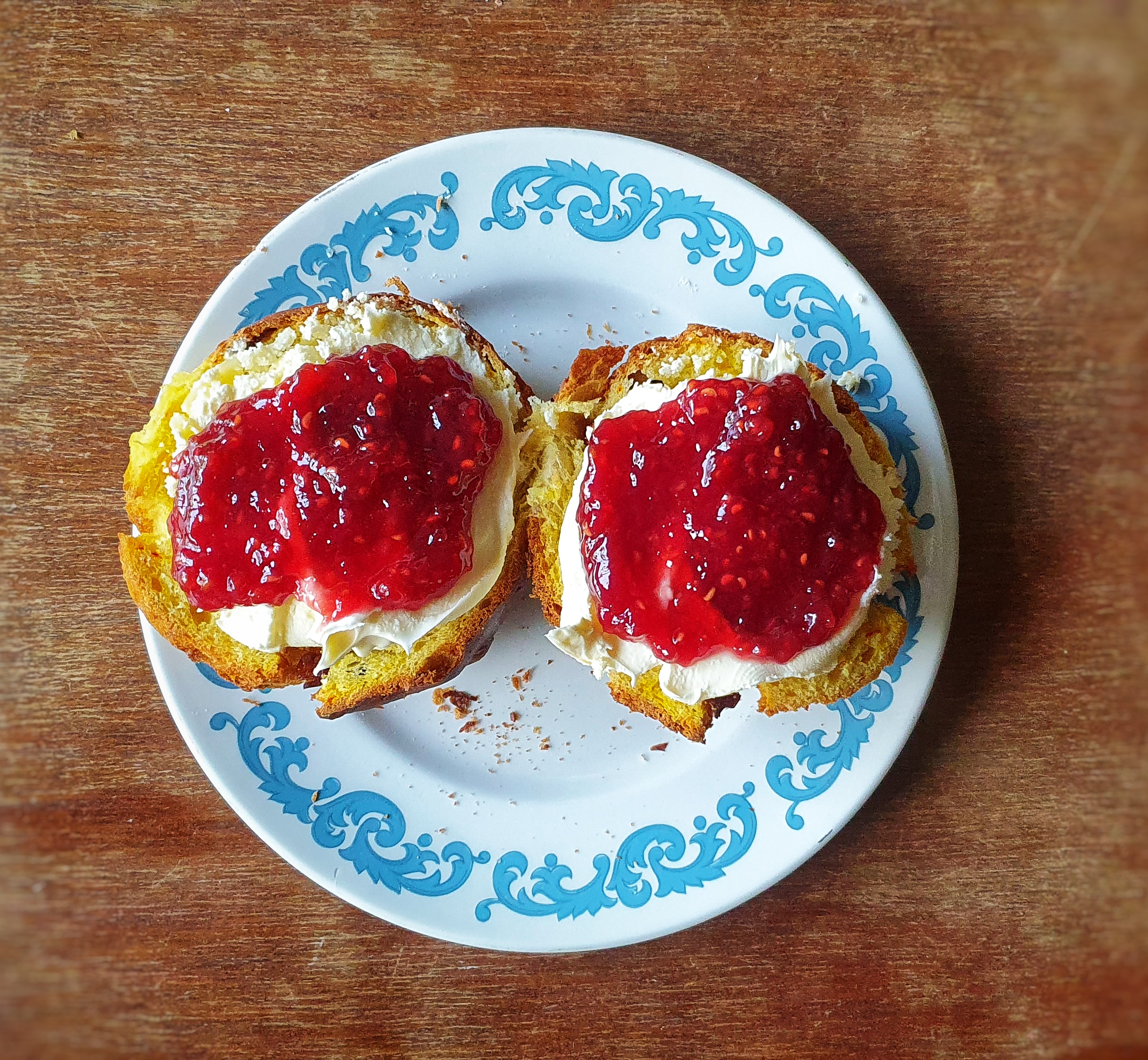
When they are freshly baked they are lovely eaten untoasted, but any older than that and they must be split and toasted (or if you want to go hardcore Yorkshire, strong Cheddar cheese[6]).

It occurred to me that I hadn’t baked a batch of teacakes for a good few years, and I was thereafter craving them, so I baked a batch. They are so worth making at home and I give you my recipe, should you fancy having a go yourself.


If you like the blogs and podcast I produce and would to start a £3 monthly subscription, or would like to treat me to virtual coffee or pint: follow this link for more information. Thank you.


Recipe

This is quite a sticky dough and I would recommend making this in a stand mixer with a dough hook, but they can be made without one; just be prepared to be very sticky in the first 10 minutes of kneading. If you prefer plain teacakes, omit the fruit and spice and add half the sugar.

Makes 8 teacakes:

500 g strong plain flour, plus extra for kneading and shaping

30 g caster sugar

1 tsp salt

1 tsp instant yeast

½ tsp mixed spice or ½ a grated nutmeg

80 g softened lard or butter, or a mixture

300 ml warm milk or half-and-half milk and water

Around 2 tbs vegetable or sunflower oil

80 g mixed dried fruit

30 g candied peel (optional)

Extra milk for brushing

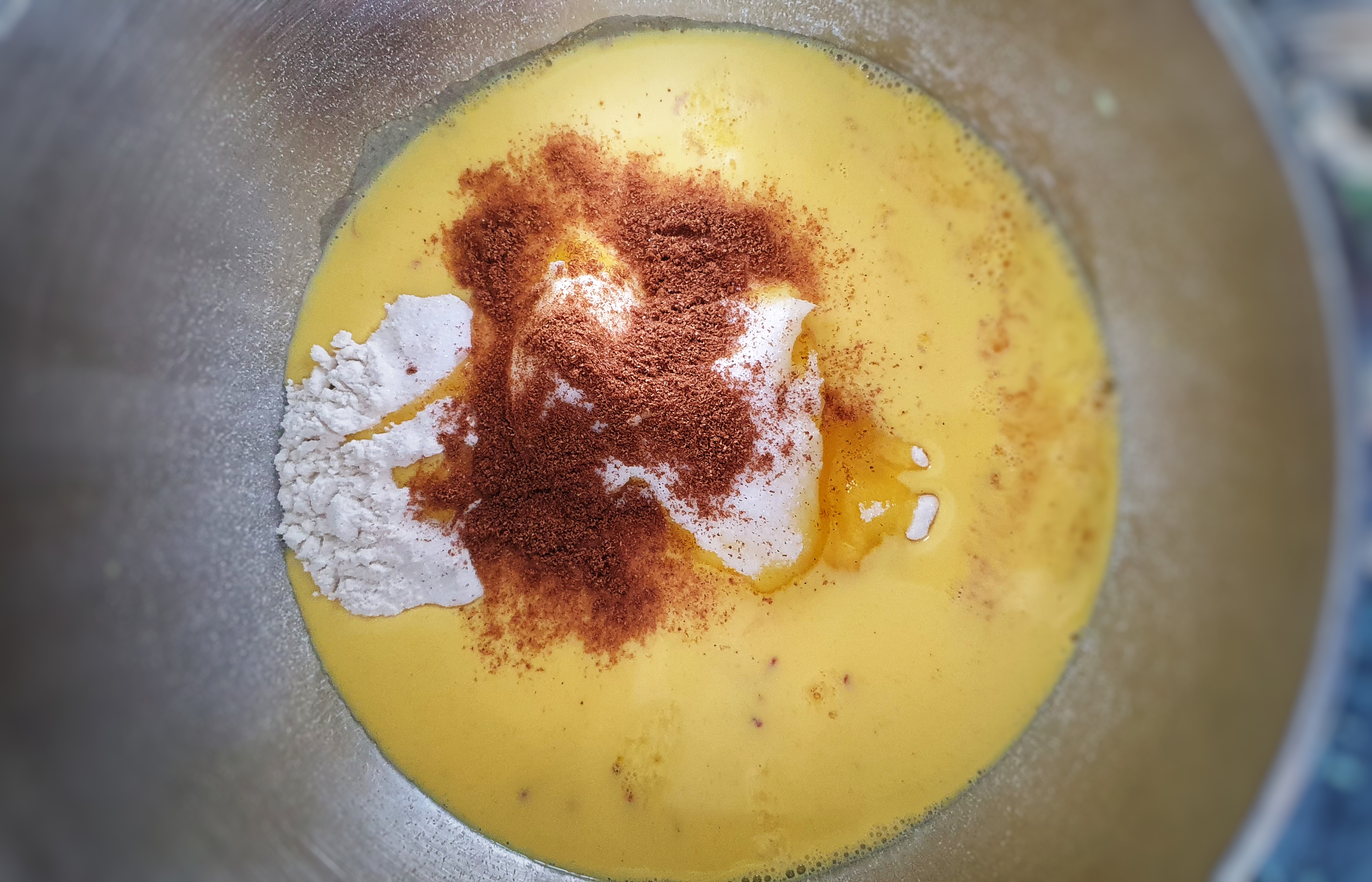
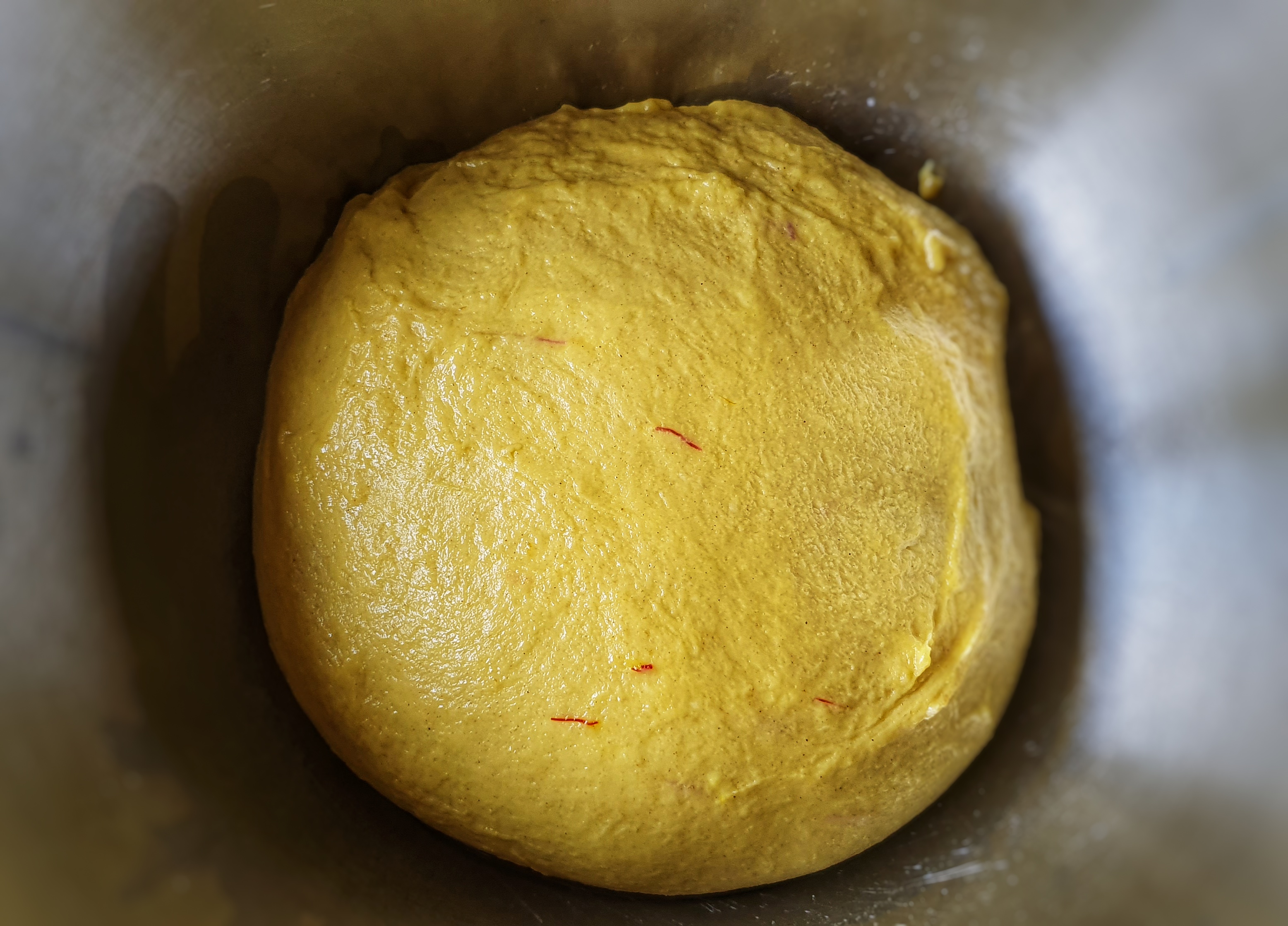
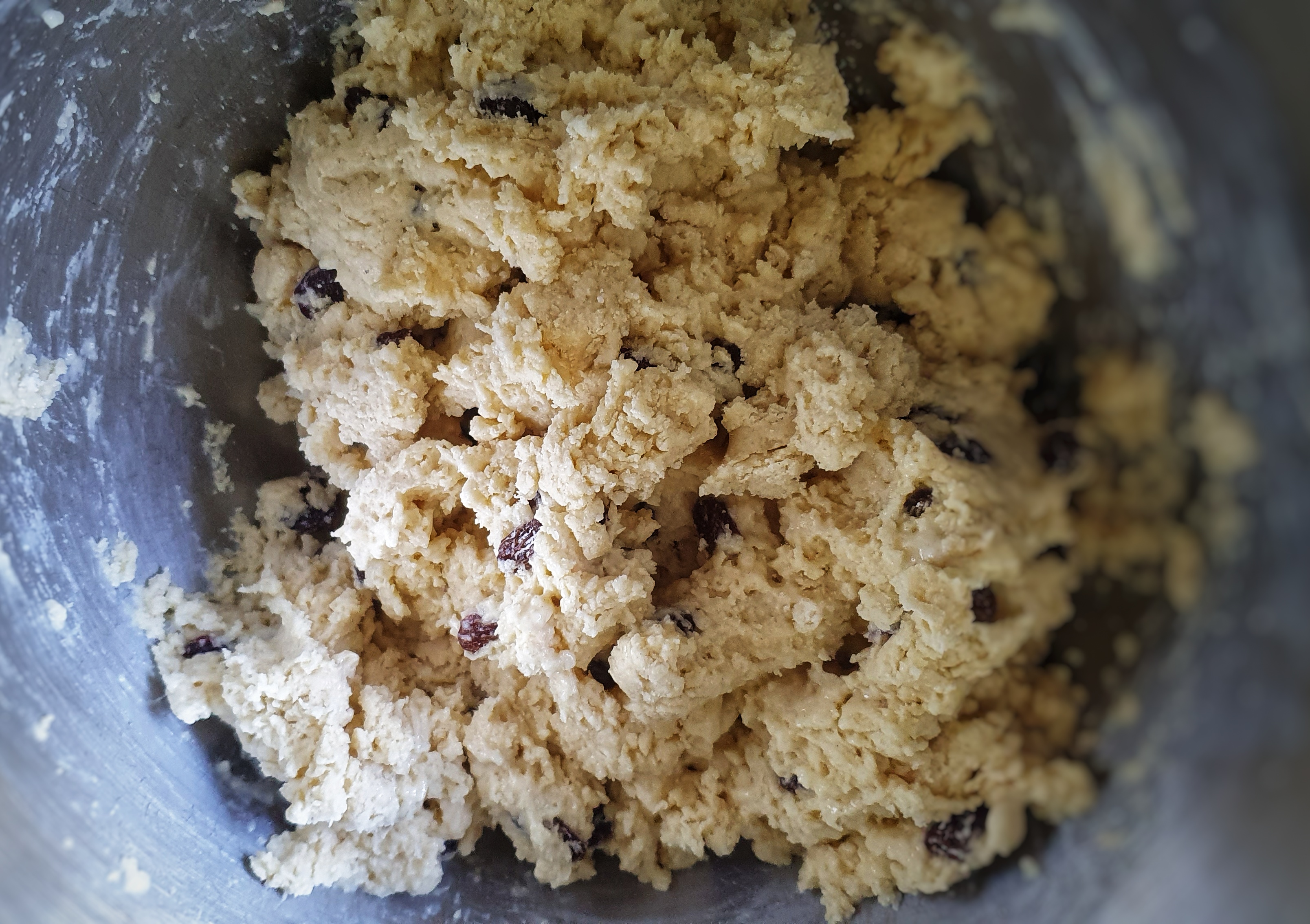
Add the flour, sugar, salt, yeast and spices to a mixing bowl, make a well in the centre and add the softened fat, then tip in the warm liquid. Using a kneading hook, mix the ingredients on a slow speed until everything has combined, then turn up the speed a notch or two and knead for about 10 minutes until smooth – it won’t be very elastic because of the lashings of lard.

If you want to do this by hand, mix the ingredients with a wooden spoon. When thoroughly mixed, leave it to stand for 15 minutes or so; this gives the flour to absorb some of the liquid making for easier hand kneading. Knead on a lightly floured surface for around 15 minutes.

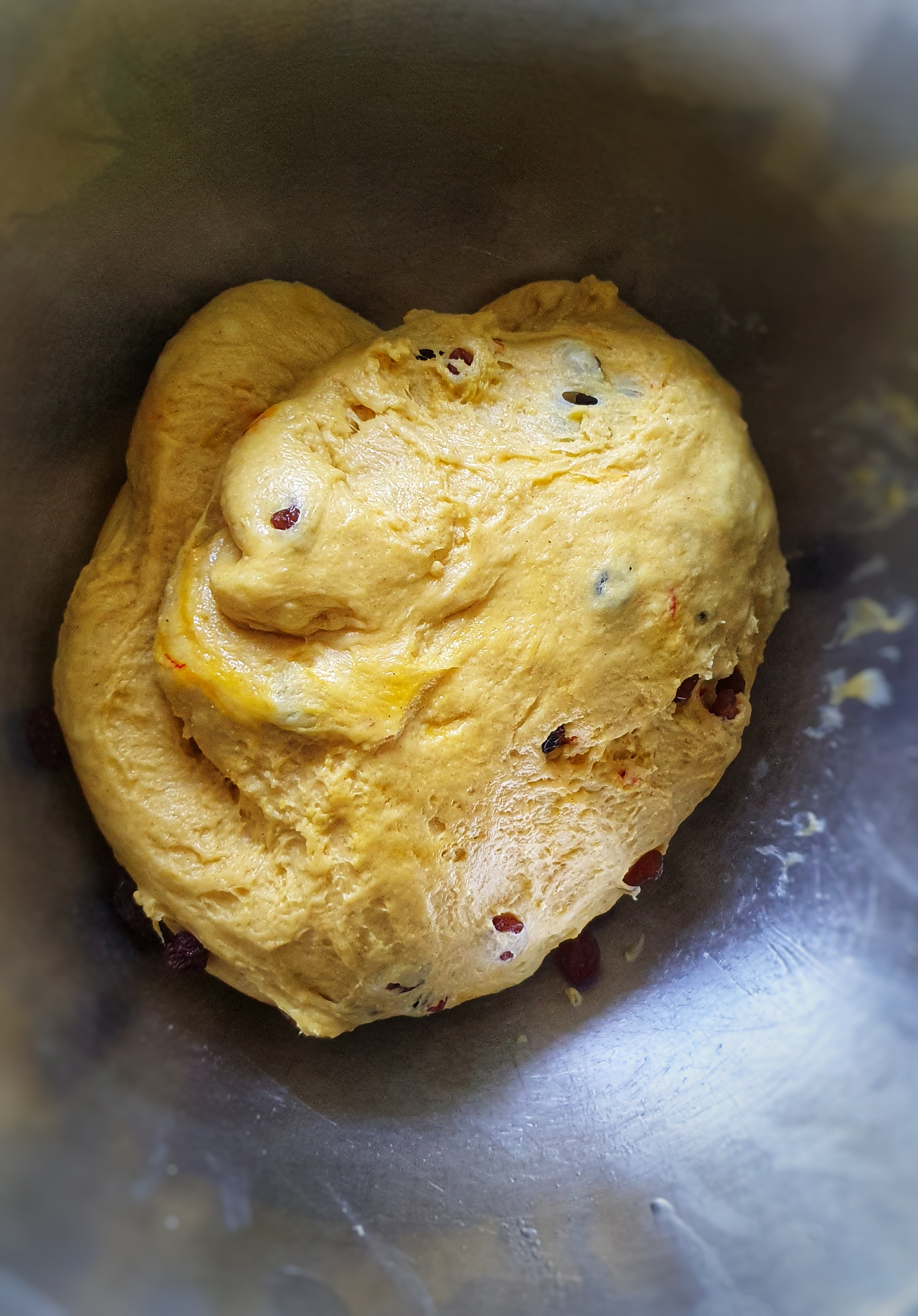
Brush a clean mixing bowl with the vegetable oil, gather up the floppy dough as best as you can (oil your hands, it makes this bit much easier), tuck it into a ball and pop it in the oiled bowl. Cover with a tea towel or cling film until it has doubled in size. This will take a while; even sat close to the radiator, my dough took over two hours.

Now take two baking sheets and line them with greaseproof paper and set aside.

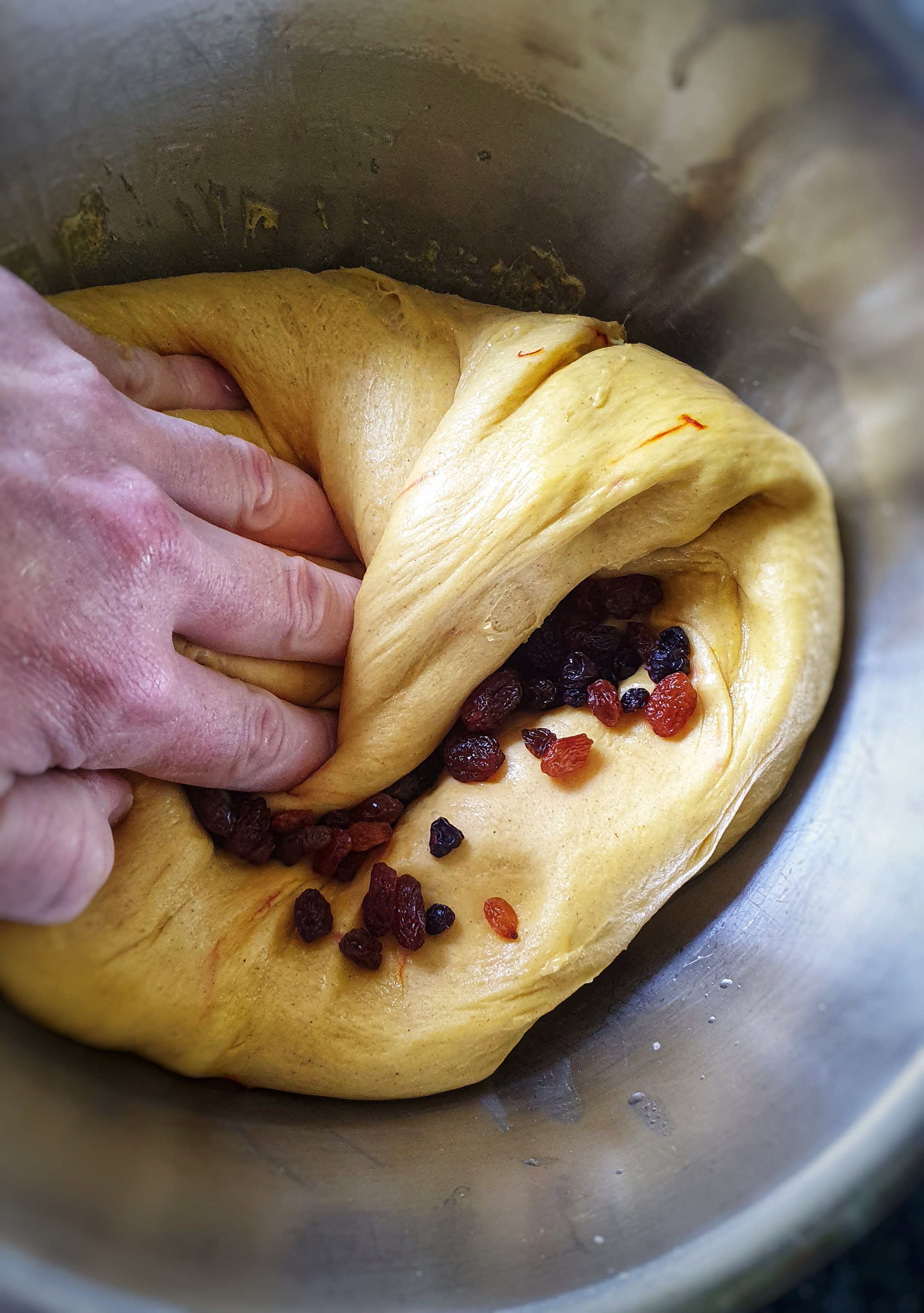
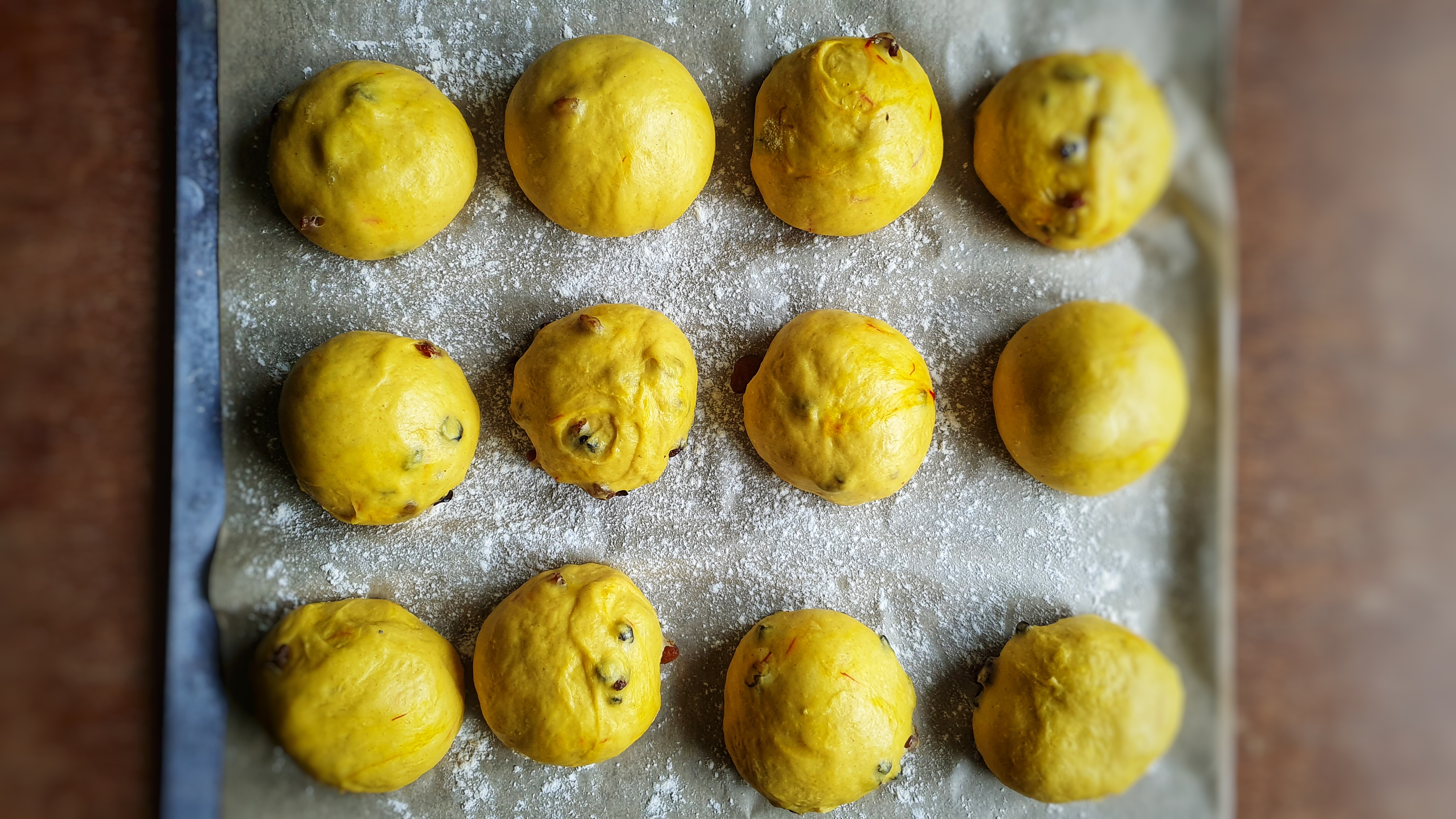
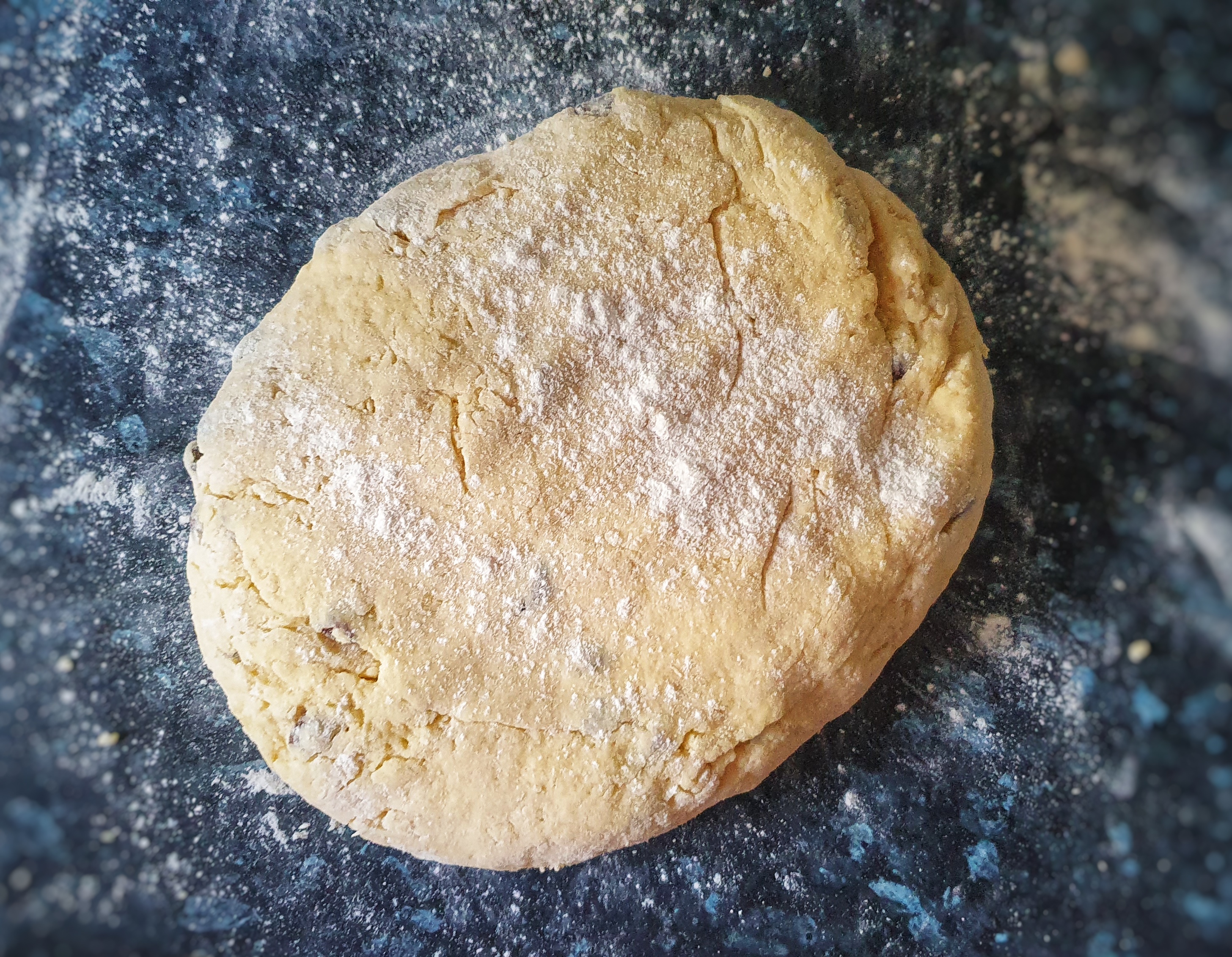
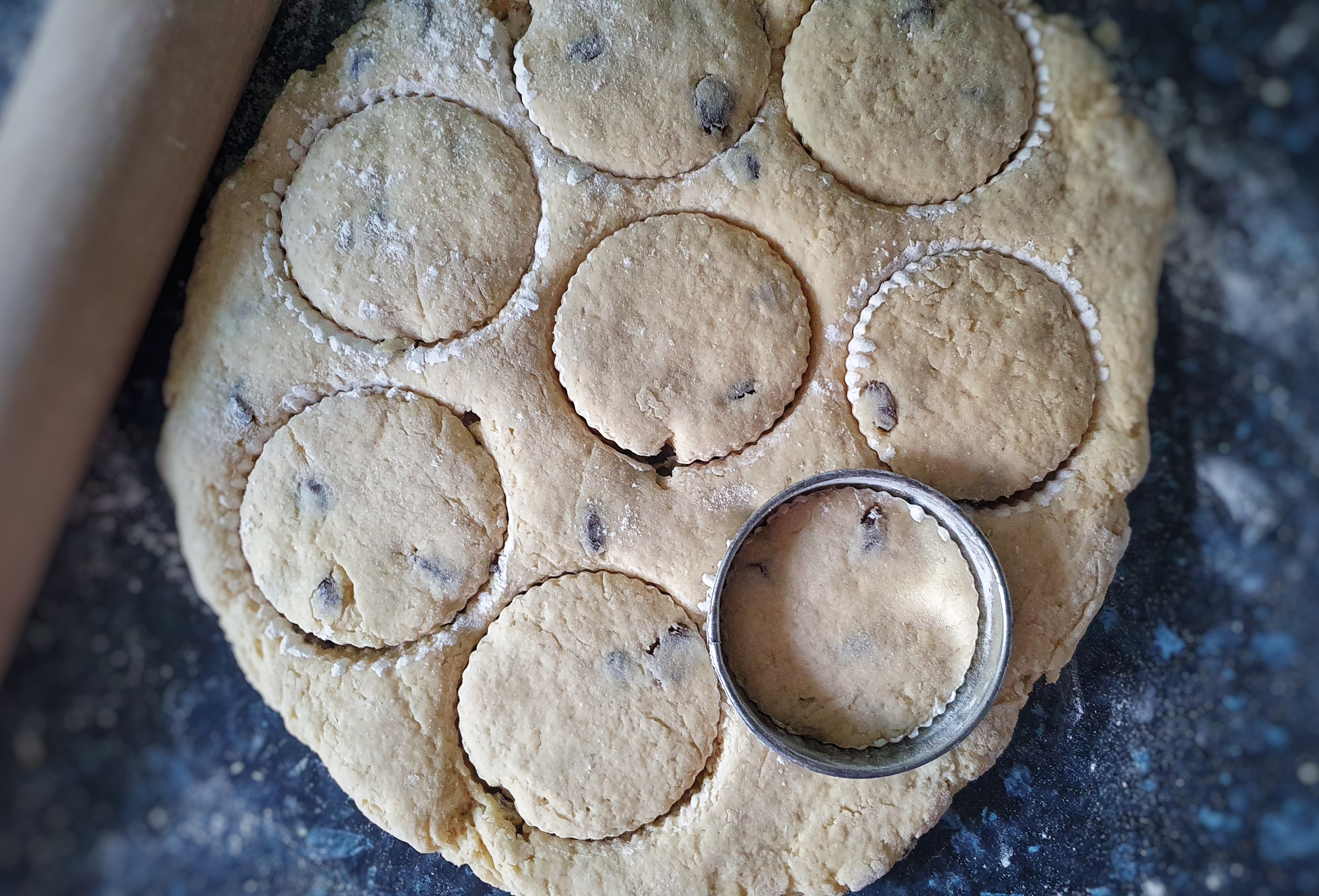
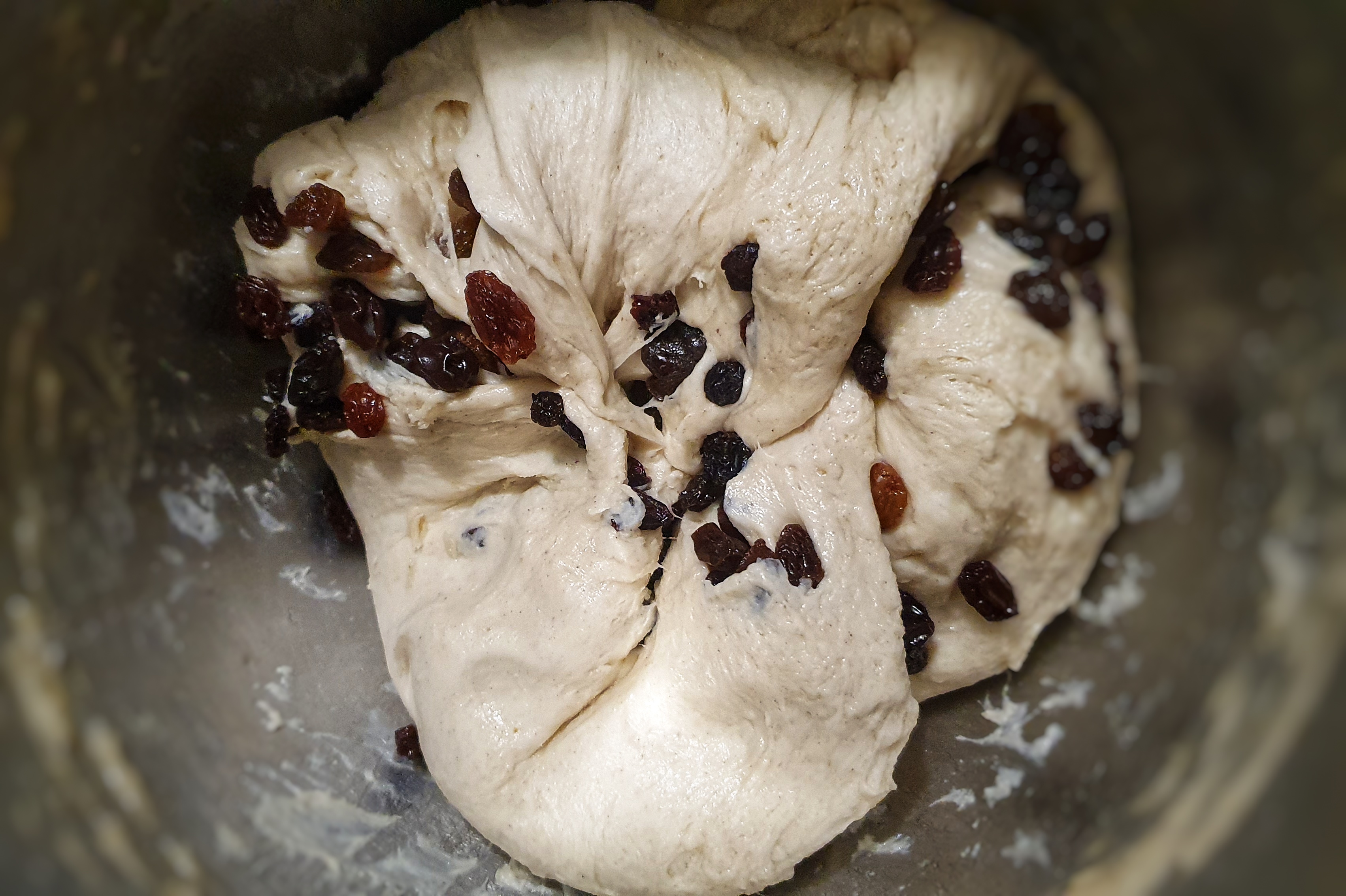
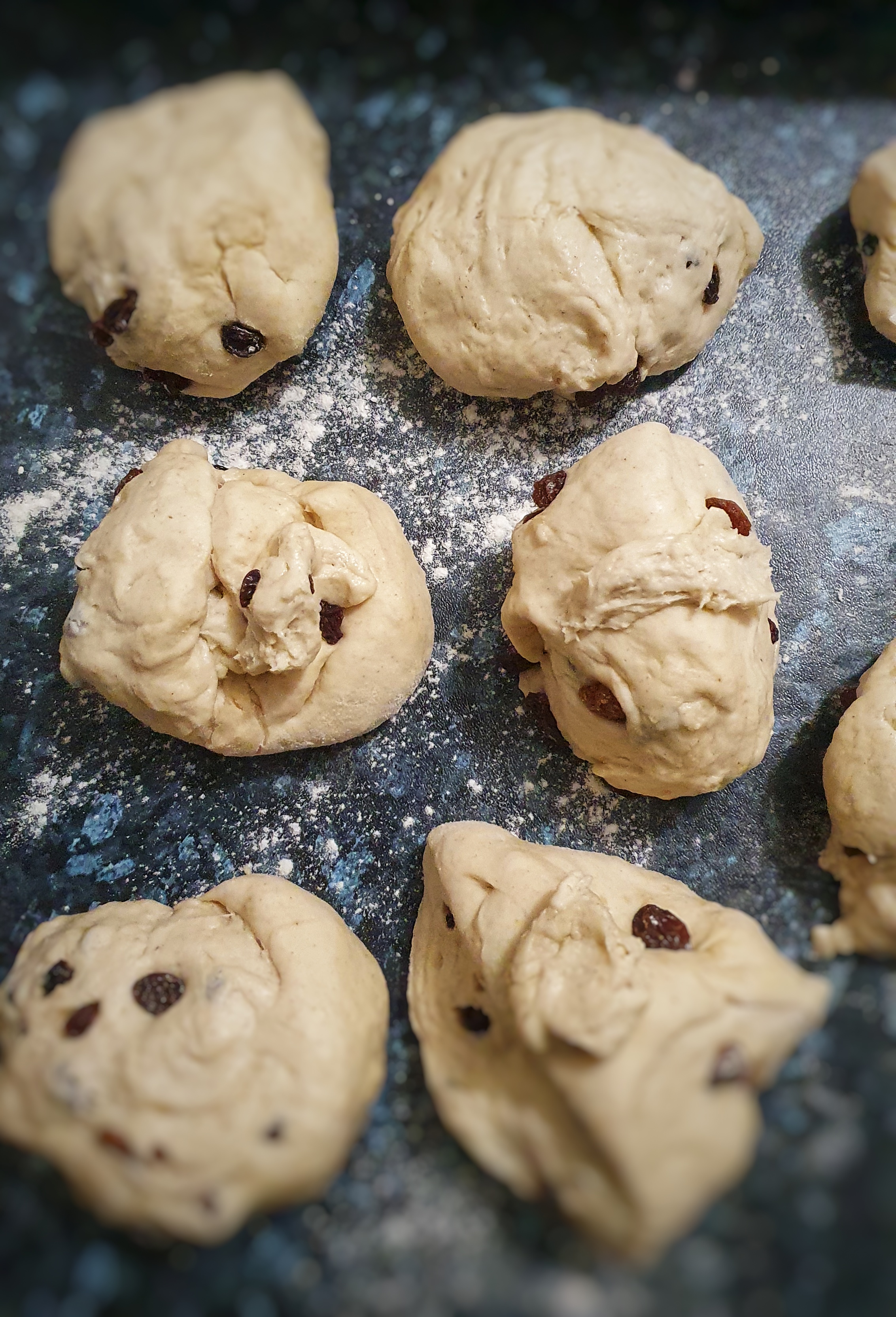
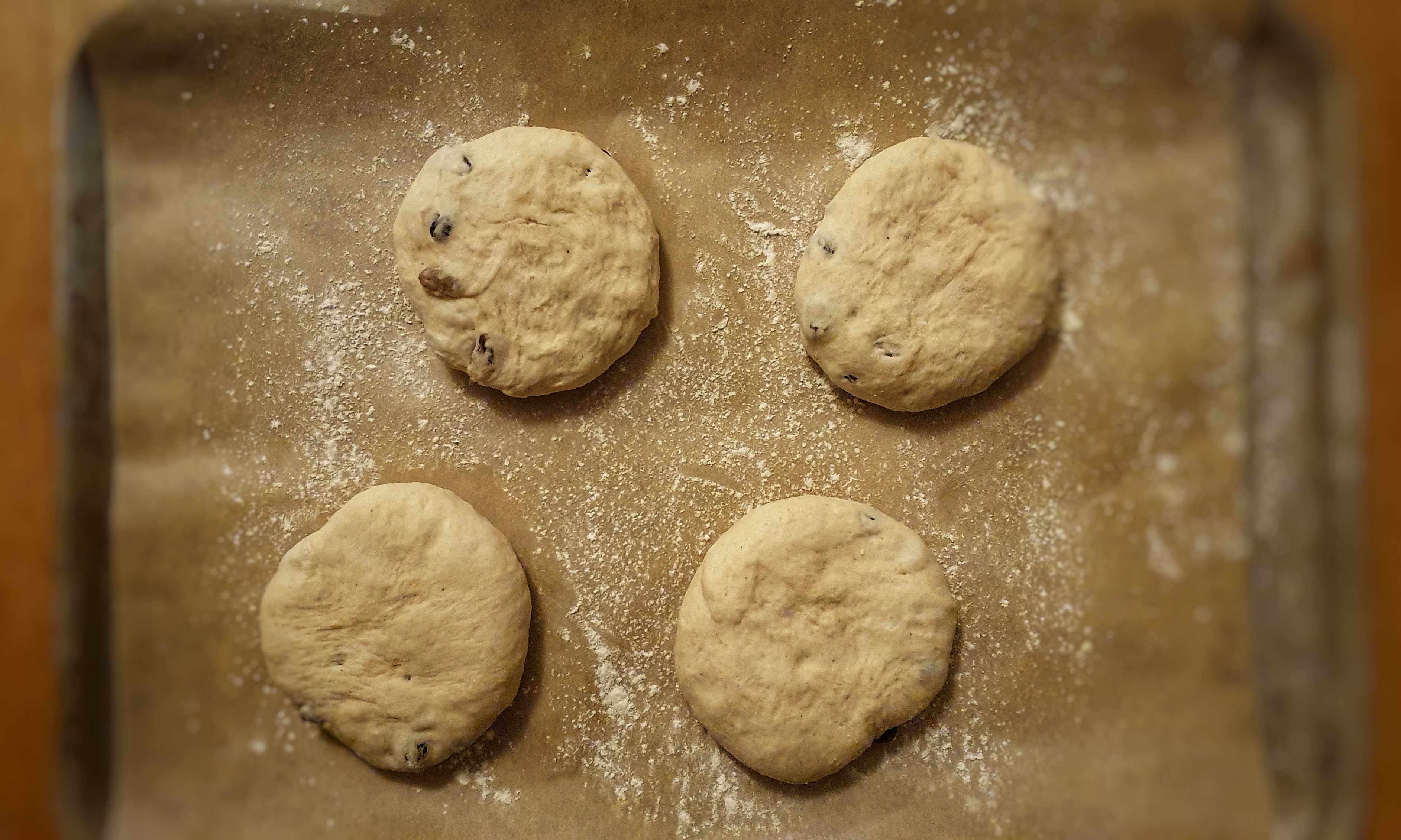
Tip the dough onto a floured worktop and press out into a square, add the fruit and knead it into the dough. You do this step in the oiled bowl if you like. When everything is reasonably equally distributed, cut the dough into 8 equal-sized pieces. Using just a very little flour roll the pieces of dough into tight balls, then roll them out into circles with a floured rolling pin so they are 4 to 5 cm thick. Sit them on your baking sheets as you make them.

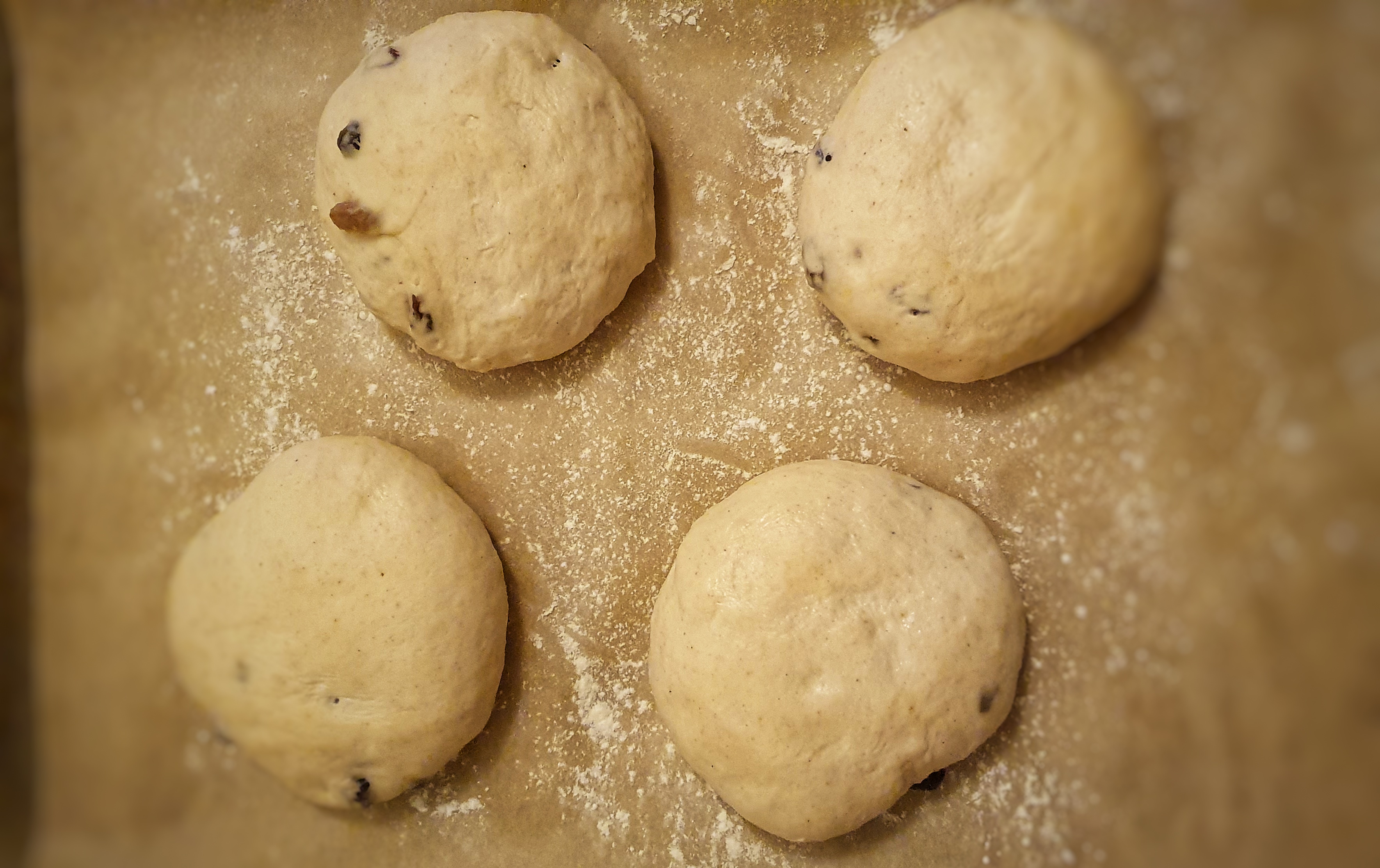
When you’ve done all 8, cover them with tea towels or place a container over them so they can prove again. In my experience the second proving takes about half the time of the first. As they prove turn your oven to 200°C fan (or equivalent). If you have a steam setting on your oven, use it. If you don’t, place a roasting tin in the bottom of the oven to heat up, and when you put your teacakes in the oven, tip some water into the now very hot tin and close the door.

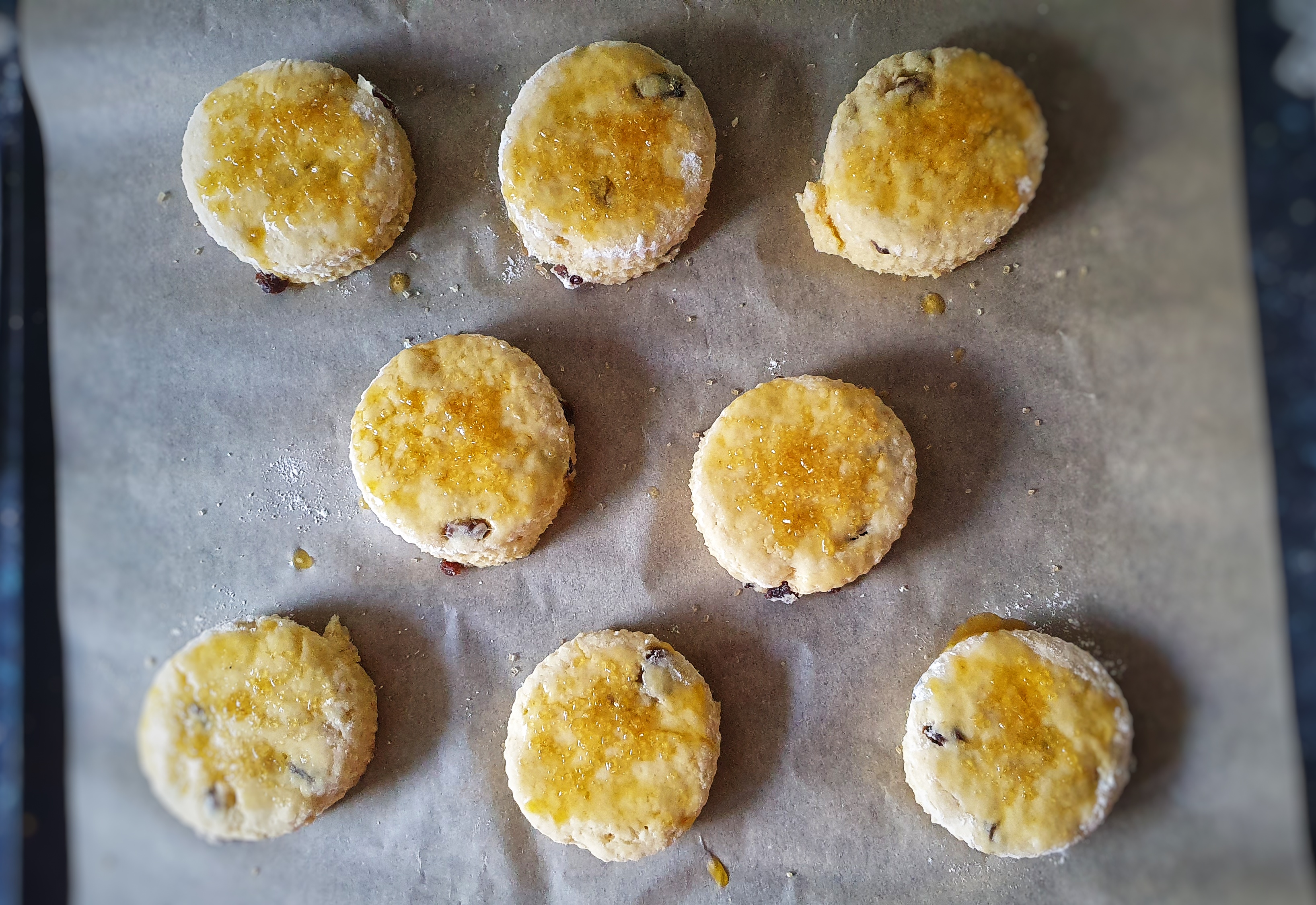
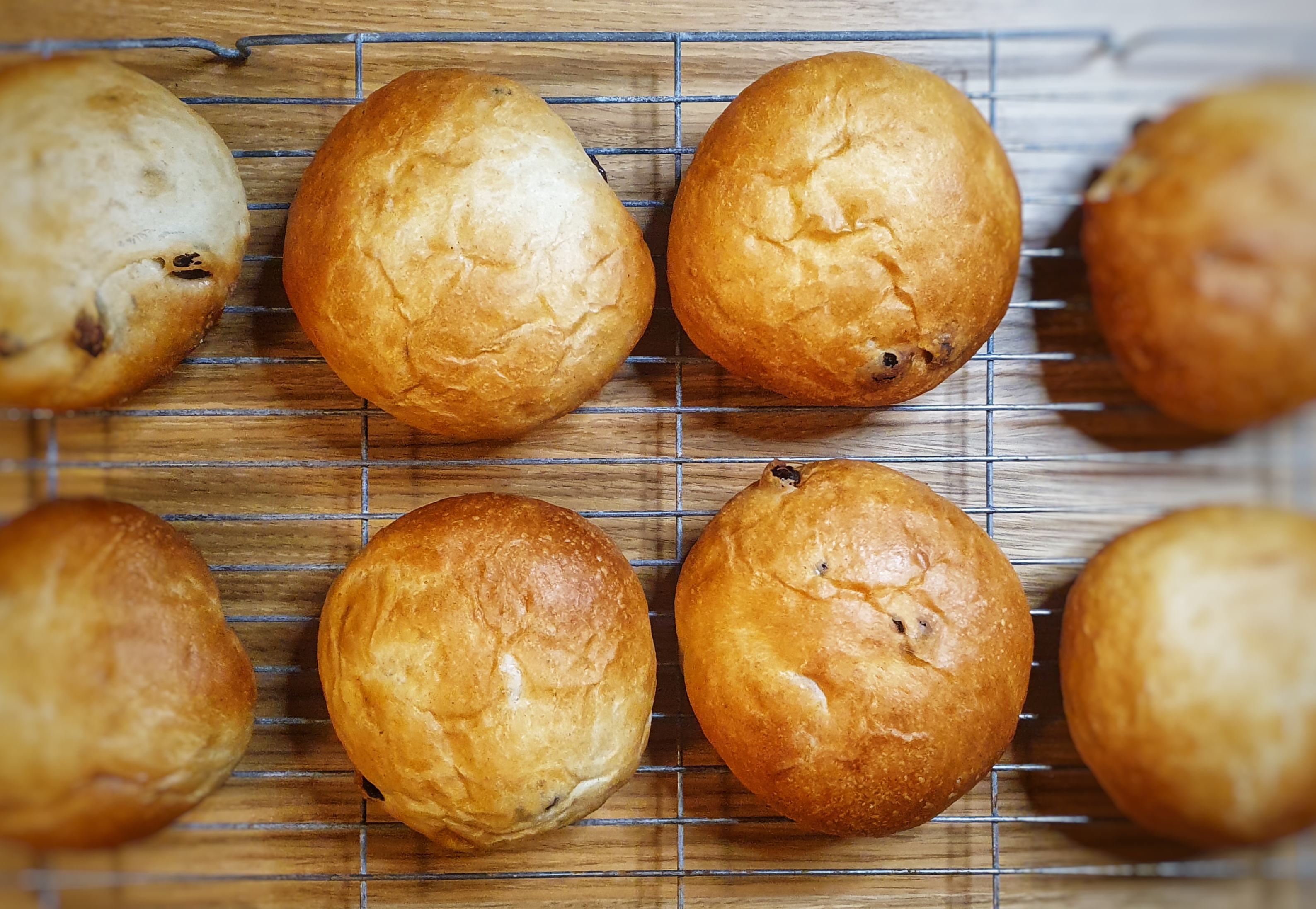
When they have doubled in size, brush them with milk and pop them in the oven. Bake for 15 to 20 minutes until golden brown. Test whether they are ready by tapping the base of one: it should sound hollow.

Remove the teacakes from the oven and immediately throw a double layer of tea towels over them to keep them soft as they cool.


Notes:

[1] Cassell (1883) Cassell’s dictionary of cookery. Cassell, Petter, Galpin & Co.

[2] Check out Elizabeth David’s classic English Bread and Yeast Cookery (1977) for several other examples.

[3] David, E. (1977) English Bread and Yeast Cookery. Grub Street; Mason, L. and Brown, C. (1999) The Taste of Britain. Devon: Harper Press.

[4] Cassell (1883)

[5] White, F. (1932) Good Things in England. Persephone.

[6] Brears, P. (2014) Traditional Food in Yorkshire. Prospect Books.

2 Comments

Filed under baking, bread, Britain, food, General, history, Recipes, Uncategorized

To make a Bakewell tart

At the end of 2024, I gave you my recipe for Bakewell pudding. The plan was to follow with my recipe for Bakewell tart. Alas, life, Christmas and then a holiday to New Zealand got in the way.

But I always get around to things eventually and I give it to you today!

The Bakewell tart, despite it being dearly loved by Brits, was originally made as a cheap, dumbed-down version of the rich Derbyshire pudding: the puff pastry swapped for shortcrust, and the buttery almond filling swapped for an almond-flavoured sponge cake.

I write about the histories of the Bakewell pudding and tart in Knead to Know: A History of Baking, so pick up a copy if you want to know more.

I have been using this recipe for years now and it’s a real crowd-pleaser. When the restaurant was open, I served this tart warm with a lemon-flavoured cream and received a big bear hug from a diner: there could have been no better seal of approval in my book! The secret to its success is that I make a frangipane rather than a sponge cake filling, bound together with just a tablespoon of flour.


If you like the blogs and podcast I produce and would to start a £3 monthly subscription, or would like to treat me to virtual coffee or pint: follow this link for more information. Thank you.


Recipe

Makes 1 x 21 cm/8 inch tart

For the sweet shortcrust pastry:

200 g plain flour

100 g salted butter, diced (or half-and-half butter and lard)

50 g caster or icing sugar

1 egg, well beaten

Cold water (see recipe)

For the filling:

100 g salted butter, softened

100 g caster sugar

2 eggs

100g ground almonds

30 g self-raising flour

¼ tsp almond extract

3 or 4 tbs raspberry jam

30 g slivered almonds

First, make the pastry: Place the flour and fat(s) in a mixing bowl and rub the fat in until the mixture resembles fresh breadcrumbs. You can do this by hand using fingertips or with the flat beater of a stand mixer on a slow speed. Make a well in the centre and add most of the egg. If using a stand mixer, slowly mix it in, pouring more egg into any dry patches. If doing by hand, use a butter knife to mix (this prevents overworking of the dough). You should have a cohesive dough that can be brought together with your hand – if it does seem dry, add a tablespoon of cold water.

Knead briefly, cover and allow to rest in the fridge for 20 to 30 minutes. Meanwhile, preheat your oven to 180°C and place a baking tray on the centre shelf

On a lightly floured work surface, roll out the pastry to the thickness of a pound coin, and use it to line an 8”/20 cm loose-bottomed tart tin or ring.[1] Prick the base with a fork and place it back in the fridge to firm up.

Now make the filling: using a hand beater or stand mixer, beat together the soft butter, caster sugar, eggs, almonds, flour and extract until smooth.

Take the pastry out of the fridge and spread jam over the bottom leaving a centimetre gap all around the inside edge. Spoon or pipe the mixture first around the edges and then the centre (this stops the jam from rising up the sides of the pastry lining), levelling off with a spatula.

Sprinkle with the slivered almonds and slide the tart onto the hot baking sheet and bake for 40 minutes, turning the heat down to 160°C if the top gets too brown. Cool on a rack, and remove from the tin when just warm.


[1] You will find that there is excess pastry – make some nice jam tarts or turnovers.

10 Comments

Filed under baking, Britain, cooking, food, General, Puddings, Recipes, Teatime

Irish Coffee

Merry Christmas everyone! It’s time for my annual Christmas boozy drink recipe, and this year I’m going with a classic Irish coffee. Many have been made and drunk in the Buttery household over the last couple of weeks: all in the name of research, you understand.

The Irish coffee was invented soon after the end of World War Two in 1945; transatlantic flights had just recommenced and there were flights from the US full of visiting dignitaries landing at Shannon airport. Chef Joe Sheridan was tasked with making a special drink for the travellers that was comforting and evocative of Ireland’s warm hospitality. He came up with a ‘Gaelic coffee’, a mixture of whiskey, brown sugar cubes, hot coffee and cream. It was a great success and was given to all travellers landing at Shannon Airport thereafter.[1]

In the 1950s, the drink, now called Irish coffee, was taken to the USA where it was made bigger and sweeter, and sugar syrup replaced sugar cubes.[2]

From a personal point of view, I have great memories of going to a lovely little Indian restaurant with my parents in Pudsey, West Yorkshire in my late teens. We always ended our meal with one of their delicious Irish coffees. It didn’t occur to any of us to ask why an Indian restaurant in Yorkshire was serving Irish coffee.

This recipe is based on the one provided by Matthew Roberston in the excellent Cocktail Bible.[3] (Robertson, 2018) It’s made extra special with the inclusion of a dash of coffee liqueur and a sweetening of vanilla syrup, though you could just use regular sugar syrup and miss out the liqueur. I think one shot of syrup is too much, though not everyone in the family agreed with me on that one, so add to taste.

Merry Christmas everyone!

If you like the blogs and podcast I produce and would to start a £3 monthly subscription, or would like to treat me to virtual coffee or pint: follow this link for more information. Thank you.


Per person:

1 ¾ shots Irish whiskey

2 shots espresso, or very strong coffee

½ shot coffee liqueur such as Kalua

½ to 1 shot vanilla or sugar syrup

2 good tablespoons of lightly whipped double cream

Warm all of the ingredients, except the cream, in a saucepan until they just begin to simmer—don’t boil it hard, as you’ll lose much of the alcohol!

Pour into a small glass such as a rocks glass and spoon over the floppily-whipped cream; as it melts it will form a delicious layer of cream.


Notes:

[1] MacMahon, J. (2024) An Irish Food Story: 100 Foods That Made Us. Nine Bean Rows; Wondrich, D. and Rothbaum, D. (eds) (2021) The Oxford Companion to Spirits and Cocktails. Oxford University Press.

[2] Wondrich and Rothbaum (2021)

[3] Robertson, M. (2018) The Cocktail Bible. Hamlyn.

1 Comment

Filed under history, Recipes

Recipe: Brussels Sprouts with Bacon and Prunes

Subscribe to get access

This post and it’s accompanying podcast episode are for £3 monthly subscribers. If you would like to become a subscriber and access this post and all the other premium content on the blog click this link.

As a £3 monthly subscriber you get access to my Easter eggs page, special premium blog content, receive a monthly newsletter, and – most importantly – you support the running of my podcast and blog.

1 Comment

Filed under Britain, Christmas, cooking, Festivals, food, General, Recipes, Uncategorized

My Foolproof Roast Potatoes

I told my social media followers that my Christmas recipe this year was going to be roast turkey and I said that I would also provide the recipes for two sides. I provided four options: roast potatoes, Brussels sprouts, bread sauce and cranberry sauce/jelly. Roast potatoes received the most votes so here we go.[1]

I believe that the roast potatoes are almost as important as the roast meat, perhaps more important. Whether it’s the Christmas dinner or the weekly Sunday roast, if you mess up the roasties, everyone will be sad, and there’s a good chance you’ll be forever shunned by friends and family.

So I provide you with my method. It’s tried and tested and I reckon foolproof! Don’t worry about precise weights/volumes of ingredients or sizes of roasting trays; this recipe is most adaptable so use what you have. What is important, however, is the type of potato used and the fat or oil in which they are cooked.

The potatoes must be of the floury type: Maris Piper, King Edward and Albert Bartlett varieties are easy to find in the supermarkets, but for me the supreme variety of spud when it comes to roasting is the Alouette. It’s technically a waxy potato, but when roasted the centre is like the creamiest mashed potato. It’s not widely available in supermarkets, but keep a look out at greengrocers and farmers’ markets; you will not be sorry should you happen upon some and buy a kilo or two. I bought mine from Unicorn in Manchester.

Next, we need good fat or oil. I used approximately equal amounts of lard and rapeseed oil. All solid animal fats are good: beef dripping, goose fat and duck fat are great alternatives – they all have high smoking points and make for a crisp potato. As for plant-based oils, you must avoid olive oils completely and go for high smoke point ones like rapeseed, groundnut or sunflower. Avoid the solid, white vegan fats, they are bad for you and the environment. You don’t have to go half and half either, you can use all oil or all animal fat: I vary it depending on what oils and fats I have in the store cupboard/fridge.

Anyway, let’s get to it.


If you like the blogs and podcast I produce and would to start a £3 monthly subscription, or would like to treat me to virtual coffee or pint: follow this link for more information. Thank you.


Recipe

Make sure to use a deep roasting tin and that it is big enough to fit all of the potatoes in a single layer. Notice too there are no herbs thrown in, but if you want to add some be my guest.

If making roasties for the Christmas dinner, you can slide the tray of oil or fat into the oven as soon as the turkey comes out.

Good, floury potatoes, peeled

Salt

Plant-based oils and/or solid animal fats

Preheat your oven to 190°C (if you followed my turkey recipe, the oven will already be at this temperature). Add enough oil or fat to the tin so that it comes to a depth of between 0.5 to 0.75 centimetres. Slide it into the oven to get nice and hot.

Angular cuts make for crispier roasties

Cut your potatoes into good-sized pieces[2] making cuts at angles so that there are sharp, angular pieces: the pointier, the crispier; the crispier the better.

Get a large pot of water that had been liberally dosed with salt boiling and add the potatoes. Cover and bring back to a boil, and once boiling again, set a timer for 6 minutes.

When the time is up, strain the cooking water and allow the potatoes to steam dry for a few minutes, then place them back in the pan, cover the lid and give them a good shake to fluff up the edges (wear oven gloves, don’t get a steam burn). Leave the lid off the spuds again so that they can steam a little longer. You can do this stage well in advance if you like – even the previous day.

Fluffed and ready for the oven!

Gingerly remove the roasting tin and place the potatoes in the oil, spacing them out in a single layer. Use a pair of tongs to help. Slide the roasting tin back into the oven. After 15 minutes turn them over, and keep turning them every 15 minutes or so until crisp on the outside and cooked through the centre. It will take around an hour.

Using tongs, place in a warmed serving dish or bowl and serve.


Notes

[1] Sprouts came second – recipe coming very soon.

[2] I’m not going to dictate to you what a good size is; it’s all down to personal preference, but as a guide, medium potatoes get cut into quarters or sixths, and larger ones into eighths.

1 Comment

Filed under Britain, Christmas, cooking, food, General, Recipes, Uncategorized

Roast Turkey and Giblet Gravy

A very bronzed roast Copas turkey: butter is the only way to get this deep, delicious colour.

This blog post complements the recent episode of The British Food History Podcast called Turkey with Tom Copas.

If you feel inspired to order a Copas turkey, you need to get your order in by 16 December to avoid disappointment.

In the episode, we discussed the best way to roast turkey and we concluded that as long as you baste the bird and calculate the cooking time properly, it will be delicious. Tom even says that there’s no need to cover the turkey with bacon. While I agree with him, I do like the crispy bacon and the delicious, perfectly seasoned juices that come from the roasting turkey. My way of roasting turkey is very similar to how I cook a chicken.

What we didn’t discuss is the giblets! Please don’t waste them, they can be turned into lovely rich gravy when combined with the roasting juices. It’s important to get the giblet stock on about 45 minutes before the turkey goes in the oven (or you could prepare it in advance).

If you want to stuff the turkey, I suggest you stuff the neck only because an empty cavity means quicker cooking and a more succulent turkey.

Right, let’s get to it.


If you like the blogs and podcast I produce and would to start a £3 monthly subscription, or would like to treat me to virtual coffee or pint: follow this link for more information. Thank you.


To Roast a Turkey

You don’t have to use bacon if you don’t want to, but butter is essential. It adds richness, helps the bird keep moist and gives the skin a lovely deep brown colour.

1 free-range turkey

250 g salted butter, softened

Freshly ground black pepper

Around 14 rashers of dry-cured streaky bacon (optional)

Stuffing (optional)

Halved or quartered carrots and parsnips (optional; see recipe)

As soon as you get up on Christmas morning, take the turkey out of the fridge, untruss it, and when it’s time to cook the turkey, preheat your oven to 190°C.

Sit the turkey on a board, legs facing towards you, then make a tear in the skin where the breast starts and lift the skin away from the breast. Don’t rush – you don’t want to tear the skin. Put half the butter between the skin and breast and massage it as far back as possible. If you are using stuffing, add this under the skin too and tuck the flap of neck skin underneath. If there’s not much neck skin, don’t worry, it can be secured with a skewer.

Smear the rest of the butter over the outside of the turkey and season with plenty of black pepper, then lay the bacon over, overlapping each rasher only slightly.

Weigh the prepared turkey and calculate the cooking time: 30 minutes per kilo. A 4.5 kilo turkey will take 2 ½ hours. If cooking for more than 3 hours, cover the legs with foil.

Sit the turkey in its roasting tin, place it in the oven, and leave it for a good 45 minutes before doing anything at all. At the 45-minute mark baste the turkey with any juices; make sure to tip any juices in the cavity into the roasting tin.

Baste every 20 minutes or so. When the bacon is very crispy, remove it and set aside.

If you like you can add some carrots and parsnips, peeled and halved or quartered to braise in the juices. It’s best to do this when there are 90 minutes to go – don’t forget to turn the veg over each time you braise.

90 minutes to go, the bacon has been removed and the vegetables added to braise

When the time is up, you can test with a digital probe: 68°C is the temperature you are looking for. Take the turkey, place it on a carving board and cover with foil. It will happily rest for one to two hours.

When it’s time to carve, remove the legs and separate them into thighs and drumsticks. For the breast, I find the easiest way is to remove one side completely and then slice it thickly. These can be arranged on a warm serving plate, surrounded by the crisp bacon. Only cut into the second breast if the first one goes (it keeps better that way for leftover feasts).

I massaged the stuffing quite far into the turkey’s breast skin, protecting the meat and keeping it juicy

To Make Giblet Gravy

Don’t waste or fear the giblets! The giblets are the heart, neck, gizzard and liver.[1] Use your vegetable trimmings from the veg to make the stock: though avoid brassicas like sprouts.

For the stock:

Heart, gizzard and neck

A knob of butter

Leek greens, carrot peelings, and some celery trimmings, or 2 outer stems of celery

2 cloves of garlic, lightly crushed

Herbs: bay leaves, parsley stalks, rosemary or thyme sprig tied with string

175 ml white wine

Cold water

For the gravy

Giblet stock

Pan of turkey juices

1 tbs cornflour

To make the stock, first cut up the giblets into quarters.

In a saucepan, heat the butter until foaming, add the giblets and fry over a medium-high heat until brown – about 5 minutes. Now add the vegetable trimmings, garlic and herbs and wilt them. Cook until they have picked up a tinge of brown, then add the wine. Stir and scrape any nice burnt bits from the bottom. Add water to just cover the contents, put a lid on and bring to a simmer and cook for around 3 hours, then strain through a sieve into a clean pan (or into a tub if you’re making it in advance).

When it’s time to make the gravy, get the stock nice and hot. When the turkey is cooked and is resting on its board, pour the hot stock into the roasting tin and scrape off all the nice treacly burnt bits, then tip the whole thing back into your saucepan. Skim away most of the buttery juices.[2] Bring to a simmer and then add the cornflour which has been first slaked in a little cold water. Stir and simmer unlidded for 10 minutes.

Check the seasoning, though usually I find that the bacon and the salted butter from roasting the turkey have done it for me. Pour the gravy into a jug. You can pass it through a sieve, but I never do. Easy!


[1] Use the liver for the stuffing, or fry it and eat it on toast. You could devil it – recipe for devilling livers can be found here.

[2] But don’t throw the fat away, it can be used for frying vegetables for sauces or soup.

6 Comments

Filed under Britain, Christmas, cooking, Festivals, food, General, history, Meat, Recipes

To make a Bakewell pudding

I was at the Foyles Winter Evening on the 28th of November promoting The Philosophy of Puddings. It was at their flagship Charing Cross Road store, adjacent to Soho, and it was all very exciting. To draw folk in, I brought two puddings from opposite ends of the pudding spectrum: a nice, but very sweet, Bakewell pudding and a very savoury black pudding. I’m sure you can guess which was the most popular (by the way, tune into this podcast episode to hear about my gaff involving Rick Astley and the black pudding).

I promised I would post the recipe for a Bakewell pudding because it went down so well at the event. A Bakewell pudding is different from a Bakewell tart: the pudding is made up of a puff pastry case, a layer of raspberry jam, and then a sweet mixture of melted butter, eggs, sugar, and ground almonds. It’s very sweet and seems to be derived from a tribe of puddings called transparent puddings.[1]

The recipe for Bakewell pudding is a closely-guarded secret held by the several bakeries in Bakewell who reckon they have the original recipe. I won’t go into the history of the pudding here, it can all be found in the Philosophy of Puddings and Knead to Know.[2] However, Sheila Hutchins provides a recipe in her excellent 1967 book English Recipes and Others which she obtained from ‘Mr Oulsnam, the cook at the Rutland Arms in Bakewell where the pudding was said to be invented’.[3] There are recipes too in Jane Grigson’s English Food (1992) and Regula Ysewijn’s Pride and Pudding (2015). The first recipe appears in Eliza Acton’s Modern Cookery for Private Families (1845), and it doesn’t have a crust, and is made with egg yolks, not whole eggs.[4]

One of several bakeries in Bakewell that reckon they have the true original Bakewell pudding recipe

All of the recipes vary slightly, but I have gone with something that resembles the modern version, though my filling has a higher proportion of ground almonds than the Rutland Arms recipe (but not too much because it begins to veer on Bakewell tart territory. I feel I have the balance just right, but you can be the judge of that.

By the way, the finished pudding isn’t a particularly beautiful-looking thing, it won’t come out of the oven looking like French patisserie, it’s wonky and slightly scruffy but very delicious; as a pudding should be.

Apologies for the lack of a photo of the interior! I was stressed on the night and forgot to take one, but here I am with the pudding in Foyles.


If you like the blogs and podcast I produce and would to start a £3 monthly subscription, or would like to treat me to virtual coffee or pint: follow this link for more information. Thank you.


Recipe

My recipe makes 1 x 23 cm/9 inch (approx.) pudding in a round tin with sloping sides. The great thing about puddings is that they are very forgiving, so if your tin has straight sides or fluted edges, or not exactly the right dimensions, don’t worry, it will be fine.

The pastry is not blind-baked first. To avoid the dreaded soggy bottom put a baking tray in the oven so it can get nice and hot. When the pudding is ready to bake, sit it on the very hot tray which will help crisp it up before it starts to turn soggy.

1 batch of Quick and Easy Puff Pastry

120 g butter

120 g caster sugar

80 g ground almonds

2 eggs

A few drops of almond essence

2 to 3 dessertspoons of raspberry jam

Preheat your oven to 220°C and place a baking tray on the centre shelf.

Begin by rolling out the pastry to the thickness of a pound coin (3 mm approximately). Allow to rest for a couple of minutes before lining the tin with the pastry. Make sure the pastry is tucked into the edges properly and that there are no air bubbles. Trim with a knife or rolling pin (whichever is most efficient – depends upon your tin!) and prick the pastry all over with a fork so that it doesn’t puff up too much in the oven.

Place the lined tin in the fridge so the butter can harden up. Meanwhile, make the filling: slowly melt the butter in a saucepan, as you wait, mix the sugar and ground almonds in a mixing bowl, then the eggs and almond essence. When the butter is just melted beat it into the mixture.

Take the lined tin out of the fridge and spread with the jam, leaving a gap all around the inside edge.

Spoon or pour the mixture, first around the inside edge and then the centre, smoothing over any gaps.

Place in the oven on the now very hot baking tray for 25 to 35 minutes, turning the temperature down to 180°C when the top reaches a nice, deep golden brown (it was around the 20-minute mark for me).

When the centre is set, remove it from the oven and allow it to cool on a wire rack.


[1] Buttery, N. The Philosophy of Puddings. (British Library Publishing, 2024).

[2] Being a baked pud, Bakewell pudding gets mentioned in both The Philosophy of Puddings and Knead to Know: a History of Baking (though different aspects are discussed).

[3] Hutchins, S. English Recipes, and Others from Scotland, Wales and Ireland as They Appeared in Eighteenth and Nineteenth Century Cookery Books and Now Devised for Modern Use. (Cookery Book Club, 1967).

[4] Acton, E. Modern Cookery For Private Families. (Quadrille, 1845); Grigson, J. English Food. 3rd edition (Penguin, 1992); Ysewijn, R. Pride and Pudding: The History of British Puddings Savoury and Sweet. (Murdoch Books, 2015).

4 Comments

Filed under baking, Britain, cooking, food, General, history, Puddings, Recipes

Singin’ Hinnies

In my book Knead to Know: A History of Baking, I made sure that there was a full chapter focussing on griddlecakes: food baked on hearthstones, bakestones and iron griddles. Of course, when writing the chapter, I took much inspiration from Jane Grigson’s baking recipes in English Food. I was surprised by the great variety. These days the English barely think beyond the crêpe.

It’s been a while since I posted a recipe for a griddlecake, and I have had this one, for singin’ hinnies, waiting in the wings for a while. These little cakes are a rather forgotten speciality of Northumberland. I first made these for the Neil Cooks Grigson project in its very early days and I didn’t do a great job of interpreting Jane’s recipe.[1] I have improved greatly since then. The real prompt to get this recipe out there was my conversation with Sophie Grigson, Jane’s daughter, for a recent episode of The British Food History Podcast all about Jane’s work. The topic of singin’ hinnies cropped up because Jane’s entry for it in English Food is particularly evocative. Listen to the episode here:

These griddlecakes, enriched with lard and butter and sweetened only by dried fruit, were eaten by all, and were especially at children’s parties where tuppeny and thruppenny pieces were hidden inside.[2] These once ubiquitous cakes were, for many families, sadly the ‘substitutes for the birthday cake [they] could not afford.’ The word ‘hinnie’ is a dialect one for honey, a term of endearment, and the ‘singin’’ refers to the comforting sizzle of the butter and lard from the cooking griddlecakes, although Jane does point out that ‘the singin’ hinnies made less of a song for many people as they could not afford the full complement of butter and lard.’[3]

I have found other mentions of singin’ hinnies elsewhere but recipes and descriptions are very vague. I did find two nineteenth-century descriptions that really emphasised their importance at the dinner tables of miners – Northumberland being very much a colliery county. The job required very calorific food, so these griddlecakes served an important function. One stated that ‘miner’s food consisted of plum pudding, roast beef and “singing hinnies”.’[4] Another, written by J.G. Kohl, a German travel writer, informs us that ‘[the colliers] even have dishes and cakes of their own; and among these I was particularly told of their “singing hinnies”, a kind of cake that owes its epithet “singing” to the custom of serving it hissing hot upon the table…They are very buttery, and must never be absent on a holiday from the table of a genuine pitman.’[5]

Jane reckons they are the second-best British griddlecake; for her, Welsh cakes take the top spot.


If you like the blogs and podcast I produce and would to start a £3 monthly subscription, or would like to treat me to virtual coffee or pint: follow this link for more information. Thank you.


Recipe

I give you my interpretation of Jane’s recipe with more precise ingredients and method. I have found all other recipes to be either too vague in the amount of liquid that should be added, or, when specific, far too dry. I do hope you find this recipe clear; I know it must work because the hinnies sing loud and true as they cook on the griddle.

A proper singin’ hinnie should be made with equal amounts of butter and lard. If you are vegetarian, avoid using shortening such as Trex, instead go posh and use all butter.

Makes 24 to 28 griddlecakes

500 g plain flour, plus extra for rolling

1 tsp baking powder

¾ tsp salt

125 g lard, diced

125 g butter, diced

180 g dried mixed fruit

220-240 ml milk

Extra lard for frying

Extra butter for buttering the insides of the singin’ hinnies

Mix the flour, baking powder and salt in a bowl, then rub in the lard and butter until the mixture resembles breadcrumbs, then add the dried fruit and mix again.

Make a well in the centre, add most of the milk and mix to make a nice soft dough – it’s a good idea to use the old-fashioned method of combining everything using a cutting motion with a butter knife; that way you ensure the liquid is combined with the other ingredients without overworking the gluten in the flour. Add the remaining milk should there be any dry patches.

Lightly flour your worktop and knead the dough briefly so that it becomes nice and smooth. Let it rest as you get your bakestone, griddle or pan ready.

Place the bakestone on a medium heat and allow to get to a good heat; because there is no sugar in the mixture, the cakes don’t burn easily.

As you wait for it to heat up, roll the dough on a lightly floured surface to a thickness of around ¾ centimetre and cut out rounds. I used a 7-centimetre cutter, but 6- or 8-centimetre cutters will be fine. You might find it easier to cut them out if you dip your cutter in flour and tap away any excess. Reroll the pastry and cut out more.

Take a small piece of lard, quickly rub it over the surface of the bakestone and cook your first batch: mine took 5 to 6 minutes on each side to achieve a nice golden brown colour on the outside and a fluffy interior (I sacrificed one to check inside). Split each one with a knife and add a small pat of butter, close and keep them warm in the oven on a serving plate as you cook the rest.

Serve warm with your favourite toppings. I went with good old golden syrup (and an extra knob of butter).


Notes

[1] Read the original post here.

[2] i.e. two-penny and three-penny coins.

[3] Grigson, J. (1992) English Food. Third Edit. Penguin.

[4] Fynes, R. (1873) Miners of Northumberland and Durham. J. Robinson.

[5] Kohl, J.G. (1844) England, Wales and Scotland. Chapman and Hall.

2 Comments

Filed under baking, Britain, cake, cooking, food, General, history, Nineteenth Century, Recipes, Teatime, Uncategorized

Madeira Cake

I have been thinking and reading about baked goods rather a lot this year, having written Knead to Know: A History of Baking (out 12 September, preorder here). One thing I mention in the book is the activity we in Britain no longer partake in: dipping little sponge cakes in sweet alcoholic drinks. The closest we get to this is when we soak them in booze for a trifle, but fewer and fewer of us are making traditional trifles these days, I’d say.[1] Cakes made especially for dipping are well known: financiers, madeleines, boudoir biscuits (which are actually dry cakes). We used to dunk cake in wine though, and even came up with one of our own (the ones listed above are all French in origin); the now rather passe Madeira cake. It’s dismissed as a rather dry, plain sponge cake,[2] and perhaps it is, but that’s because we are no longer consuming it in the way it was designed to be, as Jane Grigson tells us in English Food, ‘this cake was served with Madeira and other sweet wines in the nineteenth century.’[3]

Madeira is a sweet wine made on the island of the same name (sugar was made there in the early modern period[4]), and it was a popular export to Britain from the seventeenth century.[5] The first time recipes for cakes specifically made for dipping in wine pop up in handwritten manuscripts from the eighteenth century, and the first printed recipe for Madeira cake (according to Laura Mason and Catherine Brown) appears in Eliza Acton’s 1845 classic Modern Cookery for Private Families.[6]

To produce a cake that can be successfully dipped without breaking up, it must be made on the dry side compared to, say, a pound cake or Victoria sponge: more flour is used, and no extra liquid is added (there’s no dropping consistency here). Whilst searching the internet for recipes, I spotted that people commonly search for ‘moist Madeira cake’ recipes. Well there is no such thing, it isn’t supposed to be moist. Yes, there are recipes to be found on the internet for apparently moist Madeira cakes that include additional ground almonds, milk and/or a reduced amount of flour. Well, you can do that, of course – be my guest, it will be delicious I’m sure – but it will no longer be a Madeira cake.

Creating lift is very important when it comes to sponge cake-making, and in Eliza Acton’s recipe, it is achieved by whisking eggs and sugar until frothy, before folding in flour mixed with a little ‘carbonate of soda’, and then cold, melted butter.[7] We’d call this a genoise-style cake these days. Recipes today use the more familiar creaming method and more raising agent, but don’t be tempted to use self-raising flour – that would give the mixture too much of a boost; we’re aiming for small, densely packed, bubbles here, so a more restrained amount of baking powder is required.

The characteristic crack of a loaf-shaped Madeira cake is most pleasing, but only achieved because a dry mixture is used.

Older recipes ask for Madeira cake to be cooked in a round tin (or hoop), but I prefer baking mine in a 900 g (2 lb) loaf tin.[8] I like the characteristic crack you get that runs down the length of the baked cake. Very pleasing. When it comes to flavouring, just a little lemon zest is traditional. Some ask for a decoration of candied citron strips, but I don’t think it’s necessary.

This recipe is adapted from the one given by Jane Grigson in her classic tome English Food,[9] first published in 1974, making it 50 years old this year!


If you like the blogs and podcast I produce and would to start a £3 monthly subscription, or would like to treat me to virtual coffee or pint: follow this link for more information. Thank you.


175 g softened, salted butter

175 g caster sugar

275 g plain flour

1 level tsp baking powder

4 large eggs (or 4 medium eggs + 1 tbs milk)

Grated zest of a lemon

Preheat your oven to 160°C, then line a 900 g (2 lb) loaf tin with baking paper.

Beat the butter and sugar until light and fluffy with your beaters, a most important stage as it seeds lots of air bubbles in the batter, making for a lighter cake. Now crack the eggs into the mixture one at a time: put the beater on a medium speed, add your first one, and when fully combined, add the next. If the egg and butter mixture begins to curdle (and it probably will after egg number two), add a spoonful of flour and beat on a medium-high speed until incorporated fully, then continue until all of the eggs are used up.

Mix the flour and baking powder, and tip into the mixture along with the lemon zest. Stir on a slow speed until the mixture is smooth. If your beater’s slow speed isn’t that slow, it is better to mix in the flour by hand. If you used medium eggs, add the milk at this point and mix into the batter.

Spoon the mixture into the lined loaf tin and level off. Bake for 1 hour (though check after 50 minutes) until cooked through. Do the good old test of pressing the cake with a finger: if it springs back, it is ready. You can always skewer the cake with a wooden toothpick to see if it comes out clear of any uncooked batter.

When ready, cool in the tin on a wire rack. Best eaten within the first 24 hours of baking.


Notes

[1] In Britain, the only thing we’re dunking is our biscuits in our tea.

[2] See also: seed cake.

[3] Grigson, J. (1992). English Food (Third Edit). Penguin.

[4] This is covered in Buttery, N. (2022). A Dark History of Sugar. Pen and Sword History.

[5] Mason, L., & Brown, C. (1999). The Taste of Britain. Harper Press.

[6] Ibid. I searched too and could not find an earlier example.

[7] Acton, E. (1845). Modern Cookery For Private Families. Quadrille.

[8] Most recipes, even modern ones, describe loaf tins by the weight of bread dough they are designed to bake: 450g (1 lb) or 900g (2 lb). Exact dimensions vary, but in the case of a 900g (2lb) tin, the dimensions are around 21 cm long x 11 cm wide x 7 cm high.

[9] Read my original post on Neil Cooks Grigson here.

1 Comment

Filed under baking, Britain, cake, cooking, General, history, Recipes

To Make Eccles Cakes

Subscribe to get access

Read more of this content when you subscribe today. A monthly subscription costs just £3 (about $3.80 USD). You get access to my premium blog content, my Easter eggs page (with hours of clips to listen to!) and my monthly newsletter.

1 Comment

Filed under baking, Britain, cake, cooking, food, General, Recipes, Uncategorized