Tag Archives: dessert

Syllabubs

Today the syllabub is rather an unfamiliar dessert but from the 17th and early 20th centuries it was a pudding staple. It has gone through some minor changes along its way but its essence has remained the same. Originally milk was sweetened and mixed with cider sack – a sweet fortified beer not unlike sherry – and left to curdle and treated as a drink served hot or cold. At the same time at more solid version was being made with cream and wine and spirits. More recently less alcohol and more cream was used producing a dessert that could stand in a cool place that would remain delicious, soft and fully whipped – this was known as an ‘everlasting syllabub’.
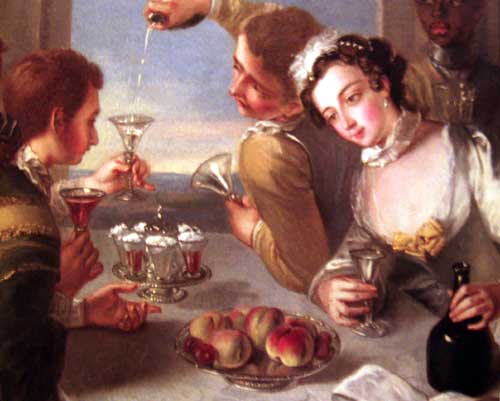
The Sense of Taste Philip Mercier (1680-1760)

Detail of The Sense of Taste by Philip Mercier (1680-1760) showing a salver of syllabubs

The word syllabub comes from the name Sille, an area in the Champagne region of France that made the eponymously named wine, and the word bub, an Elizabethan slang word meaning a bubbling drink, hence Sille bub – wine mixed with a frothy cream. In fact it was a case of the frothier the better, and the best way to achieve this is to spray milk straight from the udder (which has a natural froth) into the wine, this kind of syllabub was also called ‘Hatted Kit’ and a recipe appears for it in Elizabeth Raffald’s 1769 book The Experienced English Housewife:

“To make a Syllabub under the cow

Put a bottle of strong beer and a pint of cider into a punch bowl, grate in a small nutmeg and sweeten it to your taste. Then milk as much milk from the cow as will make a strong froth and the ale look clear. Let it stand an hour, then strew over it a few currants well washed, picked, and plumped before the fire. Then send it to the table.

elizabeth raffald

 Elizabeth Raffald

Charles II found this sort of syllabub so delicious that he kept cows at the palace in case he got a hankering for some Hatted Kit – he would walk up to one and squirt some milk into his flagon of wine, sack or cider.

If you are a tee-totaller, don’t worry because Sir Kenholm Digby, writing in 1669, gives recipes for syllabubs flavoured with plum juice, cherry syrups and Seville orange.

By the 19th century, the syllabub was generally made from whipping cream together with sweetened wine. The wine was flavoured with lemon and fortified with a little brandy, and it is a recipe for one of these everlasting syllabubs that I give below. It comes from Elizabeth David’s 1969 pamphlet Syllabubs and Fruit Fools (which can be found in her book An Omelette and a Glass of Wine).

Elizabeth David’s Everlasting Syllabub with Almond Biscuits

Elizabeth David

The ingredients of a syllabub, we find, are simple and sumptuous. The skill demanded for its confection is minimal, the presentation is basic and elegant.

Elizabeth David


If you like the blogs and podcast I produce, please consider treating me to a virtual coffee or pint, or even a £3 monthly subscription: follow this link for more information.


These syllabubs were the original topping to trifles before plain whipped cream took over. They are often served with jellies or with sweet biscuits so I’ve given a recipe for some simple crisp almond biscuits too.

The most important ingredient here is the wine; you can use any sweet or dessert wine, by personal favourite being a nice Muscat. I managed to get hold of an excellent and very reasonably-priced organic free-trade one from Case Solved Wines in Manchester.
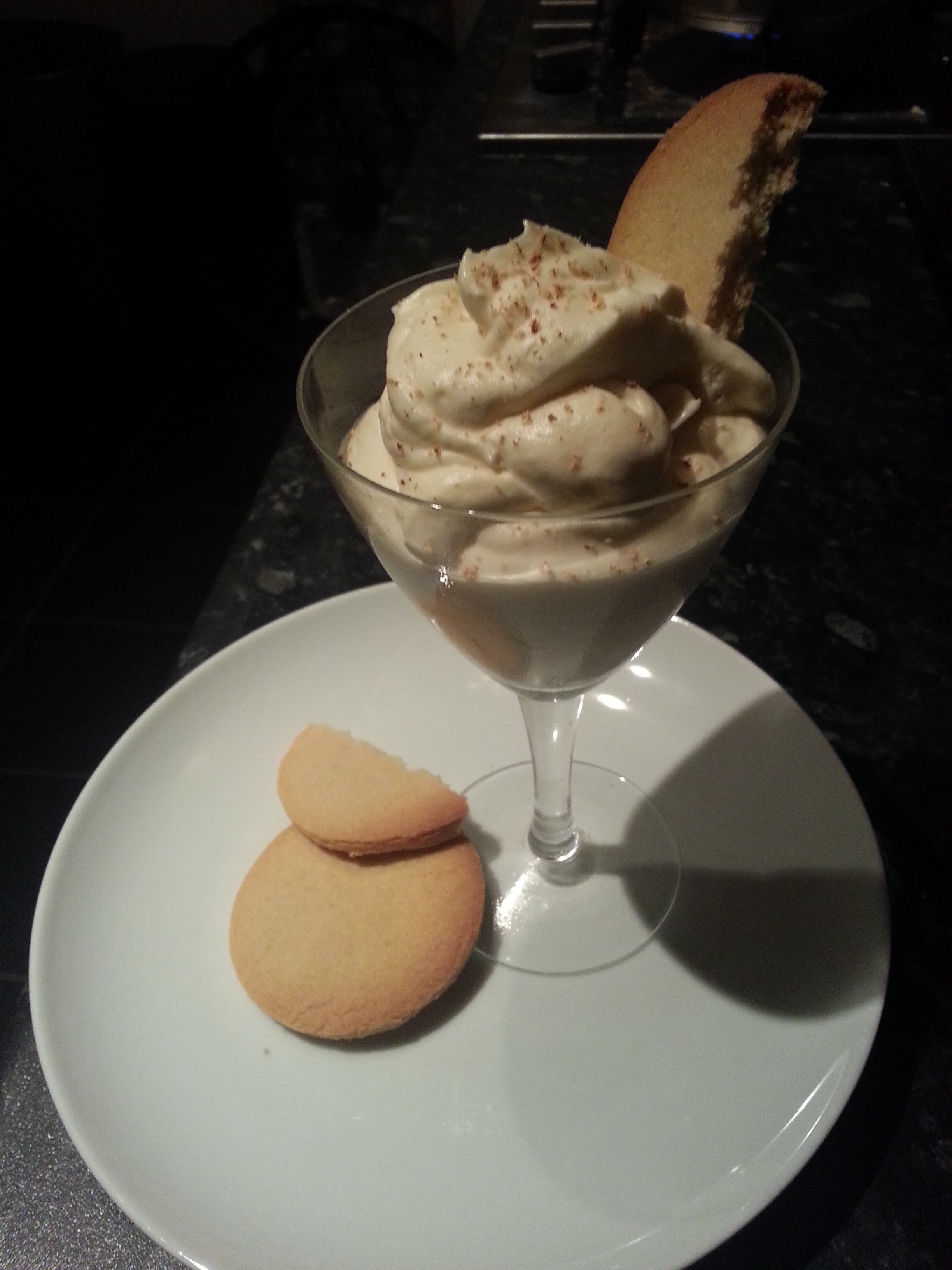
2012-12-29 20.42.01

This recipe makes between 4 and 6 servings

Ingredients for the syllabub

8 tbs sweet or dessert wine

2 tbs brandy

pared rind of one lemon

60g (2 oz) sugar

300ml (½ pint) double cream

freshly grated nutmeg

The day before you want to serve the syllabub, mix the wine and brandy in a bowl, add the lemon peel and steep overnight.

Next day, strain the wine into a large bowl and stir in the sugar until dissolved. Pour in the cream and whisk until thick. Be careful not to over-whip the cream. Spoon into glasses and scatter a few raspings of nutmeg over them.

For the biscuits:

100g (4oz) butter

50g (2oz) caster sugar

150g (6 oz) plain flour

50g (2 oz) ground almonds

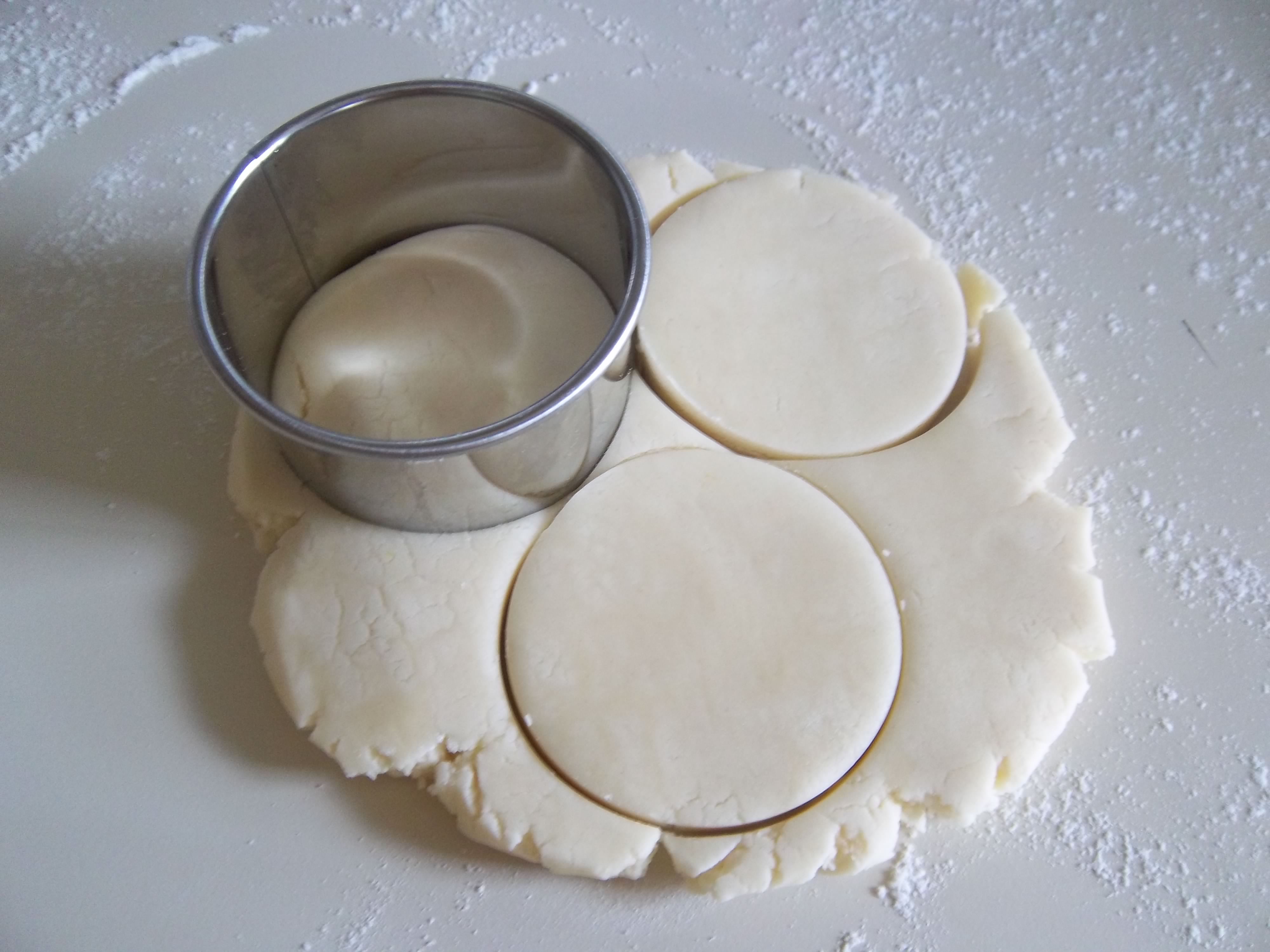
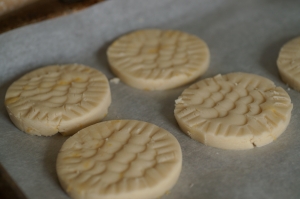
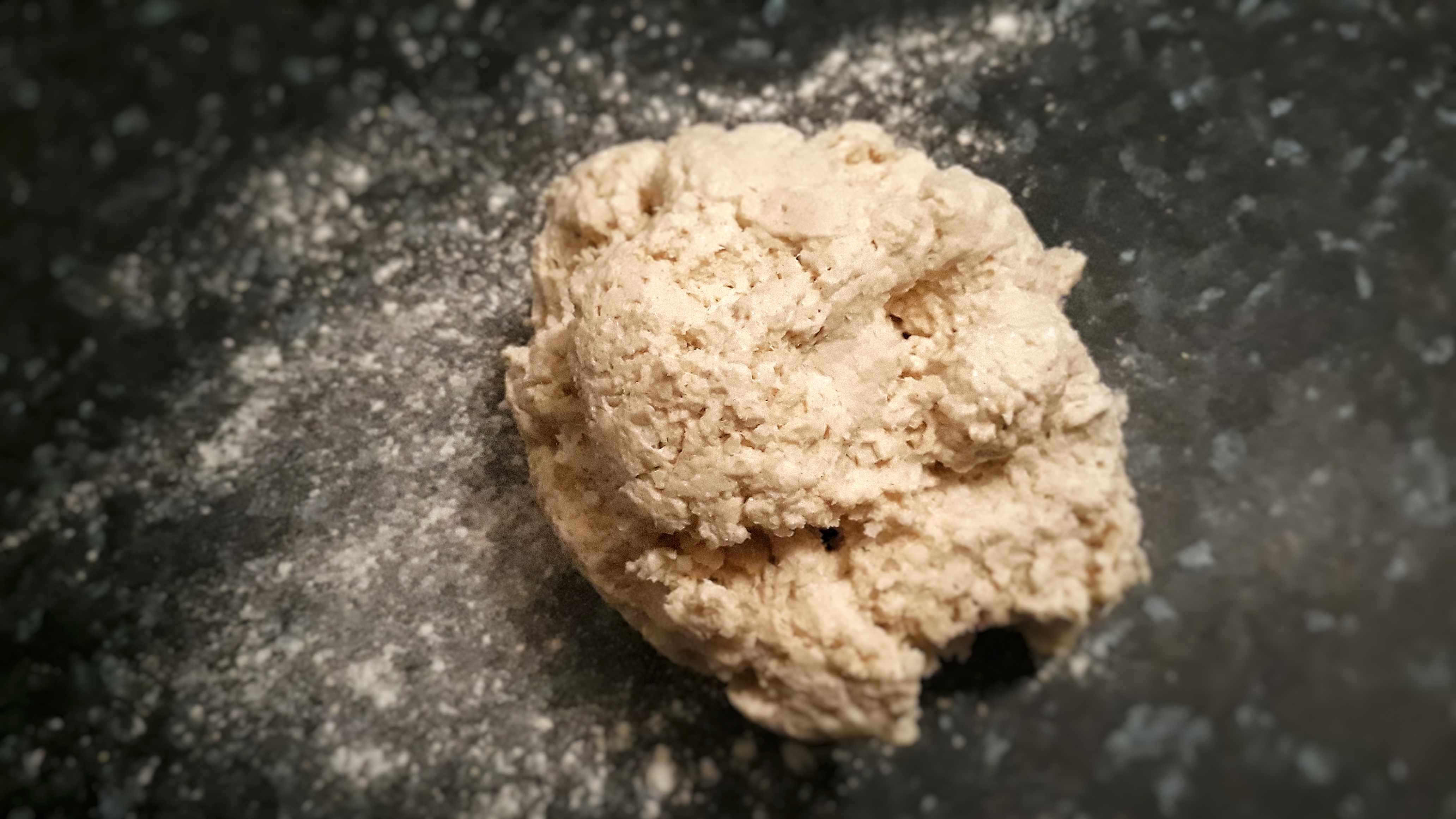
Cream the butter and sugar together and then mix in the flour, and finally the almonds. Bring the mixture together with your hand to form a dough – it’ll be very ‘short’, i.e. crumbly, but it will come together – don’t be tempted to add any water or milk because it will result in a biscuit that is not crisp, and you don’t want that. Roll out the mixture to the thickness of a pound coin (about 3mm) and cut into rounds.

Bake for 8-10 minutes at 200⁰C (400⁰F) until tinged with golden brown. Cool on a wire rack and store in an airtight tub.
4 Comments

Filed under baking, Biscuits, Britain, cooking, Dairy, Desserts, food, history, Puddings, Recipes

Forgotten Foods #2: Verjuice

Having a crabbed face of her own, she’ll eat less Verjuyce with her mutton

T Middleton, Women beware Women, 1657

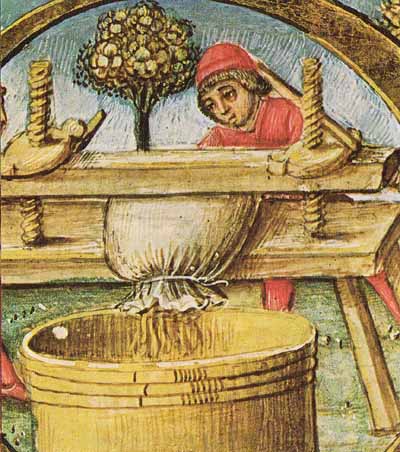
Verjuice was a very popular cooking ingredient from the Middle Ages onwards. Many old recipes ask for it and they seem to hit a peak during Tudor times. It is essentially the juice of either sour grapes or crab apples; Britain might not be the best place to grow delicious sweet grapes, but we can certainly excel in growing sour fruit! It took the place of fresh lemon juice in recipes for salad dressings, desserts like syllabubs; it was added to stews, soups and sauces as a seasoning, as well as an ingredient in marinades. It was also believed to have medicinal properties; for example, it was mixed with olive oil and blown up horses’ noses to treat colds! It was basically a necessary piece of kit in any kitchen, seeming to drop out of favour by the end of eighteenth century when lemons became more accessible.


Crushing the grapes for verjuice

The word verjuice comes from the Old French verjus, with ver-  meaning green or unripe and –jus being juice. The earliest written mention of it in British literature comes from around 1302, so we are talking old. It must have been such a useful ingredient in a place where fresh lemons will have either have been impossible to get hold of or terribly expensive.

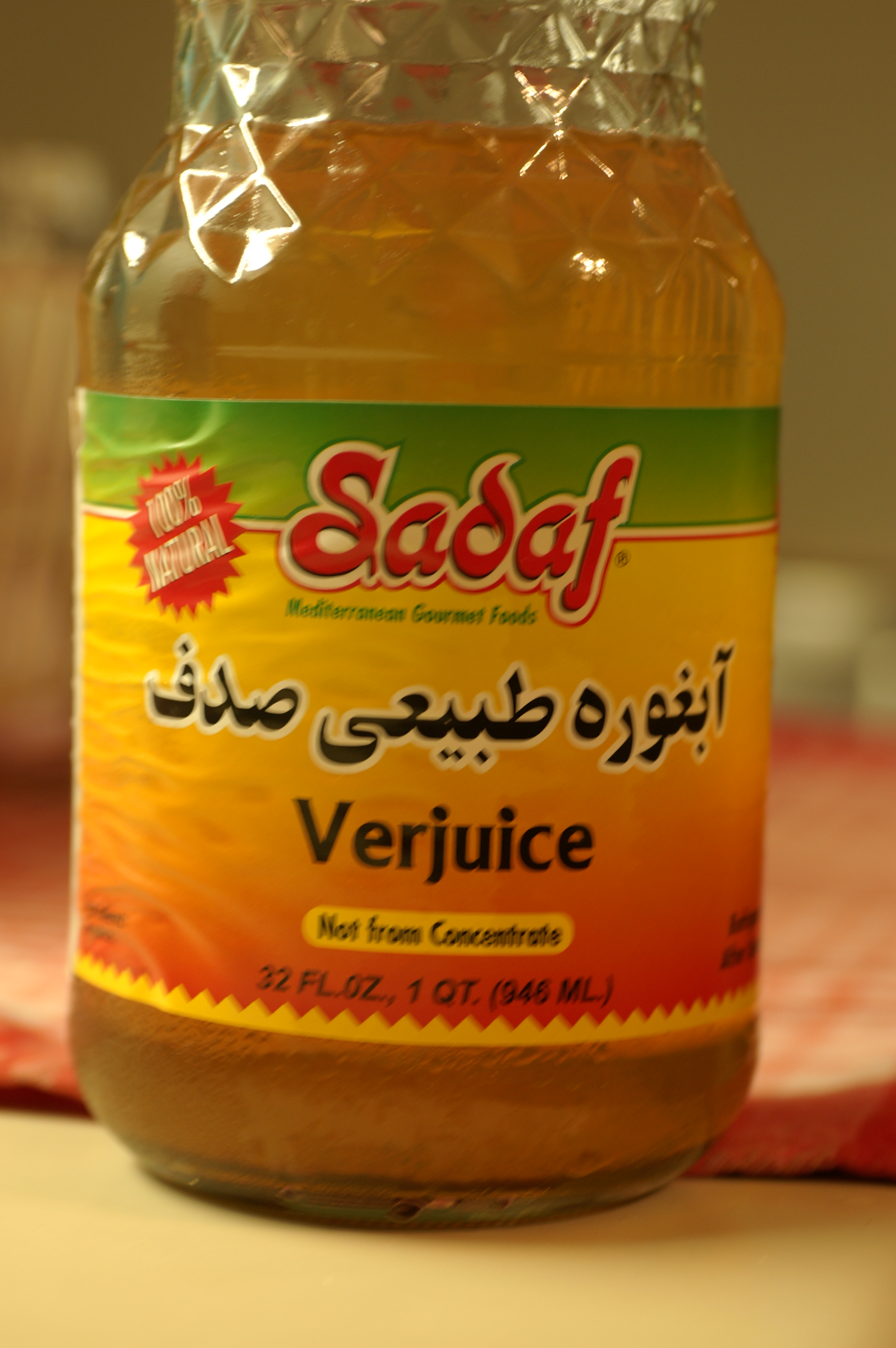
I expected never to taste verjuice, but then as I was wandering around the excellent Global Foods Market in St Louis minding my own business, I happened upon a jar of it in the Middle East aisle of the shop. Naturally I bought some and thought I’d try some original recipes where verjuice was a main ingredient rather than just a seasoning.

17th century verjuice vinaigrette

In the 1897 volume of Good Housekeeping the subject of using verjuice in salad dressings inexplicably crops up. It takes quotes from the 17th century cook book The English Huswife by Gervase Markham. Anyway, it says that if you want to make a simple sallet then make a dressing of verjuice, sallet [olive] oil and sugar. Use it with sparagus, camphire, cucumbers, leeks, blanched carrots, purslane, with a world of others too tedious to nominate. He must have been in a bit of a mood the day he wrote that part.

It was a pretty brief recipe. Although verjuice is very tart, its underlying flavours are rather subtle so it needed quite a high ratio of verjuice to oil (much more than vinegar or lemon juice dressings).

I mixed together 4 tablespoons each of verjuice and extra virgin olive oil. To offset the sourness, I added a teaspoon of soft dark brown sugar, stirring until it dissolved. Lastly I seasoned it with a little salt and pepper. Easy and surprisingly subtle. Any leftover dressing can be stored and blown up your horse’s nose should it ever get a sniffle.


If you like the blogs and podcast I produce, please consider treating me to a virtual coffee or pint, or even a £3 monthly subscription: follow this link for more information.


Sweet verjuice ‘scrambled eggs’ with brioche toast

I recently wrote a post about fruit curds, and I seem to have found a possible source of the preserve when looking for verjuice recipes. There is a recipe in Le Patissier François (published around 1690) that has helpfully been translated into English by Harold McGee where verjuice and salt are added to eggs in order to make them coagulate at a lower temperature, tenderising them:

Break four eggs, beat them, adjust with salt and four spoonsful of verjus, put the mix on the fire, and stir gently with a silver spoon just until the eggs thicken enough, and then take them off the fire and stir them a bit more as they thicken. One can make scrambles eggs in the same way with lemon or orange juice.

It is of Mr McGee’s opinion that a sweetened version of this recipe could be the origin of the fruit curd. Notice that fresh lemons or oranges can be used, suggesting that they are less common than verjuice.

Below is my interpretation of that recipe. I add plenty of acidic verjuice and a large pinch of salt, meaning that the ‘scrambled eggs’ actually end up thickening more like a custard. I have to say it was delicious, so if you ever do come across some verjuice have a go at this recipe:

Ingredients (for 2 people)
A good knob of butter
2 eggs
6 tbs verjuice
good pinch of salt
2 level tbs sugar
2 slices of brioche

Melt the butter in a saucepan on a medium heat. Whisk together the eggs, verjuice, salt and sugar until there is no trace of white left. Pour the egg mixture in the saucepan and carry on whisking over a medium heat. Meanwhile toast the slices of brioche. When the eggs have thickened and are just about to boil, pour them into two small pots and serve with the brioche.

13 Comments

Filed under Britain, Desserts, food, French Cookery, history, Seventeenth Century

Shortbread


The history of shortbread goes back to at least the 12th century and originally started life as ‘biscuit bread’; biscuits that were made from left-over bread dough that was sometimes sweetened and dried out in the oven to form a hard, dry rusk. This practise took place over the whole of the British Isles, not just Scotland.

Over time the leavening was lost and exchanged for butter, making it an expensive fancy treat that was only bought for celebrations such as Christmas and Hogsmanay (Scottish New Year). There are similar ‘breads’ outside of Scotland such as Shrewsbury cakes and Goosnagh cakes.

The large amount of butter is what makes shortbread short: the term short, when applied to biscuits and pastry, means crumbly, like shortcrust pastry should be. It is the reason why the fat added to biscuits and pastries is called shortening.

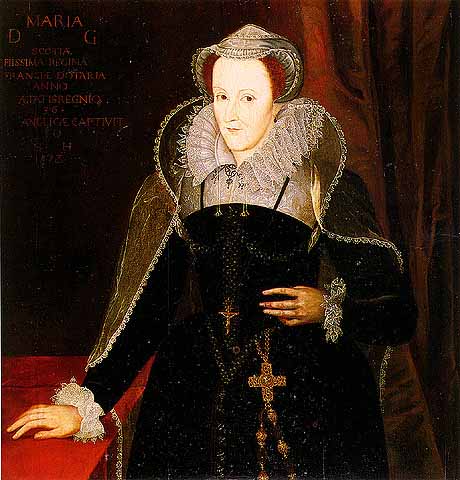
Mary Queen of Scots

Today, shortbread is made from flour, butter and sugar, though other flavourings are added. Caraway was particularly popular; Mary Queen of Scots was particularly fond of them. Other extra ingredients included almonds and citrus fruits like this 18th century recipe from Mrs Frazer:

Take a peck of flour…beat and sift a pound of sugar; take orange-peel, citron, and blanched almonds, of each half a pound, cut in pretty long thin pieces: mix these well in the flour; then make a hole in the middle of the flour, put in three table-spoons of good yeast; then work it up, but not too much…roll out; prickle them on top, pinch them neat round the edges, and strew sugar, carraways, peel, and citron, on the top. Fire it…in a moderate oven.

In George Read’s 1854 book The complete biscuit and gingerbread baker’s assistant, there are fewer ingredients, but includes eggs for some reason:

1 ¼ lb. of flour, ½ lb. of sugar, ½ lb. of butter, 3 eggs, ¼ oz. of volatile salts…a little essence of lemon

FYI: Volatile salts were smelling salts, that could also be used to leaven dough.

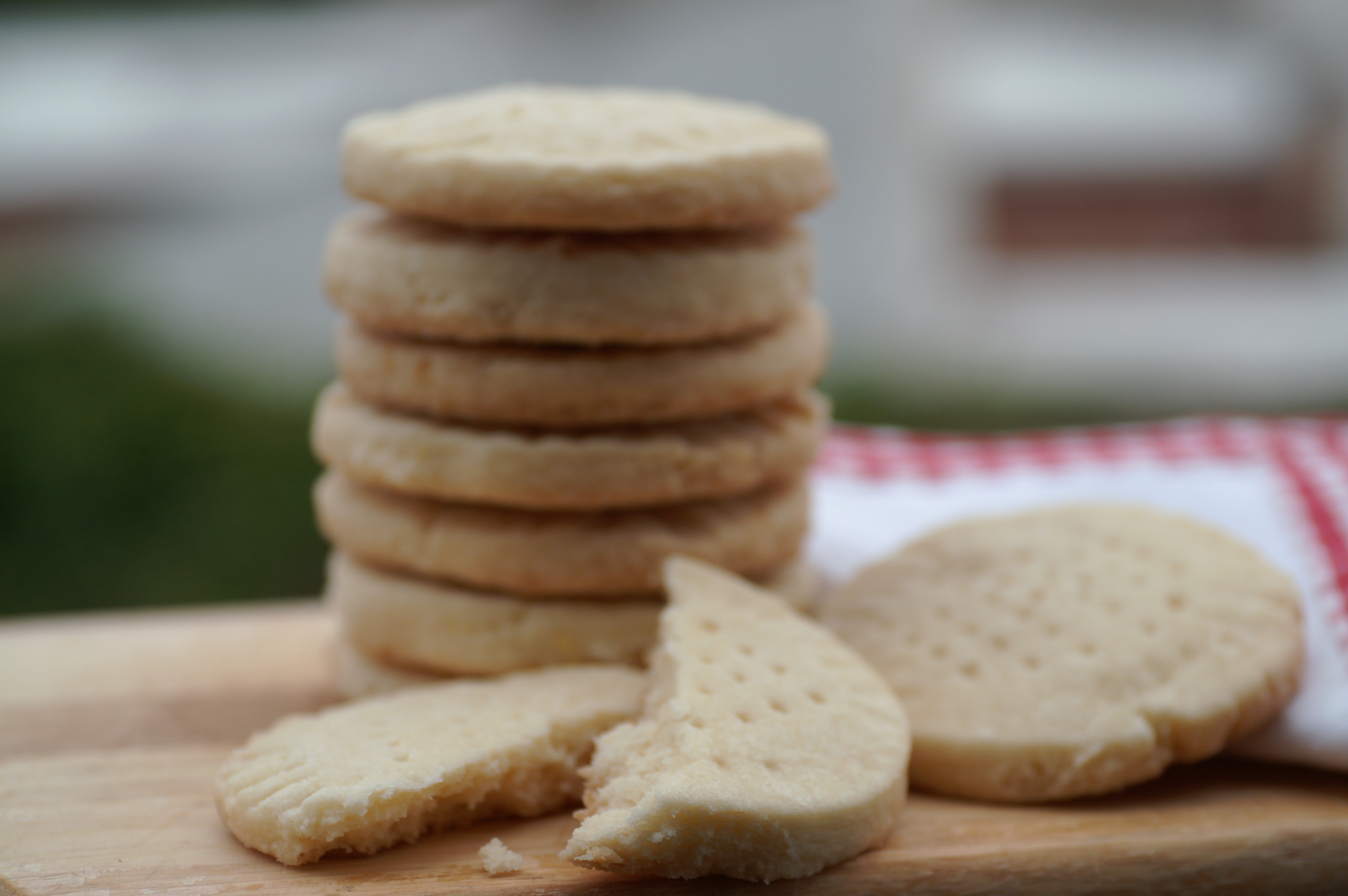
Shortbread usually comes in three different forms: small round biscuits, fingers or large rounds. To make the fingers, dough is cut into a large rectangle and the fingers are scored with the back of a knife so they can be broken up easily after cooking. A pattern made with fork marks is always made too.

To make large rounds, the dough is pressed into a round earthenware mould or a tart tin to make petticoat tails. When making the petticoat tails, the dough is scored into triangular slices like a pizza. The term petticoat tails comes not from the French petites gatelles (‘little cakes’) as many think (though Scottish cuisine did have more in common with French food than English food during the reign of Mary Queen of Scots), but from the term petticoat tallies – the name of the triangular pattern used to make bell hoop petticoats like Elizabeth I would have worn.

You can still buy the earthenware moulds – I’ll be buying one when I move back to England later in the summer.

Basic shortbread

This recipe makes enough for two petticoat tails rounds made in a seven inch tart tin. It’s hard to say how many biscuits or fingers – it depends on how wide and thick you make them. The important thing is to take them out before they start to brown.

To achieve a nice melt-in-the-mouth crumbliness use cornflour as well as normal plain flour to make your shortbread. Somewhere between a 1:1 and a 3:1 ratio of plain flour to cornflour works well. You don’t have to do this; they are still good with just good old plain flour.

6 ounces flour mix

4 ounces salted butter cut into cubes

2 ounces icing or caster sugar, plus extra

extra caster sugar

Rub the butter into the flour using fingers, pastry blender, food mixer or processor; be careful not to overwork things though if you’re using a food processor – shortbread dough doesn’t like being handled too much. Stir in the sugar and with your hand bring everything together to make a pliable dough – it’ll feel like it won’t form a dough at first, but as your hands warm it will.

Now you can roll or press out your dough into whatever shape you like and then place in the fridge for 20-30 minutes to harden:

For petticoat tails you are best diving the two into two halves and pressing the dough into your fluted flat tin. Score lines to mark out the slices, using a ruler if you want to be really precise. Make a nice pattern with a fork.

For fingers roll out the dough to half an inch thickness into a vaguely rectangular shape. Use a knife and a ruler to cut out a large rectangle and then score the lines with your ruler and knife, making patterns with your fork prongs.

For biscuits you can really do whatever you like; thick, thin, round, square. I think a little under half an inch is a good thickness. Cut out the biscuits and make your all-so-important fork marks.

Heat the oven to 180⁰C (350⁰F). Place the biscuits onto a baking sheet lined with greaseproof paper. Sprinkle with the extra sugar and bake until cooked but before any signs of browning. Petticoat Tails and fingers take about 15 minutes, individual biscuits can be variable, but usually about 12-15 minutes.

Variations:

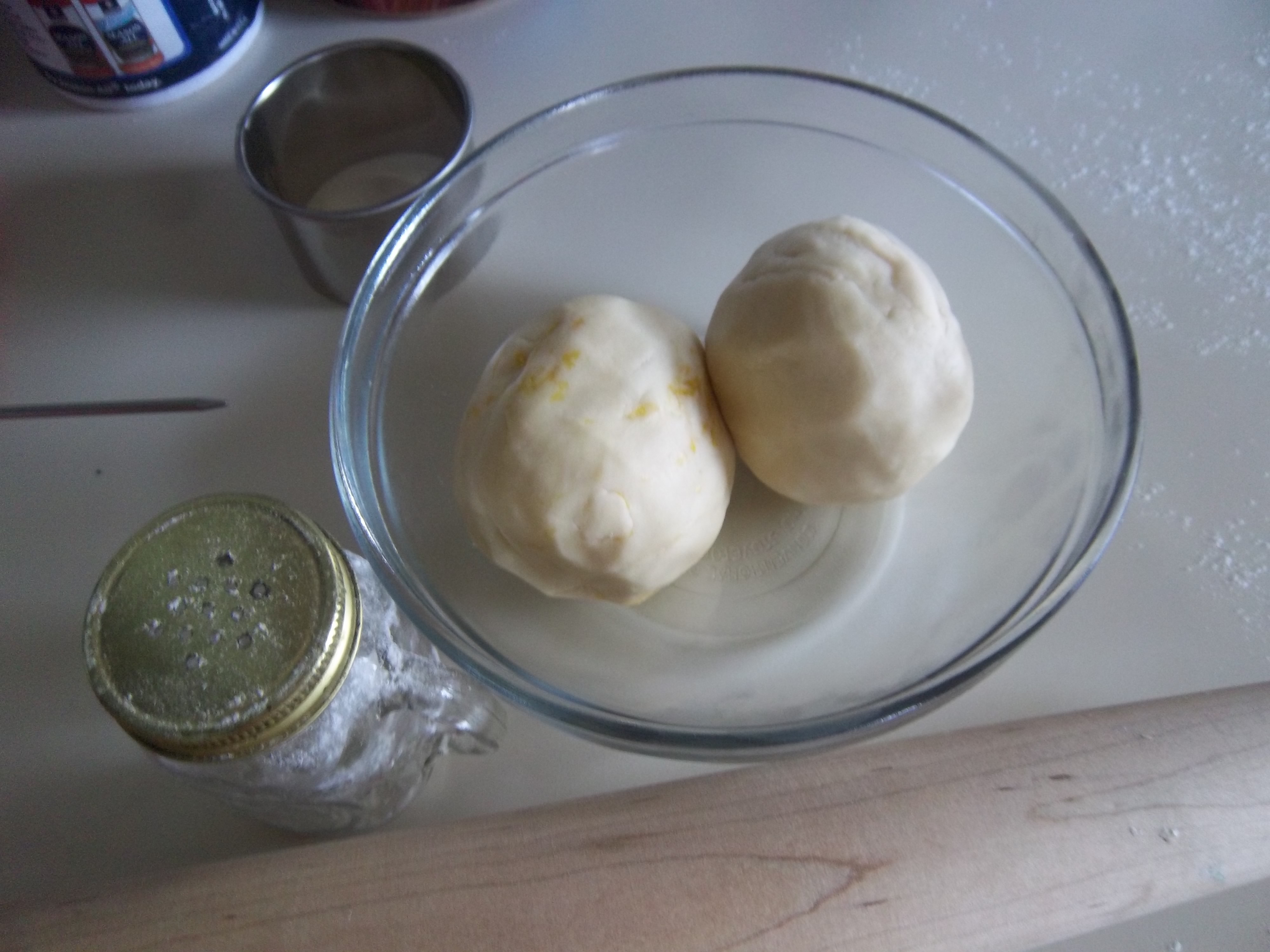
For lemon shortbread add the zest of one lemon when you add the sugar, and for almond shortbread add 5 or 6 drops of almond extract. If you want to try it with caraway, sprinkle in 2 teaspoons of caraway seeds at the same time you add the sugar.


If you like the blogs and podcast I produce, please consider treating me to a virtual coffee or pint, or even a £3 monthly subscription: follow this post for more information.


50 Comments

Filed under baking, Biscuits, Britain, Desserts, Festivals, food, history, Recipes, Scotland, Teatime, Uncategorized

Possets

I expected this post to be a simple recipe with a short history of the creamy dessert. However, as is so often in writing posts for this blog, it ends up being rather more complicated.

When I think of a posset, I think of a simple affair of sweetened cream thickened with an acidic fruit. However, this is very much a modern posset (by modern I mean twentieth century).

King Charles I

Originally the posset was a dessert or drink made from curdled milk enriched with sugar, alcohol (the most popular being sack, a sweet ale similar to sherry). It was often used as a curative for colds or fevers; it is mentioned in the Journals of the House of Lords in the year 1620 that King Charles I was given a posset drink from his physician. These drinks were kept warm and made in a special cup rather like a teapot so that the liquid could be drunk from beneath the foam that develops on the surface. Shakespeare mentions possets several times in his writings, in Hamlet, Act 1 Scene 5, he mentions the posset’s medicinal properties and that it is made from curds:

And with sudden vigour it doth posset,

And curd, like aigre [sour] droppings into milk,

The thin and wholesome blood.

Possets were eaten for pleasure too though:

Yet be cheerful knight: thou shalt eat a posset to-night at my house;

Where I will desire thee to laugh at my wife.

The Merry Wives of Windsor, Act 5, Scene 5

William Shakespeare

Kings and lords had their cream and curd possets, whereas we normal folk had to use bread to thicken ours.By the time we reach the mid-18th century, possets have changed; they are made from milk, but now are thickened with biscuits, bread, egg yolks or almonds, or a combination. Sack seems to still be the most popular and lemon possets make an appearance. Sack possets were drunk at weddings when it came to toasting the bride and groom around this time, though I don’t know where this originated from.

Possets 1769

Grate two Naples biscuits into a pint of thin cream, put in a stick of cinnamon and set it over a slow fire. Boil it till it is of a proper thickness, then add half a pint of sack, a slice of the end of a lemon, with sugar to your taste. Stir it gently over the fire, but don’t let it boil lest it curdle. Serve it up with dry toast.

Elizabeth Raffald, The Experienced English Housekeeper 1769

 Mrs Raffald also highlights the fact that you don’t want your posset to curdle: ‘always mix a little of the hot cream or milk with your wine, it will keep the wine from curdling the rest’. In the 19th century, Richard Cox in his Oxford Night Caps (1835) mentions those made from curds and those thickened with cream and egg yolks, so technically a custard, I suppose. Sometimes they were thick, and sometimes drinkable like egg nog. He mentions a black pepper flavoured posset that will ‘promote perspiration’ in order to sweat out a fever.

Here’s a strange thing though; if you rewind time back to Shakespearean days and look for a recipe for a trifle, what you seem to get is a recipe for a modern-day posset:

Take a pint of thick cream, and season it with sugar and ginger, and rose water. So stir it as you would then have it make it luke warm in a dish on a chafing dish and coals. And after put it into a silver piece or a bowl, and so serve it to the board.

Thomas Dawson, The Good Housewife’s Jewel 1596

You can see why a matter of no concern is called a mere trifle – they used to be so simple, but now they are complex and as the trifle changed over time so did the posset and it seems to have filled the niche left behind by the trifle. Possets, however, are no longer that popular. They are easy to make when cream is the sole thickener.


If you like the blogs and podcast I produce, please consider treating me to a virtual coffee or pint, or even a £3 monthly subscription: follow this link for more information.


Orange Posset 2012

Here’s the recipe I devised for an orange posset, which I think works very well. You can make a lemon one from two lemons and perhaps an ounce or two more of sugar. I have kept to its historical roots with the addition of a little orange flower water. This makes six helpings.

Ingredients

1 pint (20 fl oz) of double (heavy) cream

4 oz caster sugar

the juice of two oranges and the zest of one

juice of half a lemon

1 to 2 teaspoons of orange flower water (optional)

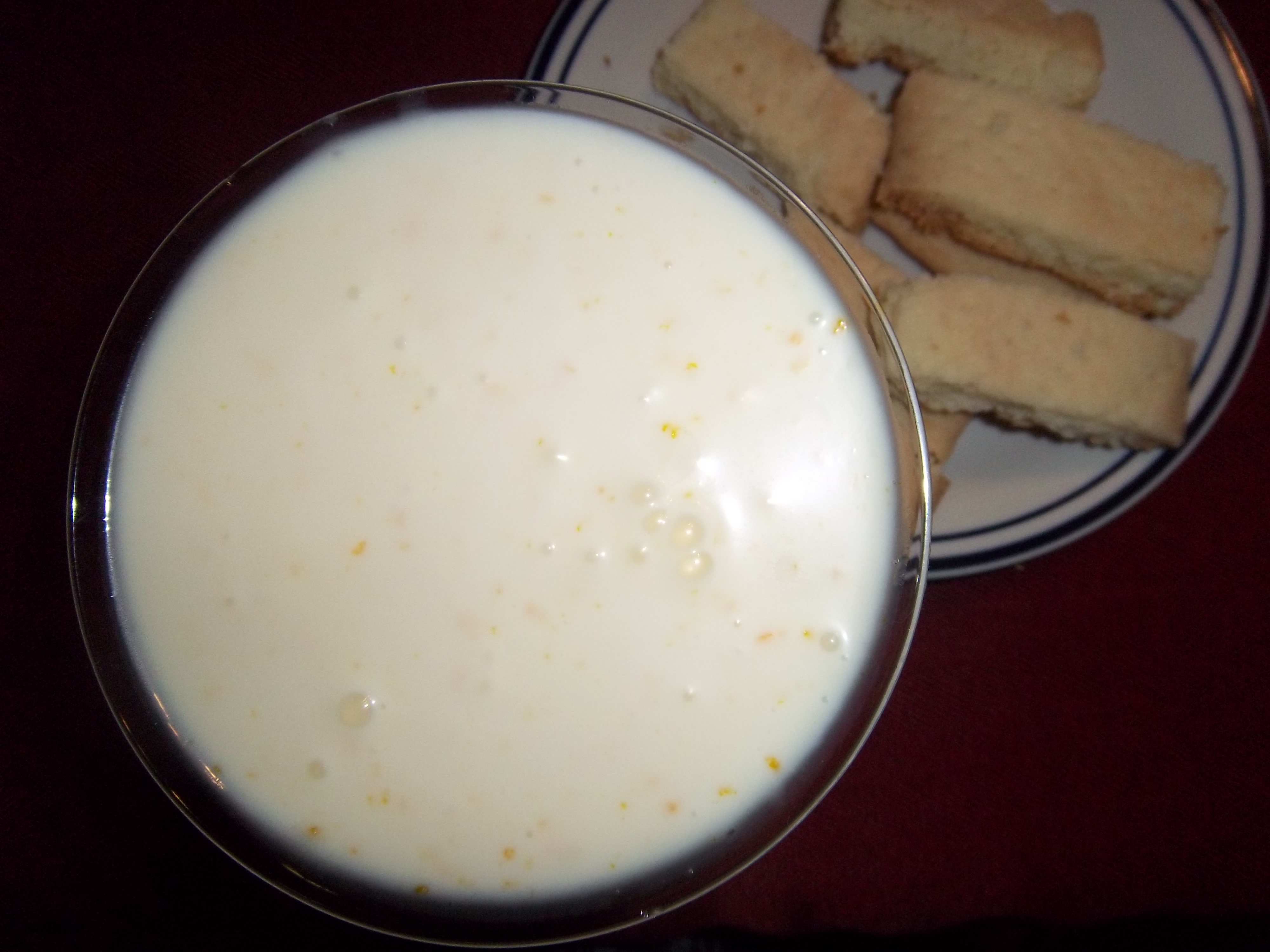
Bring the cream and sugar slowly to a boil and let it simmer very gently for 5 minutes. Allow to cool before adding the juices and zest whisking well; the acid thickens the cream noticeably. Add the first teaspoon of orange flower and taste, adding more if you like. Pour into six serving dishes and chill for several hours, or overnight. Eat with a crunchy crumbly almond biscuit or some shortbread.

30 Comments

Filed under food, history, Puddings, Recipes

The Rhubarb Triangle

It is just about the end of the short British forced rhubarb season, and it is always a treat to see it nestled, glowing pink in a crate at the marketstalls, and it is always sad to see it disappear, as I think it is one of the most wonderful vegetables.

In Britain, the long thin bright pink stalks are grown in an area called the Rhubarb Triangle, also known as the Wakefield triangle, a nine mile square area of land contained by Leeds, Morley and Wakefield in the West Riding of Yorkshire. Here, the rhubarb is grown in large, heated, low-ceilinged sheds in complete darkness. Because the plants want sunlight, they are forced stretch and grow long and thin in the vain hope of catching some of the Sun’s rays. Hence it is called forced rhubarb. It is also called Champagne rhubarb by some. The rhubarb never gets to attain the green colour like normal field or garden rhubarb has; I think the biological term is chlorosed. It also never gets the chance to develop the very astringent sourness too, but it does still has the wonderful rhubarb flavour. The plants grow so quickly in their desperation to find light that you can actually hear them pop and crack as they stretch and grow. I imagine that it is pretty scary in those dark, dank sheds harvesting the rhubarb by candlelight.

So what is special about West Yorkshire when it comes to growing rhubarb? Apparently, it is the unique mix of soil and climate. I know that that might sound rather trite, but I think in this case it might actually be true; Wakefield is the only place in the UK where one can successfully grow liquorice and the reason for that is because of its soil. Yorkshire-produced Forced Rhubarb has been given Protected Designation of Origin (PDO) status by the European Commission’s Protected Food Name scheme, just like Stilton Cheese, and famously not like Cornish pasties. That said the forced rhubarb I got was from Mexico.

It wasn’t until the discovery that rhubarb could be forced in the 1840s that the vegetable caught on as a ‘fruit’ in crumbles, pies &c. (it isn’t a true fruit as there are no seeds). Before then, like many plants, it was grown for medicinal purposes. It was such a revered drug for treating gut, lung and liver disorders that it was worth thrice the price of opium! It was first introduced into Europe by Marco Polo from Asia during the thirteenth century, and was first grown in Britain in the mid-seventeenth century.

Okay, that’s enough waffle, it is recipe time. Rhubarb is great for desserts and jams, and it is also great with fish, particularly oily fish. There are many recipes that I could add to the post, but the best has to be…


If you like the blogs and podcast I produce, please consider treating me to a virtual coffee or pint, or even a £3 monthly subscription: follow this link for more information.


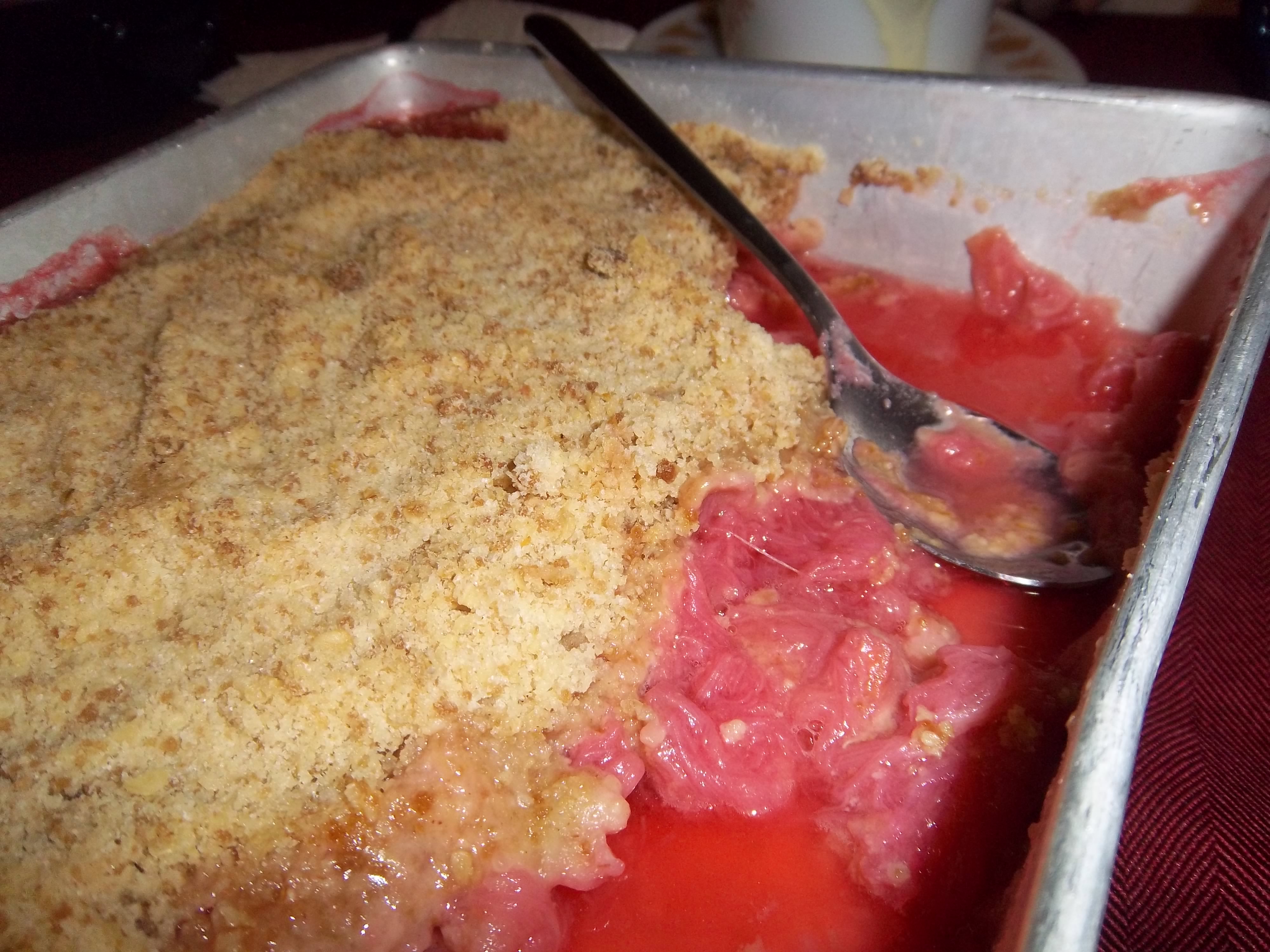
Rhubarb Crumble

This is my favourite way of eating rhubarb: tart fruit, sweet crunchy topping and loads of proper custard (link here for a recipe for that). I like to include some ginger in my crumble, they are a classic combination. Here I use it twice, ground ginger in the topping, and preserved ginger in with the gently stewed fruit. Orange zest and juice also work well as an alternative.

Ingredients

10 sticks of rhubarb, forced if possible

2 knobs of preserved ginger, chopped, plus one tbs of the syrup

4 tbs caster sugar

4 oz butter

4 oz Demerara sugar, or half caster sugar and half soft dark brown sugar

6 oz plain flour

2 oz oats

1 tsp ground ginger

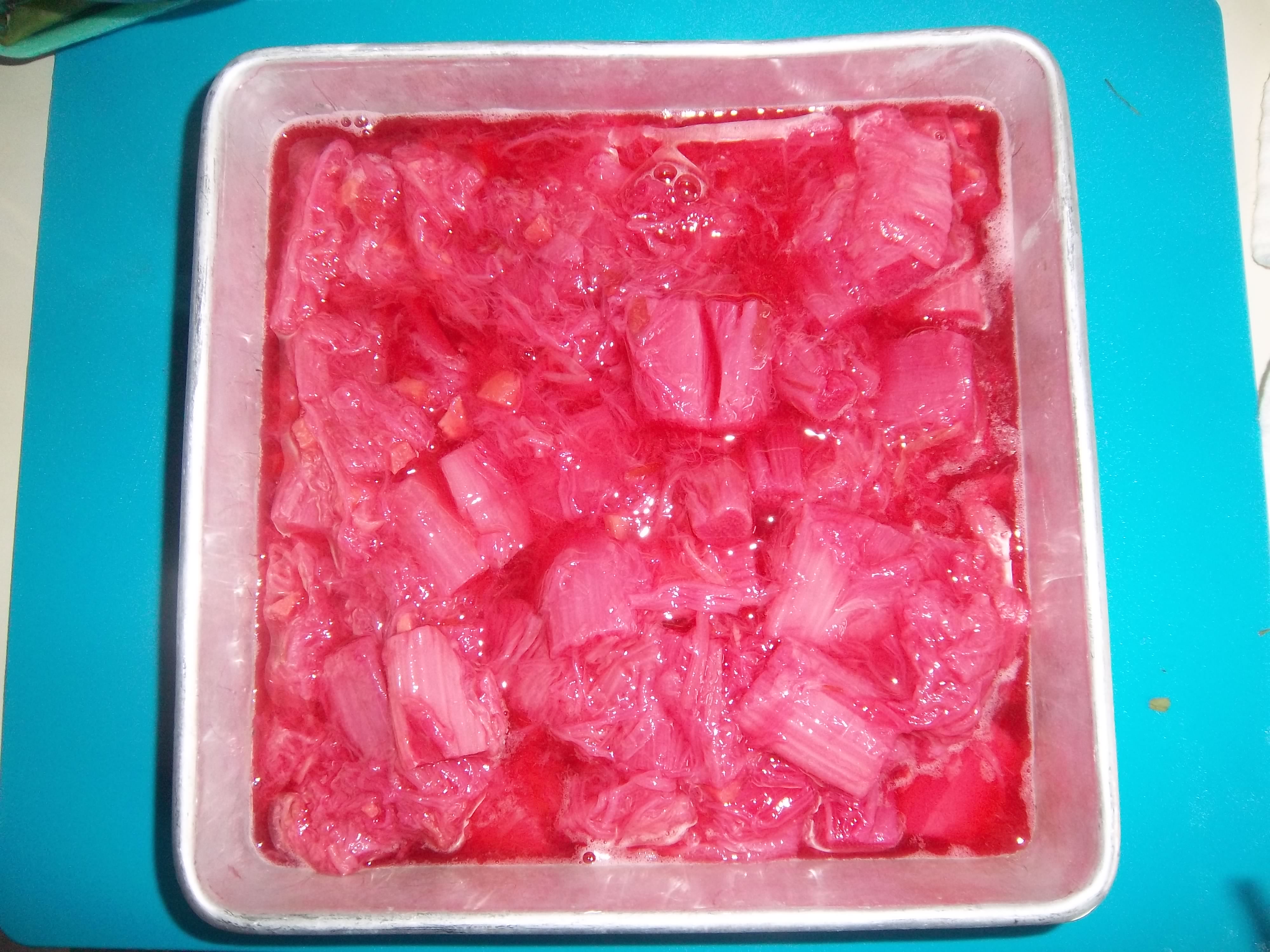
Slice the rhubarb sticks into one inch lengths. If buying forced rhubarb, there should be no need for peeling, but older, field grown sticks might need it. Place the rhubarb and caster sugar in a saucepan with the ginger and syrup, plus a couple of tablespoons of water. Cover, and simmer gently until the rhubarb is tender, about 10 minutes. Try not to stir the rhubarb too much, as it easily breaks up. If there is a lot of liquid, take the lid off and let it simmer away a little. Add more sugar if necessary; field-grown rhubarb may need more. Cool.

Meanwhile, make the crumble topping by rubbing the butter into the flour, using fingers, mixer or processor. Stir in the flour, oats and ginger.

Pour the rhubarb into a pie dish, or baking dish and pile on the crumble topping. I like loads of topping, but if there is too much for you, freeze the remainder for future crumbles.

Bake at 160⁰C for 45 minutes. Serve with custard, cream or vanilla (or even better, ginger) ice cream.

14 Comments

Filed under baking, food, Fruit, history, Puddings, Recipes, Uncategorized

Proper Custard

By proper custard I mean the pourable kind that goes on your pie, crumble or steam pudding. It also assumes the name cream custard and, of course, crème anglaise; you see it given that name in restaurants that trying to look all ‘high-end’, I suppose in many people’s minds, custard comes out of a packet or tin whilst crème anglaise is the real deal.

Custard in Britain has become somewhat of a travesty over the last few decades and I wonder how many people have actually ever eaten the proper stuff, whatever name you like to call it. I think it appears extravagant, fattening or difficult to make. Well it might be guilty on the first two counts against it because of the egg yolks and cream that are used, but it’s not really that difficult. All it needs is a watchful eye and a little stirring. There ways of making it easier to conjure up, as well as reducing its calorie count and cost, and there is no need to always resort going to the packet or tin.

Now, before you label me a custard snob, I need to point something out: I actually love custard made with custard powder and there’s really nothing wrong with it per se, but until you make the real stuff you won’t see they are almost incomparable. That said, there has been many an evening when I have a made a whole pint of Bird’s custard and eaten the whole lot to myself, but if there are people coming round for food, I always get the vanilla and egg yolks out.

Bird’s custard was my first contact so it will always have a special place in both my heart and stomach. However, technically, Bird’s custard isn’t custard at all, for it contains no egg (see the main post on custard). The powder was invented by Alfred Bird in 1837 because his wife, though she liked custard, was terribly allergic to eggs. Bird’s custard powder is simply cornflour with some vanilla flavouring and colouring. The famous three birds logo wasn’t introduced until the 1920s, surprisingly.

Tinned custard is pretty good too and, up until the last five or so years, it was the form I bought custard in if I wanted proper custard. My tinned custard of choice? Ambrosia Devon Custard of course – nothing else would do – and, like the Bird’s, I still love it. Again, however, Ambrosia custard does not contain eggs or egg products so is not proper custard.

Now you can go off and buy the proper stuff in the refrigerator section of your local supermarket, always called crème anglaise of course, but you may as well make your own if you’re going to do that. Next time you make a trifle or a nice warm pudding, why not try making the real thing – England’s only sauce as the French call it – proper custard.


If you like the blogs and podcast I produce, please consider treating me to a virtual coffee or pint, or even a £3 monthly subscription: follow this post for more information.


It’s a recipe that goes far, far back and I gave an early recipe a few posts ago (see here). I hope to try some old recipes in the near future. These days vanilla is the typical flavouring, whether it be in the form of a pod, an extract or as vanilla sugar, but it is optional. Some like no spice or some go for an alternative like nutmeg or cinnamon. For me, vanilla is the only way. It is sweetened with sugar and the amount you add depends on your own taste, but as a rule I like sweet custard, especially when it’s with a tart fruit pie or crumble or with a stodgy suet pudding. I add less sugar if the dessert is very sweet, like treacle tart or sticky toffee pudding.

When it comes to thickening the custard, you need to be careful not to over-cook it as it results in curdling. If you are new to custard making, the best thing to do is to replace two yolks with two teaspoons of cornflour; it works as a thickener like the yolks, but it also stabilises everything, so you’re less likely to make an error. The recipe below uses six egg yolks, but if you want thicker custard add another, or another teaspoon of cornflour.

Ingredients

1 pint of milk, or a mixture of milk and cream

1 vanilla pod or ¼ teaspoon of vanilla extract

6 egg yolks or 4 egg yolks and 2 tsp cornflour

1 to 2 tbs sugar

Split the vanilla pod, if using, and scrape out the seeds and add to a saucepan along with the milk and cream. Bring slowly to almost boiling point. Meanwhile beat the egg yolks, cornflour and sugar together in a bowl.

making custard

When the milk and cream are scalding hot and about to boil, pour it quickly onto the egg mixture whilst vigorously beating with a whisk. Tip the custard back into the saucepan and stir over a very low heat for a few minutes until it thickens and coats the back of your wooden spoon. On no account, let the custard boil, otherwise you will get scrambled egg. The temperature you are looking to achieve is 81⁰C (178⁰F). So if you are worried that it will curdle, either make sure you include the cornflour and/or put the custard in a bowl over a pan of simmering water. Don’t worry if there is a little curdling; simply pass it through a sieve and everyone will be none the wiser.

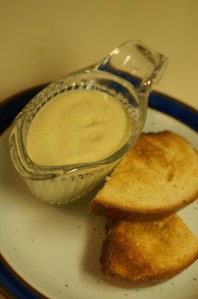
home made custard

20 Comments

Filed under food, General, history, Puddings, Recipes, Uncategorized

Custard

I love custard. There is very little that can beat it in my opinion, especially during the winter months. By custard I mean the pouring kind also known as crème anglaise by the French and by people who want to sound posh. I call it proper custard.

Custard is essentially eggs mixed with liquids, usually milk or cream, and then thickened using a low heat. The difficulty with custard is that they can be overcooked, you want the egg to thicken, but if you go too far the eggs either curdle or go rubbery. Custard should never be allowed to boil, the perfect temperature is around 80⁰C (180⁰F). If you want thicker custard, you need more eggs, not more heat.

I started looking into custard and quite quickly realised that the term custard is actually quite diverse, falling into two broad churches, so thought I’d give a quick overview before I add recipes.

First up are the cream custards, i.e. sauces that are made in a pan and stirred like the aforementioned crème anglaise that is poured on pies, crumbles and steam puddings and the like and is used cold in trifles. Egg yolks and cream or milk are used here, usually flavoured with vanilla and sometimes scented with orange flower water or rose water. Many people think that proper custard is made using custard powder, but they would be incorrect. Don’t get me wrong, I love a bowl of Bird’s, but it is not proper custard. In fact, it isn’t technically custard at all as it doesn’t contain any eggs.

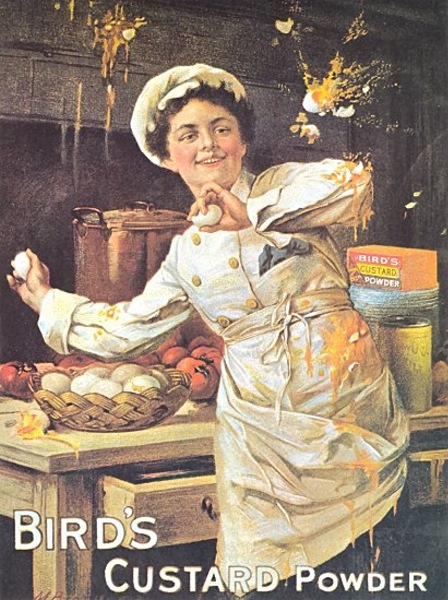
Bird’s advertisement, 1896

There is also confectioner’s custard, crème pâtissière, or pastry cream, thick and sweet and used to make delicious vanilla slices or profiteroles. This custard is unusual because it is heated until it boils, stabilised with cornflour. Also in this category are the fruit curds that are used in tarts, puddings or just in sandwiches. Here, the liquid is provided by fruit juice, typically lemon, but orange, lime and passion fruit curds are made too.

Much more common are the set custards which are baked and usually protected from the dry heat of the oven with a water bath. Whole eggs are used, because the whites form a matrix of albumen creating a gel, setting the custard. The more egg white included, the firmer the custard; useful if you want to turn it out onto a dish. Set custards are a diverse group. There is the classic baked custard, possibly my favourite ever dessert, but also lemon or orange tarts which are similar to fruit curds. All of these can actually be served with or without a pastry crust. Custards cooked in this way were also called douchets. Those without crusts include such classics as bread and butter pudding, burnt cream (or, if you like, crème brûlée) and crème caramel.

Then there are the custards that you don’t think of as custards, like baked cheesecakes or savoury quiches. There are set savoury custards made with meat stock that were once a popular starter, served warm with crisp Melba toast. I have also found recipes for cheese custard and potato custard.

I expected the set custards to be the kind that appeared first, but the earliest recipe going under the name custard I could find is from 1596 and is certainly a cream custard:

To Make a Custard

Break your eggs into a bowl, and put your cream into another bowl. Strain your eggs into the cream. Put in saffron, cloves and mace, and a little cinnamon and ginger, and, if you will, some sugar and butter. Season it with salt. Melt your butter and stir it with a ladle a good while. Dub your custard with dates or currants.

I have to say, it sounds delicious. I shall cook it someday.


If you like the blogs and podcast I produce, please consider treating me to a virtual coffee or pint, or even a £3 monthly subscription: follow this link for more information.


By the seventeenth century onwards, set custards had become popular. This is because they were actually more difficult to make than the saucy ones. This is because it was rather problematic to effectively use water baths, plus it was difficult to check the ‘doneness’ of the custards with the old open fires. As ovens became more refined, this sort of delicate baking was easier to attain so up popped puddings like burnt cream (crème brûlée), though the country of origin is somewhat disputed, though the earliest I have come across is from 1692 and is French.

 In the seventeenth century better ovens created more delicate desserts

Elizabeth Raffald was the Queen of Custard, her 1769 book The Experienced English Housekeeper contained no less than 13 custard recipes both creamy and set, sweet and savoury. I am definitely going to try some of hers, but here’s one that I can’t see getting round to doing as it uses beest, which is an old term for a cow’s first milk produced after calving.

Take a pint of beest, set it over the fire with a little cinnamon or three bay leaves, let it be boiling hot. Then take it off and have ready mixed one spoonful of flour and a spoonful of thick cream, pour your hot beest upon it by degrees. Mix it exceedingly well together and sweeten it to your taste. You may either put it in crusts or cups or bake it.

What is interesting is that it bay leaves are used; it’s half way between a custard and a white sauce. I wonder of the beest tastes extra sweet as well as extra rich.

Custard recipes on the blog:

Proper custard

17 Comments

Filed under baking, General, history, Puddings

Christmas Cake

Christmas cake, Christmas pudding, mince pies – if you don’t like dried fruit you are in trouble at Christmastime!

When families in the sixteenth century made their Christmas puddings for the big day, they would often use some of the mixture, with the addition of flour and eggs, to bake and eat for Eastertime. These were obviously rather rich families. It was liked so much that the rich fruitcake was made for Christmas too. We also dropped it from the Easter menu for some reason.

I used to be of the belief that the addition of the marzipan and royal icing (see here for recipes) came much later when a cake was banned from Christmas. The last day of Christmas is Twelfth Night (the 5th of January) and it used to be traditional to make a Twelfth Night cake that contained almonds and was covered in marzipan. Oliver Cromwell, the Lord Protector of England, and the other Puritans banned the feasting on that special day in the 1640s (he also banned mince pies as well) complaining that there was too much excess. Christmas Day remained a public holiday and some feasting was allowed, so people simply made their Christmas cake and covered that in marzipan instead, and so the Christmas cake was born.

This is sadly untrue. The Christmas cake with its double wrapping of marzipan and royal icing is an 18th century invention – Elizabeth Raffald has the first recipe for a cake such as this, and it was for a ‘Bride’s Cake’, i.e. a wedding cake.

Britain’s biggest ever party-pooper: Oliver Cromwell

You don’t have to cover it with the marzipan and royal icing though, in Yorkshire (my home county) it is popular to eat the Christmas cake with some nice cheese such as Wensleydale or Cheddar instead.

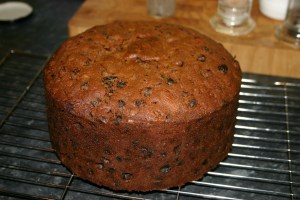
I love Christmas cake, so I thought I would give you the recipe I always use – it is adapted from Jane Grigson’s English Food (click here to see my other pet project) – and it has never failed on me. As I said a couple of posts ago, if you want to eat top-quality food at Christmas, you need to make your own, or spend a fortune at Harrod’s. Plus the cake is made well in advance – I usually make mine 6 weeks before Christmas so it can mature. Once you’ve cooked it, you only have to feed it with a little brandy to make it nice and moist.

This recipe is of course for an English-style Christmas cake; the Scottish, Welsh and Irish have their own versions, all in a similar vein, but with a few differences. I’ll blog about them at some point.

It makes one hefty 8 inch/20 cm cake, for a smaller cake, half the amounts and bake in a 6 inch / 15 cm tin for 2 1/2 hours.

Ingredients:

900 g mixed dried fruit (currants, raisins and sultanas)

125 g of whole roasted almonds (or hazelnuts or walnuts, or a mixture)

125 g chopped candied citrus peel

125 g rinsed glacé cherries quartered or left whole

300 g plain flour

1 1/2 tsp mixed spice

the grated rind of a lemon

250 g salted butter, softened

250 g soft dark brown sugar

1 tsp vanilla extract

1 tbs black treacle (or molasses)

4 eggs

1/2 tsp bicarbonate of soda

1 tbs warmed milk

brandy

Preheat your oven to 140⁰C (275⁰F).

Begin by mixing all the dried fruit, almonds, candied peel and cherries in a large bowl. Next, sift in the flour, turning in and coating the fruit, then mix in the spices and fresh lemon rind.

Now cream the butter sugar in a separate bowl, then mix in the vanilla and black treacle. Beat in four eggs one by one until incorporated, and the mix in the fruit and the flour. For the final stage, dissolve the bicarbonate of soda in the warmed milk, stir it in, and then add enough brandy to slacken the mixture slightly, so that it achieves a dropping consistency – you don’t want a dry cake, now do you?

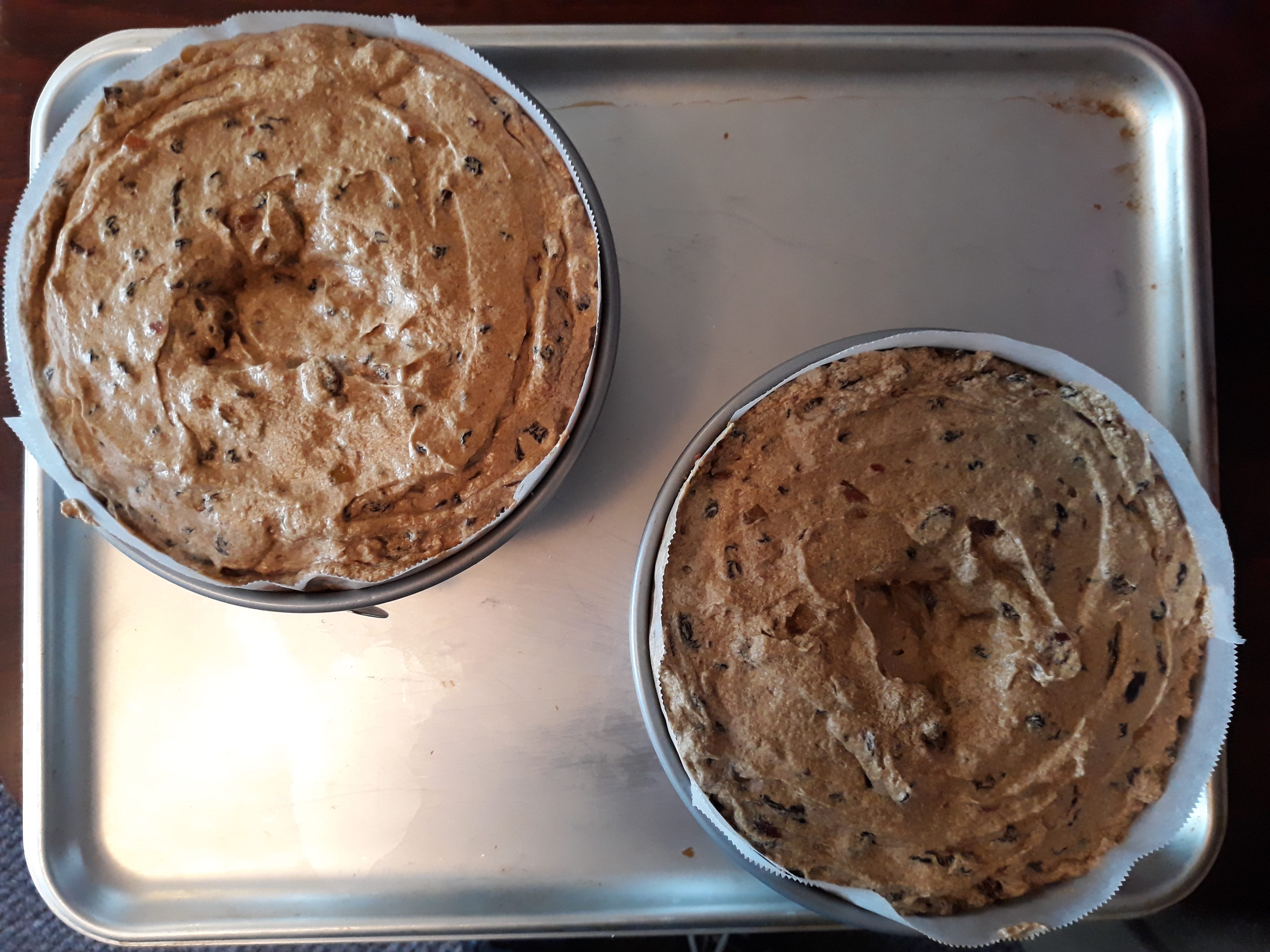
Line an eight inch cake tin with greaseproof paper and pour the mixture in, hollowing the top a little to compensate for it rising in the oven.

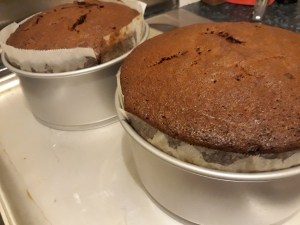
Cover with a layer of brown paper to prevent scorching and bake for 3 to 3 ½ hours. Test it after 3 hours with a skewer. When done, leave to cool in its tin overnight. Wrap in greaseproof paper or foil and keep in an airtight container.

Ideally, the cake should sit for at least a month to mature, but 2 or 3 weeks is also fine. Whilst it sits, you need to feed it with a sprinkle of 2 or 3 tablespoons of brandy, turning the cake each time it is fed.

The cake is ready to eat when sufficiently fed and matured, however, you might want to add a layer of marzipan and royal icing.


If you like the blogs and podcast I produce, please consider treating me to a virtual coffee or pint, or even a £3 monthly subscription: follow this link for more information.


29 Comments

Filed under baking, cake, Christmas, food, history, Puddings, Recipes, Seventeenth Century, Teatime, Uncategorized

Jam Roly-Poly

That lady I fancied I was looking at her, though, as far as I could see, she had the figure and complexion of a roly-poly pudding – William Makepeace Thackeray, Notes of a journey from Cornhill to Grand Cairo, 1846

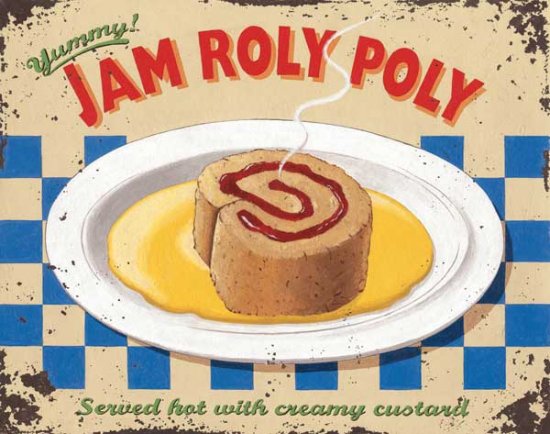
A great piece of modern-day vintage art by Martin Wiscombe 

If you ask most British people what their most favourite childhood dessert is, the jam roly-poly pudding would be one of the top rankers; it certainly is one of mine. A roly-poly is a pudding made from suet dough that is spread with jam and then rolled up. Originally, it was boiled in some muslin, but is these days steamed or baked. Other fillings can be done such as golden syrup, apples or prunes. I have never tried a sweet roly-poly with anything other than jam, and even then I will only use raspberry or blackcurant jam. There are also savoury roly-poly puddings. It was common to boil the roly-poly in a shirt sleeve, giving it the nick-name ‘dead man’s arm’. I’ve never actually made any kind of pudding by boiling it in muslin, never mind a shirt sleeve. Next time I do a pudding I will do it the old-fashioned way. After all this is a history blog, isn’t it? What makes a pudding a pudding? Click here.

This pud seems to have been invented during the first half of the nineteenth century, no mention of it occurs before 1800 as far as I see, apart from writings about a game called Roly-Poly.

ROLY-POLY. (1) A pudding made in round layers, with preserves or treacle between…

(2) A low, vulgar person.

(3) A game played with a certain number of pins and a ball…

James Orchard Halliwell-Phillips, A dictionary of archaic and provincial words Vol II, 1847

Here is my recipe for jam roly-roly poly, the suet pastry shouldn’t be sweet; the sweetness should come from the jam and custard (with which it is always served). You can swap any preserve for the jam if you like, I imagine lemon curd would be good. It feeds at least six people and is pretty good value for money – these sorts of wintertime desserts are supposed to warm and fill you. At some point I’ll give the apple and prune one a try and put the recipes for them on here too.


If you like the blogs and podcast I produce, please consider treating me to a virtual coffee or pint, or even a £3 monthly subscription: follow this link for more information.


Ingredients:

400 g self-raising flour

good pinch of salt

200 g suet

160 – 180 ml milk or water

your favourite jam

custard, to serve

First, make the suet pastry. If you haven’t made pastry before, don’t worry, suet pastry is the easiest of all the pastries to make. In a bowl, mix the flour, sugar and suet together. Using a butter knife, mix in a little liquid. When incorporated, add a little more. Keep adding and incorporating until a dough begins to form, then start using your hands to form a soft, but not sticky dough.

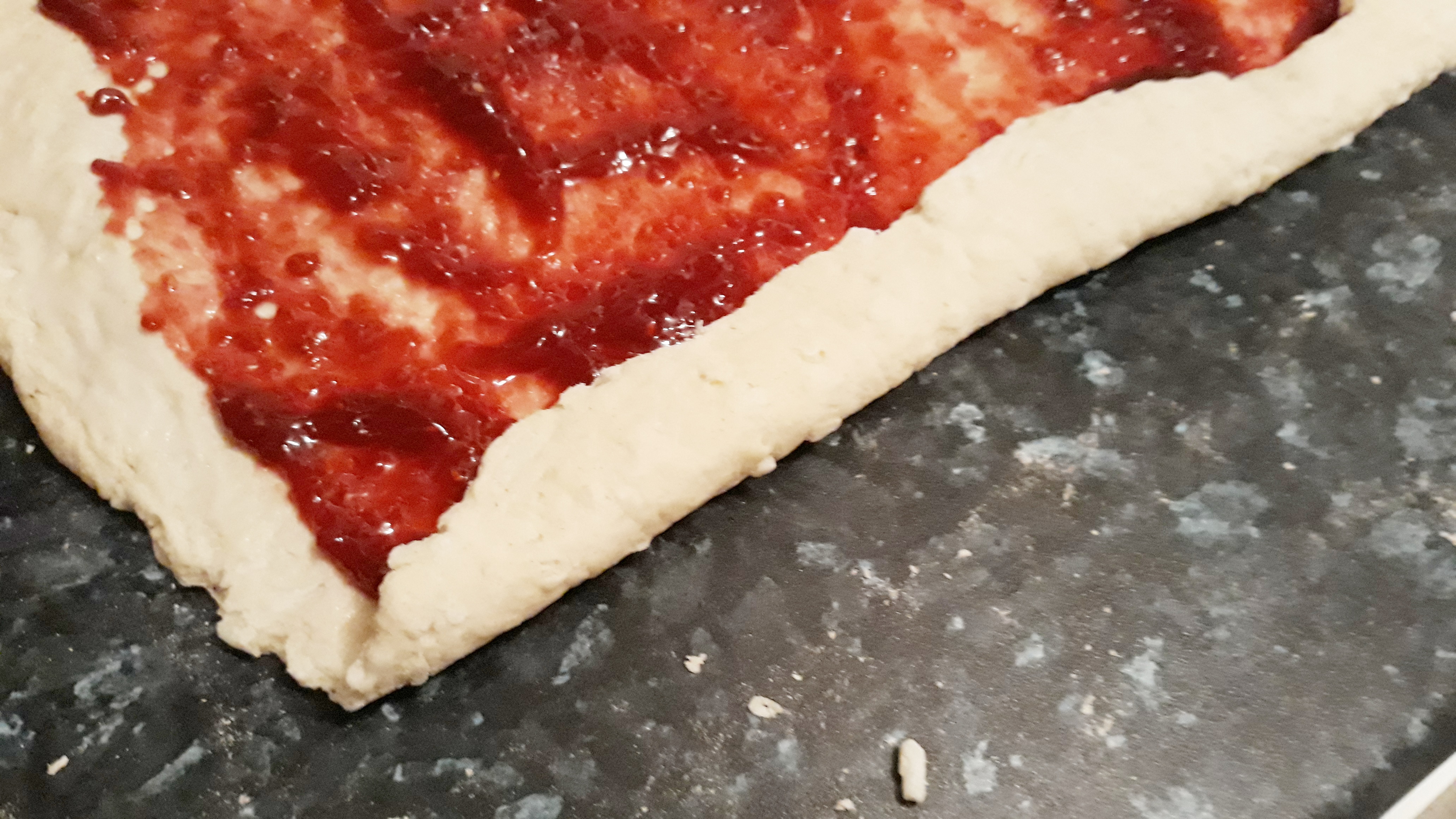
If you add too much liquid add a bit more flour. Now roll out the dough into an oblong as long as your steaming receptacle (I use a large roasting tin with trivet) and spread it with jam.

Make sure you leave a space of a centimetre at each side and a space of 2 cm along the top length of the rolled out pastry.

Moisten the edges all the way round with a little water and fold over the first part of the dough.

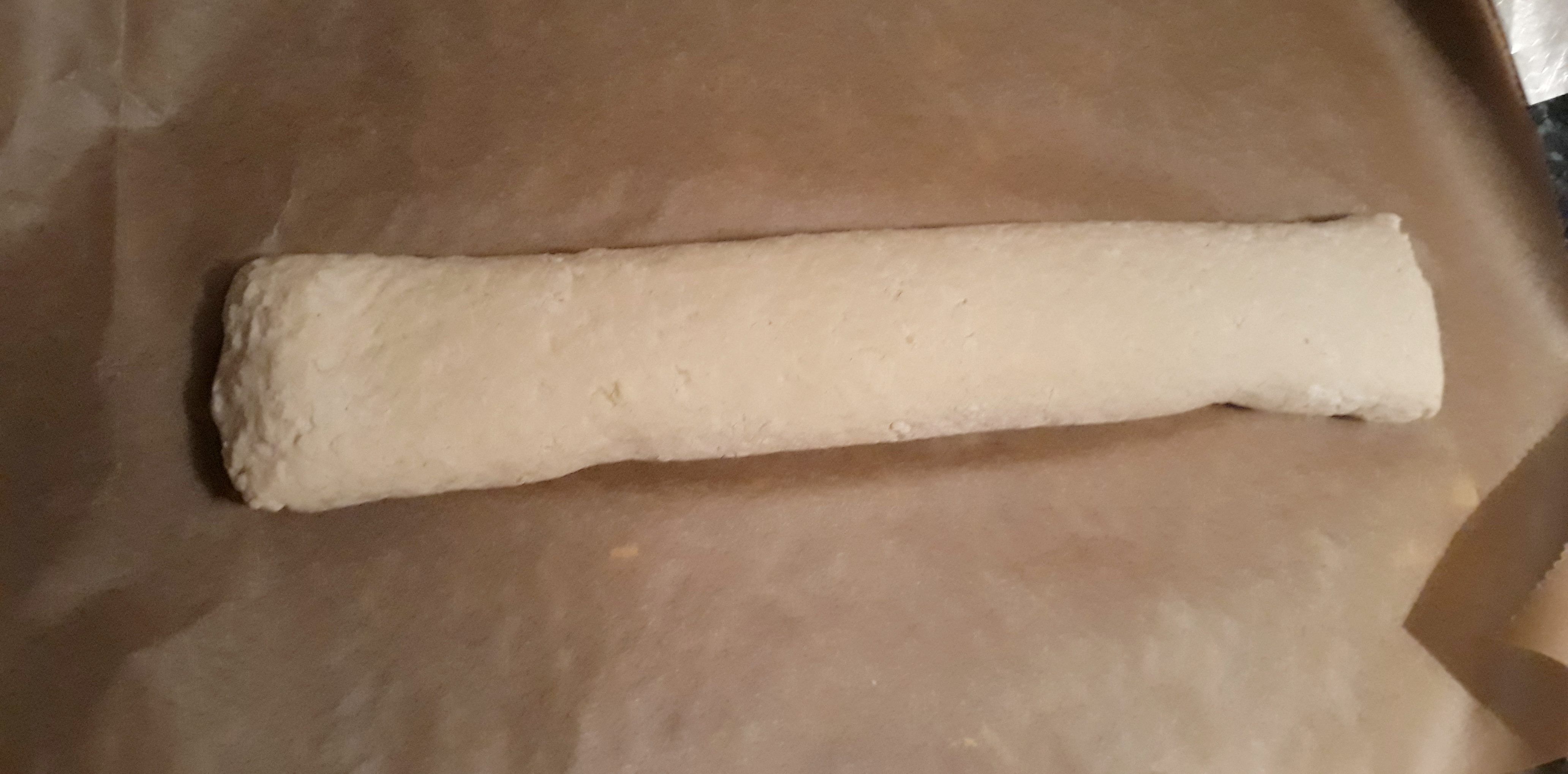
Carefully roll it up, making sure that the jam doesn’t get pushed to the edge, spilling out. Fold the ends under to prevent the jam from escaping.

Sit the rolled pudding on some greaseproof paper and fold the edge up in a pleat, tucking the edges under, making sure there is room for the pudding to expand.

Next, sit that on some foil, and again secure by folding a pleat and scrunching the edges.

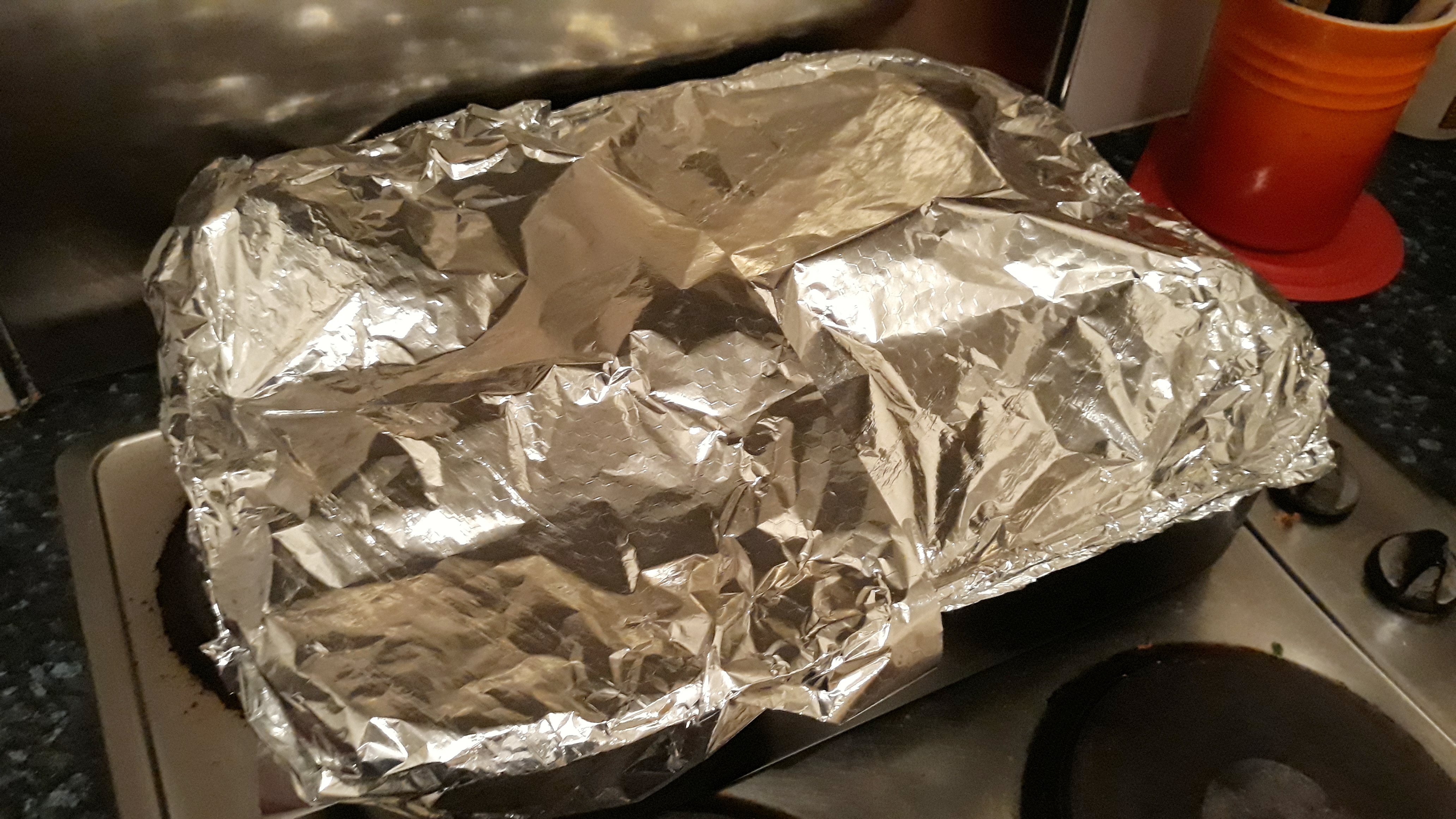
Place the pudding on a trivet in a roasting tin. Cover the whole thing with foil, making it nice and tight around the edges – you don’t want steam (and therefore heat) to escape. Leave one corner unsecured so you can pour a kettle of hot water inside, then secure the final edge. Place over one or two hobs and get the water up to a good boil. After around 20 minutes, turn the heat down to medium-low and leave the pudding to steam for 90 minutes.

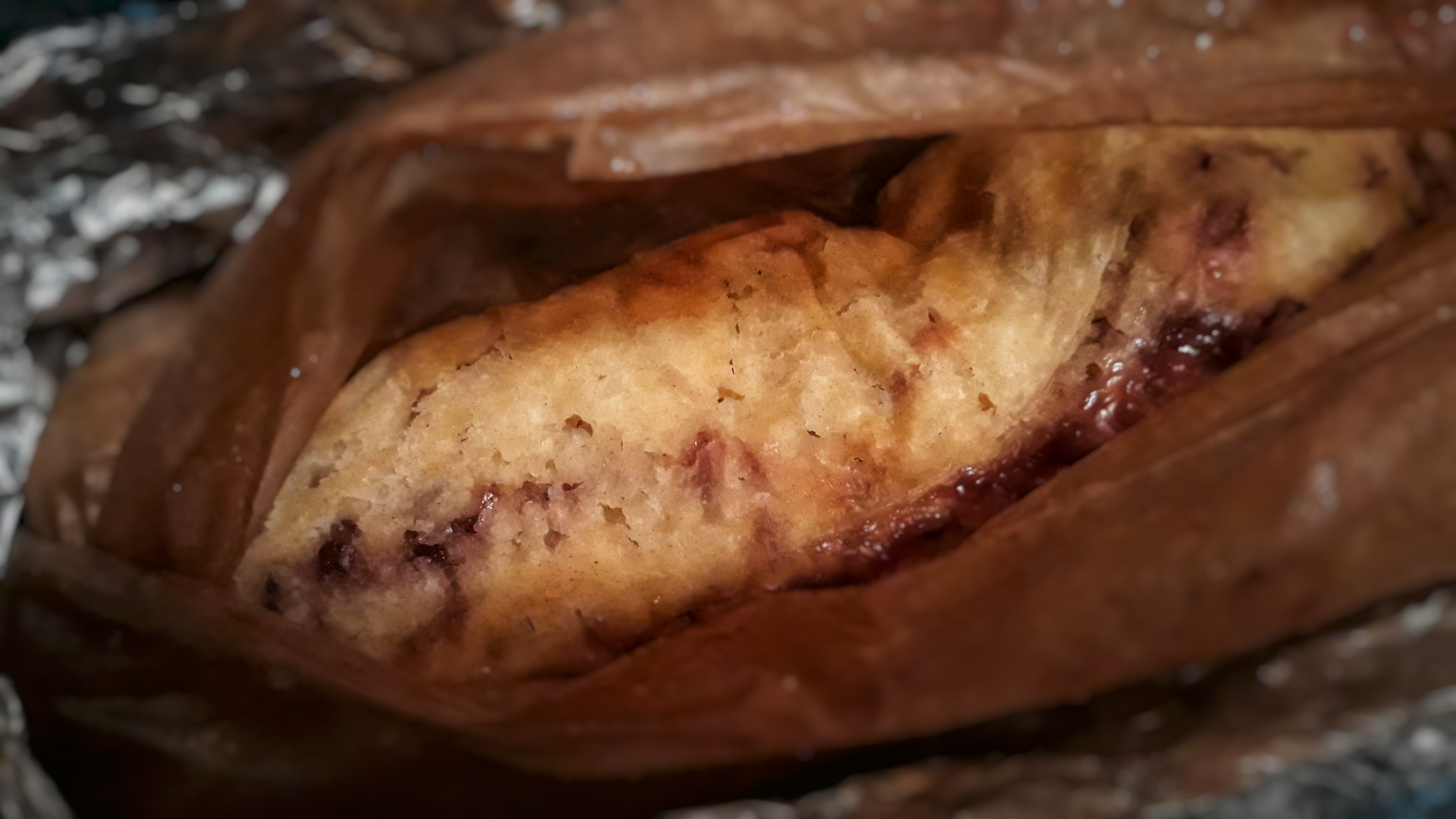
When the time is up CAREFULLY remove the foil – don’t get yourself a steam burn at this point! Remove the pudding and let it stand for 5 or 10 minutes before you unwrap, slice and serve it.

If you like, especially if the pudding hasn’t browned very much in the steaming process, just before the end of the cooking time, preheat the oven to 200⁰C (400⁰F). Take the roly poly out of its little tin prison, place on a baking tray and pop it in the oven for 10 minutes to crisp up.

Serve hot with custard poured over it.

Hey Presto!

25 Comments

Filed under food, history, Nineteenth Century, Puddings, Recipes, The Victorians

What is a pudding?

If you are British and trying to explain the word to a non-Brit the answer is surprisingly difficult. In America, it is a simple answer: a dessert. We all use pudding to mean dessert or afters, but then there are types of dessert that are true puddings. The true puddings are those that are boiled or steamed. Christmas puddings, suet puddings and sponge puddings fit into this category. In fact, anything boiled or steamed in a basin, cloth or handy piece of intestinal tract is a pudding: black pudding, white pudding, steak & kidney pudding, pease pudding and haggis are the ones that immediately spring to mind. So far, so good. However, there is the odd miscellaneous pudding: Yorkshire puddings aren’t boiled, they are baked beneath the roast beef in the oven.

‘Mixing the Pudding’

So, a pudding is any dessert, or the name for the dessert course. Aside from the proper puddings mentioned above, there are some that go under a false name: bread and butter pudding, sticky toffee pudding and Eve’s pudding are examples of this. Why are these puddings and, say, an apple pie not called an apple pie pudding?

I only realised just how complicated a question ‘What is a pudding?’ is when talking about food with my American friends. All these diverse puddings (whether by my own classification true ones or not) must have some common ancestor. What was the first pudding? To answer this question I needed to hit the historical cookbooks.

I had mentioned in a previous post on the subject of dumplings a little while back that the pudding is a descendant of the dumpling. This was the claim made in 1726 by Thomas Gordon and Henry Carey. They said that dumplings became larger and larger that they had to tied up in a cloth, thus creating the pudding. However, I am not too sure about this claim. Elizabeth Raffald gives plenty of recipes for dumplings in her book from 1769 that are large and therefore require a cloth, but she calls them dumplings (a recipe for sparrow dumplings is in this post). Was the word pudding around a long time before this?

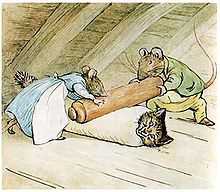
Mr Samuel Whiskers  and Anna-Marie stitch Tom Kitten up a treat in

The Roly-Poly by Beatrix Potter


If you like the blogs and podcast I produce, please consider treating me to a virtual coffee or pint, or even a £3 monthly subscription: follow this link for more information.


Going back almost 200 years I have found recipes for puddings that take two distinct forms. In The Good Housewife’s Jewel from 1596, Thomas Dalton gives recipes for familiar puddings like black pudding and haggis, but he also gives recipes for puddings that are baked, such as the ‘pudding of a calves chaldron’ or the ‘pudding in a pot’. He also makes reference to making puddings in the bellies of animals such as coney and carp. It is interesting that none of the puddings are desserts, though they do contain many spices such as cloves, mace and ginger as well as dried fruits such as currants, plus sugar. They must have been very expensive to make in the late sixteenth century – to give some perspective in 1596 Elizabeth I was on the throne and the first production of The Merchant of Venice was put on at The Globe theatre. Back in the day there was no such thing as a first course, a second course and so on, at least how we know them; everything was just sent out together. So having sweetly spiced meat puddings would not have seemed strange. We don’t eat food like that anymore, except for the single survivor of this branch of the puddings – the Christmas Pudding.

[See this future post, however, for a correction]

The earliest description of the word pudding I could find is in the Bibliotheca scholastica from 1589. There is no real definition here, but examples of puddings and things associated with them. They all seem to be the kind made by stuffing intestines with various fillings. There are some interesting terms though: there was a pudding only eaten at funerals called a murtatum that was flavoured with myrtle berries, and a pudding-maker was called a silicernium.

In fact the earliest puddings do seem to be essentially sausages, so it seems our friends Messrs Gordon and Carey were probably incorrect. Though they were right about one thing: the pudding is certainly a British invention that was developed from the sausages the Romans brought into the country in the first century BC. The word pudding comes from the Latin word botellus, which means literally sausage; the French word boudin has the same root.

So there you go, a pudding was originally a boiled sausage, but selection throughout time has evolved them radially into a huge range of foods, both sweet and savoury and as far as I know, there isn’t a single one I don’t like. Usually I try to give an exhaustive list of dishes, but the list would probably go on for ever if I use the word pudding in its broad sense; therefore I’m just going to list the kind that I consider the true puddings, i.e. the boiled or steamed ones. Hopefully I’ll provide the histories and recipes for them. Of course, if I have missed any puddings out please let me know. I’m sure there are some glaringly obvious ones that I have forgotten. Okay, here we go:

Those boiled in intestines:

Black pudding

White pudding

Haggis

Those that are steamed in a basin and are savoury:

Steak, kidney and oyster pudding

Minted lamb pudding

Pork and apple pudding

Leek and onion pudding

Mutton, apple and raisin roly-poly

Mussel and leek roly-poly

Pease pudding

Those that are steamed in a basin and are for afters:

Christmas pudding

Jam roly-poly

Spotted Dick

Sussex pond pudding

Steamed sponge pudding

Sticky toffee pudding

48 Comments

Filed under food, history, Puddings