Tag Archives: festivals & celebrations

Lambswool

Merry Christmas everyone!

It’s time for my annual Yuletide boozy drink post. This year: lambswool, a drink very much associated with the Wassail on Twelfth Night (the night before Epiphany, 6 January, and the last day of Christmastide). It has been drunk since at least Tudor times – I cannot find any descriptions prior to the late 16th century. It’s a type of mulled ale, and this description by Robert Herrick in his poem Twelfth Night: Or King and Queen (1648) is a very good one:

Next crowne the lowle full
with gentle lamb’s wool;
Adde sugar, nutmeg and ginger;
with a store of ale too;
and thus ye must doe
to make the wassaille a swinger.[1]

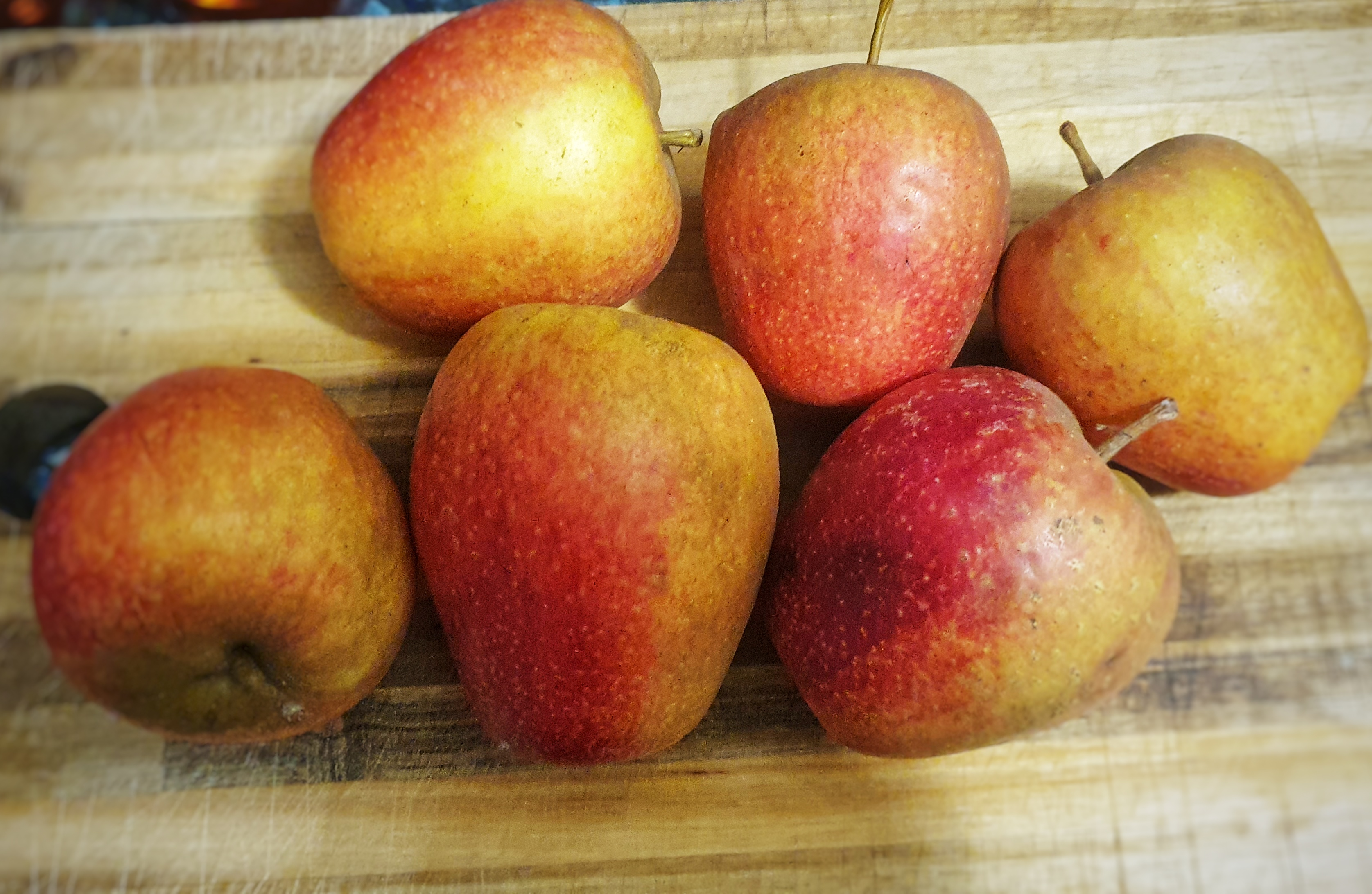
What Henrick doesn’t tell us is that there is cooked apple floating on the top which break apart, hence the name lambswool. These apples are, in the early modern period, generally roasted crab apples, so very sour in flavour, though in later recipes such as the lambswool described by Peter Brears in Traditional Food in Yorkshire, made in Otley, West Yorkshire in 1901, dessert apples are used. They were cored and cooked and floated in the drink, then fished out and eaten separately.[2] Spiced cakes and mince pies were also eaten.[3]

Have a fantastic Christmas – all TWELVE days of it!

Many drinks were laced with rum or brandy and often enriched with eggs, cream or both,[4] such as this one here for ‘Royal Lamb’s Wool’, dated 1633: ‘Boil three pints of ale; – beat six eggs, the whites and yolks together; set both to the fire in a pewter pot; add roasted apples, sugar, beaten nutmegs, cloves and ginger; and, being well brewed, drink it while hot.’[5] Before the lambswool was poured into the Wassail cup sliced of well-toasted bread sat at the bottom. With the apple floating on top, this was basically a full meal. Nice and full, it was then passed around, everyone taking a sup from the communal bowl. I prefer to ladle it into separate glasses or mugs – and I am sure my guests would be pleased with this decision.

Lambswool drinking was not restricted to Twelfth Night, or even Christmastide, as this entry from Samuel Pepys’ diary dated the 9th of November 1666 informs us: ‘Being come home [from an evening of dancing], we to cards, till two in the morning, and drinking lamb’s-wool. So to bed.’[6]


If you like the blogs and podcast I produce, please consider treating me to a virtual coffee or pint, or even a £3 monthly subscription: follow this link for more information.


Recipe

I have to admit, I was unsure about the lambswool, but it was delicious. I think that it should come back, and it is certainly much, much nicer than bought mulled wine. Recipes don’t necessarily specify the type of sugar, but I think light brown sugar really complements the maltiness of the beer well.

A note on the beer: trendy IPAs and other craft beers are far too hoppy for this recipe – I think there’s a flavour clash, so make sure you go for a low-hop traditional brown ale. I used Old Speckled Hen (which is available to buy gluten-free, by the way). The best – and, dare I say it – most authentic choice would be an unhopped ale, but I have never come across one! Add cream and eggs if you think it matches your own tastes: I have to admit that as an eating/drinking experience, the creamy texture worked better with the pureed apple than the version without.

I used dessert apples for the wool, but you can use crap apples if you want to be true to the early modern period, or Bramley’s Seedlings, which do have the benefit of breaking down to a nice fluff. I discovered that it’s very difficult to get your apples to float on top, but this is not of great importance. Sam Bilton has an ingenious way of getting her apple puree to float though, and that is to fold a whipped egg white into the cooked apple puree.[7]

Makes 6 to 8 servings

6 small to medium-sized dessert apples

Caster sugar to taste (optional)

2 x 500 ml bottles of brown ale

120 – 140 g soft dark brown sugar

2 cinnamon sticks

8 cloves

1 tsp ground ginger

120 ml dark rum or brandy

4 eggs (optional)

300 ml cream (any kind will do; optional)

To serve: freshly-grated nutmeg

Start by making the apple purée: peel, core and chop the apples and place in a small saucepan with a few tablespoons of water, cover, turn the heat to medium, and cook until soft. If the apples don’t break down naturally, use the back of a wooden spoon. Add caster sugar to taste – if any is needed at all.

Whilst the apples are cooking down, pour the beer into a saucepan, add 120 g of soft dark brown sugar if making the non-creamy/eggy version, or add 140 g if you’re intrigued by it! Snap the cinnamon sticks and chuck those in along with the other spices. Turn the heat to medium and let it all get nice and steaming-hot; you don’t want it to boil, otherwise you’ll lose a lot of the alcohol. Leave for 10 minutes so the spices can infuse, then add the rum or brandy. Let it come back up to heat for another five minutes. If you don’t want to make the custardy version, the lambswool is ready, and it can be ladled out into glasses or mugs and top with a couple of spoons of the warm apple purée and a few raspings of freshly-grated nutmeg.

For the custardy version: after you add the brandy or rum, whisk the eggs and cream in a bowl, take the lambswool off the heat, and pour three or four ladlefuls of it into the cream and egg mixture, whisking all the time. Now whisk this mixture into the lambswool, and stir over a medium-low heat until it thickens. If you want to use a thermometer to help you, you are looking to reach a temperature of 80°C. Pass the whole lot through a sieve and into a clean pan, and serve as above.


Notes

[1] Herrick, Robert. Works of Robert Herrick. vol II. Alfred Pollard, ed., London, Lawrence & Bullen, 1891.

[2] Brears, P. (2014) Traditional Food in Yorkshire. Prospect Books.

[3] Brears (2014); Crosby, J. (2023) Apples and Orchards since the Eighteenth Century: Material Innovation and Cultural Tradition. Bloomsbury.

[4] Hole, C. (1976) British Folk Customs. Hutchinson Publishing Ltd.

[5] Though quoted in many places, I could not find the source of this recipe – but the reigning monarch was Charles I

[6] Diary entries from November 1666, The Diary of Samuel Pepys website https://www.pepysdiary.com/diary/1666/11/.

[7] Bilton, S. (2025) Much Ado About Cooking: Delicious Shakespearean Feasts for Every Occasion. Hachette UK.

Leave a comment

Filed under Christmas, cooking, events, Festivals, food, Fruit, General, history, Recipes

Subversive Feasting in Medieval King & Commoner Tales with Mark Truesdale

My guest on The British Food History Podcast today is historian Mark Truesdale, scholar of the fifteenth-century King and Commoner tradition and its early modern afterlife and author of The King and Commoner Tradition: Carnivalesque Politics in Medieval and Early Modern Literature, published by Routledge.

We talk about medieval carnival, the plot of a king and commoner tale, spying foresters, rude monks, the love of eating tiny birds, who the audience might be, and the ridiculousness of baking a venison pasty in Sherwood Forest – amongst many other things.

The British Food History Podcast is available on all podcast apps, YouTube, and can be streamed here via this Spotify embed:

Those listening to the secret podcast can hear about Henry VIII’s love of Robin Hood tales, cowardly herons, and Mark tells me who the king in these tales may (or may not) be referring to.

Remember: Fruit Pig are sponsoring the 9th season of the podcast, and Grant and Matthew are very kindly giving listeners to the podcast a unique special offer 10% off your order until the end of October 2025 – use the offer code Foodhis in the checkout at their online shop, www.fruitpig.co.uk.


If you can, support the podcast and blogs by becoming a £3 monthly subscriber, and unlock lots of premium content, including bonus blog posts and recipes, access to the easter eggs and the secret podcast, or treat me to a one-off virtual pint or coffee: click here.


This episode was mixed and engineered by Thomas Ntinas of the Delicious Legacy podcast.

Things mentioned in today’s episode

The King and Commoner Tradition: Carnivalesque Politics in Medieval and Early Modern Literature by Mark Truesdale

Mark’s article The Medieval Robin Hood: Folk Carnivals and Ballads on Folklore Thursday

My blog post about King Alfred burning the cakes

The Great Household in Late Medieval England by C.M. Woolgar

Robin Hood and Other Outlaw Tales

Sentimental and Humorous Romances

Ten Bourdes

Serve it Forth website – You can still receive 25% off the ticket price using the code SERVE25 at the checkout!

Serve it Forth Eventbrite page

Previous pertinent podcast episodes

Medieval Meals & Manners with Danièle Cybulskie

Neil’s blogs and YouTube channel

‘British Food: a History’

The British Food History Channel

‘Neil Cooks Grigson’

Neil’s books

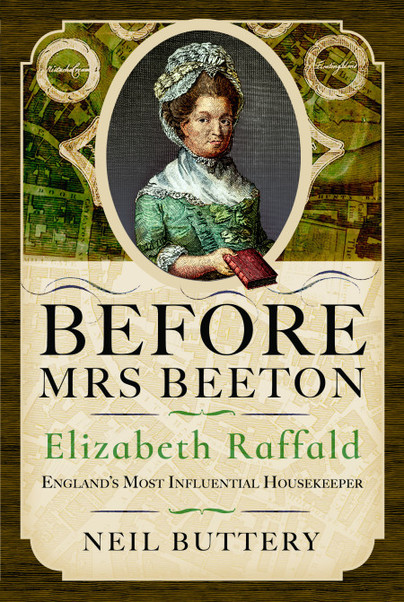
Before Mrs Beeton: Elizabeth Raffald, England’s Most Influential Housekeeper

A Dark History of Sugar

Knead to Know: a History of Baking

The Philosophy of Puddings

Don’t forget, there will be postbag episodes in the future, so if you have any questions or queries about today’s episode, or indeed any episode, or have a question about the history of British food please email me at neil@britishfoodhistory.com, or leave a comment, below.

Leave a comment

Filed under food, Game, General, history, Mediaeval Age

BONUS PODCAST EPISODE: Serve it Forth Food History Festival Special!

Hello there everyone!

Here’s a quick special bonus episode of the podcast for you – the lowdown on the Serve it Forth Food History Festival 2025, sponsored by the excellent Netherton Foundry. It’s available on all podcast apps, but if you like, listen via this Spotify embed:

My fellow festival coordinators Sam Bilton, Thomas Ntinas and Alessandra Pino and I are here to tell you more about it: how the day will work, what the sessions will be like, the topics and the guests – including my guest Tom Parker Bowles.

We have a brief discussion about our own interests and how we all got into food history. We also talk about our biggest/most embarrassing disasters.

Most important headlines are: it’s online on 18 October. It’s £16, but there’s 25% off ticket price until September 14th. Don’t worry if you miss some, or even all of the day, we will be making every recording available to all ticket holders.


NB: If you want to get 25% off the ticket price after the early bird has finished, use the offer code SERVE25 at the Eventbrite checkout.

Serve it Forth website

The Serve it Forth Eventbrite page


Leave a comment

Filed under Festivals, food, General, history, Uncategorized

Serve it Forth Food History Festival 18 October 2025
Tickets are now available for the inaugural Serve it Forth Food History Festival, sponsored by the excellent Netherton Foundry, on Saturday 18 October.
Tickets are available via Eventbrite. They are £16, but there is an early bird special of 25% off the ticket price until 14 September, so be quick!

The day is being sponsored by Netherton Foundry

I have teamed up with fellow food historians Sam Bilton, Thomas Ntinas and Alessandra Pino to bring you this new food history festival. It’s online – though in future years we hope to be able to do it as an in-person event – and it’s on 18 October 2025. One benefit of it being online of course is that anyone can come. If you cannot make the whole day, don’t worry all ticket holders will be sent links to recordings of each event.

Your hosts for the day (L to R): Sam Bilton, Alessandra Pino, Neil Buttery and Thomas Ntinas

We are all hosting a session, and I am kicking off the day in conversation with a very special guest, Tom Parker Bowles, about his love of traditional and classic British cooking and how we can keep it alive and relevant today. We’ll also be taking a peek at the food cooked and enjoyed by British Monarchs, from Queen Victoria to Charles III.

My guest will be none other than Tom Parker Bowles

Thomas Ntinas will be presenting A Life of Luxury: The famous chefs of the Ancient Greek world. Dr Alessandra Pino The River Remembers: A Journey Through London’s Lost Larder. Sam Bilton’s section is entitled Gourmand or Glutton? Feeding Falstaff.

There will also be food demos and short interviews in between sessions. The day begins at 10.30 am and finishes at 4.30 pm click this link to see a full breakdown of the day.

We’re all really excited about this event, and we would love it if you can join us for the first of (hopefully) many more Serve it Forth food history festivals in the future!

Leave a comment

Filed under Festivals, food, General, history, Uncategorized

Recipe: Brussels Sprouts with Bacon and Prunes

Subscribe to get access

This post and it’s accompanying podcast episode are for £3 monthly subscribers. If you would like to become a subscriber and access this post and all the other premium content on the blog click this link.

As a £3 monthly subscriber you get access to my Easter eggs page, special premium blog content, receive a monthly newsletter, and – most importantly – you support the running of my podcast and blog.

1 Comment

Filed under Britain, Christmas, cooking, Festivals, food, General, Recipes, Uncategorized

Roast Turkey and Giblet Gravy

A very bronzed roast Copas turkey: butter is the only way to get this deep, delicious colour.

This blog post complements the recent episode of The British Food History Podcast called Turkey with Tom Copas.

If you feel inspired to order a Copas turkey, you need to get your order in by 16 December to avoid disappointment.

In the episode, we discussed the best way to roast turkey and we concluded that as long as you baste the bird and calculate the cooking time properly, it will be delicious. Tom even says that there’s no need to cover the turkey with bacon. While I agree with him, I do like the crispy bacon and the delicious, perfectly seasoned juices that come from the roasting turkey. My way of roasting turkey is very similar to how I cook a chicken.

What we didn’t discuss is the giblets! Please don’t waste them, they can be turned into lovely rich gravy when combined with the roasting juices. It’s important to get the giblet stock on about 45 minutes before the turkey goes in the oven (or you could prepare it in advance).

If you want to stuff the turkey, I suggest you stuff the neck only because an empty cavity means quicker cooking and a more succulent turkey.

Right, let’s get to it.


If you like the blogs and podcast I produce and would to start a £3 monthly subscription, or would like to treat me to virtual coffee or pint: follow this link for more information. Thank you.


To Roast a Turkey

You don’t have to use bacon if you don’t want to, but butter is essential. It adds richness, helps the bird keep moist and gives the skin a lovely deep brown colour.

1 free-range turkey

250 g salted butter, softened

Freshly ground black pepper

Around 14 rashers of dry-cured streaky bacon (optional)

Stuffing (optional)

Halved or quartered carrots and parsnips (optional; see recipe)

As soon as you get up on Christmas morning, take the turkey out of the fridge, untruss it, and when it’s time to cook the turkey, preheat your oven to 190°C.

Sit the turkey on a board, legs facing towards you, then make a tear in the skin where the breast starts and lift the skin away from the breast. Don’t rush – you don’t want to tear the skin. Put half the butter between the skin and breast and massage it as far back as possible. If you are using stuffing, add this under the skin too and tuck the flap of neck skin underneath. If there’s not much neck skin, don’t worry, it can be secured with a skewer.

Smear the rest of the butter over the outside of the turkey and season with plenty of black pepper, then lay the bacon over, overlapping each rasher only slightly.

Weigh the prepared turkey and calculate the cooking time: 30 minutes per kilo. A 4.5 kilo turkey will take 2 ½ hours. If cooking for more than 3 hours, cover the legs with foil.

Sit the turkey in its roasting tin, place it in the oven, and leave it for a good 45 minutes before doing anything at all. At the 45-minute mark baste the turkey with any juices; make sure to tip any juices in the cavity into the roasting tin.

Baste every 20 minutes or so. When the bacon is very crispy, remove it and set aside.

If you like you can add some carrots and parsnips, peeled and halved or quartered to braise in the juices. It’s best to do this when there are 90 minutes to go – don’t forget to turn the veg over each time you braise.

90 minutes to go, the bacon has been removed and the vegetables added to braise

When the time is up, you can test with a digital probe: 68°C is the temperature you are looking for. Take the turkey, place it on a carving board and cover with foil. It will happily rest for one to two hours.

When it’s time to carve, remove the legs and separate them into thighs and drumsticks. For the breast, I find the easiest way is to remove one side completely and then slice it thickly. These can be arranged on a warm serving plate, surrounded by the crisp bacon. Only cut into the second breast if the first one goes (it keeps better that way for leftover feasts).

I massaged the stuffing quite far into the turkey’s breast skin, protecting the meat and keeping it juicy

To Make Giblet Gravy

Don’t waste or fear the giblets! The giblets are the heart, neck, gizzard and liver.[1] Use your vegetable trimmings from the veg to make the stock: though avoid brassicas like sprouts.

For the stock:

Heart, gizzard and neck

A knob of butter

Leek greens, carrot peelings, and some celery trimmings, or 2 outer stems of celery

2 cloves of garlic, lightly crushed

Herbs: bay leaves, parsley stalks, rosemary or thyme sprig tied with string

175 ml white wine

Cold water

For the gravy

Giblet stock

Pan of turkey juices

1 tbs cornflour

To make the stock, first cut up the giblets into quarters.

In a saucepan, heat the butter until foaming, add the giblets and fry over a medium-high heat until brown – about 5 minutes. Now add the vegetable trimmings, garlic and herbs and wilt them. Cook until they have picked up a tinge of brown, then add the wine. Stir and scrape any nice burnt bits from the bottom. Add water to just cover the contents, put a lid on and bring to a simmer and cook for around 3 hours, then strain through a sieve into a clean pan (or into a tub if you’re making it in advance).

When it’s time to make the gravy, get the stock nice and hot. When the turkey is cooked and is resting on its board, pour the hot stock into the roasting tin and scrape off all the nice treacly burnt bits, then tip the whole thing back into your saucepan. Skim away most of the buttery juices.[2] Bring to a simmer and then add the cornflour which has been first slaked in a little cold water. Stir and simmer unlidded for 10 minutes.

Check the seasoning, though usually I find that the bacon and the salted butter from roasting the turkey have done it for me. Pour the gravy into a jug. You can pass it through a sieve, but I never do. Easy!


[1] Use the liver for the stuffing, or fry it and eat it on toast. You could devil it – recipe for devilling livers can be found here.

[2] But don’t throw the fat away, it can be used for frying vegetables for sauces or soup.

6 Comments

Filed under Britain, Christmas, cooking, Festivals, food, General, history, Meat, Recipes

Happy New Year!

Happy New Year everyone! I’m only a little worse for wear after a night out in the bustling metropolis that is Levenshulme, South Manchester. Going out didn’t mean I negated on cooking up my annual New Year’s Eve pudding though: this year it was plum pudding (it is still Christmas remember!) which did a great job of lining my stomach. The recipe was of course the one I picked up last year, courtesy of Sam Bilton’s Great Aunt Eliza.

Well what a year it has been with regard to my writing: I wrote a few articles for Country Life (you can read them on my Media page), and my second book Before Mrs Beeton – a biography of food innovator and entrepreneur Elizabeth Raffald – came out in March and it seems to have gone down well. The big news was my previous book, A Dark History of Sugar, won the Best First Book Award at the Guild of Food Writer’s Awards 2023; little old me! Completely unexpected, but very pleased as I’m sure you can imagine.

The blog has continued to do well, receiving more views in 2023 than in any other year, and the podcast has gone from strength to strength; according to Spotify, my listenership has increased by 125%.

I wouldn’t have been able to do all of this without you all reading and commenting, listening and downloading. It is you who spurn me on to keep on making more content, so thank you all very, very much.

A special shout out too to everyone who supported the blogs and podcast financially by treating me to a virtual coffee or pint, or by becoming a £3 monthly subscriber. It’s becoming increasingly more expensive just to have podcasts and blogs these days, so I really appreciate it.


If you like the blogs and podcast I produce and would to start a £3 monthly subscription, or would like to treat me to virtual coffee or pint: follow this link for more information. Thank you.


There has been a variety of posts on the blog this year. There were some classic recipes including a step-by-step guide to making steamed sponge puddings, English butter sauce, malt loaf, sago pudding (needs reappraisal in my humble opinion), barley water and roast venison. Of course, there were some unusual recipes gleaned from Britain’s gastronomic past: those delicious teatime treats called Wigs, Elizabeth Raffald’s flummery table decorations, dock pudding, sweet lamb pie, Edward Kidder’s curiously shaped mince pies and, er, porpoise.

The other blog, Neil Cooks Grigson, has very much slowed down as I inch toward the completion of the project, and I only managed to cook one recipe for it. It was a good one though: #446 Lincolnshire Chine. It was the last recipe in the Cured Meat section of the book, so I wrote a little review of it. Many recipes from this section made it into both my personal and professional repertoires.

There were some great podcast episodes published too: 19 in all, the most I have made in a single year, taking the number of episodes up to 49! The most popular episode was 18th Century Dining with Ivan Day. Other favourites included London’s Street Food Sellers with Charlie Taverner, Invalid Cookery with Lindsay Middleton, Tavern Cookery with Marc Meltonville and Tudor Cooking and Cuisine with Brigitte Webster. I also collaborated with Sam Bilton of the Comfortably Hungry podcast about tripe. Season 7 kicked off in December with an episode about mince pies and another collaboration this time with Thomas Ntinas of the Delicious Legacy podcast about 18th-century women cookery book writers.

18th Century Dining with Ivan Day was the most popular episode of the podcast in 2023.

So, that’s the look back, and now it is time to look forward to the new year and to what it will bring. New podcast episodes are being lined up and the next episode will be out on 5 January (all things being well). I have two book deadlines this year, so I shall tell you about those as and when I can, and I will – of course – be continuing to write posts for the blogs (though January and February may be a little sparse – those deadlines are looming!)

I hope you have a great rest of Christmas. Remember it doesn’t finish until the 5th of January, so keep eating, drinking and making merry up to then, and beyond.

Thanks again for all of your support,

Neil x

Leave a comment

Filed under Blogs, Britain, food, General, history, Podcast, Uncategorized

Three live in-person September events

Hello everyone, a quick message for any readers in, or around, Manchester, Ludlow and Chelsea this September because I am taking part in events in all of these places, and I thought you might be interested in attending:

I’ll be speaking at Manchester Central Library about Elizabeth Raffald. The event is called ‘Elizabeth Raffald – England’s Most Influential Housekeeper’, and not only will folk hear a talk about Elizabeth, but the library with be showing items from their Elizabeth Raffald archives – so something not be missed! The event is on 13 September 2023 at 6pm. Tickets are free but you do need to book. Click this link to book a ticket.

I will be at Ludlow Food Festival talking about Elizabeth Raffald, her achievements and her legacy. The talk is on 10 September at 2.30pm For more information, and to book a ticket, click on this link.

I am talking at Chelsea History Festival on the dark history of sugar on 29 September at 6pm. Tickets are £10/£8. Click here for more information to buy tickets.

I will also be selling and signing copies of my books, A Dark History of Sugar and Before Mrs Beeton: Elizabeth Raffald, England’s Most Influential Housekeeper.

I do hope that you can come to one of these events – if you do, please and say hello!

Leave a comment

Filed under Festivals, General, history, Uncategorized

Black bun (Scotch Bun) Part 2: Recipe

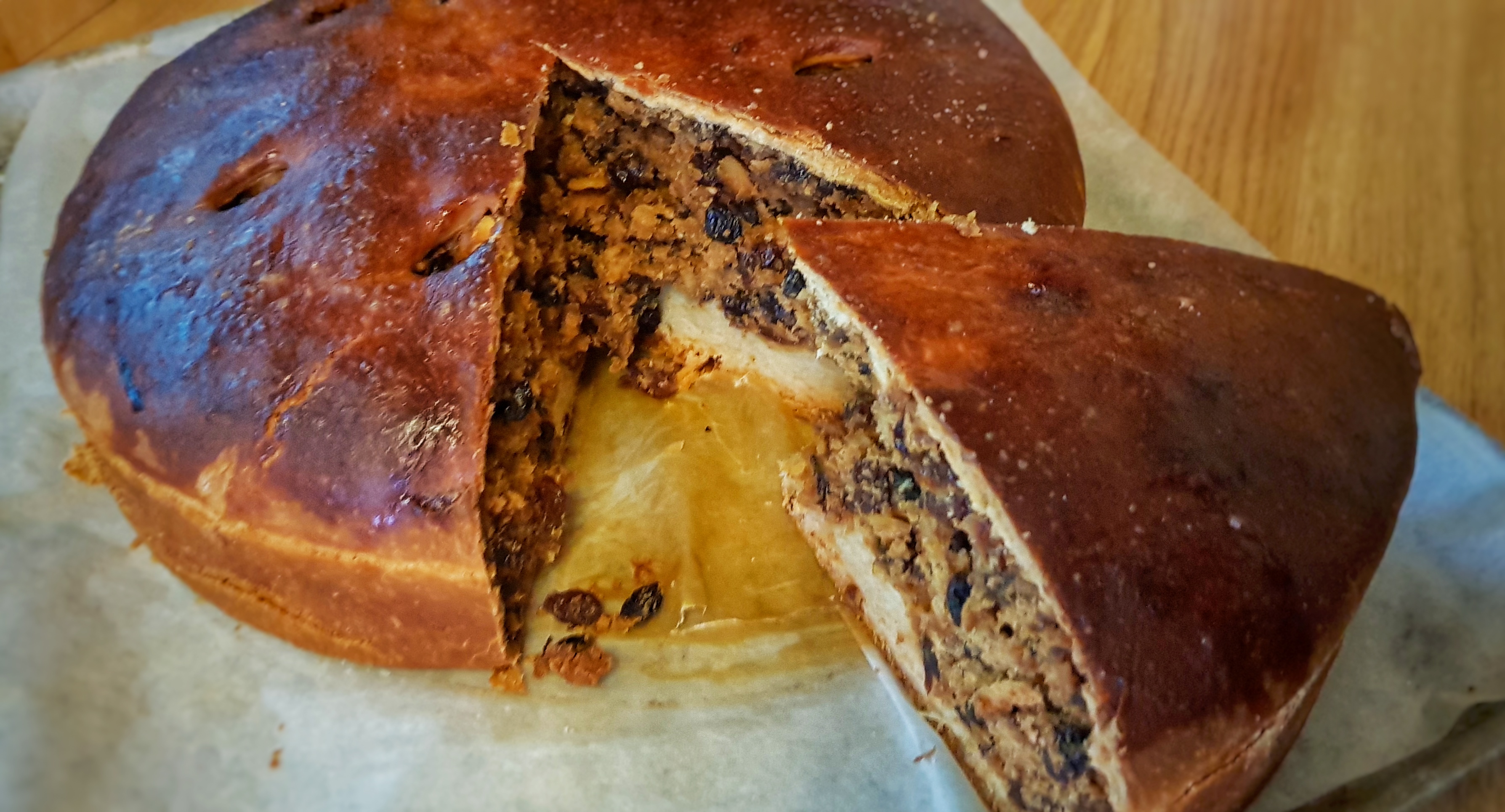
My traditional yeast-leavened black bun

As promised, and carrying on from my last post, here is my recipe for the traditional yeast leavened black bun (Scotch bun). I must say I was really surprised with how well it turned out: it was enriched with so much stuff and was so huge, I thought the poor little yeast cells wouldn’t be able to do their job. I was wrong, but it did take two days to do two provings required before baking.

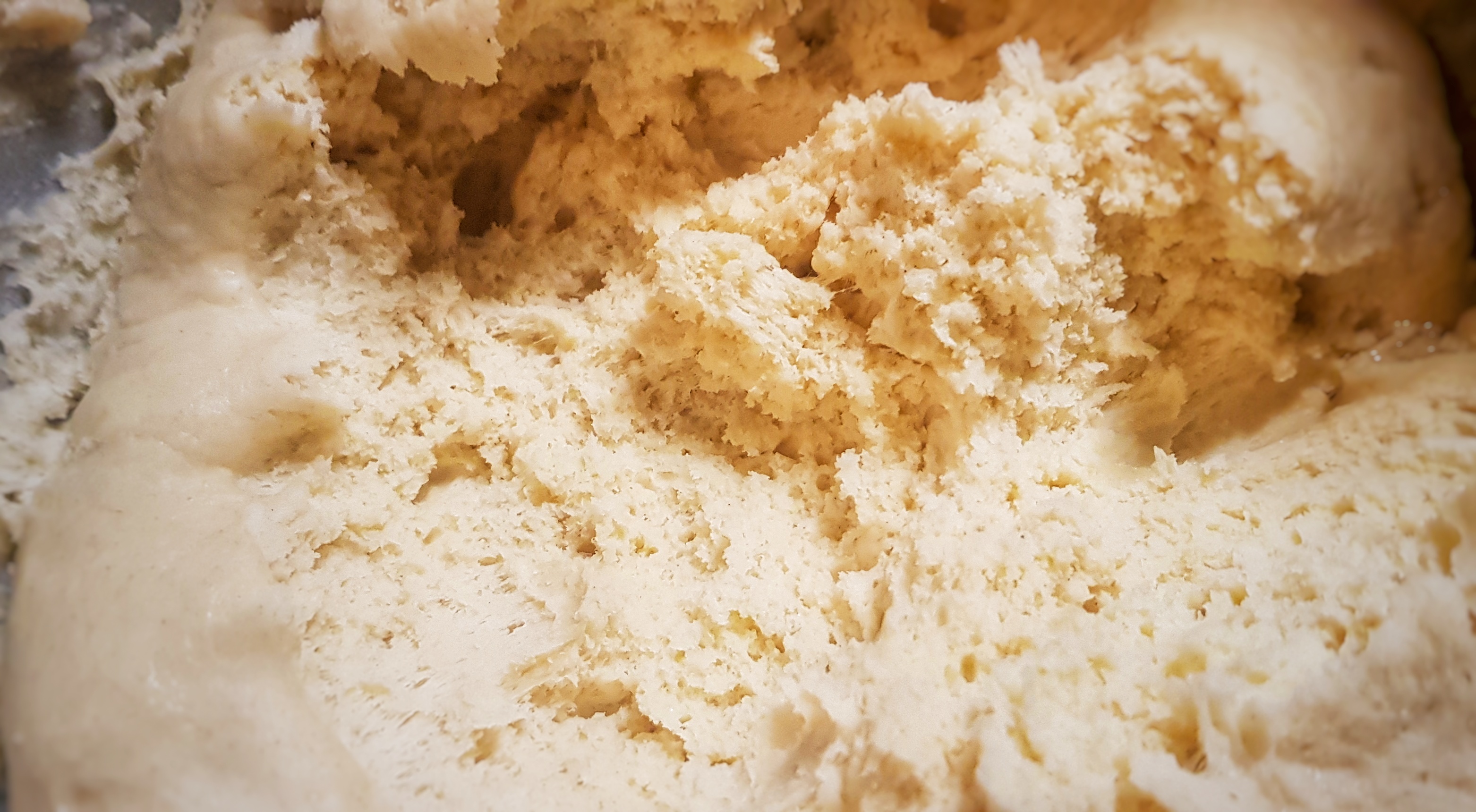
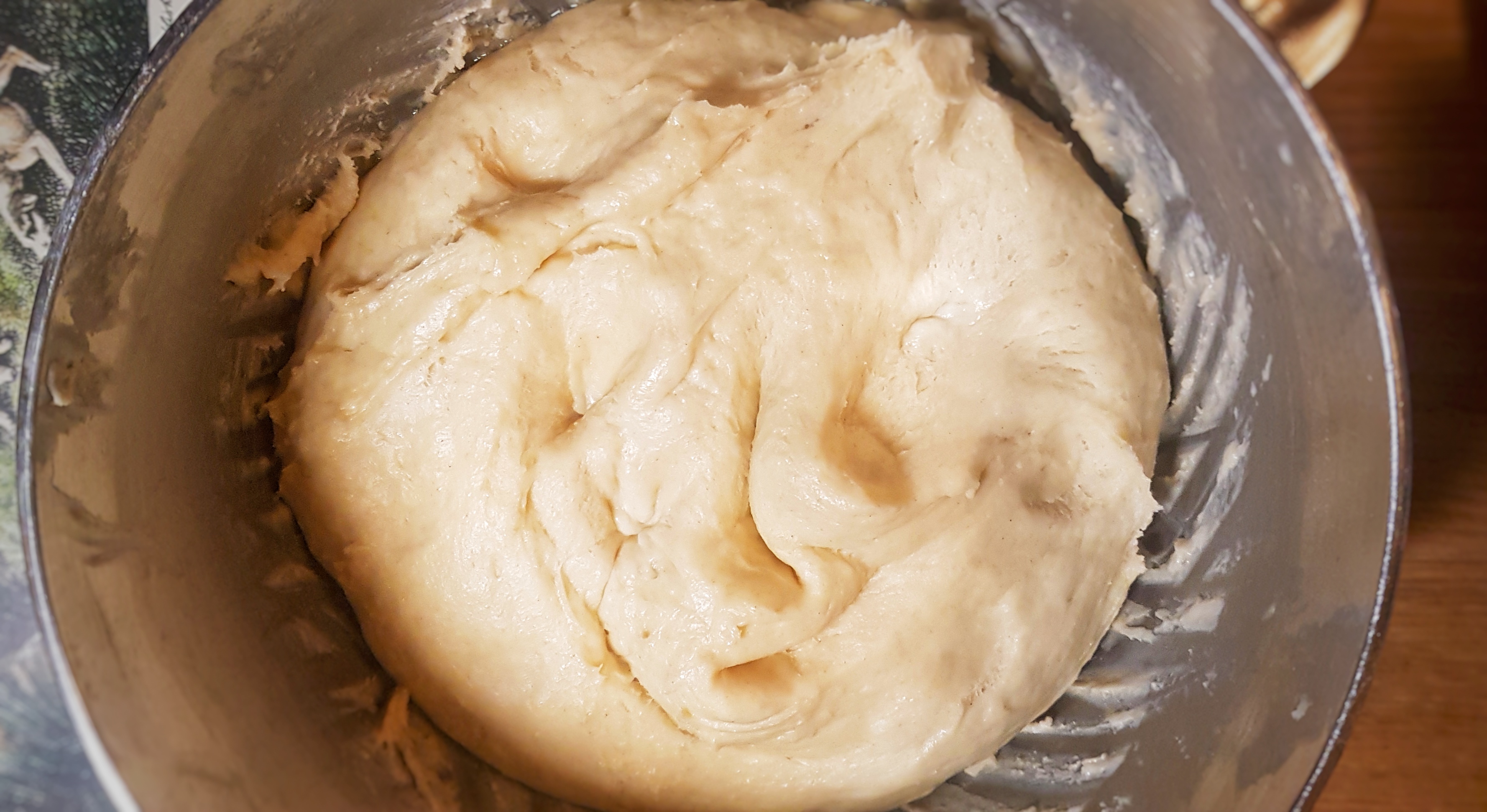
The white dough is essentially a sweet brioche made without eggs. When it was time to knock it back after its first rising, I was encouraged by the network of small yeasty bubbles that had formed inside the dough.

The tiny bubbles in my enriched basic dough

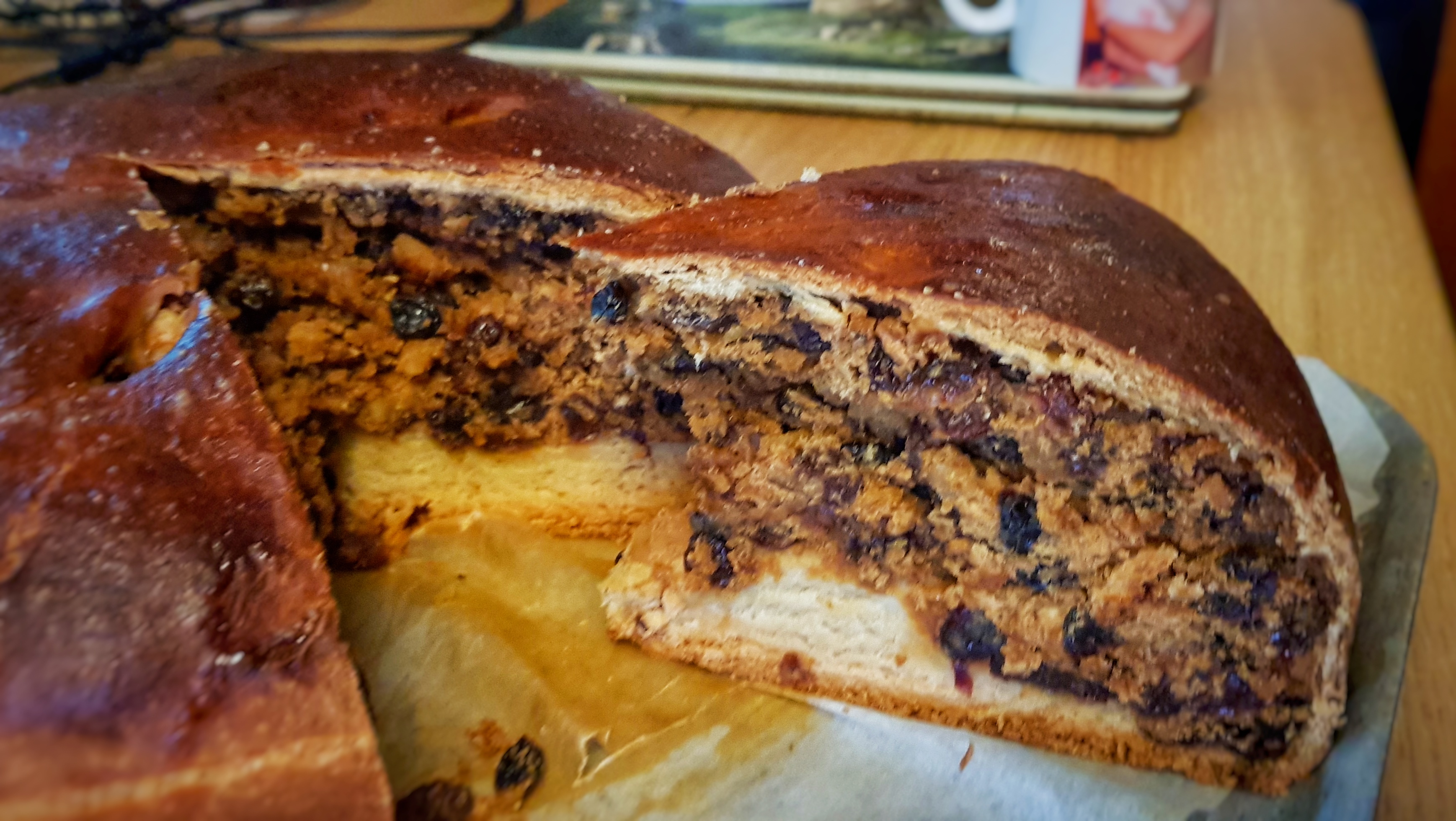
The bun was huge and made quite the centrepiece (though if you wanted to reduce the quantities and make a smaller one, go ahead). The cake inside was deliciously moist, and the brioche dough wonderfully buttery and thin and in such contrast with the treacle-black centre.


If you like the blogs and podcast I produce and would to start a £3 monthly subscription, or would like to treat me to virtual coffee or pint: follow this link for more information. Thank you.


It may have been big, but it kept well and was perfectly delicious well over a week after baking.

For the basic dough:

450 g plain white flour

450 g strong white bread flour

160 g caster sugar

10 g dried fast-action yeast

20 g salt

160 g softened butter

400 ml hand-hot full-fat milk

A smidge of flavourless oil

For the centre:

750 g basic dough

100 ml black treacle

400 g currants

400 g raisins

100 g candied peel

100 g slivered almonds

1 tsp mixed spice

½ tsp each ground cinnamon and allspice

2 eggs, plus 1 more for glazing

Butter for greasing

Granulated sugar

Two days before you want to bake your black bun, in the evening, make the basic dough. This is best done with an electric mixer, however don’t let me stop you attempting this by hand. Mix the dry ingredients – flours, yeast, sugar and salt – in your mixing bowl, make a well and add the butter and milk. Mix slowly with a dough hook until everything is mixed together, then turn the speed up a little and knead until smooth. Because it’s a low-gluten mixture and there’s all of that butter and sugar, it won’t be very elastic, but when it’s really smooth, you are done. It should take 8 to 10 minutes.

Paint the inside of a bowl with oil, then bundle up the sticky dough as best you can and cover with cling film. Leave to prove until around double in size. This took 18 hours: I use a low amount of yeast on purpose that the yeast ferments slowly. It may take less time for you if you used more yeast, and if your home is warmer than mine.

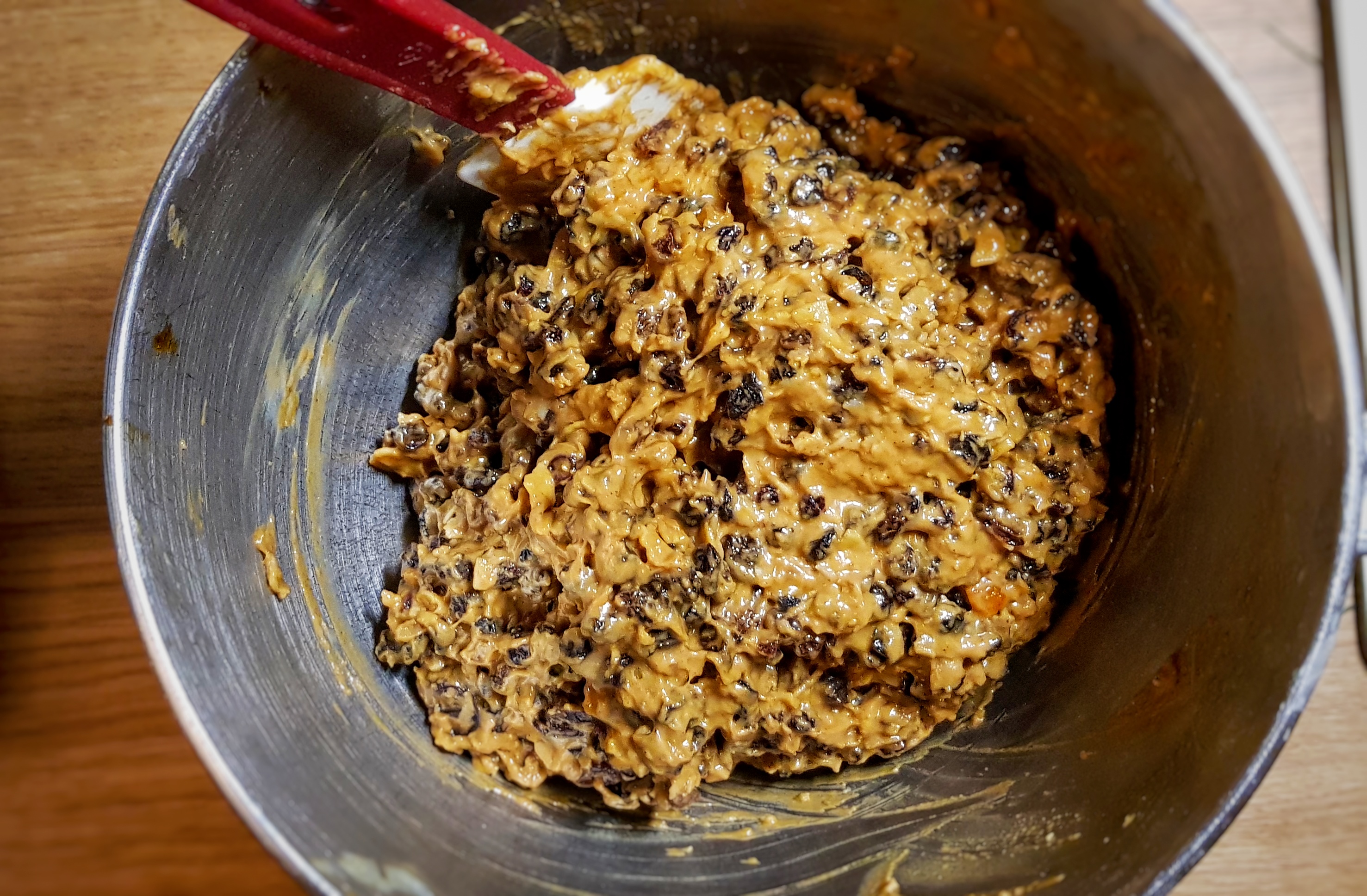
Knock back the dough and place 750 g of the dough in your food mixer, then add the treacle, dried fruits, candied peel, almonds, spices and eggs. Mix with a flat beater for a couple of minutes until everything looks smooth and like a Christmas cake batter. Set aside.

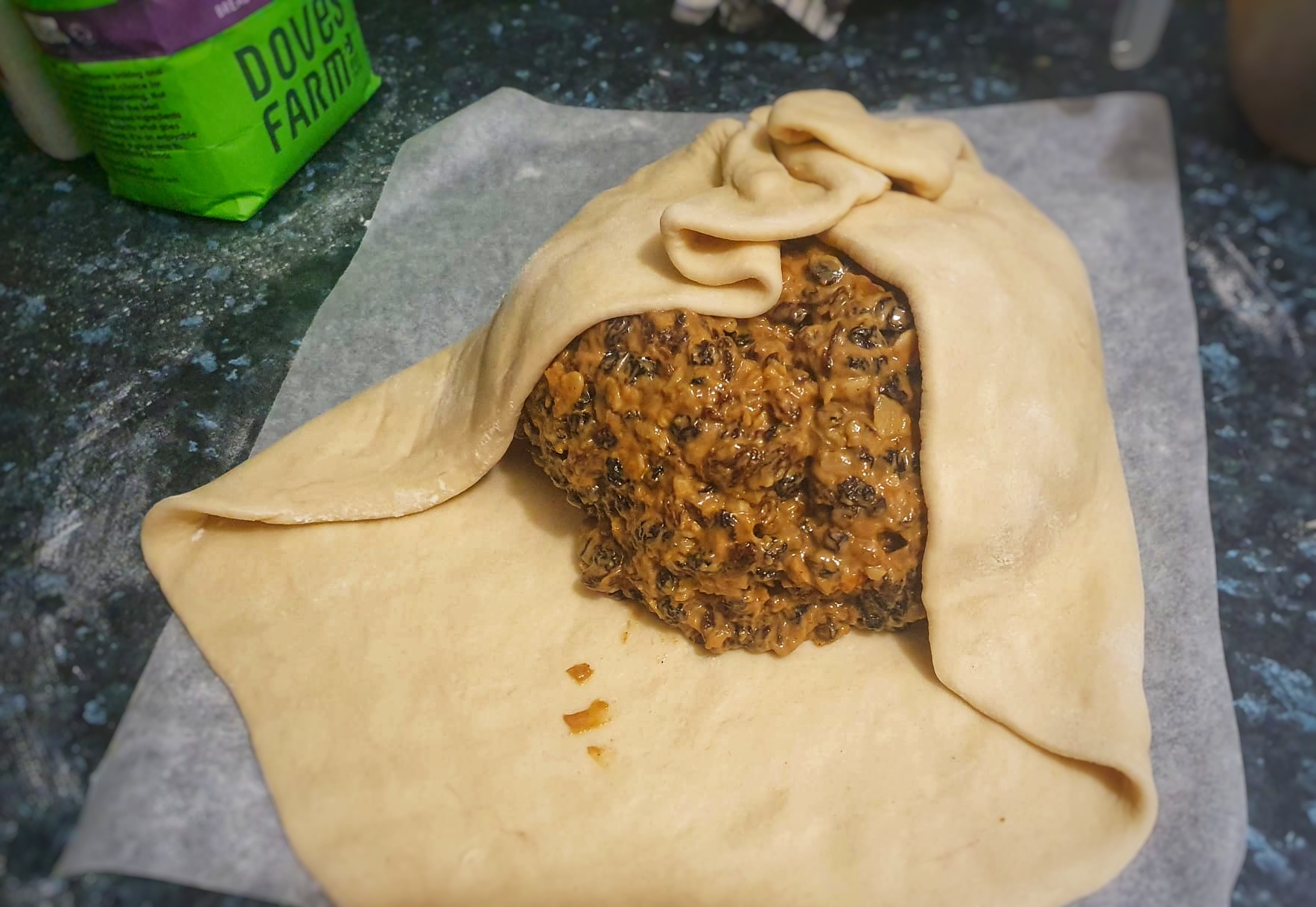
Take the remaining dough, form into a ball, place on a floured work surface and roll out into a large circle 32-35 cm in diameter. Make sure your pin is floured too; this will prevent sticking. With slightly wet hands, scoop the dark sticky dough and pop it in the centre of your circle. Now gather the dough so that the centre is completely covered – rather like a giant Eccles cake.

Cut away bits of the dough that have bunched up too much and glue any edges with a thin coat of beaten egg. Don’t worry if it looks a bit messy. Turn the bun over and flatten it with your hands, smoothing away any bulging bits to make a nice round shape.

Now liberally grease a 25 cm flan ring with butter and place on a baking sheet lined with greaseproof paper and then dusted with flour, and place the bun in the centre. Press the bun or lightly roll it with your rolling pin so that is just a centimetre off from touching the edge. Paint the top with egg and scatter over a little granulated sugar, then stab holes in the top with a thin, pointed knife right down to its base – this keeps it flat as it rises. Cover with a large plastic bag[1] and allow to prove until it has grown large enough to fill the ring. For me, this took 12 hours.

Preheat your oven to 175°C and place a heatproof tin on the bottom of the oven. When it’s time to bake the bun boil the kettle, then open the oven and slide your bun onto the middle shelf, gingerly slide the tin out enough so that you can pour in the hot water, slide it back in and close the door.

Bake at this temperature for an hour, then turn the heat down to 140°C and bake for a further 2½ hours. If the top is getting too brown, cover it with some kitchen foil.

Remove from the oven, and slide onto a cooling rack. Remove the ring when the bun is just warm.

The black bun will keep for weeks in an airtight box or tub. It is delicious eaten with sharp cheese.


Notes:

[1] I find a supermarket ‘bag for life’ is best for this task. I have one that I use only for proving things like this. Turn it over and turn up the edges, as you would your trousers to make it a sturdy shape and hey presto!

2 Comments

Filed under baking, bread, Britain, cake, Christmas, Festivals, food, General, history, Recipes, Scotland, Teatime, Uncategorized

Black Bun (Scotch Bun) Part 1: History

Before we begin: a big thank you to Scots chef and food writer Sue Lawrence for helping me out with the research for this post.

It has become a Christmas tradition of mine to ask my Twitter followers to select by Christmas post for me by way of a poll. I like to include both obvious and obscure options and was very pleased this year to see roast turkey receive no votes all (though I suppose I’ll have to write about it at some point!), and the most obscure on the list – the black bun – win out with 46% of the votes.[1]

The black bun – sometimes called a Scotch bun – is a Scottish speciality that has changed in shape and constitution through the years, but is today a type of fruit cake baked in a loaf tin lined with shortcrust pastry. It is then covered with more pastry, egg washed and baked. The cake was often made black with the addition of black treacle; Sue Lawrence says of these very rich black buns, ‘the malevolent appearance of the black inner of its shiny golden pastry case might be off-putting to some black bun virgins.’ It might come as no surprise that the bun ‘is almost invariably served with a dram of whiskey.’[2]

Black buns today are fruit cakes wrapped in pastry (pic: BBC)

It is traditional to eat black buns at Hogmanay, the Scots new year festival. Food writer and chef and Sue Lawrence writes evocatively of childhood experiences of the Hogmanay celebration:

‘As I grew up, Hogmanay…was always a time for friends and fun. Friends and neighbours would get together to have a drink and the traditional shortbread (often eaten with cheese), sultana cake, black bun and such delights as ginger and blackcurrant cordial.’[3]

For many Scots Hogmanay, was – and is – more important than Christmas Day is the Christmastide calendar. The black bun is actually the Scots’ Twelfth Cake, but the food and the party was, according to F. Marion McNeill, ‘transferred to Hogmanay after the banning of Christmas and its subsidiary festival, Uphaelieday or Twelfth Night, by the Reformers.’ Christmas Day saw a similar treatment, hence the importance of Hogmanay over other days.[4]

It’s worth mentioning that the black bun wasn’t eaten throughout Scotland: in the Highlands and islands the clootie dumpling was eaten instead.[5] I talk about the clootie dumpling and other Hogmanay foods and traditions with Ulster-Scots chef Paula McIntyre in a new episode of The British Food History Podcast published on 28 December 2022:

You may be wondering why it is called a bun. Well. If you look at older recipes, you’ll see that it was using an enriched white bread dough, a proportion of which is mixed with all of those ingredients one  might expect in a Twelfth/Christmas cake: currants, raisins (sultanas are avoided because of their paler colour), candied peel, etc. The mixture was then wrapped in the remaining dough, proved and baked. They were huge and ‘graced many a festive table in the big houses of Scotland over the centuries’, one recipe, provided by Sue Lawrence, used 15 pounds (6.8 kilos) of flour!

I first heard of the black bun, not in a Scottish cookery book as one might expect but in Elizabeth David’s English Bread and Yeast Cookery.[6] She described it as ‘a remarkable confection’, and it is one of the few British, but not English, recipes included in the volume. Indeed, as I found out whilst researching this post, black buns were sold by Edinburgh bakers and sent as gifts all across the British Isles; so it was, at a time, well-known outside of Scotland. Because her book is on yeast cookery, Elizabeth only includes older recipes that use yeast as a leavening agent. She provides several recipes from several sources, and it is interesting to see how the bun became richer and fruitier as time went on. Black buns grew to be so enriched that it became almost impossible to leaven them using yeast, luckily this happened around the same time chemical raising agents were commercially available. At first the chemically-leavened buns were made with bicarbonate of soda and buttermilk – just like a soda bread – but over time, it became more like a regular fruit cake.[7] The pastry initially used was a huff paste – a pastry somewhere between a hot water pastry and a shortcrust. At first it wasn’t eaten, the paste simply protecting the interior, however as time went on, the pastry was swapped for a richer, more buttery shortcrust.[8]

The black bun also gets a special mention in another classic book of English food, Dorothy Hartley’s Food in England,[9] where it is described as a pastry-lined cake. Interestingly, in this book, there is a rare illustration showing the variety of shapes in which the black buns were made:

There are many fantastic recipes for the cake/pastry sort of black bun; Sue Lawrence has one in her forthcoming Scottish Baking Book, and there is one is F. Marion McNeill’s wonderful The Scot’s Kitchen[10] too, so I thought I’d give the yeast-leavened one a go.

I read through a few recipes and based mine on a recipe by Florence Jack, provided by Ms. David in her book. What I liked about it was that it seemed very black: loads of currants and raisins as well as added treacle. I did tone some of the ingredients down because it seemed to me that it enriched it simply wouldn’t rise.

I’ll let you know how I got on in the next post….


If you like the blogs and podcast I produce and would to start a £3 monthly subscription, or would like to treat me to virtual coffee or pint: follow this link for more information. Thank you.


Notes:

[1] The other two options were Brussels sprouts and buche de Noel which attained 21% and 33% of the votes respectively.

[2] Mason, L. and Brown, C. (1999) The Taste of Britain. Devon: Harper Press.

[3] Lawrence, S. (2003) Sue Lawrence’s Scottish Kitchen. Headline.

[4] McNeill, F. M. (1968) The Scots Kitchen: Its Lore & Recipes. 2nd edn. Blackie & Son Limited.

[5] Mason, L. and Brown, C. (1999)

[6] David, E. (1977) English Bread and Yeast Cookery. Grub Street.

[7] Hartley, D. (1954) Food in England. Little, Brown & Company.

[8] McNeill, F. M. (1968)

[9] Hartley, D. (1954)

[10] McNeill, F. M. (1968)

3 Comments

Filed under baking, bread, Britain, Christmas, Festivals, food, General, history, Recipes, Scotland