
Tag Archives: food

Pea Soupers

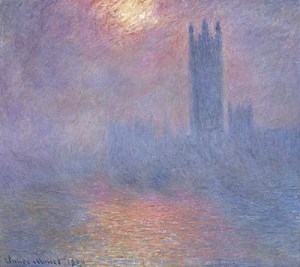
London, Parliament: Sun Through the Fog by Claude Monet 1903

London in the mid-to-late nineteenth century must have been an amazing place. There’s nothing I like more than walking around London Bridge and its environs; it is just like walking around a Dickens novel, with the romantic remains of the Marshalsea prison and roads named after his characters such as Clennam and Copperfield Street. There was however, one rather unromantic aspect to London life and that was the intense and deadly pollution created from the huge amount of coal being burnt at the time.

We talk of the smog that lie over the big cities of the modern world, Houston certainly had one, but they all pale in comparison to London smog; it had a very strong sulphurous smell and a green-brown colour to it. The Sun didn’t burn it off, but actually intensified it. Hung-out washing would be visibly dirtier once it had dried. Thousands died from heart and lung problems – it was said that a 30 second walk was the equivalent of smoking 20 cigarettes – and rickets was widespread due the lack of sunlight. A miserable place indeed:
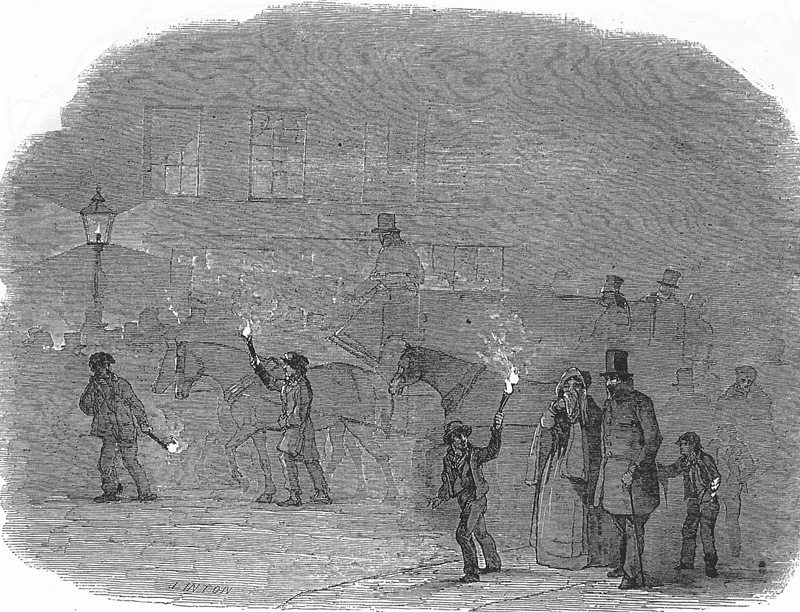
The fog was so thick that the shops in Bond Street had lights at noon. I could not see people in the street from my windows. I am tempted to ask, how the English became great with so little daylight? It seems not to come fully out until nine in the morning, and immediately after four it is gone…On the 22nd of the month, accidents occurred all over London, from a remarkable fog. Carriages ran against each other, and persons were knocked down by them at the crossings. The whole gang of thieves seemed to be let loose. After perpetrating their deeds, they eluded detection by darting into the fog. It was of an opake, dingy yellow. Torches were used as guides to carriages at mid-day, but gave scarcely any light through the fog. I went out for a few minutes. It was dismal.

Richard Rush, 1883

On several occasions, people fell in the Thames and drowned because they could not see the river right in front of them.

Victorian link boys guide people home

through the London smog

And so, for obvious reasons, the thick London smog became known as a ‘pea souper’. Dried pea based soups and puddings were very popular at this time, especially in the winter when there were no few fresh vegetables around. The soup became known as London particular because of a line from Charles Dickens’ novel Bleak House: “This is a London particular…A fog, miss”, said the young gentleman.

The phrase London particular had actually been around for at least a century – it was used to describe food and drink particular to London, for example London Particular Madeira.


If you like the blogs and podcast I produce, please consider treating me to a virtual coffee or pint, or even a £3 monthly subscription: follow this link for more information.


London Particular

This soup is really more of a potage and is very simple and cheap to make. The best thing about it is the wonderful stock made from the addition of a nice ham hock. You can use smoked or unsmoked, or you could go for a couple of pig’s trotters. Either way, it shouldn’t cost you more than 50 pence at the butcher. He might even give you them for free if you bat your eye-lashes at him. The recipe also asks for two tablespoons of Worcestershire sauce, this might seem like a lot, but it really can take it.

Ingredients

1 lb dried split peas

2 oz butter

3 rashers of smoky bacon, chopped

1 onion, sliced

1 ham knuckle, ham hock or 2 pig’s trotters

pepper

salt

2 tbs Worcestershire sauce

Have a look at the packet of peas; see if they need soaking overnight. If they are non-soak but are particularly old, you might want to soak them.

Melt the butter in a stockpot or large saucepan, add the bacon and fry on a medium heat for five minutes. Add the onion and fry until softened. Drain the peas and stir them in, making sure they get a good covering of bacon fat and butter. In amongst the peas, place the hock, knuckle or trotters and cover with water. Add some pepper, but do not add salt at this stage. Bring to a boil and skim off any grey scum, then cover and simmer gently until the peas are all mushy; around 1 ½ to 2 hours. Give the potage a stir every now and then as the peas do tend to stick, particularly towards the end of cooking.

Take out the meat joint and place to one side. Liquidise or mill the soup and return it to the pan. Pick any meat from the joints and add to the soup. Season with salt (if needed), pepper and the Worcestershire sauce.

6 Comments

Filed under food, history, Nineteenth Century, Recipes, Soups, The Victorians, Uncategorized

Angels and Devils on Horseback

A Victorian hors d’œuvre that has died a death in recent decades; an angel on horseback is simply an oyster wrapped in bacon and grilled; a devil is a tea-soaked prune treated the same way. The main reason for this is that oysters were then poor man’s food and now they are a delicacy; it is odd to think of the working-class tucking into these at dinner rather than the upper middle classes. Of course, the tables were turned by the time we hit the 20th Century. If you have never tried oysters before, this is a good way to introduce yourself to them, I reckon. They should have a comeback as they are delicious, and if you can’t afford – or stomach – oysters, then at least have a go at making the devils, though they are best made together.

The best oysters for the angels are the large Pacific ones – especially if you can get them pre-shucked. The best prunes are the squidgy ‘giant’ ones; if you can’t find them, just substitute two normal prunes for each giant one. There are many elaborate recipes, especially for the angels; the oysters in one are  breaded and fried, in another they are chopped up to make a stuffing. These things are best kept simple – the raw ingredients should speak for themselves.

You can make these delightful and delicious bite-size nibbles as some decadent finger-food on rounds of bread fried in butter or alongside some roast poultry instead of pigs in blankets.


If you like the blogs and podcast I produce, please consider treating me to a virtual coffee or pint, or even a £3 monthly subscription: follow this link for more information.


Angels on Horseback

12 large shucked oysters

Cayenne pepper or Tabasco sauce (optional)

6 rashers of smoked streaky bacon cut in half

First, soak 12 wooden toothpicks in some water and get your grill nice and hot. Season your oysters with a little Cayenne or Tabasco sauce if using and roll each in a piece of bacon, securing it with a toothpick. Place them on a baking sheet and grill until the bacon is crisp and the oysters are plump. Serve immediately.

Devils on Horseback

12 large prunes or 24 small ones

Freshly brewed, strong tea

12 roasted, salted almonds

6 rashers of smoked streaky bacon cut in half

Soak your prunes in the hot tea until plump – this will take 30 minutes if no-soak prunes, or overnight if they require soaking.* Remove the stones if the prunes are pitted then fills the gap it has left with a roasted almond. If you are using small prunes, sandwich an almond between two of them. Spear with a cocktail stick and grill as described above.

*Don’t throw away the tea for it tastes delicious!

5 Comments

Filed under food, history, Nineteenth Century, Recipes, The Victorians, Uncategorized

What is a Pudding?: Addendum

Quite a while ago, I wrote a post called ‘What is a Pudding?‘ and it seems I made a few little errors within. I don’t like to be wrong, so thought I would put it right. The subject was a little essay on the origins of puddings – the boiled and steamed kind, which I argued was the proper definition of a pudding. I still don’t think I am wrong on that count, but I did accuse some puddings of being mock puddings:

So, a pudding is any dessert, or the name for the dessert course. Aside from the proper puddings…there are some that go under a false name: bread and butter pudding [and] sticky toffee pudding…are examples of this. Why are these puddings and, say, an apple pie not called an apple pie pudding?

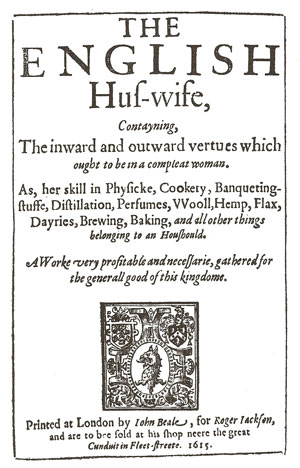
Well it seems that I can answer my own question, at least in part. I was flicking through The English Huswife, Containing the Inward and Outward Virtues Which Ought to Be in a Complete Woman by Gervase Markham which dates from 1615 (for context King James I of England and VI of Scotland was reigning) and it seems that some of the puddings that are baked today have their roots in the simmering pot. In fact a pair of my favourites – the rice pudding and previously accused bread and butter pudding are specifically mentioned. Their forerunners were cooked in natural intestinal casings – farmes – just like black puddings:

Rice puddings

Take half a pound of rice, and steep it in new milk a whole night, and in the morning drain it, and let the milk drop away; then take a quart of the best, sweetest and thickest cream, and put the rice into it, and boil it a little; then set it to cool an hour or two, and after put in the yolks of half a dozen eggs, a little pepper, cloves, mace, currants,dates, sugar and salt; and having mixed them well together, put in a great store of beef suet well beaten and small shred, and so put it into the farmes…and serve them after a day old.

To make bread puddings

Take the yolks and whites of a dozen or fourteen eggs, and, having beat them very well, put to them the fine powder of cloves, mace, nutmegs, sugar, cinnamon, saffron, and salt; then take the quantity of two loaves of white grated bread, dates (very small shred) and great store of currants, with good plenty either of sheep’s, hog’s or beef suet beaten and cut small; then when all is mixed and stirred well together, and hath stood a while to settle, then fill it into farmes…and in like manner boil them, cook them, and serve them to the table.

I was corrected on the sticky toffee pudding in that post… I wonder how many other puddings that are not boiled today once were? I shall go through the books with a fine-toothed comb and report back. More interestingly, I need to get my hands on some farmes and make these bad boys myself and see how they compare to their modern counterparts…


If you like the blogs and podcast I produce, please consider treating me to a virtual coffee or pint, or even a £3 monthly subscription: follow this link for more information.


20 Comments

Filed under bread, food, history, Puddings, Recipes, Seventeenth Century, Uncategorized

Proper Custard

By proper custard I mean the pourable kind that goes on your pie, crumble or steam pudding. It also assumes the name cream custard and, of course, crème anglaise; you see it given that name in restaurants that trying to look all ‘high-end’, I suppose in many people’s minds, custard comes out of a packet or tin whilst crème anglaise is the real deal.

Custard in Britain has become somewhat of a travesty over the last few decades and I wonder how many people have actually ever eaten the proper stuff, whatever name you like to call it. I think it appears extravagant, fattening or difficult to make. Well it might be guilty on the first two counts against it because of the egg yolks and cream that are used, but it’s not really that difficult. All it needs is a watchful eye and a little stirring. There ways of making it easier to conjure up, as well as reducing its calorie count and cost, and there is no need to always resort going to the packet or tin.

Now, before you label me a custard snob, I need to point something out: I actually love custard made with custard powder and there’s really nothing wrong with it per se, but until you make the real stuff you won’t see they are almost incomparable. That said, there has been many an evening when I have a made a whole pint of Bird’s custard and eaten the whole lot to myself, but if there are people coming round for food, I always get the vanilla and egg yolks out.

Bird’s custard was my first contact so it will always have a special place in both my heart and stomach. However, technically, Bird’s custard isn’t custard at all, for it contains no egg (see the main post on custard). The powder was invented by Alfred Bird in 1837 because his wife, though she liked custard, was terribly allergic to eggs. Bird’s custard powder is simply cornflour with some vanilla flavouring and colouring. The famous three birds logo wasn’t introduced until the 1920s, surprisingly.

Tinned custard is pretty good too and, up until the last five or so years, it was the form I bought custard in if I wanted proper custard. My tinned custard of choice? Ambrosia Devon Custard of course – nothing else would do – and, like the Bird’s, I still love it. Again, however, Ambrosia custard does not contain eggs or egg products so is not proper custard.

Now you can go off and buy the proper stuff in the refrigerator section of your local supermarket, always called crème anglaise of course, but you may as well make your own if you’re going to do that. Next time you make a trifle or a nice warm pudding, why not try making the real thing – England’s only sauce as the French call it – proper custard.


If you like the blogs and podcast I produce, please consider treating me to a virtual coffee or pint, or even a £3 monthly subscription: follow this post for more information.


It’s a recipe that goes far, far back and I gave an early recipe a few posts ago (see here). I hope to try some old recipes in the near future. These days vanilla is the typical flavouring, whether it be in the form of a pod, an extract or as vanilla sugar, but it is optional. Some like no spice or some go for an alternative like nutmeg or cinnamon. For me, vanilla is the only way. It is sweetened with sugar and the amount you add depends on your own taste, but as a rule I like sweet custard, especially when it’s with a tart fruit pie or crumble or with a stodgy suet pudding. I add less sugar if the dessert is very sweet, like treacle tart or sticky toffee pudding.

When it comes to thickening the custard, you need to be careful not to over-cook it as it results in curdling. If you are new to custard making, the best thing to do is to replace two yolks with two teaspoons of cornflour; it works as a thickener like the yolks, but it also stabilises everything, so you’re less likely to make an error. The recipe below uses six egg yolks, but if you want thicker custard add another, or another teaspoon of cornflour.

Ingredients

1 pint of milk, or a mixture of milk and cream

1 vanilla pod or ¼ teaspoon of vanilla extract

6 egg yolks or 4 egg yolks and 2 tsp cornflour

1 to 2 tbs sugar

Split the vanilla pod, if using, and scrape out the seeds and add to a saucepan along with the milk and cream. Bring slowly to almost boiling point. Meanwhile beat the egg yolks, cornflour and sugar together in a bowl.

making custard

When the milk and cream are scalding hot and about to boil, pour it quickly onto the egg mixture whilst vigorously beating with a whisk. Tip the custard back into the saucepan and stir over a very low heat for a few minutes until it thickens and coats the back of your wooden spoon. On no account, let the custard boil, otherwise you will get scrambled egg. The temperature you are looking to achieve is 81⁰C (178⁰F). So if you are worried that it will curdle, either make sure you include the cornflour and/or put the custard in a bowl over a pan of simmering water. Don’t worry if there is a little curdling; simply pass it through a sieve and everyone will be none the wiser.

home made custard

20 Comments

Filed under food, General, history, Puddings, Recipes, Uncategorized

To Make a Coburg (or Cob) Loaf

Here’s another recipe to add to the series of posts on bread and bread-making (see main post here).

Coburg loaves are a common sight in traditional bakeries, but are rarely spotted outside of them these days. A Coburg is a round loaf that is not baked in a tin like your basic loaf (see recipe here), but as a round plump crusty loaf on a tray. On the top there are cuts in a cross shape that open up when it bakes. It can be made with pretty much any flour you like – white, whole-wheat, rye, oat, or whatever takes your fancy. I class it as one of the basic loaves because it contains just flour, yeast, salt and water.

Technically, a Coburg is a kind of cob, the only difference being that a cob does not get cut before going in the oven, though these days, there is no real distinction really. There are variations on the Coburg cuts though; sometimes several cuts are made in a chess board fashion which expands to make a porcupine loaf, which is also known as a college loaf or a Manchester loaf. Alternatively, the top of the dough gets quickly stabbed with a piece of wood spiked with lots of nails. A bit hardcore that one.

The Coburg loaf became popular in the Victorian era, and I assumed the loaf was named after Queen Victoria’s hubby Prince Albert Saxe-Coburg-Gotha, as many things were in those days. The British public were fascinated by the royal couple, and really took to many German traditions (especially a Christmastime). However, it may not be the case. There was such a thing as Coburg material; cheap and coarse and used for making mourning clothes that predated Albert so the word is older. The most likely explanation is that a German baker living in London, as many did, gave it his family name, though no baker actually knows who this was. The loaves themselves were certainly around before the Victorian era, centuries earlier in fact. They were made from courser grains than today and went by the name of a Brunswick loaf. So it seems all that occurred was a name change.

The good thing about baking these loaves is that you need no tin and consequently you achieve a good crust all over the surface. The recipe below is based on one from Elizabeth David and I haven’t provided massive detail on the making of the dough as I have already done that in the recipe for baking a basic loaf, so if you are new to bread-making, it might be worth having a little of that post first (you’ll find it here).

Also, this method asks you to put the loaf in a cold oven and then timing the bake from the time it gets to temperature, this way you get an extra-fluffy loaf. There is a little oil or butter to add if you like too; fat helps the bread keep fresh an extra day.


If you like the blogs and podcast I produce, please consider treating me to a virtual coffee or pint, or even a £3 monthly subscription: follow this post for more information.


Ingredients

up to 15 g fresh yeast or 8 g easy-bake yeast (see method)

400 g strong white flour (or a mix of up to 50% other flour(s) if you like)

10 g salt

25 g softened butter or olive oil (optional)

250 g blood-heat water

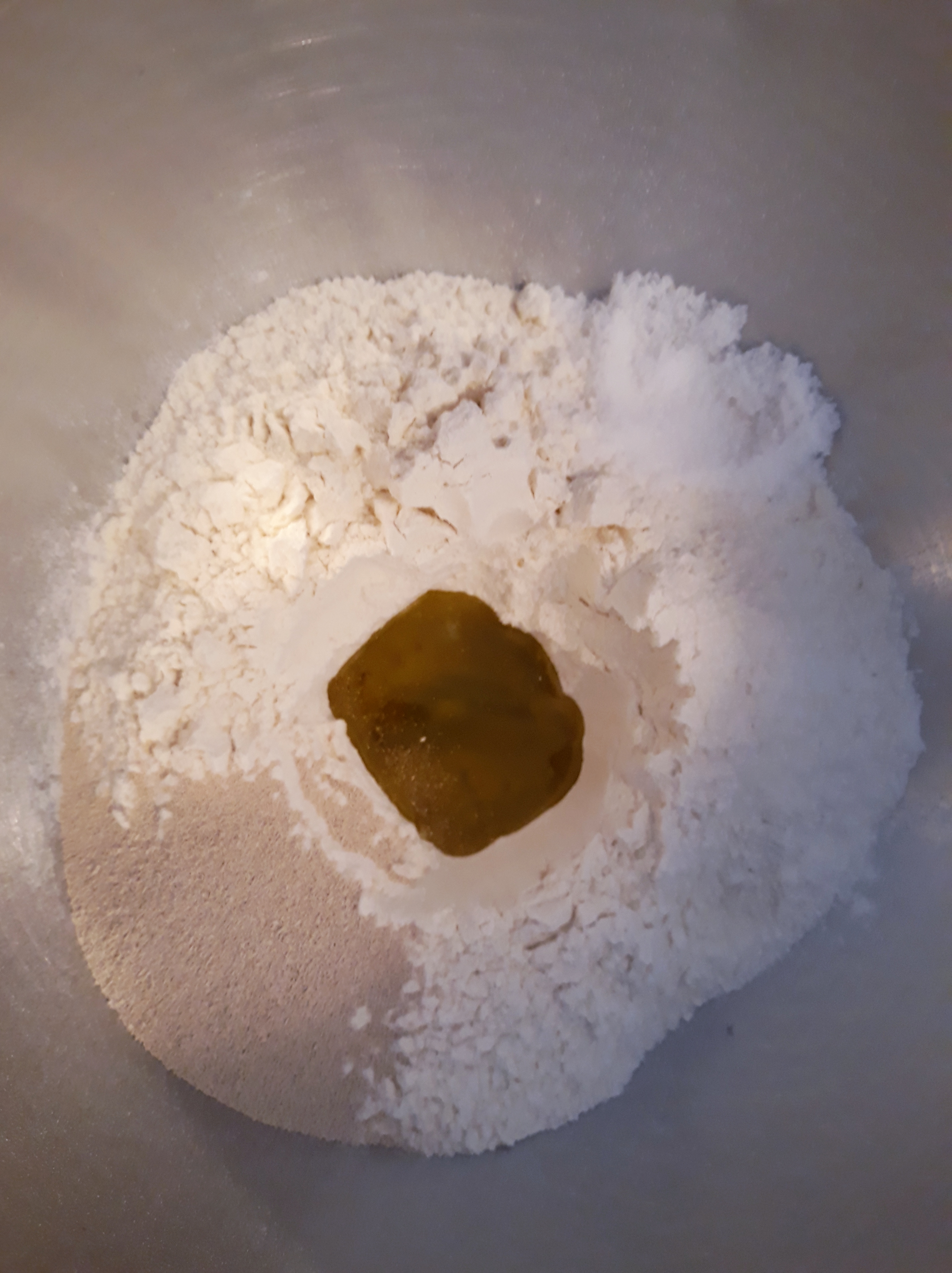
If using fresh yeast, cream it in a little of the warm water, adding a pinch of sugar and leave about 10 or 15 minutes until it is alive and foaming. Put the flour in a bowl, make a well in the centre and tip the yeast in along with the remainder of the water and the oil or butter.

If using dried yeast, make a well in the flour adding the salt to one side of the bowl and the yeast on the other side. Pour the warm water into the well along with the butter or oil.

Mix together with a wooden spoon and then bring the dough together with your hands. Alternatively, you can use the dough hook on a mixer to bring it together. Knead well until the dough becomes tight and springy, around 5 minutes in a mixer, or 10 or so minutes if kneading by hand. It will be sticky, but persevere, sprinkle a little flour or a smear a little olive oil on your work surface if you like. Bundle the dough into a tight ball and place in an oiled bowl and cover to allow it to double in volume in a warm place.

Knock the dough back lightly and give it a brief knead. If you want, give it another rising.

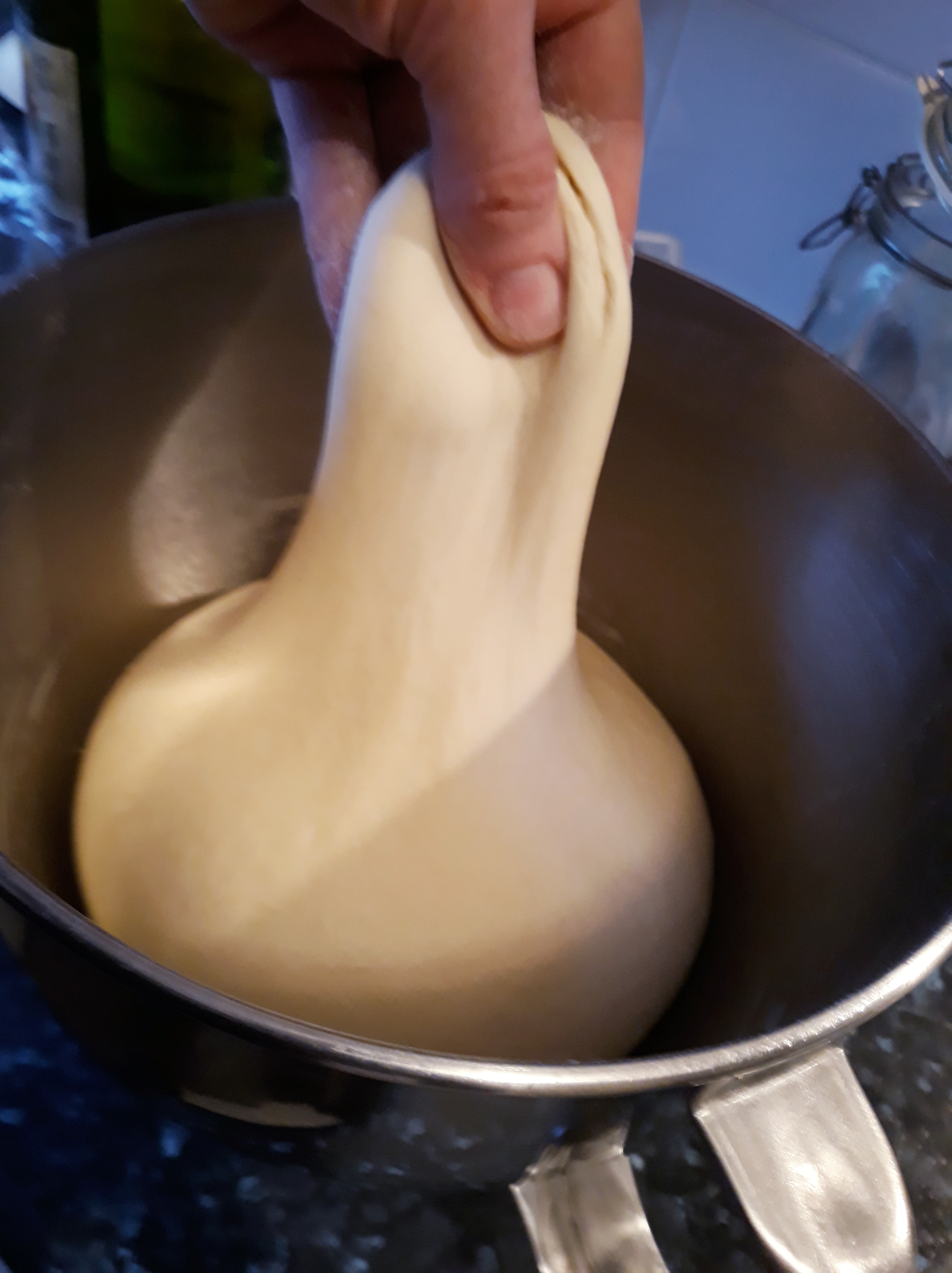
The super-stretchy dough after its first proof

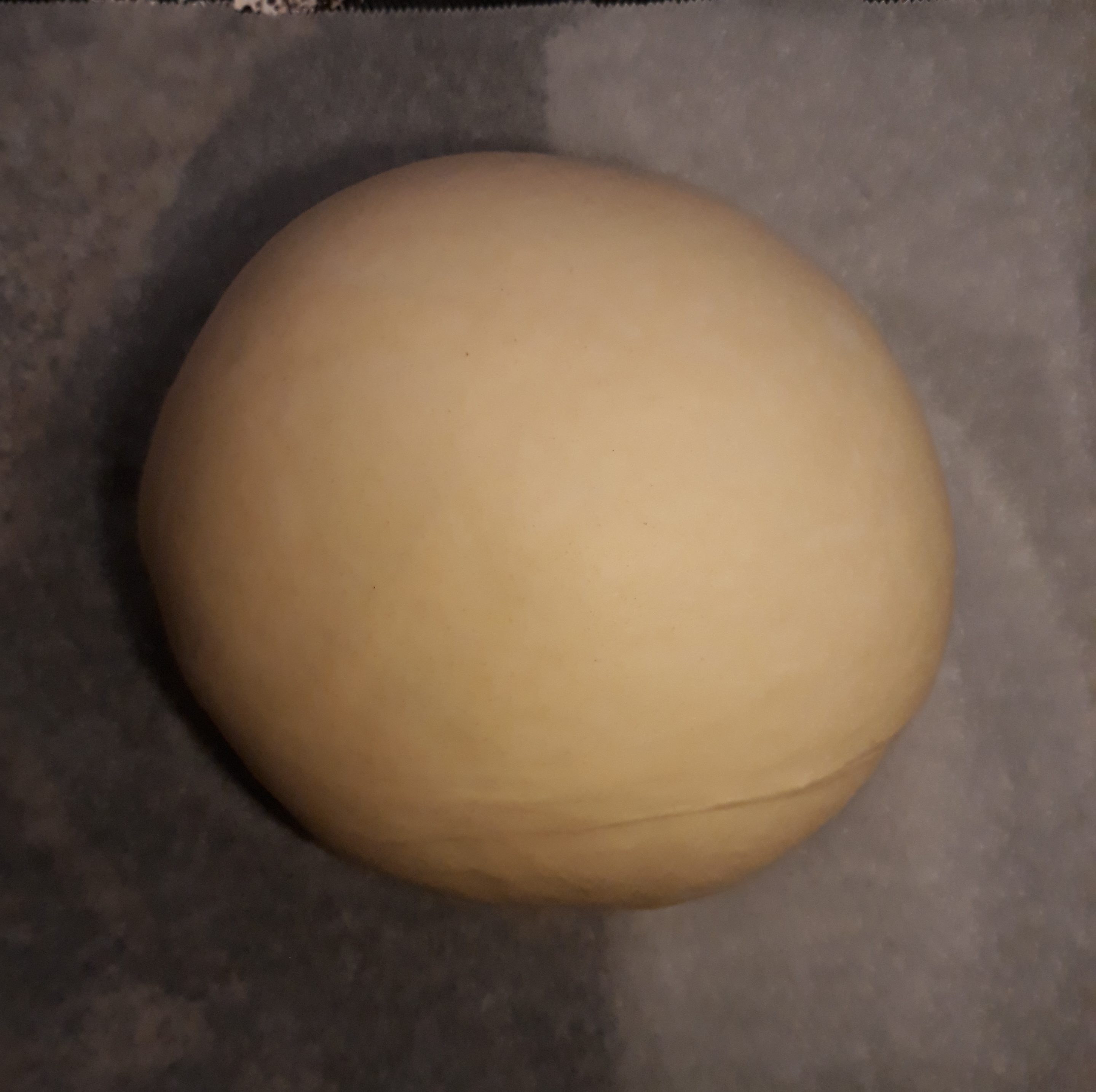
On a lightly-floured work surface, make the cob shape by forming a ball with the dough by tucking your hands under it, tightening the dough. If you twist the ball of dough slightly as you do this, it will be extra tight.

Place the dough on a floured baking tray and cover with a large plastic bag or large bowl or pot.

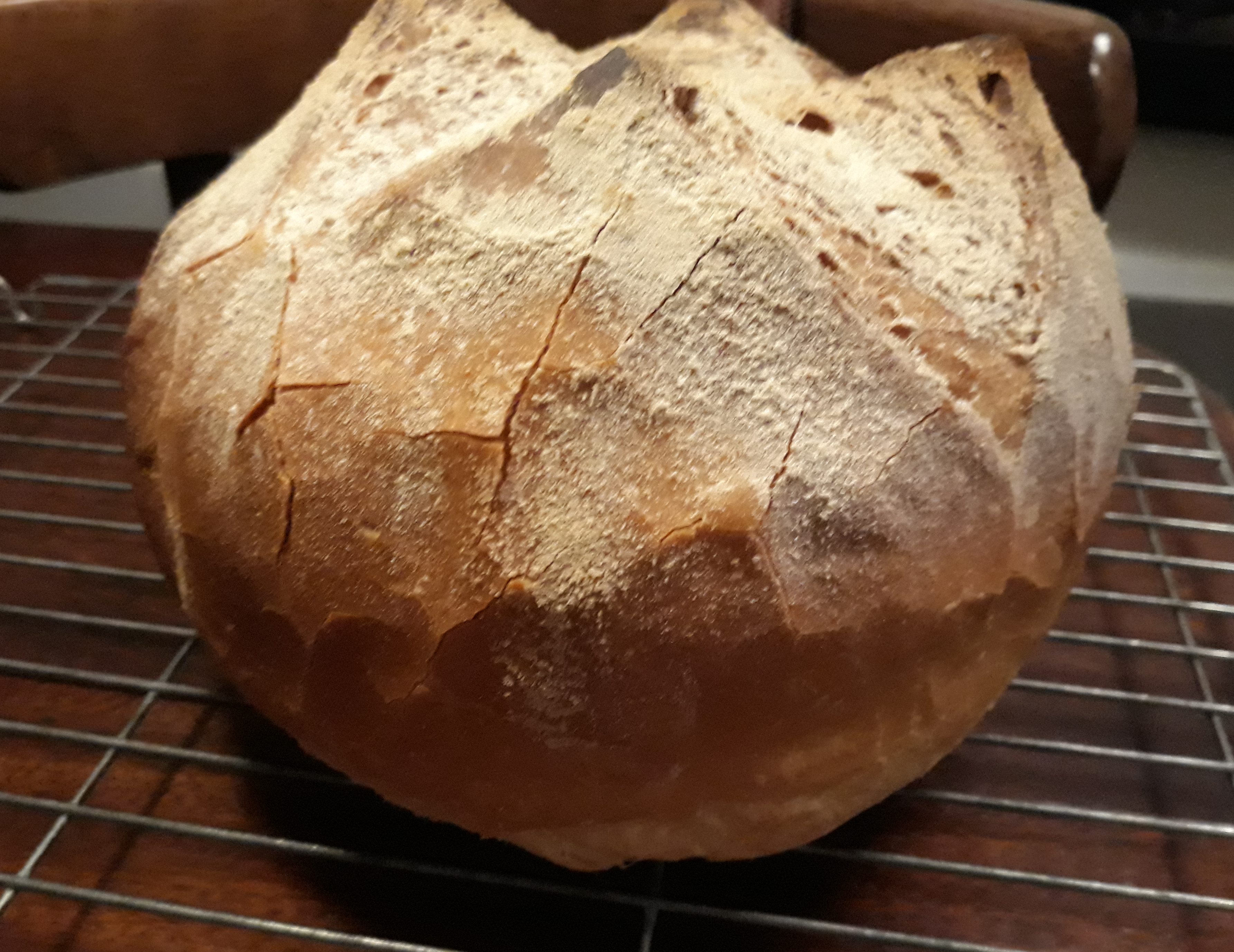
Slash the top of the loaf with a sharp serrated knife to make a cross shape and place in a cold oven. Set the oven to 220°C and once the oven has got up to temperature, bake for 15 minutes. Turn the temperature down to 200°C and bake for a further 15 – 20 minutes, until brown and crusty. Check the loaf is cooked by knocking its underside and listening for a hollow sound. Cool on a rack and listen carefully for the sound of the crusts cracking!

A close-up of the cracking crust

29 Comments

Filed under baking, bread, food, history, Nineteenth Century, Recipes, Teatime, The Victorians, Uncategorized

Lenten fodder

Yesterday was Shrove Tuesday, so today is the first day of Lent, a forty day fast that takes us right up to Easter. It came about because Jesus fasted for 40 days as he walked the wilderness prior to his death on the crucifix. Foods like meat, eggs, cheese and milk were decadent and therefore they were right out during Lent. In fact there was abstinence from any activity considered decadent, and the further back in time, the stricter were the rules. In the early days of Christian Britain some people ate only bread, whilst others ate herbaceous vegetables too. As time went on to the Middle Ages, the rules became a little slacker and fish were allowed into the diet. Thomas Aquinas was a main instigator of this move.

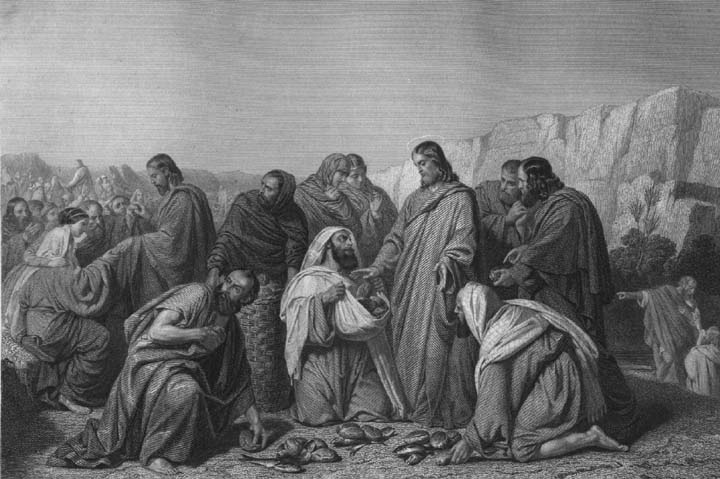
“By Jove, look at all the tucker Jesus has got, chaps!”

The Miracle of the Loaves and Fishes

Fish was chosen for several reasons: It was fare that could be eaten by all classes, so in effect everyone would be eating the same types of food, nor was is associated with power, strength, hotness and richness like meat was; indeed fish were both humble  and meagre. Most importantly, it was strongly associated with Jesus himself. The 40-day long fast also symbolised a cycle of ‘purification and regeneration’ and fish were considered pure. People always find loopholes however – the rich still ate large grand dishes like roast pike. Indeed anything even closely associated with water was considered fair game during Lent: beaver, seal, porpoise, heron, even sheep found drinking from streams were eaten!

Fair game: the beever

By Tudor times, the rules had slackened even further to include fish and game, but not red or white meat (i.e. poultry). This meant one could eat bustard, curlew, pheasant, quail and red deer. Strangley, root vegetables were off the menu because they came from the soil and were a little too close to Hell for comfort for some.

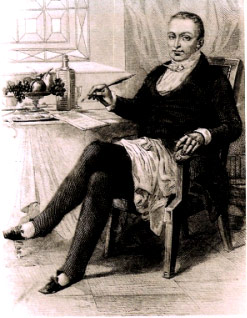
In France during the eighteenth and nineteenth centuries there were sometimes no difference between Lenten meals and regular ones, at least for the aristocracy. People would simply find excuses not to fast, complaining, according to the great French gastronome Brillat-Savarin “it irritated them, gave them headache, and prevented them from sleeping. All the troubles associated with the spring were put down to the score of the fast, so that one did not fast because he thought he was poorly, another because he had been, and a third because he feared to be.”

The late, great Brillat-Savarin

Most of the time it was enforced, though not for reasons of piety, but for economical ones. For example on a typical day, the French Royal Family in the Palace of Versailles, France, went through 900 pullets, 350 braces of pigeons and 86 goslings!

The Palace at Versailles

These days, people give up one vice for Lent, and although I am an atheist, I do see the spiritual worth in giving up something. Back in the day, when I used to smoke, I would try and forego cigarettes but without much success. These days I don’t bother, so I suppose I’m going straight to Hell; at least there’ll be plenty of parsnips and carrots down there to roast by the fire and brimstone…


If you like the blogs and podcast I produce, please consider treating me to a virtual coffee or pint, or even a £3 monthly subscription: follow this link for more information.


10 Comments

Filed under Festivals, food, French Cookery, General, history, Uncategorized

How the British Royal Family was saved by soup…

It’s Queen Elizabeth the Second’s diamond jubilee this year, so thought I should write a post or two on the Royal Family…

In recent times, the Royal Family have been under threat of being dissolved in Britain, due to what seemed like a total lack of support. It feels that in the past the Royals were revered, but they have fallen in and out of favour with the public rather alot. Popularity during the early twentieth century for example was pretty low. Today, Prince William seems to have picked up today’s royals’ momentum again, but back then it was King George V that turned them around, and what helped him to do that was soup…

The Coronation of King George V and Queen Mary

George became King of England in 1911 in a time of turmoil and constitutional crisis, the Great War was a-brewing and the Royal Family were seen as totally outdated. George himself was vehemently against modernisation, and things seemed a lost cause. George and his wife, Queen Mary, spend much time visiting the poor and doing their bit, but to little effect. The reason for all this was because of the Labour Party’s increasing popularity and also the rumblings of revolt in autocratic Russia. Was the smell of revolution in the air? Possibly, but things began to change during the Great War. In 1917, the Russian Royal family sought asylum in Britain and the British Government duly granted it. But then, in waded George and refused them entry – he knew that helping such an old and autocratic institution would be embarrassing and most probably disastrous for the British Royal Family and for the country too. He realised he must distance the two families. Tsar Nicholas and his family were brutally killed the following year by the Bolsheviks.

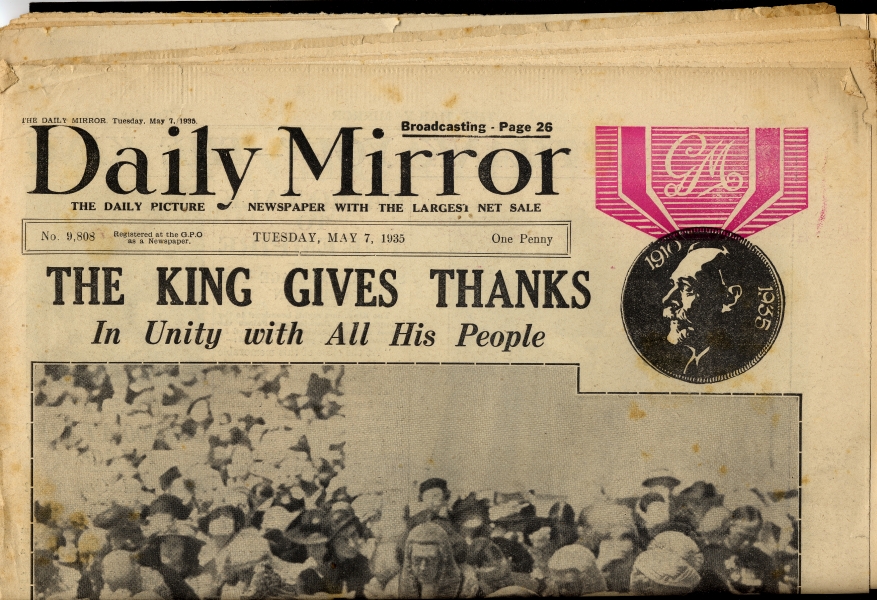
The Silver Jubilee edition of The Daily Mirror, 7 May 1935

George then realised that the Royal Family needed to distance themselves from their German ancestry, deciding to anglicise the surname – Saxe-Cobourg-Gotha was not helping them at all during the fight against the Bosch. But what to change it to? After some pondering, the private secretary came up with a name that would inspire Britishness (and George considered himself to be British through and through). The name was, of course, Windsor. Why Windsor? Well, it was because of the ubiquitous Brown Windsor soup served up by every housewife at the time. It was ‘a nourishing brown…with a certain hearty dullness’. Windsor also linked to the ancient Windsor Castle. This was just what George needed, and it really changed the public’s views. Soon after, he introduced the Order of the British Empire (or, OBE), which clinched the whole affair. He died in 1936 much beloved by the British Public.

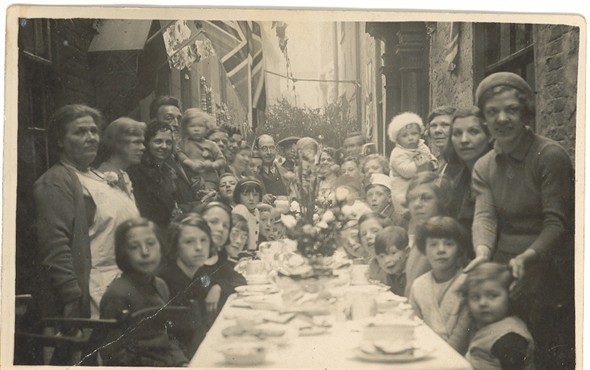
The people of Yarmouth celebrate the King’s Silver Jubilee


If you like the blogs and podcast I produce, please consider treating me to a virtual coffee or pint, or even a £3 monthly subscription: follow this link for more information.


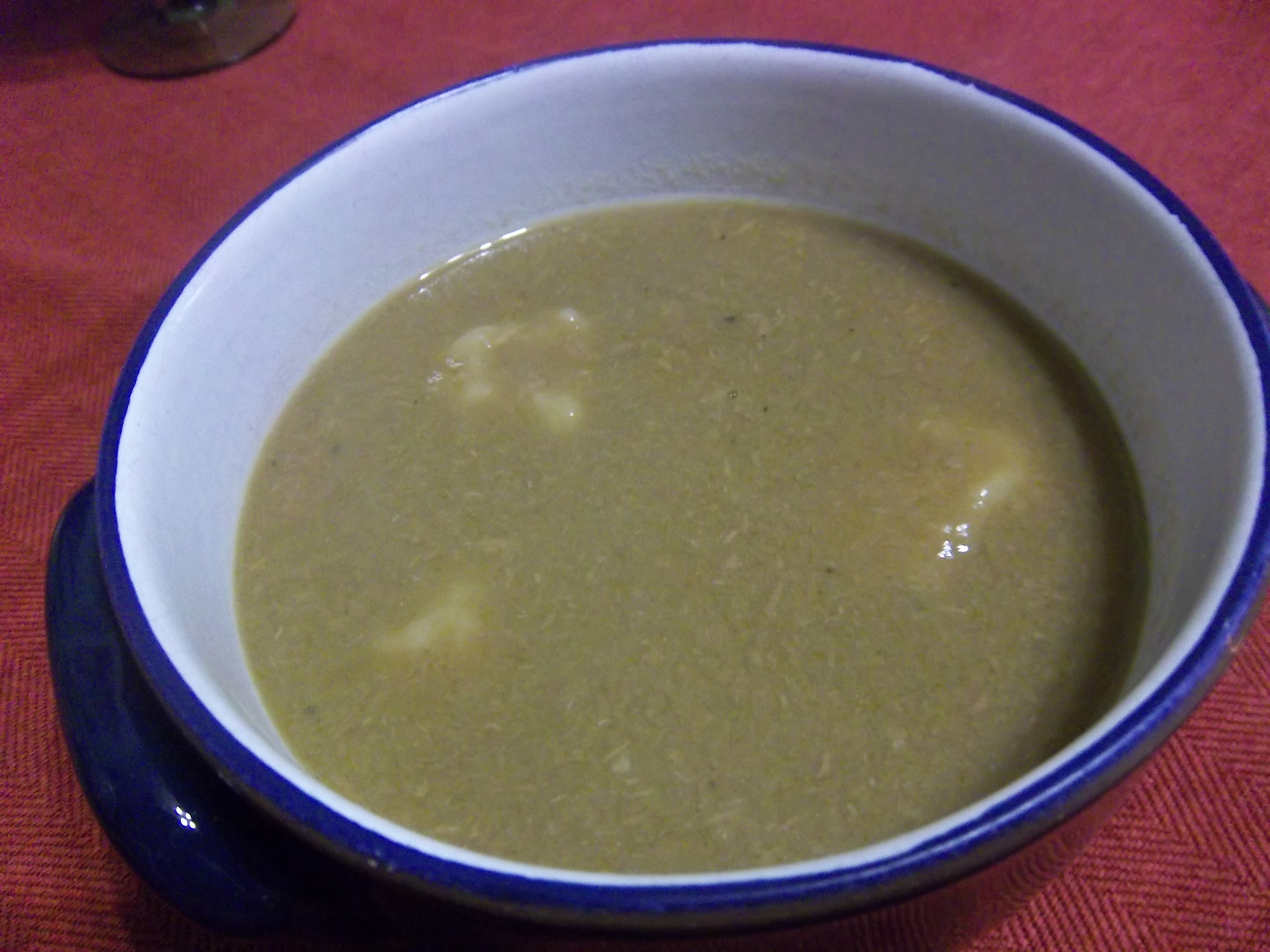
Brown Windsor soup, later shortened to simply ‘brown soup’ went a little downhill. It became a rather thin and tasteless affair served up in hotels and it gave British soup a bad name. This seems to happen all too often to much of our food. I always blame wartime rationing for these things, but I think I right this time: small amounts of meat made the soup boring, and over time people perhaps simply forgot what Brown Windsor soup used to be like.

Well take it from me, it used to be a delicious thick and hearty soup, perfect for this cold weather we are having. It’s pretty cheap too. This recipe comes from the wonderful cookery writer Lindsey Bareham’s book A Celebration of Soup. Her version cranks up the stodge-o-meter with the addition of horseradish dumplings; and we all need stodge mid-February.

For the dumplings:

4 oz. self-raising flour

¼ tsp salt

2 oz. beef suet

ground black pepper

1 oz. grated horseradish, or a good creamed proprietary brand

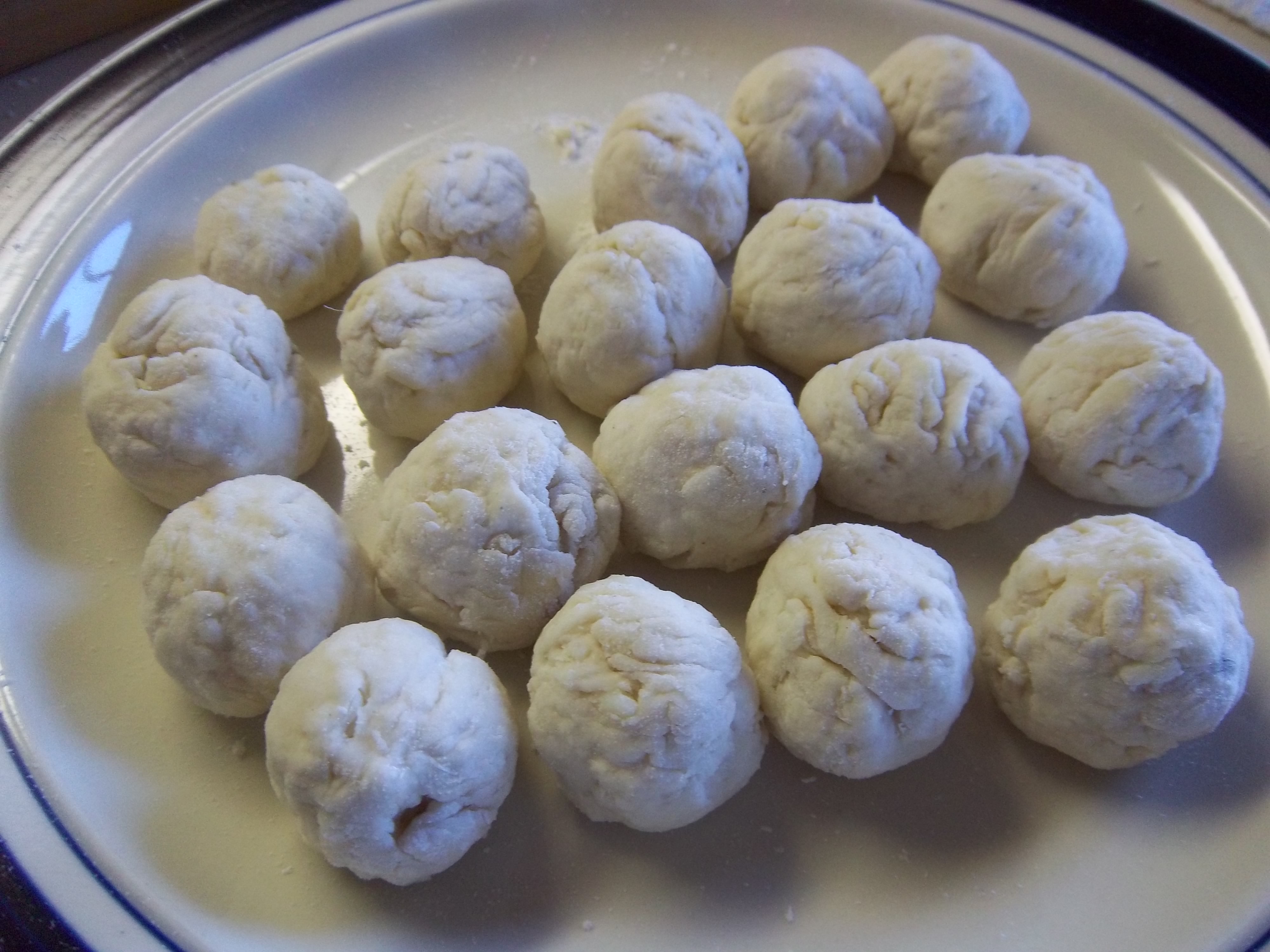
Sieve the flour and salt into a bowl and stir in the suet and a seasoning and pepper. Mix in the horseradish and stir in enough cold water to bring the dough together in your hands. The dough should be soft and elastic, but not too sticky to handle. Flour your hands and roll 16 to 20 small dumplings. To cook the dumplings, turn up the heat on soup and plop them in. They should take about 15 to 20 minutes to cook.

For the soup:

1 oz. butter

a small onion, thinly sliced

the green of a leek, thinly sliced

a small carrot, diced

10 oz. stewing steak

1 tbs flour

2 ½ pints of beef stock

a bouquet garni made with 2 bay leaves, 4 parsley stalks, a sprig of thyme and a crushed garlic clove

1 tbs chopped parsley (optional)

Melt the butter in a large saucepan and cook the onion for a few minutes to soften slightly, then add the leek and carrot. Season well with salt and pepper – the salt is very important as it helps to draw the flavour from the vegetables – cover the pan and cook for a further 5 minutes or so. Turn up the heat and add the meat, browning it all over. Next, stir in the flour and cook for a couple more minutes before adding a little stock. Make sure you scrape off any crusty bits of beef or flour from the pan’s bottom with your wooden spoon.  Now pour in the rest, bring to the boil, add the bouquet garni and then turn the heat down, cover and simmer for 2 hours. Liquidise the soup and reheat, adding more seasoning should it need adjusting. Stir in the parsley just before you serve the soup.

12 Comments

Filed under food, General, history, Meat, Recipes, Soups, The Royals, Twentieth Century

“Out of the strong came forth sweetness…”

Can there be anything else that sums up British baking as much as Lyle’s Golden Syrup? If you are not British then you might not have heard of it and it is rather difficult to compare it to anything else. It looks like honey, but is viscous like a syrup such as corn syrup and yet it tastes like neither. The taste is more like butterscotch or caramel. It is also commonly called treacle. I absolutely love the stuff and manage to get hold of it here in Missouri to go on my porridge or pancakes of a morning. Oddly, it was never intended to be a commercial product, but thank goodness it became one. I remember as a child, my Dad always used to make us a treacle sandwich after our Sunday baths whilst we dried in front of the fire, soggy towels wrapped around us.

The story of golden syrup starts in 1881when the Scottish businessman Abram Lyle set up a sugar-refinery in London on the Thames with his five sons, processing sugar cane into sugar loaves. In those days, sugar was bought in large tapering mounds that had to be pounded or grated by hand at home. One byproduct of the process was a thick, gloopy syrup that with a little more refining through charcoal was very delicious. So he sold it to his workers from large barrels (Lyle was originally a cooper) and the syrup quickly was anointed with the nickname “Goldy”. Soon, Goldy became popular outside of his workforce and everyone wanted some. Just two years later, in 1883, Lyle’s Golden Syrup was born.

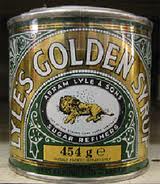
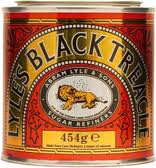
It is the tin the golden syrup that comes in that is the icon of both British cookery and Victorian entrepreneurship. Famously, on the front is a drawing of a dead lion peppered with swarming bees. Abram Lyle was a very pious man, and used the story of Samson in the book of Judges in Old Testament as the inspiration for the design. Quite a while before his fateful haircut, Samson got attacked by a lion which, through His power, Samson was able to rip open, killing it. Later he sees that bees have built a hive within its carcass and he takes some honey to his family and friends and they have a feast. He didn’t tell them about the lion and had them guess how he came about all the honey, presenting them with the poser:

And he said unto them, Out of the eater came forth meat, and out of the strong came forth sweetness. And they could not in three days expound the riddle.

Judges 14:14


If you like the blogs and podcast I produce, please consider treating me to a virtual coffee or pint, or even a £3 monthly subscription: follow this post for more information.


Tins were first produced in 1884 and unbelievably have not changed at all in their design since. In fact, the recipe for the syrup has never changed either – making Lyle’s Golden Syrup the oldest brand in the world. “You’d be mad to mess with Goldie.” The only slight change is to the weights written on the tin: gone are the “1 lb” and “2 lb” marks, their replacement being the “454 g” and “907 g” marks, to keep in line with EU rulings. Another change occurred during the Second World War when, because of tin shortages, Lyle had to make the ‘tins’ from cardboard instead.

For over 125 years, it has been indispensable – it was even taken on Captain Scott’s fateful trek to the Antarctic. He wrote a letter to the Lyle family:

“Your Golden Syrup has been in daily use in this hut throughout the winter, and has been much appreciated by all members of the expedition.”

In 1950, the Lyle Company brought out a second iconic product: Lyle’s Black Treacle. It is very similar to molasses, though it is considerably thicker and stronger tasting. For any recipes that ask for black treacle, you can substitute molasses instead with no problems.

In the American classic The Fannie Farmer Cookbook, there is a recipe for Cornish Treacle Tart (which is actually made from Golden Syrup). In that recipe it asks for three-quarters of a cup of dark corn syrup. Do not on no account ever, ever, substitute golden syrup for corn syrup. The two are incomparable. So, I urge the American public: if you use a recipe that asks for Golden Syrup and you cannot get hold of any, don’t bother making it. Do you hear me? Good, then we understand each other. Amazon’s grocery section stocks it, so you can always get it online.

Lyle’s Golden Syrup and Black Treacle are part of so many wonderful recipes, I would be crazy listing them all, but here are what I reckon are the important or interesting ones. As I add recipes, I’ll add links. If you know of any that I have missed off, please let me know. Here goes:

Treacle tart

Flapjacks

Pancakes

Treacle sponge pudding

Mrs Beeton’s rolled treacle pudding

Golden syrup cake

Aunt Nelly’s pudding

Malt loaf

Jamaican ginger cake

Parkin

Ma Buttery’s crunch

Bonfire toffee

Christmas cake

30 Comments

Filed under General, history, Nineteenth Century, Puddings, The Victorians

A Very Brief History of Bread

Recently I have very much gotten into bread-making so I thought I would try to tackle a post on its history. Within about 3 minutes of researching, I realised that there is quite literally volumes off stuff and there is no way I could do it any justice in a single post. But I have to start somewhere, so I thought the symbolism of bread and its early beginnings might be a good place to start…

Bread was the one food that everybody depended upon, and it has been the focus of our daily lives for hundreds of years. We talk of ‘earning a crust’ and ‘dough’ is a slang word for money. When taxes get too high, we complain that we are having ‘the bread taken from our mouths’. Bread itself meant food.  Our lives are so linked with bread that many of our words have roots in bread or bread-making: the word lord is from the Anglo-Saxon hlaford, meaning ‘loaf ward’ and lady from hlaefdige, or ‘loaf kneader’; companion and company come from the Latin companio which means ‘one who shares bread’. Jesus’s flesh is bread, and when we pray, we ask Him to give us ‘our daily bread’ and should we get it, we’re ‘truly thankful’.

The Infant Jesus Distributes Bread to Pilgrims by Murillo 1678

I am not a religious person and don’t say Grace or anything like that. In fact, I don’t know anyone who does, but I remember as a child when we had to say the Lord’s Prayer at assembly, thinking that it was strange that we wanted bread (‘Give us this day our daily bread’). Surely there were much better things than boring old bread like cakes and fizzy pop. Plus we would get dinner anyway, so what was the point?

The Georgian essayist, George Lamb, brings up this very point:

The indigent man, who hardly knows whether he shall have a meal the next day or not, sits down to his fare with a present state of the blessing, which can be feebly attached to the rich…The poor man’s bread is his daily bread, literally his bread for the day. Their courses were perennial.

Do such people exist still today? I don’t think so. I’m not suggesting that there is no poverty of course, but the food of the poor is no longer bread. There is certainly more variety of food if you are poor in this modern age, but cheap food is pretty bad. Is it best to spend your money on a load of insipid flavourless food full of additives, or to buy the ingredients for a few loaves of proper bread? I actually don’t know the answer to that question.


If you like the blogs and podcast I produce, please consider treating me to a virtual coffee or pint, or even a £3 monthly subscription: follow this link for more information.


You need only four ingredients to make bread: flour (though not necessarily wheat flour), water, salt and yeast. The first three ingredients were not that easy to come by; producing flour was a labour-intensive activity, salt was expensive and good quality fresh water might not even have existed in your town or village. Yeast, however, was easy, it could be found happily residing naturally on wheat. When dough is left for a certain amount of time it will begin to naturally ferment and rise as the yeast grows and anaerobically respires to produce bubbles of carbon dioxide. The earliest evidence for making leavened bread comes from Egypt and dates 4000BC, though it didn’t reach Europe until 400BC in Greece where barley flour was used over wheat. According to Aristotle barley bread was bread so white that it out does the ethereal snow in purity. Tone it down, ‘Totle.

Baking Bread by Helen Allingham, 19th Century

Bread wasn’t always sustaining; in the cities, we have been guilty of baking notoriously bad bread. Its peak was during the eighteenth and nineteenth centuries, bakers were displaying very fraudulent behaviour. Additives for whitening were very common; London bread was a deleterious paste, mixed up with chalk, alum, and bone-ashes; insipid to the taste and destructive to the constitution. One pamphlet author even accused the bakers of using ground human bone! We reached this level state because flour wasn’t available to everyone and so there was no choice. Today there are food standards, but for the main part, most of the bread we consume is in no way near what bread could be. However, perhaps we shouldn’t expect it – millions of people need mass-produced foods, so perhaps this is the best, and only way, to do it.

Peel’s Cheap Bread Shop, Punch cartoon from 1846

According to Maguelonne Toussaint-Samat, the French food historian, there were four evolutionary steps that led toward the ‘invention’ of leavened bread.

  1. Pounded grains: raw or fire-roasted grains were eaten crushed or whole.
  2. Decoction, mash or porridge: the raw or cooked grains were pounded or ground and mixed with water to make a dough. The mixture was then either eaten or drunk.
  3. Maza: a thick dough is moulded into the shape of a flat cake and baked on embers, a griddle, an oven or in a glass dome. These were common in the Stone Age and their little-changed descendants still exist today in the form of pitta and chapatti.
  4. Bread: cereals suitable for bread-making are used such as wheat, spelt, oats, rye and buckwheat. Left over dough from a previous baking – the leaven – is added and the dough is left to rise and improve in flavour and texture. It is then cooked in a preheated oven or a glass dome.

So bread is what one’s world revolved around, and it has – in the most part – become a flabby mass-produced pre-sliced affair that somehow turns back into dough when you squash it. In the past, a huge amount of effort was required to bring together the four ingredients and bake them. Future posts will tackle those ingredients and the ways they were cooked, the machines built, the microbes or chemicals used to flavour or leaven, the holy days they were often baked for, and how village and city life depended on the producers of the ‘staff of life’.

Bread recipes added so far:

An Everyday Loaf

Coburg

Hot Cross Buns

12 Comments

Filed under baking, bread, food, General, history, Teatime

To make mince pies…

A few posts ago I gave the recipe for Mrs Beeton’s mincemeat, so I thought it only right to give a little instruction in making mince pies. I have to tell you that it is really worth the trouble of making your own mincemeat and mince pies – any bought ones are incomparable and always too sweet. The secret to an excellent mince pie is two-fold: you need homemade mincemeat and you need shortcrust pastry that is made with half butter and half lard. many people recoil in horror these days at thought of using lard, but it isn’t that bad really, at least not in small doses.

A recipe by Roger Twysden from the times of Charles I (c. 1640) says that larger Christmas pies were also made using a mixture made of meat, sugar, dried fruit and spices. He then says: “put them in coffins or pyes, and bake them”. The word coffin was used to describe the pastry-shell of pies. The reason they were called coffins is because, in earlier times, the pastry simply served as a casing intowhich the meat could be cooked; the pastry itself actually being inedible. They weren’t actually coffin-shaped, except for the Christmas Pie as Charles Dickens, writing in 1877, tells us: ‘ The coffin shape…is not now familiar to us. There is good reason to believe that, in old times, the form was symbolic of the manger at Bethlehem; and that Christmas Pie, whether mince or not, had religious as well as a gastronomic association with this particular season.’

For more typical mince pies, they are based upon Jane Grigson’s instructions from English Food, and they are excellent.

Roll out your pastry and use cutters to line…tart tins [I actually use muffin tins, cutting a large circle for the base, and a smaller one for the top]. Add…[a dessertspoon] of the mincemeat – not too much though the suet and sugar expands quite alot. Use some beaten egg to glue on lids of pastry, pinching as you go. Lastly brush the top with more egg, make a little cross in the top of the pie so steam can escape and sprinkle with a little sugar.

Bake at 220⁰C (425⁰F) for 15 to 20 minutes. Eat warm or cold. If you are feeling extra-Christmassy and if your stomach can take it, add a blob of brand or rum butter. Personally I go for a blob of lightly whipped cream or even some custard if any is to hand [and I concur!].


If you like the blogs and podcast I produce, please consider treating me to a virtual coffee or pint, or even a £3 monthly subscription: follow this link for more information.


12 Comments

Filed under Christmas, food, history, Nineteenth Century, Puddings, Recipes, Teatime, The Victorians