Photo credits: top left: Cambridge Archaeological Unit; bottom right: Cambridge Archaeological Unit using a foreground photographic image supplied by S. Craythorne/Lincolnshire Wildlife Trust
My guests today are archaeologists Chris Wakefield from the Cambridge Archaeological Unit of Cambridge University Rachel Ballantyne from McDonald Institute for Archaeological Research, and they are here to tell me about an absolutely amazing site close to Peterborough that tell us a huge amount about daily life in a late Bronze Age settlement. Prepare to have your minds blown!
We talk about the unique circumstances of how and why the site is so well preserved, kitchen clutter, animal husbandry, querns, frumenty, pike sushi, and whether the English’s love of mustard goes back 3 millennia – among many other things
Those listening to the secret podcast: you get 20 minutes of bonus material that includes the importance of foraging, the evidence for fermentation, Bronze Age recipes, the uses of the whole cereal plant and more!
Available on all podcast apps, just search for ‘The British Food History Podcast’ and hit follow. Or stream via this Spottily embed:
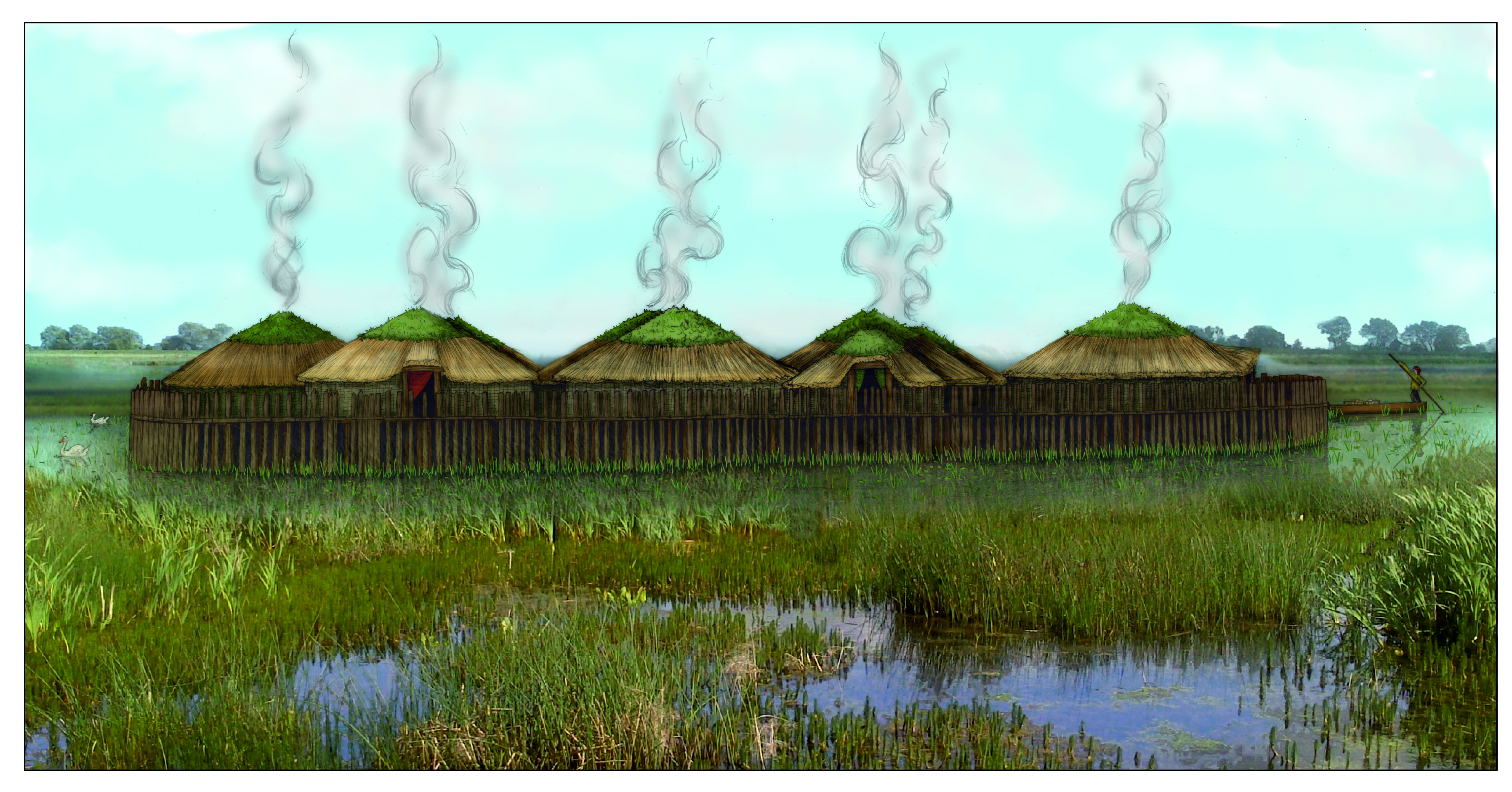
A Must Farm side-view reconstruction (pic: Cambridge Archaeological Unit using a foreground photographic image supplied by S. Craythorne/Lincolnshire Wildlife Trust)
Follow Cambridge Archaeological Unit on Social Media
Facebook: @cambridgearchaeologicalunit
BlueSky: @cambridgearch.bsky.social
Instagram: @cambridgearchaeologicalunit
Follow Cambridge University Department of Archaeology on Social Media
Facebook: @archaeologycambridge
BlueSky: @cam-archaeology.bsky.social
Instagram: @ cambridge_archaeology
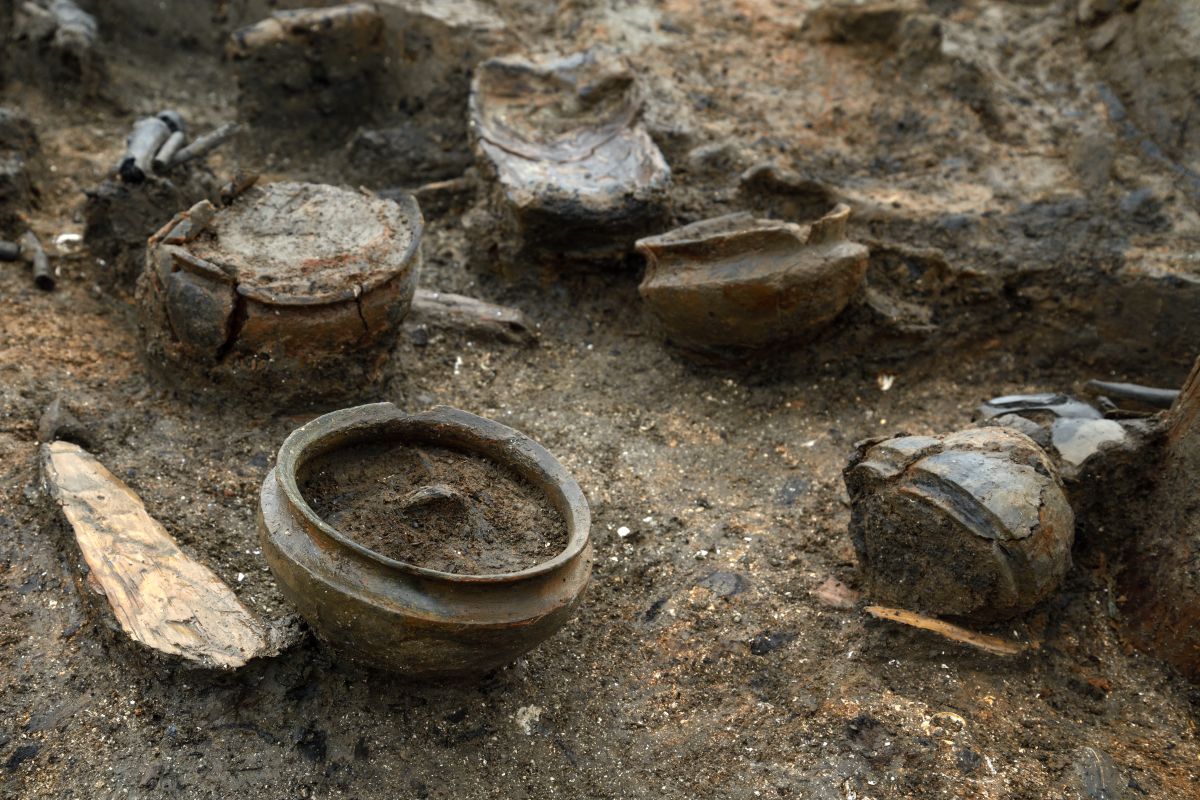
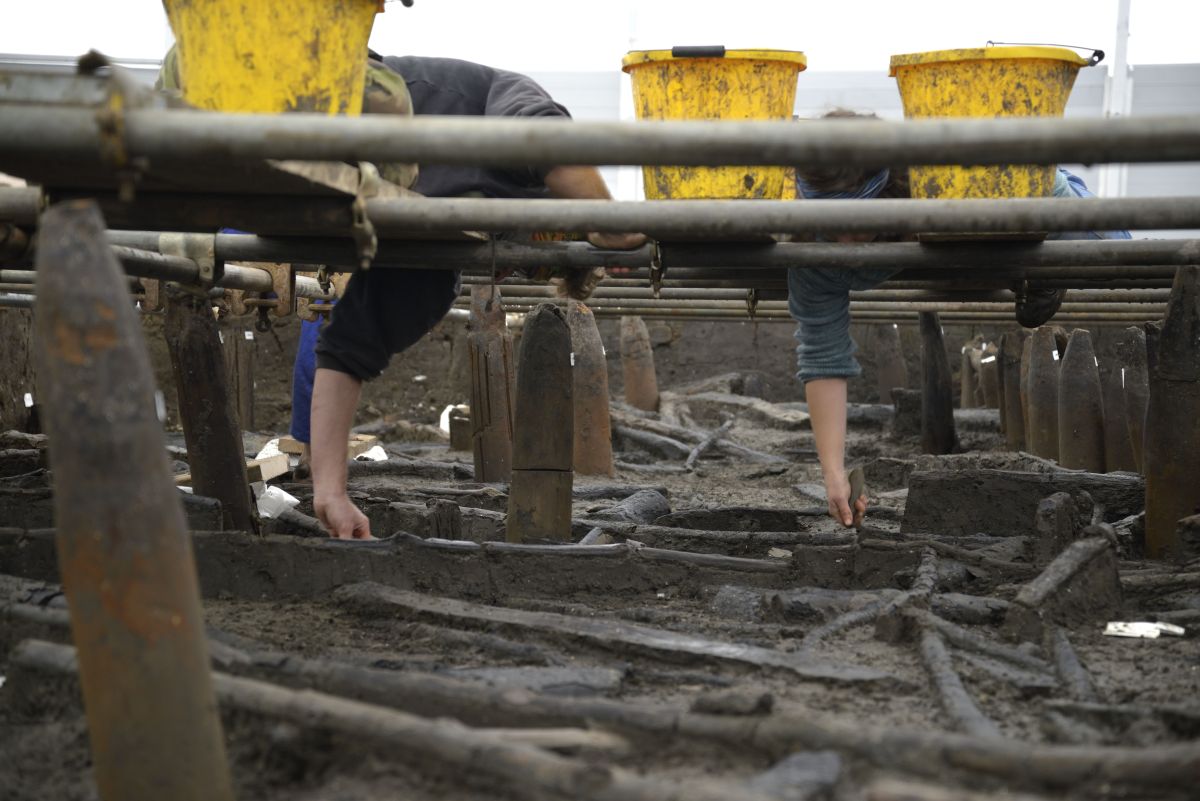
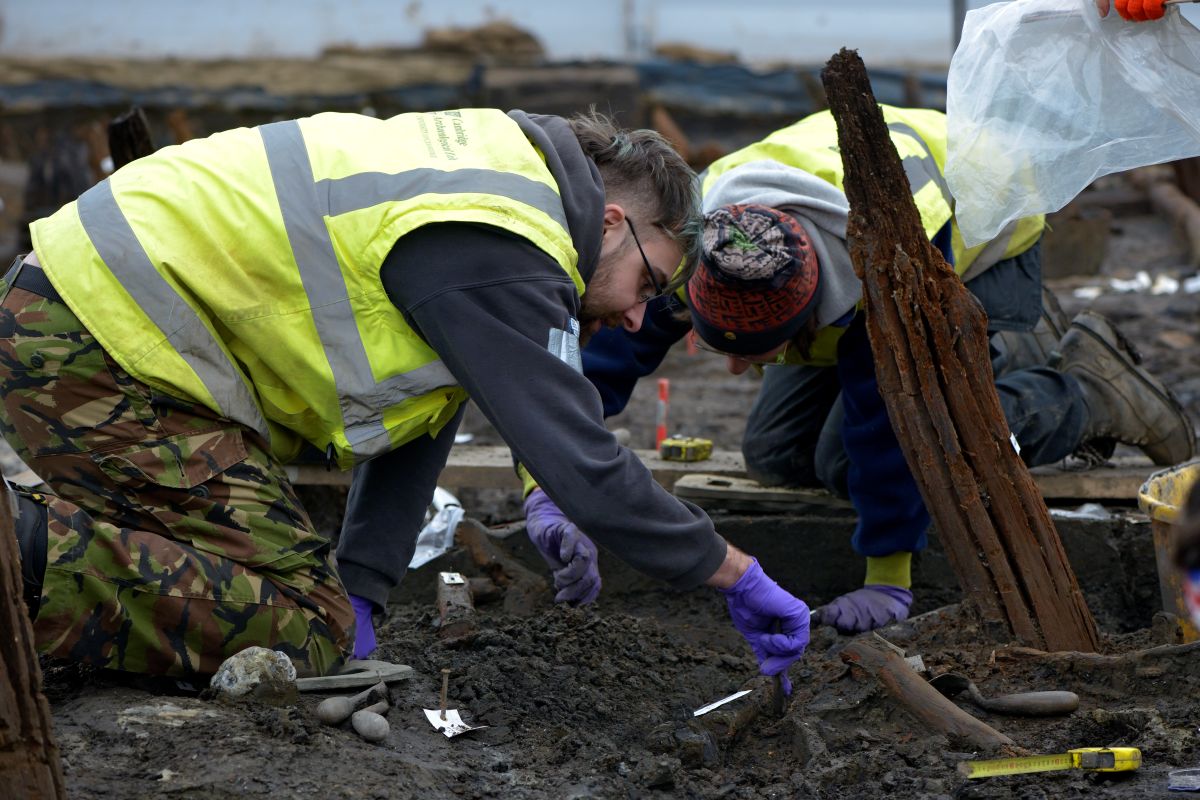
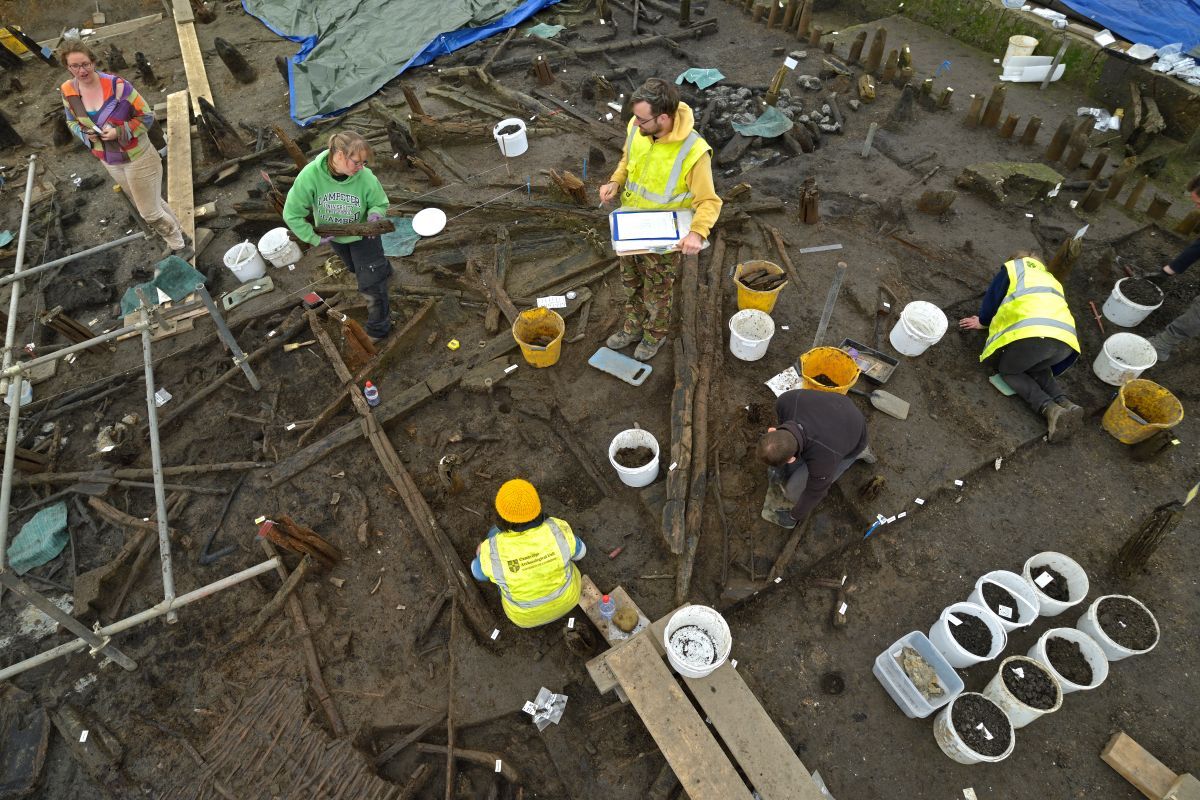
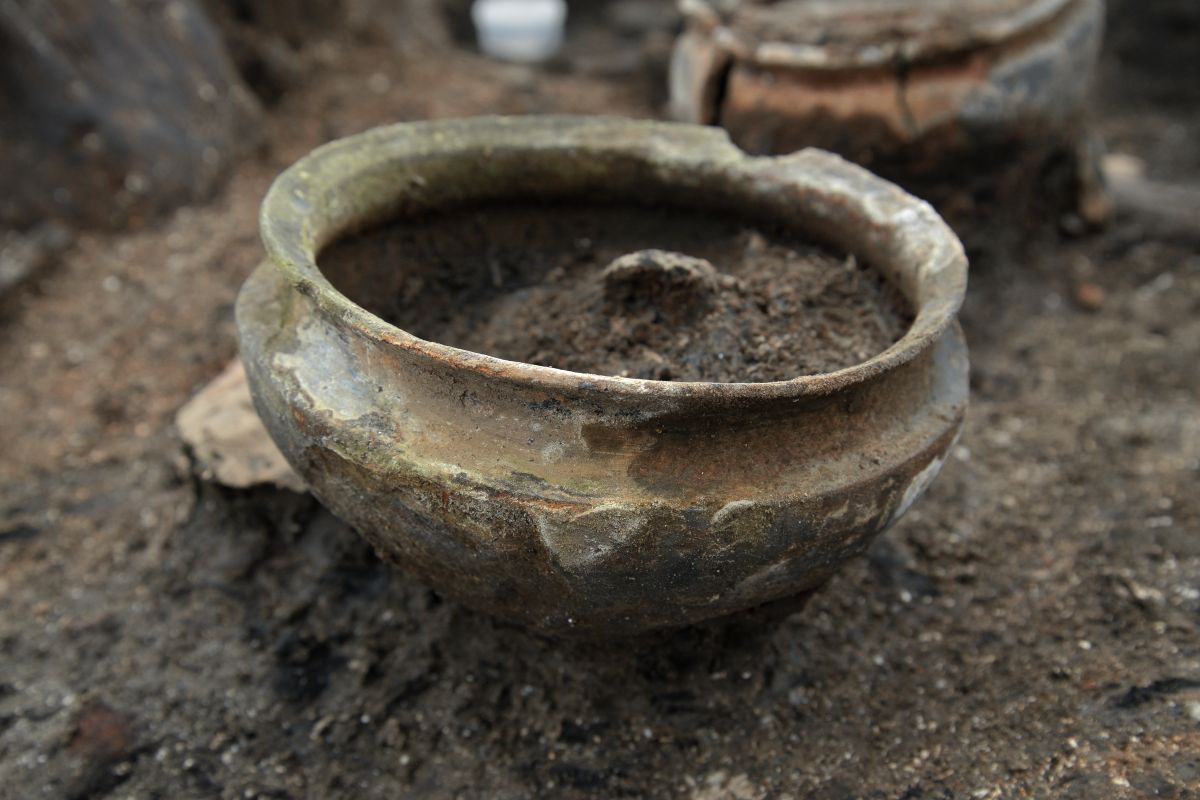
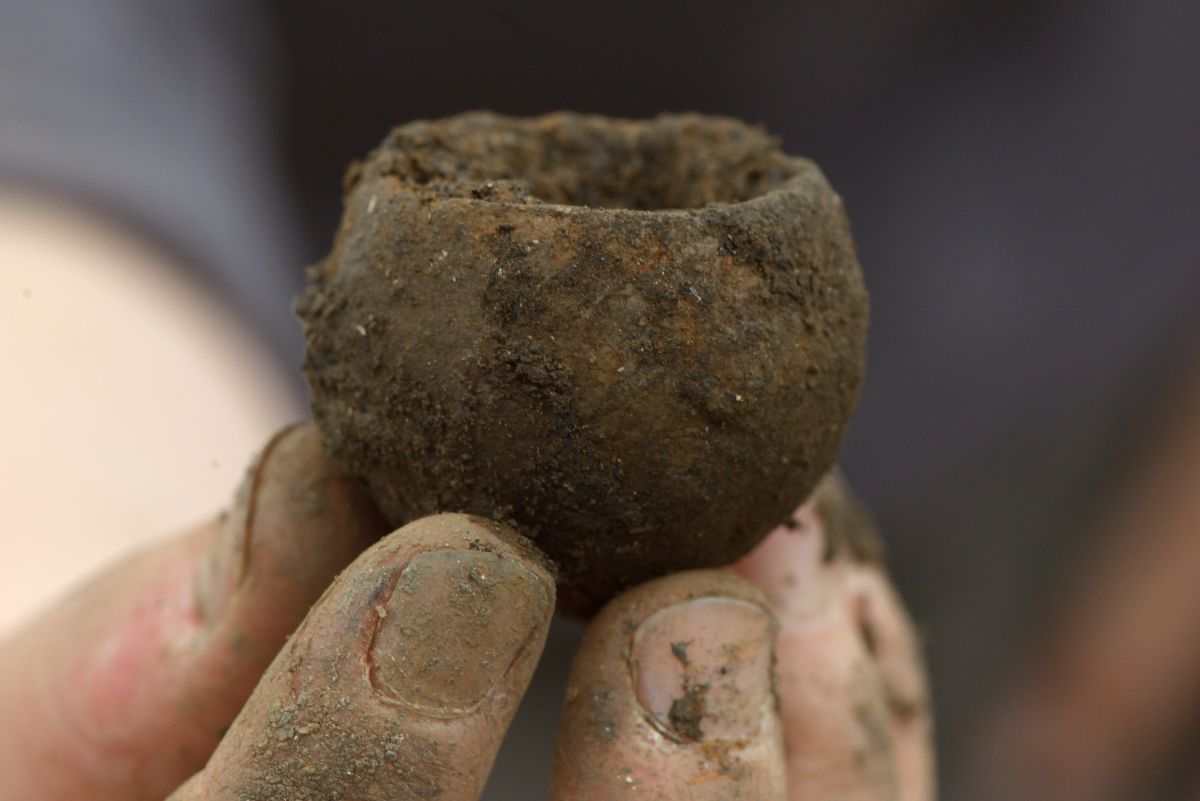
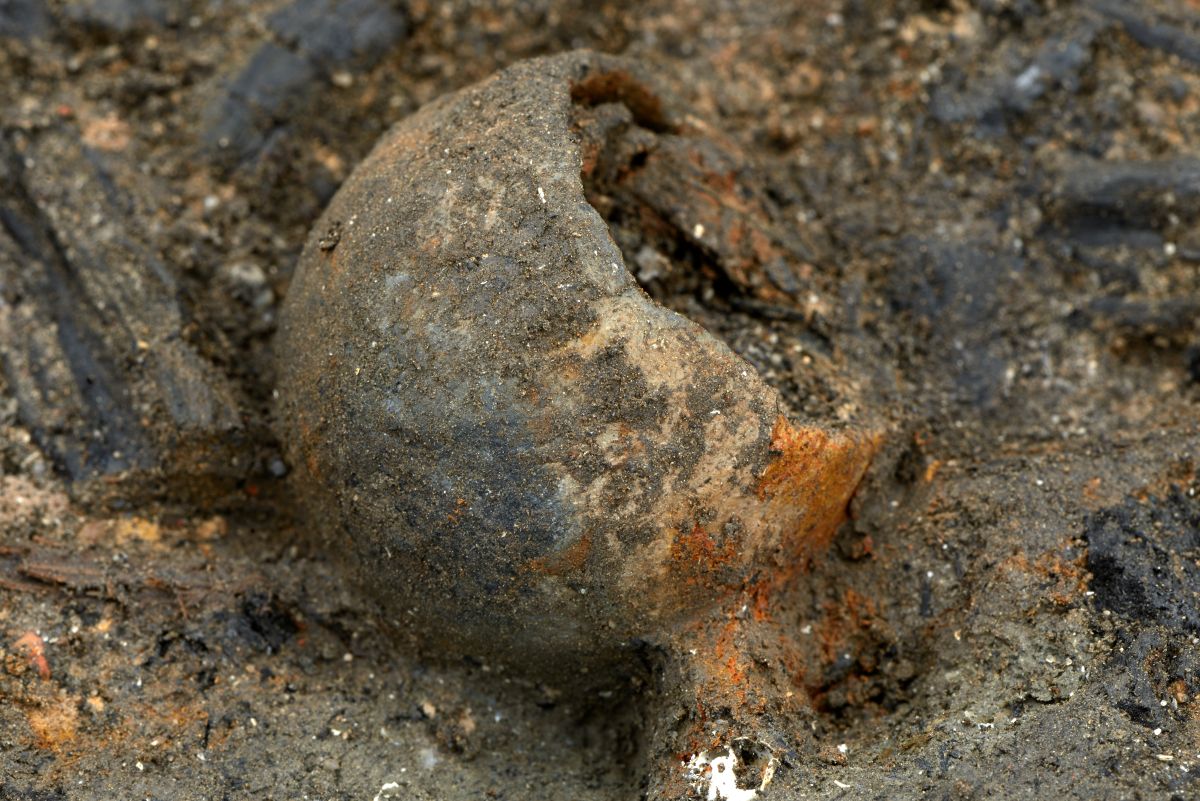
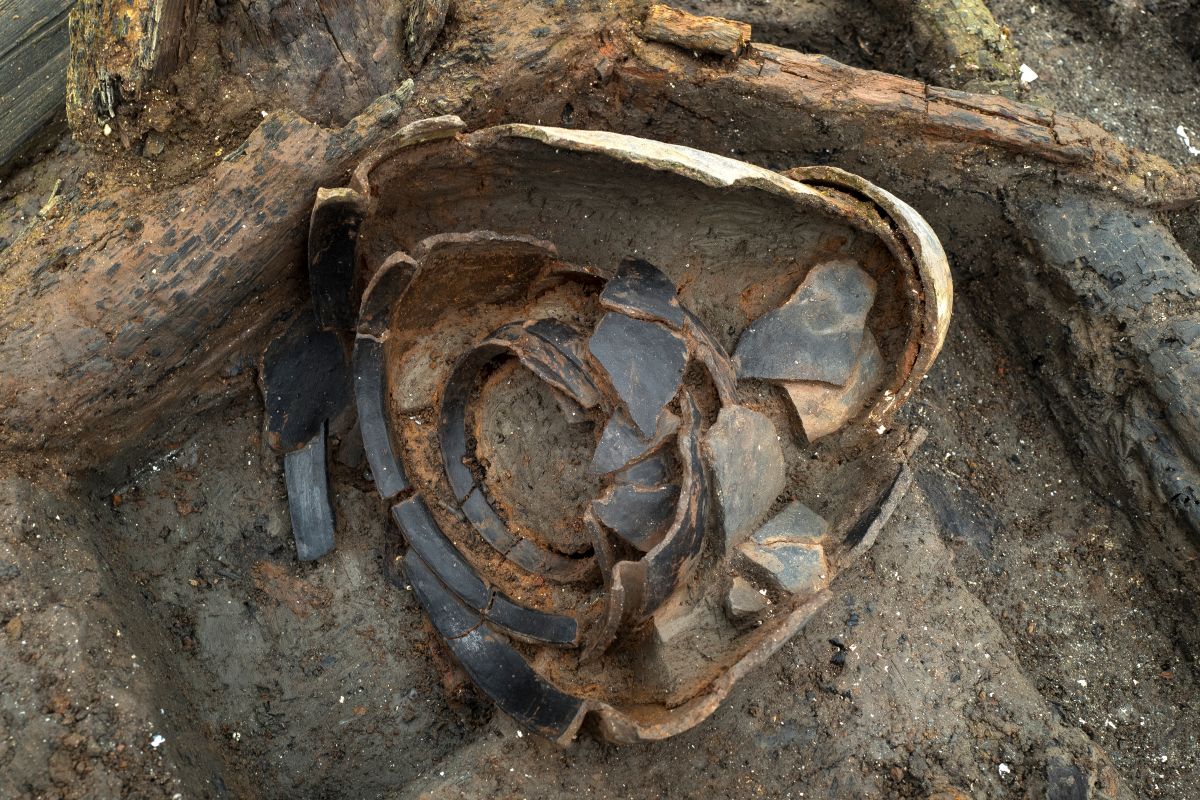
Area of potsExcavation and scaffoldExcavating the site Arial view of excavationPot in situA tiny pot!The tiny pot in situStacked potsSome images of the excavation and finds (all images by Cambridge Archaeological Unit)
Remember: Fruit Pig are sponsoring the 9th season of the podcast and Grant and Matthew are very kindly giving listeners to the podcast a unique special offer 10% off your order until the end of October 2025 – use the offer code Foodhis in the checkout at their online shop, www.fruitpig.co.uk.
If you can, support the podcast and blogs by becoming a £3 monthly subscriber, and unlock lots of premium content, including bonus blog posts and recipes, access to the easter eggs and the secret podcast, or treat me to a one-off virtual pint or coffee: click here.
Don’t forget, there will be postbag episodes in the future, so if you have any questions or queries about today’s episode, or indeed any episode, or have a question about the history of British food please email me at neil@britishfoodhistory.com, or on twitter and BlueSky @neilbuttery, or Instagram and Threads dr_neil_buttery. My DMs are open.
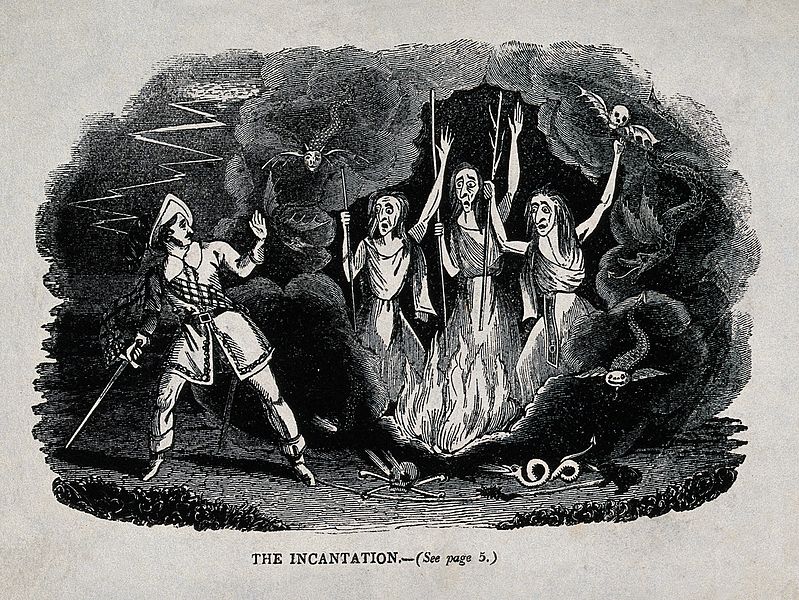
The Three Witches as depicted in a 19th Century woodcut
Round about the cauldron go; In the poison’d entrails throw. Toad, that under cold stone Days and nights has thirty-one Swelter’d venom sleeping got, Boil thou first i’ in the charmed pot. Double, double toil and trouble; Fire burn, and cauldron bubble!
William Shakespeare Macbeth, Act 4, Scene 1
As it’s Hallowe’en I thought that I’d write a little post all about cauldrons, because of course along with a broomstick, pointy hat, black cat and warts it is a must-have for any witch worth their salt at this time of year.
The Battersea Cauldron (pic: British Museum)
Let’s start off with what a cauldron is, just on case you are unfamiliar with them. They are large, rounded cooking pots that are suspended over a fire by a chain or on support legs in the centre of the fire, and they have been used all across Europe since the first millennium BCE. One of the oldest ever found was excavated in Battersea and is therefore known as the Battersea Cauldron. It made up of bronze sheets melded together and is huge. It has been described as “one of the largest and most sophisticated metal objects of the day” and is estimated to be 3000 years old, and it obviously got some use judging by the number of reparation patches it has covering its surface. Whatever size your cauldron was, it was an expensive bit of kit and built to last, so it is more unusual to find out without patches. Precious items such as this were passed down through the generations and the “man who owned an iron cauldron” says Dorothy Hartley, “had a definite standing above those who cooked only in small pots and pans.”
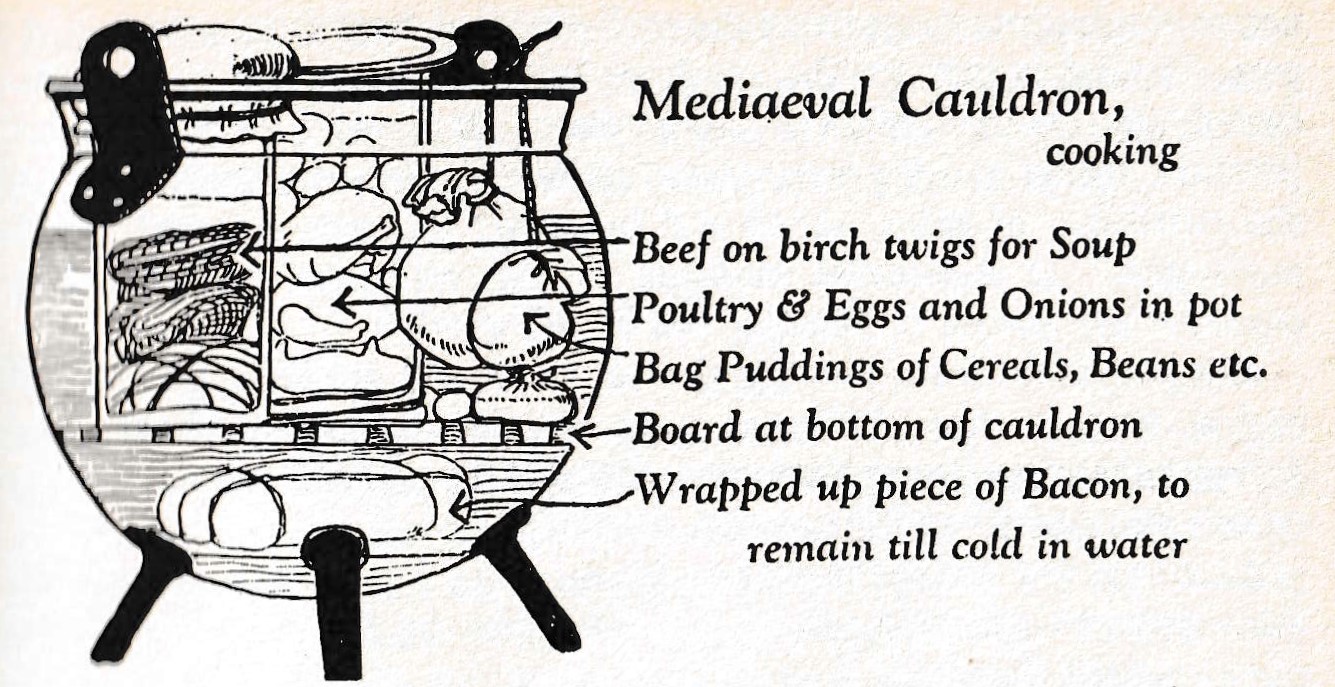
You may be thinking that a selection of pots and pans might be preferable to a massive cooking pot because they give you more options and you don’t have to make giant vats of food all the time, but a cauldron is surprisingly versatile and was rarely used for just cooking great big broths with bones bobbing about the surface. No, the cauldron was in fact the complete cooking and hot water system; take a look at this wonderful illustration from Ms Hartley’s excellent books Food in England:
The mediaeval cauldron, from Food in England by Dorothy Hartley
You can see here how the cauldron was actually compartmentalised and filled with a whole variety of foods. At the base is a large joint of meat that required long cooking, usually wrapped in a flour paste and the tied up with cloth, then sat on that were wooden slats upon which all sorts of things were sat. There would have been some suet puddings wrapped in cloth simmering away, as well as bag puddings made up of peas, beans or cereal grains such as the classic pease pudding. If you did want to make some hearty stew, you placed your ingredients in earthenware jars, filled them with stock or water, covered them tightly and poached it in the cauldron water. This gentle way of poaching meat produced deliciously juicy cuts of meat; in fact, one cauldron found in Warwick Castle bore the legend: “I give meat good savour.” Often the meat was jointed and sat in a large jug, to produce old British classics such as jugged hare (or rabbit, I’ve also seen recipes for jugged kippers and jugged peas). Dorothy illustrates some beef tea being made where the meat is sat in its jar on top of some birch twigs, preventing the meat from sticking to the bottom. I love little details like those. You had to be very careful cooking like this though because those sealed pots acted like pressure cookers and were prone to exploding!
If you like the blogs and podcast I produce, please consider treating me to a virtual coffee or pint, or even a £3 monthly subscription: follow this link for more information.
Aside from all of this, the cauldron also provided the washing water and bathwater. “I hope” says Hartley, “you now understand that because there was only one cauldron on the fire there was not one thing for dinner.”
Jugged hare
Cauldrons were such important and precious items that they were even found in burial sites such as the Baldock Burial, a Bronze Age burial site in Hertfordshire, where a whole plethora of things were found including a cauldron complete with joints of meat, ready to sustain the dead as they journeyed to the Afterlife. Pagans revered them and they became symbolic of death and resurrection, often being buried in near or bogs and rivers, locations they considered to be domains of both the living and the dead.
Because they were imbibed with magic, they appear in several myths and legends; for example, the Irish god Dagda owned a cauldron that did not just magically produce food but also cured disease, healed wounds and brought the dead back to life. There was also a Cauldron of Knowledge that told you everything you wanted (and did not want) to know. There are plenty of Welsh and English stories that involve cauldrons too (though I haven’t come across any Scottish ones for some reason).
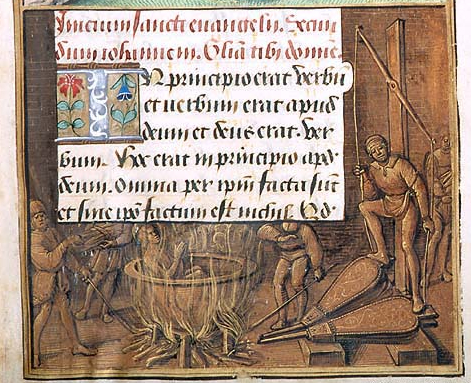
St John the Apostle boiled in oil from The Hours of Henry VIII, (C) The Morgan Library & Museum
Cauldrons of course sat upon flames and were extensively found in medieval and Tudor Christian art to depict what might happen to you if you went to Hell. One example depicts Dives – a rich man Jesus tells us of in the New Testament, who was very rich but would not share his food with a poor beggar. He is shown “tormented with thirst stewing forever in one of Hell’s capacious cauldrons.” Another manuscript knows as the Hours of Henry VIII clearly shows St. John the Evangelist sat in cauldron of boiling oil looking pretty chilled out and happily preaching whilst being tormentind by his captors. He would be later be miraculously preserved in the oil rather like, one supposes, like some nice comfit duck legs.
So there we go, I hope you have enjoyed my brief history of cauldrons and appreciate that they are not just for witches…or Hallowe’en!



 British Food: A History