
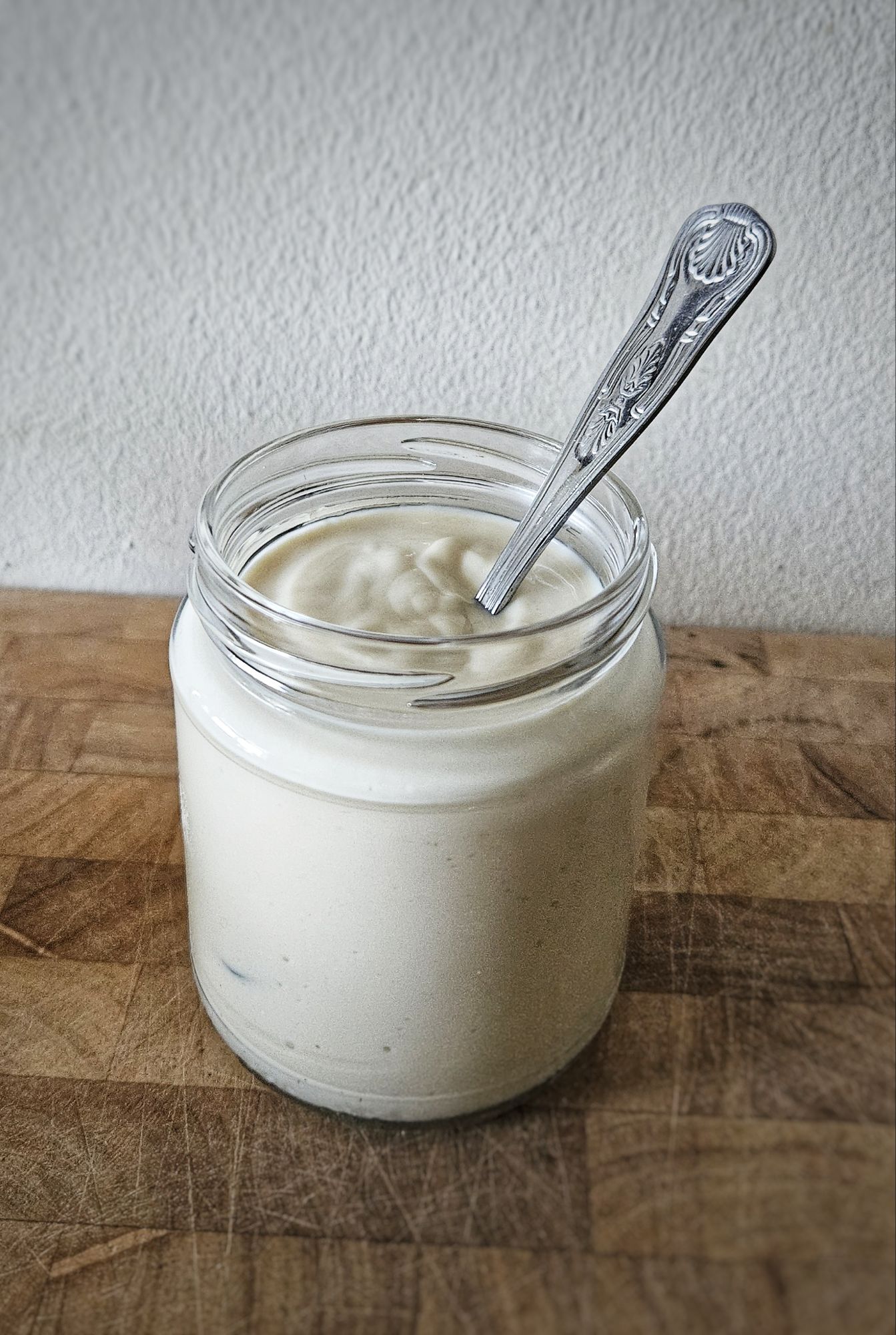
In the most recent Special Postbag Edition of The British Food History Podcast, I said I would add ‘Salad Cream’ to my list of blog posts, so here we are!
It was prompted by the issue of salad cream snobbery, a topic that cropped up in the episode Retro Foods with Briony May Williams. Briony and I are big fans of it, and it should not be sniffed at, with Briony enjoying it with a nice slice of home-made quiche Lorraine. It’s come up before: in the episode Hogmanay and Hamely Kitchen with Paula McIntyre, Paula said this: ‘If anyone tells you they don’t like salad cream, they’re lying to you – they’re trying to be posh.’ I agree completely with this, of course.
Before I go on, I should explain what salad cream is, in case there are some folk out there who have absolutely no idea what I’m banging on about.
Salad cream is a commercially-made sauce that was designed specifically for the UK market, first sold in 1914. It’s a piquant mixture of mustard, vinegar, sugar and cream as well as an extra thickener like eggs and/or flour. It was readily accepted by the working classes.[1] I remember friend of mine when I was growing up in the 1980s in the Pudsey, Leeds, who enjoyed a salad cream sandwich from time to time.
It’s sold in glass or squeezy bottles just like tomato ketchup, but you use it as you would mayonnaise, I would say. In fact it’s better than mayonnaise, especially when you are eating rich or fatty foods – a ham or cheese sandwich, for example. In my opinion, nothing beats a finger sandwich made with white bread, lots of butter, shredded iceberg lettuce and lashings of salad cream.
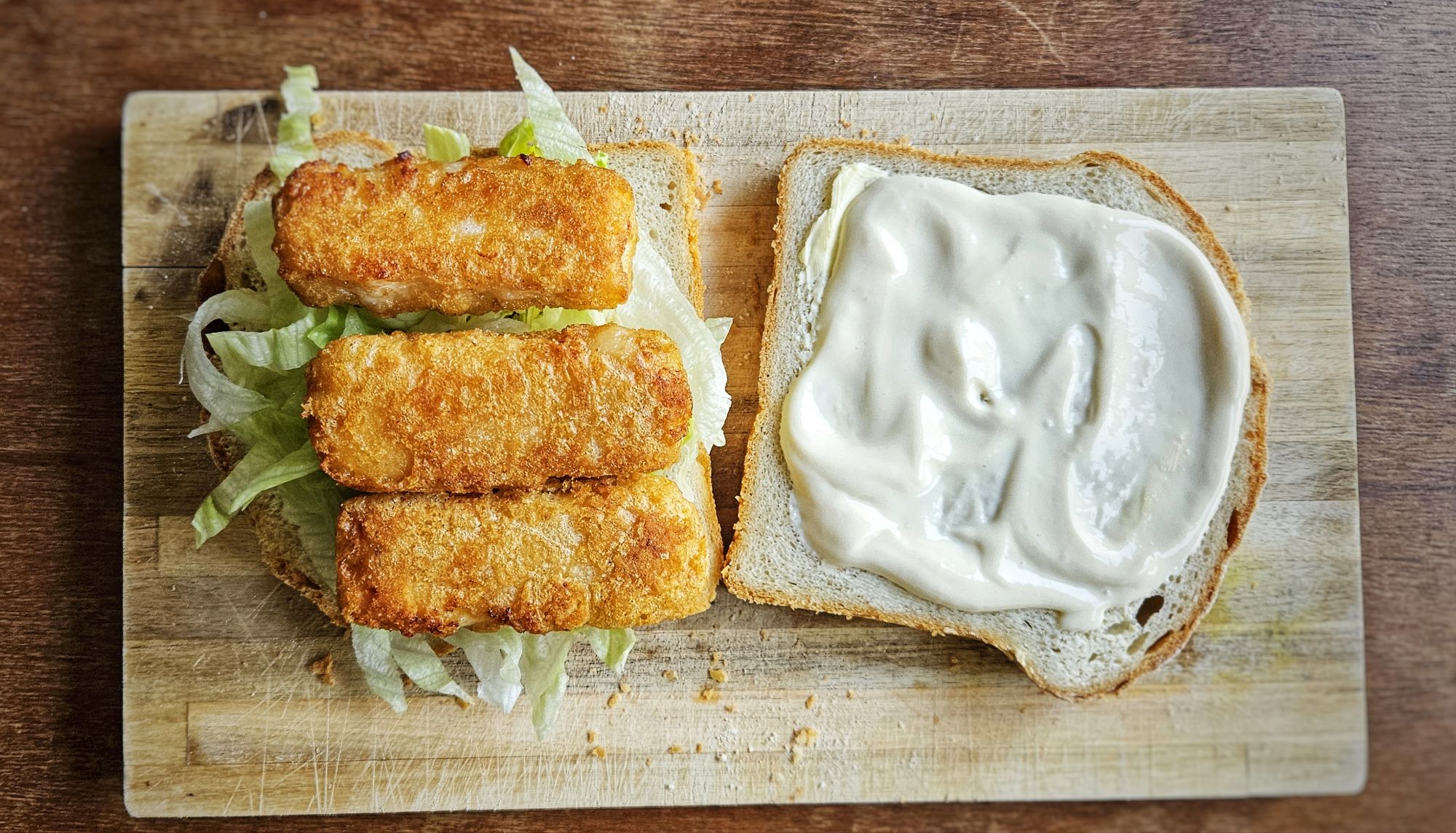
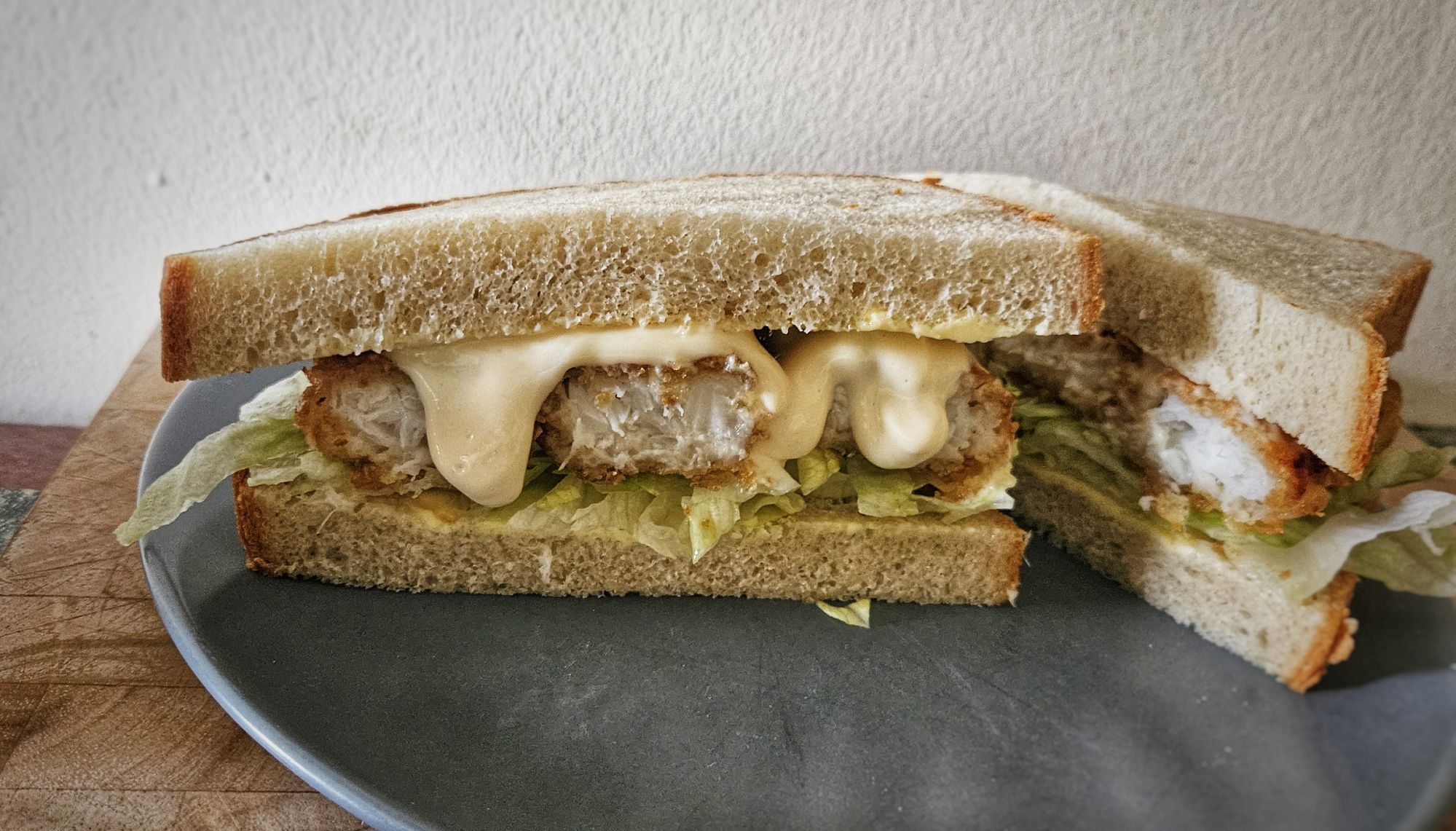
Recipes for it appear quite soon after production. I have a 1923 edition of Mrs Beeton’s Cookery Book which has a recipe for it in the salad sauce section of the book alongside mayonnaise, salad dressing (i.e. vinaigrette) and rémoulade sauce. It’s the simplest possible mixture of cream, vinegar, mustard and sugar.[2]
Salad cream came into its own during the Second World War when tomato ketchup became difficult to get hold of.[3] At this point, I think it became tarnished – perhaps the amount of sugar and cream decreased during the war, but poor old salad cream does seem to have been viewed as austerity mayonnaise ever since. That said, in The Constance Spry Cookbook, published in 1956, just as rationing had ended, the ‘cream dressing’ recipe that appears within its pages seems quite opulent, containing mustard, sugar, salt, vinegar, white pepper, olive oil and the special secret ingredient evaporated milk.[4] How very post-war.
Jane Grigson was not a fan of salad cream it seems, and I remember reading her introduction to her recipe for English Salad Sauce in English Food:
Anyone who remembers the unpleasant salad sauces we were reduced to making in the last war, or who had a baptism of bottled salad creams and “mayonnaise” as a child, can feel safe with this recipe.[5]
Jane’s recipe is based on one from Modern Cookery for Private Families by Eliza Acton (1845),[6] which shows that Heinz didn’t just pluck their idea out of the air.
I remember being excited to make it and being very disappointed by it: thin in consistency, too salty and pretty bland – a rare case of me not being in agreement with Jane!
Salad cream was almost discontinued by Heinz around the year 2000. Luckily, the British public got wind of this and voted for their wallets – salad cream was too delicious and culturally important for us to lose it.[7] Good work!
There are many folk who sing the praises of salad cream including Nigella Lawson and Marco Pierre White. Another who did was Gary Rhodes, and it is his recipe from Great British Classics, that mine is based on.[8]
If you can, support the podcast and blogs by becoming a £3 monthly subscriber, and unlock lots of premium content, including bonus blog posts and recipes, access to the easter eggs and the secret podcast, or treat me to a one-off virtual pint or coffee: click here.
Recipe
Salad cream is very simple to make, and it is up for modification. You could use a flavoured vinegar like chili or tarragon, or add something spicy alongside the mustard such as sriracha or smoked paprika.
Makes around 350 ml
1 level tbs/10 g plain flour
2 rounded dsp/25 g caster sugar
1 rounded dsp/6 g English mustard powder or made English mustard
¼ tsp salt
2 eggs
100 ml cider vinegar
150 ml single cream plus 2 tbs extra (optional, see recipe)
Juice ¼ lemon
Mix the flour, sugar, mustard and salt in a metal bowl. Beat in eggs and vinegar and whisk them into the contents of the bowl. Place the bowl over a pan of simmering water and whisk with a small whisk until the mixture thickens. You don’t want the contents to boil, but keep whisking to cook out the flour. Taste the mixture to check for any flouriness; if it can be detected, cook a little longer. It should take about 10 minutes in all.
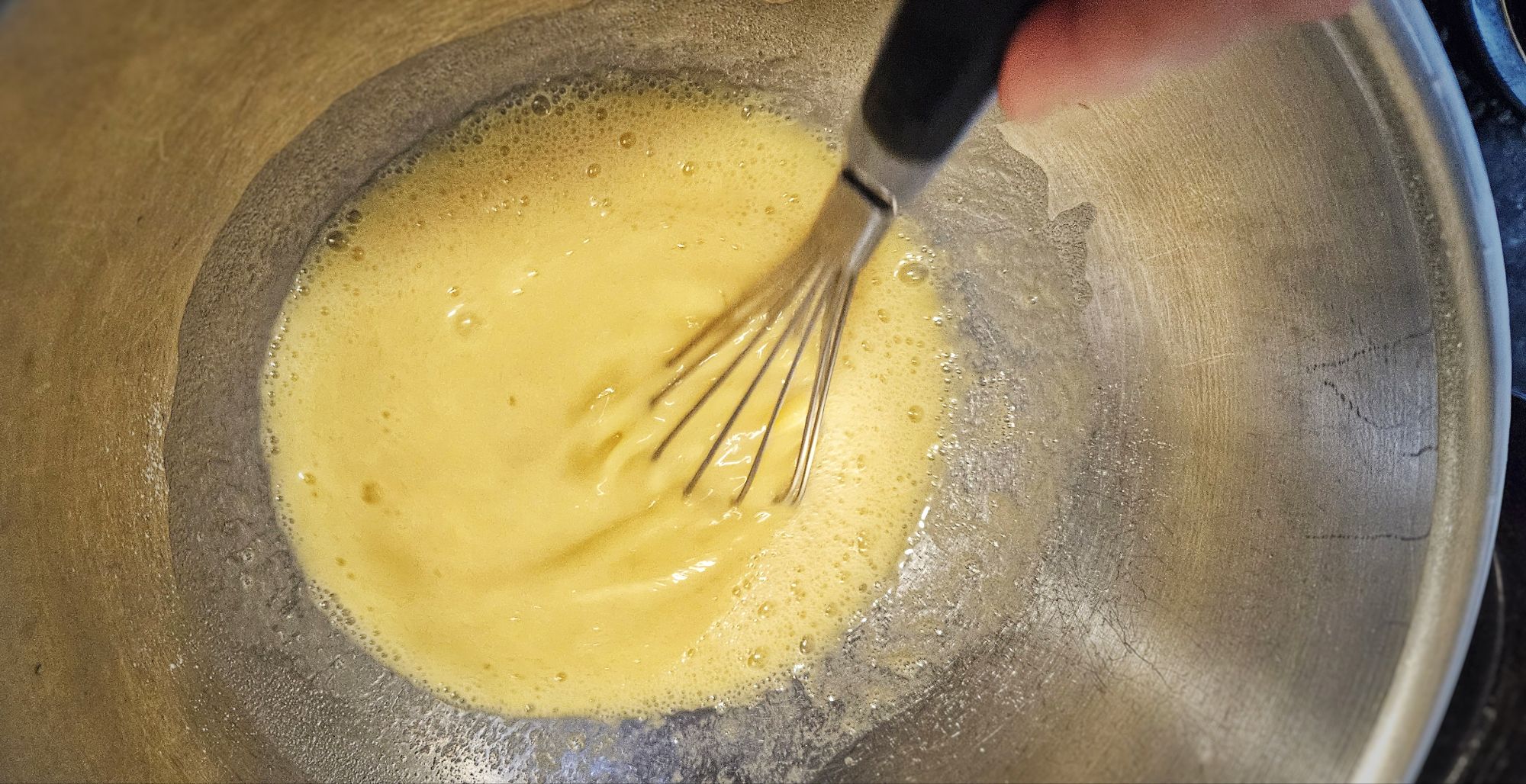
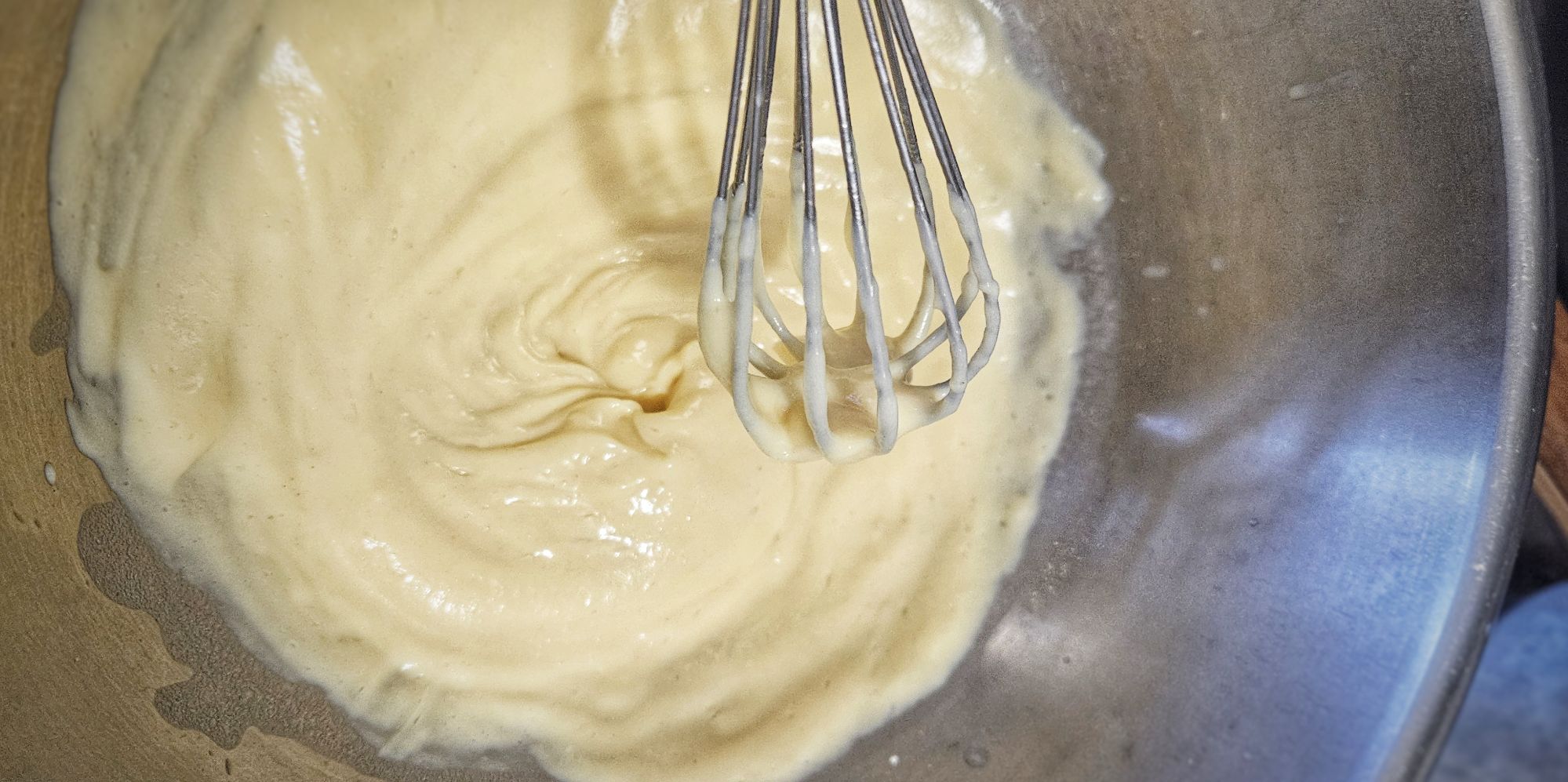
Beat in 150 ml of the cream and pass the sauce through a sieve into a bowl or jug and cover with cling film to prevent a skin forming. Cool and beat in the lemon juice and more cream if it seems too thick. Add more salt if you think it needs it.
Pour into jars that have been rinsed with hot water and refrigerate.
The salad cream will keep in the fridge for up to 10 days.
References
[1] Smithers, R. (2010, September 1). Dressing fancy: after 96 years, Heinz Salad Cream gets a new flavour. The Guardian.
[2] Beeton, I. (1923). Mrs. Beeton’s Cookery Book. Ward, Lock & Company.
[3] Smithers (2010)
[4] Spry, C., & Hume, R. (1956). The Constance Spry Cookery Book. Weidenfeld and Nicholson.
[5] Grigson, J. (1992). English Food (Third Edit). Penguin.
[6] Acton, E. (1845). Modern Cookery For Private Families. Quadrille.
[7] Smithers (2010)
[8]Rhodes, G. (2016). New British Classics. Random House.

