Tag Archives: wine

Negus

Wine, Cyder, Negus, Purl,[1] and Porter;

Are liquors for any Courtier.

The Free-Mason’s Calendar, 1776[2]

Merry Christmas everyone! It’s time for my annual boozy Christmas drink, and this year’s is so good, you can even give it to the kids; if you take Mrs Beeton’s advice (I advise against it, but what do I know). It is called negus; the ingredients are simple, and you are almost guaranteed to have them this time of year: wine, sugar, citrus fruit, spices. Easy.

Its origin lies with the English officer class of the late 17th and early 18th centuries, who got into the very sensible habit of watering down their wine to avoid getting too drunk of an evening. They still wanted something to drink though. It is named after Colonel Francis Negus (1660-1732), ‘a well-connected gentleman’, who, aside from being a noted member of the officer class, was also an MP, and a talented horse rider and hunter, so-much-so he was given the position of Master of the Horse and Warden of Windsor Forest. Quite the chap it would seem. The earliest description known comes in the form of a handwritten note in a 1725 edition of Tacitus’s works. It said: ‘After a morning’s walk, half a pint of white wine, made and hot and sweetened a little, is recond very good. – Col. Negus, a gentn. of tast, advises it, I have heard say.’[3] Initially it was a heated mixture of white wine and water, sugar and then some citrus juice, sometimes lemons, or sweet or Seville oranges, and it hasn’t really changed that much.

Its low alcohol made it especially good for the infirm or chronically ill. One Dr William Buchan in his 1797 book, prescribes claret negus for those with ‘Slow or Nervous Fever’, what we would call depression today.[4] In the book Oxford Nightcaps (1827), the author tells us that a doctor friend of his, a certain Doctor Willich, thinks ‘Negus is one of the innocent and wholesome species of drink especially if Seville oranges be added’. He also recommends lemons, cinnamon, cloves and all-spice. And calves’ foot jelly, which was thought very nourishing to those who couldn’t digest anything too rich or challenging.

Mr Fezziwig’s Ball as depicted by John Leech

Into the mid-19th century, negus settled down as a drink to be enjoyed by everyone, the wine most often used now being port (a drink which had been made popular since the Napoleonic Wars). It is mentioned in Charles Dickens’s A Christmas Carol (1843). When the Ghost of Christmas Past takes Scrooge to show him the wonderful parties put on by his old boss, the kind and caring, Mr Fezziwig: ‘There were dances, and there were forfeits, and more dances, and there was cake, and there was negus, and there was a great piece of Cold Roast, and there was a great piece of Cold Boiled, and there were mince-pies, and plenty of beer.’[5] What a sight they would have been!
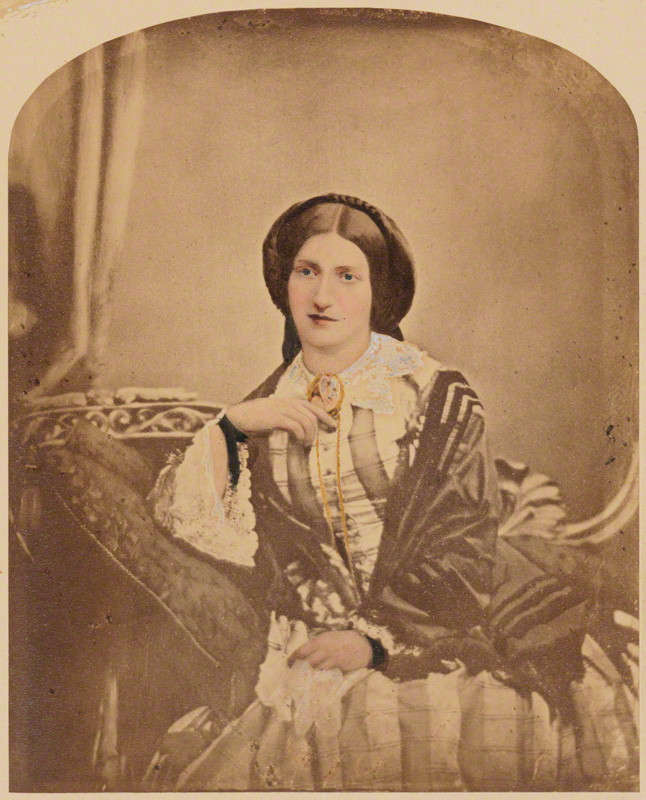
Isabella Beeton’s considered negus a children’s drink

So inoffensive was negus that it became a popular drink with kids, with Mrs Beeton informing us in 1861 that ‘[a]s this beverage is more usually drunk at children’s parties than at any other, the wine need not be very old or expensive for the purpose.’ Her proportions are 1 pint of port to every quart of water, plus a quarter of a pound of sugar, zest and juice of one lemon and some grated nutmeg. She adds: ‘Allow 1 pint of wine, with the ingredients in proportion, for a party of 9 or 10 children.’[6]

It’s essentially a weak version of my favourite hot-booze drink, smoking bishop, but child-friendly. Hm. I suppose it’s one way to get them to sleep on Christmas Eve night!


If you like the blogs and podcast I produce and would to start a £3 monthly subscription, or would like to treat me to virtual coffee or pint: follow this link for more information. Thank you.


The recipe

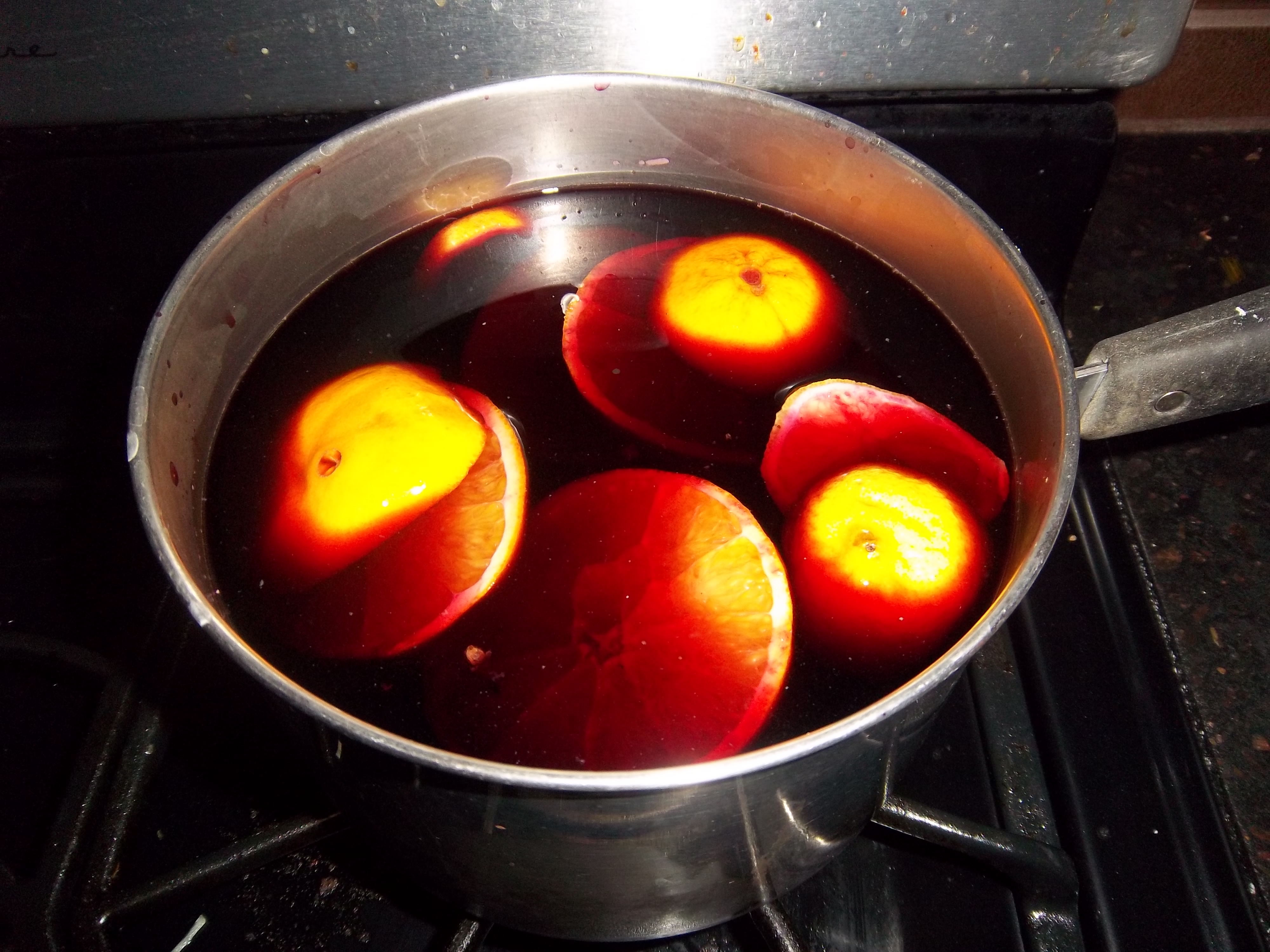
Use whatever wine you prefer and your favourite citrus fruit. I went with port and a clementine and added some nutmeg and cinnamon. I must say it was very drinkable.

I’ve metricated the volumes, but the rule of thumb here is 1 part wine to 2 parts water, and you can sweeten the mixture to your taste.

Makes 1.3 litres:

400 ml wine (port, claret or white wine)

Zest and juice of 1 citrus fruit (lemon, sweet orange, Seville orange, clementine, etc)

Spices: ¼ freshly grated nutmeg, a snapped cinnamon stick, a teaspoon of cracked allspice berries or bruised cloves; choose your favourites.

800 ml boiling water

100 to 120 g caster sugar.

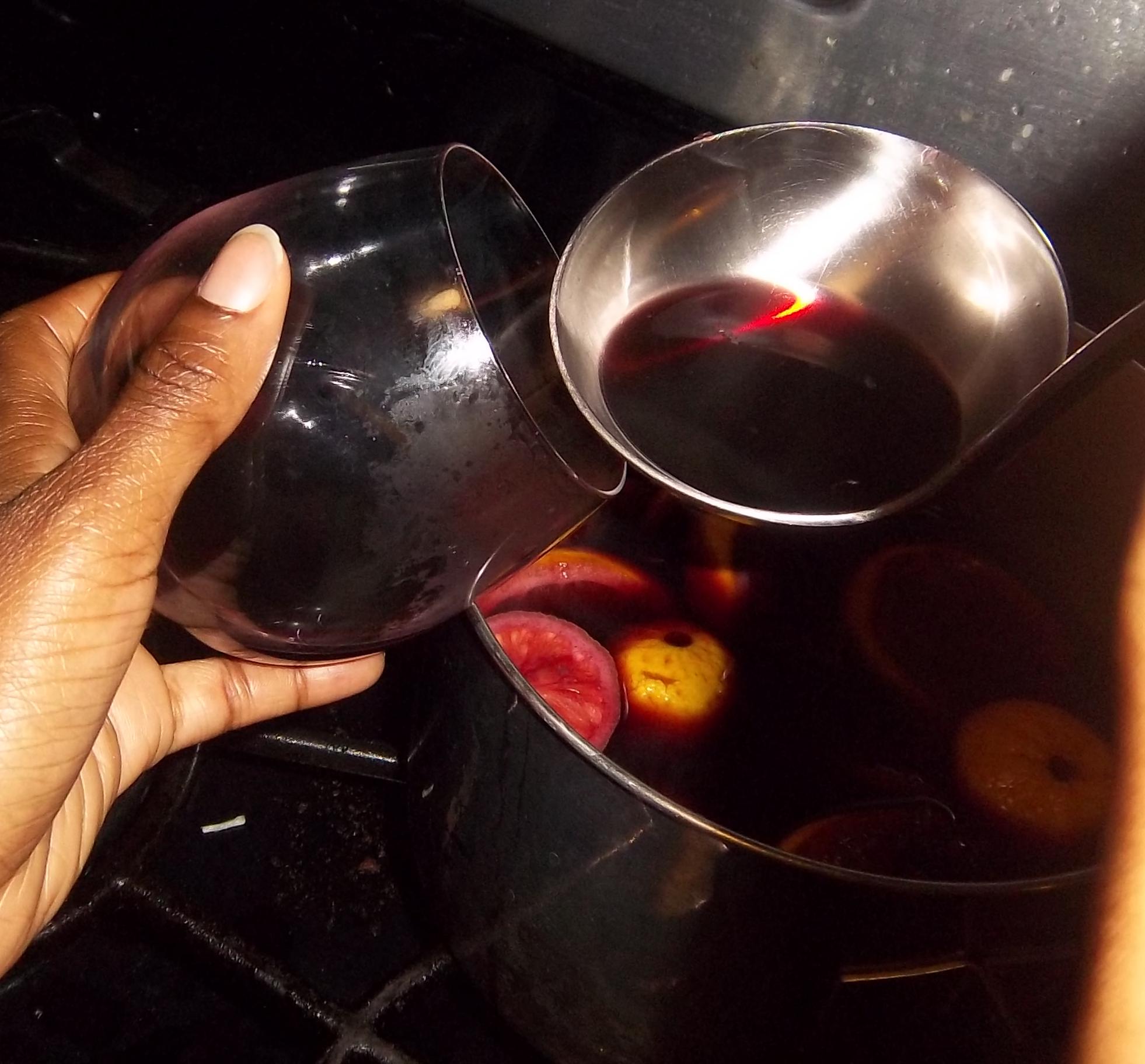
Heat the wine slowly with the zest and juice of your chosen fruit, and the spices until scalding hot (but not boiling). Add the hot water, then add sugar to taste. Pass through a sieve into a punch bowl or jug. To serve, ladle into beakers or cups.

One final note before I go: in Jerry Thomas and Christian Shultz’s How to Mix Drinks (1862), there is a very interesting-sounding soda negus recipe. The wine is warmed up with sugar and spices, then left to cool, then soda is added before serving.[7] Worth a try I think!


Notes

[1] Purl was an ale that had been infused with wormwood. Sounds full-on. Potential future Christmas booze post.

[2] Anon. (1776) The Free-Mason’s Calendar: or, an Almanac for the Year of Christ 1776.

[3] Wondrich, D. (2021) The Oxford Companion to Spirits and Cocktails. Edited by D. Wondrich and N. Rothbaum. Oxford University Press.

[4] Buchan, W. (1797) Domestic Medicine, Or, A Treatise on the Prevention and Cure of Diseases, by Regimen and Simple Medicines. Edited by I. Cathrall. Richard Folwell.

[5] Dickens, C. (2010) A Christmas Carol and Other Christmas Writings. Penguin Classics.

[6] Beeton, I. (1861) The Book of Household Management. Lightning Source.

[7] Thomas, J. and Schultz, C. (1862) How to Mix Drinks, Or, The Bon-vivant’s Companion. Dick & Fitzgerald.

Leave a comment

Filed under Britain, Christmas, Eighteenth Century, Festivals, food, General, history, Recipes, The Victorians, Uncategorized

Blue Cheese Ice Cream with Poached Pears

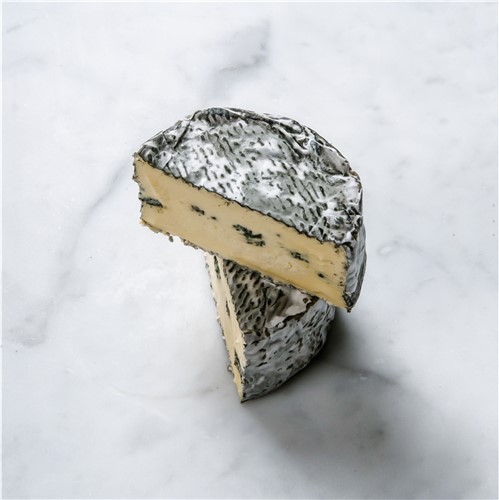
As I promised in my last post, I have a second cheese recipe for you that uses a traditionally-made British cheese. Harvey & Brockless sent me a whole loads of excellent cheeses and other goodies, and tucked in there was probably my favourite British blue cheese, Isle of Wight Blue:

‘Established in 2006 by mother and son Julie and Richard Hodgson, Isle of Wight Cheese Co. flagship blue is soft and creamy with a bluey green natural rind and blue veins.’

Beautiful Isle of Wight Blue (pic: Harvey & Brockless)

It’s strong, yet mellow and very creamy. Nothing like a Stilton at all (I love a good Stilton too, of course).

This is exactly the sort of cheese Professor Peter J. Atkins and I were talking about in my podcast episode about the British cheese industry, and how there is a resurgence in traditional styles and methods: softer cheeses made in small batches in small farms – before the behemoth that is Cheddar came along!

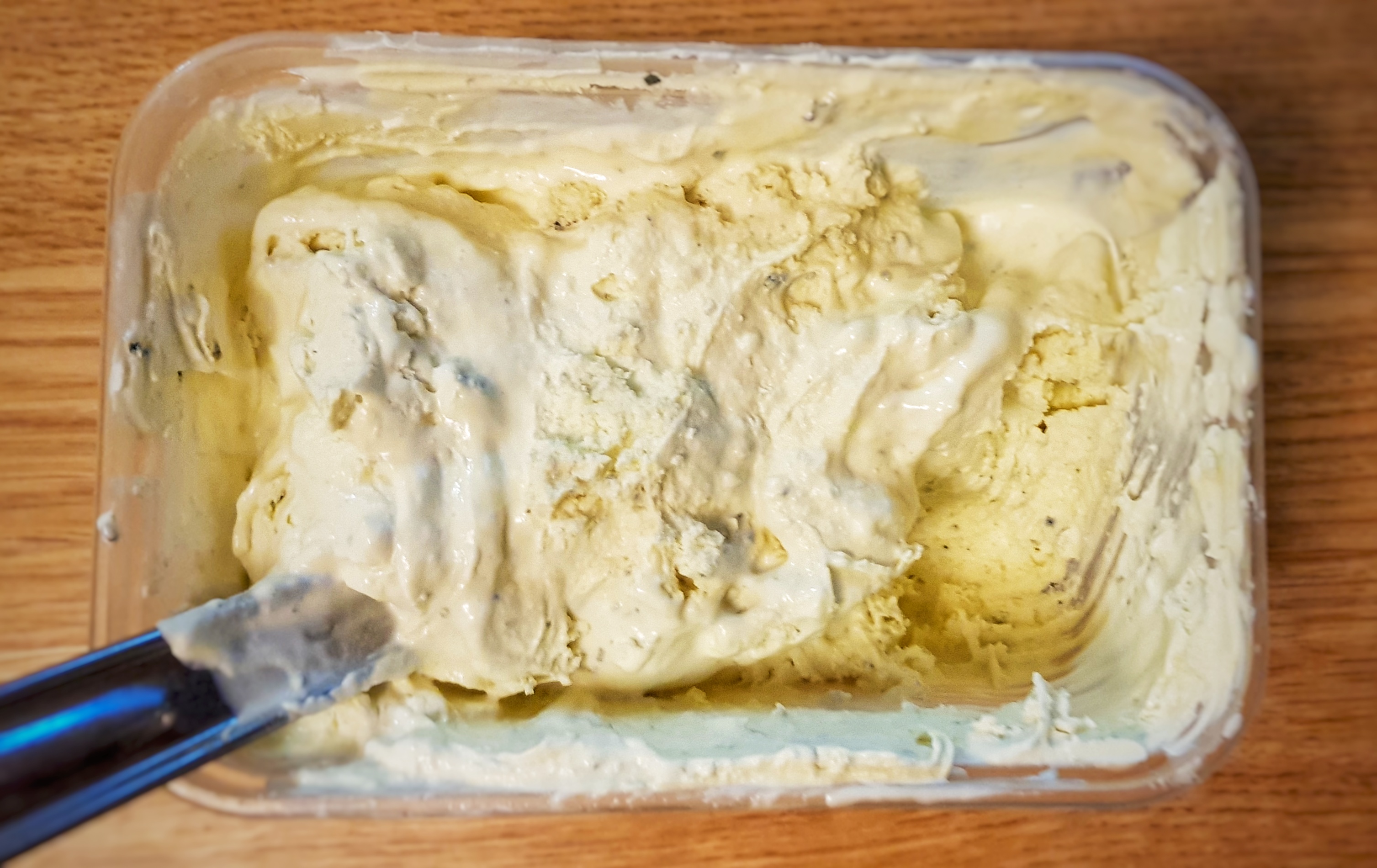
This cheese, because of its blue cheese flavour, low acidity and smooth consistency, is perfect to make into an ice cream. Cheese ice creams used to be popular, hitting a peak in the Regency period: indeed, the Prince Regent himself tucked into Parmesan cheese ice cream. My ice cream, like Prince George’s, is sweetened, but it is not over-sweet. It’s very simple to make – a case of mixing soft cheese into some cream and sugar. A curdy, hard or crumbly cheese would not work here.

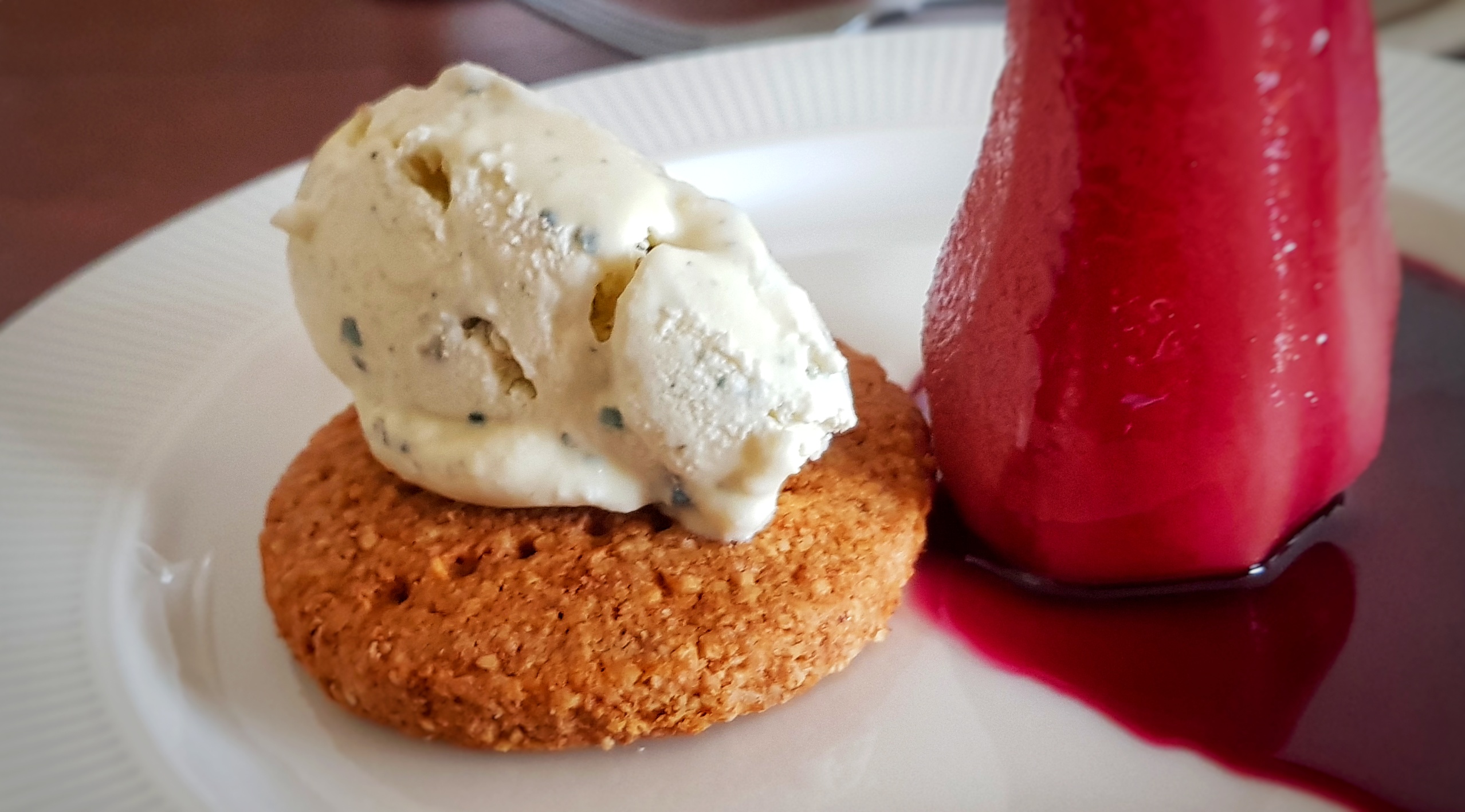
I’ve combined it with a dessert classic: pears poached in red wine. There’s a recipe in Forme of Cury for it, so it really does have quite the vintage. The poaching wine is sweet and spiced and is reduced to a delicious, tart and slightly fiery spooning sauce. On the side: a nice digestive biscuit.

This is a well tried-and-tested recipe: it’s popped up on restaurant and pop-up restaurant menus in the past, but I originally made it as part of The Telegraph Fabulous Foodie competition all the way back in 2015. It was judged by none less than Xanthe Clay, John Gregory Smith and Jeremy Dixon and it took me to the grand final. So if you are still unsure as to whether you’ll like it, take it from them, not me, that it is good!

Give it a go, you won’t be sorry. Also, see below for an excellent way of using up left over ice cream and sauce.

Serves 4 to 6

For the ice cream:

1 x 225 g round of Isle of Wight Blue at room temperature

450 g double cream

1 ½ tbs icing sugar

In a bowl, break up the cheese as best you can and beat into it one third of the cream. You won’t be able to blend it in perfectly, but a little texture is no bad thing.

Sift the icing sugar with the reminder of the cream in a second bowl and whip until just slightly floppy, then fold into the cheese.

Freeze it in an ice cream churn if you have one. Alternatively, place in a tub, pop in the freezer and beat it with a small whisk every 20 to 30 minutes or so until it becomes too difficult; at that point you are done, and it can be left in the freezer until required. If you don’t want to freeze it, you can whip the cream a little more and use it like clotted cream.

For the pears:

4 to 6 unripe conference pears

500 ml red wine

100 g caster sugar

1 cinnamon stick

2 long peppers (or ¼ tsp black peppercorns)

¼ tsp ground ginger

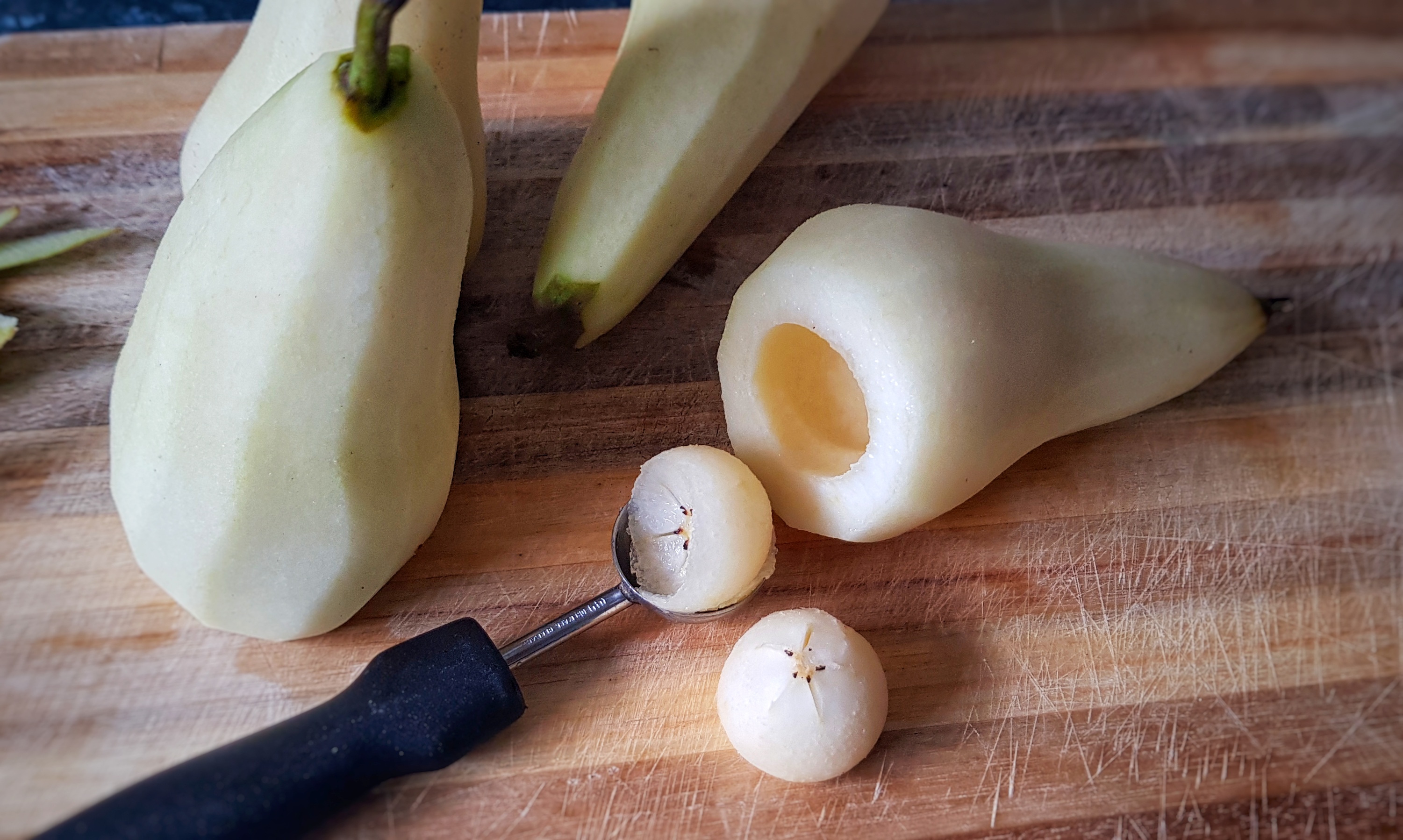
Peel the pears, leaving the stalks intact. Slice the bottom so that the pear is able to stand up sturdily. If you have one, use a melon baller to remove the core from beneath.

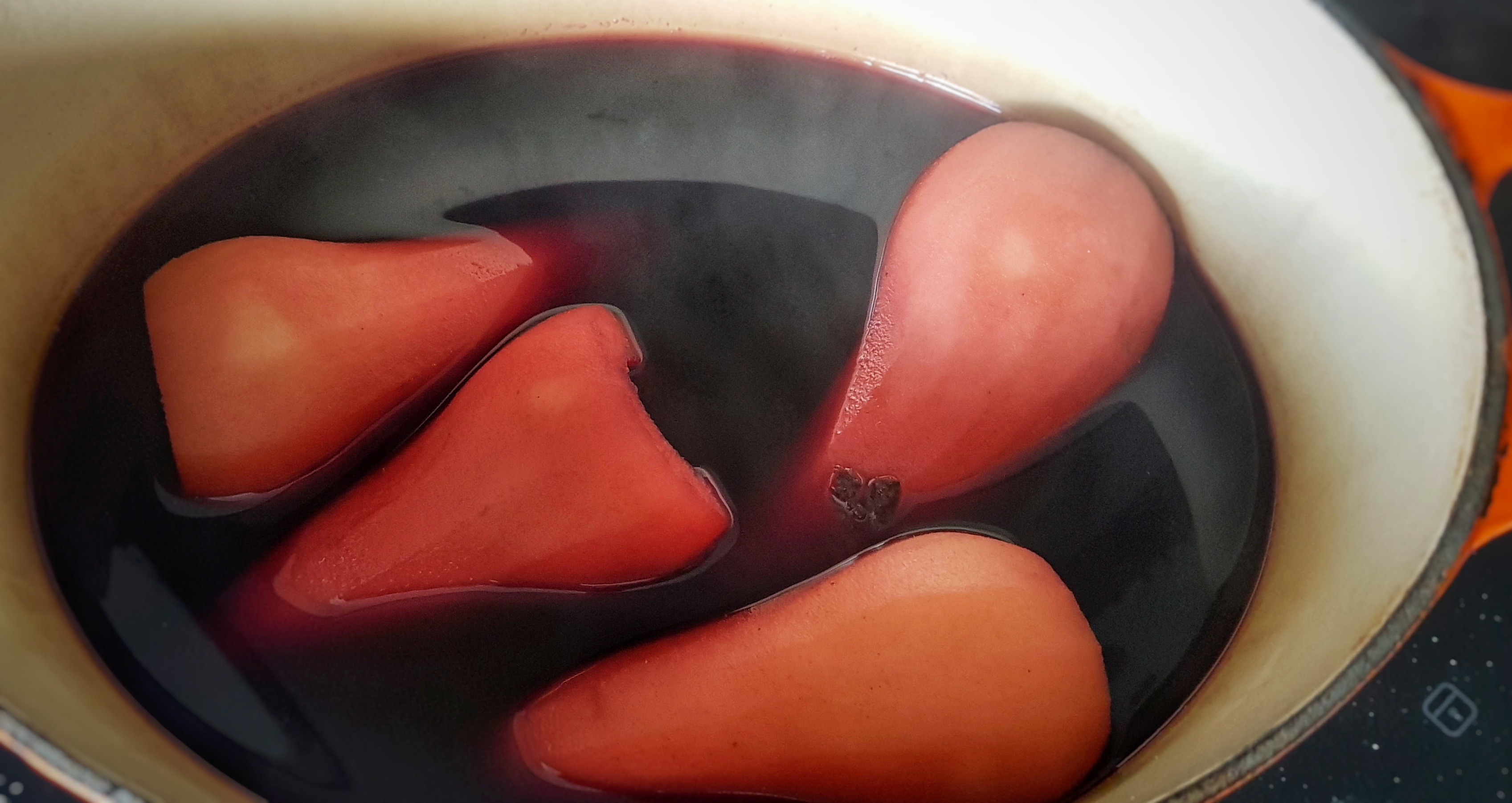
Bruise the cinnamon stick and long pepper (or crack the peppercorns) and place in a pan with the wine and sugar. Put over a medium-low heat and stir to dissolve the sugar. Once dissolved, add the pears.

Bring to a simmer and cover the pan, turn down the heat and poach until tender. This will take around 20 minutes. The pears won’t be completely submerged, so to ensure an even colouring from the wine, turn them half way through cooking.

Remove the pears and set aside. They can be stored in the fridge for up to four days.

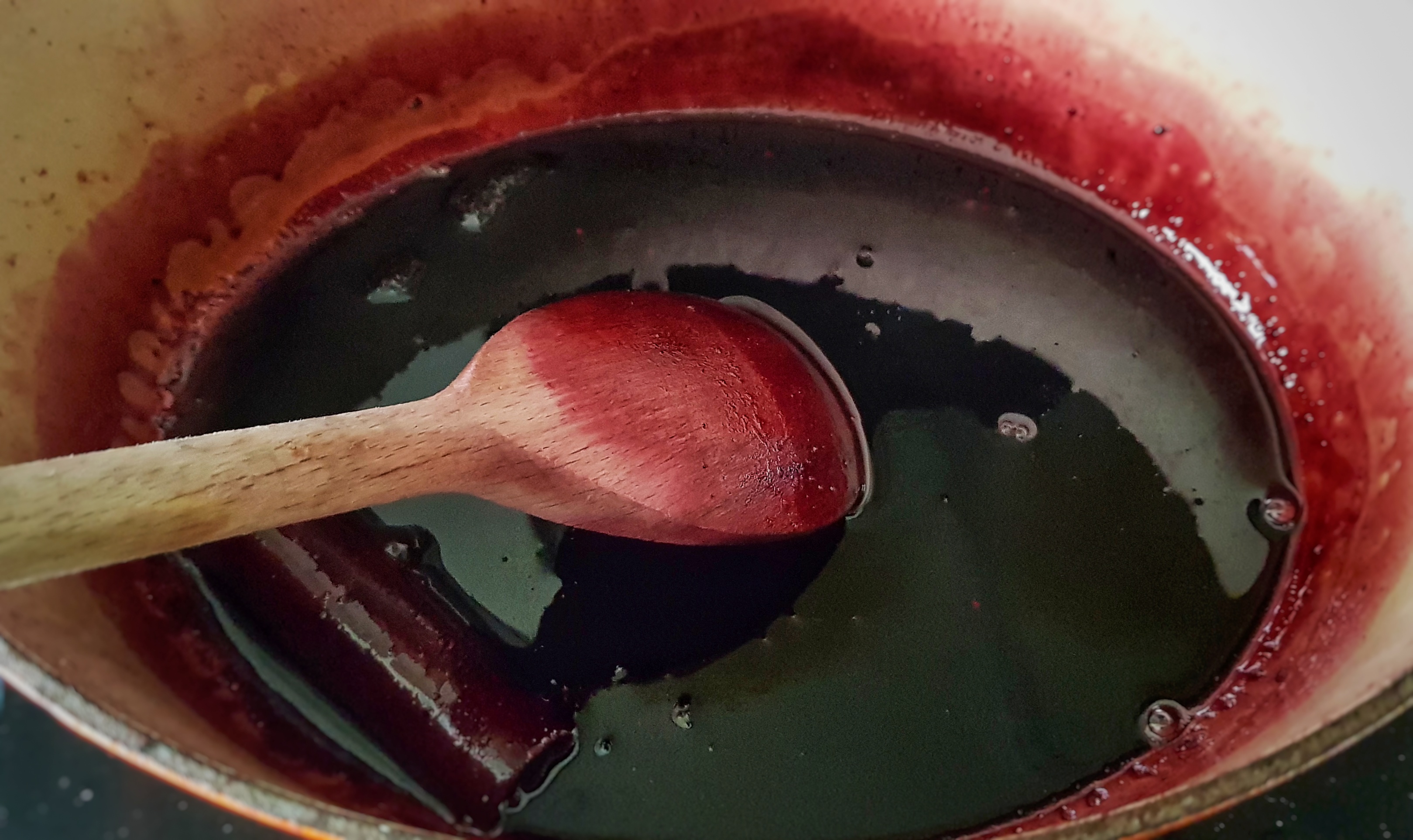
Now make the syrup: turn up the heat and bring the wine to the boil and let it reduce by around three-quarters or more, until viscous. Pour into a jug or jar and allow to cool.

To serve:

Remove the ice cream from the fridge around half an hour before you want to serve. Place a pear in the centre of a plate – it may need another trim at the bottom if it’s been in the fridge a day or two – and carefully spoon a couple of teaspoons of the syrup over the tip of the pear.

Place a biscuit next to the pear – I used a homemade digestive (post coming soon), but a hob-nob would also work very well – and place a scoop or quenelle of ice cream on top the biscuit.

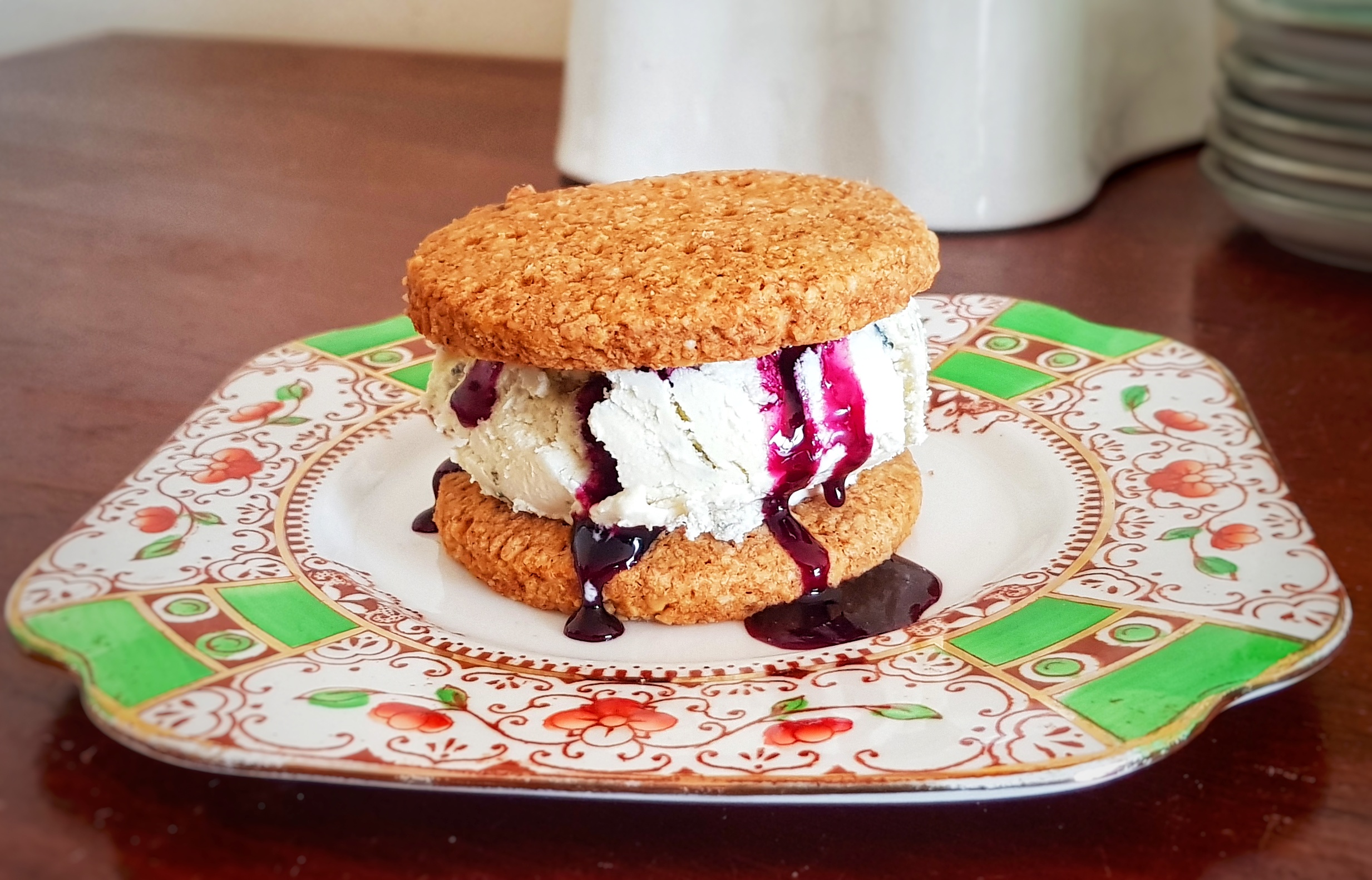
Leftovers: there will probably be leftover ice cream and syrup, the latter of which keeps for weeks. Treat yourself to a very grown-up ice cream cookie sandwich using digestives instead of cookies, cheese ice cream instead of vanilla, and red wine syrup in place of raspberry sauce.

3 Comments

Filed under Biscuits, Britain, cooking, Dairy, Desserts, food, General, Puddings, Recipes, Uncategorized

Favourite Cook Books no. 3: The Forme of Cury, part 2 – recipes

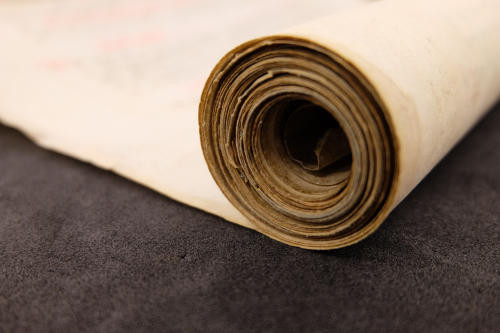
FC scroll

 The vellum scroll rolled up (British Museum)

As promised in my previous post, a few recipes from the Forme of Cury. I have translated them into modern English, so you can follow them a bit easier. For the hippocras drink, I have given you my interpretation of the recipe as there are some hard-to-find ingredients. All the recipes are easy to make and taste delicious.


If you like the blogs and podcast I produce, please consider treating me to a virtual coffee or pint, or even a £3 monthly subscription: follow this link for more information.


Cabbage Soup

A very simple dish – not everything Richard II ate was ostentatious. This is a very simple recipe with ingredients we use today. The addition of the saffron give it an interesting earthy flavour. Powder douce was a mixture of sweet spices – the spices we would associate with desserts like apple pie – shop-bought mixed spice is good substitute. The base of the soup is broth or stock, use any you like, though I think chicken is the best for this soup.

Caboches in Potage. Take Caboches and quarter hem and seeth hem in gode broth with Oynouns yminced and the whyte of Lekes yslyt and ycorue smale. And do þerto safroun & salt, and force it with powdour douce.

Cabbage Soup. Take cabbages and quarter them and seethe (simmer) them in good broth with chopped onions and the white of leeks, slit and diced small. Add saffron and salt, and season it with powder douce.

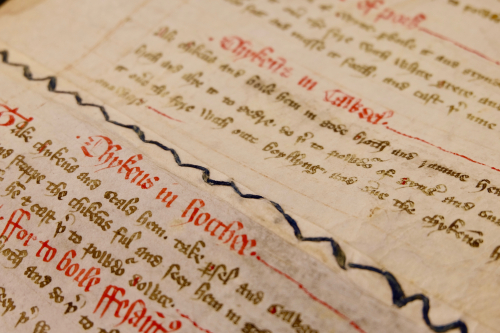
forme of cury stitches

The Forme of Cury with stitching where a new piece of parchment was added to the scroll (British museum)


If you want to know more: this blog post complements this podcast episode.


Rabbit or Kid in a Sweet and Sour Sauce

Any kind of meat can be used here really, chicken legs or diced lamb are the best substitutes. Sweet and sour sauce was called egurdouce; -douce meaning sweet and egur- meaning sour, e.g. vin-egur was sour wine, in other words vinegar! The meat is browned in lard, removed, so the onions and dried fruit can be fried, the meat is replaced with the liquid ingredients and spices and simmered just like a modern casserole or stew.

Egurdouce. Take connynges or kydde, and smyte hem on pecys rawe, and fry hem in white grece. Take raysouns of coraunce and fry hem. Take oynouns, perboile hem and hewe them small and fry them. Take rede wyne and a lytel vynegur, sugur with powdour of pepr, of ginger, of canel, salt; and cast þerto, and lat it seeþ with a gode quantite of white grece, & serue it forth.

Take young rabbits or kid and cut them into pieces and fry them in lard. Take currants and fry them. Take onions, parboil them, and chop them small and fry them. Take red wine and red wine vinegar, sugar and powdered pepper, ginger, cinnamon, salt and add them, let it simmer gently in a good quantity of lard and serve it forth.

Hippocras

hippocras MS

 Straining hippograss through a bag

This is a really excellent recipe for spiced wine; mulled drinks were drunk throughout the year and could be served hot or cold. There are some tricky to get hold of spices, but I’ve added alternatives where appropriate. If you have to omit a spice or two, don’t worry, it will still be delicious.

Pur fait ypocras. Troys vnces de canell & iii vneces de gyngeuer; spykenard de Spayn, le pays dun denerer; garyngale, clowes gylofre, poeure long, noieȝ mugadeȝ, maȝioȝame, cardemonii, de chescun dm. vnce; de toutes soit fsait powdour &c.

To make hippocras. Three ounces of cinnamon and three ounces of ginger, spikenard of Spain, a pennysworth; galingale, cloves, long pepper, nutmeg, marjoram, cardamom, of each a quarter of an ounce; grain of paradise, flour of cinnamon, of each half an ounce; of all, powder is to be made etc.

There are a couple of tricky spices in the list: long pepper and grains of paradise are available to buy online quite easily, but are very expensive, so you can get away with regular black pepper as a substitute. Galangal is easier to find fresh than dried these days, as it is used extensively in Thai cuisine as part of their delicious red and green curries, however, seek and ye shall find the dried variety.

Spikenard of Spain is the extract of the root of a valerian plant and was used in the church as an anointing oil, it also appears very commonly in recipes. I’ve never had the opportunity to taste it.

Here’s my version of the recipe:

1 bottle of red wine

1 tsp each ground cinnamon and ground ginger

¼ tsp each ground galingale, ground black pepper, ground nutmeg, dried marjoram, ground cardamom

honey to taste

Pour the wine into a saucepan with all of the spices and bring slowly to a scalding temperature. Don’t let the wine boil as there’ll be no alcohol left in it! Let the spices steep in the hot wine for around 10 minutes.

Meanwhile spread a piece of muslin, or any other suitable cloth, over a sieve and pour the spiced wine through it into another pan or serving jug. Add honey to sweeten. Serve hot or cold.

7 Comments

Filed under Books, Britain, cooking, food, history, Mediaeval Age, Recipes, Uncategorized

Mulled Wine

There is nothing better to warm your cockles during Christmastime than a bit of mulled wine. If you have never tried it or heard of it, then you are certainly missing out on something. Mulled wine is essentially hot, sweetened red wine made aromatic with the addition of citrus fruits and warming spices such as cloves, cinnamon and nutmeg. It’s history goes right back to the Ancient Greeks.

Before mulled wine was the drink hippocras, which was supposedly invented by the Greek scientist and Father of Medicine, Hippocrates. The idea being that it was something of a tonic. The wine was either red or white and not necessarily hot either, but it was spiced and sweetened with honey. In Britain, the drink was very popular and there are several recipes for it. Here’s one from The Good Housewife’s Jewel by Thomas Dawson (1596):

To make Hypocrace

Take a gallon of white wine, sugar two pounds, of cinnamon, ginger, long pepper, mace not bruised galingall [sic]…and cloves not bruised. You must bruise every kind of spice a little and put them in an earthen pot all day. And then cast them through your bags two times or more as you see cause. And so drink it.

Not heating it up obviously meant you had plan a little ahead if you wanted to have a few goblets of hippocras at your Tudor feast.

By the seventeenth century, mulled wine recipes start to appear such as this eighteenth century recipe from Elizabeth Raffald in The Experienced English Housekeeper:

Grate half a nutmeg into a pint of wine and sweeten it to your taste with loaf sugar. Set it over the fire and when it boils take it off to cool. Beat the yolks of four eggs exceedingly well, add to them a little cold wine, then mix them carefully with your hot wine a little at a time. Then pour it backwards and forwards several times until it looks fine and bright. The set it on the fire and heat it a little at a time for several times till it is quite hot and pretty thick, and pour it backwards and forwards several times. Then send it in chocolate cups and serve it with dry toast cut in long narrow pieces.

It is strange that the Tudor recipe actually seems more like modern mulled wine that the newer one.


If you like the blogs and podcast I produce, please consider treating me to a virtual coffee or pint, or even a £3 monthly subscription: follow this link for more information.


Well here is my recipe for mulled wine – it is difficult to add quantities as you add most things to taste. It is also quite difficult to give an official list of ingredients; you can add any warm spice you like really (I expect a blade of mace would be an excellent addition, though I have never tried it), so this recipe is more a guideline than anything.

Ingredients

2 bottles of red wine, good but not great

¼ pint of brandy

½ pint of water

2 oranges, sliced

1 lemon, sliced

2 sticks of cinnamon

½ a nutmeg broken into several pieces

5 cloves

at least 4 tablespoons sugar

In a large saucepan, add all the ingredients and slowly heat the wine, stirring every now and again to dissolve the sugar and get the flavours dispersed.

It is important not to let the mulled wine boil as the alcohol will evaporate and we don’t want that. Taste, and add more brandy, sugar or water if you think it needs it. Keep the mulled wine on the lowest heat possible to keep warm and ladle into mugs or glasses.

5 Comments

Filed under Christmas, Eighteenth Century, food, history, Recipes, Sixteenth Century, Uncategorized