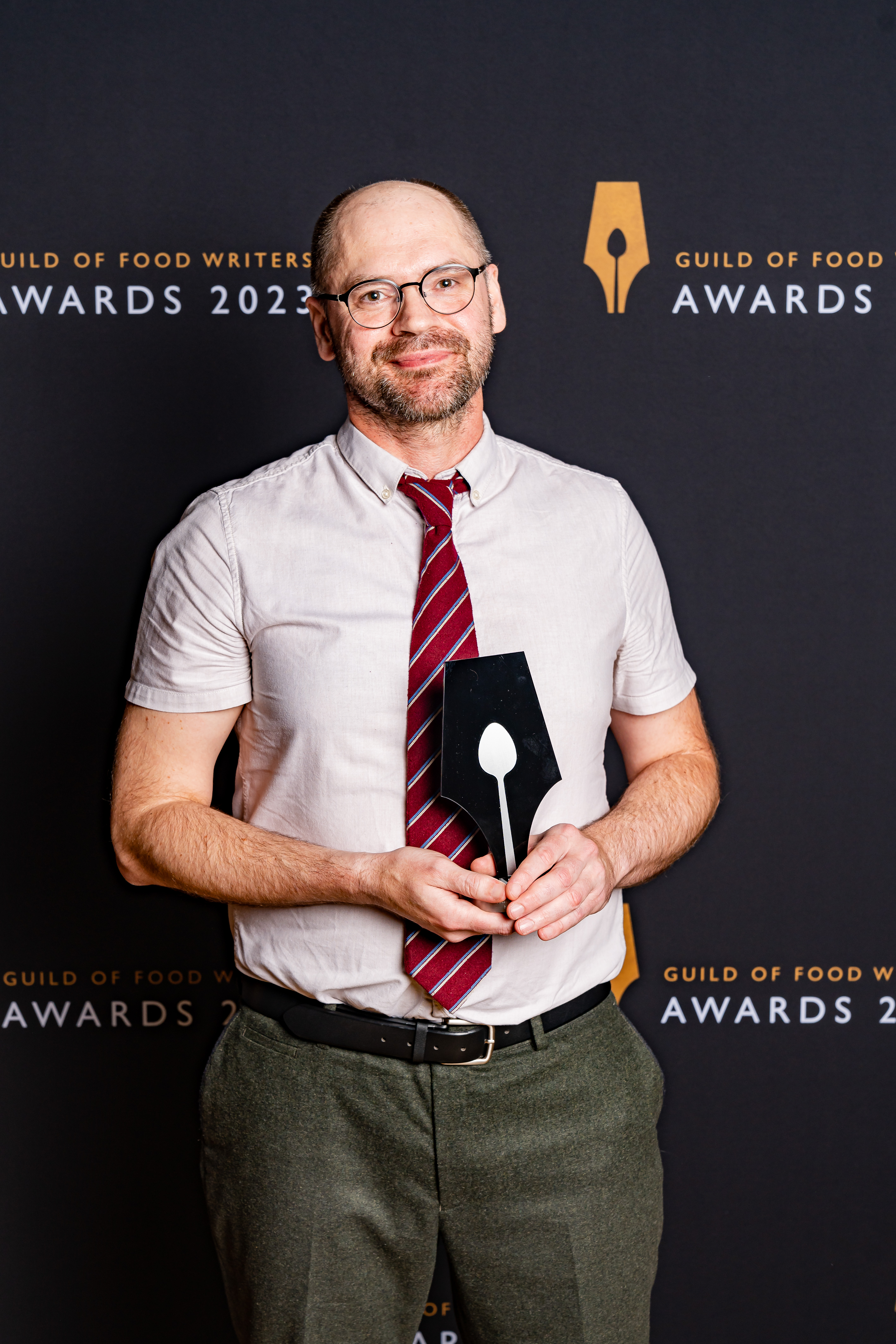
After A Dark History of Sugar won Best First Book at the Guild of Food Writers Awards 2023 last month, I thought I would give a free online Zoom talk about the project and the history. I’ve given the talk several times, but I never did one via Zoom like I did with Before Mrs Beeton. Well, I am rectifying that with a talk on 26 October at 7pm (UK time), and I would really like it if you came. Like last time the tickets are available via Eventbrite.
The talk itself will be about 45 minutes long, but there will be plenty of time at the end for questions and general chat.
Since the last time I did a talk, both Zoom and Eventbrite have changed their packages and I can only offer 100 tickets for this event, so make sure you book quickly. Click this link to book via the Eventbrite website.
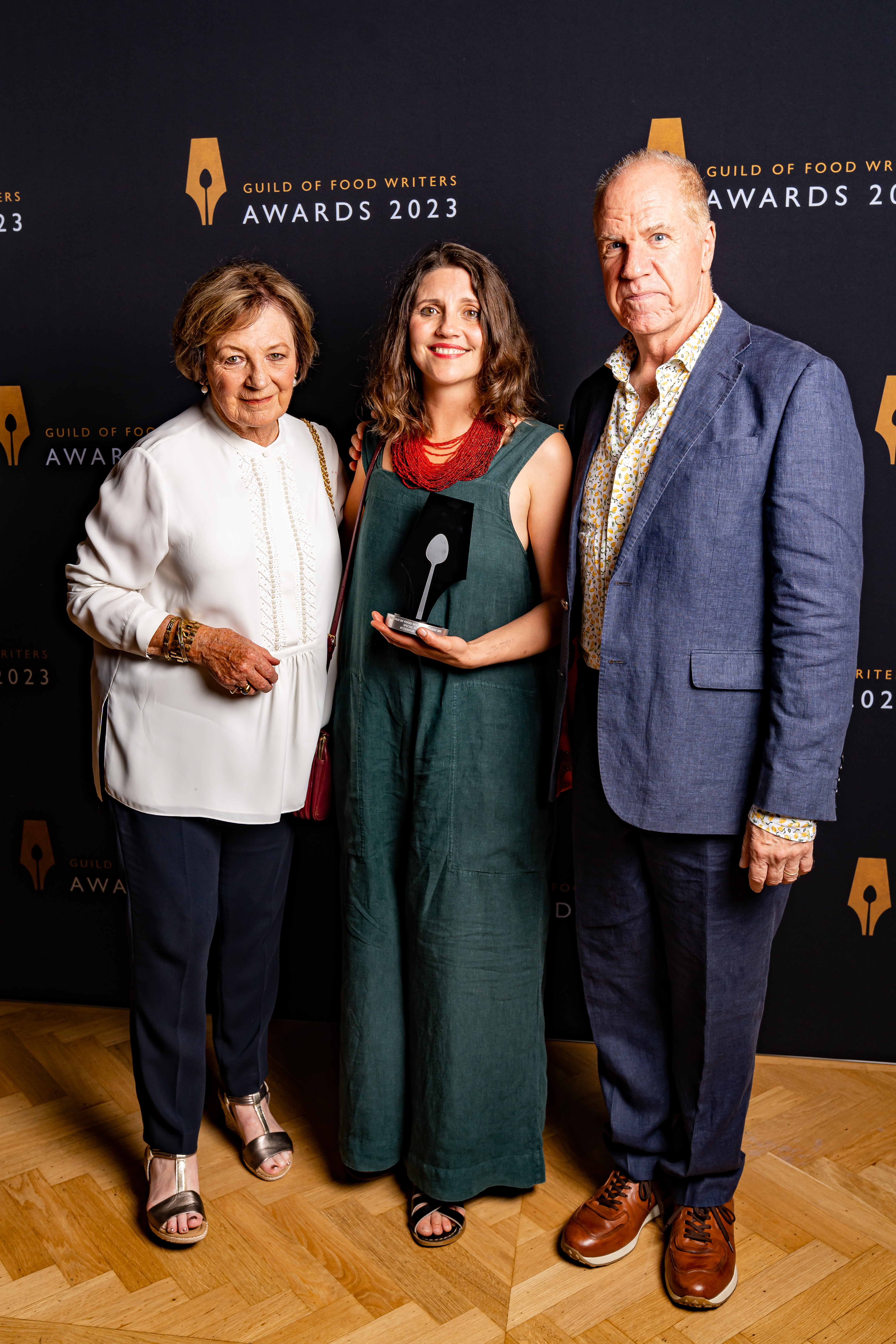
I have some very exciting news: A Dark History of Sugar did not only get nominated for the Guild of Food Writers’ Awards 2023 in the Best First Book category, but it also won! Bloody hell!
Some past podcast guests were there at the ceremony: Diane Purkiss, who appeared on the podcast recently to talk about her book English Food: A People’s History won her category Best Food Book. Nominated in that same category was Felicity Cloake for her brilliant breakfast Odyssey Red Sauce, Brown Sauce. Scroll to the foot of the post to listen to those podcast episodes.
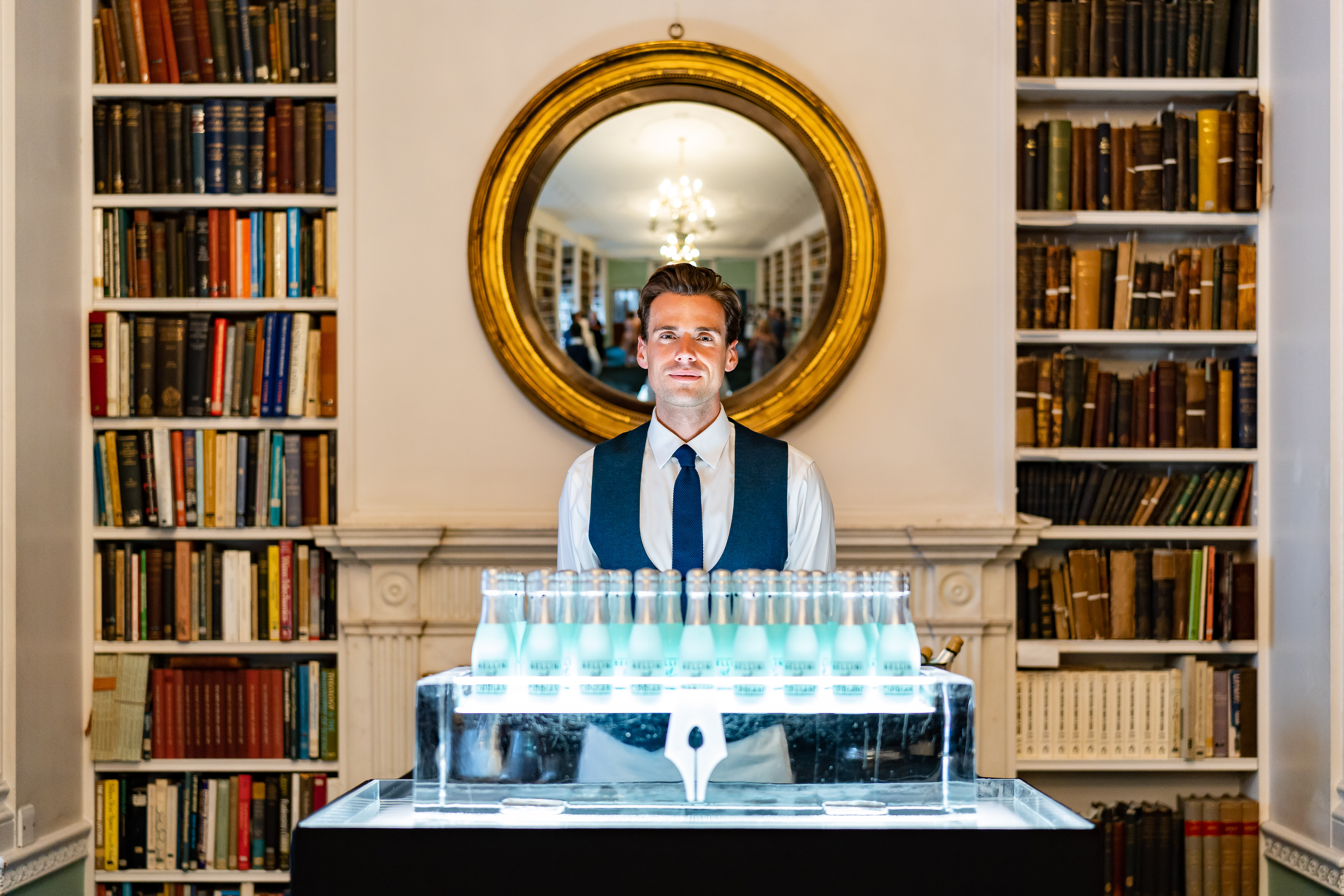
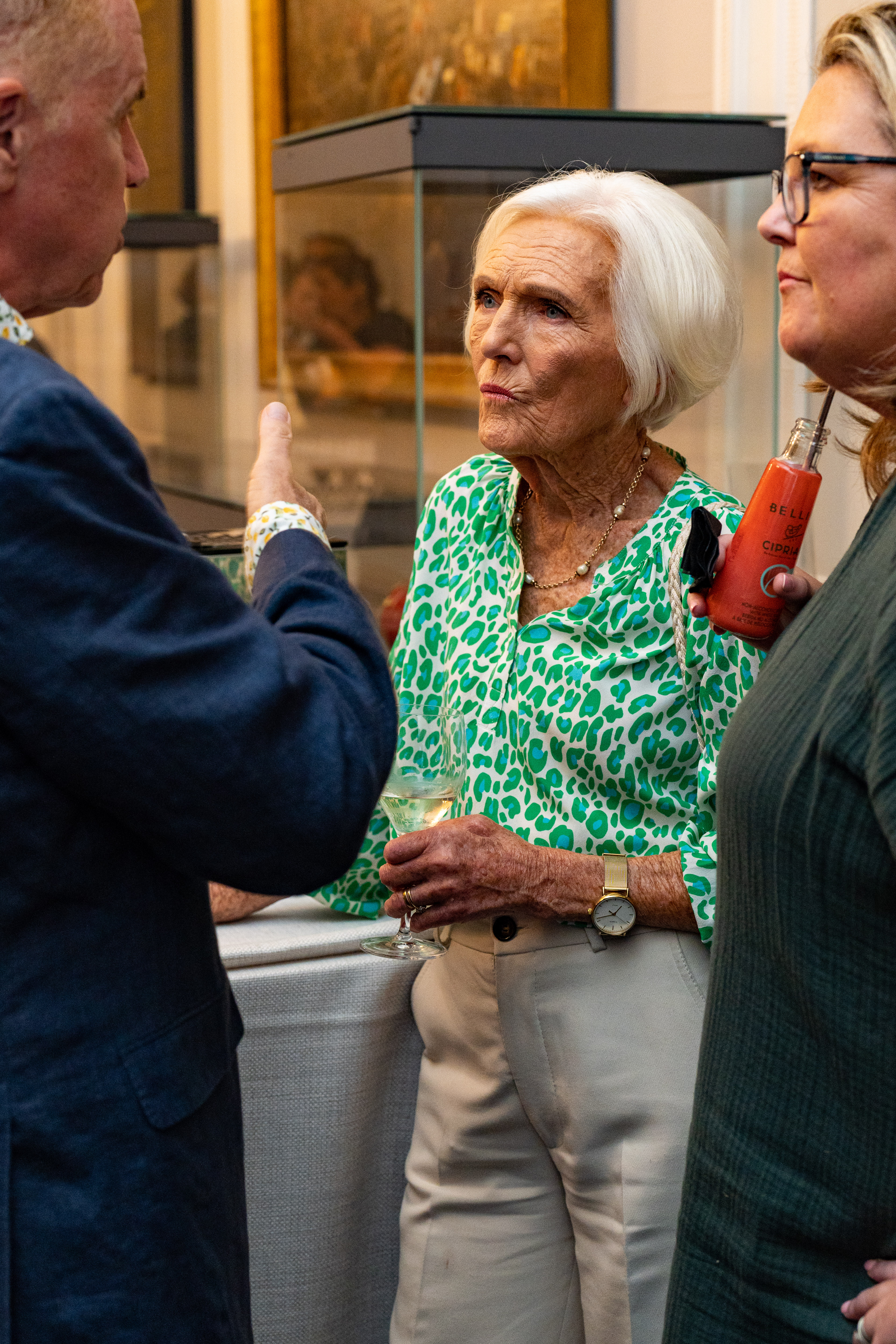
It was a fantastic night. The awards were hosted by chef and Saturday Kitchen presenter Matt Tebbutt, and the award itself was sponsored by the excellent Sea Sisters. Collecting the award was all a bit of a blur as the adrenaline was pumping somewhat, but the guild just released the official photographs (taken by Martin Behrman) so there is actual evidence of it occurring! There were some food-writing royalty at the ceremony too in the shape of Dames Mary Berry and Delia Smith. I was starstruck, let me tell you.
Although I am still reeling, I need to crack on with writing the current book. One shouldn’t rest on one’s laurels now, should they? I’ll be back with a proper blog post soon. Cheerio! x
I hope you are about to have a nice relaxing long Easter weekend. I’m just doing a very quick post to let you all know about a free Zoom talk I am giving on 26 April at 7pm (BST).
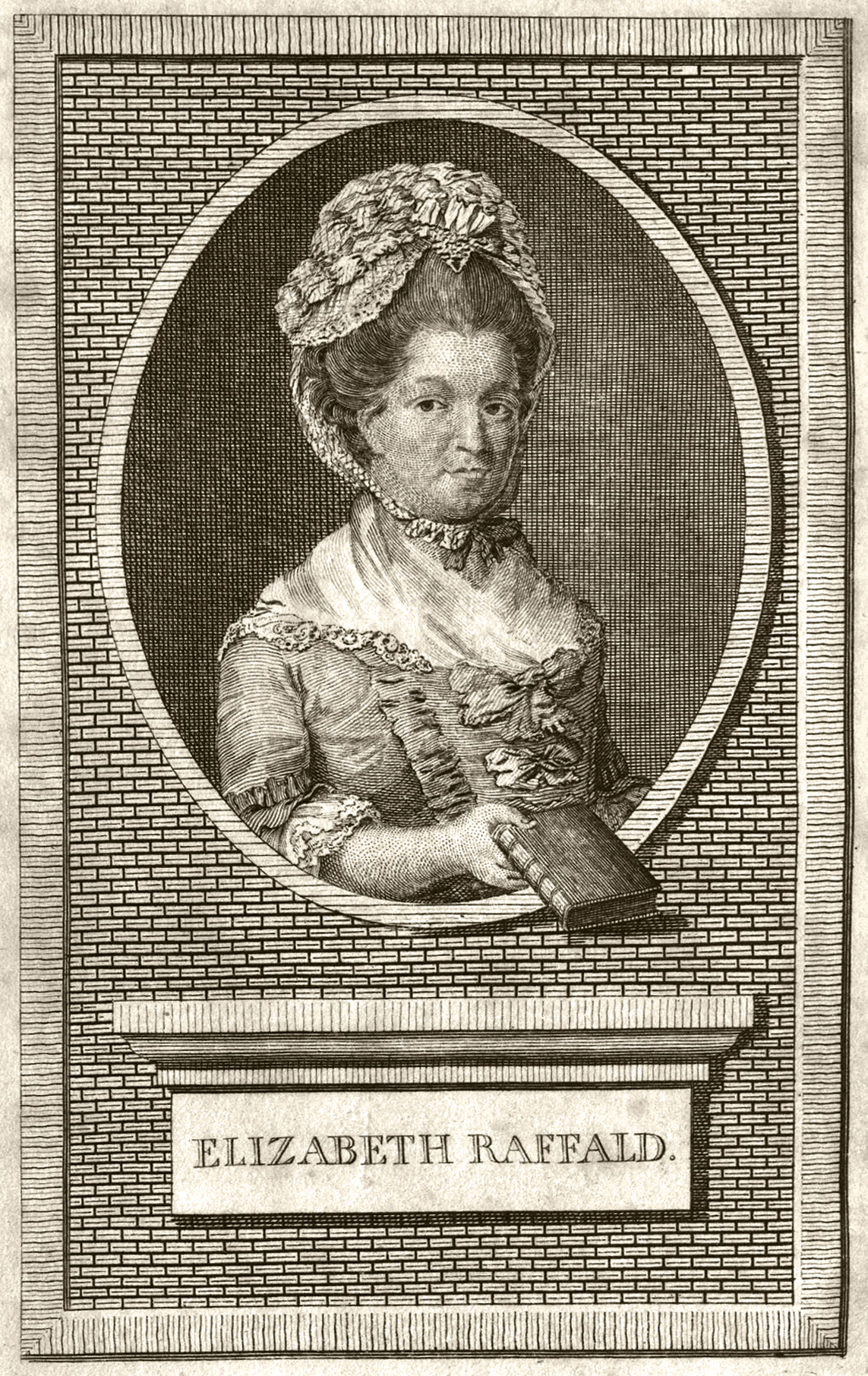
It is called The Extraordinary Life of Elizabeth Raffald, and over the course of about 45 minutes I’ll tell you about her remarkable achievements (in life AND death), as well as her dramatic rise and fall story. I’m leaving plenty of time afterwards for questions and discussion. I do hope that you can come.
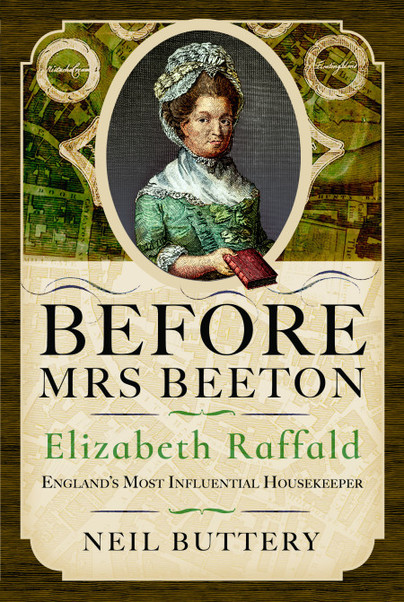
Don’t forget that my book, Before Mrs Beeton: Elizabeth Raffald, England’s Most Influential Housekeeper, is available to buy from all good bookshops, and (at time of writing) at a discounted rate from publisher Pen & Sword.
P.S. I am also doing a talk in Manchester on 14 May, but I’ll tell you about that in a week or so.
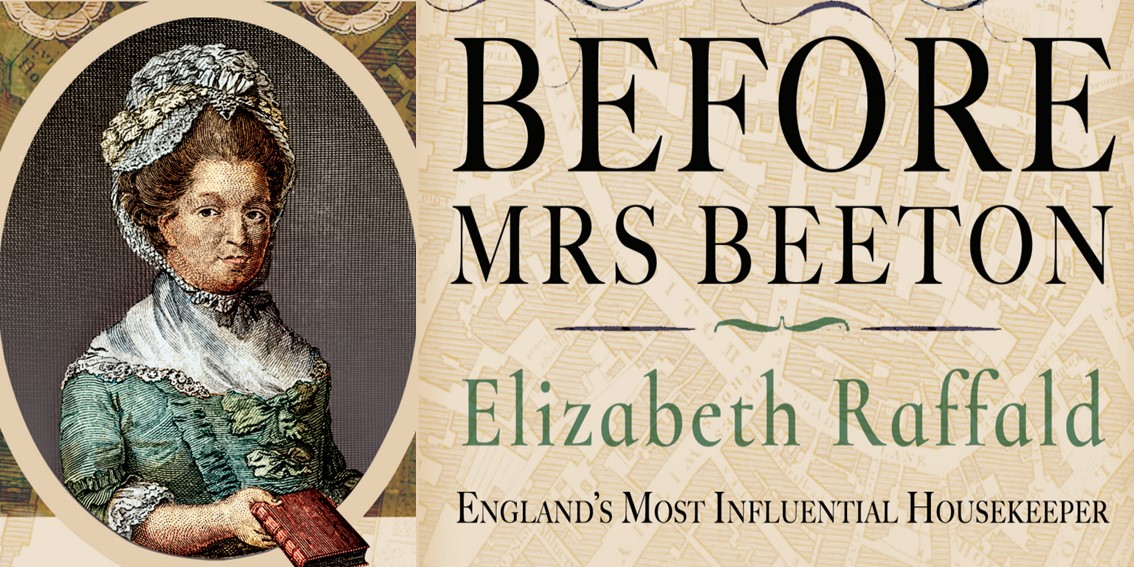
I am very pleased to announce that my second book, a biography of the 18th century cookery writer, entrepreneur and Manchester legend Elizabeth Raffald will be published in the UK on 28 February 2023. It is called Before Mrs Beeton: Elizabeth Raffald, England’s Most Influential Housekeeper and is published by Pen & Sword History. North American readers: I’m afraid you’ll after wait until 28 April before you can get your hands on a copy. Rest of world: please check with your favourite bookshop.
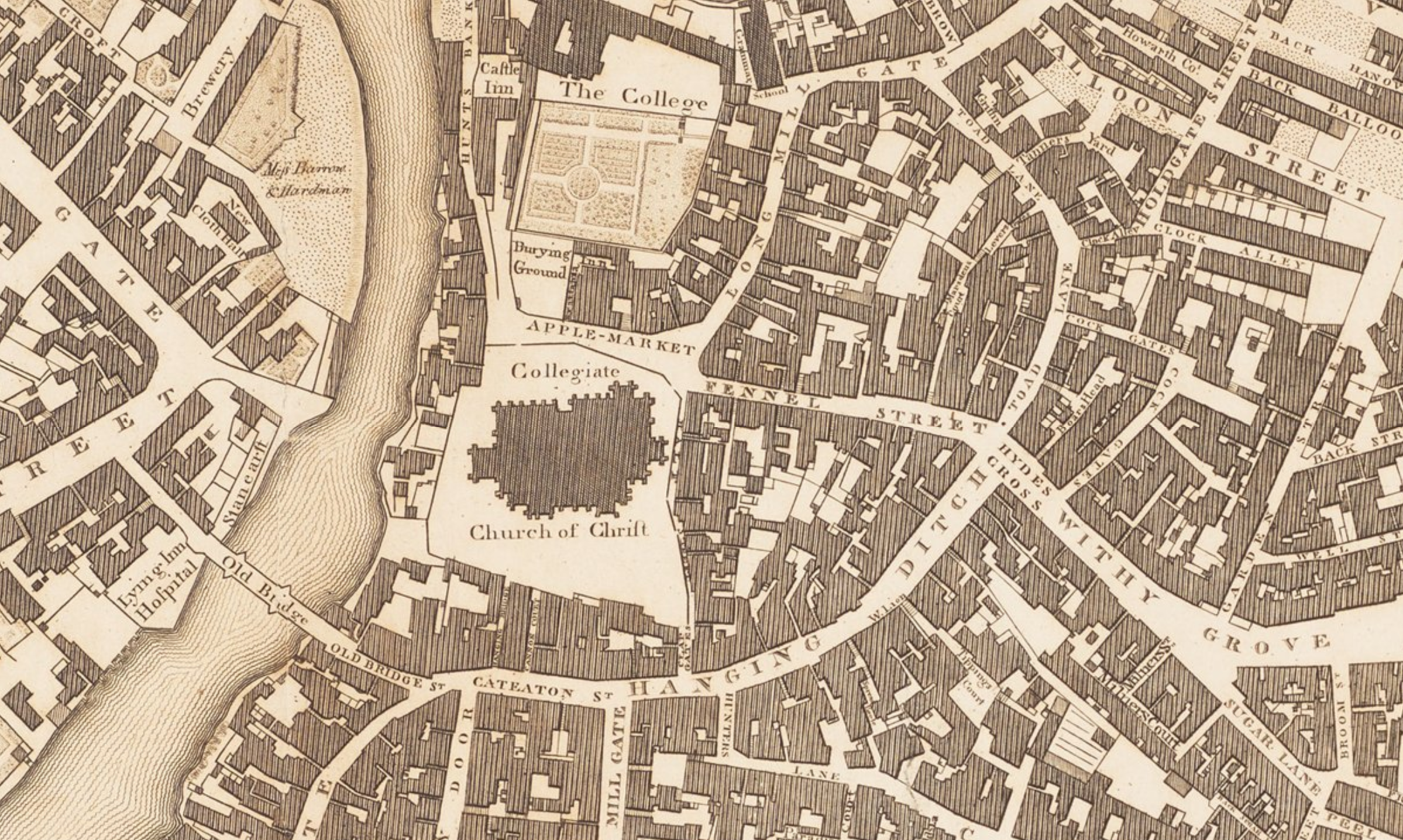
Detail of a map of Elizabeth Raffald’s Manchester
Before I tell you more about the book, I thought I’d let you know that if you pre-order via Pen & Sword’s website (so there’s not long left) you can get 20% off the cover price. The book is, of course, available from other booksellers. I will be selling some copies too, which of course will be signed by Yours Truly.
I’ll be posting all sorts about Elizabeth and 18th century food throughout March on the blog and on social media, so if you don’t follow me already on social media, now is the time to do so. I am @neilbuttery on Twitter, dr_neil_buttery on Instagram and my Facebook discussion group can be viewed here.
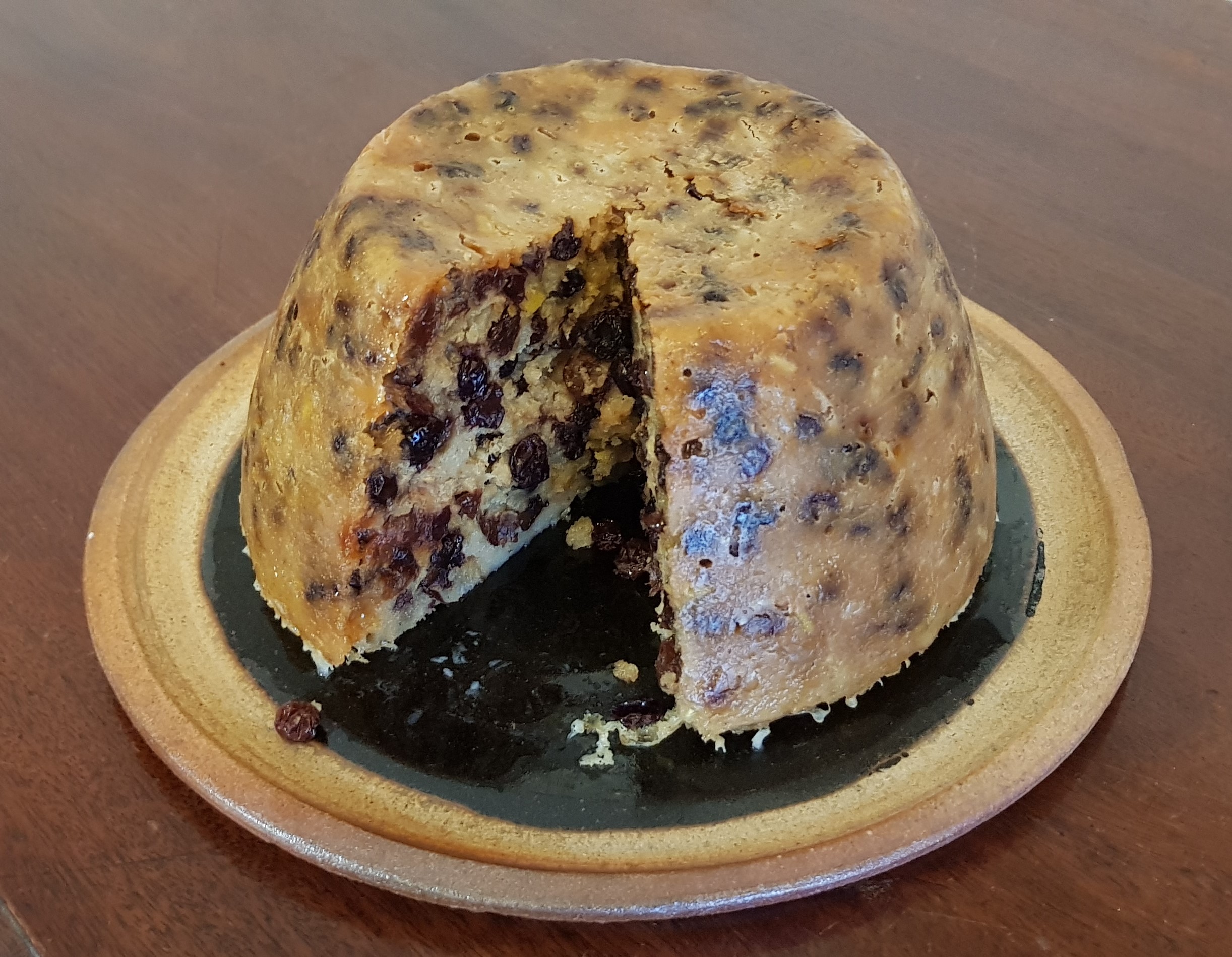
The book has a recipe section: this is ‘A Hunting Pudding’ from The Experienced English Housekeeper (1769)
The book charts Elizabeth’s many achievements and life events, the best known being the publication of her influential cookery book The Experienced English Housekeeper in 1769 – but there are many, many others. Her life was a dramatic one: starting life in domestic service, she rose to fame and fortune and transformed Manchester’s business community, before a tumultuous fall. Her book outlived her, but its popularity had a great rise and fall too.
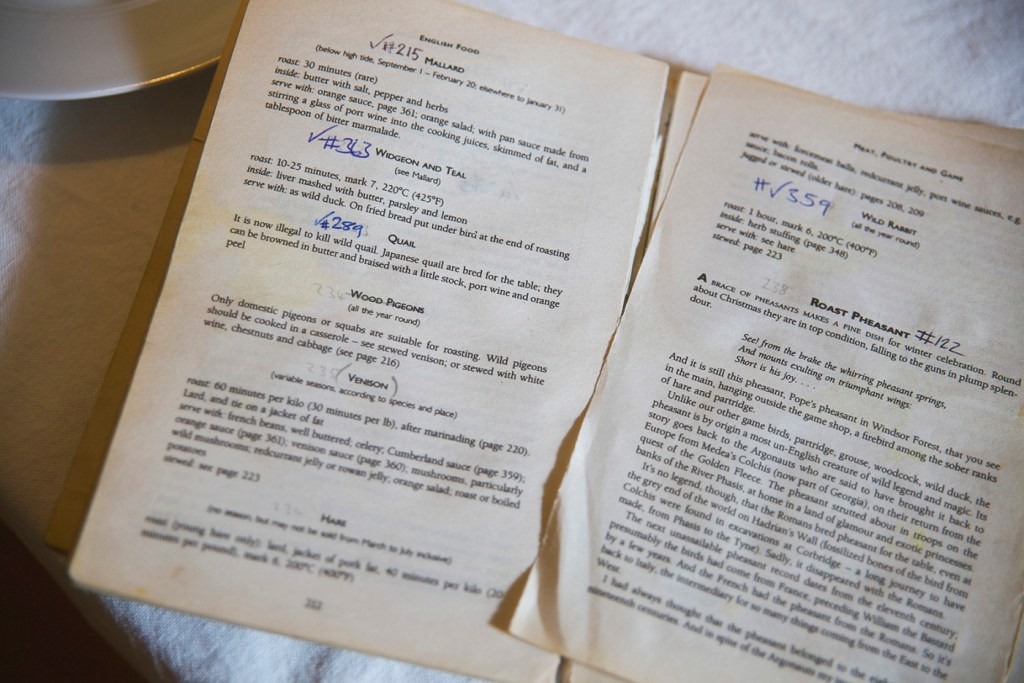
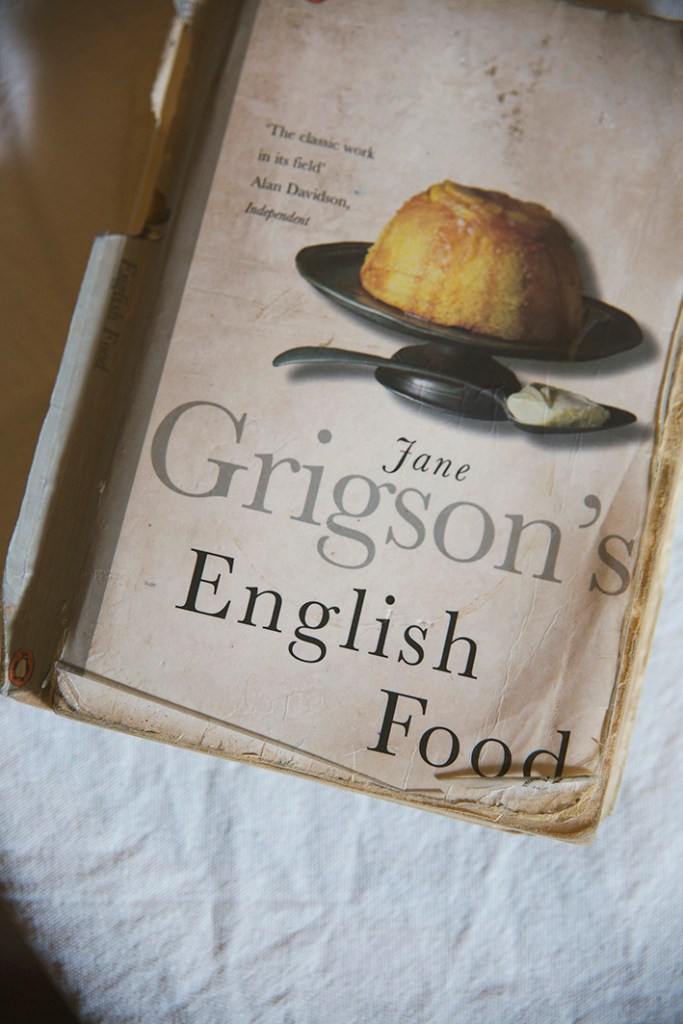
I discovered Elizabeth via Jane Grigson, and it is these two food writers who have been my biggest, and most constant inspiration through 15 years of researching and cooking British food, and I am so happy to be the one to write Elizabeth’s biography.
The very passage in English Food by Jane Grigson that introduced me to Elizabeth Raffald
Mrs Beeton’s name is in the title for a variety of reasons, the main one of which being that it is Elizabeth – a full century before Beeton and her book – who defined what we think of today as traditional British food, not Isabella Beeton, yet it is Beeton who is placed on that pedestal.
To find out more about the book, listen to this recent podcast about Elizabeth, her life, and more about why Mrs Beeton has a lot to answer for!
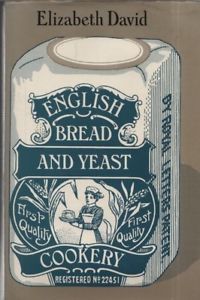
The cover of the 1st edition of English Bread & Yeast Cookery
The great food writer Elizabeth David wrote several extremely popular and influential cookery books about food and food culture in France , Italy and the Mediterranean, introducing to the people of Britain a vibrant food culture of which they could only dream: her first being published when the country was still in the grip of post-war rationing.[1] However, less well known to many are her more scholarly books that she wrote in the latter half of her career. Most celebrated of these is English Bread and Yeast Cookery (1977).
I was introduced to Elizabeth David via Jane Grigson as I was cooking my way through Grigson’s book English Food for my blog Neil Cooks Grigson. Grigson was very much influenced by David, and several of her recipes appear in English Food, including three from English Bread and Yeast Cookery.[2] I bought myself a copy (the 2010 Grub Street edition). I distinctly remember the day I received it I the post: I was immediately struck by both the sheer amount of research and her wonderful evocative writing style. I then spent the next few hours, flicking the through the book, poring over her words and the wonderful illustrations.
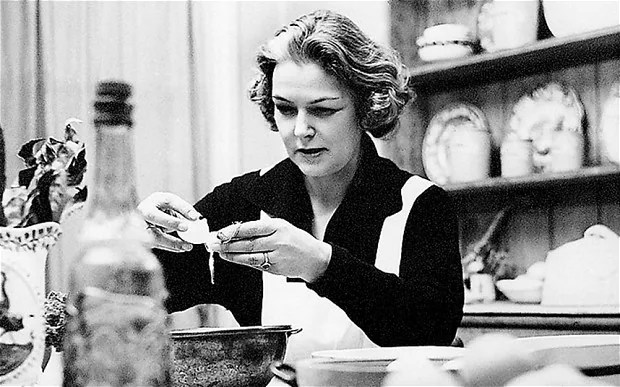
Elizabeth David in her kitchen (Elizabeth David Archive)
But she was on a mission: she was depressed at the state of Britain’s bread and other baked goods, and she wanted to communicate just how good bread can be. She looked to France to show us that good, affordable bread was being baked today, but she also travelled back into our past to demonstrate just how good, varied and culturally important our own breads were.
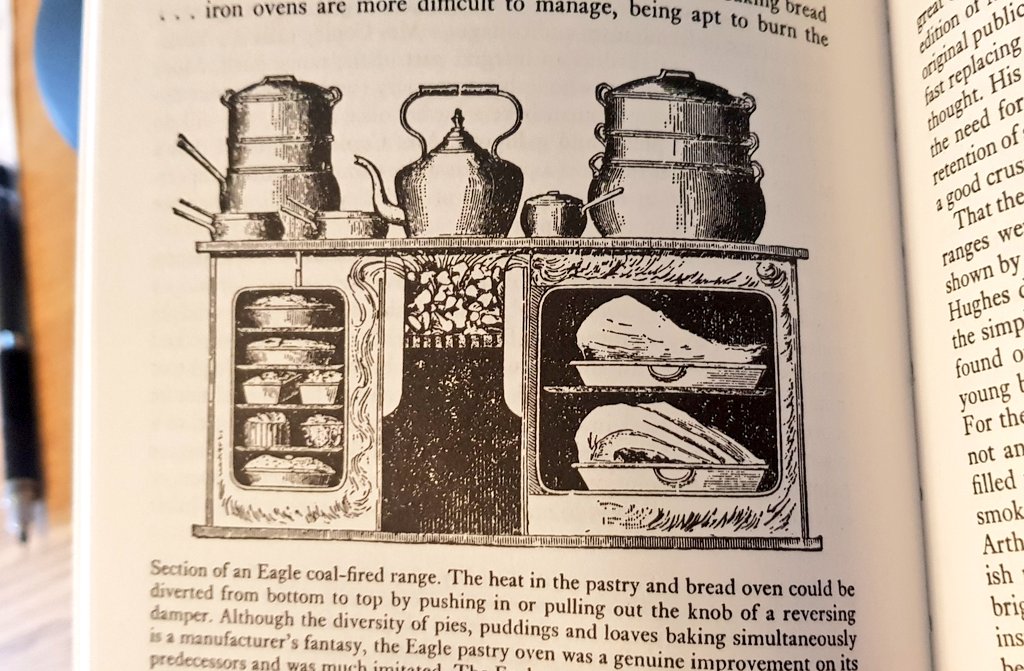
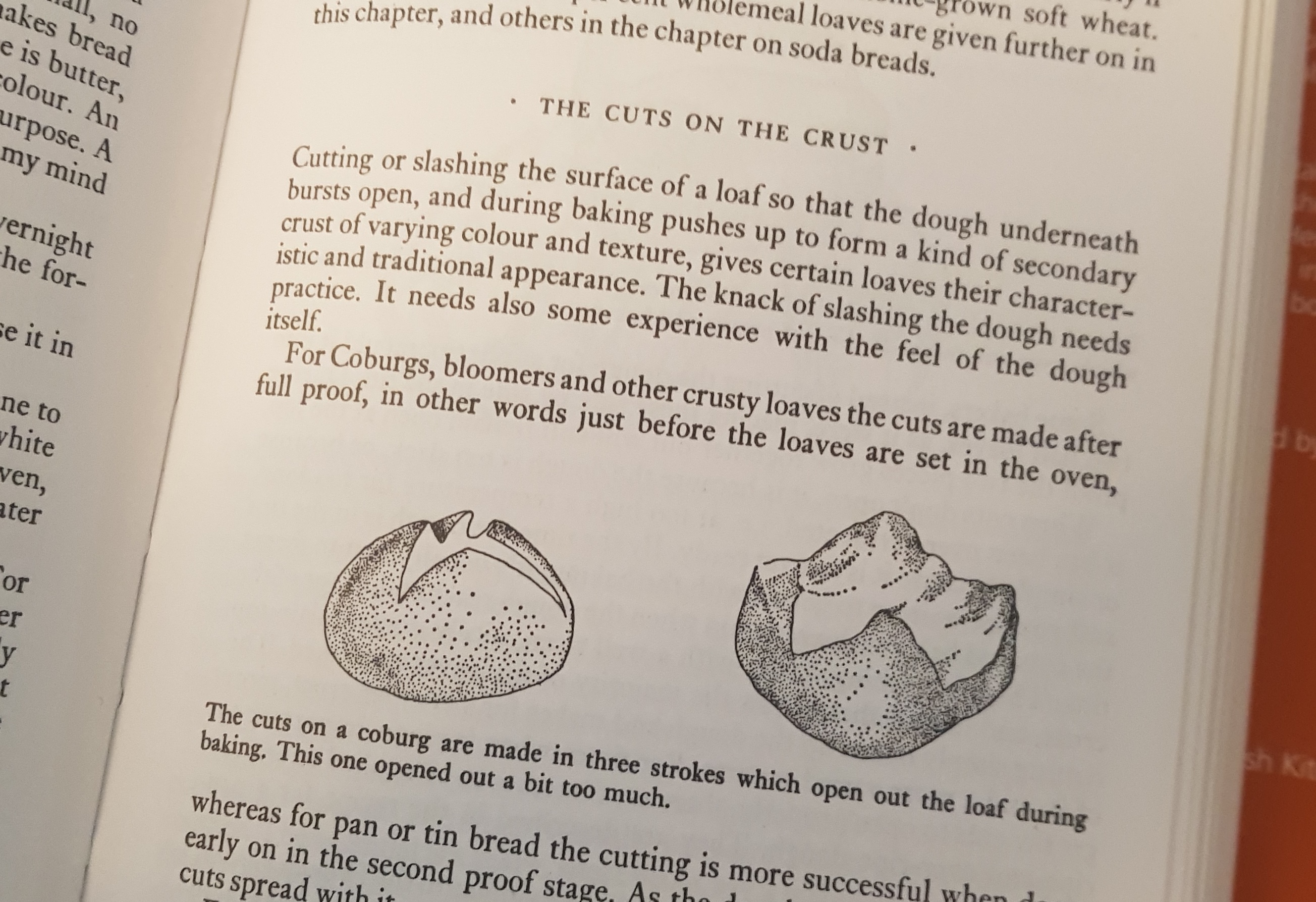
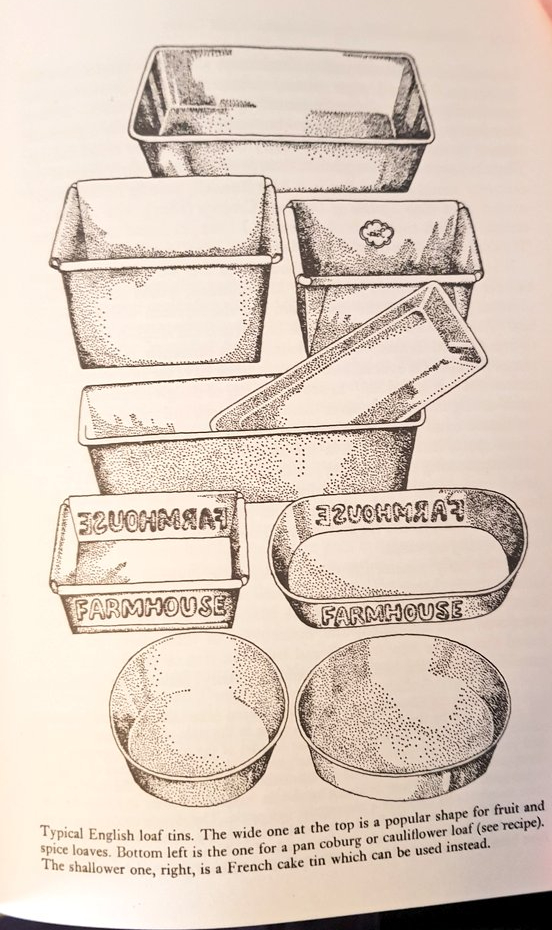
Elizabeth split her book into two halves: the first being the history, not just of bread, but every single element of it: milling, yeast, salt, ovens, tins, weights and measures, the list goes on. The second half focusses upon the recipes themselves. Usually she provides several historical recipes taken from a variety of sources, showing us how the food has changed over the years, and then, at the end, she provides us with her own recipe updated for modern kitchens, measures and ingredients. No stone is left unturned. There is an astounding variety of different enriched buns and teacakes, many of which are regional and working class. I particularly love her introduction to the section on lardy cakes, saying they ‘are just about as undesirable, from a dietician’s point of view, as anything one can possibly think of. Like every packet of cigarettes, every lardy cake should carry a health warning.’ She tells up about the shapes of traditional loaves, and the cuts that were made upon them; and the weights of various loaves from our past – how many of us have been puzzled over an old recipe asking for ‘the crumbs of a penny loaf’ or some such, having no idea to how much to add? Well Elizabeth David has got your back. One of my favourite of her rabbit holes is the account of Virginia Woolf’s excellent bread making skills, something about which I have already written.
One very important section is Elizabeth’s chapter regarding payndemayn, the refined white loaf that furnished the dinner tables of the upper classes. They were eaten in the High and Late Middle Ages, morphing into manchet rolls by the early modern period. There are few examples or complete descriptions of these breads, other than that they were made of white flour (or the whitest that was possible at the time). In writing this chapter, David managed to piece together a method for them. Her work in this area is still the ‘go-to’ piece for food historians today.
If you like the blogs and podcast I produce, please consider treating me to a virtual coffee or pint, or even a £3 monthly subscription: follow this link for more information.
There are a couple of downsides to her approach however; sometimes I find her a little too acerbic, I go away after reading some passages feeling both personally attacked and responsible for the state of the country’s bread, essentially blaming the English’s preference for cheapness, whiteness and shape of their bread, over nutrition and taste. In part, I suppose, she has a point: it might not be our fault, but we do hold the power to change it on a personal basis at least. Just buy or make better bread: it doesn’t have to be expensive or time-consuming, and as I often say, two slices of home-made bread and butter are so much more filling than two slices of factory-made bread. The latter is really a false economy. But this brings me to my second point, and it might be a little controversial: I don’t think her bread recipes are very good. Her cooking tips are great (e.g. baking bread in a cold oven, or by covering it with a cloche) but her descriptions of the bread-making process are not clear. In reading this book I have learnt everything about bread except how to make a loaf of it.
One curious thing I noticed when trying to make her breads is they are often too salty (as a lover of saltiness, this is a view I rarely hold) but in researching this post, I found I was not the only one with this opinion, with one critic saying of her book ‘the facts are impressive and so is the amount of salt.’[3] David gives her reason for this; she uses unsalted butter and therefore makes her bread saltier to make up for it. However there is another reason why she was liberal with her salt: in 1963, Elizabeth suffered a cerebral haemorrhage after which she lost the sensation in many of her tastebuds. This experience made her change tack in her own work, withdrawing to her personal library to focus upon research. As writer Melissa Pasanen put it: ‘[this] may explain the emphasis on history over flavour.’[4]
But none of this matters: the book is wonderful, and her beautiful writing more than makes up for its short-fallings, and if you don’t own a copy, please get hold of one, you will not be disappointed.
Next post I will go for a deep dive into her payndemayn recipes.
Notes:
[1] Her first being A Book of Mediterranean Food in 1950.
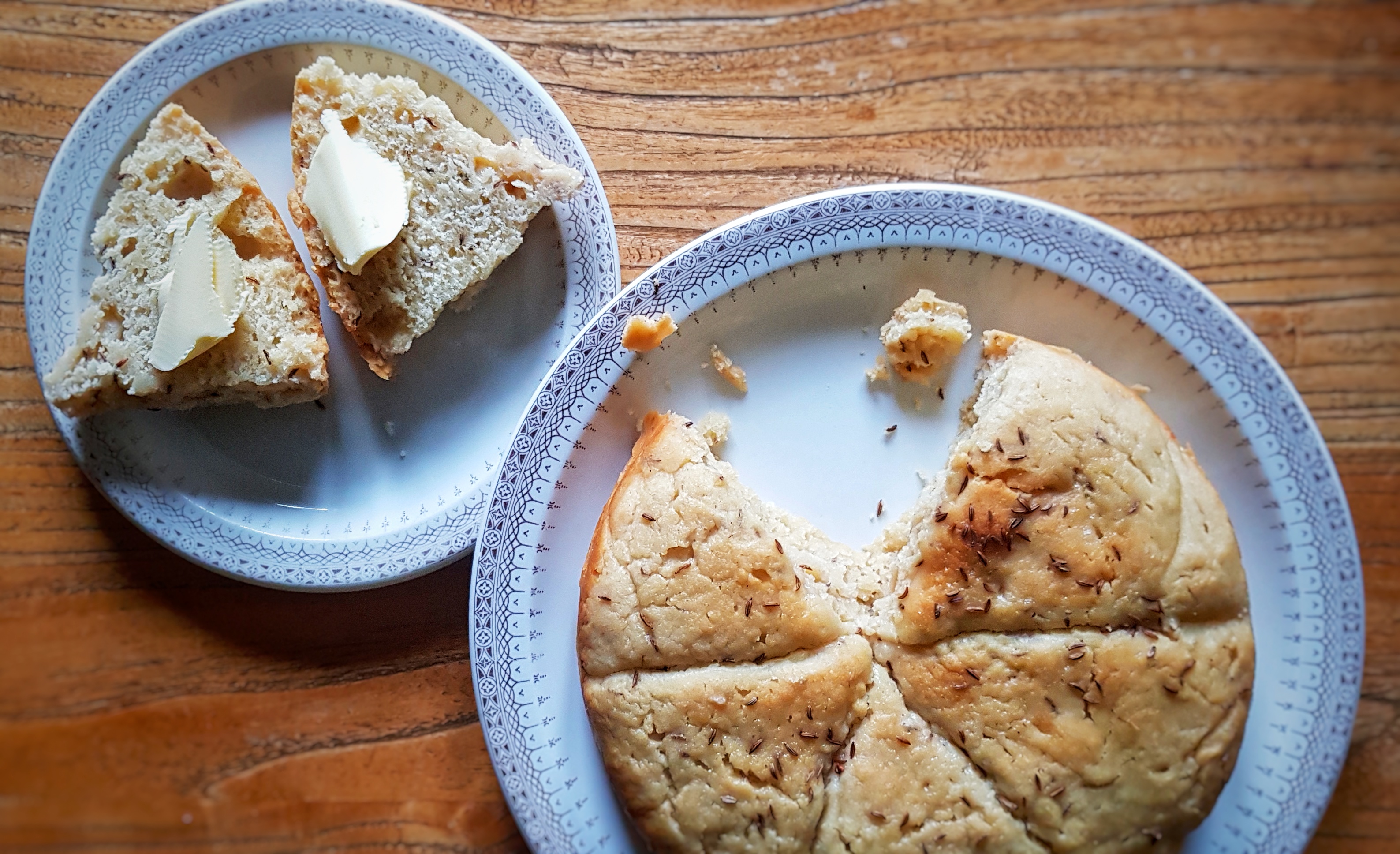
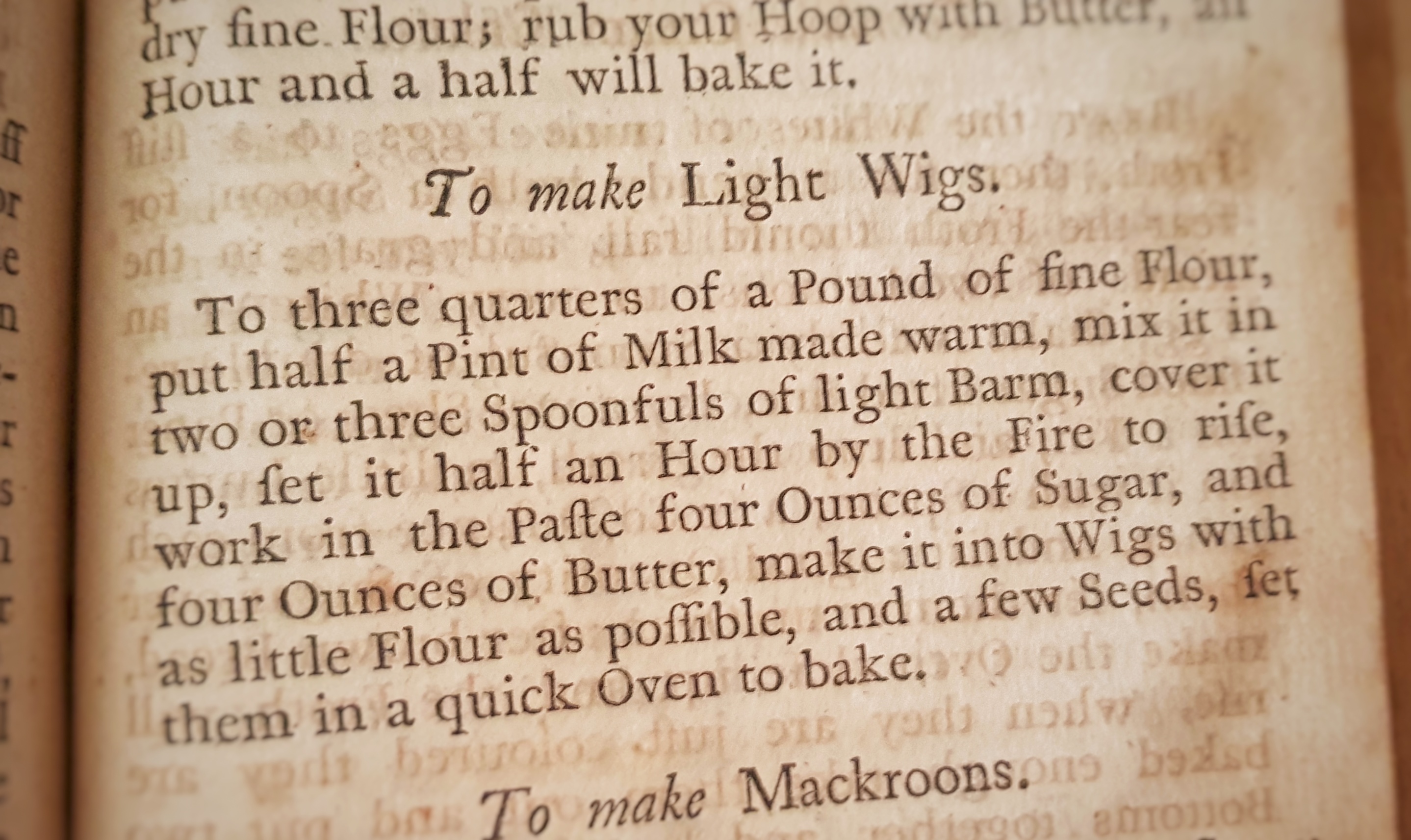
[2] These are ‘Rice Bread’, ‘Wigs’ and ‘Elizabeth David’s Crumpets’
[3] Pasanen, M. (2003) ‘Enough Saffron to Cover a Sixpence: The Pleasures and Challenge of Elizabeth David’, The Art of Eating.
BUT if you like, you can order a book straight from me for £18 plus postage. This is £2.85 in the UK, but if you’re ordering from another country, it’s whatever the going rate is.* If you would like to purchase a copy, drop me an email at neil@britishfoodhistory.com. I will of course, sign it for you.
People of North America: you will have to wait until 23 June 2022 before you can lay your hands on a copy. Rest of world: I literally know nothing!
HOWEVER, here’s a chance to win a signed copy – and it is open to anyone around the world. If you fancy having a go, all you have to do is answer this multiple choice question in the comments section below. I’ll reply to the winner on Sunday 5 June 7pm, GMT, so don’t forget to look at the comments and check to see if you have won.
Here goes:
A Dark History of Sugar charts the sinister global history of sugar, but where was sugar first cultivated?
A. New Guinea
B. China
C. Hawaii
D. India
When you leave your comment, don’t forget to check back to see if I have replied to your comment!
*So far I’ve posted to the Republic of Ireland and the US and prices have varied between £9.90 and £24!
Regular readers of the blog will know that I have been working on a book all about sugar’s dark side over the last couple of years, and I am very pleased to announce that A Dark History of Sugar will be published on 30 April 2022 by Pen & Sword History. It is – as far as I know when I write this – available in the UK and Australia from this date. North America, you’ll have to wait a little longer for it: 30 May.
Before I tell you all about the book, I thought I’d let you know that if you pre-order via Pen & Sword’s website (so there’s not long left) you can get 25% off the cover price. The book is, of course, available from other booksellers. I will be receiving some copies, which of course will be signed by Yours Truly. I’ll let you know when they are available. I’m not sure as yet how much I’ll be able to sell them for, but hopefully it’ll be under the cover price. Keep your eyes peeled here and on my social media.
In fact there’s another reason to look at my social media: I’ll be doing some competitions on here, but also on Twitter and Instagram on, or around, publishing day. If you don’t follow me already I am @neilbuttery on Twitter and dr_neil_buttery on Instagram.
Okay, let’s talk about the book.
Writing it was very involving and sometimes even distressing and upsetting; unfortunately the history of this everyday and all-too-common commodity contains possibly the darkest in human history. But why is its history so bad? Well, it’s because it’s so good.
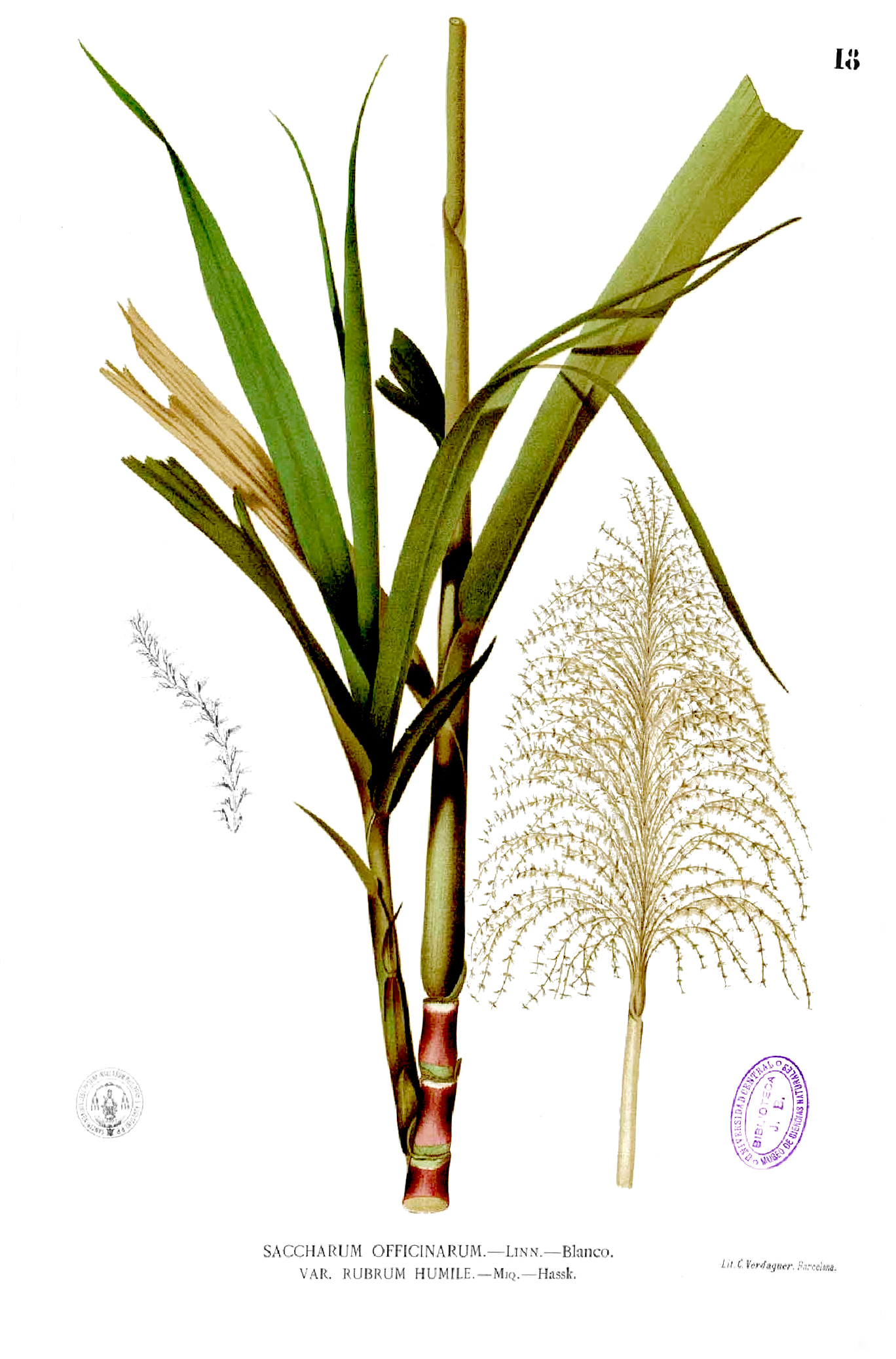
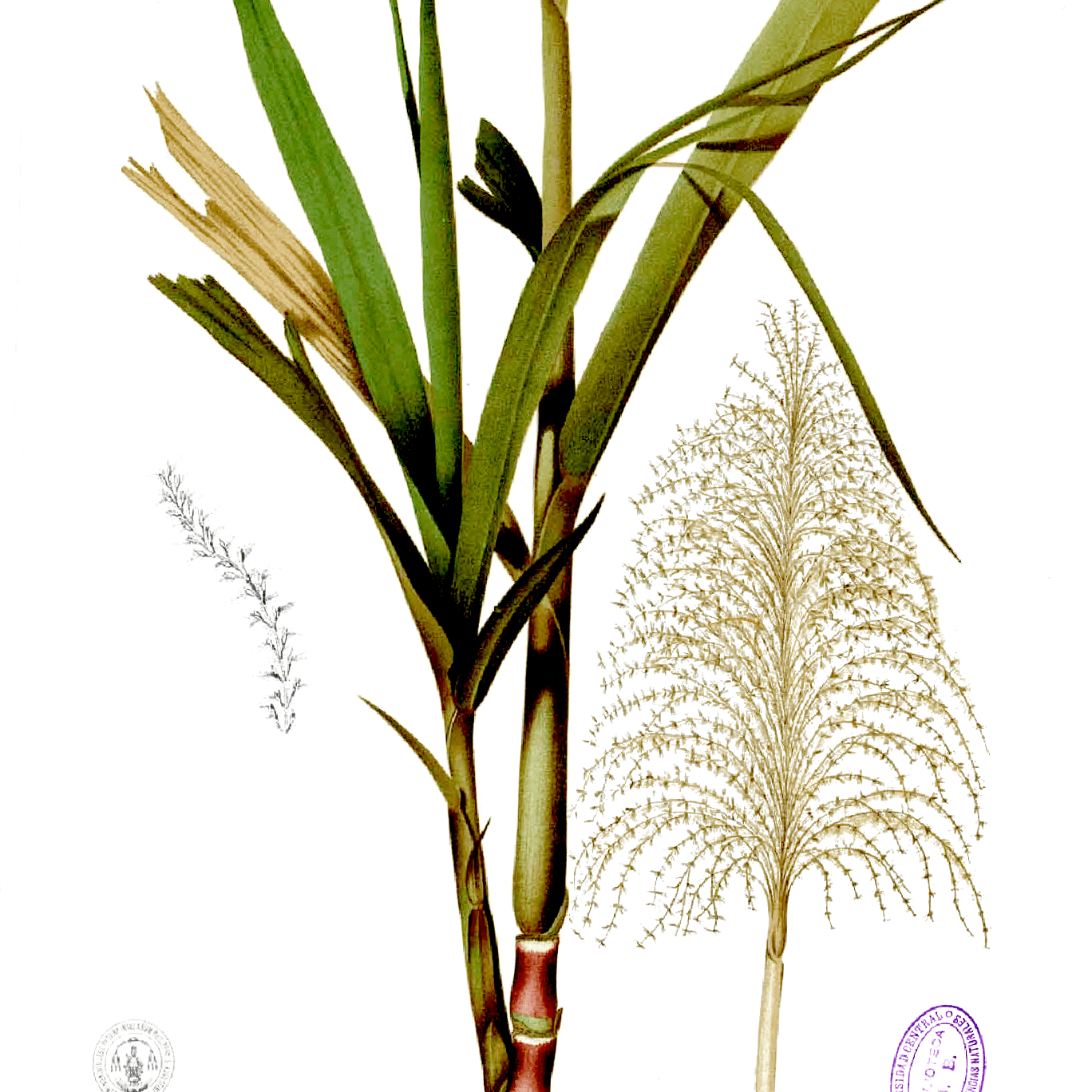
Botanical plate (c.1880) of sugarcane, Saccharum officinarum
I begin the book looking at the lengths early man went to just to get its hands on honey – the purest natural source of sugar. You see, Homo sapiens adapted to spend a great deal of its time thinking about sugar and how to get hold of it. We evolved bigger brains with the ability to problem solve that feed on glucose only – no other sugar will do – and we evolved pleasure centres that are never sated and stomachs we can stuff with sweet foods well after we are full.
This evolved adaptation is advantageous if there is little sugar about, but when it’s available any time we want in any amount we want, our brains go into overdrive and out pleasure centres spin like Catherine wheels, reinforcing our behaviours, training us up to eat more and more of it. At any cost. As I say in the book:
We take sugar for granted, but now we are paying the price, and have been for some time. With cheap and plentiful sugar came centuries of exploitation, slavery, racism, diabetes, obesity, rotten teeth, and mistreatment of an exhausted planet.
But sugar and sweetness are seen as pretty favourable: sugar is good, heavenly even; little girls are made of ‘sugar and spice and all things nice’ Somebody who is described as ‘sweet’ is cute, friendly, kind, and your romantic partner is your ‘sweetheart’. We look at sugar with dewy-eyed nostalgia: baking cakes with Grandma, chocolate coins at Christmas, buying sweets in the corner shop.
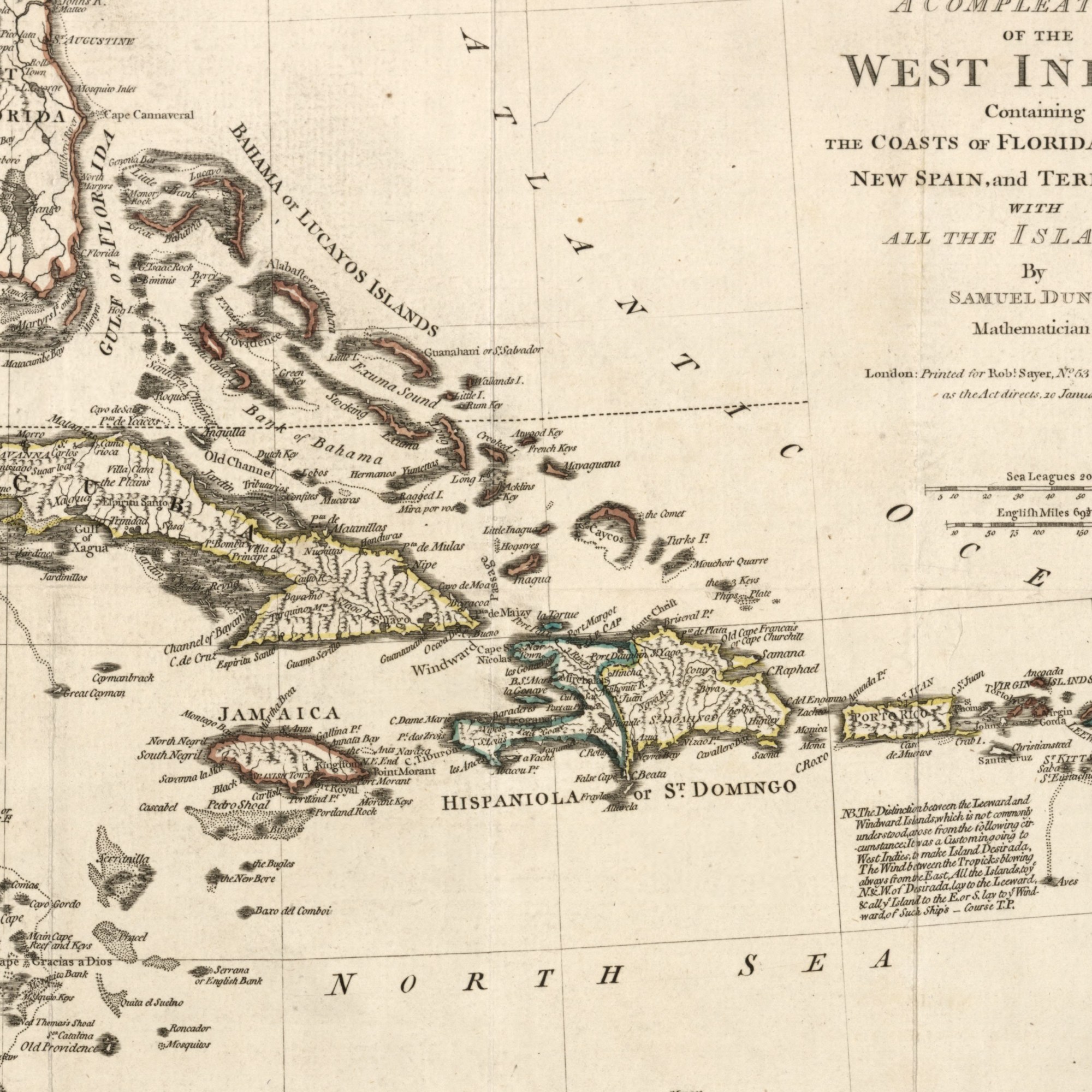
Detail from A compleat map of the West Indies (1774). The tiny islands of the Lesser Antilles are dwarfed by the greater islands, Cuba and Hispaniola.
The reality is different, for we are a world of sugar junkies, and as consumers we have had the wool pulled over our eyes for centuries. Of course, sugar manufacturers, confectioners and fizzy drinks companies much preferred it when we knew nothing about how sugar was made and what its effects are upon the human body.
Just how did we in Europe go from returning crusading knights bringing back a few sugar samples to pass around at court, to a transatlantic trade in African slaves that displaced 12 million African men, women and children to the sugar colonies via the horrific Middle Passage?1 The slave and sugar trade made many people rich; not just investors and merchants, but also those in Britain selling fancy goods, food, tools and furniture to the colonies. This intricate web of commerce reached into almost every aspect of trade is called the ‘sugar-slave complex’.2
Iron mask, collar, leg shackles and spurs used to restrict slaves on the sugar colonies. From the 1807 book The Penitential Tyrant by Thomas Branagan.
When the slave trade, and then slavery itself, was abolished, one might think that working conditions might have improved. Sadly they did not: new World sugar plantation owners simply swapped one type of exploitation for another, making it nigh-on impossible for freed slaves to leave them.
As the British Empire grew, so did the British sugar manufacturing industry, with sugar plantations cropping up wherever it was viable to do so. At this point, the association of sugar manufacture with exploitation could have been decoupled, but sadly this was not the case, and the indigenous people who had become suddenly, and usually violently, subjects of the empire were worked to death, and many were displaced to work on plantations thousands of miles away from home. Indian workers, for example, were forced to work on the West Indies, South Africa and Mauritius as well as India itself.
A political cartoon from 1791 titled Barbarities of the West Indias showing a cruel overseer plunge a slave into a kettleful of boiling sugar syrup to ‘warm’ them up.
And it still goes on today: people across the world are still being exploited to make sugar, even children.
There is not enough space on the blog to go through everything discussed in the book: sugar as (useless) medicine, the Coca Cola Company, Cadbury and Queen Victoria, environmental disasters, the horrors of the sugar making processes and squalor of the slaves, rotting teeth, diabetes, Big Sugar, Christopher Columbus, the Haitian Revolution and the fact that every English monarch from Elizabeth I to George III had a stake in the sugar-slave trade. The list goes on…
An 1890s Coca Cola advertisement. Coca Cola managed to keep its price set at five cents a bottle until the close of the Second World War.
I hope you find A Dark History of Sugar interesting and informative, and that I achieve my aim: to connect the dots between the first time sugar was made in Asia to the mess we are in now…and some thoughts upon how we can get out of it.
References
Curtin, P. D. The Atlantic Slave Trade: A Census. (Madison: The University of Wisconsin Press, 1969).
Abbot, E. Sugar: a Bittersweet History. (Penguin, 2008).
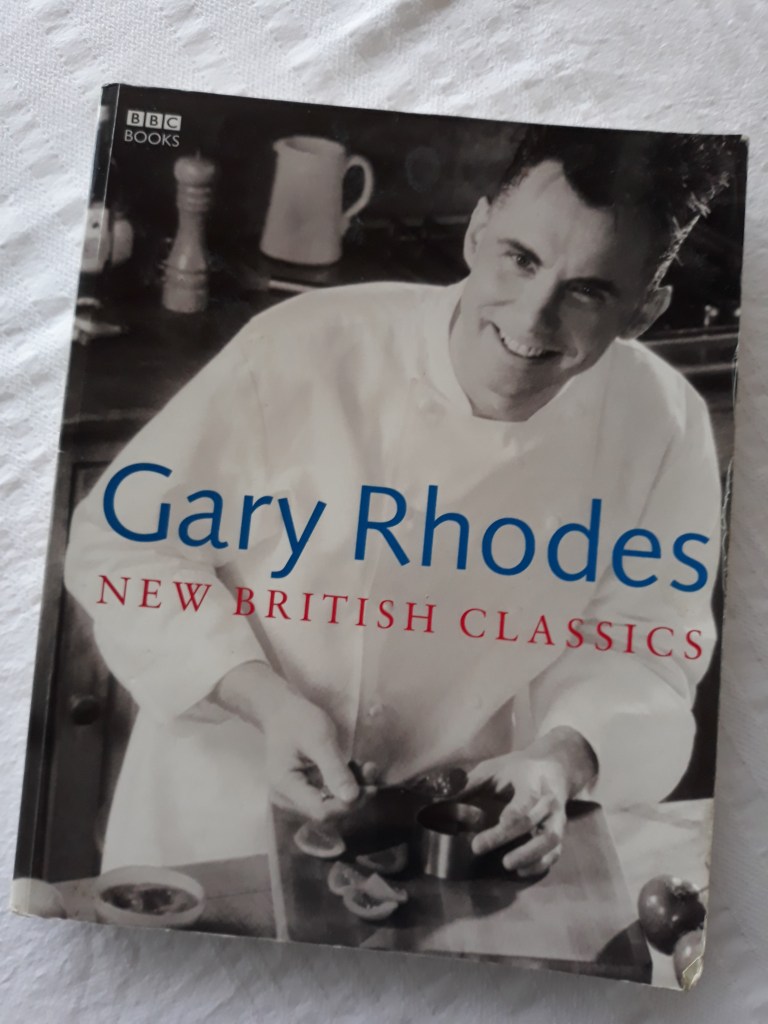
I have been meaning to write a post on this excellent cookbook for quite a while, and it is such a shame that my prompt to pull my finger out was the sad and untimely death of Gary Rhodes at the end of last year.
When I was asked to submit my list of favourite cookbooks to the 1000 Cookbooks project, I put New British Classics as my number one choice, my comment at the time being: “simply the best book on British food around. Everything from lowly haslet to lobster.”
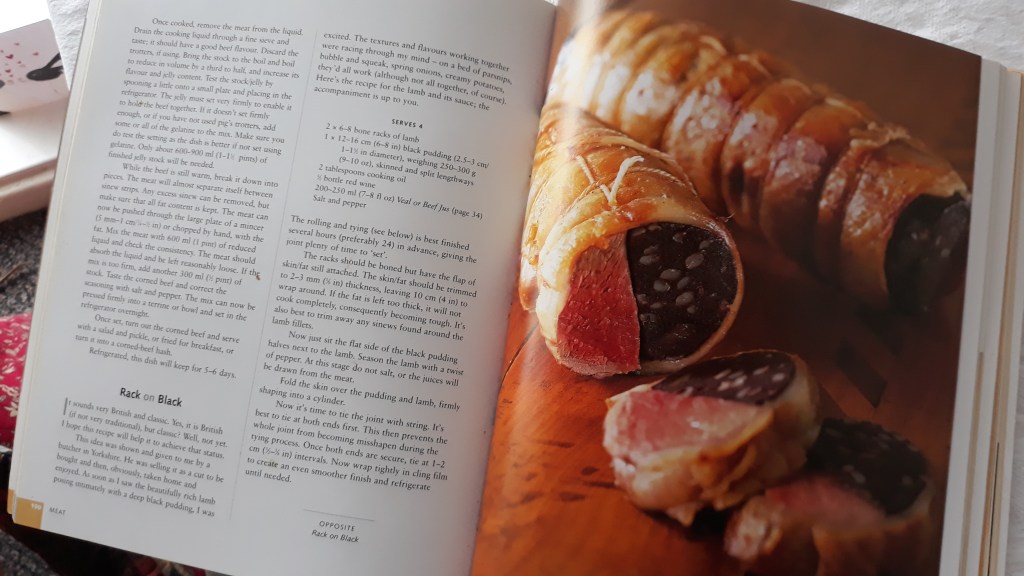
Favourite recipes include salad cream, lardy cake, prawn cocktail, rhubarb and rack-on-black – lamb roasted with black pudding.
My favourite books on food tend to be by food writers rather than professional chefs because they write about their love of food and its importance in our culture and history. Chefs tend to be, well, cheffy; there’s no evocative description of the hustle and bustle of a French market, and they assume that you want to be cooking restaurant-level food at home. This is where Rhodes was different – sure there are cheffy dishes like the very complex rich pigeon faggot – but there are basics such as fried bread, porridge and jam roly-poly. Everything is represented and everything has equal billing, meaning that whatever your ability level there is a way in. You can start off with basics like scrambled eggs or go straight in at the deep end with pigs’ trotters Bourguignonne.
The full gamut of British food is here: fish and chips, steak and kidney pie, pork faggots, white pudding, Welsh rarebit, and the massive range of techniques contained within makes it the most comprehensive book of British recipes there is. What’s more, every single recipe works perfectly; he goes through every stage, assuming you know nothing but never patronises. If you don’t own a copy and you’re interested in cooking British food, it really is essential.
The secret to his success was his attention to detail. Every move made, and technique used was meticulous and done with deftness, even the way he picked up an ingredient to show to camera had an air of precision about it. Take a look at this clip from the accompanying BBC programme, where he shows us how to make cabbage and bacon soup, and you’ll see what I mean:
He was a classically trained chef who applied French techniques to classic British dishes, taking them to new heights while keeping them authentic. His approach definitely rubbed off on me when I was teaching myself to cook; use the best ingredients and don’t cut corners, every stage is there for a reason, so you need to understand why it is there. Only when that penny drops will you develop a cook’s intuition. This approach to cooking won him his first Michelin star at the age of 26, eventually receiving an OBE for services to the hospitality industry in 2006.
On television, he was very enthusiastic, polite and well-spoken; he seemed a little odd and socially awkward (as all the best people are), making him all the more endearing. He got me interested in cooking and wanting to spend my precious leisure time in the kitchen, learning new techniques and tackling novel ingredients.
If you like the blogs and podcast I produce, please consider treating me to a virtual coffee or pint, or even a £3 monthly subscription: follow this link for more information.
He was rarely off the telly during the late 1900s and early 2000s, his trademark spiky hair and over-enthusiasm caused many to pooh-pooh him as gimmicky. Eventually the fickle eye of entertainment focused upon other, younger chefs and so he stopped appearing so regularly. But his books and their accompanying TV shows are great; his Rhodes Around Britain and Cookery Year series are worth checking out too (his apple pie recipe from the latter is the best in world in my opinion).
He died on the 26 November 2019 at the age of 59 from head injuries after a fall – no way or age to go, I’m sure you’ll agree. Of course, when someone dies, there work is revaluated and I hope people recognise what he did for British cuisine, because he put it on a pedestal when everyone else was looking elsewhere.
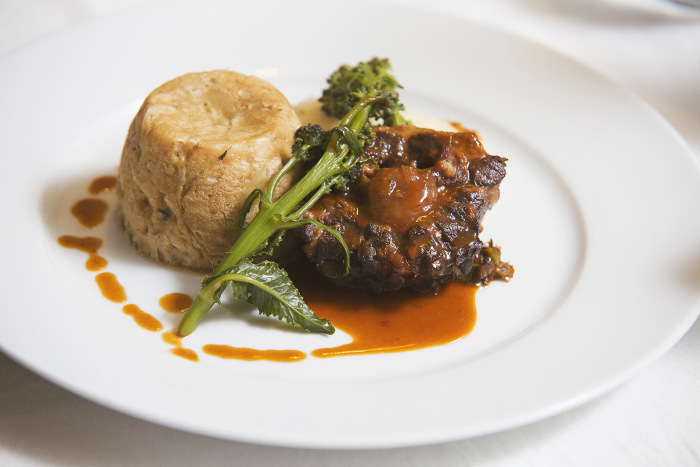
Braised Oxtails
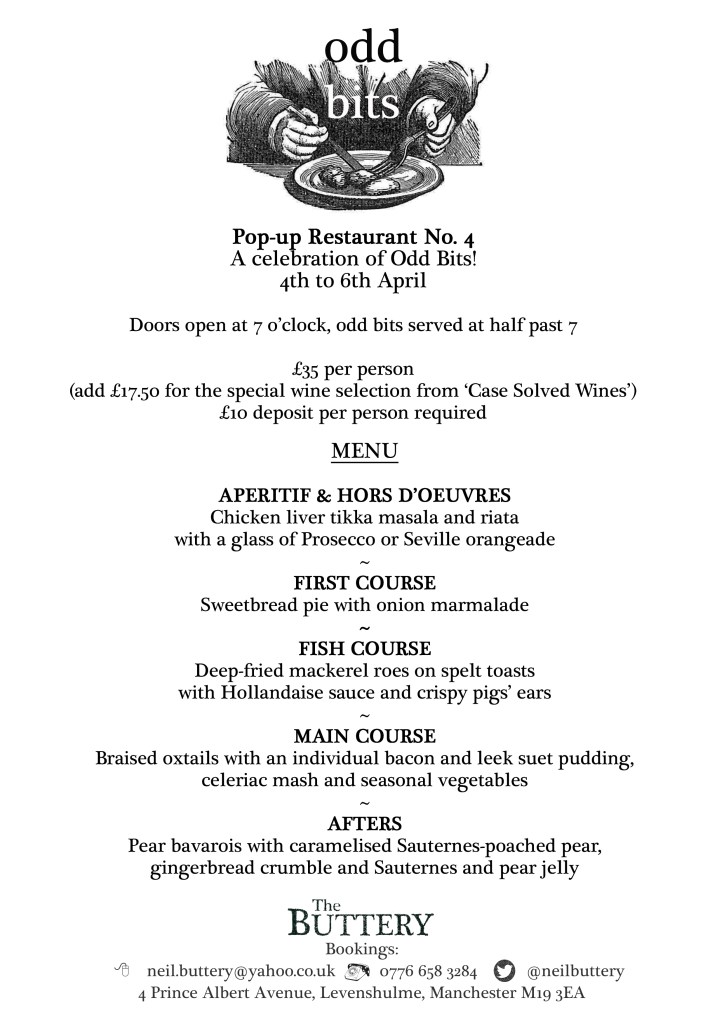
He was ‘discovered’ on the Keith Floyd programme Floyd on Britain & Ireland. On the segment he makes his signature dish: braised oxtails. Ironically, by the time New British Classics was published his most famous dish was illegal to eat – cooking beef on the bone was banned because of health fears surrounding the BSE crisis. Eventually the ban was lifted, and I could make it for myself. Back in my pop-up restaurant days it was the main course at my first everOdd Bits offal evening.
This is my version of Gary’s signature dish; it’s slightly simplified but just as gutsy. It really is one of the most delicious things you will ever cook. Nothing else needs to be said – except ‘cook it’!
Enough for 6
2 oxtails, trimmed of excess fat
Salt and pepper
Beef dripping
Around 100 g each carrot, onion, celery and leek
1 tin of chopped tomatoes
2 tbs tomato purée
Small bunch thyme and rosemary
2 bay leaves
1 clove garlic, crushed
300ml red wine
1 litre beef stock
Season the oxtails and fry in dripping until well browned, transfer to an ovenproof pot, then fry the vegetables until nicely brown too. Tip those into the pot along with the tomatoes, garlic and herbs and bring to a simmer. Pour the wine into the original pan and reduce until almost dry. Add to the pot with the stock.
Simmer very gently on the hob or braise in an oven set to 160⁰C. Whichever you choose, it needs to tick away for 3 hours.
Remove the cooked meat and keep warm and pass the cooking liquor through a conical strainer, really pressing the vegetables hard to get all the flavour out.
Throw in a big handful of ice cubes, and stir so they freeze the fat; you should be able to lift out ice and fat in one nice big satisfying lump.
Reduce the liquor to a sauce and season with more salt and pepper, then add back the oxtails to heat through.
Hello lovely followers. Just a quickie to let you know that the sister blog to British Food: A History, Neil Cooks Grigson has moved from Blogger to WordPress. It makes much more sense to have them on the same format.
If you’ve never checked it out, now is your chance – there’s over 400 recipes on there, all fully reviewed. There are some amazing ones, and a fair few disasters, warts and all. So if there’s a classic English dish or recipe you’ve always wondered about, chances are I’ve cooked it up.
Just click on this link here and follow – I’d be most grateful!
I’ll be putting a few posts on there to help newcomers get up to speed on the project in the coming weeks, so keep an eye out.
As promised in my previous post, a few recipes from the Forme of Cury. I have translated them into modern English, so you can follow them a bit easier. For the hippocras drink, I have given you my interpretation of the recipe as there are some hard-to-find ingredients. All the recipes are easy to make and taste delicious.
If you like the blogs and podcast I produce, please consider treating me to a virtual coffee or pint, or even a £3 monthly subscription: follow this link for more information.
Cabbage Soup
A very simple dish – not everything Richard II ate was ostentatious. This is a very simple recipe with ingredients we use today. The addition of the saffron give it an interesting earthy flavour. Powder douce was a mixture of sweet spices – the spices we would associate with desserts like apple pie – shop-bought mixed spice is good substitute. The base of the soup is broth or stock, use any you like, though I think chicken is the best for this soup.
Caboches in Potage. Take Caboches and quarter hem and seeth hem in gode broth with Oynouns yminced and the whyte of Lekes yslyt and ycorue smale. And do þerto safroun & salt, and force it with powdour douce.
Cabbage Soup. Take cabbages and quarter them and seethe (simmer) them in good broth with chopped onions and the white of leeks, slit and diced small. Add saffron and salt, and season it with powder douce.
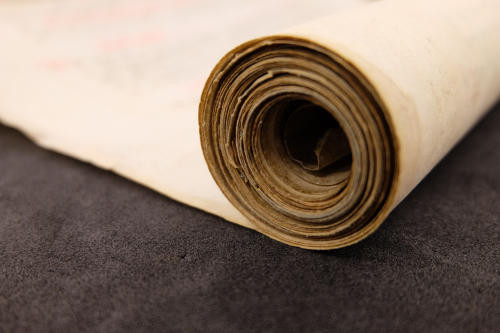
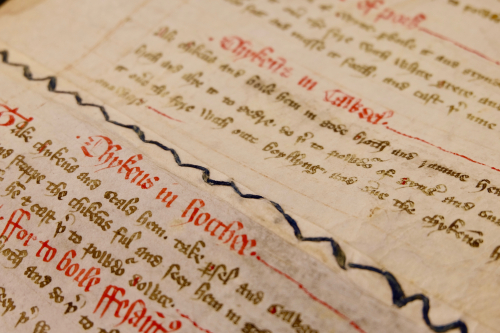
The Forme of Cury with stitching where a new piece of parchment was added to the scroll (British museum)
If you want to know more: this blog post complements this podcast episode.
Rabbit or Kid in a Sweet and Sour Sauce
Any kind of meat can be used here really, chicken legs or diced lamb are the best substitutes. Sweet and sour sauce was called egurdouce; -douce meaning sweet and egur- meaning sour, e.g. vin-egur was sour wine, in other words vinegar! The meat is browned in lard, removed, so the onions and dried fruit can be fried, the meat is replaced with the liquid ingredients and spices and simmered just like a modern casserole or stew.
Egurdouce. Take connynges or kydde, and smyte hem on pecys rawe, and fry hem in white grece. Take raysouns of coraunce and fry hem. Take oynouns, perboile hem and hewe them small and fry them. Take rede wyne and a lytel vynegur, sugur with powdour of pepr, of ginger, of canel, salt; and cast þerto, and lat it seeþ with a gode quantite of white grece, & serue it forth.
Take young rabbits or kid and cut them into pieces and fry them in lard. Take currants and fry them. Take onions, parboil them, and chop them small and fry them. Take red wine and red wine vinegar, sugar and powdered pepper, ginger, cinnamon, salt and add them, let it simmer gently in a good quantity of lard and serve it forth.
Hippocras
Straining hippograss through a bag
This is a really excellent recipe for spiced wine; mulled drinks were drunk throughout the year and could be served hot or cold. There are some tricky to get hold of spices, but I’ve added alternatives where appropriate. If you have to omit a spice or two, don’t worry, it will still be delicious.
Pur fait ypocras. Troys vnces de canell & iii vneces de gyngeuer; spykenard de Spayn, le pays dun denerer; garyngale, clowes gylofre, poeure long, noieȝ mugadeȝ, maȝioȝame, cardemonii, de chescun dm. vnce; de toutes soit fsait powdour &c.
To make hippocras. Three ounces of cinnamon and three ounces of ginger, spikenard of Spain, a pennysworth; galingale, cloves, long pepper, nutmeg, marjoram, cardamom, of each a quarter of an ounce; grain of paradise, flour of cinnamon, of each half an ounce; of all, powder is to be made etc.
There are a couple of tricky spices in the list: long pepper and grains of paradise are available to buy online quite easily, but are very expensive, so you can get away with regular black pepper as a substitute. Galangal is easier to find fresh than dried these days, as it is used extensively in Thai cuisine as part of their delicious red and green curries, however, seek and ye shall find the dried variety.
Spikenard of Spain is the extract of the root of a valerian plant and was used in the church as an anointing oil, it also appears very commonly in recipes. I’ve never had the opportunity to taste it.
Here’s my version of the recipe:
1 bottle of red wine
1 tsp each ground cinnamon and ground ginger
¼ tsp each ground galingale, ground black pepper, ground nutmeg, dried marjoram, ground cardamom
honey to taste
Pour the wine into a saucepan with all of the spices and bring slowly to a scalding temperature. Don’t let the wine boil as there’ll be no alcohol left in it! Let the spices steep in the hot wine for around 10 minutes.
Meanwhile spread a piece of muslin, or any other suitable cloth, over a sieve and pour the spiced wine through it into another pan or serving jug. Add honey to sweeten. Serve hot or cold.









 British Food: A History