Tag Archives: history

Mediaeval Almond Milk

Over recent years, as we have become more aware of people’s food intolerances and allergies there has been a great rise in the amount of plant-based milks consumed in the western world. We’ve also realised that there are many benefits associated with the cutting down of animal products in our diets. One of these plant milks – almond milk – is actually having a Renaissance because it was a food that used to be consumed in abundance in mediaeval Europe. Indeed, if I was writing this 20 years ago, it would be appearing in my ‘Forgotten Foods’ series on the blog.
As you may know, mediaeval Christians fasted a lot. There were two great fasting episodes: Advent and Lent. Every Wednesday, Friday and Saturdays was a fast day, meaning that around half of the days of the year were spent fasting. No meat or animal produce was allowed to be eaten, except for fish which was considered cool and calming and so appropriate for these days of solemnity.
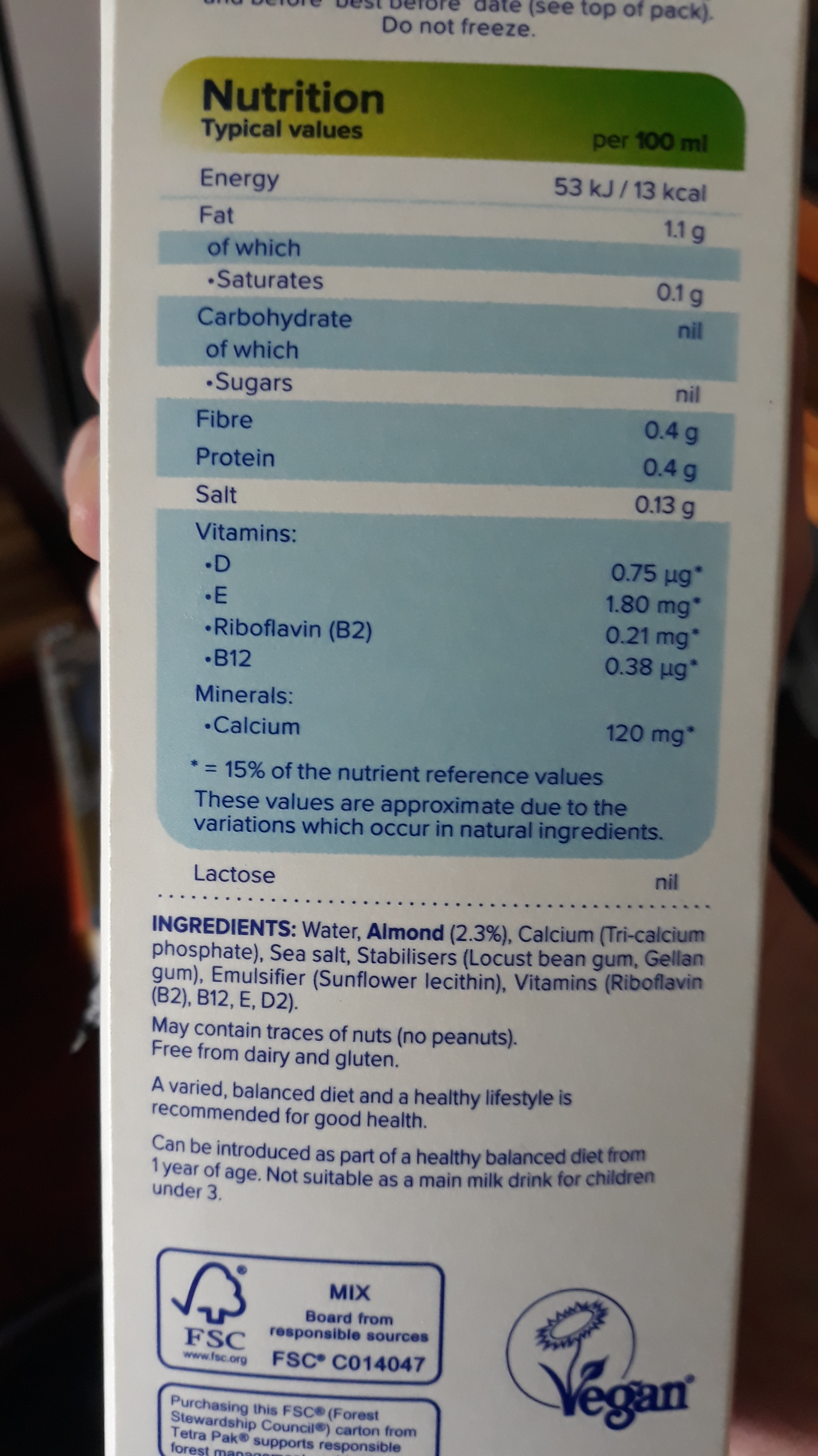
The nutrition contained within almond milk. Notice the added ingredients.

Just like the people do today, mediaeval folk tried to make alternative products that could fill the same satisfying gastronomical niche as the real thing. Almond milk was one of those products.

Almonds were imported (as they are now) and very expensive. Households were expected to make almost all their own food and drinks and almond milk was no exception. The expense and effort required to make it made it a fasting ingredient reserved only for the rich, and they consumed a lot of it. King Edward I went through a startling 40 000 pounds of almonds in just two years!

I must admit I quite enjoy modern almond milk as a drink or in porridge but find it otherwise a little insipid, so I was interested in finding out how mediaeval people went about making it and what it was like. From my reading, it seems to be thicker and more substantial than todays, where it was refined into a thick almond cream or curdled to make a kind of almond curd cheese. I’m not sure if this would be possible using the almond milk of today!

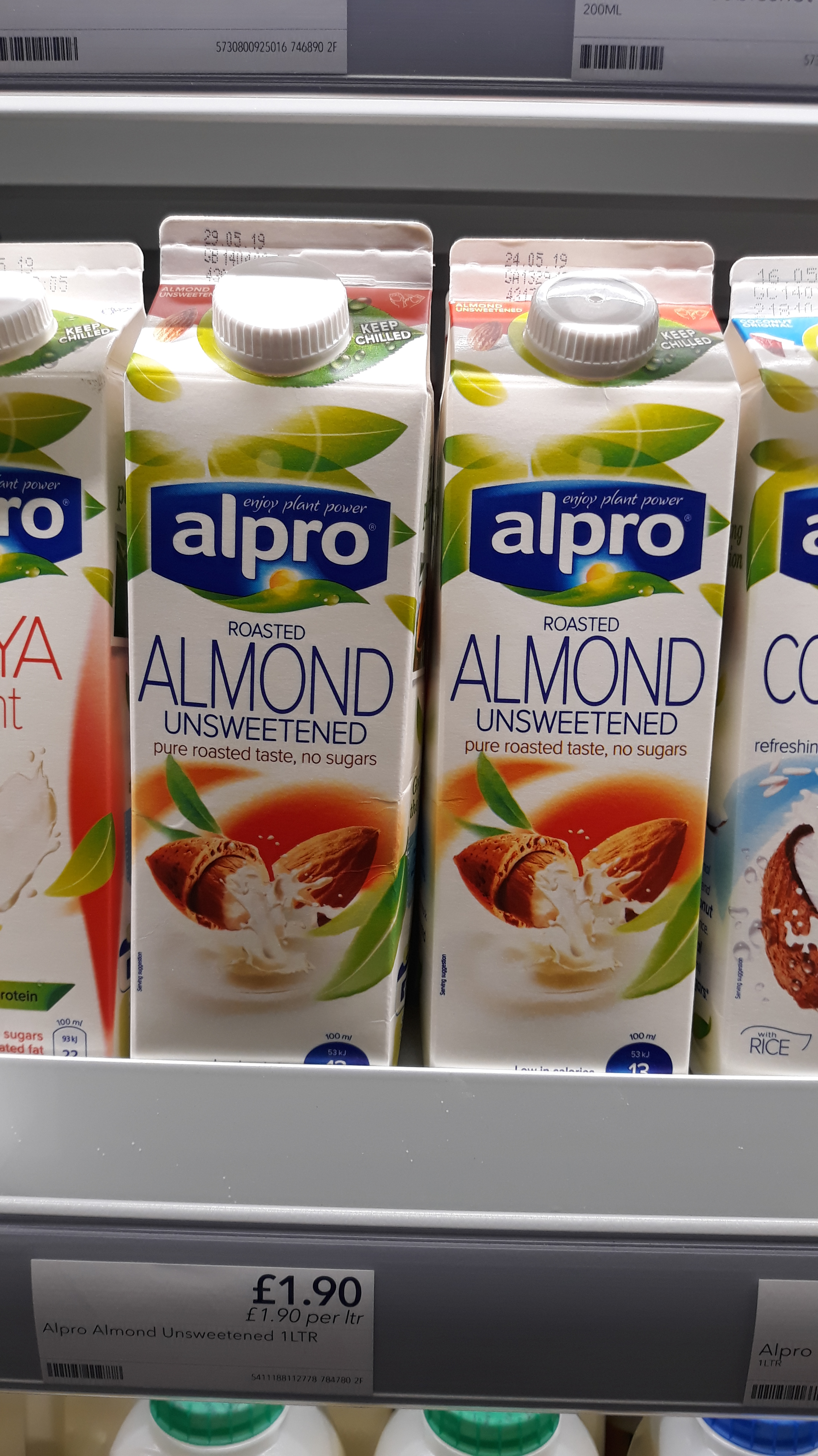
On the other hand, modern almond milk may be more nutritious. When people moved from cow’s milk to plant-based milks, many didn’t realise there would be a massive drop in their consumption of nutrients like calcium and vitamin D. This led to concerns that people would become deficient, and so modern manufacturers fortify almond milk with extra nutrients to help people to achieve their recommended nutritional allowances for the day.


If you like the blogs and podcast I produce, please consider treating me to a virtual coffee or pint, or even a £3 monthly subscription: follow this link for more information.


Making Mediaeval Almond Milk

The basic method was acquired from the Arabs who were supplying much of the almonds themselves via the vast network of trade routes that stretched out through Eastern Europe, the Middle East and beyond.

The begin almonds would be pounded very fine, sometimes with a little spring water or rose water to stop them oiling;  they didn’t want to make almond nut butter by accident! After this initial exhausting task, the almonds would be soaked in spring water (though I have found references to soaking them in barley water too). After soaking, it was passed through a strainer and seasoned with salt and some honey or sugar. Cream could be made by boiling the milk down until very thick or made into curds by adding vinegar before straining. I came across this recipe for an almond cheese so thick, you could slice it:

Take almond milk, and boil it, and when it is boiled take it from the fire, and sprinkle on a little vinegar. Then spread it on a cloth, and cast sugar on it, and when it is cold gather it together, and leche it [slice it] in dishes, and serve it forth.

So how does mediaeval almond milk compare to compare to todays, and how is it to use as an ingredient?

I updated the mediaeval approach to making almond milk, but the ingredients essentially remain the same.

100g ground almonds

2 tsp rose or orange-flower water (optional)

1 tsp sugar or honey

A good pinch of salt400 ml boiling water

60 ml white wine (optional)

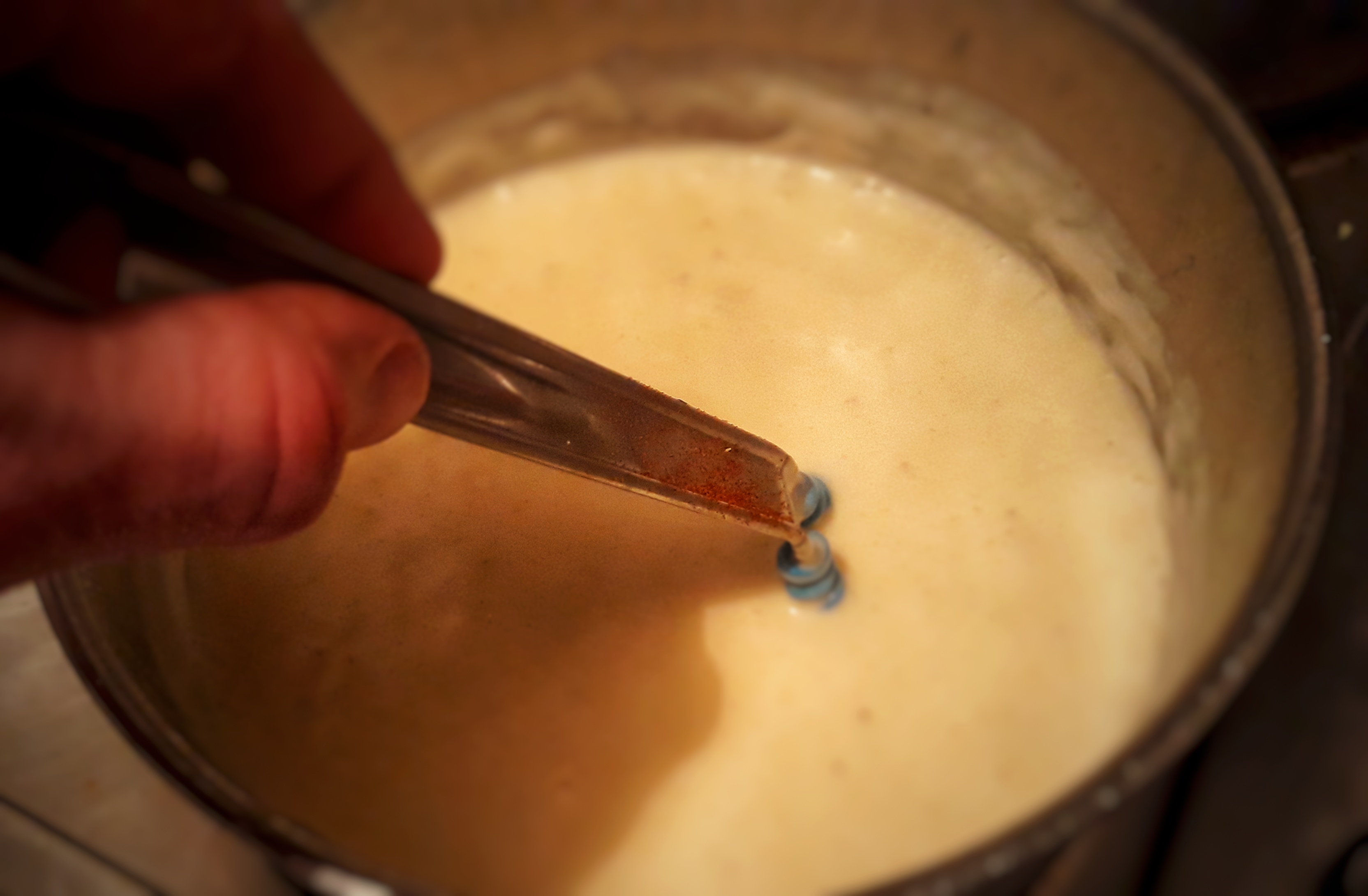
The first task is to get those ground almonds super-fine. Put them in a blender (a Nutri-bullet style blender is perfect) with the rose water and about 50 ml of the hot water and blitz in pulses until very smooth. Add the rest of the boiling water and leave to stand and soak for around 20 minutes.

Give the milk a good swish around and pass it through a sieve to remove any large pieces of ground almond. Sweeten with the sugar or honey, add the wine if using and allow to cool.

The mediaeval almond milk is now ready to use.

The Verdict

Well I must say, I was quite impressed with the end result. It was more substantial than bought almond milk in both texture (it was creamy) and taste (the honey, salt and rose water). It wasn’t chalky or gritty either like I expected. I don’t recommend adding the wine however; it put the flavours out of kilter for me, but each to their own I suppose.

I heartily recommend making some. I made a rose-flavoured pudding (see next post) and I even tried making the cheese with the left-over almond milk.
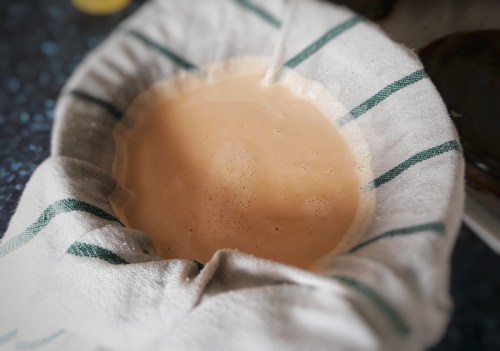
I was rather odd in flavour, I added soft dark brown sugar and a couple of tablespoons of red wine vinegar, let it stand for a few hours and then passed it through a scalded tea towel sat in a sieve. It could make an interesting mediaeval version of a Yorkshire Curd Tart I think.

9 Comments

Filed under cooking, Dairy, food, General, history, Mediaeval Age, Recipes, Uncategorized

Macaroni Cheese

At the end of last year, I finally had the opportunity to visit the United States to visit old friends – and haunts – in Houston, St Louis and Chicago, as well as discovering new cities such as Dallas, New York and New Orleans. It was a crazy whistle stop road trip and no mistake.

Having lived on both sides of the Pond, I can really appreciate the American influence on British cuisine. So much deliciousness has drifted over the Atlantic to wedge itself firmly in the psyche of British – nobody in the UK could possibly imagine a world without mouth-watering pulled pork, pillowy cinnamon buns or squidgy chocolate brownies (and blondies!).

One of the best foods of all is Mac and Cheese, and although considered very much an all-American (or perhaps the American) meal, macaroni cheese has its origins firmly planted in Britain.

Macaroni cheese emigrated to the US and Canada with the British settlers, but it wasn’t until the 1930s, during the Great Depression, that it really became part of American culture. Millions were starving, but one entrepreneurial salesman from St Louis, Missouri had the idea to combine nonperishable dried pasta with dried processed cheese. It could be mass produced and priced low. It was a huge hit, quickly establishing itself as the ‘American Housewife’s Best Friend’, feeding a family of four for just twenty cents. It literally saved a nation from starvation.

Elizabeth Raffauld

The first mention of it my side of the Pond can be found in the 1769 classic cookbook The Experienced English Housekeeper by Elizabeth Raffauld. It says To Dress Macaroni with Parmesan Cheese:

Boil four ounces of macaroni till it be quite tender and lay it on a sieve to drain. Then put it in a tossing pan with about a gill [a quarter of a pint] of good cream, a lump of butter rolled in flour, boil it five minutes. Pour it on a plate, lay all over it parmesan cheese toasted. Send it to the table on a water plate, for it soon gets cold.

All the elements of a modern macaroni cheese: the appropriate pasta, a proto-béchamel sauce, plenty of cream and lots of cheese; perhaps surprisingly, parmesan cheese.

But we can go back even further; back to the 1390s in fact, with Britain’s earliest cookbook Forme of Cury. Pasta made from breadcrumbs (I must try it sometime) cooked in a velouté sauce (like a béchamel but made with stock instead of milk), and something called chese ruayn which was a hard cheese similar in taste to brie, resulting in something half-way between macaroni cheese and a lasagne. I wonder if there’s an extant French cheese that could fit the bill if I tried to cook this dish?

Take good broth and do in an earthen pot. Take flour of payndemayn [high quality white bread] and make thereof past[e] with water, and make therof thynne foyles as paper with a roller; drye it hard and seeth [simmer] it in broth. Take chese ruayn grated and lay it in dishes with powdour douce [a mix of warm spices such as cinnamon, cloves etc], and lay on the loseyns [the pasta sheets] isode as hole as thou myst, and above powdour and chese; and so twyce or thrice [i.e. layer it up], & serve it forth.

This dish must have remained popular because macaroni and other pasta dishes using cheese and velouté sauce appear crop up again in Eliza Acton’s 1845 book Modern Cookery for Private Families. There is also the more familiar béchamel sauce version. What is interesting is that there is a variety of cheeses used in these recipes: Cheddar, Parmesan, Gruyere and blue Stilton all feature. I love blue cheese, so this one really stood out for me and I have adapted it below.

If blue cheese isn’t your thing, replace it with another. Cheddar, red Leicester or a mature Lancashire would all work. This recipe produces a rather saucy macaroni cheese, if you prefer a thicker consistency, add an extra 50 grams of pasta.


If you like the blogs and podcast I produce, please consider treating me to a virtual coffee or pint, or even a £3 monthly subscription: follow this link for more information.


Blue Stilton Macaroni Cheese

Serves four:

30 g plain flour

30 g butter

400 ml hot full-fat milk

150 ml double cream

200 g macaroni

1 slice stale bread

½ tsp chopped fresh rosemary leaves, or ¼ tsp fried rosemary (optional)

225 g Stilton cheese, grated

200 g Gruyere or Cheddar cheese, grated

Pinch Cayenne pepper

Salt and freshly-milled black pepper

First of all make a roux by melting the butter in a saucepan. As soon as it has finished foaming, tip in the flour and mix well with a small whisk or wooden spoon. Cook on a medium heat for a couple of minutes, stirring frequently. If the roux starts to brown, turn down the heat.

Beat in around a quarter of the milk with your whisk, adding another quarter once the first lot is fully incorporated. Repeat until all of the milk is used up. Add the cream and allow the béchamel sauce to simmer gently for around 10 minutes. Make sure you stir every minute or so, to stop the flour sticking to the bottom of the pan.

Meanwhile cook the macaroni in plenty of salted water – follow the instructions on the packet and cook for two minutes less than the instructions state.

Make the bread into breadcrumbs by pulsing in a food processor. If using, add the rosemary half way through the pulsing process.

Take the sauce off the heat and drain the pasta. Stir in the cheeses, mixing until fully incorporated. Tip in the pasta and mix. Now season well with salt, black pepper and Cayenne pepper.

Pour the whole lot into a baking dish of a capacity of 1.5 litres, or thereabouts and bake for around 20 minutes at 180°C until brown and bubbling and the breadcrumbs are well-toasted.

Serve straight away with crusty bread or a rocket salad.

20 Comments

Filed under Britain, cooking, food, General, history, Recipes, Uncategorized

Smoking Bishop

Fine oranges well roasted with sugar and wine in a cup, they’ll make a sweet Bishop when gentlefolk sup.

Jonathan Swift (1667-1745)

I spent part of the week in London this week and made sure I had a wander around the Tower Bridge area, my favourite part of the great city. The tiny roads are still so very evocative of Dickens with many of the street names and yards appearing in his writings. Much of Little Dorrit takes place in this area of London, but it was such a bitingly-cold day that it put me more in mind of the winter scenes described in Dickens’ novella A Christmas Carol.

At the very end of the story, when it dawns upon the old miser Ebenezer Scrooge that it’s nice to be nice, he offers his long-suffering clerk a well-deserved pay rise and some delicious steaming-hot smoking bishop:

“A merry Christmas, Bob!” said Scrooge, with an earnestness that could not be mistaken, as he clapped him on the back. “A merrier Christmas Bob, my good fellow, than I have given you, for many a year! I’ll raise your salary, and endeavour to assist your struggling family, and we will discuss your affairs this very afternoon, over a Christmas bowl of smoking bishop, Bob! Make up the fires, and buy another coal-scuttle before you dot another i, Bob Cratchit!”

The Christmas Bowl

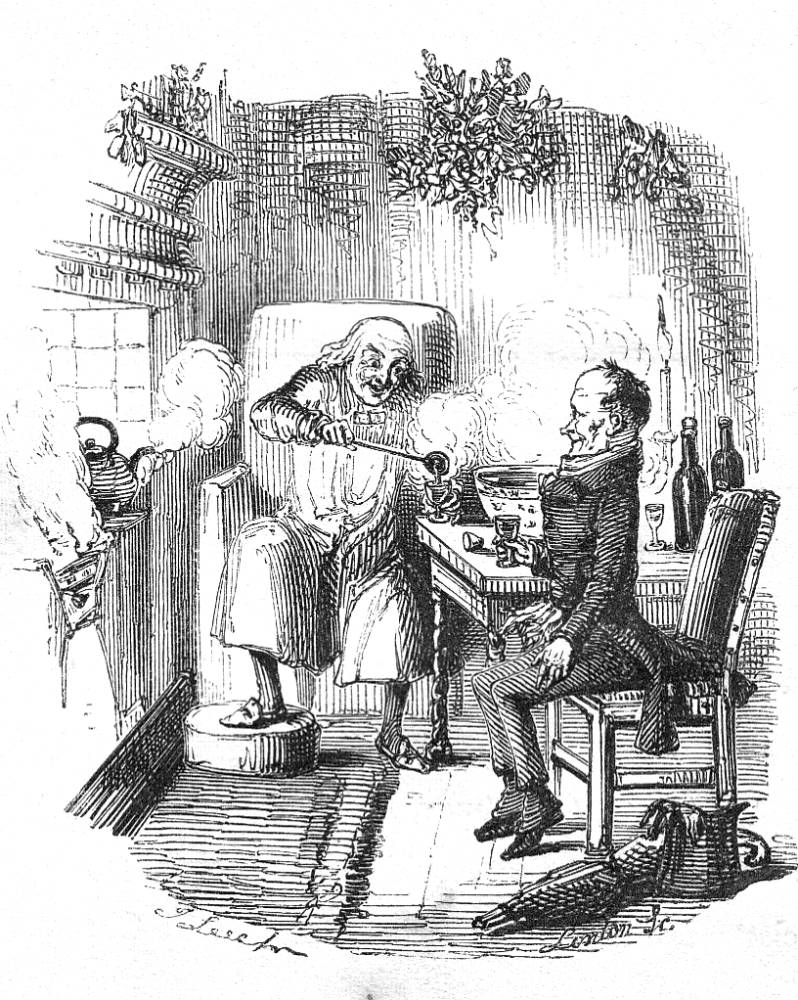
The Christmas Bowl:

Original illustration from A Christmas Carol by John Leech

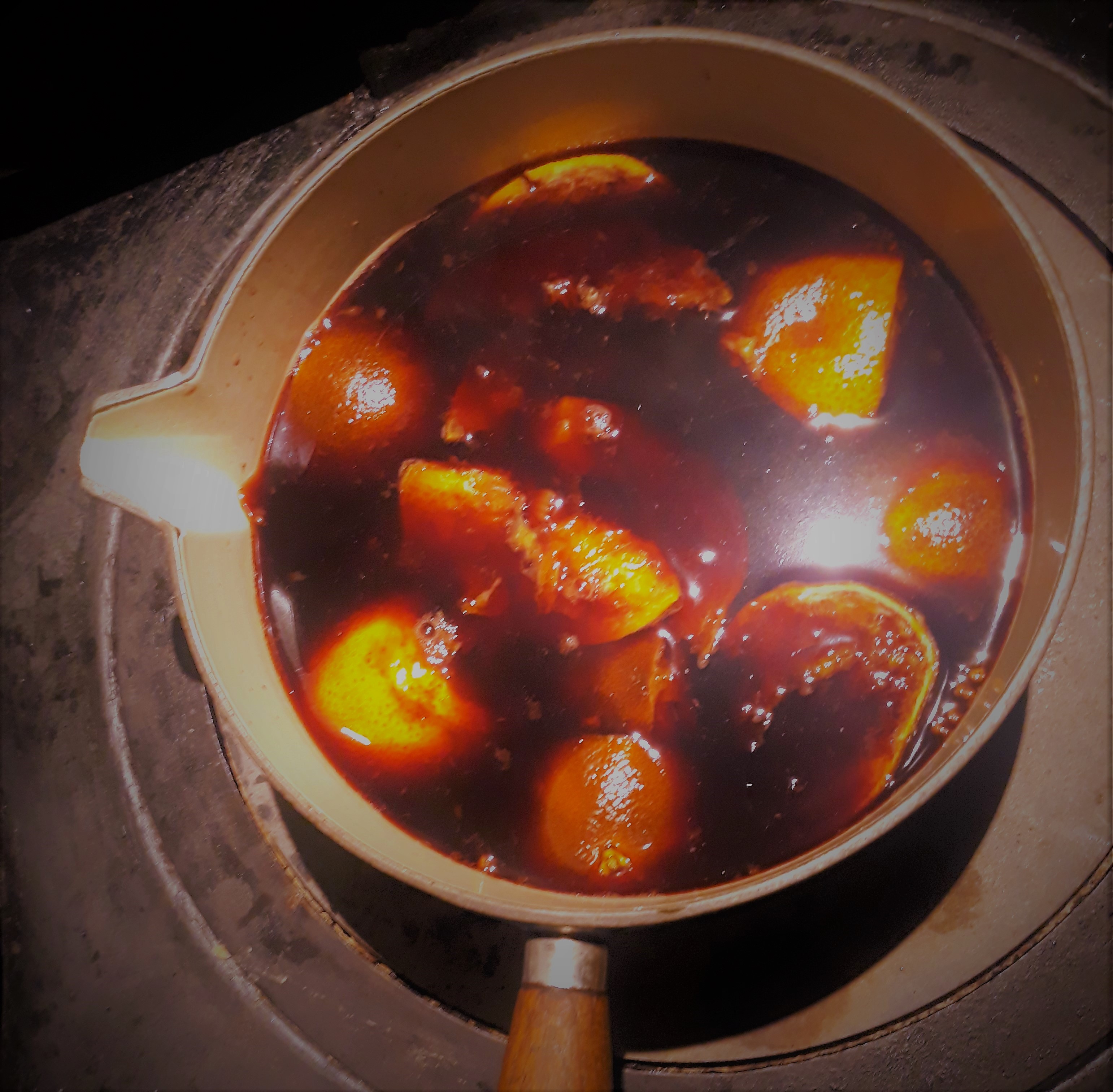
Christmas wouldn’t be Christmas without a heady hot boozy snifter and smoking bishop is the best of all, in my opinion. Everyone is sick of mulled wine these days – or at least I am – this is the way to go; a marvellous mixture of port, oranges and spices.

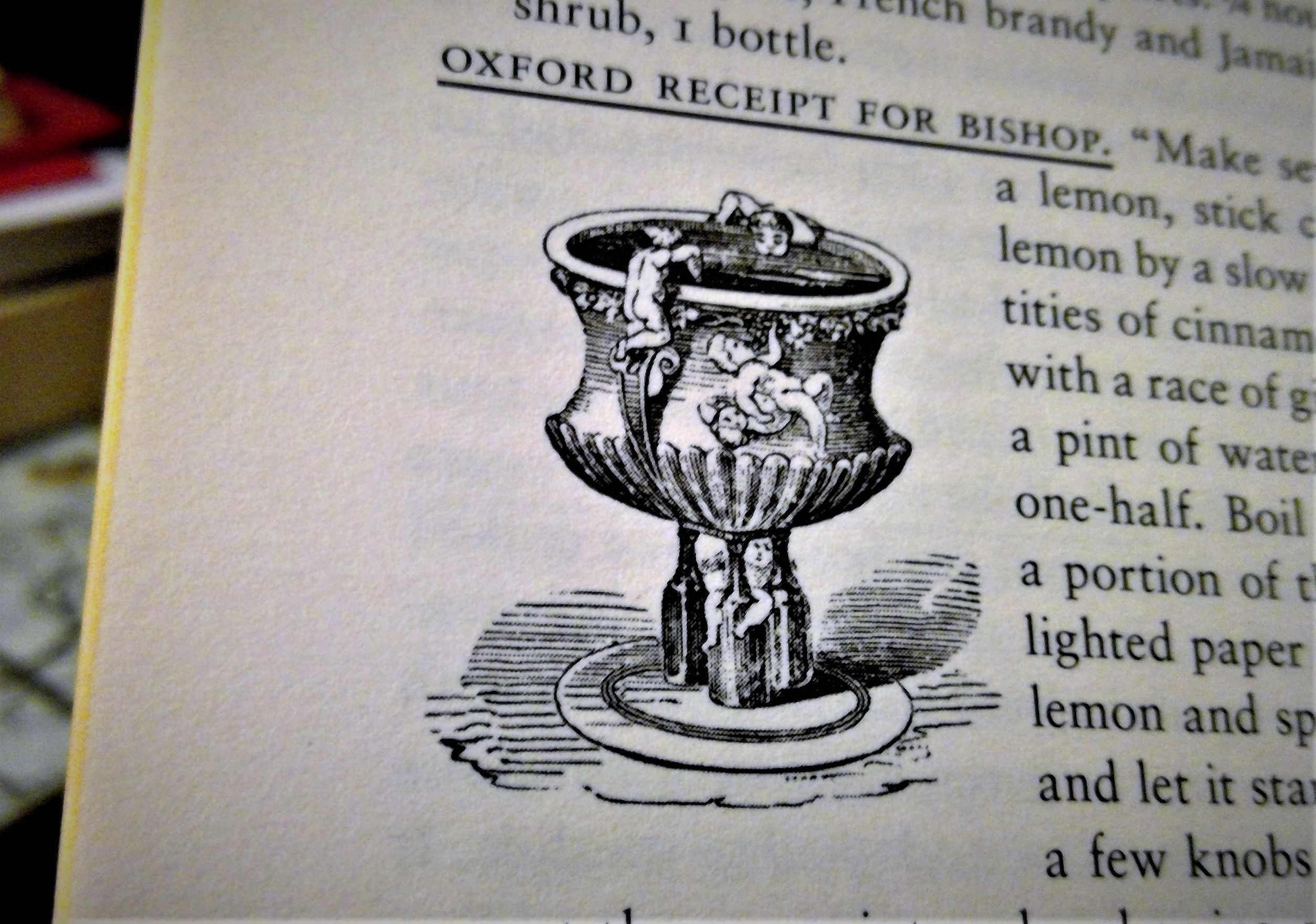
The drink is smoking because the oranges – preferably bitter Seville oranges – are roasted until blackened. The drink is a bishop because it is one of several drinks once known as ‘ecclesiasticals’; drinks named after various orders within the Catholic church. Indeed, if you substitute the port for claret, you have a smoking cardinal; better still, use champagne and you’ve got yourself a smoking pope! I have never tried these, but I think I might give smoking pope a go but using Prosecco instead. There was a spate of these somewhat anti-Catholic snifters during the 17th and 18th centuries, but it was just a wry dig, compared to what had happened in the past (e.g. this post). If you look up the recipe for a smoking bishop in Eliza Action’s classic 1845 book Modern Cookery for Private Families, inset is an illustration of a mitre-shaped punch bowl into which it should be served!

WIN_20181214_18_26_18_Pro

A mitre-shaped punchbowl, from Modern Cookery for Private Families, 1845

Many port drinks were created around this time too because France and England were tied into an out-of-control tit-for-tat game with tariffs for exports between the two countries, making French wine – the preferred drink at the time – too expensive for most people, and so eyes moved to Spain and it was soon Cheerio! Chateau Neuf de Pape and Hello! lovely port wine.

One of the reasons I don’t always like mulled wine is that it can be a little heavy on the spices. A smoking bishop uses fewer spices, in fact my recipe uses only one: cloves. The only other aromatics being the oils released from the burnt bitter orange rinds. Aside from that, just a little water and some dark brown sugar are added to taste.

It’s a delicious and easy drink to make, and you will never go back to mulled red wine again once you’ve tried it, so please give it a go; you won’t be disappointed!

Smoking bishop can be made ahead of time, strained, and reheated with great success.

One 750 ml bottle of port

3 oranges (Seville, if possible)

8 cloves

250ml water

Dark brown sugar to taste

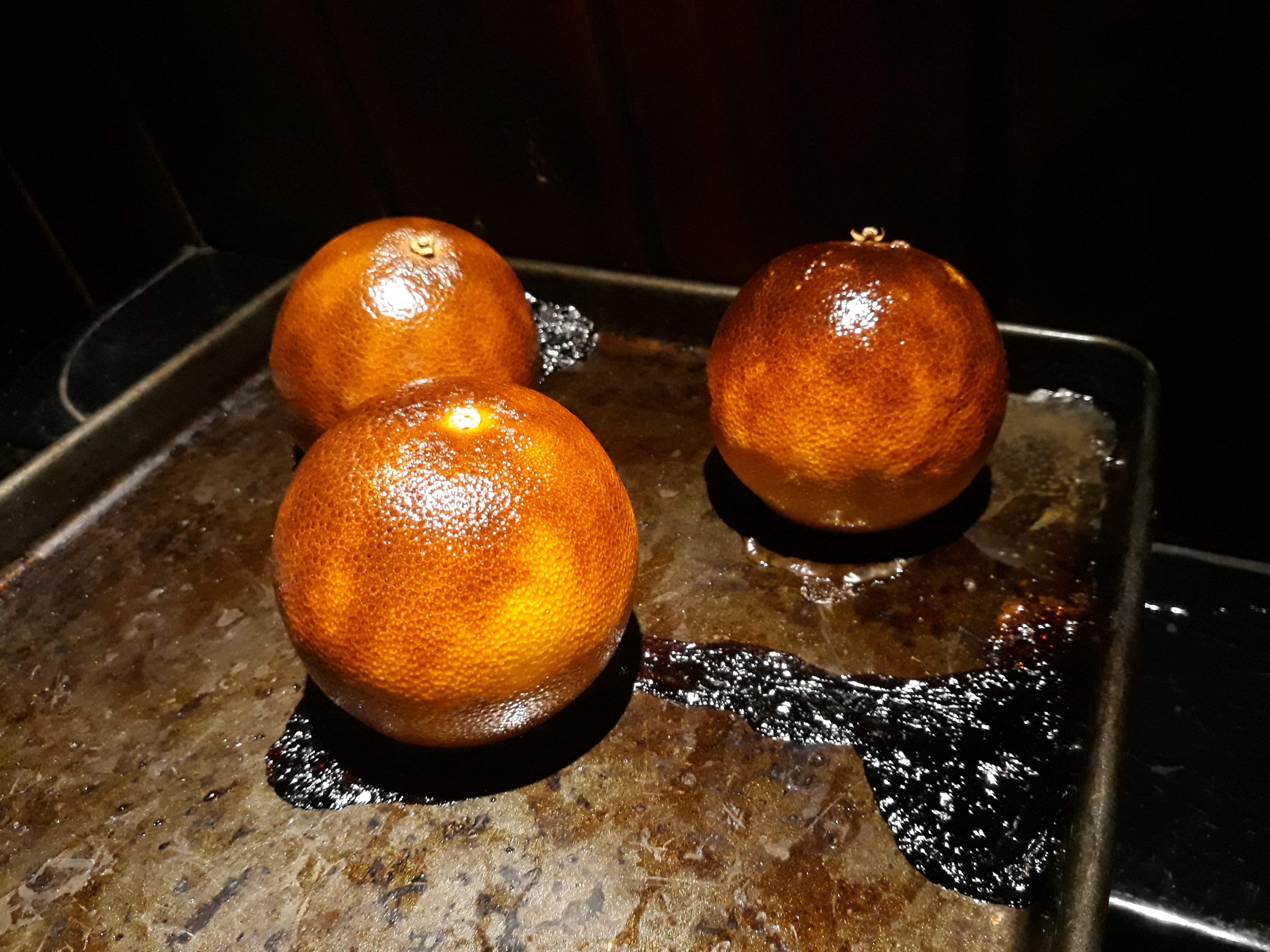
Place the oranges on a tray and bake at 200°C for around 25 minutes until they have started to blacken and give off their delicious burnt aroma. Remove from the oven and allow to cool a little before slicing them up.

2018-11-23 19.29.29

Next, pour the full bottle of port into a saucepan (very satisfying to do) along with the oranges and any orange juicy bits, as well as the cloves and water.

Bring to a bare simmer – don’t let it boil! – and let it gently tick away at a scalding temperature (around 80°C) for around 20 minutes.

2018-11-23 19.56.52

Add sugar to taste – if the oranges are very bitter and black, you might need quite a bit. If you don’t want bits of orange pulp and clove floating about in the drink, strain into a clean pan before adding the sugar.

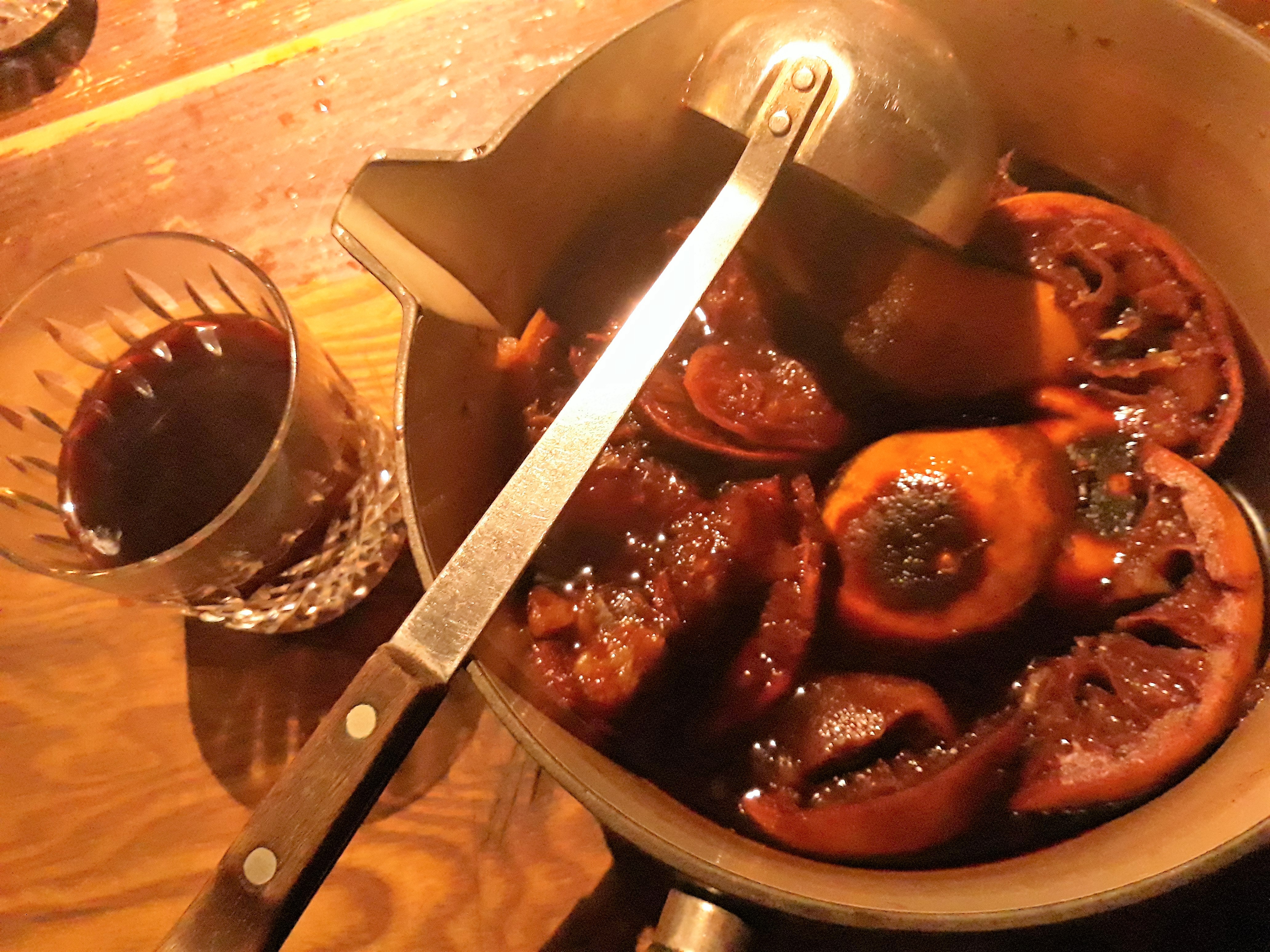
If, in the unlikely event, you do not have a mitre-shaped punch bowl, you can simply ladle straight from the saucepan into punch glasses or small mugs.


If you like the blogs and podcast I produce, please consider treating me to a virtual coffee or pint, or even a £3 monthly subscription: follow this link for more information.


2018-11-23 20.17.37

10 Comments

Filed under Britain, Christmas, Eighteenth Century, food, Fruit, General, history, Recipes, Seventeenth Century, The Victorians

Medlar Tart

It’s medlar (aka openarse) season at the moment, and I thought I would try the recipe I mentioned in the medlar post from last year.

There’s quite little to go on with medlar preparation in books and the internet as people don’t really eat or cook with them these days, beyond medlar jelly, so every year, I learn a little more about eating and cooking them.

This year I have been more patient and waited for them to get fully-bletted. Medlars are a strange fruit in that they cannot be eaten until they have gone very dark, ripe and soft, a process called bletting. Any other fruit would be thrown away in this state, but medlars are unique because they go from sour and astringent to a tart, soft date-like fruit. They can be sliced in two and the soft flesh can be squeezed or spooned out. Within there are 5 large seeds, so you have watch out for them.

This medlar tart recipe comes from the 1597 book The Good Housewife’s Jewel by Thomas Dawson. It is a very simple paste made from medlar pulp, cinnamon, ginger and sugar baked in a pastry case. Here’s the recipe as it appears in the book:

Take medlars that be rotten and stamp them. Then set them on a chafing dish with coals, and beat in two yolks of eggs, boiling till it be somewhat thick. Then season them with sugar, cinnamon and ginger and lay it in the paste.

Back in Tudor times (Elizabeth I was on the throne when the book was published), sugar was not always as refined as today, so to replicate this I used soft light brown sugar. I decided to use rough-puff pastry as my ‘paste’, as it was often used for the more delicate desserts and posh pies. I changed the method slightly and instead of thickening the medlar mixture in a pan, as you would for pouring custard, I put the uncooked mixture into the case and baked it in the oven.

I did have a look for other recipes and found that things like butter, nutmeg, candied fruit or citron, sweet cider and musk powder (that final one might be a little tricky to source) were all added merrily.

This tart is very good indeed, evocative of the American pumpkin pie. I would certainly give it a go should you happen upon a medlar tree.

For the tart:

Blind-baked shallow 8-inch pastry case

750 g well-bletted medlars

75 g caster or soft light brown sugar

3 egg yolks

1 tsp each ground cinnamon and ginger

Cut the medlars and twist in half widthways, as you might do with an avocado (except there are 5 pips rather than one large one). Scoop or squeeze the soft flesh into a bowl, removing pips as you go. I tried to pass the squeezed flesh through a sieve, which was a little tricky and boring but realised quite quickly that I wasn’t patient enough and decided instead that the flesh was smooth enough straight from the fruit.

Beat in the remaining ingredients and spread the mixture over the pastry case and bake for 20 minutes at 175°C.

Eat warm with thick cream.


If you like the blogs and podcast I produce, please consider treating me to a virtual coffee or pint, or even a £3 monthly subscription: follow this link for more information.


6 Comments

Filed under baking, Britain, cooking, Desserts, food, Fruit, history, Puddings, Recipes

Favourite Cook Books no. 3: The Forme of Cury, part 2 – recipes

FC scroll

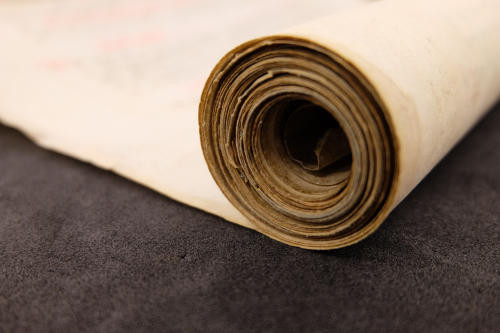
 The vellum scroll rolled up (British Museum)

As promised in my previous post, a few recipes from the Forme of Cury. I have translated them into modern English, so you can follow them a bit easier. For the hippocras drink, I have given you my interpretation of the recipe as there are some hard-to-find ingredients. All the recipes are easy to make and taste delicious.


If you like the blogs and podcast I produce, please consider treating me to a virtual coffee or pint, or even a £3 monthly subscription: follow this link for more information.


Cabbage Soup

A very simple dish – not everything Richard II ate was ostentatious. This is a very simple recipe with ingredients we use today. The addition of the saffron give it an interesting earthy flavour. Powder douce was a mixture of sweet spices – the spices we would associate with desserts like apple pie – shop-bought mixed spice is good substitute. The base of the soup is broth or stock, use any you like, though I think chicken is the best for this soup.

Caboches in Potage. Take Caboches and quarter hem and seeth hem in gode broth with Oynouns yminced and the whyte of Lekes yslyt and ycorue smale. And do þerto safroun & salt, and force it with powdour douce.

Cabbage Soup. Take cabbages and quarter them and seethe (simmer) them in good broth with chopped onions and the white of leeks, slit and diced small. Add saffron and salt, and season it with powder douce.

forme of cury stitches

The Forme of Cury with stitching where a new piece of parchment was added to the scroll (British museum)


If you want to know more: this blog post complements this podcast episode.


Rabbit or Kid in a Sweet and Sour Sauce

Any kind of meat can be used here really, chicken legs or diced lamb are the best substitutes. Sweet and sour sauce was called egurdouce; -douce meaning sweet and egur- meaning sour, e.g. vin-egur was sour wine, in other words vinegar! The meat is browned in lard, removed, so the onions and dried fruit can be fried, the meat is replaced with the liquid ingredients and spices and simmered just like a modern casserole or stew.

Egurdouce. Take connynges or kydde, and smyte hem on pecys rawe, and fry hem in white grece. Take raysouns of coraunce and fry hem. Take oynouns, perboile hem and hewe them small and fry them. Take rede wyne and a lytel vynegur, sugur with powdour of pepr, of ginger, of canel, salt; and cast þerto, and lat it seeþ with a gode quantite of white grece, & serue it forth.

Take young rabbits or kid and cut them into pieces and fry them in lard. Take currants and fry them. Take onions, parboil them, and chop them small and fry them. Take red wine and red wine vinegar, sugar and powdered pepper, ginger, cinnamon, salt and add them, let it simmer gently in a good quantity of lard and serve it forth.

Hippocras

hippocras MS

 Straining hippograss through a bag

This is a really excellent recipe for spiced wine; mulled drinks were drunk throughout the year and could be served hot or cold. There are some tricky to get hold of spices, but I’ve added alternatives where appropriate. If you have to omit a spice or two, don’t worry, it will still be delicious.

Pur fait ypocras. Troys vnces de canell & iii vneces de gyngeuer; spykenard de Spayn, le pays dun denerer; garyngale, clowes gylofre, poeure long, noieȝ mugadeȝ, maȝioȝame, cardemonii, de chescun dm. vnce; de toutes soit fsait powdour &c.

To make hippocras. Three ounces of cinnamon and three ounces of ginger, spikenard of Spain, a pennysworth; galingale, cloves, long pepper, nutmeg, marjoram, cardamom, of each a quarter of an ounce; grain of paradise, flour of cinnamon, of each half an ounce; of all, powder is to be made etc.

There are a couple of tricky spices in the list: long pepper and grains of paradise are available to buy online quite easily, but are very expensive, so you can get away with regular black pepper as a substitute. Galangal is easier to find fresh than dried these days, as it is used extensively in Thai cuisine as part of their delicious red and green curries, however, seek and ye shall find the dried variety.

Spikenard of Spain is the extract of the root of a valerian plant and was used in the church as an anointing oil, it also appears very commonly in recipes. I’ve never had the opportunity to taste it.

Here’s my version of the recipe:

1 bottle of red wine

1 tsp each ground cinnamon and ground ginger

¼ tsp each ground galingale, ground black pepper, ground nutmeg, dried marjoram, ground cardamom

honey to taste

Pour the wine into a saucepan with all of the spices and bring slowly to a scalding temperature. Don’t let the wine boil as there’ll be no alcohol left in it! Let the spices steep in the hot wine for around 10 minutes.

Meanwhile spread a piece of muslin, or any other suitable cloth, over a sieve and pour the spiced wine through it into another pan or serving jug. Add honey to sweeten. Serve hot or cold.

7 Comments

Filed under Books, Britain, cooking, food, history, Mediaeval Age, Recipes, Uncategorized

Favourite Cook Books no.3: The Forme of Cury, Part I

FC blanc mange

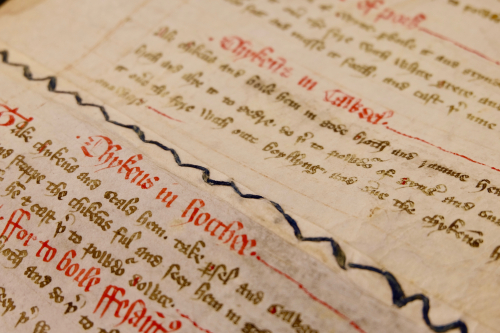
Some original text from the Form of Cury – a recipe for blank mang              (British Library)

The Forme of Cury (literally, A Method of Cookery) is Britain’s earliest known cook book, dating from around 1390. Regular readers will know, I am somewhat of a mediaevalist and so I have leafed through this ancient text many times, slowly soaking up the recipes just like a sop in potage.


If you want to know more: this blog post complements this podcast episode.

The effort required to produce the food, prepare it an obtain the ingredients, the surroundings and equipment and the wonderment of a mediaeval feast are all there to see, but from one person’s perspective: the cook.

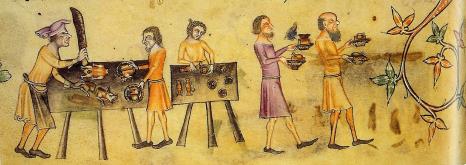
Angry cook

 Angry Cook and Waiters c. 1330

By cooking recipes from books like this, we get a glimpse of a bygone world, and with a bit of knowledge about the ingredients and methods used to prepare them, you get to experience history almost at first hand and really fires up the imagination. Anyone with as passing interest in history will love giving recipes like this as go, and I implore you to try, whether it be this book, or something more accessible like Mrs Beeton’s Book of Houshold Management, you won’t be disappointed.

Of course, for the Forme of Cury you have to brush up on your Middle English – this is the language of Chaucer – but with a good glossary and some persistence, you will tune in.

The Forme of Cury begins thus:

The Forme of Cury was compiled of the chef maister cooks of kyng Richard the Secunde king of Englond aftir the Conquest.

Richard II, the Dandy King, was flamboyant and ostentatious; he lived in grandeur and was considered to be a narcissistic, effeminate fop by many. Everything was done on a grand scale. His court and household were huge: 200 personal guards, 13 bishops, barons, knights, esquires plus many servants and other workers. In all, around 10 000 people worked under him.

Richard’s feasting and partying were also elaborate – one feast in 1383 cost 57 000 pounds plus an extra 10 000 pounds for napery and spices! If he were alive he’d be called a foodie for sure, his other gift to gastronomy aside from this book, being the napkin, prior to that the tablecloth doubled as one.

Richard was also obsessed with record-keeping, and because of this he commissioned this manuscript, and history is all the much richer for it.

richard II

 Richard II

Who wrote it?

The master cooks will not have written the recipes down themselves, it’s very likely that they were illerate, but they will have been dictated to by a scribe who sat behind the master cook taking notes. The cook himself sat in a raised chair in the centre of the huge kitchen, filled with industrious workers such as the bakers, the sauce cook, the spit-roaster, and the mincer; there was even a person in charge of salad! From his chair he was lord of all he surveyed, checking every dish before it was ‘served forth’.

The manuscripts

There are ten incomplete copies of the Forme of Cury in existence today, but the original 1390 document seems to be forever lost. The most complete copy is a six-metre long scroll of vellum parchment which is housed in the British Museum. No extant copy matches up exactly and all appear to contain errors or omissions (and in some cases additions). These differences are mainly due to human error by copying – some scribes were better than others it seems – but some are purposeful, new recipes unique to the commissioning household could be added, and some removed if disliked.

FC scroll

The Forme of Cury scroll (British Museum)

These manuscripts were transcribed and published as printed documents several centuries later many containing further errors, but they are invaluable because the text is easier to read, and many were written before some of the original copies degenerated, becoming unreadable. Some errors were mistranslations, for example ‘cast’ being swapped for ‘yeast’ (which was then spelt ȝast); other mistakes were made because non-cooks were doing the translating. In one case one transcriber recommends pouring boiling hot water over an intricately constructed pastry castle – not a good idea!


If you like the blogs and podcast I produce, please consider treating me to a virtual coffee or pint, or even a £3 monthly subscription: follow this link for more information.


The recipes

Modern editions of the book start with a list of recipes, and such a breadth of dishes is represented. Some are homely, many are ostentatious, others mysterious. There are some familiar names and ingredients: blancmange, custard tart, soups and stews, gruel and frumenty and hippocras (spiced wine), all of which would go down well at a dinner party today. However, I’m not sure if porpoise in frumenty or piglets in sage sauce would be well-received.

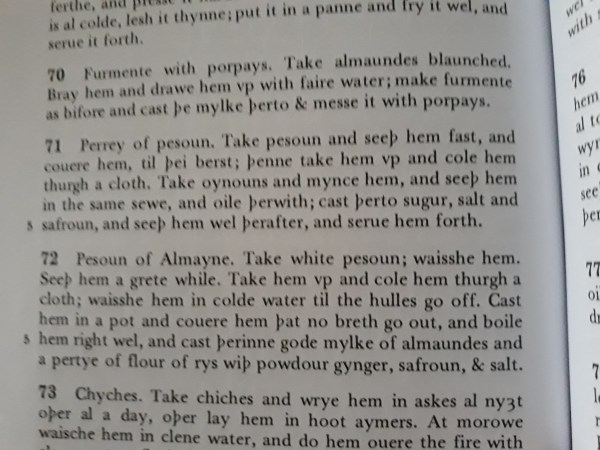
20180810_115613

 Excerpt from a modern transcription of the Forme of Cury

On feast days there was a type of dish called a sotielty (subtlety) which was not eaten, just looked at. Examples include the aforementioned pastry castle; the cokagrys, a half-pig, half-cock creation, and animals on pilgrimage, dressed in clothes and holding lamprey staffs.

The food that was eaten, however, was similarly painstaking to produce. To show of Richard’s great wealth there would be liberal use of spices and sugar (which was then considered a spice) as well as dried fruits such as currants, which had to have their seeds individually removed before they could be used – there was no such thing as seedless grapes in the 14th Century!

There were more fast days then feast days however, so there are many vegetarian and vegan dishes as well as recipes using freshwater fish and almonds or almond milk.

Some recipes are familiar and are delicious (they made great custard tarts), there are early recipes for rice pudding, bread sauce and meatballs. They even made pasta, which was most often rolled out thinly, cut into diamonds and dried. The pasta would be layered up with cooked mincemeat and a cheese sauce: in other words, a mediaeval English lasagne!

Food from The Forme of Cury has appeared on the blog before (see the Tartlettes post) and I made eel pie and hippocras for Alice Roberts on Channel 4’s Britain’s Most Historic Towns. I’ve waffled on a bit so I’ll post some original recipes as well as my interpretations of them in the next few days.

7 Comments

Filed under Blogs, Books, Britain, cooking, food, General, history, Mediaeval Age, Uncategorized

Pease Pancakes

Hello there readers, sorry I’ve been a bit tardy with posts but I’ve gotten somewhat bogged with a post on the history of vegetarianism that currently looks to be about four posts long! I’m ignoring the writers’ block by writing this little easy post instead…

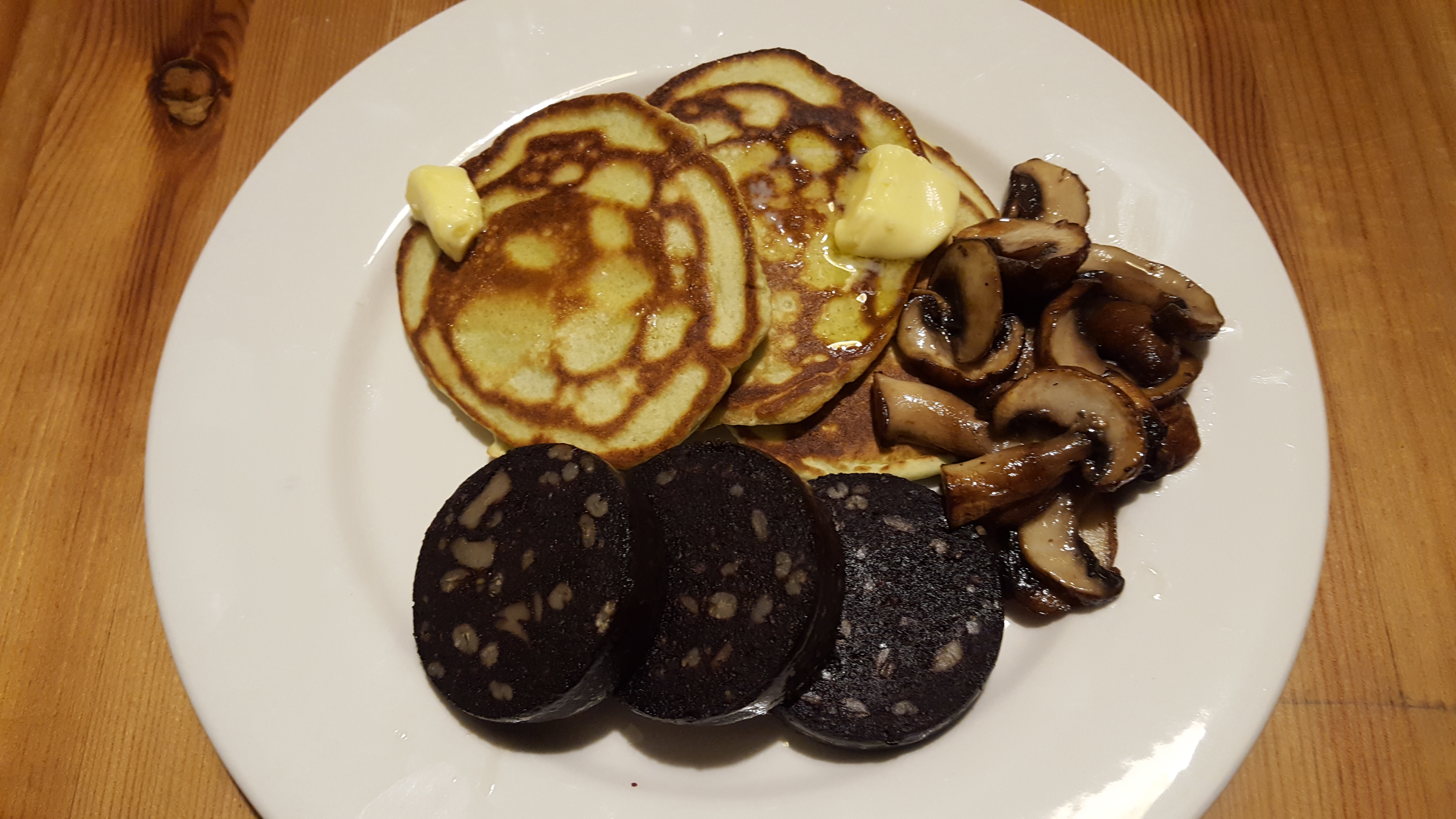
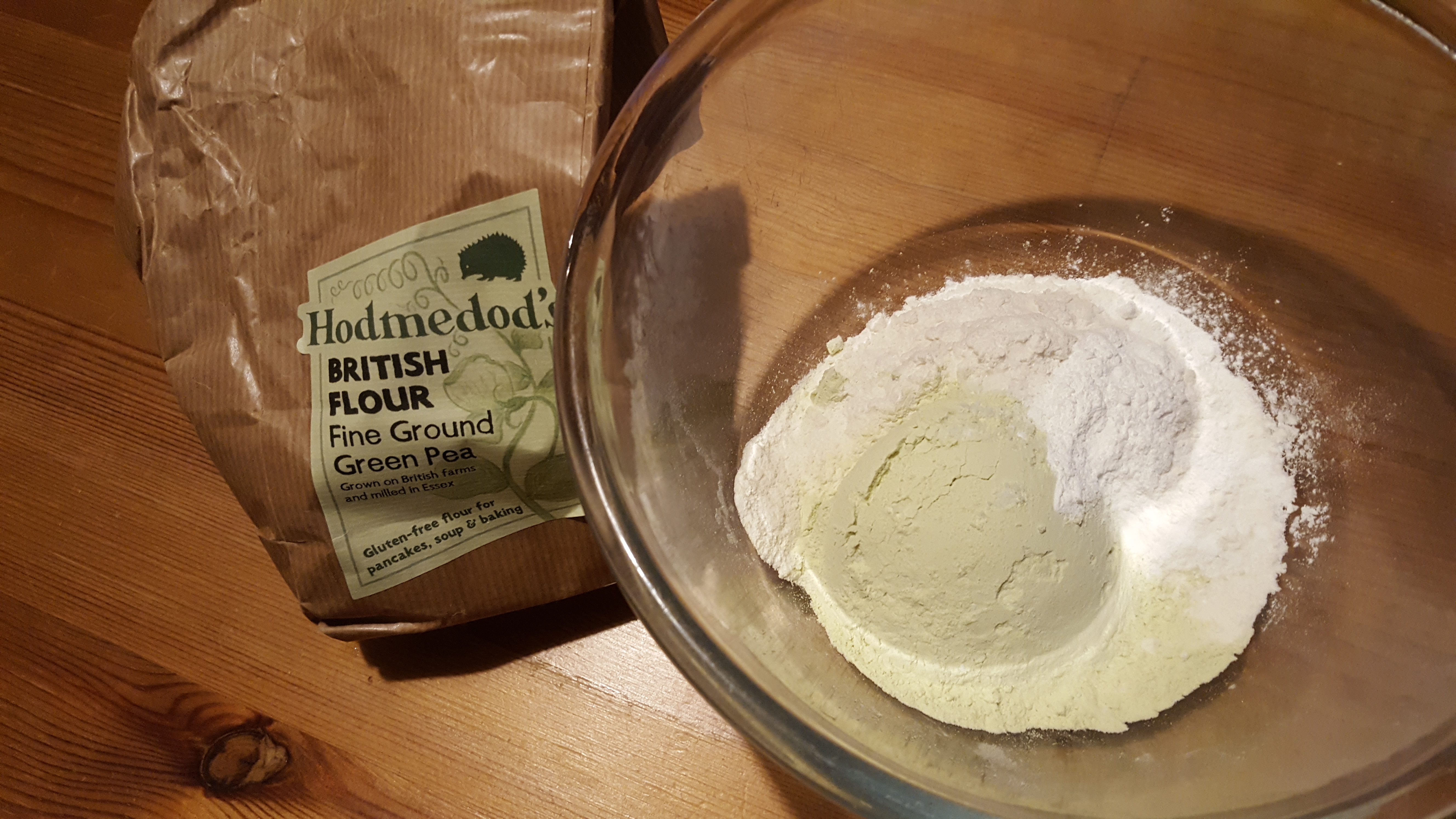
I was having a sort out of the kitchen cupboards and happened upon the bag of pea flour I had bought to write a post on peasebread a while ago. Researching for the post, I found that in the very north of Scotland, people ate a lot of peasemeal until recently, because very little in the way of cereals could be grown up there. These Scottish islanders would make pease pancakes amongst other things, so I thought I might have a go at them myself. Having no recipe, I just adapted my own recipe for American pancakes. They turned out pretty good – much better than the peasebread – and were delicious with some fried mushrooms and black pudding. They had a distinctive fresh pea and roast peanut flavour to them, and were slightly rubbery, but not in an unpleasant way.

Makes 10 to 12 pancakes:

½ cup pea flour

½ cup self-raising flour

1 tsp baking powder

½ teaspoon salt

2 tbs sunflower oil or 25 g melted butter

1 beaten egg

¾ cup milk, or half-milk half-water

sunflower oil for frying


Mix the dry ingredients in a bowl, make a well in the centre and add the oil or butter, egg and around half of the milk. Beat in with a wire whisk until the thick batter is lump-free, then carefully mix in the rest of the liquid.

Put a griddlepan or non-stick pan on a medium heat and allow it to get hot. Add a little oil and spoon in small ladles into the pan. You should be able to fit 3 or 4 pancakes in each pan.

Allow to fry for a couple of minutes before checking that they are golden brown. Once they are, flip and fry the other side.

Pile up and keep warm in a very cool oven. Add a little more oil to the pan if needed and continue to fry in batches.

Serve with typical breakfast things: bacon, sausage, poached egg, mushrooms etc.


If you like the blogs and podcast I produce, please consider treating me to a virtual coffee or pint, or even a £3 monthly subscription: follow this link for more information.


4 Comments

Filed under baking, Britain, cooking, food, General, history, Recipes

Simnel Cake


Want to know more? There’s a podcast episode that complements this blog post:


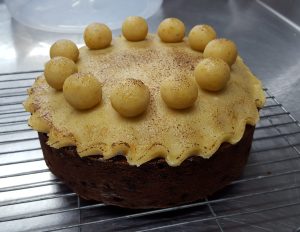
A Simnel cake is a type of fruit cake that contains plenty of marzipan and is eaten at Easter, although it used to be specifically associated with Mothering Sunday. When folk were fasting during Lent, Mothering Sunday, appearing in the middle of the fast, offered a respite from 40 days of religious austerity.

Mothering Sunday occurs on the fourth Sunday of Lent; a special day when people visited their mother church or cathedral. Don’t confuse Mothering Sunday with Mothers’ Day; it is only in the last century that this day is associated with showing enforced appreciation to our mums (though I assume that you met up with your mother on return to your original diocese).

Like most British food eaten during winter and early spring, the Simnel cake contains lots of dried fruit, but it is much lighter than boozy Christmas cake and contains a layer or marzipan both on top and within, and is decorated with eleven marzipan balls, each symbolising Jesus’s disciples (minus the treacherous Judas of course).

To trace the origin of Simnel cake, you need to go right back to mediaeval times where it began life as a yeast-leavened bread, which may or may not have been enriched. This doesn’t sound that much like a special bread, you may think, but what made it special is that it made out of the highest quality flour possible; simnel derives from the Latin simila – the whitest and finest of flours.

Fast forward to the 17th and 18th centuries, and the bread mixture had been swapped for a pudding batter, not dissimilar to spotted dick, enriched with dried fruit, spices and almonds. It would be boiled like a pudding. When cooked, it was wrapped in pastry, glazed with egg and baked until a good hard crust formed. It would be like the Scottish black bun, a traditional Christmas food north of the border.

It is only when you get to the tail end of the 19th century that it starts to look like something we would recognise as a cake, though surprisingly it is not until the 20th century that the familiar marzipan layers and decorative disciples appear.


If you like the blogs and podcast I produce, please consider treating me to a virtual coffee or pint, or even a £3 monthly subscription: follow this link for more information.


Simnel cakes themselves seem to be disappearing from our Easter tables altogether and are getting more and more difficult to find in British bakeries. Below is the recipe I use – I can’t claim it as my own, but I don’t know where I got it from, so if you recognise it let me know, you know I always like to credit my sources!

This is a very straight-forward cake mixture made using the all-in-one method; it is very important that you use very soft butter so that the cake batter creams quickly without developing the gluten too much. If you don’t want to make your own marzipan, you can buy some ready-made, but I do urge you to make your own, it really is worth the (really quite little) effort required. The marzipan recipe below is different to my previously published one and I think much better. I shall try to remember to update the other post.

For the cake:

225 g softened butter

225 g caster sugar

4 eggs

225 g plain flour

2 tsp ground cinnamon

zest of 2 oranges

zest of 2 lemons

325 g mixed fruit (currants, sultanas, currants)

125 g glacé cherries, quartered or left whole

500 g orange marzipan (see below)

icing sugar for dusting

apricot jam

1 beaten egg

Begin by greasing and lining an 8-inch cake tin and preheating your oven to 150°C.

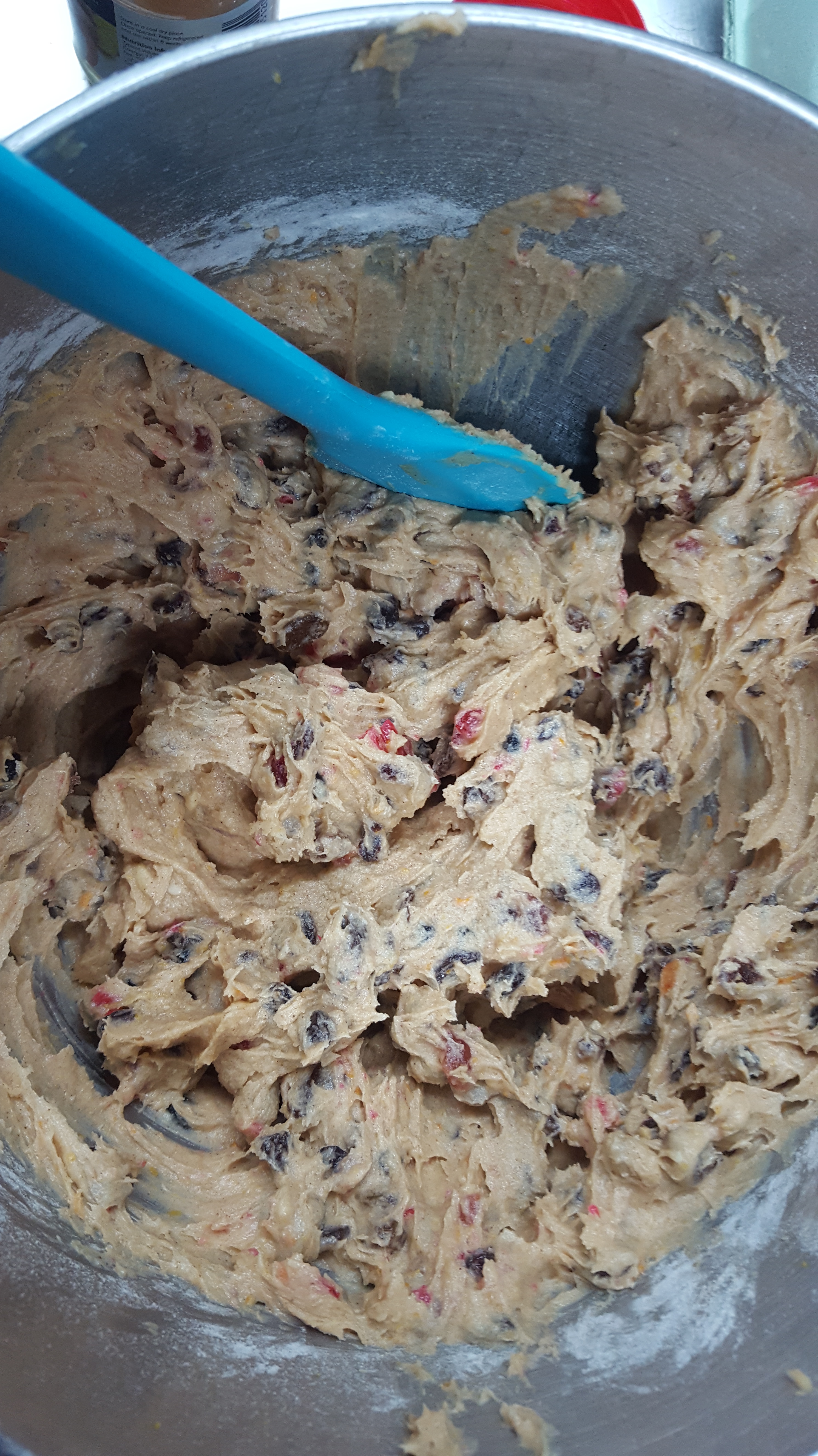
In a large bowl, beat together the softened butter, caster sugar, eggs, flour, cinnamon and zests. Using a hand mixer, beat together until smooth. Now fold in the mixed fruit and cherries with a spatula or wooden spoon.

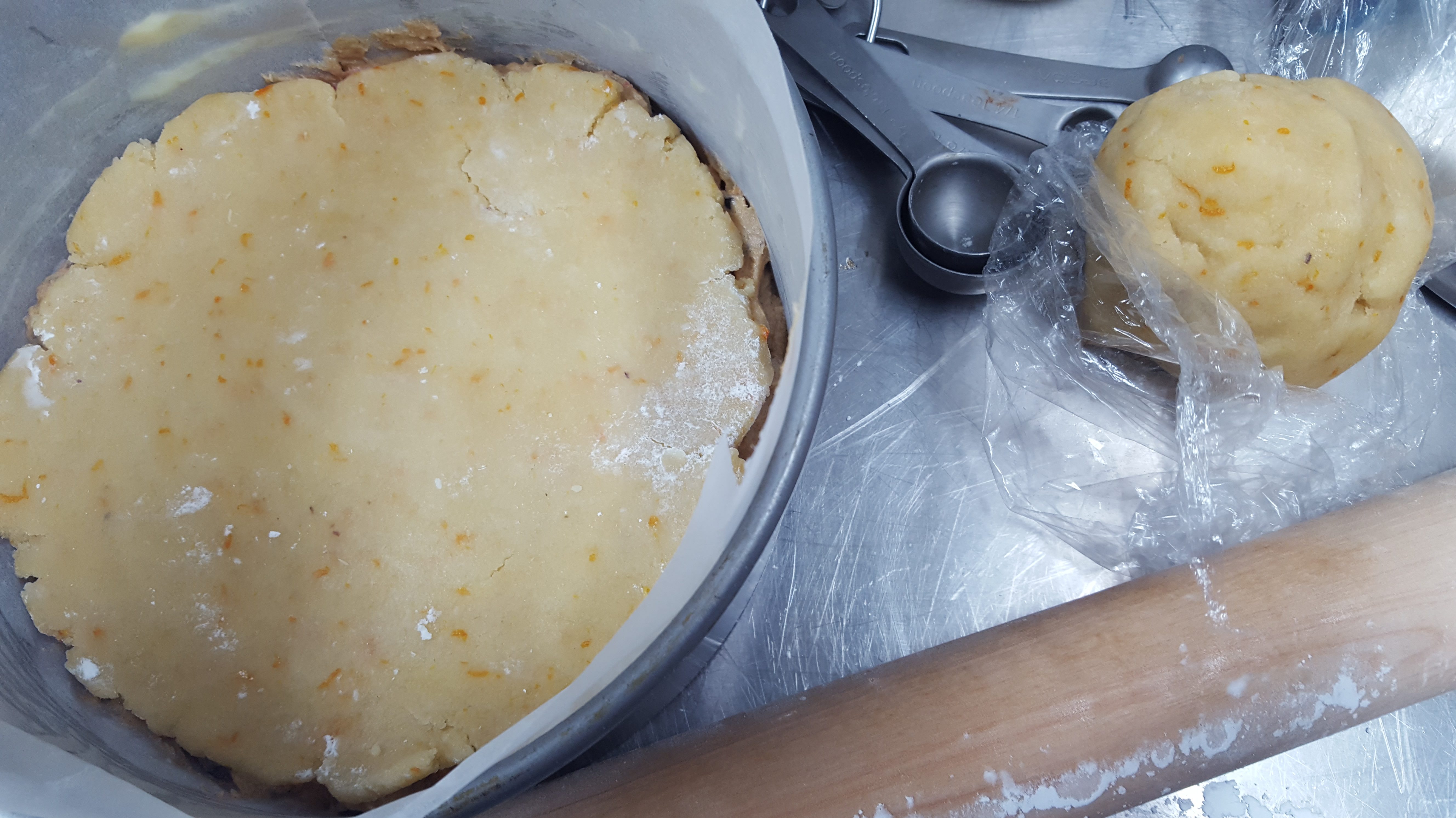
Spoon half of the mixture into your tin and level it off. Take a third of your marzipan and roll it out into a circle the same size as the tin, trimming away any untidy bits. Use a little icing sugar to roll the marzipan out, just like you would use flour to roll out pastry.

Lay the marzipan in the tin and then spoon and scrape the remainder of the cake batter on top of that. Level off with your spatula and make an indentation in the centre, so that the cake doesn’t rise with too much of a peak.

Bake for 2 ¼ to 2 ½ hours. Use a skewer to check it is done. Cool on a rack for about 30 minutes before removing the tin and greaseproof paper.

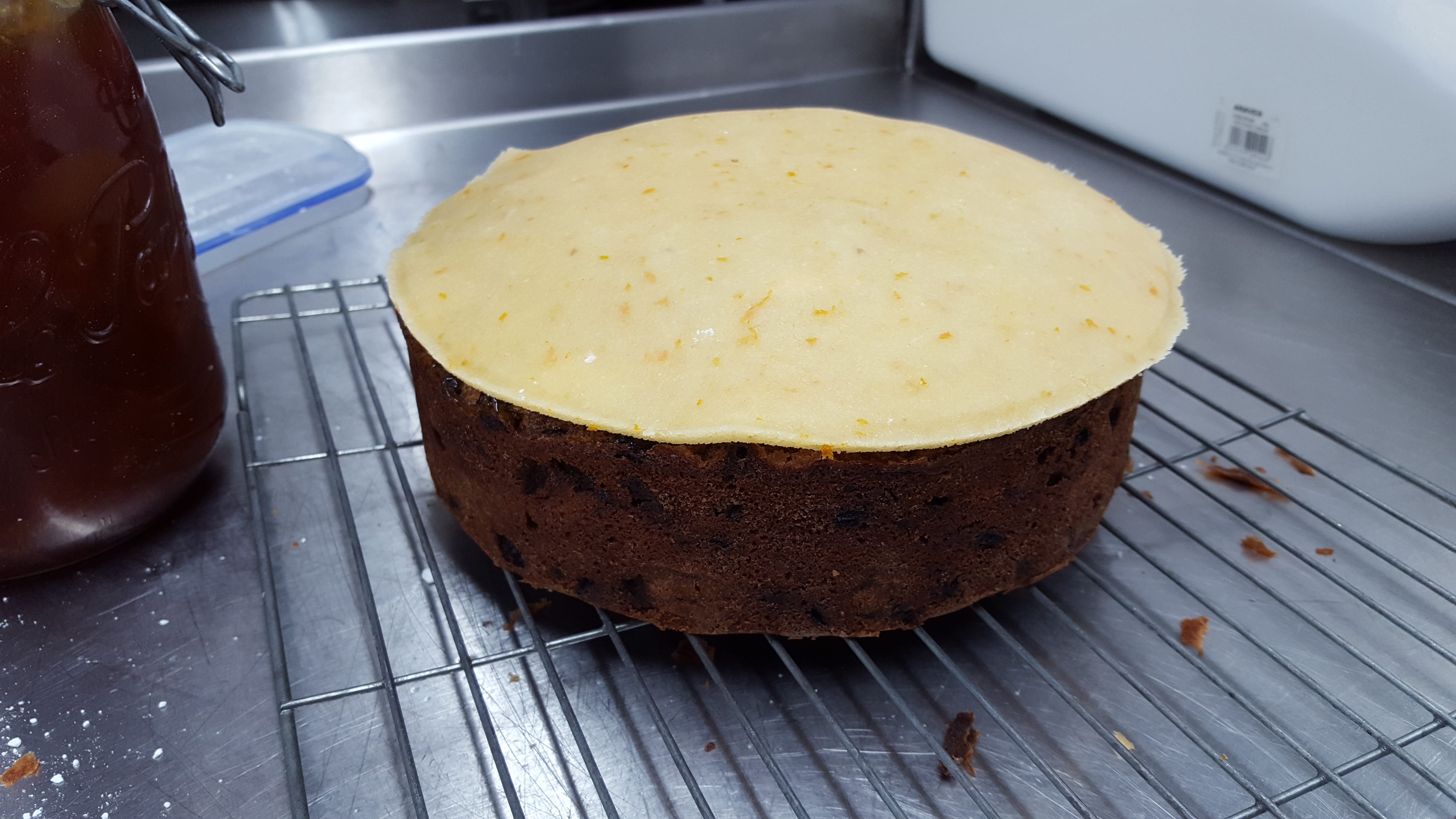
When cold, roll out half of the marzipan in a circle slightly larger than the cake – the best way to do this is to use the outside edge of the tin it was baked in as a template.

Brush the top of the cake with some apricot jam (if it is very thick, you may want to warm some with a little water in a pan) and lay the marzipan on top, then brush the marzipan with the beaten egg. Divide the remaining marzipan and trimmings into 11 equally-sized balls and arrange them in a circle. Brush those with egg too and glaze the top using a chef’s flame torch (or a very hot grill).

For the marzipan:

90 g caster sugar

140 g icing sugar

220 g ground almonds

grated zest of an orange

1 beaten egg

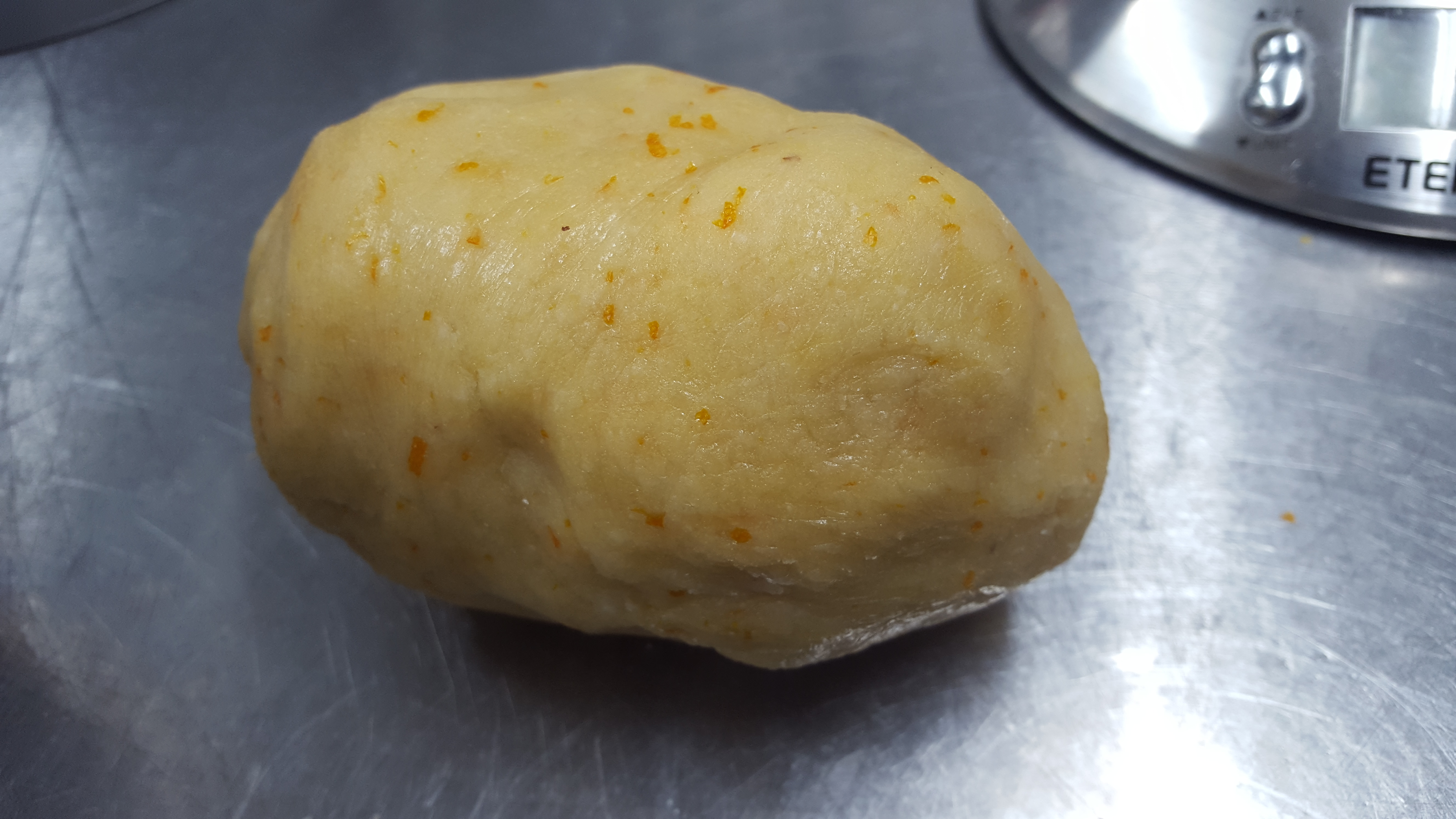
Mix all of the ingredients except for the egg in a bowl. Make a well in the centre and pour in the egg. Using a mixer or your hand, form a dough. Knead in the bowl until smooth, wrap in cling film and refrigerate for at least 2 hours.

Do you like the blogs and podcast I produce? If so, please consider supporting me

Sorry! This product is not available for purchase at this time.

24 Comments

Filed under Britain, cake, Easter, Festivals, food, Recipes, Uncategorized

Savouries

About five years ago, a reader asked if I could write about savouries, that now forgotten course served up towards the end of a Victorian or Edwardian meal. Well I’ve finally pulled my finger out and written one, so here we go:

The savoury course used to be extremely popular; a delicious morsel, which was salty, creamy and spicy, serving as a digestive after a rich meal, either as a final course, or before a sweet. What often happened was that the gentlemen ate their savouries and went off to drink whiskey and play bar billiards, and the ladies had their sweets and swished off to the withdrawing room for cards, chats and sherry; there were no non-binary genders allowed here, let me tell you.

I’m a big fan of the savoury course and I often include one in my supper clubs and pop-ups. They had gone out of fashion by the mid-twentieth century, the only real survivor being the cheeseboard.

Potted chicken livers

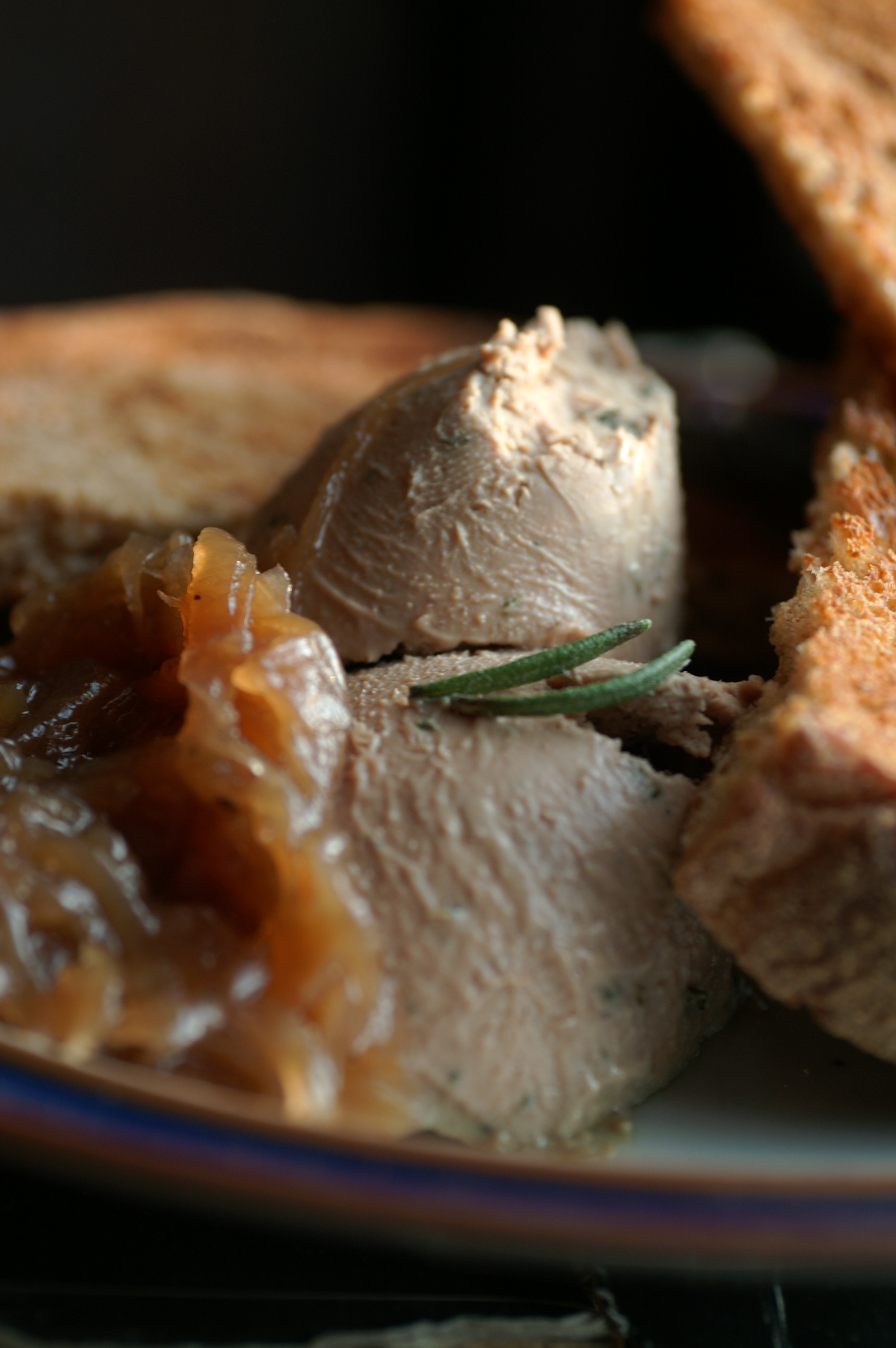
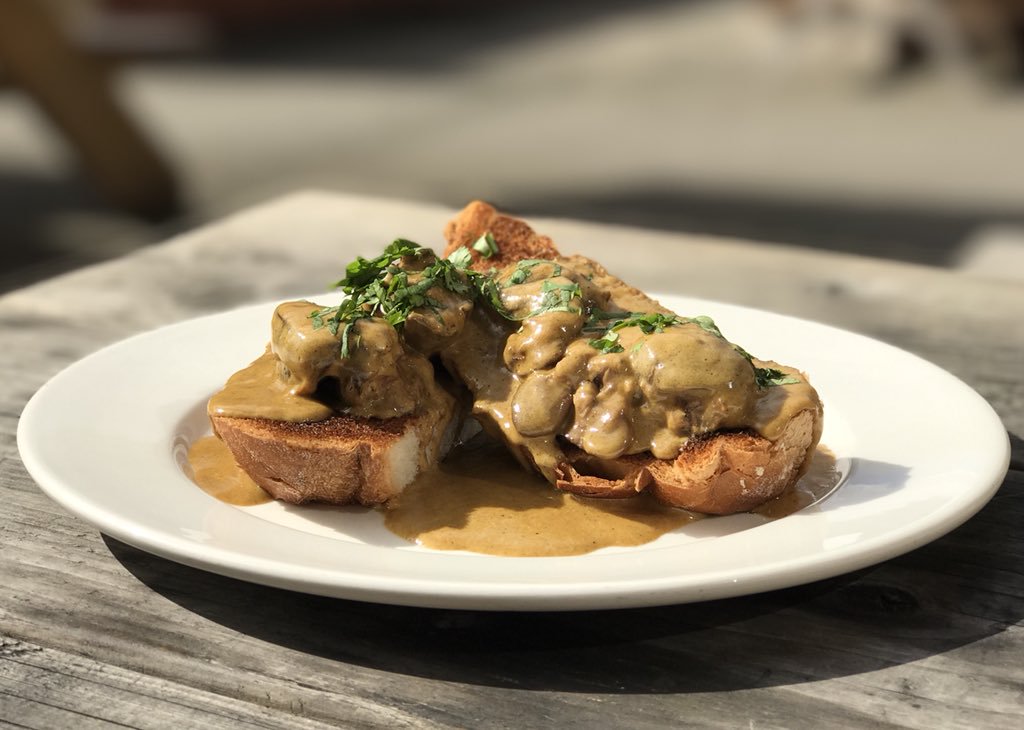
Savouries have of course lived on as first courses, canapés, teatime snacks and light lunches, and you will have eaten some of them, and many have already appeared on the blog. Delicious morsels like devilled kidneys, Welsh rarebit, potted chicken livers, potted cheese, Patum peperium, rillettes, angels & devils on horseback and sardines on toast have all been served up by Yours Truly at some point. Two of my favourites are Scotch woodcock – a spiced anchovy butter served on toast covered with a creamy, savoury custard – and Locket’s savoury, a slice of toast topped with ripe sliced pears, wilted watercress, and a thick blue cheese sauce which is then grilled, rather like Welsh rarebit. Delicious! It was nice to see Nigella Lawson championing the devilled egg recently; a woman after my own heart.

Angels & devils on horseback

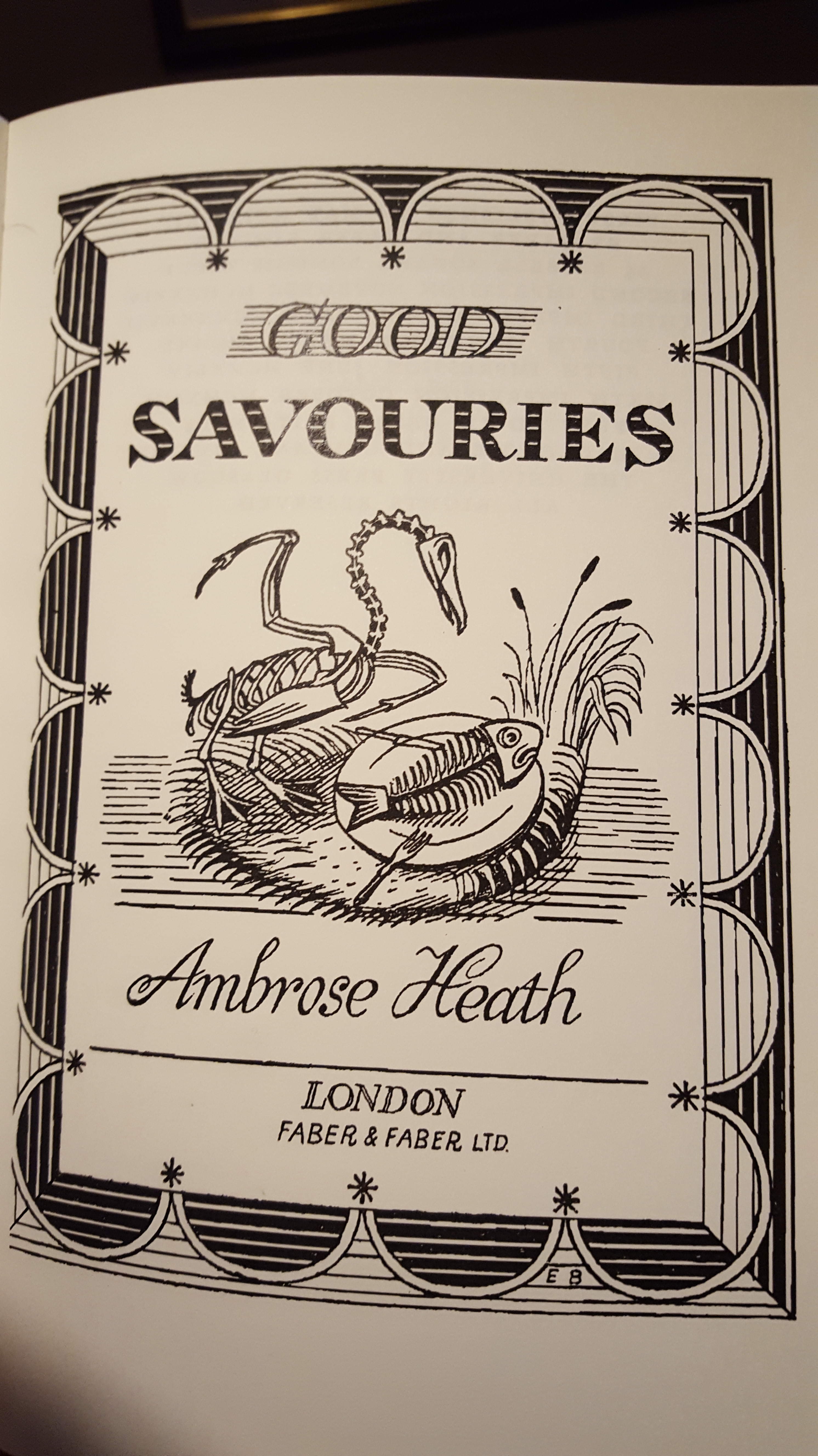
Savouries are often served on toast, fried bread or some kind of biscuit or cracker. In Eliza Action’s 1845 book Modern Cookery for Private Families, there is just one recipe for savouries which appears to be a proto-croque monsieur, with a small footnote. She doesn’t seem to approve. In the twentieth century, however, you get entire books of the subject, the best being Good Savouries by Ambrose Heath (1934).


Want to know more? There’s a podcast episode that complements this blog post:


What makes a good savoury?

  1. Size matters: it must be one or two mouthfuls, so the best vehicles are toast, fried bread or crackers. However, boiled eggs work well as do oysters in the shell. As long as you can eat it without cutlery, you’re doing good.
  2. Salt: savouries are almost always highly seasoned with salt. This is apparently the digestive part, but it also functioned to give people a good thirst ready for a boozy evening ahead. Salt itself was rarely used, it’s much better to use more interesting ingredients such as anchovies, cured meat and fish, cheese and relishes such as mushroom ketchup, Worcestershire sauce, etc.
  3. Heat & spice: quite a lot of the ingredients served more that one purpose, so most of those listed above fit into this category too, but there was also good old black pepper, English mustard, Cayenne pepper, curry powder and Tabasco sauce.
  4. Strong flavours: other strong flavoured things were used, such as blue Stilton, kidney, liver, game and smoked meats and fish like ham, bloaters and even red herrings.
  5. Creaminess: all that salt, spice, richness and heat was often tempered with something bland and creamy and a variety of things were used for this purpose, such as cream (obviously), egg yolks, savoury custards, béchamel sauces, soft cheeses, brains, sweetbreads, lambs’ fries, fish roes, oysters and left-over poultry meat.

If you like the blogs and podcast I produce, please consider treating me to a virtual coffee or pint, or even a £3 monthly subscription: follow this link for more information.


Devilled Chicken Livers

Probably the most infamous savoury is the devilled kidney, but you can devil lots of things. I pride myself on my devil sauce, and at The Buttery devilled chicken livers on toast became a rather unlikely signature dish. This recipe can be easily adapted if livers aren’t your thing: fish roes, kidney, brain, lambs’ fries, left over roasted poultry, mushrooms and even tofu can all be devilled with great success. My favourite is chicken liver because it has all of the qualities listed above in abundance. It’s a good idea to make extra devil sauce as it keeps in the fridge for a good ten days or so, and I can guarantee, you’ll be wanting to devil everything you eat from now on! Here’s how to make it.

Serves 2 as a light lunch or snack, or three as a first course, or six as a savoury course.

For the devil sauce:

2 tbs English mustard

2 tbs Worcestershire sauce or mushroom ketchup, or a mixture of the two

1 tbs vinegar

good pinch of Cayenne pepper

dash of Tabasco sauce

freshly ground black pepper

Simply beat all the ingredients together – taste and add more Tabasco and pepper if you like. There’s no need to add salt.

For the livers:

6 chicken livers

a decent knob of salted butter

the devil sauce

3 or 4 tbs double cream

1 slice of crisp toast per person

chopped parsley

First of all, check the livers for any bitter green gall sacks, which are often accidentally left on. If you sport one, snip it off with scissors.

Get a frying really good and hot and melt the butter. As soon is stops foaming, add your livers. Try not to disturb them. After 2 minutes, turn them over and cook for one more minute. Next, add most of the devil sauce and fry a further minute, making sure the livers get coated in it. Add the cream and let form a lovely rich sauce, turning the livers over in it. Have your toast ready on plates so you can top it with the livers and then the sauce. Scatter over some parsley and serve immediately.

18 Comments

Filed under Britain, cooking, food, General, history, Meat, Recipes, The Edwardians, The Victorians, Twentieth Century, Uncategorized

A Trip to the Sarson’s Vinegar Factory

SARSONS-LOGO

A couple weeks ago I was invited by the iconic British condiment company, Sarson’s, to have a look around their factory and see the process of vinegar-making. They contacted me as they had noticed my little blog and thought I might be interested in seeing what they do because they make vinegar in the traditional way; and we’re all about tradition here at British Food: A History.

The word vinegar comes from the French words vin meaning wine of course, and aigre meaning sour or sharp, so when we talk about British malt vinegar, it’s actually a bit of a misnomer. What is in your bottle of Sarson’s used to be called alegar: sour ale! I think the word should be brought back (I’ll pop a note through to Mr and Mr Sarson).

Vinegar – aka ethanoic or acetic acid – is produced when specialist bacteria called acetobacteria metabolise normally deadly alcohol (ethanol) and harness energy from it. It takes a real specialist to use this killer chemical as a food source. Vinegar is, of course, an excellent preservative itself.

It is thought that vinegar and alcohol fermentation were discovered and refined in tandem, and the earliest example of vinegar-making goes right back to the ancient Babylonians who were brewing it from their beer and wine in 4000 BC! The ancient Romans refined methods somewhat, using wooden barrels to age and develop flavour.

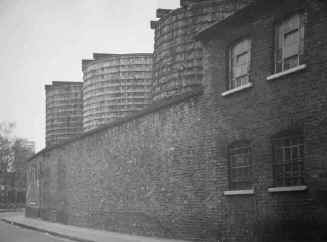
The rear of the original London factory (Southwark Local Studies Library)

There are there are many types of vinegar, but malt vinegar, which is made from barley, is uniquely British, although these days it does travel a bit. Barley was a very important crop in Britain as it was grown to eat, but also to make ale. The average person in mediaeval England would drink around a litre of ale a day and it was the main source of calories for many (and much safer to drink than the water). Our love of ale meant there was plenty spare knocking about to transform into alegar. Sarson’s are the only company still making it in the traditional way and they have been producing it since 1794.

Before I had even arrived, I was greeted a delicious sweet and sour malt smell, and when the taxi pulled up outside the Manchester factory I was greeted again by the lovely folk who run the place. I donned my lab coat, safety glasses, hard hat and beard snood, and looking altogether pretty damn sexy I headed over the see the initial steps in the process.

I had always assumed that when malt vinegar was made, ale would be bought in and then fermented, but this is not the case! Sarson’s do the whole process from start to finish, including making the ale itself. It is truly made from scratch.

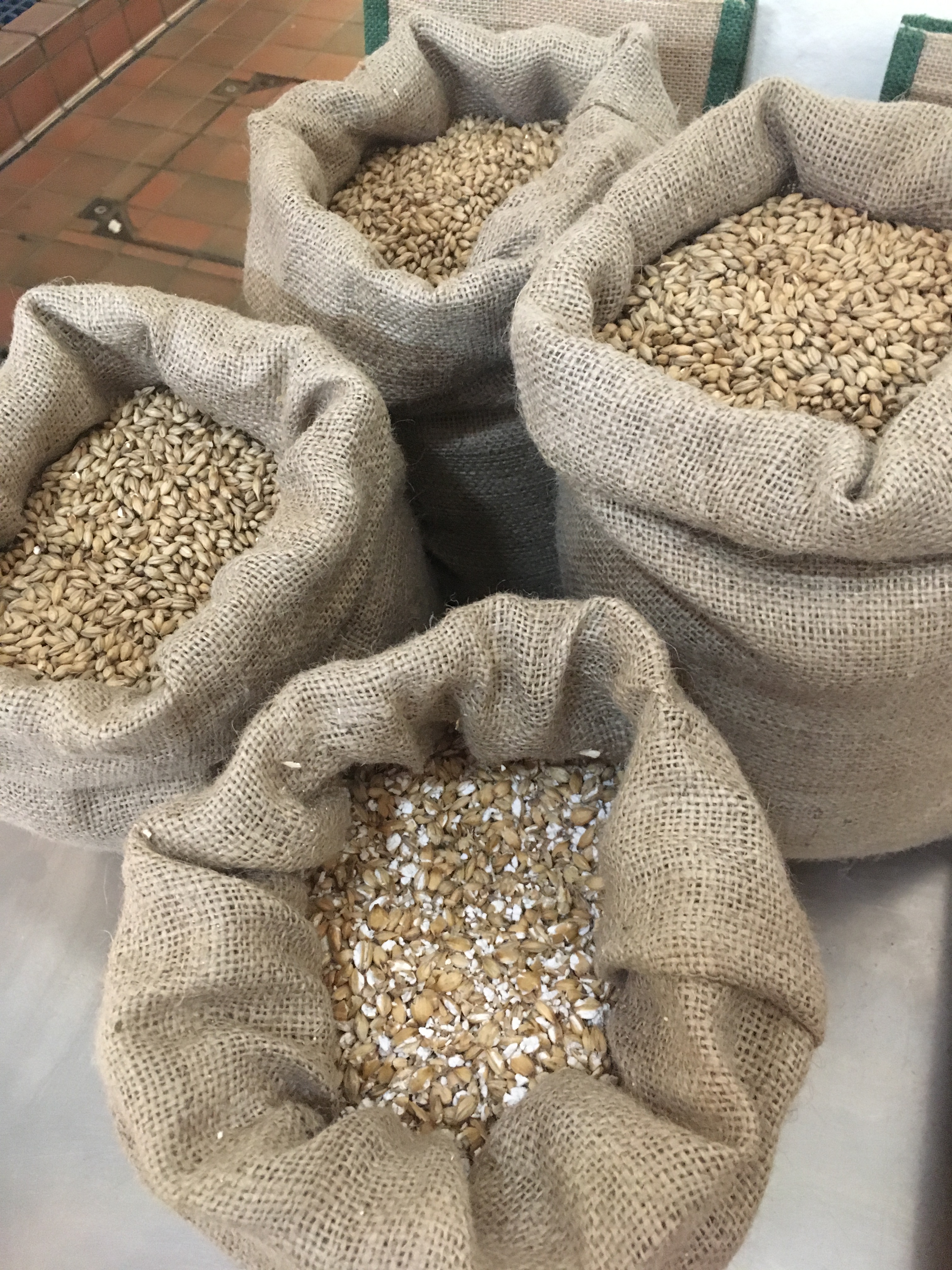
Barley grains

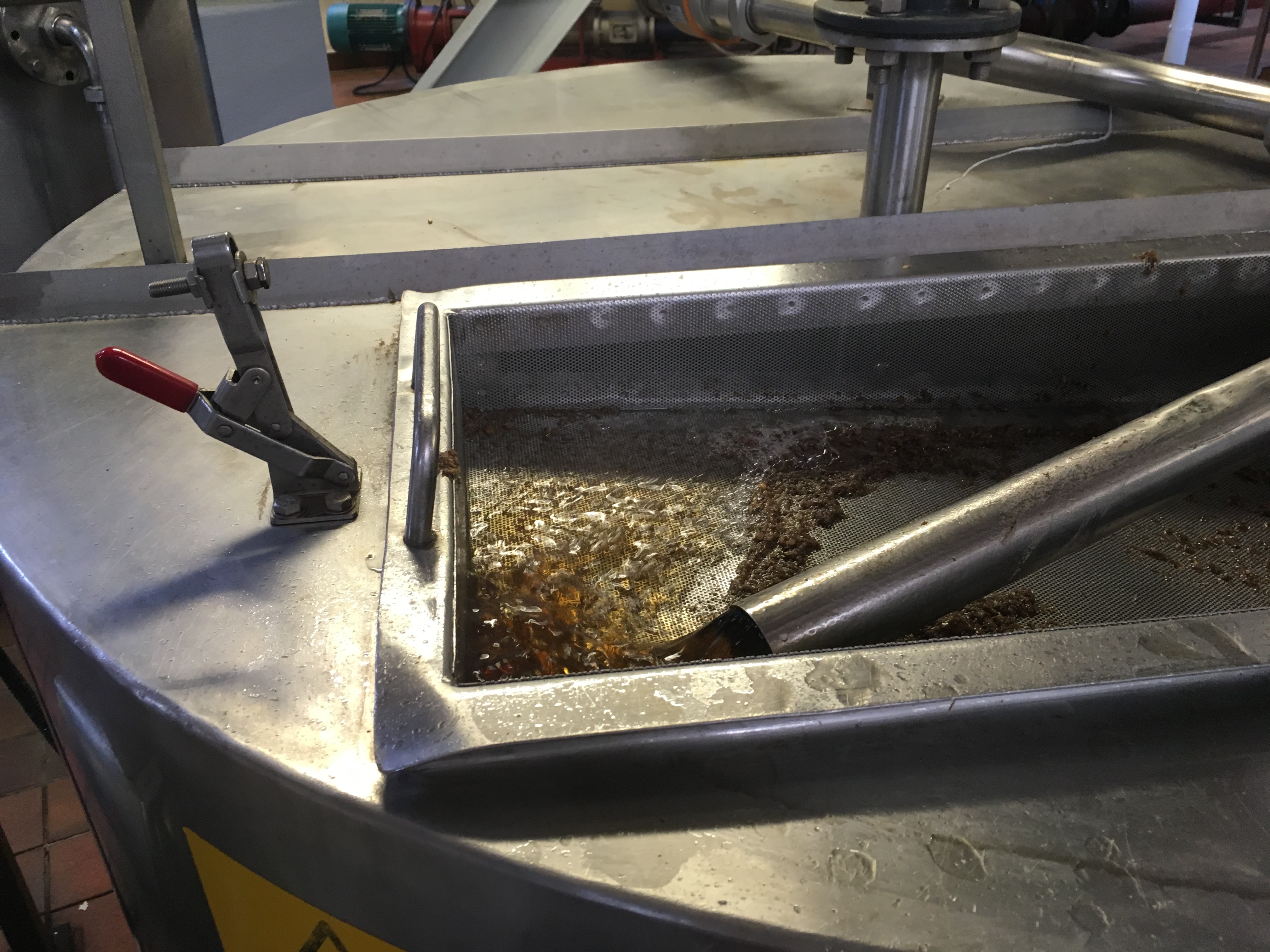
The first step is to lightly mill the barley so that the grains can crack open. It is then soaked in spring water and heated up in mash tuns: huge metal vats that constantly stir the barley and the water is collected. This process of mashing extracts the sugars.

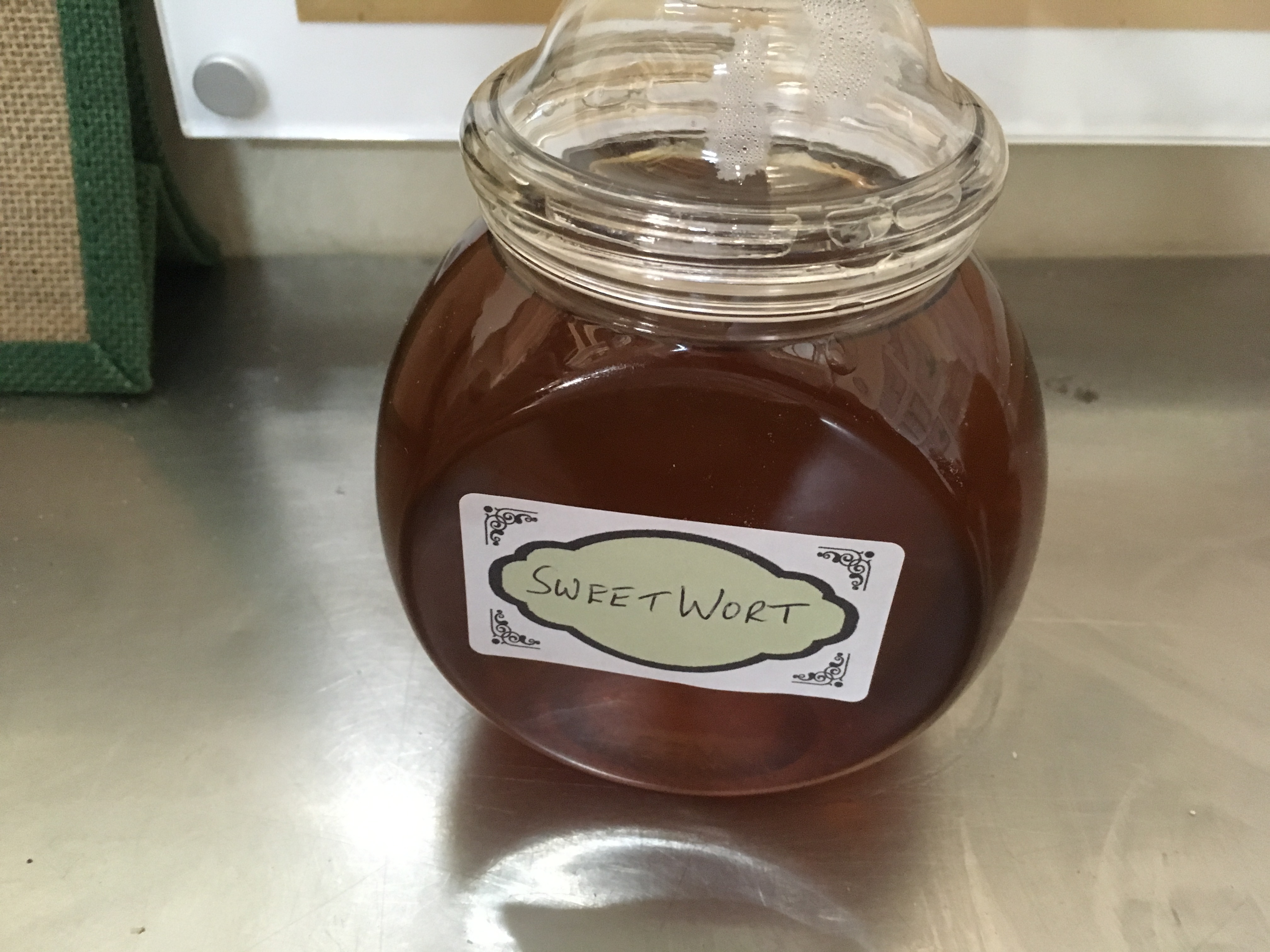
Swishing away the sweetwort

I was allowed a little taste of the sugary liquid – or sweetwort – and couldn’t believe how sweet and delicious it was (when I got home, I looked in a few old books and found that home-made barley water was produced in essentially the same way).

The cooled sweetwort now enters the first round of fermentation: yeast is added so it can get to work anaerobically turning sugar into alcohol. This six-day process produces a barley ale that is a whopping 9.5% alcohol.

Now the alcohol can be converted into vinegar in the second round of fermentation. It was this part of the process that I found to be truly amazing: I assumed that to make a product and attain perfect consistency between batches, Sarson’s would have to seed the ale with a mother (or mother-of-vinegar to give her full title, a of plug acetobacteria) that had been carefully selected over years or even decades, to produce a unique strain (wine and beer makers do this with their yeasts). What Sarson’s actually do is simply add the shavings of the bark from the larch tree, which naturally harbours a community of acetobacteria species. This all happens in wooden tubs called acetifiers and it takes seven days for the larch bacteria to do their magic.

The huge physics-defying oak barrels!

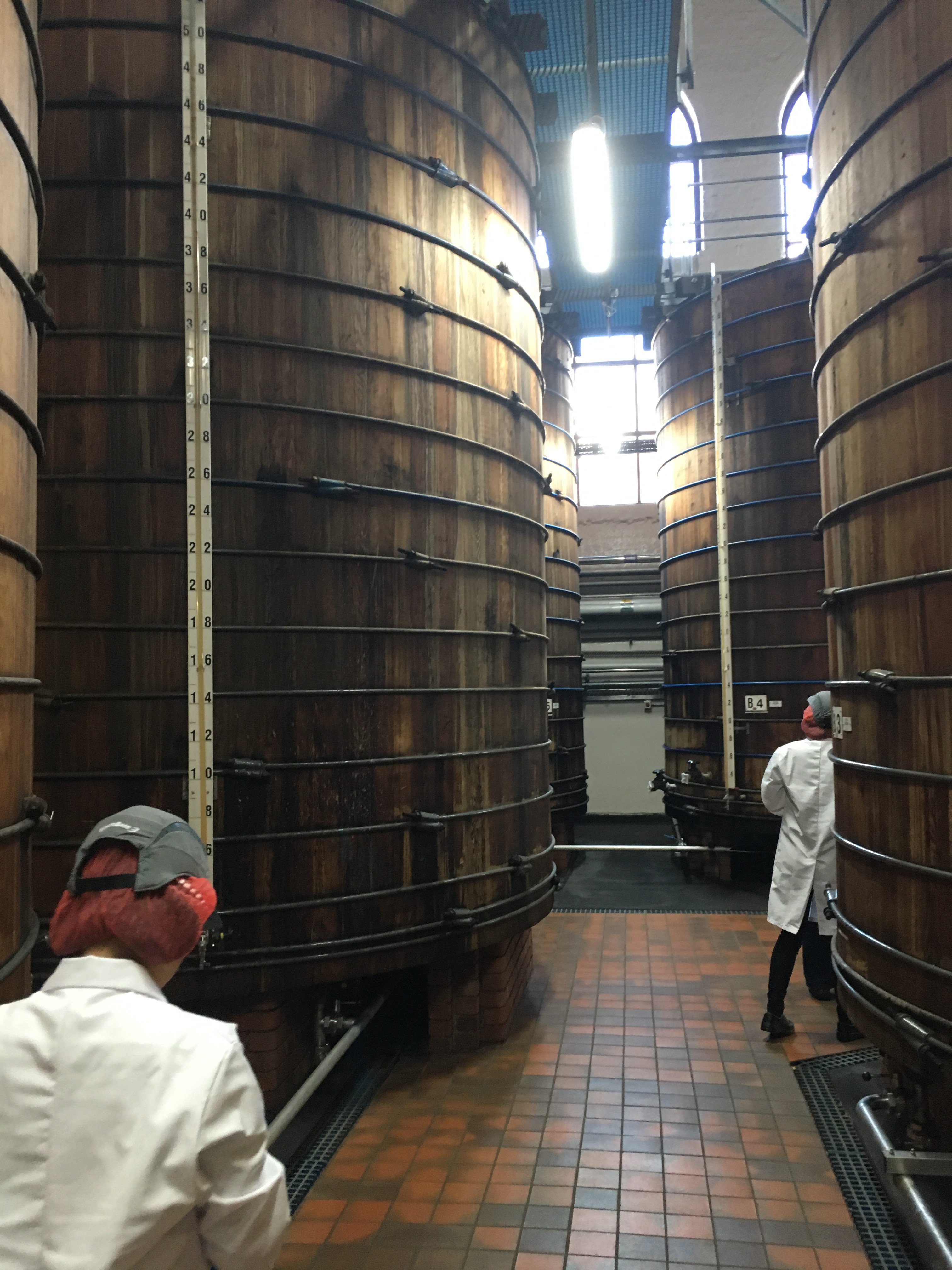
For the last stage, the vinegar is stored in huge 40 000 litre barrels – some 100 years old – to be standardised to the correct strength (5% ethanoic acid).

Standardising the final product

The vinegar is heated up to kill the bacteria and it is piped through to the very noisy and exciting bottling room. I loved watching the bottles rattling around on the conveyor belts. It was as though I had literally stepped through the arch window on Playschool!

Then, to top it all off, they handed me my very own personalised bottle of malt vinegar!

Many thanks to Sarson’s for asking me to come to their place and let me be a nosey parker for an afternoon – I will certainly be paying the malt vinegar I put on my fish and chips in even higher regard from now on!

Next post, I’ll write a little bit about how we use – and used vinegar in the home.


If you like the blogs and podcast I produce, please consider treating me to a virtual coffee or pint, or even a £3 monthly subscription: follow this link for more information.


13 Comments

Filed under Brewing, Britain, business, food, General, history, Preserving