After the roaring success of my blood ice cream, I decided to have a crack at making a white pudding ice cream too, using the flavours in Gervase Markham’s recipe.
The blood ice cream was great, but I didn’t call it black pudding ice cream, because I left out one important ingredient: oats. The flavour of wholegrain oats is key, so much so that without them, I don’t think I captured the pudding’s true flavour.
I wanted to change this with this ice cream, but the challenge was to capture the flavour of oats without any annoying frozen groats getting in the way. I decided to take pinhead (steel-cut) oats, soak them in milk and then squeeze it out to create an oat-flavoured milk. This worked really well. I added this to the usual milk and cream to make a custard, warmed it up with the spices and found that it naturally thickened to just the right consistency – all without egg yolks! The mixture froze very well and produced a super-smooth final product. As you can imagine, I was very pleased with this outcome.
Just like the blood ice cream, I soaked some dried fruit in sherry – currants and dates this time, as per Markam’s recipe and stirred them through at the soft-scoop stage of the churning process.
I served my white pudding ice cream with sweet black pudding that had been fried in butter and sugar. I then fried a slice of bread in the sugary and buttery juices and popped the black pudding on top with an accompanying scoop of the white pudding ice cream. It was decadent and delicious!
Subscribe to get access
Read more of this content when you subscribe today and unlock lots of premium content, including bonus blog posts and recipes, my Easter eggs, newsletter and the secret podcast. Please click here for more information.
Read more of this content when you subscribe today. A monthly subscription costs just £3 (about $3.80 USD). You get access to premium blog content, the secret podcast, the Easter eggs page (with hours of clips to listen to!) and my monthly newsletter. For more information and to sign up, go to the Support the Blog & Podcast tab. Thank you
This post and it’s accompanying podcast episode are for £3 monthly subscribers. If you would like to become a subscriber and access this post and all the other premium content on the blog click this link.
As a £3 monthly subscriber you get access to my Easter eggs page, special premium blog content, receive a monthly newsletter, and – most importantly – you support the running of my podcast and blog.
Read more of this content when you subscribe today. A monthly subscription costs just £3 (about $3.80 USD). You get access to my premium blog content, my Easter eggs page (with hours of clips to listen to!) and my monthly newsletter.
This post complements the special podcast episode I made for my £3 monthly subscribers on the topic of sourcing and cooking the organs of the central vervous system – brain, spinal cord and eyes – a most taboo topic. Inside you will find the episode itself as well as my method to prepare brains for cooking as well as a few recipes – should you get your hands on any.
If you are not a subscriber, you can become one on the Support the Blogs and Podcast tab of the blog, where you will access all of my Easter eggs, premium blog content and receive my weekly newsletter AND help support the running of everything too!
Subscribe to get access
Read more of this content when you subscribe today.
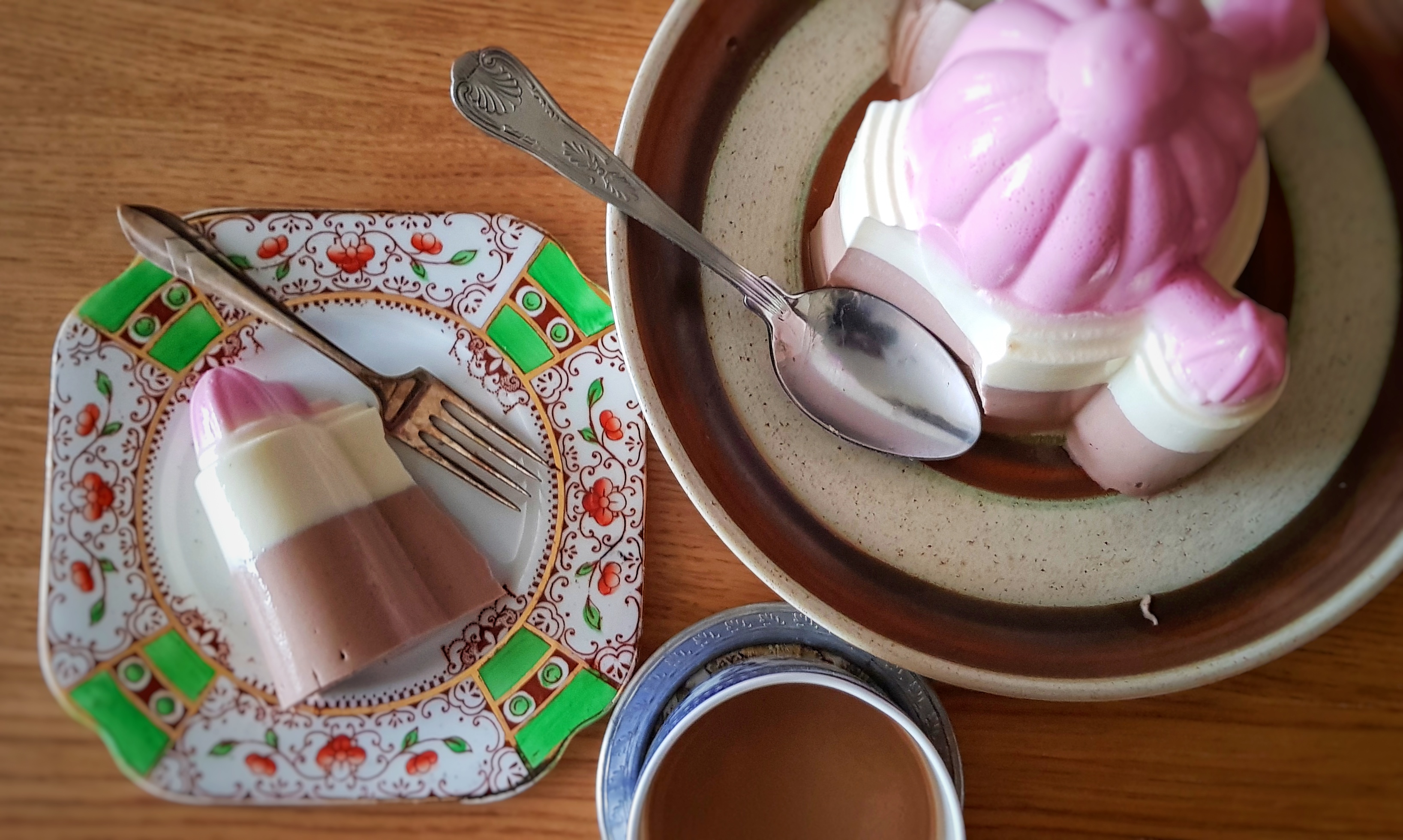
As promised on the ‘School Meals Service with Heather Ellis’ episode of the podcast, I have written a recipe for a stone-cold school dinners classic for my monthly subscribers. I went for the pink-sponge and custard because quite a few people have mentioned this as a favourite on social media, so it was the obvious choice. Heather Ellis said on Twitter that there were several different colours of these sponges: I also remember brown (though I don’t think it was chocolatey, just coloured brown). Others remembered white, and I wondered if yellow was perhaps a colour? Let me know your thoughts/memories.
Listen to the podcast episode here:
Subscribe to get access
Read more of this content when you subscribe today. A monthly subscription costs just £3 (about $3.80 USD). You get access to my premium blog content, my Easter eggs page (with ours of clips to listen to!) and my monthly newsletter.
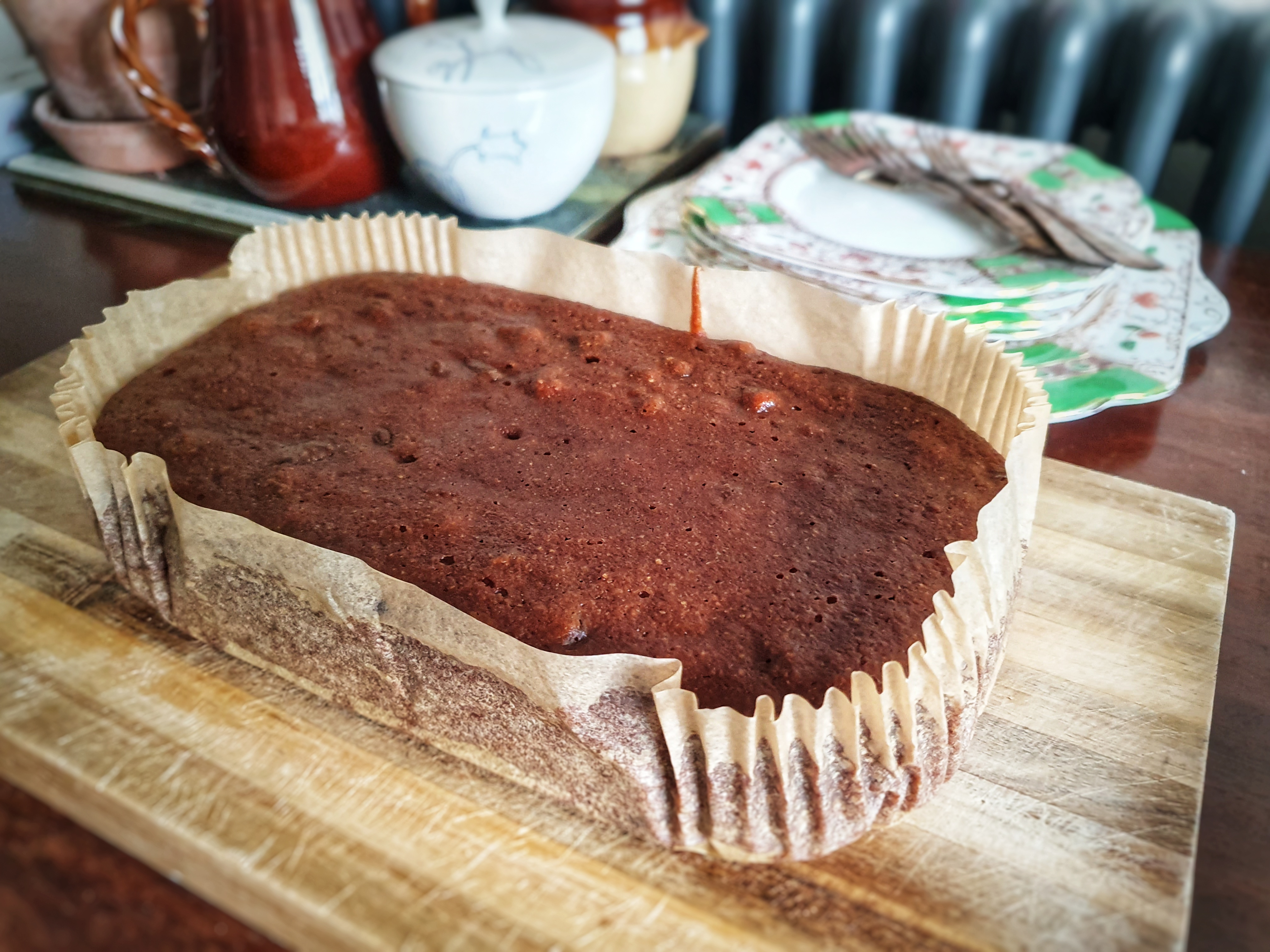
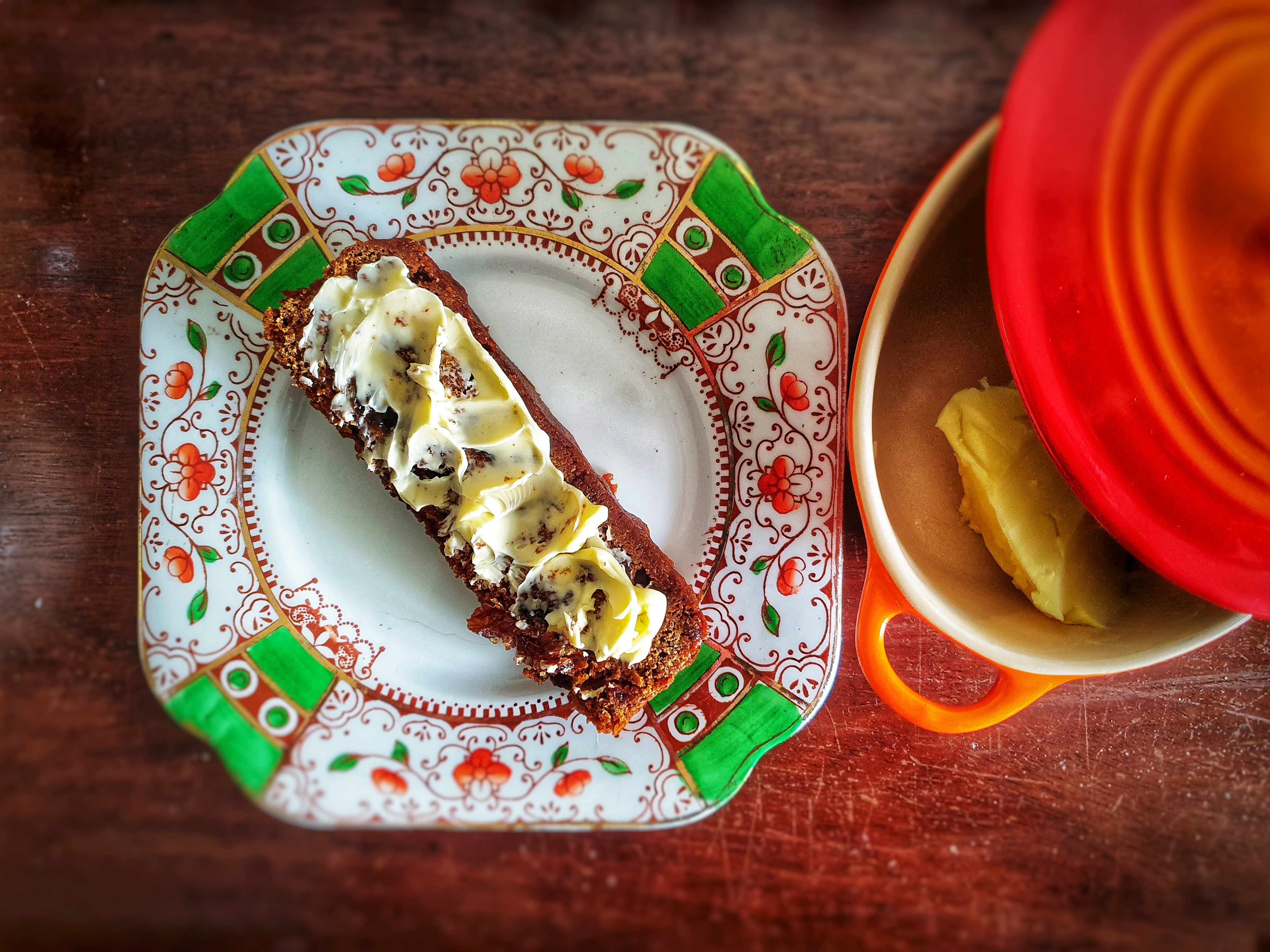
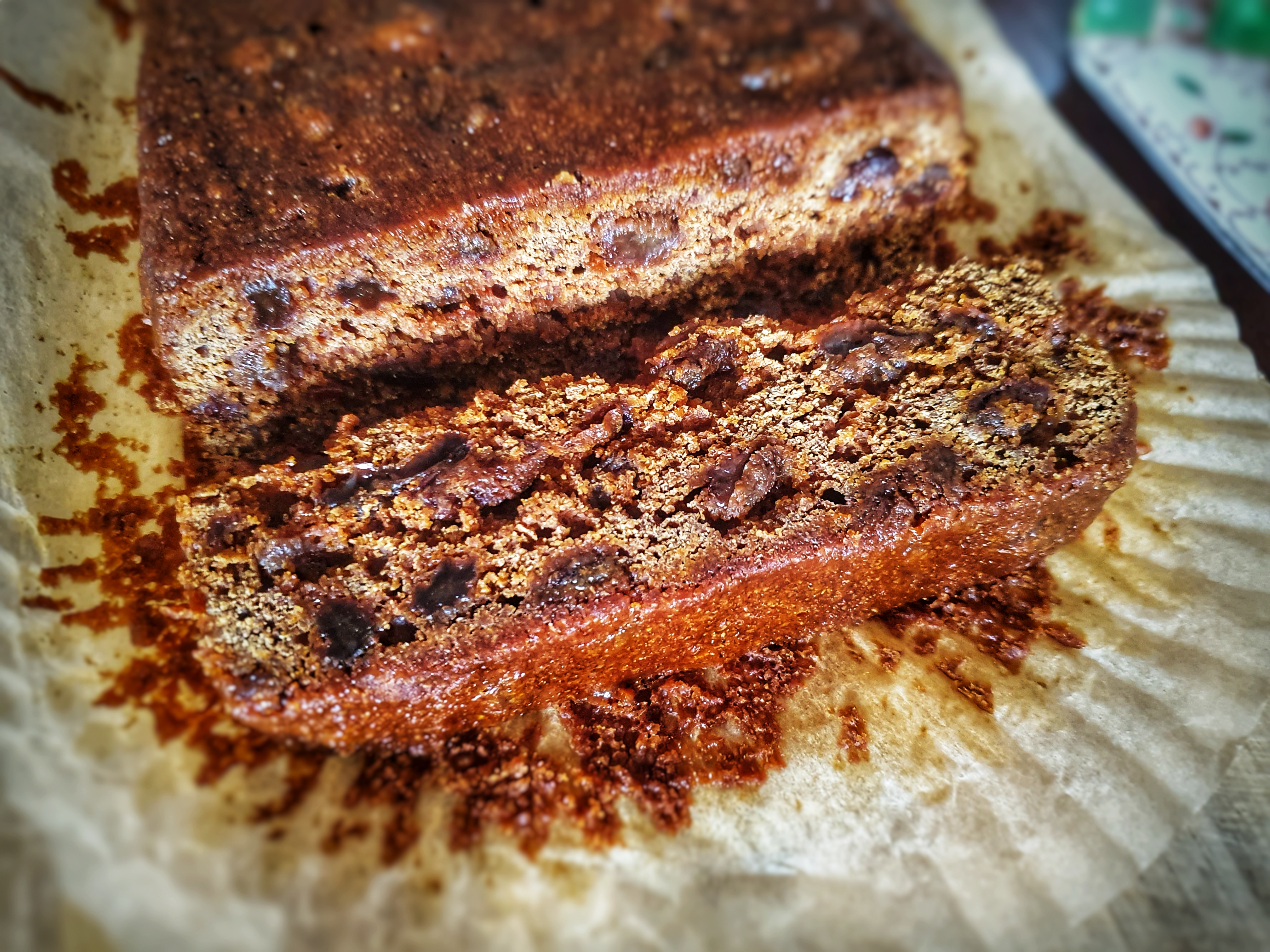
I have been meaning to give you this recipe for that most beloved of teatime treats, the humble malt loaf for ages; indeed, I have had a jar of malt syrup sitting in my food cupboard for at least three years I bought especially for this post. Well, hopefully, it’s a case of ‘the best things come to those who wait’.
For those of you unaware of this stalwart of the British teatime spread, let me explain what it is. It is a member of a tribe of baked goods known as tea loaves. They are tea loaves because they’re eaten at teatime, but also because they contain tea. They are easy to make and also contain dried fruit, and usually do not contain any butter, and should instead be eaten spread liberally with it. They are loaf-shaped but are a type of cake. A malt loaf specifically is made with malt syrup and black treacle, and like Yorkshire parkin, it needs to be left awhile to turn nice and sticky. Before we get to the recipe, let’s have a look at the history.
Looking into the origins of the malt loaf has been rather difficult; I can find a recipe for malt loaf in the June 1930 edition of the Derbyshire Times and Cheshire Herald. It sounds like a malt loaf: dark and sticky, but black treacle is used not malt syrup.1 It seems to be called a ‘malt’ loaf because of the brown, malted flour used, which is not the same. Other malt loaves certainly contained malt syrup; beloved British brands Hovis and Allinson made them. However, these loaves were of the regular sort: loaves of white bread ‘improved’ by the addition of malt syrup.2,3 The malt syrup improved the colour and flavour and produced a moister loaf. Again, not the same.
John Sorenson’s original Beswick shop (pic: Manchester Libraries)
And so, we must turn to the iconic Soreen malt loaf, which has been baked in Manchester since the 1930s. The recipe, which has supposedly never changed, was invented by Danish immigrant John Rahbak Sorenson who lived in Hulme, Manchester. He first opened a business selling bakery equipment, before starting his own bakery in Beswick, where he sold his ‘Sorenson Malt Loaf’. He sold the business in 1938, but the loaf continued to be baked, the only thing that changed was its name.4 Today, the factory resides in Trafford Park (home to Manchester United FC), where it cranks out 300,000 loaves of Soreen per day.5
Their recipe is a secret, but we do know that they use wholemeal flour; in fact, it is because of the inclusion of wholemeal flour that Soreen is marketed as a health food.4 That it is sticky with sugary syrups undoes this claim somewhat, but the combination of easily digested sugars and slow-release complex carbohydrates apparently make Soreen a favourite food for athletes.
Well, their recipe is a secret, but mine is not and it’s a tried-and-tested one. I used to make these sticky loaves for my little traditional market stall back in the day, and the recipe is based on one which appears in Gary Rhodes’ excellent book New British Classics.6 It is easy to make, but I must advise you about the flour: it must be sifted. It’s one of my most hated kitchen tasks, and I avoid it whenever possible, but in this case it is necessary. Wholemeal flour does tend to clump in the bag and seeing that the wet and dry ingredients need only the briefest of mixing, you need to be sure your flour is lump-free. That said, don’t forget to tip the bran left behind in the sieve back into the sifted flour.
Subscribe to get access
This recipes is for my £3 monthly subscribers. Read more of this content when you subscribe today and support the blogs and podcast. Subscribers get access to special blog posts, Easter eggs from my podcast, and a monthly newsletter. You can become a subscriber by following this link.
This post and it’s accompanying podcast episode are for £3 monthly subscribers. If you would like to become a subscriber and access this post and all the other premium content on the blog click the link below:
After talking to Lindsay Middleton about her online resource Dishes for the Sick Room, an exciting deep dive into the invalid cookery recipes found in the cookery books of Glasgow Caledonian University, I decided to have a go at making some barley water.
If you haven’t listened to the episode of the Podcast episode Invalid Cookery with Lindsay Middleton, you can do so below:
This premium content post is for
Subscribe to get access
This post is for my subscribers. Read more of this content when you subscribe today and support the blogs and podcast. Subscribers get access to special blog posts, Easter eggs from my podcast, and a monthly newsletter. You can become a subscriber by following this link.
Some of this article contains premium content just for subscribers, if you are not a subscriber, but would like to be one, follow the link further down the page.
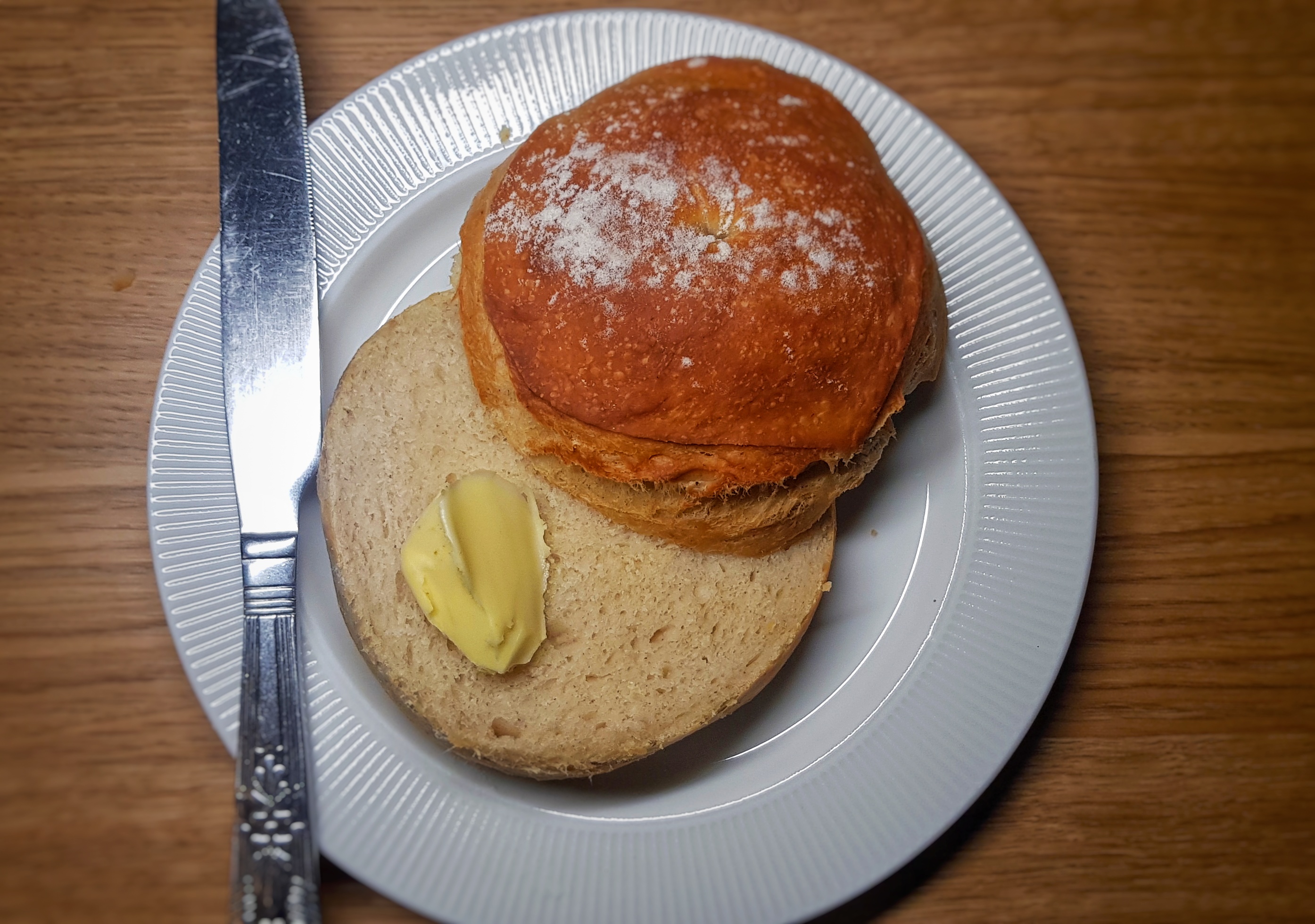
As I mentioned last post, I used Elizabeth David’s research on the medieval and early modern bread roll called payndemayn (medieval period) or manchet (medieval and early modern), to recreate my own. The two words at one point, it seems, were interchangeable. There are many spellings of payndemayn, the root of this word being French, pain demesne, from the Latin panum dominicum, the lord’s bread.[1] The word appears in medieval manuscripts such as Forme of Cury. Manchet is believed to be a contraction of the word payndemayn – main – and cheat, the name for another, similar bread made from refined flour that wasn’t quite as white as the really good stuff. Main and cheat eventually became manchet.[2]
It was ‘the lord’s bread’ because the small bread rolls – weighing in at around only 7 ounces (200 grams) – were so expensive that only the lord, at the head of the top table, would receive one. The small loaf would be cut by the lord’s server as described here in the Boke of Keruynge (the Book of Carving) written in 1513:
…take a lofe in your lyfte hand. & pare y lofe rounde aboute / than cut the over cruste to your souverayne, and cut the nether crust, & voyde the parynge, & touch the lofe no more after it is so served.[3]
The over crust, being considered the best part was eaten by the lord, and the rest divided up and given to whomever he so pleased. This is the origin of the idiom the upper crust we sometimes use when referring to the upper classes.
There are mentions of this bread all over, but there are no real recipes in the Middle Ages. There are several mentions of these loaves in recipes though, take this recipe for ‘Soppes Dorre’ from fifteenth century manuscript Harl.4016 (c.1430):
…take a paynmain, And kut him and tost him, And wete him in wyne, And ley hem in a dish, and caste [almond flavoured] syrup thereon.[4]
Elizabeth David went to great lengths in writing EnglishBread and Yeast Cookery to try and get an idea of what these breads were really like, gleaning cues from several sources and combining them. The earliest decent recipes and descriptions crop up in the late sixteenth and early seventeenth centuries, but there are no complete ones: sometimes the ingredients are listed, but the amounts or the shape of the loaves are not given; other times, the shaping is described but the ingredients are missing. She also used artwork from the era to work out the likely shapes.
Elizabeth David’s oval-shaped manchet
It seems that they were also enriched with milk and/or butter and/or eggs, or none of the above, so perhaps something rather like a brioche (sometimes). Elizabeth took the information and created a flour mix of plain white flour, with some strong white flour and a little wholemeal flour, to replicate the lower gluten, not-quite-white nature of the wheat flour used at the time. She enriched her dough with butter and milk, avoiding egg. It put me in mind of my recipe for Cornish/Devonshire splits. She liked that in some descriptions the loaves were oval in shape. To replicate this, she made a deep slash in the dough before it went into the oven. However, I much preferred the sound of Gervase Markham’s 1623 way of shaping his loaves. He instructs us to take the risen dough and
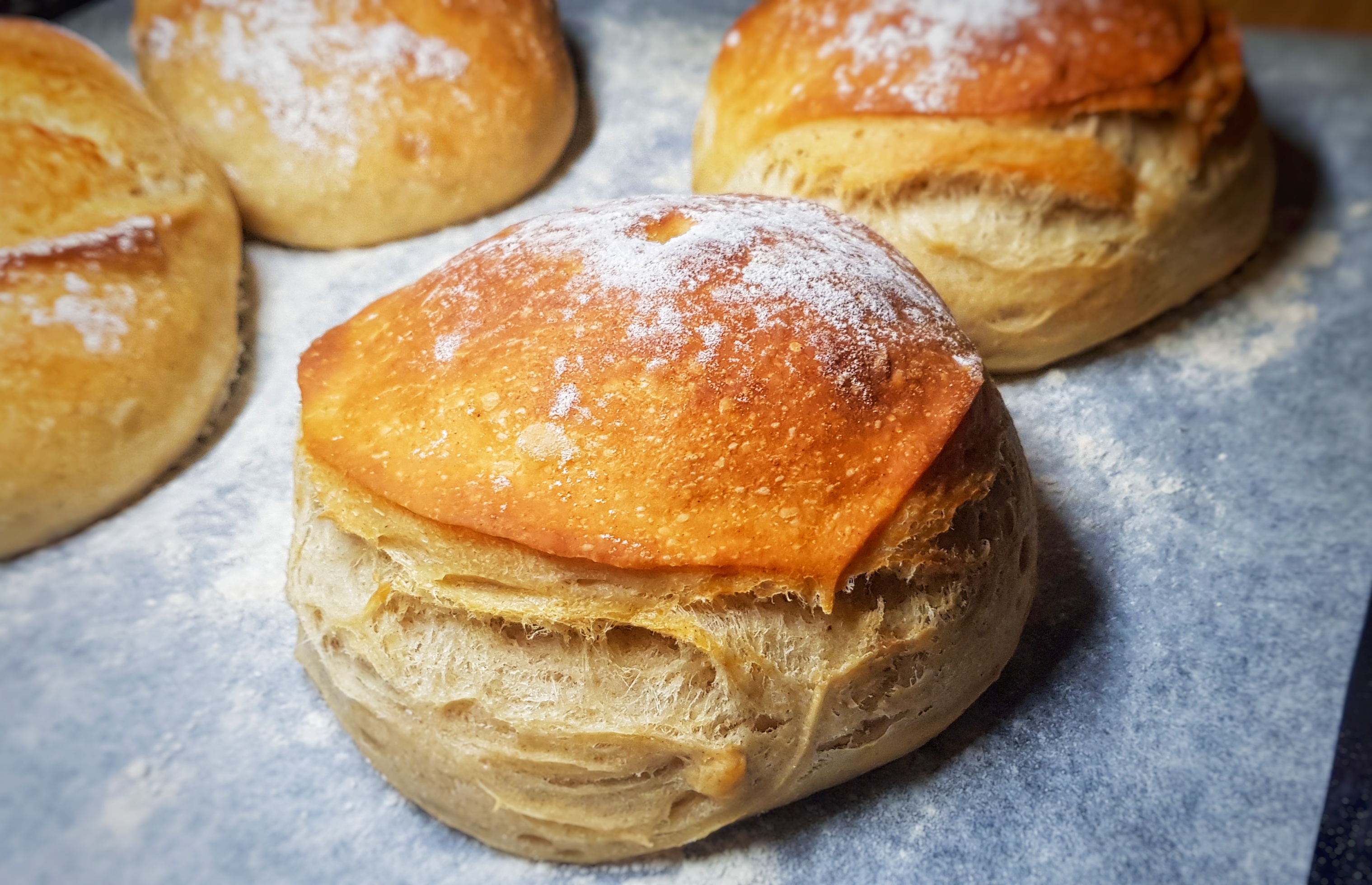
mold it into manchets, round, and flat, scotch [cut] about the wast to give it leave to rise, and prick it with your knife in the top, and so put it into the Oven, and bake it with a gentle heat.[5]
He stabs their tops so that they wouldn’t rise too much in the oven.
My attempt at ‘scotching’ my manchet loaves
I used my Devonshire splits dough as the basis of my manchet recipe, which, as it turned out, was pleasingly very close to Elizabeth’s, except – of course – I used much less salt than she. I decided to make some in the oval shape preferred by Elizabeth, and some like those described by Gervase Markham.
By the way: coincidentally just as I was cooking and researching this post, esteemed food historian Ivan Day posted on his excellent Instagram page a photo of Markham’s manchet, showing that scotched waist, along with some other breads of the same era. Here’s a link to his post, if you want to take a look at those.
Subscribers get access to special blog posts, Easter eggs from my podcast, and a monthly newsletter. You can become a subscriber by following this link
Subscribe to get access
This recipe is for my subscribers. Read more of this content when you subscribe today and support the blogs and podcast. Subscribers get access to special blog posts, Easter eggs from my podcast, and a monthly newsletter. You can become a subscriber by following this link.








 British Food: A History