Photo credits: top left: Cambridge Archaeological Unit; bottom right: Cambridge Archaeological Unit using a foreground photographic image supplied by S. Craythorne/Lincolnshire Wildlife Trust
My guests today are archaeologists Chris Wakefield from the Cambridge Archaeological Unit of Cambridge University Rachel Ballantyne from McDonald Institute for Archaeological Research, and they are here to tell me about an absolutely amazing site close to Peterborough that tell us a huge amount about daily life in a late Bronze Age settlement. Prepare to have your minds blown!
We talk about the unique circumstances of how and why the site is so well preserved, kitchen clutter, animal husbandry, querns, frumenty, pike sushi, and whether the English’s love of mustard goes back 3 millennia – among many other things
Those listening to the secret podcast: you get 20 minutes of bonus material that includes the importance of foraging, the evidence for fermentation, Bronze Age recipes, the uses of the whole cereal plant and more!
Available on all podcast apps, just search for ‘The British Food History Podcast’ and hit follow. Or stream via this Spottily embed:
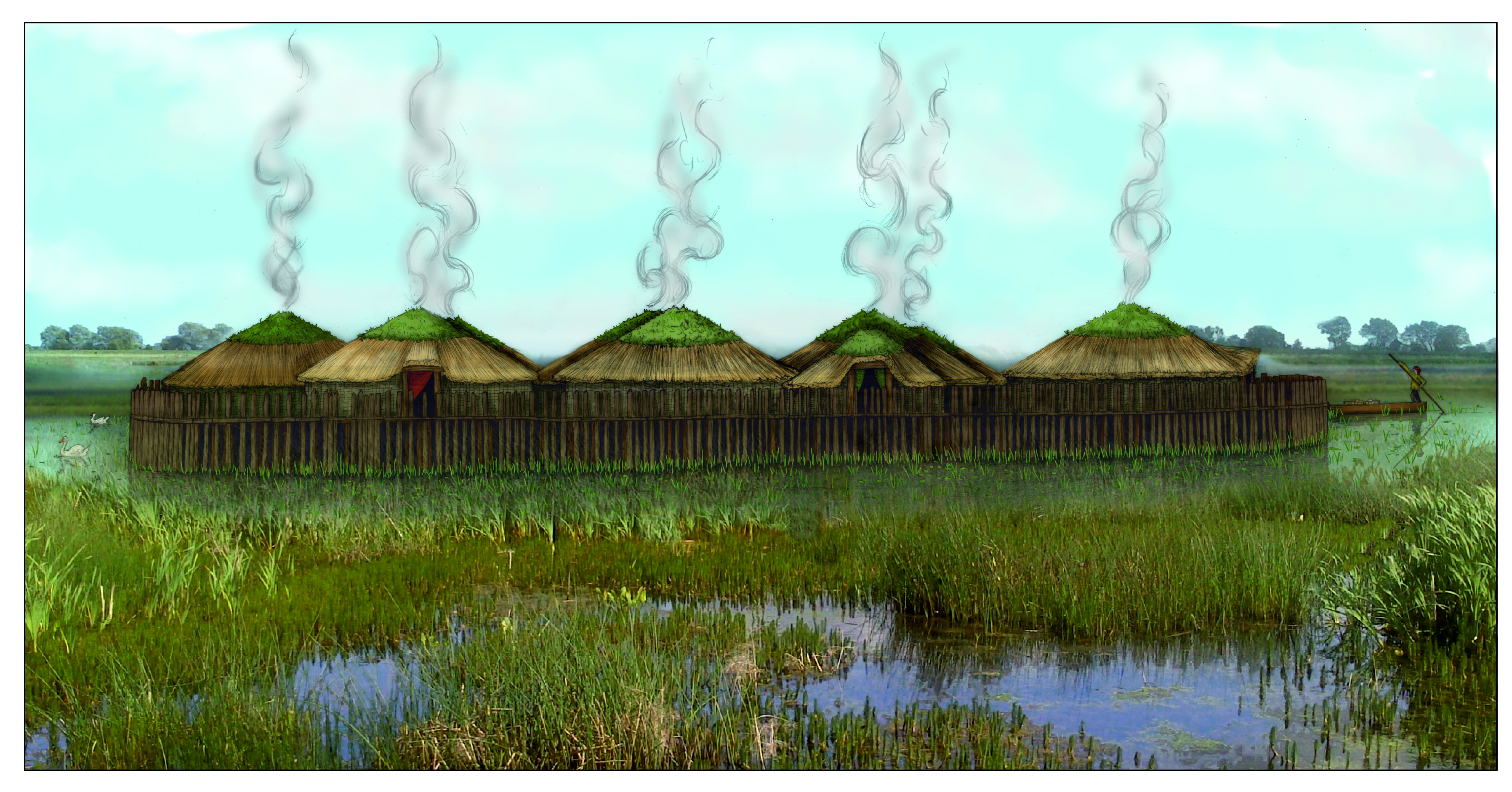
A Must Farm side-view reconstruction (pic: Cambridge Archaeological Unit using a foreground photographic image supplied by S. Craythorne/Lincolnshire Wildlife Trust)
Follow Cambridge Archaeological Unit on Social Media
Facebook: @cambridgearchaeologicalunit
BlueSky: @cambridgearch.bsky.social
Instagram: @cambridgearchaeologicalunit
Follow Cambridge University Department of Archaeology on Social Media
Facebook: @archaeologycambridge
BlueSky: @cam-archaeology.bsky.social
Instagram: @ cambridge_archaeology
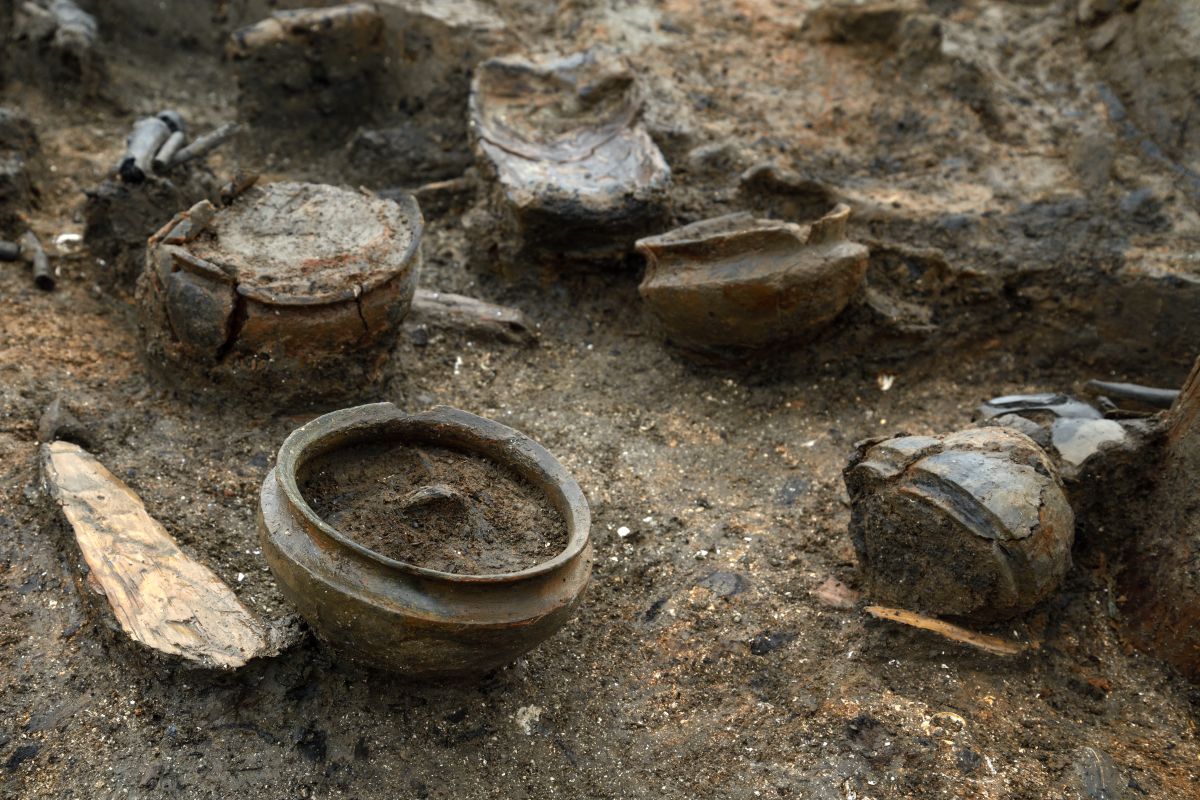
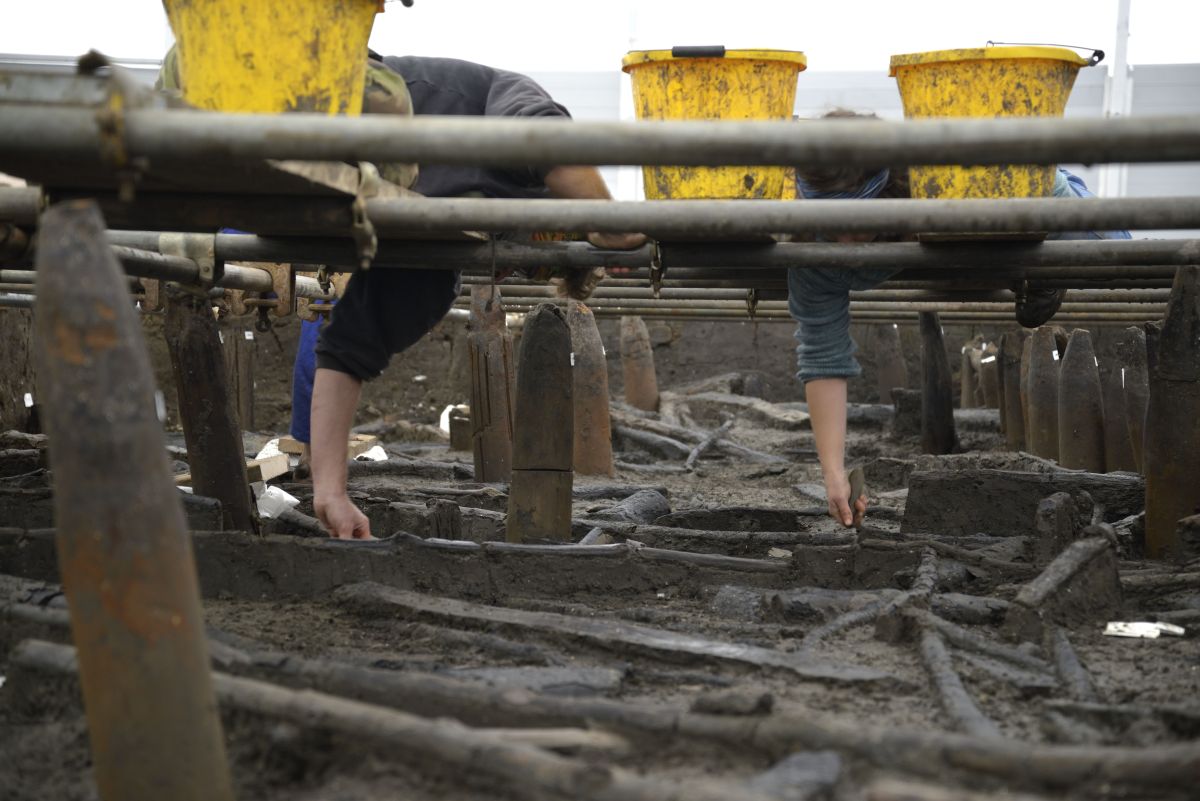
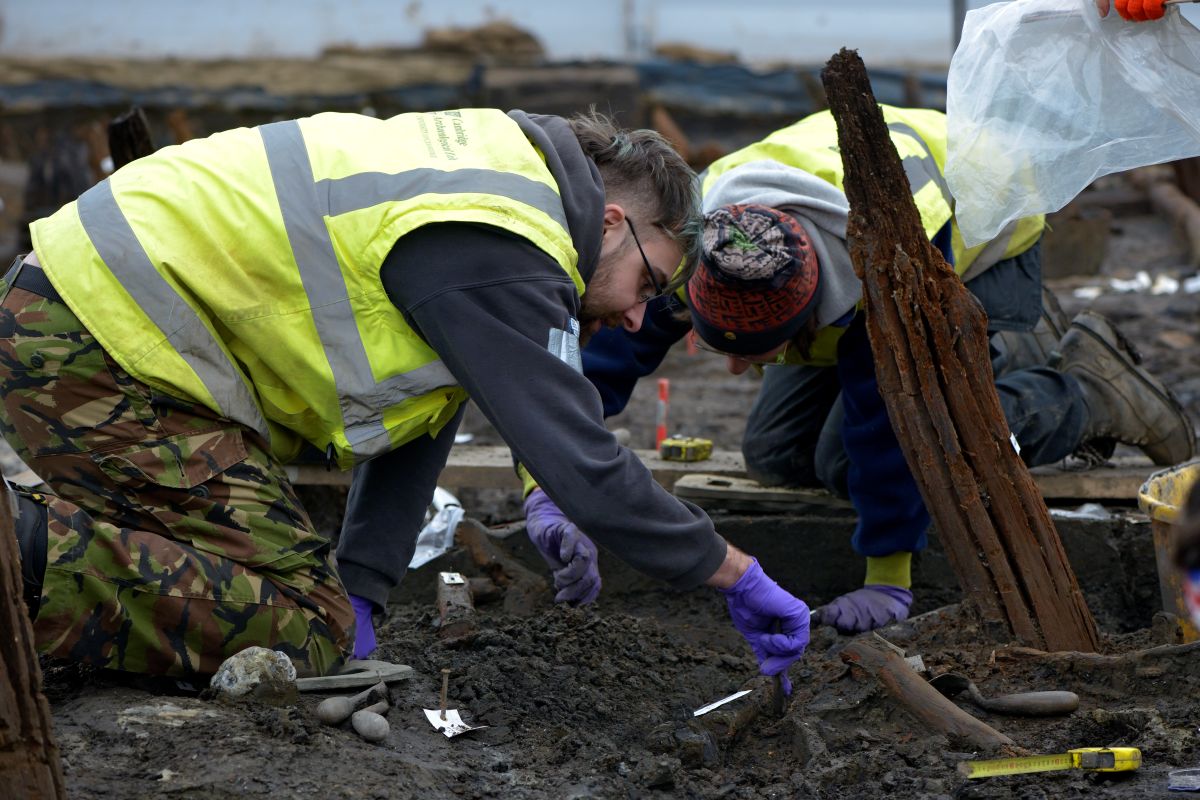
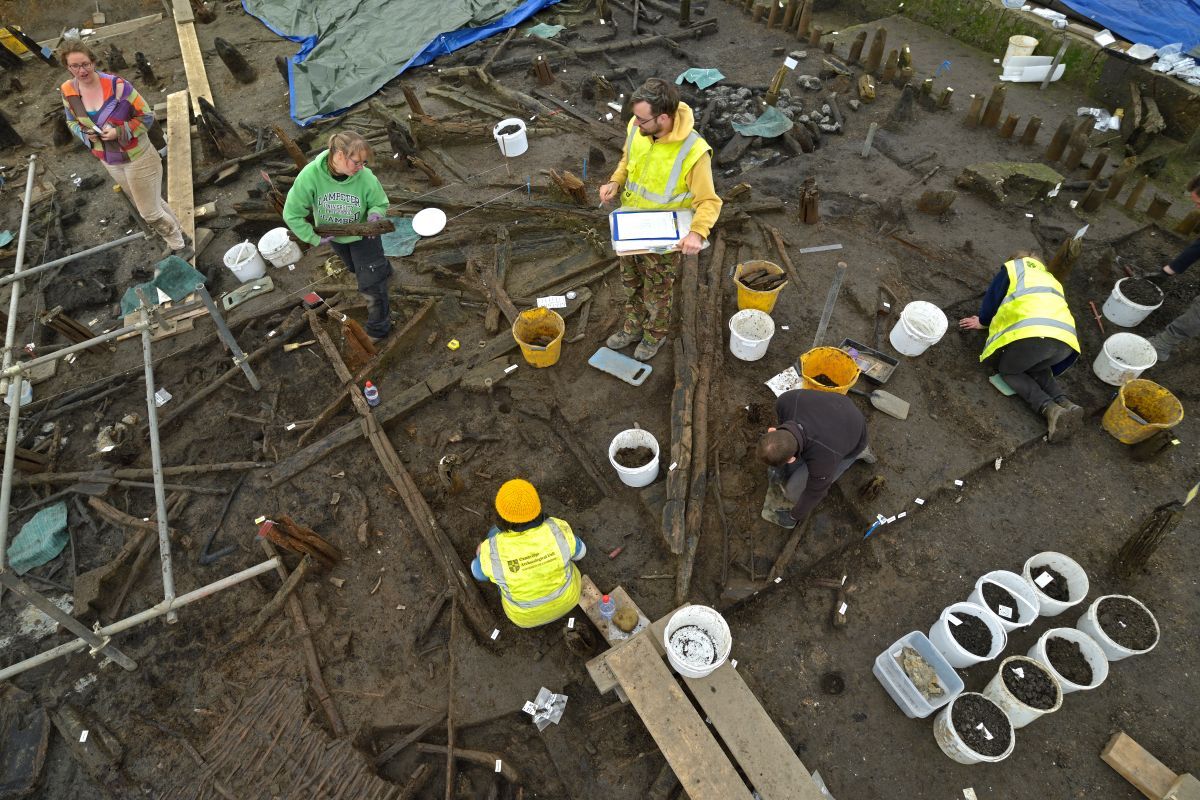
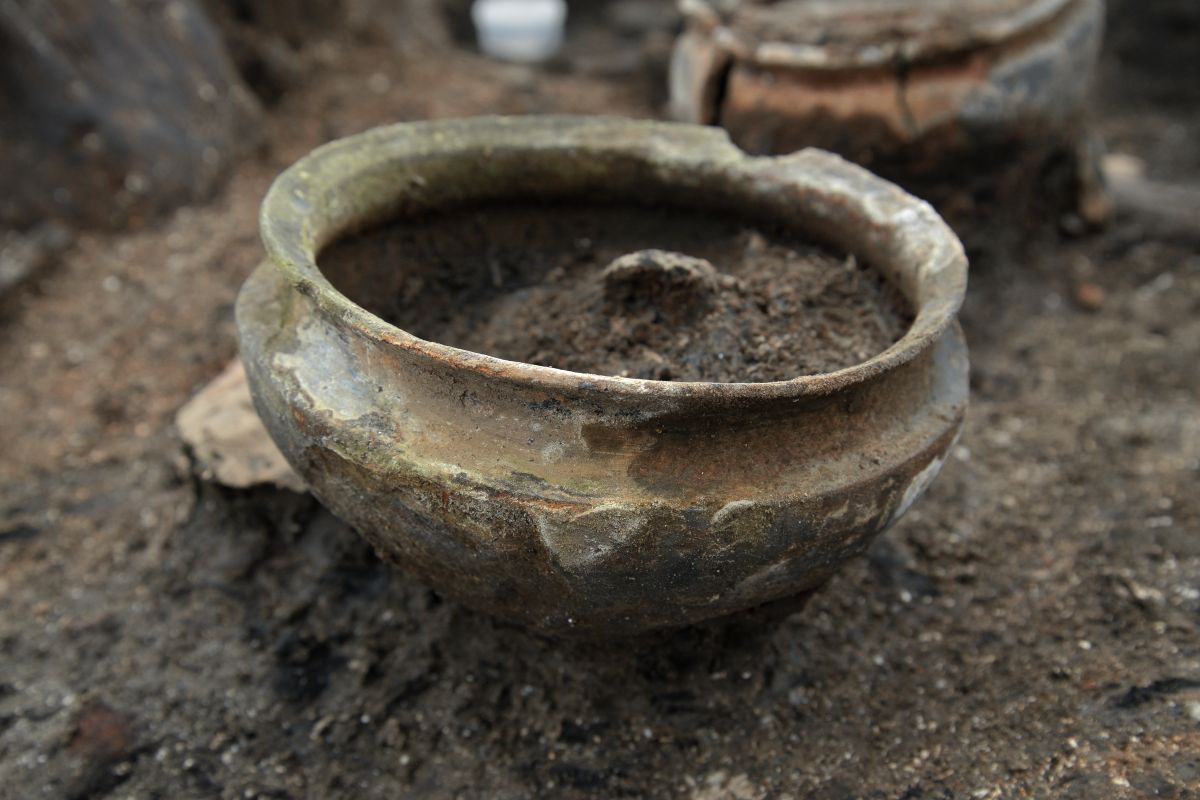
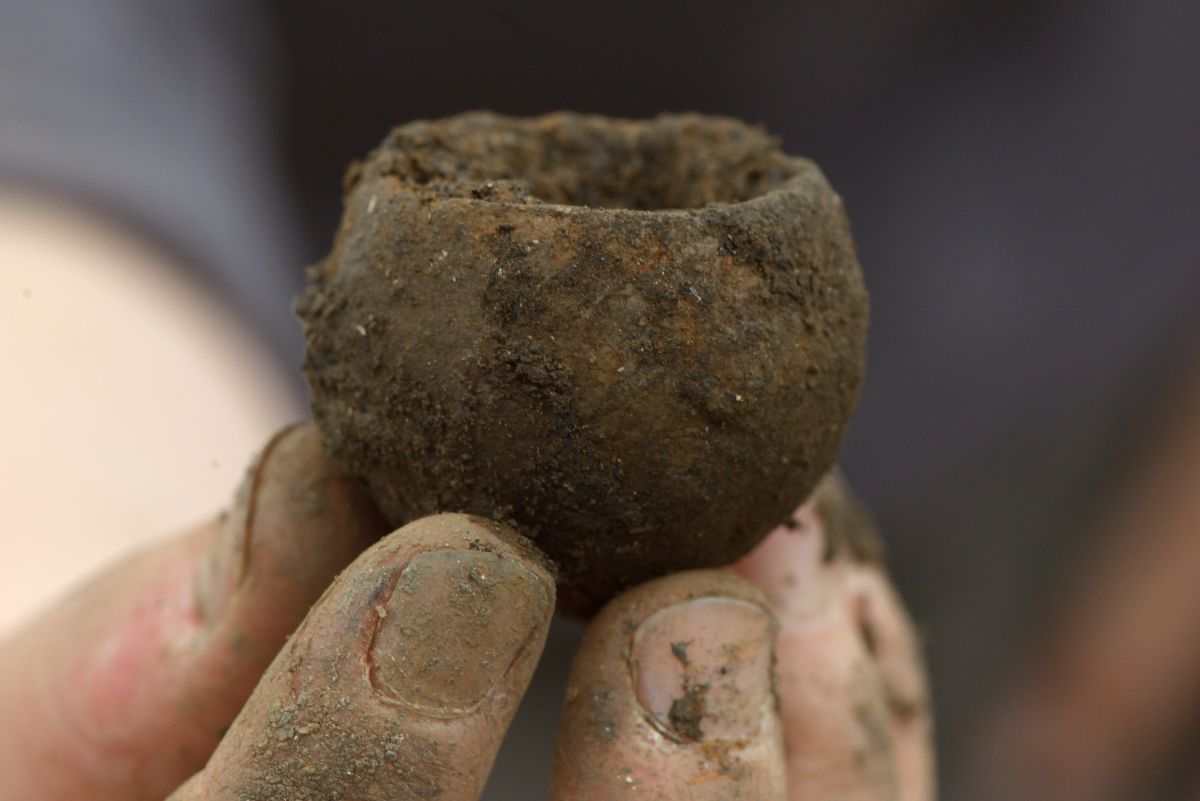
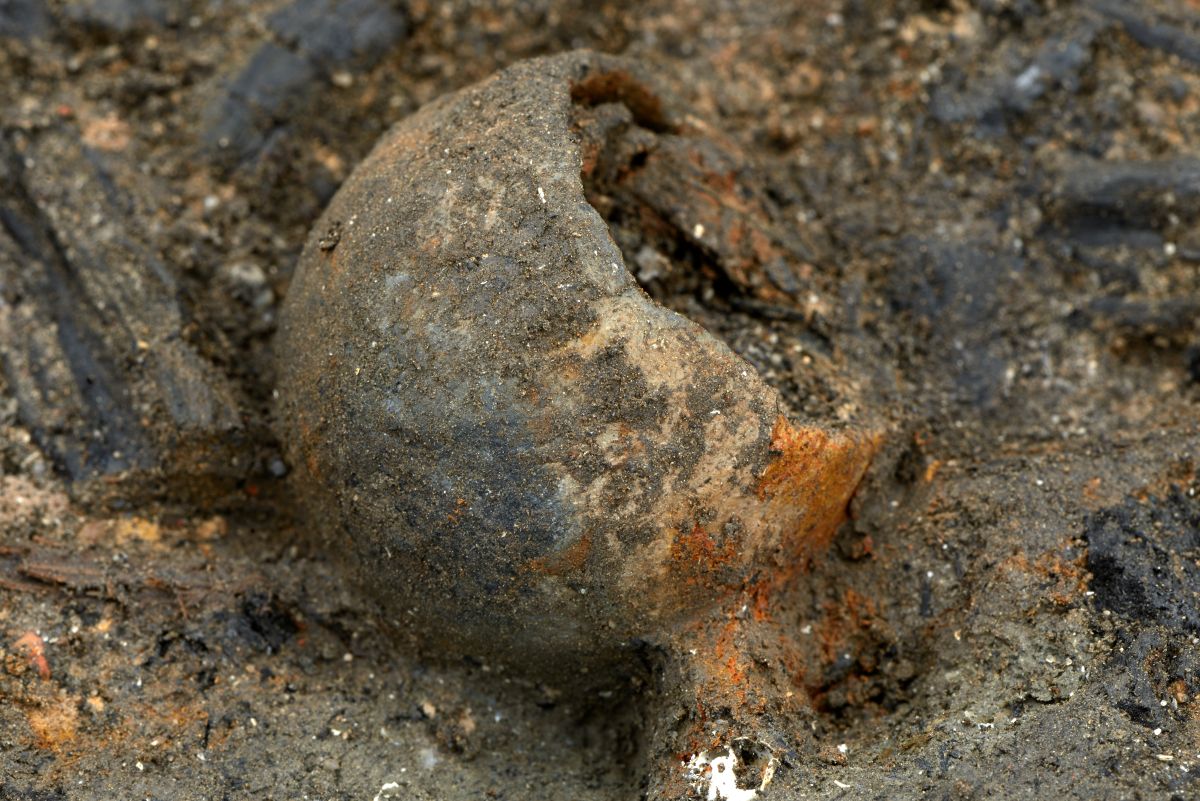
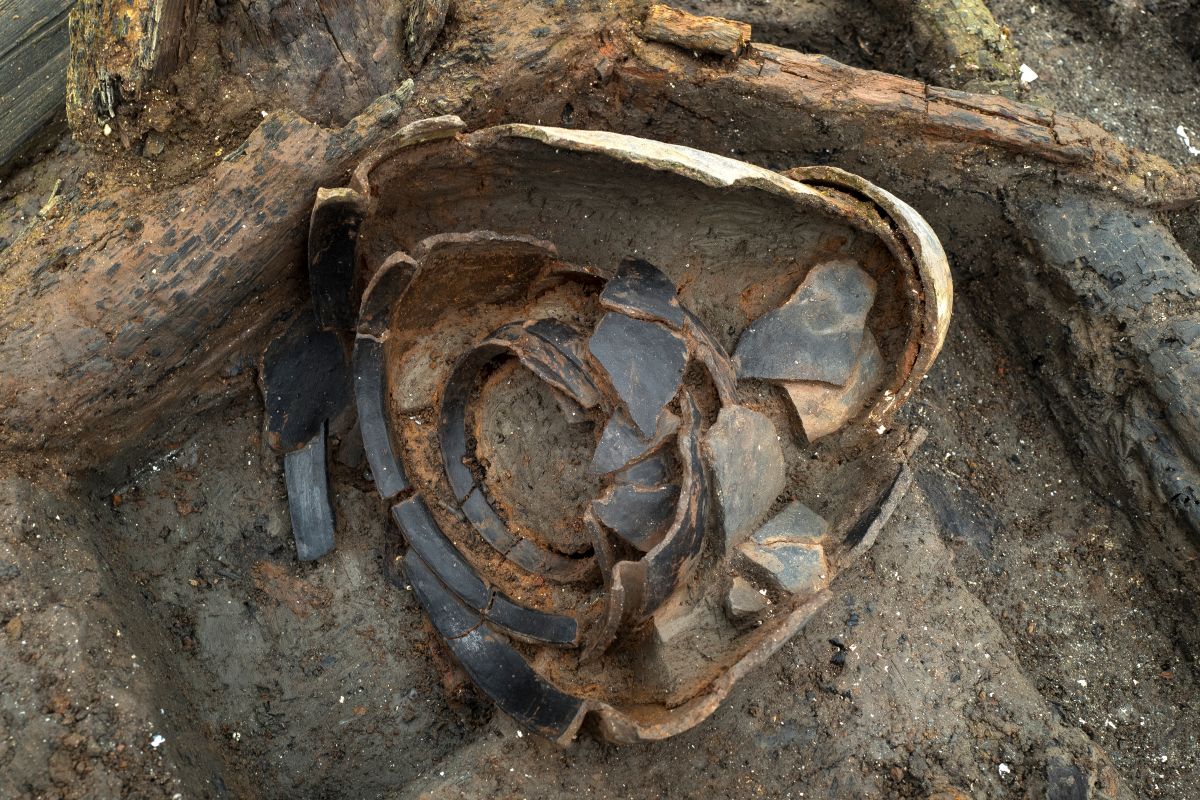
Area of potsExcavation and scaffoldExcavating the site Arial view of excavationPot in situA tiny pot!The tiny pot in situStacked potsSome images of the excavation and finds (all images by Cambridge Archaeological Unit)
Remember: Fruit Pig are sponsoring the 9th season of the podcast and Grant and Matthew are very kindly giving listeners to the podcast a unique special offer 10% off your order until the end of October 2025 – use the offer code Foodhis in the checkout at their online shop, www.fruitpig.co.uk.
If you can, support the podcast and blogs by becoming a £3 monthly subscriber, and unlock lots of premium content, including bonus blog posts and recipes, access to the easter eggs and the secret podcast, or treat me to a one-off virtual pint or coffee: click here.
Don’t forget, there will be postbag episodes in the future, so if you have any questions or queries about today’s episode, or indeed any episode, or have a question about the history of British food please email me at neil@britishfoodhistory.com, or on twitter and BlueSky @neilbuttery, or Instagram and Threads dr_neil_buttery. My DMs are open.
Welcome to the first episode of season 9 of The British Food History Podcast! I am going to be adding a blog post to complement each new episode of the podcast, to help readers of the blog keep tabs on what is going on.
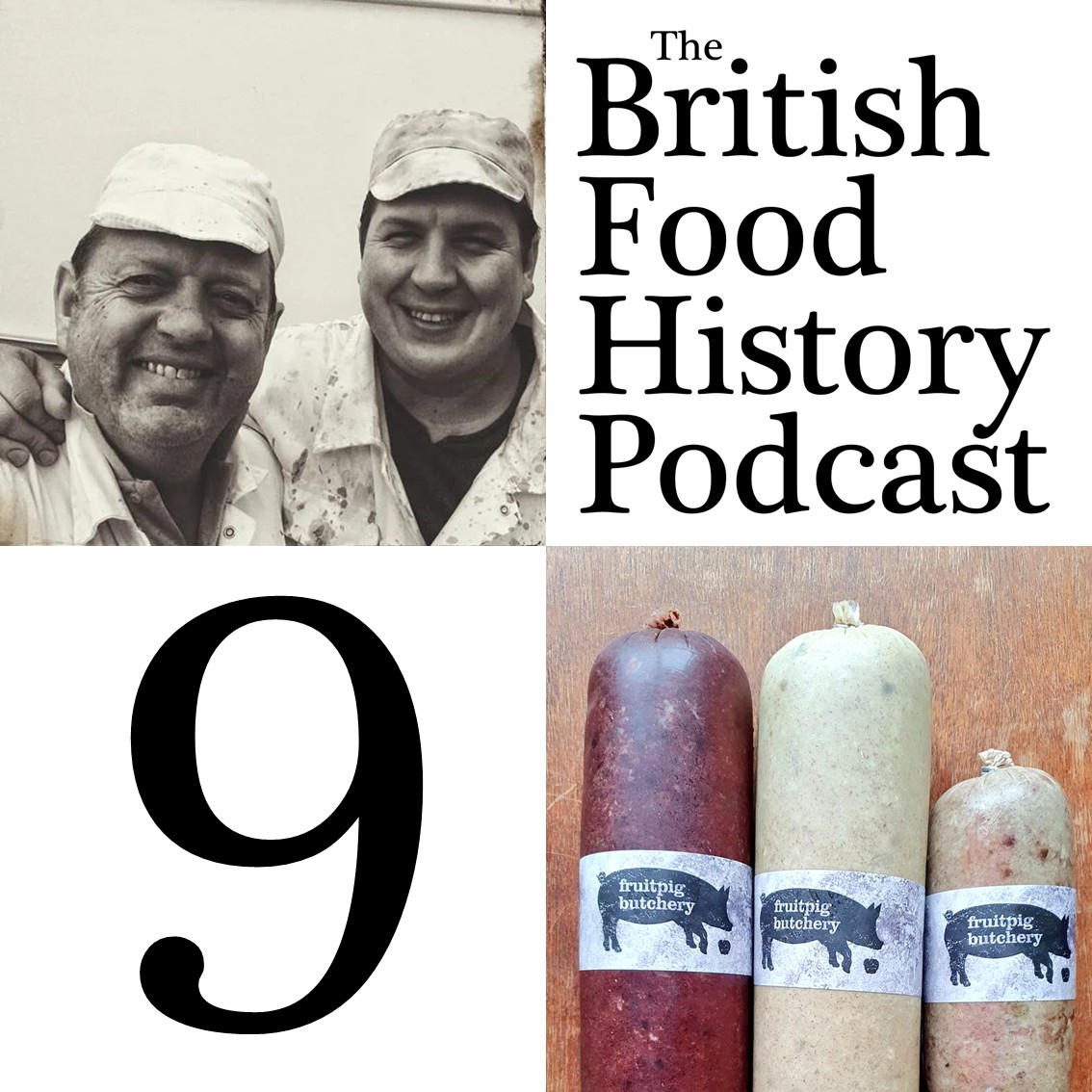
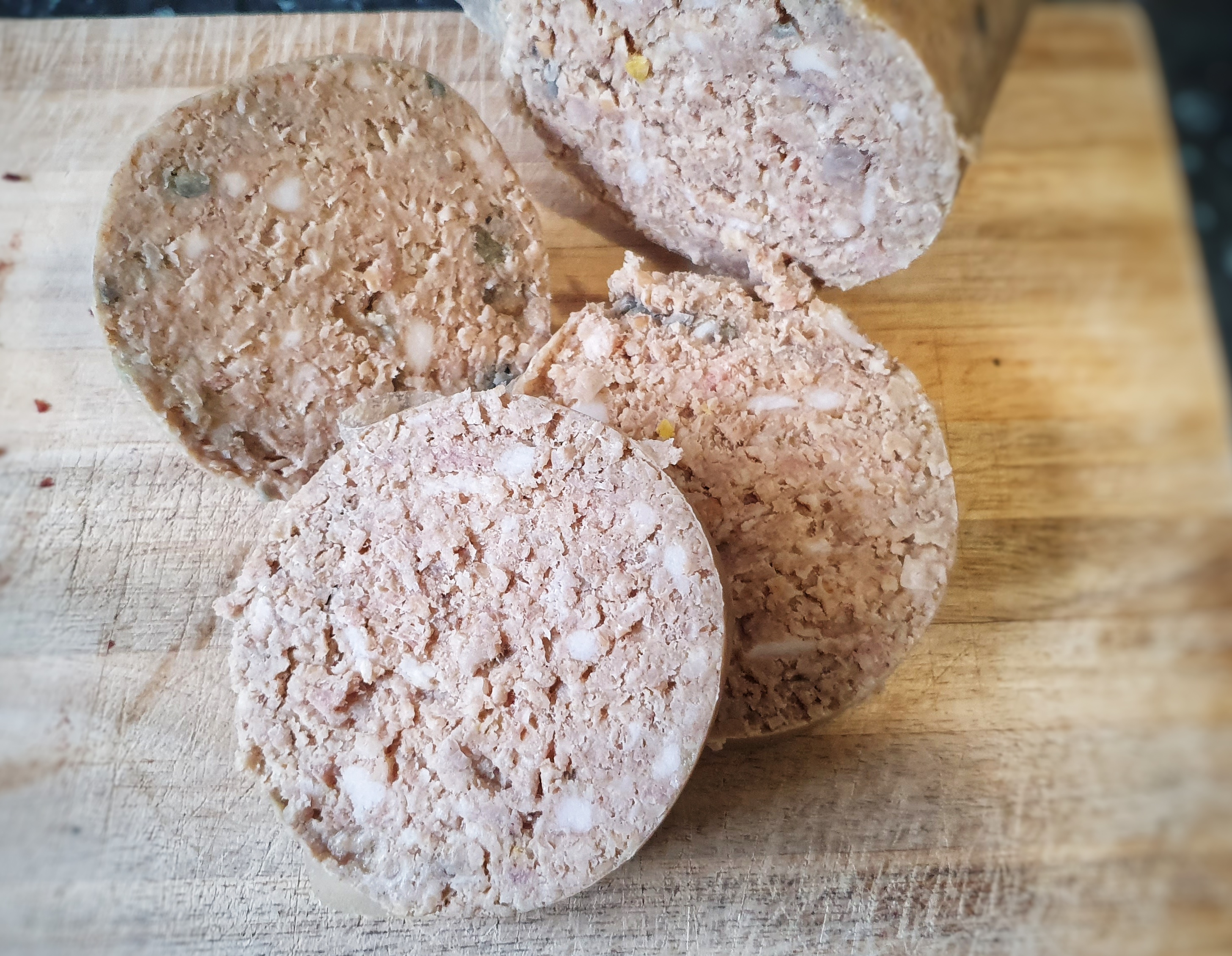
Today I am talking with Matthew Cockin and Grant Harper of Fruit Pig – the last remaining commercial craft producer of fresh blood black puddings in the UK.
Fruit Pig are sponsoring the 9th season of the podcast and Grant and Matthew are very kindly giving listeners to the podcast a unique special offer 10% off your order until the end of October 2025 – use the offer code Foodhis in the checkout at their online shop, www.fruitpig.co.uk.
We talk about how and why they started up Fruit Pig, battling squeamishness, why it’s so difficult to make fresh blood black puddings, and serving suggestions – amongst many other things
The podcast is available on all podcast apps, aandd now YouTube. Please give it a follow, and if you can, please rate and review. If you’re not a podcasty person, you can listen via this Spotify imbed:
Some serving suggestions
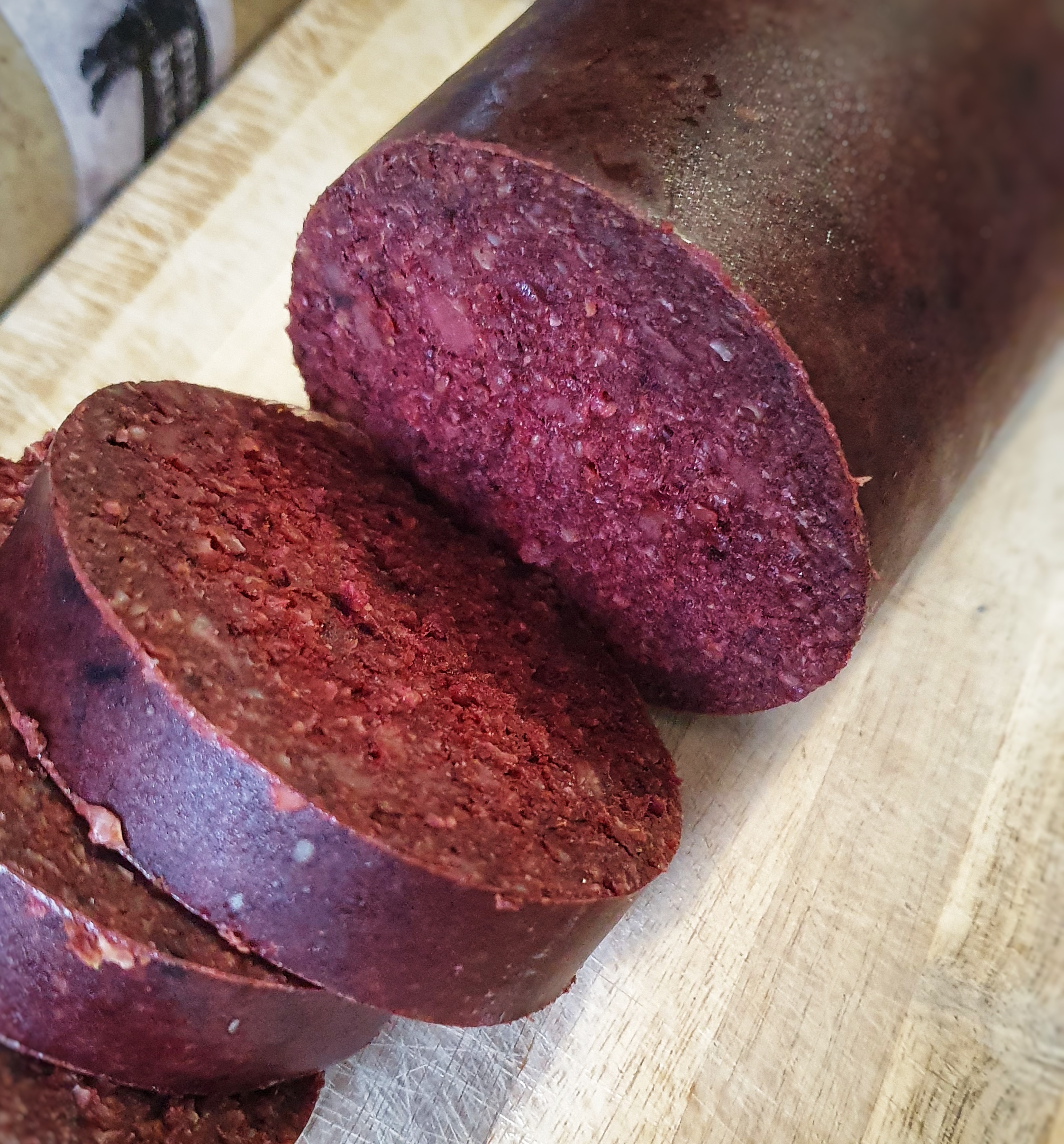
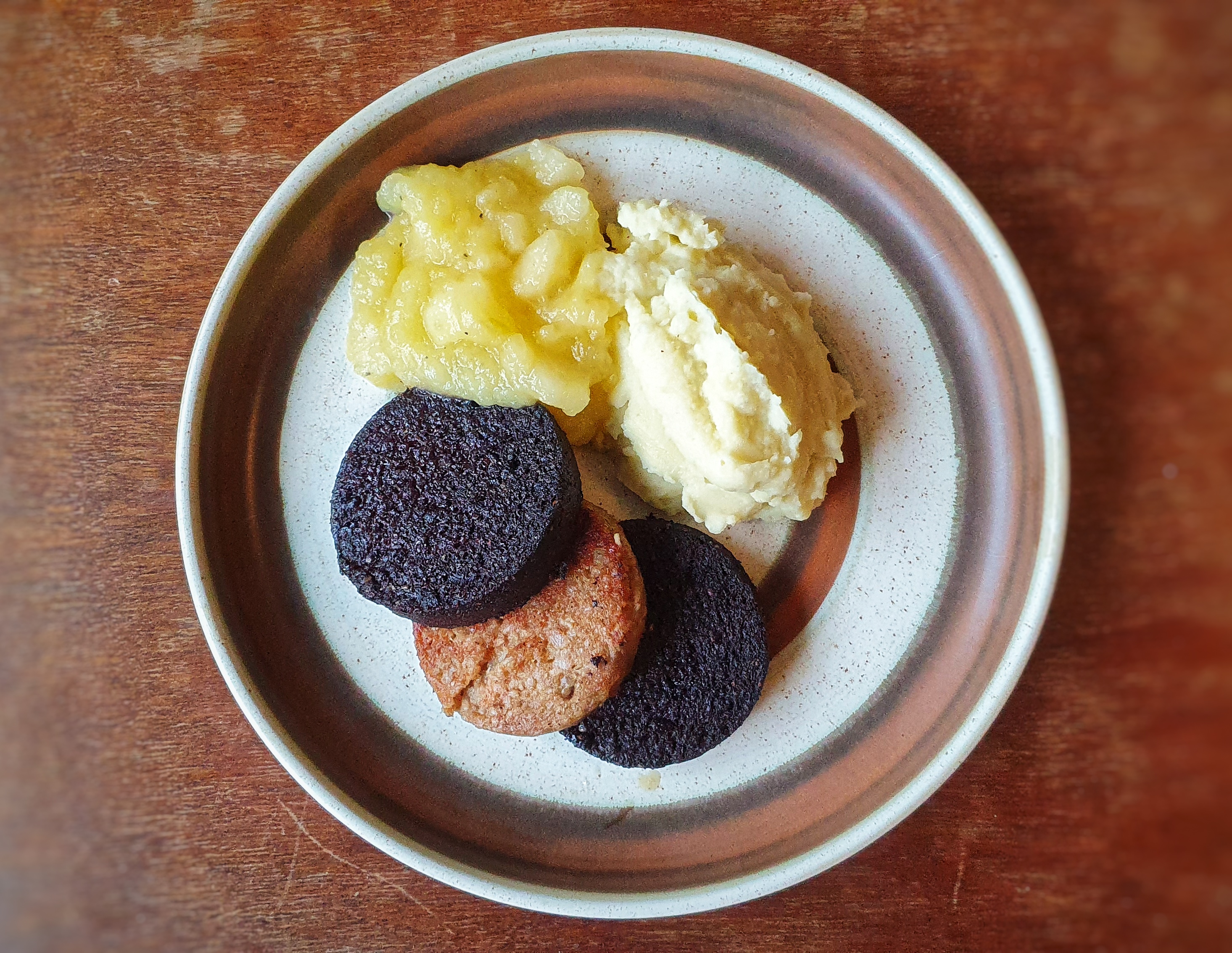
One other thing we talked about was serving suggestions, and of course a slice or two of black and white pudding as part of a full English breakfast is admirable. You can go one better and have the full triple of black pud, white and haggis for a full Scottish! Personally, I believe a slice of fried bread topped with a couple of slices of fried pudding and a poached egg is the breakfast of champions.
These puddings are not just for breakfast, though. In Lancashire, a favourite way of eating black pudding is to poach it again, remove it from the water, drain, split lengthways and spread it with mustard. I have eaten it this way when visiting Bury Market. But my favourite way of eating black and white pudding in a simple way, is to serve fried slices of pudding with mashed potatoes and apple sauce – hot or cold, not too sweet. Here’s how to make a good ‘savoury’ apple sauce:
Peel, core and slice 2 medium-sized Bramley apples, and 2 tart dessert apples (e.g. Cox’s Orange Pippin) and fry in a saucepan with 60 g salted butter and a good few grinds of pepper. When the Bramleys start to soften, add 2 level tablespoons of sugar and 4 or 5 tablespoons of water. Cover and cook on medium heat, stirring occasionally, until the apples are cooked through and the Bramleys have broken down to a puree. Taste and correct seasoning. You need something still very tart to cut through the rich puddings.
Keep a lookout for a proper recipe and some of my experiments with the fresh blood, Matthew and Grant kindly sent me.
If you can, support the podcast and blogs by becoming a £3 monthly subscriber, and unlock lots of premium content, including bonus blog posts and recipes, access to the easter eggs and the secret podcast, or treat me to a one-off virtual pint or coffee: click here.
Don’t forget, there will be postbag episodes in the future, so if you have any questions or queries about today’s episode, or indeed any episode, or have a question about the history of British food please email me at neil@britishfoodhistory.com, or leave a comment below.
We’re kicking off the new season with a 3-part special about Jane Grigson and her ground-breaking book English Food – the book that taught me how to cook, write and appreciate England’s diverse and delicious food legacy. You can read allabout that on the other – and original – blog Neil Cooks Grigson.
In the first episode, I speak to Grigson appreciators (and previous guests) Sam Bilton, Ivan Day and Annie Gray, and – new to the pod – publishing legend Jill Norman about the influence of the book, and where she sits in the study and promotion of English food history and traditions.
We talk about the unique way Jane’s book was published, Jane’s approach to research and writing, her attention to detail, her friendship with Elizabeth David, favourite recipes, her frustrations regarding low-quality shepherd’s pie and much more.
If you are not a podcast person, you can listen to the episode here:
If you are a £3 monthly subscriber, you can also hear the full interviews with Sam, Ivan, Annie and Jill – so much had be cut out to keep the episode to reasonable length.
If you like the blogs and podcast I produce and would to start a £3 monthly subscription, or would like to treat me to virtual coffee or pint: follow this link for more information.Thank you.
Next episode I’ll be talking with Jane’s daughter, Sophie – all very surreal.
There will also be episodes on the history of baking, Alexis Soyer, medieval ale, crisps and more!
If you’ve never listened to the podcast before (there are over 60 episodes now) you can find it on your favourite podcast app simply by searching “The British Food History Podcast”. Don’t forget to follow the podcast so that you don’t miss an episode.
I spent the first half of 2024 working on two food history books (news of those coming very soon) which meant the poor old blog barely got a look in: with all of that research and writing I was doing all day everyday, I couldn’t bring myself to do even more. I did want to carry on producing material though, so I kept The British Food History Podcast going, and I’m very glad I did, first because it was a chance to talk to actual people, but also because in this most recent eighth season, I produced some of the best episodes so far.
However, one thing I didn’t do is tell you about it! So, if you don’t subscribe to the podcast on your favourite app, or aren’t a £3 monthly subscriber, you might have missed it. My sincere apologies if you have, I have left Spotify links to the first three episodes of season 7 below: 18th Century Female Cookery Writers with The Delicious Legacy Podcast, Christmas Special 2023: Mince Pies (they’re not just for Christmas, by the way) and Apples & Orchards with Joanna Crosby:
Other topics included chocolate, spices, medieval table manners, the Scottish salt industry and food waste.
The British Food History Podcast will return in 4 weeks’ time.
This is only half of my podcast news though because I started a second with fellow food historians Sam Bilton and Alessandra Pino. It’s called A is for Apple: An Encyclopaedia of Food & Drink. The premise is a simple one: each season we take a letter, and we present and discuss a topic each. There is usually a theme e.g. fruit, vegetables aromatics. There has also been a listener’s choice episode. Topics have included apples (obvs.), adulteration, alewives, asparagus, avocados and Agas.
Listen to the pilot episode here:
Season A has finished and season B will start in the autumn.
You can find both podcasts on all podcast apps, so please make sure you follow them – that way you won’t miss an episode.
Over and out. xxx
If you like the blogs and podcast I produce and would to start a £3 monthly subscription, or would like to treat me to virtual coffee or pint: follow this link for more information.Thank you.
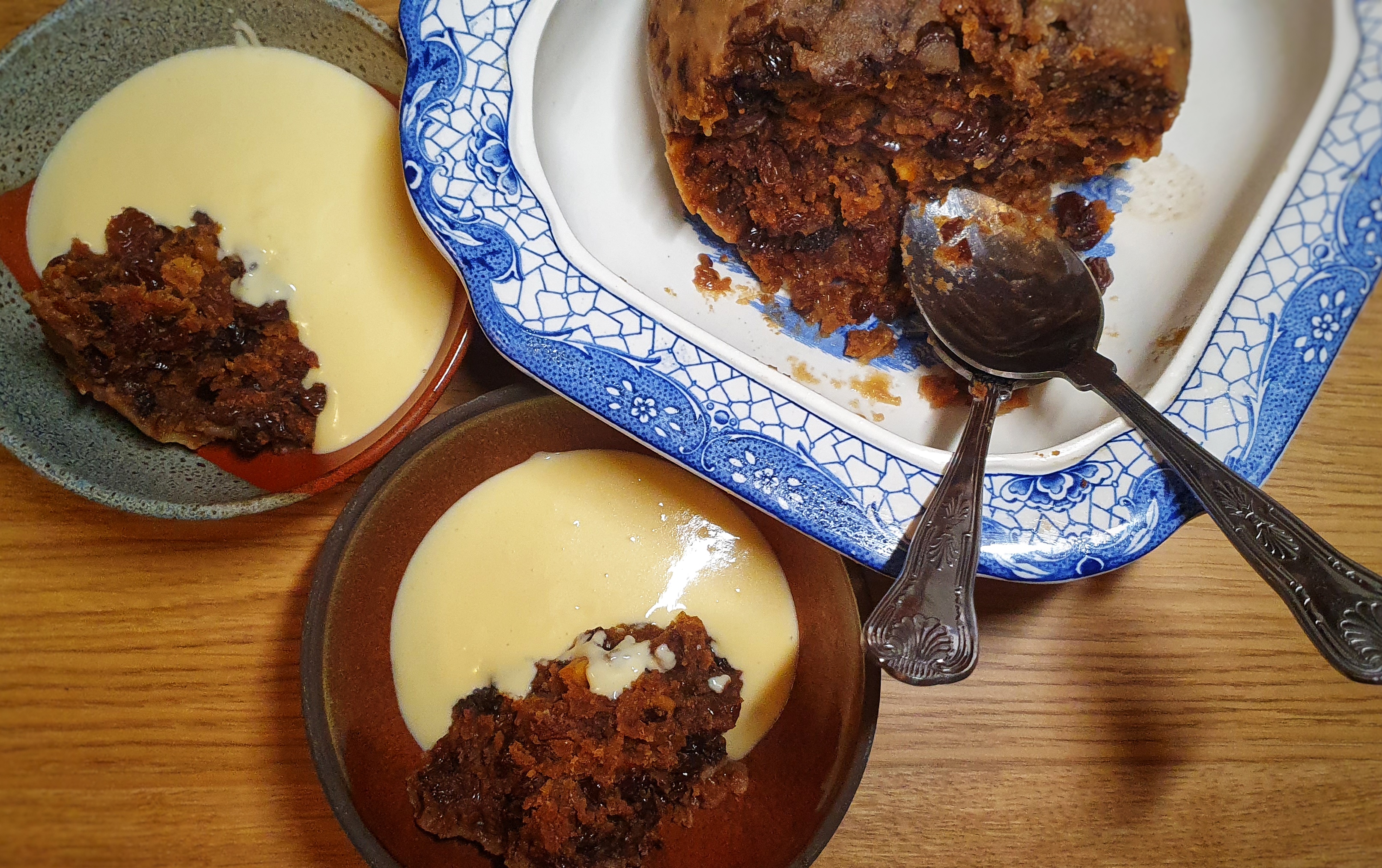
Happy New Year everyone! I’m only a little worse for wear after a night out in the bustling metropolis that is Levenshulme, South Manchester. Going out didn’t mean I negated on cooking up my annual New Year’s Eve pudding though: this year it was plum pudding (it is still Christmas remember!) which did a great job of lining my stomach. The recipe was of course the one I picked up last year, courtesy of Sam Bilton’s Great Aunt Eliza.
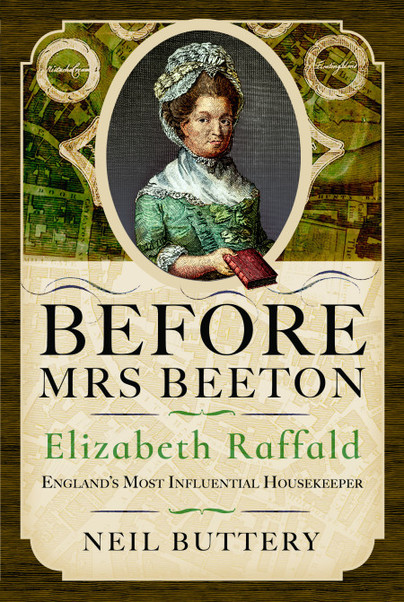
Well what a year it has been with regard to my writing: I wrote a few articles for Country Life (you can read them on my Media page), and my second book Before Mrs Beeton – a biography of food innovator and entrepreneur Elizabeth Raffald – came out in March and it seems to have gone down well. The big news was my previous book, A Dark History of Sugar, won the Best First Book Award at the Guild of Food Writer’s Awards 2023; little old me! Completely unexpected, but very pleased as I’m sure you can imagine.
The blog has continued to do well, receiving more views in 2023 than in any other year, and the podcast has gone from strength to strength; according to Spotify, my listenership has increased by 125%.
I wouldn’t have been able to do all of this without you all reading and commenting, listening and downloading. It is you who spurn me on to keep on making more content, so thank you all very, very much.
A special shout out too to everyone who supported the blogs and podcast financially by treating me to a virtual coffee or pint, or by becoming a £3 monthly subscriber. It’s becoming increasingly more expensive just to have podcasts and blogs these days, so I really appreciate it.
If you like the blogs and podcast I produce and would to start a £3 monthly subscription, or would like to treat me to virtual coffee or pint: follow this link for more information.Thank you.
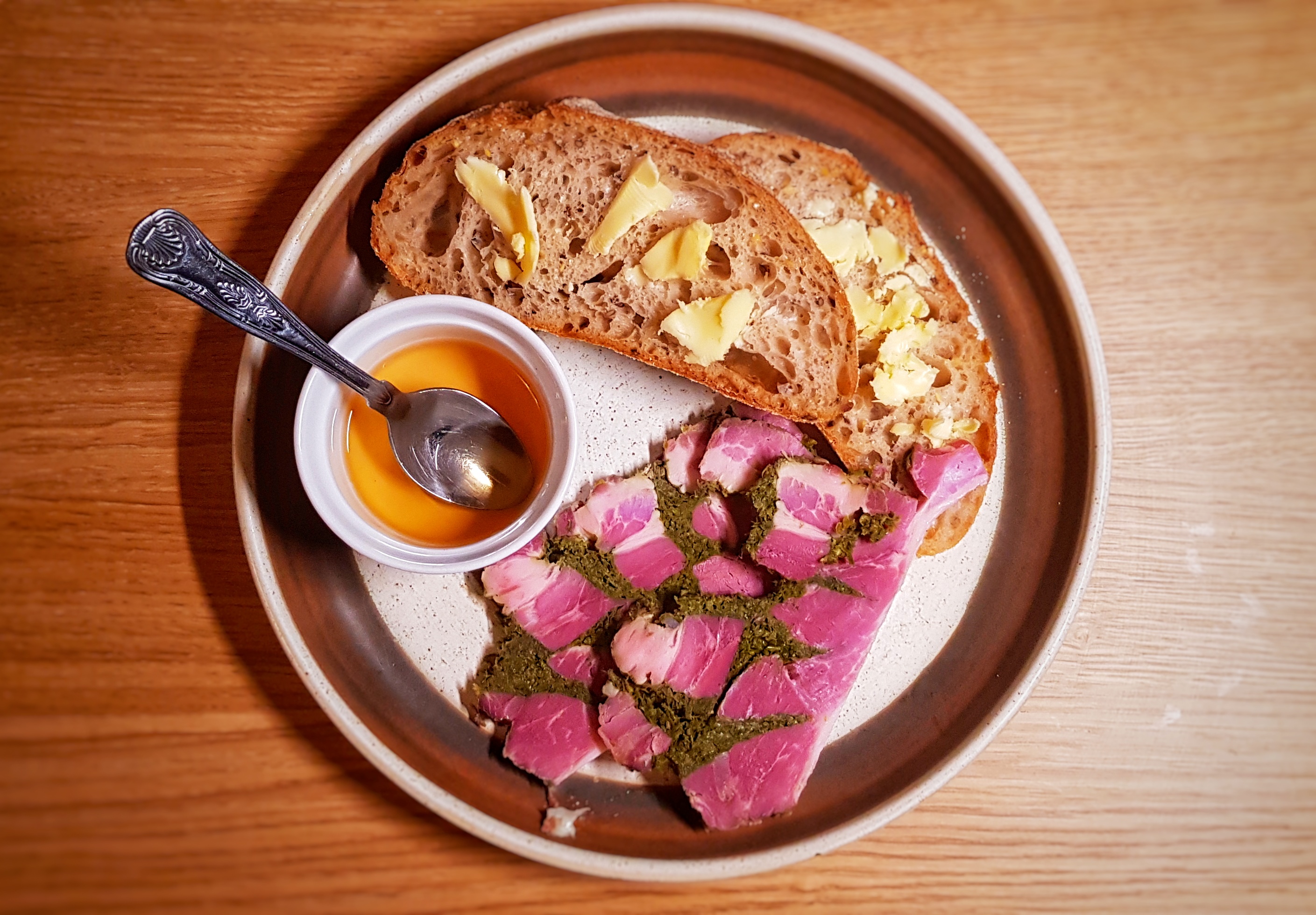
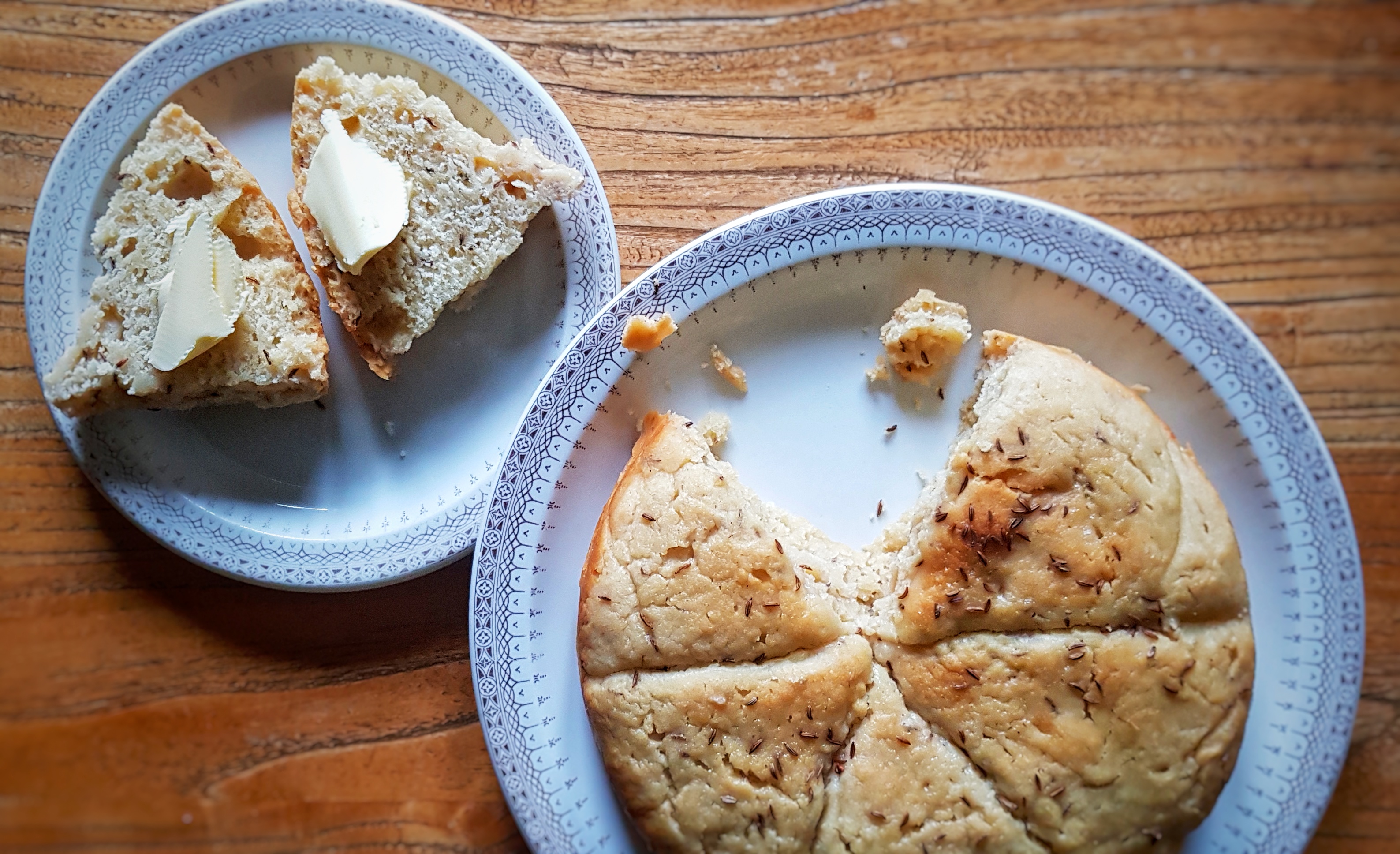
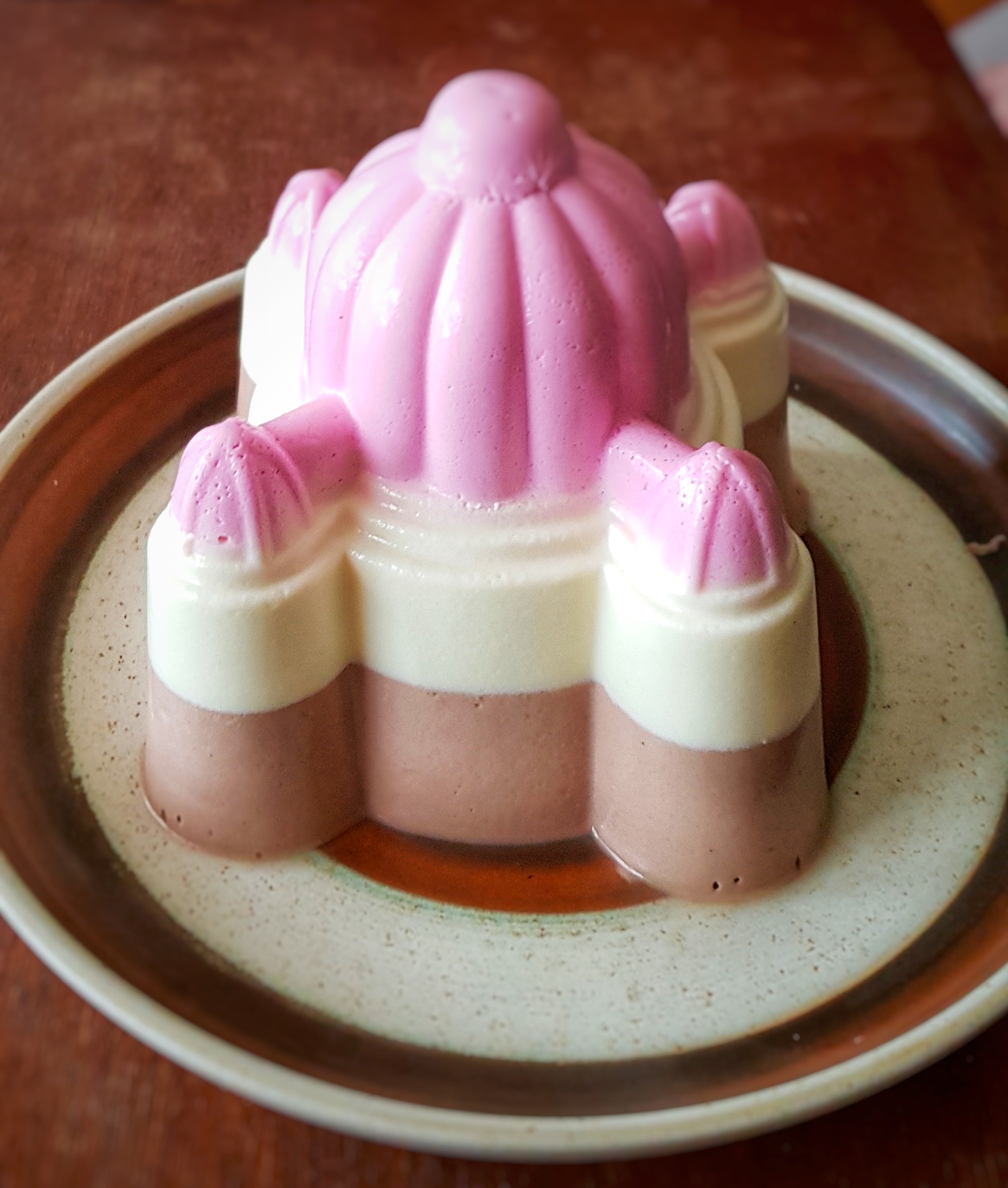
Some of the foods I cooked up for the blogs this year (L to R: Lincolnshire chine, wigs, Elizabeth Raffald’s flummery, malt loaf, roast venison and 18th century mince pies)
The other blog, Neil Cooks Grigson, has very much slowed down as I inch toward the completion of the project, and I only managed to cook one recipe for it. It was a good one though: #446 Lincolnshire Chine. It was the last recipe in the Cured Meat section of the book, so I wrote a little review of it. Many recipes from this section made it into both my personal and professional repertoires.
Just a handful of my podcast guests of 2024 (L to R: Charlie Taverner, Louise Middleton, Brigitte Webster, Kevin Geddes, Marc Meltonville and Jane Steward)
There were some great podcast episodes published too: 19 in all, the most I have made in a single year, taking the number of episodes up to 49! The most popular episode was 18th Century Dining with Ivan Day. Other favourites included London’s Street Food Sellers with Charlie Taverner, Invalid Cookery with Lindsay Middleton, Tavern Cookery with Marc Meltonville and Tudor Cooking and Cuisine with Brigitte Webster. I also collaborated with Sam Bilton of the Comfortably Hungry podcast about tripe. Season 7 kicked off in December with an episode about mince pies and another collaboration this time with Thomas Ntinas of the Delicious Legacy podcast about 18th-century women cookery book writers.
18th Century Dining with Ivan Day was the most popular episode of the podcast in 2023.
So, that’s the look back, and now it is time to look forward to the new year and to what it will bring. New podcast episodes are being lined up and the next episode will be out on 5 January (all things being well). I have two book deadlines this year, so I shall tell you about those as and when I can, and I will – of course – be continuing to write posts for the blogs (though January and February may be a little sparse – those deadlines are looming!)
I hope you have a great rest of Christmas. Remember it doesn’t finish until the 5th of January, so keep eating, drinking and making merry up to then, and beyond.
This post complements the episode of The British Food History Podcast called ‘The School Meals Service with Heather Ellis’:
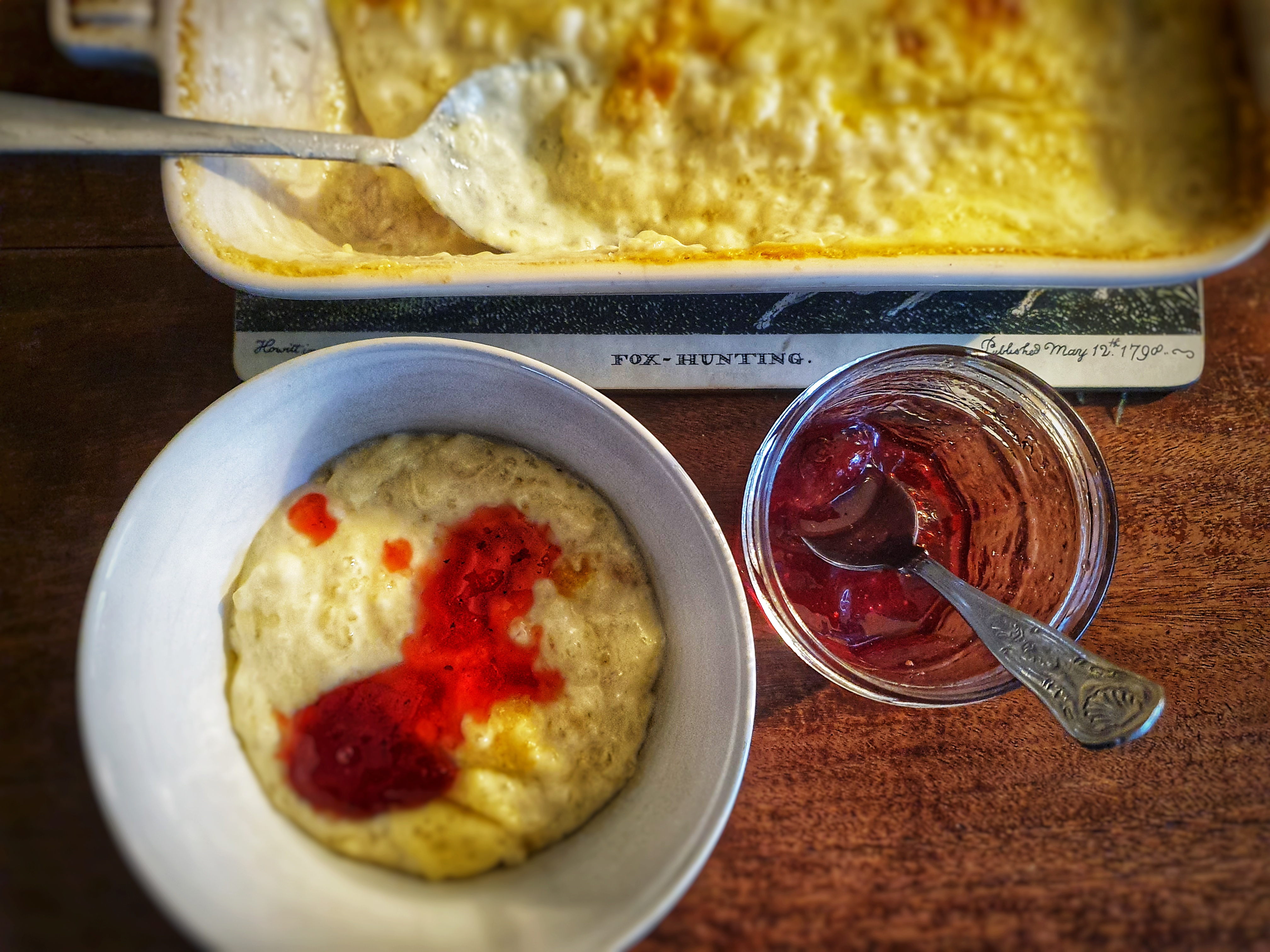
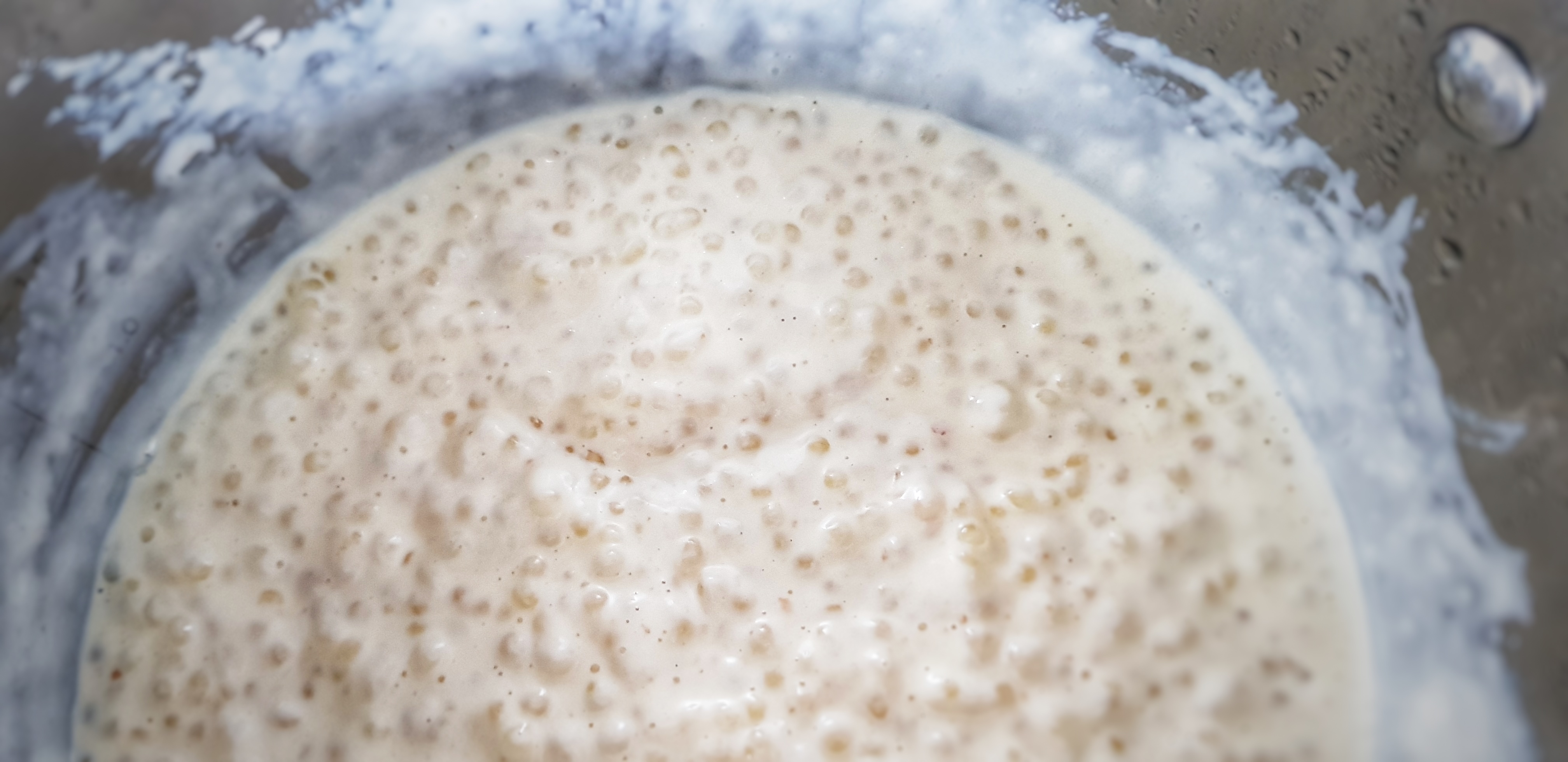
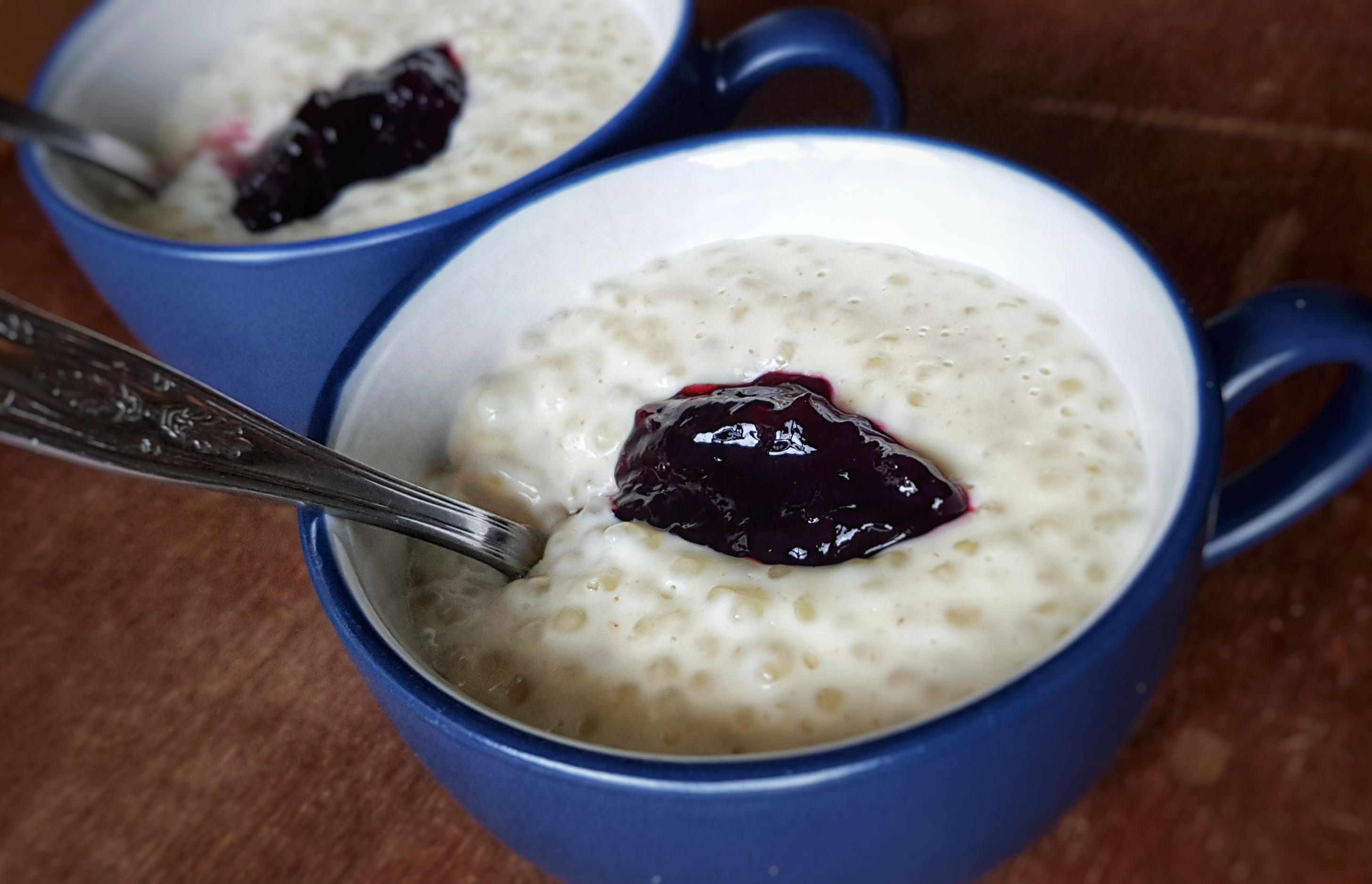
Speaking with Heather Ellis on the podcast about the School Meals Service and school dinners really fired off some food memories, good and bad. If it has in you too, please let the School Meals Project know about them – and let me know about them too – there’s a postbag episode of the podcast coming in just two or three weeks’ time. Three stuck in my mind: sago or tapioca pudding, pink sponge and custard, and Spam fritters. Of those, my favourite is sago/tapioca pudding – it genuinely is one I cook at home regularly. I know it was called frogspawn by children across the country, but if made well, it is delicious. Honest.
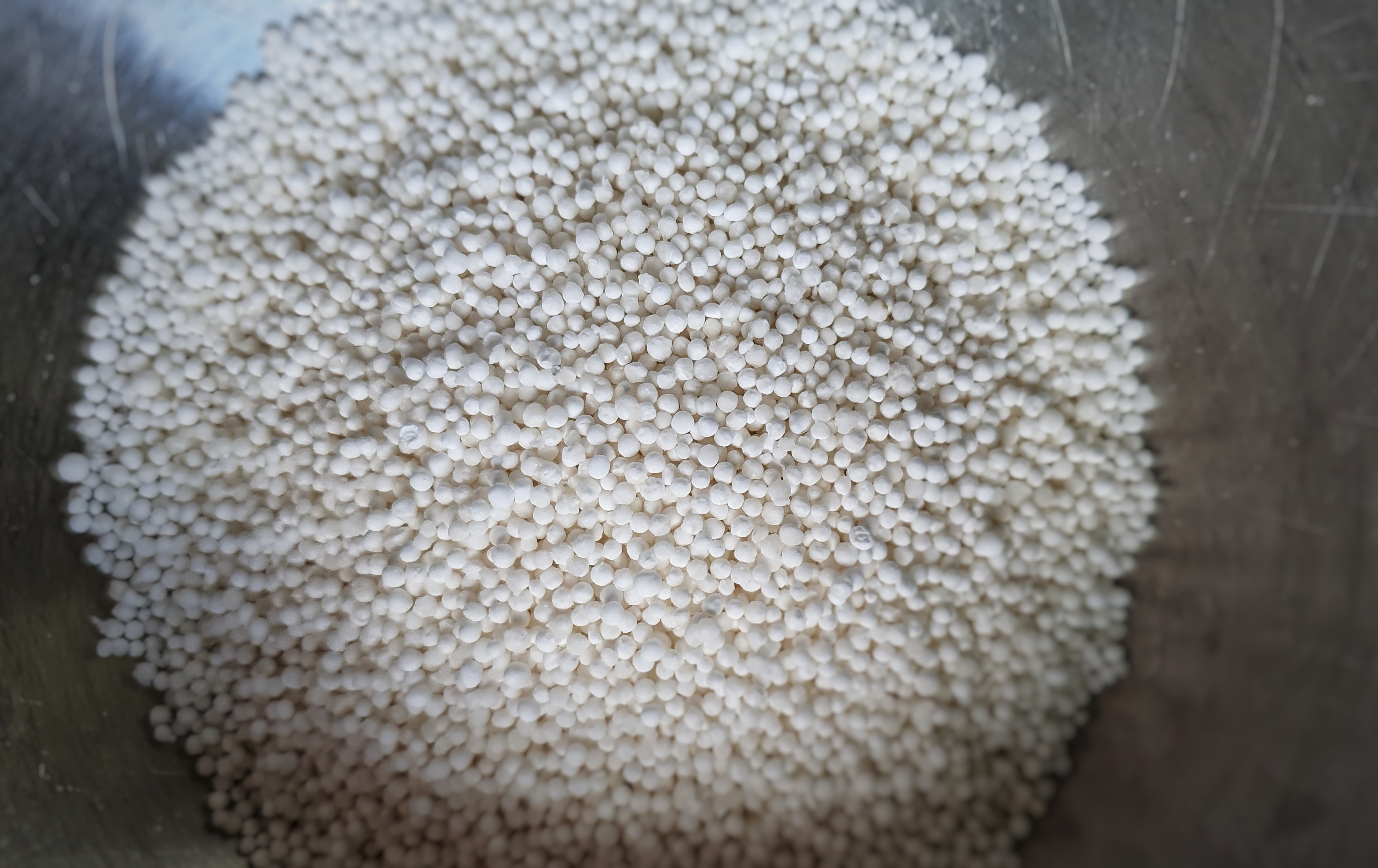
For anyone unfamiliar with it, it is one of a tribe of puddings known as milk puddings which are essentially a starchy ingredient cooked in milk and sweetened with sugar, but in my opinion, they need to also contain cream and flavourings such as bay leaves, vanilla or lemon rind. The best-known of these is rice pudding, but there are also semolina, macaroni and arrowroot puddings. They became popular in schools because they were an excellent way of providing children with their calcium. Sago and tapioca come in the form of small balls or pearls, which turn translucent when cooked in liquid – tapioca pearls are used to make the ‘bubbles’ in bubble tea.
Sago and tapioca can be used interchangeably in recipes and taste the same, but there is a difference between the two; sago comes from the sago palm and tapioca from the cassava plant. The former is found in India and some parts of East Africa, and the latter in the Americas. The starch is extracted from the plants’ pithy centres by grating and squeezing. It is then suspended in a little water to make a paste, which is then passed through a colander to form little pellets that are then dried.[1]
Both are very much associated with Empire, and recipes using sago begin to appear in 18th-century cookery books. In Sarah Harrison’s The House-keeper’s Pocket-book sago is simmered in water and flavoured with sugar, cinnamon and lemon.[2]Elizabeth Raffald has a complex, red-coloured sago pudding containing red wine, sugar, bone marrow and egg yolks. She does have a simpler version closer to what we would recognise today: sago simmered in milk and cream, and flavoured with sack, sugar, eggs and nutmeg.[3] Through the 18th and 19th centuries, the typical way to prepare the pudding would be to cook it on the hob and then bake it in pastry. Mrs Beeton uses sago in two more recipes: a sweet sago sauce for desserts and a sago soup.[4]
If you are unsure about making sago or tapioca pudding (or returning to it after eating the runny school kind of years past), the great food historian Alan Davidson provides some words of encouragement: ‘[I]t is sometimes despised by the ignorant, that is to say, persons who have no knowledge of how good they are when properly made.’ He casts down a caveat, however: ‘[The] texture delights a few cognoscenti in Britain but is repellent to the majority and has no doubt contributed to the virtual disappearance of the pudding from British tables.’[5] And I say that it is a crying shame. It is rarely included in cookery books anymore, not even those specialising in puddings. Justin Gellatly is a fan though, and there are a couple of recipes in Helen Thomas’s excellent Pudding Book, but that’s about it.[6]
If you like the blogs and podcast I produce and would to start a £3 monthly subscription, or would like to treat me to virtual coffee or pint: follow this link for more information.Thank you.
The typical way to cook the pudding these days is to either bake it I the oven or cook it on the hob, and I provide methods for both, though I prefer the latter. It is quick to make and, despite what other recipes say, requires no soaking – just a careful swish in some cold water.
I’ve left the amount of sugar to you. If you intend to eat the pudding with sweet jam, go for around 90 grams, if you are eating it on its own, or with tart fruit like rhubarb or gooseberry, perhaps use 120 grams of sugar.
Serves 6 to 8 people, depending upon greediness. If more appropriate, half the amounts.
Around 30 g butter (if baking)
120 g sago or tapioca pearls
90–120 g caster sugar
1 litre full-fat milk
150 ml double cream
Flavourings: 3 or 4 strips of pared lemon rind, a lightly-crushed fresh bay leaf, a few drops of vanilla extract (or replace caster sugar with vanilla sugar), almond extract, cocoa, etc.
Oven method:
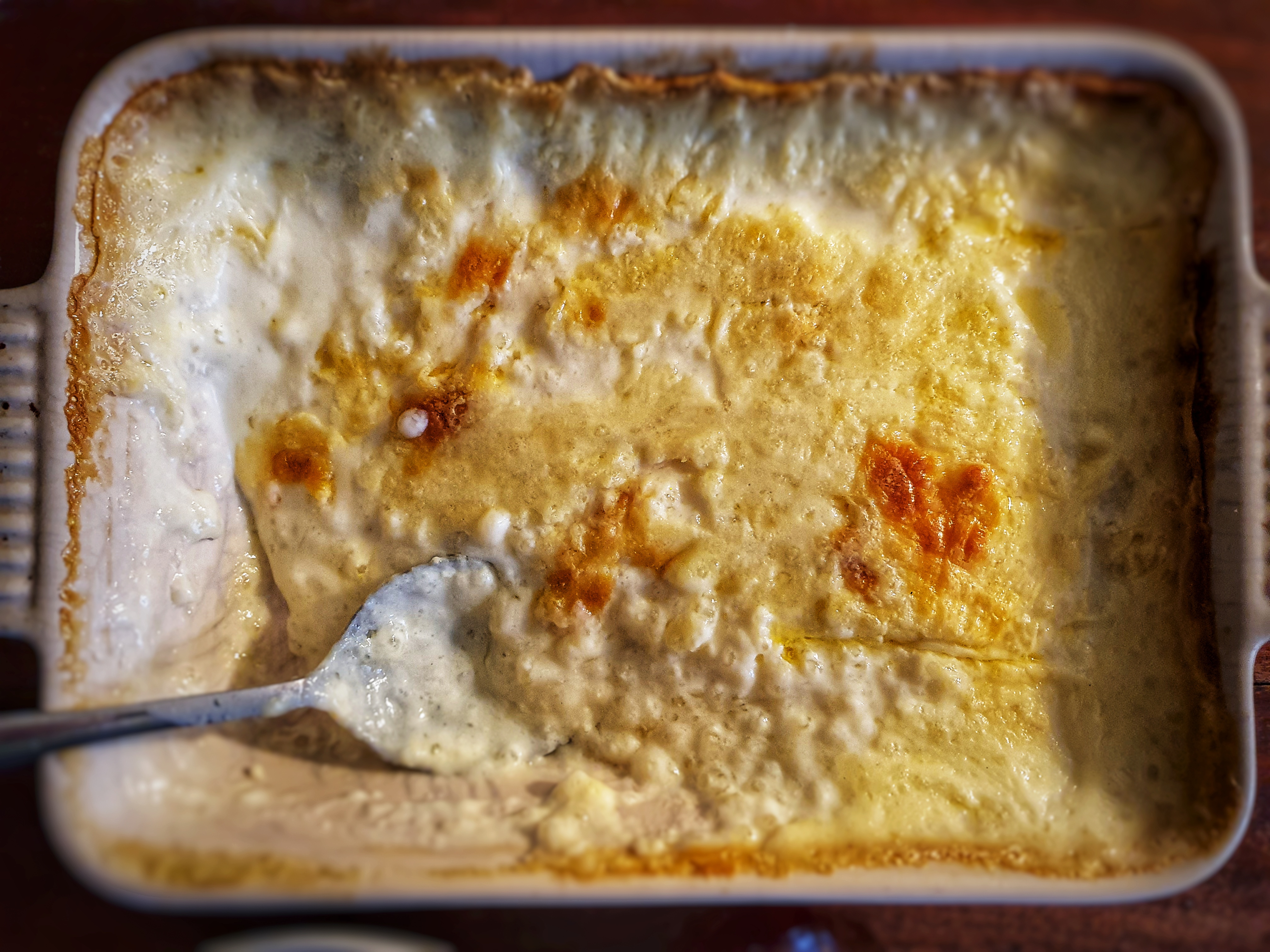
Preheat the oven to 160°C. In a baking dish of 1¼ litre capacity dot the bottom with small knobs of butter. Place the sago pearls in a jug and pour over plenty of cold water to release any starch. Pour through a sieve and then scatter the sago over the base of the dish with the sugar, milk, cream and flavourings. If using cocoa powder, whisk it into the milk before pouring into the dish. Place in the oven and bake for 60-90 minutes, stirring every now and again to disperse lumps. When the time is up, and you want a browner top, you could place it under a hot grill for a few minutes. Leave the pudding to stand for 10 minutes before serving.
Hob method:
Wash the sago pearls as described above and place them in a saucepan with the remainder of the ingredients, bar the butter. Bring slowly to a simmer, stirring gently. Leave to simmer for around 15 minutes, stirring occasionally. After the 15-minute mark, keep a closer eye on it: cook a further 10 to 15 minutes, but stir more frequently, scraping any stuck bits from the base. Sago pearls stick and catch easily!
Stop cooking when the pearls are soft and gelatinous. Let the pudding stand for 10 minutes before serving. If it seems a little on the thick side, stir a little more milk through it.
References
[1] Beeton, I. (1861). The Book of Household Management. Lightning Source; Davidson, A. (1999). The Oxford Companion to Food. Oxford University Press.
[2] Harrison, S. (1751). The House-keeper’s Pocket-book And Compleat Family Cook (5th ed.). R. Ware.
[3] Raffald, E. (1769). The Experienced English Housekeeper (First Edit). J. Harrop.
[6] Gellatly, J. (2016). Bread, Cake, Doughnut, Pudding: Sweet and Savoury Recipes from Britain’s Best Baker. Penguin Books Limited; Thomas, H. (1980). The Pudding Book. Hutchinson & Co.
Just the quickest of quick posts to let you know (in case you didn’t know already) that the 6th season of The British Food History Podcast has started. I’ve already recorded several chats and still have a good few more to do. I’m really pleased with them: I think I have got a good mix of diverse topics, with England, Wales, Scotland and Ireland all covered.
If you don’t already follow or listen to the podcast, you can find it anywhere you normally find your podcast. Two episodes have already dropped, which you can listen to via this page in case you’re not usually a podcast kind of person.
Episode 1: Cake Baxters in Early Modern Scotland with Aaron Allen
Episode 2: Recreating 16th Century Beer with Susan Flavin & Marc Meltonville
Other episodes to come include Tudor cooking, medlars, the Tavern Cook Richard Briggs, canned food and hopefully quite a few more.
If you weren’t aware, I also recorded a tripe special when I was between seasons. It was a collaboration between me and historian and author Sam Bilton. Have a listen here if you fancy:
Don’t forget I do a postbag episode at the end of each season so if you listen and have a question, comment or query, please contact me – either by leaving a comment at the end of this post, or by emailing me at neil@britishfoodhistory.com. I’d love to hear from you.
If you are a monthly subscriber, you access the Easter Eggs associated with these episodes – full cuts of interviews I had to trim down, outtakes, etc. all very interesting (in fact often the most interesting!) but sadly excised because of time restraints. There is also an extra mini-season of episodes about forgotten foods, as well as an extra bonus episode from season 5. Subscribers also get premium blog content and a monthly newsletter.
If you like the blogs and podcast I produce and would to start a £3 monthly subscription, or would like to treat me to virtual coffee or pint: follow this link for more information.Thank you.