Hello lovely readers. Just a little post to let you all know that British Food: A History will be releasing its first podcast!
Season 1 is called Lent and the first episode comes out the Sunday before Lent starts – the 23rd February 2020 with new episodes out during every Sunday throughout Lent.
Just like my blog posts, the podcast will have plenty of food history and recipes, but mixed in their will be science, evolutionary biology, natural history and anthropology, as I look at how Lent has been like for people: the hardships, the special events, the lost and forgotten celebrations and practices. I’ve written about Lent and Easter a few times on the blog before, so go and have a look-see if you fancy.
A new tab has appeared on the website where I’ll be posting loads of background bit, photos sand extra material as well as links to each episode of course.
You guys can get involved too – if you don’t follow me on Twitter, find me – @neilbuttery – and post your thoughts and if you have any extra information and facts, or questions, let me know there. Alternatively, email me at neil@britishfoodhistory.com
It would be great if you could listen and get involved. Don’t forget to keep an eye out on the Lent Podcast tab on 23rd February.
I have been meaning to write a post on this excellent cookbook for quite a while, and it is such a shame that my prompt to pull my finger out was the sad and untimely death of Gary Rhodes at the end of last year.
When I was asked to submit my list of favourite cookbooks to the 1000 Cookbooks project, I put New British Classics as my number one choice, my comment at the time being: “simply the best book on British food around. Everything from lowly haslet to lobster.”
Favourite recipes include salad cream, lardy cake, prawn cocktail, rhubarb and rack-on-black – lamb roasted with black pudding.
My favourite books on food tend to be by food writers rather than professional chefs because they write about their love of food and its importance in our culture and history. Chefs tend to be, well, cheffy; there’s no evocative description of the hustle and bustle of a French market, and they assume that you want to be cooking restaurant-level food at home. This is where Rhodes was different – sure there are cheffy dishes like the very complex rich pigeon faggot – but there are basics such as fried bread, porridge and jam roly-poly. Everything is represented and everything has equal billing, meaning that whatever your ability level there is a way in. You can start off with basics like scrambled eggs or go straight in at the deep end with pigs’ trotters Bourguignonne.
The full gamut of British food is here: fish and chips, steak and kidney pie, pork faggots, white pudding, Welsh rarebit, and the massive range of techniques contained within makes it the most comprehensive book of British recipes there is. What’s more, every single recipe works perfectly; he goes through every stage, assuming you know nothing but never patronises. If you don’t own a copy and you’re interested in cooking British food, it really is essential.
The secret to his success was his attention to detail. Every move made, and technique used was meticulous and done with deftness, even the way he picked up an ingredient to show to camera had an air of precision about it. Take a look at this clip from the accompanying BBC programme, where he shows us how to make cabbage and bacon soup, and you’ll see what I mean:
He was a classically trained chef who applied French techniques to classic British dishes, taking them to new heights while keeping them authentic. His approach definitely rubbed off on me when I was teaching myself to cook; use the best ingredients and don’t cut corners, every stage is there for a reason, so you need to understand why it is there. Only when that penny drops will you develop a cook’s intuition. This approach to cooking won him his first Michelin star at the age of 26, eventually receiving an OBE for services to the hospitality industry in 2006.
On television, he was very enthusiastic, polite and well-spoken; he seemed a little odd and socially awkward (as all the best people are), making him all the more endearing. He got me interested in cooking and wanting to spend my precious leisure time in the kitchen, learning new techniques and tackling novel ingredients.
If you like the blogs and podcast I produce, please consider treating me to a virtual coffee or pint, or even a £3 monthly subscription: follow this link for more information.
He was rarely off the telly during the late 1900s and early 2000s, his trademark spiky hair and over-enthusiasm caused many to pooh-pooh him as gimmicky. Eventually the fickle eye of entertainment focused upon other, younger chefs and so he stopped appearing so regularly. But his books and their accompanying TV shows are great; his Rhodes Around Britain and Cookery Year series are worth checking out too (his apple pie recipe from the latter is the best in world in my opinion).
He died on the 26 November 2019 at the age of 59 from head injuries after a fall – no way or age to go, I’m sure you’ll agree. Of course, when someone dies, there work is revaluated and I hope people recognise what he did for British cuisine, because he put it on a pedestal when everyone else was looking elsewhere.
Braised Oxtails
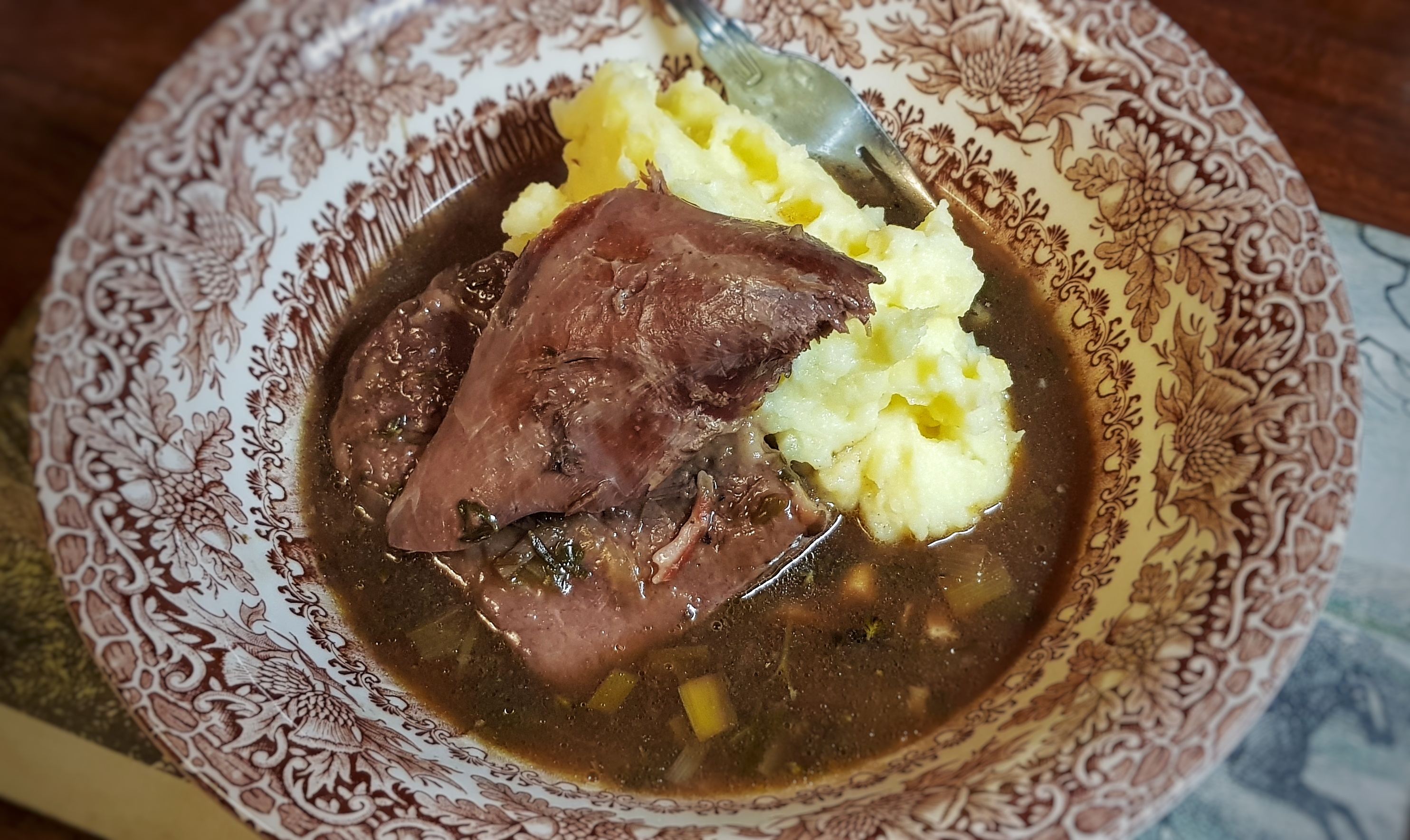
He was ‘discovered’ on the Keith Floyd programme Floyd on Britain & Ireland. On the segment he makes his signature dish: braised oxtails. Ironically, by the time New British Classics was published his most famous dish was illegal to eat – cooking beef on the bone was banned because of health fears surrounding the BSE crisis. Eventually the ban was lifted, and I could make it for myself. Back in my pop-up restaurant days it was the main course at my first everOdd Bits offal evening.
This is my version of Gary’s signature dish; it’s slightly simplified but just as gutsy. It really is one of the most delicious things you will ever cook. Nothing else needs to be said – except ‘cook it’!
Enough for 6
2 oxtails, trimmed of excess fat
Salt and pepper
Beef dripping
Around 100 g each carrot, onion, celery and leek
1 tin of chopped tomatoes
2 tbs tomato purée
Small bunch thyme and rosemary
2 bay leaves
1 clove garlic, crushed
300ml red wine
1 litre beef stock
Season the oxtails and fry in dripping until well browned, transfer to an ovenproof pot, then fry the vegetables until nicely brown too. Tip those into the pot along with the tomatoes, garlic and herbs and bring to a simmer. Pour the wine into the original pan and reduce until almost dry. Add to the pot with the stock.
Simmer very gently on the hob or braise in an oven set to 160⁰C. Whichever you choose, it needs to tick away for 3 hours.
Remove the cooked meat and keep warm and pass the cooking liquor through a conical strainer, really pressing the vegetables hard to get all the flavour out.
Throw in a big handful of ice cubes, and stir so they freeze the fat; you should be able to lift out ice and fat in one nice big satisfying lump.
Reduce the liquor to a sauce and season with more salt and pepper, then add back the oxtails to heat through.
Cornish splits are soft and pillowy enriched bread rolls and were the original cakey element of the Cornish cream tea. Bread rolls such as these were – and indeed are– eaten all around the country. There were Devonshire chudleighs, Yorkshire cakes and Guernsey biscuits, for example. But it was the people of Devon and Cornwall who combined them with clotted cream and jam.
These light, fluffy rolls are enriched with butter and are
made extra soft by being made with milk rather than water and are covered with
a tea towel as soon as they come out of the oven – the captured steam softening
the exterior crust. Once cooled – or better, just warm – the rolls are not cut
open, but split open with the fingers, hence their name.
Of course, the cream tea as we know today it is made up a scone, clotted cream and jam. Some places sell them made with whipped cream, but that will not do. The phrase ‘cream tea’ meaning a scone/split with jam and cream (as opposed to tea with cream in) seems to be relatively modern – the earliest printed reference of one coming from a 1932 article in The Cornishman newspaper (see foodsofengland.com). The earliest mention of a combination of jam, cream and bread eaten together pops up in the Devon town Tavistock’s accounts dating from the tenth century!
Cutting from The Cornishman, Thursday 3rd September 1931 (foodsofengland.com)
Some establishments in Cornwall still serve a split instead
of a scone in their cream teas, but they are few and far between. Many folk
reckon that the split is superior to the scone in a cream tea, the scone winning
out by virtue of it being much quicker and easier to make. The Devonians apparently
turned to scones before the Cornish, presumably because Cornwall is more
cut-off. So, we have a situation where the rivalry between the two lands can be
stoked. The Cornish can claim they invented the cream tea because they invented
the split, but the Devonians can claim they invented it because they came up
with the cream tea we think of today.
The bakery where I grew up in Pudsey, West Yorkshire sold Cornish
splits filled with whipped cream, thin seedless raspberry jam and lots of icing
sugar. I used to love them, so I was keen to make them myself and have a proper
Cornish cream tea.
This enriched dough is a little trickier to work with than regular white bread dough, but you can make it by hand without things becoming too much of a horrible sticky mess. I prefer to use the dough hook these days I must admit. I use strong bread flour to gain a nice rise, but older recipes use regular plain flour; feel free to use it too, but whilst your splits will be more historically authentic, they will be less light for it: your choice!
Makes 12 splits:
500 g white strong bread flour
8 g instant yeast
10 g salt
60g caster sugar
75 g softened butter
280 g warm milk
I’ve written before about making and forming bun dough in more detail before, so if there’s too much brevity here, click this link.
Mix the flour, yeast, salt, sugar in a bowl. Make a well and
add the butter and then the milk. If you have a food mixer with a dough hook, mix
slowly to combine, then turn up to speed 4 and knead for around 6 minutes or
until the dough has become tight and smooth and no longer sticky.
You can of course do all of this by hand, using a little
flour for kneading at first until the dough loses its stickiness.
Using your hand, form the dough into a tight ball, pop in a
lightly oiled bowl and cover with cling film or a damp tea towel. Leave
somewhere warm until it doubles in size, which could take 90 minutes depending
upon the ambient temperature.
When ready, divide into 12 equal sized pieces, form them
into balls and arrange on a baking sheet. Cover with a large plastic bag or tub
and wait for them to prove. Once doubled in size again – it should take much
less time than the first rising – place in a cold oven and turn it to 200°C.
Bake for 25 minutes, but if at any point, the splits look like they getting too
brown, turn the temperature down to 175°C.
When ready, remove from the oven to cooling tray and quickly
place clean tea towels over the buns to prevent them crisping up.
When cold, you can sprinkle with sugar if you like, then slice
or split and fill with jam and cream.
If you like the blogs and podcast I produce, please consider treating me to a virtual coffee or pint, or even a £3 monthly subscription: follow this link for more information.
There’s nothing more Cornish than a good blob of clotted
cream on a lovely cream tea. Unless you are from Devon of course, then there’s
nothing more Devonian than a good blob of clotted cream on a lovely cream tea.
For those not in the know, clotted cream is a very thick
cream with a much higher butterfat content than double (heavy) cream; weighing
in at 64% and 48% respectively (for comparison, single cream is 18% fat, and
full-fat milk is around 4%).
Clotted cream has a long history in Devon and Cornwall, and
it is reckoned that it was first introduced to England by Phoenician settlers around
2000 years ago. Phoenicia was on the eastern Mediterranean coast in, what is
now Syria, Lebanon and northern Isreal. The clotting of cream was a way of
preserving buffalo milk. By removing the watery liquid, leaving mainly
butterfat, the growth of spoilage organisms is retarded. The folk of Devonshire
knew of its efficacy in this area; it was said that not even a witch’s breath
could turn it sour.
If you have ever tried it, you will know that clotted cream
– aka clouted cream or scalded cream in older books – is absolutely delicious
and is well worth buying. It is possible to make your own and there is a recipe
at the end of the post of you would to try your hand at it.
The best thing about it is the buttery, nutty crust that
forms on the top as part of the manufacturing process. It is made by gently
heating rich milk or cream in large shallow pans to a temperature of 80 to 90°C,
the heat traditionally coming from cinders or charcoal. Once the buttery crust
had formed, it was carefully but quickly moved to a cool place and sat upon
some slate so make the cooling process as rapid as possible; the cold shocking
the thin skimmed milk into sinking quickly and making a layer underneath the
thick cream. These days, it’s all done with centrifuges, which is rather less
romantic.
Once completely cooled, the clotted cream was lifted away
with cold, wet hands and mixed in cold, wet wooden bowls to remove the last of
the watery milk. It was then layered up in pots. I found a 1755 home recipe
from an Elizabeth Cleland who recommended sprinkling rose water and sugar
between the layers – the result must have been delicious!
The left-over skimmed milk, by the way, was taken away and
either drank or used to make scones or Devonshire splits.
From the point of view of butterfat extraction, clotted
cream is a much more efficient method than basic skimming techniques. The
reason it is not the standard technique, I assume, is that double skimming requires
no heating or centrifuges, tipping the balance of economy in double cream’s
favour. Couple this with the fact that modern refrigeration and pasteurisation
is doing the lion’s share of the preserving today means that the process of
clotting cream is no longer required for that purpose. We eat it for the sheer
love of it (ditto smoked fish and meat).
Mrs Beeton’s Book of Household Management says that
there are two types of clotted cream: Devonshire and Dutch. She goes on to
explain the difference – Dutch clotted cream is thick enough to stand a spoon
up in. Now, in my (humble) opinion, it ain’t clotted cream unless you
can stand a spoon up in it, so I can only conclude that English clotted cream –
at least from a Victorian Londoner’s point of view – was relatively runny
compared to that of today’s
Clotted cream is used to make ice cream, some biscuits and as a topping to the old-fashioned pudding Devonshire junket, a sweetened milk dessert set with rennet, producing curds and whey. It can be used to enrich sauces and soups too but use with caution – things can end up too rich.
Rodda’s is the largest producer of clotted cream and is based in Cornwall. There is much debate between the folk of Devon and Cornwall as to whether the cream should be added before or after the jam. Nick Rodda reckons his grandfather knew why:
We always put our cream on top because we are proud of it, Devonians are slightly ashamed of theirs, so they cover it up with their jam.
I must confess to siding with the Devonians on this one.
It’s all down to what you think the buttery cream’s role is. The argument goes
something like this:
The Cornish: it is the cream, and you wouldn’t put cream under
your fruit salad/trifle/fruit tart etc, now would you?
The Devonians: it is the butter, and you wouldn’t spread
butter over the jam on your toast/crumpet/muffin etc, now would you?
Your choice.
If you like the blogs and podcast I produce, please consider treating me to a virtual coffee or pint, or even a £3 monthly subscription: follow this link for more information.
Home-Made Clotted Cream
All you need to make your own is some double cream, an oven
and patience.
Before…
Preheat your oven to 80°C. Pour around 1 litre of
double cream into a wide, shallow ovenproof dish, place it in the oven and
leave in there for 12 hours. If you are really patient, leave for 18 hours to
achieve a darker, more delicious caramel-flavoured crust.
…after
Carefully remove from the oven, cover with kitchen foil and
pop straight into the fridge to cool quickly and undisturbed.
Once fully chilled, lift the clotted cream from the dish and
layer up in pots. I filled three good-sized ramekins with mine. The amount of
skimmed milk at the bottom will vary depending upon how long you left the cream
in the oven for.
The cream keeps for 7 days in the fridge.
References:
Clotted Cream, RS Chavan, A Kumar & S Bhatt,
2016, In Encyclopedia of Food and Health
As promised, some Cornish recipes and I start with a classic. Cornish pasties are a simple combination of chopped (not minced) beef, potatoes, turnips and onions. It’s seasoned well – especially with black pepper and baked in shortcrust pastry. You can moisten it with a bit beef stock and season it further with some thyme leaves if there’s some hanging around, but you really don’t need to. Sometimes you may find some carrot in your pasty, if you do, thrown it back the face of the person who gave you it, because there is no place for carrot a Cornish pasty.
Cornish pasties were given to Cornish tin miners or field-workers so they could slip one into their pockets and eat them for lunch, the thick crimp being a useful handle protecting it from dirty fingers. The meat-to-vegetable ratio varied depending upon what folk could afford at the time. It don’t think it should be too meaty, but if you disagree simply alter my proportions in the recipe below.
Cornish tin miners, pasties in hand
Also, for a Cornish pasty the crimp must go down the side,
not over the top, as you might see in some bakeries. That is a Devonshire
pasty, I believe.
As discussed in the comments in my previous post, these pasties did not have a sweet filling at one end and a savoury one at the other. What you have there is Bedfordshire clanger, but I’m sure you knew that.
One final thing, some advice from Jane Grigson: “Cornish
pasties are pronounced with a long a”. We use a short a Up North,
and I refuse to change.
Pasties ready for the oven
If you’ve never made a pasty in your life, this is the one
to start with; the ingredients are raw so there is no messy gravy and juices
getting everywhere and making things difficult. It seems too simple to be delicious,
but it is. The secret is in the seasoning. I use a rounded teaspoon of salt,
but you can use less; be warned though, use no or little salt, and you will
have a bland stodge-fest before you, my friend.
On the subject of salt, notice the crazy amount of salt in
the egg wash – a good half-teaspoon of salt in your beaten egg provides a
strong and appetising shine to the final product. I believe that is, as the
kids say, a kitchen hack.
For 2 large or 4 medium-sized pasties:
For the shortcrust pastry:
400g plain flour
100g each salted butter and lard, diced
around 80g water
For the filling:
300g chuck, skirt or braising steak, gristle and fat removed
125g onion (a medium-sized one), chopped
125g turnip, peeled and thinly sliced
250g potato, peeled and thinly sliced
salt and freshy-ground black pepper
thyme, fresh or dried (optional)
4 tbs beef stock or water
Egg wash:
1 egg beaten with ½ tsp salt
Begin with the pastry. Place the flour, butter and lard in a
mixing bowl. If you have an electric mixer, use the flat beater and turn on to
a low speed until the mixture resembles breadcrumbs. If you are doing this by
hand, rub the fat into the flour with the tips of fingers. It shouldn’t take
longer than five minutes.
Trickle in the water with the mixer on its slowest speed and
stop it as soon as the dough comes together. If doing by hand, add half the
water and mix in with one hand, trickling in the rest of the water as you mix.
Either way the dough should some together and not feel
sticky – it shouldn’t stick to your worktop, but it will feel a little tacky.
Lightly flour your work surface and knead the pastry briefly.
This is where you may go wrong – over-kneading results in tough, shrinking
pastry. The way to tell you are done kneading is to pinch some of the dough
between your thumb and forefinger – it should just split around the edges when
you pinch it hard (see pic).
Cover the dough and pop in the fridge to rest for 30 minutes.*
Meanwhile, get the filling ready. Place all the vegetables
and a good pinch of thyme if using in a large mixing bowl. Season and mix with
your hand, then add the meat, season that and then mix in. Remember to be generous
with the black pepper – add what you think is sufficient, then do a couple more
twists of the milk.
Remove the pastry from the fridge and split into two or four
equal pieces. Form into balls and roll each out on a lightly floured surface,
using a lightly floured rolling pin. I rolled out two large dinner plate sized
circles of dough to around 3mm thickness – that of a pound coin. Don’t worry if
they are a little wonky, they get tidied up as we go. That said, if it’s
looking more like a map of the Isle of Wight than a circle, you might want to
neaten up a little.
Now heap up the filling in a line just slightly off centre,
dividing equally between the circles of dough. Sprinkle with the beef stock or
water. Brush a semi-circle of egg wash down the edge nearest to the filling and
then fold the dough over leaving the dough beneath poking out by 5 or 10mm.
Next egg wash the side again and crimp down the edge – this makes things extra-secure as the filling
expands in the oven. To crimp, fold over one corner inwards with a finger, squidge
down the next section of pastry and repeat until you have worked all your way
around the pasty.
Place on a lined baking tray, egg wash the tops and poke in
a couple of holes with a sharp knife. Bake for 1 hour at 200°C,
turning down the temperature to 180°C once the pastry is golden brown,
around 20-30 minutes into the bake.
Remove and eat hot or cold.
*I will write a more in-depth method for pastry at some
point, honest!
If you like the blogs and podcast I produce, please consider treating me to a virtual coffee or pint, or even a £3 monthly subscription: follow this link for more information.
Last month I managed to grab a little getaway to one of the most beautiful parts of the United Kingdom – Cornwall. I’ve always loved going there, having wonderful memories of holidaying in places like Newquay and Torquay as a child. It was only when I arrived that I realised that the last time I visited was August 1999, the year of the total eclipse of the Sun – twenty blinking years ago! I felt so old.
Tintangel (pic: Hugues Roberts)
This time I visited with my partner, and avoided the obvious
holiday places, our headquarters being a picturesque seventeenth century
cottage in the lovely little town of Camelford. The nearest place to visit from
there is Tintagel with its ancient castle and apparent birthplace of the
mythical King Arthur. We also had a nosey round the Boscastle, which is worth
visiting for the eerie Museum of Witchcraft and Magic if nothing else. We
climbed Exmoor and hiked around the lovely harbour town Fowey (pronounced to
rhyme with joy). Padstow was on the itinerary too, where I had the best
fish and chips I’ve ever had.
Wandering over the Tintagel moorland (pic: Hugues Roberts)
For those of you not familiar with the geography of the UK, Cornwall is a county that takes up the tip of the long peninsula that makes up the very south-west of England. Because it is out on a limb, Cornwall feels different to the rest of England. The is due to the fact that the indigenous people – the Britons – were never conquered by the Anglo-Saxons in the fourth century BCE. As a result they retained their own language, Cornish, just as the other unconquered Britons did such as the Welsh. It really does feel ancient and magical – and this coming from a devout atheist! It has wild and untouched landscapes, beautiful dramatic skies and a real connection with the past. It’s also great for foraging – I spotted wild cabbage, fennel, rock samphire, sea kale and rocket all lurking about the sandy and rocky beaches.
A map of Cornwall (pic: Google Maps)
To the east of Cornwall is the county of Devon. The two have
a friendly rivalry (I’m sure this wasn’t always the case!) especially when it
comes to food, as you will see.
I tried to eat as many Cornish things as possible during our
three-night stay, so I thought I would write a quick guide to Cornish food and
follow it up with a few regional recipes.
A beautiful Cornish sunset (pic: Hugues Roberts)
Pasties
The Cornish pastry is probably Cornwall’s most famous food. It’s a simple affair, containing beef, potato, turnip and onion, all generously seasoned with ground black pepper. On no account must you add carrot to your Cornish pasty, and the meat must be chopped, not minced. They are crimped down one edge; never have your crimp go across the top of the pasty, because what you have there is a Devonshire pastry, and that will never do. There are other pasties – or “oggies” as the are called colloquially, made with apples or jam. There’s also a squab pie which is made from lamb and apples.
A cream tea (I must admit, I prefer the Devonshire method!)
Cream teas
One of my most favourite things in the world is a cream tea. It is made of a nice pot of tea, a scone (plain or fruit), jam and clotted cream. Now – this is very important – for a Cornish cream tea you apply the jam first and then the clotted cream, in Devon however, it’s cream first and then jam. Both counties believe that the other’s way is the work of heathens. Clotted cream is a very thick cream made by evaporating double cream over a very low heat, resulting in a cream that is butter-like in consistency and topped with an appetising pale crust. It is also used to make heavenly Cornish ice cream.
If you like the blogs and podcast I produce, please consider treating me to a virtual coffee or pint, or even a £3 monthly subscription: follow this link for more information.
Fish
I’ve always found it odd that as an Island nation, we
British don’t really like fish. Cornwall lands some of the best quality fish
and seafood in the world, and yet its most identifies with a meat pasty. Cornwall
has particularly fine – and plentiful – crabs, and one of the best things
anyone could eat is dressed crab, brown bread, salted butter and fresh lemon.
You’ve to look for it to find it, but it is available.
An infamous dish in these parts is stargazy pie a simple
dish of sardines baked under a pastry crust. The fishes are boned, but their
little heads are left on so that they can peek out the pie’s edge looking up to
the heavens.
A stargazy pie (pic: Jusrol)
In Padstow, we visited Rick Stein’s fish and chip shop. Mr Stein (a food hero of mine) gets a hard time from the locals because he has so many businesses there; so much so, they have nicknamed it rather glibly ‘Padstein’. We didn’t get the chance to visit his restaurant, but we were not disappointed with the chip shop – I had the best cod and chips I have ever eaten. Beautifully crisp batter, creamy soft fish and proper made-from-scratch tartare sauce. Delish!
Cornish Splits
Another sweet treat made up of simply a bun made from a bread
dough enriched with sugar, egg and butter, filled with jam and whipped cream.
The grandfather to the doughnut, I would imagine.
Saffron Buns
Very popular – and very regional to the south-west are these
delicious little buns. They are very similar to a hot cross bun, except it
is a beautiful golden-yellow colour due to the healthy pinch of saffron which
is added to the mix.
A brace of lovely saffron buns
There are other regional dishes too, such as hog’s pudding –
often found on a Cornish fried breakfast instead of black pudding. There is
Cornish heavy cake (aka hevva cake), which is similar to a the Chorley cakes
one finds in North West England, and the delicious cheese known as Yarg which
is similar to the Welsh cheese Caerphilly but is wrapped in nettle leaves.
Apologies if I have missed anything off – if you spot
anything, please add to the comments section below. I’ll be back soon with some
Cornwall-inspired recipes.
The last in a quartet of gooseberry posts – I promise I will change the subject next post.
In my honest, humble opinion this is the best
gooseberry dessert recipe. It’s old-fashioned and simple to make – gooseberries
are baked with a little brown sugar and a knob or two of butter, all covered in
cake sponge. The berries are still very sharp and are perfectly balanced with
the warm, sweet sponge. This is much more superior to the better-known Eve’s
pudding – stewed cooking apples covered in sponge cake. I suspect this would work
excellently with blackcurrants.
This recipe crops up in my traditional English or British cookery books, but I first heard of it from Jane Grigson (as I have many dishes) in her book English Food.
For the pudding, you can make any amount of topping, it’s
dependent upon whether you like a thin or thick layer of sponge and the
dimensions of your baking dish. I used a soufflé dish of diameter around 7
inches/18 centimetres. I think this is a good amount for this size, and for
most family-sized dishes.
The sponge is made using the all-in-one method, so make sure
your butter is extremely soft to ensure a light topping.
Scatter the sugar and dot the butter on the bottom of your
baking dish and cover with the gooseberries; you are aiming for a generous
single layer of them.
Place the butter, flour, caster sugar and eggs in a bowl and
beat together with an electric mixer until the mixture is smooth and
well-combined. Using a large spoon or spatula, add the cake batter in big
spoonfuls over the gooseberries and level it, you don’t have to be very neat
here, the baking batter will flatted itself out.
Place in the oven and bake for around an hour until the top
is a deep golden-brown colour.
Serve immediately with custard or lightly-whipped cream sweetened with a little icing sugar.
If you like the blogs and podcast I produce, please consider treating me to a virtual coffee or pint, or even a £3 monthly subscription: follow this link for more information.
I was kindly given part of a large crop of gooseberries by my friends Kit and Ellie, their two bushes have been prolific this year. Earlier in the summer, I used some of their underripe berries to make a sauce to accompany mackerel, but now they were large and quite sweet.
I made the lion’s share of them into gooseberry jam and
thought I would give you a recipe, as it is so easy to make, and you are
unlikely to find it in the shops. If you don’t know of any gooseberry bushes,
try a greengrocer – I have spotted them in quite a few shops this year.
The great thing about gooseberry jam is that the
gooseberries change in colour, adopting an appetising warm pinkish hue with the
intense heat of jam-making. This change is apparently due to the anthocyanins
in the gooseberries interacting with metal ions leached from the cooking vessel
itself.
Gooseberries are not as juicy as their red, white and blackcurrant relatives so they need a bit of extra added water to help dissolve the sugar. Gooseberries are high in pectin, especially when young, so there should be enough to set the jam. However, if they are late season and ripe, you might want to replace a small proportion of the sugar with jam sugar, which contains pectin, to give them a helping hand.
The jam I made is simple: gooseberries, sugar and water, but
if you have any of the extras in the ingredients list below, feel free to add
them if you like.
The jam makes a great roly-poly or Victoria sponge filling.
The quantities below makes around 1 litre of jam, and it is
easy to scale up or down depending upon the amount of gooseberries you have to
hand.
1 kg gooseberries, washed, topped and tailed
1 kg granulated sugar (or 800 g granulated and 200 g jam
sugar, if the gooseberries are ripe
500 ml water
Optional extras: A dozen elderflower heads wrapped in
muslin, a good bunch of sweet cicely tied with twine or replace 250 ml of the
water with Muscat wine.
Before you start, place a saucer in the freezer.
Place all the ingredients in a large, heavy based saucepan on a medium heat.
Stir occasionally and when all of the sugar has dissolved, turn the heat up to bring the gooseberries to a really good boil. After around 15 minutes – by now they should have a pinkish tinge about them – test to see if you have got a set. Either take the jam’s temperature with a temperature probe and see if it is 105°C, or take a teaspoon of the mixture and place a few drops on your very cold saucer you had stored in the fridge, let it cool for a minute and see if the drops wrinkle when you push them with a finger.
You can use a candy thermometer instead of a probe, but I
find them imprecise. However, if you have a trusty one, by all means slot it
down the inside of jam before you start to boil it.
Leave the jam to cool for 15 minutes and skim any scum with
a large spoon or ladle.
Have some sterilised jars ready and ladle in the jam. A jam
funnel is helpful here. Alternatively, pour the jam into a Pyrex or stainless-steel
jug rinsed out with scalding water and carefully fill your jars. Seal when
still very hot.
I have written at length about setting points and sterilisation, so if you are unsure, have a look at this post here for a walk-through.
Last post I wrote about the delicious gooseberry. Since I wrote it, I have seen them in quite a few shops, including Morrison’s, so I am feeling good about the gooseberry’s culinary future.
You’d think after all these years, I’d be better at taking photographs!
It is important to remember that gooseberries can be served
with meat and fish in rather the same way as tart Bramley apples are: oily fish
such as mackerel is the classic pairing, but I have found recipes that match it
with chicken, goose, pork and mutton or lamb. Sauces and stuffings are made
with the small new tart berries, with just a little sugar. The simplest sauce
being made from halved berries, chopped mint and sugar. The ingredients are
mixed, covered and left to macerate for several hours. Delicious with barbequed
mackerel or herring, and the fact it isn’t cooked means the gooseberries retain
their vibrant green colour.
I mentioned that in France it is known as the mackerel
currant, because it is only ever really served with the oily fish, and even then,
it’s considered particular only to Normandy. It did start life as an English
dish, but as there was much communication between England and Normandy during

the mediaeval period, it’s no surprise that they picked up some tips from the
English during centuries of toing and froing.
I’ve taken elements from three different recipes to come up with mine: Jane Grigson’s English Food (1992), Eliza Acton’s Modern Cookery for Private Families (1847) and Elinor Fettiplace’s Receipt Book (1604). Talent borrows, genius steals and all that. Many of the ingredients are optional, so if you want a cleaner tasting sauce, omit the cream and maybe the butter too. If you are interested, there’s also a great recipe for a gooseberry stuffing for mackerel on my other blog.
It’s a delicious combination – simply grilled mackerel and
the tart sauce, and maybe a green salad on the side. It’s telling you that
summer is here! This pairing is largely forgotten now, but look in some older British
cookery books and you’ll see it crop up again and again.
If you like the blogs and podcast I produce, please consider treating me to a virtual coffee or pint, or even a £3 monthly subscription: follow this link for more information.
Young, green, small gooseberries are required for recipes
that are served with savoury food – the later, large sweet ones are best used
in desserts (recipes for those coming soon).
250 g gooseberries, topped and tailed
50 ml water
50 ml white wine, or a dash of cider vinegar
50 g sugar, or to taste
good pinch of ground ginger
salt and pepper
a knob of butter (optional)
2 to 3 tbs double cream (optional)
Put the gooseberries, water, wine or vinegar and sugar in a saucepan and cook until the gooseberries go pale in colour and start to become very soft, crushing them against the side of your pan with a wooden spoon. Season with salt and pepper.
If you want a very smooth sauce with no seeds or pulp, whizz
the whole thing in a blender and pass through a sieve. I like to leave mine
with some texture, but it’s up to you. If you did pass it through a sieve put
it in a clean pan and put it over a medium heat.
Smooth or pulpy, beat in your butter with whisk or spoon
until it becomes glossy, then add the cream.
Add more sugar if you like – remember it isn’t supposed to
be sweet like apple sauce.
Serve alongside grilled or fried mackerel, but also pork,
chicken or goose.
‘Country life has its advantages’, he used to say, ‘You
sit on the veranda drinking tea and your ducklings swim on the pond, and
everything smells good…and there are gooseberries.’
Anton Chekhov, Gooseberries,
1898
The humble gooseberry is not the first of the British summer
fruits that springs to mind, but it is the first of the season, and I think it should
be celebrated just as much as the strawberry or blackcurrant.
It’s quite difficult to find gooseberries in the shops these
days – even good greengrocers don’t seem to sell them, which is odd, because they
keep better than any of our other soft fruits. I suppose one of the reasons for
its unpopularity is that they are usually sold when vibrant green, looking lovely
and fresh but tasting very sour and astringent. In this form they need to be
cooked and sweetened with sugar. Its other disadvantage is that it usually has
to be cooked, no competition amongst the huge variety of exciting dessert fruits
available. It’s a crying shame. Gooseberry season starts in June, but you have
to wait until July for them to ripen into dessert fruit. Patience is a virtue,
after all.
The gooseberry is usually a fruit more suitable for cooking, needing considerable sweetening for palatability unless a savoury accompaniment for meat or fish.
Laura Mason &
Catherine Brown, The Taste of Britain
The gooseberry is one of 150 species of the Ribes
genus, which also includes the smaller and daintier black, red and whitecurrants.
They can be found growing wild in patches of scrub all over Britain, so keep an
eye out wherever you see such areas on walks, there may be a hidden gooseberry
plant (I have my own a secret patch). Gooseberry shrubs are typically three for
four feet high, and as any gooseberry forager knows, somewhat spikey.
Gooseberry colour plate from the Oxford Book of Food Plants
If you like the blogs and podcast I produce, please consider treating me to a virtual coffee or pint, or even a £3 monthly subscription: follow this link for more information.
There are many cultivated varieties including two hybrids;
red and white gooseberry varieties have been crossed with red and whitecurrants
respectively. The hybrids make excellent dessert fruit, helpfully indicting
ripeness when they’ve achieved a good ruby or white colour.
Though looked over now, gooseberries were extremely popular and
have been cultivated in Britain since al least the Fifteenth Century. They were
important because they were the first soft fruit of the summer, cropping well
as far north as the Shetland and Orkney Islands. In the Midlands and Northern
England they were revered, a tradition of competitive growing quickly developing.
There was a single aim in these competitions: to grow the heaviest berry. These
clubs were widespread and at one point there was 170 growing clubs, a handful
still exist today in Yorkshire and Cheshire. To achieve heavy berries, by the
way, you must strip your shrub of berries as soon as they appear, leaving
behind a dozen so that the plant can put all its energy into growing just a few
fruits.
A gooseberry shrub in the rain
Gooseberries are also known colloquially as feabes, feaberries,
carberries and wineberries – the latter name coming from the fact
they make excellent wine.
Aside from some parts of northern Europe, gooseberries haven’t
really travelled much further than Britain from a culinary point of view.
According to Jane Grigson, the French ‘have no name for them distinct from that
of redcurrants’. This does seem to be the case; the French word for redcurrant
is grosielle and when gooseberries are called for, they are called grosielle
à
maquereaux – the mackerel redcurrant.
Although sometimes served with goose, it is not the origin
of the gooseberry’s name as you might assume. It comes from the Old Norman/Middle
English groses or grosier, the old word for – wait for it – grosielle,
the French for redcurrant, so in effect we called gooseberries redcurrantberries!
All of these words come from the Frankish root krûsil
which means ‘crisp berry’, and the gooseberry certainly is that.
Yellow and red are dessert fruit, let them lie on the
hottest sunshine till warm through before serving – it brings out the sweetness
and flavours.
Dorothy Hartley, Food
in England
Preparing and Cooking Gooseberries
Whether you are picking them or buying them, you need to know
how ripe your gooseberries are. This important because small, vivid green
gooseberries are best for accompanying savoury dishes, and large riper ones are
best made into puddings. I remember as a child, dipping raw, tart gooseberries
straight into the sugar bowl. I expect the Sugar Police would have something to
say about that these days.
The top and the tail
To prepare your gooseberries, wash well with and top and
tail them with sharp scissors or pinching fingernails.
If you have lots of gooseberries, you can do several things.
Pop some straight into freezer bags or stew them with sugar, a little water and
a knob of butter and freeze that. I prefer to make jam or vinegar if I’m going
to preserve them. When they cook, they start to lose their colour and if boiled
very thoroughly, like for jam, they attain a lovely deep pink.
Gooseberry compote is very useful; it can be served simply with ice cream for a quick dessert, or baked in the oven as a pie, crumble or cobbler. A classic dessert is gooseberry fool, simply compote folded into lightly whipped, sweetened cream, or even better a mixture of custard and whipped cream.
A gooseberry haul from just two modestly-sized shrubs
Other desserts include steamed puddings and a delicious baked pudding rather like an Eve’s pudding: I shall be certainly posting a recipe for that. Old fashioned pies called Oldbury tarts made with hot water pastry used to be very popular. Sometimes the pies were filled with red or whitecurrant jelly, just like an old-fashioned raised pork pie – I bet they would be great served with cheese.
I cannot talk about the culinary potential of gooseberries
without mentioning elderflowers. I love their delicious sweet-musk scent and
add it to anything I possibly can. Back in the days of the restaurant, I made
an excellent elderflower blancmange with gooseberry compote and shortbread
biscuits, and I must say it was one of the best desserts I’ve ever made.
To add an elderflower air to your gooseberry dishes simply
tie up a few heads in muslin before dunking them in your gooseberries or whatever.
In the next few posts, I’ll show you some of the recipes I
have mentioned above, just in case you get a glut of them or spy a punnet in
the greengrocers.