Category Archives: cooking

Cauldron Cooking

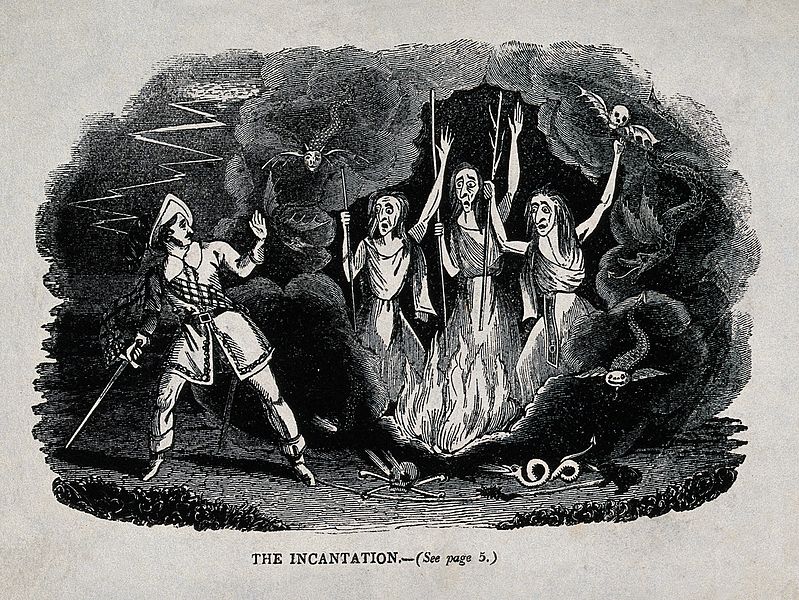
The Three Witches as depicted in a 19th Century woodcut

Round about the cauldron go;
In the poison’d entrails throw.
Toad, that under cold stone
Days and nights has thirty-one
Swelter’d venom sleeping got,
Boil thou first i’ in the charmed pot.
Double, double toil and trouble;
Fire burn, and cauldron bubble!

William Shakespeare Macbeth, Act 4, Scene 1

As it’s Hallowe’en I thought that I’d write a little post all about cauldrons, because of course along with a broomstick, pointy hat, black cat and warts it is a must-have for any witch worth their salt at this time of year.

The Battersea Cauldron (pic: British Museum)

Let’s start off with what a cauldron is, just on case you are unfamiliar with them. They are large, rounded cooking pots that are suspended over a fire by a chain or on support legs in the centre of the fire, and they have been used all across Europe since the first millennium BCE. One of the oldest ever found was excavated in Battersea and is therefore known as the Battersea Cauldron. It made up of bronze sheets melded together and is huge. It has been described as “one of the largest and most sophisticated metal objects of the day” and is estimated to be 3000 years old, and it obviously got some use judging by the number of reparation patches it has covering its surface. Whatever size your cauldron was, it was an expensive bit of kit and built to last, so it is more unusual to find out without patches. Precious items such as this were passed down through the generations and the “man who owned an iron cauldron” says Dorothy Hartley, “had a definite standing above those who cooked only in small pots and pans.”

You may be thinking that a selection of pots and pans might be preferable to a massive cooking pot because they give you more options and you don’t have to make giant vats of food all the time, but a cauldron is surprisingly versatile and was rarely used for just cooking great big broths with bones bobbing about the surface. No, the cauldron was in fact the complete cooking and hot water system; take a look at this wonderful illustration from Ms Hartley’s excellent books Food in England:
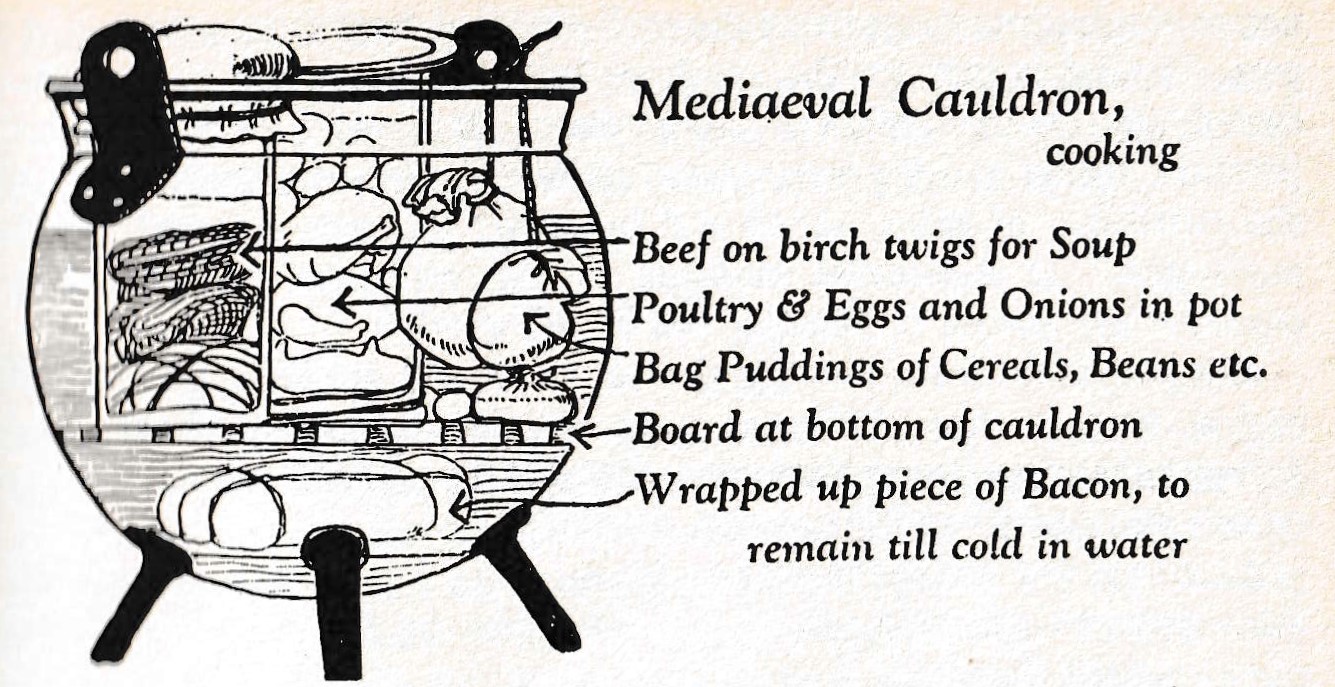
The mediaeval cauldron, from Food in England by Dorothy Hartley

You can see here how the cauldron was actually compartmentalised and filled with a whole variety of foods. At the base is a large joint of meat that required long cooking, usually wrapped in a flour paste and the tied up with cloth, then sat on that were wooden slats upon which all sorts of things were sat. There would have been some suet puddings wrapped in cloth simmering away, as well as bag puddings made up of peas, beans or cereal grains such as the classic pease pudding. If you did want to make some hearty stew, you placed your ingredients in earthenware jars, filled them with stock or water, covered them tightly and poached it in the cauldron water. This gentle way of poaching meat produced deliciously juicy cuts of meat; in fact, one cauldron found in Warwick Castle bore the legend: “I give meat good savour.” Often the meat was jointed and sat in a large jug, to produce old British classics such as jugged hare (or rabbit, I’ve also seen recipes for jugged kippers and jugged peas). Dorothy illustrates some beef tea being made where the meat is sat in its jar on top of some birch twigs, preventing the meat from sticking to the bottom. I love little details like those. You had to be very careful cooking like this though because those sealed pots acted like pressure cookers and were prone to exploding!


If you like the blogs and podcast I produce, please consider treating me to a virtual coffee or pint, or even a £3 monthly subscription: follow this link for more information.


Aside from all of this, the cauldron also provided the washing water and bathwater. “I hope” says Hartley, “you now understand that because there was only one cauldron on the fire there was not one thing for dinner.”

Jugged hare

Cauldrons were such important and precious items that they were even found in burial sites such as the Baldock Burial, a Bronze Age burial site in Hertfordshire, where a whole plethora of things were found including  a cauldron complete with joints of meat, ready to sustain the dead as they journeyed to the Afterlife. Pagans revered them and they became symbolic of death and resurrection, often being buried in near or bogs and rivers, locations they considered to be domains of both the living and the dead.

Because they were imbibed with magic, they appear in several myths and legends; for example, the Irish god Dagda owned a cauldron that did not just magically produce food but also cured disease, healed wounds and brought the dead back to life. There was also a Cauldron of Knowledge that told you everything you wanted (and did not want) to know. There are plenty of Welsh and English stories that involve cauldrons too (though I haven’t come across any Scottish ones for some reason).
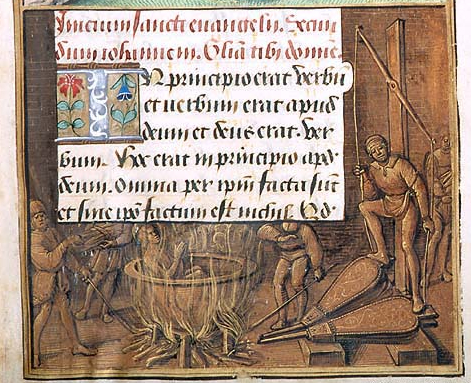
St John the Apostle boiled in oil from The Hours of Henry VIII, (C) The Morgan Library & Museum

Cauldrons of course sat upon flames and were extensively found in medieval and Tudor Christian art to depict what might happen to you if you went to Hell. One example depicts Dives – a rich man Jesus tells us of in the New Testament, who was very rich but would not share his food with a poor beggar. He is shown “tormented with thirst stewing forever in one of Hell’s capacious cauldrons.” Another manuscript knows as the Hours of Henry VIII clearly shows St. John the Evangelist sat in cauldron of boiling oil looking pretty chilled out and happily preaching whilst being tormentind by his captors. He would be later be miraculously preserved in the oil rather like, one supposes, like some nice comfit duck legs.

So there we go, I hope you have enjoyed my brief history of cauldrons and appreciate that they are not just for witches…or Hallowe’en!

References

‘Cauldrons and flesh-hooks: between the living and the dead in ancient Britain and Ireland’ by Jennifer Wexler & Neil Wilkin, The British Museum Blog https://blog.britishmuseum.org/cauldrons-and-flesh-hooks-between-the-living-and-the-dead-in-ancient-britain-and-ireland/

Food in England (1954) by Dorothy Hartley

Hours of Henry VIII, MS H.8 fol.7 (c.1500) The Morgan Library & Museum http://ica.themorgan.org/manuscript/page/13/77089

The Medieval Cook (2009) by Bridget Henisch

‘Vessels of Death: Sacred Cauldrons in Archaeology and Myth’ (1998) by Miranda J Green, The Antiquaries Journal, vol 78, pp. 63-84

4 Comments

Filed under Britain, cooking, food, General, history, Mediaeval Age, Uncategorized

Forgotten Foods #8: The Grey Heron

When we think of the meat that was eaten at mediaeval feasts, we conjure up images of huge pieces of roast ox, venison or wild boar’s head. There was, in fact, a wide variety of meats, especially wild birds. One of these was the grey heron and its meat was regarded very highly, only fit to serve at the top tables of a banquet; the only other waterfowl with a higher status was the regal swan. According to the late, great Clarissa Dickson-Wright, heron tastes like swan too: “it was very fishy”, she tells us, “rather stringy and reminiscent of moorhen…” It’s quite odd to think they were eaten at all; they’re such a lanky things – all neck, legs and wings. There can’t be that much meat on one.

Grey Heron (RSBP)

So how does one prepare and cook a heron fit for a top table? If we look in Forme of Cury – the earliest cookbook in the English language, dating from around 1400 – and it tells us: “Cranes and herouns shul be armed with lardes of swyne, and eaten with ginger.” The “lardes of swyne” are strips of backfat or fatty bacon that are threaded through the meat so that as the lean meat cooks, the fat melts and bastes it. That’s all we get though.

Wynkyn de Worde (National Portrait Gallery)

We can glean more information from another book, The Boke of Keruynge or, The Book of Carving, which was written in 1513 by the splendidly named Wynkyn de Worde. He provides a long list of different animals, along with instructions on how to carve them for the table. Curiously, there are many words for carving – a specific word for each type of animal, so for a heron, you don’t just carve it, no, you “dysmembre” it:

“Dysmembre that heron.

Take an heron, and rayse his legges and his wynges as a crane, and sauce hym with vynegre, mustarde, poudre of ginger, and salte.”

(And to “Displaye” a crane, simply “unfolde his legges, and cut of his winges by the Joints.”)

So, we get am extra modicum of information: a piquant mustard sauce or glaze, but we still don’t know how it was cooked.

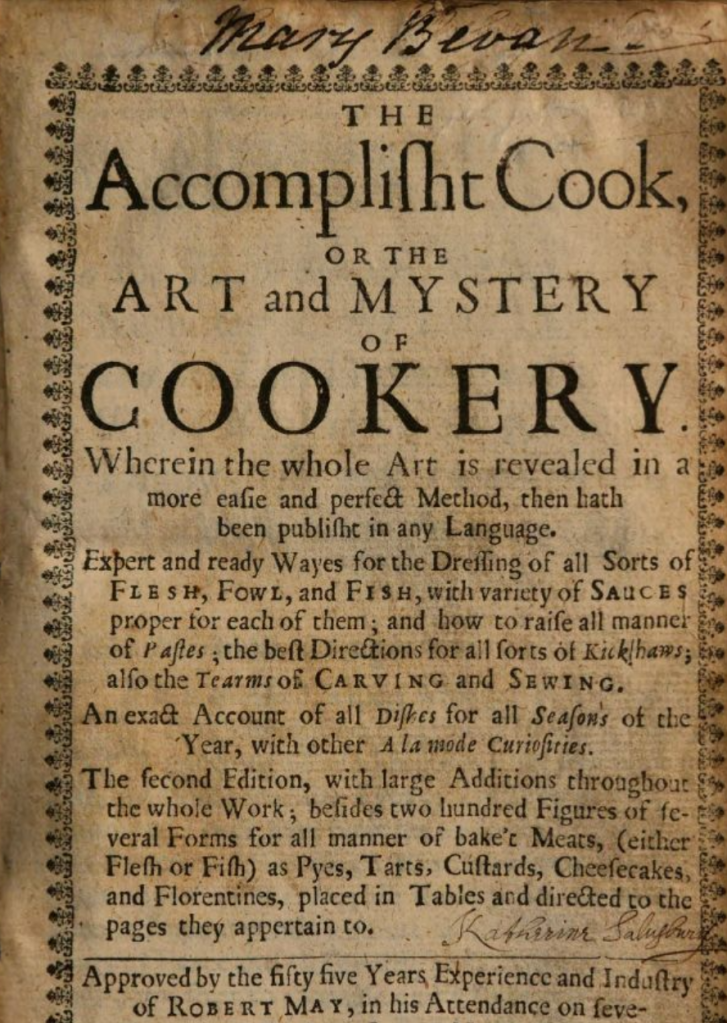
To get any detailed information, we need to go to 1660 and look at the classic tome The Accomplisht Cook by Robert May, and he had obviously read Mr de Worde’s book, because he uses the same words for carving:

“Dismember that Hern.

Take off both the legs, and lace it down to the breast with your knife on both sides, raise up the flesh, and take it clean off with the pinion; then stick the head in the breast, set the pinion on the contrary side of the carcase, and the leg on the other side, so that the bones ends may meet cross over the carcase, and the other wings cross over upon the top of the carcase.”

He also tells us that herons are not simply hunted and brought to the dinner table, but stolen from nests before they have fledged and kept in special barns

“…where there is many high cross beams for them to pearch on; then to have on the flour divers square boards with rings in them, and between every board which should be two yards square, to place round shallow tubs full of water… and be sure to keep the house sweet, and shift the water often, only the house must be made so, that it may rain in now and then, in which the hern will take much delight.”

The Accomplisht Cook by Robert May (British Library)

In these sheds, the herons were not fed fish, as one might expect, but “livers, and the entrails of beasts, and such like cut in great gobbits [bite-sized pieces].” They were not just kept for the table either, many were kept for “Noblemens sports”, specifically for training their hawks. When raised for sport, they were instead fed on “great gobbits of dogs flesh, cut from the bones”

Why dogs’ flesh? Well, this was a time when Bubonic Plague was common, and at the time it was thought that dogs carried the disease, and so any strays would be routinely caught and killed. But why catch and kill an animal that you thought had plague and then feed it your own hawks? I would have thought they’d be taken to the edge of town and burned them or something, but that’s seventeenth century logic for you. CDW makes a further point: “It’s ironic when you consider that the dogs might very well have killed the rats whose fleas did carry the plague and therefore might have prevented it.”

Indeed.


If you like the blogs and podcast I produce, please consider treating me to a virtual coffee or pint, or even a £3 monthly subscription: follow this link for more information.


May also provides us with some recipes. In general, they are boned and filled with a minced meat and suet stuffing, seasoned with spices and oysters, then poached. Sometimes they are baked in ovens.

Herons do seem to drop out of the cookbooks after that, but they were still being eaten. The most recent reference I could find is from the 1914 book Pot Luck; or The British home cookery book by May Byron and is for Heron Pudding. It uses chunks of meat taken off the bone, and the reason why is very interesting:

“Before cooking it must be ascertained that no bones of the heron are broken. These bones are filled with a fishy fluid, which, if allowed to come in contact with the flesh, make the whole bird taste of fish.”

This may explain CDW’s issue with roast waterfowl like swan and moorhen. I wonder if they boned before cooking and if that would make them taste better?

Byron goes on:

“This fluid however, should be always extracted from the bones, and kept in a medicine cupboard, for it is excellent applied to all sorts of cuts and cracks.”

You heard it here first folks.

Heron is no longer legal game and therefore no longer eaten – as far as I know. However, if you have any stories to prove me wrong, please leave a comment, I’d love to hear about it.

References

The Accomplisht Cook (1660) by Robert May

The Boke of Keruynge (1513) by Wyknyn de Worde in Early English Meals and Manners (1868) edited by Frederick James Furnivall

Forme of Cury (c.1400) in Curye on Inglysch: English culinary manuscripts of the fourteenth century (1985) edited by Constance B Hieatt and Sharon Butler

Heron Pudding, Foods of England website: http://www.foodsofengland.co.uk/Heron_Pudding.htm

A History of English Food (2011) Clarissa Dickson-Wright

33 Comments

Filed under Britain, cooking, food, history, Meat, Uncategorized

To Roast a Chicken

For centuries, the British were famous for their roast meat, attached to a spit before being hand-turned by some poor soul in front of a devilishly hot fire. We no longer do this, today we cook them in the oven, so technically they are baked meats not roasted ones. Searching for historical recipes for roast chicken is rather tricky: they were rarely roasted – they were a dependable source of eggs after all – so only chickens that stopped laying were eaten, those so-called ‘old boilers’. Instead, capons provided tender meat; these castrated cockerels were put to good, being otherwise surplus to requirement. Unfortunately, in today’s mass production of eggs, male chicks are killed as soon as they can be sexed.

When you do find a recipe, there is little focus on the roasting itself. Check out this recipe for ‘Chicken Endored’ from around 1450:

Take a chicken, draw it and roast it; let the feet be on and take away the head. Then make a batter of egg yolks and flour, and add to it ground ginger and pepper, saffron and salt, and spread it over until it is roasted enough.

Mediaeval manuscript c.1300-1350 showing poultry spit-roasting (image via http://www.larsdatter.com/)

By the eighteenth century, there is little more instruction, but we do at least get a cooking time:

To roast young chickens, pluck them very carefully, draw them, only cut off the claws, truss them, and put them down to a good fire. Singe, dust and baste them with butter, they will take a quarter of an hour roasting. Then…lay them on your dish.

We can only assume that the roasting part of the process was already in the readers’ skill set.

My recipe is below, but there are a few things I should mention first: First, never wash your chicken! It’s unhygienic and it will stop the skin crisping up. Second, do not overcook and don’t fear the salmonella; follow the times and temperatures precisely and you will be grand. Thirdly, use plenty of butter and bacon to season the bird and keep moist. I make a flavoured butter for the roasting, but using just butter will still produce great results.


If you like the blogs and podcast I produce, please consider treating me to a virtual coffee or pint, or even a £3 monthly subscription: follow this link for more information.


1 free-range chicken

100 g butter, softened

Salt and pepper

Any flavourings you like: e.g. 1 to 4 finely chopped cloves of garlic, 1 tsp chopped thyme or lemon thyme, truffle trimmings, chopped rosemary, grated zest half a lemon, chopped olives, anchovies or capers, ½ tsp smoked paprika. The list really is endless.

8 rashers of dry cured bacon, smoked or unsmoked

100 ml white wine

300 ml chicken stock

1 tbs cornflour

Remove the chicken from the fridge and hour before you want to roast it. Untruss it and preheat the oven to 190°C.

Mash the butter with the salt and pepper using a fork and stir in the flavouring ingredients, if using. Set aside.

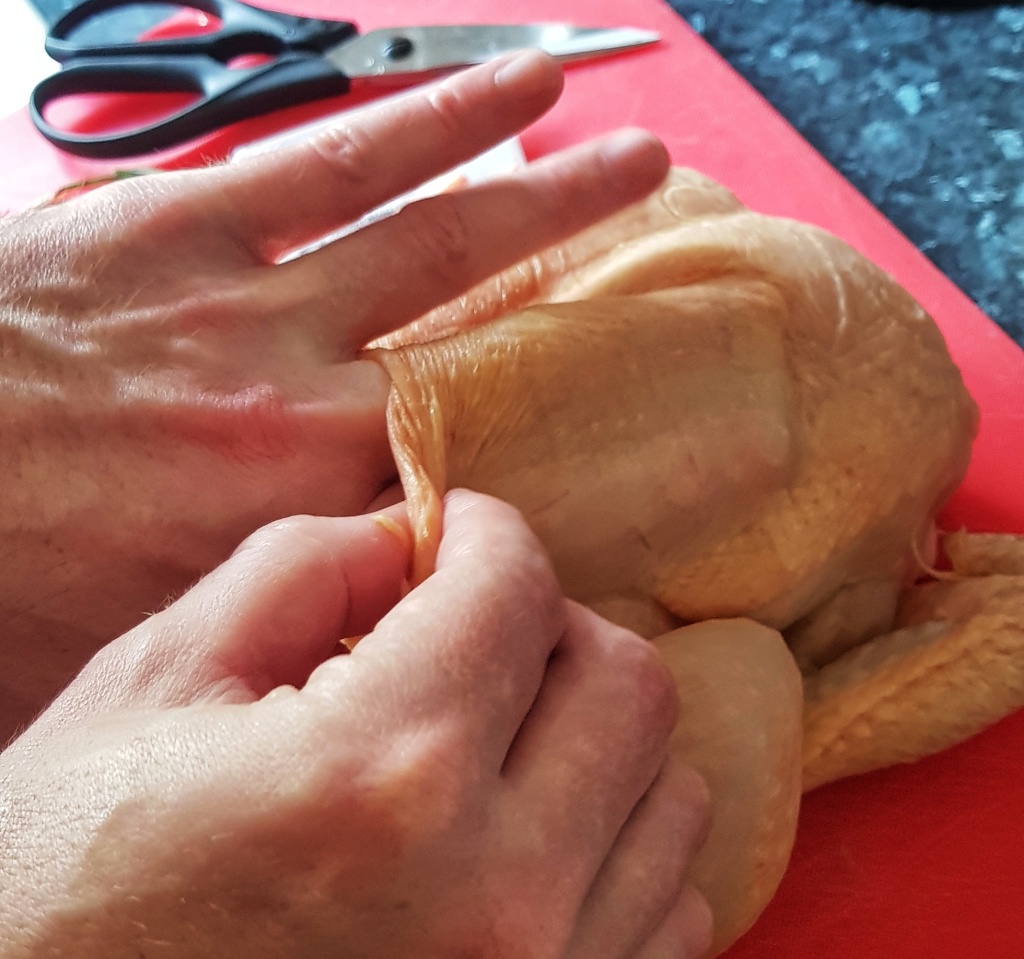
Sit the chicken on a board, untruss it and turn it so that the cavity is facing you and carefully lift the skin away from the breasts. The technique is to insert the tips of your middle three fingers gingerly underneath the skin lifting it away from one breast, using your other hand to keep the skin taught, lest it tears. Repeat for the other breast

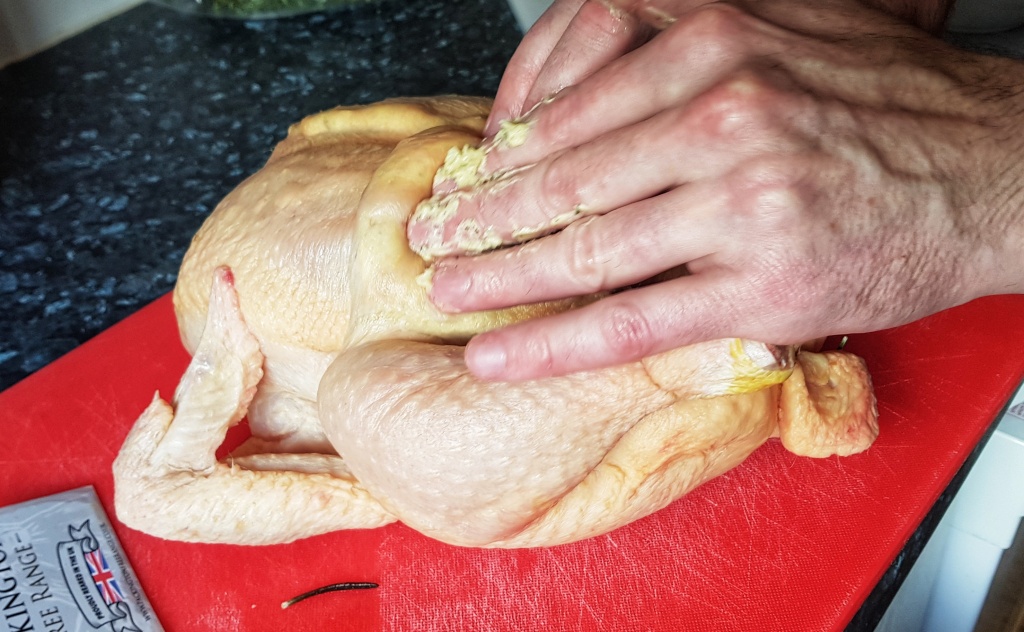
Next, place the flavoured butter under the skin, massaging it so to evenly distribute it over the breasts.

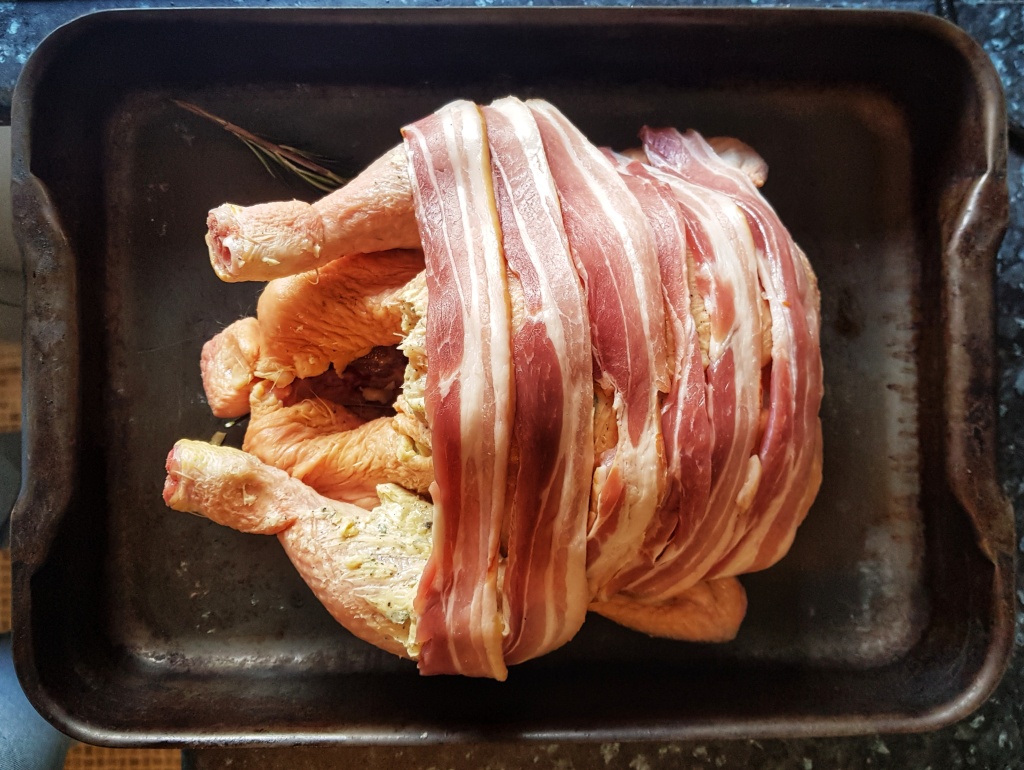
Make sure there is plenty under there, but reserve around a quarter of it to spread it over the legs. Next, lay the rashers of bacon over the bird so they overlap only slightly.

Weigh the chicken then pop it on a roasting tin. Don’t be tempted to truss it. Calculate the cooking time: 45 minutes per kilo plus 15 minutes and place in the oven.

Leave undisturbed for 30 minutes, and then baste with any butter that has melted and leaked from the bird. Tip to one side, so that buttery juices come out of the chicken. Baste with the juices every 20 minutes or so, and when the bacon is sufficiently crisp, remove it and let the bird roast without its porky jacket for the remaining time.

Remove and check its cooked all of the way through by easing the leg away from the body, it should be filled with delicious, clear juices. If unsure, use a sharp knife to test the juices are clear in thickest part of the leg. If they are tinged with pink, roast ten more minutes.

Remove the tender chicken – be careful it may start to collapse a bit, so be swift and use a fish slice and a pair of tongs to help you guide it to a board safely and all in one piece. Cover with foil to rest while you make the gravy.

Tip the juices into a jug and allow to settle for a few minutes. Place the roasting tin over a medium-high heat and brown any delicious detritus that remains in the roasting tin. Deglaze with the wine, scraping off any brown bits with a wooden spoon, then tip the whole lot into a saucepan and bring to a simmer. Meanwhile skim away most of the fat from the chicken juices and pour them into the pan along with the stock. Bring to a boil and let it bubble away for ten minutes so it reduces a little.

Now slake the cornflour with a few tablespoons of cold water and whisk it briskly into the gravy. Give it a couple of minutes to thicken, and if it seems on the thin side, slake a little more; it’s all down to preference, I prefer a thin gravy.

Check for seasoning and leave on a low heat whilst you get everything ready.

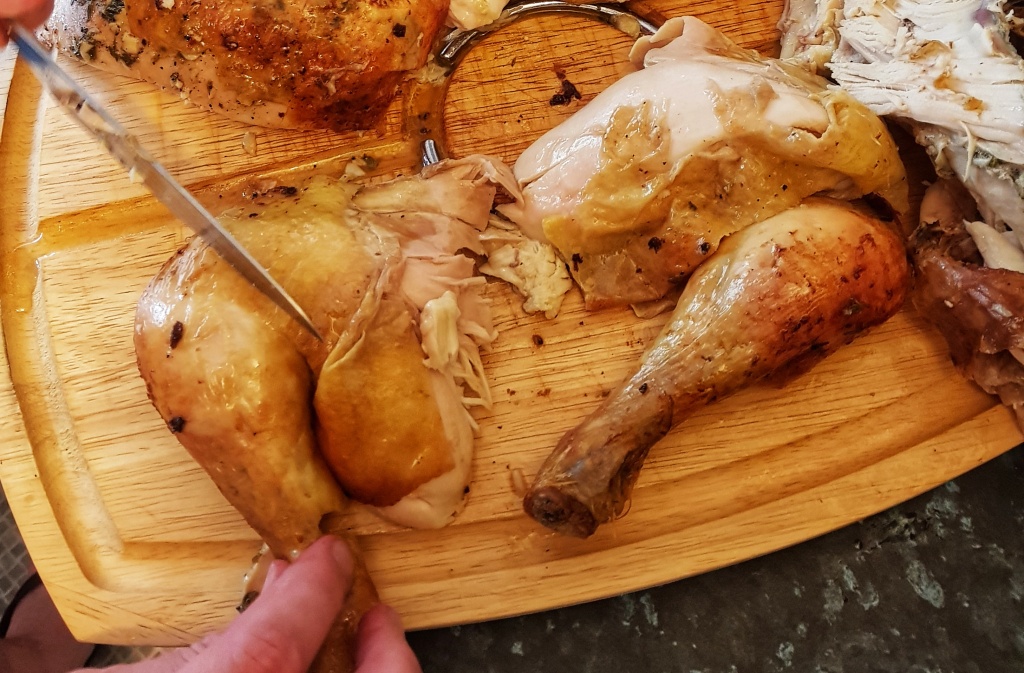
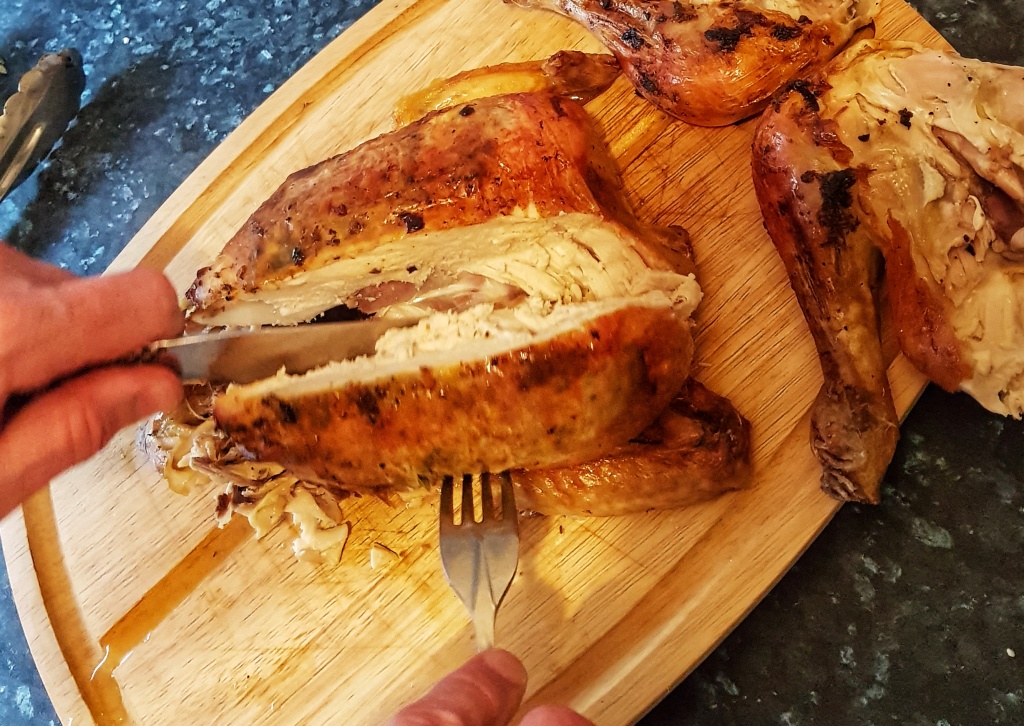
To carve the chicken I find it easiest to remove the legs first, cutting them at the knee to give two thighs and two drumsticks, and then cutting each breast away in one piece, cutting them into four or five thick pieces.

Arrange them on a warmed serving plate and don’t forget to serve the bacon.

References

The Culinary Recipes of Medieval England (2013) compiled and translated by Constance B Hieatt

The Experienced English Housekeeper (1769) Elizabeth Raffald

12 Comments

Filed under Britain, cooking, food, General, history, Meat, Recipes

A Cottage Loaf

It is as hard to achieve the right shape and texture, crust and crumb, of an authentic cottage loaf as it is to reproduce true French baguette bread.

Elizabeth David, English Bread and Yeast Cookery, 1977

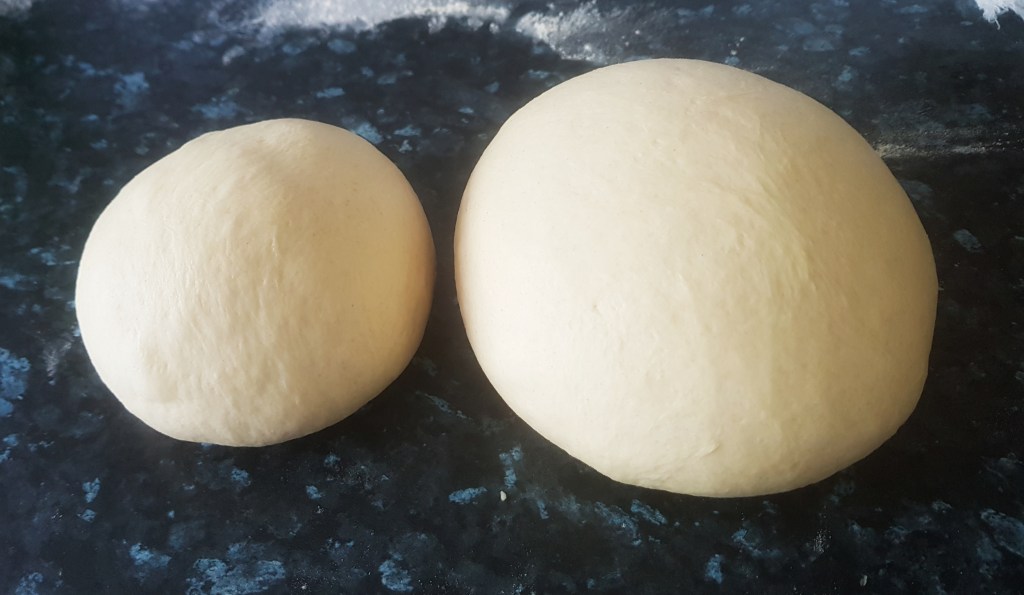
The cottage loaf is a vintage classic, and as far as I can see, a bread unique to England. I would say that most people have heard of one but have never clapped eyes on one in real life. I don’t think I have, my only interaction being with the salt dough loaf one that was part of the play shop my infant school teacher Mrs Bareham put together in the early 1980s. If you are not familiar with one, a cottage loaf is made up of two cobs – i.e. ball-shaped loaves – stacked one on top of the other, the upper loaf around half the size of the bottom one. The shape is curious, making even slicing difficult, which I suppose wouldn’t matter if you are just tearing off rustic chunks to dunk in your stew.

I’ve been meaning to have a go making one for years, but Elizabeth David writing in her classic tome English Bread and Yeast Cookery talked of how fiendishly difficult it is to make and impossible to reproduce at home. That is, unless you are Virginia Woolf, who made an excellent one. These days we have rather more time at home than usual, so I thought it wouldn’t be too much of a waste of time if it turned out to be a disaster. Then, I saw a tweet alluding to its trickiness from Foods of England, so I considered the gauntlet to have officially been thrown down.

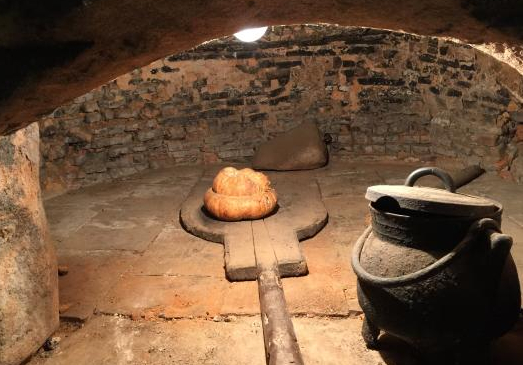
The interior of a brick oven (photo: TripAdvisor.com)

I had a look into the history of it with a little trepidation, half expecting it to be a food with no vintage at all like the Ploughman’s Lunch. I needn’t have worried – it turns out to be an invention of the early nineteenth century at least, and a picture of one a little later in Mrs Beeton’s Book of Household Management (1861). They were originally baked directly on the bottom of low, flat brick bread ovens like many cobs, muffins and breadcakes are still baked today. There were no shelves in these ovens, unlike modern combi-ovens, meaning one was rather restricted in the area one could bake crusty cobs. That’s where the upper loaf comes in for it made a larger loaf – two really – without taking up extra precious space on the oven bottom. It all makes perfect sense now.


If you like the blogs and podcast I produce, please consider treating me to a virtual coffee or pint, or even a £3 monthly subscription: follow this link for more information.


The trick to making a cottage loaf is to keep that top piece from falling off during proving and baking, though it does need to lean slightly to one side, says Ms David, like a jaunty hat. But, you can’t just sit one on top of the other, you have to fix it in place by taking floured fingers and plunging them through the top and bottom cobs two or three times. That’s what Paul Hollywood says anyway, Elizabeth David does the same, but proves the two loaves separately then attaches them in a similar way but includes extra cuts, crosses and a lot of manhandling. No wonder she found it difficult. Seeing as her baking recipes are hit-and-miss at the best of times, went for the Hollywood method.

I used my basic cobb recipe, but used 500 g of flour instead of 400 g.

For one loaf:

500 g strong white bread flour

10 g salt

10 g easy bake “instant” yeast

25 g oil or softened butter

320 ml warm water.

Place the flour in a bowl, add the salt and the yeast, then make a well in the centre of the flour. Pour the warm water into the well along with the butter or oil.

Mix together with a wooden spoon and then bring the dough together with your hands. Alternatively, you can use the dough hook on a mixer to bring it together. Knead well until the dough becomes tight and springy, around 5 minutes in a mixer, or 10 or so minutes if kneading by hand. It will be sticky, but persevere; sprinkle a little flour or a smear a little olive oil on your work surface if you like. Bundle the dough into a tight ball and place in an oiled bowl and cover to allow it to double in volume in a warm place.

When ready, press out the air and cut away a third of the dough. On a lightly-floured work surface, make the cob shape by forming a ball with the dough by tucking your hands under it, tightening the dough. If you twist the ball of dough slightly as you do this, it will be extra tight. Repeat with the other piece of dough.

Dust a baking sheet with flour and set aside.

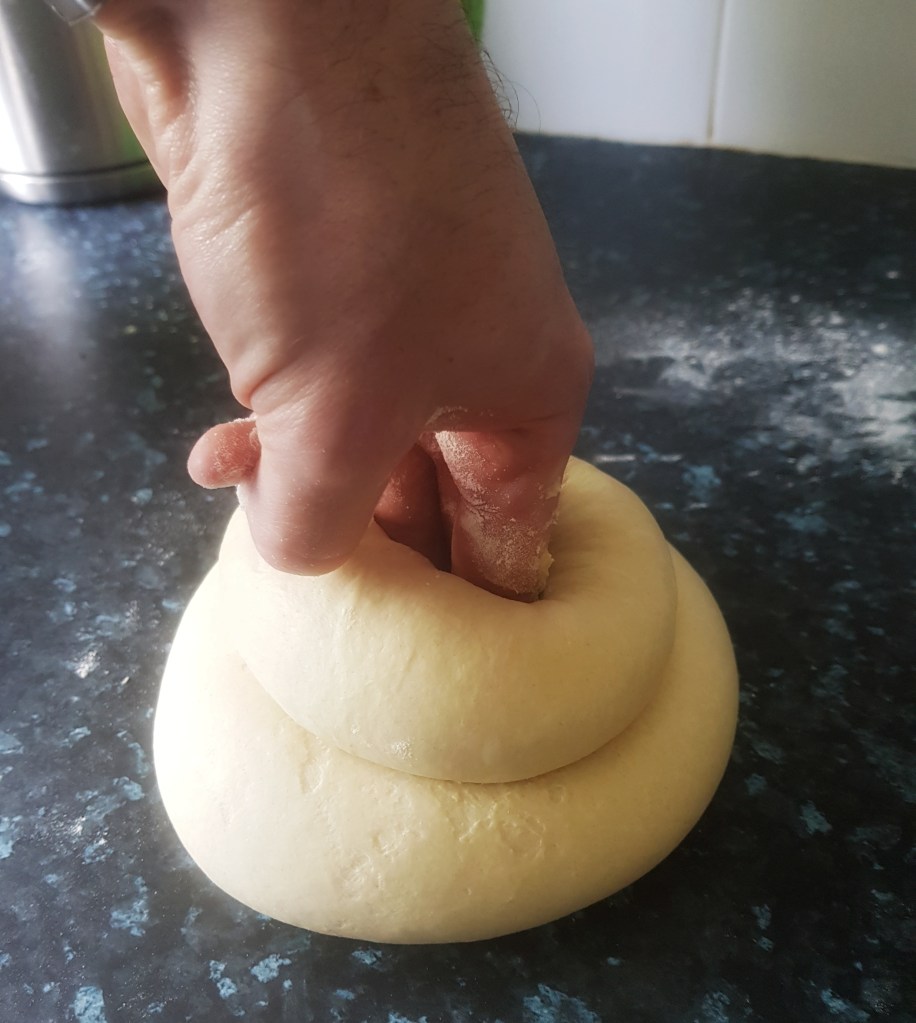
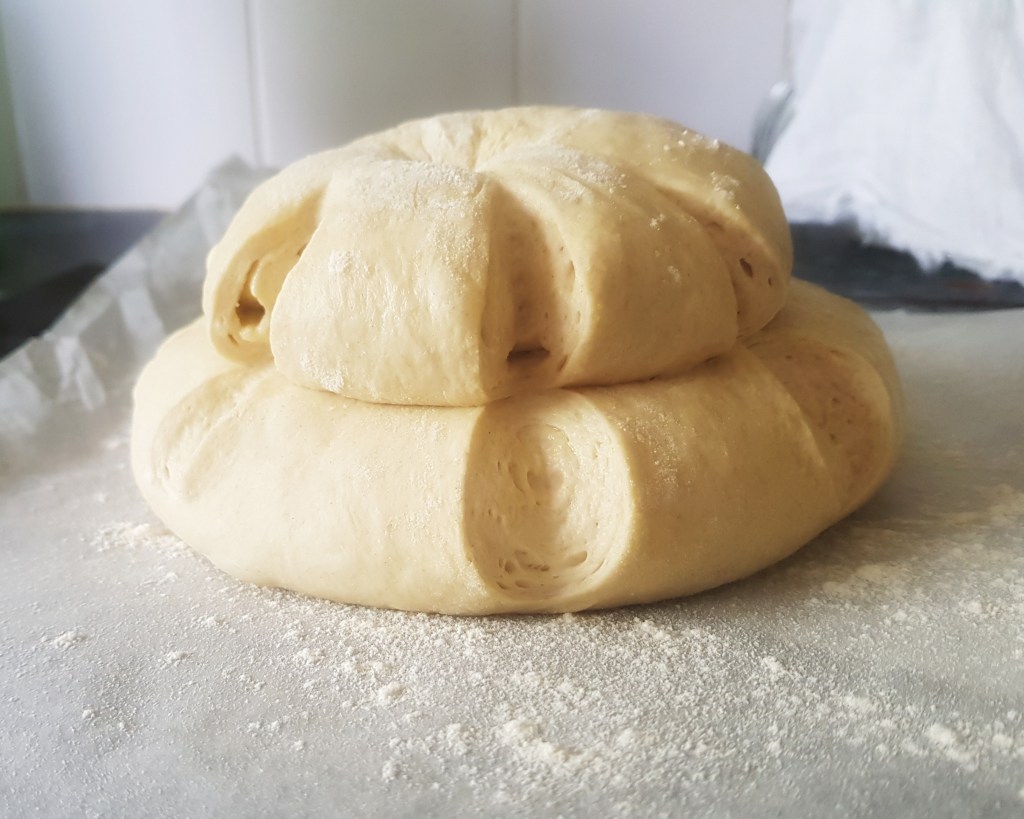
Sit the small loaf directly on top of the large one, flour the first three fingers of one hand and plunge them right down through the dough right to worktop surface. Repeat one more time and your two pieces should be well-fused together.

At this point you can make some cuts with a sharp serrated knife, but to do so you have to pick it up, so avoid this step if you think it might be too risky. Sit in on the floured baking tray and cover with a large bag and leave to prove again, until twice the size and springy to the touch.

To achieve a really good crust, set your oven to 220°C as you wait for the loaf to prove and sit a roasting tin on the bottom of the oven. When the loaf is ready to go in, boil the kettle and place the loaf on the middle shelf, pull out the roasting tin a little and pour in the water – careful of the steam! – and quickly shut the door.

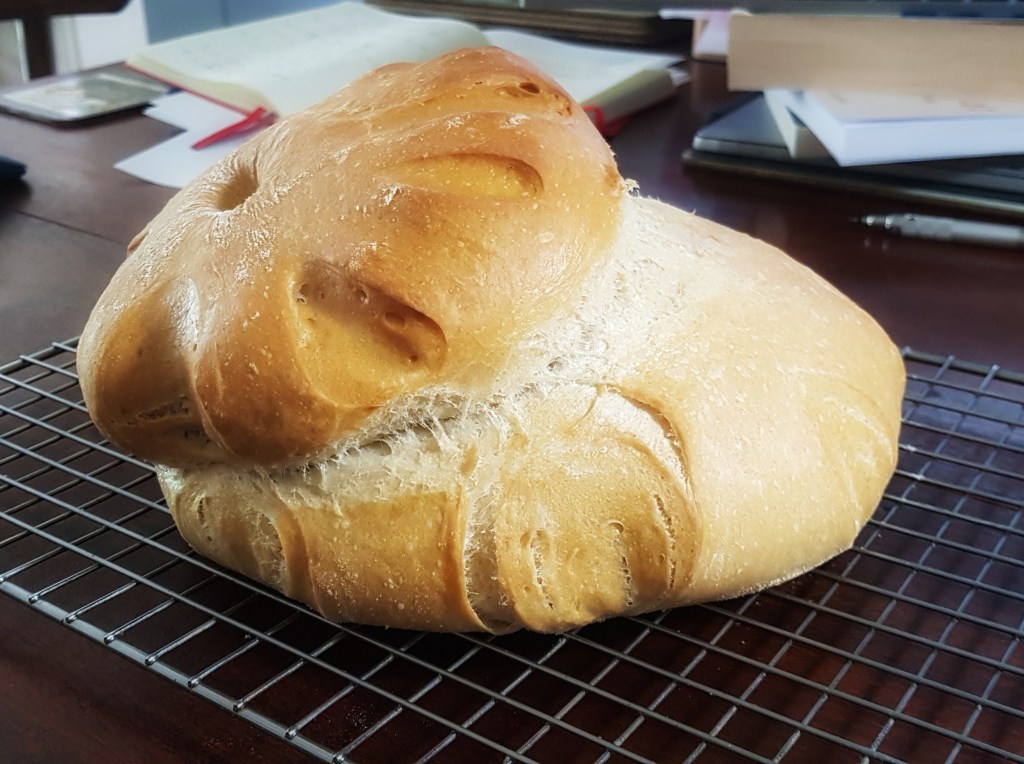
Bake for 30 to 35 minutes, and cool on a wire rack.

As it turns out it’s not that tricky in the end, and it even leaned to one side without falling off just like Beeton’s!

References:

English Bread and Yeast Cookery (1977), Elizabeth David

‘Cottage Loaf’, Foods of England website http://www.foodsofengland.co.uk/cottageloaf.htm

How to Bake (2012), Paul Hollywood

Mrs Beeton’s Book of Household Management (1861), Isabella Beeton

The Taste of Britain (2006), Laura Mason & Catherine Brown

The cracked crisp crust

23 Comments

Filed under baking, bread, Britain, cooking, food, General, history, Recipes, Teatime, The Victorians

Lent podcast episode 7: Figs & Lambs (ending Lent)

Helen’s Hebridean sheep

In the final episode of the series we look at how the last Sunday of Lent was marked in the past, focussing on Fig Sunday and Palm Sunday.

Neil cooks up some historical pax cakes to give out to shoppers and traders at Levenshulme Market so see how then would go down today.

Pax cakes

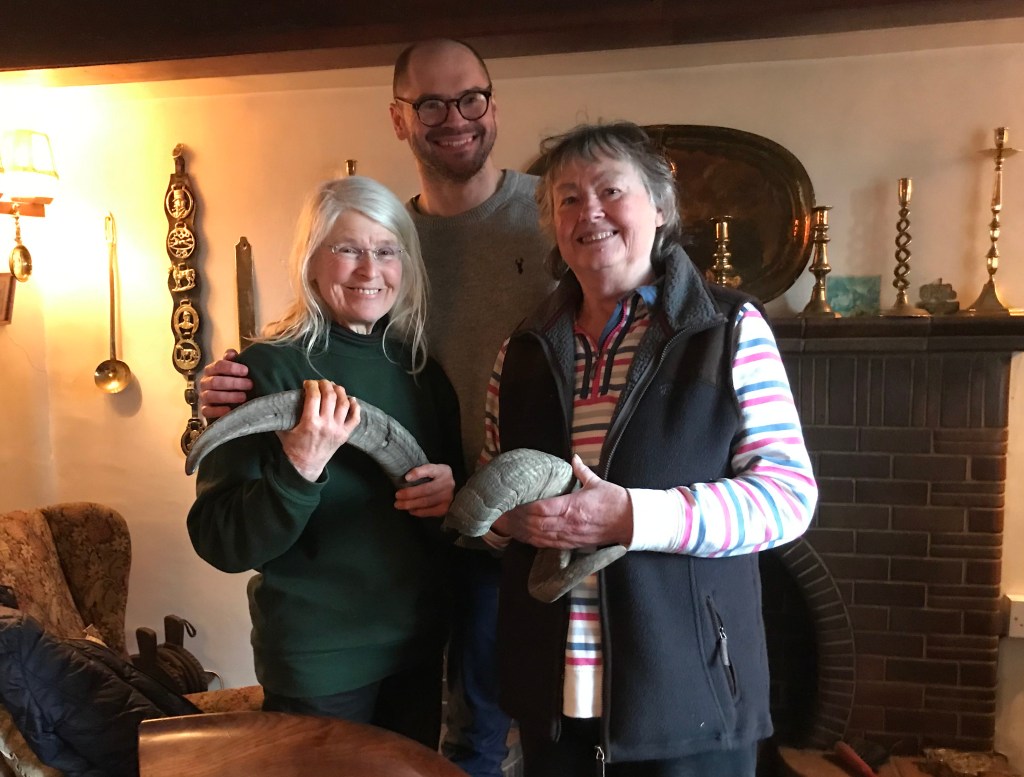
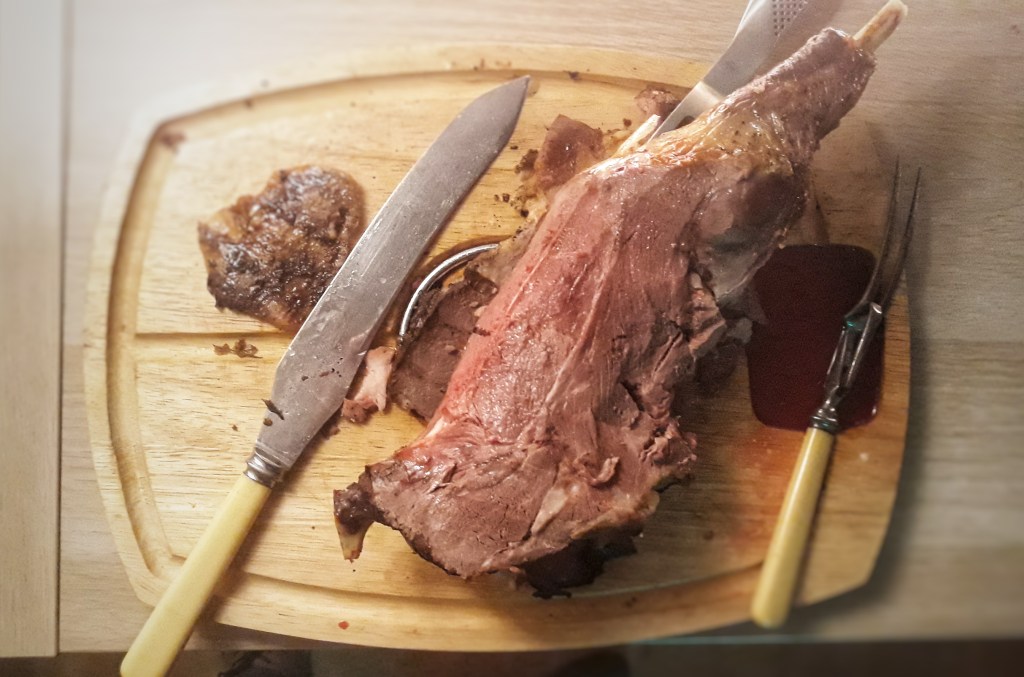
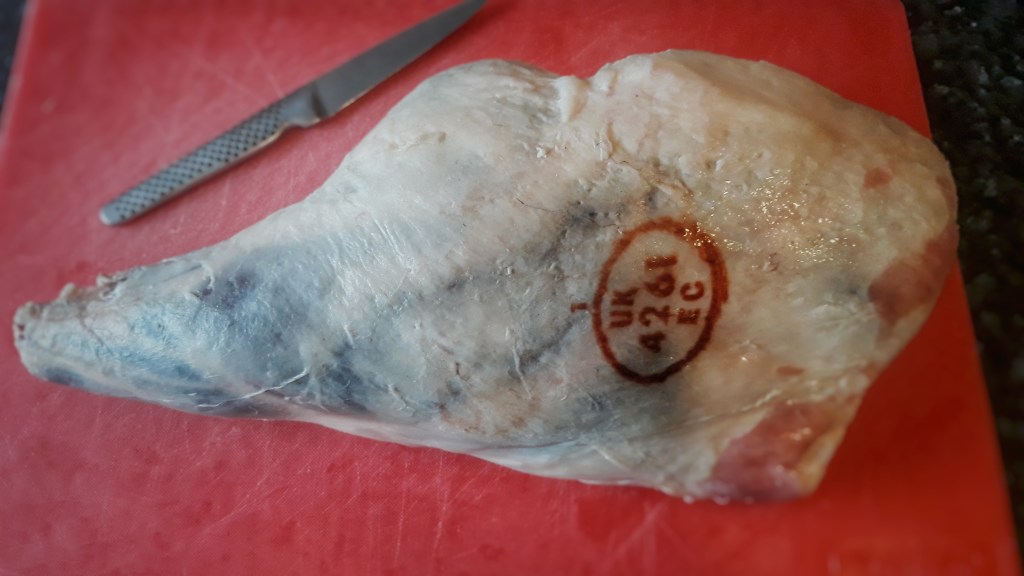
With Easter Sunday on his mind, Neil gets hold of some very special meat from a Hebridean sheep farm and has a chat with farmer Helen Arthan about what it’s like working with such characterful little sheep. On his return to Manchester, he cooks up some roast hogget for two friends of the show.


If you like the blogs and podcast I produce, please consider treating me to a virtual coffee or pint, or even a £3 monthly subscription: follow this link for more information.


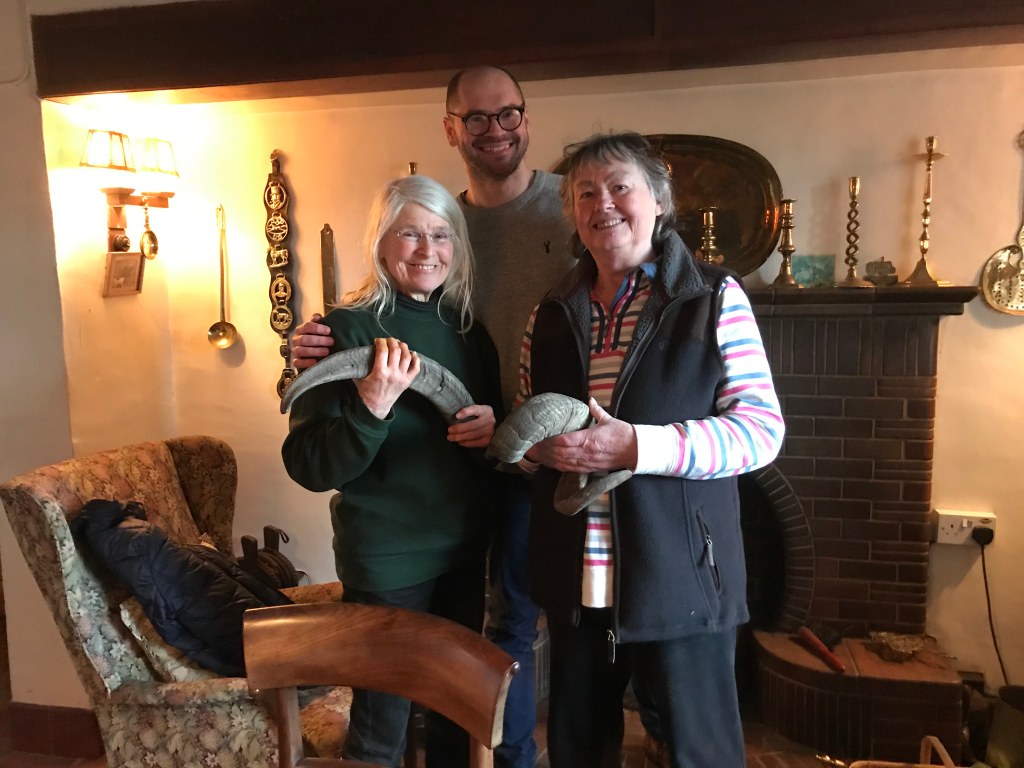
Helen, Neil & Vicky

Links and extra bits:

The story of Holy Week: https://www.churchofengland.org/prayer-and-worship/worship-texts-and-resources/common-worship/churchs-year/holy-week-and-easter/holy-week

Recipe for pax cakes:

200g icing sugar, plus extra

30 g cornflour, plus extra

1 tsp orange flower water

Zest half a lemon

1 medium egg white

  1. Preheat your oven to 160°C.
  2. Place all the ingredients in a bowl and whisk slowly to combine, then use an electric mixer to beat the mixture very smooth.
  3. Dust your worktop with icing sugar and cornflour and roll the mixture out to a thickness of around 3 mm.
  4. Cut into rectangles and prick with a fork, then arrange on a baking tray that has been lined with greaseproof paper and dusted with a little cornflour.
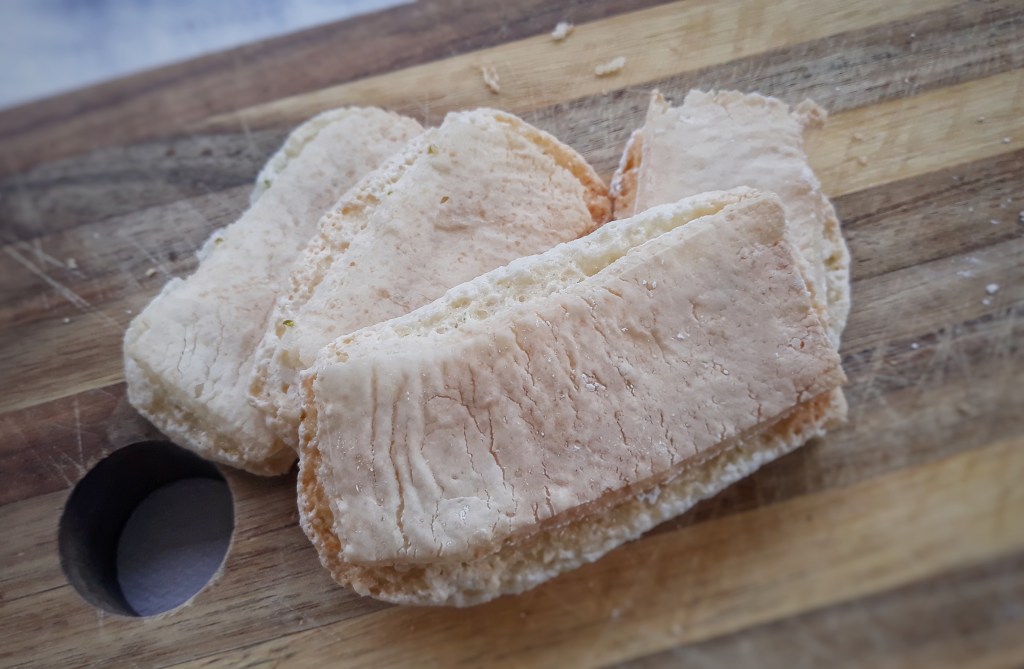
  5. Bake for 8 to 10 minutes, until slightly golden brown.
  6. Cool on a rack.

Levenshulme Market website: https://www.levymarket.com/

Hebridean Sheep Society website: https://www.hebrideansheep.org.uk/

‘Neil Cooks Grigson’ blog: https://neilcooksgrigson.com/

Rectangular livestock paintings: https://artuk.org/discover/stories/the-rectangular-cows-of-art-uk

Roast hogget/lamb, recipe number 438: https://neilcooksgrigson.com/2020/04/04/438-plain-roast-primitive-lamb-with-gravy/

‘English Food’ by Jane Grigson: https://www.penguin.co.uk/books/242/24292/english-food/9780140273243.html

Other primitive/ancient sheep breeds of the UK: https://www.accidentalsmallholder.net/livestock/sheep/british-rare-and-traditional-sheep-breeds/

Written and presented by Dr Neil Buttery
Produced by Beena Khetani
 
Made in Manchester by Sonder Radio

4 Comments

Filed under baking, Britain, cooking, Easter, Festivals, food, General, history, Meat, Podcast, Recipes

Lent podcast episode 5: Lent & Diet

In the fifth episode of the series we look at Mid-Lent Sunday, traditionally a day where lots of different celebrations occurred, but we focus on Mothering Sunday and the lesser known Clipping the Church.

Neil with David Walker, Bishop of Manchester

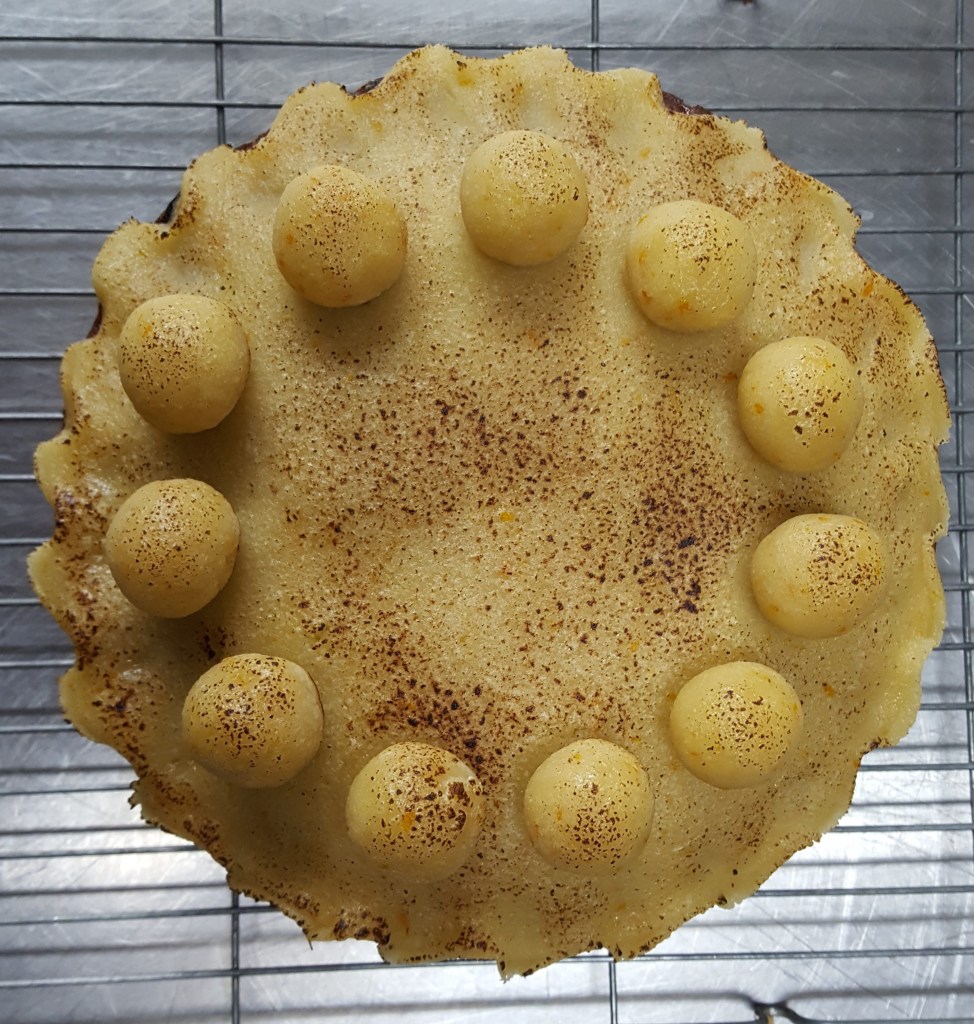
Neil bakes a simnel cake and chats again to the Right Reverend David Walker, Bishop of Manchester, about the history of Mothering Sunday, which is not necessarily the same as Mothering Sunday.

Neil then looks at the evidence that suggests that fasting has many potential health benefits and puts theory to the test by going on a two weeklong fast of his own. There are mixed results and mood swings aplenty.

The only thing Neil could be bothered to cook up. *Hangs head in shame*

There’s also the answer to Professor Matthew Cobb’s minnow mystery from last week.

Produced by Beena Khetani. Made in Manchester by Sonder Radio.


If you like the blogs and podcast I produce, please consider treating me to a virtual coffee or pint, or even a £3 monthly subscription: follow this link for more information.


Links and extra stuff:

David Walker’s page on the Church of England website: https://www.manchester.anglican.org/bishop-manchester/

My recipe for Simnel Cake: https://britishfoodhistory.com/2018/03/19/simnel-cake/

Diabetes and fasting study in more detail: https://www.healthline.com/health-news/intermittent-fasting-and-type-2-diabetes

Lab mice and fasting study in more detail: https://www.nih.gov/news-events/nih-research-matters/fasting-increases-health-lifespan-male-mice

4 Comments

Filed under baking, Britain, cooking, Easter, Festivals, food, General, history, Recipes, Uncategorized

Lent podcast episode 2: Fish & Humours

In this episode we look at the history of Lent: When was it enforced? What were the rules? That sort of thing. Neil looks at how the belief in the four humours shaped what we ate in Lent, and how they caused illness and changed our moods throughout the year.

This week – the first full week of fasting – is an Ember Week. There are four Ember Weeks throughout the year – one for each season – and this is the spring one.

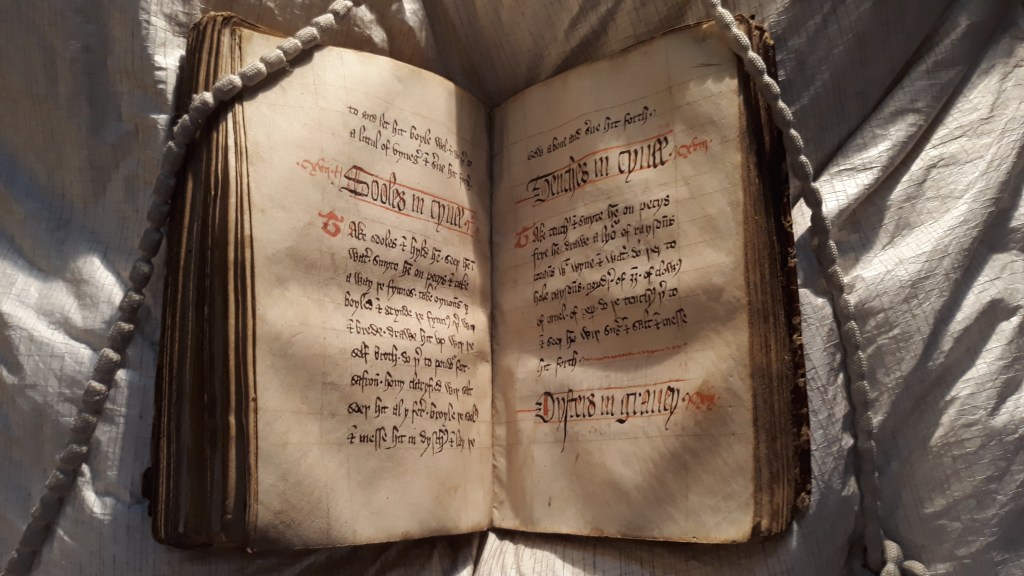
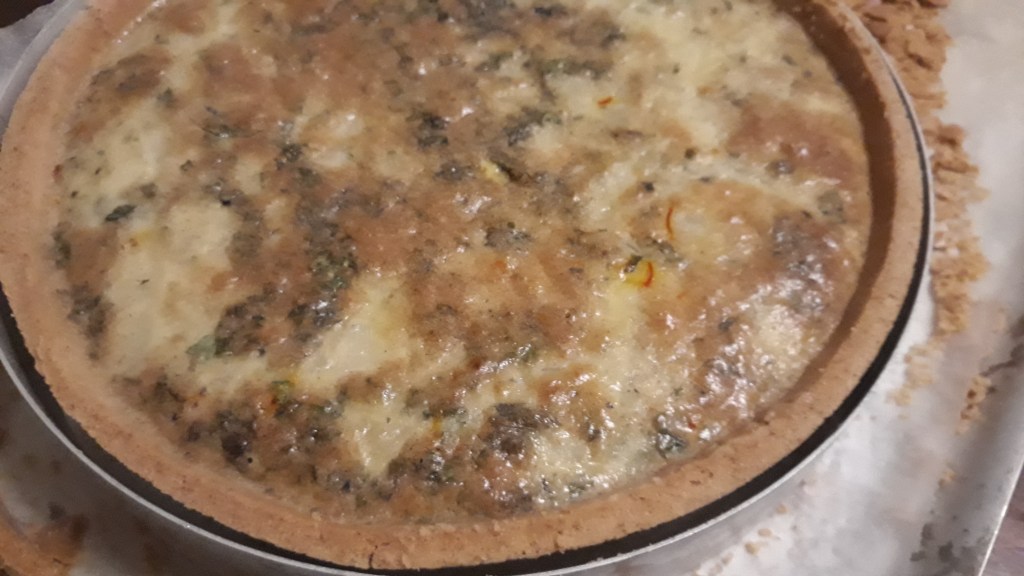
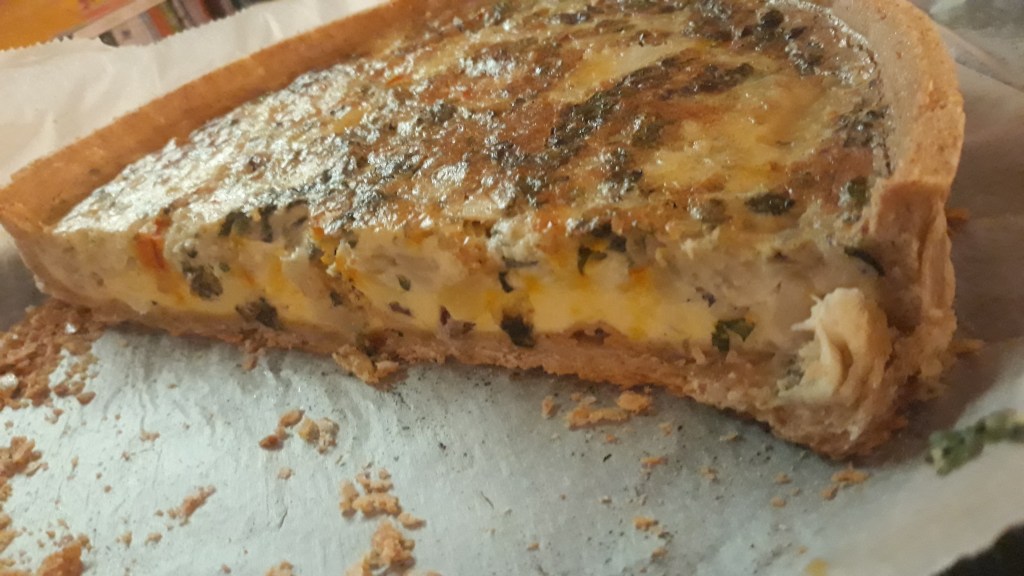
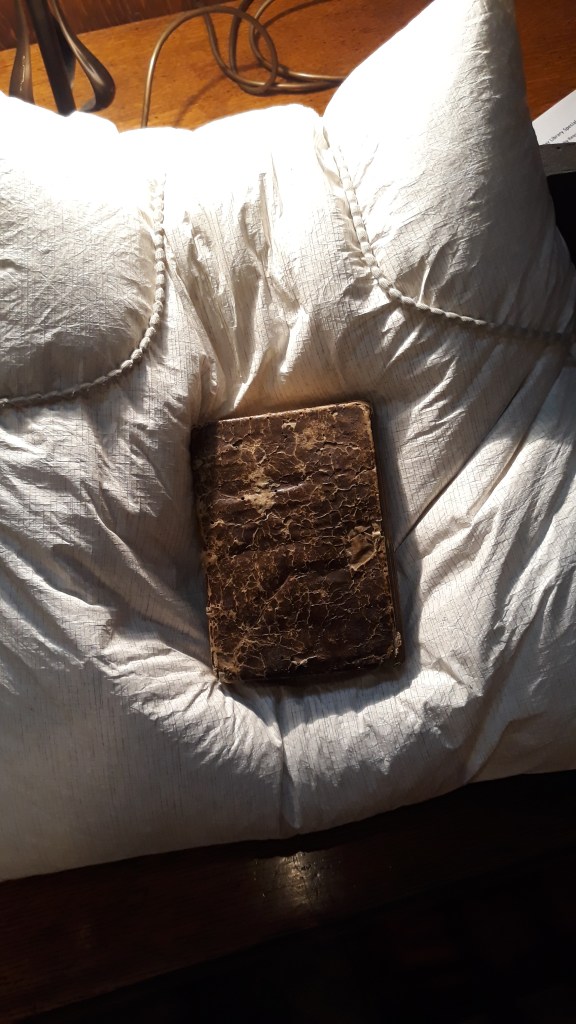
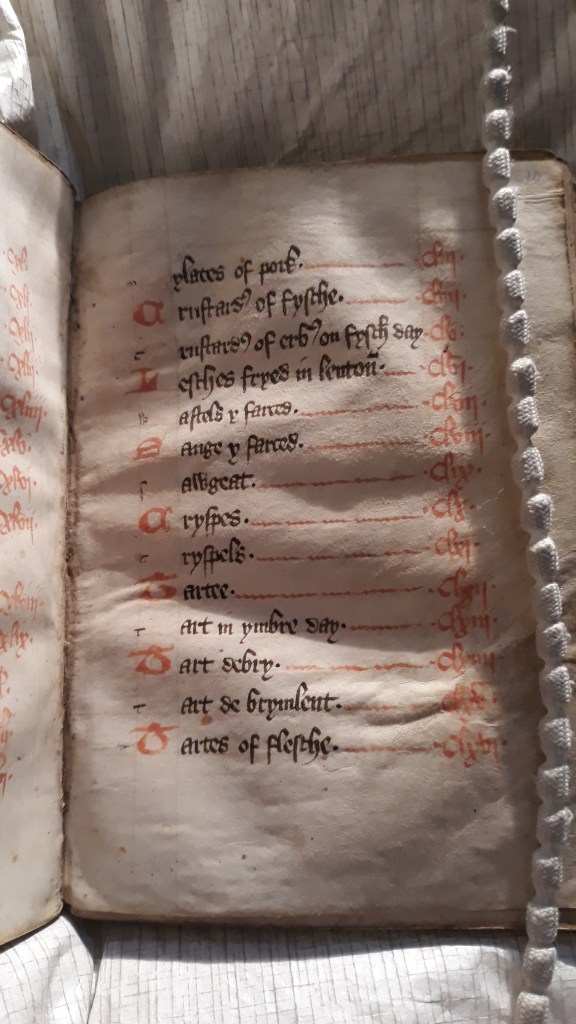
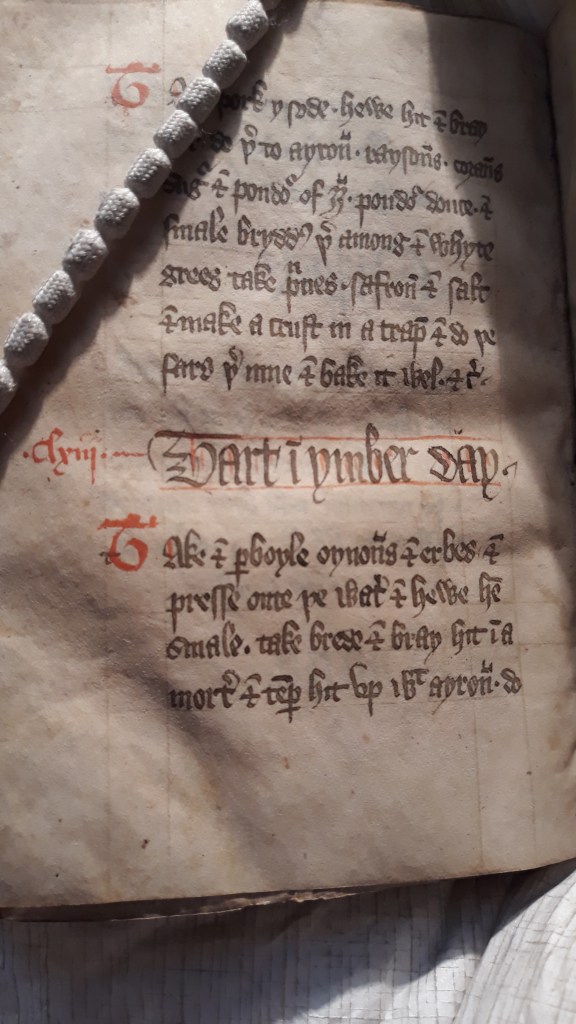
Neil then goes to the beautiful John Ryland’s Library in Manchester to see an early manuscript of the Forme of Cury, the earliest cookbook written in the English language, to find and cook from it ‘a tart for Ember Day’ which he cooks for his friends Kate and Pete with mixed results (recipe below).

A huge thanks to the staff of the John Ryland’s Library, who were very helpful indeed, and to Kate and Pete for letting me assault their taste buds.

Most of all, thanks to you for listening – if you have anything to add about anything you hear, feel free to post a comment, tweet me (@neilbuttery) or email me at neil@britishfoodhistory.com.

Please listen, like and subscribe.

Scroll down to see a list of photos and links all about the things discussed in this episode. See you next week!


If you like the blogs and podcast I produce, please consider treating me to a virtual coffee or pint, or even a £3 monthly subscription: follow this link for more information.


British Food a History: Lent was produced by Beena Khetani and is a Sonder Radio production

Extra bits:

More on the four humours: https://www.nlm.nih.gov/exhibition/shakespeare/fourhumors.html

The story of how King Alfred burnt the cakes: https://britishfoodhistory.com/2018/10/25/king-alfred-burns-the-cakes/

A blog post all about Forme of Cury: https://britishfoodhistory.com/2018/08/10/favourite-cook-books-no-3-the-forme-of-cury-part-i/

…and another with some recipes: https://britishfoodhistory.com/2018/08/14/favourite-cook-books-no-3-the-forme-of-cury-part-2-recipes/

Forme of Cury online: https://archive.org/stream/theformeofcury08102gut/7cury10.txt

The John Ryland’s Library website: https://www.library.manchester.ac.uk/rylands/

Not a tart! A biog of Eleanor of Aquitaine: https://www.britannica.com/biography/Eleanor-of-Aquitaine

The mediaeval cinnamon bird: http://bestiary.ca/beasts/beast242.htm

A recipe for ‘a tart for Ember Day’:

Shortcrust pastry made with 400 g flour

1 medium onion

2 tbs parsley, chopped

1 tbs mint, chopped

1 tsp sage, chopped

A handful of raisins

150 g blue cheese, grated

Pinch of saffron

2 tbs hot milk

10 eggs

75 g melted butter

1/2 tsp salt

1 tsp sugar

  1. Roll out the pastry and use it to line a 10-inch flan ring. Prick the base and place in the fridge to firm up
  2. Preheat the oven to 220°C and bake the case lined with greaseproof paper and filled with baking beans for 30 minutes.
  3. Meanwhile, peel the onion and simmer in salted water for 20 minutes, then drain.
  4. Remove the beans and paper and return the pastry case to the oven  for 7 or 8 minutes to crisp the base.
  5. Turn down the oven to 160°C
  6. Sprinkle over the base the herbs, raisins and cheese, chop up the onions and scatter those too.
  7. Steep the saffron in the hot milk for five minutes, then beat with the eggs, butter, salt and sugar
  8. Pour the eggs over and bake until set, around 45 minutes.

9 Comments

Filed under Britain, cooking, Easter, Festivals, food, history, Mediaeval Age, Podcast, Recipes, Uncategorized

Lent podcast episode 1: Preparing for Lent

Welcome to my first episode all about the history of Lent in Britain. There will be a new episode every Sunday throughout Lent, and over the weeks we will be looking at it from every direction possible.

I’m having great fun making it and it has been amazing to get help and support from Beena Khetani at the amazing Sonder Radio.

A huge thanks to David Walker, Bishop of Manchester for giving up his time to talk to me, and to my pals Kate and Pete for letting me take over their kitchen.

Most of all, thanks to you for listening – if you have anything to add about anything you hear, feel free to post a comment, tweet me (@neilbuttery) or email me at neil@britishfoodhistory.com.

Scroll down for a more description of the episode as well as some useful links and photos.

Please like, follow or subscribe:

In episode one we start our historical journey through Lent, the Sunday before it begins by finding out what Lent (and indeed Easter) is with the help from the Very Reverend David Walker Bishop of Manchester, where we discuss what Lent and Easter means in the Christian Church, the benefits of fasting, how Lent has changed over the centuries, and how eating world’s largest rodent during Lent is absolutely fine (if you live in Venezuela).

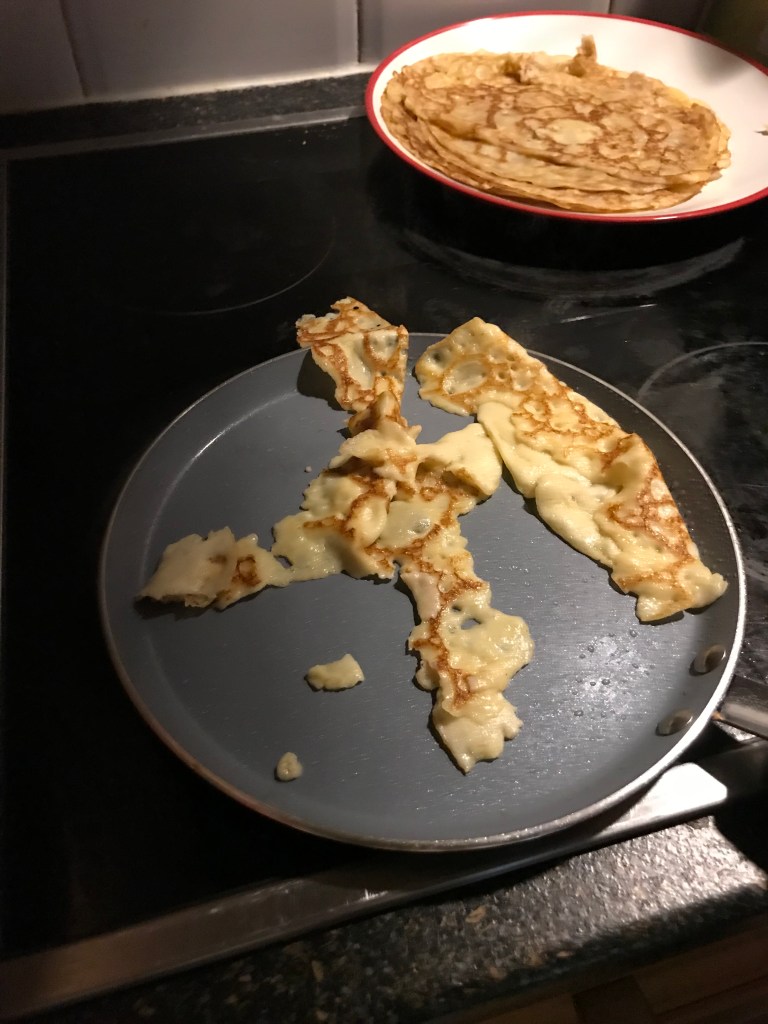
Neil then tell us all about Shrovetide. Shrove Tuesday, aka Pancake Day, is the best-known day of Shrovetide of course, but what about its forgotten partner Shrove Monday, aka Collop Monday? You’ll have to listen to find out.

Neil then cooks two different pancakes: ‘Pancakes for the Rich’ and ‘Pancakes for the Poor’ for a couple of his friends Kate and Pete who are used to him shoving historical food under their noses all the time. They discuss the correct way to eat a pancake, what the best toppings and reminisce about that classic Jif Lemon advert from days long gone as well as Yvette Fielding’s massive pancake fail on Blue Peter.

Once well and truly shriven, we gather ourselves and head on to the first day of the 40-day fast Ash Wednesday.


If you like the blogs and podcast I produce, please consider treating me to a virtual coffee or pint, or even a £3 monthly subscription: follow this link for more information.


Useful links:

David Walker’s webpage on the Manchester Diocese website: https://www.manchester.anglican.org/bishop-manchester/

An Atlas Obscura post all about eating the honorary fish capybara: https://www.atlasobscura.com/foods/capybara-venezuela

‘Jif Lemon Day’ ad:

Yvette Fielding’s pancake fail:

‘Pancakes for the Poor’ recipe: https://neilcooksgrigson.com/2008/02/06/25-harvest-pancakes-for-the-poor/

 ‘Pancakes for the Rich’ recipe: https://neilcooksgrigson.com/2007/12/07/13-pancakes-for-the-rich/

Follow Neil Buttery on twitter @neilbuttery

British Food a History: Lent was produced by Beena Khetani and is a Sonder Radio production

6 Comments

Filed under Britain, cooking, Easter, Festivals, food, General, history, Podcast, Recipes, Uncategorized

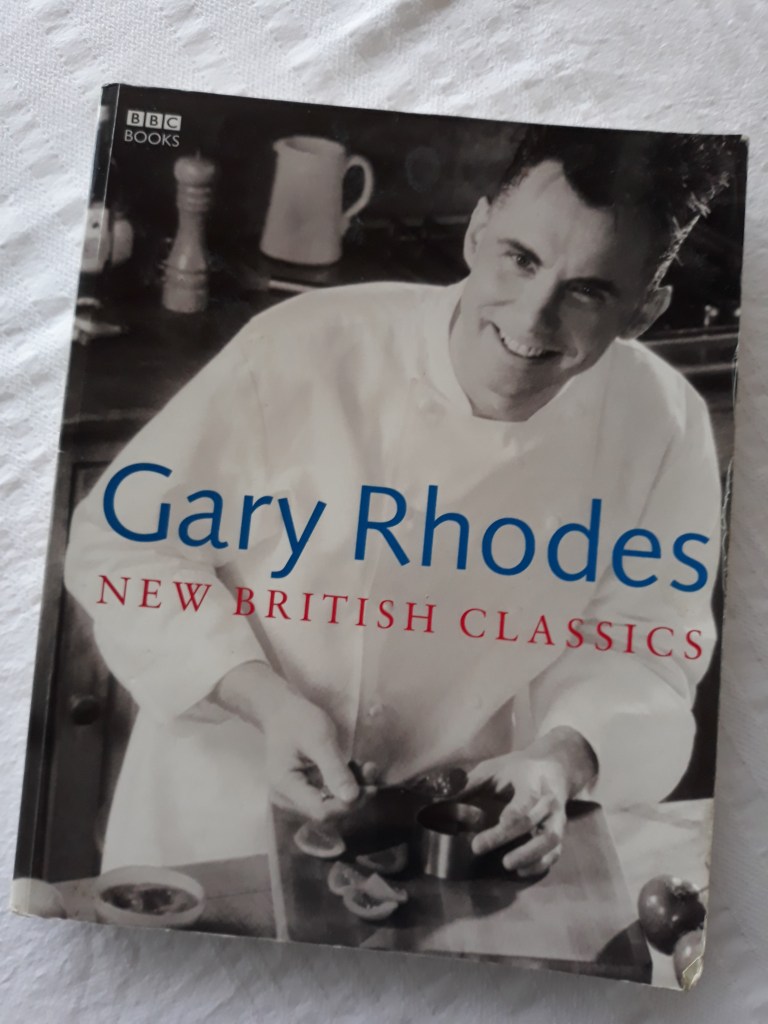
Favourite Cook Books no.4: ‘Great British Classics’ by Gary Rhodes

I have been meaning to write a post on this excellent cookbook for quite a while, and it is such a shame that my prompt to pull my finger out was the sad and untimely death of Gary Rhodes at the end of last year.

When I was asked to submit my list of favourite cookbooks to the 1000 Cookbooks project, I put New British Classics as my number one choice, my comment at the time being: “simply the best book on British food around. Everything from lowly haslet to lobster.”

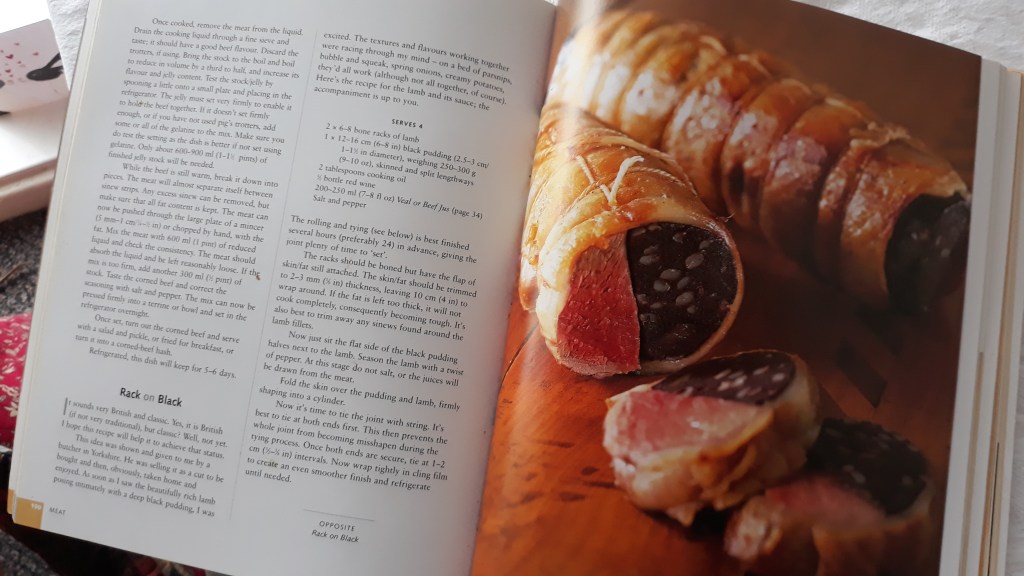
Favourite recipes include salad cream, lardy cake, prawn cocktail, rhubarb and rack-on-black – lamb roasted with black pudding.

My favourite books on food tend to be by food writers rather than professional chefs because they write about their love of food and its importance in our culture and history. Chefs tend to be, well, cheffy; there’s no evocative description of the hustle and bustle of a French market, and they assume that you want to be cooking restaurant-level food at home. This is where Rhodes was different – sure there are cheffy dishes like the very complex rich pigeon faggot – but there are basics such as fried bread, porridge and jam roly-poly. Everything is represented and everything has equal billing, meaning that whatever your ability level there is a way in. You can start off with basics like scrambled eggs or go straight in at the deep end with pigs’ trotters Bourguignonne.

The full gamut of British food is here: fish and chips, steak and kidney pie, pork faggots, white pudding, Welsh rarebit, and the massive range of techniques contained within makes it the most comprehensive book of British recipes there is. What’s more, every single recipe works perfectly; he goes through every stage, assuming you know nothing but never patronises. If you don’t own a copy and you’re interested in cooking British food, it really is essential.

The secret to his success was his attention to detail. Every move made, and technique used was meticulous and done with deftness, even the way he picked up an ingredient to show to camera had an air of precision about it. Take a look at this clip from the accompanying BBC programme, where he shows us how to make cabbage and bacon soup, and you’ll see what I mean:

He was a classically trained chef who applied French techniques to classic British dishes, taking them to new heights while keeping them authentic. His approach definitely rubbed off on me when I was teaching myself to cook; use the best ingredients and don’t cut corners, every stage is there for a reason, so you need to understand why it is there. Only when that penny drops will you develop a cook’s intuition. This approach to cooking won him his first Michelin star at the age of 26, eventually receiving an OBE for services to the hospitality industry in 2006.

On television, he was very enthusiastic, polite and well-spoken; he seemed a little odd and socially awkward (as all the best people are), making him all the more endearing. He got me interested in cooking and wanting to spend my precious leisure time in the kitchen, learning new techniques and tackling novel ingredients.


If you like the blogs and podcast I produce, please consider treating me to a virtual coffee or pint, or even a £3 monthly subscription: follow this link for more information.


He was rarely off the telly during the late 1900s and early 2000s, his trademark spiky hair and over-enthusiasm caused many to pooh-pooh him as gimmicky. Eventually the fickle eye of entertainment focused upon other, younger chefs and so he stopped appearing so regularly. But his books and their accompanying TV shows are great; his Rhodes Around Britain and Cookery Year series are worth checking out too (his apple pie recipe from the latter is the best in world in my opinion).

He died on the 26 November 2019 at the age of 59 from head injuries after a fall – no way or age to go, I’m sure you’ll agree. Of course, when someone dies, there work is revaluated and I hope people recognise what he did for British cuisine, because he put it on a pedestal when everyone else was looking elsewhere.

Braised Oxtails

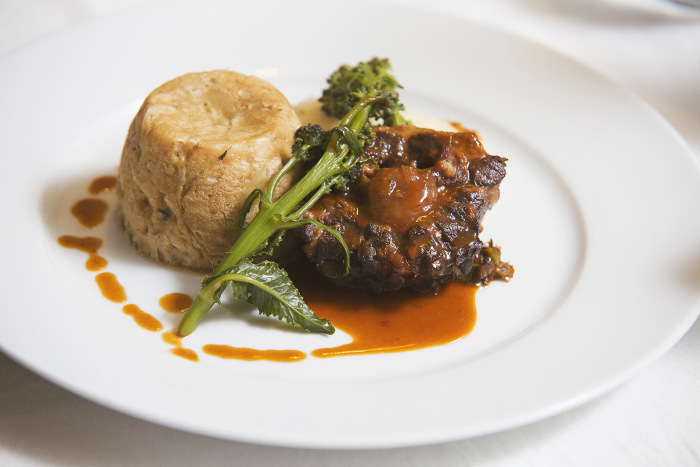
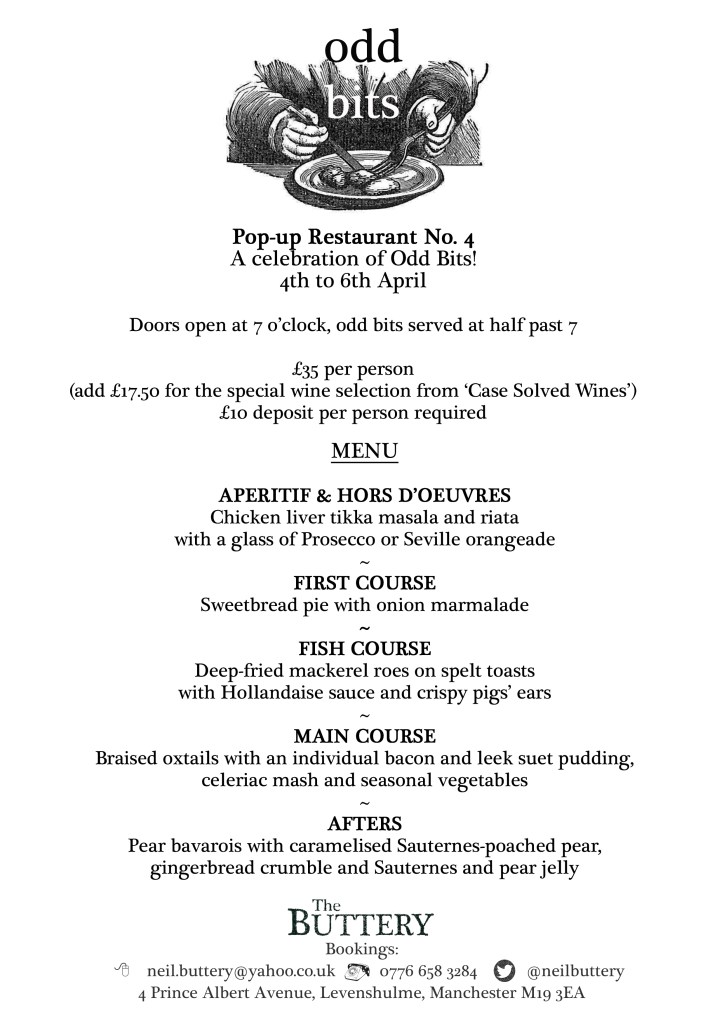
He was ‘discovered’ on the Keith Floyd programme Floyd on Britain & Ireland. On the segment he makes his signature dish: braised oxtails. Ironically, by the time New British Classics was published his most famous dish was illegal to eat – cooking beef on the bone was banned because of health fears surrounding the BSE crisis. Eventually the ban was lifted, and I could make it for myself. Back in my pop-up restaurant days it was the main course at my first ever Odd Bits offal evening.

This is my version of Gary’s signature dish; it’s slightly simplified but just as gutsy. It really is one of the most delicious things you will ever cook. Nothing else needs to be said – except ‘cook it’!

Enough for 6

2 oxtails, trimmed of excess fat

Salt and pepper

Beef dripping

Around 100 g each carrot, onion, celery and leek

1 tin of chopped tomatoes

2 tbs tomato purée

Small bunch thyme and rosemary

2 bay leaves

1 clove garlic, crushed

300ml red wine

1 litre beef stock

Season the oxtails and fry in dripping until well browned, transfer to an ovenproof pot, then fry the vegetables until nicely brown too. Tip those into the pot along with the tomatoes, garlic and herbs and bring to a simmer. Pour the wine into the original pan and reduce until almost dry. Add to the pot with the stock.

Simmer very gently on the hob or braise in an oven set to 160⁰C. Whichever you choose, it needs to tick away for 3 hours.

Remove the cooked meat and keep warm and pass the cooking liquor through a conical strainer, really pressing the vegetables hard to get all the flavour out.

Throw in a big handful of ice cubes, and stir so they freeze the fat; you should be able to lift out ice and fat in one nice big satisfying lump.

Reduce the liquor to a sauce and season with more salt and pepper, then add back the oxtails to heat through.

7 Comments

Filed under Books, Britain, cooking, food, General, Meat, Recipes

Clotted Cream

There’s nothing more Cornish than a good blob of clotted cream on a lovely cream tea. Unless you are from Devon of course, then there’s nothing more Devonian than a good blob of clotted cream on a lovely cream tea.

For those not in the know, clotted cream is a very thick cream with a much higher butterfat content than double (heavy) cream; weighing in at 64% and 48% respectively (for comparison, single cream is 18% fat, and full-fat milk is around 4%).

Clotted cream has a long history in Devon and Cornwall, and it is reckoned that it was first introduced to England by Phoenician settlers around 2000 years ago. Phoenicia was on the eastern Mediterranean coast in, what is now Syria, Lebanon and northern Isreal. The clotting of cream was a way of preserving buffalo milk. By removing the watery liquid, leaving mainly butterfat, the growth of spoilage organisms is retarded. The folk of Devonshire knew of its efficacy in this area; it was said that not even a witch’s breath could turn it sour.

If you have ever tried it, you will know that clotted cream – aka clouted cream or scalded cream in older books – is absolutely delicious and is well worth buying. It is possible to make your own and there is a recipe at the end of the post of you would to try your hand at it.

The best thing about it is the buttery, nutty crust that forms on the top as part of the manufacturing process. It is made by gently heating rich milk or cream in large shallow pans to a temperature of 80 to 90°C, the heat traditionally coming from cinders or charcoal. Once the buttery crust had formed, it was carefully but quickly moved to a cool place and sat upon some slate so make the cooling process as rapid as possible; the cold shocking the thin skimmed milk into sinking quickly and making a layer underneath the thick cream. These days, it’s all done with centrifuges, which is rather less romantic.

Once completely cooled, the clotted cream was lifted away with cold, wet hands and mixed in cold, wet wooden bowls to remove the last of the watery milk. It was then layered up in pots. I found a 1755 home recipe from an Elizabeth Cleland who recommended sprinkling rose water and sugar between the layers – the result must have been delicious!

The left-over skimmed milk, by the way, was taken away and either drank or used to make scones or Devonshire splits.

From the point of view of butterfat extraction, clotted cream is a much more efficient method than basic skimming techniques. The reason it is not the standard technique, I assume, is that double skimming requires no heating or centrifuges, tipping the balance of economy in double cream’s favour. Couple this with the fact that modern refrigeration and pasteurisation is doing the lion’s share of the preserving today means that the process of clotting cream is no longer required for that purpose. We eat it for the sheer love of it (ditto smoked fish and meat).

Mrs Beeton’s Book of Household Management says that there are two types of clotted cream: Devonshire and Dutch. She goes on to explain the difference – Dutch clotted cream is thick enough to stand a spoon up in. Now, in my (humble) opinion, it ain’t clotted cream unless you can stand a spoon up in it, so I can only conclude that English clotted cream – at least from a Victorian Londoner’s point of view – was relatively runny compared to that of today’s

Clotted cream is used to make ice cream, some biscuits and as a topping to the old-fashioned pudding Devonshire junket, a sweetened milk dessert set with rennet, producing curds and whey. It can be used to enrich sauces and soups too but use with caution – things can end up too rich.

Rodda’s is the largest producer of clotted cream and is based in Cornwall. There is much debate between the folk of Devon and Cornwall as to whether the cream should be added before or after the jam. Nick Rodda reckons his grandfather knew why:

We always put our cream on top because we are proud of it, Devonians are slightly ashamed of theirs, so they cover it up with their jam.

I must confess to siding with the Devonians on this one. It’s all down to what you think the buttery cream’s role is. The argument goes something like this:

The Cornish: it is the cream, and you wouldn’t put cream under your fruit salad/trifle/fruit tart etc, now would you?

The Devonians: it is the butter, and you wouldn’t spread butter over the jam on your toast/crumpet/muffin etc, now would you?

Your choice.


If you like the blogs and podcast I produce, please consider treating me to a virtual coffee or pint, or even a £3 monthly subscription: follow this link for more information.


Home-Made Clotted Cream

All you need to make your own is some double cream, an oven and patience.

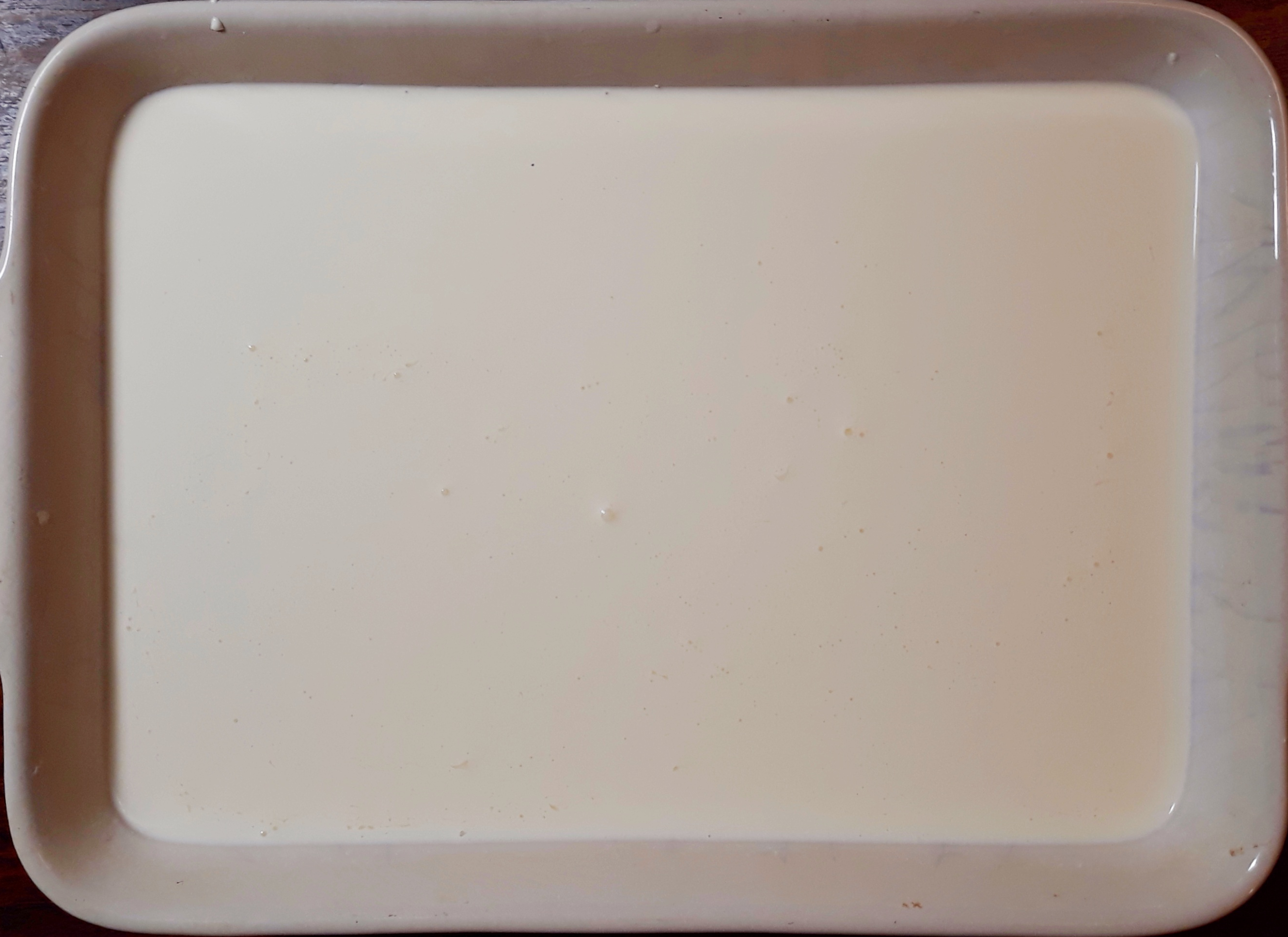
Before…

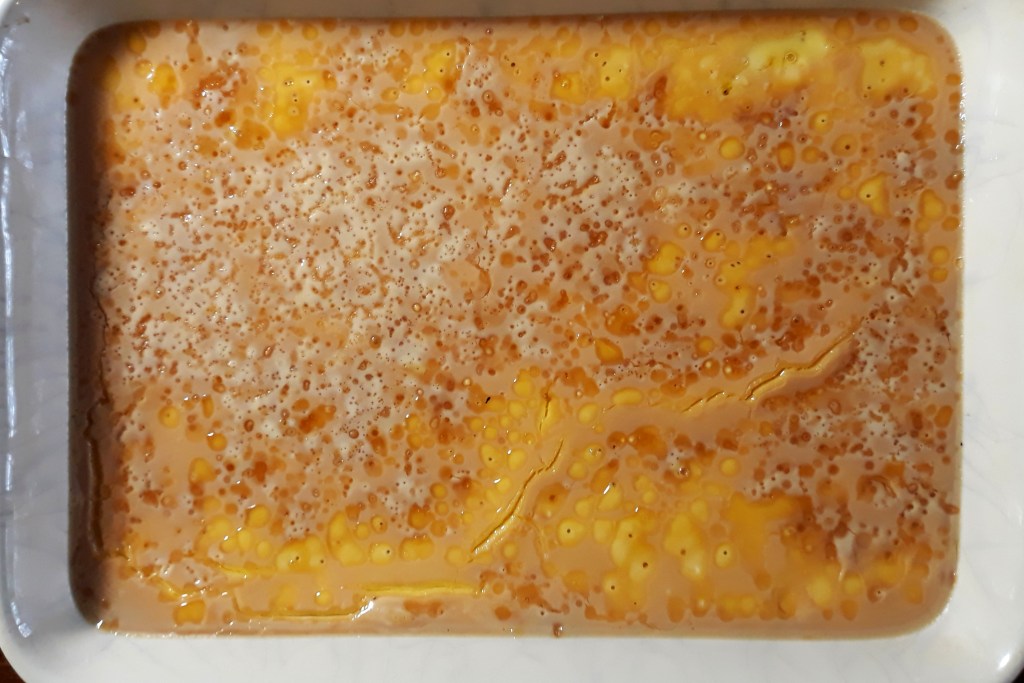
Preheat your oven to 80°C. Pour around 1 litre of double cream into a wide, shallow ovenproof dish, place it in the oven and leave in there for 12 hours. If you are really patient, leave for 18 hours to achieve a darker, more delicious caramel-flavoured crust.

…after

Carefully remove from the oven, cover with kitchen foil and pop straight into the fridge to cool quickly and undisturbed.

Once fully chilled, lift the clotted cream from the dish and layer up in pots. I filled three good-sized ramekins with mine. The amount of skimmed milk at the bottom will vary depending upon how long you left the cream in the oven for.

The cream keeps for 7 days in the fridge.

References:

Clotted Cream, RS Chavan, A Kumar & S Bhatt, 2016, In Encyclopedia of Food and Health

The Complete Housewife, Elizabeth Cleland, 1755

How do you take your cream tea?, BBC Cornwall website, 2010 http://news.bbc.co.uk/local/cornwall/low/people_and_places/newsid_8694000/8694384.stm

Mrs Beeton’s Book of Household Management, Isabella Beeton, 1861

My Devonshire Book, Henry Harris, 1907

William’s Practical Butter Book, Xerxes Addison Willard, 1875

20 Comments

Filed under baking, Britain, cooking, Desserts, food, General, history, Preserving, Puddings, Recipes, Teatime